Get 50% OFF All Premium 3D & STL Models!

“`html
Achieving perfect 3D prints, especially with intricate models like the printable car models available on platforms like 88cars3d.com, often hinges on the quality of your support structures. While automatic support generation in slicing software has come a long way, manual support placement offers unparalleled control, allowing you to strategically reinforce overhangs and delicate features without sacrificing surface finish or wasting material. This guide will delve into the intricacies of manual support creation, covering everything from identifying critical overhangs to optimizing support parameters for both FDM and resin 3D printing. We’ll explore specific software techniques, material considerations, and troubleshooting tips to elevate your 3D printing game and ensure your car models emerge from the printer with exceptional detail and stability.
By the end of this article, you’ll understand how to analyze your 3D model, strategically place manual supports for optimal stability, configure slicer settings for support structure optimization, and remove supports cleanly without damaging your print. We’ll also cover specific techniques for both FDM and resin printing, ensuring you have the knowledge to tackle even the most challenging 3D printing projects.
Automatic support generation algorithms are convenient, but they often produce excessive supports or fail to adequately reinforce critical areas. This can lead to wasted filament, longer print times, and potentially, damage to delicate features during support removal. Manual supports, on the other hand, allow you to target specific overhangs and weak points, minimizing material usage and maximizing print quality. They are especially useful for models with complex geometries, such as the detailed car models found on 88cars3d.com, where precision is paramount.
The first step in manual support creation is identifying areas of your model that require support. Look for overhangs exceeding 45 degrees from the vertical, unsupported bridges, and delicate features that are prone to warping or collapsing during printing. Software like Meshmixer allows you to analyze your model’s overhangs and visualize areas that need support. Consider the print orientation – rotating your model can sometimes minimize the need for supports or reposition critical overhangs. Remember, the goal is to provide just enough support to prevent deformation without over-supporting the model.
While automatic supports are faster to generate, manual supports offer several advantages. They allow for precise placement, minimizing material usage and print time. They also reduce the risk of damaging delicate features during removal, as you have complete control over their location and density. However, manual supports require more time and effort to design and implement. Automatic supports are ideal for simpler models or when time is a constraint, while manual supports excel for complex geometries and high-quality prints.
Several software options exist for creating manual supports, each with its strengths and weaknesses. Meshmixer is a popular free option, offering a robust set of tools for adding and customizing supports. Blender, a powerful open-source 3D modeling software, provides even more control, allowing you to create highly customized support structures. Some slicing software, like Simplify3D, also offer basic manual support editing capabilities. The best choice depends on your experience level and the complexity of your project.
Meshmixer is a great starting point for learning manual support creation. Its intuitive interface and easy-to-use tools make it accessible to beginners. You can add tree-like supports, adjust their density and thickness, and precisely position them where needed. The software also includes tools for analyzing overhangs and identifying areas that require support. To create supports, import your STL file, select “Supports” from the “Analysis” menu, and customize the support parameters. Experiment with different settings to find the optimal balance between support strength and ease of removal. Remember to “Generate Supports” and then use “Edit Supports” to fine-tune placement. Export the modified model as an STL file for slicing.
For more advanced users, Blender offers unparalleled control over support creation. You can model custom support structures from scratch, tailoring them to the specific needs of your model. This is particularly useful for complex geometries and challenging overhangs. While Blender has a steeper learning curve than Meshmixer, its flexibility and power make it a worthwhile investment for serious 3D printing enthusiasts. Using Blender, you can create custom support geometries, duplicate and position them precisely, and even use modifiers to create complex branching structures. This allows for incredibly precise and efficient support structures.
Once you’ve created your manual supports, it’s crucial to configure your slicer settings to ensure they print correctly and are easy to remove. This includes adjusting parameters like support density, interface layers, and support adhesion. The optimal settings will depend on your printer, material, and the specific design of your supports. Experimentation is key to finding the best settings for your setup.
Support density determines the amount of material used to create the supports. Higher densities provide more strength but can also make removal more difficult. Lower densities are easier to remove but may not provide adequate support for heavy overhangs. A good starting point is 15-20% infill for FDM printing. For resin printing, support density is determined by the spacing between support tips. The optimal density depends on the size and weight of the overhangs. Experiment with different settings to find the best balance between strength and ease of removal.
Interface layers are thin layers printed between the supports and the model. They create a weak point, making it easier to separate the supports from the print without damaging the surface. Experiment with different layer thicknesses and densities to find the optimal settings for your material. In Cura, this is found under the “Support Interface” settings. A denser interface is generally stronger, but harder to remove. Finding the right balance can significantly improve your post-processing workflow.
Proper bed adhesion is crucial for successful 3D printing, especially when using supports. Rafts and brims can help improve adhesion, particularly for models with small footprints or complex geometries. Rafts are a layer of material printed under the entire model and supports, while brims are a wider border around the base of the model. Choose the option that best suits your model and printer. For example, a model with many small, thin supports might benefit from a raft to ensure all supports adhere to the build plate.
The approach to manual supports differs significantly between FDM and resin printing. FDM printing typically requires thicker, more robust supports due to the layer-by-layer deposition process and the weight of the extruded material. Resin printing, on the other hand, allows for finer, more delicate supports due to the liquid resin and the support of the surrounding material during printing. Understanding these differences is crucial for optimizing your support structures and achieving high-quality prints.
For FDM printing, focus on creating strong and stable supports that can withstand the weight of the overhanging material. Use thicker support structures, higher infill percentages, and consider adding support blockers to prevent supports from generating in unwanted areas. Pay close attention to the orientation of your model to minimize the need for supports and to position them in areas that are less visible or easier to remove. Materials like ABS may require more robust supports due to their tendency to warp. Consider using a dual-extrusion printer with soluble support material (like PVA) for complex FDM prints that require extensive support.
Resin printing allows for much finer and more delicate support structures. Focus on minimizing the contact area between the supports and the model to reduce the risk of damaging the surface during removal. Use thinner support tips, lower support densities, and consider using angled supports to distribute the stress. Proper exposure settings are also crucial for ensuring that the supports adhere properly to the model without over-curing and becoming difficult to remove. Experimentation is key to finding the optimal balance between support strength and ease of removal. Using a smaller support tip diameter can minimize the scarring left after removal.
The final step in the process is removing the supports and refining the surface of your print. This requires patience, care, and the right tools. Start by carefully breaking away the bulk of the supports, then use specialized tools like hobby knives, sandpaper, and files to remove any remaining residue. Pay close attention to delicate features and areas where the supports connect to the model. Proper post-processing is essential for achieving a professional-quality finish.
Several tools can aid in removing supports cleanly. Hobby knives are useful for cutting away thin supports and trimming excess material. Sandpaper and files can smooth out rough edges and remove any remaining residue. Pliers can be used to carefully break away larger supports. For resin prints, consider using warm water to soften the supports before removal. Take your time and work carefully to avoid damaging the surface of your print. Start with the least aggressive method and gradually increase as needed. For example, try peeling away the supports before resorting to cutting.
After removing the supports, you may need to smooth and finish the surface of your print. This can be done using sandpaper, files, or chemical smoothing techniques. Start with a coarse grit sandpaper and gradually move to finer grits to achieve a smooth finish. For FDM prints, consider using acetone vapor smoothing to reduce layer lines. For resin prints, you can use polishing compounds to enhance the shine. Remember to wear appropriate safety gear, such as a respirator and gloves, when using chemical smoothing agents. A light coat of primer can also help to even out the surface before painting.
Even with careful planning and execution, problems can arise during the printing process. Common issues include supports failing to adhere to the bed, supports breaking during printing, and supports leaving excessive marks on the surface of the model. Understanding the causes of these problems and knowing how to fix them is crucial for achieving successful prints. When downloading models from marketplaces such as 88cars3d.com, remember that pre-supported files may still require adjustments for your specific printer and materials.
If your supports are failing to adhere to the bed, check your bed leveling and adhesion settings. Ensure that your bed is clean and free of debris. Try increasing the bed temperature and using a brim or raft to improve adhesion. You may also need to adjust the first layer height to ensure proper contact between the filament and the bed. A thin layer of adhesive, such as glue stick or hairspray, can also help to improve adhesion. If the problem persists, try printing slower for the first few layers.
If your supports are breaking during printing, they may be too thin or not strong enough to support the weight of the overhangs. Try increasing the support density or using thicker support structures. You may also need to adjust the printing temperature or fan speed to improve layer adhesion. Ensure that your filament is dry and free of moisture. Consider adding additional supports to reinforce weak points.
If your supports are leaving excessive marks on the surface of the model, try reducing the contact area between the supports and the model. Use thinner support tips, lower support densities, and consider using interface layers. You may also need to adjust the printing temperature or retraction settings to minimize stringing. Be gentle when removing the supports and use sharp tools to avoid tearing the surface of the model. Sanding and polishing can help to remove any remaining marks.
Mastering manual support structures is a vital skill for any serious 3D printing enthusiast, particularly when tackling complex models like the printable car models available on 88cars3d.com. By understanding the principles of support generation, choosing the right software, optimizing slicer settings, and employing proper post-processing techniques, you can significantly improve the quality and stability of your prints. While automatic support generation offers convenience, manual supports provide unparalleled control, allowing you to strategically reinforce critical areas, minimize material usage, and achieve exceptional surface finish. Remember to experiment with different settings, materials, and techniques to find what works best for your printer and your specific projects.
The key takeaways are: analyze your model carefully to identify critical overhangs, choose the right software for your skill level and project complexity, optimize slicer settings for your material and printer, and practice patience and precision during post-processing. With these skills in hand, you’ll be well-equipped to tackle even the most challenging 3D printing projects and create stunning, high-quality car models that you can be proud of. Now, put your knowledge into practice, experiment with different models, and refine your techniques to become a true master of manual support structures.
“`
Texture: Yes
Material: Yes
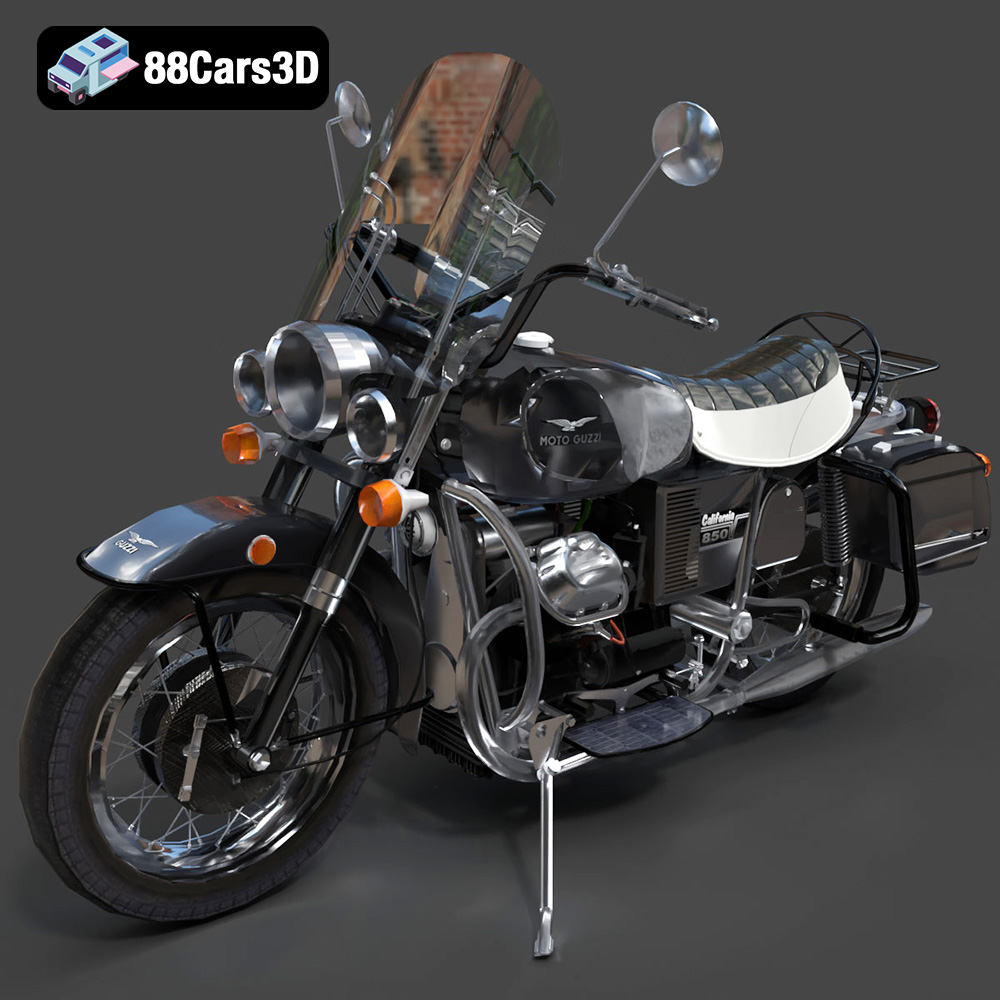
Download the Moto Guzzi Classic Motorcycle 2024 3D Model featuring clean geometry, realistic detailing, and a fully modeled interior. Includes .blend, .fbx, .obj, .glb, .stl, .ply, .unreal, and .max formats for rendering, simulation, and game development.
Price: $10

Texture: Yes
Material: Yes
Download the Mercedes S-Class 2024 3D Model featuring clean geometry, realistic detailing, and a fully modeled interior. Includes .blend, .fbx, .obj, .glb, .stl, .ply, .unreal, and .max formats for rendering, simulation, and game development.
Price: $10

Texture: Yes
Material: Yes
Download the Chevrolet Camaro 1970 3D Model featuring clean geometry, realistic detailing, and a fully modeled interior. Includes .blend, .fbx, .obj, .glb, .stl, .ply, .unreal, and .max formats for rendering, simulation, and game development.
Price: $10

Texture: Yes
Material: Yes
Download the Mercedes-AMG GT 2015 3D Model featuring clean geometry, realistic detailing, and a fully modeled interior. Includes .blend, .fbx, .obj, .glb, .stl, .ply, .unreal, and .max formats for rendering, simulation, and game development.
Price: $88.99

Texture: Yes
Material: Yes
Download the Suzuki GSX-R 1000 3D Model featuring clean geometry, realistic detailing, and a fully modeled interior. Includes .blend, .fbx, .obj, .glb, .stl, .ply, .unreal, and .max formats for rendering, simulation, and game development.
Price: $10

Texture: Yes
Material: Yes
Download the Porsche Cayman S 2024 3D Model featuring clean geometry, realistic detailing, and a fully modeled interior. Includes .blend, .fbx, .obj, .glb, .stl, .ply, .unreal, and .max formats for rendering, simulation, and game development.
Price: $10

Texture: Yes
Material: Yes
Download the Holden Commodore Sportwagon 2017 3D Model featuring clean geometry, realistic detailing, and a fully modeled interior. Includes .blend, .fbx, .obj, .glb, .stl, .ply, .unreal, and .max formats for rendering, simulation, and game development.
Price: $10

Texture: Yes
Material: Yes
Download the Mitsubishi Colt 3 Door 2008 3D Model featuring clean geometry, realistic detailing, and a fully modeled interior. Includes .blend, .fbx, .obj, .glb, .stl, .ply, .unreal, and .max formats for rendering, simulation, and game development.
Price: $10

Texture: Yes
Material: Yes
Download the Mercedes-Benz S650 Pullman 3D Model featuring clean geometry, realistic detailing, and a fully modeled interior. Includes .blend, .fbx, .obj, .glb, .stl, .ply, .unreal, and .max formats for rendering, simulation, and game development.
Price: $95.99

Texture: Yes
Material: Yes
Download the Mercedes G-Class SUV 2024 3D Model featuring clean geometry, realistic detailing, and a fully modeled interior. Includes .blend, .fbx, .obj, .glb, .stl, .ply, .unreal, and .max formats for rendering, simulation, and game development.
Price: $10

