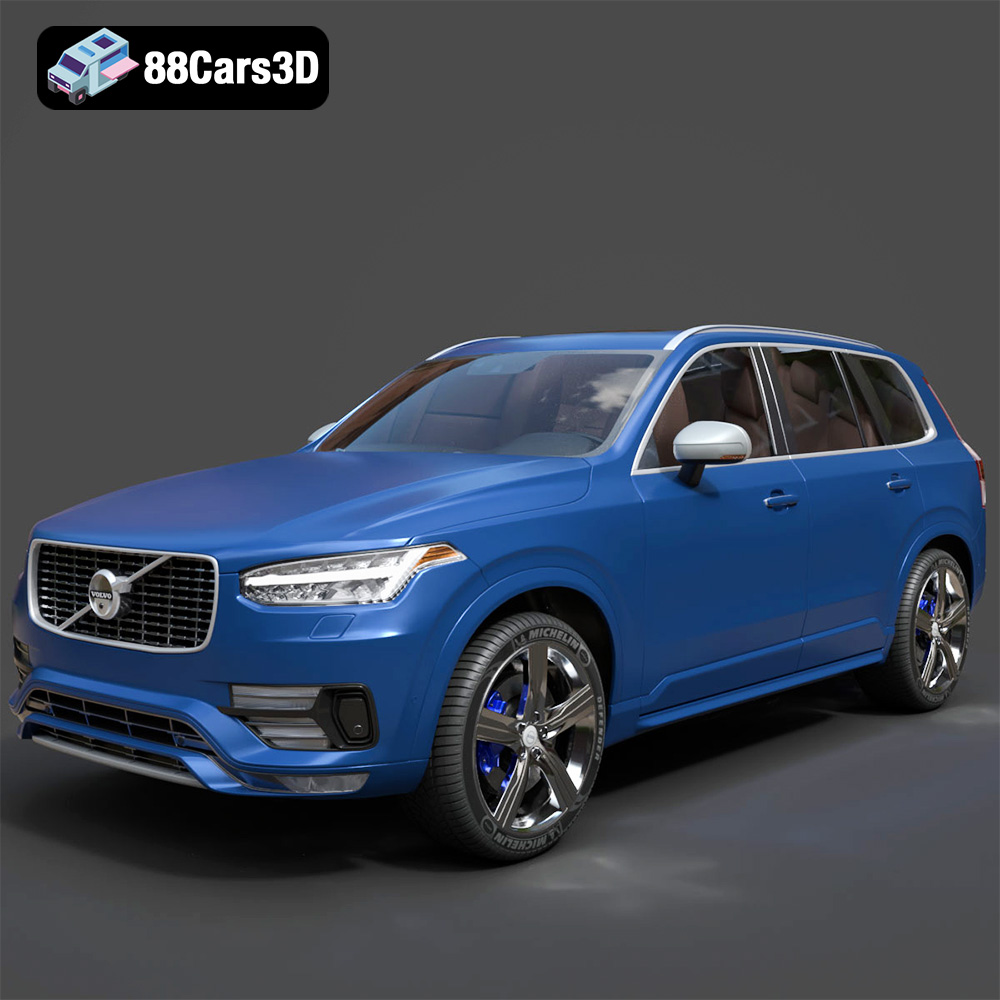
Get 50% OFF All Premium 3D & STL Models!

In the world of digital creation, few objects command as much attention and technical artistry as a photorealistic vehicle. From stunning automotive advertisements that blur the line between CGI and reality, to the adrenaline-pumping racing games that define a generation, the 3D car model is the star. However, creating a high-fidelity, production-ready vehicle model from scratch is a monumental task, demanding hundreds of hours of specialized modeling, texturing, and optimization. This is where professional, pre-made 3D car models become an indispensable asset for artists and studios, accelerating workflows and elevating the final product. This guide will take you under the hood, exploring the technical anatomy of a superior car model, navigating the complex world of file formats, and detailing the specific workflows for both photorealistic rendering and real-time game integration. We will explore how leveraging premium assets, like those found on 88cars3d.com, can be the key to unlocking next-level results in your projects.
Not all 3D models are created equal. A production-ready vehicle asset is a carefully constructed collection of geometry, data, and textures, each element meticulously crafted for a specific purpose. Understanding these core components is the first step in selecting and effectively using a model in your pipeline.
Topology refers to the flow and structure of polygons (quads and triangles) that form the model’s surface. Clean, quad-based topology is the gold standard for automotive models. This ensures that the surface subdivides smoothly without pinching or artifacts, which is crucial for close-up shots and achieving perfect, flowing reflections. The polygon count dictates the model’s level of detail:
A UV map is the 2D representation of the 3D model’s surface, acting as a blueprint for applying textures. A professional model will have clean, non-overlapping UVs that are efficiently packed to maximize texture space (texel density). This foundation supports a Physically Based Rendering (PBR) texturing workflow, which simulates how light interacts with real-world materials. Key texture maps include:
High-quality models typically use 4K (4096×4096) or even 8K textures to ensure sharp details even in extreme close-ups.
A static car model has limited use. A professionally prepared model is organized for animation and interaction. This means the object is broken down into a logical hierarchy with correctly placed pivot points. Wheels should be separate objects with pivots at their centers for rotation. Doors, the hood, the trunk, and the steering wheel should also be separate components, pivoted correctly on their “hinges” to allow for easy opening, closing, and steering animations. This thoughtful preparation saves animators and game developers countless hours of cleanup.
Choosing the right file format is one of the most critical decisions in a 3D workflow. The format you select dictates compatibility, editability, and final application performance. A premium 3D model provider will offer a wide range of formats, each tailored for a specific use case. Understanding their strengths and weaknesses is essential for a smooth production pipeline.
The goal of automotive rendering is to create an image that is indistinguishable from a real photograph. This requires a combination of a high-quality model, sophisticated lighting techniques, and physically accurate materials.
Start by importing a high-polygon .max or .fbx file into 3ds Max. The most crucial element for realistic reflections is lighting. An Image-Based Lighting (IBL) setup using a High Dynamic Range Image (HDRI) is standard practice. Wrap a high-resolution HDRI of a studio, city street, or landscape around your scene using a V-Ray Dome Light or Corona Sky. This single texture will provide the bulk of your realistic lighting and reflections. For studio shots, supplement this with a virtual cyclorama (cyc) wall and traditional 3-point lighting (key, fill, and rim lights) to sculpt the car’s form and create sharp, defined highlights.
When working in Blender, starting with a native .blend file is a massive time-saver. Blender’s node-based shader editor offers incredible power for customizing materials. The car paint shader is the most complex. A convincing car paint material is built in layers: a base color layer, a metallic flake layer (often controlled with a noise texture), and a top-level clear coat layer with its own roughness and normal values to simulate an orange-peel effect. Tweaking the flake size, density, and clear coat roughness allows you to create anything from a standard metallic finish to a custom candy coat or matte paint job.
No render is complete without post-production. Render out your image with separate passes, such as reflections, ambient occlusion, and lighting. In software like Photoshop or Affinity Photo, these passes give you granular control. You can enhance shadows with the ambient occlusion pass, boost reflections in specific areas, and perform professional color grading. Adding subtle effects like lens flares, chromatic aberration, and a slight vignette can add the final 10% of realism that sells the shot.
Preparing game assets involves a different set of priorities, focusing on performance, interactivity, and optimization. The goal is to maintain high visual fidelity while ensuring a smooth, real-time frame rate.
Unreal Engine 5 has revolutionized how high-detail assets are used. For cinematic scenes or high-end gameplay, you can now import extremely high-poly 3D car models and enable Nanite, Unreal’s virtualized geometry system. Nanite intelligently streams and processes only the detail you can see, largely removing the constraints of traditional polygon budgets. For drivable vehicles, you’ll still typically use a mid-poly model. The workflow involves importing the .fbx and setting up the Vehicle Blueprint, where you assign collision meshes, connect the wheels for physics simulation, and script the driving logic. Models from a quality source like 88cars3d.com are often organized perfectly for this process, with separated wheels and a clean hierarchy.
For developers using Unity, the HDRP is the go-to solution for achieving stunning visual quality. After importing the .fbx model, you’ll need to convert the standard materials to HDRP materials. HDRP provides a specialized “Car Paint” shader that simplifies the creation of complex, multi-layered paint jobs. For ultimate realism, enabling hardware-accelerated ray tracing within HDRP can produce breathtakingly accurate reflections, soft shadows, and global illumination, rivaling offline renders in real time.
In any large game world, optimization is king. This is where Level of Detail (LOD) meshes are essential. A complete game-ready car asset should include an LOD chain:
The game engine automatically switches between these models based on the car’s distance from the camera, dramatically improving performance without a noticeable drop in visual quality for the player.
The true value of a professional 3D car model is its versatility. Let’s look at how these assets are deployed across different industries to solve real-world problems.
Scenario: A creative agency is tasked with producing a TV commercial for a new luxury sedan before the physical prototype is available.
Solution: They purchase a high-poly, render-ready 3D model of the car. Using 3ds Max and V-Ray, their artists create a series of photorealistic studio shots against a clean backdrop, highlighting the vehicle’s design lines. For driving footage, they use camera tracking to integrate the CGI car into live-action plates of scenic roads. This allows them to create a full commercial at a fraction of the cost and time of a traditional car shoot, with complete control over lighting, environment, and car color.
Scenario: An indie studio is developing an open-world racing game but has a small art team.
Solution: The studio licenses a collection of 50 mid-poly, game-ready 3D car models. These assets come with optimized topology, LODs, PBR textures, and correctly rigged components. This single purchase saves them thousands of hours of modeling and texturing work, allowing their small team to focus on core game mechanics, track design, and physics programming. They can populate their game world with a diverse and high-quality vehicle roster that would have otherwise been impossible to create in-house.
Scenario: An automotive dealership wants to create a mobile app that lets customers view a car in their own driveway using augmented reality.
Solution: They acquire a highly optimized 3D car model and convert it to the .glb format. This lightweight, self-contained file is perfect for real-time mobile performance. Using ARKit or ARCore, the app allows a user to place a life-sized, realistic model of the car in their physical space. They can walk around it, look inside, and even change the paint color with the tap of a button, creating an engaging and futuristic customer experience.
A 3D car model is far more than a collection of polygons; it’s a sophisticated digital asset engineered for specific creative and technical demands. Whether you are an architectural visualizer crafting the perfect garage scene, a game developer building an immersive world, or a filmmaker producing stunning CGI, understanding the technical nuances of these models is paramount. From the foundational importance of clean topology and PBR textures to the critical decision of file format selection and the distinct workflows for offline rendering versus real-time applications, every detail matters. By leveraging high-quality, professionally crafted 3D car models, creators can bypass one of the most challenging aspects of production, freeing them to focus on what they do best: bringing their vision to life with uncompromising quality and efficiency.