Get 50% OFF All Premium 3D & STL Models!

The digital roar of a supercar in a blockbuster film, the glint of sunlight on a flawlessly rendered vehicle in an architectural visualization, the customizable ride in a high-octane video game—these experiences are all powered by meticulously crafted 3D car models. For digital artists, game developers, and visualization specialists, high-quality automotive assets are not just props; they are centerpieces that can define the realism and impact of a project. However, navigating the technical landscape of using these complex assets can be daunting. From polygon counts and UV maps to file formats and rendering pipelines, the details matter.
This comprehensive guide will demystify the process, providing a deep dive into the technical anatomy of a professional 3D car model. We will explore the critical file formats you’ll encounter, walk through specific workflows for both photorealistic automotive rendering and real-time game integration, and look at real-world case studies. Whether you are creating a cinematic shot, developing the next hit racing game, or visualizing a new product, this guide will equip you with the knowledge to get the most out of your digital garage.
Before you can even think about rendering or animating, it’s crucial to understand what separates a professional-grade model from a simple mesh. The quality is baked into its digital DNA, defined by its topology, texturing, and structural preparation. A great model isn’t just about looking good; it’s about being versatile and efficient to work with.
Topology refers to the flow of polygons (quads and triangles) that form the surface of the model. Clean, quad-based topology is the industry standard for assets intended for animation and high-quality rendering. It allows for smooth subdivision (using modifiers like TurboSmooth in 3ds Max or a Subdivision Surface in Blender) without creating visual artifacts like pinching or distortion. Edge loops should follow the natural contours and panel gaps of the car, which is essential for creating crisp reflections and accurate highlights.
Polygon count is another critical factor. A “high-poly” model, often exceeding 500,000 polygons, is built for detail and close-up shots, perfect for cinematic renders and marketing materials. In contrast, a “low-poly” model, optimized for real-time performance, is a primary requirement for game assets. These models are often triangulated and have a much lower polygon count, relying on normal maps to fake surface detail.
UV unwrapping is the process of flattening the 3D model’s surface into a 2D map, which allows textures to be applied accurately. A professional model will have non-overlapping, efficiently packed UVs. For hyper-detailed assets, artists often use UDIMs (U-Dimension), a system that allows textures to be spread across multiple UV tiles, enabling incredibly high resolutions for different parts of the car.
Modern 3D car models almost exclusively use a Physically Based Rendering (PBR) workflow. This means textures are split into maps that describe physical properties: Base Color (Albedo), Metallic, Roughness, and Normal. This approach ensures the car’s materials react realistically to light in any environment, whether it’s a V-Ray render or an Unreal Engine scene.
A static model is only half the story. For any kind of animation or interactive use, the model must be properly prepared. This involves separating key components into distinct objects—wheels, doors, hood, trunk, steering wheel, and suspension elements. Crucially, the pivot points for each of these objects must be set correctly. A door’s pivot should be at its hinge, and a wheel’s pivot should be at its center axle. This preparation saves hours of work down the line and is a hallmark of a production-ready asset.
Choosing the right file format is one of the most critical decisions in any 3D workflow. It dictates compatibility, data integrity, and efficiency. A professional provider like 88cars3d.com understands this, offering a wide array of formats to suit different pipelines. Each format is a container designed for a specific purpose, carrying different types of data from mesh geometry to complex shader networks.
Creating a stunning, photorealistic image of a car requires a combination of a high-quality model, a powerful renderer, and an artist’s eye. The goal is to perfectly simulate how light interacts with the complex materials of a vehicle. This workflow is common in advertising, product visualization, and cinematic production.
The process begins by importing a high-poly 3D car model, typically a .max or .fbx file. The first step is to establish a lighting environment. The most effective method is Image-Based Lighting (IBL) using a High Dynamic Range Image (HDRI). An HDRI of a photo studio, a city street, or a scenic landscape will wrap around the scene, providing both realistic lighting and reflections.
Next, create a ground plane or a studio “cyc” wall for the car to sit on. Assign a simple matte material to this surface so it can catch shadows and reflections without distracting from the main subject. This grounds the vehicle in the scene and makes it feel tangible.
This is where the magic happens. While a good model comes with PBR textures, fine-tuning is essential for ultimate realism. The car paint shader is the most complex. In renderers like V-Ray or Corona, this is a layered material consisting of:
Other materials like glass (with correct Index of Refraction), chrome, rubber for the tires, and textured plastic for the trim must also be carefully configured to react properly to the lighting.
Treat the virtual camera like a real DSLR. Use a physical camera model and set a realistic focal length (e.g., 50mm or 85mm) to avoid distortion. Use a shallow depth of field (low F-stop number) to draw the viewer’s eye to a specific part of the car, like the headlight or a badge. Render out multiple passes, such as a reflection pass, a shadow pass, and an ambient occlusion pass. These can then be composited in software like Photoshop or After Effects for final color grading, contrast adjustments, and adding effects like lens flare or vignetting.
The requirements for game assets are fundamentally different from those for offline rendering. Performance is king. Every polygon and texture byte counts, and the goal is to maintain a high and stable frame rate. The workflow is centered around optimization and efficiency.
A game doesn’t need to render a 500,000-polygon car when it’s just a speck in the distance. This is where Levels of Detail (LODs) come in. An asset will have multiple versions of its mesh, each with a progressively lower polygon count.
The game engine automatically switches between these LODs based on the car’s distance from the camera. This is the single most important optimization technique for in-game vehicles.
Importing your asset into Unreal is best done with an .fbx file or a direct .unreal asset pack. Unreal Engine 5 offers a powerful material editor for creating believable real-time shaders. It even includes a dedicated Car Paint shading model that simulates the base, flake, and clear coat layers efficiently. With technologies like Lumen for real-time global illumination and reflections, and Nanite for handling high-poly geometry (though often not suitable for dynamic vehicles), achieving near-photorealistic quality in real-time is more accessible than ever. The key is to balance visual fidelity with shader complexity to avoid performance bottlenecks.
For a car to be drivable, it needs to interact with the world. This is handled by a collision mesh—a separate, ultra-low-polygon, invisible version of the model that the physics engine uses for calculations. A simple box-like collision mesh is fast but inaccurate. A more detailed, custom-made “convex hull” collision mesh provides much better results, allowing the car to realistically bump into objects and react to terrain. Once imported, this mesh is used within Unreal’s Vehicle Blueprint system to configure engine power, wheel friction, suspension, and handling characteristics.
The true value of a professional 3D car model is demonstrated in its application. Let’s look at a few real-world scenarios where these assets play a pivotal role.
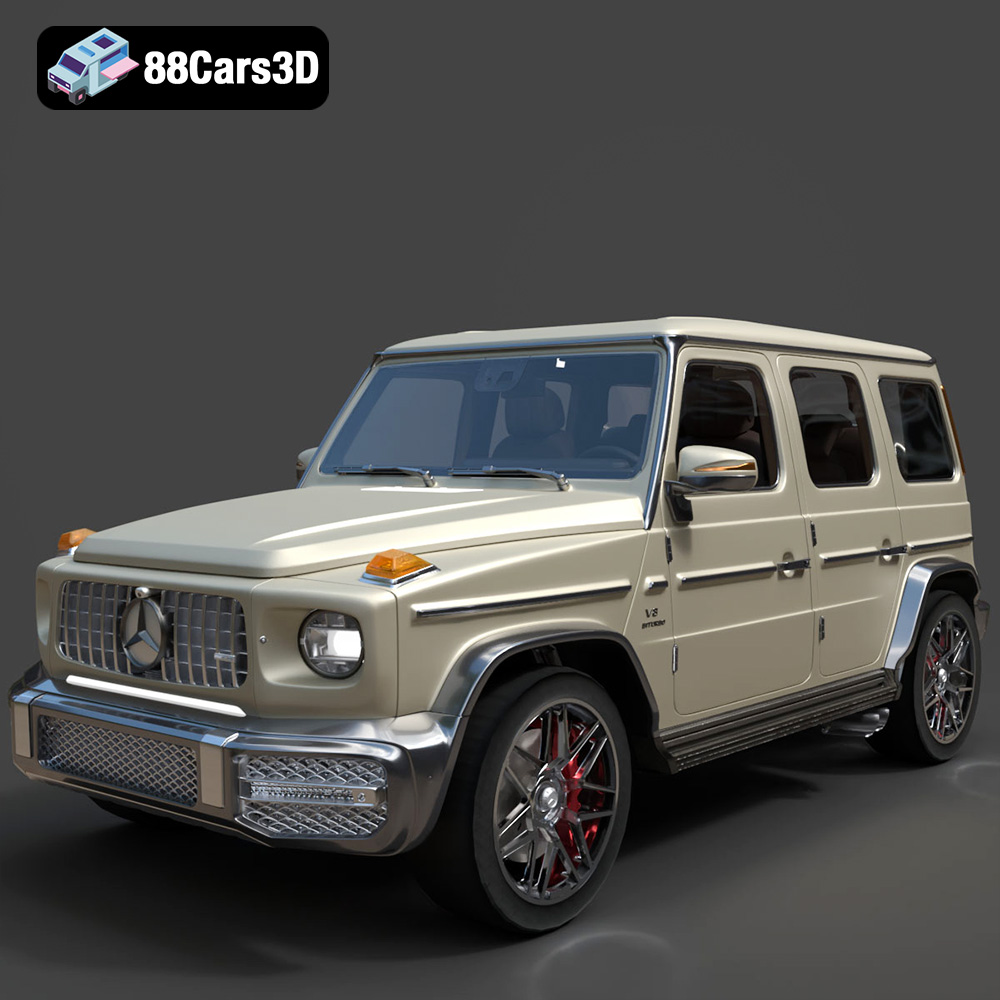
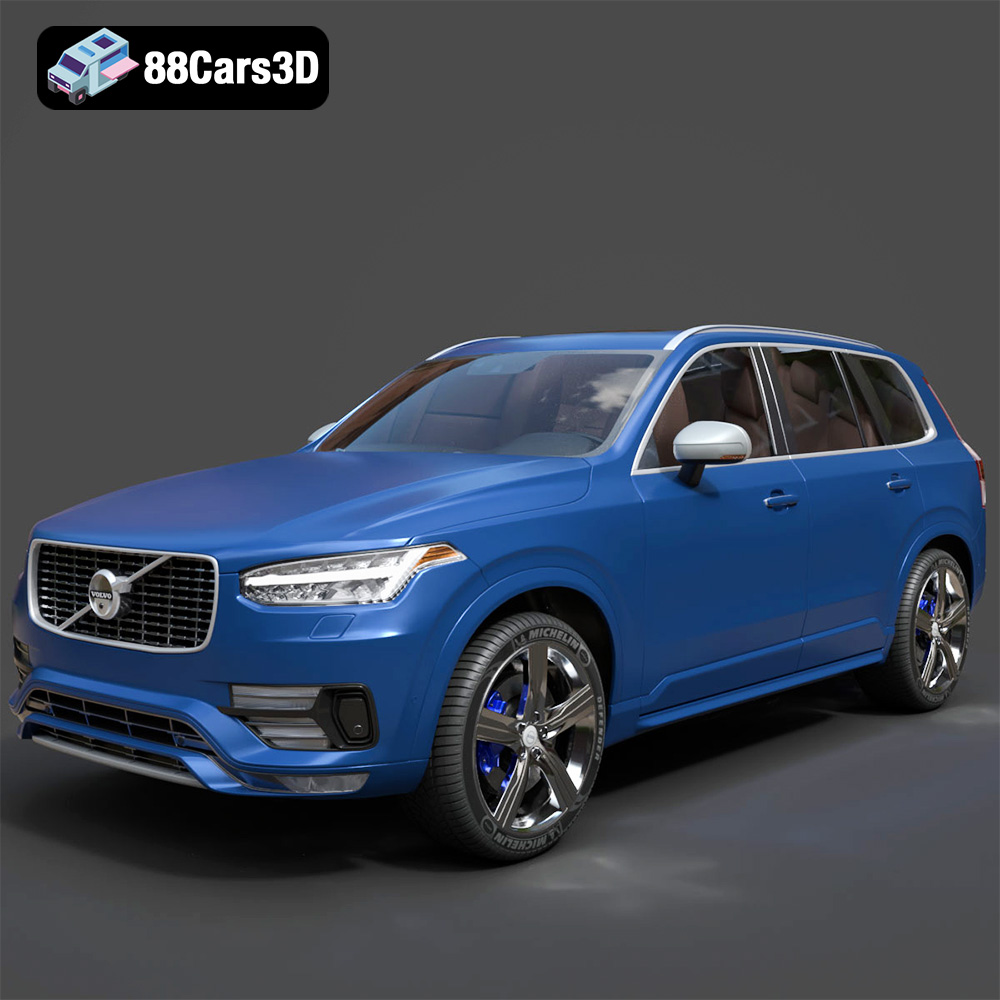
An architecture firm is creating marketing materials for a new luxury residential tower. To showcase the building’s premium feel, they need to populate the scene with high-end vehicles. They license a high-poly model of a modern electric SUV. Using a .max file pre-configured for V-Ray, their artists can drop the car directly into their 3ds Max scene. The detailed interior, accurate materials, and clean topology hold up perfectly in their 4K resolution renders, adding a crucial layer of realism and context that helps sell the property.
A small indie team is developing an open-world driving game. Modeling a single car to a professional standard could take them hundreds of hours, derailing their production schedule. Instead, they purchase a game-ready asset from a marketplace like 88cars3d.com. They receive a package containing the model in .fbx format, complete with multiple LODs, PBR textures, and a pre-made collision mesh. This allows them to focus their limited resources on gameplay, level design, and physics tuning, knowing they have a high-quality, fully optimized hero asset ready to go.
A forward-thinking car dealership wants to create an AR app that lets customers view a car in their own driveway. They need a model that is both highly detailed and extremely lightweight for mobile performance. The solution is the .glb format. A 3D artist takes a high-quality model and heavily optimizes it, baking down details into textures and reducing the polygon count. The final .glb file is under 20MB, loads instantly on a smartphone, and provides a compelling, interactive sales experience that sets the dealership apart from its competition.
From the sweeping curves of a hypercar in a cinematic render to the battle-scarred chassis of a hero vehicle in a video game, 3D car models are a cornerstone of modern digital content creation. As we’ve seen, the journey from a raw mesh to a final, integrated asset is a technical one, paved with considerations of topology, UVs, file formats, and pipeline-specific workflows.
Understanding the distinction between a high-poly model for automotive rendering and a highly optimized model for game assets is the first step. Knowing when to use a .max file for its V-Ray shaders versus a .glb for its AR portability is what empowers you to work efficiently. By investing in high-quality, professionally prepared models and armed with the technical knowledge to use them correctly, you can save invaluable time, elevate the quality of your work, and focus on what truly matters: bringing your creative vision to life.