Get 50% OFF All Premium 3D & STL Models!

“`html
The world of architectural visualization is undergoing a seismic shift. For decades, static, pre-rendered images and painstakingly produced fly-through videos were the gold standard. While beautiful, they offered a passive viewing experience. Today, clients and stakeholders demand more; they want to inhabit, explore, and interact with a space before a single brick is laid. This is where real-time rendering with Unreal Engine has completely changed the game. It transforms architectural designs from static pictures into living, breathing digital twins that can be explored in real-time, in virtual reality, or as interactive applications. This guide will provide a comprehensive, technical walkthrough of the entire process, from initial project setup and data import to advanced lighting, material creation, and final optimization. You will learn the professional workflows required to harness Unreal Engine’s power, turning your architectural models into stunning, interactive, and photorealistic experiences that captivate and convince.
A successful architectural visualization project in Unreal Engine begins with a solid foundation. Proper project setup and a clean data pipeline are non-negotiable for an efficient workflow and a high-performance final product. Rushing this initial stage often leads to significant technical debt and troubleshooting down the line. Taking the time to configure your project correctly and prepare your source data meticulously will pay dividends, allowing you to focus on the creative aspects of lighting, materials, and storytelling.
When you create a new project in Unreal Engine, you are presented with several templates. For ArchViz, the most logical starting point is the Architecture, Engineering, and Construction (AEC) template. This template is pre-configured with settings ideal for visualization, such as enabling hardware ray tracing (if your GPU supports it) and including starter assets like a physically accurate sun and sky system. It also sets the default rendering settings for high-quality output. While starting from a blank project is possible for experienced users, the AEC template provides an excellent, optimized base that saves considerable setup time. Key project settings to double-check include enabling “Generate Mesh Distance Fields” under Project Settings > Rendering, which is crucial for Lumen’s software ray tracing and Ambient Occlusion features.
Getting your meticulously crafted 3D models out of CAD or DCC (Digital Content Creation) software and into Unreal Engine is the first major step. The key to this process is Unreal Datasmith. Datasmith is a collection of tools and plugins designed to import entire scenes from applications like 3ds Max, Revit, SketchUp Pro, and Rhino with maximum fidelity. Unlike a standard FBX import, Datasmith preserves scene hierarchy, object names, material assignments, metadata, and even lights and cameras. The workflow is straightforward:
.udatasmith file and a folder of associated assets..udatasmith file into your project.This process ensures that your model arrives in-engine organized and largely intact, drastically reducing the need for manual reconstruction.
Once your scene is imported, a disciplined approach to organization is critical. Use the World Outliner to create a logical folder structure. A common practice is to group objects by category (e.g., Walls, Floors, Windows, Furniture, Vegetation). This makes navigating and managing complex scenes far easier. During this stage, you should also perform a quick audit: check that the scale is correct (Unreal Engine uses centimeters as its default unit), verify that materials have been assigned correctly, and delete any unnecessary helper objects or construction geometry that may have been imported from your CAD software. A clean, well-organized scene is a performant and manageable scene.
Your architectural model forms the canvas, but it’s the high-quality assets—furniture, foliage, fixtures, and entourage—that bring the scene to life. However, simply dropping unoptimized, high-polygon assets into your project is a recipe for poor performance. The art lies in balancing visual fidelity with real-time rendering constraints, and Unreal Engine 5 provides powerful tools like Nanite to make this balance more achievable than ever before.
Nanite is Unreal Engine 5’s virtualized micropolygon geometry system, and it is a revolution for architectural visualization. Traditionally, CAD and BIM models contain millions, sometimes billions, of polygons, which would be impossible to render in real-time. Nanite solves this by intelligently streaming and rendering only the geometric detail you can perceive. This means you can import incredibly dense architectural models directly into the engine without the painstaking process of manual optimization or polygon reduction. To use it, simply select your static meshes in the Content Browser, right-click, and choose “Enable Nanite.” It’s important to note that Nanite works best on rigid, opaque geometry, which covers the vast majority of an architectural shell. It does not currently support materials using masked or translucent blend modes or skeletal animation.
While Nanite handles the core architecture, you still need to be mindful of other assets. Furniture, plants, and vehicles add crucial context and realism. For exterior shots, populating the scene with high-quality, game-ready vehicles is crucial for believability. Sourcing assets from specialized marketplaces like 88cars3d.com ensures you get models that are already optimized with clean topology, multiple LODs, and PBR materials, saving significant development time. When sourcing assets, look for reasonable polygon counts (e.g., 50k-150k for a hero asset) and efficient texture usage. An asset with ten 4K textures for a small prop is inefficient; look for assets that use texture atlases and resolutions appropriate for their on-screen size.
For assets that don’t support Nanite, such as foliage with masked materials or interactive objects, the traditional Level of Detail (LOD) system is essential. LODs are lower-polygon versions of a mesh that are swapped in as the object moves further from the camera. Unreal Engine has a robust, built-in tool for automatically generating LODs. You can open a static mesh editor, navigate to the LOD Settings panel, and specify the number of LODs you want to generate. The engine will then progressively reduce the polygon count for each subsequent LOD. While the automatic generation is good, for hero assets, creating manual LODs in a DCC application often yields superior results and gives you precise control over the silhouette and form at each level.
Materials are what give surfaces their appearance and are arguably the most important element in achieving photorealism. A perfect model with poor materials will look fake, while a simpler model with expertly crafted materials can look incredibly convincing. Unreal Engine’s node-based Material Editor is an immensely powerful tool that allows you to simulate virtually any real-world surface by adhering to the principles of Physically Based Rendering (PBR).
Physically Based Rendering (PBR) is a methodology that aims to simulate how light interacts with materials in a physically plausible way. Instead of using arbitrary values, you use texture maps that describe the physical properties of a surface. The core maps for most opaque materials are:
By using these maps together, you can create materials that react correctly and consistently under any lighting condition.
For large architectural projects, creating a unique material for every single surface is highly inefficient. The professional workflow is to create a “Master Material.” This is a complex, highly flexible parent material that contains all the logic you might need, with its key properties exposed as parameters. For example, you could create a master material for plaster walls that has parameters for Base Color Tint, Roughness Intensity, Normal Map Strength, and Tiling Scale. From this single master material, you can then right-click and create a Material Instance. This instance allows you to change all the exposed parameters without recompiling the shader, making it incredibly fast and efficient to create hundreds of variations for your entire project.
To push realism further, you need to master more advanced techniques. Creating believable glass requires controlling Refraction and Opacity. For high-end architectural glass, you can use the Thin Translucent shading model for an efficient yet convincing look. For polished floors or varnished wood, the Clear Coat shading model adds a secondary layer of reflections, simulating a lacquer finish. You can also add subtle imperfections and variations using grunge maps or masks, which can be blended into the Roughness channel to break up perfect, computer-generated reflections and add a layer of history and realism to the surface.
Light is what reveals form, defines mood, and creates space. In real-time ArchViz, lighting has historically been a major challenge, often requiring long pre-computation times for “baking” lightmaps. Unreal Engine 5’s Lumen system has fundamentally changed this, offering fully dynamic global illumination and reflections that provide instant visual feedback and unparalleled creative freedom.
Lumen is Unreal Engine’s default dynamic Global Illumination (GI) and reflections system. In simple terms, it simulates how light bounces off surfaces to illuminate other surfaces in real-time. When sunlight streams through a window, Lumen calculates how that light bounces off the floor to realistically brighten the ceiling and surrounding walls. This eliminates the need for lightmap baking, allowing you to move lights, change the time of day, or even open and close doors and see the lighting update instantly. Key settings for Lumen are found in a Post Process Volume. You can adjust the Global Illumination and Reflection methods and quality levels. For ArchViz, using Hardware Ray Tracing for Lumen (if available) often yields the highest-quality results, especially for sharp reflections in mirrors and glass.
While Lumen is revolutionary, there are still scenarios where traditional baked lighting using Lightmass is a valid choice. If your project is intended for lower-end hardware, mobile, or VR platforms that cannot handle Lumen’s performance cost, baking is the way to go. Baked lighting pre-calculates all the complex light bounces and shadows and stores them in textures called lightmaps. The result is extremely high-quality, performant lighting, but at the cost of flexibility—the lighting is completely static. If you choose this route, you must ensure all your static meshes have proper lightmap UVs (a second UV channel with no overlapping islands), which is a critical step for achieving clean, artifact-free baked shadows.
Your main lighting will come from a Directional Light (simulating the sun) and a Sky Light (capturing ambient light from the sky atmosphere). For interiors, you’ll use supplementary lights like Rect Lights (for soft area lighting from windows) and Spot Lights. Once the basic lighting is in place, the Post Process Volume is where you define the final look and feel. This is where you control exposure, contrast, color grading (temperature, tint, saturation), bloom, lens flares, and ambient occlusion. Mastering post-processing is as important as the lighting itself; it’s the final step that turns a technically correct render into a beautiful, atmospheric image.
The true power of a real-time walkthrough lies in its interactivity. Allowing a user to freely explore a space creates a sense of presence and ownership that a video cannot match. Unreal Engine’s Blueprint Visual Scripting system provides a powerful, node-based way to add complex interactivity to your projects without writing a single line of code, making it accessible to artists and designers.
The most fundamental element of a walkthrough is the player controller. You can easily create one using Unreal’s built-in Character Blueprint class. This provides a pre-built foundation with movement components and collision capsules. The process involves:
With just a few nodes, you can have a fully functional first-person controller ready for exploring your scene.
Beyond simple movement, you can add interactions that make the space feel more dynamic. A common example is an automatic sliding door. This can be achieved using a Trigger Volume. You place this invisible box in front of the door and use its “On Actor Begin Overlap” event in a Blueprint. When the player character enters the volume, it can fire off a Timeline node that smoothly animates the door’s position from closed to open. Another popular interactive feature is a material configurator. You can script a Blueprint so that when the player looks at a specific object (like a kitchen countertop) and presses a key, it cycles through an array of different Material Instances, allowing the client to visualize different design options in real-time.
For presentations or marketing materials, you may still need a traditional, non-interactive video. Unreal Engine’s Sequencer is a professional-grade, non-linear cinematic editor built directly into the engine. It allows you to create beautifully animated camera fly-throughs. You can add a camera to the Sequencer timeline, create keyframes for its position and rotation, and edit the interpolation curves for smooth, cinematic movement. You can also keyframe almost any other property in the scene, such as the position of the sun to create a time-lapse, the intensity of lights, or even post-processing effects. Sequencer allows you to render out high-resolution video files or image sequences directly from the engine.
After all the creative work is done, the final, crucial step is ensuring your architectural walkthrough runs smoothly on your target hardware. A beautiful scene that runs at 15 frames per second is unusable. Optimization is an ongoing process, not an afterthought. It involves identifying performance bottlenecks and strategically reducing the workload on the CPU and GPU to achieve a stable, high frame rate.
You cannot optimize what you cannot measure. Unreal Engine provides powerful built-in profiling tools. The most basic and useful are the console commands. Press the tilde (~) key to open the console and type stat unit to see the time in milliseconds for the Game thread, Draw thread, and GPU. The highest number is your bottleneck. For a deeper dive, stat gpu will show a detailed breakdown of every rendering pass, helping you identify if shadows, post-processing, or translucency are costing the most performance. For expert-level analysis, Unreal Insights is a standalone tool that can record a trace of your session and allow you to scrub through the data frame by frame to find the exact cause of any performance spike.
Optimizing an ArchViz scene involves a holistic approach. Here are some key strategies:
Once your project is optimized, the final step is to package it into a standalone executable. The process is managed through the Project Launcher. You can create a packaging profile for your target platform (e.g., Windows). For VR applications, performance is even more critical. You must maintain a consistently high frame rate (typically 90 FPS) to avoid inducing motion sickness. This often requires more aggressive optimization, such as using the Forward Shading renderer (which is generally faster for VR) and leveraging platform-specific features like foveated rendering if available. For an in-depth understanding of the engine’s capabilities, the official Unreal Engine documentation and learning portal is an indispensable resource for both beginners and experts.
Transitioning from traditional rendering to real-time architectural visualization in Unreal Engine is a significant but rewarding endeavor. It empowers architects, designers, and artists to create not just images, but immersive and interactive experiences. By following a structured workflow—starting with meticulous data preparation, leveraging powerful features like Nanite and Lumen, building modular materials, adding meaningful interactivity with Blueprints, and continuously optimizing for performance—you can unlock a new level of communication and storytelling for your designs. The learning curve can be steep, but the result is the ability to present projects with a clarity, realism, and emotional impact that was previously unimaginable. By combining these powerful Unreal Engine workflows with high-quality, pre-optimized assets from sources like 88cars3d.com to populate your scenes, you can drastically reduce production time and achieve world-class results that will leave a lasting impression on your clients.
“`
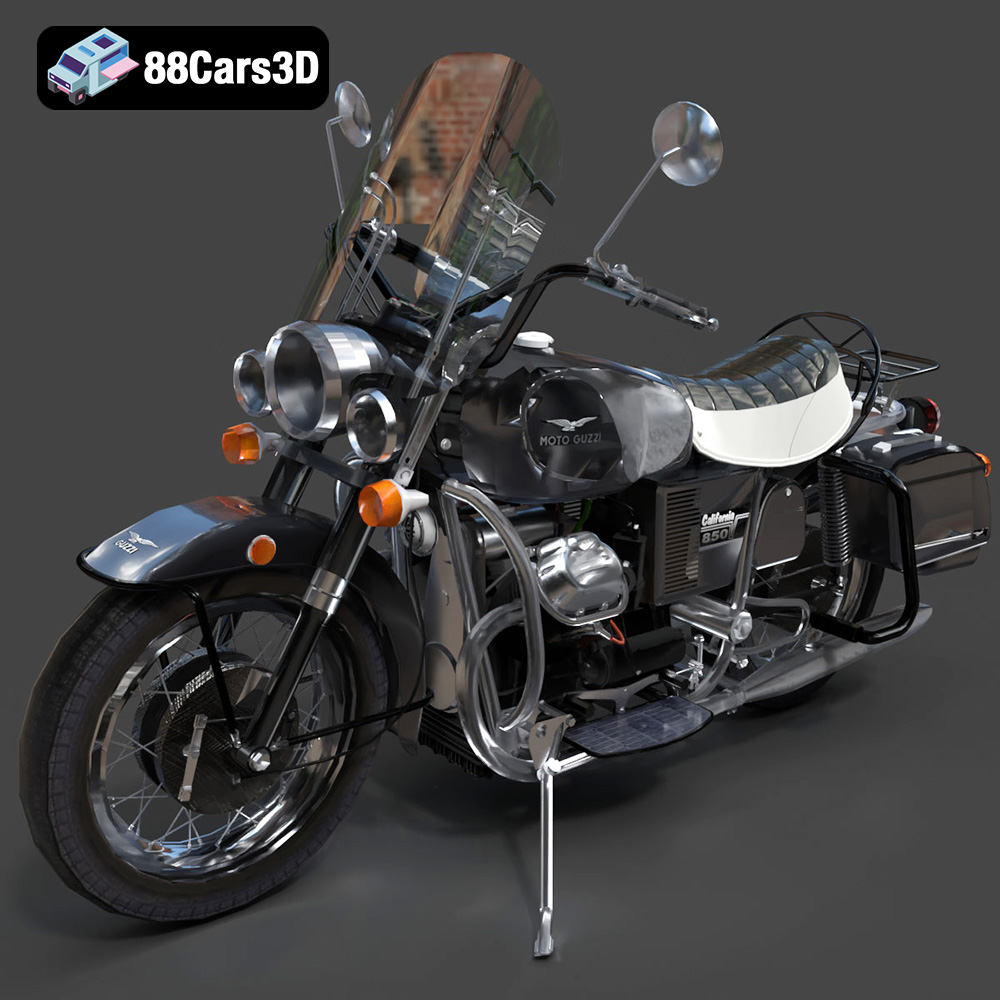
Texture: Yes
Material: Yes
Download the Moto Guzzi Classic Motorcycle 2024 3D Model featuring clean geometry, realistic detailing, and a fully modeled interior. Includes .blend, .fbx, .obj, .glb, .stl, .ply, .unreal, and .max formats for rendering, simulation, and game development.
Price: $10

Texture: Yes
Material: Yes
Download the Horch 853 Sport Cabriolet 1937 3D Model featuring clean geometry, realistic detailing, and a fully modeled interior. Includes .blend, .fbx, .obj, .glb, .stl, .ply, .unreal, and .max formats for rendering, simulation, and game development.
Price: $10
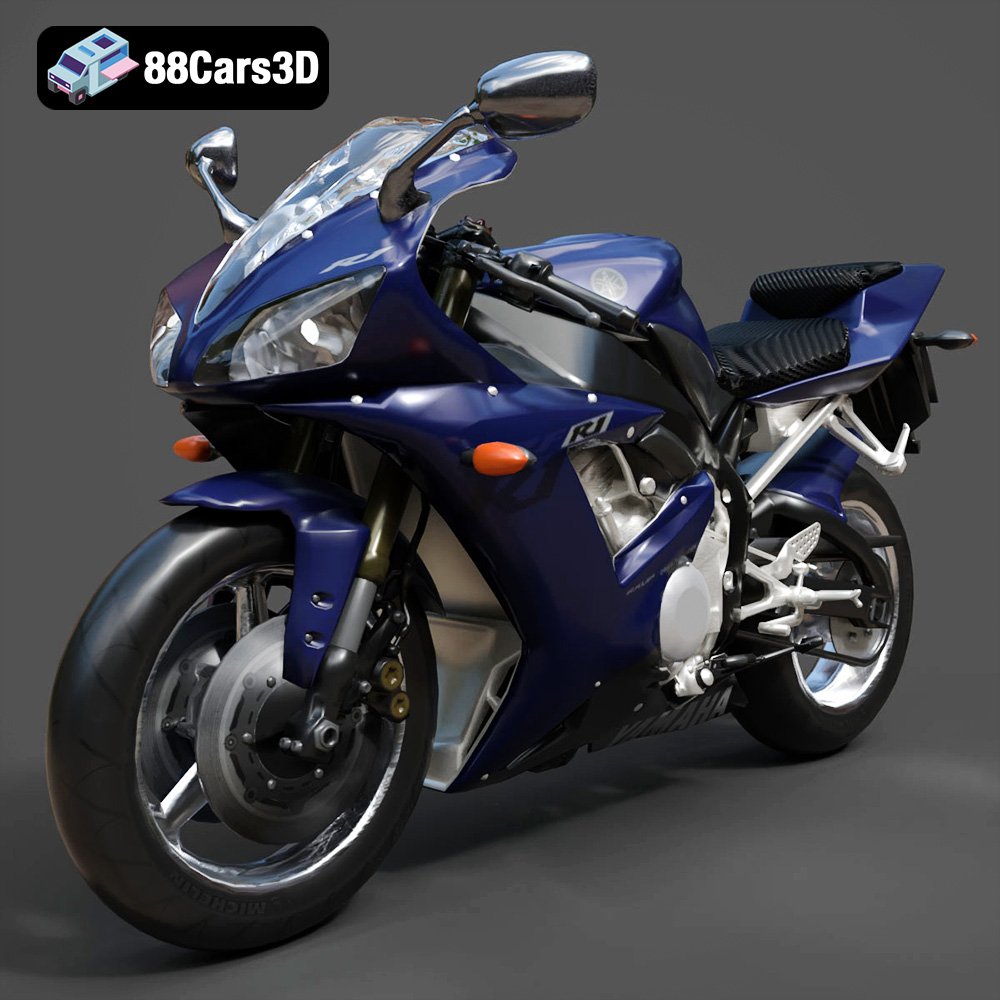
Texture: Yes
Material: Yes
Download the Yamaha YZF-R1 Motorcycle 3D Model featuring clean geometry, realistic detailing, and a fully modeled interior. Includes .blend, .fbx, .obj, .glb, .stl, .ply, .unreal, and .max formats for rendering, simulation, and game development.
Price: $10
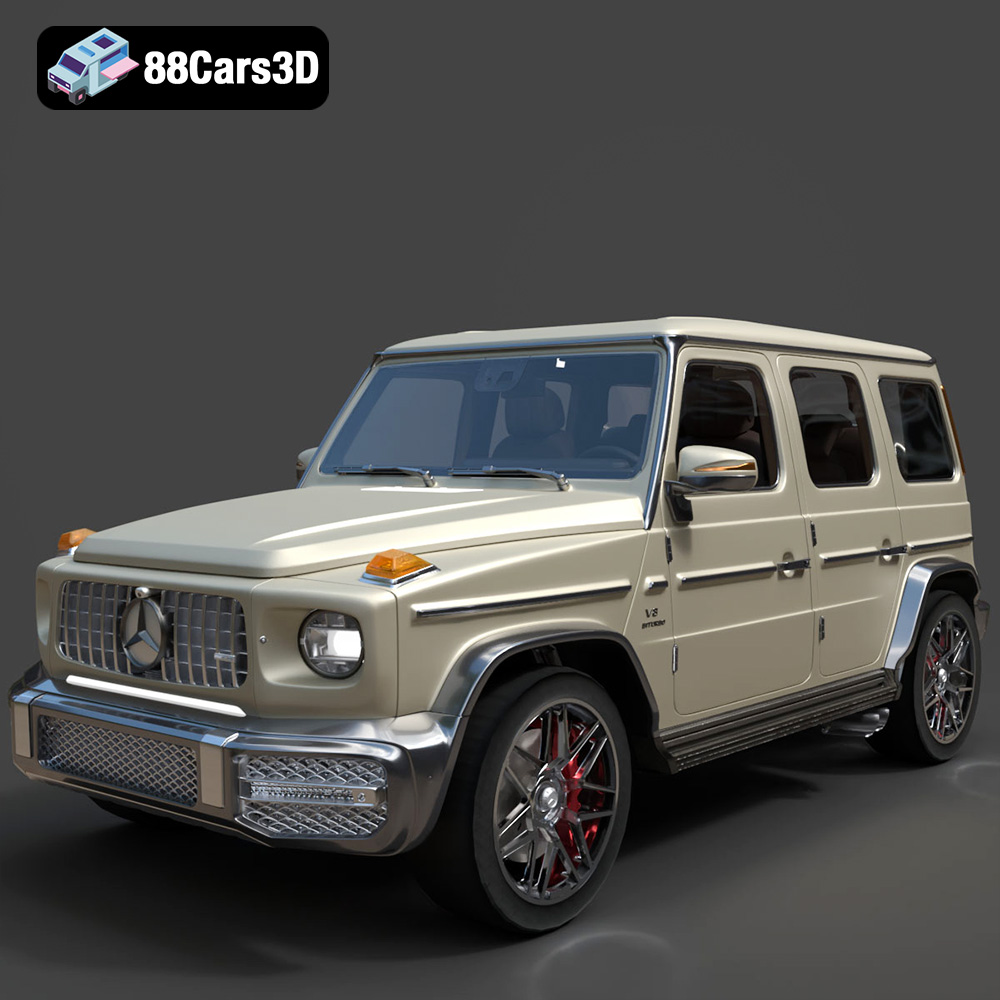
Texture: Yes
Material: Yes
Download the Mercedes Benz G63 AMG 2019 3D Model featuring clean geometry, realistic detailing, and a fully modeled interior. Includes .blend, .fbx, .obj, .glb, .stl, .ply, .unreal, and .max formats for rendering, simulation, and game development.
Price: $90

Texture: Yes
Material: Yes
Download the Daewoo Damas Mk2 2012 3D Model featuring clean geometry, realistic detailing, and a fully modeled interior. Includes .blend, .fbx, .obj, .glb, .stl, .ply, .unreal, and .max formats for rendering, simulation, and game development.
Price: $10
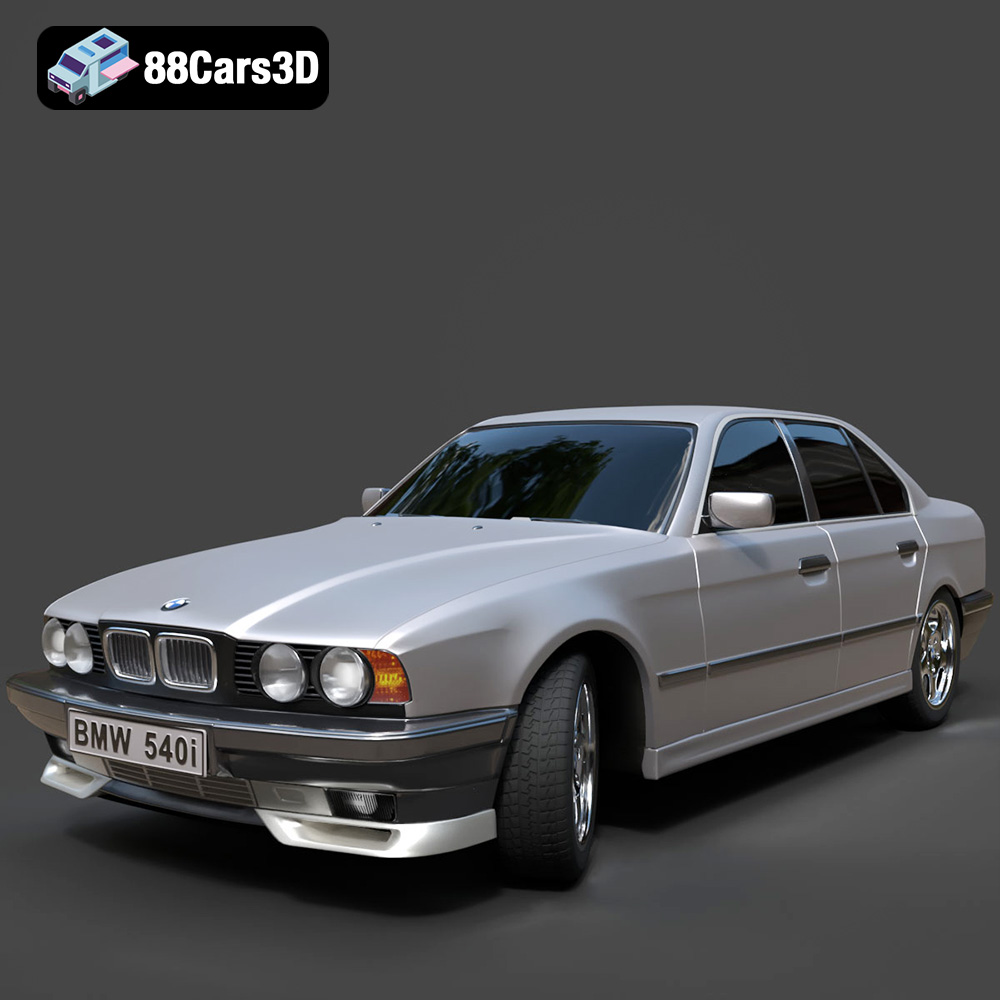
Texture: Yes
Material: Yes
Download the BMW 540 E34 3D Model featuring clean geometry, realistic detailing, and a fully modeled interior. Includes .blend, .fbx, .obj, .glb, .stl, .ply, .unreal, and .max formats for rendering, simulation, and game development.
Price: $10

Texture: Yes
Material: Yes
Download the BMW 8 Series Coupe 2020 3D Model featuring clean geometry, realistic detailing, and a fully modeled interior. Includes .blend, .fbx, .obj, .glb, .stl, .ply, .unreal, and .max formats for rendering, simulation, and game development.
Price: $10

Texture: Yes
Material: Yes
Download the Mercedes-Benz CLA45 AMG 2017 3D Model featuring clean geometry, realistic detailing, and a fully modeled interior. Includes .blend, .fbx, .obj, .glb, .stl, .ply, .unreal, and .max formats for rendering, simulation, and game development.
Price: $21.99

Texture: Yes
Material: Yes
Download the Dodge Charger Car-004 3D Model featuring clean geometry, realistic detailing, and a fully modeled interior. Includes .blend, .fbx, .obj, .glb, .stl, .ply, .unreal, and .max formats for rendering, simulation, and game development.
Price: $10

Texture: Yes
Material: Yes
Download the Austin Mini Cooper S 1965 3D Model featuring clean geometry, realistic detailing, and a fully modeled interior. Includes .blend, .fbx, .obj, .glb, .stl, .ply, .unreal, and .max formats for rendering, simulation, and game development.
Price: $10

