Get 50% OFF All Premium 3D & STL Models!

The automotive industry has always been at the forefront of innovation, not just in engineering but also in marketing and sales. For decades, glossy photographs and cinematic commercials were the bedrock of how car manufacturers showcased their latest models. However, with the advent of advanced computer graphics and real-time rendering technologies, a profound shift has occurred. We’ve transitioned from merely showcasing a product to offering an immersive, interactive experience, and the engine driving this transformation is the high-quality 3D car model.
Today, 3D car models are no longer confined to the engineering department or the design studio. They are pivotal marketing assets, revolutionizing how automotive brands engage with potential customers, from initial concept visualization to final purchase decisions. These digital representations empower everything from photorealistic configurators and virtual showrooms to cutting-edge AR/VR experiences and even precise 3D prints for prototyping. This comprehensive guide will explore the multifaceted role of 3D models in modern automotive marketing, diving into the technical intricacies that make them indispensable tools for today’s dynamic market.
At the heart of any compelling 3D automotive marketing campaign lies an impeccably crafted 3D model. The quality of this foundational asset dictates everything that follows, from the realism of renders to the fluidity of real-time interactions. Automotive models demand a level of precision and attention to detail that is unmatched in many other 3D disciplines, primarily due to the intricate curves, reflective surfaces, and complex mechanical components that define a vehicle. A poorly constructed model, even with the best materials and lighting, will always fall short of achieving the desired photorealism and performance.
For artists and designers, understanding the technical specifications and best practices for 3D car models is crucial. This includes considerations for polygon counts, which can vary wildly from tens of thousands for real-time game assets to several million for high-fidelity offline renders. The underlying mesh structure, known as topology, is paramount. It ensures that the model deforms correctly, captures the subtle nuances of the car’s design, and allows for clean UV mapping and material application. Investing in high-quality, pre-made assets from platforms like 88cars3d.com can provide an excellent starting point, saving significant development time while ensuring professional-grade foundations.
The hallmark of a professional 3D car model is its clean, quad-based topology and intelligent edge flow. Quad polygons (four-sided faces) are preferred over triangles for their predictable deformation and smoother subdivision, which is essential for rendering perfectly curved body panels. Excellent edge flow ensures that the mesh lines follow the natural contours and creases of the car, mimicking the vehicle’s design language. For instance, creating smooth transitions around wheel wells, door seams, and air vents requires careful placement of edge loops to control curvature and prevent pinching or undesirable artifacts when the model is subdivided (e.g., using a Catmull-Clark subdivision surface modifier).
When modeling complex features like grilles or intricate headlight assemblies, proper topology facilitates the accurate representation of both form and function. Artists often utilize techniques like “hard surface modeling” which combines clean polygon modeling with careful use of support loops to define sharp edges without increasing the base mesh resolution unnecessarily. This balance is critical, as excessive polygon counts can lead to large file sizes and slow down rendering, while insufficient detail compromises visual fidelity. A typical high-fidelity render model might feature several hundred thousand polygons for the exterior shell, with interiors and detailed components pushing the total well into the millions, all managed with efficient edge flow.
Often, the starting point for automotive 3D models comes directly from engineering CAD (Computer-Aided Design) data. While CAD models offer extreme precision, they are typically based on NURBS (Non-Uniform Rational B-Splines) surfaces, which are mathematically precise but not ideal for polygon-based rendering or real-time applications. The conversion from NURBS to polygons is a critical and often challenging step. Direct conversion can result in dense, triangulated meshes with inconsistent topology, making them difficult to UV map, texture, and optimize.
Therefore, a common professional workflow involves retopology. This process entails rebuilding a clean, quad-based polygon mesh on top of the converted CAD data or a high-polygon sculpt. Tools in software like Maya, 3ds Max, and Blender offer robust retopology capabilities. For Blender users, the official Blender 4.4 documentation provides detailed guides on modifiers like the Shrinkwrap and tools within the modeling workspace that aid in this meticulous process, ensuring that the new mesh accurately conforms to the original design while maintaining optimal polygon density and clean edge flow. This refinement ensures that the marketing asset not only looks accurate but also performs efficiently across various platforms.
A perfectly modeled car is merely a blank canvas without sophisticated texturing and physically based rendering (PBR) materials. PBR has become the industry standard for achieving photorealistic results, accurately simulating how light interacts with different surfaces based on real-world physics. This approach ensures that materials look consistent and correct under any lighting condition, a critical factor for automotive marketing where visual consistency across various scenarios (studio, outdoor, night) is paramount.
Automotive surfaces, particularly car paint, are notoriously complex due to their multi-layered composition, metallic flakes, clear coat effects, and subtle imperfections. Mastering these material properties is what transforms a good 3D model into an indistinguishable digital twin. This involves not just understanding the technical aspects of PBR workflows but also an artistic eye for detail, such as subtle orange peel textures on paint or microscopic scratches on glass, which add to the realism without being overtly visible.
PBR workflows typically revolve around two main approaches: Metallic-Roughness and Specular-Glossiness. While both can yield excellent results, Metallic-Roughness is often favored for its intuitive material creation process, especially for metals and plastics. For automotive paint, a complex shader network is usually employed, mimicking the real-world layered structure. This typically includes a base color layer (often with metallic flakes or pearlescent effects), followed by multiple clear coat layers that provide reflectivity, glossiness, and subtle refractions. Key PBR maps used include Base Color (or Albedo), Metallic, Roughness (or Glossiness), Normal, and sometimes Anisotropic for brushed metal effects on interior trims or certain wheel finishes.
Creating convincing car paint involves more than just a simple color. Artists intricately control parameters like flake density, size, and orientation, often using procedural textures combined with image-based maps. The clear coat layer is critical; it defines the vehicle’s sheen and reflections, often incorporating a subtle ‘orange peel’ normal map to emulate the texture of real-world automotive finishes. Understanding how to build these complex material graphs in render engines like Corona, V-Ray, Cycles, or Arnold is fundamental to achieving marketing-grade visuals. Moreover, replicating materials like chrome, carbon fiber, leather, and glass with PBR accuracy ensures every part of the vehicle contributes to the overall photorealism.
UV mapping is the process of flattening the 3D surface of a model into a 2D space, allowing 2D textures to be applied accurately. For complex automotive surfaces with their intricate curves and hard edges, efficient and clean UV mapping is crucial. Poor UVs can lead to stretched, distorted, or blurry textures, significantly detracting from realism. Professional workflows often involve creating multiple UV sets for different material types or resolutions, or utilizing UDIM (UV Dimension) workflows for extremely large, high-resolution textures without resolution loss across different parts of the model.
For large, contiguous surfaces like body panels, projection mapping and careful seam placement are common. Seams are ideally hidden in areas that are less visible, such as along door edges or under trims, to minimize their visual impact. For detailed components like grilles, badges, or interior parts, traditional pelting and unwrapping techniques are used to maximize UV space utilization and prevent texture stretching. Texture resolution is also a key consideration: 4K or 8K textures are standard for high-fidelity renders, ensuring crisp details, while 2K or 1K textures are often optimized for real-time applications like game engines or AR/VR experiences to maintain performance. Furthermore, baking essential maps like normal maps (from high-poly to low-poly models), ambient occlusion, and curvature maps from the meticulously unwrapped UVs significantly enhances visual detail and realism without requiring additional geometry.
Once a 3D car model is meticulously crafted and dressed in stunning PBR materials, the next critical step is to bring it to life through high-fidelity rendering. Rendering is the process of generating a 2D image from a 3D model, simulating light transport, material interactions, and camera optics to produce a photorealistic image or animation. This is where the magic truly happens, transforming digital assets into marketing-ready visuals that can be indistinguishable from real-world photography.
Achieving cinematic-quality renders for automotive marketing requires a deep understanding of lighting principles, camera techniques, and render engine capabilities. Professional artists carefully orchestrate every element, from the subtle nuances of studio lighting to the atmospheric effects of outdoor environments. The goal is not just to show the car but to evoke emotion and highlight its design features, capturing the essence of the vehicle in a compelling visual narrative. This process is highly technical, involving meticulous setup and optimization across various rendering software.
Lighting is arguably the most crucial element in rendering. For automotive visuals, common setups include classic studio lighting, utilizing multiple softbox-like light sources to accentuate body lines and create elegant reflections. Three-point lighting (key, fill, back) is a fundamental technique, often expanded with additional rim and accent lights to define contours and add drama. Professional setups often replicate real-world photographic studios, complete with large softboxes, strip lights, and reflectors, all meticulously placed in the 3D environment.
Beyond studio setups, physically accurate environmental lighting using High Dynamic Range Images (HDRIs) is essential for realistic outdoor or urban scenes. HDRIs capture real-world lighting conditions and can be used to illuminate the 3D scene, providing accurate reflections and soft, natural shadows. Software like Corona Renderer, V-Ray, Cycles (Blender), and Arnold are built to leverage these techniques, offering advanced global illumination algorithms that accurately simulate how light bounces around a scene. Integrating IES (Illuminating Engineering Society) profiles for headlights, taillights, and interior cabin lights further enhances realism by replicating the precise light distribution patterns of real fixtures.
Emulating real-world photography principles in 3D rendering is key to achieving believable results. The virtual camera’s settings—focal length, aperture, and shutter speed—directly influence the aesthetic of the final image. A wider focal length (e.g., 24-35mm) can create a dynamic, slightly distorted view often used for action shots, while longer focal lengths (e.g., 85-135mm) are perfect for isolating the car with a shallow depth of field, ideal for portrait-style hero shots. Aperture settings control the depth of field, allowing artists to blur backgrounds and direct the viewer’s eye to specific details on the car.
Shutter speed plays a crucial role in conveying motion. For still renders, a fast shutter speed freezes the action, but for animations or dynamic stills, a slower shutter speed can introduce realistic motion blur to wheels or the background, conveying a sense of speed and dynamism. Render settings also require careful optimization: balancing sample rates for clean images, managing ray depth for accurate reflections and refractions, and utilizing render passes for post-processing are all vital steps. Artists regularly experiment with these parameters to achieve the desired cinematic look while keeping render times manageable, sometimes leveraging cloud rendering services to accelerate high-resolution output.
The raw output from a 3D render engine is rarely the final marketing image. Professional automotive visuals undergo extensive post-processing and compositing in tools like Adobe Photoshop, After Effects, or Blackmagic Fusion. This stage is where render passes (e.g., Z-depth for depth of field, cryptomatte for easy mask creation, normal passes for relighting, reflection passes for enhanced speculars) are brought together to refine the image. Color grading is applied to set the mood and aesthetic, enhancing highlights and shadows to give the image more punch and visual impact.
Subtle atmospheric effects such as glare, lens flares, chromatic aberration, and even dust or haze can be added in post-production to enhance realism and cinematic quality. Vignetting and grain can also contribute to a photographic feel. For animations, compositing involves layering multiple render elements, adding motion graphics, and refining transitions. This meticulous process ensures that every final image or animation aligns perfectly with the brand’s visual identity and marketing objectives, creating a polished and captivating presentation of the vehicle. By combining the power of high-quality 3D assets from sources like 88cars3d.com with expert rendering and post-processing, automotive brands can produce truly unforgettable marketing content.
While high-fidelity renders are essential for static marketing materials, the true potential of 3D car models in modern automotive marketing lies in their interactivity. Real-time experiences, powered by game engines, augmented reality (AR), virtual reality (VR), and web-based configurators, allow consumers to explore, customize, and even “test drive” vehicles in ways that traditional media simply cannot match. This level of engagement fosters a deeper connection with the product, empowers informed decision-making, and accelerates the sales cycle. However, transitioning a high-resolution render model into a real-time interactive asset presents a unique set of technical challenges, primarily centered around performance optimization.
The core difference lies in the rendering pipeline. Offline renderers can take minutes or hours per frame, whereas real-time applications must render 30 to 120 frames per second. This necessitates significant optimization of polygon count, texture resolution, material complexity, and overall scene geometry. Developers and 3D artists work collaboratively to ensure models are “game-ready” while retaining as much visual fidelity as possible, balancing aesthetics with performance requirements across diverse hardware platforms, from high-end gaming PCs to mobile phones.
Preparing a 3D car model for real-time game engines like Unity or Unreal Engine involves a series of rigorous optimization steps. The primary goal is to reduce the computational load on the GPU while maintaining visual quality. One of the most critical techniques is the implementation of LODs (Levels of Detail). This involves creating multiple versions of the same model, each with progressively fewer polygons. For instance, a high-detail model (500,000 tris) might be used when the car is close to the camera, while a medium-detail (50,000 tris) and a low-detail (5,000 tris) model automatically swap in when the car is further away, significantly reducing polygon rendering without a noticeable drop in quality to the viewer.
Other optimizations include reducing draw calls (the number of times the CPU tells the GPU to draw something), which can be achieved through techniques like texture atlasing (combining multiple smaller textures into one larger texture map) and instancing (rendering multiple copies of the same mesh efficiently). Collision meshes, simplified proxy geometries used for physics interactions, are also crucial for accurate vehicle dynamics. Efficient UV layouts and the use of baked normal maps, ambient occlusion maps, and other detail maps allow low-poly models to appear high-poly, maximizing visual fidelity within strict performance budgets.
Augmented Reality (AR) and Virtual Reality (VR) offer unparalleled opportunities for immersive automotive marketing. Imagine placing a new car model in your driveway using your smartphone (AR) or exploring its interior in a fully interactive virtual showroom (VR). These applications leverage 3D models to create compelling, personalized experiences. However, the performance constraints for AR/VR, especially on mobile devices, are even more stringent than for traditional game engines.
For mobile AR applications (e.g., Apple’s ARKit, Google’s ARCore), models often need to be extremely lightweight, typically under 100,000 polygons, with optimized texture sizes (e.g., 1K-2K resolutions). File formats like GLB (Binary glTF) and USDZ (Universal Scene Description Zip) are preferred for their efficiency and native support on various platforms. WebGL-based configurators, which run directly in a web browser, provide similar real-time customization options without requiring app downloads. These platforms allow users to change paint colors, wheel designs, interior trims, and even view the car from all angles, creating a highly engaging and informative pre-purchase experience directly on the brand’s website. The ability for users to interact with and customize a vehicle in real-time is a powerful sales tool, significantly enhancing the customer journey.
In the world of 3D, ensuring compatibility across different software packages and platforms is a constant challenge. Automotive marketing assets often need to move seamlessly between modeling applications (3ds Max, Blender, Maya), rendering engines (Corona, V-Ray), game engines (Unity, Unreal), and specialized AR/VR tools. Understanding the strengths and limitations of various 3D file formats is therefore crucial for efficient workflows.
Common formats include FBX (FilmBox), which is widely used for interoperability between 3D applications and game engines due to its support for meshes, materials, animations, and cameras. OBJ (Wavefront Object) is a simpler, universal format for geometry and basic material information. For web and AR/VR, GLB and USDZ have become dominant, offering compact, self-contained packages with support for PBR materials. Other formats like Alembic are excellent for complex animations, while native formats (e.g., .max for 3ds Max, .blend for Blender, .ma for Maya) are best for working within their respective ecosystems. Converting between these formats often requires careful attention to material conversions, scale, and coordinate systems to ensure integrity and consistency across all deliverables. For instance, converting a high-fidelity 3ds Max model into an optimized GLB for a web configurator demands meticulous preparation and export settings to maintain visual quality within file size constraints.
The journey of 3D car models from a technical design tool to a central pillar of automotive marketing highlights their incredible versatility and power. Beyond stunning renders and interactive configurators, these digital assets are opening new frontiers in how cars are presented, sold, and even engineered. As technology continues to advance, the applications of 3D models are expanding, pushing the boundaries of realism, interactivity, and efficiency across the entire automotive lifecycle. This ongoing evolution is not just about creating pretty pictures; it’s about fundamentally changing how brands communicate value and how customers experience products before they ever set foot in a dealership.
From empowering virtual showrooms to facilitating rapid prototyping through 3D printing, high-quality 3D car models are proving their worth across a multitude of applications. The future promises even deeper integration, with concepts like digital twins and the metaverse poised to further blend the physical and digital worlds. Automotive brands that embrace these technologies will be best positioned to capture market share and foster unparalleled customer loyalty in an increasingly digital-first landscape.
The pandemic accelerated the adoption of virtual showrooms and online configurators, transforming them from niche offerings into essential sales tools. Powered by high-fidelity 3D car models, these platforms allow customers to explore a vehicle’s exterior and interior in stunning detail, customize options (paint, wheels, upholstery), and even view the car in a simulated environment—all from the comfort of their home. For instance, a customer can virtually “walk around” a new SUV, open its doors, examine the stitching on the seats, and then instantly see how a different wheel option or paint color changes its aesthetic. This interactive experience, often delivered via WebGL or dedicated apps, significantly enhances engagement and confidence in purchasing a vehicle online. Many luxury brands now feature highly sophisticated online configurators that are almost indistinguishable from real-time gaming experiences, showcasing the power of optimized 3D assets to drive direct sales.
Beyond pure marketing, the same high-quality 3D car models used for customer engagement also serve critical functions in product development and engineering. The concept of a “digital twin”—a virtual replica of a physical product—is becoming increasingly prevalent. Marketing-grade 3D models, especially those built with clean topology and accurate dimensions, can be leveraged for engineering visualization, allowing designers and engineers to review design changes, conduct virtual ergonomic studies, or simulate various scenarios without needing physical prototypes. This cross-functional use demonstrates the efficiency of investing in high-quality 3D assets early in the product lifecycle. As the metaverse evolves, these highly detailed digital twins will likely become central to virtual ownership, service, and personalized brand experiences within persistent online spaces, bridging the gap between digital and physical vehicle ownership.
The utility of 3D car models extends even into the physical realm through 3D printing. For rapid prototyping, a simplified version of a 3D model can be prepared for additive manufacturing, allowing designers to quickly iterate on physical forms and test design concepts. This is particularly valuable in the early stages of automotive design where tactile feedback is essential. Preparing a model for 3D printing involves specific steps, such as ensuring a watertight mesh (no holes or non-manifold geometry), verifying wall thickness to prevent print failures, and sometimes simplifying intricate details that might not resolve well at smaller scales. Specialized mesh repair tools are often used to ensure the model is suitable for printing. Additionally, high-quality 3D models are increasingly used to create physical merchandise, from scale models for collectors to unique accessories, offering new revenue streams and brand engagement opportunities. Sourcing optimized models from marketplaces like 88cars3d.com can provide a reliable foundation for both digital and physical applications, ensuring consistency and quality across all brand touchpoints.
The role of 3D models in modern automotive marketing has evolved dramatically, moving beyond mere visual aids to become indispensable strategic assets. From the meticulous crafting of clean topology and PBR materials to the sophisticated art of lighting and rendering, every technical aspect contributes to creating the compelling, immersive experiences that today’s discerning consumers demand. Whether it’s through a photorealistic studio render, an interactive online configurator, or an augmented reality preview in your driveway, high-quality 3D car models are the unseen engine driving automotive brands forward.
As the industry continues its rapid digital transformation, the importance of these digital assets will only grow. Automotive brands and 3D artists who master these complex workflows and leverage cutting-edge technologies will be best positioned to captivate audiences, enhance brand loyalty, and ultimately drive sales. By understanding the intricacies of 3D modeling, rendering, and real-time optimization, you can unlock the full potential of digital visualization. For those seeking to elevate their automotive marketing or design projects, platforms like 88cars3d.com offer an invaluable resource for high-quality, production-ready 3D car models, providing the perfect foundation for your next groundbreaking campaign. The future of automotive marketing is undeniably 3D, and the possibilities are as limitless as your imagination.
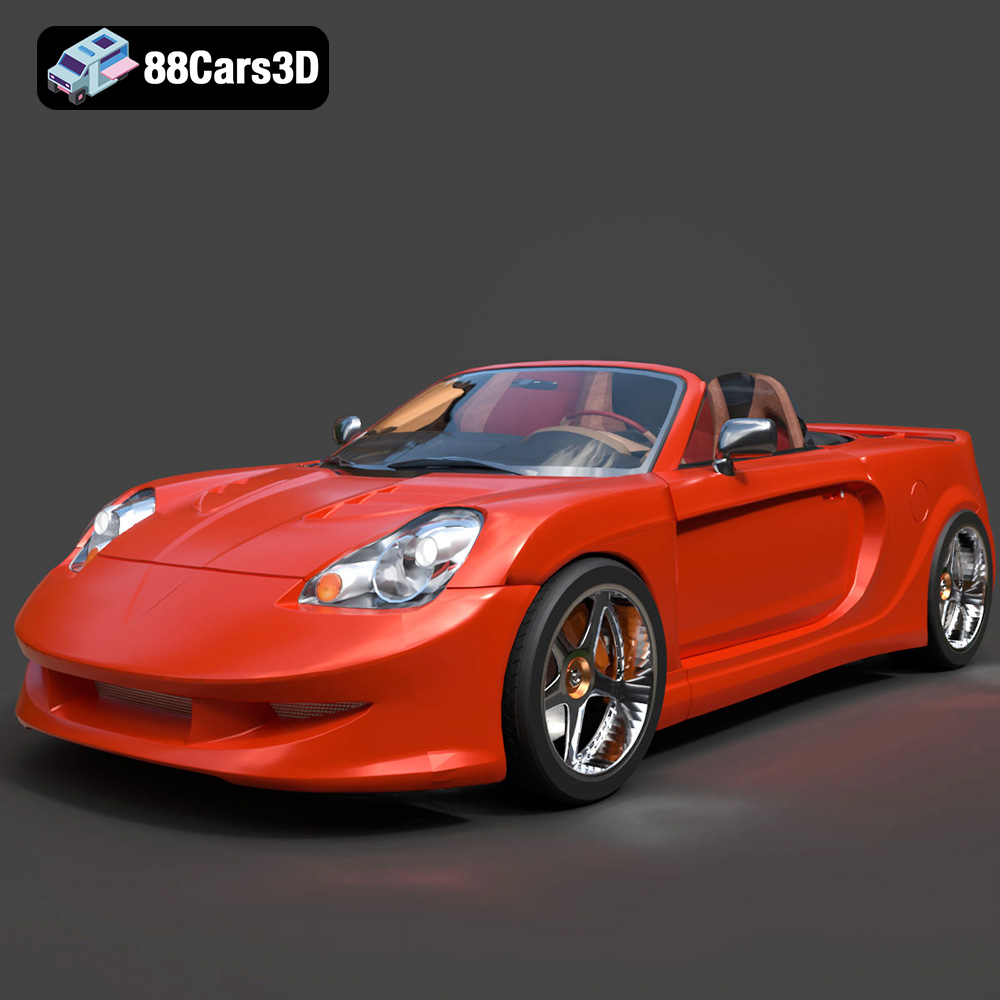
Texture: Yes
Material: Yes
Download the Toyota MRS-007 3D Model featuring clean geometry, realistic detailing, and a fully modeled interior. Includes .blend, .fbx, .obj, .glb, .stl, .ply, .unreal, and .max formats for rendering, simulation, and game development.
Price: $10

Texture: Yes
Material: Yes
Download the Porsche 911 Turbo S 2024 3D Model featuring clean geometry, realistic detailing, and a fully modeled interior. Includes .blend, .fbx, .obj, .glb, .stl, .ply, .unreal, and .max formats for rendering, simulation, and game development.
Price: $20

Texture: Yes
Material: Yes
Download the Pontiac Solstice 2009 3D Model featuring clean geometry, realistic detailing, and a fully modeled interior. Includes .blend, .fbx, .obj, .glb, .stl, .ply, .unreal, and .max formats for rendering, simulation, and game development.
Price: $10

Texture: Yes
Material: Yes
Download the Mini Cooper Countryman 2025 3D Model featuring clean geometry, realistic detailing, and a fully modeled interior. Includes .blend, .fbx, .obj, .glb, .stl, .ply, .unreal, and .max formats for rendering, simulation, and game development.
Price: $29.9
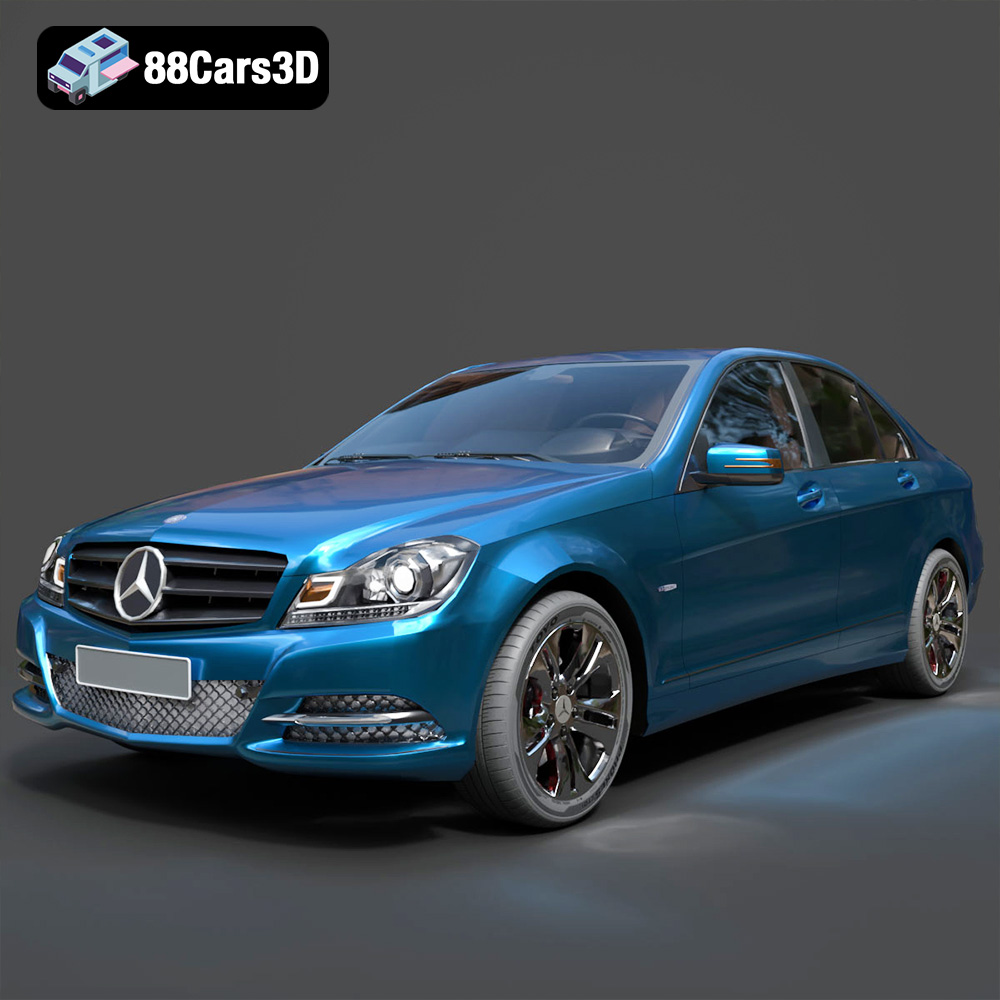
Texture: Yes
Material: Yes
Download the Mercedes C Classe 2012 3D Model featuring clean geometry, realistic detailing, and a fully modeled interior. Includes .blend, .fbx, .obj, .glb, .stl, .ply, .unreal, and .max formats for rendering, simulation, and game development.
Price: $19.9
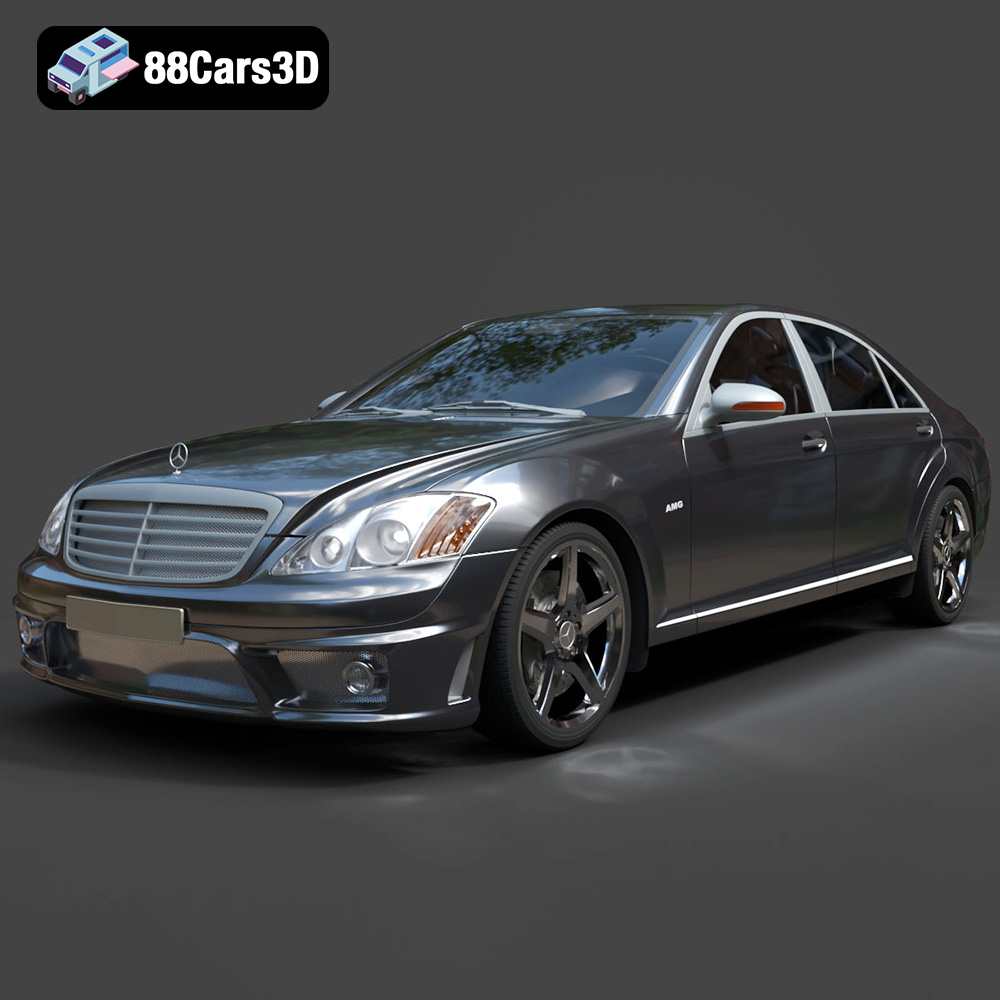
Texture: Yes
Material: Yes
Download the Mercedes-Benz S65 AMG 2018 3D Model featuring clean geometry, realistic detailing, and a fully modeled interior. Includes .blend, .fbx, .obj, .glb, .stl, .ply, .unreal, and .max formats for rendering, simulation, and game development.
Price: $19.9
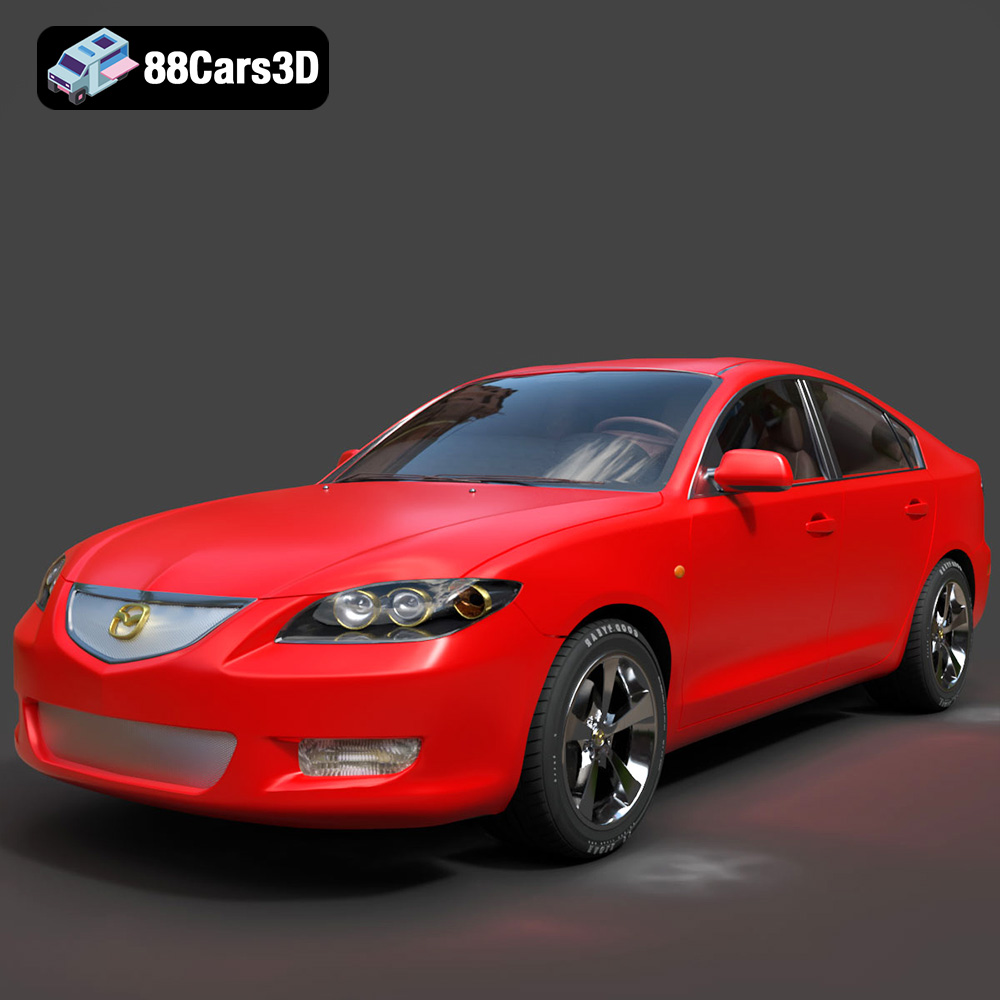
Texture: Yes
Material: Yes
Download the Mazda 3 Sedan 2004 3D Model featuring clean geometry, realistic detailing, and a fully modeled interior. Includes .blend, .fbx, .obj, .glb, .stl, .ply, .unreal, and .max formats for rendering, simulation, and game development.
Price: $10

Texture: Yes
Material: Yes
Download the Martin Rapide 2011 3D Model featuring clean geometry, realistic detailing, and a fully modeled interior. Includes .blend, .fbx, .obj, .glb, .stl, .ply, .unreal, and .max formats for rendering, simulation, and game development.
Price: $20.9
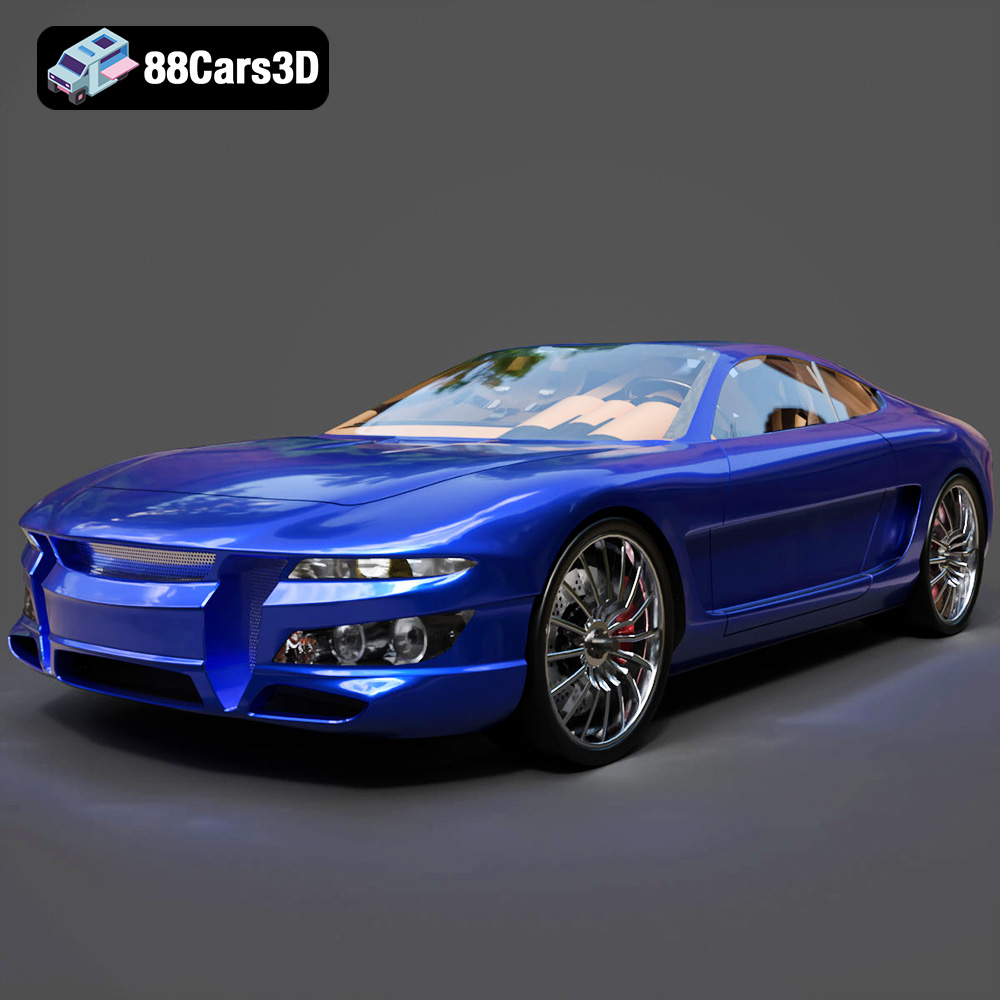
Texture: Yes
Material: Yes
Download the Car Tasergal 005 3D Model featuring clean geometry, realistic detailing, and a fully modeled interior. Includes .blend, .fbx, .obj, .glb, .stl, .ply, .unreal, and .max formats for rendering, simulation, and game development.
Price: $10
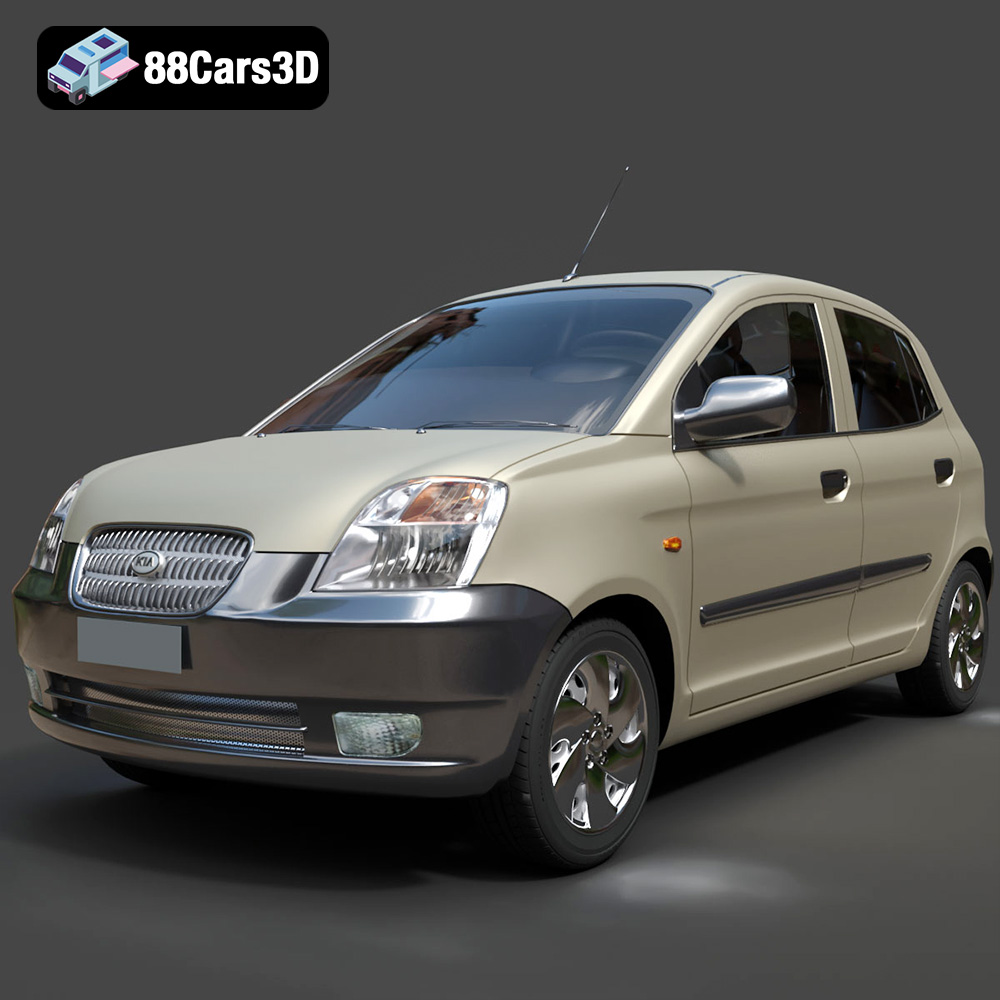
Texture: Yes
Material: Yes
Download the Kia Picanto 2024 3D Model featuring clean geometry, realistic detailing, and a fully modeled interior. Includes .blend, .fbx, .obj, .glb, .stl, .ply, .unreal, and .max formats for rendering, simulation, and game development.
Price: $15.99

