Get 50% OFF All Premium 3D & STL Models!

The pursuit of photorealism in real-time rendering has long been the holy grail for 3D artists and developers, especially in the demanding field of automotive visualization. For years, achieving truly convincing global illumination (GI)—the simulation of how light bounces off surfaces and indirectly illuminates a scene—was a complex, time-consuming process often relegated to offline renderers. Enter Unreal Engine’s Lumen, a revolutionary fully dynamic global illumination and reflections system designed to deliver breathtaking realism in real time.
For professionals working with high-fidelity 3D car models, whether for game development, virtual production, architectural visualization, or interactive configurators, Lumen transforms the workflow and elevates visual quality to unprecedented levels. It eliminates the need for pre-baked lighting, allowing for dynamic light changes, instant material updates, and seamless integration of high-quality assets. In this comprehensive guide, we’ll peel back the layers of Lumen, exploring its technical underpinnings, best practices for integrating it with your automotive projects, optimization strategies, and its profound impact on achieving cinematic realism with 3D car models sourced from platforms like 88cars3d.com. Prepare to elevate your real-time automotive visualizations to a new standard.
Global Illumination is the phenomenon where light not only travels directly from a light source to an object but also bounces off surfaces, indirectly illuminating other parts of the scene. This indirect lighting is crucial for realism, adding subtle color bleeding, soft shadows, and a sense of environmental light that traditional direct lighting alone cannot provide. Historically, achieving realistic GI in real-time engines was a monumental challenge, often requiring pre-calculated lightmaps (like Unreal Engine’s Lightmass) that were static and unable to respond dynamically to changes in the scene or lighting.
Lumen fundamentally redefines real-time GI by providing a fully dynamic solution. It operates on a principle of software ray tracing, analyzing the scene’s geometry and materials to simulate light bounces. Unlike hardware ray tracing, which can be extremely demanding on GPU resources, Lumen is designed to run efficiently on a wider range of hardware, offering scalable performance. It leverages a multi-faceted approach, combining several techniques to achieve its results, including Signed Distance Fields (SDFs) for coarse scene representation, Surface Caching for detailed surface information, and screen-space techniques for localized accuracy. This hybrid methodology allows Lumen to simulate diffuse inter-reflection with an infinite number of bounces and specular reflections for glossy surfaces, all in real time.
At its heart, Lumen uses two primary representations of the scene geometry. For broader, long-distance GI calculations, it constructs a “Scene Distance Field” (SDF) representation. This is a volumetric approximation of your scene, where each point in space stores the distance to the nearest surface. SDFs are computationally efficient for determining if a ray intersects geometry and calculating approximate bounce paths. This allows Lumen to trace rays through a simplified version of the scene quickly, capturing distant indirect lighting effects without the overhead of complex mesh data.
For more accurate, localized indirect lighting and reflections, Lumen employs a “Surface Cache.” This system samples the detailed geometry and material properties of surfaces visible to the camera and stores them in a compact texture atlas. When light rays hit a surface, Lumen can query this cache to determine its color, roughness, and other PBR properties, allowing for accurate light bouncing and color bleeding. The Surface Cache is constantly updated, ensuring that dynamic objects and changes to materials are reflected instantly in the indirect lighting. This combination of SDFs for global approximation and Surface Caching for local detail is what allows Lumen to provide both broad and nuanced GI and reflections in real time. For a deeper dive into these techniques, the official Unreal Engine documentation (https://dev.epicgames.com/community/unreal-engine/learning) is an invaluable resource.
Integrating Lumen into your Unreal Engine project for automotive visualization is straightforward, but requires specific project settings and an understanding of its dependencies. First and foremost, Lumen requires a DirectX 12 (DX12) rendering environment and Shader Model 6 (SM6) capable hardware. Most modern GPUs support this, but it’s a critical requirement for enabling Lumen. Ensuring these are selected in your project settings is the initial step to unlocking Lumen’s capabilities.
Once your engine is configured for DX12 and SM6, you’ll primarily interact with Lumen through the **Project Settings** and a **Post Process Volume**. In Project Settings, navigate to **Engine > Rendering**. Here, you’ll find the **Global Illumination** and **Reflections** sections. Set both “Dynamic Global Illumination Method” and “Reflection Method” to “Lumen.” Additionally, ensure “Hardware Ray Tracing” is enabled if your target hardware supports it and you intend to use ray-traced reflections in conjunction with Lumen for maximum fidelity, though Lumen itself primarily uses software ray tracing for GI. After making these changes, you’ll need to restart the editor for them to take effect.
The Post Process Volume is your primary control panel for fine-tuning Lumen’s appearance and performance within your scene. After adding one to your level and ensuring its “Unbound” property is checked (or scaling it to encompass your entire scene), navigate to its details panel. Under the **Global Illumination** section, you’ll see a series of Lumen-specific settings. Key properties include:
* **Lumen Global Illumination Method:** Should already be set to Lumen.
* **Lumen Scene Lighting Quality:** Controls the quality of indirect lighting. Higher values improve fidelity but increase cost.
* **Lumen Max Trace Distance:** Determines how far Lumen rays can trace. For large automotive showrooms or exterior scenes, you might need to increase this.
* **Lumen Final Gather Quality:** Impacts the final gathering pass, influencing the smoothness and accuracy of indirect lighting.
* **Lumen Diffuse Bounces:** Specifies the number of light bounces. Typically, 2-3 bounces are sufficient for realism, though more can be added for specific artistic effects.
Similarly, under the **Reflections** section, ensure “Reflection Method” is set to “Lumen.” Here, you’ll find settings like **Lumen Reflection Quality** and **Lumen Max Trace Distance for Reflections**, allowing you to optimize reflection quality independently. When setting up your automotive scene, it’s beneficial to have a well-lit environment using Lumen-compatible light sources (Directional Light, Sky Light, Point Light, Spot Light) and a clear skybox or HDRI environment. Assets sourced from reputable marketplaces like 88cars3d.com are often optimized for Unreal Engine, featuring clean geometry and PBR materials, which are essential for Lumen to accurately compute light interactions and deliver stunning visual results right out of the box.
While Lumen is incredibly powerful, its effectiveness and your scene’s overall performance are heavily influenced by the quality and optimization of your 3D assets, particularly detailed 3D car models. When working with automotive visualization, every polygon, texture, and material matters. Models from 88cars3d.com are typically designed with clean topology, accurate UV mapping, and PBR-ready materials, providing an excellent foundation for Lumen’s computations.
**Clean geometry** is paramount. Lumen’s software ray tracing benefits immensely from well-defined, watertight meshes. Models with excessive triangulation, flipped normals, or non-manifold geometry can introduce artifacts or inaccurate light bounces. Before importing, ensure your 3D car models are thoroughly checked and cleaned in your modeling software. **Accurate UV mapping** is equally critical for PBR materials, as Lumen relies on these maps (Base Color, Metallic, Roughness, Normal) to understand how light interacts with the surface. Overlapping UVs or poorly optimized UV layouts can lead to visual glitches or inefficient texture sampling.
One of the most significant advancements for managing high-fidelity assets in Unreal Engine, especially in conjunction with Lumen, is **Nanite Virtualized Geometry**. Automotive models are inherently complex, often featuring millions of polygons to capture every curve and detail. Traditionally, such polygon counts would cripple real-time performance. Nanite efficiently renders incredibly dense meshes by only processing the pixels that are actually visible on screen, and at an appropriate level of detail.
When importing your 3D car model, ensure Nanite support is enabled for meshes that benefit from it (typically high-detail bodywork, interior components, and wheels). For meshes that require precise material blending or have complex transparencies (like glass), you might consider disabling Nanite or using specific settings, as Nanite handles transparency differently. Lumen works seamlessly with Nanite meshes, benefiting from the highly detailed geometry for accurate indirect lighting calculations. This combination means you no longer have to compromise on geometric detail for real-time performance, allowing for truly cinematic quality car models in your interactive experiences. Even with Nanite, consider **Level of Detail (LODs)** for extremely distant objects or very small accessories, as Nanite still has some overhead, and traditional LODs can further optimize performance in specific scenarios.
The fidelity of your PBR materials plays a direct role in how realistic Lumen makes your car models appear. Lumen accurately simulates how light interacts with material properties like **Base Color**, **Metallic**, and **Roughness**. Highly metallic surfaces will exhibit realistic indirect specular reflections, while rough surfaces will scatter light more broadly, contributing to diffuse indirect lighting.
For car paint, which often involves complex layered shaders, ensure your material graphs accurately represent clear coat properties, metallic flakes, and subtle iridescence. Lumen will interpret these material outputs and reflect them in the indirect lighting. **Emissive materials** (e.g., headlights, dashboard lights) also become dynamic light sources with Lumen, casting indirect light into the scene without needing explicit point lights, adding immense realism to interior shots. **Translucent materials** like car windows and headlights require careful handling. While Lumen supports translucency, it can be computationally expensive and may require specific material settings (e.g., using “Surface TranslucencyVolume” lighting mode) to ensure accurate light transmission and indirect lighting through the material. Experiment with these settings to find the optimal balance between visual quality and performance for your specific automotive materials.
Achieving truly exceptional visual fidelity with Lumen in automotive scenes goes beyond basic setup. It involves a nuanced understanding of its advanced settings within the Post Process Volume and the strategic integration of other rendering features to enhance realism. The goal is to eliminate artifacts, maximize indirect light quality, and ensure reflections are as pristine as possible, mirroring the demands of high-end automotive visualization.
In the Post Process Volume, under the **Global Illumination** section, pay close attention to **Lumen Scene Lighting Quality**. While a default value of 1.0 is a good starting point, pushing this higher (e.g., 1.5 or 2.0) can significantly reduce noise and improve the smoothness of indirect lighting, especially in areas with subtle shadows or complex geometry. However, be mindful of the performance impact. **Lumen Max Trace Distance** might need adjustment depending on the scale of your environment; for sprawling showrooms or outdoor scenes, increasing this value allows Lumen to calculate GI further into the scene, preventing light from suddenly cutting off. **Lumen Final Gather Quality** is also crucial for reducing splotchiness and improving the overall perceived quality of the indirect light. Increasing the **Lumen Diffuse Bounces** from the default of 1-2 to 3-4 can add a subtle richness and depth, making interiors feel more naturally lit.
Lumen, like any complex real-time GI system, can sometimes exhibit artifacts. Common issues include **light leaks** (light passing through thin geometry), **splotchiness** (uneven light distribution), and **flickering** (especially on thin details or during camera movement).
To combat these:
* **Geometry:** Ensure meshes are watertight and have sufficient thickness. Lumen’s SDFs and Surface Cache perform better with solid objects.
* **Material Normals:** Verify normal maps are correctly applied and not inverted, as incorrect normals can cause light to bounce in unnatural directions.
* **Lumen Quality Settings:** Gradually increase `Lumen Scene Lighting Quality` and `Lumen Final Gather Quality` in your Post Process Volume. You can also experiment with console variables like `r.Lumen.DiffuseBounces` and `r.Lumen.Reflections.MaxRoughnessToTrace` for more granular control.
* **Ray Tracing Fallback:** For very challenging scenarios or for thin, translucent geometry, consider strategically using hardware ray-traced reflections (if enabled) as a fallback for specific elements where Lumen might struggle to achieve perfect reflections.
* **Screen Space Reflections (SSR):** While Lumen handles global reflections, SSR can still provide a useful and often cheaper layer of reflections for surfaces immediately visible to the camera, especially for very rough materials or where Lumen’s distance tracing might be limited. Combining Lumen with a subtle SSR pass can sometimes enhance overall reflection quality without a significant performance hit.
For automotive visualization, High Dynamic Range Image (HDRI) backdrops are indispensable for creating realistic studio environments, outdoor scenes, or product shot backdrops. Lumen seamlessly integrates with **Sky Lights** set to “Source Type: SL_CapturedScene” or “Source Type: SL_SpecifiedCubemap.” When you use an HDRI in your Sky Light, Lumen will automatically use that environment map to illuminate the scene with realistic indirect light, accurately capturing the color and intensity of the environment. This is transformative for rendering vehicles, as it provides instant, convincing environmental lighting and reflections that react dynamically to the car’s surface.
For even greater control, combine the HDRI with strategic **Rect Lights** (for studio softboxes) or **Spot Lights** (for accentuating details). Lumen will calculate the indirect lighting from these additional light sources and blend them with the HDRI-derived indirect light. This allows for complex, multi-source lighting setups that appear incredibly natural. When crafting automotive paint shaders, Lumen’s accurate handling of reflections and diffuse bounces ensures that complex clear coat materials, metallic flakes, and pearl effects react realistically to the environment, making the car models from 88cars3d.com truly come alive under any lighting condition.
While Lumen delivers incredible visual fidelity, maintaining optimal real-time performance, especially for demanding automotive scenes, requires a thoughtful optimization strategy. Lumen’s cost is largely dependent on scene complexity, the number of light bounces, and the quality settings. Understanding how to balance these factors is key to delivering a smooth experience.
The first step in performance analysis is utilizing Unreal Engine’s built-in **Lumen visualization modes**. Access these via the “Show” menu in the viewport (or by pressing `~` and typing console commands like `r.Lumen.Debug 1`). These modes allow you to visualize Lumen’s internal workings, such as the Scene Distance Field, Surface Cache, trace debug, and Lumen GI output. By observing these, you can identify areas where Lumen might be overspending resources or encountering issues. For instance, if the Scene Distance Field looks overly complex in a particular area, it might indicate geometry that could be simplified.
Unreal Engine’s **Scalability Settings** provide a quick way to adjust Lumen’s quality and performance. Under “Engine Scalability Settings,” setting “Global Illumination” to “High” or “Epic” will activate Lumen at its best, while “Medium” or “Low” will reduce its fidelity but improve performance. This is particularly useful for targeting different hardware specifications or for development iteration.
For more granular control, **console commands** are your best friend. Key commands for Lumen optimization include:
* `r.Lumen.ScreenSpaceQuality 0-3`: Adjusts the quality of screen-space elements used by Lumen.
* `r.Lumen.MaxTraceDistance
* `r.Lumen.DiffuseBounces
* `r.Lumen.Reflections.MaxRoughnessToTrace
* `r.Lumen.SurfaceCache.Resolution
* `r.Lumen.HardwareRayTracing 0/1`: Toggles hardware ray tracing support for Lumen. While Lumen is software ray tracing, this can impact certain integrations.
It’s crucial to profile your scene using Unreal Engine’s **Profiler** and **Stat commands** (e.g., `stat gpu`, `stat unit`) to identify bottlenecks. Lumen’s cost is primarily GPU-bound, so monitoring GPU frame time is essential.
The number and type of light sources significantly impact Lumen’s performance. While Lumen enables dynamic lighting, having an excessive number of high-intensity lights, particularly those with inverse square falloff, can increase calculation complexity. Favoring a few strong, well-placed lights over many weaker ones can be more efficient. Sky Lights with HDRIs are generally very efficient for broad environmental lighting.
**Material complexity** also plays a role. Materials with many layers, extensive shader instructions, or complex transparency calculations will contribute more to Lumen’s rendering cost. While high-quality PBR materials from 88cars3d.com are optimized, avoid unnecessary complexity in custom shaders. **Nanite** is a powerful ally here; its efficient rendering of high-poly meshes means Lumen can trace rays against incredibly detailed geometry without the typical performance hit of traditional mesh rendering. However, be aware of Nanite’s interaction with transparent objects; sometimes, non-Nanite meshes with optimized LODs for transparent elements like glass can be more performant for Lumen’s translucency calculations. Ultimately, a balanced approach combining optimized assets, careful light placement, and intelligent use of Lumen’s settings is the path to exceptional real-time automotive visualization.
Lumen’s introduction to Unreal Engine has ushered in a new era for real-time automotive visualization, fundamentally changing how designers, marketers, and game developers interact with 3D car models. The ability to achieve cinematic-quality global illumination dynamically opens up a vast array of real-world applications that were previously impractical or prohibitively expensive in real time.
One of the most impactful applications is in **interactive automotive configurators and virtual showrooms**. Manufacturers can now create highly detailed, photorealistic digital twins of their vehicles, allowing customers to customize paint colors, rim designs, interior materials, and accessories in real time. With Lumen, every change to a material or environment instantly updates the indirect lighting and reflections, providing a truly immersive and accurate preview of the final product. This level of realism and interactivity is invaluable for sales and marketing, replacing static renders with engaging virtual experiences.
Furthermore, Lumen significantly enhances the fidelity of **virtual production workflows** for automotive commercials and films. Using LED walls, filmmakers can composite virtual environments with physical vehicles in real time, with Lumen ensuring consistent and realistic lighting between the practical elements and the digital backdrop. This streamlines production, reduces on-set lighting requirements, and allows for unprecedented creative freedom, as the virtual environment’s lighting dynamically reacts to the physical car.
The demand for **Augmented Reality (AR) and Virtual Reality (VR)** automotive experiences is rapidly growing, from virtual test drives to interactive design reviews. Lumen brings a critical layer of realism to these immersive platforms. For AR, placing a 3D car model from 88cars3d.com into a real-world environment benefits immensely from Lumen’s ability to pick up ambient light and color from the surroundings, creating a more convincing blend between the virtual object and the real world. For VR, the deep immersion requires photorealistic lighting, and Lumen delivers this without the visual compromises often associated with real-time GI in VR.
However, AR/VR comes with its own set of performance challenges. To optimize Lumen for these applications:
* **Prioritize Performance:** Often, you’ll need to dial down Lumen’s quality settings compared to cinematic desktop experiences. Use `r.Lumen.ScreenSpaceQuality` and `r.Lumen.DiffuseBounces` to find a sweet spot.
* **Target Frame Rate:** Aim for a consistent 90 FPS (or higher) for VR to prevent motion sickness. This often means being aggressive with optimizations.
* **LODs for Nanite:** Even with Nanite, consider using traditional LODs or simply lower fidelity Nanite settings for models viewed from a distance in AR/VR to conserve resources.
* **Material Complexity:** Simplify complex automotive shaders where possible, or use shader LODs that switch to less expensive versions when viewed from a distance.
* **Bake Static Indirect Light:** For purely static parts of a scene (e.g., a showroom floor that never changes), consider baking static indirect lighting with Lightmass or GPU Lightmass, and letting Lumen handle dynamic objects. This hybrid approach can offload some of Lumen’s computational burden.
The future of automotive visualization with Lumen is bright. As hardware continues to advance and Unreal Engine further refines Lumen, we can expect even greater efficiency and fidelity. This technological leap enables more realistic product showcases, more engaging interactive experiences, and more streamlined virtual production pipelines, solidifying Unreal Engine’s position as the leading tool for automotive creatives, powered by high-quality assets available on marketplaces like 88cars3d.com.
Lumen Global Illumination represents a monumental leap forward in real-time rendering, particularly for the intricate and visually demanding field of automotive visualization. We’ve explored its core mechanisms, from the efficiency of Signed Distance Fields and Surface Caching to its seamless integration with high-fidelity 3D car models. By meticulously configuring your Unreal Engine project, leveraging advanced settings in the Post Process Volume, and strategically optimizing your assets—especially with the power of Nanite—you can achieve a level of photorealism that was once confined to offline rendering.
Lumen liberates artists and developers from the constraints of baked lighting, enabling dynamic environments, interactive configurators, and stunning virtual production workflows that bring automotive designs to life with unprecedented realism. While optimization is key to balancing visual fidelity with real-time performance, the tools and techniques at your disposal empower you to overcome these challenges. The future of automotive visualization is undeniably real-time, dynamic, and breathtakingly realistic, with Lumen leading the charge. By mastering these techniques and utilizing top-tier assets from resources like 88cars3d.com, you are poised to create compelling, immersive automotive experiences that captivate and inspire. Embrace Lumen, and transform your vision into a luminous reality.
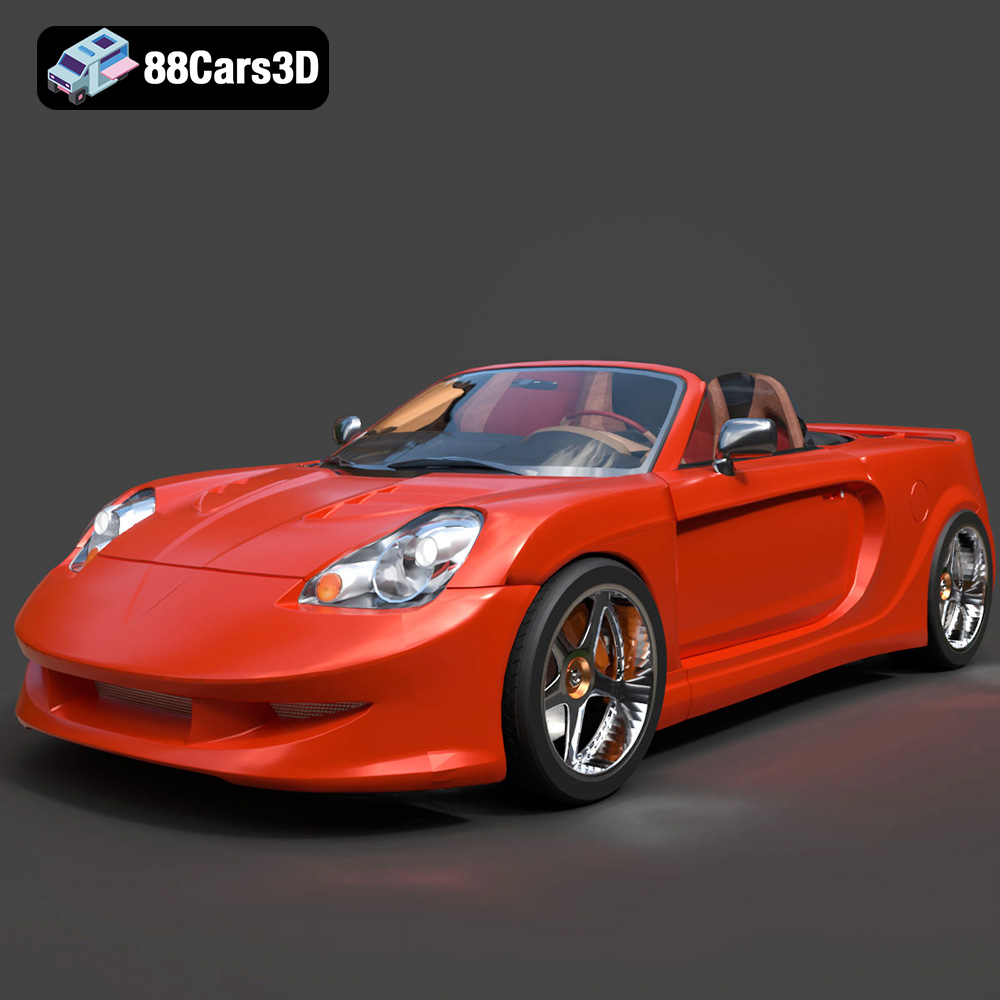
Texture: Yes
Material: Yes
Download the Toyota MRS-007 3D Model featuring clean geometry, realistic detailing, and a fully modeled interior. Includes .blend, .fbx, .obj, .glb, .stl, .ply, .unreal, and .max formats for rendering, simulation, and game development.
Price: $10

Texture: Yes
Material: Yes
Download the Porsche 911 Turbo S 2024 3D Model featuring clean geometry, realistic detailing, and a fully modeled interior. Includes .blend, .fbx, .obj, .glb, .stl, .ply, .unreal, and .max formats for rendering, simulation, and game development.
Price: $20

Texture: Yes
Material: Yes
Download the Pontiac Solstice 2009 3D Model featuring clean geometry, realistic detailing, and a fully modeled interior. Includes .blend, .fbx, .obj, .glb, .stl, .ply, .unreal, and .max formats for rendering, simulation, and game development.
Price: $10

Texture: Yes
Material: Yes
Download the Mini Cooper Countryman 2025 3D Model featuring clean geometry, realistic detailing, and a fully modeled interior. Includes .blend, .fbx, .obj, .glb, .stl, .ply, .unreal, and .max formats for rendering, simulation, and game development.
Price: $29.9
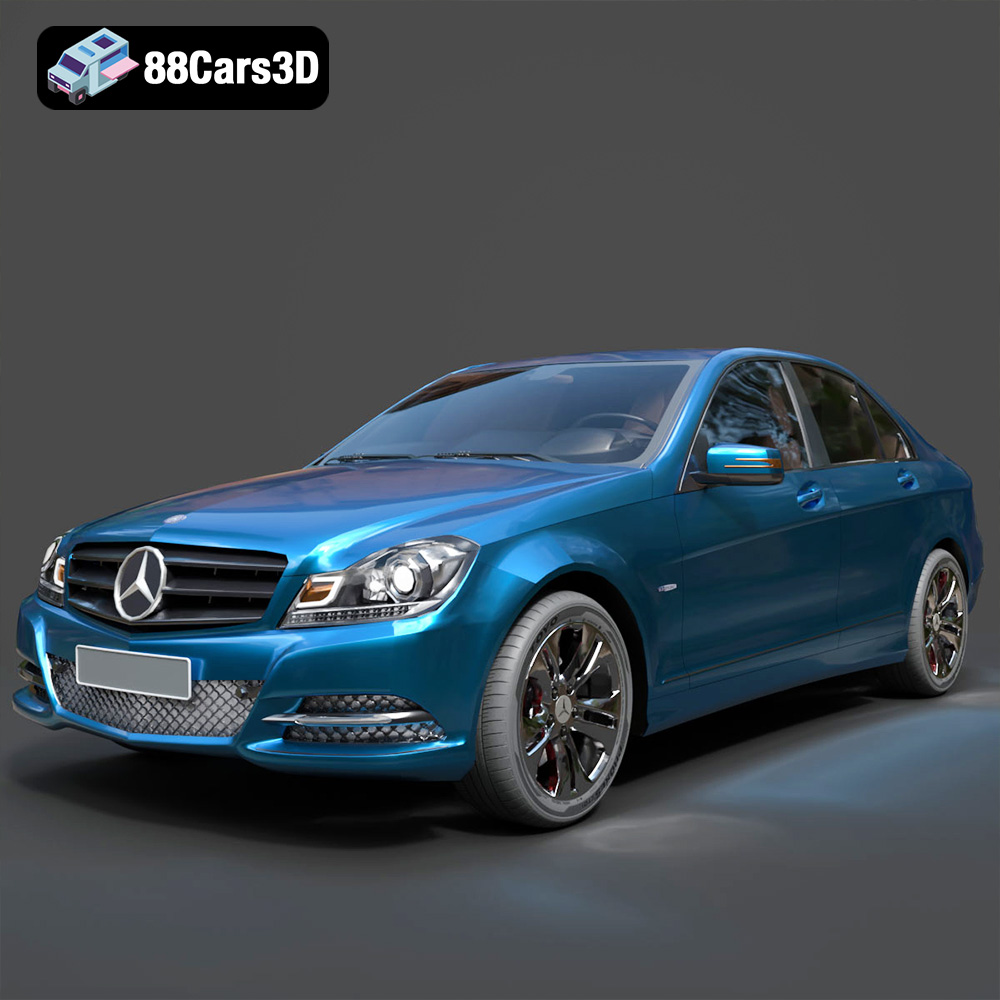
Texture: Yes
Material: Yes
Download the Mercedes C Classe 2012 3D Model featuring clean geometry, realistic detailing, and a fully modeled interior. Includes .blend, .fbx, .obj, .glb, .stl, .ply, .unreal, and .max formats for rendering, simulation, and game development.
Price: $19.9
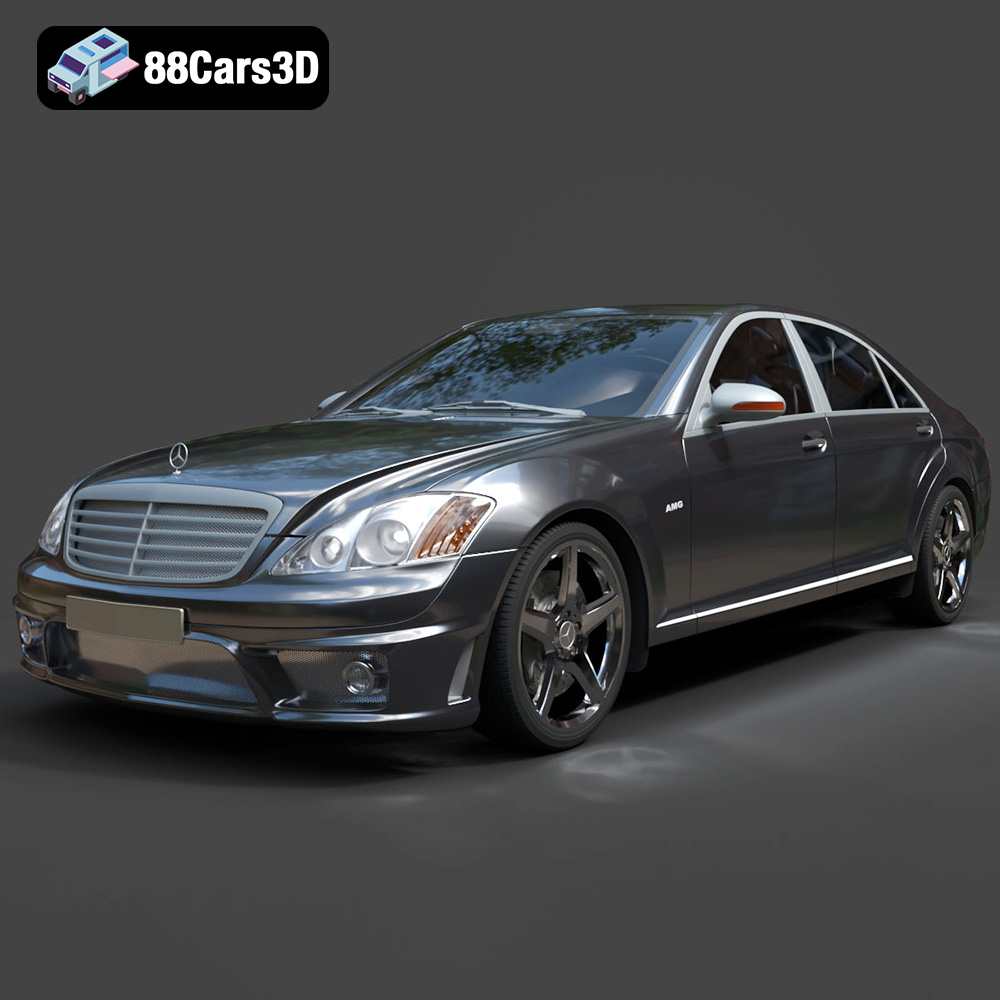
Texture: Yes
Material: Yes
Download the Mercedes-Benz S65 AMG 2018 3D Model featuring clean geometry, realistic detailing, and a fully modeled interior. Includes .blend, .fbx, .obj, .glb, .stl, .ply, .unreal, and .max formats for rendering, simulation, and game development.
Price: $19.9
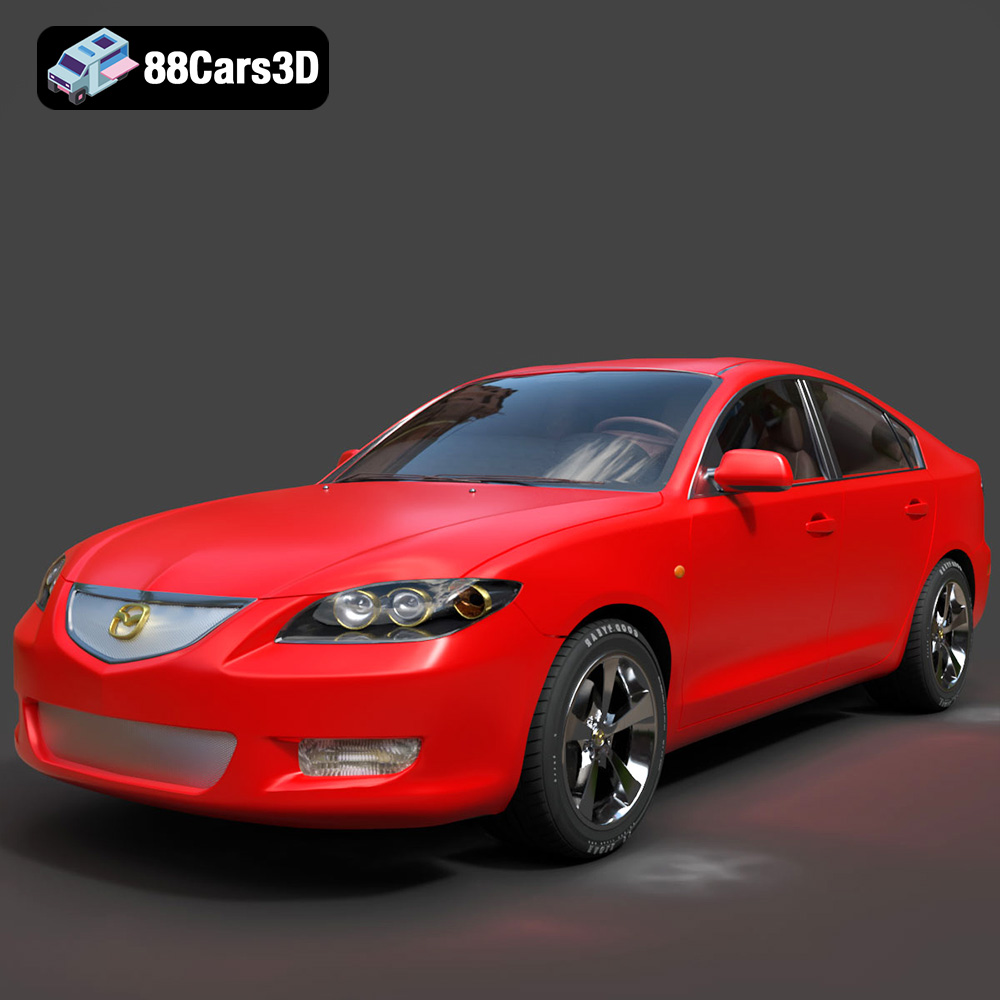
Texture: Yes
Material: Yes
Download the Mazda 3 Sedan 2004 3D Model featuring clean geometry, realistic detailing, and a fully modeled interior. Includes .blend, .fbx, .obj, .glb, .stl, .ply, .unreal, and .max formats for rendering, simulation, and game development.
Price: $10

Texture: Yes
Material: Yes
Download the Martin Rapide 2011 3D Model featuring clean geometry, realistic detailing, and a fully modeled interior. Includes .blend, .fbx, .obj, .glb, .stl, .ply, .unreal, and .max formats for rendering, simulation, and game development.
Price: $20.9
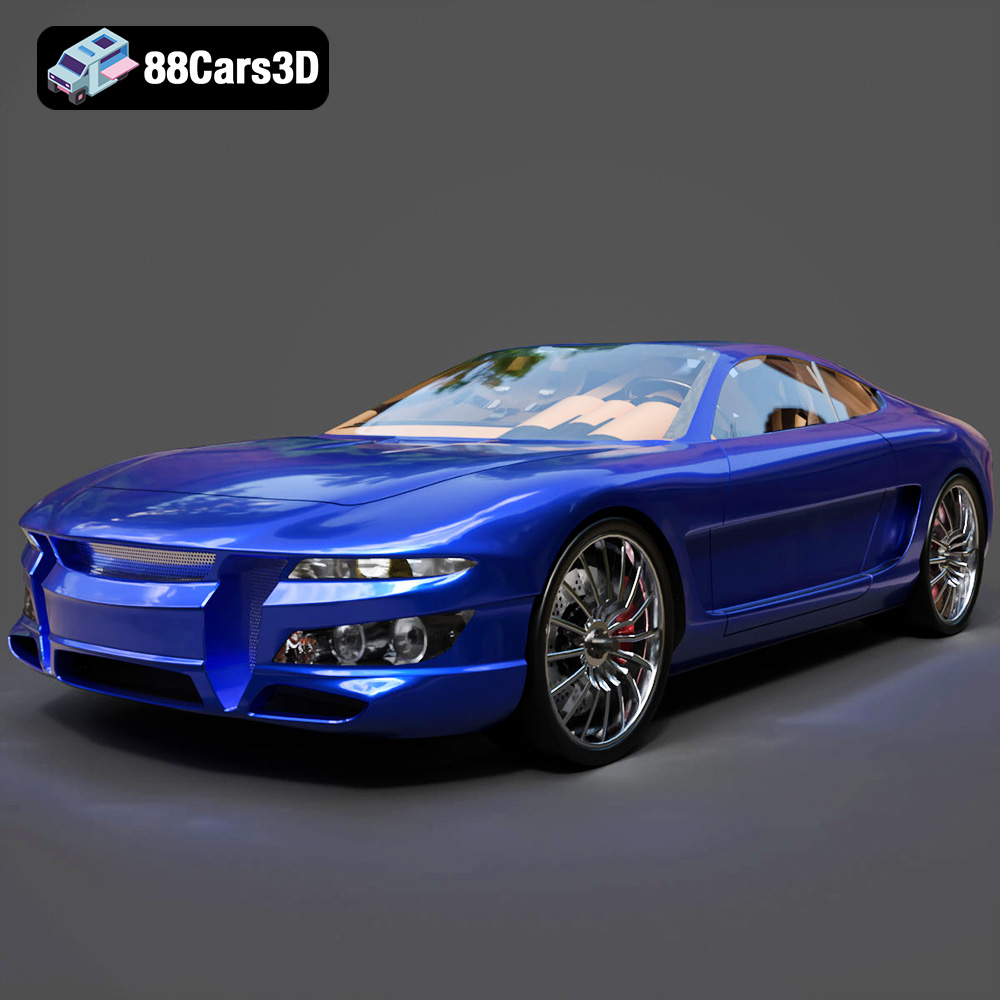
Texture: Yes
Material: Yes
Download the Car Tasergal 005 3D Model featuring clean geometry, realistic detailing, and a fully modeled interior. Includes .blend, .fbx, .obj, .glb, .stl, .ply, .unreal, and .max formats for rendering, simulation, and game development.
Price: $10
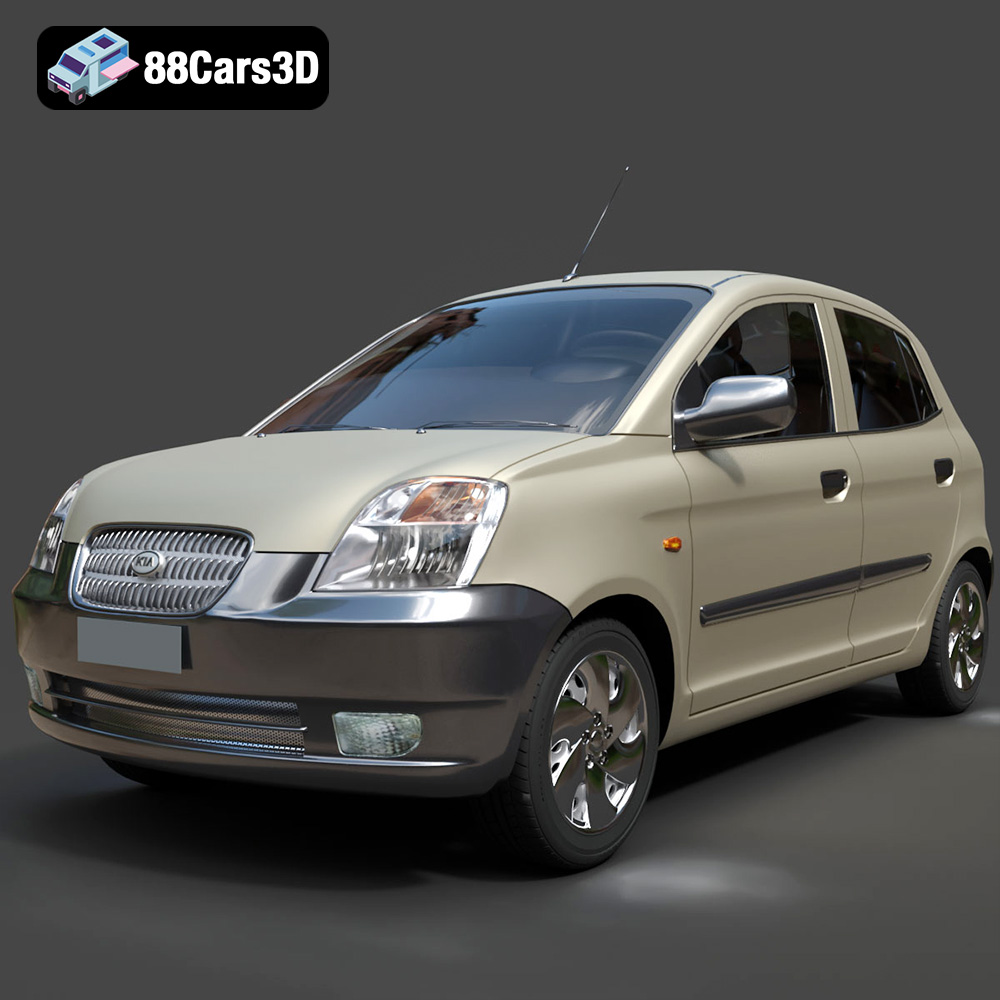
Texture: Yes
Material: Yes
Download the Kia Picanto 2024 3D Model featuring clean geometry, realistic detailing, and a fully modeled interior. Includes .blend, .fbx, .obj, .glb, .stl, .ply, .unreal, and .max formats for rendering, simulation, and game development.
Price: $15.99

