Get 50% OFF All Premium 3D & STL Models!

“`html
The world of 3D printing has unlocked incredible possibilities for hobbyists, collectors, and automotive enthusiasts alike. Imagine holding a meticulously detailed replica of your favorite classic car or a cutting-edge supercar, brought to life right from your own desk. This dream is now a reality, largely thanks to the proliferation of high-quality printable car STL files. However, simply downloading a file and hitting ‘print’ rarely yields the results you envision. Achieving that perfect, show-quality print requires understanding the intricacies of STL file preparation, 3D printer settings, and effective slicing strategies. This guide will equip you with the knowledge to navigate the technical landscape, from understanding the fundamental structure of STL files to post-processing your creations to perfection. We’ll cover everything from selecting the right slicer settings for intricate details to mastering support structures and troubleshooting common printing failures. Whether you’re using a desktop FDM printer or a high-resolution resin machine, by the end of this article, you’ll be well-equipped to transform digital models into tangible automotive masterpieces.
At the heart of every 3D printable model lies the STL (STereoLithography) file format. Developed by 3D Systems in the late 1980s, STL has become the de facto standard for transferring 3D design data to 3D printers. Understanding its structure is the first crucial step towards successful printing, especially when dealing with complex geometries like those found in automotive models.
An STL file represents a 3D object’s surface geometry as a collection of connected triangles. Each triangle is defined by three vertices (points in 3D space) and a normal vector. The normal vector is a crucial piece of information; it’s a vector perpendicular to the face of the triangle, indicating which side is the ‘outside’ of the model. This directionality is vital for the slicer software to understand the object’s orientation and ensure watertightness. When triangles are not oriented correctly, or if there are gaps between them, the resulting mesh is considered ‘non-manifold’ or ‘broken’, which can lead to printing errors like missing sections or incorrect slicing.
For printable car STL files, especially those designed for high detail, the number of triangles can be substantial. A highly detailed model might contain millions of triangles, resulting in large file sizes. While more triangles generally mean higher fidelity and smoother curves, excessively dense meshes can sometimes overwhelm slicing software or even your 3D printer’s processing capabilities. This is why many providers of quality car models, such as those found on platforms like 88cars3d.com, focus on optimizing mesh density while maintaining visual accuracy.
A ‘watertight’ or ‘manifold’ mesh is essential for successful 3D printing. Imagine trying to fill a bucket with water – it needs to have a solid bottom and sides without any holes. In 3D printing terms, a manifold mesh means that every edge of every triangle is shared by exactly two triangles, and the object has a clear inside and outside. Common issues that break manifold integrity include:
Software like Meshmixer, Blender, or Netfabb are invaluable tools for diagnosing and repairing these issues. Simple checks involve using the ‘Analysis’ or ‘Repair’ tools within these programs to identify non-manifold edges, holes, or inverted normals. For complex repairs, manual editing might be necessary, but for most commercially available STL files for 3D printing, especially from reputable sources, the models are often pre-repaired and ready to go.
The slicer is your digital workshop, taking your 3D model (the STL file) and converting it into a series of thin, horizontal layers, ultimately generating the G-code that your 3D printer understands. Choosing the right slicing parameters is paramount for achieving the desired quality, detail, and structural integrity of your car models.
When working with intricate printable car STL files, several settings in your slicer (like Cura, PrusaSlicer, or Simplify3D) become critical:
Many 3D printable car models feature overhangs and bridges – parts of the model that extend horizontally without direct support from the layer below. Supports are necessary to prevent these sections from collapsing during printing. However, supports can leave marks on the model’s surface, requiring significant post-processing.
When downloading models from marketplaces such as 88cars3d.com, many come with pre-generated support recommendations or even pre-supported versions, saving you significant time and effort in this complex area.
How you orient the car model on your print bed significantly impacts the quality of details, the need for supports, and the overall strength of the printed object. Different orientations present unique challenges and benefits:
Experimentation is key. Before committing to a long print, consider running a small test print of a critical section (like a wheel arch or a spoiler) in different orientations to see which yields the best results with the least amount of cleanup.
The choice between Fused Deposition Modeling (FDM) and Stereolithography (SLA) or Digital Light Processing (DLP) resin printing profoundly impacts the final quality and detail achievable for your 3D printable car models.
FDM printers are the most common type found in homes and makerspaces. They work by extruding melted plastic filament layer by layer. FDM is generally more affordable, offers a wider range of materials (PLA, PETG, ABS, TPU), and has a larger build volume.
Resin printers use UV light to cure liquid photopolymer resin layer by layer. SLA and DLP technologies offer significantly higher resolutions than most FDM printers.
When selecting printable car STL files, consider the intended printing technology. Models designed for resin often have thinner walls and finer features that might not translate well to FDM printing without modification or scaling up.
Moving beyond basic printing, advanced techniques can elevate your creations from simple models to professional-grade replicas.
Even high-quality STL files can sometimes benefit from minor adjustments. Software like Meshmixer, Blender, or Autodesk Netfabb are indispensable tools for this.
Platforms like 88cars3d.com pride themselves on providing clean, manifold meshes, but understanding these repair techniques is a valuable skill for any serious 3D printing hobbyist.
The scale at which you print your car model can drastically affect its appearance and the challenges involved.
The print is just the beginning. Post-processing is where a raw 3D print is transformed into a show-quality model.
Careful support removal is critical to avoid damaging the model. Use flush cutters, hobby knives, and pliers to gently break away supports. For FDM prints, sometimes a brief application of heat from a heat gun can soften stubborn support material, but use caution to avoid deforming the model.
This is where your car model truly takes shape.
The journey from a digital printable car STL file to a finished, painted model is a rewarding process that combines technical skill with artistic flair. By understanding the nuances of file formats, slicer settings, printer technologies, and post-processing, you can unlock the full potential of additive manufacturing for your automotive collection.
Bringing detailed automotive replicas to life through 3D printing is an accessible and incredibly satisfying hobby. We’ve explored the fundamental nature of STL files, emphasizing the importance of manifold meshes and clean geometry. You’ve learned how to harness the power of slicer software, optimizing settings like layer height, print speed, and crucially, support structures, to achieve the best possible results from your chosen printer technology, whether FDM or resin. The choice between FDM and resin printing was dissected, highlighting their respective strengths and weaknesses for printing complex car models.
Furthermore, we delved into essential file preparation and repair techniques using common software, discussed the impact of print orientation and scaling, and outlined the critical post-processing steps – from meticulous support removal and surface smoothing to professional painting and assembly. Remember that high-quality source files, like those meticulously prepared and offered on platforms such as 88cars3d.com, are the bedrock of any successful print. By combining these excellent digital assets with your growing knowledge of 3D printing best practices, you are well-equipped to embark on printing your dream car collection. Start with simpler models, experiment with settings, don’t be afraid of post-processing, and most importantly, enjoy the creative process of turning digital data into tangible automotive art.
“`
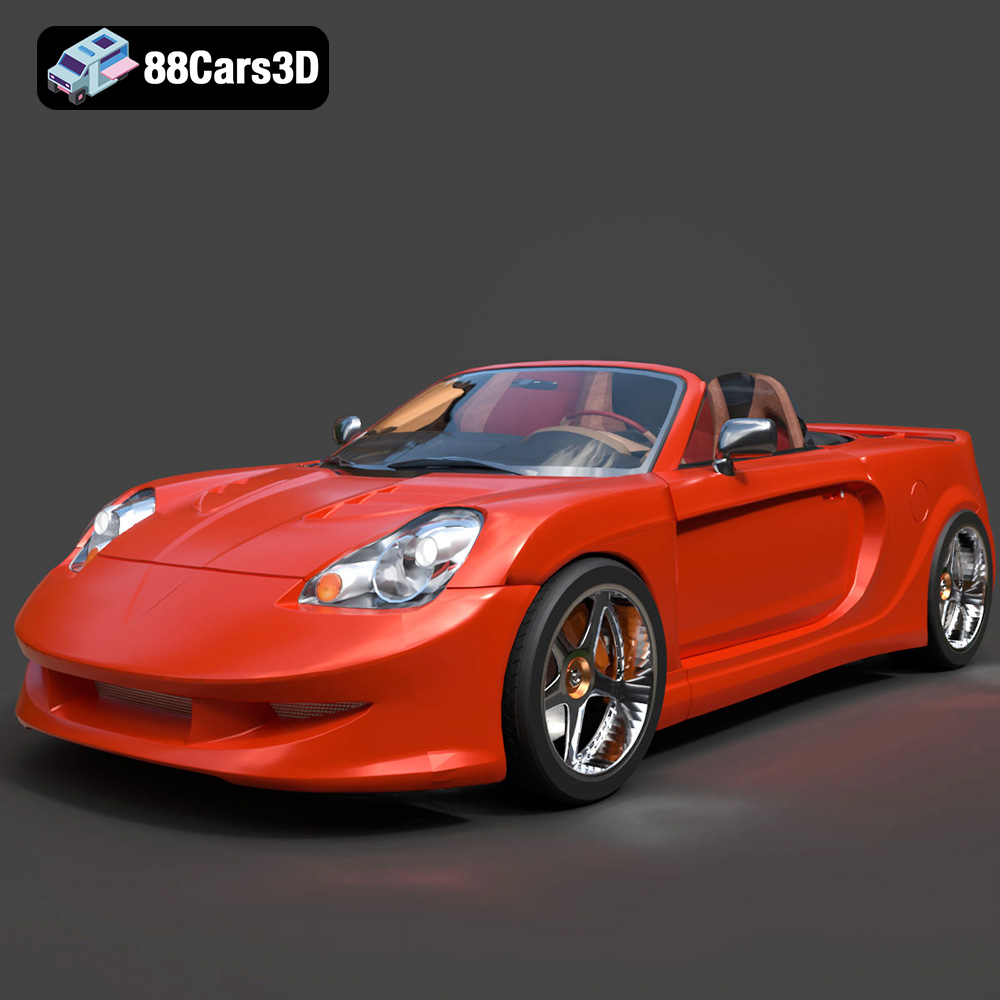
Texture: Yes
Material: Yes
Download the Toyota MRS-007 3D Model featuring clean geometry, realistic detailing, and a fully modeled interior. Includes .blend, .fbx, .obj, .glb, .stl, .ply, .unreal, and .max formats for rendering, simulation, and game development.
Price: $10

Texture: Yes
Material: Yes
Download the Porsche 911 Turbo S 2024 3D Model featuring clean geometry, realistic detailing, and a fully modeled interior. Includes .blend, .fbx, .obj, .glb, .stl, .ply, .unreal, and .max formats for rendering, simulation, and game development.
Price: $20

Texture: Yes
Material: Yes
Download the Pontiac Solstice 2009 3D Model featuring clean geometry, realistic detailing, and a fully modeled interior. Includes .blend, .fbx, .obj, .glb, .stl, .ply, .unreal, and .max formats for rendering, simulation, and game development.
Price: $10

Texture: Yes
Material: Yes
Download the Mini Cooper Countryman 2025 3D Model featuring clean geometry, realistic detailing, and a fully modeled interior. Includes .blend, .fbx, .obj, .glb, .stl, .ply, .unreal, and .max formats for rendering, simulation, and game development.
Price: $29.9
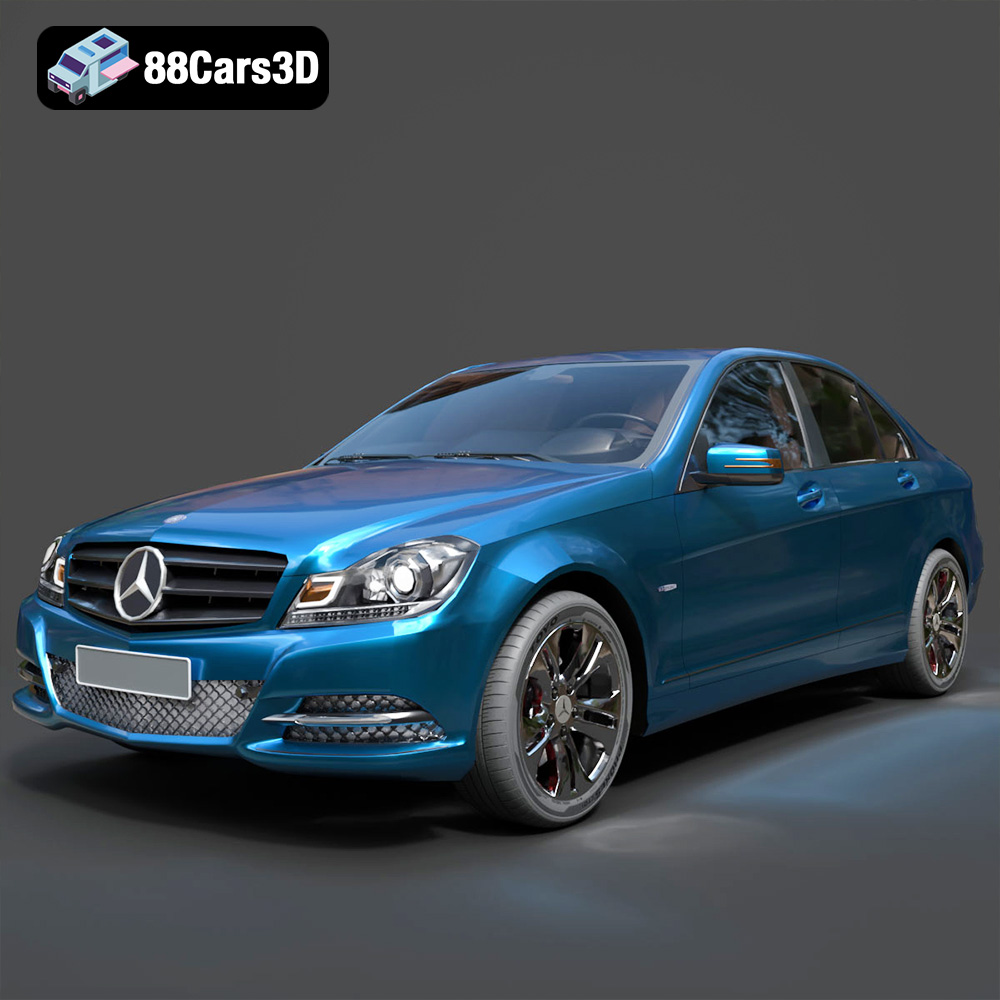
Texture: Yes
Material: Yes
Download the Mercedes C Classe 2012 3D Model featuring clean geometry, realistic detailing, and a fully modeled interior. Includes .blend, .fbx, .obj, .glb, .stl, .ply, .unreal, and .max formats for rendering, simulation, and game development.
Price: $19.9
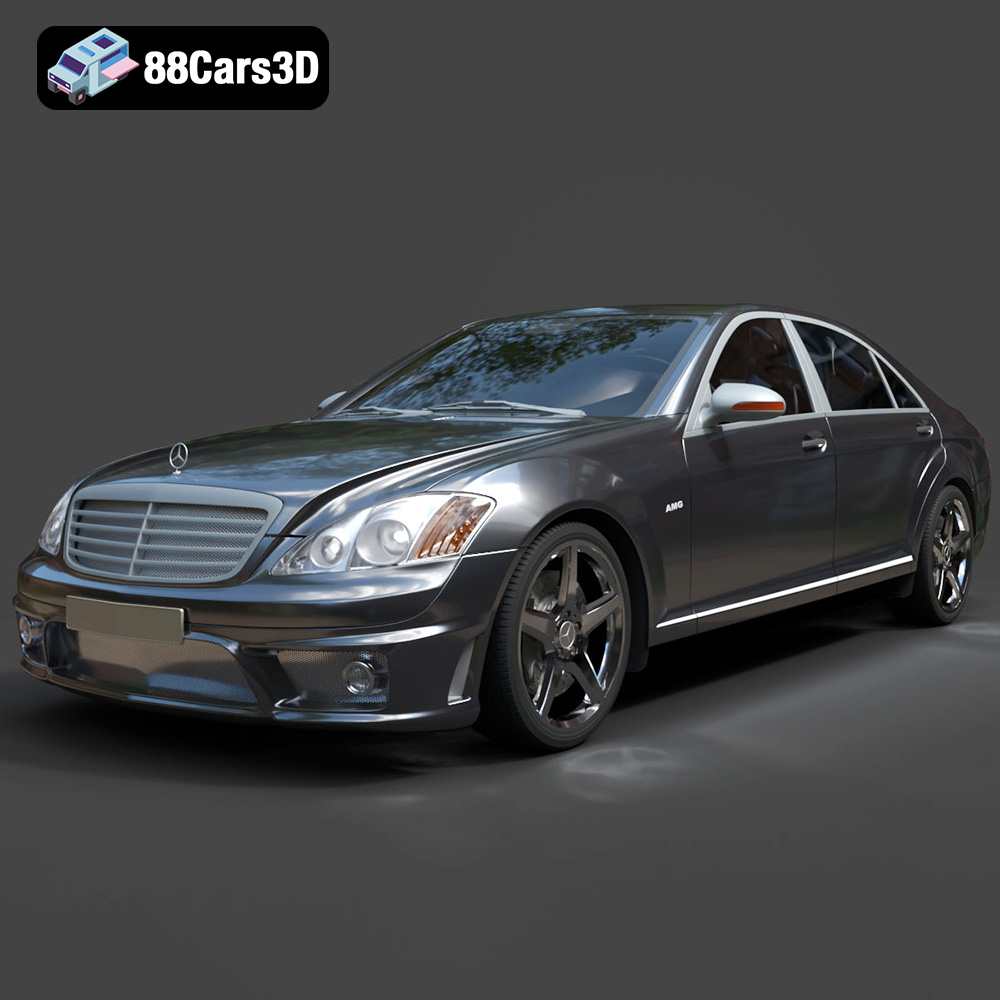
Texture: Yes
Material: Yes
Download the Mercedes-Benz S65 AMG 2018 3D Model featuring clean geometry, realistic detailing, and a fully modeled interior. Includes .blend, .fbx, .obj, .glb, .stl, .ply, .unreal, and .max formats for rendering, simulation, and game development.
Price: $19.9

Texture: Yes
Material: Yes
Download the Mazda 3 Sedan 2004 3D Model featuring clean geometry, realistic detailing, and a fully modeled interior. Includes .blend, .fbx, .obj, .glb, .stl, .ply, .unreal, and .max formats for rendering, simulation, and game development.
Price: $10

Texture: Yes
Material: Yes
Download the Martin Rapide 2011 3D Model featuring clean geometry, realistic detailing, and a fully modeled interior. Includes .blend, .fbx, .obj, .glb, .stl, .ply, .unreal, and .max formats for rendering, simulation, and game development.
Price: $20.9
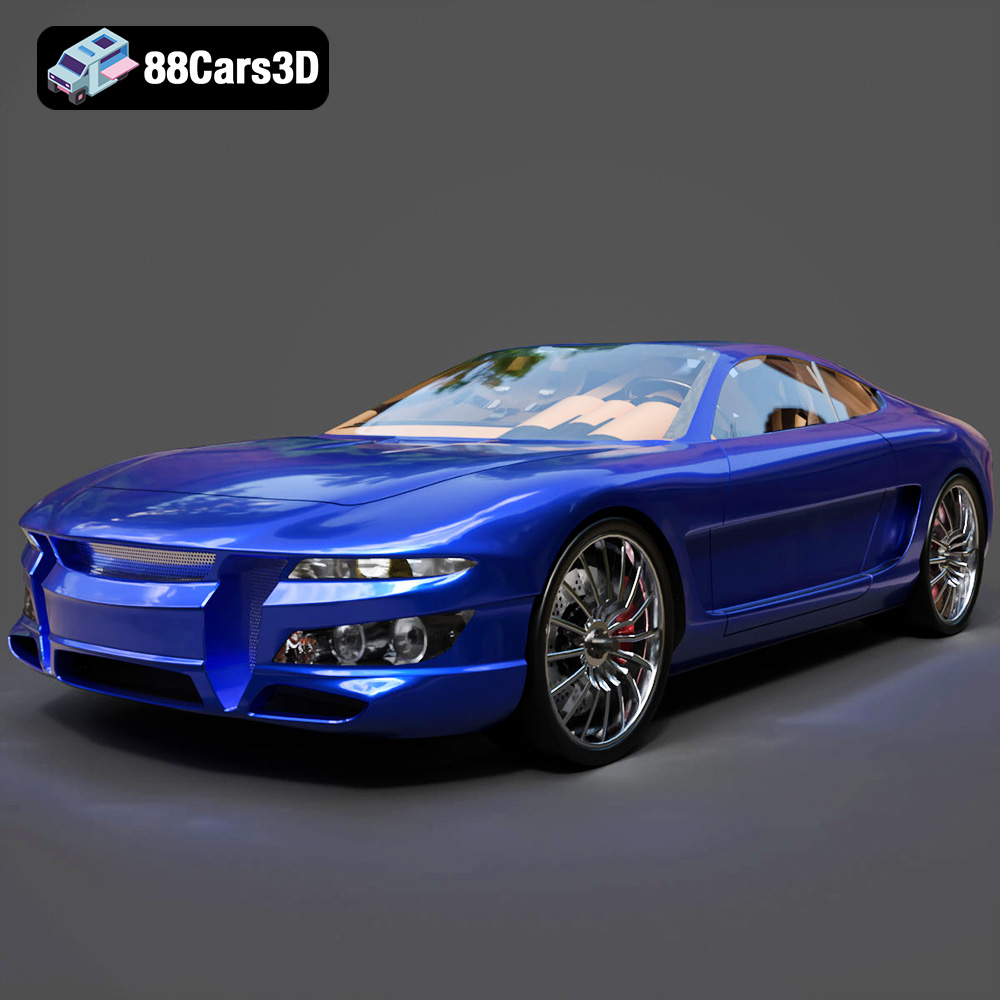
Texture: Yes
Material: Yes
Download the Car Tasergal 005 3D Model featuring clean geometry, realistic detailing, and a fully modeled interior. Includes .blend, .fbx, .obj, .glb, .stl, .ply, .unreal, and .max formats for rendering, simulation, and game development.
Price: $10
Texture: Yes
Material: Yes
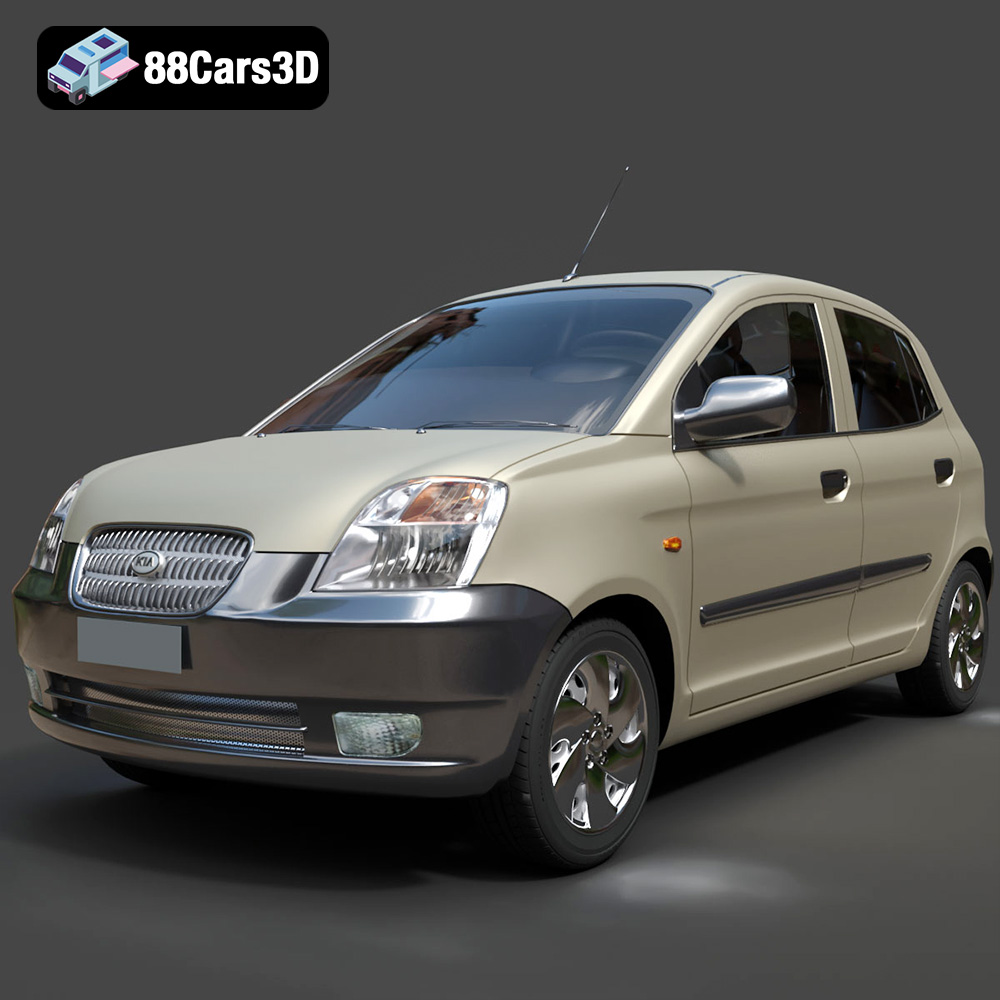
Download the Kia Picanto 2024 3D Model featuring clean geometry, realistic detailing, and a fully modeled interior. Includes .blend, .fbx, .obj, .glb, .stl, .ply, .unreal, and .max formats for rendering, simulation, and game development.
Price: $15.99

