Get 50% OFF All Premium 3D & STL Models!

In the demanding world of automotive visualization and game development, the quest for ultimate realism is perpetual. Artists and developers constantly push boundaries to render vehicles with photorealism that blurs the line between digital and physical. While Unreal Engine has long been a powerhouse for real-time rendering, its integrated Path Tracer offers a revolutionary leap, enabling offline-quality renders directly within the engine. This capability is a game-changer for producing stunning marketing materials, cinematic sequences, and high-fidelity configurators.
This comprehensive guide will delve deep into leveraging Unreal Engine’s Path Tracer, specifically for automotive visualization. We’ll explore everything from scene setup and asset preparation to advanced rendering techniques and optimization strategies. Whether you’re an automotive designer, a 3D artist, or a game developer aiming for unparalleled visual fidelity, you’ll discover how to harness the Path Tracer to elevate your projects. We’ll cover the fundamental principles, essential workflows, and professional tips to achieve breathtaking results, ensuring your high-quality 3D car models, like those available on 88cars3d.com, truly shine. Prepare to unlock a new dimension of realism for your automotive creations within Unreal Engine.
Path Tracing represents the cutting edge of rendering technology, offering a physically accurate simulation of light transport that goes beyond traditional real-time rendering methods. Unlike rasterization, which relies on approximations, or even hybrid ray tracing solutions that selectively trace rays, a path tracer simulates light by tracing multiple paths from the camera into the scene. Each path bounces off surfaces, interacting with materials, until it reaches a light source or exits the scene. This exhaustive simulation results in incredibly realistic global illumination, accurate reflections, refractions, soft shadows, and caustics, all inherently calculated without needing complex baking or lightmap solutions.
For automotive visualization, this level of fidelity is paramount. The intricate surfaces, reflective paints, clear glass, and subtle interior details of a car demand precise light interaction to look convincing. Path Tracing accurately captures how light interacts with chrome, how a car’s clear coat paint reflects its environment, and how ambient occlusion naturally forms in crevices. It eliminates artifacts common in approximated lighting solutions and simplifies the artist’s workflow by making scenes “just work” as light behaves in the real world. Unreal Engine’s Path Tracer, built upon DirectX Raytracing (DXR), leverages modern GPU hardware to deliver these stunning results directly within the viewport and for high-resolution stills or cinematics.
Traditionally, real-time engines relied on rasterization, a technique that projects 3D objects onto a 2D screen, with lighting and shadows calculated using various approximations (e.g., shadow maps, screen-space reflections). While incredibly fast, these methods often struggled with accurate global illumination, reflections across multiple bounces, and complex refractive materials. Ray tracing emerged as a more accurate alternative, tracing individual rays from the camera to determine visibility and light interaction. Path tracing takes this a step further by sampling multiple light paths per pixel, combining the power of Monte Carlo integration with ray tracing to achieve unbiased, photorealistic results.
Unreal Engine’s integration of Path Tracing allows developers and artists to harness this advanced rendering technique without leaving their familiar environment. This means that the PBR materials, lighting setups, and scene assets you’ve already created for real-time applications can be rendered with offline quality. It bridges the gap between traditional offline renderers (like V-Ray, Corona, or Arnold) and real-time engines, providing a unified workflow for both interactive experiences and production-quality renders. To enable Path Tracing, you typically need a graphics card that supports DXR (e.g., NVIDIA RTX series, AMD Radeon RX 6000 series or newer) and activate Ray Tracing features within your Unreal Engine project settings under `Project Settings > Engine > Rendering > Ray Tracing`.
Automotive visualization demands an almost obsessive attention to detail. Every curve, every reflection, and every material needs to be depicted with utmost accuracy to convey the designer’s intent and appeal to potential customers. Path Tracing delivers this accuracy inherently. For example, rendering car paint, which often consists of multiple layers—base coat, metallic flakes, clear coat—is notoriously difficult to get right with approximations. Path Tracing accurately simulates the light scattering through these layers, the subtle glints of metallic flakes, and the crisp reflections on the clear coat, producing a truly authentic finish.
Furthermore, dynamic elements like car interiors with intricate fabrics, leather, and plastic surfaces, or exterior shots with complex environments, benefit immensely. Path Tracing naturally handles indirect lighting, ensuring that light bounces realistically within the cabin, illuminating surfaces that are not directly lit. This leads to softer, more natural shadows and color bleed, enhancing the sense of depth and realism. For showcasing vehicles in photorealistic environments, such as a studio setup or an outdoor scene, Path Tracing ensures that the car seamlessly integrates with its surroundings, accurately reflecting the environment and being lit by it in a physically plausible manner. This capability makes it an indispensable tool for creating high-impact marketing imagery and engaging product showcases.
The quality of your final Path Traced render is directly proportional to the quality of your source assets. While Path Tracing is incredibly robust at handling complex light interactions, it will reveal any imperfections in your 3D models and materials with unforgiving clarity. This section emphasizes the critical steps in preparing your automotive assets to truly leverage the power of Unreal Engine’s Path Tracer. Starting with well-constructed 3D models is foundational; platforms like 88cars3d.com offer meticulously crafted 3D car models that are specifically designed for high-fidelity rendering, featuring clean topology, accurate UV mapping, and PBR-ready materials, making them ideal candidates for Path Tracing workflows.
High-quality 3D car models are the bedrock of any successful automotive visualization. For Path Tracing, “clean” geometry means several things:
* **Optimal Topology:** Models should have quad-based topology with minimal Ngons or T-junctions. This ensures smooth subdivision surfaces (if applicable) and predictable light interaction. Models from reputable sources like 88cars3d.com typically adhere to these standards, providing a solid starting point.
* **High-Poly Detail:** Path Tracing thrives on geometric detail. While real-time applications might rely on normal maps to simulate fine details, Path Tracing will accurately render actual geometric complexity. Features like panel gaps, subtle curvatures, and intricate headlight designs benefit from being modeled explicitly.
* **Nanite Compatibility:** For incredibly detailed meshes, consider enabling Nanite virtualized geometry. While Path Tracing itself is not directly enhanced by Nanite’s real-time rendering benefits, Nanite allows you to import and manage extremely high-polygon models (millions or even billions of triangles) efficiently within Unreal Engine. This means your source models can be as detailed as needed without crippling engine performance during editing, providing perfect source fidelity for Path Tracing to consume.
* **Clean UV Mapping:** Each surface of your car model must have well-organized and non-overlapping UV coordinates. This is crucial for applying textures accurately and ensuring that light information (like reflections and caustics) maps correctly to the surface. Poor UVs can lead to texture stretching, seams, and artifacts that will be glaringly obvious in a Path Traced render.
* **Material IDs:** Organize your model with logical material IDs or element separations. This allows you to apply different PBR materials (e.g., car paint, glass, rubber, chrome) easily within Unreal Engine, enabling efficient material assignment and iteration.
Physically Based Rendering (PBR) materials are non-negotiable for achieving photorealism with Path Tracing. PBR materials simulate how light interacts with surfaces based on real-world physical properties, ensuring consistent and accurate results regardless of lighting conditions. In Unreal Engine, the Metalness/Roughness workflow is standard.
* **Albedo/Base Color:** This texture defines the diffuse color of the surface and should be desaturated for metallic materials. Avoid baking lighting information into this map.
* **Metallic Map:** A grayscale map where white (1.0) indicates a metallic surface (e.g., chrome, polished aluminum) and black (0.0) indicates a dielectric (non-metallic) surface (e.g., plastic, paint, rubber). Intermediate values are generally avoided.
* **Roughness Map:** A grayscale map that controls the microscopic surface irregularities. Black (0.0) represents a perfectly smooth, mirror-like surface, while white (1.0) represents a completely rough, diffuse surface. This map is critical for defining the look of car paint, the sheen of leather, and the texture of tires.
* **Normal Map:** Adds fine surface detail without increasing polygon count. Path Tracing accurately interprets normal maps to influence light reflection and refraction.
* **Ambient Occlusion (AO):** While Path Tracing inherently calculates global illumination and thus accurate occlusion, an AO map can still be useful for adding subtle contact shadows in very small crevices, especially if it was part of the original asset’s baked textures. However, for true path-traced realism, relying on the engine’s GI is often preferred.
Ensure your textures are high-resolution (4K, 8K, or even higher for hero shots) and saved in appropriate formats (e.g., .TGA, .PNG, .EXR). Consistency in your PBR workflow across all materials will yield the most convincing results. Use Unreal Engine’s Material Editor to create sophisticated material instances, allowing for quick adjustments to parameters like color, metallic flakes, and clear coat properties without compiling new shaders.
Accuracy in scale is often overlooked but profoundly impacts lighting and physics. Unreal Engine operates on a default unit of 1 Unreal Unit (UU) = 1 centimeter. Ensure your imported car models adhere to this scale. If your model was created in a different DCC (Digital Content Creation) tool (e.g., 3ds Max, Maya) with different unit settings, scale it correctly upon import or within the DCC software before export. Incorrect scale can lead to disproportionate light falloff, incorrect depth of field effects, and unnatural physical interactions if you plan to incorporate vehicle dynamics. Maintaining real-world scale is a fundamental best practice that ensures all physically based properties, from light intensity to material scattering, behave as expected, contributing significantly to the final render’s believability. For more details on importing assets, consult the official Unreal Engine documentation on [Importing Content](https://dev.epicgames.com/community/unreal-engine/learning/courses/L2J/unreal-engine-importing-content).
Once your assets are meticulously prepared, the next crucial step is to set up your Unreal Engine scene to maximize the Path Tracer’s capabilities. This involves carefully configuring your environment, lighting, post-processing, and camera settings. Each of these elements plays a vital role in creating a compelling automotive visualization that leverages the inherent realism of Path Tracing. The goal is to create a physically plausible virtual studio or environment where your 3D car model can truly shine.
Effective lighting is the soul of any render, and with Path Tracing, the principles of real-world photography and cinematography become even more relevant.
* **HDRI Backdrops:** High Dynamic Range Images (HDRIs) are often the simplest yet most effective way to light a scene for Path Tracing. They provide both ambient lighting and reflections from a real-world environment. Import a high-resolution HDRI (e.g., .EXR or .HDR format) into Unreal Engine, create a `Sky Sphere` or use an `HDRI Backdrop` actor, and assign your HDRI texture. Rotate and scale the HDRI to achieve desired lighting direction and reflections. Path Tracing inherently benefits from the rich light information contained within HDRIs, producing incredibly natural results.
* **Directional Light:** For outdoor scenes, a `Directional Light` is essential to simulate the sun. Pair it with a `Sky Atmosphere` and `Volumetric Clouds` (if desired) for a complete and dynamic outdoor environment. Ensure your directional light’s `Cast Ray Traced Shadows` is enabled for accurate, soft shadows.
* **Rect Lights and Spot Lights:** For studio setups or to emphasize specific details, `Rect Lights` are excellent for mimicking softbox studio lights. `Spot Lights` can be used to highlight particular features or create dramatic effects. With Path Tracing, these lights will cast accurate soft shadows and contribute realistically to global illumination. Pay attention to light intensity and color temperature to match your desired mood.
* **Reflectance Capture Actors:** While Path Tracing dynamically calculates reflections, `Sphere Reflection Capture` and `Box Reflection Capture` actors can still provide useful data for real-time views and contribute to accurate reflections in certain scenarios. However, for a pure Path Traced render, the system will rely on direct light paths.
Experiment with different lighting scenarios. A classic three-point lighting setup (key, fill, back light) is a great starting point for studio renders. Observe how light falls on the car’s surfaces, creating highlights, shadows, and subtle color shifts.
The `Post Process Volume` is where you enable and fine-tune the Path Tracer.
1. **Create a Post Process Volume:** Add a `Post Process Volume` to your scene and ensure its `Unbound` property is checked, or scale it to encompass your entire scene.
2. **Enable Ray Tracing and Path Tracing:** In the `Details` panel of your Post Process Volume, navigate to `Rendering Features > Ray Tracing`.
* Enable `Ray Tracing` if it’s not already.
* Under `Path Tracing`, check `Enable Path Tracing`.
3. **Samples Per Pixel (SPP):** This is the most crucial setting for Path Tracing quality. A higher SPP value results in less noise but significantly longer render times. For initial previews, start with a lower value (e.g., 64-128). For final, production-quality renders, you might need hundreds or even thousands of samples (e.g., 512, 1024, 2048, or higher).
4. **Max Bounces:** Controls how many times light rays bounce in the scene. For complex scenes with many reflective/refractive surfaces (like a car interior), increasing this value (e.g., 8-12 for diffuse, 16-32 for reflections/refractions) improves realism but increases render time. Default values are often sufficient for exteriors.
5. **Denoiser:** Unreal Engine includes denoisers that can help reduce noise from lower SPP counts. While a denoiser can speed up render times, it can sometimes introduce subtle blurring or artifacts, especially on fine details. For ultimate quality, aim for higher SPP and minimal denoising.
6. **Exposure:** Adjust `Exposure` settings within the Post Process Volume to brighten or darken your scene globally. `Metering Mode` and `EV100` can help achieve desired brightness levels.
Remember that settings in the Post Process Volume are applied globally or within its bounds. For specific Path Tracing adjustments, always refer to the relevant sections under `Rendering Features > Ray Tracing > Path Tracing`.
For final renders, using a `Cine Camera Actor` provides cinematic control over your shots.
* **Filmback:** Choose a `Filmback` preset (e.g., 35mm Digital, Super 35) to mimic real-world camera sensors. This influences field of view and depth of field.
* **Focal Length:** Experiment with different focal lengths (e.g., 50mm for a natural perspective, 85mm or 100mm for flattering automotive portraits, wider angles for dramatic full-car shots).
* **Aperture (f-stop):** Controls the depth of field. A lower f-stop (e.g., f/2.8, f/4) will create a shallower depth of field, blurring the background and foreground to draw attention to the car. A higher f-stop (e.g., f/11, f/16) will keep more of the scene in focus.
* **Focus Distance:** Manually set the focus distance to ensure your car is perfectly sharp.
* **Motion Blur:** For animations, `Motion Blur` (configured in the Post Process Volume) can add a sense of speed and realism, especially for rotating wheels or moving camera shots. Path Tracing accurately calculates motion blur.
Thoughtful camera placement and settings are crucial for framing your vehicle effectively and conveying its design and emotional appeal. Just as with real-world automotive photography, composition and lens choice significantly impact the final image.
While Path Tracing delivers unparalleled realism, it is computationally intensive. Achieving production-quality renders often requires balancing visual fidelity with reasonable render times. This section will guide you through strategies for optimizing both performance and the visual quality of your Path Traced automotive renders within Unreal Engine. It’s about working smarter, not harder, to get the best possible results.
The `Samples Per Pixel (SPP)` setting in the Post Process Volume is the primary driver of Path Tracing quality and render time.
* **Understanding Noise:** Lower SPP values result in noticeable “noise” or graininess in the render, especially in areas with indirect lighting, soft shadows, or complex reflections. As SPP increases, this noise diminishes, leading to a cleaner, more refined image.
* **Iterative Workflow:** Don’t start with maximum SPP. Begin with low SPP (e.g., 32-64) for quick previews and lighting adjustments. Incrementally increase SPP as you refine your scene, monitoring render times.
* **Target SPP:** For final stills, you might target anywhere from 512 SPP to 4096 SPP or even higher, depending on the complexity of your scene, the amount of fine detail, and the desired level of pristine quality. Cinematic sequences often require slightly lower SPP per frame combined with temporal denoising or post-production techniques.
* **Render Times:** Be aware that render times scale roughly linearly with SPP. Doubling your SPP will roughly double your render time. A high-end GPU is crucial for efficient Path Tracing.
* **Denoisers (Again):** While aiming for high SPP, don’t completely dismiss denoisers. Unreal Engine’s built-in denoiser can effectively clean up subtle noise with minimal impact on detail, especially for animations where temporal consistency is key. Experiment with `r.PathTracing.Denoiser` console variables for fine-tuning.
Professional tip: Sometimes, slightly noisy renders can be cleaned up in external image editing software (e.g., Photoshop, Affinity Photo) with noise reduction filters, especially if render time is a major constraint.
Several Unreal Engine features, while not directly part of the Path Tracer, contribute significantly to an efficient and high-quality Path Tracing workflow.
* **Nanite Virtualized Geometry:** As mentioned earlier, Nanite allows you to import incredibly high-polygon models without performance degradation in the viewport. This means your meticulously detailed 3D car models (like those from 88cars3d.com) can be brought into Unreal Engine with full fidelity. While Path Tracing renders directly from the engine’s geometry data (and thus benefits from the high-resolution source), Nanite ensures that managing and positioning these complex assets remains fluid during scene setup. For more information on Nanite’s capabilities, refer to the official Unreal Engine documentation at [https://dev.epicgames.com/community/unreal-engine/learning](https://dev.epicgames.com/community/unreal-engine/learning).
* **Level of Detail (LOD) Management:** For assets further from the camera or less critical to the shot, LODs can still be useful, even for Path Tracing. While Path Tracing will resolve detail accurately, using efficient LODs for distant background elements can reduce memory footprint and potentially speed up scene loading without impacting the hero car model. However, for the primary subject (the car), you generally want to use the highest possible resolution mesh.
* **Occlusion Culling and Frustum Culling:** These performance optimizations are primarily for real-time rendering, but they ensure your scene remains manageable during setup. The Path Tracer will only render what’s visible through the camera’s frustum, but keeping your scene organized and optimized always pays off.
* **DLSS/FSR for Viewport Interactivity:** NVIDIA DLSS (Deep Learning Super Sampling) and AMD FSR (FidelityFX Super Resolution) are technologies primarily designed to boost real-time framerates. While Path Tracing is an offline process, enabling these in the viewport can make navigating and setting up your scene much smoother, especially when working with complex environments and high-fidelity assets. This allows you to iterate faster on lighting and camera angles without having to wait for a full-quality Path Traced preview.
Even with careful setup, you might encounter issues. Here are some common problems and solutions:
* **Excessive Noise:**
* Increase `Samples Per Pixel` in the Post Process Volume.
* Check for very small, bright light sources or “fireflies” – these can be difficult for the Path Tracer to resolve. Sometimes slightly blurring emissive textures can help.
* Ensure all materials have physically plausible PBR values (e.g., roughness is not exactly 0 or 1 for all surfaces).
* Verify your `Max Bounces` setting is high enough for complex reflections/refractions.
* **Black Pixels/Render Artifacts:**
* Check for inverted normals on your geometry.
* Ensure all meshes are watertight and have no open edges, especially for glass or transparent materials.
* Verify that your GPU drivers are up to date.
* If using Nanite, ensure the `Ray Tracing` setting for Nanite meshes is enabled in `Project Settings > Engine > Nanite`.
* **Extremely Long Render Times:**
* Reduce `Samples Per Pixel` for previews.
* Simplify scene complexity if possible (e.g., lower polygon count for distant objects).
* Ensure only necessary lights are active.
* Upgrade your GPU if hardware is a bottleneck.
* **Incorrect Reflections/Refractions:**
* Double-check your material settings (metallic, roughness, index of refraction for glass).
* Ensure your HDRI or environment lighting is correctly oriented and high resolution.
* Verify geometry is clean and UVs are correctly unwrapped.
Systematically addressing these points will help diagnose and resolve most Path Tracing-related rendering issues, allowing you to focus on artistic direction rather than technical glitches.
Pushing the boundaries of automotive visualization with Path Tracing in Unreal Engine often requires more than just basic setup. Advanced techniques can significantly enhance the final output, provide greater creative control, and streamline production workflows for complex projects. These methods draw on Unreal Engine’s powerful cinematic tools and enable a more integrated approach to high-fidelity rendering.
Professional rendering pipelines often involve multi-pass rendering, also known as Render Elements or Arbitrary Output Variables (AOV). This technique renders a scene into multiple image layers, each containing specific data (e.g., diffuse, specular, reflection, shadow, depth, ID masks). These passes are then composited in post-production software (like Adobe After Effects, Nuke, or DaVinci Resolve) to give artists granular control over the final look without re-rendering the entire scene.
* **Enabling Render Passes:** Unreal Engine’s Movie Render Queue (MRQ) is the primary tool for outputting render passes for Path Tracing. Within MRQ, under `Settings`, you can add various `Output` passes. Common passes include:
* `EXR` output for high dynamic range.
* `Deferred Rendering` passes (e.g., BaseColor, Metallic, Roughness, Normal) which are useful for reference or tweaking.
* `Ambient Occlusion`, `World Position`, `Depth`, and `Motion Vectors`.
* Crucially, `Cryptomatte` is a powerful pass that generates ID mattes for individual objects or materials, allowing for precise selection and masking in compositing software. This is invaluable for color grading specific car panels or isolated reflections.
* **Workflow:**
1. Set up your Path Traced render in a `Sequencer` track (as discussed below).
2. Open `Movie Render Queue` (Window > Cinematics > Movie Render Queue).
3. Add your Sequencer asset to the queue.
4. Configure `Output Settings` (resolution, frame rate, output directory).
5. Add desired `Render Passes` in the `Settings` panel.
6. Render the sequence.
7. Import the EXR multi-channel files into your compositing software, where you can then adjust individual elements, apply effects, or correct errors without needing to re-render. This non-destructive workflow is a cornerstone of high-end visual effects and automotive advertising.
While Sequencer handles cinematic rendering, Blueprint visual scripting can be used to create sophisticated, automated render pipelines or interactive configurators that incorporate Path Tracing.
* **Automated Batch Renders:** For projects requiring many renders of the same car with different colors, environments, or camera angles, Blueprint can automate the process. You can create a Blueprint that:
1. Changes a car’s material instance parameters (e.g., paint color, roughness).
2. Adjusts lighting scenarios (e.g., rotating an HDRI, changing sun position).
3. Cycles through predefined camera positions.
4. Triggers a render command using the `Movie Render Queue` functionality (requires some C++ plugins or specific console commands exposed to Blueprint).
This setup is ideal for generating a large library of marketing images or performing rapid iterations.
* **Interactive Configurators:** For real-time applications, Blueprint drives user interaction. While Path Tracing itself is an offline process, Blueprint can control which settings are applied *before* initiating a high-quality Path Traced screenshot within a configurator. For example, a user selects a car color, and then a Blueprint function triggers a Path Traced render of that configuration, providing an instant, photorealistic preview that far surpasses real-time quality for a single image. This blending of real-time interactivity with offline render quality offers a powerful user experience, especially when showcasing high-value automotive products.
Unreal Engine’s `Sequencer` is a powerful, non-linear editor for creating cinematic sequences, animations, and camera movements. It’s the go-to tool for orchestrating your Path Traced renders.
* **Camera Animation:** Use Sequencer to create smooth, professional camera moves around your vehicle. Animate focal length, aperture, and focus distance over time for dynamic shots that highlight different aspects of the car.
* **Vehicle Animation:** If your car model has an armature or separate components, you can animate doors opening, wheels turning, or suspensions reacting. For more complex vehicle dynamics, integrating physics assets and controlling them via Blueprint or custom C++ can provide realistic movement that Path Tracing will then render.
* **Lighting and Environment Changes:** Animate light intensity, color, rotation of an HDRI, or even the sun’s position and cloud cover over time to create time-lapse effects or dramatic shifts in mood.
* **Particle Systems (Niagara):** For effects like dust, smoke, or water spray (e.g., a car driving through puddles), `Niagara` particle systems can be integrated into Sequencer. Path Tracing accurately renders these complex particle effects, including their self-shadowing and light interaction, adding another layer of realism to your cinematics.
* **Virtual Production Workflows:** Sequencer is at the heart of virtual production. For automotive ads or presentations, you can use Sequencer to pre-visualize shots, integrate live-action elements with your Path Traced car, and even output sequences for LED wall stages. The high fidelity of Path Tracing makes it suitable for final-pixel output in these demanding environments, bridging the gap between game engine and traditional filmmaking.
By combining the precision of Path Tracing with the flexibility of Sequencer and the automation of Blueprint, artists and studios can achieve highly polished, production-ready automotive visualizations efficiently and with unparalleled visual quality.
The fusion of Unreal Engine’s real-time capabilities with the offline quality of its Path Tracer opens up a myriad of opportunities across various industries, particularly in automotive visualization. From marketing and design review to virtual production, Path Tracing is redefining what’s possible within a game engine. Leveraging these technologies effectively requires understanding their practical applications and adopting industry best practices.
The primary application for Path Tracing in automotive visualization is the creation of breathtaking marketing materials and interactive configurators.
* **Photo-Realistic Stills:** For brochures, websites, and print ads, Path Tracing delivers images indistinguishable from actual photography. This allows manufacturers to showcase upcoming models or custom configurations long before a physical prototype exists. The ability to render every paint option, interior trim, and wheel design with absolute fidelity directly from Unreal Engine significantly reduces the need for expensive photoshoots.
* **Cinematic Trailers and Animations:** Automotive marketing heavily relies on dynamic video content. Sequencer, combined with Path Tracing, enables the creation of stunning cinematic trailers, walkarounds, and fly-throughs that highlight a vehicle’s design and features with unmatched realism. Animating cameras, lights, and even vehicle components like doors or headlights allows for compelling storytelling.
* **Interactive Configurators with Offline Previews:** Imagine a real-time car configurator where, upon selecting a new paint color or wheel, a user can instantly generate a high-quality, path-traced preview image of their chosen configuration. While the configurator itself remains real-time, the option to render a “gallery-quality” screenshot provides an elevated experience. This is especially impactful for premium brands where visual fidelity directly correlates with perceived product quality. Utilizing well-optimized models from marketplaces such as 88cars3d.com ensures that the base assets for these configurators are robust enough for both real-time interaction and path-traced rendering.
The capabilities of Path Tracing extend far beyond traditional marketing.
* **Virtual Production:** Unreal Engine is at the forefront of virtual production, especially with LED walls. Path Traced renders can serve as high-quality pre-visualization for scenes involving vehicles, allowing filmmakers to block shots and refine lighting in a photorealistic environment before shooting on set. For final-pixel rendering, Path Tracing can provide background plates or even composite the vehicle directly into the scene, bridging real and virtual seamlessly. This workflow allows for rapid iteration and creative freedom previously unimaginable.
* **Architectural Visualization (Archviz):** While not purely automotive, Archviz often features vehicles as contextual elements. Path Tracing ensures that these vehicles, and the buildings themselves, are rendered with accurate global illumination, reflections, and shadows, creating believable architectural walkthroughs and renders that elevate presentations for clients.
* **Design Review and Iteration:** Automotive designers can use Path Tracing to review new designs in a highly realistic virtual environment. This allows for quick iteration on material choices, lighting conditions, and aesthetic details without the time and cost associated with physical prototypes. Path-traced renders provide accurate visual feedback, aiding in critical design decisions.
To consistently achieve outstanding results with Path Tracing, embrace these professional tips:
* **Reference, Reference, Reference:** Always work with real-world photographic references of vehicles, materials, and lighting setups. This trains your eye and helps you identify subtle inaccuracies in your renders.
* **Start Simple:** Begin with a basic lighting setup (e.g., an HDRI) and gradually add complexity. Too many lights or complex materials from the start can make troubleshooting difficult.
* **Test Materials in Isolation:** Before applying materials to the entire car, test them on a simple sphere or cube under various lighting conditions to ensure they behave physically correctly.
* **Iterate on SPP:** Don’t render final quality prematurely. Use low SPP for quick previews and gradually increase for final outputs.
* **Hardware Matters:** Path Tracing is GPU-intensive. Invest in a powerful RTX or AMD Radeon RX 6000/7000 series GPU with ample VRAM. More VRAM allows for larger textures and more complex scenes without performance bottlenecks.
* **Organization is Key:** Maintain a clean Outliner, name your assets logically, and organize your content browser. A well-organized project is easier to manage and troubleshoot.
* **Learn Post-Production:** Even perfect Path Traced renders can benefit from subtle post-production tweaks in image editing software (e.g., color grading, vignetting, lens flares). This can add that extra layer of polish and artistic flair.
* **Stay Updated:** Unreal Engine is constantly evolving. Keep an eye on new features and improvements related to Path Tracing, ray tracing, and rendering performance. The official Unreal Engine documentation (dev.epicgames.com/community/unreal-engine/learning) is an invaluable resource for the latest technical details and best practices.
By following these guidelines and continuously experimenting, you can harness the full power of Unreal Engine’s Path Tracer to create automotive visualizations that truly stand out in terms of realism and impact.
The integration of Path Tracing within Unreal Engine marks a pivotal moment for automotive visualization, game development, and real-time rendering as a whole. It eliminates the traditional divide between real-time interactivity and the painstakingly slow process of offline rendering, offering a unified workflow that empowers artists and designers with unprecedented control over visual fidelity. We’ve explored the journey from understanding the core principles of Path Tracing to meticulously preparing your assets, setting up complex lighting scenarios, optimizing performance, and diving into advanced cinematic techniques.
The ability to achieve physically accurate global illumination, intricate reflections, and realistic material interactions directly within the Unreal Editor is a transformative capability. For sectors like automotive design and marketing, this means faster iteration cycles, lower production costs, and the capacity to produce marketing collateral that is virtually indistinguishable from real-world photography or film. High-quality 3D car models, such as those thoughtfully crafted and optimized on 88cars3d.com, are perfectly positioned to benefit from this technology, providing the ideal foundation for stunning path-traced renders.
As hardware continues to evolve and Unreal Engine refines its rendering capabilities, Path Tracing will only become more accessible and efficient. The future promises even faster render times, more sophisticated denoising solutions, and further integration into real-time pipelines. For any professional serious about pushing the boundaries of visual realism in automotive or product visualization, mastering Path Tracing in Unreal Engine is no longer an option—it’s an essential skill. Start experimenting today, embrace the power of physically accurate light, and elevate your Unreal Engine projects to a new level of photorealistic excellence.
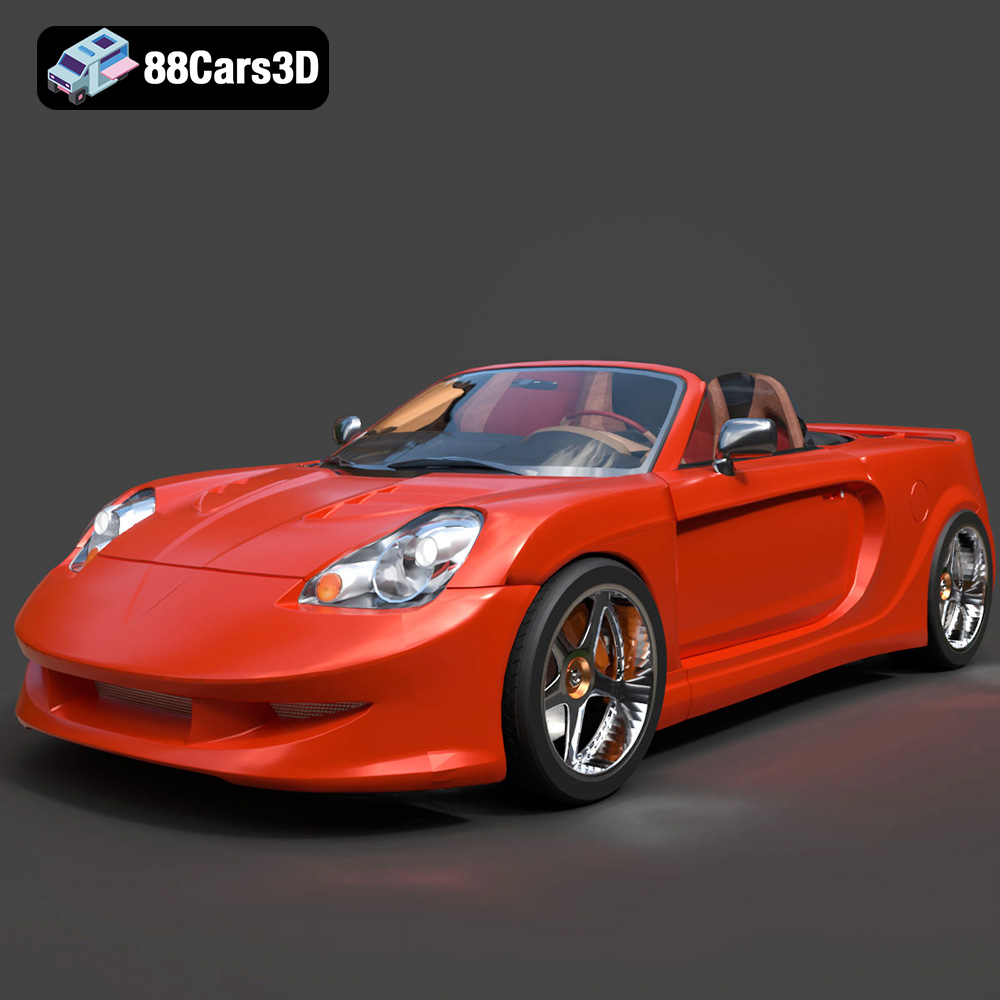
Texture: Yes
Material: Yes
Download the Toyota MRS-007 3D Model featuring clean geometry, realistic detailing, and a fully modeled interior. Includes .blend, .fbx, .obj, .glb, .stl, .ply, .unreal, and .max formats for rendering, simulation, and game development.
Price: $10

Texture: Yes
Material: Yes
Download the Porsche 911 Turbo S 2024 3D Model featuring clean geometry, realistic detailing, and a fully modeled interior. Includes .blend, .fbx, .obj, .glb, .stl, .ply, .unreal, and .max formats for rendering, simulation, and game development.
Price: $20

Texture: Yes
Material: Yes
Download the Pontiac Solstice 2009 3D Model featuring clean geometry, realistic detailing, and a fully modeled interior. Includes .blend, .fbx, .obj, .glb, .stl, .ply, .unreal, and .max formats for rendering, simulation, and game development.
Price: $10

Texture: Yes
Material: Yes
Download the Mini Cooper Countryman 2025 3D Model featuring clean geometry, realistic detailing, and a fully modeled interior. Includes .blend, .fbx, .obj, .glb, .stl, .ply, .unreal, and .max formats for rendering, simulation, and game development.
Price: $29.9
Texture: Yes
Material: Yes
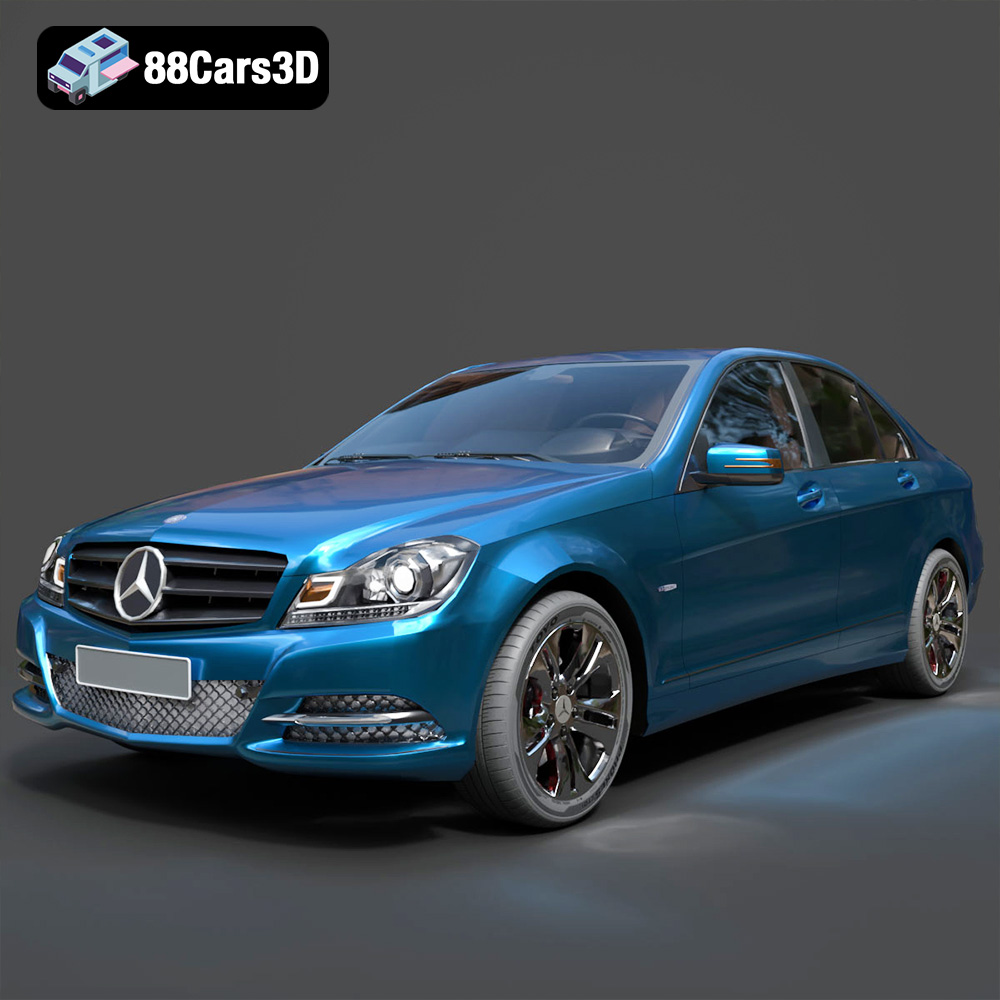
Download the Mercedes C Classe 2012 3D Model featuring clean geometry, realistic detailing, and a fully modeled interior. Includes .blend, .fbx, .obj, .glb, .stl, .ply, .unreal, and .max formats for rendering, simulation, and game development.
Price: $19.9
Texture: Yes
Material: Yes
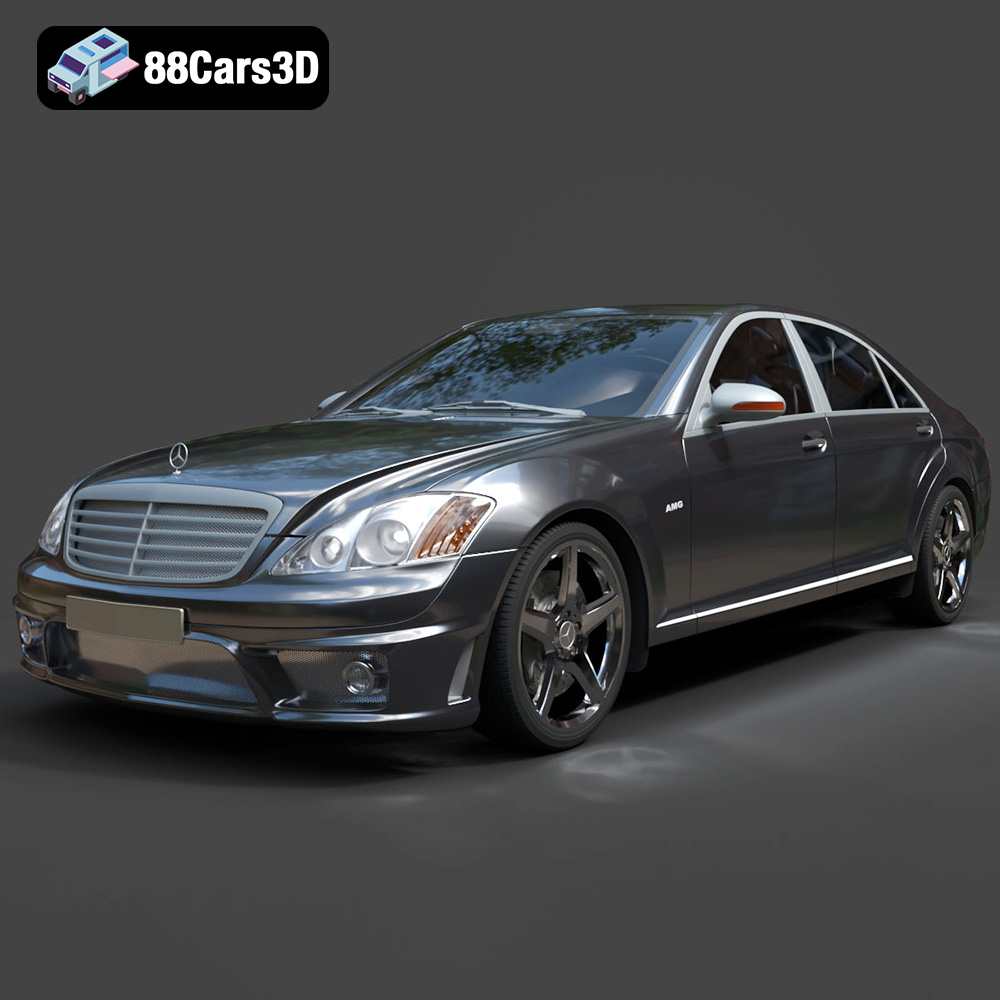
Download the Mercedes-Benz S65 AMG 2018 3D Model featuring clean geometry, realistic detailing, and a fully modeled interior. Includes .blend, .fbx, .obj, .glb, .stl, .ply, .unreal, and .max formats for rendering, simulation, and game development.
Price: $19.9
Texture: Yes
Material: Yes
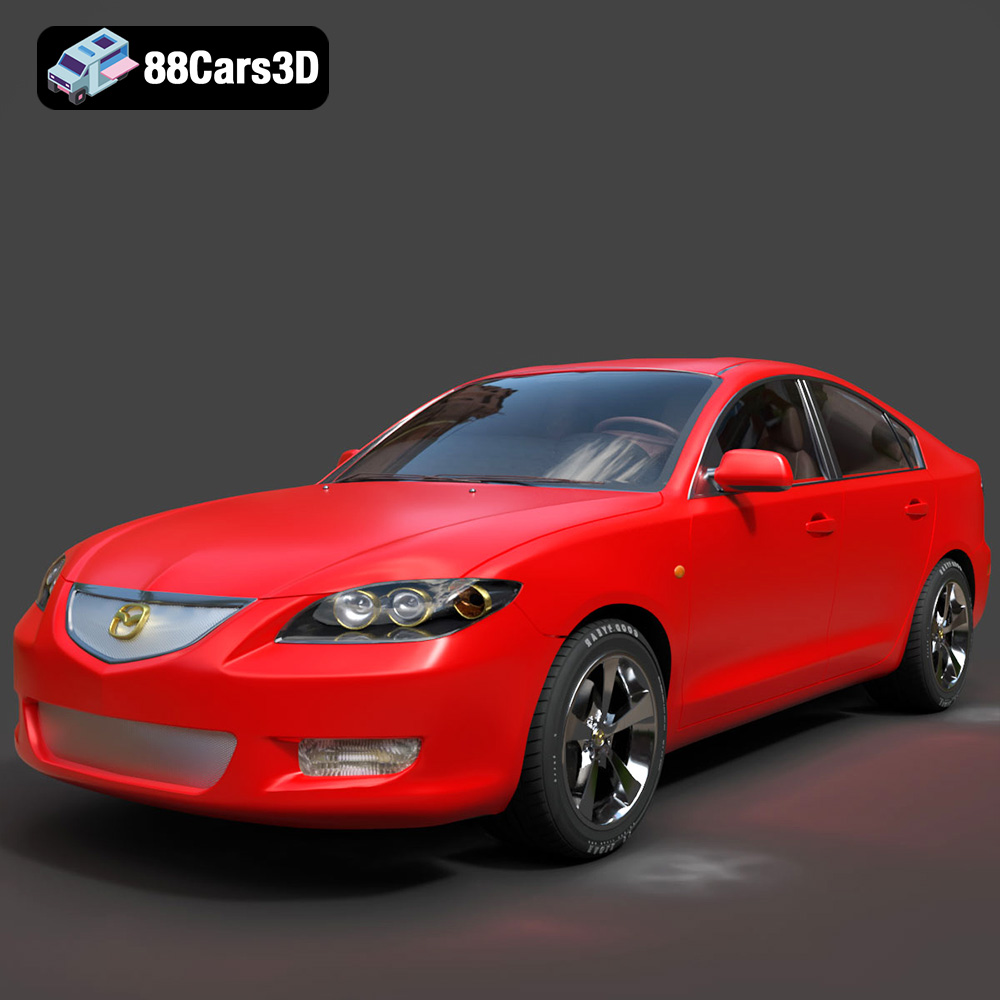
Download the Mazda 3 Sedan 2004 3D Model featuring clean geometry, realistic detailing, and a fully modeled interior. Includes .blend, .fbx, .obj, .glb, .stl, .ply, .unreal, and .max formats for rendering, simulation, and game development.
Price: $10

Texture: Yes
Material: Yes
Download the Martin Rapide 2011 3D Model featuring clean geometry, realistic detailing, and a fully modeled interior. Includes .blend, .fbx, .obj, .glb, .stl, .ply, .unreal, and .max formats for rendering, simulation, and game development.
Price: $20.9
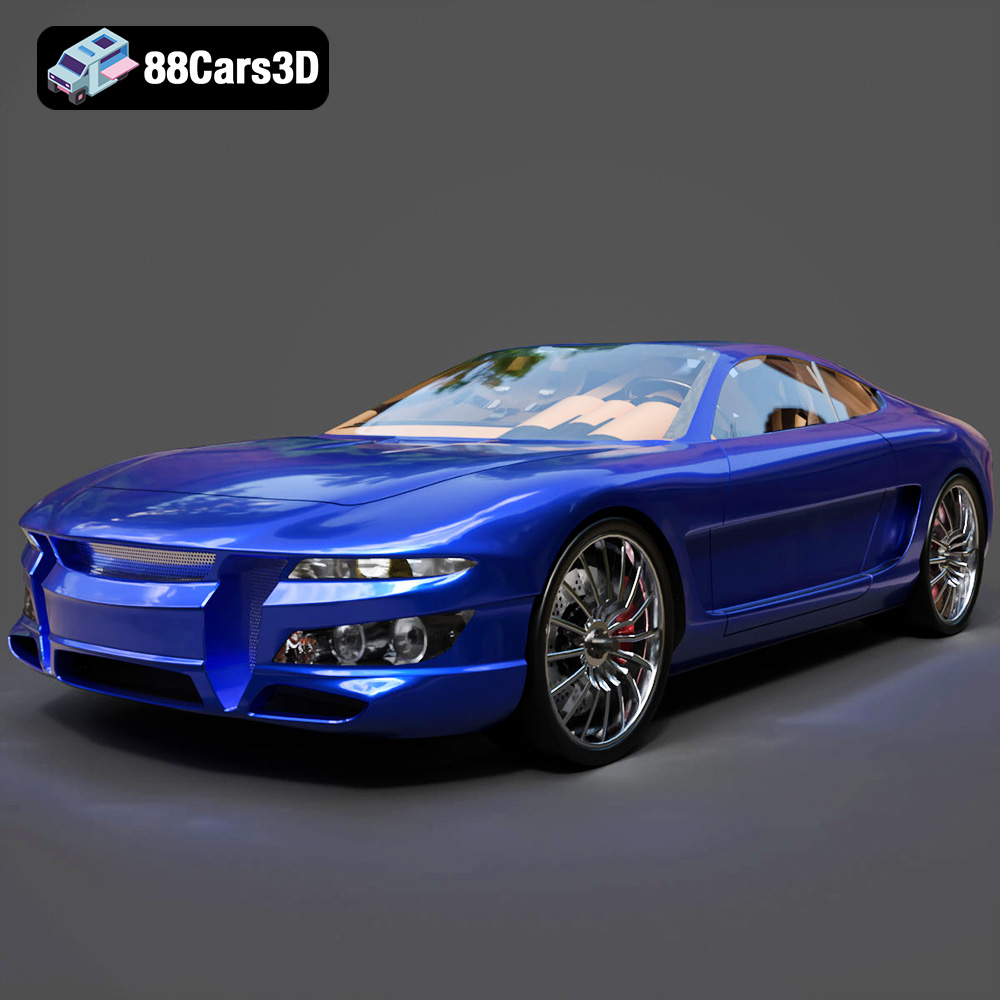
Texture: Yes
Material: Yes
Download the Car Tasergal 005 3D Model featuring clean geometry, realistic detailing, and a fully modeled interior. Includes .blend, .fbx, .obj, .glb, .stl, .ply, .unreal, and .max formats for rendering, simulation, and game development.
Price: $10
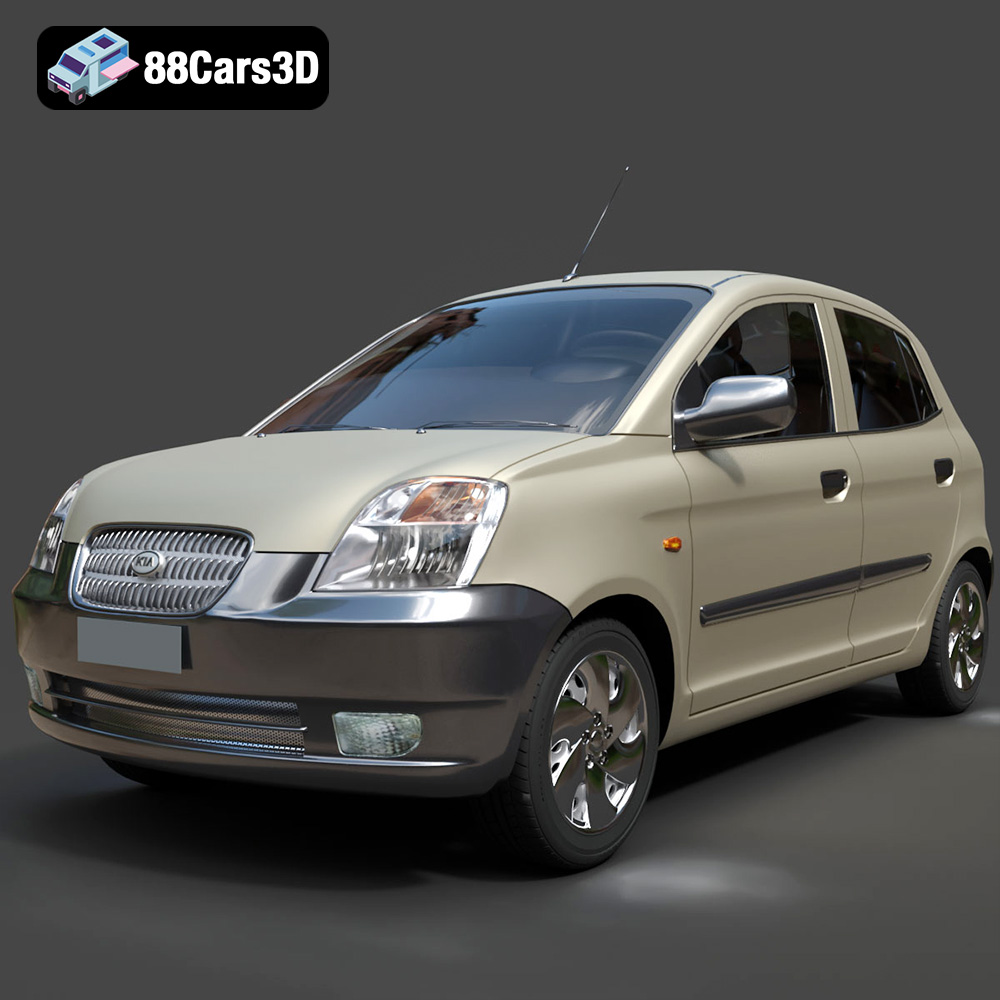
Texture: Yes
Material: Yes
Download the Kia Picanto 2024 3D Model featuring clean geometry, realistic detailing, and a fully modeled interior. Includes .blend, .fbx, .obj, .glb, .stl, .ply, .unreal, and .max formats for rendering, simulation, and game development.
Price: $15.99

