Get 50% OFF All Premium 3D & STL Models!

The journey of automotive 3D modeling is a compelling saga of technological advancement, artistic innovation, and an unyielding pursuit of realism. From the blocky, pixelated vehicles of early arcade games to the breathtakingly photorealistic cars gracing today’s cinematic screens and virtual showrooms, the transformation has been nothing short of revolutionary. This evolution hasn’t just been about visual fidelity; it reflects seismic shifts in computing power, software capabilities, and the diverse applications of vehicle 3D models across industries like game development, film production, advertising, and industrial design.
In this comprehensive guide, we’ll delve deep into the historical milestones, technical breakthroughs, and artistic methodologies that have shaped automotive 3D modeling. Whether you’re a seasoned 3D artist, an aspiring game developer, or simply fascinated by how virtual cars come to life, understanding this progression is key to appreciating the current state and future potential of the field.
The story begins in an era where graphical interfaces were rudimentary, and computing resources were severely limited. The primary goal was simply to represent a car in three dimensions, prioritizing functionality and real-time performance over visual flair.
In the 1980s and early 1990s, microprocessors struggled with complex calculations. Memory was expensive, and graphics cards, as we know them today, were nascent or non-existent. This environment necessitated extreme optimization, giving birth to the “low poly” aesthetic. A car model might consist of mere hundreds, or even dozens, of polygons. Think of the iconic vehicles in games like Virtua Racing (1992) or Ridge Racer (1993) – their charm lay in their geometric simplicity, leaving much to the player’s imagination and the rudimentary texture mapping available.
Industrial design, however, began exploring 3D modeling for precision. Early Computer-Aided Design (CAD) systems, while not focused on visual realism, were laying the groundwork for digital car design by enabling engineers to create precise 3D representations of components and assemblies.
Modeling at this stage was straightforward polygonal modeling. Artists (often engineers or programmers) manipulated individual vertices, edges, and faces to build shapes. Extrusion, beveling, and basic Boolean operations were the primary tools. Software like the original 3D Studio (DOS-based), early versions of AutoCAD, and nascent versions of Maya (then known as PowerAnimator/Alias Sketch!) provided the digital canvas. The challenge was to convey the essence of a car with the fewest possible polygons, demanding an acute understanding of silhouette and form.
As the new millennium approached, computing power made significant strides, ushering in an era where game developers and visualization artists could afford to add more detail to their automotive 3D models.
The advent of consoles like the PlayStation 2 and original Xbox drastically increased polygon budgets. Games like Gran Turismo 3 (PS2, 2001) showcased cars with significantly more complex geometry and realistic reflections, pushing the boundaries of what was achievable in real-time. This era saw the rise of “mid-poly” assets – models detailed enough to be recognizable and appealing, but still optimized for smooth performance.
This period was characterized by the widespread adoption of two critical modeling techniques: Subdivision Surfaces (Sub-D) and Non-Uniform Rational B-Splines (NURBS).
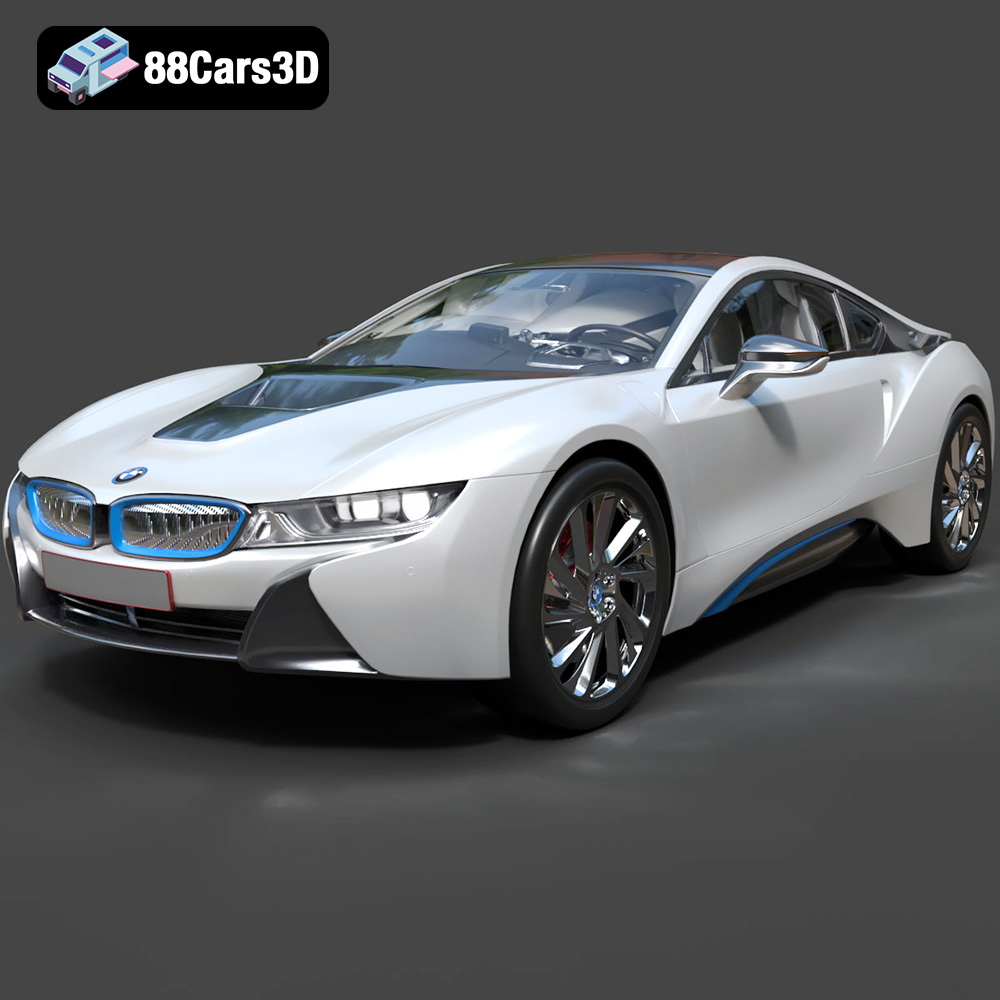
The last two decades have witnessed an explosion in graphical fidelity, driven by exponential increases in GPU power and sophisticated rendering technologies. The line between real and virtual automotive imagery has blurred, making ultra-realistic 3D car models a cornerstone of modern media.
With consoles like the PlayStation 3/Xbox 360, and subsequent generations, the expectation for realistic game assets skyrocketed. Film CGI, automotive configurators, and marketing materials demanded models indistinguishable from physical vehicles. Modern GPUs, with their massive parallel processing capabilities, enabled complex shaders, global illumination, and high polygon counts to be rendered in real-time or near real-time.
A significant development has been the seamless integration of engineering CAD data into visualization pipelines. Manufacturers design cars using sophisticated CAD software like CATIA, SolidWorks, and Fusion 360. Rather than modeling from scratch, artists often receive this highly accurate NURBS data, which is then painstakingly converted into clean polygon meshes suitable for rendering in game engines or animation software. This “CAD to polygon” workflow ensures unmatched accuracy and consistency with the real-world product.
Beyond core modeling, several technologies are pushing the boundaries of what’s possible in automotive visualization.
Modern GPUs from NVIDIA (RTX) and AMD (Radeon RX) have dedicated hardware for ray tracing. This allows for incredibly realistic lighting, reflections, refractions, and shadows to be computed in real-time within game engines like Unreal Engine and Unity. This technology is transformative for automotive configurators, virtual showrooms, and high-fidelity racing games, delivering cinematic quality visuals interactively.
Photogrammetry involves reconstructing 3D models from a series of 2D photographs. For cars, this means capturing existing vehicles with immense detail, including intricate textures and minor imperfections, which can then be optimized and integrated into virtual environments. Lidar scanning provides highly accurate point cloud data of physical objects, creating precise geometric references for 3D artists, especially useful for capturing interiors or complex mechanical parts.
Artificial intelligence and machine learning are beginning to automate aspects of 3D asset creation. AI can assist with tasks like generating PBR materials from single images, automatically retopologizing meshes, or even assisting with procedural generation of environmental elements surrounding the vehicle. While still evolving, these tools promise to dramatically streamline workflows and reduce repetitive tasks for automotive 3D artists.
The choice between low poly and ultra-realistic automotive models depends entirely on the project’s requirements.
| Feature | Low Poly Automotive Model | Ultra-Realistic Automotive Model |
|---|---|---|
| Polygon Count | Hundreds to a few thousand (e.g., 500-10,000 tris) | Hundreds of thousands to millions (e.g., 200,000 – 5 million+ tris) |
| Geometric Detail | Minimal, relies on texture maps for surface detail | Highly intricate, includes panel gaps, badges, interior elements, fine trim |
| Performance | Excellent, renders quickly, low memory footprint | Demanding, requires powerful hardware for real-time rendering, high memory footprint |
| Use Cases | Mobile games, VR/AR (basic), background assets, stylized projects, webGL | AAA games (hero assets), film/TV VFX, advertising, virtual showrooms, engineering visualization, photorealistic configurators |
| Texture Workflow | Simple diffuse, normal maps (baked from high poly often) | Extensive PBR maps (albedo, roughness, metallic, normal, ambient occlusion, displacement) |
| File Size | Small (MBs) | Large (GBs) |
| Creation Time | Relatively fast (hours to a few days) | Significant (weeks to months for a highly detailed model) |
When embarking on an automotive 3D modeling project, consider the following to determine the optimal level of detail:
The evolution continues at a relentless pace. We can expect even greater integration of automotive 3D models with technologies like:
The journey from rudimentary low-poly representations to the stunning ultra-realistic automotive 3D models of today is a testament to human ingenuity and technological progress. What began as a necessity due to hardware limitations has blossomed into a sophisticated art form and an indispensable tool across countless industries. Understanding this evolution not only provides historical context but also offers a roadmap for aspiring 3D artists and industry professionals seeking to navigate the dynamic landscape of virtual vehicle creation.
Whether you’re crafting optimized assets for a fast-paced racing game or rendering a hyper-realistic car for a cinematic commercial, the principles of form, detail, and performance remain paramount. The future promises even more incredible possibilities, making this an exciting field to be a part of.
Do you need bespoke low-poly cars for your game, or breathtaking ultra-realistic vehicle 3D models for your next marketing campaign or virtual showroom? Our expert team of 3D modelers specializes in creating high-quality, optimized automotive assets tailored to your exact specifications, from precise CAD conversions to stunning photorealistic renders.
Contact us today to discuss your automotive 3D modeling needs and bring your vision to life!