Get 20% OFF All Premium 3D & STL Models!

The world of 3D printing, especially for intricate models like those found on 88cars3d.com, hinges on the quality of your STL files. These files are the digital blueprints that your 3D printer interprets to create physical objects. While many models are designed with printability in mind, issues can arise from the modeling process, file conversion, or even simple corruption. This often leads to problems during slicing and printing, such as failed layers, artifacts, or outright print failures. Fortunately, tools exist to help you repair and optimize these files. In this guide, we’ll dive deep into using the powerful, free, and open-source software Blender to clean up and prepare your STL files for flawless 3D printing. We’ll cover everything from understanding common mesh errors to advanced repair techniques, ensuring your next printable car model turns out perfectly.
Before we start tinkering with Blender, it’s crucial to understand the common pitfalls that can plague an STL file intended for 3D printing. These issues stem from the fundamental nature of STL files: they represent a 3D surface as a collection of connected triangles (a mesh). When this mesh is not “watertight” or contains geometric inconsistencies, 3D printers and slicers struggle to interpret the data correctly. Identifying these problems is the first step towards a successful print.
Perhaps the most significant issue is non-manifold geometry. In simple terms, a manifold mesh is one that can be conceptually filled with water without any leaks. Non-manifold geometry breaks this rule. Common examples include:
These issues are often difficult to spot visually but are easily detected by slicing software, leading to errors like “The model has holes” or “Non-manifold edges detected.”
Every face in a 3D mesh has a normal, which is a vector perpendicular to the face, indicating which side is considered “outside” and which is “inside.” In a properly formed manifold mesh, all normals should point outwards consistently. Inverted normals occur when one or more faces have their normals pointing inwards. This can cause slicers to interpret the inside of the model as the outside, leading to hollow prints, missing surfaces, or incorrectly rendered geometry. It’s like the shell of your car model is inside-out!
This occurs when parts of the mesh intersect with themselves, creating a tangled or folded surface. Imagine a thin piece of paper being folded and then trying to flatten it again – it will crease and overlap. In 3D models, self-intersections create areas where the surface is not clearly defined as being inside or outside, leading to unpredictable slicing behavior and printing artifacts. This is particularly problematic for complex shapes and can arise from boolean operations or careless modeling.
While not strictly an error, a mesh with too few polygons (triangles) can result in a blocky or faceted appearance, especially on curved surfaces. This is often a concern when exporting from CAD software or when models are heavily decimated to reduce file size. For printable car models, smooth curves on body panels and wheels are essential, and a low-resolution mesh will detract from the visual appeal.
Blender is a professional, free, and open-source 3D creation suite that offers a comprehensive set of tools for modeling, sculpting, animation, and importantly, mesh editing. Its powerful modeling toolkit makes it an excellent choice for diagnosing and repairing problematic STL files, even if you’re new to 3D modeling. While it has a learning curve, understanding its core editing modes and specific tools can significantly improve your 3D printing workflow.
The first step is to import your STL file into Blender. Go to File > Import > Stl (.stl) and select your file. Once imported, the model will appear in the 3D viewport. Blender has several modes for editing. The primary ones you’ll use are:
To switch between these modes, press the Tab key. When you first import an STL, it’s often a good idea to scale it appropriately if it seems too small or too large for your intended print. Use the S key for scaling in Object Mode. Familiarize yourself with basic navigation: middle-mouse button to rotate, Shift + middle-mouse button to pan, and the mouse wheel to zoom.
Before diving into repairs, use Blender’s built-in tools to identify issues:
By using these tools, you can get a clear picture of the errors present in your STL file before attempting manual fixes.
Now, let’s walk through a practical workflow for repairing a problematic STL file, such as a detailed car model downloaded from 88cars3d.com, using Blender. This process combines automated tools with manual intervention for precise control.
Import your STL file as described above. Immediately switch to Edit Mode (Tab). Enable the Face Orientation overlay. If you see significant red areas, you have inverted normals. Also, open the 3D-Print Toolbox (N panel) and run the “Check All” function to get a report of potential issues like non-manifold edges and holes.
If Face Orientation shows many red faces, you can often fix this automatically. In Edit Mode, select all geometry (press A). Then, go to the Mesh > Normals > Recalculate Outside option. This attempts to set all normals to point outwards. If this doesn’t work perfectly, you might need to manually flip normals on specific faces (select the face(s), then Mesh > Normals > Flip).
This is where the real work often lies. Use the 3D-Print Toolbox‘s “Non-Manifold Edges” detector. It highlights problematic edges. For holes, Blender’s “Fill Holes” function in the Clean Up menu is a good start. If it doesn’t fill them adequately, you might need to manually create faces:
For more complex non-manifold issues, the “Make Manifold” option can be useful, but always inspect the results carefully. Sometimes, you might need to delete problematic internal faces or edges using the X key (and choosing “Faces” or “Edges”) and then manually bridge gaps or reconnect vertices using the J key (join vertices) or by creating new faces.
Self-intersections are tricky. Blender doesn’t have a one-click “fix self-intersection” tool. You often need to visually identify the areas where the mesh looks folded or tangled. You might need to:
Once the mesh appears watertight and manifold, run the “Check All” function in the 3D-Print Toolbox again to ensure no errors remain. You might also want to use “Limited Dissolve” (Mesh > Clean Up > Limited Dissolve) with a very small angle to smooth out any overly dense areas without losing significant detail. Finally, export the cleaned model:
Always inspect the exported STL in your slicer software to confirm it looks correct and is error-free before starting a print.
While Blender offers robust tools, some complex repairs or specific workflows might benefit from additional techniques or complementary software. Understanding these can elevate your model preparation game, ensuring even the most challenging printable car models can be brought to life.
Boolean operations (Union, Difference, Intersect) are powerful for combining or subtracting shapes. They can be useful for fixing issues or creating complex assemblies. For instance, if a car model has separate parts like spoilers or mirrors that are not properly joined, you can use a Union operation to merge them into a single manifold mesh. However, booleans can sometimes create non-manifold geometry themselves, so always check the results.
This technique is invaluable when assembling pre-designed components or when needing to ensure a clean merge of parts.
For achieving perfectly smooth surfaces or adding subtle details that might be lost during mesh repair, Blender’s Sculpt Mode is indispensable. Tools like the Smooth brush can be used to gently even out rough areas or remove minor artifacts. The Grab brush is excellent for nudging vertices to correct subtle shape distortions without affecting the overall topology too much. When working with resin prints or models requiring high detail, using sculpting tools to refine edges or add subtle curves can make a significant difference in the final output.
Example: If a wheel arch on a car model has slight faceting or waviness after repair, you can enter Sculpt Mode, select the Smooth brush (set to a low strength), and lightly brush over the affected area to achieve a more organic, flowing curve.
While Blender is incredibly capable, dedicated mesh repair software can sometimes offer more specialized or automated solutions for specific problems.
Often, a workflow involving Blender for detailed manual work and Meshmixer or Netfabb for automated checks and repairs can be the most efficient. For example, you might export a problematic STL from Blender, run it through Meshmixer’s Inspector, import the repaired file back into Blender for finer manual adjustments, and then export the final print-ready STL.
A perfectly repaired STL file is only half the battle. How you orient the model on the print bed and how you generate support structures significantly impact the success and quality of your 3D print. These decisions are made within your slicing software, but the quality of your STL, as prepared in Blender, makes them much easier.
The orientation of your printable car model on the build plate affects several factors:
Use your slicer’s tools to rotate and orient the model. Previewing the sliced layers is crucial to catch potential issues related to orientation.
Supports are temporary structures printed to hold up overhanging parts of a model that would otherwise droop or fail. For detailed STL files of cars, supports are often necessary.
Beyond supports, several 3D printer settings in your slicer directly impact the quality of your final print:
Always perform test prints of critical sections or small calibration models to dial in your slicer settings before committing to a large, multi-hour print of your prized car model.
Once your 3D print is complete and supports have been carefully removed, the journey to a show-quality model isn’t over. Post-processing is where you transform a raw print into a polished piece worthy of display or collection. The techniques employed will vary depending on whether you used FDM or resin printing, and the desired final aesthetic.
Layer lines are a hallmark of FDM printing, and sanding is the primary method to reduce their visibility. For resin prints, sanding might be needed to remove support marks.
For resin prints, a gentle sanding after removing support marks is usually sufficient, often followed by a clear coat or primer.
Priming is a crucial step before painting, especially for FDM prints, as it helps to create a uniform surface and ensures better paint adhesion. It also reveals any remaining imperfections that you might have missed during sanding.
Many complex models, especially highly detailed car kits, might come in multiple parts that need to be assembled after printing. This is where your careful preparation and repair work in Blender pays off.
With patience and these post-processing steps, your 3D printed car models, whether from your own designs or sourced from high-quality marketplaces like 88cars3d.com, can achieve a level of finish that rivals traditional model kits.
Mastering the art of preparing and printing 3D models, particularly intricate ones like collectible car replicas, involves a blend of digital finesse and mechanical understanding. By leveraging the powerful, free tools within Blender, you can systematically tackle common STL file issues such as non-manifold geometry, inverted normals, and self-intersections. The workflow outlined—from initial import and analysis using Blender’s built-in tools and the 3D-Print Toolbox, through manual mesh repair and optimization, to exploring advanced techniques like booleans and sculpting—empowers you to transform flawed digital files into print-ready assets. Remember that a clean STL is the foundation for successful slicing and printing; strategic orientation, well-designed supports, and carefully tuned slicer settings will then ensure that your physical print accurately reflects the digital model. Finally, investing time in post-processing techniques like sanding, priming, painting, and assembly will elevate your prints from mere prototypes to professional-looking models. With these skills in hand, you are well-equipped to tackle any printable car model, ensuring high-quality results every time.

Meta Description:
Texture: Yes
Material: Yes
Download the Cadillac CTS-V Coupe 3D Model featuring detailed exterior styling and realistic interior structure. Includes .blend, .fbx, .obj, .glb, .stl, .ply, .unreal, and .max formats for rendering, simulation, AR VR, and game development.
Price: $13.9

Texture: Yes
Material: Yes
Download the Cadillac DTS-005 3D Model featuring its iconic luxury design, detailed interior, and realistic exterior. Includes .blend, .fbx, .obj, .glb, .stl, .ply, .unreal, and .max formats for rendering, simulation, and game development.
Price: $10.79

Texture: Yes
Material: Yes
Download the Buick LeSabre 1998 3D Model featuring a classic American full-size sedan design. Includes .blend, .fbx, .obj, .glb, .stl, .ply, .unreal, and .max formats for rendering, simulation, and game development.
Price: $10.79
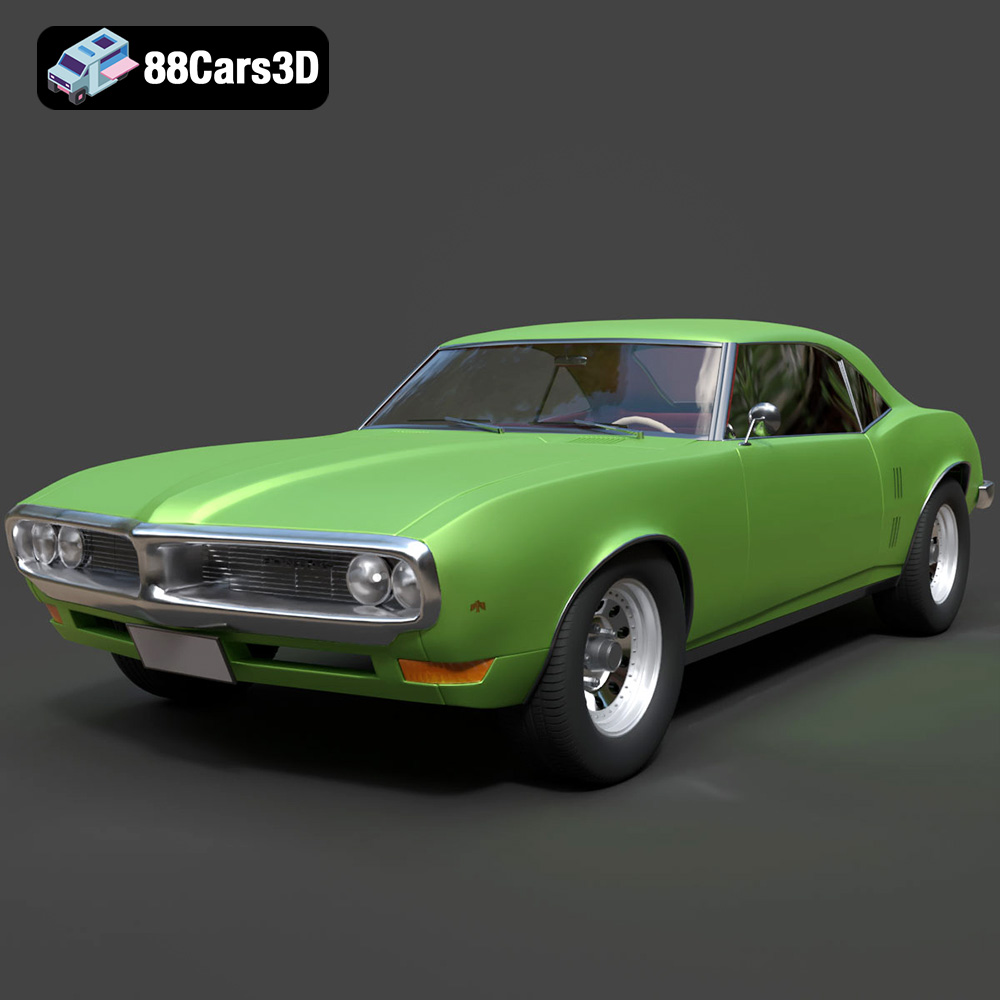
Texture: Yes
Material: Yes
Download the Pontiac Firebird 1998 3D Model featuring clean geometry, realistic detailing, and a fully modeled interior. Includes .blend, .fbx, .obj, .glb, .stl, .ply, .unreal, and .max formats for rendering, simulation, and game development.
Price: $10

Texture: Yes
Material: Yes
Download the Opel Astra 2008 3D Model featuring clean geometry, realistic detailing, and a fully modeled interior. Includes .blend, .fbx, .obj, .glb, .stl, .ply, .unreal, and .max formats for rendering, simulation, and game development.
Price: $10

Texture: Yes
Material: Yes
Download the Mercedes Benz Joaquin-007 3D Model featuring clean geometry, realistic detailing, and a fully modeled interior. Includes .blend, .fbx, .obj, .glb, .stl, .ply, .unreal, and .max formats for rendering, simulation, and game development.
Price: $19.99
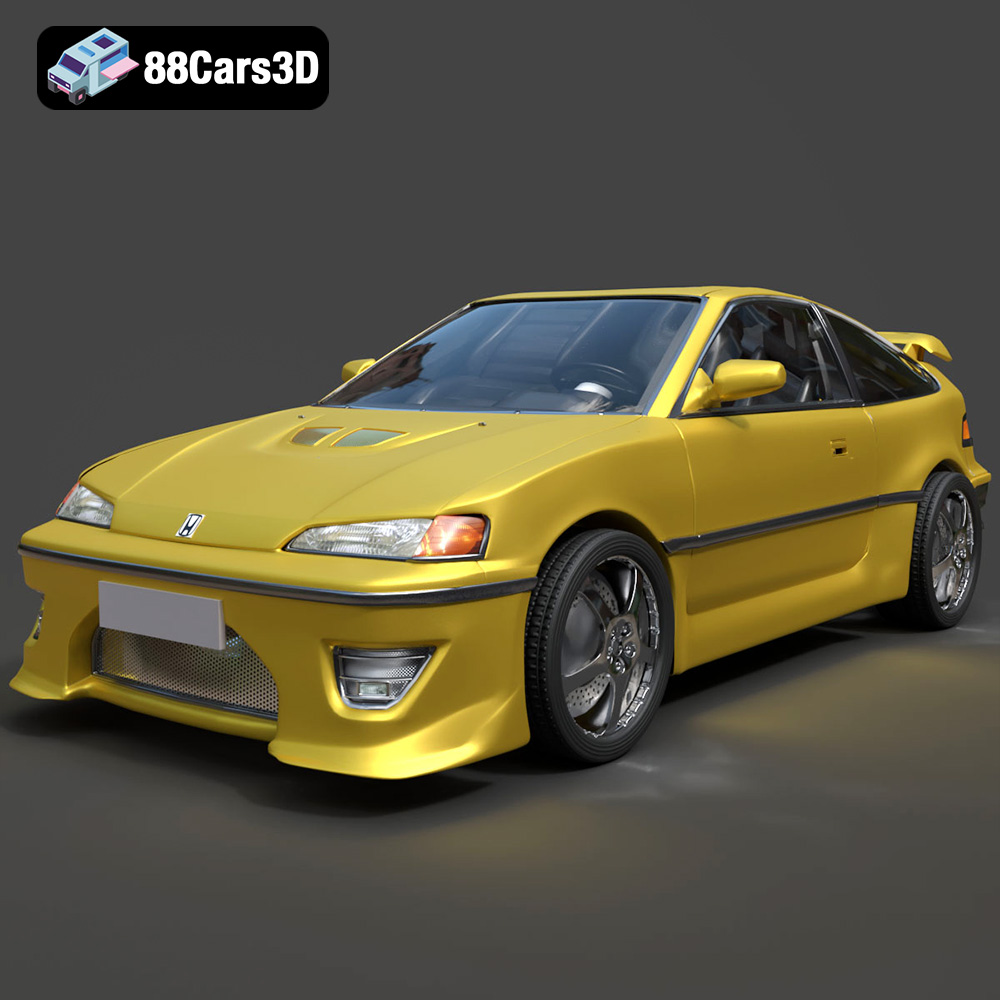
Texture: Yes
Material: Yes
Download the Honda CRX 1980 3D Model featuring clean geometry, realistic detailing, and a fully modeled interior. Includes .blend, .fbx, .obj, .glb, .stl, .ply, .unreal, and .max formats for rendering, simulation, and game development.
Price: $11.99
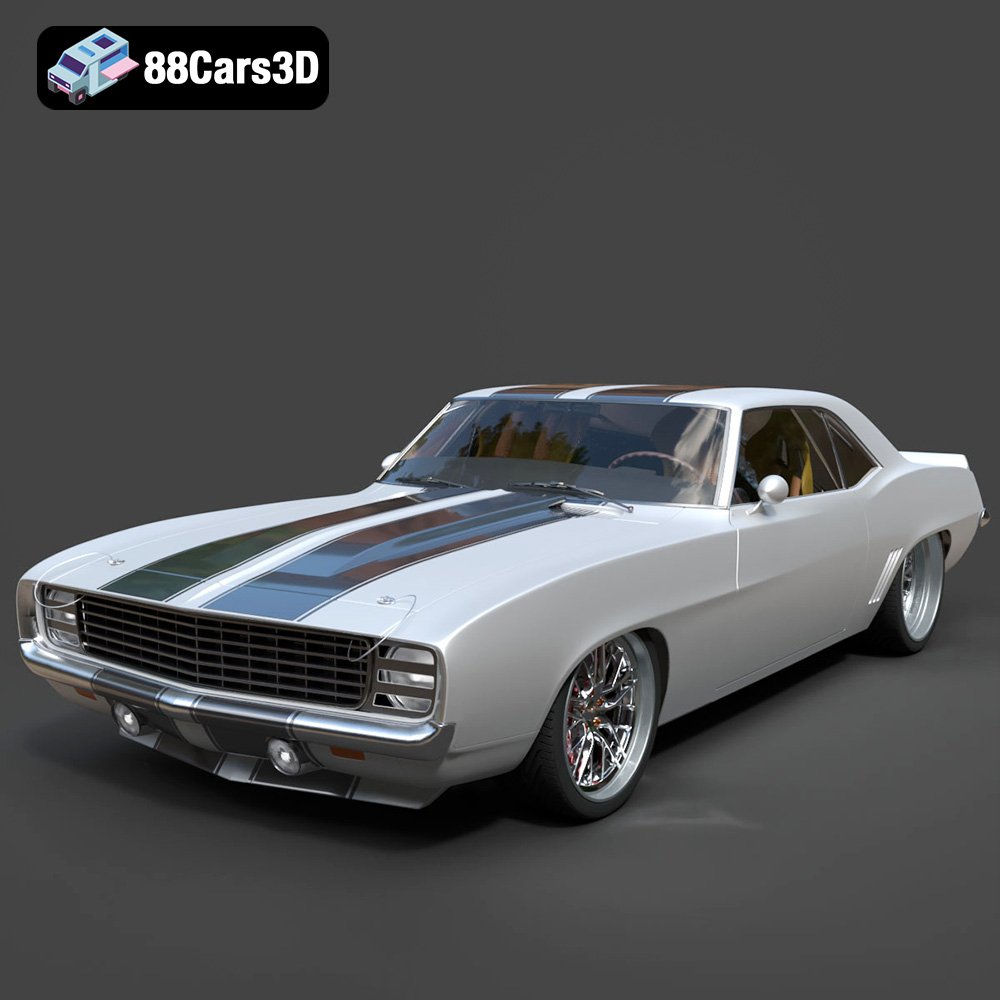
Texture: Yes
Material: Yes
Download the Chevrolet Camaro 69 Pro-007 3D Model featuring classic muscle car design and custom performance aesthetics. Includes .blend, .fbx, .obj, .glb, .stl, .ply, .unreal, and .max formats for rendering, simulation, and game development.
Price: $20.79

Texture: Yes
Material: Yes
Download the Honda Fit 2008 3D Model featuring a compact, versatile design with detailed exterior and interior components. Includes .blend, .fbx, .obj, .glb, .stl, .ply, .unreal, and .max formats for rendering, simulation, and game development.
Price: $10.79
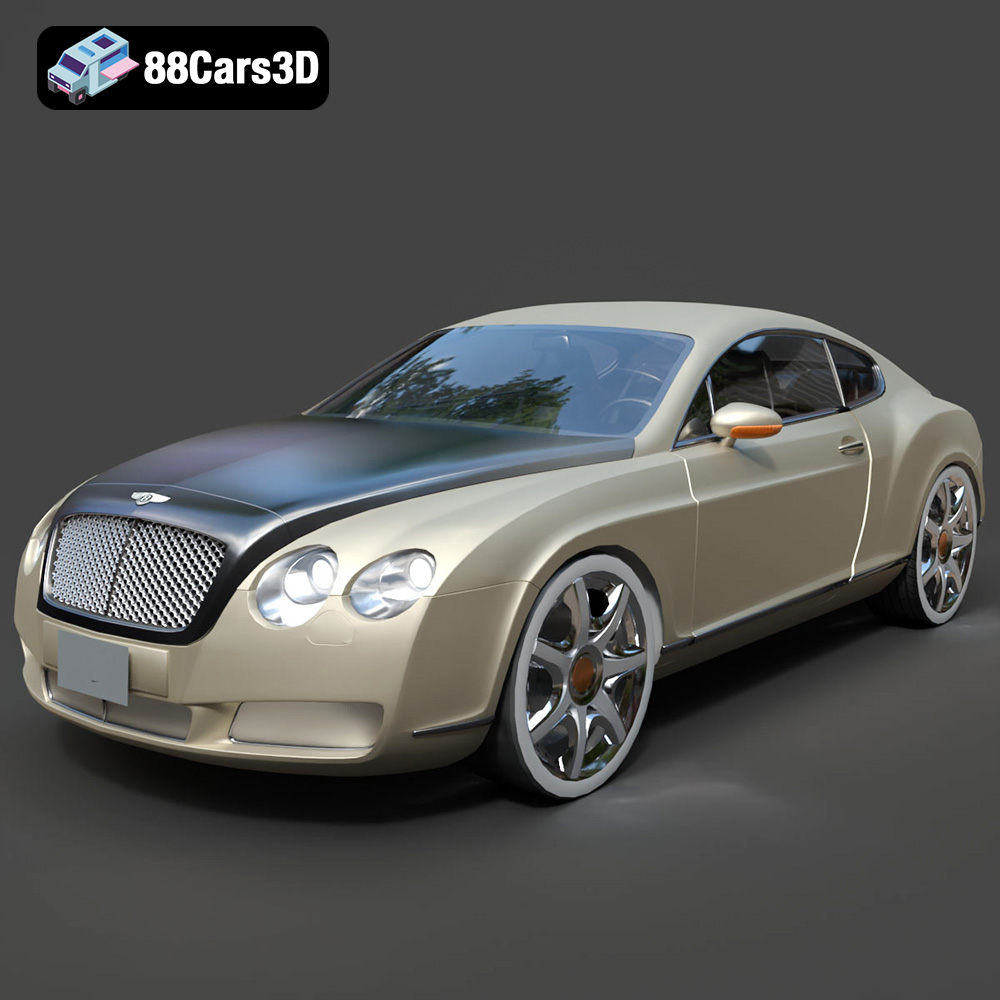
Texture: Yes
Material: Yes
Download the Bentley Continental GT-002 3D Model featuring a luxurious grand touring design and high-quality details. Includes .blend, .fbx, .obj, .glb, .stl, .ply, .unreal, and .max formats for rendering, simulation, and game development.
Price: $20.79

