Get 20% OFF All Premium 3D & STL Models!

Welcome, fellow makers and automotive enthusiasts! The world of 3D printing, especially for intricate collectibles like printable car models, hinges on the quality and integrity of your digital files. The STL (Stereolithography) file format, while ubiquitous, can sometimes present challenges. Whether you’ve downloaded a fantastic model from a marketplace like 88cars3d.com and need to make minor adjustments, or you’re designing from scratch and need to refine your mesh, understanding the right software is crucial. This guide will delve deep into the essential tools – both free and paid – that will empower you to edit, repair, and optimize STL files, ensuring your 3D printer flawlessly translates digital designs into tangible masterpieces. We’ll cover everything from basic mesh manipulation to advanced repair techniques, helping you overcome common printing hurdles and achieve professional-grade results.
Before we dive into software, it’s vital to grasp what an STL file truly represents. Unlike formats that store precise mathematical descriptions of surfaces (like NURBS), STL files approximate these surfaces using a collection of interconnected triangles. This “faceted” representation is inherently simpler for 3D printers to process but can lead to issues if not handled correctly.
An STL file describes a 3D object’s surface as a mesh of triangles. Each triangle is defined by three vertices (corner points) and a normal vector, which indicates the outward-facing direction of that surface. The collection of these triangles forms the “skin” of your model. The **manifoldness** of this mesh is critical; a manifold mesh is watertight, meaning it has no holes, no internal faces, and edges are shared by exactly two faces. Non-manifold geometry is a primary cause of printing failures, leading to slicing errors and corrupted layers.
* **Holes:** Gaps in the mesh where the interior of the model is exposed to the exterior. These often occur during modeling or due to file conversion errors.
* **Inverted Normals:** Triangles whose normal vectors point inwards instead of outwards. This confuses the slicing software, leading to the model being printed inside-out or not at all.
* **Non-Manifold Edges:** Edges shared by more than two triangles, or edges that connect to only one triangle. These create ambiguous geometry that slicers struggle to interpret.
* **Interpenetrating Faces:** Two parts of the model’s surface occupying the same space.
These issues are precisely what STL editing software aims to identify and correct, ensuring your downloaded car models from sites like 88cars3d.com are perfectly prepared for printing.
The good news is that you don’t need to break the bank to perform essential STL edits. Several free and open-source software packages offer robust capabilities for repairing and modifying STL files. These are excellent starting points for hobbyists and even for professional use on less complex tasks.
Autodesk Meshmixer (though no longer actively developed, it remains a powerful and accessible tool) is a go-to for many 3D printing enthusiasts. Its intuitive interface and extensive feature set make it ideal for both repair and modification.
* **Key Features:**
* **Auto-Repair:** Meshmixer’s “Inspector” tool can automatically detect and fix many common mesh errors, including holes and non-manifold geometry. It’s often the first line of defense for problematic STL files.
* **Sculpting Tools:** While not a full-fledged sculpting package, Meshmixer offers brushes for smoothing, inflating, deflating, and precisely manipulating mesh surfaces. This is great for refining details on car models.
* **Hollowing and Wall Thickness:** You can easily hollow out models and assign a specific wall thickness, saving filament and print time, which is especially useful for larger collectible car models.
* **Support Generation:** Meshmixer includes automatic support generation capabilities, allowing you to add custom supports before exporting to your slicer.
* **Boolean Operations:** Combine or subtract meshes, useful for adding custom parts or splitting models.
* **Workflow Example (Repairing a downloaded model):**
1. Import your STL file.
2. Go to `Analysis > Inspector`. Click `Auto-Repair All`.
3. If the auto-repair leaves holes or artifacts, use `Edit > Select > Boundary Loops` to select problematic edges and then `Edit > Fill Holes`.
4. Use `Analysis > Show Normals` to identify inverted normals (often displayed as red) and `Edit > Mesh > Recalculate Normals` (or flip specific triangles if needed).
5. Export the repaired STL.
Blender is an incredibly powerful, free, and open-source 3D creation suite. While its primary focus is on modeling, animation, and rendering, it also boasts impressive capabilities for mesh editing and repair, making it suitable for advanced STL manipulation.
* **Key Features:**
* **Advanced Mesh Editing:** Blender offers unparalleled control over individual vertices, edges, and faces. You can perform complex extrusions, bevels, and modifications.
* **Sculpting Mode:** Similar to Meshmixer, Blender’s sculpt mode is highly advanced, allowing for intricate detailing and organic modifications.
* **Mesh Analysis Tools:** Add-ons like “3D-Print Toolbox” provide specific tools for checking manifoldness, wall thickness, and detecting other printability issues directly within Blender.
* **Boolean Modifiers:** Blender’s Boolean modifier is robust for combining, cutting, and intersecting meshes, essential for complex assembly or modification tasks.
* **Remeshing Tools:** For heavily corrupted meshes or for retopologizing scanned data, Blender’s remeshing algorithms can create cleaner geometry.
* **Workflow Example (Adding a custom spoiler to a car model):**
1. Import the car model STL.
2. Enter `Edit Mode`. Select faces where the spoiler will attach.
3. Create a new mesh object (e.g., a plane) and position it. Use sculpting or standard modeling tools to shape the spoiler.
4. Use the `Boolean` modifier on the car model, set to `Union` with the spoiler object, to merge them. Apply the modifier.
5. Ensure the combined mesh is manifold. Use the `3D-Print Toolbox` add-on (enable in Preferences > Add-ons) to check for errors.
6. Export as STL.
* **3D Builder (Windows):** A simple, user-friendly application included with Windows 10/11. It offers basic repair functions, hole filling, and hollowing capabilities, making it a quick option for straightforward fixes.
* **FreeCAD:** A parametric 3D modeler. While more focused on engineering and CAD, its Part Design workbench can import and manipulate STL files, and its Mesh Design workbench offers repair tools.
For users requiring the highest level of control, advanced features, or integration into professional workflows, paid software offers significant advantages. These tools are often developed with specific industries in mind, like manufacturing and engineering.
Autodesk Netfabb is a comprehensive solution for additive manufacturing preparation. It goes far beyond basic mesh repair, offering advanced simulation, analysis, and optimization tools specifically designed for industrial 3D printing.
* **Key Features:**
* **Advanced Repair Algorithms:** Netfabb boasts sophisticated automated repair algorithms capable of handling highly complex mesh errors that other software might miss. It can identify and correct issues like self-intersections, sliver triangles, and complex non-manifold conditions.
* **Part Orientation and Support Generation:** Offers intelligent suggestions for optimal part orientation to minimize support material and improve print quality. Its support generation is highly configurable and can create complex lattice structures.
* **Simulation and Analysis:** Predicts potential printing failures like warping and distortion before printing, saving significant time and material costs.
* **Nesting and Packing:** Efficiently arranges multiple parts on the build plate for optimized production runs.
* **Scripting and Automation:** Allows for custom scripts to automate repetitive tasks, crucial for high-volume production or complex workflows.
* **Workflow Example (Preparing a complex engine model for resin printing):**
1. Import the high-detail engine STL.
2. Utilize Netfabb’s `Repair` module, choosing appropriate repair strategies based on the detected issues (e.g., `Standard Repair`, `Advanced Repair`).
3. Use `Analysis > Wall Thickness` to ensure all parts meet the minimum requirements for resin printing. Adjust geometry if necessary.
4. Employ `Part Orientation` tools to find the best angle for minimizing support contact points on delicate engine components.
5. Generate supports using the `Support` module, specifying support types (e.g., tree supports, standard supports) and parameters tailored for resin printing (e.g., fine tips, adequate density).
6. Export the repaired and supported model, often directly to a resin slicer format or as an STL/3MF.
While primarily CAD (Computer-Aided Design) software, professional packages like SolidWorks and Autodesk Fusion 360 offer robust capabilities for importing, editing, and exporting STL files, especially when your goal is to modify or integrate STL parts into a larger engineered design.
* **Key Features:**
* **Parametric Modeling:** If you need to precisely resize or modify dimensions of a part (e.g., adjust the wheelbase of a car model), CAD software excels. You can often convert STL meshes into more workable surface or solid bodies.
* **Feature-Based Editing:** Allows for modifications like adding holes, bosses, or fillets with precise control over dimensions and features.
* **Assembly Capabilities:** Ideal for combining multiple 3D printed parts into a larger assembly, ensuring proper fitment.
* **Surface and Solid Body Conversion:** Tools to convert imported STL meshes into editable solid or surface models, enabling advanced manipulation.
* **Workflow Example (Scaling and adding mounting points to a printable car model chassis):**
1. Import the chassis STL into SolidWorks or Fusion 360.
2. Use the software’s tools to convert the mesh body into a solid or surface body (this can be challenging for complex meshes).
3. Use the `Scale` tool to uniformly resize the chassis.
4. Create new sketches on the chassis surfaces. Use sketch tools to draw circles or rectangles for mounting points.
5. Employ `Extrude` or `Cut` features to create the mounting bosses or holes.
6. Export the modified chassis as a new STL file, ensuring it remains manifold.
* **Materialise Magics:** Another high-end industrial software for STL repair, optimization, and preparation, often used in professional service bureaus.
* **3D Slash:** Offers a unique voxel-based approach to editing, making it intuitive for certain types of modifications.
The best software depends entirely on your specific requirements, budget, and technical expertise.
* Start with **Meshmixer** for general repairs and modifications. Its auto-repair and intuitive tools are excellent for getting started.
* Use **3D Builder** for quick, simple fixes on Windows machines.
* If you’re interested in learning more advanced 3D modeling concepts alongside mesh editing, **Blender** is an invaluable, albeit challenging, free resource.
* If your work involves frequent, complex repairs, sophisticated support generation, or simulation for production, **Netfabb** is a powerful investment.
* For integrating 3D printed parts into larger mechanical designs or requiring precise dimensional control, **SolidWorks** or **Fusion 360** are the way to go.
* When downloading high-quality printable car models from platforms like **88cars3d.com**, you might primarily need repair software. However, if you plan to modify or integrate these models into larger CAD projects, consider the CAD packages.
Regardless of the software you choose, mastering certain techniques will significantly improve your results.
While automated repair tools are convenient, understanding manual techniques offers more control.
* **Manual Hole Filling:** After identifying holes (often highlighted by the software), you can manually create new triangles to bridge the gap. In Blender, this might involve selecting boundary edges and using the `F` key to create faces. In Meshmixer, `Edit > Select > Boundary Loops` followed by `Edit > Fill Holes` is common.
* **Normal Correction:** Ensure all normals point outwards. Most software has a “Recalculate Normals” or “Flip Normals” function. Visually inspect your model to confirm.
* **Removing Unused Vertices/Displaced Vertices:** Clean up stray geometry that isn’t connected to the main mesh.
* **Splitting Large Models:** For printers with smaller build volumes, you’ll need to split large car models. Use slicing software or dedicated tools (like Meshmixer’s `Inspector > Separate Shells` or Netfabb’s cutting tools) to divide the model cleanly, ensuring you add registration keys for easy alignment during assembly.
* **Wall Thickness:** Ensure your model has sufficient wall thickness everywhere. Thin walls (<0.8-1.0mm for FDM, potentially less for resin) are prone to breaking or not printing at all. Use the `Mesh Analysis > Wall Thickness` tools available in most advanced software.
* **Overhangs and Supports:** Identify areas with steep overhangs (typically >45-60 degrees). While slicers handle support generation, understanding which areas *will* need support helps in model design or pre-modification. Sometimes, slightly adjusting an angle in your editor can eliminate the need for difficult-to-remove supports.
* **Detail Level:** Extremely fine details might not resolve well on certain printers or with specific materials. Consider smoothing or slightly enlarging crucial details if necessary, especially when preparing models for FDM printing.
While STL is the de facto standard for sliced files, other formats are relevant during the editing process:
* **OBJ (Wavefront Object):** Often used for scanned data and can store color and texture information, though this is usually lost when converting to STL.
* **3MF (3D Manufacturing Format):** A newer, more capable format that can store mesh data, color, materials, and even printer-specific information, reducing the need for separate slicing steps. Many modern slicers and repair tools support 3MF.
* **STEP/IGES:** Standard CAD formats representing precise geometry. If you’re working within a CAD environment (like Fusion 360 or SolidWorks), exporting and re-importing as STEP can sometimes yield cleaner, more editable geometry than STL.
Mastering STL file editing is a fundamental skill for any serious 3D printing enthusiast, especially when working with detailed subjects like printable car models. Whether you’re leveraging the powerful, free capabilities of Meshmixer and Blender, or investing in the professional-grade features of Netfabb, the ability to repair, modify, and optimize your files directly translates to higher print quality and fewer failures. By understanding mesh topology, identifying common issues like holes and inverted normals, and employing the right tools and techniques, you can confidently tackle any STL file. Remember that platforms like 88cars3d.com offer excellent starting points with print-ready models, but the final polish often comes from your editing skills. Invest time in learning these software packages and techniques, and you’ll unlock a new level of precision and creativity in your 3D printing endeavors, bringing your favorite cars to life like never before. Happy printing!

Meta Description:
Texture: Yes
Material: Yes
Download the Cadillac CTS-V Coupe 3D Model featuring detailed exterior styling and realistic interior structure. Includes .blend, .fbx, .obj, .glb, .stl, .ply, .unreal, and .max formats for rendering, simulation, AR VR, and game development.
Price: $13.9

Texture: Yes
Material: Yes
Download the Cadillac DTS-005 3D Model featuring its iconic luxury design, detailed interior, and realistic exterior. Includes .blend, .fbx, .obj, .glb, .stl, .ply, .unreal, and .max formats for rendering, simulation, and game development.
Price: $10.79

Texture: Yes
Material: Yes
Download the Buick LeSabre 1998 3D Model featuring a classic American full-size sedan design. Includes .blend, .fbx, .obj, .glb, .stl, .ply, .unreal, and .max formats for rendering, simulation, and game development.
Price: $10.79

Texture: Yes
Material: Yes
Download the Pontiac Firebird 1998 3D Model featuring clean geometry, realistic detailing, and a fully modeled interior. Includes .blend, .fbx, .obj, .glb, .stl, .ply, .unreal, and .max formats for rendering, simulation, and game development.
Price: $10

Texture: Yes
Material: Yes
Download the Opel Astra 2008 3D Model featuring clean geometry, realistic detailing, and a fully modeled interior. Includes .blend, .fbx, .obj, .glb, .stl, .ply, .unreal, and .max formats for rendering, simulation, and game development.
Price: $10

Texture: Yes
Material: Yes
Download the Mercedes Benz Joaquin-007 3D Model featuring clean geometry, realistic detailing, and a fully modeled interior. Includes .blend, .fbx, .obj, .glb, .stl, .ply, .unreal, and .max formats for rendering, simulation, and game development.
Price: $19.99
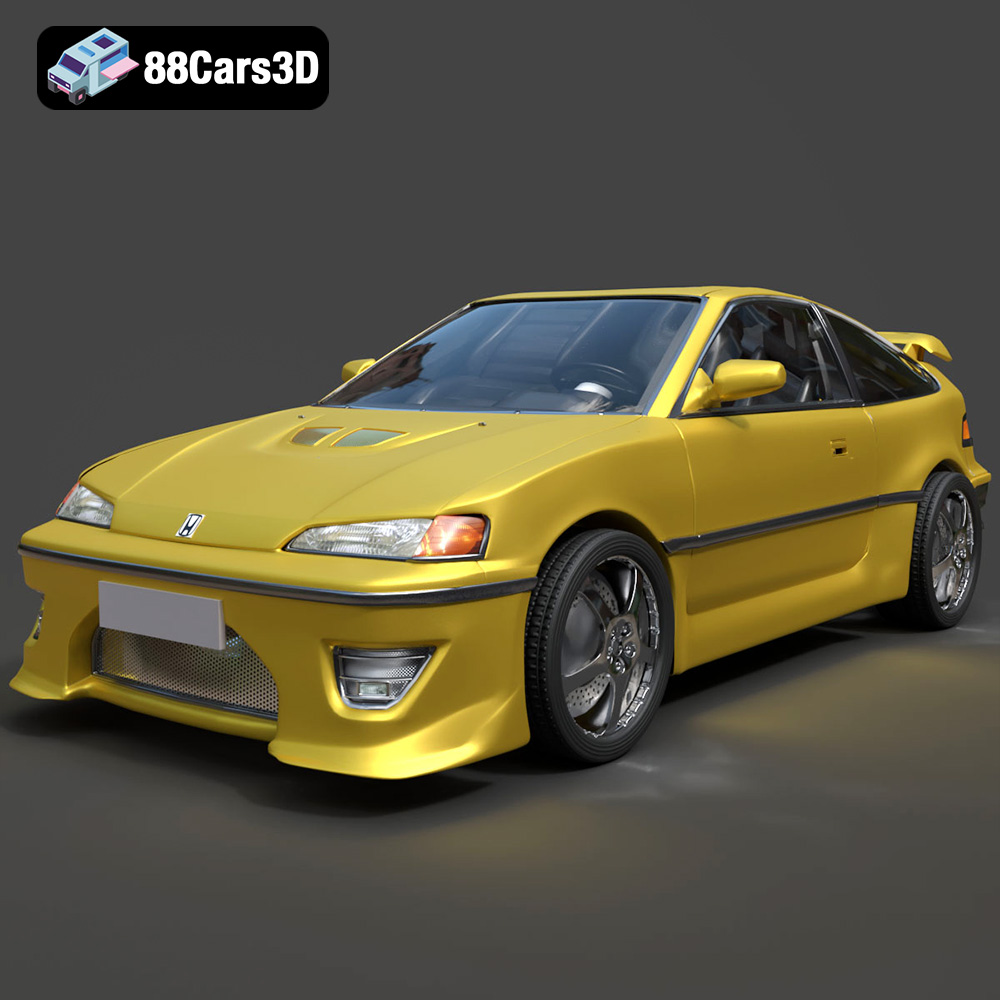
Texture: Yes
Material: Yes
Download the Honda CRX 1980 3D Model featuring clean geometry, realistic detailing, and a fully modeled interior. Includes .blend, .fbx, .obj, .glb, .stl, .ply, .unreal, and .max formats for rendering, simulation, and game development.
Price: $11.99

Texture: Yes
Material: Yes
Download the Chevrolet Camaro 69 Pro-007 3D Model featuring classic muscle car design and custom performance aesthetics. Includes .blend, .fbx, .obj, .glb, .stl, .ply, .unreal, and .max formats for rendering, simulation, and game development.
Price: $20.79

Texture: Yes
Material: Yes
Download the Honda Fit 2008 3D Model featuring a compact, versatile design with detailed exterior and interior components. Includes .blend, .fbx, .obj, .glb, .stl, .ply, .unreal, and .max formats for rendering, simulation, and game development.
Price: $10.79
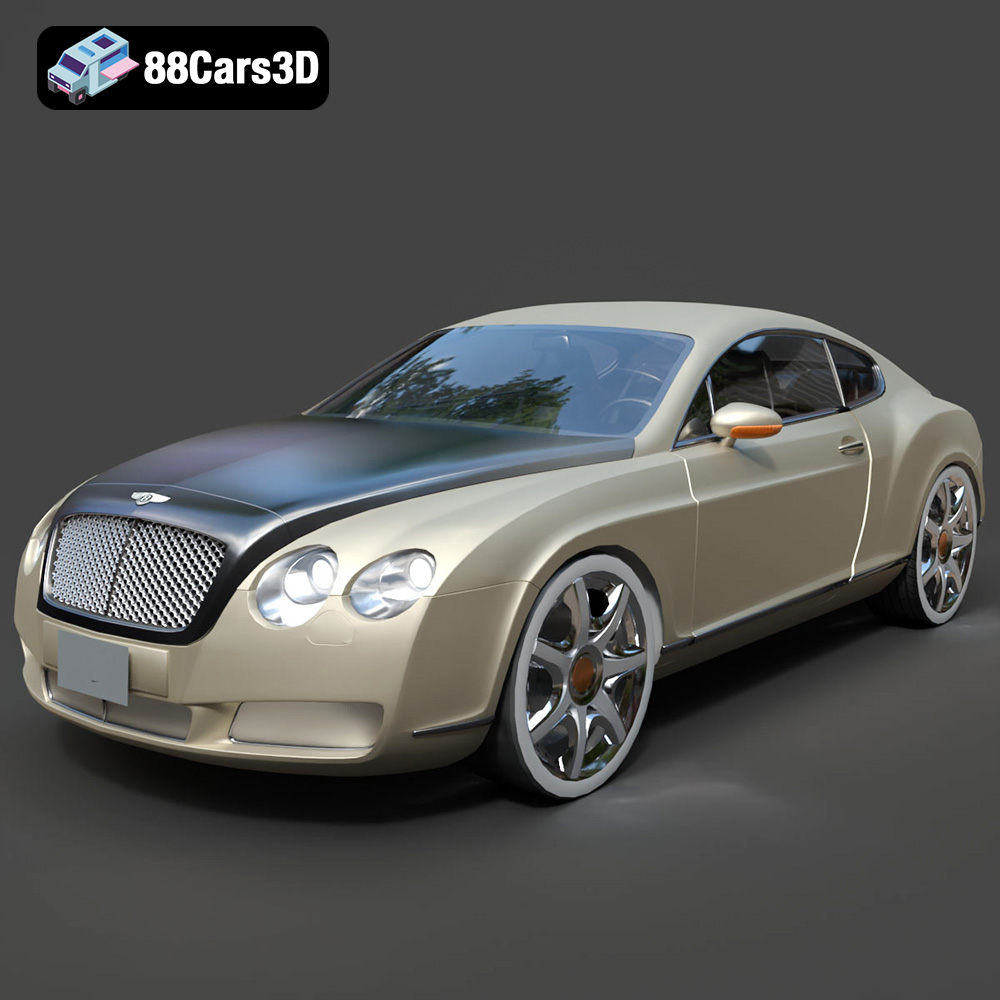
Texture: Yes
Material: Yes
Download the Bentley Continental GT-002 3D Model featuring a luxurious grand touring design and high-quality details. Includes .blend, .fbx, .obj, .glb, .stl, .ply, .unreal, and .max formats for rendering, simulation, and game development.
Price: $20.79

