From CAD to 3D Model: Converting Automotive Designs for High-Quality Visualization and Beyond
The sleek lines and intricate engineering of automotive design begin in the world of Computer-Aided Design (CAD). These precise digital blueprints are essential for manufacturing, but translating them into visually stunning, production-ready 3D models for rendering, game development, or interactive experiences is a specialized art. The journey from highly accurate, mathematically defined CAD data to a beautifully optimized polygonal 3D model is fraught with technical challenges, demanding a deep understanding of topology, materials, and optimization techniques. This comprehensive guide will demystify the complex process, equipping you with the knowledge to transform raw CAD files into exceptional 3D car models suitable for professional visualization, immersive AR/VR applications, game engines, and even 3D printing.
Whether you’re an automotive designer looking to showcase your creations, a game developer needing high-performance assets, or a visualization artist aiming for photorealism, mastering this conversion is crucial. We’ll delve into the intricacies of cleaning up geometry, crafting pristine topology, developing realistic PBR materials, and optimizing your assets for various platforms. By the end of this article, you’ll have a clear roadmap to navigate the technical landscape and produce top-tier 3D models that meet the exacting standards of marketplaces like 88cars3d.com and the industry at large.
The Foundation: Understanding CAD Data and Its Challenges
Before any polygonal modeling can begin, it’s vital to understand the nature of CAD data. Unlike typical polygonal meshes used in 3D art applications, CAD models are usually created using Non-Uniform Rational B-Splines (NURBS) or solid modeling techniques. These mathematical representations define surfaces and volumes with incredible precision, making them ideal for engineering and manufacturing where accuracy is paramount. However, this inherent precision often becomes a hurdle when translating to polygon-based workflows.
CAD Data Types and Characteristics
NURBS: These are mathematical representations that can accurately model any shape, from simple 2D curves to complex 3D surfaces. They are defined by control points, weights, and knot vectors, allowing for extremely smooth and precise forms. Software like SolidWorks, CATIA, and Rhino 3D heavily utilize NURBS. The advantage is infinite resolution; zooming in on a NURBS surface reveals no facets, only perfectly smooth curves. This is fantastic for design but problematic for real-time rendering and game engines, which rely on discrete polygons.
Solid Models: Often built upon NURBS or other parametric geometry, solid models define a complete volume, not just surfaces. They inherently know what’s “inside” and “outside,” which is critical for engineering analyses like finite element analysis (FEA) and for manufacturing processes. Common formats include STEP (.step), IGES (.igs), and Parasolid (.x_t). While robust for engineering, converting these directly to polygons can result in extremely dense meshes with poor topology, unsuitable for artistic manipulation or real-time performance.
Facet/Mesh Data within CAD: Some CAD systems can export approximated polygonal data. While this sounds convenient, these meshes are typically generated without consideration for animation, deformation, or efficient rendering. They often have triangulated faces, varying polygon density, and poor edge flow, making them a starting point but rarely a final solution for high-quality 3D car models.
Common Conversion Hurdles
The primary challenge in converting CAD to polygon meshes lies in retaining the aesthetic quality and precision of the original design while creating a mesh that is clean, efficient, and suitable for subdivision surface modeling. When directly converting NURBS or solid models to polygons, several issues commonly arise:
- Excessive Polygon Count: CAD converters often generate meshes with millions of polygons, far exceeding what’s necessary or performant for game engines or even high-end rendering. These dense meshes can be difficult to manage, edit, and optimize.
- Poor Topology and Triangulation: Direct conversions frequently result in highly triangulated meshes with inconsistent polygon sizes and undesirable edge flow. This makes it impossible to apply subdivision surfaces smoothly, hinders UV mapping, and causes artifacts during rendering or animation.
- Surface Inconsistencies and Gaps: Even with high-quality CAD data, the conversion process can sometimes introduce tiny gaps, overlapping geometry, or non-manifold edges, leading to rendering errors or problems with 3D printing.
- Scale and Units: CAD files often use specific unit systems (e.g., millimeters or meters). Importing them into 3D software without proper scale management can lead to models that are either too large or too small, causing issues with lighting, physics, and scene setup.
- Material and UV Loss: CAD data typically carries basic material assignments but rarely complex PBR shader networks or production-ready UV maps. These must be recreated from scratch in the 3D application.
Mastering Topology: Crafting Clean 3D Automotive Models
The backbone of any high-quality 3D model, especially for complex subjects like cars, is its topology. Clean, efficient polygon flow is crucial for smooth subdivision, proper deformation, easy UV mapping, and optimal rendering performance. When converting from CAD, the initial mesh is often a mess of triangles and inconsistent quads. The goal is to retopologize this dense, triangulated data into a clean, quad-based mesh that faithfully represents the original design while being artistically flexible and technically sound.
Optimal Polygon Flow and Edge Loops for Sub-D Modeling
For automotive models, which often feature large, smooth, curved surfaces punctuated by sharp creases and intricate details, quad-based topology is paramount. Quads (four-sided polygons) are ideal for subdivision surface modeling (e.g., Turbosmooth in 3ds Max, Subdivision Surface modifier in Blender 4.4, or Maya’s Smooth Mesh Preview), allowing for smooth, predictable surface transitions. The key is to establish precise edge loops that follow the natural contours and design lines of the vehicle.
- Contour Following: Edge loops should flow along the major and minor curves of the car body – around wheel wells, window frames, door cut lines, and character lines. This ensures that when subdivision is applied, the surfaces retain their intended shape and curvature without pinching or distortion.
- Pole Placement (E-poles and N-poles): While aiming for quads, vertices where five or more edges meet (E-poles) or three edges meet (N-poles) are sometimes necessary. The art lies in strategically placing these poles in areas of low curvature or detail to minimize their visual impact, ensuring they don’t cause unwanted shading artifacts on smooth surfaces.
- Consistent Polygon Density: Strive for a relatively even distribution of polygon density across major surfaces. Avoid areas with overly stretched or compressed polygons, as this can lead to uneven subdivision and texturing issues.
Techniques for Maintaining Detail and Smoothing
Achieving a balance between smooth, flowing surfaces and sharp, defined edges is critical for realistic automotive models. Simply subdividing a mesh often rounds off important hard edges. This is where strategic topology comes into play:
- Support Loops (Control Loops): These are additional edge loops placed very close to a hard edge. When subdivision is applied, these loops “support” the sharp angle, preventing it from becoming overly rounded. For example, around a car’s headlight recess or along a body panel gap, two or three tight edge loops will define the sharpness while allowing the surrounding surfaces to remain smooth.
- Crease Edges: Many 3D software packages, including Blender 4.4 (see Blender 4.4 manual on Crease), offer a “crease” function. This allows specific edges to retain their sharpness even when subdivision is applied, without adding extra geometry. While useful, it’s often preferred to use support loops for areas that might deform or where very specific control over the edge profile is needed, as creases can sometimes lead to less predictable results with extreme settings or complex deformations.
- Beveling Edges: A slight bevel applied to sharp edges adds realism by catching highlights and mimicking the manufacturing reality of chamfered edges. This can be done non-destructively with modifiers or destructively by adding geometry.
Polygon Budgets and LOD Strategies for Performance
The target platform dictates the polygon budget. A model for a high-end cinematic render can afford millions of polygons, while a mobile VR game asset requires strict optimization. High-quality 3D car models for marketplaces like 88cars3d.com often provide multiple levels of detail (LODs) to cater to different use cases.
- Base Mesh: This is your primary, clean, subdivision-ready mesh, typically ranging from 50,000 to 200,000 quads for a detailed car (before subdivision). This forms the foundation from which LODs are derived.
- LOD0 (High-Poly): Often the subdivided version of the base mesh, used for close-up renders or cinematics. Polygon counts can easily reach 500,000 to 2 million+ triangles.
- LOD1, LOD2, etc. (Mid to Low-Poly): Progressively reduced polygon versions, typically for use in games or real-time applications where the car is viewed from a distance. LOD1 might be 50,000-150,000 triangles, LOD2 15,000-50,000, and a distant LOD3 potentially under 10,000. These are usually generated using automatic decimation tools (e.g., Blender’s Decimate modifier, or functions in game engines like Unity/Unreal), but often require manual cleanup to maintain visual integrity.
For detailed guidance on creating efficient meshes, the Blender 4.4 manual provides extensive resources on modeling tools and modifiers, including the Subdivision Surface and Decimate modifiers.
The Art of Surface Detail: UV Mapping and PBR Material Creation
Once your 3D car model boasts impeccable topology, the next crucial step is giving it realistic surface aesthetics. This involves two closely related processes: meticulous UV mapping and the creation of physically based rendering (PBR) materials. These elements are what transform a technically sound mesh into a visually convincing vehicle, bringing out every subtle reflection, imperfection, and design detail.
Efficient UV Unwrapping for Automotive Surfaces
UV mapping is the process of flattening the 3D surface of your model into a 2D space, allowing you to paint or apply textures to it. For complex, curved surfaces like those on a car, efficient and clean UVs are absolutely essential to prevent stretching, distortion, and to maximize texture resolution. Poor UVs can ruin even the most beautifully modeled car.
- Strategic Seam Placement: Place UV seams in inconspicuous areas, such as along natural panel gaps, underneath the car, or where different materials meet. The goal is to minimize visible seams on the final textured model.
- Minimizing Distortion: Use unwrapping tools that allow for minimal stretching (e.g., “Angle-Based” or “Conformal” methods in Blender, Roadkill UV, or tools in Maya/3ds Max). Check for areas where polygons are disproportionately stretched or compressed in the UV layout.
- Consistent Texel Density: Ensure that all parts of the model have a relatively uniform texel density (pixels per unit area). This prevents some parts of the car from appearing blurry while others are crisp. Tools can help you visualize and adjust this.
- UDIM Workflow: For very high-resolution models, especially large-scale assets like an entire car, a UDIM (U-Dimension) workflow is highly recommended. This allows you to split your UVs across multiple texture tiles (e.g., U1V1, U2V1, etc.), effectively bypassing the resolution limits of a single 0-1 UV space. This means you can dedicate specific texture maps (e.g., a 4K map for the body, another 4K for the interior) to different parts of the car while still managing them within a single material. Software like Substance Painter, Mari, and Blender 4.4 fully support UDIMs (refer to the Blender 4.4 manual on UV maps for more).
- Texture Atlasing: For game engines or optimized assets, combining multiple smaller texture maps into a single, larger texture atlas can significantly reduce draw calls and improve performance. This requires careful planning of UV space.
Developing Realistic PBR Material Shaders
Physically Based Rendering (PBR) has become the industry standard for achieving photorealistic materials. Instead of faking lighting, PBR shaders simulate how light interacts with real-world surfaces based on physical properties. A PBR material typically consists of several maps:
- Albedo/Base Color: This map defines the diffuse color of the surface without any lighting information. For car paint, this would be the pure color of the paint.
- Normal Map: Stores surface normal information in a texture, allowing low-polygon models to display high-polygon detail without actually increasing geometry. This is crucial for adding subtle panel lines, bolts, or surface imperfections to a car without the poly cost.
- Roughness Map: Defines how rough or smooth a surface is, influencing how light reflects. A low roughness value means a highly reflective, glossy surface (like polished car paint), while a high value means a dull, matte surface.
- Metallic Map: A binary map (black/white or 0/1) indicating whether a surface is metallic or non-metallic. For cars, chrome trim would be metallic (white), while plastic bumpers would be non-metallic (black).
- Ambient Occlusion (AO) Map: Simulates soft global shadows caused by objects blocking ambient light, adding depth to crevices and contact points.
- Emissive Map: For light-emitting parts like headlights or taillights.
- Opacity Map: For transparent or semi-transparent materials like glass.
Software-Specific PBR Workflows
Several industry-standard tools facilitate PBR material creation and texturing:
- Substance Painter/Designer (Adobe): These are powerful tools for creating and painting PBR textures. Substance Painter allows for direct 3D painting, smart masks, and generators to quickly add realistic wear, dirt, and paint chips. Substance Designer is node-based, ideal for creating procedural textures from scratch.
- Quixel Mixer (Epic Games): A free alternative to Substance Painter, Mixer allows for layering textures, sculpting, and painting directly on your 3D model with a focus on photogrammetry-scanned assets.
- Blender’s Node Editor: Blender 4.4’s Cycles and Eevee renderers fully support PBR workflows through its powerful shader node editor. You can connect various texture maps (Image Texture nodes) to a Principled BSDF shader to construct complex, realistic materials directly within Blender (see Blender 4.4 Principled BSDF documentation). This is an excellent solution for artists who prefer an integrated workflow.
When preparing models for platforms like 88cars3d.com, ensuring your PBR textures are correctly authored and packaged is vital for consistent quality across different rendering engines.
Bringing Cars to Life: Automotive Rendering Workflows
With a meticulously modeled and textured 3D car, the next step is to showcase it in its best light—literally. Automotive rendering is an art form in itself, requiring a keen eye for lighting, composition, and material presentation to achieve photorealistic results. The goal is to create images or animations that are indistinguishable from real-life photographs.
Advanced Lighting and HDRI Environments for Photorealism
Lighting is the single most critical factor in achieving photorealism. For automotive rendering, a combination of techniques is often employed:
- High Dynamic Range Imagery (HDRI): HDRIs are 360-degree panoramic images that capture real-world lighting information, including intensity and color. Using an HDRI as an environment map provides incredibly realistic ambient lighting, reflections, and refractions. For cars, choosing an appropriate HDRI (e.g., studio, outdoor showroom, open field) is crucial for setting the mood and providing accurate reflections on the paintwork.
- Area Lights and Planes: Beyond the HDRI, strategically placed area lights or light planes can emphasize specific contours, add rim lighting, or brighten shadows. For studio setups, large softboxes are often mimicked with rectangular area lights to create pleasing, even reflections on the car’s body.
- Backlights and Kickers: Used to separate the car from the background and add depth. Subtle backlights can highlight edges, creating a sense of volume.
- Volumetric Lighting: Adding a subtle volumetric fog or mist can enhance atmosphere, especially for dramatic shots or where light rays interact with the environment.
- Physically Accurate Cameras: Emulating real-world camera settings (f-stop, shutter speed, ISO, focal length) helps in achieving photographic realism, including depth of field and motion blur.
Renderer-Specific Techniques (Corona, V-Ray, Cycles, Arnold)
Different renderers offer unique strengths and workflows, though the core principles of PBR and lighting remain consistent.
- Corona Renderer (3ds Max, Cinema 4D): Known for its ease of use and physically accurate results. Corona materials are straightforward, and its interactive rendering (IPR) allows for real-time feedback on lighting and material adjustments, speeding up the look development process. Corona’s denoiser is also highly effective for clean renders with fewer samples.
- V-Ray (3ds Max, Maya, SketchUp, Rhino, Blender, etc.): A long-standing industry standard, V-Ray is incredibly versatile and powerful. It offers extensive control over global illumination, materials, and sampling. V-Ray’s blend material is excellent for creating complex car paint shaders with clear coats and flakes.
- Cycles (Blender): Blender’s native physically based path tracer, Cycles, is fully integrated and highly capable. Its node-based material system allows for complex shader creation. With GPU rendering (CUDA/OptiX for NVIDIA, HIP for AMD), Cycles can achieve impressive speeds. The Principled BSDF shader in Cycles is your go-to for all PBR materials, making it easy to set up realistic car paint, glass, and metals. The addition of OptiX/OpenImageDenoise in Blender 4.4 greatly improves render times by removing noise from lower sample counts.
- Arnold (Maya, 3ds Max, Cinema 4D, Houdini): Another industry-leading renderer, Arnold excels at handling complex scenes and producing high-quality, unbiased renders. Its standard surface shader is robust for PBR materials, and its volumetric capabilities are exceptional for atmospheric effects.
Post-Processing and Compositing for Impact
Rendering doesn’t end when the image is computed. Post-processing and compositing are vital for refining the final output and adding that extra layer of polish that elevates a render to a professional-grade image. Software like Adobe Photoshop, Affinity Photo, or Blender’s compositor are commonly used.
- Color Correction and Grading: Adjusting overall color balance, contrast, and saturation to enhance the mood and aesthetic of the image.
- Bloom and Glare: Adding subtle bloom (light spilling from bright areas) and lens glare can enhance realism, especially around headlights or strong reflections.
- Vignetting: A slight darkening of the image corners can draw attention to the center, framing the car more effectively.
- Sharpening: Applying a touch of sharpening can make details pop.
- Adding Effects: Smoke, dust, lens flares, or atmospheric hazes can be composited in to add dynamism and environmental context.
- Multi-Pass Rendering (AOVs): Renderers can output various passes (e.g., diffuse, reflection, specular, z-depth, normals, AO) which can then be manipulated independently in compositing software for ultimate control.
Beyond Visualization: Game Engine, AR/VR, and 3D Printing Optimization
High-quality 3D car models extend their utility far beyond static renders. They are invaluable assets for interactive experiences in game engines, immersive AR/VR environments, and even for physical production through 3D printing. Each application, however, demands specific optimization strategies to ensure performance, fidelity, and physical integrity.
Game Engine Optimization Strategies
Game engines like Unity and Unreal Engine operate under strict real-time performance constraints. To ensure your 3D car models run smoothly at high frame rates, comprehensive optimization is necessary.
- Levels of Detail (LODs): As discussed earlier, implementing multiple LODs is critical. A high-poly model for close-ups, mid-poly for medium distances, and low-poly for far-away views. Engines automatically switch between these based on the camera’s distance, saving significant processing power.
- Draw Calls Reduction: Every material and mesh segment typically results in a draw call. Reducing the number of materials on a car by combining textures into atlases and merging mesh parts can significantly lower draw calls, improving performance.
- Collision Meshes: Instead of using the high-detail visual mesh for physics calculations, create a simplified, invisible collision mesh (often a convex hull or a combination of simple primitives). This is far less computationally intensive.
- Occlusion Culling: Optimizing scenes so that objects not visible to the camera (e.g., parts of the car hidden by other geometry) are not rendered.
- Texture Optimization: Using compressed texture formats (e.g., DXT for desktop, ETC for mobile), power-of-two resolutions (2K, 4K), and careful mipmap generation.
- Instancing: For scenes with multiple identical cars, instancing them allows the engine to render them more efficiently by reusing the same geometry data.
AR/VR Readiness: Scale, Performance, and Interactivity
Augmented Reality (AR) and Virtual Reality (VR) experiences introduce their own unique set of challenges, particularly concerning performance on mobile devices (for AR) and maintaining high, stable frame rates (for VR to prevent motion sickness).
- Extreme Optimization: AR/VR often demands even stricter polygon budgets and draw call limits than traditional games. Every asset, including 3D car models, must be aggressively optimized. This might mean using baked normal maps more extensively and very low-polygon base meshes.
- Correct Scale: Models must be exported and imported at their real-world scale to appear correctly in AR/VR environments. Incorrect scale can break immersion.
- Material Simplicity: While PBR is used, complex shader networks might need to be simplified or baked down for mobile AR applications to ensure smooth performance.
- Interactivity Considerations: If the car is meant to be interactive (e.g., opening doors, changing colors), the model needs to be properly rigged and have logically separated parts.
- File Formats: GLB and USDZ are increasingly becoming the standard for AR/VR applications due to their efficiency and ability to package geometry, materials, and animations into a single file.
Preparing Models for 3D Printing and Mesh Repair
3D printing requires models to be “watertight” and free of non-manifold geometry. Unlike rendering, which can sometimes forgive minor mesh errors, 3D printers require a perfectly enclosed, solid volume.
- Watertight Meshes: Ensure there are no open edges, holes, or gaps in your model. Every edge must be connected to exactly two faces.
- Manifold Geometry: Avoid non-manifold geometry, where edges are connected to more than two faces, or where faces overlap in illogical ways. This can confuse 3D slicer software.
- Wall Thickness: Ensure that all parts of the model have sufficient wall thickness. Extremely thin walls (less than 1-2mm, depending on the printer and material) can break during printing or post-processing.
- Mesh Repair Tools: Software like Blender (using the 3D Print Toolbox add-on), MeshMixer, Netfabb, or online services are excellent for analyzing and repairing mesh errors, filling holes, and making models watertight.
- Polygon Count: While 3D printing doesn’t have the same real-time polygon limits as games, extremely dense meshes can lead to large file sizes and longer processing times for slicer software. Decimate intelligently if the resolution is unnecessarily high.
File Formats, Compatibility, and Marketplace Best Practices
The final stage in the journey from CAD to a polished 3D car model involves packaging your asset correctly and ensuring its compatibility across various software and platforms. Choosing the right file format and adhering to marketplace standards are critical for successful distribution, whether for internal projects or selling on platforms like 88cars3d.com.
Navigating Key File Formats
The 3D industry uses a multitude of file formats, each with its strengths and weaknesses. Understanding them is key to effective asset management.
- FBX (Filmbox): Developed by Autodesk, FBX is a widely accepted interchange format. It supports geometry, UVs, materials (though PBR definitions can vary), animations, rigs, and cameras. It’s an excellent choice for transferring assets between 3ds Max, Maya, Blender, Unity, and Unreal Engine. It’s often the preferred format for comprehensive game assets.
- OBJ (Wavefront Object): A universal, older format that reliably stores geometry (vertices, normals, UVs) and basic material assignments (via an accompanying .mtl file). While it doesn’t support advanced features like animation or PBR shader networks directly, its simplicity makes it highly compatible across almost all 3D software. Excellent for static meshes.
- GLB/glTF (GL Transmission Format): An open-standard, royalty-free format designed for efficient transmission and loading of 3D scenes and models by engines and applications. GLB is the binary version of glTF, packaging everything (geometry, PBR materials, textures, animations) into a single file. It’s rapidly becoming the standard for web-based 3D, AR/VR, and real-time applications due to its small file size and PBR support.
- USDZ (Universal Scene Description Zip): Developed by Pixar and Apple, USDZ is an augmented reality-focused file format. It’s essentially a zipped USD file that optimizes for mobile AR experiences, allowing users to view 3D models in their real-world environment. Excellent for showcasing 3D car models on iOS devices.
- STEP (.step/.stp) and IGES (.iges/.igs): These are native CAD exchange formats. They contain NURBS or solid geometry and are critical for the initial CAD conversion process. They are not suitable for direct use in rendering or game engines but serve as the source data.
Ensuring Compatibility Across Software and Platforms
Compatibility isn’t just about file formats; it’s also about how your asset is constructed. To ensure your 3D car model works seamlessly across different software packages and renderers:
- Standard PBR Workflow: Adhere to the Metallic/Roughness PBR workflow, as it’s the most common and compatible standard across game engines and modern renderers.
- Clean Geometry: Always provide clean, quad-based topology. Even if the target platform uses triangles internally, starting with quads ensures predictable tessellation and easier editing.
- Baked Data: For complex procedural textures or high-poly details, baking normal maps, ambient occlusion maps, and even displacement maps from a high-resolution mesh onto a lower-resolution one ensures consistent visual quality regardless of the rendering environment.
- Clear Naming Conventions: Use logical and consistent naming for meshes, materials, and textures (e.g., “CarBody_Mesh,” “CarPaint_Material,” “CarBody_Albedo.png”). This makes asset management much easier for anyone using your model.
- Pivot Points and Transformations: Ensure that the model’s pivot point is at the origin (0,0,0) and that all transformations (scale, rotation, position) are frozen or applied. This prevents unexpected behavior when importing into other software.
Maximizing Value on Marketplaces like 88cars3d.com
When offering your 3D car models on marketplaces, a few best practices can significantly increase their appeal and value:
- Provide Multiple File Formats: Offering your model in FBX, OBJ, and perhaps GLB/USDZ caters to the widest possible audience, from general 3D artists to game developers and AR/VR specialists.
- Include LODs: As discussed, providing multiple Levels of Detail makes your asset versatile for various performance budgets, from high-end rendering to real-time applications.
- Clean and Organized Files: Package your models with a clear folder structure for textures, meshes, and scenes. Include a README file with technical specifications (poly count, texture resolutions) and instructions.
- Rendered Previews: High-quality, diverse render shots are paramount. Showcase different angles, close-ups of details, wireframes, and even a turntable animation. Professional renders highlight the quality of your 3D car models.
- Detailed Descriptions and Specifications: Be transparent about the model’s polygon count, texture resolutions, material types (PBR Metallic/Roughness), UV setup (UDIMs, single UV space), and any included features (e.g., separated parts, rigged elements).
- Consistent Quality: Platforms like 88cars3d.com pride themselves on high-quality 3D models. Maintaining a consistent standard of clean topology, realistic PBR materials, and optimized assets will build your reputation and appeal to discerning buyers.
Conclusion
The journey from a precision CAD blueprint to a fully realized, high-quality 3D car model is a multi-faceted endeavor that demands technical skill, artistic sensibility, and meticulous attention to detail. We’ve explored the fundamental challenges of CAD conversion, delved into the intricacies of crafting impeccable topology, mastered the art of UV mapping and PBR material creation, and navigated the complexities of photorealistic rendering. Beyond static imagery, we also touched upon the critical optimizations required for interactive game environments, immersive AR/VR experiences, and the unique demands of 3D printing.
Ultimately, transforming raw automotive CAD data into a versatile, high-performance 3D asset is about bridging the gap between engineering accuracy and digital artistry. By applying the workflows, techniques, and industry best practices outlined in this guide – from understanding different CAD data types to optimizing for various output platforms – you can consistently produce professional-grade 3D car models. Embrace the continuous learning curve, experiment with different software, and always strive for perfection in your geometry, materials, and presentation. High-quality 3D car models are in high demand across industries, and with this knowledge, you are well-equipped to create assets that stand out, whether for personal projects or for sharing your creations on specialized marketplaces like 88cars3d.com.
Keep honing your skills, and let your creativity drive the next generation of automotive visualization.
Featured 3D Car Models

Meta Description:
Texture: Yes
Material: Yes
Download the Cadillac CTS-V Coupe 3D Model featuring detailed exterior styling and realistic interior structure. Includes .blend, .fbx, .obj, .glb, .stl, .ply, .unreal, and .max formats for rendering, simulation, AR VR, and game development.
Price: $13.9
View Product

Texture: Yes
Material: Yes
Download the Cadillac DTS-005 3D Model featuring its iconic luxury design, detailed interior, and realistic exterior. Includes .blend, .fbx, .obj, .glb, .stl, .ply, .unreal, and .max formats for rendering, simulation, and game development.
Price: $10.79
View Product

Texture: Yes
Material: Yes
Download the Buick LeSabre 1998 3D Model featuring a classic American full-size sedan design. Includes .blend, .fbx, .obj, .glb, .stl, .ply, .unreal, and .max formats for rendering, simulation, and game development.
Price: $10.79
View Product
Texture: Yes
Material: Yes
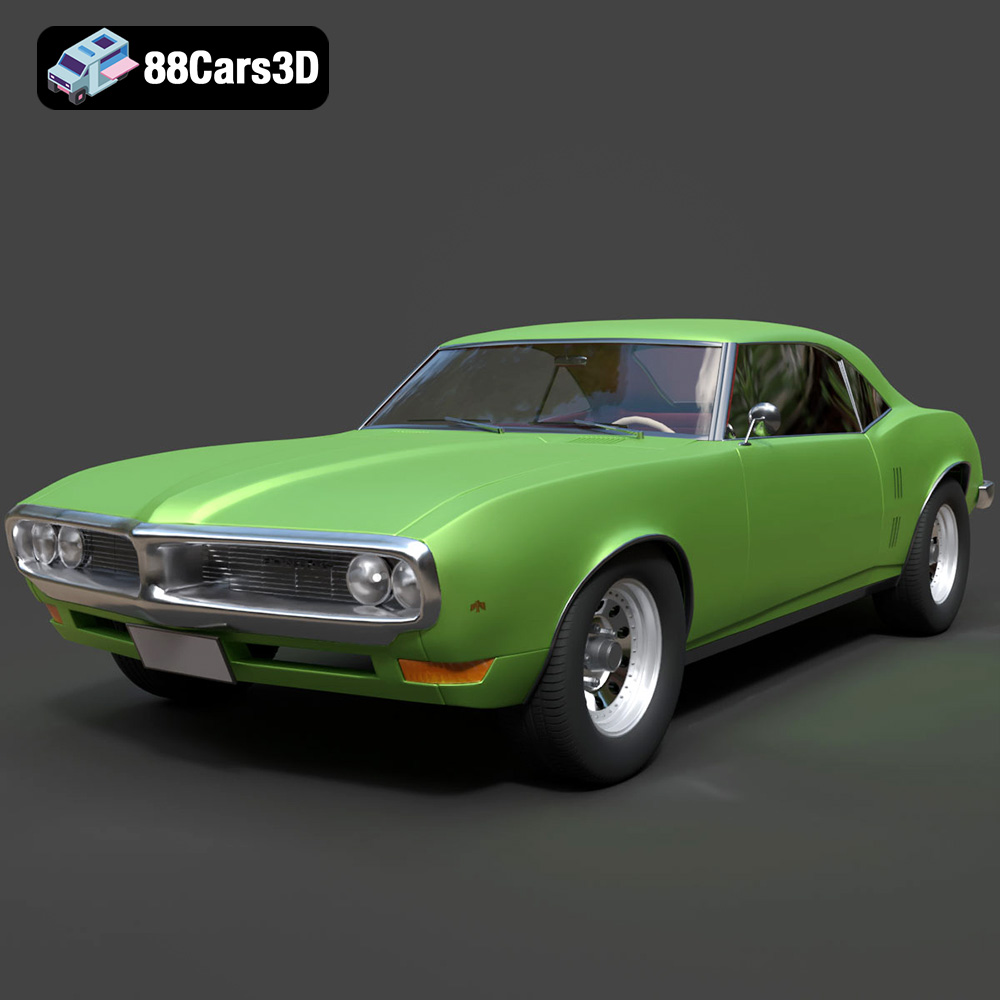
Download the Pontiac Firebird 1998 3D Model featuring clean geometry, realistic detailing, and a fully modeled interior. Includes .blend, .fbx, .obj, .glb, .stl, .ply, .unreal, and .max formats for rendering, simulation, and game development.
Price: $10
View Product

Texture: Yes
Material: Yes
Download the Opel Astra 2008 3D Model featuring clean geometry, realistic detailing, and a fully modeled interior. Includes .blend, .fbx, .obj, .glb, .stl, .ply, .unreal, and .max formats for rendering, simulation, and game development.
Price: $10
View Product

Texture: Yes
Material: Yes
Download the Mercedes Benz Joaquin-007 3D Model featuring clean geometry, realistic detailing, and a fully modeled interior. Includes .blend, .fbx, .obj, .glb, .stl, .ply, .unreal, and .max formats for rendering, simulation, and game development.
Price: $19.99
View Product
Texture: Yes
Material: Yes
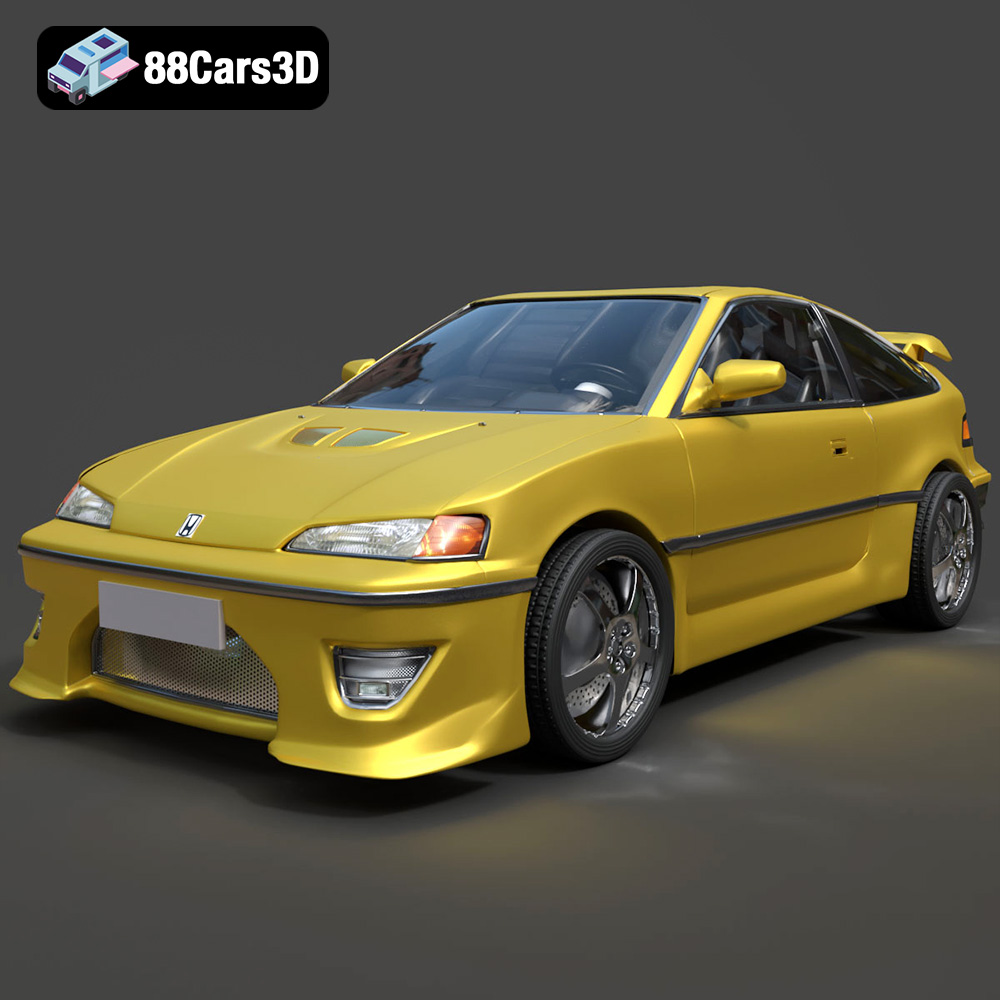
Download the Honda CRX 1980 3D Model featuring clean geometry, realistic detailing, and a fully modeled interior. Includes .blend, .fbx, .obj, .glb, .stl, .ply, .unreal, and .max formats for rendering, simulation, and game development.
Price: $11.99
View Product
Texture: Yes
Material: Yes
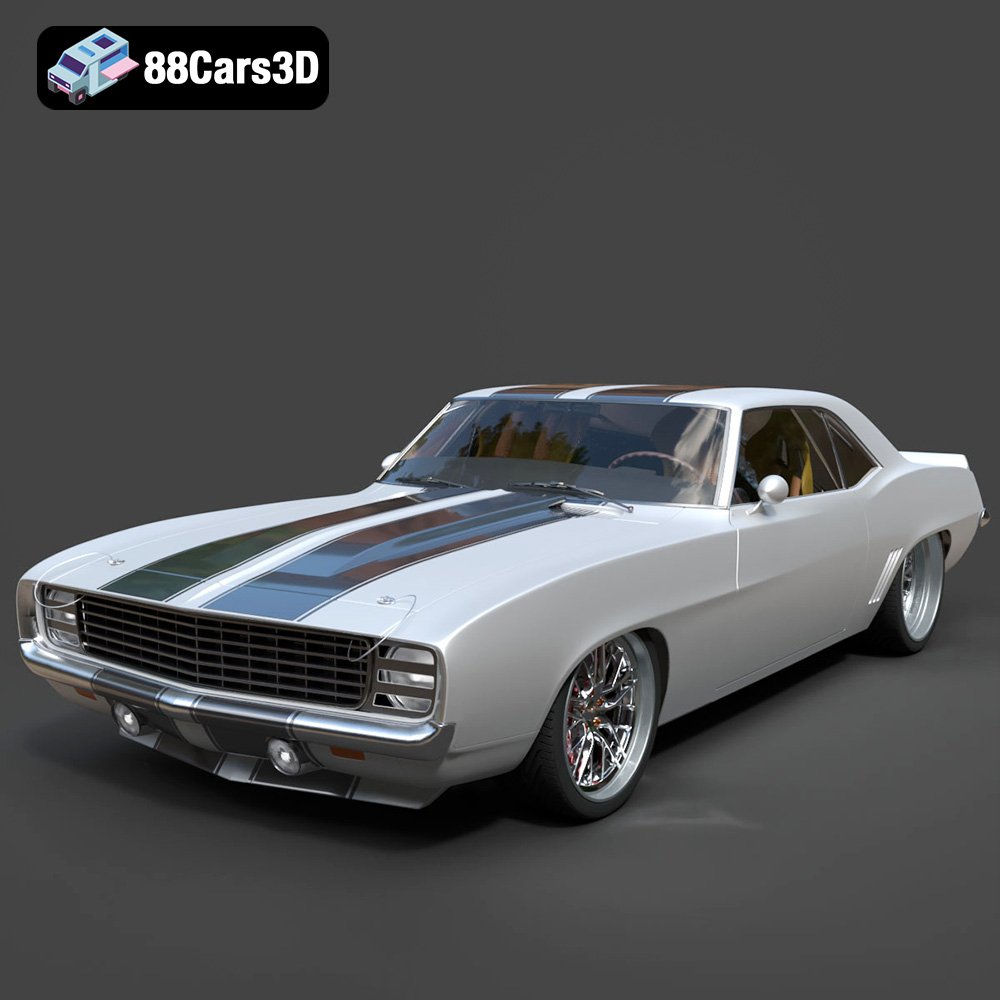
Download the Chevrolet Camaro 69 Pro-007 3D Model featuring classic muscle car design and custom performance aesthetics. Includes .blend, .fbx, .obj, .glb, .stl, .ply, .unreal, and .max formats for rendering, simulation, and game development.
Price: $20.79
View Product

Texture: Yes
Material: Yes
Download the Honda Fit 2008 3D Model featuring a compact, versatile design with detailed exterior and interior components. Includes .blend, .fbx, .obj, .glb, .stl, .ply, .unreal, and .max formats for rendering, simulation, and game development.
Price: $10.79
View Product
Texture: Yes
Material: Yes
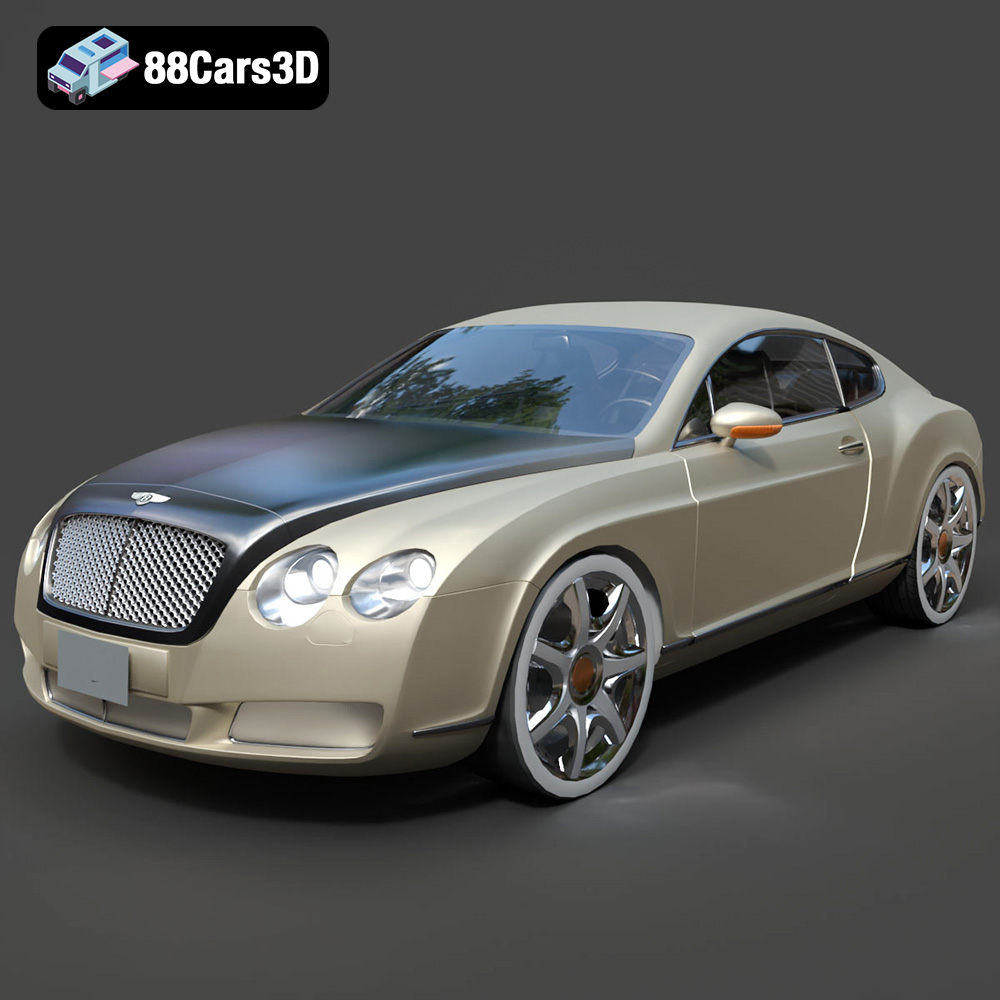
Download the Bentley Continental GT-002 3D Model featuring a luxurious grand touring design and high-quality details. Includes .blend, .fbx, .obj, .glb, .stl, .ply, .unreal, and .max formats for rendering, simulation, and game development.
Price: $20.79
View Product


