

The Ultimate Guide to 3D Automotive Modeling: From Concept to Hyper-Realistic Render
In the exhilarating world of 3D visualization, few subjects captivate the imagination quite like the intricate curves and gleaming surfaces of an automotive masterpiece. Crafting a high-quality 3D car model is an art form that blends technical precision with creative vision, demanding expertise across various disciplines – from meticulous blueprint interpretation and flawless topology to sophisticated material creation and stunning photorealistic rendering. Whether you’re a seasoned 3D artist, a game developer striving for unparalleled realism, or an automotive designer bringing concepts to life, mastering the end-to-end workflow is paramount.
This comprehensive guide will take you on a deep dive into the professional pipeline of 3D automotive modeling. We’ll unravel the complexities, demystify the techniques, and equip you with the knowledge to transform a mere concept into a breathtaking final render, ready for cinematic productions, immersive game environments, or cutting-edge AR/VR experiences. Prepare to unlock the secrets behind creating 3D car models that don’t just look real, but feel real, covering everything from foundational topology to advanced rendering workflows and crucial optimization strategies.
The Foundation: Blueprinting, Topology, and Scale Precision
Every exceptional 3D car model begins with a strong foundation built on accurate measurements and impeccable mesh geometry. Without this critical first step, subsequent stages of texturing, rigging, and rendering will be riddled with issues, leading to an unrealistic or unmanageable asset. The goal is to create a clean, efficient, and deformable mesh that accurately represents the vehicle’s design intent.
Reference Imagery and Scale Accuracy
The journey commences with gathering comprehensive reference materials. For automotive projects, this primarily means acquiring detailed blueprints, engineering drawings, and an extensive collection of photographs from every conceivable angle. High-resolution images showing different lighting conditions, material finishes, and close-ups of intricate details like panel gaps, headlights, and wheels are invaluable. Software like 3ds Max, Blender, or Maya allow you to import these images as background planes, meticulously aligning front, side, top, and rear views. Ensuring precise scale is absolutely critical; always work in real-world units (e.g., meters or centimeters) from the outset. A common mistake is to eyeball proportions, which inevitably leads to subtle yet noticeable distortions in the final model. Verifying key dimensions like wheelbase, overall length, and height against real-world specifications will prevent costly rework down the line.
Subdivision Surface Modeling and Edge Flow Principles
The vast majority of high-quality 3D car models are created using a subdivision surface modeling approach, where a low-polygon base mesh is smoothed by a modifier (like OpenSubdiv in 3ds Max/Maya or the Subdivision Surface modifier in Blender). This technique allows for organic, smooth surfaces while maintaining control over polygon density. The key to successful subdivision modeling lies in superior topology and thoughtful edge flow. Edge loops must follow the natural curves and contours of the car, defining panel lines, creases, and transitions with precision. Aim for an all-quad topology (four-sided polygons) as much as possible, as quads deform predictably and subdivide cleanly. Poles (vertices with more or less than four edges) should be carefully managed and placed in areas of minimal deformation. Learning to manage creasing with supporting edge loops is essential for maintaining sharp edges like those found on body panels while still allowing the rest of the surface to smooth beautifully. Clean topology not only ensures a visually pleasing model but also simplifies UV mapping, texturing, and potential animation later on.
Optimizing for Performance vs. Visual Fidelity
The optimal polygon count for your 3D car model heavily depends on its intended use. For cinematic renders or high-resolution product visualization, you might target models ranging from 500,000 to several million polygons, allowing for extreme detail and smooth curves. However, for game assets, real-time engines, or AR/VR applications, aggressive optimization is necessary. A typical game-ready car might have a base mesh between 50,000 to 200,000 polygons, sometimes even less for mobile AR/VR. This involves making intelligent decisions about where detail is crucial and where it can be faked with normal maps. Understanding this balance from the beginning dictates your modeling strategy, influencing how many edge loops you create and where you can simplify geometry. Platforms like 88cars3d.com offer models catering to various poly budgets, making it easier to select an asset appropriate for your specific project needs.
Mastering the Surface: UV Mapping and PBR Materials
Once the geometric form of your 3D car model is perfected, the next crucial step is to give it a convincing surface. This involves meticulous UV mapping to prepare the model for texturing and the creation of physically based rendering (PBR) materials that accurately simulate how light interacts with different surfaces.
Strategic UV Unwrapping for Automotive Meshes
UV mapping is the process of flattening the 3D surface of your model into a 2D space, much like unfolding a cardboard box, so that 2D textures can be applied. For complex automotive meshes, strategic UV unwrapping is paramount. The goal is to minimize distortion, prevent stretching, and ensure efficient use of texture space. This often involves judiciously placing seams along natural panel lines or hidden areas to make them less noticeable. Large, contiguous surfaces like the hood, roof, and doors should ideally have their own UV islands to allow for high-resolution textures without seams. Components like tires, wheels, and interior elements can be unwrapped separately. A common technique is to use a checker map during the unwrapping process to visually identify and correct any stretching or varying texel density across the model. Consistent texel density ensures that all parts of the car receive the same level of texture detail, preventing some areas from looking blurry while others are sharp.
PBR Material Creation and Shader Networks
PBR materials are the cornerstone of photorealistic rendering today, designed to simulate the physical properties of light interaction more accurately than older rendering techniques. A typical PBR workflow involves several texture maps:
- Base Color (Albedo): Defines the diffuse color of the surface without any lighting information.
- Roughness: Controls the microscopic surface irregularities, influencing how light scatters (e.g., polished metal vs. matte plastic).
- Metallic: A binary map indicating whether a surface is metallic (1) or dielectric (0).
- Normal Map: Adds fine surface detail (like scratches or subtle bumps) without increasing polygon count.
- Ambient Occlusion (AO): Simulates soft shadows where surfaces are close together, adding depth.
- Height/Displacement Map: For true geometric displacement (used sparingly on cars for subtle effects like tire treads).
These maps are plugged into a shader network within your chosen 3D software (e.g., Standard Surface in Maya, Principled BSDF in Blender, or Corona/V-Ray materials in 3ds Max). Understanding how each map contributes to the final look is crucial. For instance, car paint often involves complex clear coat layers, which can be simulated using layered materials or dedicated car paint shaders to achieve realistic reflections and metallic flake effects. For a deep dive into Blender’s shader nodes, consult the official Blender 4.4 documentation on shader networks and the Principled BSDF.
Advanced Texturing Techniques
Beyond the core PBR maps, advanced techniques can elevate realism. Decals, such as logos, racing stripes, or warning labels, can be applied using layered materials or projected onto the UVs. Creating subtle wear and tear, rust, or dirt involves procedural textures mixed with hand-painted details. Software like Substance Painter is invaluable for texturing 3D car models, allowing artists to paint directly on the 3D mesh, generate smart masks based on curvature or ambient occlusion, and export PBR texture sets with ease. For game assets, baking high-polygon details (like panel lines or rivets) onto normal maps for a low-polygon model is a standard practice, significantly reducing polygon counts while retaining visual fidelity. This process is essential for creating optimized game assets.
Bringing it to Life: Lighting, Rendering, and Realism
With a perfectly modeled and textured 3D car model, the next phase is to bring it to life through expert lighting and rendering. This is where artistic vision truly merges with technical prowess to create images that are indistinguishable from reality.
Studio Lighting Setups for Automotive Renders
Lighting is the single most important factor in making your automotive renders pop. For studio-style shots, a common setup involves a combination of High Dynamic Range Image (HDRI) environments and targeted area lights. An HDRI provides realistic global illumination, reflections, and ambient color, mimicking a real studio or outdoor environment. In software like 3ds Max with Corona or V-Ray, or Blender with Cycles, an HDRI can be loaded into the scene’s environment slot. Complementing the HDRI, area lights are strategically placed to highlight key design features, create beautiful reflections along the car’s body lines (known as “light lines”), and separate the car from the background. A classic three-point lighting setup (key, fill, rim light) can be adapted, with large softbox-style area lights serving as key and fill, and a back-facing light to create a dramatic rim highlight. Pay close attention to how reflections behave on the car’s glossy surfaces – these reflections are critical in conveying shape and material properties.
Renderer-Specific Workflows: Corona, V-Ray, Cycles, Arnold
The choice of renderer significantly impacts your workflow and the final look. Each renderer has its strengths and nuances:
- Corona Renderer (3ds Max): Known for its ease of use, physically accurate light calculations, and exceptional results with minimal tweaking. It’s often favored for architectural and product visualization due to its intuitive material system and interactive rendering capabilities.
- V-Ray (3ds Max, Maya): A long-standing industry standard, V-Ray is incredibly powerful and versatile, offering extensive control over every aspect of rendering. It excels in complex scenes and offers a wide array of tools for optimizing render times.
- Cycles (Blender): Blender’s built-in physically based renderer is highly capable, producing stunning results. It supports GPU rendering, advanced material nodes, and comprehensive lighting options. For detailed information on setting up scenes and materials in Cycles, refer to the official Blender 4.4 documentation on Cycles.
- Arnold (Maya, 3ds Max): A path-tracing renderer renowned for its ability to handle complex scenes with many lights and global illumination, often used in film and television production. Its physically accurate approach makes it excellent for realistic automotive renders.
Regardless of the renderer, the core principles remain: physically accurate materials, thoughtful lighting, and understanding render settings like sampling, denoising, and global illumination methods to balance quality and render time.
Post-Processing and Compositing for Impact
The render straight out of your 3D software is rarely the final image. Post-processing and compositing in software like Photoshop, Affinity Photo, or even Nuke and After Effects, are crucial for adding that final layer of polish and impact. This stage involves:
- Color Grading: Adjusting hues, saturation, and luminance to establish mood and visual harmony.
- Exposure and Contrast: Fine-tuning the overall brightness and dynamic range.
- Bloom and Glare: Adding subtle light halos around bright areas for a more photographic look.
- Depth of Field: Simulating camera lens effects to draw attention to the car and blur the background.
- Lens Flares and Aberrations: Introducing subtle optical imperfections for enhanced realism.
- Vignetting: Darkening the image corners to frame the subject.
- Sharpening: Enhancing perceived detail in key areas.
By rendering out various passes (e.g., Beauty, Alpha, Z-Depth, Cryptomatte, Reflection, Specular) from your 3D software, you gain immense control during compositing, allowing non-destructive adjustments to specific elements of the render.
Game Engine Integration and Optimization
For interactive experiences like video games, virtual showrooms, or real-time configurators, the requirements for 3D car models shift dramatically from static renders. Performance optimization becomes paramount, demanding a strategic approach to assets.
LODs (Level of Detail) and Performance Budgets
One of the most critical optimization techniques for game engines like Unity or Unreal Engine is the implementation of LODs (Level of Detail). This involves creating multiple versions of your 3D car model, each with a progressively lower polygon count. When the car is close to the camera, the highest detail LOD0 is displayed. As the car moves further away, the engine automatically switches to LOD1, LOD2, and so on, using simplified meshes and potentially lower-resolution textures. This dramatically reduces the computational load without a noticeable drop in visual quality to the player. A common strategy involves 3-5 LOD levels, with LOD0 around 50k-100k polygons for a detailed game car, and the lowest LOD (LOD3/LOD4) potentially just a few thousand polygons. Establishing a clear performance budget for polygon counts, draw calls, and texture memory per asset is essential before starting game-focused modeling.
Texture Atlasing and Draw Call Reduction
Texture atlasing is another powerful optimization for game assets. Instead of having multiple small textures for different parts of the car (e.g., one for the body, one for the wheels, one for the interior), all relevant textures are packed into a single, larger texture atlas. This means the game engine only needs to make one “draw call” to render the entire car’s textures, rather than multiple calls, which significantly reduces rendering overhead. Combining materials where possible also contributes to fewer draw calls. For example, if interior elements share similar PBR properties, they can often use a single material and texture atlas. Techniques like baking ambient occlusion, lightmaps, or even complex reflections directly into textures can further reduce real-time computations, making the asset more performant for real-time visualization.
Collision Meshes and Rigging for Interactivity
For a car to interact realistically within a game world, it needs collision geometry. This is typically a simplified, invisible mesh that represents the physical bounds of the vehicle, allowing it to collide with environment objects and other vehicles without using the high-detail visual mesh for physics calculations. Collision meshes are often convex hulls or a collection of simple primitives (boxes, spheres) to keep physics calculations light. Furthermore, for realistic vehicle dynamics, a car model often requires a basic rig. This might involve setting up pivots for wheels to rotate and steer, and potentially suspensions to compress. While not as complex as character rigging, a well-structured car rig is essential for compelling driving mechanics and interactive experiences, particularly in simulated environments. Platforms like 88cars3d.com often provide game-ready models complete with optimized LODs and collision meshes, streamlining integration into your projects.
Beyond Traditional Rendering: AR/VR and 3D Printing
The applications for high-quality 3D car models extend far beyond static renders and traditional game engines. Augmented Reality (AR), Virtual Reality (VR), and 3D printing represent exciting new frontiers, each with its own unique technical considerations and optimization strategies.
AR/VR Optimization and Real-time Display
Developing 3D car models for AR/VR environments presents a unique set of challenges focused on extreme performance and immersion. Mobile AR/VR (e.g., Apple ARKit, Google ARCore, Oculus Quest) demands very aggressive polygon reduction, often targeting models under 50,000 polygons, sometimes even as low as 10,000 for complex scenes with multiple objects. Every polygon and draw call adds to the processing load, which directly impacts frame rate and user comfort, especially in VR where maintaining a high, stable frame rate is crucial to prevent motion sickness.
- Single Draw Calls: Consolidating materials and textures into atlases is even more critical than for desktop games to minimize draw calls.
- Texture Resolution: Textures should be optimized for mobile screens, often 1K or 2K resolution, with careful attention to compression.
- Baking: Complex lighting, shadows, and reflections are frequently baked into diffuse textures or lightmaps to reduce real-time calculations.
- Shader Complexity: Avoid complex shaders with many instructions; opt for simple, efficient PBR shaders.
- Occlusion Culling: Implement occlusion culling to ensure only visible geometry is rendered.
USDZ (Universal Scene Description Zip) and GLB (GL Transmission Format Binary) are two crucial file formats for AR/VR, particularly on mobile, as they package models, textures, and animations into single, efficient files suitable for quick loading and real-time display.
Preparing Models for 3D Printing and Mesh Repair
Translating a beautiful render-ready 3D car model into a physical object via 3D printing requires a different kind of technical scrutiny. The primary concern is ensuring a “manifold” mesh – a watertight, solid object with no holes, inverted normals, or self-intersecting geometry. Unlike rendering, where minor mesh imperfections might go unnoticed, 3D printers require a perfect geometric definition to slice the model into layers.
- Manifold Meshes: Every edge must be connected to exactly two faces. All faces must point outwards (consistent normals).
- Wall Thickness: Ensure all parts of the model have sufficient wall thickness (typically 1-2mm minimum, depending on the printing technology and material) to prevent breakage. Thin elements that look fine on screen might be too fragile in print.
- Scale: The model must be scaled correctly to the desired physical dimensions for printing.
- Mesh Repair Tools: Software like Blender (3D Print Toolbox add-on), Meshmixer, or Netfabb are invaluable for analyzing and repairing meshes, identifying non-manifold edges, holes, and intersecting geometry.
- Hollowing: For larger prints, hollowing the interior of the model can save material and print time, but requires strategically placed drain holes.
The STL (Stereolithography) file format is the de facto standard for 3D printing, though OBJ is also widely supported.
Essential File Formats and Compatibility
Understanding the common file formats is essential for seamless collaboration and broad application of your 3D car models.
- FBX (Filmbox): An industry-standard format developed by Autodesk, widely used for exchanging 3D data between applications like 3ds Max, Maya, Blender, Unity, and Unreal Engine. It supports geometry, materials, textures, animations, and rigs.
- OBJ (Wavefront Object): A universal format for geometry, supporting vertices, faces, UVs, and normals. It’s a robust choice for pure mesh data but handles materials and textures separately via an accompanying .MTL file.
- GLB (GL Transmission Format Binary): An efficient, single-file format ideal for web, AR, and VR applications. It packages geometry, PBR materials, textures, and animations into a compact binary.
- USDZ (Universal Scene Description Zip): Apple’s format for AR applications, particularly on iOS devices. It’s built on Pixar’s USD and similarly bundles all necessary assets.
- STL (Stereolithography): The primary format for 3D printing, representing mesh geometry as a collection of triangles.
When sourcing models from marketplaces such as 88cars3d.com, always verify the available file formats to ensure compatibility with your intended workflow.
Conclusion
Creating a high-quality 3D car model, from initial concept to a stunning final render or optimized interactive asset, is a journey demanding patience, technical skill, and artistic finesse. We’ve traversed the intricate landscape of automotive 3D modeling, from laying down precise topology and meticulously unwrapping UVs, to crafting photorealistic PBR materials and mastering advanced rendering techniques. We’ve also explored the critical differences in optimization for game assets, AR/VR experiences, and the unique preparations required for 3D printing.
The continuous evolution of 3D software and rendering technologies means there’s always something new to learn and master. By adhering to industry best practices, understanding the nuances of various file formats, and relentlessly pursuing technical excellence, you can elevate your 3D car models to a professional standard. Remember, whether your goal is a cinematic masterpiece, a compelling game experience, or a tangible 3D print, the foundational principles of clean geometry, efficient texturing, and intelligent optimization remain universal. Embrace the challenge, hone your skills, and explore the vast possibilities that high-quality 3D automotive models unlock across diverse industries, from architectural visualization to cutting-edge virtual experiences. For those looking to kickstart their projects, platforms like 88cars3d.com offer a curated selection of professionally crafted 3D car models, ready to integrate into your next masterpiece.
Featured 3D Car Models

Cadillac CTS-V Coupe 3D Model
Meta Description:
Texture: Yes
Material: Yes
Download the Cadillac CTS-V Coupe 3D Model featuring detailed exterior styling and realistic interior structure. Includes .blend, .fbx, .obj, .glb, .stl, .ply, .unreal, and .max formats for rendering, simulation, AR VR, and game development.
Price: $13.9

Cadillac DTS-005 3D Model
Texture: Yes
Material: Yes
Download the Cadillac DTS-005 3D Model featuring its iconic luxury design, detailed interior, and realistic exterior. Includes .blend, .fbx, .obj, .glb, .stl, .ply, .unreal, and .max formats for rendering, simulation, and game development.
Price: $10.79

Buick LeSabre 1998 3D Model
Texture: Yes
Material: Yes
Download the Buick LeSabre 1998 3D Model featuring a classic American full-size sedan design. Includes .blend, .fbx, .obj, .glb, .stl, .ply, .unreal, and .max formats for rendering, simulation, and game development.
Price: $10.79
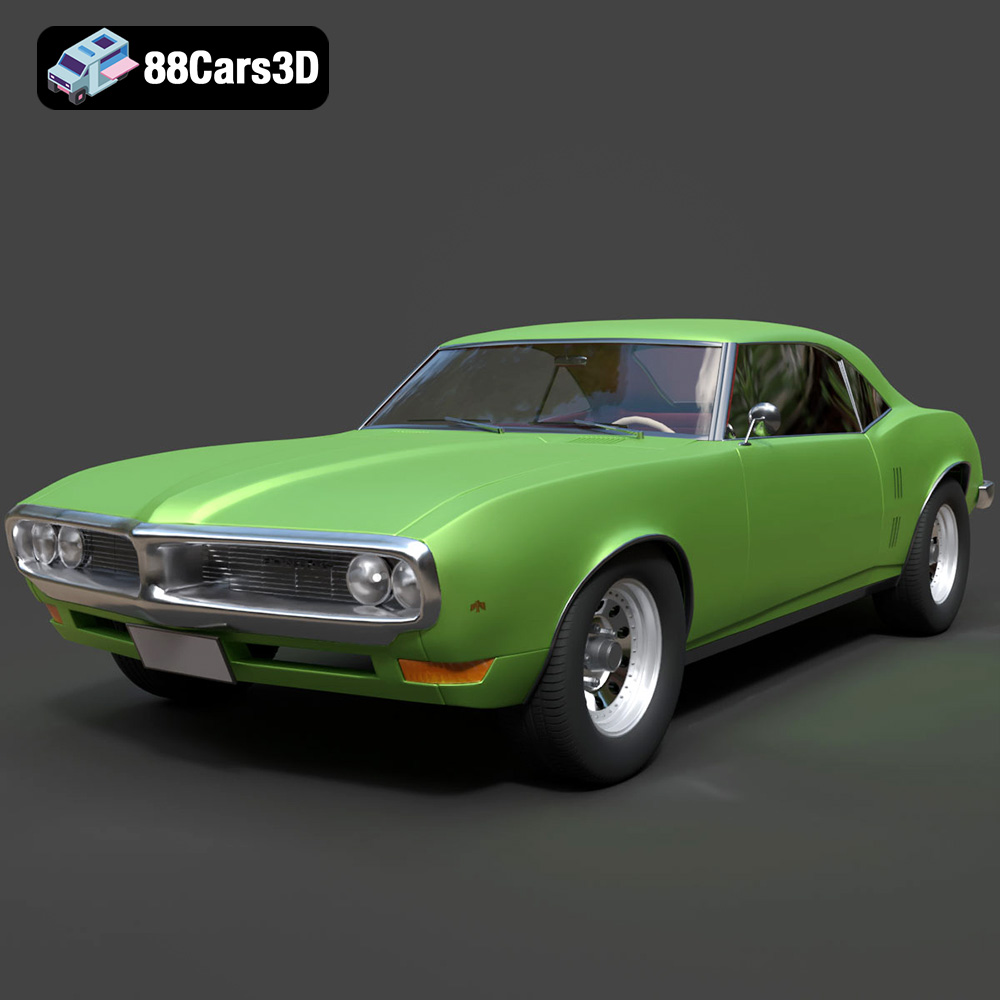
Pontiac Firebird 1998 3D Model
Texture: Yes
Material: Yes
Download the Pontiac Firebird 1998 3D Model featuring clean geometry, realistic detailing, and a fully modeled interior. Includes .blend, .fbx, .obj, .glb, .stl, .ply, .unreal, and .max formats for rendering, simulation, and game development.
Price: $10

Opel Astra 2008 3D Model
Texture: Yes
Material: Yes
Download the Opel Astra 2008 3D Model featuring clean geometry, realistic detailing, and a fully modeled interior. Includes .blend, .fbx, .obj, .glb, .stl, .ply, .unreal, and .max formats for rendering, simulation, and game development.
Price: $10

Mercedes Benz Joaquin-007 3D Model
Texture: Yes
Material: Yes
Download the Mercedes Benz Joaquin-007 3D Model featuring clean geometry, realistic detailing, and a fully modeled interior. Includes .blend, .fbx, .obj, .glb, .stl, .ply, .unreal, and .max formats for rendering, simulation, and game development.
Price: $19.99
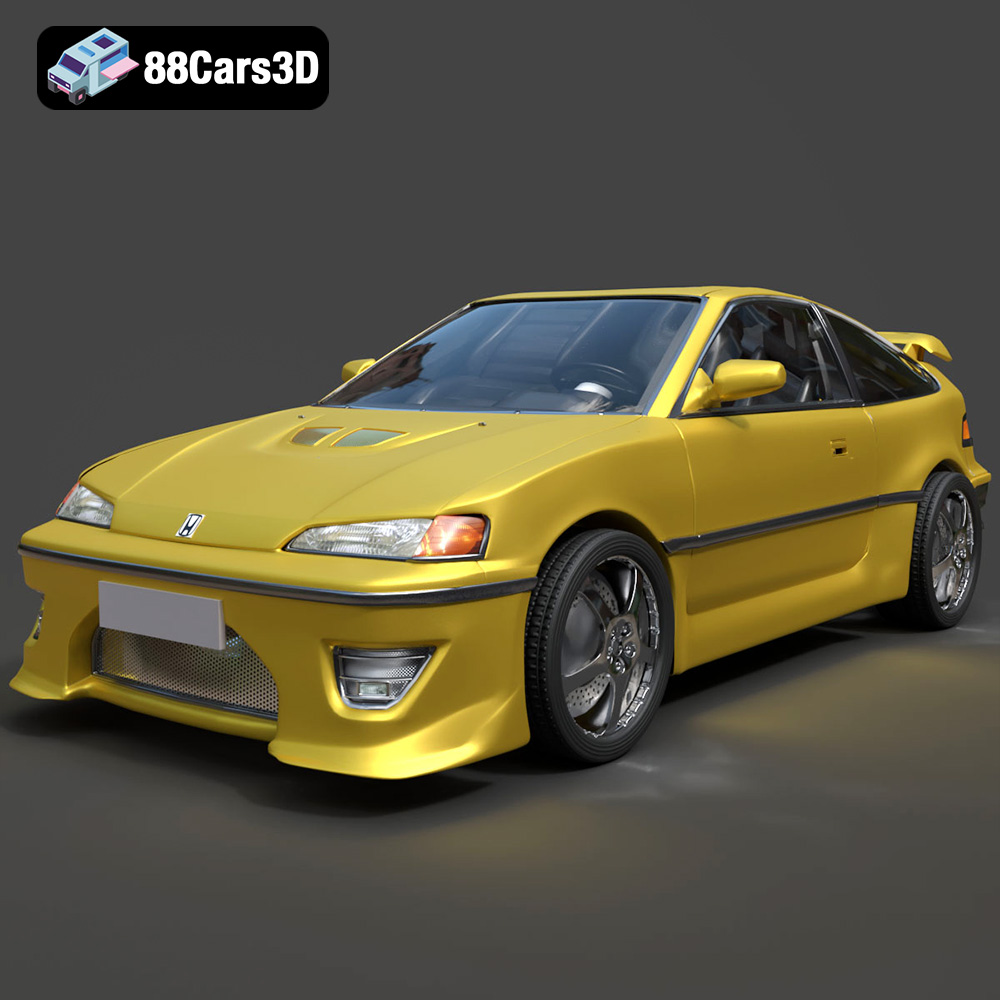
Honda CRX 1980 3D Model
Texture: Yes
Material: Yes
Download the Honda CRX 1980 3D Model featuring clean geometry, realistic detailing, and a fully modeled interior. Includes .blend, .fbx, .obj, .glb, .stl, .ply, .unreal, and .max formats for rendering, simulation, and game development.
Price: $11.99
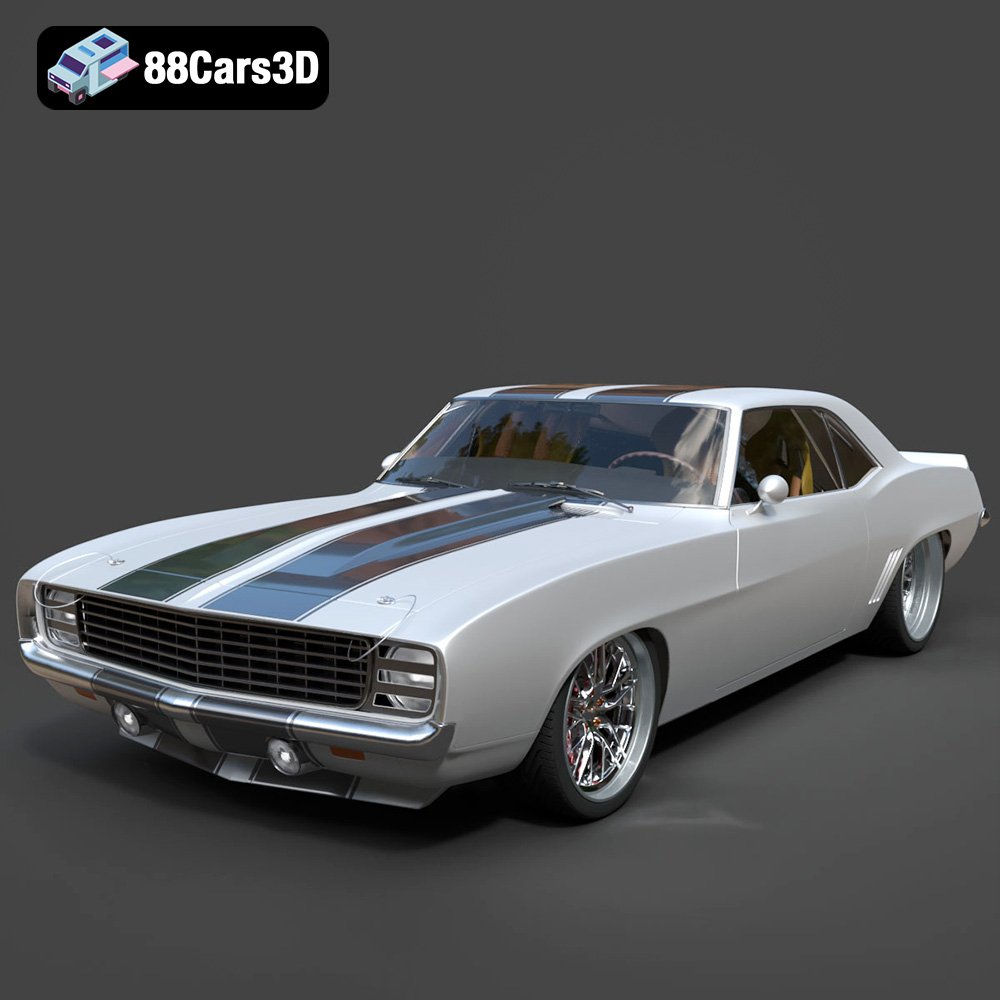
Chevrolet Camaro 69 Pro-007 3D Model
Texture: Yes
Material: Yes
Download the Chevrolet Camaro 69 Pro-007 3D Model featuring classic muscle car design and custom performance aesthetics. Includes .blend, .fbx, .obj, .glb, .stl, .ply, .unreal, and .max formats for rendering, simulation, and game development.
Price: $20.79

Honda Fit 2008 3D Model
Texture: Yes
Material: Yes
Download the Honda Fit 2008 3D Model featuring a compact, versatile design with detailed exterior and interior components. Includes .blend, .fbx, .obj, .glb, .stl, .ply, .unreal, and .max formats for rendering, simulation, and game development.
Price: $10.79
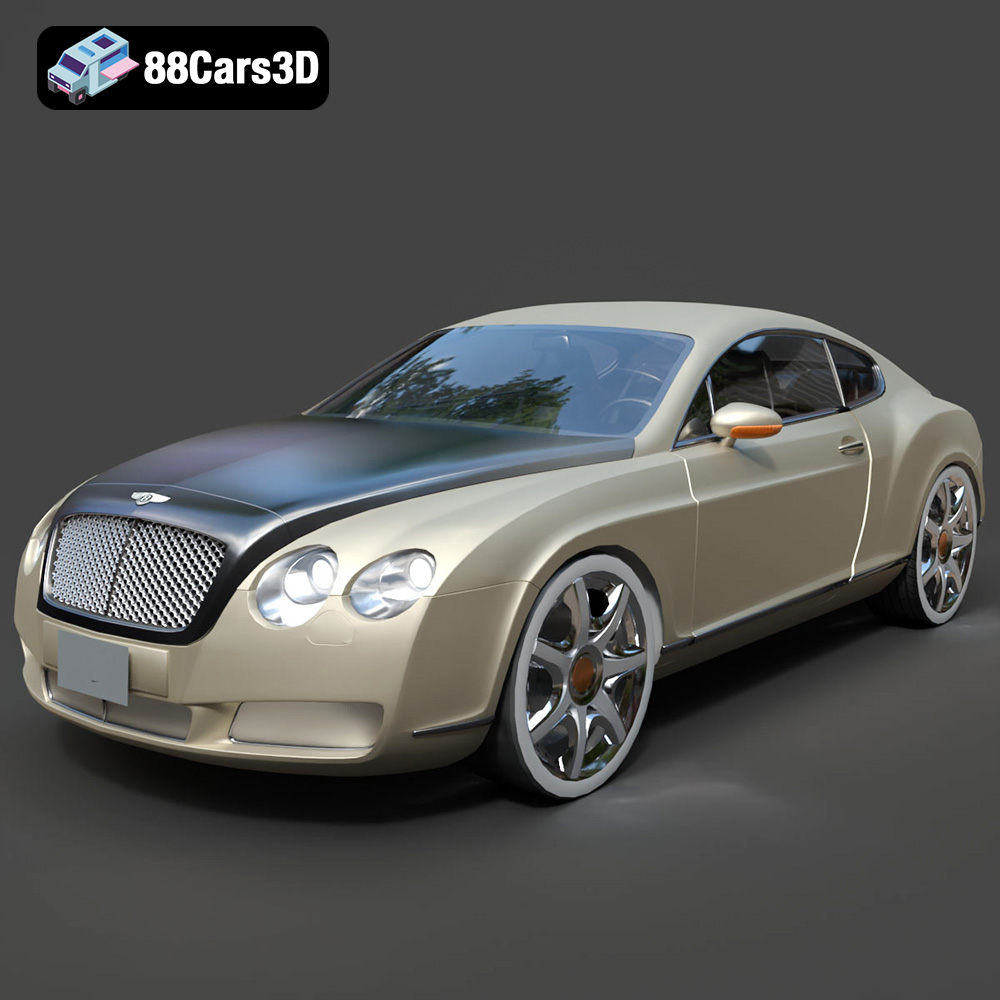
Bentley Continental GT-002 3D Model
Texture: Yes
Material: Yes
Download the Bentley Continental GT-002 3D Model featuring a luxurious grand touring design and high-quality details. Includes .blend, .fbx, .obj, .glb, .stl, .ply, .unreal, and .max formats for rendering, simulation, and game development.
Price: $20.79
