

In the visually demanding world of automotive visualization, real-time rendering, and high-fidelity game development, achieving unparalleled realism is the ultimate goal. While Unreal Engine’s Material Editor provides an incredibly powerful and intuitive node-based system for crafting stunning materials, there comes a point where even its extensive capabilities might not be enough to realize truly bespoke, cutting-edge visual effects. This is where the deep dive into Unreal Engine Shader Development with High-Level Shading Language (HLSL) becomes not just an advantage, but a necessity.
For professionals leveraging high-quality 3D car models from platforms like 88cars3d.com – models engineered with clean topology, realistic PBR materials, and optimized UV mapping – unlocking the full potential often means crafting custom shaders. HLSL empowers artists and developers to transcend the limitations of standard material graphs, allowing for granular control over every pixel’s light interaction, complex procedural effects, and highly optimized rendering logic. This comprehensive guide will navigate you through the intricate world of HLSL shader development within Unreal Engine, demonstrating how you can craft visually spectacular and performant materials for your automotive projects, real-time experiences, and cinematic sequences.
We’ll explore everything from setting up your development environment to implementing advanced PBR models, optimizing for real-time performance, and integrating custom shaders into interactive Blueprint systems and virtual production pipelines. By the end, you’ll understand how to leverage HLSL to push the boundaries of visual fidelity, bringing your 3D car models to life with unprecedented realism and interactive possibilities.
The Power of Custom Shaders: Beyond the Material Editor
Unreal Engine’s Material Editor is a masterclass in visual scripting, offering an accessible entry point for artists to create complex shaders without writing a single line of code. Its extensive library of nodes covers most rendering scenarios, from simple diffuse materials to sophisticated physically based rendering (PBR) surfaces. However, for specialized tasks, unique visual effects, or highly optimized computations that demand absolute control over the rendering pipeline, the node-based system can sometimes become cumbersome or inefficient. This is precisely where HLSL steps in, offering a direct conduit to the GPU’s processing power.
Going beyond the Material Editor with HLSL isn’t about abandoning its utility; rather, it’s about extending its capabilities. Custom HLSL allows developers to implement rendering techniques that are either impossible or prohibitively complex to achieve with standard nodes. Consider bespoke car paint shaders that simulate multi-layered clear coats, metallic flakes, and intricate iridescence with physics-accurate light scattering. Or perhaps dynamic material effects like real-time rust propagation, condensation on glass, or complex procedural wear and tear that adapt to gameplay or user input. These scenarios often demand the explicit logic and precise mathematical operations that only HLSL can provide efficiently. Furthermore, for highly performant applications like AR/VR automotive configurators or large-scale virtual productions, finely tuned HLSL shaders can offer significant performance gains by eliminating redundant calculations and optimizing instruction counts on the GPU, ensuring smooth frame rates without compromising visual quality.
Understanding Unreal Engine’s Shader System Architecture
To effectively wield HLSL within Unreal Engine, it’s crucial to grasp how the engine’s shader system operates. At its core, Unreal Engine compiles shader code written in HLSL (or its cross-platform counterpart, GLSL) into GPU-specific instructions. When you create a material in the Material Editor, it’s essentially generating a complex graph that the engine then translates into HLSL code behind the scenes. This compilation process happens asynchronously and is a cornerstone of Unreal Engine’s highly optimized renderer.
Custom HLSL integration primarily occurs through two main avenues: the Material Editor’s “Custom” node and custom shader modules. The “Custom” node allows you to inject snippets of HLSL code directly into your material graph, acting as a powerful custom function. This is ideal for specific calculations, complex procedural textures, or specialized blending operations within an otherwise node-based material. For more extensive control, such as implementing entirely new lighting models, custom rendering passes, or integrating advanced post-processing effects, you’ll likely need to create a custom shader module as part of an Unreal Engine plugin. This involves defining your shader programs in separate .usf (Unreal Shader File) and .ush (Unreal Shader Header) files, which the engine’s build system compiles. These files reside within a structured directory, allowing you to organize your custom shader code and integrate it directly into the engine’s rendering pipeline, often by overriding or extending existing shader functions. This architecture ensures that custom HLSL code is seamlessly integrated and optimized by the engine’s powerful shader compiler.
Setting Up a Custom Shader Module
For advanced shader development, creating a custom shader module provides the most flexibility. This process typically involves creating a new plugin in Unreal Engine, which will host your shader files. Begin by navigating to Edit > Plugins > New Plugin and choosing a Blank plugin template. Once your plugin is created, you’ll need to establish a dedicated Shaders directory within your plugin’s main folder (e.g., MyPlugin/Shaders). Inside this directory, you’ll place your HLSL files, typically organized into .usf for shader entry points (like vertex or pixel shaders) and .ush for shared functions, constants, and data structures. For example, you might have MyCustomMaterialShader.usf and MyCustomShaderCommon.ush.
To ensure Unreal Engine recognizes and compiles these shaders, you need to modify your plugin’s .Build.cs file. Within the PublicDependencyModuleNames or PrivateDependencyModuleNames, add "RenderCore" and "RHI" to grant access to low-level rendering interfaces. Crucially, you’ll also need to add a call to AddShaderSourceDirectoryMapping("/Plugin/MyPlugin", PluginDirectory / "Shaders");. This function maps a virtual path (/Plugin/MyPlugin) that you’ll use in your HLSL #include directives to the physical location of your shader files, allowing them to be referenced within your engine’s material system. Finally, to access your custom shaders within a C++ class, you’ll typically define a FShaderResource or FGlobalShader class, declare your shader parameters using Unreal’s reflection macros (SHADER_PARAMETER, SHADER_PARAMETER_TEXTURE, etc.), and override specific rendering functions to dispatch your custom shader passes. This comprehensive setup empowers you to inject highly customized rendering logic directly into Unreal Engine’s pipeline, opening up vast possibilities for visual innovation.
Mastering HLSL for Automotive Material Crafting
Automotive visualization demands an exquisite level of detail and realism, especially concerning materials like car paint, glass, and intricate interior surfaces. While the Material Editor can achieve good results, custom HLSL shaders unlock the ability to simulate physically accurate light interactions that truly differentiate high-fidelity renders. Crafting these materials requires a deep understanding of PBR principles and how to translate them into optimized HLSL code, considering the unique properties of each surface.
A prime example is car paint, which is rarely a simple PBR material. It often involves multiple layers: a metallic base coat, tiny reflective flakes, and a glossy, refractive clear coat. Simulating these layers accurately requires a blend of different shading models, each contributing to the final appearance. In HLSL, you can meticulously control how light interacts with each layer, from the Fresnel reflection of the clear coat to the anisotropic reflections off the metallic flakes. This level of control allows for the creation of paint finishes that react to light with breathtaking realism, exhibiting depth, shimmer, and color shift that are often challenging to achieve with standard PBR inputs alone. Similarly, for automotive glass, HLSL enables advanced refraction, dispersion, and even subtle dirt and scratch accumulation effects, elevating the visual integrity beyond simple translucent materials.
Implementing Advanced PBR Shading Models
At the heart of realistic automotive rendering lies physically based rendering. While Unreal Engine provides robust PBR shading models, HLSL allows for the creation of bespoke models that cater to specific material properties. For instance, implementing a multi-layer clear coat shader often involves defining separate BRDFs (Bidirectional Reflectance Distribution Functions) for each layer. The base layer might use a standard metallic BRDF, while the clear coat layer uses a specialized dielectric BRDF with a high Index of Refraction (IOR) and very low roughness. In HLSL, you would calculate the contribution of each layer based on factors like view direction, light direction, and surface normals, then blend them appropriately. For example, the clear coat’s specular reflection might be calculated using a microfacet distribution model like GGX, with its intensity modulated by Fresnel equations. This explicit calculation in HLSL ensures physical accuracy and visual consistency across varying lighting conditions, a critical aspect for automotive marketing and design reviews where precise material representation is paramount.
Writing Custom Lighting Integrations
Integrating custom shading models with Unreal Engine’s deferred renderer requires careful consideration. The engine typically pre-calculates lighting information into a G-buffer, which is then used by the various lighting models. When you introduce a custom shader in HLSL, you often need to ensure its outputs (e.g., base color, roughness, metallic, normal) are correctly interpreted by the engine’s lighting passes, or, for truly custom lighting, you might need to tap into the lighting calculations directly. For instance, if you’re developing a unique subsurface scattering model for leather interiors or a highly directional metallic flake effect, you might calculate specialized lighting contributions within your pixel shader and blend them with the engine’s standard lighting. This often involves accessing light parameters (light color, direction, position) passed into your shader and applying your custom BRDFs. Unreal Engine’s HLSL environment provides access to many global uniforms and functions that facilitate this integration, allowing your custom logic to seamlessly interact with the engine’s existing lighting system, including advanced features like Lumen for global illumination. This deep integration allows for unprecedented artistic control over how light defines the final look of your high-fidelity car models.
Practical Example: Creating a Car Paint Shader (Flakes, Iridescence, Anisotropy) in HLSL
A truly captivating car paint shader in Unreal Engine often leverages the power of HLSL. Let’s outline the core components:
First, we establish the base metallic layer, providing its color, roughness, and metallic properties. This forms the foundation of our paint.
Next, we introduce metallic flakes. Instead of simple texture maps, HLSL allows for procedural generation or complex mapping of micro-normals to simulate thousands of tiny reflective particles. We might define a function that perturbs the surface normal based on a texture and a view-dependent calculation to determine flake visibility and intensity, creating a sparkling effect that varies with the viewing angle.
Then comes iridescence. This color-shifting phenomenon can be achieved by sampling a color ramp based on the grazing angle (dot product of view direction and normal) and blending it with the base color. This creates the characteristic rainbow-like sheen seen on some specialty paints.
Finally, the clear coat layer, paramount for automotive realism, is implemented using a dedicated BRDF. This layer requires very low roughness and a high index of refraction (typically around 1.5 for automotive finishes) to accurately simulate the glassy, reflective top layer. Its contribution is often blended over the base and flake layers using Fresnel equations, ensuring reflections are strongest at grazing angles.
// Simplified HLSL concept for a multi-layered car paint
float3 CalculateCarPaint(float3 BaseColor, float Metallic, float Roughness, float3 WorldNormal, float3 ViewDirection, float3 LightDirection)
{
    // Base Metallic Layer (standard PBR calculations)
    float3 Diffuse = BRDF_Lambert(BaseColor); // Simplified diffuse
    float3 Specular = BRDF_GGX_Specular(Metallic, Roughness, WorldNormal, ViewDirection, LightDirection);

    // Flake Layer (procedural micro-normals and viewing angle dependency)
    float3 FlakeNormal = PerturbNormalWithFlakes(WorldNormal, ViewDirection);
    float3 FlakeSpecular = BRDF_GGX_Specular(1.0, 0.2, FlakeNormal, ViewDirection, LightDirection); // Shiny flakes

    // Iridescence (color shift based on grazing angle)
    float GrazingAngle = 1.0 - saturate(dot(WorldNormal, ViewDirection));
    float3 IridescentColor = SampleIridescentTexture(GrazingAngle);

    // Clear Coat Layer (separate highly reflective layer with Fresnel)
    float ClearCoatRoughness = 0.02;
    float ClearCoatIOR = 1.5;
    float ClearCoatFresnel = SchlickFresnel(dot(WorldNormal, ViewDirection), ClearCoatIOR);
    float3 ClearCoatSpecular = BRDF_GGX_Specular(0.0, ClearCoatRoughness, WorldNormal, ViewDirection, LightDirection);

    // Combine layers: Base + Flake (with iridescence) + Clear Coat
    float3 FinalColor = (Diffuse + Specular) * BaseColor; // Initial base
    FinalColor = lerp(FinalColor, FinalColor + FlakeSpecular * IridescentColor, FlakeContribution); // Add flakes with iridescence
    FinalColor = lerp(FinalColor, ClearCoatSpecular, ClearCoatFresnel); // Apply clear coat reflections

    return FinalColor;
}
This HLSL snippet illustrates the modularity. Each function (PerturbNormalWithFlakes, SampleIridescentTexture, BRDF_GGX_Specular, SchlickFresnel) would be a custom implementation. The strength of HLSL is in meticulously controlling these individual contributions, leading to breathtakingly realistic and unique car paint finishes. This is particularly vital for marketplaces like 88cars3d.com, where the visual quality of 3D car models is a primary selling point.
Optimizing Custom Shaders for Real-Time Performance
Creating visually stunning custom shaders is only half the battle; ensuring they run efficiently in real-time is equally crucial, especially for demanding applications like automotive configurators, immersive AR/VR experiences, or high-frame-rate game development. An unoptimized shader can quickly become a performance bottleneck, regardless of how powerful the underlying hardware is. Effective optimization strategies in HLSL involve a combination of best practices, careful profiling, and smart integration with Unreal Engine’s core features.
The complexity of your shader directly correlates with its performance cost. Every instruction, every texture lookup, and every mathematical operation adds to the GPU’s workload. For automotive assets, where often dozens or hundreds of highly detailed models might be rendered simultaneously, even minor inefficiencies can compound significantly. This means making conscious decisions about precision (e.g., using half for intermediate calculations where full float precision isn’t necessary), minimizing conditional branches, and reducing redundant calculations. Techniques like texture packing (combining multiple monochrome maps into a single RGB texture) can reduce texture fetch counts, while pre-calculating complex lighting terms or utilizing lookup textures can save valuable GPU cycles during runtime. A well-optimized custom shader ensures that your beautiful car models from 88cars3d.com maintain their visual fidelity without sacrificing the smooth interactivity expected in modern real-time applications.
HLSL Best Practices for Efficiency
Optimizing HLSL code starts with fundamental best practices.
- Minimize Instructions: Every operation costs. Simplify mathematical expressions, avoid unnecessary calculations.
- Use Proper Precision: Declare variables with appropriate precision (
float,half,fixed). For most color, UV, and vector operations,halfprecision is often sufficient and significantly faster on many GPUs. Fullfloatis usually reserved for world-space positions or critical lighting calculations. - Avoid Dynamic Branching: Conditional statements (
if/else,forloops) where the condition varies per-pixel can lead to GPU stalls as shader units have to execute all branches. Usesaturate(),lerp(),step(), or other branch-free alternatives whenever possible. If branching is unavoidable, try to make the condition uniform for large groups of pixels. - Texture Optimization: Reduce the number of texture lookups. Pack multiple grayscale textures (e.g., metallic, roughness, ambient occlusion) into different channels of a single RGB texture. Use appropriate texture formats and mipmaps.
- Arithmetic Intensity: Complex mathematical operations like
pow(),log(),sin(),cos()can be expensive. Consider pre-calculating values into lookup textures or simplifying functions where visual accuracy permits. - Vector Operations: Utilize built-in vector operations (e.g.,
dot(),cross(),normalize()) as they are highly optimized. - Shader Permutations: For shaders with many features, consider using static switches in the Material Editor or shader permutations in C++ to compile different versions of the shader for different feature sets, avoiding unnecessary code execution.
Profiling and Debugging Custom Shaders
Even with best practices, profiling is essential to identify actual bottlenecks. Unreal Engine provides powerful tools for this:
- Shader Complexity Viewmode: Accessible in the editor viewport, this viewmode color-codes your scene based on the instruction count of the pixel shaders. Red areas indicate high complexity and potential bottlenecks.
- GPU Profiler (
stat gpucommand): This command brings up a detailed breakdown of GPU costs per frame, categorizing them by rendering pass (e.g., Base Pass, Shadow Depths, Post Processing). Look for your custom shader passes or the material’s contribution in the Base Pass. It provides invaluable data on instruction counts, texture fetches, and render target writes. - RenderDoc or PIX: For deeper low-level analysis, external GPU debuggers like RenderDoc or Microsoft PIX can capture entire frames, allowing you to step through the rendering pipeline, inspect individual draw calls, and analyze the compiled HLSL for each shader. This is incredibly useful for understanding why a shader might be performing poorly or debugging rendering artifacts.
By systematically profiling and debugging, you can pinpoint specific areas in your HLSL code that are causing performance issues and apply targeted optimizations, ensuring your automotive visualizations run smoothly.
Leveraging Engine Features: Interacting with Nanite and Lumen
Unreal Engine 5 introduced groundbreaking features like Nanite and Lumen, which significantly impact how we approach rendering and optimization. When using custom HLSL shaders with high-poly models, particularly those sourced from 88cars3d.com with their meticulous detail, understanding this interaction is key.
- Nanite Virtualized Geometry: Nanite fundamentally changes how geometry is handled, allowing for cinematic-quality polygon counts (e.g., millions per mesh for a car body) to be rendered in real-time with impressive performance. For custom HLSL shaders, Nanite primarily optimizes the *geometry* pipeline. Your pixel shaders will still run as usual, but on highly optimized and streamed mesh data. This means that while Nanite takes care of vertex processing and level-of-detail, the complexity of your pixel shader remains a critical factor for overall performance. A complex HLSL car paint shader applied to a Nanite mesh will still have its per-pixel cost, but the massive reduction in geometry overhead often means you have more budget available for richer pixel shading. It’s an opportunity to invest in higher visual fidelity in your HLSL code without being bottlenecked by poly counts.
- Lumen Global Illumination: Lumen provides dynamic global illumination and reflections. Custom HLSL shaders must ensure their material properties (Base Color, Metallic, Roughness, Emissive, Normal) are correctly exposed and calculated, as Lumen relies on these inputs to simulate light bouncing. If your custom shader implements unique emissive properties or complex surface interactions, ensuring these contribute accurately to Lumen’s GI calculations is vital. This often involves making sure your custom shader’s outputs align with the G-buffer format or providing specific flags that Lumen can interpret. For instance, a custom car interior shader might leverage Lumen to accurately bounce light from the dashboard onto the seats, demanding correct PBR values from your HLSL. Reference the official Unreal Engine documentation at https://dev.epicgames.com/community/unreal-engine/learning for the latest best practices on integrating custom materials with Lumen.
By understanding how your custom HLSL interacts with these core engine features, you can design shaders that not only look fantastic but also fit seamlessly into Unreal Engine’s advanced rendering pipeline, maximizing both performance and visual quality.
Interactive Shaders and Dynamic Effects with Blueprints
The true power of custom HLSL shaders within Unreal Engine is amplified when they can be dynamically controlled and interacted with, often through Blueprint visual scripting. This synergy allows developers to create highly interactive experiences, from real-time automotive configurators to dynamic environmental effects that react to user input or gameplay events. Bridging the gap between the low-level shader code and the high-level game logic is fundamental for modern real-time applications.
Imagine an automotive visualization where a user can change a car’s paint finish, wheel material, or interior trim with a click of a button. While basic material swaps can be done easily, complex, multi-layered custom car paint shaders require dynamic modification of their unique HLSL parameters. This is where Blueprints shine, providing an accessible interface for artists and designers to manipulate these advanced visual properties without delving into code. Furthermore, Blueprints can drive complex procedural effects, such as simulating dirt accumulation on a car after driving through a muddy track, dynamically applying rain streaks to the windshield, or even showing wear and tear on tires over time. By exposing the right HLSL parameters, Blueprints transform static shader effects into dynamic, reactive, and fully interactive components of your Unreal Engine project, making your high-quality 3D car models truly come alive.
Exposing HLSL Parameters to Blueprints
To enable Blueprint control over your custom HLSL shaders, you need to expose your HLSL variables as parameters in your Unreal Engine materials. When using the “Custom” node in the Material Editor, this is straightforward: simply declare inputs for your Custom node (e.g., Input0, Input1) and then connect standard material parameters (Scalar Parameter, Vector Parameter, Texture Sample) to these inputs. These standard parameters can then be easily turned into dynamic material instance parameters.
If you’re developing a full custom shader module, you’ll define your shader parameters in your C++ code (using SHADER_PARAMETER, SHADER_PARAMETER_TEXTURE, etc. macros). These parameters can then be exposed through Material Function nodes or custom rendering passes, allowing you to create Material Instances in the editor. Once you have a Material Instance, you can use Blueprint nodes like Create Dynamic Material Instance and then Set Scalar Parameter Value or Set Vector Parameter Value to change your HLSL parameters at runtime. This allows Blueprints to directly influence variables within your custom HLSL code, enabling a wide range of interactive possibilities, such as adjusting the flake intensity of a car paint shader or changing the clear coat’s roughness based on user input.
Real-time Customization: Dynamic Material Instances for Car Configurators
Automotive configurators are a prime example of where interactive shaders truly shine. Using dynamic material instances driven by Blueprints, you can allow users to customize virtually every aspect of a vehicle’s appearance in real-time.
Let’s consider a custom HLSL car paint shader with parameters for:
BaseColor(Vector3)FlakeDensity(Scalar)IridescenceStrength(Scalar)ClearCoatRoughness(Scalar)
In Blueprint, you would create a Dynamic Material Instance from your base material (which uses your custom HLSL). Then, UI elements (buttons, sliders) can trigger Blueprint events that call Set Vector Parameter Value for BaseColor or Set Scalar Parameter Value for FlakeDensity, instantly updating the car’s appearance. This seamless, real-time feedback is crucial for a compelling user experience in a configurator. For models sourced from 88cars3d.com, which are often prepared with multiple material slots for components like body, wheels, and interior, this Blueprint-HLSL integration allows for incredibly detailed and varied customization options, empowering users to truly personalize their virtual vehicles.
Implementing Advanced VFX: Destructible Materials, Dirt, and Wear
Beyond simple aesthetic changes, Blueprints can drive complex, time-dependent visual effects through HLSL.
- Dirt and Grime: Imagine a car collecting dirt as it drives. A custom HLSL shader can blend a dirt texture based on a runtime parameter (e.g.,
DirtAmount). Blueprints can increment this parameter based on vehicle speed, collision events, or elapsed time. The HLSL would handle the texture blending, opacity, and perhaps even slight normal map perturbation for the dirt layer. - Wear and Tear: For a more weathered look, custom shaders can incorporate parameters for “wear masks” or “scratch intensity.” Blueprints could then modulate these parameters, perhaps procedurally or via specific trigger volumes, to simulate scratches appearing on door edges or paint fading on exposed areas.
- Condensation/Rain Effects: A custom HLSL shader for car glass can calculate condensation based on temperature differences or simulate realistic rain streaks. Blueprints can toggle these effects on/off or control their intensity, perhaps in response to environmental data or user selection.
These advanced VFX, driven by the powerful combination of Blueprint logic and HLSL precision, add significant realism and interactivity to your automotive projects, enhancing immersion and visual storytelling capabilities within Unreal Engine.
Advanced Applications and Workflow Integration
The utility of custom HLSL shaders extends far beyond basic material creation, playing a pivotal role in advanced Unreal Engine workflows such as virtual production, high-performance AR/VR applications, and cinematic content creation. In these demanding environments, precise control over rendering logic and optimal performance are non-negotiable. Custom shaders offer the flexibility to tailor visual output to specific hardware, display technologies, or artistic requirements that generic material solutions might struggle to meet.
For instance, in virtual production scenarios, where photorealism and color accuracy are paramount for LED wall integration, custom HLSL can ensure materials respond accurately to studio lighting and camera settings, preventing visual discrepancies between the physical and virtual worlds. In AR/VR, where frame rates and latency are critical for user comfort and immersion, meticulously optimized HLSL shaders can deliver stunning visuals within tight performance budgets. When creating cinematic sequences with Sequencer, custom shaders allow for precise control over animated material properties, enabling dynamic visual effects that enhance storytelling. By understanding how to integrate custom HLSL into these advanced workflows, developers can leverage the full potential of Unreal Engine and the high-quality assets from 88cars3d.com to create truly groundbreaking experiences.
Virtual Production and LED Wall Workflows
Virtual production, especially with large LED volumes, demands extreme precision in rendering. Custom HLSL shaders are invaluable here for several reasons:
- Color Fidelity: LED walls have specific color responses. Custom shaders can be designed to accurately map colors to the display’s gamut, ensuring that car materials, especially the critical paint finishes, appear consistent between the camera and the virtual environment. This might involve custom color space conversions or lookup textures defined in HLSL.
- Perspective Correction: For in-camera VFX, custom shaders can implement perspective correction techniques directly on the material, ensuring that reflections and parallax effects on objects like car windows or highly polished surfaces behave correctly when viewed through the camera’s frustum, avoiding visual distortions on the LED wall.
- Performance: Rendering for LED walls often means rendering at extremely high resolutions and potentially multiple times (e.g., for frustum warping). Optimized HLSL shaders are crucial for maintaining real-time frame rates under these strenuous conditions. By reducing instruction counts and optimizing texture fetches, custom shaders ensure that complex automotive assets from 88cars3d.com render efficiently within the virtual production pipeline, allowing filmmakers to capture stunning in-camera effects without compromise.
AR/VR Optimization for Automotive Applications
AR/VR experiences for automotive configurators or interactive showcases demand peak performance to prevent motion sickness and ensure a smooth user experience. Custom HLSL shaders are a key tool for achieving this:
- Performance Budgets: VR rendering is particularly taxing, often requiring two views (one per eye) at high frame rates (e.g., 90 FPS or more). Custom shaders allow you to strictly adhere to performance budgets by stripping out unnecessary features or optimizing calculations that would be acceptable in non-VR contexts.
- Simplified Shading Models: For mobile VR platforms (e.g., Meta Quest), custom HLSL can implement simplified PBR models that achieve a visually convincing look with fewer instructions. This might involve using simpler BRDFs or reducing the number of texture samples.
- Fixed Functionality: If certain material properties don’t need to be dynamic in VR, you can hardcode values into your HLSL, saving the overhead of parameter lookups.
- Batching and Instancing: Custom shaders can be designed to work seamlessly with GPU instancing, allowing many instances of a car (e.g., in an AR showroom) to be rendered with a single draw call, significantly improving performance. This often involves careful handling of instance-specific data within the HLSL.
By meticulously optimizing custom shaders in HLSL, developers can ensure that high-fidelity automotive models look fantastic and run flawlessly in AR/VR environments, providing immersive and comfortable user experiences.
Integrating Custom Shaders with Sequencer for Cinematic Content
Unreal Engine’s Sequencer is a powerful non-linear editor for creating cinematic sequences, animations, and previz. Custom HLSL shaders can be seamlessly integrated into Sequencer workflows, enabling dynamic visual storytelling:
- Animating Material Parameters: Any exposed scalar, vector, or texture parameter in your custom HLSL shader (via Material Instances) can be animated directly within Sequencer. Imagine animating the dirt accumulation on a car as it drives through a muddy scene, gradually increasing the
DirtAmountparameter in your custom dirt shader over time. - Dynamic Effects: Complex procedural effects, like a car’s self-healing paint or dynamic weather interactions on a custom glass shader, can be synchronized with the timeline in Sequencer. This allows for precise control over when and how these HLSL-driven effects appear and evolve throughout a cinematic shot.
- Layered Material Effects: For advanced visual effects, you might use custom shaders to blend between different material states. For example, animating a “damage mask” parameter that drives a custom HLSL shader for localized metallic dents or paint scratches on a vehicle.
By leveraging the power of Sequencer to orchestrate and animate parameters within your custom HLSL shaders, you unlock a new dimension of artistic control for cinematic automotive visualization, bringing your narratives to life with unprecedented visual depth and dynamic effects.
Conclusion
The journey into Unreal Engine shader development with HLSL is a transformative one, offering unparalleled control and creative freedom for artists and developers. While the Material Editor serves as an excellent foundation, embracing HLSL empowers you to craft truly bespoke, cutting-edge materials and effects that push the boundaries of real-time rendering. From implementing multi-layered car paints with intricate iridescence and metallic flakes to optimizing for demanding virtual production environments and AR/VR applications, HLSL is the key to unlocking the highest levels of visual fidelity and performance.
We’ve explored how custom HLSL integrates with Unreal Engine’s architecture, enabling you to build advanced PBR models, optimize for efficiency, and drive dynamic effects through Blueprints. This expertise is particularly invaluable when working with high-quality assets, such as the meticulously crafted 3D car models available on 88cars3d.com. These models provide a superb foundation, and with the power of custom HLSL, you can elevate them further, creating truly distinctive and performant automotive visualizations, games, and interactive experiences.
The path to mastering HLSL within Unreal Engine requires dedication and a keen eye for detail, but the rewards—in terms of visual quality, optimization, and creative control—are immense. As real-time rendering continues to evolve, the ability to dive deep into the shader code will remain a critical skill for those aiming to stay at the forefront of the industry. So, take the plunge, experiment, profile, and transform your visions into breathtaking realities within Unreal Engine.
Featured 3D Car Models

Cadillac CTS-V Coupe 3D Model
Meta Description:
Texture: Yes
Material: Yes
Download the Cadillac CTS-V Coupe 3D Model featuring detailed exterior styling and realistic interior structure. Includes .blend, .fbx, .obj, .glb, .stl, .ply, .unreal, and .max formats for rendering, simulation, AR VR, and game development.
Price: $13.9

Cadillac DTS-005 3D Model
Texture: Yes
Material: Yes
Download the Cadillac DTS-005 3D Model featuring its iconic luxury design, detailed interior, and realistic exterior. Includes .blend, .fbx, .obj, .glb, .stl, .ply, .unreal, and .max formats for rendering, simulation, and game development.
Price: $10.79

Buick LeSabre 1998 3D Model
Texture: Yes
Material: Yes
Download the Buick LeSabre 1998 3D Model featuring a classic American full-size sedan design. Includes .blend, .fbx, .obj, .glb, .stl, .ply, .unreal, and .max formats for rendering, simulation, and game development.
Price: $10.79
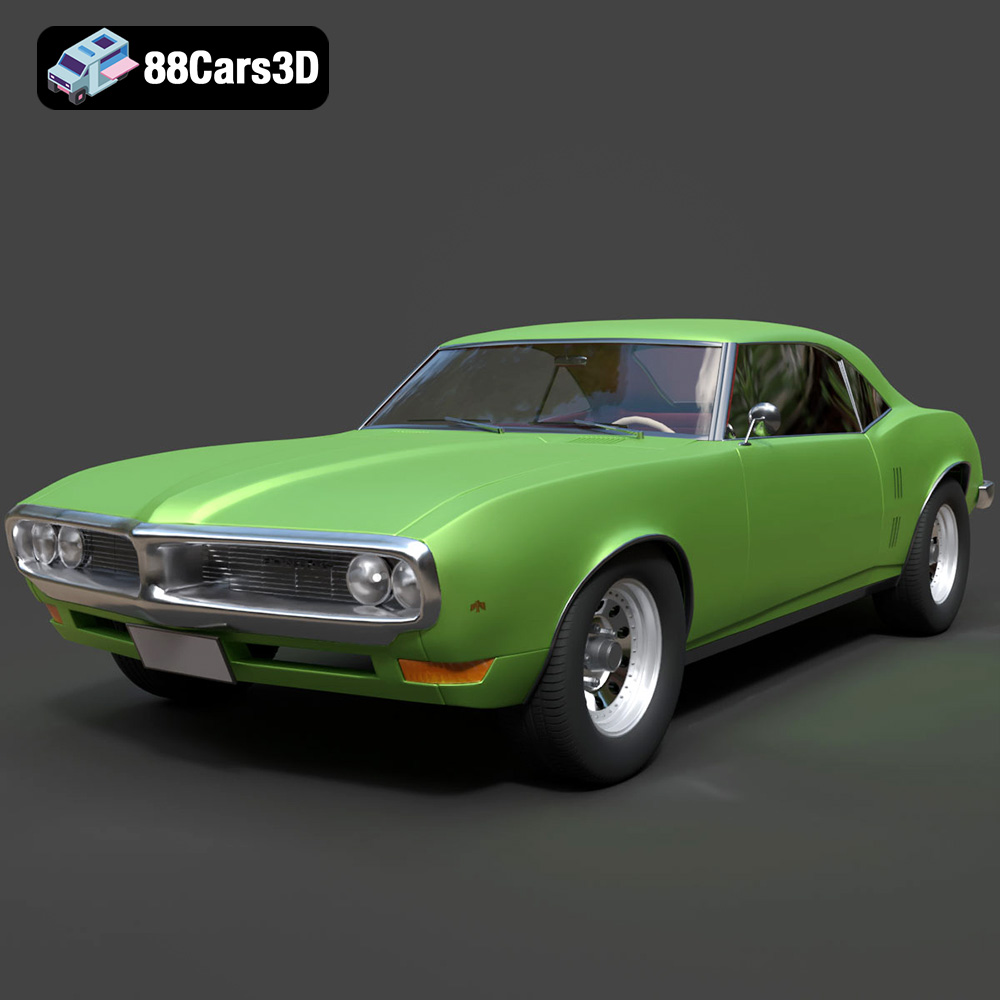
Pontiac Firebird 1998 3D Model
Texture: Yes
Material: Yes
Download the Pontiac Firebird 1998 3D Model featuring clean geometry, realistic detailing, and a fully modeled interior. Includes .blend, .fbx, .obj, .glb, .stl, .ply, .unreal, and .max formats for rendering, simulation, and game development.
Price: $10

Opel Astra 2008 3D Model
Texture: Yes
Material: Yes
Download the Opel Astra 2008 3D Model featuring clean geometry, realistic detailing, and a fully modeled interior. Includes .blend, .fbx, .obj, .glb, .stl, .ply, .unreal, and .max formats for rendering, simulation, and game development.
Price: $10

Mercedes Benz Joaquin-007 3D Model
Texture: Yes
Material: Yes
Download the Mercedes Benz Joaquin-007 3D Model featuring clean geometry, realistic detailing, and a fully modeled interior. Includes .blend, .fbx, .obj, .glb, .stl, .ply, .unreal, and .max formats for rendering, simulation, and game development.
Price: $19.99
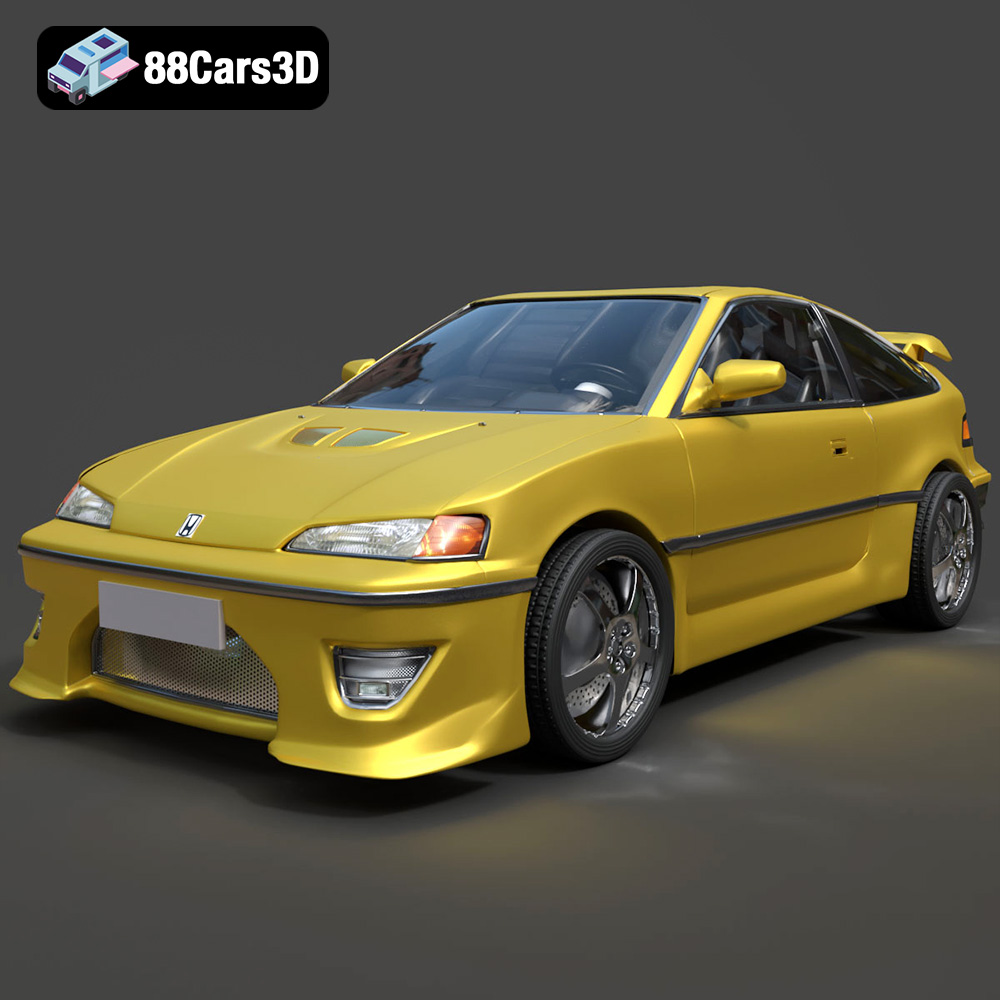
Honda CRX 1980 3D Model
Texture: Yes
Material: Yes
Download the Honda CRX 1980 3D Model featuring clean geometry, realistic detailing, and a fully modeled interior. Includes .blend, .fbx, .obj, .glb, .stl, .ply, .unreal, and .max formats for rendering, simulation, and game development.
Price: $11.99
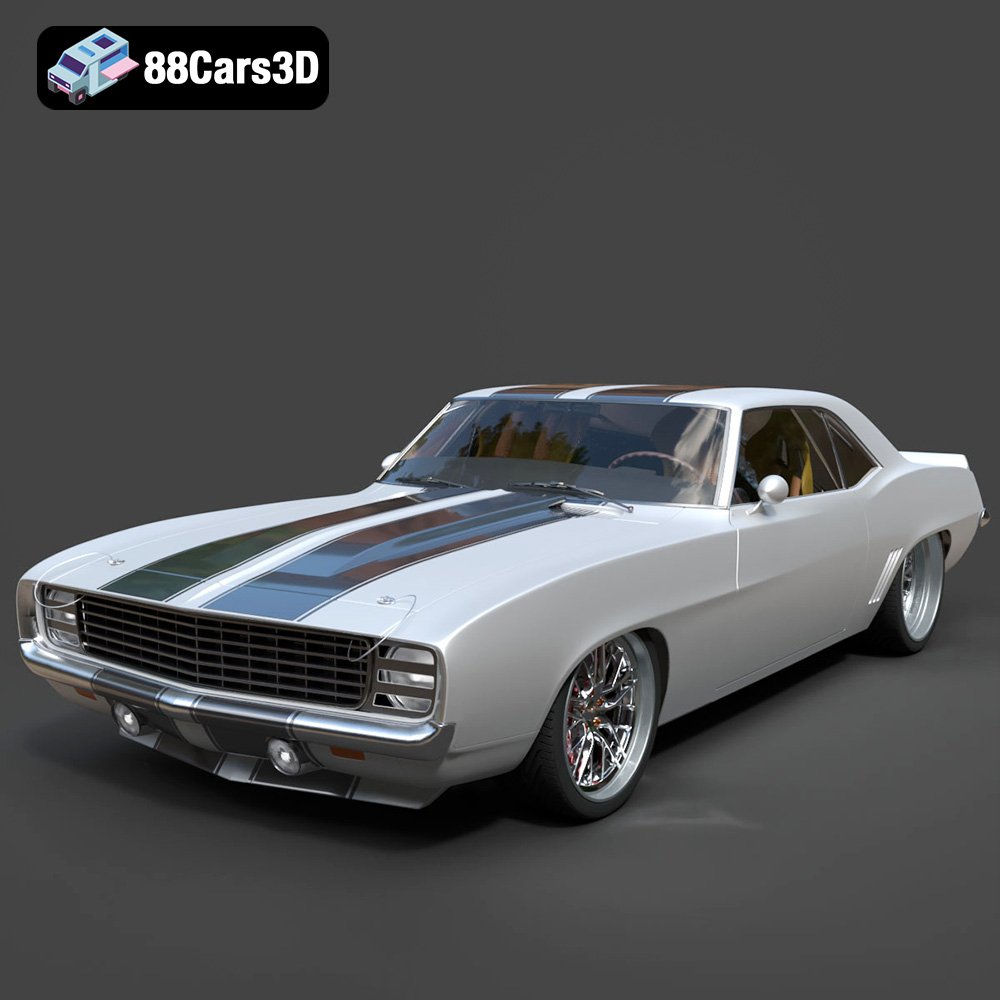
Chevrolet Camaro 69 Pro-007 3D Model
Texture: Yes
Material: Yes
Download the Chevrolet Camaro 69 Pro-007 3D Model featuring classic muscle car design and custom performance aesthetics. Includes .blend, .fbx, .obj, .glb, .stl, .ply, .unreal, and .max formats for rendering, simulation, and game development.
Price: $20.79

Honda Fit 2008 3D Model
Texture: Yes
Material: Yes
Download the Honda Fit 2008 3D Model featuring a compact, versatile design with detailed exterior and interior components. Includes .blend, .fbx, .obj, .glb, .stl, .ply, .unreal, and .max formats for rendering, simulation, and game development.
Price: $10.79
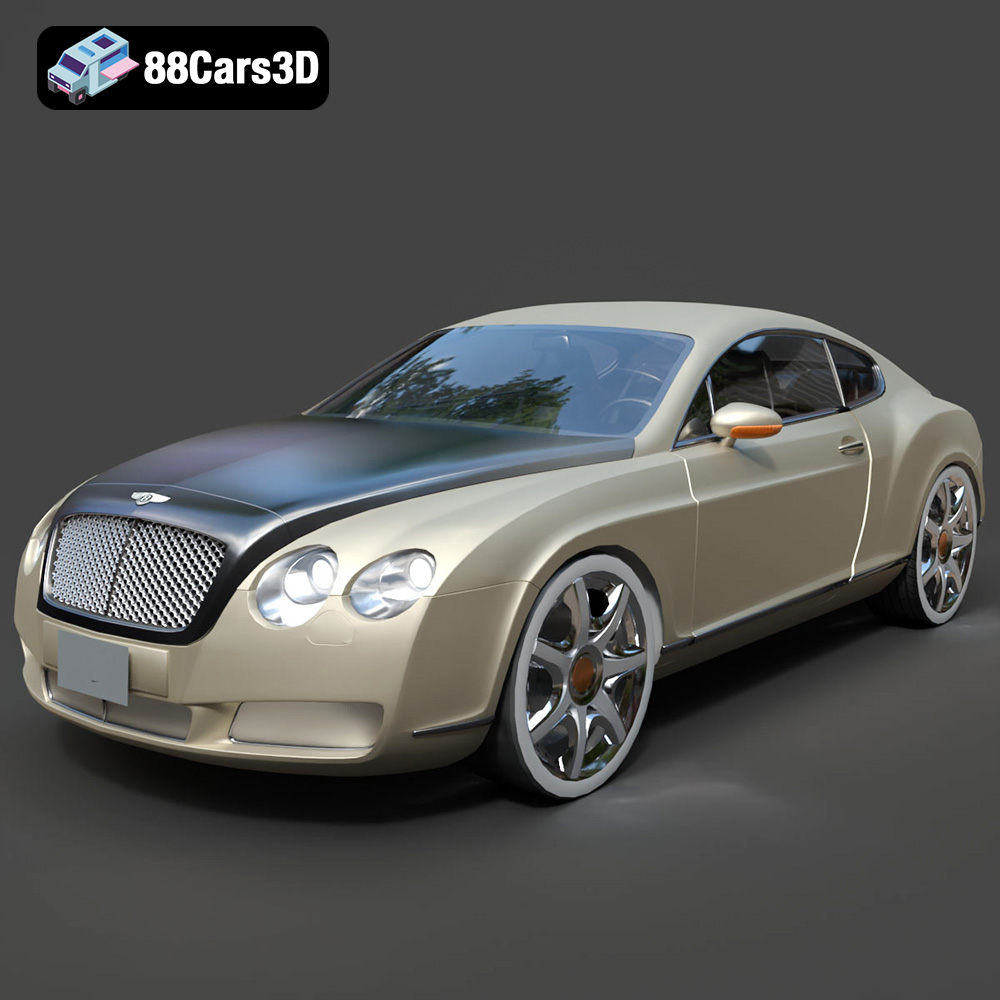
Bentley Continental GT-002 3D Model
Texture: Yes
Material: Yes
Download the Bentley Continental GT-002 3D Model featuring a luxurious grand touring design and high-quality details. Includes .blend, .fbx, .obj, .glb, .stl, .ply, .unreal, and .max formats for rendering, simulation, and game development.
Price: $20.79
