Get 20% OFF All Premium 3D & STL Models!

In the demanding world of real-time rendering, especially for high-fidelity applications like automotive visualization, managing graphical assets efficiently is paramount. Modern Unreal Engine projects, from cinematic renders to interactive configurators and immersive VR experiences, constantly push the boundaries of visual realism. This pursuit often involves incredibly detailed 3D car models, featuring high-resolution textures for intricate paint finishes, realistic interiors, and environmental elements. However, unchecked texture usage can quickly overwhelm even the most powerful hardware, leading to performance bottlenecks and unsightly visual artifacts.
This is where Unreal Engine’s advanced texture management systems – Texture Streaming and Runtime Virtual Texturing (RVT) – become indispensable tools. Far more than mere buzzwords, these technologies are the backbone of efficient memory management and unparalleled visual quality. For developers and artists working with complex assets, such as those found on marketplaces like 88cars3d.com, understanding and mastering these systems is critical. This comprehensive guide will dive deep into both texture streaming and virtual texturing, exploring their mechanics, implementation in Unreal Engine, and how to leverage them for breathtaking automotive visualizations without sacrificing performance.
At its core, texture streaming is Unreal Engine’s intelligent system for managing texture memory. Instead of loading every mip-map level of every texture into VRAM (Video RAM) at once, streaming ensures that only the necessary mip-levels are loaded based on an object’s distance from the camera and its screen size. Imagine a highly detailed 4K or 8K texture applied to a car body; when the car is far away, a lower-resolution version (a smaller mip-map) of that texture is sufficient. As the camera zooms in or the car gets closer, progressively higher-resolution mip-maps are streamed in. This dynamic loading and unloading is fundamental to maintaining performance in graphically intensive scenes, preventing VRAM exhaustion, and reducing initial load times.
Without texture streaming, a scene populated with multiple high-resolution 3D car models and intricate environments would quickly consume gigabytes of VRAM. This leads to severe frame rate drops, stuttering, and even crashes. For automotive projects that often feature exquisitely detailed vehicles and expansive backdrops, effective texture streaming is not just an optimization; it’s a necessity. It allows artists to work with visually rich assets without constantly battling memory limitations, ensuring that the visual fidelity they strive for is delivered smoothly to the end-user.
The primary benefit of texture streaming lies in its unparalleled memory efficiency. By intelligently managing VRAM, Unreal Engine can support projects with hundreds of high-resolution textures that would otherwise be impossible to run. This is particularly crucial for automotive visualization, where vehicle textures often range from 4K to 8K, and environments might feature equally demanding assets. Streaming ensures that only the data actively contributing to the perceived image quality at any given moment resides in VRAM, freeing up resources for other critical operations.
Furthermore, texture streaming plays a vital role in maintaining visual fidelity. When working with high-quality 3D car models, such as those acquired from 88cars3d.com, you want every detail of the paint, interior materials, and tire treads to shine. Streaming ensures that when the camera is close, the highest available texture detail is presented, creating a sharp, crisp image. Conversely, when objects are distant, lower-resolution mips are used, saving memory without a noticeable drop in perceived quality, as the smaller screen footprint masks the reduction in detail.
Unreal Engine’s texture streaming system operates through a combination of settings and algorithms. Each texture asset has a series of pre-generated mip-maps, which are progressively smaller versions of the original image. The engine calculates the required mip-level for a texture based on its on-screen size and a set streaming budget. Textures are assigned to “Texture Groups” (e.g., World, Character, Vehicle), each with configurable streaming settings, including maximum resolution and LOD bias.
The streaming process is managed by a dedicated pool of VRAM. If the pool is exceeded, Unreal Engine may dynamically reduce mip-levels to stay within the budget, potentially leading to blurry textures. Key console variables like r.Streaming.PoolSize (to adjust the overall VRAM budget for streamed textures) and r.Streaming.MinMipForResolution (to control the minimum mip-level allowed for streaming) provide fine-grained control over the system. Understanding these underlying mechanisms is crucial for diagnosing and resolving common streaming-related issues.
Effective texture streaming starts with proper asset setup and configuration within Unreal Engine. When importing high-quality 3D car models, especially those from professional marketplaces like 88cars3d.com, they often come with meticulously prepared textures. Your task is to ensure Unreal Engine streams them optimally. The default settings are a good starting point, but bespoke adjustments are usually necessary for peak performance and visual quality in automotive projects.
The primary control point for individual textures is within the Texture Editor. Here, you can define properties like the ‘Texture Group’, ‘Mip Gen Settings’, and ‘LOD Bias’. For large, hero assets like vehicles, assigning textures to a specific ‘Vehicle’ texture group allows you to manage their streaming behavior independently from environmental textures. This granular control is essential for prioritizing visual fidelity on key elements without impacting overall scene performance. Regularly reviewing and adjusting these settings is a continuous process throughout development.
For your 3D car models, several settings demand attention in the Texture Editor. The most critical is the Texture Group. Unreal Engine provides default groups like ‘World’, ‘Character’, ‘Vehicle’, ‘Effects’, etc. By assigning textures (Diffuse, Normal, Roughness, etc.) of your car model to the ‘Vehicle’ group, you can then globaly adjust streaming parameters for all vehicle textures. This allows you to set a higher maximum streamed resolution or a lower LOD bias for vehicle textures compared to less critical background elements, ensuring your cars always look sharp.
Next, consider the Mip Gen Settings. For most textures, ‘FromTextureGroup’ or ‘AutoGenerateMips’ is suitable. However, for textures that should always be crisp (e.g., small, critical decals that need to be readable even from a distance), you might consider ‘NoMipmaps’ or ‘Sharpen0’, but use these sparingly as they can increase VRAM usage significantly. The LOD Bias property directly influences which mip-level is streamed: a bias of ‘1’ will stream one mip-level lower than normal, saving VRAM but reducing detail, while ‘-1’ will force a higher mip-level, increasing detail at the cost of memory. Experiment with these settings to find the optimal balance for different texture types on your vehicle assets.
Even with careful configuration, streaming issues can arise, manifesting as blurry textures or performance hitches. Unreal Engine offers powerful debugging tools to diagnose these problems. The primary tool is the console command stat streaming. This command displays real-time statistics about the texture streaming system, including the current VRAM pool usage, the number of textures being streamed in/out, and potential budget overruns. A consistently high ‘Pool Used’ percentage or frequent ‘Stream In/Out’ events can indicate an overloaded system.
Another invaluable tool is the Texture Viewer within the Texture Editor. By clicking the ‘View Mips’ option, you can visualize all mip-levels and, more importantly, see the ‘Streamed Mips’ information, which tells you what mip-level Unreal Engine *thinks* it should be streaming at the current camera distance. If this differs from what you expect, investigate the texture’s streaming settings, its UV density on the mesh, and global streaming pool settings (r.Streaming.PoolSize). For more detailed insights, the official Unreal Engine documentation at dev.epicgames.com/community/unreal-engine/learning offers extensive guides on debugging rendering and streaming issues.
While traditional texture streaming efficiently manages static texture data, Runtime Virtual Texturing (RVT) introduces a dynamic, procedural layer that transforms how materials interact with environments. RVT isn’t about simply loading existing texture mips; it’s about generating and blending texture data at runtime, effectively projecting complex material information across surfaces without the need for intricate UV layouts or extensive baked textures. This technology becomes particularly powerful in automotive visualization for creating seamless blends between vehicles and their environment, projecting dynamic decals, or applying intricate detail maps.
Imagine a scenario where you want a car’s tires to dynamically leave mud tracks on a dynamically generated terrain, or for a vehicle’s undercarriage to pick up environmental grime based on its position relative to the ground. RVT makes these complex interactions possible. It works by “rendering” material properties (like diffuse color, roughness, normal, height) from one set of objects into a sparse, virtual texture that other objects can then sample. This allows for incredibly flexible material blending and detail projection that would be cumbersome or impossible with traditional texture maps.
At its heart, RVT operates on the principle of a “sparse texture” that covers a vast virtual space. Instead of a traditional texture with fixed dimensions, an RVT only stores the pixel data that is actually needed, making it highly memory efficient. Objects contributing to the RVT render their material properties into this virtual texture, and then other objects (or even the same objects) can sample from it using special RVT Sampler nodes in their materials.
The advantages of RVT for automotive visualization are multifaceted. Firstly, it drastically simplifies material blending across different meshes, eliminating visible seams and creating a more cohesive look (e.g., where a vehicle meets the ground). Secondly, it allows for dynamic material projection, enabling effects like dynamic dirt or wetness that adapt to environmental conditions. Thirdly, it can reduce draw calls by consolidating multiple texture samples into a single RVT lookup. Finally, it streamlines content creation by removing the need for unique, high-resolution decal textures and complex UV unwrapping for every minor detail.
Implementing RVT in Unreal Engine involves a few key steps. First, you need to create a Runtime Virtual Texture Asset (right-click in Content Browser > Materials & Textures > Runtime Virtual Texture). This asset defines the properties of your virtual texture, such as its resolution and the type of data it will store (e.g., BaseColor, Normal, Roughness, WorldHeight). Next, you place a Runtime Virtual Texture Volume in your scene. This volume defines the world space bounds that your RVT will cover, essentially creating a projection zone.
Once the RVT asset and volume are set up, you need to tell materials to “output” to this virtual texture. This is done by adding a Runtime Virtual Texture Output node to the material graphs of the objects you want to contribute to the RVT (e.g., your ground plane, puddles, or dynamic decals). Finally, any material that needs to “read” from this RVT (e.g., your car body material for projecting dirt) will use a Runtime Virtual Texture Sample node, which takes the RVT asset as input and outputs the desired material properties. This modular setup allows for powerful and flexible dynamic material interactions, enabling ground textures to project onto a car’s underside seamlessly.
Beyond basic material blending, Runtime Virtual Texturing offers advanced possibilities that elevate the realism and interactivity of automotive visualization projects. Its dynamic nature makes it an ideal candidate for effects that would be costly or impractical with traditional methods. For example, artists can simulate environmental wear and tear on vehicles with unprecedented realism, making each car feel more grounded in its digital environment. This adds a layer of authenticity that is critical for high-end cinematic renders and realistic real-time experiences.
Consider the interplay between a car and its environment: tires kicking up dust, mud splashing onto the chassis, or puddles reflecting the vehicle’s underside. RVT provides an elegant solution for these complex interactions. By leveraging RVT, you can create a virtual canvas that dynamically captures the material properties of the ground beneath a car and then apply these properties to the car itself, leading to highly convincing and interactive results. This level of detail and dynamic fidelity is what sets exceptional automotive visualizations apart.
One of the most compelling uses of RVT in automotive visualization is for seamless blending and dynamic decal projection. Imagine a car driving over a gravel road; with RVT, you can project the gravel texture and normal map onto the lower parts of the car’s body and wheel arches, making it look as though the car is truly interacting with the environment. This eliminates sharp edges and noticeable transitions between the car’s geometry and the ground plane, achieving a far more integrated look. Similarly, for dirt and grime, an RVT can dynamically project complex dirt patterns onto the car body based on its position and proximity to dirty areas, rather than relying on pre-baked or static texture masks.
Beyond environmental blending, RVT excels at dynamic decal projection. Instead of painstakingly applying static decals onto complex car body UVs, an RVT can be used to project a “decal” dynamically. For instance, in an interactive configurator, if a user selects a specific livery or racing stripe, an RVT can project this design onto the car in real-time without modifying the base mesh’s UVs or relying on traditional decal actors, which can suffer from Z-fighting or complex setup. This provides incredible flexibility for interactive customization and dynamic narrative elements in cinematics.
While incredibly powerful, RVT isn’t without its performance considerations. Each RVT asset and its contributing materials add to rendering complexity. The resolution of your RVT asset (e.g., 2048×2048, 4096×4096) directly impacts VRAM usage and generation time. A higher resolution provides more detail but incurs a greater cost. It’s crucial to select the lowest effective resolution that meets your visual requirements. Also, limiting the number of RVT volumes in a scene is important, as each requires its own render pass. For general guidance, the official Unreal Engine documentation provides up-to-date best practices for performance optimization with RVT.
When implementing RVT, focus on its strengths: dynamic blending and projection. Avoid using it for static, high-frequency details that could be handled by traditional textures. Ensure that materials outputting to the RVT are optimized and only contain the necessary nodes. Debugging tools like stat virtualtexturing can help monitor RVT performance, showing draw call counts and render times. For optimal results, integrate RVT strategically, using it to solve specific material blending or dynamic detail challenges where traditional methods fall short, rather than as a universal texture solution.
The true power of Unreal Engine lies in the synergy of its features. Texture Streaming and Runtime Virtual Texturing don’t operate in a vacuum; they work in concert with other cutting-edge technologies like Nanite, Lumen, and sophisticated Blueprint scripting to create cohesive, high-performance, and visually stunning automotive experiences. Understanding how these systems interact allows developers to push the boundaries of real-time rendering, delivering cinematic quality at interactive frame rates across various platforms. The goal is to build a robust rendering pipeline where every component contributes to the overall efficiency and visual excellence.
For demanding applications like virtual production involving LED walls or high-end AR/VR automotive showrooms, a holistic optimization strategy is crucial. This involves not only managing texture data but also geometry complexity with Nanite, global illumination with Lumen, and dynamic interactivity with Blueprint. By thoughtfully combining these features, artists and developers can craft experiences that are both breathtakingly realistic and incredibly performant, leveraging every tool at their disposal to bring their 3D car models to life.
Nanite, Unreal Engine’s virtualized geometry system, radically transforms how high-polygon meshes are handled. It allows for film-quality assets with billions of triangles to be rendered in real-time. While Nanite efficiently manages geometry, it relies on optimized texture data. This is where texture streaming ensures that the detailed textures accompanying Nanite-enabled car models are loaded efficiently, preventing VRAM bottlenecks despite the geometric complexity. Nanite doesn’t directly stream textures, but its ability to handle immense polygon counts means that corresponding high-resolution textures become even more critical, making effective texture streaming indispensable.
Lumen, Unreal Engine’s fully dynamic global illumination and reflections system, likewise benefits immensely from well-managed texture data. Lumen’s accuracy and visual quality depend on precise material properties like base color, roughness, and metallic values, which are all derived from textures. Efficiently streamed and highly detailed textures provide Lumen with the accurate information it needs to produce realistic lighting and reflections on surfaces, especially on the complex materials of 3D car models. Furthermore, RVT can enhance Lumen’s realism by providing blended material data for reflections and indirect lighting, especially at ground contact points, creating a more cohesive and physically accurate scene.
Optimizing texture streaming and RVT for automotive applications requires a clear understanding of your target platforms, be it high-end PCs, consoles, or resource-constrained AR/VR devices. For AR/VR automotive configurators, aggressive LODs (Level of Detail) on meshes are crucial, and texture streaming should be tightly coupled with these LOD transitions. As a mesh switches to a lower LOD, its associated textures should also stream down to lower mip-levels, saving significant VRAM. Blueprint scripting can be used to dynamically adjust texture resolution or even swap entire texture sets based on performance metrics or user settings, providing adaptive scalability.
For cinematic sequences created with Sequencer, you might temporarily increase texture streaming pool size or force higher mip-levels on hero vehicles to ensure maximum visual fidelity for close-up shots. Conversely, for real-time game assets, a more conservative approach to texture resolution and streaming is warranted. When sourcing automotive assets from marketplaces such as 88cars3d.com, it’s wise to consider their stated texture resolutions and optimization levels to ensure they align with your project’s performance targets. Always profile your project thoroughly across all intended platforms to identify and address any texture-related performance bottlenecks.
In the relentless pursuit of realism and performance in Unreal Engine, mastering texture management is non-negotiable. Texture streaming and Runtime Virtual Texturing are powerful, complementary technologies that empower developers and artists to create breathtaking automotive visualizations without compromising on efficiency. From meticulously crafted 3D car models found on platforms like 88cars3d.com, to sprawling interactive environments, these systems ensure that every pixel contributes meaningfully to the final image, all while keeping VRAM usage in check and maintaining smooth frame rates.
By diligently configuring texture streaming settings, leveraging RVT for dynamic material blending and projection, and understanding how these systems integrate with other Unreal Engine features like Nanite and Lumen, you gain unparalleled control over your project’s visual quality and performance. The journey to exceptional real-time rendering is an iterative one, requiring continuous optimization and a deep technical understanding. Embrace these techniques, experiment with their various parameters, and witness your automotive projects evolve into truly immersive and visually stunning experiences. Your dedication to these advanced texture management strategies will undoubtedly pay dividends in the quality and performance of your next Unreal Engine masterpiece.

Meta Description:
Texture: Yes
Material: Yes
Download the Cadillac CTS-V Coupe 3D Model featuring detailed exterior styling and realistic interior structure. Includes .blend, .fbx, .obj, .glb, .stl, .ply, .unreal, and .max formats for rendering, simulation, AR VR, and game development.
Price: $13.9

Texture: Yes
Material: Yes
Download the Cadillac DTS-005 3D Model featuring its iconic luxury design, detailed interior, and realistic exterior. Includes .blend, .fbx, .obj, .glb, .stl, .ply, .unreal, and .max formats for rendering, simulation, and game development.
Price: $10.79

Texture: Yes
Material: Yes
Download the Buick LeSabre 1998 3D Model featuring a classic American full-size sedan design. Includes .blend, .fbx, .obj, .glb, .stl, .ply, .unreal, and .max formats for rendering, simulation, and game development.
Price: $10.79
Texture: Yes
Material: Yes
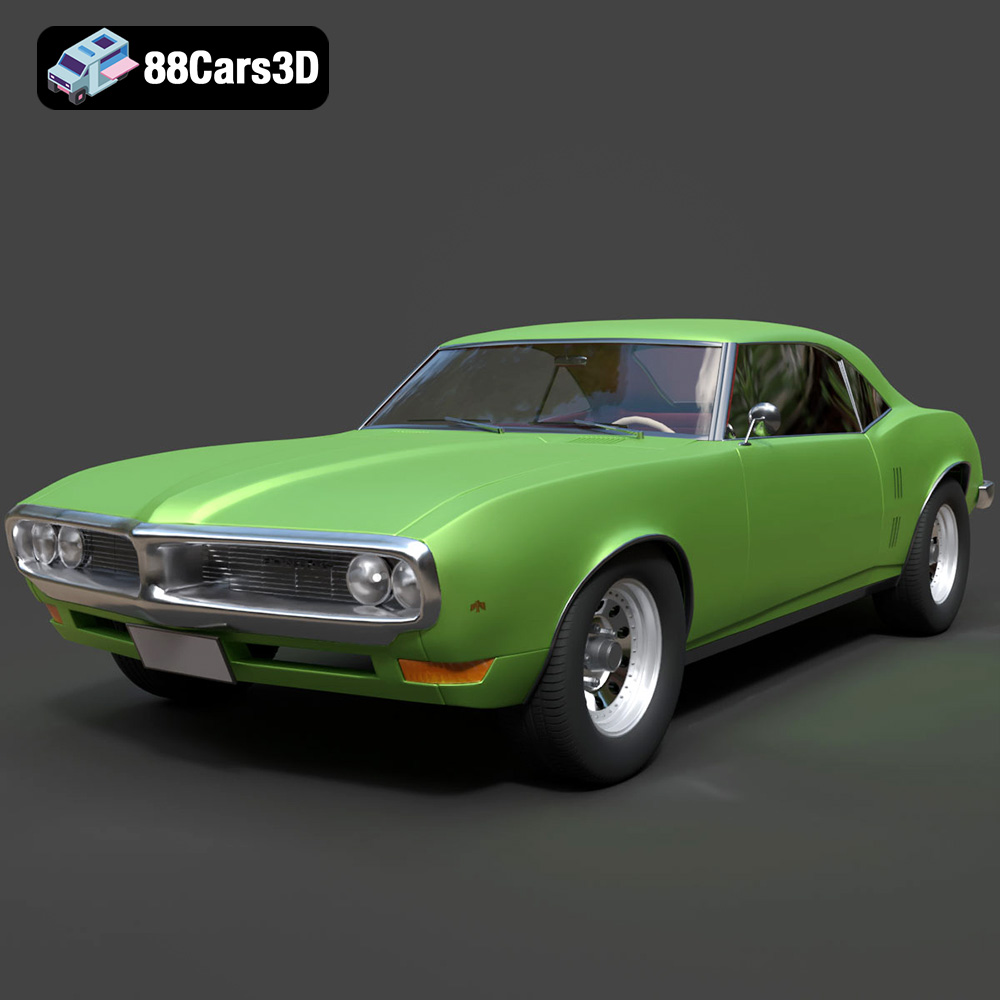
Download the Pontiac Firebird 1998 3D Model featuring clean geometry, realistic detailing, and a fully modeled interior. Includes .blend, .fbx, .obj, .glb, .stl, .ply, .unreal, and .max formats for rendering, simulation, and game development.
Price: $10

Texture: Yes
Material: Yes
Download the Opel Astra 2008 3D Model featuring clean geometry, realistic detailing, and a fully modeled interior. Includes .blend, .fbx, .obj, .glb, .stl, .ply, .unreal, and .max formats for rendering, simulation, and game development.
Price: $10

Texture: Yes
Material: Yes
Download the Mercedes Benz Joaquin-007 3D Model featuring clean geometry, realistic detailing, and a fully modeled interior. Includes .blend, .fbx, .obj, .glb, .stl, .ply, .unreal, and .max formats for rendering, simulation, and game development.
Price: $19.99
Texture: Yes
Material: Yes
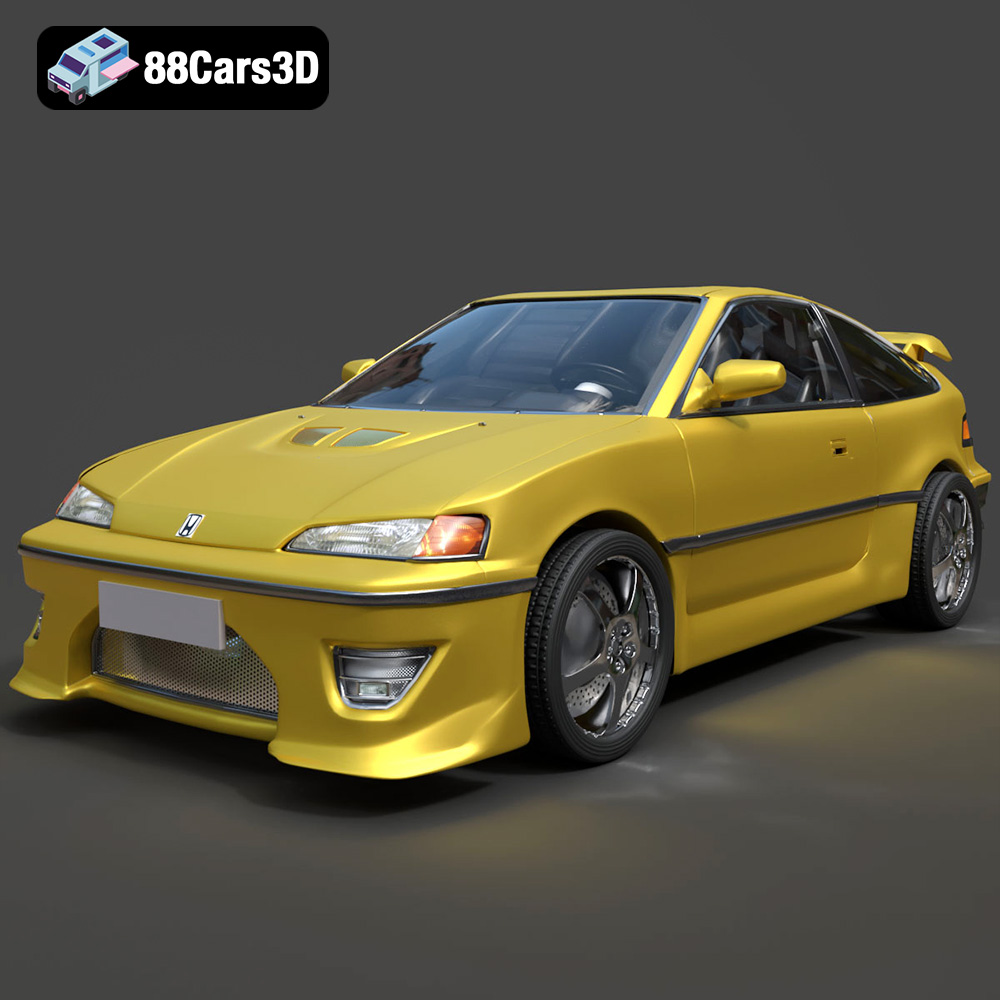
Download the Honda CRX 1980 3D Model featuring clean geometry, realistic detailing, and a fully modeled interior. Includes .blend, .fbx, .obj, .glb, .stl, .ply, .unreal, and .max formats for rendering, simulation, and game development.
Price: $11.99
Texture: Yes
Material: Yes
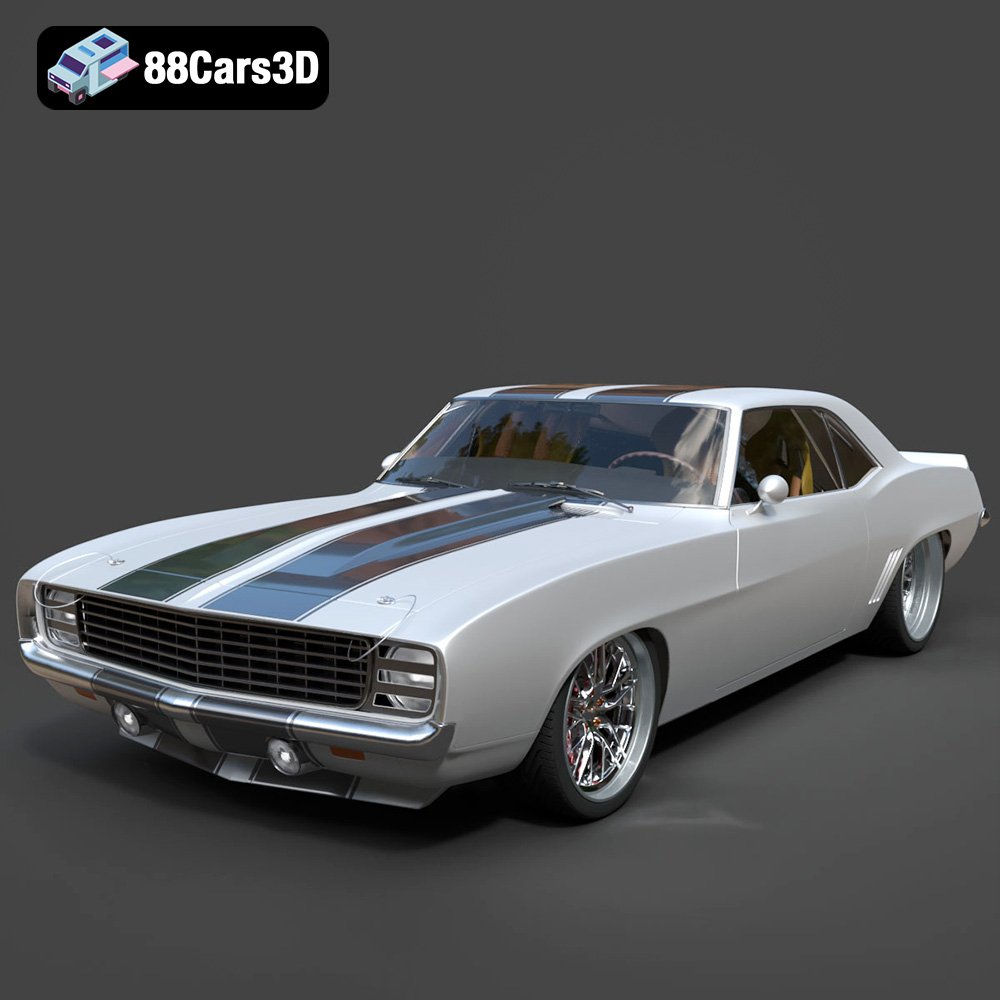
Download the Chevrolet Camaro 69 Pro-007 3D Model featuring classic muscle car design and custom performance aesthetics. Includes .blend, .fbx, .obj, .glb, .stl, .ply, .unreal, and .max formats for rendering, simulation, and game development.
Price: $20.79

Texture: Yes
Material: Yes
Download the Honda Fit 2008 3D Model featuring a compact, versatile design with detailed exterior and interior components. Includes .blend, .fbx, .obj, .glb, .stl, .ply, .unreal, and .max formats for rendering, simulation, and game development.
Price: $10.79
Texture: Yes
Material: Yes
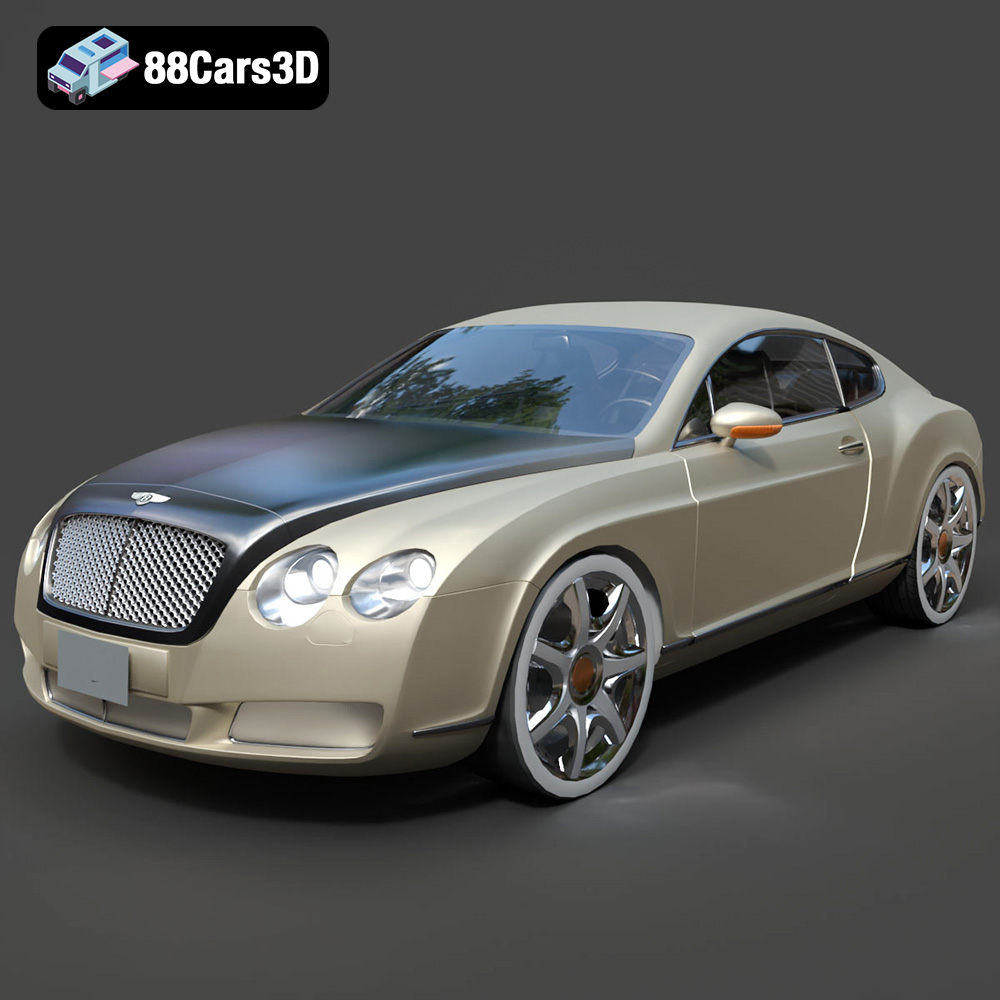
Download the Bentley Continental GT-002 3D Model featuring a luxurious grand touring design and high-quality details. Includes .blend, .fbx, .obj, .glb, .stl, .ply, .unreal, and .max formats for rendering, simulation, and game development.
Price: $20.79

