

In the high-octane world of 3D visualization, where photorealism is paramount, creating truly convincing automotive models demands a mastery of advanced material science. It’s not enough for a 3D car model to merely look good; it must react to light in a way that mirrors its real-world counterpart. This is where Physically Based Rendering (PBR) materials become indispensable. PBR revolutionized how artists approach shading, providing a consistent, predictable, and physically accurate method for defining surface properties across various rendering environments, from high-fidelity architectural visualization to real-time game engines and immersive AR/VR experiences.
For 3D artists, game developers, automotive designers, and visualization professionals seeking to push the boundaries of realism, understanding and implementing PBR correctly is a critical skill. Whether you’re showcasing a concept car, populating a virtual environment, or preparing models for interactive applications, the authenticity of your materials will make or break the illusion. This comprehensive guide will delve into the best practices for applying PBR materials to 3D car models, ensuring your creations from platforms like 88cars3d.com shine with unparalleled realism and performance across all your projects.
Understanding PBR Fundamentals: The Science of Realistic Surfaces
Physically Based Rendering is more than just a buzzword; it’s a paradigm shift in material creation based on scientific principles that accurately describe how light interacts with surfaces. The core idea is to simulate real-world physics, ensuring that materials behave consistently under any lighting conditions. This contrasts sharply with older, more artistic workflows where material properties were often tweaked manually for specific lighting setups, leading to inconsistent results.
The two primary PBR workflows are the Metallicity/Roughness workflow and the Specular/Glossiness workflow. While both aim for physical accuracy, they achieve it using different sets of texture maps and are supported by various renderers and game engines. Most modern workflows, especially for real-time applications and popular software like Blender, favor the Metallicity/Roughness approach due to its intuitive nature and fewer texture maps required.
Metallicity/Roughness vs. Specular/Glossiness
-
Metallicity/Roughness Workflow: This is arguably the most common and straightforward PBR workflow. It relies on a few key maps:
- Base Color (Albedo): Defines the color of the diffuse reflection and, for metals, the color of the specular reflection. For non-metals (dielectrics), this is the intrinsic color of the object, devoid of lighting information.
- Metallic: A grayscale map (0 to 1, or black to white) that indicates whether a surface pixel is metallic (white/1) or non-metallic (black/0). Values in between can represent tarnished or rusty metals.
- Roughness: Another grayscale map (0 to 1, or black to white) that controls the microscopic surface imperfections that scatter light. A value of 0 (black) means a perfectly smooth, mirror-like surface, while 1 (white) means a completely rough, diffuse surface.
- Normal Map: Provides fine surface detail by faking the angle of the surface normals, making a low-polygon model appear high-detail.
- Ambient Occlusion (AO): Simulates soft, diffuse shadows in crevices and corners, enhancing depth.
This workflow is favored for its simplicity and direct correspondence to real-world material properties.
-
Specular/Glossiness Workflow: This workflow separates the diffuse and specular components more explicitly.
- Diffuse (Albedo): Similar to Base Color, but specifically for non-metallic surfaces’ diffuse color. For metals, this map is typically black.
- Specular: A color map that defines the color and intensity of the specular reflection. For metals, this would be their intrinsic color. For non-metals, it’s typically a desaturated, low-value color.
- Glossiness: The inverse of Roughness. A value of 1 (white) means a perfectly smooth, reflective surface, while 0 (black) means a rough, diffuse surface.
- Normal Map & Ambient Occlusion: These serve the same purpose as in the Metallicity/Roughness workflow.
While offering more granular control, it can be slightly more complex to manage, especially concerning energy conservation between diffuse and specular components for dielectric materials.
When selecting 3D car models from a marketplace like 88cars3d.com, it’s crucial to understand which PBR workflow the models are designed for, as this will dictate how you integrate them into your scenes and software.
Essential PBR Texture Maps for Automotive Realism
Achieving automotive photorealism relies heavily on a precise application of PBR texture maps. Each map plays a crucial role in defining how light interacts with different parts of the vehicle, from the glossy paintwork to the intricate details of tires and interiors. Here’s a breakdown of the most critical maps:
Base Color (Albedo)
The Base Color map represents the intrinsic color of the surface, without any lighting or shadowing information. For a car, this is the primary color of the paint, the tint of the windows, or the material color of the tires. It’s vital to ensure this map is clean, desaturated of any baked-in lighting, and represents the true color. For metallic paints, this map will also contain the color of the metal’s specular reflection. Typically, resolutions range from 2048×2048 for smaller components to 8192×8192 for the main body of a high-detail car model.
Roughness (or Glossiness)
This grayscale map dictates how spread out the reflections on a surface appear. A low roughness value (darker areas) means a smoother surface, resulting in sharper reflections, like a perfectly polished car body. High roughness (lighter areas) leads to diffuse, blurry reflections, simulating matte finishes, rubber tires, or textured plastic parts. Achieving convincing vehicle wear and tear often involves layering roughness maps to introduce subtle variations. For example, a clear coat on car paint might have a very low roughness, while dust or fingerprints would be represented by slightly higher roughness values.
Metallic
The Metallic map is a grayscale mask that defines which parts of the material are metallic (white/1) and which are dielectric (non-metallic, black/0). Car models have a clear distinction between metallic (body panels, chrome trim) and non-metallic (rubber, plastic, glass). This binary nature simplifies its application, but subtle variations can be introduced for dirty or scratched metals. Incorrect metallic values are a common pitfall that can instantly break the realism of a PBR material.
Normal Map / Bump Map
Normal maps are indispensable for adding intricate surface detail without increasing the polygon count of your 3D car models. They store information about the direction of surface normals, making low-poly surfaces appear to have high-poly details like seams, panel gaps, subtle dents, or fine texture in rubber and plastic. Bump maps serve a similar purpose but are less precise and usually only use grayscale height information. For high-quality automotive models, normal maps are preferred. They are typically baked from a high-resolution mesh onto a lower-resolution one. Best practice dictates using 16-bit normal maps for smoother gradients and fewer artifacts, especially for reflective car surfaces.
Ambient Occlusion (AO)
Ambient Occlusion maps simulate the soft, subtle shadows that occur where surfaces are close together, such as the gaps between car doors or under the windshield wipers. While rendering engines calculate some level of AO, a pre-baked AO map provides an additional layer of realistic shading, grounding the car model within its environment and enhancing its visual depth without being dependent on dynamic lighting. This map is often multiplied over the diffuse color or used in conjunction with other maps to subtly influence shading.
Emission Map
For elements like headlights, tail lights, and dashboard displays, an Emission map specifies which areas glow and with what color and intensity. This is crucial for nighttime renders or adding a dynamic element to the vehicle. The map is typically a color image where brighter pixels represent stronger emission.
Opacity / Alpha Map
These maps control the transparency of a surface. They are essential for car windows, intricate grilles, and decals where parts of the texture should be cut out or partially see-through. An alpha map is typically a grayscale image where white indicates full opacity and black indicates full transparency. For more complex transparency like frosted glass, a grayscale opacity map might be used in conjunction with other PBR properties.
Creating Realistic Automotive Paint Shaders
Automotive paint is notoriously complex to replicate in 3D due to its multi-layered structure and light-scattering properties. A convincing car paint shader goes far beyond a simple base color and roughness map; it involves meticulously simulating multiple coats and micro-surface characteristics. Achieving this level of realism is a hallmark of high-quality 3D car models, like those found on 88cars3d.com.
Layered Material Systems: Base Coat, Clear Coat, and Flakes
Real car paint consists of several layers: a primer, a base coat (color), and multiple clear coats for protection and gloss. To accurately represent this, a layered material approach is crucial. In software like Blender, you would achieve this using a Principled BSDF shader with carefully controlled parameters, or by stacking multiple shaders. For example, in Blender 4.4, you might layer a diffuse shader for the base paint and a glossy shader for the clear coat using a “Mix Shader” node, controlling the mix factor with a Fresnel input to simulate the metallic sheen and reflections that change with viewing angle.
Metallic Flake Effects
The shimmering effect in metallic car paints comes from tiny metallic flakes suspended in the base coat, visible through the clear coat. Simulating this requires a texture map (often a noise or procedural texture) to drive the normal or anisotropy of the underlying metallic layer. This subtle detail is paramount for realism. Advanced shaders may use a separate normal map for the flakes, combined with the main body normal map, or leverage procedural noise textures to create this effect. The size, density, and orientation of these flakes can be controlled via various shader parameters, creating anything from a fine pearlescent finish to a coarse glitter effect.
Clear Coat Properties
The clear coat is responsible for the high gloss and reflectivity of car paint. It requires its own set of parameters, typically a very low roughness value (approaching 0) for pristine surfaces and a strong specular component. Many PBR shaders offer a dedicated ‘Clearcoat’ parameter, allowing you to control its intensity and roughness independently. For added realism, a subtle clearcoat normal map can introduce microscopic scratches or swirl marks that are only visible in reflections, further enhancing the authenticity.
Surface Imperfections: Scratches, Dust, and Wear
No real car is perfectly flawless. Introducing subtle imperfections is key to pushing realism. This involves blending various textures to represent:
- Scratches: Can be achieved with roughness maps where scratches have a higher roughness value, making them appear duller. A subtle normal map can also be used to give them a physical depth.
- Dust and Dirt: Often implemented using a grunge texture mixed with the base color and roughness, sometimes driven by an ambient occlusion map to accumulate dirt in crevices.
- Water Spots/Rain Effects: These require dynamic roughness and potentially normal map variations, often incorporating a dedicated texture mask.
- Chipped Paint/Rust: More complex, involving mask textures to reveal underlying primer or rust materials beneath the main paint layer.
These imperfections are typically layered in the shader network, with masks controlling their visibility and intensity. Utilizing blend modes and procedural textures within your rendering software allows for incredible control and variation.
UV Mapping Strategies for Complex Car Surfaces
Effective UV mapping is the silent hero behind high-quality PBR materials, especially for intricate 3D car models. It’s the process of unfolding the 3D mesh into a 2D plane, allowing textures to be applied accurately. For vehicles, with their smooth, often curved surfaces and numerous components, thoughtful UV strategies are critical for preventing texture distortion and maximizing texture resolution.
Seamless UVs for Large Panels
Car bodies feature large, smooth, and highly reflective surfaces where any seam or distortion in the UVs will be immediately apparent. The goal is to create UV islands that are as contiguous and undistorted as possible. This often means carefully placing seams in less visible areas, such as along sharp edges, under trim pieces, or in hidden recesses. For a car’s main body, a single, large UV island, or a few well-placed islands, is ideal to ensure paint textures flow seamlessly across the surface. Techniques like Blender’s Smart UV Project or Follow Active Quads can be good starting points, followed by manual refinement and relaxation to minimize stretching.
Optimizing UV Space and Resolution
Efficient UV packing is about maximizing the use of the 0-1 UV space without overlapping islands (unless intentional, for mirroring). For automotive models, different parts require different texture resolutions. The main body and large panels might demand 4K or 8K textures for fine detail, while smaller components like bolts or interior elements might be fine with 1K or 2K. Smart UV packing ensures that areas needing higher detail receive more UV space. Consider scaling UV islands according to their visual importance and surface area on the model. Non-symmetrical parts should have unique UV space to prevent texture mirroring artifacts, while symmetrical parts can share UV space to save texture memory.
UDIM Workflow for High-Resolution Models
For extremely high-fidelity automotive renders, especially in film, advertising, or high-end architectural visualization, a single 0-1 UV space is often insufficient to maintain adequate texture resolution across all details. This is where the UDIM workflow becomes invaluable. UDIMs allow you to spread UV islands across multiple UV tiles (e.g., 1001, 1002, 1003…), effectively giving you unlimited texture space. This means the car body could occupy several 4K or 8K textures on different UDIMs, while tires, interior, and lights each get their dedicated high-resolution texture sets. This method is particularly useful for:
- Extremely detailed paint jobs: Allowing for minute scratches, decals, or carbon fiber weaves without loss of fidelity.
- Large-scale environments: When a car model is part of a much larger scene and needs to hold up to close-up shots.
- Modular assets: Where different parts of the car might be textured by different artists or require specific material definitions.
Implementing UDIMs requires careful planning during the UV unwrapping phase and support from your texturing and rendering software. Substance Painter, Mari, and most modern renderers like V-Ray, Corona, Cycles, and Arnold fully support UDIM workflows.
Software-Specific PBR Workflows for Automotive Models
The beauty of PBR is its underlying consistency, but the implementation varies across different 3D software and renderers. Understanding these nuances is crucial for any 3D artist working with automotive models, especially when sourcing high-quality assets from platforms like 88cars3d.com.
Blender (Cycles/EEVEE)
Blender, with its powerful Cycles and real-time EEVEE render engines, offers a robust PBR workflow primarily centered around the Principled BSDF shader. This universal shader is designed to handle most common material types by adjusting a few key parameters and connecting your PBR texture maps:
- Principled BSDF Setup: Connect your Base Color, Metallic, and Roughness maps directly to their respective inputs on the Principled BSDF node. Normal maps are typically connected through a ‘Normal Map’ node, which then plugs into the ‘Normal’ input of the Principled BSDF. Ambient Occlusion can be multiplied with the Base Color or used to subtly influence other aspects of the shader.
- Car Paint Specifics: For realistic car paint, you might layer multiple Principled BSDFs using ‘Mix Shader’ nodes. One Principled BSDF can simulate the metallic base coat (high metallic, varying roughness for flakes), while another simulates the clear coat (low metallic, very low roughness). A Fresnel node can drive the mix factor for the clear coat to achieve accurate reflections based on viewing angle. You can also incorporate procedural textures for metallic flakes directly within the shader graph.
- Rendering Performance: EEVEE offers real-time PBR rendering, ideal for quick iterations and previews. Cycles provides highly accurate, path-traced rendering for production-quality results. For detailed information on specific nodes and shader setups, refer to the official Blender 4.4 documentation.
3ds Max (Corona/V-Ray)
3ds Max is a staple in architectural visualization and product rendering. Both Corona Renderer and V-Ray offer highly advanced PBR material systems:
- Corona Physical Material: This is Corona’s universal PBR material, analogous to Blender’s Principled BSDF. It features dedicated slots for Base Color, Metalness, Roughness, Normal, and Bump maps. The ‘Coating’ layer is particularly useful for car paint, allowing for a separate clear coat with its own IOR (Index of Refraction), roughness, and color. This makes setting up complex multi-layered car paint surprisingly straightforward.
- V-Ray Material: V-Ray’s standard material can be configured for PBR by setting its BRDF type to ‘Microfacet GTR (GGX)’ and using the ‘Metalness’ workflow. You’ll connect your PBR maps to the ‘Diffuse Color’, ‘Reflection Color’, ‘Metalness’, ‘Roughness’ (or ‘Glossiness’, depending on your map type), and ‘Bump’ (for normal maps) slots. V-Ray also offers a ‘V-Ray Car Paint Material’ which is specifically designed to simplify the creation of complex car paints, including flake layers, clear coat, and even orange peel effects.
- Workflow Tips: For both renderers, using high-resolution HDRIs (High Dynamic Range Images) in your environment is critical for realistic reflections on automotive surfaces. Layering materials in 3ds Max using Blend Materials can create highly nuanced surface effects like dirt accumulation or chipped paint.
Maya (Arnold Renderer)
Maya, often used in film and game development, pairs well with Arnold Renderer for high-quality PBR results:
- aiStandardSurface Shader: Arnold’s versatile shader is a comprehensive PBR solution. It features dedicated inputs for Base Color, Metalness, Specular Roughness, Normal Camera (for normal maps), and Coat attributes. The ‘Coat’ section is perfect for car paint, allowing control over weight, color, and roughness of the clear coat layer.
- Shader Graph and Utilities: Maya’s Hypershade editor allows for extensive shader graph creation. You can use utility nodes like ‘aiMix’ to blend multiple shaders or textures. For advanced metallic flake effects, consider using a combination of procedural noise textures and bump maps within the shader graph to simulate the microscopic variations.
- Performance: Arnold is a CPU-based renderer (though GPU rendering is available), known for its high-quality, physically accurate results, which can be render-intensive. Optimize your texture resolutions and sampling settings to manage render times.
Substance Painter: The PBR Texturing Powerhouse
Substance Painter is almost universally adopted for PBR texturing due to its intuitive layer-based workflow and powerful material creation tools:
- Smart Materials and Generators: Substance Painter’s strength lies in its non-destructive workflow and vast library of smart materials and generators. You can quickly apply realistic car paint, weathered metals, rubber, and glass by dragging and dropping smart materials onto your model. Generators like ‘Rust’ or ‘Edge Wear’ can add realistic imperfections with procedural masks.
- Baking Maps: Crucially, Substance Painter bakes all necessary PBR maps (Normal, Ambient Occlusion, Curvature, Position, Thickness) from your high-poly model onto your low-poly model, which are then used as masks and inputs for your material layers. This workflow ensures pixel-perfect PBR texturing.
- Export Presets: Substance Painter offers extensive export presets for various game engines (Unity, Unreal Engine) and renderers (V-Ray, Arnold), automatically packaging your PBR texture maps in the correct format and channel configurations, making integration seamless.
Mastering these software-specific implementations allows artists to translate their vision of a realistic 3D car model into stunning final renders or optimized game assets.
Optimizing PBR Materials for Real-time and ArchViz
While photorealism is the ultimate goal for automotive 3D models, performance is equally critical, especially when models are destined for real-time applications like game engines, AR/VR experiences, or interactive architectural visualizations. Unoptimized PBR materials can quickly bog down performance, leading to low frame rates and a poor user experience. Here’s how to ensure your 3D car models maintain visual fidelity while remaining efficient.
Level of Detail (LODs) for Textures
Just as geometric models use LODs (Level of Detail) to reduce polygon count at a distance, textures can benefit from a similar approach. High-resolution textures (4K, 8K, or even UDIM sets) are essential for close-up shots and hero assets in offline rendering or high-end visualization. However, for objects further from the camera, these resolutions are overkill and consume unnecessary memory and processing power.
- Implementation: Create multiple versions of your PBR texture maps at decreasing resolutions (e.g., 8K, 4K, 2K, 1K, 512px).
- Engine Integration: Modern game engines (Unity, Unreal Engine) and real-time renderers have built-in systems to automatically swap between these texture LODs based on the object’s distance from the camera or screen space. This ensures that only the necessary texture resolution is loaded, significantly reducing GPU memory usage and improving rendering speed.
- Workflow Tip: When working in Substance Painter, you can downscale entire texture sets upon export, making it easier to generate LOD textures.
Texture Atlasing and Channel Packing
Texture atlasing involves combining multiple smaller textures into a single, larger texture map. For a 3D car model, instead of having separate 2K textures for the dashboard, seats, and steering wheel, you might combine them into one 4K or 8K atlas. This practice is crucial for performance optimization:
- Reduced Draw Calls: Each unique material with its own set of textures requires a “draw call” from the GPU. By combining multiple materials into a single atlas, you effectively reduce the number of draw calls, which is a significant performance bottleneck in real-time rendering.
- Efficient GPU Caching: GPUs are more efficient at processing large, contiguous texture data than many small, fragmented textures.
Channel Packing is a technique used to further optimize texture memory and reduce the number of texture samples a shader needs. It involves storing different grayscale maps (like Roughness, Metallic, Ambient Occlusion, and sometimes even Height or mask maps) into the individual R, G, B, and A channels of a single texture. For example, a common packing scheme might be:
- Red Channel: Roughness
- Green Channel: Metallic
- Blue Channel: Ambient Occlusion
- Alpha Channel: (Optional) Height or a custom mask
This allows a single RGBA texture to replace three or four separate grayscale textures, drastically cutting down on memory footprint and improving shader performance. Ensure your game engine or renderer is configured to correctly interpret these packed channels.
Resolution Considerations for Different Applications
The optimal texture resolution depends heavily on the target application:
- High-End Rendering/ArchViz (Offline): For static images or cinematic animations in 3ds Max (Corona/V-Ray) or Maya (Arnold), 4K or 8K textures for primary surfaces (car body, wheels) are standard. UDIMs are frequently used for extreme close-ups.
- Game Development (Real-time): Performance is king. 2K textures for primary components and 1K or 512px for smaller details are common. Heavy use of texture atlasing and channel packing is expected. LODs are essential for scalable performance.
- AR/VR Visualization: Similar to game development, but often with even stricter performance budgets. 1K or 2K textures are typically the maximum, with meticulous optimization of draw calls and material complexity. GLB and USDZ file formats, often required for AR/VR, inherently support efficient PBR material representation.
When preparing automotive models for different platforms, always consider the final output’s technical specifications and adjust your PBR materials accordingly to strike the perfect balance between visual quality and performance.
File Format Conversions and Compatibility
Working with 3D car models often involves moving between different software packages and platforms, necessitating careful consideration of file formats and their compatibility with PBR materials. The goal is to preserve the integrity of your carefully crafted PBR shaders during export and import, ensuring your realistic materials translate accurately across workflows.
Common 3D File Formats and PBR Support
-
FBX (Filmbox):
FBX is one of the most widely supported interchange formats in the 3D industry, particularly popular for game development and animation. It can embed mesh data, animations, and material definitions. Modern FBX versions support PBR workflows, often transferring Base Color, Metallic, Roughness, and Normal maps. However, shader complexity and specific renderer-dependent attributes (like advanced car paint flakes in V-Ray) might not translate perfectly and may require manual re-setup in the destination software. Always export with embedded media if possible.
-
OBJ (Wavefront Object):
OBJ is a venerable format, highly compatible but more basic. It primarily handles geometry and basic material assignments via an accompanying MTL file. While it can reference texture maps, it doesn’t have native support for complex PBR shader networks. When importing an OBJ with PBR textures, you’ll almost certainly need to manually re-connect and set up your PBR maps (Base Color, Metallic, Roughness, Normal, etc.) in the target software’s native PBR shader (e.g., Blender’s Principled BSDF or 3ds Max’s Physical Material).
-
GLB (Binary glTF) / glTF (GL Transmission Format):
glTF has rapidly become the “JPEG of 3D” due to its efficiency and excellent PBR support, making it ideal for web-based 3D, AR/VR, and real-time applications. Both GLB (a self-contained binary version) and glTF (JSON-based with external assets) are designed to transmit PBR materials accurately. They typically support the Metallicity/Roughness workflow, including Base Color, Metallic, Roughness, Normal, and Emissive maps. This format is highly recommended when sharing or deploying 3D car models for interactive experiences, such as on a website or in a mobile AR app.
-
USDZ (Universal Scene Description Zip):
Developed by Pixar and heavily promoted by Apple, USDZ is gaining traction, especially for AR applications on iOS devices. It’s a container format for USD files, which inherently support PBR materials through its ‘UsdPreviewSurface’ shader schema. Like glTF, USDZ is excellent at preserving PBR material definitions, ensuring consistent visual fidelity in AR environments. Models from 88cars3d.com prepared for AR/VR often come in or can be converted to USDZ.
Ensuring PBR Fidelity Across Conversions
- Standardize Workflow: Stick to either Metallicity/Roughness or Specular/Glossiness consistently across your project. Metallicity/Roughness is generally more universally supported for interchange.
- Baked Textures: For maximum compatibility, always bake down your procedural shaders and complex material graphs into flat PBR texture maps (Base Color, Metallic, Roughness, Normal, AO, etc.). This ensures the visual appearance is maintained even if the native shader itself doesn’t transfer.
- Gamma and Color Space: Pay close attention to gamma correction and color space settings. Color maps (Base Color/Albedo, Emissive) should typically be in sRGB, while non-color data maps (Roughness, Metallic, Normal, AO) should be in linear color space. Incorrect gamma can lead to washed-out or overly dark materials.
- Test Thoroughly: After any conversion, always import the model into the target software or engine and thoroughly test the materials under various lighting conditions to ensure they behave as expected.
Choosing the right file format and adhering to PBR best practices during export/import ensures that the visual integrity of your automotive 3D models remains intact, regardless of the platform.
Lighting and Environment Setup for Automotive Rendering
Even the most perfectly crafted PBR materials on a 3D car model will fall flat without a meticulously planned lighting and environment setup. Automotive rendering, whether for a showroom, an action shot, or a subtle studio portrait, thrives on capturing the interplay of light and reflections on those pristine surfaces. This section explores techniques to make your vehicles truly pop.
High Dynamic Range Images (HDRIs) for Realistic Lighting
HDRIs are the cornerstone of modern automotive rendering. These spherical panoramic images capture real-world lighting information, including light sources, reflections, and ambient illumination, with a vast dynamic range. When used as environment maps, HDRIs provide incredibly realistic and nuanced lighting and reflections that are essential for car paint and chrome. Instead of relying solely on discrete light sources, an HDRI wraps your scene in a real-world lighting scenario.
- Why HDRIs are crucial:
- Accurate Reflections: The intricate reflections on a car’s bodywork instantly convey its material properties. HDRIs provide rich, complex reflection patterns that are difficult to achieve with artificial lights alone.
- Realistic Illumination: The indirect and ambient light captured in an HDRI naturally illuminates the scene, giving a soft, even light quality.
- Ease of Use: Simply load an HDRI into your renderer’s environment slot, and your scene is instantly lit with plausible global illumination.
- Best Practices for HDRIs:
- High Resolution: Use HDRIs with resolutions of at least 8K, preferably 16K or higher, especially if they will be visible in reflections. Lower resolutions can lead to pixelated or blurry reflections.
- Matching Environment: Select an HDRI that complements your scene’s narrative. A studio HDRI for product shots, an outdoor city HDRI for urban scenes, or a forest HDRI for off-road vehicles.
- Rotation and Intensity: Experiment with rotating the HDRI to find the most flattering reflections and highlight curves on your car. Adjusting its intensity can fine-tune the overall brightness of the scene.
Strategic Placement of Additional Lights
While HDRIs provide excellent base lighting, they are often insufficient on their own. Adding targeted artificial lights allows you to emphasize specific features, create dramatic shadows, and control highlights.
- Key Lights: The main light source, typically positioned to define the car’s primary form and cast prominent shadows. Often a large area light or a spotlight with a soft falloff to avoid harsh lines.
- Fill Lights: Used to soften shadows created by the key light and bring out details in darker areas. Often set at a lower intensity and broader spread.
- Rim/Accent Lights: Placed behind or to the side of the car, these lights create a bright outline, separating the car from the background and enhancing its silhouette. Essential for highlighting the sleek curves of a vehicle.
- Practical Lights: Replicating real-world light sources like streetlights or the car’s own headlights and taillights. Ensure these have physically accurate intensity and color temperature.
Experiment with different light shapes (e.g., long, thin area lights for racing stripes, large softboxes for overall illumination) to craft specific moods and showcase the vehicle’s design effectively.
Refinement with Light Linking and Blocking
- Light Linking (or Exclusion/Inclusion): Many renderers offer light linking, allowing you to specify which lights affect which objects. This is incredibly powerful for fine-tuning your automotive renders. For example, you might have a dedicated rim light that only affects the car body, or a fill light that specifically illuminates the interior without brightening the exterior.
- Light Blocking/Gobos: Use simple geometry as light blockers (or “flags” in photography terms) to shape light, create interesting shadow patterns, or prevent light spill where it’s not desired. Gobos (go-betweens) can project textures onto lights to create patterns like window blinds or dappled sunlight.
By combining the holistic illumination of HDRIs with strategically placed artificial lights and careful refinement, you can create a lighting environment that not only enhances the PBR materials of your 3D car model but also tells a compelling visual story.
Advanced Techniques & Professional Tips
Taking your automotive 3D renders from good to exceptional requires delving into advanced techniques and adopting professional best practices. These often involve pushing the boundaries of your PBR materials, optimizing your scene for various outputs, and ensuring a streamlined workflow. Here are some insights to elevate your next project.
Post-Processing and Compositing for Impact
The rendering process doesn’t end when the image is calculated; it often begins the next critical phase: post-processing and compositing. This is where subtle adjustments can significantly enhance realism and visual impact.
- Render Passes (AOV’s): Instead of rendering a single final image, renderers allow you to output various render passes (also known as AOV’s – Arbitrary Output Variables). Key passes for automotive rendering include:
- Diffuse/Albedo Pass: Pure color information.
- Specular/Reflection Pass: Captures all reflections.
- Direct/Indirect Lighting: Separates light contributions.
- Ambient Occlusion (AO): For subtle contact shadows.
- Z-Depth: Distance information for depth of field.
- Object ID/Material ID: Masks for isolating specific parts of the car for targeted adjustments.
Compositing these passes in software like Photoshop, Nuke, or even Blender’s built-in compositor allows for non-destructive adjustments to color, brightness, contrast, and effects without re-rendering the entire scene.
- Color Grading: Adjust the overall mood and tone of your image. This can involve subtle shifts in hues, saturation, and luminance to evoke specific emotions or match a desired aesthetic.
- Lens Effects: Simulate realistic camera lens imperfections like chromatic aberration, vignetting, or subtle lens flares.
- Glow and Bloom: Enhance emissive elements (headlights, tail lights) with glow effects, and add subtle light diffusion (bloom) to bright areas.
- Noise Reduction/Sharpening: Address any render noise and selectively sharpen areas to enhance detail.
The careful application of post-processing can transform a raw render into a polished, professional-grade image, emphasizing the PBR materials and overall realism of your 3D car models.
Consistency Across Different Engines/Renderers
One of the promises of PBR is consistency, but achieving it across different software and renderers still requires diligence. Minor differences in how each engine interprets PBR parameters, handles gamma, or implements specific shader features can lead to variations.
- Shared PBR Textures: The most reliable way to maintain consistency is to use the same PBR texture maps (Base Color, Metallic, Roughness, Normal, etc.) across all platforms.
- Calibration: Calibrate your PBR materials in each new environment. This often means adjusting the strength of normal maps, the gamma settings for textures, or subtle tweaks to roughness values to achieve the desired look. Many game engines provide conversion tools or standard shaders that help with this process.
- Material Libraries: Build a library of calibrated PBR materials specific to automotive components (e.g., standard car paint, rubber, chrome, glass) that you can reuse across projects and platforms to ensure uniformity.
Troubleshooting Common PBR Issues
Even with best practices, PBR materials can sometimes present challenges:
- Washed-out or Overly Dark Materials: This is often a gamma or color space issue. Ensure your color maps (albedo, emission) are interpreted as sRGB and your data maps (metallic, roughness, normal, AO) are interpreted as non-color/linear data.
- Flat or Plastic-looking Surfaces: This usually points to incorrect roughness or metallic values. Double-check that your metallic map correctly identifies metals, and your roughness map has enough variation to show surface imperfections. Lack of a clear coat layer on car paint can also lead to a plastic look.
- Texture Seams/Stretching: Indicates poor UV mapping. Go back to your UV editor (e.g., Blender’s UV Editor) and re-evaluate your UV unwrapping and packing.
- “Jaggies” or Stair-stepping on Edges: Can be due to low-resolution normal maps or issues during normal map baking. Ensure sufficient texture resolution and proper anti-aliasing settings in your renderer.
By systematically addressing these common pitfalls and maintaining a meticulous approach, artists can confidently produce stunningly realistic automotive 3D models that look exceptional in any rendering scenario. The quality of models sourced from reputable marketplaces like 88cars3d.com often provides a strong foundation, allowing artists to focus on these advanced refinements.
3D Modeling Topology and Edge Flow for Automotive Models
Before even thinking about PBR materials, the underlying 3D modeling topology and edge flow of a car model are absolutely foundational. Flawless surfacing is critical for automotive design, as vehicles are defined by smooth, continuous curves and highly reflective panels. Poor topology will lead to artifacts that even the best PBR materials cannot hide. For high-quality 3D car models, like those available on 88cars3d.com, clean topology is a non-negotiable requirement.
Importance of Clean Quad-Based Topology
The golden rule for modeling, especially for subdivision surfaces, is to use
- Smooth Subdivision: Automotive models typically rely heavily on subdivision surface modifiers (like Blender’s Subdivision Surface or 3ds Max’s TurboSmooth) to achieve their characteristic smoothness. Quad-based topology ensures these modifiers produce clean, continuous surfaces without bumps or irregularities.
- Deformation Readiness: If the car model is intended for animation (e.g., opening doors, suspension movement), clean topology is vital for smooth deformation without unsightly stretching or creasing.
- Ease of Editing: Well-organized quads make future edits, such as adding details, moving panels, or modifying existing forms, much simpler and more predictable.
Achieving Optimal Edge Flow for Automotive Forms
Edge flow refers to the direction and distribution of edges on a mesh. For car models, an optimal edge flow is paramount for accurately capturing the intricate curves, sharp creases, and subtle contours of the vehicle’s design.
- Following Contours: Edges should ideally follow the natural contours and design lines of the car. For example, edge loops should flow around wheel arches, along the character lines of the body, and around windows. This directs the subdivision algorithm to maintain the intended shape.
- Supporting Loops for Sharp Edges: Purely subdivision-based modeling tends to smooth out everything. To maintain sharp creases, such as those on body panel edges or headlight housing, additional “supporting edge loops” are necessary. These are tightly spaced edge loops placed parallel to the desired sharp edge, which effectively “pinch” the subdivision surface, creating a crisp transition without adding excessive global geometry. Typically, two to three supporting loops are sufficient for a clean, sharp edge.
- Even Distribution of Polygons: Strive for a relatively even distribution of polygons across the surface. Areas with dense polygon counts next to very sparse areas can lead to shading inconsistencies and make UV unwrapping more challenging.
- Pole Management: Poles (vertices with more or less than four connected edges) are unavoidable but should be placed strategically in flat or less visible areas where they will not cause pinching or shading artifacts, especially on highly reflective surfaces. 5-pole stars are generally preferred over 3-pole stars on convex surfaces, as they tend to subdivide more cleanly.
Common Challenges and Solutions
- Pinching on Curves: Often caused by triangles or poorly placed poles on curved surfaces. Solution: Reroute edge flow to maintain quads and reposition poles to flatter areas.
- Uneven Shading on Flat Panels: Can be due to irregular polygon distribution or non-planar quads. Solution: Use tools like Blender’s “Smooth Vertices” or “LoopTools: Relax” to even out the mesh, and ensure faces are as flat as possible.
- Topology for Cut-outs and Details: For details like vents or grilles, consider using boolean operations for initial blocking, then retopologize the resulting mesh with clean quad topology around the cut-out to maintain good edge flow.
By prioritizing clean, quad-based topology and intelligent edge flow from the outset of the modeling process, artists lay a robust foundation for stunning automotive PBR materials and ultimately, photorealistic renders.
Conclusion: Mastering PBR for Unrivaled Automotive Realism
The journey to creating truly compelling 3D automotive models is a meticulous one, where the power of Physically Based Rendering materials is undeniable. We’ve explored the fundamental principles, the essential texture maps that breathe life into surfaces, and specialized techniques for crafting hyper-realistic car paint. From optimizing UV layouts for seamless texture application to navigating software-specific workflows in Blender, 3ds Max, Maya, and Substance Painter, every step is crucial in delivering models that stand out.
Remember that the pursuit of realism extends beyond material properties. It encompasses the foundational topology, the strategic lighting environment, and the final polish of post-processing. By diligently applying PBR best practices—focusing on clean base colors, accurate metallic and roughness values, detailed normal maps, and efficient texture management—you empower your 3D car models to react authentically to any virtual light, creating a profound sense of immersion and credibility.
For those looking to acquire high-quality, meticulously crafted 3D car models as a starting point or to enhance their existing projects, platforms like 88cars3d.com offer an invaluable resource. These models often adhere to the very best practices discussed in this guide, providing a solid foundation for your rendering, game development, AR/VR, or visualization needs. Embrace the technical depth of PBR, and you will unlock an unparalleled level of realism, transforming your automotive visions into breathtaking digital realities.
Featured 3D Car Models

Cadillac CTS-V Coupe 3D Model
Meta Description:
Texture: Yes
Material: Yes
Download the Cadillac CTS-V Coupe 3D Model featuring detailed exterior styling and realistic interior structure. Includes .blend, .fbx, .obj, .glb, .stl, .ply, .unreal, and .max formats for rendering, simulation, AR VR, and game development.
Price: $13.9

Cadillac DTS-005 3D Model
Texture: Yes
Material: Yes
Download the Cadillac DTS-005 3D Model featuring its iconic luxury design, detailed interior, and realistic exterior. Includes .blend, .fbx, .obj, .glb, .stl, .ply, .unreal, and .max formats for rendering, simulation, and game development.
Price: $10.79

Buick LeSabre 1998 3D Model
Texture: Yes
Material: Yes
Download the Buick LeSabre 1998 3D Model featuring a classic American full-size sedan design. Includes .blend, .fbx, .obj, .glb, .stl, .ply, .unreal, and .max formats for rendering, simulation, and game development.
Price: $10.79
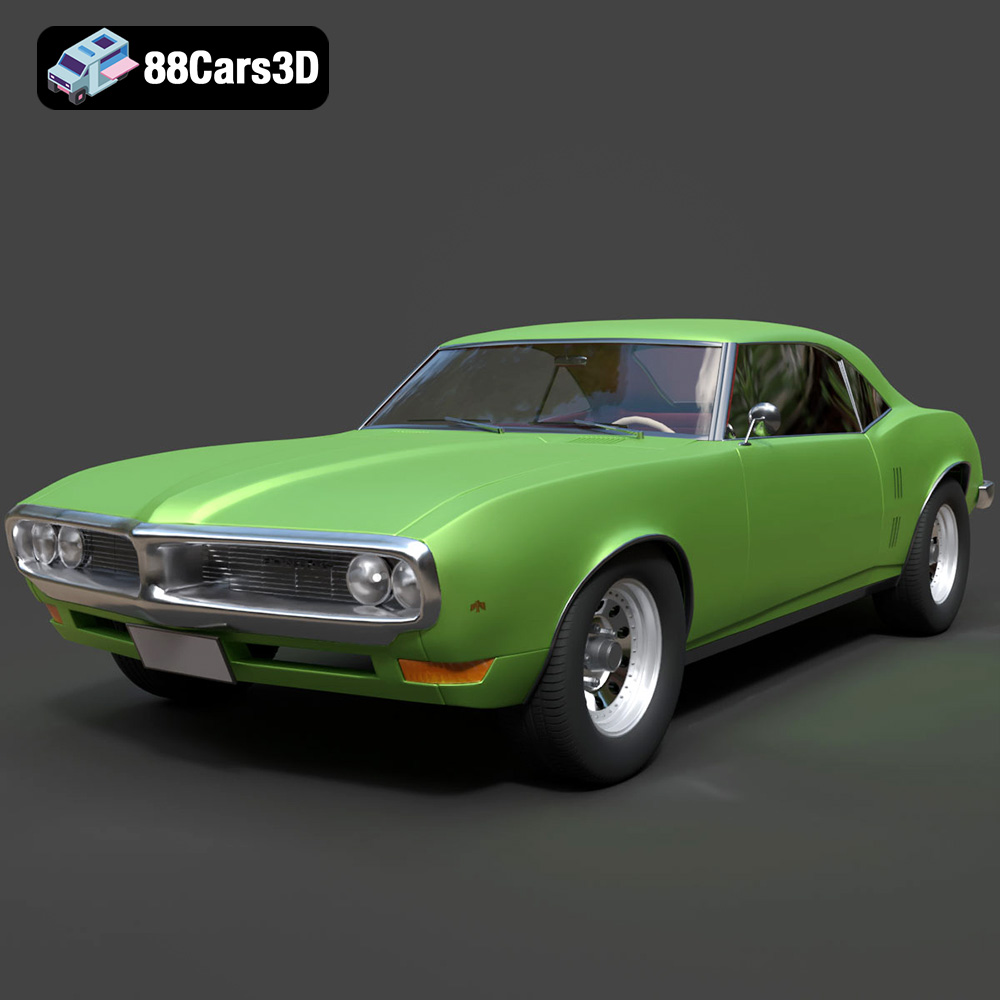
Pontiac Firebird 1998 3D Model
Texture: Yes
Material: Yes
Download the Pontiac Firebird 1998 3D Model featuring clean geometry, realistic detailing, and a fully modeled interior. Includes .blend, .fbx, .obj, .glb, .stl, .ply, .unreal, and .max formats for rendering, simulation, and game development.
Price: $10

Opel Astra 2008 3D Model
Texture: Yes
Material: Yes
Download the Opel Astra 2008 3D Model featuring clean geometry, realistic detailing, and a fully modeled interior. Includes .blend, .fbx, .obj, .glb, .stl, .ply, .unreal, and .max formats for rendering, simulation, and game development.
Price: $10

Mercedes Benz Joaquin-007 3D Model
Texture: Yes
Material: Yes
Download the Mercedes Benz Joaquin-007 3D Model featuring clean geometry, realistic detailing, and a fully modeled interior. Includes .blend, .fbx, .obj, .glb, .stl, .ply, .unreal, and .max formats for rendering, simulation, and game development.
Price: $19.99
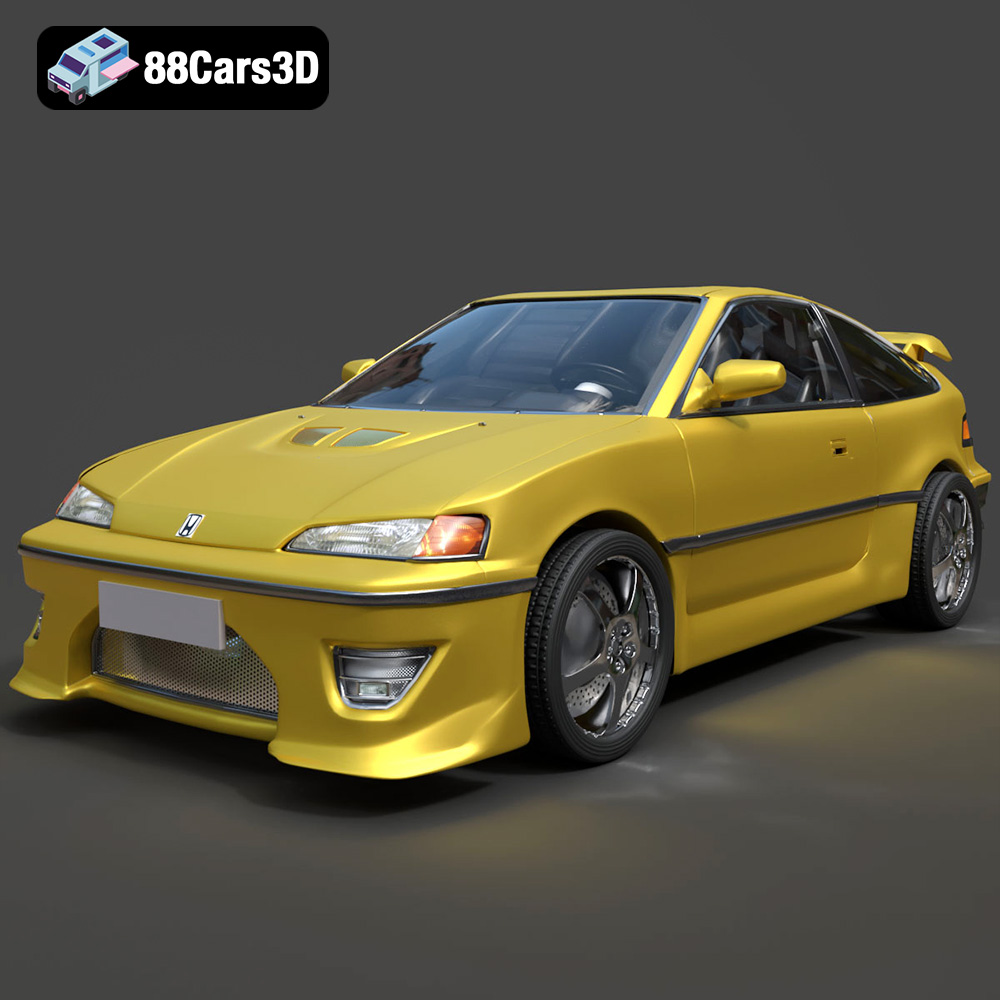
Honda CRX 1980 3D Model
Texture: Yes
Material: Yes
Download the Honda CRX 1980 3D Model featuring clean geometry, realistic detailing, and a fully modeled interior. Includes .blend, .fbx, .obj, .glb, .stl, .ply, .unreal, and .max formats for rendering, simulation, and game development.
Price: $11.99
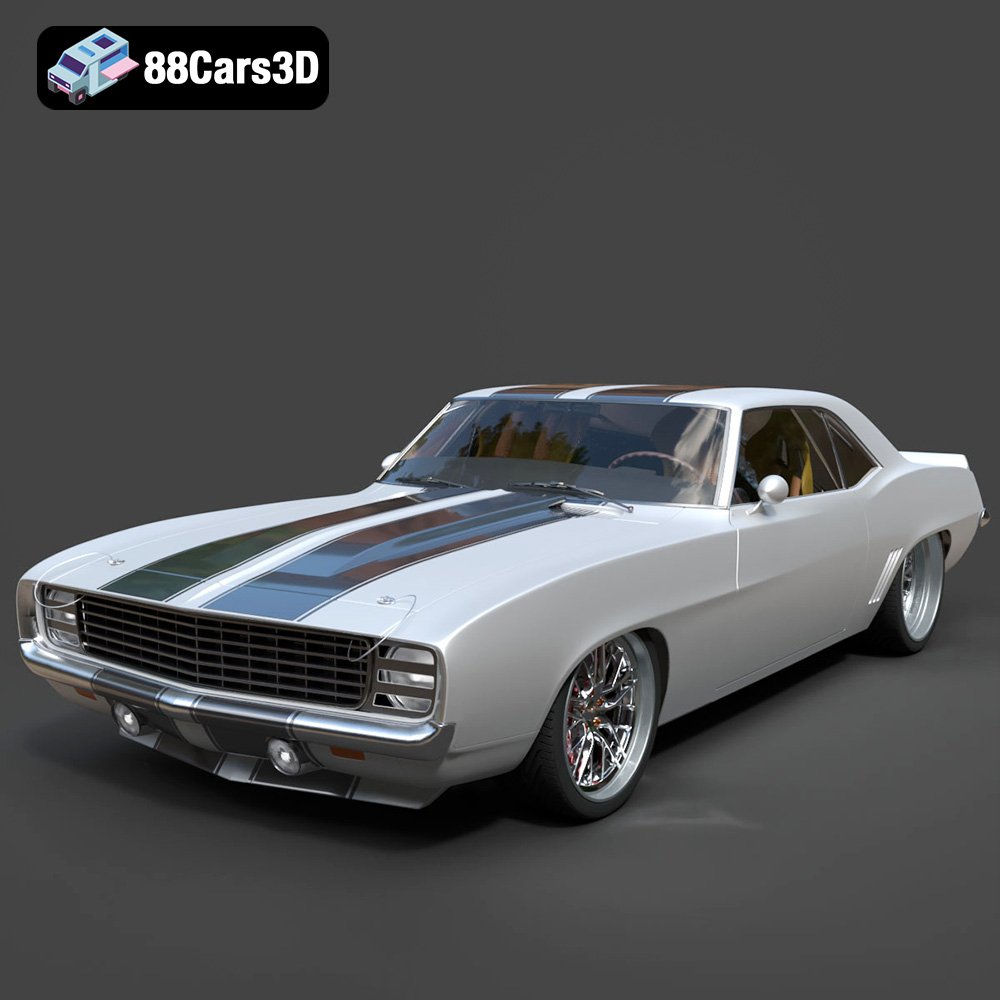
Chevrolet Camaro 69 Pro-007 3D Model
Texture: Yes
Material: Yes
Download the Chevrolet Camaro 69 Pro-007 3D Model featuring classic muscle car design and custom performance aesthetics. Includes .blend, .fbx, .obj, .glb, .stl, .ply, .unreal, and .max formats for rendering, simulation, and game development.
Price: $20.79

Honda Fit 2008 3D Model
Texture: Yes
Material: Yes
Download the Honda Fit 2008 3D Model featuring a compact, versatile design with detailed exterior and interior components. Includes .blend, .fbx, .obj, .glb, .stl, .ply, .unreal, and .max formats for rendering, simulation, and game development.
Price: $10.79
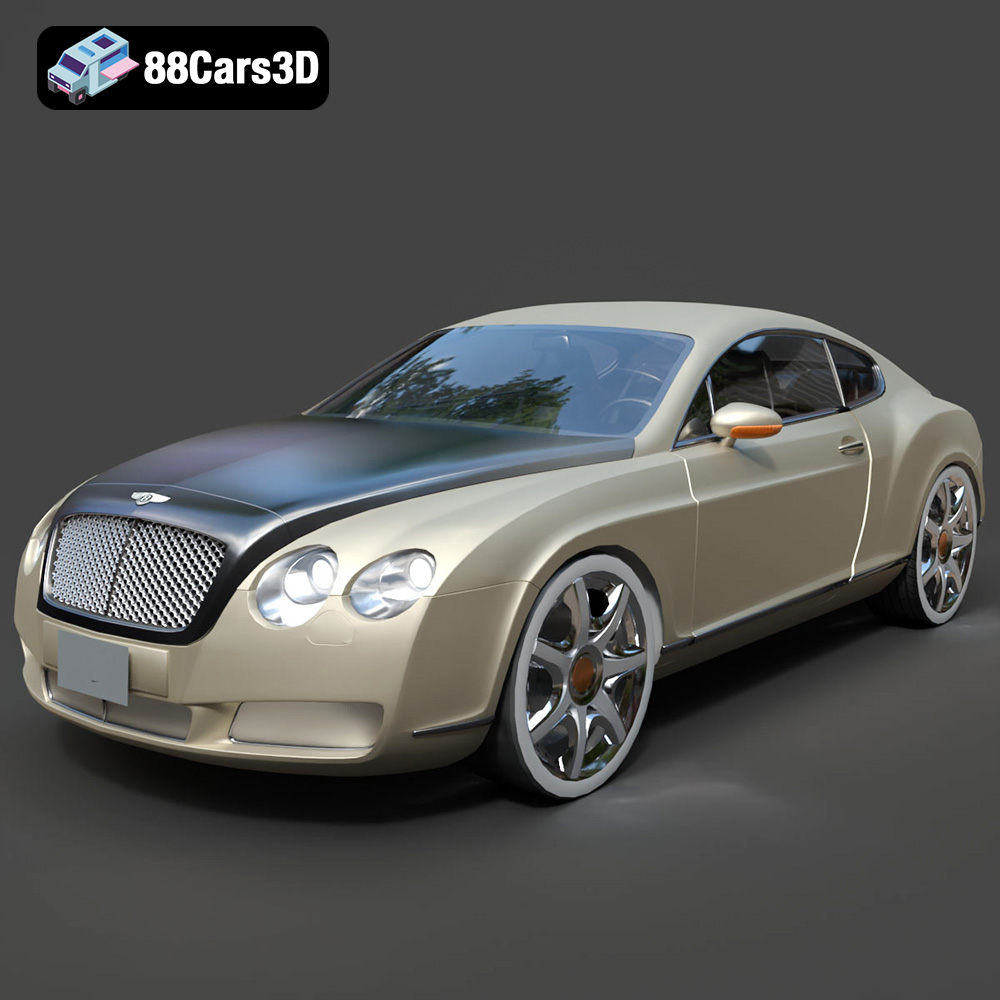
Bentley Continental GT-002 3D Model
Texture: Yes
Material: Yes
Download the Bentley Continental GT-002 3D Model featuring a luxurious grand touring design and high-quality details. Includes .blend, .fbx, .obj, .glb, .stl, .ply, .unreal, and .max formats for rendering, simulation, and game development.
Price: $20.79
