Get 20% OFF All Premium 3D & STL Models!

The allure of automobiles transcends generations, captivating enthusiasts with their blend of engineering prowess and aesthetic design. For 3D artists, the challenge and reward of recreating these iconic machines in digital form is immense. Whether it’s the sweeping elegance of a vintage roadster or the aggressive lines of a modern supercar, each era presents unique technical and artistic demands. Mastering the nuances of 3D car models requires a deep understanding of how design philosophies translate into digital geometry, materials, and rendering techniques.
This comprehensive guide delves into the fascinating world of automotive 3D modeling, specifically highlighting the key differences when approaching classic versus modern vehicles. We’ll explore everything from the foundational aspects of topology and UV mapping to the intricacies of PBR materials, automotive rendering, and game asset optimization. By understanding these distinctions, you’ll be equipped to craft incredibly realistic and authentic digital representations, whether your project calls for a chrome-laden classic or a carbon-fiber-clad contemporary marvel. Prepare to accelerate your skills and unlock the secrets to achieving unparalleled realism in your automotive visualizations.
Topology, the arrangement of vertices, edges, and faces, forms the backbone of any 3D model. For 3D car models, pristine topology is paramount, dictating not only the visual fidelity of the surface but also its ability to deform smoothly under subdivision and render without artifacts. The fundamental difference between classic and modern car modeling lies in how these topologies are constructed to capture distinct design languages.
Classic cars, particularly those from the pre-CAD era, were often designed with a sculptor’s touch. Their bodies feature large, flowing, organic curves, gentle transitions, and subtle undulations that speak to craftsmanship. When modeling classic vehicles, the topology needs to support these characteristics. This means focusing on wider, more evenly distributed quad faces to maintain the broad, smooth surfaces without introducing unnecessary sharpness. Panel gaps, while present, tend to be less uniform and sometimes almost blend into the surrounding bodywork, contributing to the “hand-crafted” feel.
The challenge here is to avoid “pinching” or undesirable creasing on expansive, smooth panels. Achieving this requires careful attention to edge flow, ensuring that edge loops follow the natural contours of the vehicle. You’ll often find fewer sharp creases and more rounded fillets. The goal is to capture the subtle character of sheet metal that has been shaped by hand, reflecting light in a soft, diffused manner across expansive, uninterrupted surfaces. Tools like Blender’s “Loop Cut and Slide” (detailed in the official Blender 4.4 documentation at https://docs.blender.org/manual/en/4.4/modeling/meshes/editing/subdivision.html) are invaluable for adding controlled detail while maintaining surface integrity on these sweeping forms.
Modern cars, born from advanced CAD/CAM processes, embody precision engineering. Their designs are often characterized by sharp, deliberate creases, intricate geometric forms, tight radii, and highly consistent panel gaps. Aerodynamics play a significant role, leading to complex vents, diffusers, and aerodynamic elements that integrate seamlessly into the bodywork. Modeling these vehicles demands a topology that can cleanly support these acute angles and complex intersections.
This often translates to a higher density of edge loops, particularly around sharp edges, to act as “holding loops” that maintain crispness even under subdivision. Managing complex intersections, where multiple sharp creases meet, requires meticulous attention to edge flow to prevent shading artifacts and maintain surface continuity. The precision of modern manufacturing means that every panel gap must be uniform and tight, often requiring separate geometry for individual body panels to accurately represent these gaps. Achieving this level of detail often results in higher polygon counts than classic cars, but it’s essential for conveying the engineered perfection of contemporary design. Blender’s “Knife Tool” (https://docs.blender.org/manual/en/4.4/modeling/meshes/editing/knife.html) can be particularly useful for precise cuts and detail work on modern vehicle surfaces.
Regardless of the era, fundamental 3D modeling best practices remain constant: strive for clean, all-quad topology, avoid N-gons (faces with more than four vertices), and ensure proper edge flow. Good edge flow not only facilitates smooth subdivision but also simplifies the UV mapping process and allows for easier future modifications. Always work with reference images – blueprints, CAD data, and high-resolution photographs – to accurately capture the proportions and surface details. For optimal performance, especially when creating game assets, maintain a balance between detail and polygon count. While modern cars often demand more polygons for intricate details, effective topology minimizes unnecessary density, ensuring efficient models.
Once the geometry is perfect, UV mapping becomes the crucial next step, translating the 3D surface into a 2D plane ready for texturing. The complexity and approach to UV mapping vary significantly between classic and modern 3D car models, reflecting the differences in their surface characteristics and material requirements.
Classic cars, with their large, often simpler body panels and fewer intricate components, typically allow for a more streamlined UV mapping approach. The focus is on creating fewer, larger UV islands to minimize visible seams and ensure continuous texture flow, especially for expansive paint, chrome, and leather surfaces. Distortion must be meticulously managed to prevent stretching or squashing of textures, which would immediately break the illusion of realism.
For vintage paint finishes or aged leather, subtle noise and imperfection maps are crucial, and these need to align seamlessly across the UV layout. The relatively simpler geometry often makes the UV unwrapping process more straightforward, allowing artists to focus on texture quality and consistency.
Modern cars, with their myriad of small, complex, and often interconnected components—such as intricate vents, sensor housings, multi-part headlamps, and aerodynamic fins—present a much greater UV mapping challenge. The sheer number of distinct parts often necessitates more UV islands and a more meticulous approach to packing to maintain efficient use of texture space while preserving detail.
The intricate nature of modern car designs means that seam placement needs to be exceptionally thoughtful to avoid visual distractions on highly reflective surfaces. This often involves hiding seams in less visible areas or along natural geometry breaks that are less prominent. For models intended for AR/VR, further UV optimization for extreme texture efficiency is often required.
Regardless of the car’s era, several best practices apply to all UV mapping workflows. Always aim to minimize stretching and overlapping UVs (unless intentionally for decals), use uniform texel density for all visible parts, and efficiently pack UV islands to maximize texture space. Tools like Blender’s UV editor provide powerful features for unwrapping, packing, and checking for distortion. For extremely high-detail models, particularly those intended for cinematics or high-end visualization, UDIMs (U-Dimension) can be employed. This allows for multiple texture tiles per mesh, vastly expanding the available texture resolution for incredibly detailed surfaces, beneficial for intricate classic car interiors or highly detailed modern car exteriors.
Physically Based Rendering (PBR) materials are the cornerstone of modern automotive rendering, ensuring that surfaces interact with light in a realistic, predictable manner. While the underlying PBR principles remain consistent, the application of textures and the construction of shader networks differ significantly to reflect the distinct material characteristics of classic versus modern cars.
Classic cars often tell a story through their surfaces. Their materials are rarely pristine, bearing the subtle marks of age, use, and the passage of time. The challenge here is to capture these nuanced imperfections without making the car look neglected. Think about the rich, worn leather, the slightly dulled chrome with micro-scratches, the deep, multi-layered paint that might have subtle swirls or minor chips, and the authentic wood grain in the interior.
Software like Substance Painter excels at creating these layered, aged materials, allowing artists to procedurally add wear, dirt, and even custom paint details with masks and generators. This approach is essential for achieving the authentic patina of classic vehicles.
Modern cars showcase cutting-edge manufacturing and often boast materials designed for high performance, sleek aesthetics, and impeccable finishes. The goal is to represent perfection: high-gloss, mirror-like paint, perfectly machined metals, intricately woven carbon fiber, and precise LED lighting.
Achieving these pristine finishes often involves using very clean, high-resolution textures and carefully crafted shader graphs in renderers like Corona, V-Ray, Cycles (Blender), or Arnold (Maya/3ds Max). The emphasis is on capturing the precision and advanced material science of contemporary automotive design. For more on advanced shading in Blender, refer to the Blender 4.4 documentation on shader nodes.
Across both eras, understanding the interplay of PBR maps (Albedo, Metallic, Roughness, Normal, Height, Ambient Occlusion) is paramount. Tools like Adobe Substance 3D Painter and Designer are industry standards for creating procedural and hand-painted PBR textures. Within your chosen 3D software (Blender, 3ds Max, Maya), node-based shader editors offer incredible flexibility for building complex material networks. Remember the importance of IOR (Index of Refraction) values for realistic glass and clear plastics, and ensure your texture resolutions (e.g., 4K, 8K for hero assets) are appropriate for the desired level of detail and intended use, whether for high-resolution visualization or game development.
Rendering is where your meticulously crafted 3D car models come to life, transforming digital assets into breathtaking images or animations. The approach to lighting, environment setup, and post-processing significantly influences how a classic car conveys nostalgia versus how a modern car communicates precision and performance.
When rendering classic cars, the goal is often to evoke a sense of history, character, and timeless elegance. The lighting and environment play a crucial role in creating this atmospheric connection.
Renderers like Corona Renderer and V-Ray (often used with 3ds Max), and Cycles (Blender) are excellent choices for their ability to handle complex lighting scenarios and produce physically accurate global illumination, which is vital for classic cars to appear grounded and integrated into their environments.
Modern car rendering focuses on highlighting the vehicle’s cutting-edge design, aerodynamic efficiency, and aggressive aesthetics. The lighting and environment are chosen to emphasize sharp lines, flawless finishes, and a sense of speed or technological sophistication.
All major renderers excel at modern car rendering, leveraging physically accurate light transport algorithms to simulate complex reflections and refractions. Attention to detail in render settings, such as sampling rates, denoising, and volumetric effects for atmospheric depth, is crucial for achieving high-quality results. Setting up realistic lighting in Blender’s Cycles renderer, for instance, involves understanding HDRI environments, sun lamps, and area lights, all extensively covered in the Blender 4.4 documentation on lighting.
Regardless of the era, optimizing render settings is about balancing image quality with render time. For high-fidelity renders, increasing sampling rates for global illumination, reflections, and refractions will produce cleaner, more accurate results, albeit with longer render times. Utilizing denoising algorithms can significantly reduce render times without sacrificing too much quality. Understanding how to use render passes (e.g., diffuse, reflection, Z-depth) allows for greater flexibility in post-processing and compositing, enabling you to fine-tune the final image to perfection.
For 3D car models intended for real-time applications like game development, AR/VR, or interactive visualization, optimization is paramount. High-fidelity models must be meticulously prepared to run efficiently on target hardware while retaining visual quality. The choice of file format is also critical for compatibility and performance across various platforms.
The transition from a high-poly cinematic asset to a game-ready model involves several crucial optimization steps. While the principles apply to both classic and modern cars, the execution might differ due to their inherent geometric complexity.
Selecting the right file format is crucial for seamless integration into various pipelines and platforms. Platforms like 88cars3d.com offer models in multiple formats to ensure broad compatibility.
AR/VR environments demand even more stringent optimization than traditional games due to the need for high frame rates and the limitations of mobile hardware. This means extremely low polygon counts (often tens of thousands for an entire car), minimal draw calls, heavily optimized textures (often 1K or 512px resolutions), and baking complex lighting into textures rather than relying on real-time solutions. Shader complexity must be kept to a minimum, and PBR materials might be simplified to reduce rendering overhead. Techniques like instancing (reusing the same mesh geometry for multiple objects) are also crucial for performance. When sourcing models from marketplaces such as 88cars3d.com, always check for AR/VR optimized versions or inquire about their suitability for these demanding real-time applications.
The journey through 3D car modeling, from the flowing lines of a classic automobile to the razor-sharp precision of a modern supercar, reveals a fascinating spectrum of technical and artistic challenges. We’ve explored how the distinct design philosophies of each era dictate fundamental choices in topology, demanding careful consideration of organic curves for vintage vehicles versus intricate creases for contemporary designs. We delved into the varying complexities of UV mapping, the nuanced creation of PBR materials to reflect age or pristine finishes, and the atmospheric differences in automotive rendering that evoke nostalgia or dynamic performance. Finally, we covered the critical game asset optimization techniques and file formats essential for real-time applications like AR/VR and game development.
Understanding these distinctions is not merely an academic exercise; it’s the foundation upon which truly authentic and visually stunning 3D car models are built. Whether you’re a seasoned professional or an aspiring artist, applying these insights will elevate your work, enabling you to capture the unique spirit of any vehicle you choose to recreate. Embrace the specific challenges each era presents, hone your technical skills, and continuously refine your artistic eye. For those looking to jumpstart their projects with high-quality, pre-made assets, platforms like 88cars3d.com offer an extensive collection of meticulously crafted 3D car models, ready for rendering, game development, and visualization across various file formats. The world of automotive design in 3D is vast and rewarding; keep exploring, keep creating, and let your passion for cars drive your artistry.

Meta Description:
Texture: Yes
Material: Yes
Download the Cadillac CTS-V Coupe 3D Model featuring detailed exterior styling and realistic interior structure. Includes .blend, .fbx, .obj, .glb, .stl, .ply, .unreal, and .max formats for rendering, simulation, AR VR, and game development.
Price: $13.9

Texture: Yes
Material: Yes
Download the Cadillac DTS-005 3D Model featuring its iconic luxury design, detailed interior, and realistic exterior. Includes .blend, .fbx, .obj, .glb, .stl, .ply, .unreal, and .max formats for rendering, simulation, and game development.
Price: $10.79

Texture: Yes
Material: Yes
Download the Buick LeSabre 1998 3D Model featuring a classic American full-size sedan design. Includes .blend, .fbx, .obj, .glb, .stl, .ply, .unreal, and .max formats for rendering, simulation, and game development.
Price: $10.79
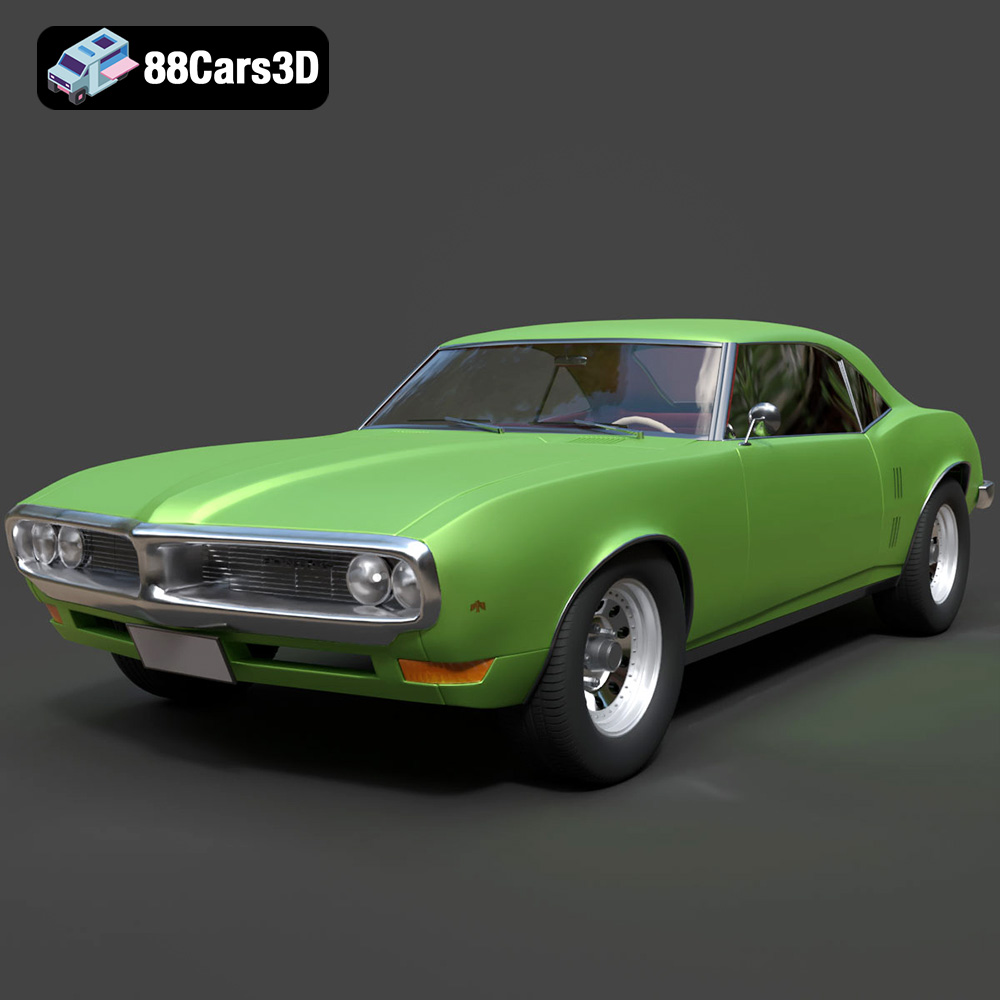
Texture: Yes
Material: Yes
Download the Pontiac Firebird 1998 3D Model featuring clean geometry, realistic detailing, and a fully modeled interior. Includes .blend, .fbx, .obj, .glb, .stl, .ply, .unreal, and .max formats for rendering, simulation, and game development.
Price: $10

Texture: Yes
Material: Yes
Download the Opel Astra 2008 3D Model featuring clean geometry, realistic detailing, and a fully modeled interior. Includes .blend, .fbx, .obj, .glb, .stl, .ply, .unreal, and .max formats for rendering, simulation, and game development.
Price: $10

Texture: Yes
Material: Yes
Download the Mercedes Benz Joaquin-007 3D Model featuring clean geometry, realistic detailing, and a fully modeled interior. Includes .blend, .fbx, .obj, .glb, .stl, .ply, .unreal, and .max formats for rendering, simulation, and game development.
Price: $19.99
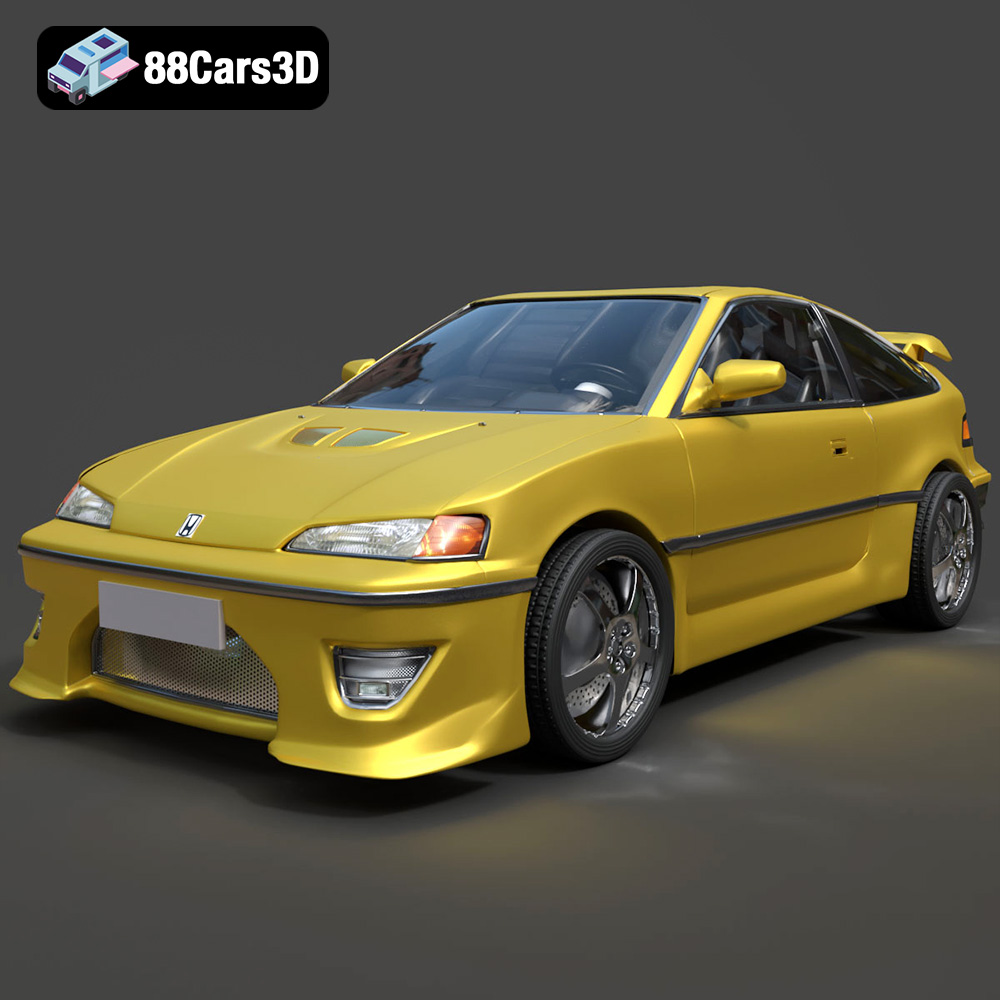
Texture: Yes
Material: Yes
Download the Honda CRX 1980 3D Model featuring clean geometry, realistic detailing, and a fully modeled interior. Includes .blend, .fbx, .obj, .glb, .stl, .ply, .unreal, and .max formats for rendering, simulation, and game development.
Price: $11.99
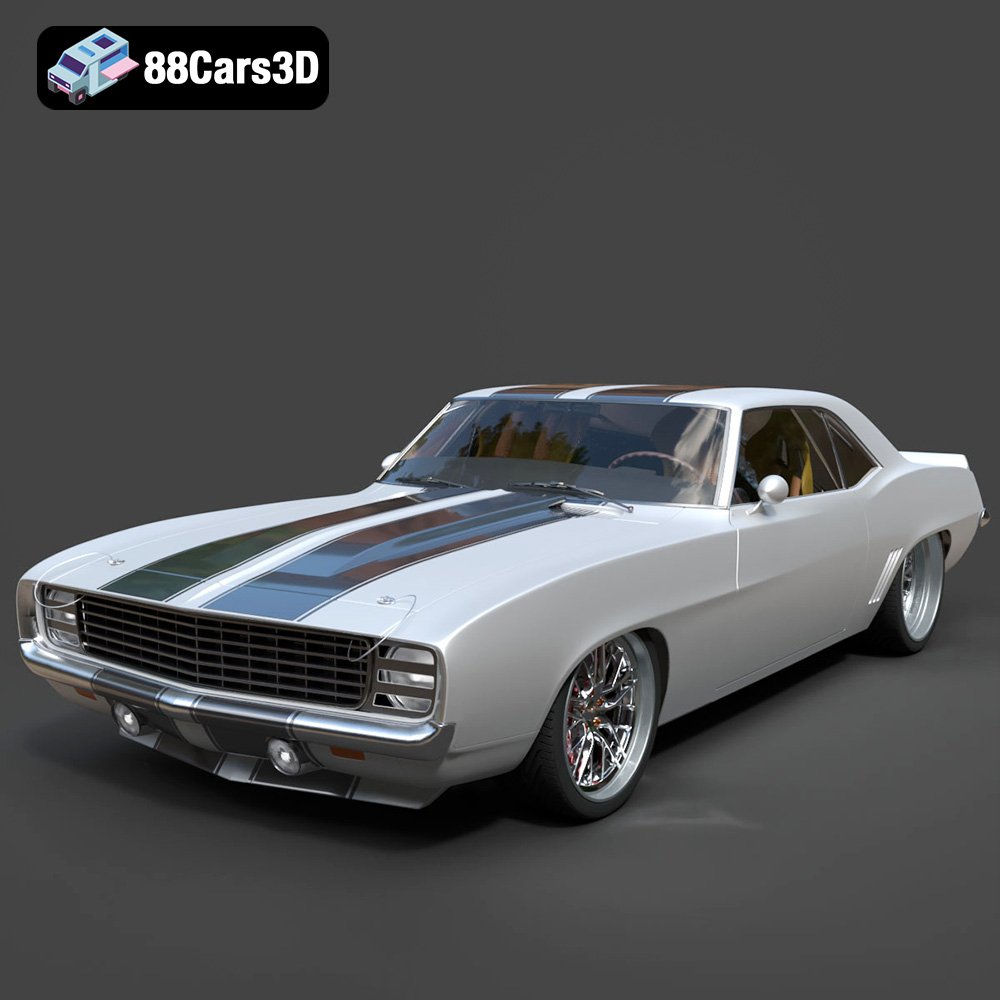
Texture: Yes
Material: Yes
Download the Chevrolet Camaro 69 Pro-007 3D Model featuring classic muscle car design and custom performance aesthetics. Includes .blend, .fbx, .obj, .glb, .stl, .ply, .unreal, and .max formats for rendering, simulation, and game development.
Price: $20.79

Texture: Yes
Material: Yes
Download the Honda Fit 2008 3D Model featuring a compact, versatile design with detailed exterior and interior components. Includes .blend, .fbx, .obj, .glb, .stl, .ply, .unreal, and .max formats for rendering, simulation, and game development.
Price: $10.79
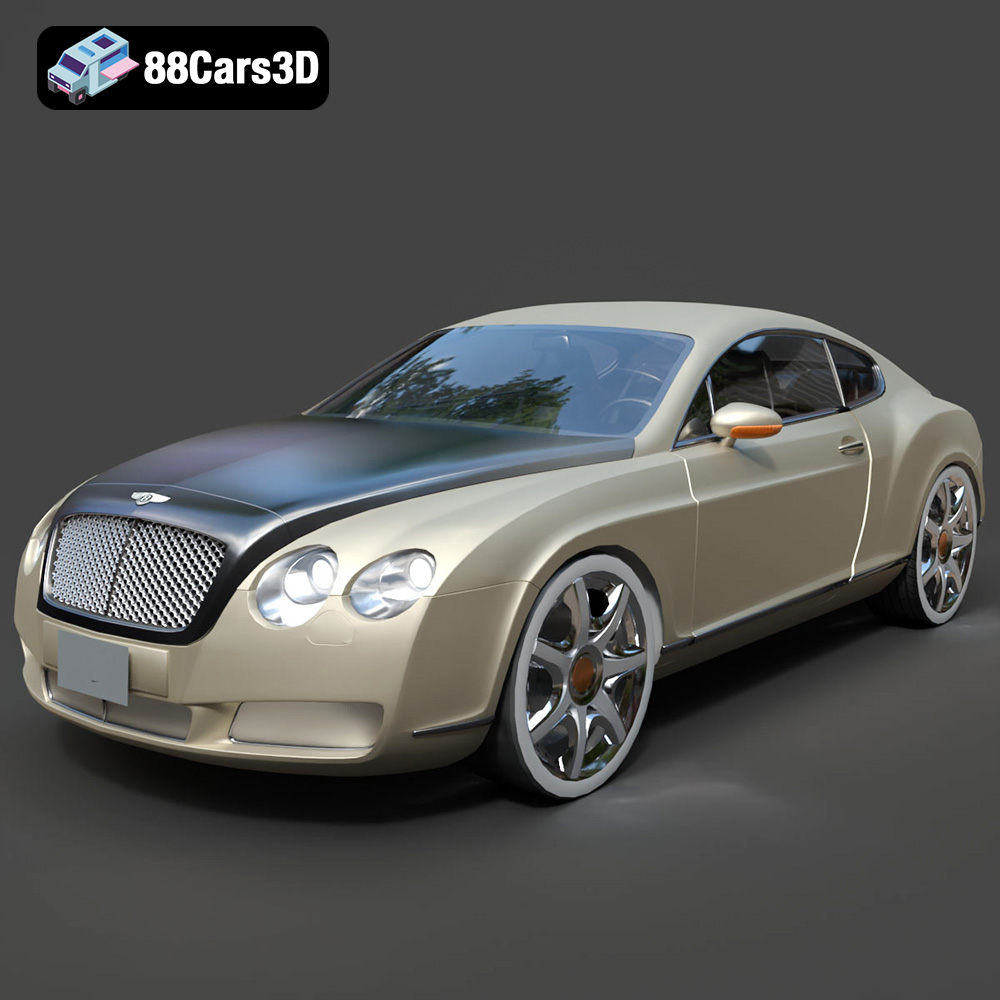
Texture: Yes
Material: Yes
Download the Bentley Continental GT-002 3D Model featuring a luxurious grand touring design and high-quality details. Includes .blend, .fbx, .obj, .glb, .stl, .ply, .unreal, and .max formats for rendering, simulation, and game development.
Price: $20.79

