Get 20% OFF All Premium 3D & STL Models!

The quest for photorealistic digital representations of automobiles is a journey fraught with technical decisions, artistic considerations, and performance optimizations. Whether you’re an automotive designer visualizing a new concept, a game developer crafting immersive driving experiences, or an artist creating stunning marketing renders, the foundation of your work lies in the quality of your 3D car models. A critical juncture in this process is deciding how to acquire that initial geometry: do you embrace the meticulous craft of manual 3D modeling, or do you leverage the power of 3D scanning to capture real-world accuracy?
This comprehensive guide will dissect both methodologies, exploring their unique advantages, technical challenges, and ideal applications within the automotive 3D landscape. We’ll delve into intricate workflows, discuss crucial technical specifications like topology and polygon counts, and examine how each approach impacts everything from UV mapping and PBR material creation to rendering performance and game engine optimization. By the end, you’ll possess a clearer understanding of when to wield the digital sculpting tools and when to deploy the laser, empowering you to make informed decisions for your next automotive 3D project.
Manual 3D modeling, often considered the traditional backbone of digital asset creation, offers unparalleled artistic control and the ability to craft geometrically perfect, idealized forms. This method is particularly favored when creating new vehicle designs, preparing models for animation, or when a perfectly clean, reflection-friendly surface is paramount. It’s a testament to skill and patience, allowing artists to define every curve, every panel gap, and every minute detail with absolute precision.
For automotive models, subdivision surface (Sub-D) modeling is the reigning champion. This technique involves starting with a low-polygon base mesh, typically composed of quads (four-sided polygons), and then instructing the software to subdivide and smooth the mesh at render time or upon conversion. The beauty of Sub-D lies in its ability to produce incredibly smooth, continuous surfaces with minimal geometry, crucial for capturing the elegant reflections characteristic of car bodies. Achieving a flawless result hinges on maintaining excellent edge flow—the strategic placement and direction of edge loops that guide the surface curvature and control sharp creases. For instance, to define the crisp edge of a wheel arch or a character line running along the side of a car, multiple parallel edge loops are introduced close together, effectively “pinching” the surface without adding unnecessary polygons to the overall mesh. Software like 3ds Max, Maya, and Blender excel in this area, offering powerful tools for manipulating vertices, edges, and faces to sculpt the desired form. For Blender users, specific tools like the ‘Loop Cut and Slide’ (Ctrl+R) and ‘Bevel’ (Ctrl+B) functions, detailed in the official Blender 4.4 documentation, are indispensable for controlling topology and adding detail efficiently.
One of the core strengths of manual modeling is the ability to work directly from technical drawings, blueprints, and reference images. Artists meticulously match their 3D geometry to these 2D references, often using multiple orthographic views (front, side, top, back) to ensure dimensional accuracy. This blueprint-driven approach is essential for replicating existing vehicles accurately or for developing new designs where precise measurements are critical. Furthermore, manual modeling allows for the “idealization” of geometry. Real-world objects often have minor imperfections, dents, or manufacturing tolerances. In manual modeling, these can be ironed out, resulting in a digitally perfect model that’s often cleaner and more aesthetically pleasing than its physical counterpart. This idealization is particularly beneficial for product visualization, concept design iterations, and creating clean meshes that are easier to modify and rig for animation or simulation.
The advantages of manual modeling are significant: it yields impeccably clean, quad-based topology that is highly efficient for rendering, animation, and game development. Artists have complete control over polygon count, allowing for precise optimization for various platforms, from cinematic renders with millions of polygons to mobile game assets with just a few thousand. Modifications are generally straightforward, as the mesh structure is logical and predictable. However, manual modeling is undeniably time-consuming, requiring a high level of artistic skill and technical understanding. Complex or organic shapes, such as intricate engine components or worn-out interior elements, can be particularly challenging and labor-intensive to model accurately from scratch.
In stark contrast to manual modeling, 3D scanning offers a direct pipeline to digitizing physical objects, capturing their exact real-world geometry and surface details. This method is invaluable when high fidelity to an existing physical object is paramount, such as in reverse engineering, cultural heritage preservation, or when capturing the unique characteristics of a custom or damaged part. It bypasses the need for manual interpretation, translating the tangible into the digital with remarkable speed for complex forms.
The world of 3D scanning encompasses a variety of technologies, each suited for different applications and levels of precision. **Structured light scanners** project a pattern (e.g., stripes or grids) onto an object and analyze its deformation to calculate depth, offering high accuracy for medium-sized objects like car body panels or interior components. **Laser scanners** emit a laser beam and measure the time it takes for the light to return or the angle of reflection, providing extremely precise measurements for detailed components and full vehicle exteriors. Handheld laser scanners allow for greater flexibility in capturing hard-to-reach areas. **Photogrammetry**, while not a “scanner” in the traditional sense, uses multiple photographs taken from various angles to reconstruct a 3D model, excelling at capturing large objects or environments and detailed textures, though often requiring significant post-processing for geometric accuracy. Each technology boasts accuracy metrics ranging from several millimeters down to mere microns, making them indispensable for quality control, reverse engineering existing car parts, or digitally archiving unique, one-off custom builds.
Capturing raw scan data is only the first step; transforming it into a usable 3D model requires extensive post-processing. Most scanners initially generate a “point cloud”—millions of individual data points in 3D space. The critical steps involve: **Noise Reduction** to eliminate erroneous points caused by sensor limitations or environmental factors; **Registration** to align multiple scans into a single coherent dataset (especially crucial for larger objects scanned in sections); and finally, **Meshing**, which connects these points to form a polygonal surface, typically a dense tessellation of triangles. Challenges abound in this phase: **Hole Filling** is necessary where data was missed due to occlusions; **Smoothing** helps reduce jaggedness inherent in raw scan data; and **Decimation** reduces the overwhelming polygon count to a more manageable level while attempting to preserve detail. Specialized software like Geomagic Wrap, MeshLab, and even ZBrush with its extensive sculpting and retopology tools, are vital for this intricate clean-up and optimization process.
The primary advantage of 3D scanning is its speed and accuracy in capturing highly complex or organic shapes that would be incredibly difficult and time-consuming to model manually. It excels at replicating existing physical objects exactly, including their unique wear, imperfections, or custom modifications. For reverse engineering or creating digital twins of physical prototypes, scanning is indispensable. However, the drawbacks are significant: raw scan data often results in a mesh composed solely of triangles, frequently with incredibly high and uneven polygon counts. This “messy” topology is generally unsuitable for animation, deformation, or clean UV mapping without extensive retopology. The cost of high-quality scanning equipment can be prohibitive, and surface characteristics (e.g., reflective or transparent materials) can heavily impact scan quality, requiring specialized preparation like matte sprays. Furthermore, scanning captures only what exists; it cannot idealize or create a perfect, mathematically smooth surface without subsequent manual refinement.
In many professional automotive 3D pipelines, the decision isn’t strictly “scanning or manual modeling” but rather “how can we best combine both?” This hybrid approach leverages the strengths of each method, often employing 3D scanning to capture the initial complex form and then utilizing manual modeling techniques, particularly retopology, to refine and optimize the data. This synthesis yields models that are both geometrically accurate to a physical counterpart and structurally sound for various digital applications.
Retopology is perhaps the most crucial step when incorporating 3D scan data into a professional workflow. It’s the process of rebuilding a new, clean, quad-based mesh over a high-resolution, often triangulated and topologically irregular, scanned mesh. The original scanned mesh serves as a guide, providing the precise surface contours, while the artist creates a new, optimized mesh that adheres to best practices for 3D modeling. This includes maintaining proper edge flow, placing polygon loops strategically for deformation, and ensuring an even distribution of polygons. Why is it so essential? A clean, quad-based mesh is vastly superior for: **Animation and Deformation**, as quads deform predictably; **UV Mapping**, making the process of unwrapping surfaces for texturing much simpler and more efficient; and **PBR Material Creation**, as clean UVs prevent texture stretching and allow for accurate normal map baking. Techniques range from fully manual retopology, where artists painstakingly draw new polygons onto the high-res mesh (e.g., using ‘Snap to Face’ tools in Blender or the ‘Quad Draw’ tool in Maya), to semi-automatic tools like ZBrush’s ZRemesher, which can intelligently generate a new quad mesh, though often requiring manual cleanup. The Blender 4.4 documentation provides excellent resources on manual retopology workflows, detailing how to use features like Shrinkwrap Modifier and snapping tools for precision.
Hybrid workflows are becoming standard in automotive design and visualization. Imagine needing to recreate a vintage car part that’s no longer manufactured. You might 3D scan the existing, possibly damaged, part to capture its exact dimensions and intricate curvature. This scan data then acts as a highly accurate reference. From there, a skilled 3D artist would manually retopologize and model over the scan, cleaning up imperfections, making it symmetrical, and ensuring a perfect surface that’s ready for manufacturing or high-fidelity rendering. Another common scenario involves scanning a clay model or a full-scale prototype of a new car design. This quickly brings the physical form into the digital realm, allowing designers to then manually refine details, adjust panel gaps, or incorporate subtle stylistic changes that are easier to implement on a clean, optimized mesh. This iterative process allows for rapid prototyping and design refinement while maintaining a direct link to the physical world.
A robust software ecosystem supports these hybrid workflows. ZBrush, with its powerful sculpting and retopology tools (like ZRemesher and manual retopo brushes), is a go-to for many artists. Dedicated retopology software like TopoGun offers streamlined quad-drawing capabilities. For comprehensive modeling and integration, industry-standard packages like Maya, 3ds Max, and Blender provide essential tools for both manual modeling and refining scanned data. The ability to import high-polygon scan data (e.g., OBJ, FBX) into these environments and then meticulously build a new, clean mesh over it is fundamental to modern automotive 3D production. These tools empower artists to transform raw, unwieldy scan data into pristine, production-ready 3D assets that adhere to the highest industry standards.
Regardless of whether a car model originates from a scan or manual creation, its ultimate utility hinges on meticulous attention to topology, efficient UV mapping, and the sophisticated creation of PBR (Physically Based Rendering) materials. These technical pillars ensure that a 3D car model not only looks good but also performs optimally across various applications, from high-end visualization to real-time game engines. Understanding these elements is paramount for any professional in the automotive 3D space.
The topology of a 3D car model profoundly impacts its visual fidelity and performance. For **high-fidelity rendering**, such as in cinematic animations or marketing visuals, clean quad-based topology with precise edge loops is critical. This ensures smooth surface reflections, prevents unsightly shading artifacts, and allows for accurate subdivision smoothing. Polygon counts for these “hero” assets can easily reach into the millions of triangles (e.g., 1 million to 5 million+ tris for a fully detailed car), as computational power allows for such density. In contrast, **game assets** demand extreme optimization. Here, polygon count is a strict budget: a detailed in-game car might range from 50,000 to 300,000 triangles, while a background vehicle could be as low as 10,000. This is achieved through techniques like **Level of Detail (LODs)**, where multiple versions of the same model exist with decreasing polygon counts, dynamically swapped out based on the camera’s distance. Optimizing topology for games also involves reducing **draw calls**—the number of instructions sent to the GPU—by combining meshes where possible and using efficient materials. Edge loops are still important but are focused on preserving silhouette and deformation rather than solely reflection quality.
UV mapping is the unsung hero of realistic texturing. It’s the process of unwrapping the 3D surface of a model into a 2D plane, much like flattening a cardboard box, so that 2D textures can be applied without stretching or distortion. For complex car surfaces, meticulous UV mapping is non-negotiable. Strategies include: **Planar mapping** for flat surfaces (e.g., windows, license plates); **Cylindrical mapping** for round objects (e.g., tires, exhausts); and **Spherical mapping** for more globular components. The challenge lies in placing seams—where the 3D mesh is “cut” in the UV space—in inconspicuous locations to avoid visible texture breaks. Achieving **uniform texel density** across all parts of the model is crucial, ensuring that all textures appear at a consistent resolution, preventing blurry areas on larger panels or pixelated details on smaller ones. For extremely high-resolution textures required for automotive paint or intricate details, **Multi-UDIM workflows** are often employed. This technique allows a single model to use multiple UV texture tiles, each with its own high-resolution texture set, making it possible to achieve incredible detail without compromising overall texture quality. Platforms like 88cars3d.com often provide models with carefully crafted UVs to ensure compatibility with various texturing and rendering pipelines.
Physically Based Rendering (PBR) materials are the gold standard for achieving photorealistic surfaces in 3D. PBR workflows ensure that materials react to light in a physically accurate manner, resulting in consistent and predictable rendering across different lighting conditions and renderers. The two dominant PBR workflows are **Metallic-Roughness** and **Specular-Glossiness**, with Metallic-Roughness being more common in real-time engines and modern renderers. Essential maps for PBR materials include: **Albedo/Base Color** (the base color without shading information); **Normal Map** (adds surface detail without increasing geometry); **Metallic Map** (defines which parts are metallic and which are dielectric); **Roughness Map** (controls the micro-surface detail, influencing how light scatters); and **Ambient Occlusion Map** (simulates soft shadows where surfaces are close together). For automotive models, creating layered materials is key: intricate car paint shaders often combine multiple layers for metallic flake, clear coat, and protective finishes. Glass requires specific transparency and refraction properties, while tire rubber needs accurate roughness and displacement. Software like Substance Painter and Mari are industry benchmarks for PBR texture painting, while renderers like Corona, V-Ray, Cycles (in Blender), and Arnold provide sophisticated shader networks for assembling these materials. For Blender users, the Shader Editor with Cycles or Eevee, as outlined in the official Blender 4.4 documentation, offers powerful node-based control over PBR material creation.
Bringing a 3D car model to life involves more than just perfect geometry and materials; it requires a deep understanding of how to optimize it for its intended environment. Whether aiming for cinematic realism in a rendering engine or smooth interactivity in a game engine, careful consideration of performance and fidelity is crucial.
Achieving breathtaking automotive renders is an art form that combines technical mastery with an eye for aesthetic detail. The foundation lies in the **lighting setup**. High Dynamic Range Imagery (HDRI) environments are indispensable, providing realistic global illumination and reflections that emulate real-world light. These are often complemented by physical area lights or spot lights to highlight specific features or create dramatic effects. Leading renderers like Corona Renderer, V-Ray, and Arnold are industry standards, offering advanced features for photorealistic output. Blender’s Cycles renderer, thoroughly detailed in the Blender 4.4 documentation on Cycles rendering, also provides a powerful ray-tracing engine capable of stunning results. Key rendering techniques include: accurate **caustics** for realistic light refractions through glass; subtle **volumetric effects** to simulate haze or fog; and post-render effects like **depth of field** to focus the viewer’s eye and **motion blur** to convey speed. Finally, **post-processing and compositing** in external software like Photoshop or Fusion are essential for color grading, adding bloom, lens flares, and other final touches that elevate a render from good to spectacular.
Integrating 3D car models into real-time game engines like Unity or Unreal Engine demands rigorous optimization to maintain high frame rates. As mentioned, **Level of Detail (LODs)** are critical. Generating and implementing multiple LOD levels ensures that distant objects consume fewer resources. **Texture atlasing** is another vital technique, combining multiple smaller textures into a single, larger texture atlas. This reduces the number of draw calls, significantly improving GPU performance. Other optimization strategies include **occlusion culling** (not rendering objects hidden behind others), **instancing** (rendering multiple copies of the same mesh with a single draw call), and **static batching** (combining static meshes into larger batches). Properly optimized **collision meshes**, simpler versions of the car’s geometry, are necessary for physics interactions without overburdening the engine. Standard file formats for game engine integration include FBX for its robust support of meshes, animations, and materials, and GLB (GL Transmission Format) for its lightweight, web-friendly nature, particularly for AR/VR applications.
For emerging technologies like Augmented Reality (AR) and Virtual Reality (VR), optimization requirements are even more stringent due to the need for extremely high frame rates to prevent motion sickness. AR/VR models require very strict polygon budgets, highly efficient materials (often PBR, but simplified for performance), and minimizing draw calls wherever possible. Formats like USDZ for Apple AR and GLB for Android and web-based AR/VR experiences are common. For **3D printing**, the concerns shift dramatically. The mesh must be **watertight** (no holes or gaps), **manifold** (every edge must be shared by exactly two faces), and have sufficient **wall thickness** to ensure structural integrity. Scan data, in particular, often requires extensive mesh repair in software like Meshmixer or Netfabb to become 3D print-ready. Complex details may need to be simplified or exaggerated to be printable at certain scales, and internal structures might need hollowing to save material. These distinct requirements underscore the need for adaptable 3D assets that can be tailored to very specific output modalities.
The choice between 3D scanning and manual modeling is rarely a simple one-off decision. It’s dictated by the project’s specific requirements, budget, timeline, and the desired outcome. Understanding the strengths of each method in real-world scenarios allows professionals to make the most efficient and effective choices for their automotive 3D projects.
Manual modeling remains the undisputed champion for **concept design and prototyping** of entirely new vehicles or parts. When designers are iterating on shapes, exploring aesthetic directions, or creating ideal, unblemished surfaces for product visualization, the artistic control offered by manual modeling is invaluable. It’s also the go-to for creating **game assets from scratch**, where precise polygon budgets, clean topology for deformation, and ease of UV mapping are paramount. Custom modifications, such as designing a bespoke body kit or a unique interior component, also heavily rely on manual modeling, often starting from existing vehicle blueprints or reference images. For instance, an automotive studio developing a new car body kit would manually model the components, ensuring perfect symmetry, fit, and aesthetic integration with the base vehicle, unhindered by the imperfections of a physical scan.
3D scanning becomes indispensable when the goal is to precisely **replicate an existing physical object** or to capture highly complex geometry that would be exceedingly difficult to model manually. It shines in **reverse engineering** projects, where a physical part needs to be accurately digitized to understand its design or to create manufacturing data. Capturing unique, custom-built vehicles for archival purposes or for use in simulators often leverages scanning. In scenarios like **accident reconstruction**, scanning provides an immutable, highly accurate record of damaged vehicles and scenes. Furthermore, for situations requiring the capture of specific wear and tear, or the subtle, organic imperfections that give an object character—like the weathered interior of a classic car—3D scanning is the only practical solution. Imagine a museum wanting to recreate a rare, one-off classic car: scanning would capture its exact historical form, including any unique modifications or signs of age, providing an authentic digital twin.
Leading automotive design and visualization studios frequently employ a hybrid workflow. They might 3D scan a full-scale clay model of a new car design to quickly bring its initial form into the digital realm. From there, expert 3D artists would manually retopologize the scanned data, refining surfaces, tightening panel lines, and adding intricate details with precise subdivision modeling techniques. This blend ensures both rapid initial capture and the highest level of geometric perfection and editability for subsequent stages like engineering, rendering, or game development. Industry best practices emphasize a clear understanding of the project’s end goal: if the model is for real-time VR, polygon count is king; if it’s for a print advertisement, visual fidelity and reflection quality take precedence. Ultimately, workflow efficiency and rigorous quality control are paramount. When sourcing high-quality digital assets, platforms such as 88cars3d.com offer meticulously crafted 3D car models that often benefit from these sophisticated combined techniques, providing users with optimized models suitable for a wide array of professional applications.
The journey of creating exceptional 3D car models is a nuanced one, where the choice between 3D scanning and manual modeling is less about supremacy and more about strategic application. Both methodologies are powerful tools in the hands of a skilled artist, each bringing distinct advantages to the table. Manual modeling provides unparalleled artistic control, precision for idealized forms, and naturally clean topology, making it ideal for concept design, animation, and optimized game assets. 3D scanning, conversely, offers rapid, highly accurate capture of physical reality, invaluable for reverse engineering, replicating complex existing objects, and archiving.
The modern automotive 3D professional rarely chooses one over the other in isolation. Instead, a sophisticated hybrid workflow, where 3D scanning captures the intricate physical world and manual retopology and modeling transform that data into a clean, usable, and optimized digital asset, represents the pinnacle of efficiency and quality. By understanding the technical intricacies of topology, UV mapping, PBR materials, and optimization for various platforms—be it high-fidelity rendering or real-time game engines—you can confidently navigate the complexities of automotive 3D production.
Whether you’re starting a project from scratch or need to integrate existing physical objects into your digital pipeline, an informed decision on your modeling approach is fundamental to success. Embrace the techniques that best serve your vision, leverage the detailed knowledge of industry best practices, and remember that platforms like 88cars3d.com are dedicated to providing the highest quality 3D car models, often built with these very principles in mind. Continue to experiment, learn, and push the boundaries of what’s possible in the exhilarating world of automotive 3D.

Meta Description:
Texture: Yes
Material: Yes
Download the Cadillac CTS-V Coupe 3D Model featuring detailed exterior styling and realistic interior structure. Includes .blend, .fbx, .obj, .glb, .stl, .ply, .unreal, and .max formats for rendering, simulation, AR VR, and game development.
Price: $13.9

Texture: Yes
Material: Yes
Download the Cadillac DTS-005 3D Model featuring its iconic luxury design, detailed interior, and realistic exterior. Includes .blend, .fbx, .obj, .glb, .stl, .ply, .unreal, and .max formats for rendering, simulation, and game development.
Price: $10.79

Texture: Yes
Material: Yes
Download the Buick LeSabre 1998 3D Model featuring a classic American full-size sedan design. Includes .blend, .fbx, .obj, .glb, .stl, .ply, .unreal, and .max formats for rendering, simulation, and game development.
Price: $10.79
Texture: Yes
Material: Yes
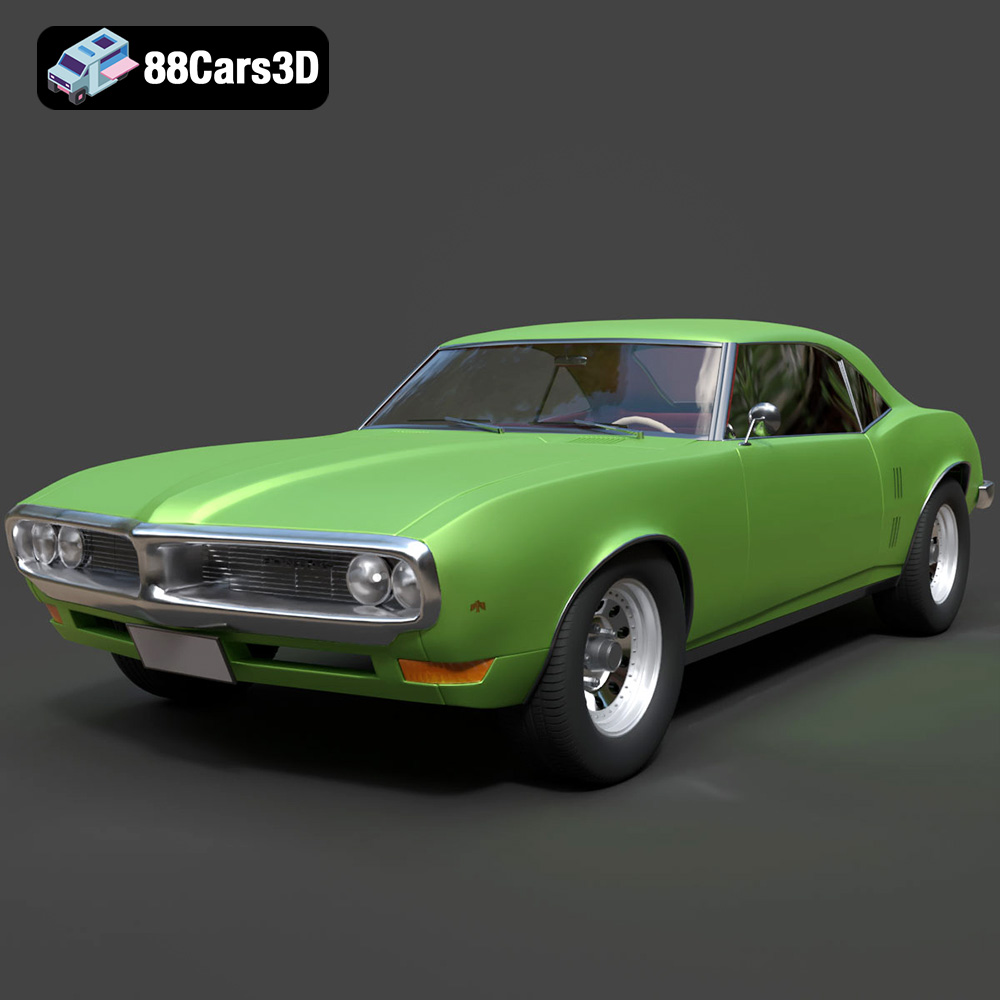
Download the Pontiac Firebird 1998 3D Model featuring clean geometry, realistic detailing, and a fully modeled interior. Includes .blend, .fbx, .obj, .glb, .stl, .ply, .unreal, and .max formats for rendering, simulation, and game development.
Price: $10

Texture: Yes
Material: Yes
Download the Opel Astra 2008 3D Model featuring clean geometry, realistic detailing, and a fully modeled interior. Includes .blend, .fbx, .obj, .glb, .stl, .ply, .unreal, and .max formats for rendering, simulation, and game development.
Price: $10

Texture: Yes
Material: Yes
Download the Mercedes Benz Joaquin-007 3D Model featuring clean geometry, realistic detailing, and a fully modeled interior. Includes .blend, .fbx, .obj, .glb, .stl, .ply, .unreal, and .max formats for rendering, simulation, and game development.
Price: $19.99
Texture: Yes
Material: Yes
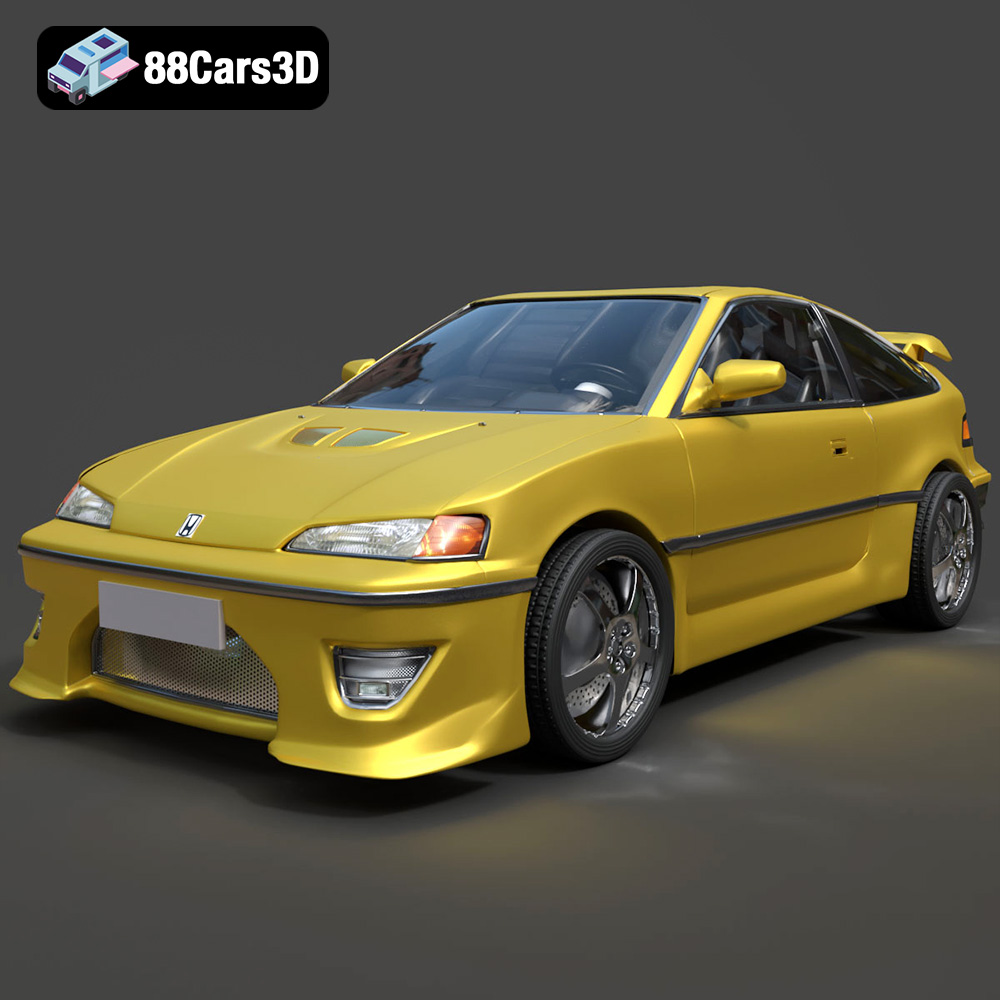
Download the Honda CRX 1980 3D Model featuring clean geometry, realistic detailing, and a fully modeled interior. Includes .blend, .fbx, .obj, .glb, .stl, .ply, .unreal, and .max formats for rendering, simulation, and game development.
Price: $11.99
Texture: Yes
Material: Yes
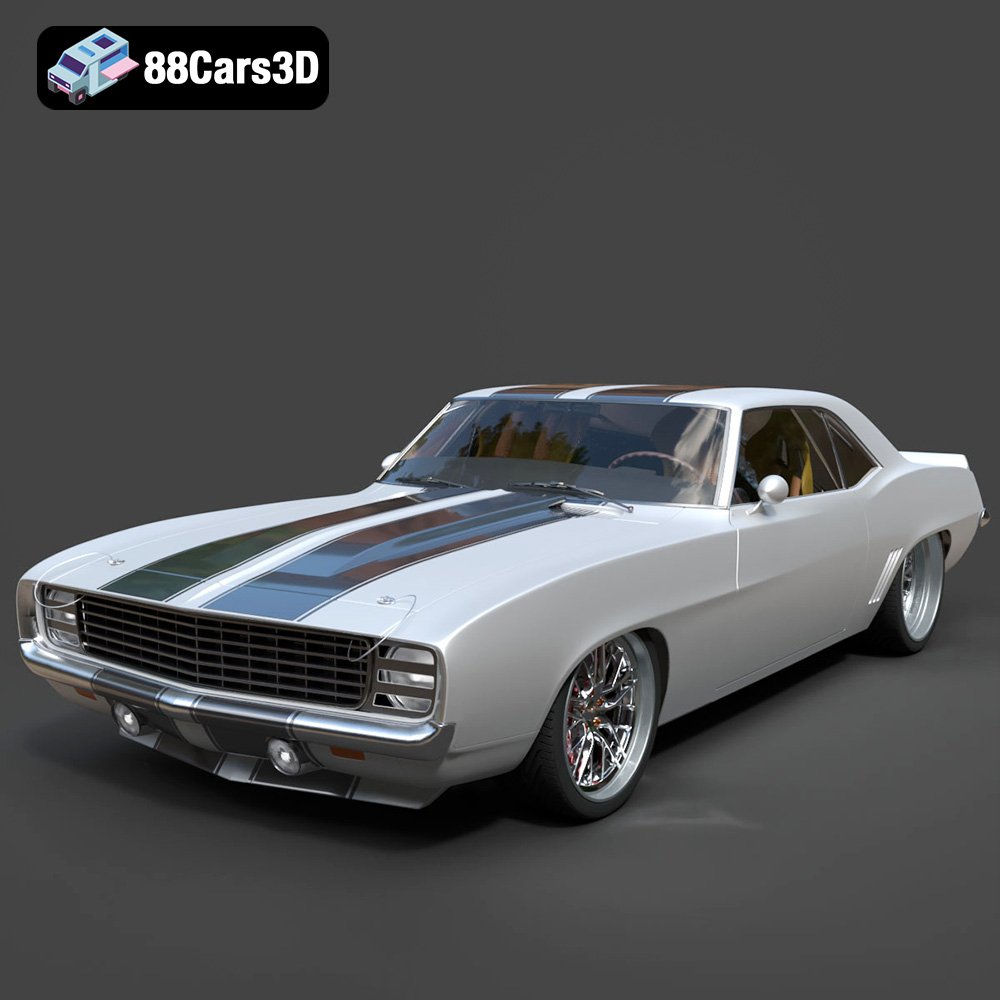
Download the Chevrolet Camaro 69 Pro-007 3D Model featuring classic muscle car design and custom performance aesthetics. Includes .blend, .fbx, .obj, .glb, .stl, .ply, .unreal, and .max formats for rendering, simulation, and game development.
Price: $20.79

Texture: Yes
Material: Yes
Download the Honda Fit 2008 3D Model featuring a compact, versatile design with detailed exterior and interior components. Includes .blend, .fbx, .obj, .glb, .stl, .ply, .unreal, and .max formats for rendering, simulation, and game development.
Price: $10.79
Texture: Yes
Material: Yes
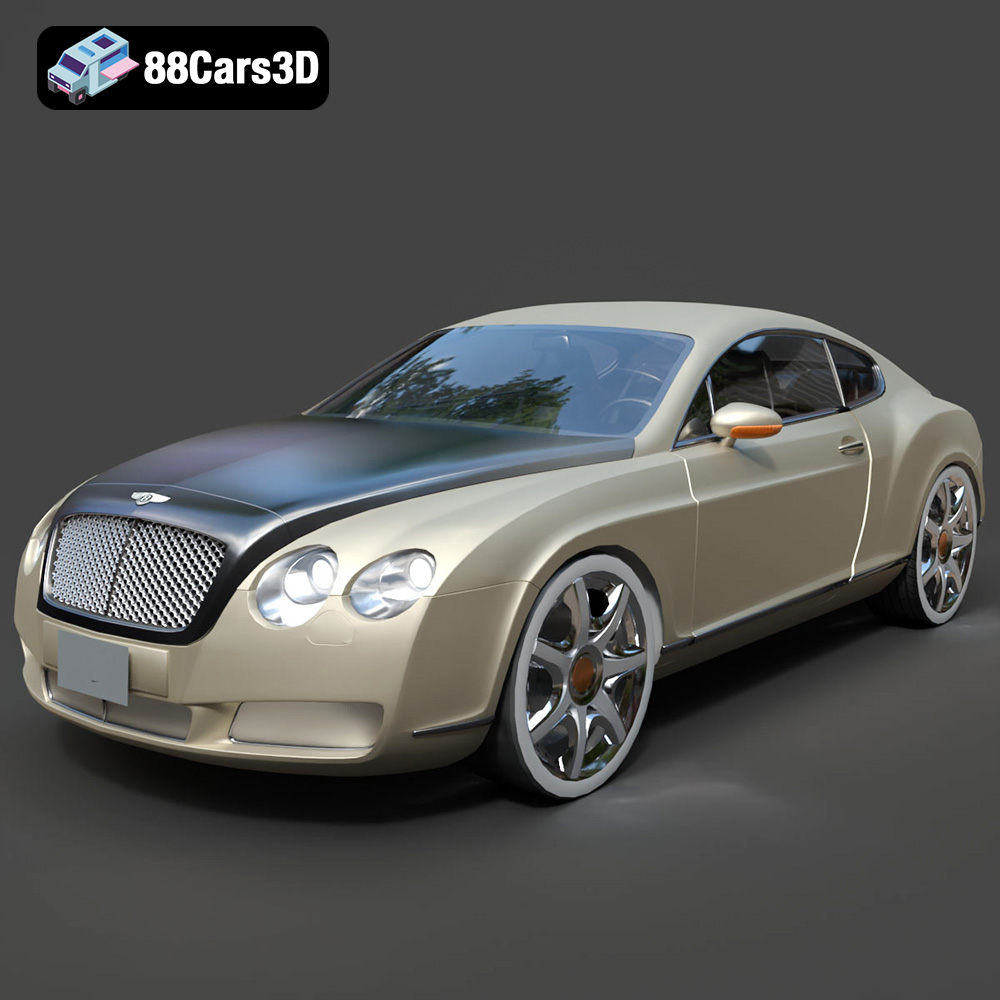
Download the Bentley Continental GT-002 3D Model featuring a luxurious grand touring design and high-quality details. Includes .blend, .fbx, .obj, .glb, .stl, .ply, .unreal, and .max formats for rendering, simulation, and game development.
Price: $20.79

