Get 20% OFF All Premium 3D & STL Models!

In the dynamic world of 3D content creation, where customization is king and efficiency is paramount, the ability to rapidly iterate and personalize digital assets has become a critical advantage. For automotive enthusiasts, game developers, visualization artists, and virtual reality pioneers, the demand for unique, high-quality 3D car models is insatiable. This is where the power of modular design truly shines. Instead of creating countless distinct vehicles from scratch, a modular approach allows artists to build a library of interchangeable parts—different bumpers, spoilers, wheels, headlights, and body kits—that can be combined in endless permutations to construct bespoke cars. This not only dramatically accelerates the production pipeline but also offers unparalleled flexibility, enabling users to tailor vehicles to their exact specifications for a wide array of applications, from hyper-realistic renders to interactive game environments.
This comprehensive guide will delve deep into the technical intricacies of crafting modular 3D car parts. We’ll explore the foundational principles of precision modeling and topology, master the art of UV mapping for seamless texturing, and demystify the creation of robust PBR materials. Furthermore, we’ll cover essential optimization strategies for real-time applications like game engines and discuss advanced considerations for AR/VR, 3D printing, and high-end automotive rendering. By the end of this article, you will possess a profound understanding of the workflows and best practices required to create versatile, high-performance modular car assets, empowering you to unlock new levels of creativity and efficiency in your projects.
The journey to creating effective modular 3D car parts begins with a meticulous approach to modeling and topology. Modularity in 3D automotive design isn’t just about separating a car into its constituent components; it’s about designing each part with the explicit intention of interchangeability, ensuring seamless integration and consistent visual quality across different configurations. This foundational stage dictates how easily parts can be swapped, textured, animated, and optimized down the line. A poorly constructed base will lead to headaches at every subsequent step, from unwrapping UVs to rigging and real-time performance. Therefore, investing time in clean, purposeful geometry is non-negotiable.
Clean topology, characterized by orderly edge loops and polygon distribution, is the bedrock of high-quality 3D models, especially for organic and curved surfaces like those found on car bodies. For modular parts, this means ensuring that each component’s mesh flows logically, following the contours of the design. This is crucial for two primary reasons: first, it facilitates smooth deformation during animation (though less common for static car parts, it’s vital if components like doors or hoods are meant to open). Second, and perhaps more importantly, it ensures predictable and artifact-free subdivision, a technique widely used to increase visual fidelity without manually modeling every detail. Modern renderers and game engines often rely on subdivision surfaces to achieve smooth curves from relatively low-polygon base meshes.
When modeling car panels—such as a fender designed to be swapped—focus on quadrilateral-dominant meshes (quads). Avoid triangles and N-gons where possible, especially on large, visible surfaces, as they can cause pinching, unpredictable smoothing, and issues during subdivision. Edge loops should encircle areas of curvature and define the natural creases and hard edges of the car’s design. For instance, an edge loop running along the perimeter of a wheel arch or a door seam will ensure that when the model is subdivided, these areas maintain their crispness while the larger surfaces remain smooth. Good edge flow ensures that even a relatively low-polygon part (e.g., 5,000-15,000 polygons for a fender) can appear incredibly smooth and detailed when subdivided, making it suitable for both real-time applications (as a base mesh) and high-fidelity renders (with subdivision applied). Conversely, poor edge flow can result in visible seams, distorted reflections, and a generally unpolished appearance, even with high polygon counts.
The true essence of modularity lies in the ability of parts to connect seamlessly. This requires meticulous planning of attachment points and consistent scaling. Every component intended for interchangeability—be it a different bumper, side skirt, or headlight assembly—must be designed to slot precisely into predefined connection points on the main car body or other modular parts. This often involves creating “cut-out” geometry or specific mounting flanges that align perfectly. Using snapping tools (vertex, edge, face snapping) and consistent global coordinates (X, Y, Z) during modeling is essential to ensure precise alignment. For example, if a car body has a specific recess for a headlight, all interchangeable headlight models must be designed to fit that exact recess and share the same pivot point or origin for easy placement.
Furthermore, maintain a consistent scale across all your modular assets. This might seem obvious, but discrepancies can easily arise, leading to parts that are too large or too small, requiring tedious readjustments. Establishing a universal unit system (e.g., 1 unit = 1 meter) from the outset and adhering to it rigidly across all modeling software is a best practice. The origin point (pivot) of each modular part should also be strategically placed—often at its geometric center, its attachment point, or the world origin if the part is designed to be placed at (0,0,0) and then translated. This facilitates easy snapping, rotation, and scaling in subsequent stages and when importing into different applications. By planning these details from the very beginning, you lay a solid groundwork for an efficient and robust modular system.
Once your modular car parts are meticulously modeled, the next critical step is UV mapping. UV mapping is the process of unwrapping the 3D surface of your model into a 2D plane, creating a set of coordinates (U and V) that tell your software how to apply textures. For modular car components, effective UV mapping is not just about avoiding visible seams or stretching; it’s about enabling seamless material application, consistent texel density, and efficient texture packing across an entire interchangeable system. Poor UVs can ruin even the most perfectly modeled asset, leading to unsightly texture distortions, inefficient texture usage, and challenges in material creation, especially with PBR workflows.
When dealing with numerous modular parts, optimizing UV layouts becomes paramount for both visual consistency and performance. One of the most effective strategies is the use of texture atlases. A texture atlas combines multiple smaller textures, or the UV layouts of several different parts, into a single larger texture map. For example, all the bolts, emblems, interior buttons, or even small trim pieces from different car variants could have their UVs packed into one atlas. This significantly reduces the number of draw calls in game engines, as the engine only needs to load and render one material for many objects, leading to improved frame rates. When creating a texture atlas, ensure that each part’s UV island has sufficient padding (margin) around it to prevent texture bleeding, which can occur when mipmapping or anti-aliasing causes pixels from adjacent islands to appear.
Another crucial aspect is planning UV islands for different types of surfaces. Car bodies often have large, relatively flat panels, while intricate grilles or vents might have many small, complex surfaces. Prioritize unwrapping large, visible panels (like hoods, doors, roof) with minimal seams and maximum space in the UV layout to ensure high texel density and fidelity. For symmetrical parts (e.g., left and right side mirrors), you can often overlap their UVs to share the same texture space, effectively doubling the resolution for those areas or saving texture memory. However, be mindful that overlapping UVs mean any unique detail painted on one side will appear on the other, which may not always be desirable for customization. Balancing these techniques allows for both high visual quality and optimal performance, catering to various project needs.
Texel density refers to the number of texture pixels per unit of 3D space on your model. Maintaining consistent texel density across all modular car parts is absolutely critical for a cohesive visual appearance. Imagine a highly detailed fender texture placed next to a blurry door texture—the visual disparity would immediately break immersion. A consistent texel density ensures that all surfaces appear equally sharp and detailed when viewed from the same distance. For instance, if you decide on a target texel density of 10.24 pixels/cm (common for high-quality game assets), every part—be it a bumper, spoiler, or wheel—should conform to this standard when its UVs are packed into its respective texture map, regardless of the texture map’s overall resolution (e.g., 2K, 4K).
Most modern 3D software offers tools to visualize and manage texel density. In Blender, for example, after unwrapping, you can use the UV Editor’s display options to show stretched areas or use third-party add-ons like ‘UV Toolkit’ or ‘Texel Density Checker’ to precisely measure and unify texel density across multiple objects. For example, the official Blender 4.4 documentation provides detailed information on working with the UV Editor for precise control over your unwraps: https://docs.blender.org/manual/en/4.4/modeling/meshes/uv/editing.html. The typical workflow involves unwrapping each part, then scaling its UV island(s) in the UV editor until the desired texel density is achieved. For very large parts, a 4K texture (4096×4096 pixels) might be necessary to maintain adequate texel density, while smaller parts might only need 1K or even 512×512 textures, especially if they are part of an atlas. By meticulously managing texel density, you guarantee that all interchangeable components will look uniform and high-quality when assembled, enhancing the realism and overall appeal of your customizable 3D car models.
With clean topology and optimized UVs in place, the next crucial step is to define the surface properties of your modular car parts through Physically Based Rendering (PBR) materials. PBR is an industry standard that ensures your materials react realistically to light, providing a consistent and believable look across various rendering environments and lighting conditions. For modular parts, a robust PBR workflow is essential to ensure that an interchangeable bumper, for example, matches the paint finish of the main body, even if they were textured separately. This consistency is key to a professional and convincing final product.
PBR materials typically rely on a set of texture maps that define properties like color (Albedo/Base Color), reflectivity (Metallic), surface roughness (Roughness), and micro-surface detail (Normal Map). When creating materials for modular car parts, it’s vital to design your shader networks to be versatile and easily modifiable. For example, a car paint material might include parameters for base color, clear coat thickness, metallic flake intensity, and roughness. By exposing these parameters in your material setup (e.g., using node groups in Blender, material instances in Unreal Engine, or shader graphs in Unity), you can quickly create countless color variations or wear states without having to re-texture the entire asset. A good practice is to create a library of master materials for common car surfaces—paint, chrome, rubber, glass—and then derive instances or variations from these masters. This ensures consistency and simplifies updates. For example, in Blender, you can leverage node groups to encapsulate complex PBR setups, making them reusable and manageable across multiple materials. The official Blender 4.4 documentation offers excellent resources on setting up node-based materials, including PBR workflows: https://docs.blender.org/manual/en/4.4/render/materials/nodes/introduction.html. This approach allows you to achieve subtle nuances in reflectivity, a hallmark of realistic automotive finishes, ensuring that whether a part is a polished chrome trim or a matte black plastic, it renders accurately.
Beyond the core PBR maps, advanced customization often involves texture generation and sophisticated masking techniques. Tools like Substance Painter and Substance Designer are invaluable here. Substance Painter allows artists to hand-paint or procedurally generate textures directly onto 3D models, with intelligent masking capabilities to simulate wear, dirt, scratches, and other surface imperfections. For modular parts, this means you can create generic “dirt” or “damage” masks that can be applied to any interchangeable component, dynamically adding realism without baking unique damage into every texture. For instance, a smart material for “weathered paint” can be dragged and dropped onto a fender, and its underlying mask will automatically conform to the geometry, revealing rust or chipped paint in logical areas like edges and crevices.
Substance Designer, on the other hand, excels at creating entirely procedural textures and complex material graphs. This is particularly powerful for modular systems because it allows you to generate variations of patterns (e.g., tire treads, grille meshes, carbon fiber weaves) or even entire PBR texture sets based on exposed parameters. Imagine a single Substance graph that can generate twenty different tire sidewall textures just by adjusting a few sliders. These procedural textures and masks integrate seamlessly with shader networks in most 3D software and game engines, providing an unparalleled level of dynamic customization. When sourced from platforms like 88cars3d.com, high-quality 3D car models often come with well-organized PBR texture sets and sometimes even Substance files, providing a fantastic starting point for further customization.
The transition from a meticulously modeled and textured modular car part to a high-performance asset within a real-time environment like Unity or Unreal Engine requires a dedicated focus on optimization. Game engines demand efficiency to maintain high frame rates, and large, detailed car models, especially when modular, can quickly become resource intensive. Strategies employed here are crucial for ensuring smooth gameplay or interactive experiences, making your assets viable for a broad range of applications from mobile AR to high-end PC games.
One of the most fundamental optimization techniques for complex 3D models in real-time is the implementation of Level of Detail (LODs). LODs involve creating multiple versions of each modular car part, each with a progressively lower polygon count and often simpler textures, shaders, or even completely different mesh representations. The game engine then dynamically swaps these versions based on the object’s distance from the camera. For instance, a car seen up close might use LOD0, a high-polygon mesh (e.g., 50,000-100,000 polygons for an entire car body, or 5,000-15,000 for a detailed bumper), while a car further away might use LOD1 (50% polygon reduction), LOD2 (75% reduction), or even a simplified billboard or sprite for very distant objects (LOD3). This ensures that processing power is only used where detail is actually visible.
When creating LODs for modular car parts, it’s crucial to maintain visual fidelity during the transitions. The polygon reduction process should be handled carefully to preserve the silhouette and major features of the part. Tools within most 3D modeling packages (e.g., Blender’s Decimate Modifier, Maya’s Reduce tool, 3ds Max’s ProOptimizer) allow for algorithmic polygon reduction, but manual cleanup or targeted simplification is often necessary to achieve optimal results. Each modular component (e.g., each wheel, spoiler, headlight) should have its own set of LODs, rather than creating LODs for the entire car as a single mesh. This granular control allows the engine to optimize individual components efficiently, providing maximum flexibility and performance. Platforms like 88cars3d.com provide highly optimized 3D car models ready for game engine integration, often including pre-configured LODs, saving valuable development time and ensuring a smooth workflow for game developers.
Beyond polygon count, a major performance bottleneck in game engines can be the number of draw calls. A draw call is essentially a command sent from the CPU to the GPU to render a batch of triangles. Each material, texture, or separate mesh object can contribute to a draw call. For modular cars, which by definition consist of many individual parts, managing draw calls is paramount. The texture atlasing strategy discussed earlier is a powerful technique here: by combining the UVs of multiple small parts into a single texture, you allow the engine to render all those parts with a single material, significantly reducing draw calls. For example, if a car has 20 small badges, bolts, and trim pieces, and their textures are all combined into one atlas, they can be rendered with one draw call instead of 20.
Another potent technique is instancing. When multiple identical objects use the same mesh and material (e.g., four identical wheels, or numerous identical screws), the game engine can render them using a single draw call by “instancing” them. Instead of sending the full data for each object, it only sends the data once and then provides unique transform (position, rotation, scale) data for each instance. This is particularly effective for repeated elements on modular cars. When exporting modular parts to game engines, ensure they are set up correctly for instancing where appropriate. Furthermore, for very complex car interiors or undercarriages, consider combining static mesh components into a single larger mesh where possible, using a single material to further reduce draw calls. This process, often called “batching” or “mesh combining,” should be done carefully to balance draw call reduction with the flexibility of modularity, ensuring that parts that need to be swapped remain separate entities.
The versatility of modular 3D car parts extends far beyond traditional game development, opening doors to cutting-edge applications in augmented reality (AR), virtual reality (VR), high-fidelity rendering, and even physical production through 3D printing. Each of these fields presents unique technical demands, and understanding how to adapt your modular assets for these diverse platforms is key to maximizing their value and reach.
AR and VR environments impose stringent performance requirements due to the need for high frame rates (typically 90 FPS or higher) to prevent motion sickness and ensure immersion. Modular car assets destined for AR/VR must be even more aggressively optimized than those for traditional games. This means aiming for extremely low polygon counts (often 50,000-150,000 triangles for an entire car, including interior, depending on the target device), efficient texture memory usage (smaller textures, fewer materials), and minimal draw calls. Consistency in real-world scale is also paramount; AR experiences overlay digital content onto the real world, so a car model must be accurately sized to prevent uncanny scaling issues. Pivot points should be logical and consistent, typically at the base of the object or its center for easy manipulation in AR/VR applications.
For AR/VR deployment, specific file formats are favored. USDZ (Universal Scene Description Zip) is Apple’s format for AR, widely used on iOS devices, combining model, animation, and PBR material data into a single file. GLB (GL Transmission Format Binary) is another excellent choice, supported across various AR/VR platforms and web browsers, offering efficient transmission of 3D scenes. When exporting modular parts, ensure your PBR materials are correctly converted to the target format’s shading model. Pay close attention to texture compression and ensure all assets are baked down to a single mesh if possible to minimize render passes, further enhancing performance on mobile AR devices. The modular nature of the assets allows for easy customization on the fly, with users potentially swapping parts within the AR/VR application itself.
The transition from a digital 3D model to a physical object via 3D printing introduces a completely different set of technical considerations. While game assets prioritize visual fidelity and performance, 3D printing demands geometric integrity and physical properties. For modular car parts intended for 3D printing, the mesh must be “watertight” (manifold), meaning it has no holes, gaps, or overlapping faces. Every edge must be connected to exactly two faces, forming a completely enclosed volume. Non-manifold geometry will result in printing errors or unprintable parts. Wall thickness is another critical factor; thin surfaces in your digital model might be too fragile to print or even disappear during slicing. Typically, a minimum wall thickness of 1-2mm is recommended, depending on the printing technology and material.
Mesh repair tools are indispensable in this workflow. Software like Blender (with its 3D Print Toolbox add-on), MeshMixer, or commercial tools like Netfabb can automatically or semi-automatically detect and fix common 3D printing issues like non-manifold edges, open boundaries, flipped normals, and self-intersecting geometry. When preparing modular parts, consider how they will physically connect after printing—will they snap together, glue, or require screws? This influences the design of connection points and tolerances. For example, if a bumper is designed to clip onto a car body, the digital models must incorporate a slight gap (tolerance) to account for material expansion and printer inaccuracies. Standard file formats for 3D printing include STL (Stereolithography), OBJ, and AMF (Additive Manufacturing File Format). The modular approach here allows for printing individual custom parts rather than an entire car, making it cost-effective and versatile for model makers and designers.
For cinematic visuals, advertising, or product configurators, high-end automotive rendering demands the utmost realism. Modular car parts facilitate a streamlined workflow for these demanding projects. Renderers like Corona Renderer, V-Ray, Arnold, or Blender’s Cycles engine excel at photo-realistic output. With modular assets, artists can quickly swap out different wheel designs, paint finishes, or interior trims to present various configurations to clients without rebuilding the scene each time. This is invaluable for showcasing diverse product lines or design iterations.
The PBR materials developed for modular parts translate beautifully into these renderers, ensuring consistent and accurate light interaction. Lighting and environment setup become critical here. Using HDRI (High Dynamic Range Image) maps for realistic outdoor or studio reflections, combined with targeted area lights, can bring a modular car to life. Attention to detail like subtle dust, fingerprints, or water droplets (applied through texture masks or procedural shaders) further enhances realism. Post-processing and compositing in software like Photoshop or After Effects allow for final touches—color grading, depth of field, motion blur, and lens effects—to elevate the raw render into a stunning visual. The ability to render a multitude of car variations quickly from a single modular asset library significantly boosts productivity for visualization professionals.
Developing a robust system of modular 3D car parts is as much about technical execution as it is about intelligent workflow management. Without proper organization and clear guidelines, the benefits of modularity can quickly be lost amidst a chaotic library of assets. Integrating best practices throughout your pipeline ensures maintainability, scalability, and ease of collaboration, which are paramount in professional environments. A well-structured workflow saves countless hours, reduces errors, and ultimately leads to higher quality, more usable assets.
One of the most critical aspects of managing modular assets is establishing and strictly adhering to a consistent naming convention. Imagine a library with hundreds of interchangeable car parts—a wheel, a spoiler, a bumper—each with multiple LODs and texture sets. Without a logical naming scheme, finding and replacing components becomes a nightmare. A good naming convention should be descriptive, hierarchical, and consistent across all assets and file types. For example, a naming structure like CarName_PartType_Variant_LOD_MaterialName_MapType.ext could be used: 88cars3D_Bumper_SportA_LOD0_PaintRed_Albedo.png, 88cars3D_Wheel_MultiSpoke_LOD1_WheelChrome_Normal.tga. This immediately tells you what the part is, its variant, its level of detail, material, and map type.
Alongside naming, building a well-organized asset library is crucial. This involves a clear folder structure (e.g., Cars/CarName/Parts/BodyKits/Bumpers/, Cars/CarName/Parts/Wheels/, Materials/, Textures/) and potentially using asset management software or version control systems (like Git LFS) to track changes and prevent accidental overwrites. Each modular component should ideally reside in its own dedicated file, making it easy to import and export individually. Metadata, such as polygon count, texture resolutions, and intended use case (game, render, AR/VR), should also be documented, either within the asset file itself (e.g., custom properties in Blender) or in a separate database. This structured approach is fundamental for any serious 3D production pipeline and ensures that your modular system remains manageable as it grows.
The development of modular assets is rarely a linear process; it involves continuous iteration and a robust feedback loop. Early in the design phase, it’s crucial to test the interchangeability of your modular parts frequently. Don’t wait until all components are finished to try assembling them. Create quick block-out models of your main car body and a few modular parts, then import them into your target environment (e.g., a game engine) to check alignment, scale, and general fit. This early testing can reveal fundamental design flaws in your connection points or scaling that are much easier to fix before significant detail work has been invested.
Gathering feedback from other artists, designers, or even potential end-users is also invaluable. Do the parts feel cohesive? Are the variations distinct enough? Is the customization intuitive? This feedback can help refine your modular designs, ensuring they meet the aesthetic and functional requirements of your project. For instance, if you’re designing multiple spoilers, feedback might reveal that one is too similar to another, prompting you to push the design further for greater visual variety. Agile development methodologies, where assets are developed in short sprints with regular reviews, are highly effective here. When sourcing models from marketplaces such as 88cars3d.com, look for well-organized, modular assets that adhere to these best practices, often indicated by clear descriptions of poly count, texture sets, and file formats, which speaks to a professional and thoughtful creation process.
The journey through creating modular 3D car parts for customization reveals a powerful paradigm shift in digital asset development. From the meticulous precision of modeling and topology to the intricate art of UV mapping, the realism of PBR materials, and the critical performance considerations for real-time engines, every step in this process is designed to foster efficiency, flexibility, and unparalleled creative freedom. We’ve seen how strategic edge flow ensures subdivision readiness, how texture atlases and consistent texel density optimize visual quality, and how robust shader networks unlock limitless material variations. Furthermore, understanding the nuances of LODs and draw call reduction empowers your assets for game engines, while specialized considerations prepare them for the cutting-edge demands of AR/VR, the physical realities of 3D printing, and the stunning fidelity of high-end rendering.
Embracing a modular workflow is more than just a technical exercise; it’s an investment in a sustainable and scalable production pipeline. It empowers artists and developers to build vast libraries of interchangeable components, dramatically reducing production time, facilitating rapid prototyping, and enabling users to personalize digital experiences like never before. The future of 3D content hinges on such adaptable and efficient approaches. By applying the detailed technical insights and best practices outlined in this guide, you are now equipped to navigate the complexities of modular automotive design, creating assets that are not only visually stunning but also incredibly versatile across every digital frontier. Dive in, experiment, and build the next generation of customizable 3D automotive masterpieces.

Meta Description:
Texture: Yes
Material: Yes
Download the Cadillac CTS-V Coupe 3D Model featuring detailed exterior styling and realistic interior structure. Includes .blend, .fbx, .obj, .glb, .stl, .ply, .unreal, and .max formats for rendering, simulation, AR VR, and game development.
Price: $13.9

Texture: Yes
Material: Yes
Download the Cadillac DTS-005 3D Model featuring its iconic luxury design, detailed interior, and realistic exterior. Includes .blend, .fbx, .obj, .glb, .stl, .ply, .unreal, and .max formats for rendering, simulation, and game development.
Price: $10.79

Texture: Yes
Material: Yes
Download the Buick LeSabre 1998 3D Model featuring a classic American full-size sedan design. Includes .blend, .fbx, .obj, .glb, .stl, .ply, .unreal, and .max formats for rendering, simulation, and game development.
Price: $10.79
Texture: Yes
Material: Yes
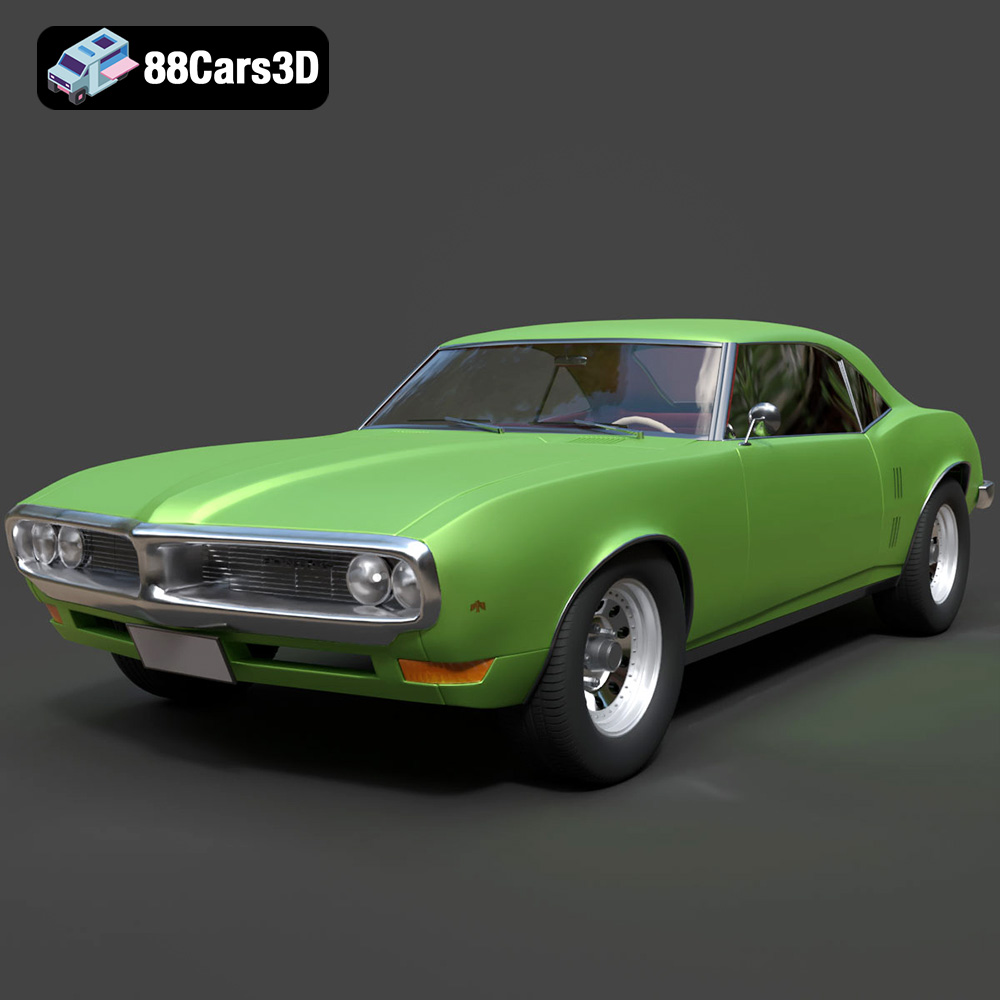
Download the Pontiac Firebird 1998 3D Model featuring clean geometry, realistic detailing, and a fully modeled interior. Includes .blend, .fbx, .obj, .glb, .stl, .ply, .unreal, and .max formats for rendering, simulation, and game development.
Price: $10

Texture: Yes
Material: Yes
Download the Opel Astra 2008 3D Model featuring clean geometry, realistic detailing, and a fully modeled interior. Includes .blend, .fbx, .obj, .glb, .stl, .ply, .unreal, and .max formats for rendering, simulation, and game development.
Price: $10

Texture: Yes
Material: Yes
Download the Mercedes Benz Joaquin-007 3D Model featuring clean geometry, realistic detailing, and a fully modeled interior. Includes .blend, .fbx, .obj, .glb, .stl, .ply, .unreal, and .max formats for rendering, simulation, and game development.
Price: $19.99
Texture: Yes
Material: Yes
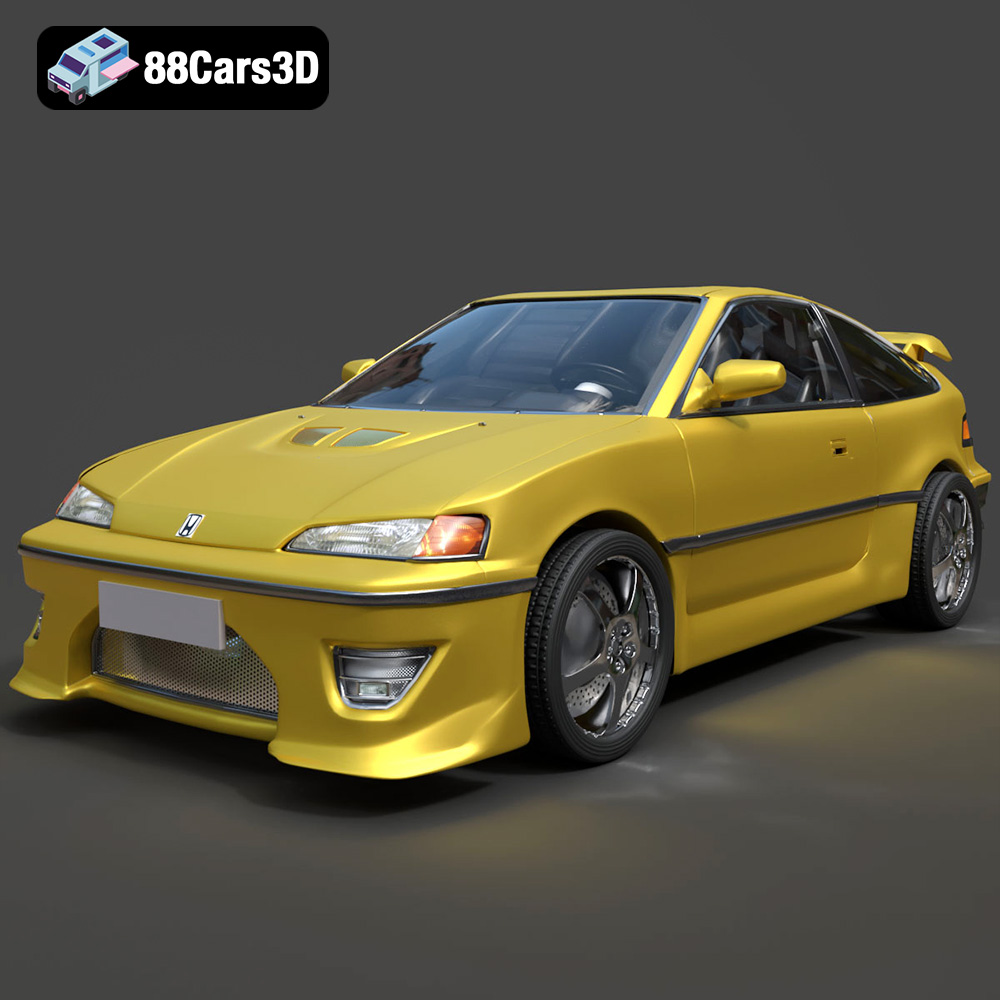
Download the Honda CRX 1980 3D Model featuring clean geometry, realistic detailing, and a fully modeled interior. Includes .blend, .fbx, .obj, .glb, .stl, .ply, .unreal, and .max formats for rendering, simulation, and game development.
Price: $11.99
Texture: Yes
Material: Yes
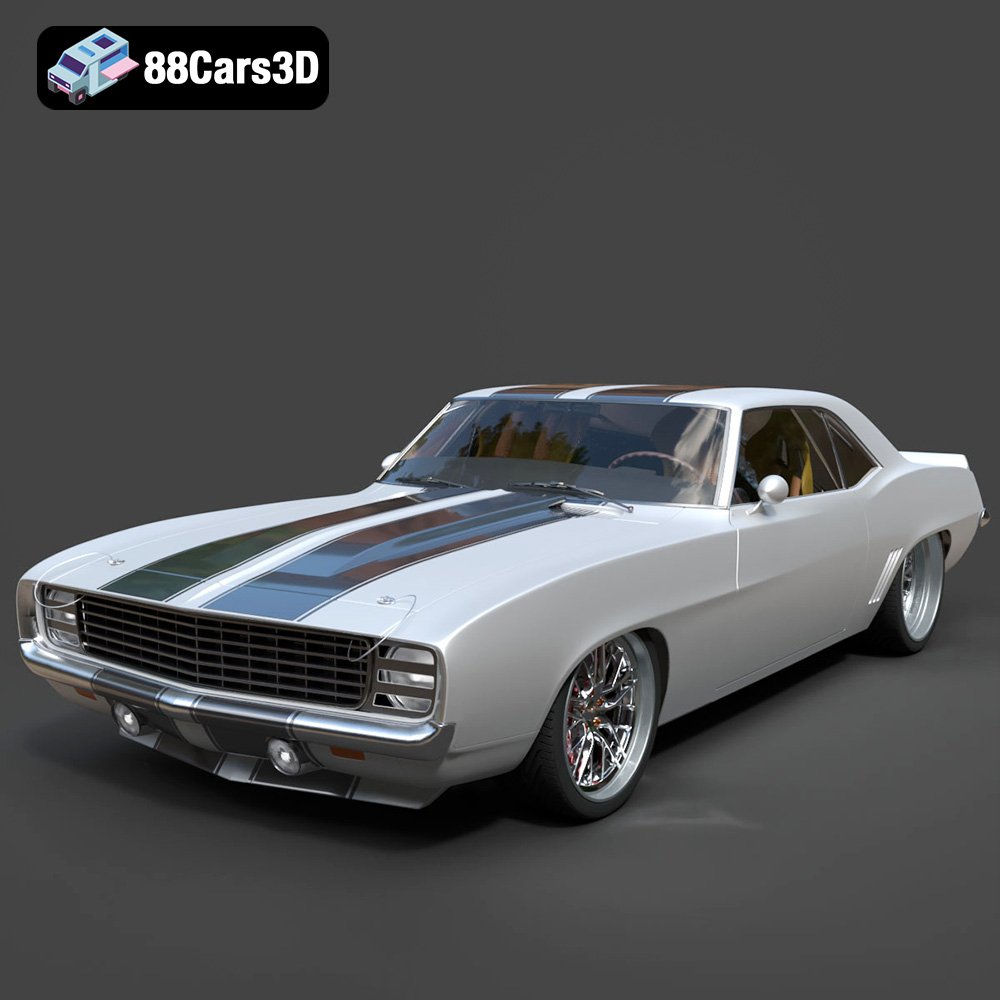
Download the Chevrolet Camaro 69 Pro-007 3D Model featuring classic muscle car design and custom performance aesthetics. Includes .blend, .fbx, .obj, .glb, .stl, .ply, .unreal, and .max formats for rendering, simulation, and game development.
Price: $20.79

Texture: Yes
Material: Yes
Download the Honda Fit 2008 3D Model featuring a compact, versatile design with detailed exterior and interior components. Includes .blend, .fbx, .obj, .glb, .stl, .ply, .unreal, and .max formats for rendering, simulation, and game development.
Price: $10.79
Texture: Yes
Material: Yes
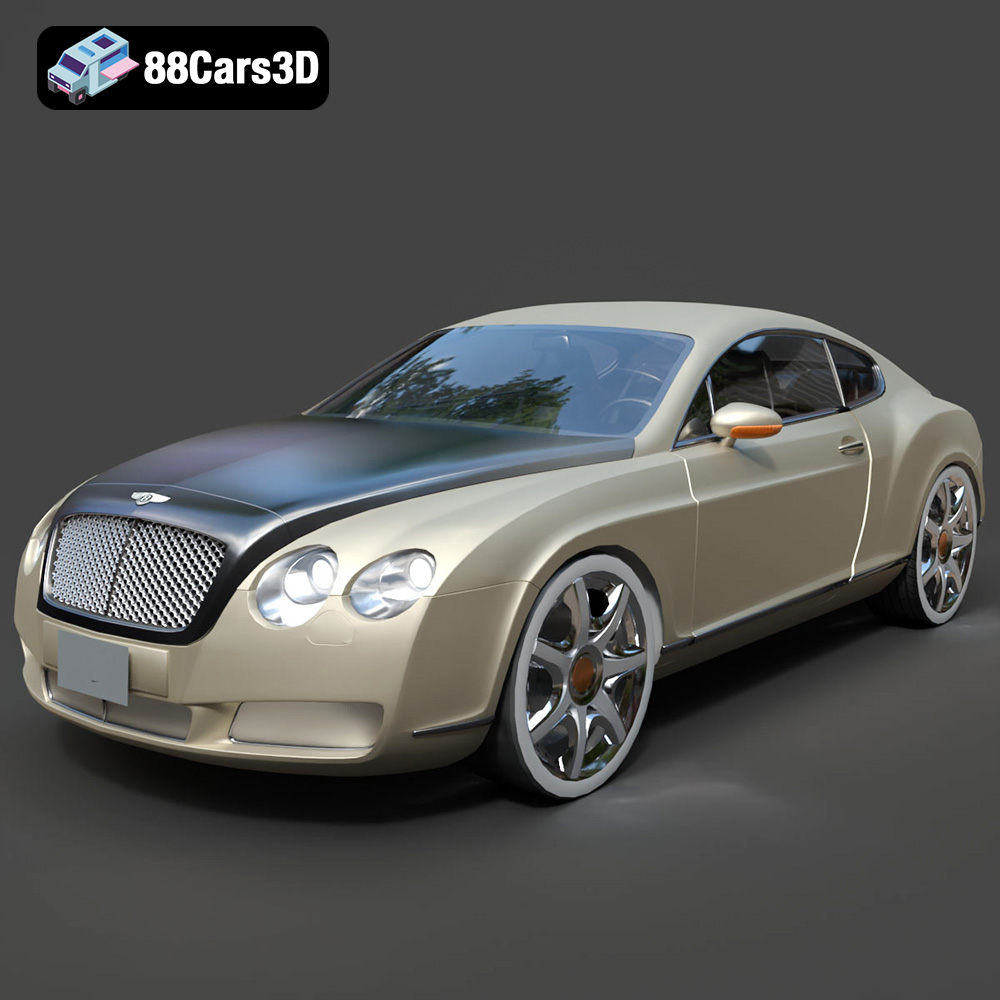
Download the Bentley Continental GT-002 3D Model featuring a luxurious grand touring design and high-quality details. Includes .blend, .fbx, .obj, .glb, .stl, .ply, .unreal, and .max formats for rendering, simulation, and game development.
Price: $20.79

