The pursuit of photorealism in 3D automotive visualization hinges on the meticulous crafting of every surface and material. While the overall shape and paintwork are crucial, it’s often the smaller, highly reflective elements like glass and chrome that truly elevate a model from good to breathtaking. These materials are notoriously challenging due to their complex interactions with light, requiring a deep understanding of physics-based rendering (PBR) principles, precise modeling, and careful setup within rendering engines. Failing to get them right can break the illusion of realism, leaving your masterpiece looking artificial and unconvincing. Mastering these elements is a hallmark of professional 3D artists and essential for anyone aiming to produce top-tier automotive content.
In this comprehensive guide, we’ll embark on a technical journey to demystify the art and science behind creating impeccable glass and chrome for 3D car models. We’ll delve into the core PBR concepts, explore specific workflows for various software packages, uncover optimization strategies for real-time applications, and troubleshoot common pitfalls. Whether you’re a seasoned 3D artist, a game developer, or an automotive designer, you’ll learn the techniques needed to achieve stunning, lifelike reflections and refractions that will make your 3D vehicles truly shine. To kickstart your projects with high-quality assets, platforms like 88cars3d.com offer a wide selection of meticulously crafted 3D car models, providing an excellent foundation for applying these advanced material techniques.
The Science of Light: PBR and Its Application to Glass and Chrome
Physics-Based Rendering (PBR) has revolutionized 3D graphics by simulating how light interacts with surfaces in a physically accurate manner. This approach ensures that materials react realistically to various lighting conditions, making them appear consistent and convincing across different environments. For highly reflective materials like glass and chrome, PBR is not just a preference; it’s a necessity. Understanding its core principles is the bedrock upon which all realistic material creation rests, dictating how light is absorbed, reflected, and refracted by your 3D car models.
Core PBR Concepts: Albedo, Roughness, Metallic, Normal, and IOR
At the heart of PBR are several key parameters, often represented by texture maps, that define a material’s properties:
- Albedo (Base Color): This map defines the diffuse color of a surface when lit by a pure white light source, representing the color of the material itself. For chrome, the Albedo is typically a very dark grey or black, as highly metallic surfaces reflect their environment rather than exhibiting a distinct color. For clear glass, the Albedo is usually white, with color often introduced via absorption or a tint property.
- Roughness (or Glossiness): This parameter dictates how scattered or sharp reflections appear. A value of 0 (or pure black) indicates a perfectly smooth, mirror-like surface, while a value of 1 (or pure white) signifies a completely rough, diffuse surface. Chrome demands an extremely low roughness value (close to 0) for its characteristic mirror finish. Glass also requires very low roughness for transparency, with slight variations for imperfections like dust or smudges.
- Metallic: This binary property (0 or 1) determines whether a material behaves as a dielectric (non-metal) or a conductor (metal). For chrome, the Metallic value must be 1 (pure white), indicating it’s a metal. For glass, it must be 0 (pure black) as it is a dielectric. This distinction is critical as metals and non-metals handle light reflection and absorption fundamentally differently under PBR.
- Normal Map: While not always directly defining reflectivity, normal maps add fine surface detail without increasing polygon count. For chrome, a normal map can simulate subtle scratches or a brushed finish. For glass, it can create the illusion of smudges, fingerprints, or rain droplets by altering the perceived surface normal and thus affecting reflections and refractions.
- Index of Refraction (IOR): Exclusive to transparent and translucent materials, IOR defines how much light bends as it passes through a material. It’s a fundamental property for glass. Standard window glass has an IOR of approximately 1.52, while water is 1.33. Accurate IOR values are paramount for realistic refraction effects in automotive glass, ensuring light bends correctly when viewing objects through windows.
Energy Conservation and Fresnel Effect
Two critical principles underpin PBR’s realism:
- Energy Conservation: This rule states that a surface cannot reflect more light than it receives. In PBR, the sum of reflected and absorbed light must equal the incident light. This means if a surface is highly reflective, it will be less diffuse, and vice versa. PBR shaders automatically enforce this, preventing unrealistically bright surfaces and ensuring that materials behave consistently.
- Fresnel Effect: Named after Augustin-Jean Fresnel, this phenomenon describes how the reflectivity of a surface changes based on the viewing angle. Reflections become significantly stronger and more pronounced at grazing angles (when looking almost parallel to the surface) compared to direct angles (when looking straight at the surface). Both glass and chrome exhibit a strong Fresnel effect. Chrome will appear almost mirror-like from all angles, but reflections intensify at grazing angles. Glass, while transparent head-on, becomes increasingly reflective at shallow angles, a phenomenon you observe every day when looking at car windows or shop fronts. PBR shaders incorporate complex Fresnel calculations to accurately simulate this behavior, making materials visually convincing without manual tweaking.
Polished Perfection: Sculpting and Shading Chrome Elements
Chrome trim and details are quintessential to automotive design, adding a touch of luxury and defining contours. Achieving truly convincing chrome in 3D isn’t just about applying a shiny material; it’s a meticulous process that combines superior modeling practices with precise material definition. The interaction of light with these highly reflective surfaces means that even the slightest imperfection in geometry or texture will be glaringly obvious, making attention to detail paramount.
Topology and Edge Flow for Smooth Reflections
The visual quality of chrome is directly tied to the underlying mesh topology. Because chrome acts like a perfect mirror, any unevenness, faceting, or poor edge flow in your model will result in visible distortions in reflections. These distortions can instantly shatter the illusion of a smooth, polished surface. Here are key considerations:
- Clean, Quad-Based Topology: Always strive for all-quad topology, especially on curved surfaces that will receive chrome. Quads deform predictably when subdivided and prevent pinching or undesirable artifacts that often arise from triangles or N-gons.
- Even Spacing of Edges: Ensure that your edge loops are evenly spaced across curved chrome surfaces. Irregular spacing can lead to visible ripples or bumps in reflections. For elements like door handles, window trims, or grille details, maintaining consistent curvature is critical.
- Supporting Edges (Control Loops): For hard-surface chrome parts, you’ll need to add “supporting” or “control” edge loops near sharp corners or edges. These loops ensure that when subdivision surfaces (like OpenSubdiv in 3ds Max or Subdivision Surface modifier in Blender) are applied, the edges remain crisp and defined, preventing them from softening excessively. Without them, a sharp chrome edge would become rounded and lose its characteristic sheen.
- Polygon Count Considerations: While chrome demands smoothness, for game development or real-time AR/VR applications, you must balance visual fidelity with performance. Use LODs (Level of Detail) to reduce polygon count for chrome elements that are further from the camera. For hero assets, a higher poly count with subdivision surfaces is acceptable, ensuring perfectly smooth reflections. For example, a detailed chrome grille might have tens of thousands of polygons, but this can be decimated for distant views.
PBR Metallic Workflow for Chrome
Applying the PBR Metallic-Roughness workflow for chrome is relatively straightforward once the underlying geometry is sound:
- Metallic Map: Pure White (1): For polished chrome, the Metallic map should be uniformly white (a value of 1.0). This tells the renderer that the material is a conductor and should behave like a metal, reflecting light rather than scattering it diffusely.
- Roughness Map: Extremely Low Values: Polished chrome is one of the smoothest surfaces imaginable. Consequently, its Roughness map should be a very dark grey or pure black (a value very close to 0). This ensures razor-sharp, mirror-like reflections. For brushed chrome effects, you would introduce a procedural texture or a grayscale image map with subtle variations in roughness, making the reflections appear elongated and blurred along the brush direction.
- Base Color Map: Dark Grey/Black: Surprisingly, the Base Color (Albedo) for chrome is typically a very dark grey or even black. This is because metals absorb very little light and reflect almost all of it. The color you perceive as “chrome” comes almost entirely from the reflections of its environment, not from a固有 surface color.
- Normal Map: Optional for Detail: For perfectly smooth, mirror-finish chrome, a normal map might not be necessary. However, if you want to add subtle surface imperfections like micro-scratches, scuffs, or a distinct brushed pattern without adding geometry, a normal map is invaluable. Ensure your normal map resolution is high enough to avoid pixelation in reflections.
In software like 3ds Max, you’d use a Physical Material, setting ‘Metalness’ to 1.0 and ‘Roughness’ to a very low value. In Blender, the Principled BSDF shader (accessible via the Shader Editor) is your go-to. Set ‘Metallic’ to 1.0 and ‘Roughness’ to near 0. For accurate details on Blender’s Principled BSDF, you can refer to the official documentation: Blender 4.4 Principled BSDF Documentation. In Maya, the aiStandardSurface shader (Arnold) or a PBR-compliant material in other renderers will have similar settings, emphasizing a high metallic value and minimal roughness for that iconic mirror finish.
Crystal Clarity: Techniques for Convincing Automotive Glass
Automotive glass is far more complex than a simple transparent plane. It involves delicate interactions of refraction, reflection, and subtle color absorption, all while maintaining clarity and often exhibiting imperfections. Getting car windows right is paramount for conveying realism and depth in your 3D models.
Essential PBR Parameters for Glass
Unlike chrome, glass is a dielectric, meaning it interacts with light differently. The key PBR parameters for glass focus on transparency and how light bends:
- Transparency/Transmission: This is the defining characteristic of glass. In PBR shaders, you’ll typically set the ‘Transmission’ or ‘Transparency’ value to white (1.0) for clear glass. This indicates that light should pass through the material.
- Index of Refraction (IOR): Critically important for glass, the IOR determines how much light rays bend as they pass from one medium (air, IOR ~1.0) into another (glass). For standard automotive glass, a common IOR value is around 1.52. Incorrect IOR values will lead to unrealistic distortion of objects viewed through the glass, instantly breaking immersion. Many shaders also allow for a separate IOR for the interior of the glass, which can be useful for complex, thick glass elements where light interacts with air on the other side.
- Roughness: For clean, new automotive glass, the roughness value should be very low (near 0), similar to polished chrome, to produce crisp reflections. However, increasing the roughness slightly can simulate frosted glass or a layer of dust and grime, subtly blurring reflections and refractions.
- Absorption/Color: While often perceived as clear, car windows usually have a subtle tint, especially on side and rear windows. In PBR, this is typically achieved through an ‘Absorption Color’ or ‘Transmission Color’ parameter, allowing you to define a subtle hue (e.g., a dark grey, green, or blue) that becomes more pronounced as light travels further through the material. This creates a realistic darkening effect proportional to glass thickness.
- Normal Maps for Imperfections: Even perfectly clean glass isn’t flawless. Micro-scratches, smudges, and fingerprints are common. These can be simulated effectively with subtle normal maps, which alter the perceived surface direction and thus affect how light reflects and refracts. These normal maps should be very subtle and typically tileable.
Advanced Glass Refinement: Tinting, Smudges, and Rain Effects
To push the realism of your automotive glass, consider these advanced techniques:
- Layering Textures for Dirt and Smudges: Beyond simple normal maps, you can create intricate dirt and grime effects by layering texture maps. A grayscale ‘dirt’ map can be used to modulate the roughness of the glass, making certain areas appear less reflective and more diffuse. This map can also be used to blend between a clean normal map and a smudged normal map. Alpha masks can control the visibility of these layers.
- Creating Subtle Tinting with Absorption: Instead of applying a flat color, using the absorption color property within your shader is more physically accurate. As light passes through the glass, it gradually absorbs the specified color, making the glass appear darker with increasing thickness or ray depth. This mimics real-world tinting.
- Simulating Rain Droplets: Rain on car windows adds a dramatic layer of realism. This can be achieved in several ways:
- Mesh-Based Droplets: Model individual droplets or small groups of droplets as separate, small meshes. Apply a dedicated water material to these, with high IOR (e.g., 1.33) and very low roughness. This is highly realistic but can be polygon-intensive.
- Shader-Based Droplets: Use normal maps and possibly displacement maps (with caution for real-time) to simulate the presence of water droplets directly in the shader. This is more performance-friendly for real-time applications but might lack the intricate light interaction of actual geometry.
- Combined Approach: Use a few detailed mesh droplets for foreground elements and shader-based techniques for the rest of the window.
- “Thin-Walled” vs. “Thick-Walled” Glass Rendering:
- Thin-Walled (Single-Sided) Glass: For distant objects or game assets where performance is critical, you might use a single-sided plane for glass with a thin-walled property enabled in your shader. This simulates transparency without actual light refraction, acting more like a tinted, reflective surface. It’s fast but less accurate.
- Thick-Walled (Double-Sided) Glass: For photorealistic renders, always model your glass with actual thickness, ensuring it’s a closed volume. This allows light to refract correctly as it enters and exits the glass, producing physically accurate distortions and caustics. This is essential for true realism. When sourcing models from marketplaces such as 88cars3d.com, look for descriptions that confirm accurate mesh thickness for glass elements if photorealism is your goal.
Illuminating Realism: Lighting and Rendering Strategies for Reflective Surfaces
Even the most perfectly crafted glass and chrome materials will fall flat without appropriate lighting. Reflective surfaces are inherently environmental; their appearance is almost entirely defined by what they reflect and refract. Therefore, thoughtful lighting and robust rendering settings are paramount to achieving photorealism in your 3D car renders. It’s not just about illuminating the car, but about providing a rich and detailed environment for reflections to capture.
HDRI and Environment Lighting
High Dynamic Range Images (HDRIs) are the backbone of realistic lighting for automotive renders, especially for reflective materials. They capture the full range of light intensities from a real-world environment, from direct sunlight to subtle ambient light, and project it onto your scene.
- The Absolute Necessity of High-Quality HDRIs: For chrome, an HDRI provides the intricate, detailed reflections that define its appearance. Without a rich HDRI, chrome will appear flat and uninteresting. For glass, the HDRI defines the reflections on its surface and contributes to the overall illumination that refracts through it. Low-resolution or poorly exposed HDRIs will result in blurry, unrealistic reflections.
- How HDRIs Define the Look: The colors, brightness, and contrast within your HDRI will directly dictate the visual characteristics of your reflective materials. A studio HDRI will give a clean, controlled look, while an outdoor urban HDRI will fill your chrome with city lights and architectural details, and your glass with sky and surroundings.
- Positioning HDRIs for Optimal Visual Impact: Don’t just place an HDRI and forget it. Experiment with rotating the HDRI to find the most aesthetically pleasing reflections on your car’s surfaces. Subtle rotations can dramatically change how highlights fall on the bodywork, chrome trim, and glass. Look for interesting environmental elements within the HDRI (e.g., distinct light sources, buildings, trees) that can contribute to compelling reflections.
- Supplementary Lighting: While HDRIs provide excellent global illumination, consider adding targeted area lights or spot lights to enhance specific reflections, create crisp highlights on chrome edges, or emphasize interior details visible through glass. Use these lights sparingly and ensure they complement the HDRI, rather than competing with it.
Software-Specific Rendering Settings (Corona, V-Ray, Cycles, Arnold)
Each renderer has its nuances, but the core principles for handling reflective materials remain consistent:
- Corona Renderer:
- Utilizes the Corona Physical Material, which inherently supports PBR metallic/roughness workflows. Simply set Metallic to 1.0 for chrome (Roughness near 0) and use Transmission/IOR for glass.
- Light Mix: Corona’s Light Mix feature is invaluable for experimenting with different lighting setups from a single render. You can adjust the intensity and color of individual light sources and the HDRI post-render, allowing for quick iteration on reflective material appearance.
- Ensure sufficient ‘Ray Depth’ settings (especially for refraction) to prevent black artifacts in glass and ensure multiple reflections on chrome.
- V-Ray:
- The V-Ray Material is the primary PBR shader. Set ‘Metalness’ to 1.0 for chrome, with low ‘Roughness’. For glass, enable ‘Refraction’, set ‘IOR’, and define ‘Translucency Color’ for tints.
- Refraction and Reflection Depth: Increase these values in the render settings to allow light to bounce and refract multiple times, crucial for realistic glass and complex chrome reflections.
- Caustics: V-Ray supports caustics, which are light patterns created by light passing through transparent objects. While computationally expensive, enabling subtle caustics can significantly enhance the realism of glass.
- Blender Cycles/Eevee:
- Principled BSDF: Both Cycles (path tracer) and Eevee (real-time renderer) use the Principled BSDF shader, making material creation consistent. Set ‘Metallic’ to 1.0 and ‘Roughness’ to near 0 for chrome. For glass, set ‘Transmission’ to 1.0, define ‘IOR’, and adjust ‘Transmission Roughness’ and ‘Transmission Color’ as needed.
- Ray Depth (Cycles): In Cycles, increase the ‘Transmission’ and ‘Reflection’ ray depth in the render settings to ensure light interacts correctly with multiple layers of glass and chrome. For detailed guidance on Cycles settings, the Blender 4.4 Light Paths documentation is an excellent resource.
- Screen Space Reflections/Refractions (Eevee): For real-time, ensure Screen Space Reflections and Refractions are enabled and properly configured in Eevee’s render settings for best performance and visual quality.
- Arnold:
- The aiStandardSurface shader is Arnold’s PBR-compliant material. Set ‘Metalness’ to 1.0 for chrome (with low ‘Roughness’). For glass, use the ‘Transmission’ parameter, define ‘IOR’, and adjust ‘Transmission Color’ and ‘Transmission Roughness’.
- Ray Depth: Arnold also requires sufficient ‘Transmission’ and ‘Reflection’ ray depth settings to prevent artifacts in complex reflective/refractive scenes.
- Denoisers: All modern renderers offer denoisers (OptiX, OIDN, etc.) that can significantly reduce noise in renders, especially in areas with complex refractions (like glass) without requiring excessively high sample counts. Use them judiciously.
Performance Power-Up: Optimizing Glass and Chrome for Real-time Applications
While photorealistic offline renders allow for virtually unlimited computational resources, real-time applications like game engines, AR/VR experiences, and interactive visualizations demand stringent optimization. Highly reflective and transparent materials like glass and chrome can be significant performance bottlenecks. Smart optimization strategies are essential to ensure your 3D car models run smoothly while still looking impressive.
LODs and Simplification for Reflective Assets
Level of Detail (LOD) systems are crucial for managing the complexity of highly detailed assets in real-time environments. For chrome and glass components, LODs require careful planning:
- Strategic Polygon Reduction: For chrome, reduce the polygon count of elements as they get further from the camera. At LOD0 (closest), your chrome might use subdivision surfaces for perfect curves. At LOD1, you could use a lower-poly mesh with baked normal maps to retain detail. At LOD2, simplify further, perhaps using fewer supporting edge loops.
- Baking Reflections for Distant Objects: For very distant chrome or glass elements (e.g., a car in the far background), you might consider baking environmental reflections directly into a texture map or using a very low-resolution reflection probe. This is less dynamic but extremely performant.
- Simplifying Glass Geometry: For LODs beyond LOD0, consider replacing thick, refractive glass with thin-walled, transparent shaders that rely on texture-based opacity rather than true refraction. This saves significant rendering cost.
- Decimation vs. Manual Retopology: While automatic decimation tools can reduce poly count, manual retopology or well-controlled decimation is often necessary for chrome and glass to ensure good edge flow for reflections, even on lower LODs.
Game Engine Specifics (Unity, Unreal Engine)
Modern game engines offer powerful tools for rendering PBR materials, but require specific approaches for glass and chrome:
- Unity:
- Standard Metallic Workflow: Unity’s Standard Shader or URP/HDRP Lit shaders fully support the PBR Metallic-Roughness workflow. Set Metallic to 1.0 and Roughness to low values for chrome.
- Shader Graph for Custom Effects: For advanced glass effects (e.g., tinted, dirty, or complex refraction), Unity’s Shader Graph is invaluable. You can create custom shaders that blend multiple normal maps for imperfections, control tinting, and manage transparency sorting.
- Reflection Probes: Essential for both chrome and glass. Place Reflection Probes around your car model and bake them to capture the environment. Chrome will reflect these probes, and glass will use them for its reflections. Real-time reflection probes can be expensive but offer dynamic reflections.
- Screen Space Reflections (SSR): Enable SSR for local, dynamic reflections on nearby surfaces, enhancing the realism of both materials. Be mindful of performance costs.
- Transparency Sorting: A common challenge in real-time. Ensure your glass materials have appropriate render queue settings to sort correctly behind other transparent objects.
- Unreal Engine:
- Material Editor: Unreal’s powerful Material Editor allows for highly customized PBR shaders. Use a Metallic value of 1.0 and a low Roughness for chrome. For glass, set the material’s Blend Mode to ‘Translucent’ and its Shading Model to ‘Default Lit’ (or ‘Clear Coat’ for a top layer). Control Opacity, Refraction (using IOR), and Base Color for tinting.
- Clear Coat Shading Model: For automotive paint and even some chrome finishes, Unreal’s Clear Coat shading model can add a distinct reflective layer on top of a base material, mimicking the layered nature of real-world materials.
- Reflection Captures: Similar to Unity’s probes, place Reflection Capture actors around your scene to provide reflections for both static and dynamic objects. Lumen (UE5) and Ray Tracing (if enabled and supported) offer much more accurate global illumination and reflections.
- Lumen/Ray Tracing: For higher-end real-time applications, Unreal Engine 5’s Lumen global illumination system and hardware-accelerated Ray Tracing can dramatically improve the realism of reflections and refractions on glass and chrome, providing dynamic and accurate lighting without baked probes. However, these come with higher performance demands.
- File Formats: For game engines, FBX is the dominant exchange format. GLB and USDZ are gaining traction, especially for AR/VR applications, due to their PBR material embedding capabilities. High-quality 3D car models from platforms like 88cars3d.com are typically provided in optimized formats like FBX, OBJ, and GLB, pre-configured for game engine use.
Overcoming Obstacles: Troubleshooting Glass and Chrome Realism
Even with a solid understanding of PBR and meticulous setup, you’ll inevitably encounter challenges when rendering highly reflective and refractive materials. Black reflections, noisy glass, or distorted refractions can quickly turn a promising render into a frustrating exercise. Knowing how to diagnose and resolve these common issues is a vital skill for any 3D artist. It’s often a process of elimination, checking each parameter and setting systematically.
Black Reflections, Refraction Artifacts, and Noise
These are some of the most frequently encountered problems:
- Black Reflections on Chrome:
- Issue: Insufficient Ray Depth: The most common cause. Your renderer’s global or material-specific ray depth settings for reflections are too low. Reflections bounce off surfaces, reflect off other surfaces, and so on. If the ray depth is too low, the ray “dies” before it can capture enough environment, resulting in blackness.
- Solution: Increase the ‘Reflection Depth’ or ‘Max Bounces’ in your render settings (e.g., ‘Light Paths’ in Blender Cycles, ‘Max Ray Depth’ in Arnold/V-Ray, ‘Global Illumination’ settings in Corona). Start with values around 4-8 and increase if necessary.
- Issue: Poor HDRI/Environment Map: If your HDRI is low dynamic range, low resolution, or poorly exposed, it won’t provide enough light information for reflections, leading to dark or dull chrome.
- Solution: Use high-quality, high-resolution (e.g., 8K, 16K) HDRIs with a wide dynamic range. Ensure the HDRI is correctly exposed in your scene.
- Issue: Incorrect Material Setup: Double-check that your Metallic value is 1.0 and Roughness is near 0. If the Base Color is too bright, it might also contribute to a less convincing look.
- Refraction Artifacts in Glass:
- Issue: Insufficient Transmission/Refraction Ray Depth: Similar to reflections, light needs to bounce and refract multiple times through glass. If the ‘Transmission Depth’ or ‘Refraction Bounces’ are too low, rays will appear black or distorted as they pass through multiple layers of glass.
- Solution: Increase the ‘Transmission Depth’ in your render settings, especially for thick glass or multiple panes. Values of 8-12 are often a good starting point.
- Issue: Incorrect IOR: An inaccurate IOR will cause unnatural bending of light, making objects viewed through the glass look wrong.
- Solution: Use physically accurate IOR values (e.g., 1.52 for automotive glass).
- Issue: Flipped Normals: If the normals of your glass geometry are inverted, light will interact incorrectly, leading to strange visual artifacts.
- Solution: Check and recalculate normals on your glass mesh to ensure they are consistently facing outwards.
- Issue: Non-manifold Geometry: Gaps, overlapping faces, or holes in your glass mesh can cause unpredictable refraction.
- Solution: Ensure your glass is a perfectly closed, watertight, manifold volume.
- Noisy Glass Renders:
- Issue: Insufficient Samples: Glass, especially with refraction, is notoriously difficult for unbiased renderers (like Cycles, Arnold) to resolve, often requiring a very high number of samples to eliminate noise (fireflies).
- Solution: Increase your render samples significantly. Use denoisers (OptiX, OIDN) during or after rendering. These AI-powered tools can clean up noise very effectively, allowing for lower sample counts. Ensure your light samples are also adequate.
- Issue: Complex Lighting/Caustics: Scenes with complex lighting and caustics (light patterns from refracted light) inherently generate more noise.
- Solution: If caustics aren’t absolutely critical, consider disabling them or using a “fake caustics” approach if noise is a major problem.
UV Mapping and Texture Resolution for Reflective Surfaces
While often overlooked for seemingly flat materials, UV mapping plays a crucial role for reflective surfaces, particularly when dealing with imperfections or specific patterns.
- Importance of High-Resolution Textures for Chrome: Even if your chrome uses a uniform roughness value, any normal maps for scratches or brushed effects, or even subtle dirt maps, need to be high resolution. Pixelation in these maps will become glaringly obvious in reflections, degrading realism. Aim for 2K or 4K textures for primary chrome elements.
- Avoiding Stretching or Distortion on UVs:
- Chrome: Ensure UVs for chrome elements are laid out cleanly, with minimal stretching. Even if you’re not using a texture map for roughness or metallic, if you ever decide to add a subtle brushed effect or fine scratches with a normal map, good UVs are essential.
- Glass: For glass, clean UVs are critical for applying normal maps for smudges, fingerprints, or rain effects without distortion. Planar projection or unwrapping the glass surfaces neatly into a 0-1 UV space is generally recommended.
- Texture Atlasing for Game Optimization: In game development, packing multiple smaller texture maps (e.g., for different chrome trims, small glass details) onto a single, larger texture atlas can significantly reduce draw calls and improve performance. Ensure consistent texel density across these atlases.
- General Tips for Clean UVs on Automotive Models:
- Minimize seams.
- Ensure consistent texel density across the model.
- Orient UV shells logically for easier texture painting.
- For reflective surfaces, allow ample padding between UV islands to prevent texture bleeding.
Conclusion
Mastering the art of crafting realistic glass and chrome materials is a transformative skill for any 3D artist specializing in automotive visualization. These seemingly minor components hold immense power in conveying photorealism, acting as crucial visual anchors that reflect the environment and define the vehicle’s form. We’ve journeyed through the intricate world of PBR, dissecting the fundamental properties that govern light interaction, from the metallic nature of chrome to the refractive complexities of glass. We’ve explored the importance of impeccable topology, delved into software-specific rendering workflows, and uncovered vital optimization strategies for real-time applications.
The key takeaways are clear: PBR is your guide, physically accurate IOR values are non-negotiable for glass, and high-quality HDRIs are the lifeblood of compelling reflections. Remember to obsess over edge flow for chrome, pay meticulous attention to ray depth settings, and proactively address performance for game engines through LODs and smart material setups. Troubleshooting is an inevitable part of the process; armed with the knowledge of common pitfalls, you can systematically resolve issues like black reflections or noisy refractions.
The journey to photorealism is one of continuous learning and iterative refinement. Practice these techniques, experiment with different parameters, and observe real-world cars to train your eye. To jumpstart your projects and build upon a foundation of expertly crafted geometry, explore the extensive collection of high-quality 3D car models available on platforms like 88cars3d.com. These models, optimized for various applications, provide an ideal canvas for you to apply and perfect the advanced material techniques discussed here, pushing the boundaries of your 3D automotive renders to unprecedented levels of realism.
Featured 3D Car Models

Meta Description:
Texture: Yes
Material: Yes
Download the Cadillac CTS-V Coupe 3D Model featuring detailed exterior styling and realistic interior structure. Includes .blend, .fbx, .obj, .glb, .stl, .ply, .unreal, and .max formats for rendering, simulation, AR VR, and game development.
Price: $13.9
View Product
Texture: Yes
Material: Yes
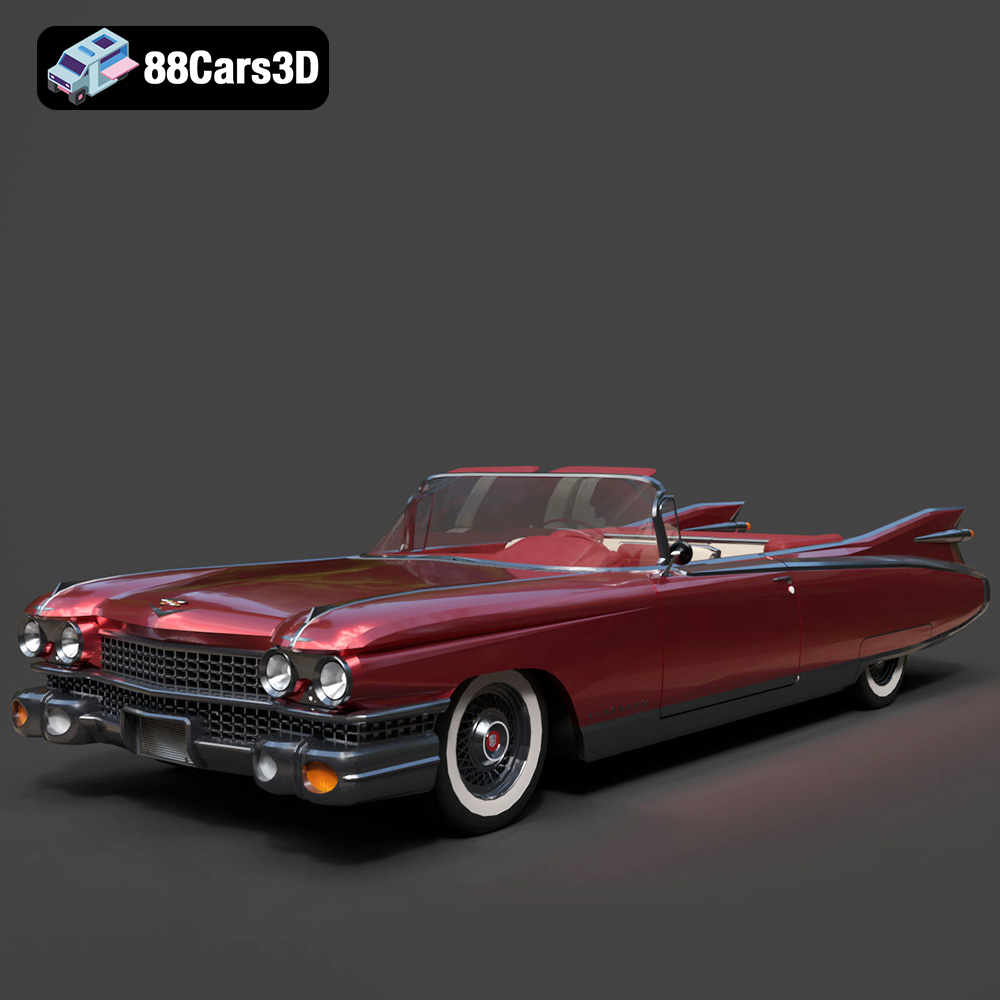
Download the Cadillac Eldorado Convertible (1959) 3D Model featuring iconic fins, luxurious chrome details, and a classic vintage design. Includes .blend, .fbx, .obj, .glb, .stl, .ply, .unreal, and .max formats for rendering, simulation, and game development.
Price: $20.79
View Product

Texture: Yes
Material: Yes
Download the Cadillac DTS-005 3D Model featuring its iconic luxury design, detailed interior, and realistic exterior. Includes .blend, .fbx, .obj, .glb, .stl, .ply, .unreal, and .max formats for rendering, simulation, and game development.
Price: $10.79
View Product

Texture: Yes
Material: Yes
Download the Buick LeSabre 1998 3D Model featuring a classic American full-size sedan design. Includes .blend, .fbx, .obj, .glb, .stl, .ply, .unreal, and .max formats for rendering, simulation, and game development.
Price: $10.79
View Product
Texture: Yes
Material: Yes
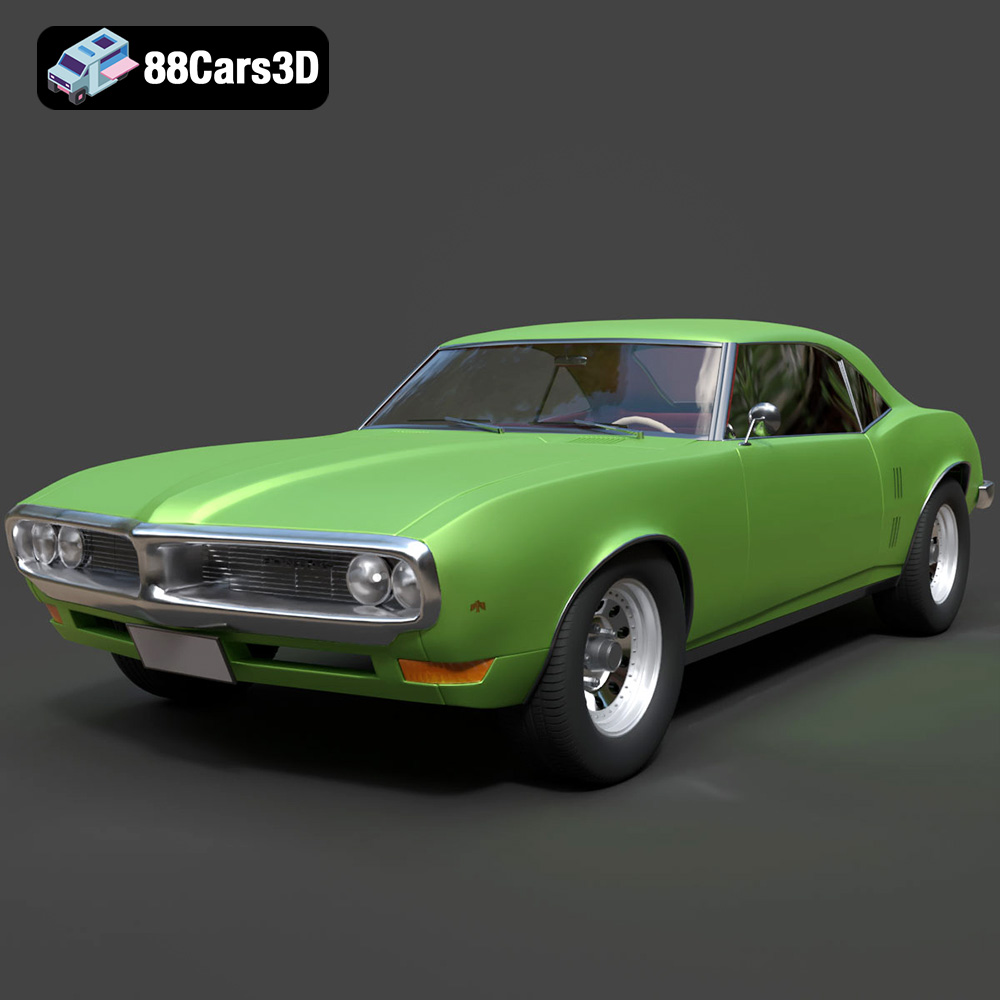
Download the Pontiac Firebird 1998 3D Model featuring clean geometry, realistic detailing, and a fully modeled interior. Includes .blend, .fbx, .obj, .glb, .stl, .ply, .unreal, and .max formats for rendering, simulation, and game development.
Price: $10
View Product

Texture: Yes
Material: Yes
Download the Opel Astra 2008 3D Model featuring clean geometry, realistic detailing, and a fully modeled interior. Includes .blend, .fbx, .obj, .glb, .stl, .ply, .unreal, and .max formats for rendering, simulation, and game development.
Price: $10
View Product

Texture: Yes
Material: Yes
Download the Mercedes Benz Joaquin-007 3D Model featuring clean geometry, realistic detailing, and a fully modeled interior. Includes .blend, .fbx, .obj, .glb, .stl, .ply, .unreal, and .max formats for rendering, simulation, and game development.
Price: $19.99
View Product
Texture: Yes
Material: Yes
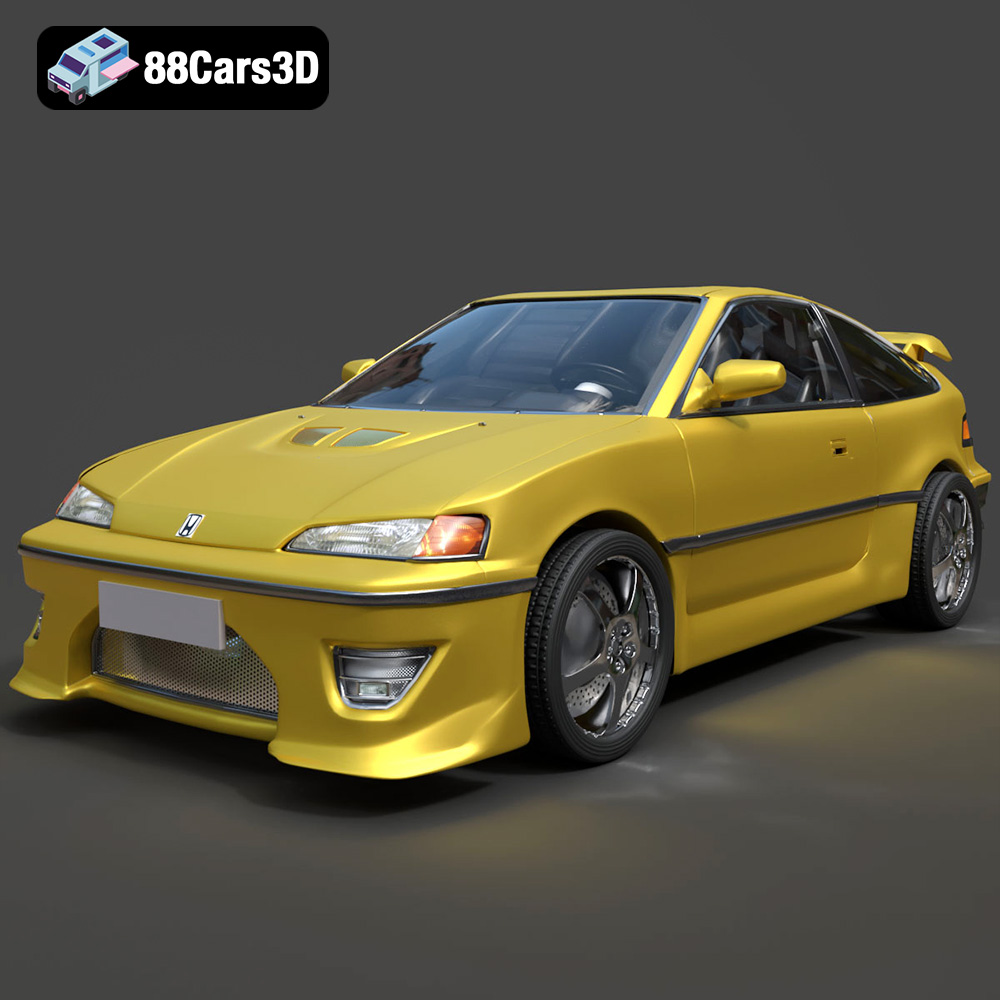
Download the Honda CRX 1980 3D Model featuring clean geometry, realistic detailing, and a fully modeled interior. Includes .blend, .fbx, .obj, .glb, .stl, .ply, .unreal, and .max formats for rendering, simulation, and game development.
Price: $11.99
View Product
Texture: Yes
Material: Yes
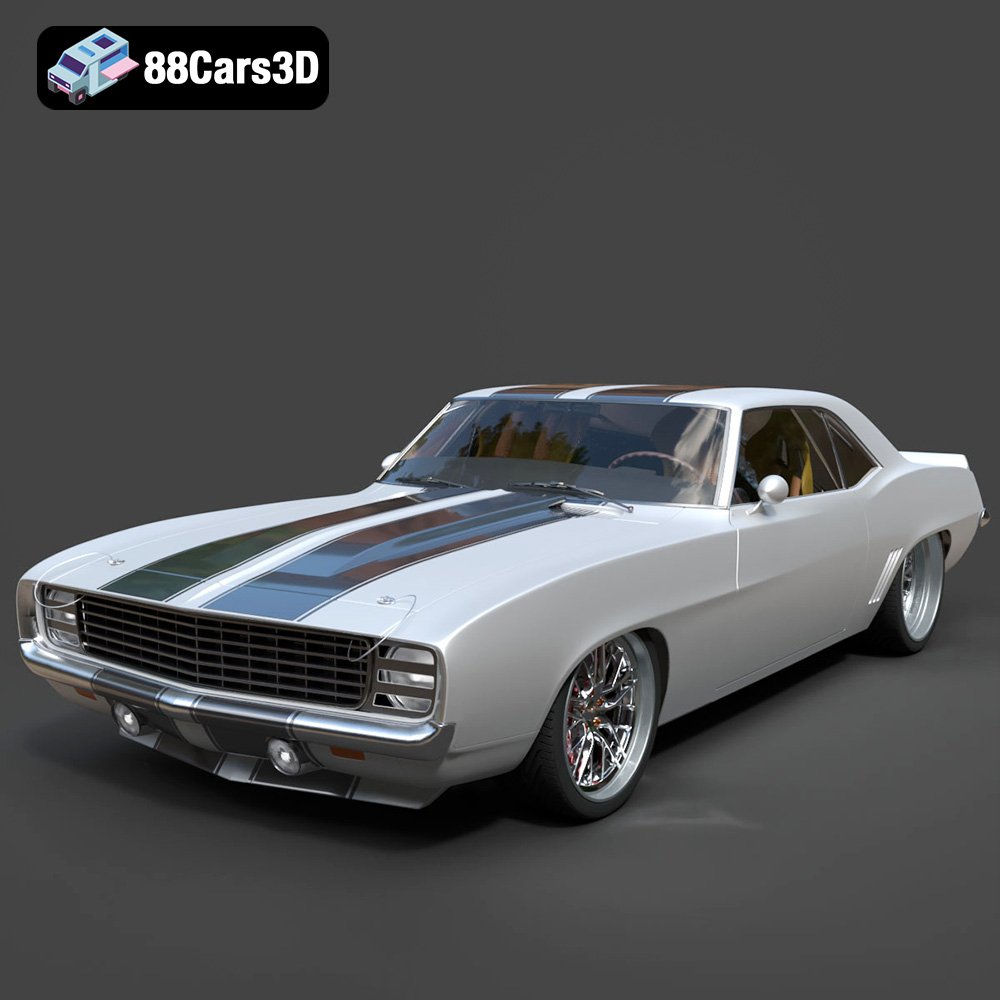
Download the Chevrolet Camaro 69 Pro-007 3D Model featuring classic muscle car design and custom performance aesthetics. Includes .blend, .fbx, .obj, .glb, .stl, .ply, .unreal, and .max formats for rendering, simulation, and game development.
Price: $20.79
View Product

Texture: Yes
Material: Yes
Download the Honda Fit 2008 3D Model featuring a compact, versatile design with detailed exterior and interior components. Includes .blend, .fbx, .obj, .glb, .stl, .ply, .unreal, and .max formats for rendering, simulation, and game development.
Price: $10.79
View Product


