

In today’s highly competitive automotive market, engaging potential customers goes far beyond static images and brochures. Buyers crave immersive experiences that allow them to visualize their dream car down to the smallest detail. This is where animated 3D car configurators step in, transforming the buying journey into an interactive, dynamic adventure. Imagine a customer not just choosing a paint color, but watching it flawlessly apply to a realistic 3D model, seeing the doors open and close, or even rotating the vehicle in a virtual showroom. This powerful technology is revolutionizing how cars are designed, marketed, and sold.
Building such a sophisticated system requires a deep understanding of 3D modeling principles, advanced rendering techniques, game engine optimization, and intuitive user interface design. It’s a multidisciplinary endeavor that brings together the best of artistry and engineering. This comprehensive guide will take you through the entire process, from selecting the perfect high-fidelity 3D car models to deploying a polished, performant interactive configurator. We’ll delve into the technical intricacies of topology, PBR materials, rigging, animation, and real-time optimization, ensuring your configurator not only looks stunning but also performs flawlessly across various platforms.
The Foundation: Sourcing and Preparing High-Fidelity 3D Car Models
The success of any animated 3D car configurator hinges on the quality of its underlying 3D models. A low-quality model will immediately detract from the immersive experience, no matter how sophisticated the configurator’s features. Therefore, the first critical step is to source and meticulously prepare high-fidelity assets that meet the rigorous demands of real-time rendering and interactivity.
Model Acquisition and Initial Assessment
Your journey begins with acquiring suitable 3D car models. While some teams develop models entirely in-house, many professionals leverage specialized marketplaces for efficiency and quality. Platforms like 88cars3d.com offer a curated selection of premium 3D car models, designed with clean topology and realistic details suitable for various applications, including configurators. When acquiring models, whether from a marketplace or an internal library, an initial assessment is crucial. Examine the model for mesh integrity, ensuring there are no missing faces, inverted normals, or unwanted geometry. Pay close attention to the model’s scale; consistency in units (e.g., meters or centimeters) is vital for correct import into game engines and for ensuring accurate real-world representation. Furthermore, assess the initial polygon count. While high-resolution models are desirable for visual fidelity, an excessively high poly count can be a significant performance bottleneck in real-time applications, necessitating further optimization.
Topology Optimization for Interactivity
Topology refers to the arrangement of polygons and edges on a 3D model, and for animated configurators, it’s paramount. Good topology ensures smooth deformation during animation (e.g., opening doors, rotating wheels) and facilitates efficient UV mapping. Automotive models, with their complex curved surfaces, demand careful attention to edge flow. Edges should ideally follow the natural contours of the vehicle, particularly around panel lines, creases, and areas that will be animated or deformed. This ensures that when a door swings open, the mesh deforms cleanly without unsightly pinching or stretching. The vast majority of real-time applications benefit from quad-based geometry, avoiding N-gons (polygons with more than four sides) and excessive triangulation where possible, as these can lead to shading artifacts and unpredictable deformation. For game engine integration, retopology might be necessary to reduce the polygon count while preserving visual detail. A high-poly model suitable for cinematic renders might have several million polygons, whereas a game-ready model for a configurator could range from 80,000 to 300,000 polygons, depending on the target platform (web, mobile, desktop VR) and desired level of detail. Tools like Blender’s Retopology tools, or dedicated software like QuadRemesher or ZBrush’s ZRemesher, can help achieve optimized, clean quad topology from a high-density source mesh. This careful management of mesh density ensures that the configurator remains responsive and fluid.
Mastering Materials and Textures: PBR for Realism
Once you have a structurally sound 3D model, the next step is to breathe life into it with realistic materials and textures. Physically Based Rendering (PBR) is the industry standard for achieving photorealistic results, accurately simulating how light interacts with surfaces based on real-world physical properties. For automotive configurators, PBR is indispensable for showcasing the nuanced reflections of metallic paint, the subtle sheen of leather interiors, or the transparency of glass.
PBR Workflow Essentials
PBR operates on a set of standardized maps that define a material’s properties. The core maps include:
- Albedo/Base Color: This map defines the pure color of the surface, stripped of any lighting information. For a car body, this would be the base color of the paint, without highlights or shadows.
- Metallic: A grayscale map indicating how “metallic” a surface is. White (1.0) for metallic surfaces (like car paint flakes or chrome), black (0.0) for dielectric (non-metallic) surfaces (like rubber or plastic).
- Roughness: Another grayscale map, this defines the microscopic surface irregularities. White (1.0) means a very rough, diffused surface (e.g., matte plastic), while black (0.0) indicates a perfectly smooth, reflective surface (e.g., polished chrome, clear coat).
- Normal Map: This map simulates high-detail surface geometry (like subtle bumps, scratches, or panel gaps) without adding actual polygons. It achieves this by storing directional information that manipulates how light is reflected.
- Ambient Occlusion (AO): A grayscale map that simulates soft shadows where ambient light is obstructed, typically in crevices and corners, adding depth and realism.
Creating realistic car paint shaders is particularly challenging and rewarding. It often involves layering multiple PBR materials, for instance, a metallic base coat (defined by Albedo, Metallic, and Roughness maps) topped with a clear coat layer that adds an extra layer of reflectivity and gloss. Flakes within metallic paints can be simulated using complex normal maps or procedural noise, combined with anisotropic reflections for that characteristic automotive sparkle.
UV Mapping Strategies for Automotive Surfaces
UV mapping is the process of flattening the 3D surface of a model into a 2D space, allowing you to paint or apply 2D textures onto it. For complex automotive surfaces, effective UV mapping is paramount for avoiding distortion, maximizing texture resolution, and ensuring clean material application. Key strategies include:
- Clean, Non-Overlapping UVs: Each face of your 3D model must have a unique, non-overlapping corresponding area on the UV map. Overlapping UVs lead to texture bleeding and incorrect material display, especially when using baked lightmaps or unique detail textures.
- Texel Density Consistency: Texel density refers to the number of texture pixels per unit of 3D space. Maintaining a consistent texel density across the entire model ensures that all parts have similar texture detail, preventing some areas from looking blurry while others are sharp. For large surfaces like a car body, it’s crucial to allocate enough UV space.
- Multi-Tile UVs (UDIMs): For extremely high-resolution models, especially those intended for close-up views or high-end rendering, UDIMs (U-Dimension) are invaluable. This system allows you to spread the UVs across multiple 2D texture tiles (e.g., U1_V1, U2_V1, etc.), effectively bypassing the resolution limits of a single 8K or 16K texture map. This is particularly useful for intricate details like interior dashboards or complex engine components where individual textures can reach 4K or 8K resolution.
- Techniques for Unwrapping Complex Curved Surfaces: Unwrapping a car body requires strategic seam placement. Seams should be placed in areas that are less visible or along natural breaks in the geometry (e.g., under bumpers, along door edges). Tools in 3D software like Blender offer various unwrapping methods such as “Smart UV Project” for initial layouts, followed by manual adjustments using “Live Unwrap” or “Pin” tools to refine the layout and minimize stretching. According to the official Blender 4.4 documentation, efficient seam placement and careful unwrapping techniques are key to achieving optimal texture distribution on complex organic and hard-surface models. This meticulous approach ensures that texture details like reflections, decals, and panel lines appear crisp and undistorted on the final model.
Rigging and Animation: Bringing the Car to Life
A static 3D model, however beautiful, limits the interactive potential of a car configurator. To truly engage users, the vehicle needs to be dynamic and responsive. This is achieved through rigging and animation, the processes that allow you to articulate and move the various components of the car, from opening doors to rotating wheels.
Essential Rigging for Automotive Configurators
Rigging involves creating a virtual “skeleton” or control system for your 3D model. For an automotive configurator, the rigging needs to be robust yet straightforward, allowing for intuitive control over key interactive elements. Essential components to rig include:
- Wheels: Each wheel should have a bone or null object at its center for rotation. Additionally, a steering control can be implemented to rotate the front wheels simultaneously.
- Doors: Each door (front, rear, trunk, hood) requires a pivot point precisely at the hinge location. This allows for realistic opening and closing motions. The pivot should be parented correctly to the main car body.
- Suspension: While complex suspension physics might be overkill for a configurator, basic independent suspension for each wheel can add a subtle layer of realism, allowing for slight vertical movement.
- Interior Elements: For highly detailed configurators, elements like steering wheels, gear shifters, or even seat adjustments might be rigged for additional interactivity.
The hierarchy of your rig is crucial. Typically, the main car body acts as the parent object, with all other components (wheels, doors, interior) parented to it directly or indirectly. Skinning, or weight painting, ensures that the mesh deforms smoothly when parts of the rig move. While cars are primarily hard-surface models, proper skinning around areas like door gaps or fender wells can prevent clipping or tearing. For configurators, a common technique is to use “driver-based animation” where properties like door open/close states or wheel rotations are linked to simple UI elements like sliders or buttons, making interaction seamless for the end-user without needing complex IK/FK setups.
Crafting Dynamic Animations
With the rig in place, you can now craft the animations that bring the car to life. These animations are the core of the interactive experience, enabling users to explore the vehicle’s features dynamically:
- Door Open/Close Sequences: Smooth, realistic animations for all doors, the hood, and the trunk. Consider incorporating subtle easing curves (slow in/slow out) to mimic real-world mechanical movements, making the animation feel natural and less robotic.
- Wheel Rotation: Essential for showcasing different rim designs and allowing users to spin the wheels for a better view.
- Color and Material Changes: While not a traditional “animation,” the instantaneous or smoothly transitioning swap of materials (e.g., paint colors, interior trim) is a core animated feature of configurators. This often involves blending between different PBR material presets or dynamically loading new texture sets.
- Camera Animation for Cinematic Tours: Beyond user-controlled camera navigation, pre-scripted camera animations can guide the user through a “cinematic tour” of the vehicle, highlighting specific features or design details. This can be triggered by user actions or as an idle animation.
- Transition Animations: When a user selects a new configuration option (e.g., a different spoiler), a subtle transition animation can make the change feel more integrated and less jarring than an abrupt pop-in. This might involve a quick fade, a slight rotation, or a scaling effect.
Utilizing animation curves in your 3D software (e.g., Blender’s Graph Editor or 3ds Max’s Curve Editor) allows for precise control over the timing and acceleration of movements, enhancing the overall fluidity and realism. Experiment with different easing functions to find the perfect feel for each interaction.
Game Engine Integration and Optimization
The ultimate destination for your meticulously crafted 3D car model, complete with PBR materials and animations, is a real-time game engine. Engines like Unity and Unreal Engine provide the robust framework needed to bring your interactive car configurator to life, handling rendering, interactivity, and deployment across various platforms. However, integrating high-fidelity assets into a real-time environment requires careful preparation and aggressive optimization to ensure smooth performance.
Preparing Models for Real-time Engines (Unity/Unreal)
The first step is to export your 3D model from your DCC (Digital Content Creation) software in a format compatible with game engines. FBX (Filmbox) and GLTF (GL Transmission Format) are industry standards, capable of preserving mesh data, PBR materials, skeletal rigs, and animations. When exporting from Blender, for instance, consulting the official Blender 4.4 documentation on FBX export settings is crucial. Ensure you select options to export selected objects, apply transforms, export animation, and embed media (textures) for a self-contained asset. Once imported into Unity or Unreal Engine, the process involves:
- Import Settings: Adjusting scale, coordinate system (Unity uses Y-up, Unreal uses Z-up), and material import options. Game engines can often import PBR textures and generate basic PBR materials automatically, which then need fine-tuning.
- Shader Setup: Replacing or refining imported materials with engine-native PBR shaders (e.g., Unity’s Standard Shader or Unreal’s Lit Material). This involves correctly assigning Albedo, Metallic, Roughness, Normal, and AO maps to their respective slots in the shader.
- Culling and Occlusion: Implementing frustum culling (objects outside the camera view are not rendered) and occlusion culling (objects hidden behind other objects are not rendered) to reduce rendering overhead.
- LOD (Level of Detail): A critical optimization technique. LOD involves creating multiple versions of a single 3D model, each with decreasing polygon counts and texture resolutions. As the camera moves further away from the car, the engine automatically switches to a lower-detail LOD, significantly reducing the computational load without a noticeable drop in visual quality. For a car configurator, you might have 3-5 LOD levels, ranging from a high-poly version for close-ups to a very low-poly version for distant views.
Performance Strategies for Smooth Interactivity
Achieving a smooth, responsive experience in a real-time configurator demands rigorous optimization. Even with powerful hardware, unoptimized assets can lead to frame rate drops and a frustrating user experience:
- Draw Call Reduction: Every time the GPU needs to draw something, it issues a “draw call.” Too many draw calls can be a major performance bottleneck. Strategies include:
- Batching: Combining multiple small meshes into a single, larger mesh. Static batching works for non-moving objects, while dynamic batching (for moving objects) has certain limitations on vertex count.
- Instancing: Drawing multiple copies of the same mesh (e.g., car wheels, bolts) with a single draw call, especially effective for identical objects with different transforms.
- Texture Atlasing: Combining multiple small textures into a single, larger texture atlas. This reduces the number of texture swaps the GPU needs to perform, thereby reducing draw calls.
- Texture Compression: Textures are often the largest memory footprint in a game engine. Compressing them (e.g., using ETC2 for Android, ASTC for iOS, DXT for desktop) significantly reduces memory usage and improves loading times, albeit with a slight quality trade-off. It’s a balance between visual fidelity and performance.
- Optimizing Lighting:
- Baked Lighting: For static elements of your environment (e.g., the showroom floor, background), baking global illumination and shadows can yield highly realistic results with minimal run-time performance cost.
- Real-time Lighting: Dynamic lighting (e.g., rotating sunlight, interactive studio lights) is more expensive. Limit the number of real-time lights, use light probes for accurate indirect lighting on dynamic objects, and prioritize deferred rendering pipelines for efficient handling of multiple lights.
- Profiling and Debugging: Both Unity and Unreal Engine offer powerful profilers that allow you to analyze CPU and GPU usage, draw calls, memory consumption, and identify performance bottlenecks. Regularly profiling your application during development is essential for maintaining optimal performance.
User Interface, Interactivity, and Deployment
A brilliant 3D car model and flawless animations are only part of the equation. To create a truly effective configurator, you need an intuitive user interface (UI) that allows users to easily interact with the model, change options, and personalize their vehicle. The final step involves deploying this interactive experience to the desired platforms.
Designing an Intuitive Configuration UI
The UI is the bridge between the user and the 3D model. Its design must be clean, responsive, and self-explanatory. Key aspects of UI design for a car configurator include:
- Integrating UI Elements with the 3D Scene: Buttons for color changes, sliders for wheel rotation, dropdowns for interior trim, and toggles for optional features (e.g., sunroof, spoiler) should be clearly presented. Consider how these elements are positioned relative to the 3D model – perhaps a sidebar, an overlay, or even contextual UI elements that appear when a specific part of the car is clicked.
- Event Handling for Real-time Changes: Behind every UI interaction, there’s a script that triggers a corresponding change in the 3D model.
- Material Swaps: Clicking a color swatch should instantly (or with a smooth fade) replace the car’s paint material with the selected PBR material. This involves referencing the appropriate material asset in the game engine and assigning it to the car mesh.
- Part Changes: Selecting different wheels, spoilers, or bumpers might involve enabling/disabling specific 3D mesh objects or swapping out entire sub-assemblies. This requires a well-organized scene hierarchy where different car parts are grouped logically.
- Animation Triggers: Buttons to open doors or the trunk should trigger the pre-made animations, with checks to prevent multiple animations playing simultaneously or to reverse an animation.
- Responsive Design for Different Devices: Your configurator should look and perform well whether accessed on a desktop monitor, a tablet, or a mobile phone. This means designing UI layouts that adapt to various screen sizes and orientations, ensuring that buttons are large enough for touch input, and text remains readable. Using anchor points, flexible layouts, and scaling UI elements in your game engine’s UI system is essential.
Deploying Your Interactive Car Configurator
Once developed, your configurator needs to reach its audience. Modern game engines offer multiple deployment options:
- Web-based Deployment (WebGL): This is a popular choice for configurators, allowing users to access the experience directly through their web browser without any downloads. Unity and Unreal Engine can export projects as WebGL builds, which are essentially HTML, CSS, and JavaScript files that can be hosted on any web server. However, WebGL builds can have larger file sizes and some performance limitations compared to native applications. Careful asset optimization and progressive loading strategies are vital.
- Desktop Applications: For high-fidelity experiences or internal showroom tools, deploying as a native Windows or macOS application offers the best performance and graphical fidelity.
- Mobile Apps: Targeting iOS and Android allows for a broader reach, particularly for quick showroom demonstrations or consumer-facing apps. Mobile optimization (lower poly counts, highly compressed textures, simpler shaders) is even more critical here.
- AR/VR Considerations for Immersive Experiences:
- Augmented Reality (AR): Imagine placing a virtual car on your driveway using your phone. AR can be integrated using ARKit (iOS) or ARCore (Android) with GLB (Binary glTF) or USDZ (Universal Scene Description Zip) as preferred file formats. USDZ, in particular, is optimized for Apple’s AR Quick Look, allowing users to view 3D models directly in Safari.
- Virtual Reality (VR): For a fully immersive virtual showroom experience, VR headsets (e.g., Oculus, HTC Vive) offer unparalleled realism. VR development requires specific considerations for performance (often requiring 90+ FPS for comfort), interaction models (hand controllers), and rendering techniques (stereo rendering).
- File Size Optimization for Faster Loading Times: Regardless of the platform, a large file size directly impacts loading times and user engagement. Aggressive texture compression, mesh decimation, removal of unused assets, and efficient asset bundling are crucial. For web deployments, consider implementing dynamic asset loading, where only essential assets are loaded initially, and other components (like specific wheel options or interior trims) are streamed in as needed.
Advanced Techniques and Future Trends
The world of 3D visualization and real-time interaction is constantly evolving. Beyond the core techniques, several advanced approaches and emerging trends can further elevate your animated car configurators, pushing the boundaries of realism and interactivity.
Real-time Ray Tracing and Global Illumination
Historically, real-time graphics relied on rasterization, a technique that approximates lighting. However, the advent of hardware-accelerated real-time ray tracing (RTX) in modern GPUs has brought photorealistic lighting and reflections to interactive experiences. Integrating real-time ray tracing in engines like Unreal Engine 5 or Unity’s High Definition Render Pipeline (HDRP) can dramatically enhance visual fidelity:
- Reflections: Ray-traced reflections provide physically accurate reflections on metallic surfaces, glass, and clear coats, far surpassing traditional screen-space reflections. This is a game-changer for car paint, giving it an authentic depth and sheen.
- Global Illumination: Real-time ray-traced global illumination (RTGI) accurately simulates how light bounces around an environment, creating softer, more realistic ambient lighting and indirect shadows. This makes virtual showrooms feel incredibly natural and immersive.
- Performance Implications: While visually stunning, real-time ray tracing is computationally intensive. It requires powerful hardware and careful optimization. It might be reserved for high-end desktop configurators or showroom experiences, while more generalized versions utilize hybrid rendering (combining rasterization with selective ray tracing).
Integrating Physics and Dynamic Environments
Adding a layer of physics and dynamic environmental elements can make the configurator feel even more alive:
- Basic Physics for Interactive Elements: While a car configurator typically doesn’t need full vehicle physics simulation, subtle physics can enhance interactions. For instance, when a door opens, a slight, natural bounce can be simulated. Or, if users can “drag” parts, physics-based interactions can make it feel more tactile.
- Dynamic Weather and Time-of-Day Changes: Allowing users to switch between different lighting conditions (sunny, overcast, night) or even dynamic weather effects (rain on the car body, reflections in puddles) can significantly impact the visual presentation. This involves adjusting skyboxes, directional light sources, and potentially particle effects or shader effects for rain droplets.
- Virtual Showrooms and Real-time Reflections: Instead of a plain background, embed the car in a detailed virtual showroom. This includes reflective floor surfaces, glass walls, and dynamic lighting. Real-time reflections from the environment onto the car body are crucial for realism. Using reflection probes and planar reflections in game engines can achieve this effect convincingly, further enhancing the presentation of models from marketplaces such as 88cars3d.com.
Data-Driven Configuration and API Integration
For enterprise-level configurators, integrating with external data sources and APIs unlocks powerful capabilities:
- Connecting to Product Databases: Instead of hard-coding all configuration options, connect the configurator to a centralized product database. This allows for real-time updates on available colors, trims, options, and pricing directly from the manufacturer’s inventory or product information management (PIM) system. This ensures the configurator is always displaying the most accurate and up-to-date information.
- Custom API Integrations for Order Placement: Extend the configurator’s functionality to allow users to generate quotes, save their configurations, or even initiate an order directly from the application. This involves integrating with CRM (Customer Relationship Management) systems, e-commerce platforms, or custom backend services via APIs. This transforms the configurator from a mere visualization tool into a direct sales enablement platform, streamlining the customer journey from exploration to purchase.
Conclusion
The journey of creating an animated 3D car configurator is a complex yet incredibly rewarding endeavor. It demands a blend of artistic skill, technical prowess, and a keen understanding of user experience. From the initial selection of high-quality 3D models to the intricate dance of rigging and animation, the meticulous crafting of PBR materials, and the rigorous optimization for real-time performance, each step is crucial in delivering a truly immersive and engaging experience.
By mastering topology, implementing smart UV mapping strategies, bringing your models to life with dynamic animations, and optimizing for game engine performance, you can build a configurator that not only showcases automotive design with unprecedented realism but also empowers customers with unparalleled personalization. The advent of real-time ray tracing and advanced data integrations further propels these tools into the future, making them indispensable for modern automotive sales and marketing. Embrace these technologies, and you’ll unlock a new era of interactive product visualization. To kickstart your projects with premium assets, explore the extensive collection of high-quality 3D car models available at 88cars3d.com.
Featured 3D Car Models

Cadillac CTS-V Coupe 3D Model
Meta Description:
Texture: Yes
Material: Yes
Download the Cadillac CTS-V Coupe 3D Model featuring detailed exterior styling and realistic interior structure. Includes .blend, .fbx, .obj, .glb, .stl, .ply, .unreal, and .max formats for rendering, simulation, AR VR, and game development.
Price: $13.9
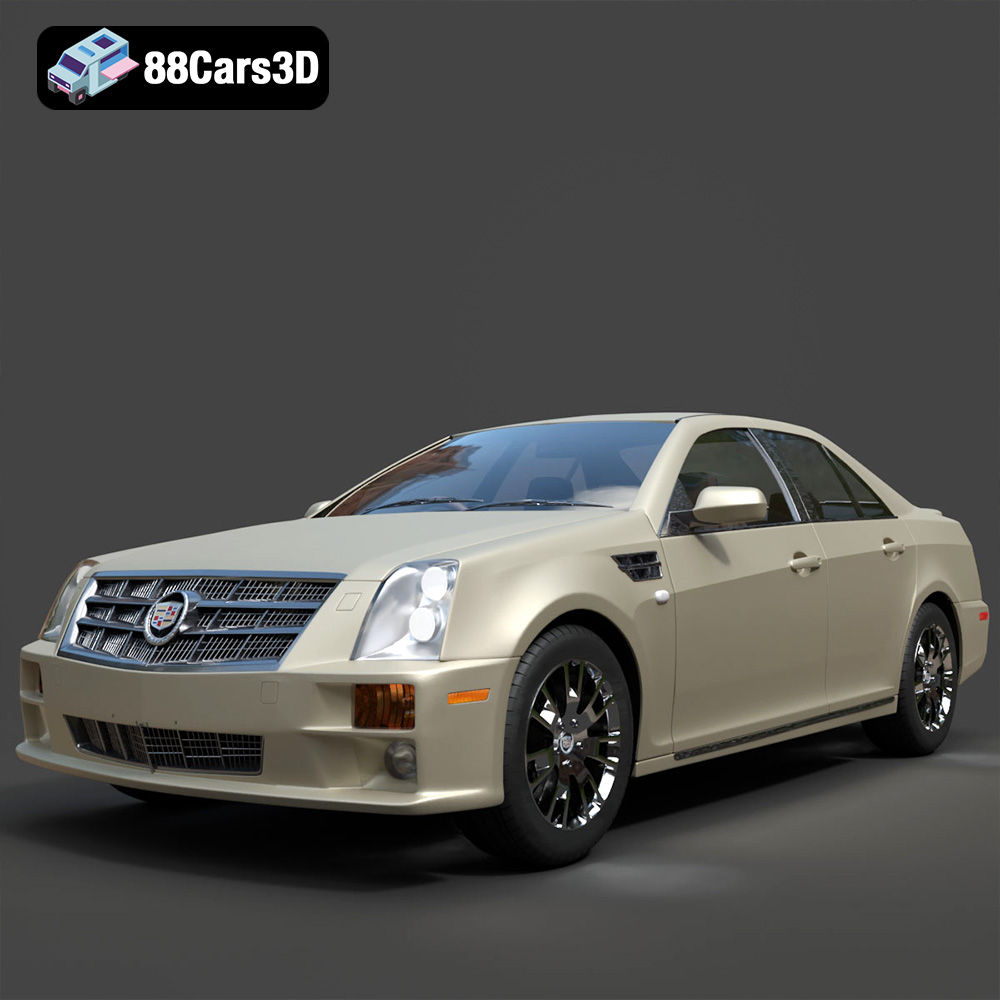
Cadillac STS-005 3D Model
Texture: Yes
Material: Yes
Download the Cadillac STS-005 3D Model featuring a detailed exterior and interior. Includes .blend, .fbx, .obj, .glb, .stl, .ply, .unreal, and .max formats for rendering, simulation, and game development.
Price: $22.79
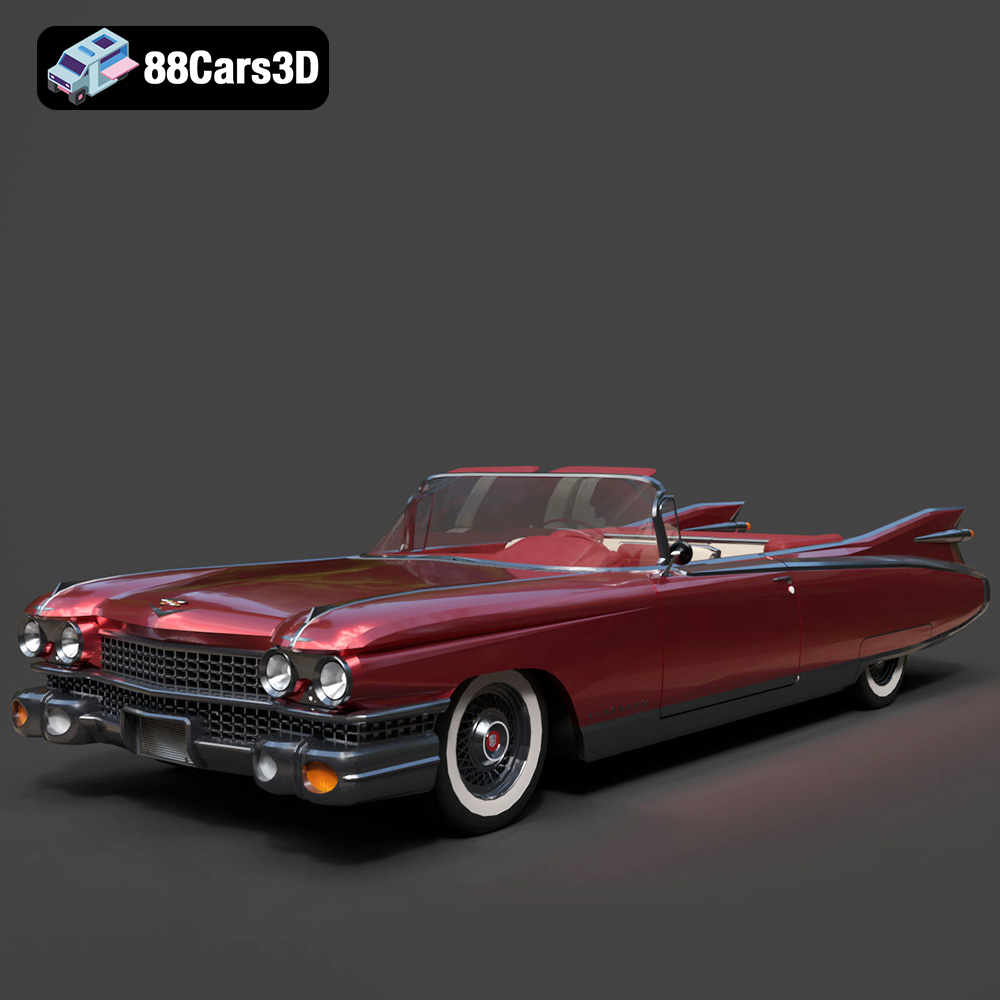
Cadillac Eldorado Convertible (1959) 3D Model
Texture: Yes
Material: Yes
Download the Cadillac Eldorado Convertible (1959) 3D Model featuring iconic fins, luxurious chrome details, and a classic vintage design. Includes .blend, .fbx, .obj, .glb, .stl, .ply, .unreal, and .max formats for rendering, simulation, and game development.
Price: $20.79

Cadillac DTS-005 3D Model
Texture: Yes
Material: Yes
Download the Cadillac DTS-005 3D Model featuring its iconic luxury design, detailed interior, and realistic exterior. Includes .blend, .fbx, .obj, .glb, .stl, .ply, .unreal, and .max formats for rendering, simulation, and game development.
Price: $10.79

Buick LeSabre 1998 3D Model
Texture: Yes
Material: Yes
Download the Buick LeSabre 1998 3D Model featuring a classic American full-size sedan design. Includes .blend, .fbx, .obj, .glb, .stl, .ply, .unreal, and .max formats for rendering, simulation, and game development.
Price: $10.79
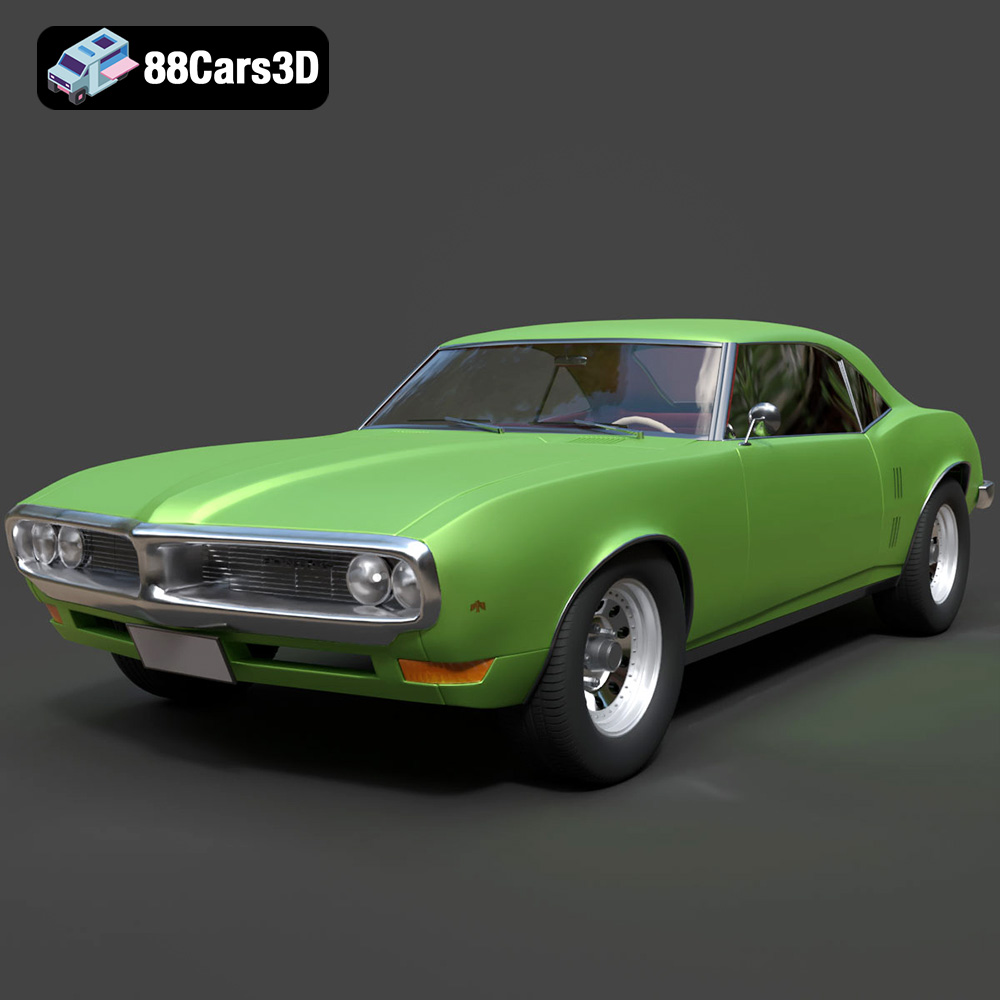
Pontiac Firebird 1998 3D Model
Texture: Yes
Material: Yes
Download the Pontiac Firebird 1998 3D Model featuring clean geometry, realistic detailing, and a fully modeled interior. Includes .blend, .fbx, .obj, .glb, .stl, .ply, .unreal, and .max formats for rendering, simulation, and game development.
Price: $10

Opel Astra 2008 3D Model
Texture: Yes
Material: Yes
Download the Opel Astra 2008 3D Model featuring clean geometry, realistic detailing, and a fully modeled interior. Includes .blend, .fbx, .obj, .glb, .stl, .ply, .unreal, and .max formats for rendering, simulation, and game development.
Price: $10

Mercedes Benz Joaquin-007 3D Model
Texture: Yes
Material: Yes
Download the Mercedes Benz Joaquin-007 3D Model featuring clean geometry, realistic detailing, and a fully modeled interior. Includes .blend, .fbx, .obj, .glb, .stl, .ply, .unreal, and .max formats for rendering, simulation, and game development.
Price: $19.99
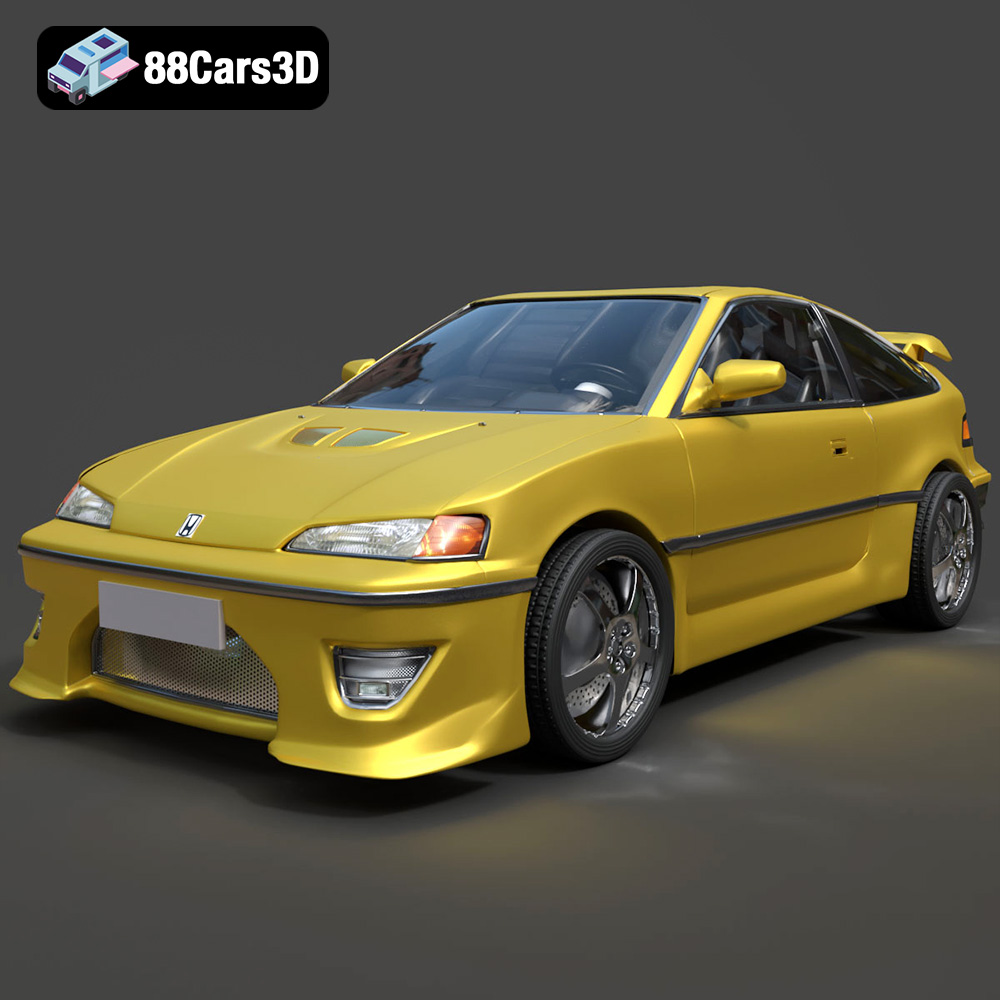
Honda CRX 1980 3D Model
Texture: Yes
Material: Yes
Download the Honda CRX 1980 3D Model featuring clean geometry, realistic detailing, and a fully modeled interior. Includes .blend, .fbx, .obj, .glb, .stl, .ply, .unreal, and .max formats for rendering, simulation, and game development.
Price: $11.99
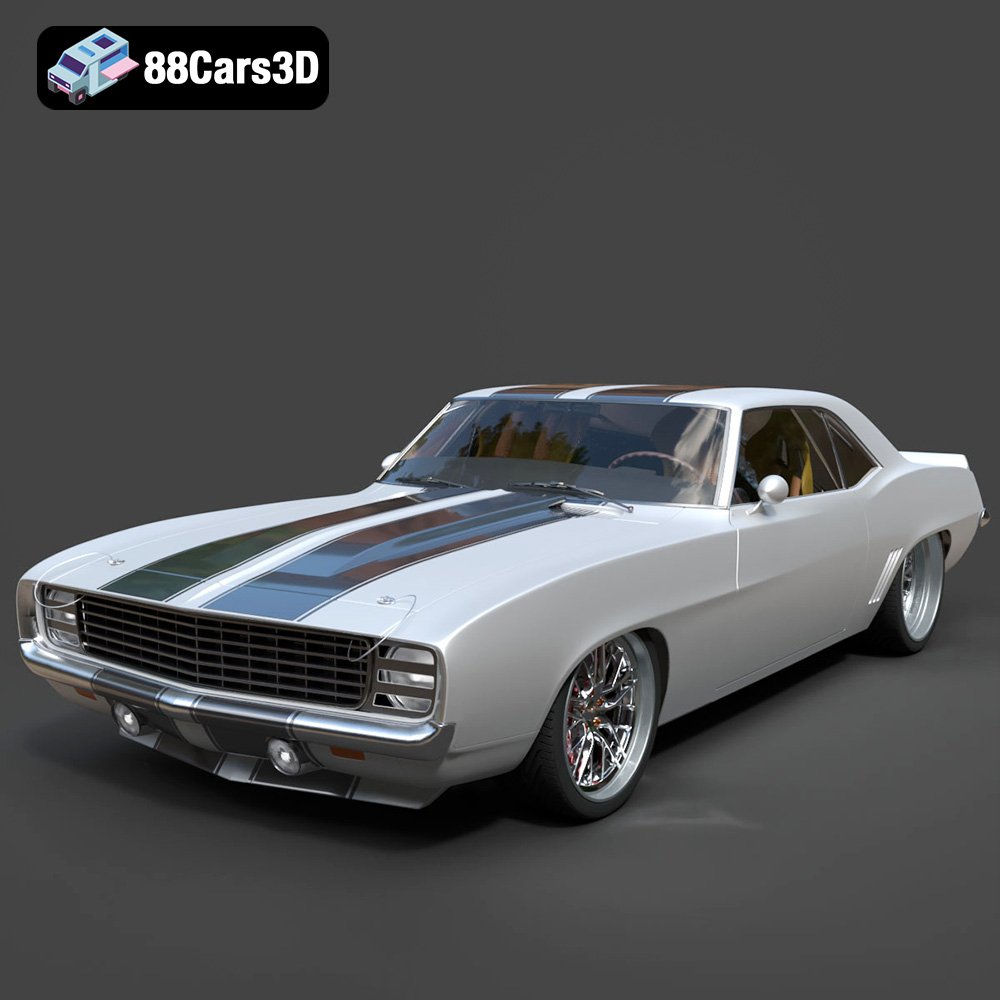
Chevrolet Camaro 69 Pro-007 3D Model
Texture: Yes
Material: Yes
Download the Chevrolet Camaro 69 Pro-007 3D Model featuring classic muscle car design and custom performance aesthetics. Includes .blend, .fbx, .obj, .glb, .stl, .ply, .unreal, and .max formats for rendering, simulation, and game development.
Price: $20.79
