Get 20% OFF All Premium 3D & STL Models!

The automotive industry is in the fast lane towards immersive experiences. From virtual showrooms to interactive design reviews and realistic training simulations, Augmented Reality (AR) and Virtual Reality (VR) are transforming how we interact with cars. However, bringing highly detailed 3D car models into these real-time environments presents a significant challenge. The photorealistic quality demanded for automotive visualization often translates into incredibly complex models, far exceeding the performance budgets of AR/VR devices. Without careful optimization, even the most stunning 3D car models can lead to choppy framerates, slow loading times, and a broken user experience.
This comprehensive guide is engineered for 3D artists, game developers, automotive designers, and visualization professionals who aim to bridge the gap between high-fidelity assets and real-time performance. We’ll delve into the intricate technical details, offering practical workflows, software-specific strategies, and industry best practices to ensure your 3D car models not only look exceptional but also perform flawlessly in AR and VR applications. From meticulous topology adjustments and smart UV mapping to advanced material setups and engine-specific optimizations, prepare to supercharge your assets for the immersive future.
Before diving into specific techniques, it’s crucial to grasp the fundamental performance constraints inherent in AR and VR environments. Unlike pre-rendered animations or high-end architectural visualizations, real-time immersive experiences demand consistent, high framerates (typically 72-90 FPS) to prevent motion sickness and ensure a fluid user experience. This requirement significantly limits the computational resources available, primarily impacting polygon counts, draw calls, and texture memory usage.
The specific budget depends heavily on the target hardware. Mobile AR (e.g., ARKit/ARCore on smartphones) is the most constrained, often requiring total scene polygon counts well under 100,000 triangles for optimal performance. Standalone VR headsets like the Meta Quest series offer more headroom but still necessitate efficient assets, typically aiming for 200,000-300,000 triangles per frame, with strict draw call limits. PC-tethered VR systems (e.g., Valve Index, Oculus Rift S) provide the most power, allowing for scenes with millions of polygons, but even here, unoptimized assets can quickly bring a high-end GPU to its knees. Automotive models, with their intricate curves, detailed interiors, and highly reflective surfaces, are particularly challenging to optimize for these environments.
The polygon count, or the number of triangles that make up your 3D model, is often the first bottleneck in real-time applications. While modern GPUs can render millions of polygons, the actual usable budget per frame in AR/VR is much lower, especially when considering multiple models, environments, and effects. For a single hero car model in mobile AR, aiming for a poly count between 50,000 and 80,000 triangles is a good starting point. For standalone VR, a range of 150,000 to 250,000 triangles for a primary vehicle can be acceptable, provided other scene elements are equally optimized.
Equally critical are “draw calls.” A draw call is an instruction from the CPU to the GPU to render a specific set of polygons using a particular material. Each unique material, mesh, or light source typically generates one or more draw calls. While individual draw calls are fast, their sheer number can overwhelm the CPU, creating a performance bottleneck known as a “CPU bound” scenario. Keeping draw calls to a minimum – ideally under 100-200 for mobile AR and 300-500 for standalone VR – is paramount. This often means consolidating materials and merging meshes where appropriate.
Textures provide the visual detail and realism to your models, but they consume valuable VRAM (video RAM). High-resolution textures, especially uncompressed ones, can quickly deplete the available memory on AR/VR devices, leading to performance drops or even crashes. It’s not just the resolution; the number of unique textures also impacts performance. Each texture loaded is an additional resource the GPU needs to manage. Furthermore, transparent materials (e.g., car windows, headlights) contribute to “overdraw,” where the GPU renders pixels multiple times because objects are layered on top of each other. While essential for realism, excessive transparency can be a significant performance hit, particularly on mobile.
Clean, efficient mesh topology is the bedrock of a high-performing 3D model, especially for complex automotive designs intended for real-time AR/VR. Good topology isn’t just about reducing polygon count; it’s about intelligent polygon distribution. It ensures smooth surface deformation, accurate normal map baking, and the creation of effective Levels of Detail (LODs). For car models, where fluid curves and sharp panel lines are essential, the strategic placement of edges is critical. Avoiding "poles" (vertices with more than five or less than three connecting edges) and maintaining a consistent “quad-based” workflow during modeling – even though game engines triangulate meshes upon import – significantly aids in producing predictable and clean results.
When modeling the intricate surfaces of a car, prioritize edge loops that define major contours, panel gaps, and sharp creases. These edge loops provide the necessary geometric information for shading and ensure that details remain crisp even at lower polygon counts. Internal structures and parts that are rarely seen should be simplified or removed entirely. For instance, the underside of a car, unless it’s a specific feature or visible through extreme angles, can be heavily optimized or even completely flat if not critical to interaction or visual fidelity. Similarly, complex emblems or grilles can often be simplified using normal maps baked from high-resolution geometry rather than modeled with intricate details.
Often, 3D car models created for high-fidelity renders (like those found on platforms like 88cars3d.com) possess an incredibly high polygon count – millions of triangles – far too dense for real-time AR/VR. This is where decimation and retopology come into play. “Decimation” is an automated process that reduces the polygon count of a mesh while attempting to preserve its visual integrity. Tools like the Decimate modifier in Blender, ZRemesher in ZBrush, or similar functions in 3ds Max and Maya can quickly bring down poly counts. However, automated decimation can sometimes introduce undesirable triangulation, uneven polygon distribution, or distort UVs, making it best suited for background objects or lower LODs.
“Retopology,” on the other hand, involves creating a new, low-polygon mesh over the surface of a high-polygon source. This process is more labor-intensive but offers ultimate control over edge flow and polygon density, resulting in a cleaner, more animatable, and efficient mesh. For hero AR/VR car models, a combination of manual retopology for critical areas and controlled decimation for less important parts often yields the best results. Blender offers powerful tools for manual retopology, leveraging features like the Shrinkwrap modifier and snapping tools, as detailed in the official Blender 4.4 documentation on modeling techniques: https://docs.blender.org/manual/en/4.4/. The goal is to retain the silhouette and major forms with the fewest possible polygons, ensuring the visual integrity of the original design.
Levels of Detail (LODs) are an indispensable optimization technique for AR/VR. The principle is simple: objects that are closer to the viewer are rendered with a higher polygon count (LOD0), while objects further away are replaced with progressively lower-polygon versions (LOD1, LOD2, etc.). This ensures that only the necessary geometric detail is rendered at any given distance, dramatically improving performance without a noticeable visual impact for the user.
For a typical automotive model in AR/VR, 3-4 LODs are usually sufficient. A common setup might look like this:
Creating LODs involves careful decimation or retopology for each level, ensuring that UVs remain consistent and normal maps still apply correctly. Modern game engines like Unity and Unreal Engine provide robust systems for managing and implementing LOD groups, automatically switching between levels based on camera distance or screen coverage. Properly implemented, LODs can significantly reduce GPU load, especially in scenes with multiple vehicles or complex environments.
Once your mesh topology is optimized, the next crucial step is creating efficient UV maps and Physically Based Rendering (PBR) materials. These elements dictate how your 3D car model looks and how efficiently its textures are processed by the AR/VR device. Poor UV mapping can lead to wasted texture space, resolution issues, and difficult material setups, while unoptimized PBR materials can introduce unnecessary draw calls and VRAM strain.
For AR/VR, the primary goal of UV mapping is to avoid overlapping UVs (unless specific shader effects require it), maximize the utilization of texture space, and maintain a consistent texel density across the model. Texel density refers to the number of pixels per unit of surface area on your model. Ensuring a uniform texel density prevents some parts of the car from looking blurry while others appear overly sharp. For complex car surfaces, which consist of many individual panels and intricate details, a strategic approach to UV unwrapping is essential. Instead of trying to unwrap the entire car into a single UV space, it’s often more efficient to separate logical components – body panels, wheels, interior elements, glass – and unwrap them into their own distinct UV islands.
One of the most effective ways to reduce draw calls and optimize texture memory is through “texture atlasing.” Instead of using a separate texture image for each material or component, an atlas consolidates multiple smaller textures into a single, larger image. For instance, the various decals, logos, and small details on a car (e.g., dashboard buttons, mirror indicators) could all be packed into one texture atlas. This means that a single material can reference one texture atlas, drastically cutting down on the number of draw calls compared to having multiple materials, each with its own texture map.
“Channel packing” is another powerful optimization for PBR materials. PBR workflows typically involve multiple grayscale texture maps: Metallic, Roughness, Ambient Occlusion, and sometimes Height or Cavity maps. Instead of storing each of these as a separate 8-bit grayscale texture, channel packing combines them into the Red, Green, and Blue channels of a single RGB texture. For example, you might pack your Metallic map into the Red channel, Roughness into the Green channel, and Ambient Occlusion into the Blue channel of one texture file. This reduces the number of textures loaded into VRAM, further improving performance and reducing memory footprint. Game engines are well-equipped to unpack these channels and apply them to the correct material properties.
Material instances are a cornerstone of efficient PBR material usage in game engines like Unity and Unreal Engine. Instead of creating a completely new material for every slight variation (e.g., a car in red, blue, or black), you create a “master material” or “parent material” that defines the core shader logic and texture slots. Then, you create “instances” of this master material. These instances inherit all the properties of the parent but allow you to override specific parameters – such as color, roughness values, or texture assignments – without incurring the cost of a new draw call. This significantly reduces the unique material count, which directly translates to fewer draw calls and better performance.
When working with complex car models, establishing a robust master material for the main body paint, another for plastics, and another for glass can cover most variations efficiently. This approach allows designers to quickly iterate on color schemes or material finishes without duplicating resources. For more advanced effects, such as clear coat materials with flake, ensuring the shader is optimized to perform only the necessary calculations and avoid expensive operations on mobile or standalone AR/VR devices is critical. Always profile your shaders to identify bottlenecks.
Achieving realistic lighting and shading for automotive models in AR/VR environments is a delicate balancing act between visual fidelity and real-time performance. Dynamic lighting – lights that move or change color in real-time – is computationally expensive. Each dynamic light source requires calculations per pixel or per vertex, which can quickly overwhelm the limited resources of AR/VR devices, especially for complex scenes with multiple reflective surfaces like a car. Therefore, a strategic approach to lighting is paramount.
The most common optimization technique involves a blend of baked lighting, mixed lighting, and efficient use of light and reflection probes. “Baked lighting” pre-calculates the illumination from static light sources (e.g., ambient light, sun, studio lights) and stores it in “lightmaps” – textures applied to your geometry. This means no real-time calculation is needed for these lights at runtime, dramatically reducing the GPU load. While baked lighting doesn’t interact dynamically with moving objects, it provides excellent ambient occlusion and indirect lighting, essential for grounding your car model in the environment and enhancing realism. For moving objects like the car itself, dynamic lights are necessary for cast shadows and direct illumination, but their number should be kept to an absolute minimum.
Implementing baked lighting effectively requires careful preparation. Firstly, your 3D car model – or rather, the static environment it will inhabit – needs a second set of UV coordinates (often called UV2 or Lightmap UVs) that are specifically designed for lightmaps. These UVs must be non-overlapping and efficiently packed to maximize lightmap resolution and minimize texture stretching. Most 3D software (Blender, 3ds Max, Maya) has tools to generate these UVs automatically or manually. Once prepared, you can set up your static light sources (Directional, Point, Spot) in your game engine (Unity or Unreal Engine) and configure them to “Baked” or “Mixed” mode.
In Unity, the Lighting window allows you to set up lightmap parameters, choose a lightmap renderer, and initiate the baking process. Unreal Engine uses its “Lightmass” system for static lighting. Proper configuration – including lightmap resolution, bounced light quality, and denoising – is crucial for achieving high-quality baked results without excessive file sizes. While the car model itself will often interact with dynamic lights for its direct illumination and shadow casting, the environment’s baked lighting provides the rich, realistic global illumination that makes the car feel truly present in the scene. For the car to receive baked indirect light, “light probes” are deployed throughout the scene to sample and interpolate baked lighting information for dynamic objects.
Realistic reflections are vital for automotive visualization, but they are also incredibly expensive in real-time. Full “real-time ray tracing” for reflections is typically reserved for high-end PC VR (if at all) and is generally not feasible for mobile AR or standalone VR. Instead, AR/VR experiences rely on more optimized techniques. “Reflection Probes” (Unity) or “Reflection Captures” (Unreal Engine) are static probes placed in the environment that capture a 360-degree cubemap of the surroundings. Dynamic objects like your car model then sample these cubemaps to simulate reflections. While these are static reflections, they are far more performant than real-time ray tracing. For closer, more accurate reflections on flat surfaces, “Screen Space Reflections” (SSR) can be used, but these are computationally intensive and should be limited or avoided on lower-end devices. Combining reflection probes for general reflections with judicious use of SSR for hero elements can provide a good balance.
Post-processing effects, such as Bloom, Vignette, Color Grading, Ambient Occlusion, and Anti-aliasing, can significantly enhance the visual appeal of a scene. However, each effect adds to the GPU workload. For AR/VR, particularly on mobile and standalone headsets, it is imperative to limit post-processing to the absolute essentials. Prioritize effects that have a high visual impact for a low performance cost, such as a subtle color grade or a lightweight anti-aliasing solution. Many engines offer optimized post-processing stacks designed for XR, so utilize those specific versions to ensure maximum efficiency. Unnecessary post-processing can quickly consume your precious frame budget.
The choice of file format and meticulous data preparation are critical steps in the AR/VR optimization pipeline, directly impacting asset compatibility, loading times, and overall engine performance. A poorly prepared model, regardless of its polygon count, can lead to scaling issues, incorrect pivot points, broken materials, or a cluttered scene hierarchy, all of which hinder development and performance. Understanding the strengths and weaknesses of different file formats for AR/VR is paramount.
Common file formats for 3D assets include FBX, OBJ, GLB, and USDZ. FBX (Filmbox) is a proprietary format from Autodesk widely used across the industry for interchange between 3D applications (3ds Max, Maya, Blender) and game engines (Unity, Unreal Engine). It supports meshes, materials, animations, and skeletal data, making it a versatile choice. OBJ (Wavefront Object) is a simpler, open standard, primarily supporting geometry and basic material information, but lacks advanced features like skeletal animation. While still used, it often requires manual material setup in engines. When sourcing high-quality models from marketplaces such as 88cars3d.com, you’ll often find them provided in FBX or OBJ, ready for further optimization.
For AR/VR, especially for web-based or mobile applications, GLB and USDZ have emerged as powerful, optimized formats. GLB (GL Transmission Format Binary) is an open-standard, compact, and efficient format designed for the web and real-time viewing. It bundles 3D models, PBR materials, textures, and animations into a single file, making it incredibly easy to share and load. USDZ is a proprietary format developed by Apple, specifically optimized for ARKit on iOS devices. It also bundles assets and is designed for efficient delivery and rendering in AR. Both GLB and USDZ are excellent choices for streamlined AR/VR experiences, offering faster load times and better performance on constrained devices.
The rise of Web AR/VR has made GLB and USDZ indispensable. A GLB file, being a self-contained binary, loads quickly and is supported by a wide range of platforms and viewers, including web browsers via WebGL. This makes it ideal for “try-before-you-buy” car configurators on websites or interactive product showcases. Exporting to GLB from Blender (using the File > Export > glTF 2.0 option with ‘Binary’ chosen for GLB) or 3ds Max/Maya (via plugins or direct export) ensures your optimized mesh, PBR materials, and packed textures are ready for deployment.
USDZ is the format of choice for seamless AR experiences on Apple devices. It leverages the USD (Universal Scene Description) framework, offering robust scene graph capabilities. Creating USDZ files often involves converting existing assets (e.g., FBX) using Apple’s command-line tools or dedicated third-party exporters. When preparing models for GLB or USDZ, ensure your PBR materials are correctly configured, textures are optimized (e.g., power-of-two resolutions, appropriate compression), and all unnecessary data (hidden objects, extra cameras, unused animations) has been purged from the scene. The “less is more” principle applies rigorously here to maximize performance and minimize file size for quick downloads.
Integrating optimized 3D car models into Unity and Unreal Engine involves more than just dragging and dropping. Upon import, both engines offer extensive settings to control how the asset is processed. For FBX files, pay close attention to options for mesh compression, normal map generation, tangent space settings, and material import. For instance, enabling mesh compression can further reduce file size, while ensuring correct tangent space calculation is crucial for accurate normal map rendering. Unreal Engine’s “Import Uniform Scale” and Unity’s “Scale Factor” are critical for maintaining consistent object scale within your scene, preventing unexpected size discrepancies. It’s best practice to export models at real-world scale (e.g., 1 unit = 1 meter) from your 3D software to avoid scaling issues.
Once imported, organize your assets into logical folders and create “Prefabs” (Unity) or “Blueprints” (Unreal Engine) for your car models. Prefabs/Blueprints are reusable game objects that encapsulate meshes, materials, colliders, and scripts, making scene management much more efficient. Material setup is another key area: replace generic imported materials with your optimized master materials and material instances. Set up appropriate colliders (e.g., Mesh Colliders for complex shapes, or simpler Box/Sphere Colliders for performance) if physics interaction is required. Finally, test the model’s performance within the engine’s editor and on target AR/VR devices, using built-in profilers to identify any bottlenecks introduced during integration.
Beyond the core mesh, UV, and material optimizations, several advanced techniques can provide significant performance gains for 3D car models in AR/VR. These strategies often involve leveraging engine-specific features and understanding the unique requirements of immersive platforms. Pushing the boundaries of performance means going beyond the basics and employing every available tool to ensure a buttery-smooth experience, even with highly detailed automotive assets.
“Occlusion Culling” is a powerful technique that prevents objects from being rendered if they are hidden behind other objects from the camera’s perspective. For example, if the user is looking at the front of a car, the engine will not render the engine block or the rear seats if they are completely obscured. This is typically pre-calculated by the engine and can significantly reduce the number of polygons and draw calls processed per frame. Similarly, “Batching” – both static and dynamic – allows the engine to group multiple meshes that share the same material into a single draw call. Static batching works for non-moving objects, while dynamic batching attempts to group small, moving meshes. For multiple identical cars in a virtual showroom, instance rendering is a highly effective form of batching.
Mobile AR platforms like ARKit (iOS) and ARCore (Android) introduce their own set of unique considerations. Performance is even more critical on these devices due to limited processing power and battery life. Optimizing for mobile AR means stricter polygon budgets, very few dynamic lights, simplified materials, and a focus on small file sizes for quick downloads. Additionally, understanding plane detection, tracking quality, and real-world lighting estimation is crucial for creating convincing AR experiences where the 3D car model interacts realistically with the user’s environment.
While PBR materials provide a standardized approach to realism, creating custom shaders or optimizing existing ones using visual shader editors (like Unity’s Shader Graph or Unreal Engine’s Material Editor) can yield substantial performance improvements. Standard PBR shaders, especially complex ones with multiple texture lookups and calculations for various effects (e.g., clear coat, metallic flakes, subsurface scattering), can be resource-intensive. By crafting a custom shader, you can strip away unnecessary features and tailor it precisely to your needs, performing only the calculations required for your specific visual effect.
For example, a car’s paint shader might only need specific calculations for its metallic and clear coat properties, rather than a full general-purpose PBR shader. Within shader graphs, identify and remove redundant nodes, simplify mathematical operations, and minimize the number of texture samples. Using “static switches” or “feature levels” in shaders allows you to conditionally compile different shader versions based on target platform or quality settings, ensuring lower-end devices get a simpler, faster shader while high-end devices can render more complex effects. Always strive for the simplest possible shader that still achieves the desired visual quality for your 3D car models.
The final, and arguably most critical, step in AR/VR optimization is continuous performance profiling and debugging. You can make all the theoretical optimizations, but until you test on target hardware and analyze the results, you won’t know where the actual bottlenecks lie. Modern game engines provide sophisticated profiling tools: Unity’s Profiler and Unreal Engine’s Insights are indispensable. These tools allow you to monitor CPU and GPU usage in real-time, identify expensive processes, pinpoint which assets are causing performance drops, and understand whether you are CPU-bound or GPU-bound.
When profiling, look for spikes in CPU time (indicating too many draw calls, complex scripts, or physics calculations) or GPU time (indicating high polygon counts, complex shaders, too many lights, or excessive post-processing). Debuggers like RenderDoc can provide even deeper insights into the rendering pipeline, allowing you to inspect individual draw calls, texture memory usage, and shader performance. It’s an iterative process: optimize a section, profile, analyze, and repeat. Continuous profiling ensures that your 3D car models maintain optimal performance throughout the development cycle, delivering the best possible immersive experience.
Optimizing 3D car models for Augmented and Virtual Reality is a multifaceted discipline that demands a holistic approach, blending artistic skill with technical acumen. From the initial stages of meticulous mesh topology and efficient UV mapping to the advanced considerations of PBR material creation, lighting strategies, and engine-specific optimizations, every step plays a crucial role in delivering a performant and visually stunning immersive experience. The balance between visual fidelity and real-time performance is a constant challenge, but by applying the detailed techniques outlined in this guide, you can ensure your automotive assets shine in any AR/VR application.
Remember that the journey to optimization is iterative. Continuously refine your models, experiment with different settings, and leverage profiling tools to identify and address bottlenecks. Platforms like 88cars3d.com offer a fantastic starting point for acquiring high-quality 3D car models, but the responsibility to prepare them for the rigors of AR/VR lies with the developer. Embrace these strategies, and you’ll be well-equipped to create captivating automotive experiences that not only look incredible but also perform flawlessly across the diverse landscape of immersive technologies. The future of automotive visualization is immersive, and with optimized assets, you’re ready to drive it forward.

Meta Description:
Texture: Yes
Material: Yes
Download the Cadillac CTS-V Coupe 3D Model featuring detailed exterior styling and realistic interior structure. Includes .blend, .fbx, .obj, .glb, .stl, .ply, .unreal, and .max formats for rendering, simulation, AR VR, and game development.
Price: $13.9
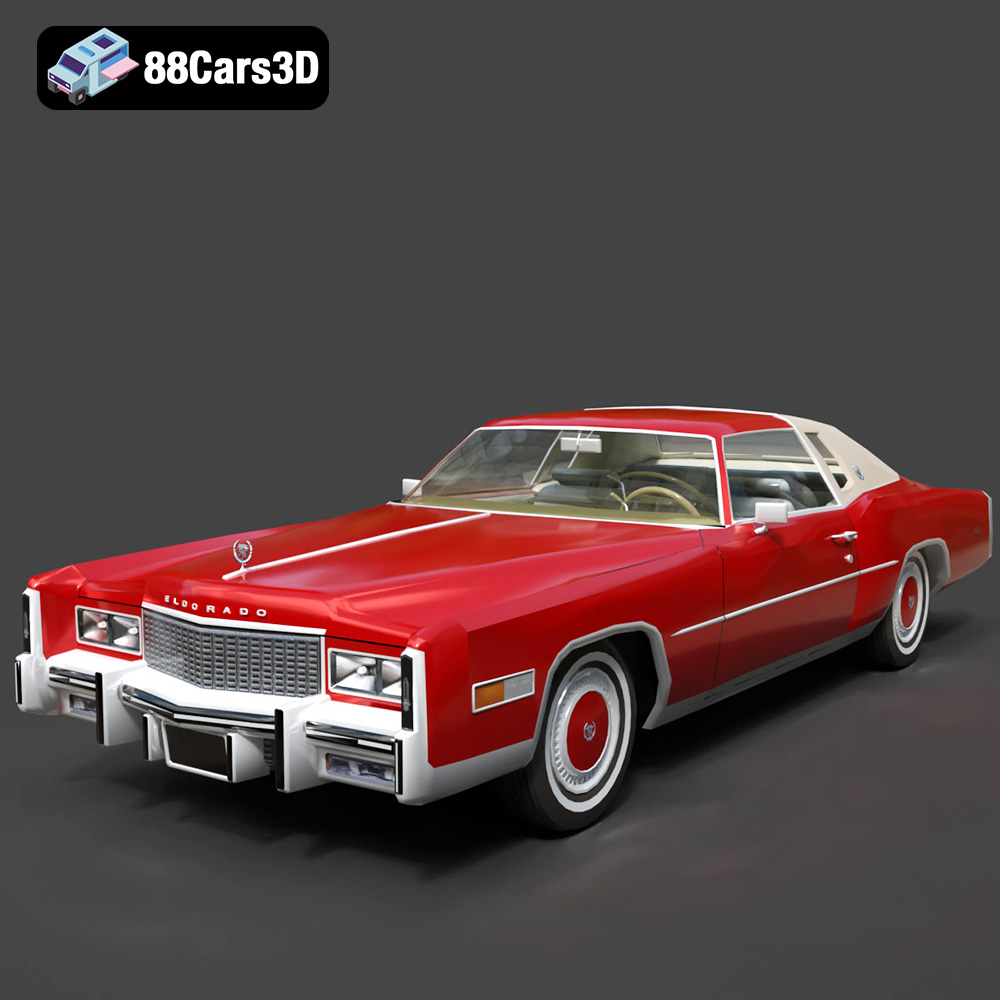
Texture: Yes
Material: Yes
Download the Cadillac Eldorado 1978 3D Model featuring accurately modeled exterior, detailed interior, and period-correct aesthetics. Includes .blend, .fbx, .obj, .glb, .stl, .ply, .unreal, and .max formats for rendering, simulation, and game development.
Price: $10.79
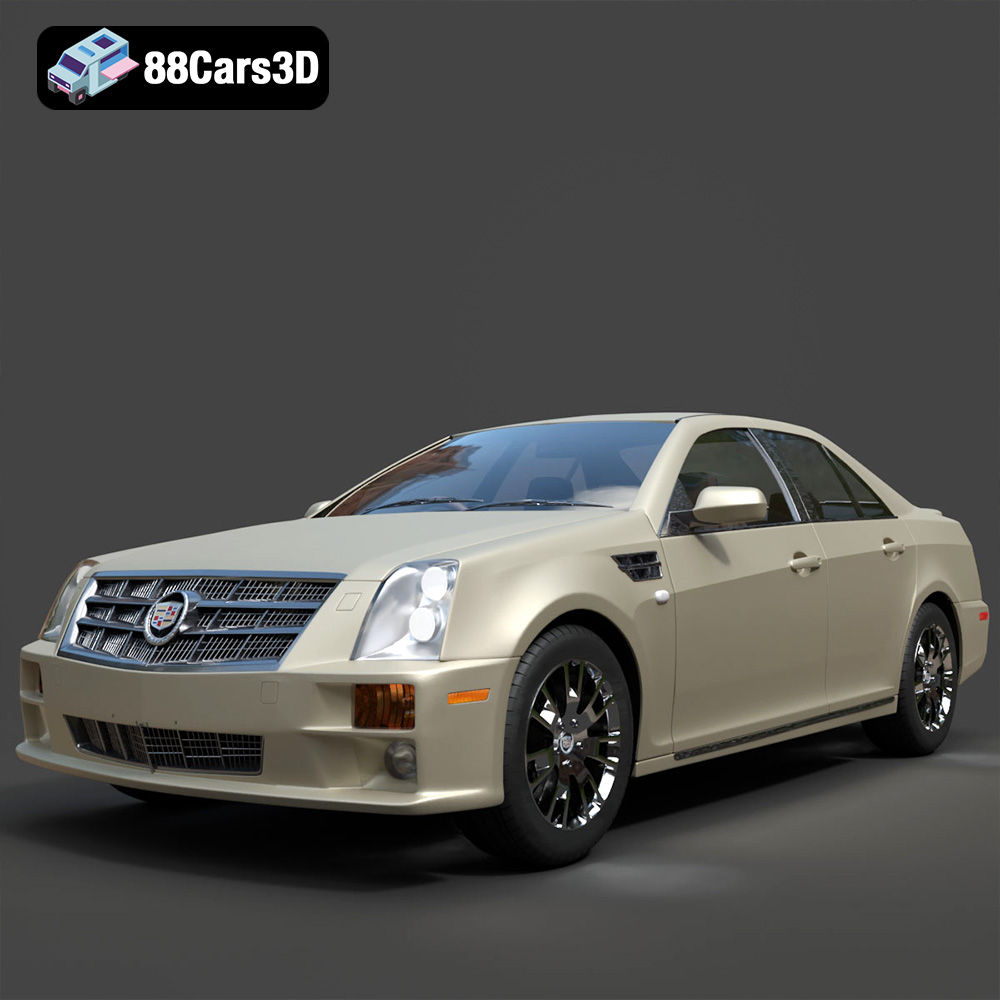
Texture: Yes
Material: Yes
Download the Cadillac STS-005 3D Model featuring a detailed exterior and interior. Includes .blend, .fbx, .obj, .glb, .stl, .ply, .unreal, and .max formats for rendering, simulation, and game development.
Price: $22.79
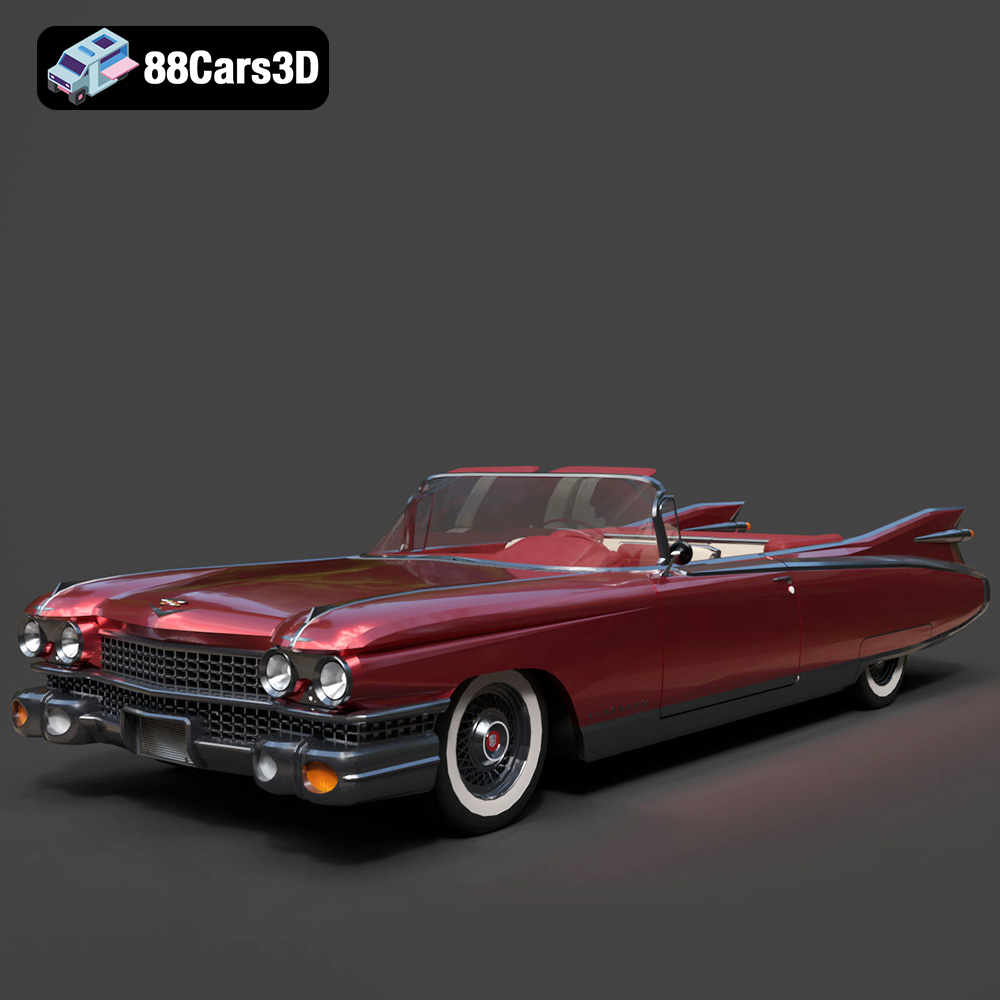
Texture: Yes
Material: Yes
Download the Cadillac Eldorado Convertible (1959) 3D Model featuring iconic fins, luxurious chrome details, and a classic vintage design. Includes .blend, .fbx, .obj, .glb, .stl, .ply, .unreal, and .max formats for rendering, simulation, and game development.
Price: $20.79

Texture: Yes
Material: Yes
Download the Cadillac DTS-005 3D Model featuring its iconic luxury design, detailed interior, and realistic exterior. Includes .blend, .fbx, .obj, .glb, .stl, .ply, .unreal, and .max formats for rendering, simulation, and game development.
Price: $10.79

Texture: Yes
Material: Yes
Download the Buick LeSabre 1998 3D Model featuring a classic American full-size sedan design. Includes .blend, .fbx, .obj, .glb, .stl, .ply, .unreal, and .max formats for rendering, simulation, and game development.
Price: $10.79
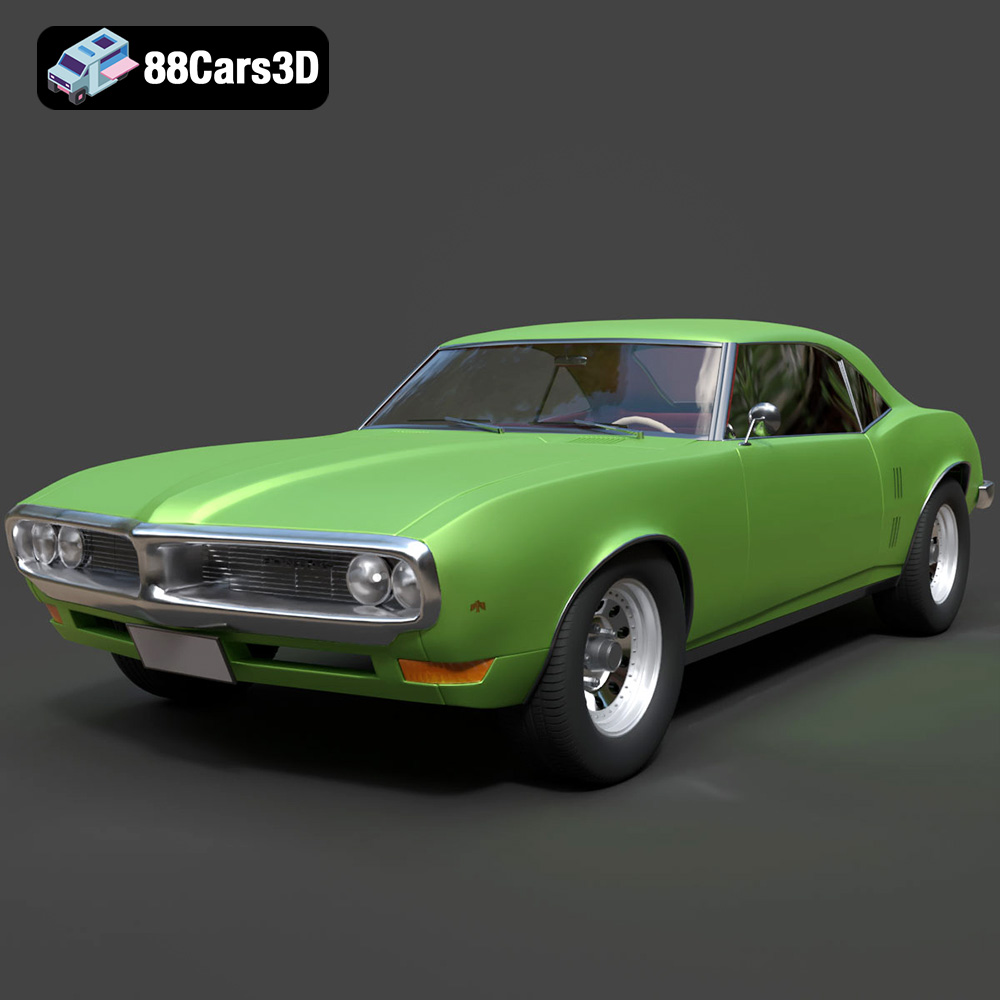
Texture: Yes
Material: Yes
Download the Pontiac Firebird 1998 3D Model featuring clean geometry, realistic detailing, and a fully modeled interior. Includes .blend, .fbx, .obj, .glb, .stl, .ply, .unreal, and .max formats for rendering, simulation, and game development.
Price: $10

Texture: Yes
Material: Yes
Download the Opel Astra 2008 3D Model featuring clean geometry, realistic detailing, and a fully modeled interior. Includes .blend, .fbx, .obj, .glb, .stl, .ply, .unreal, and .max formats for rendering, simulation, and game development.
Price: $10

Texture: Yes
Material: Yes
Download the Mercedes Benz Joaquin-007 3D Model featuring clean geometry, realistic detailing, and a fully modeled interior. Includes .blend, .fbx, .obj, .glb, .stl, .ply, .unreal, and .max formats for rendering, simulation, and game development.
Price: $19.99
Texture: Yes
Material: Yes
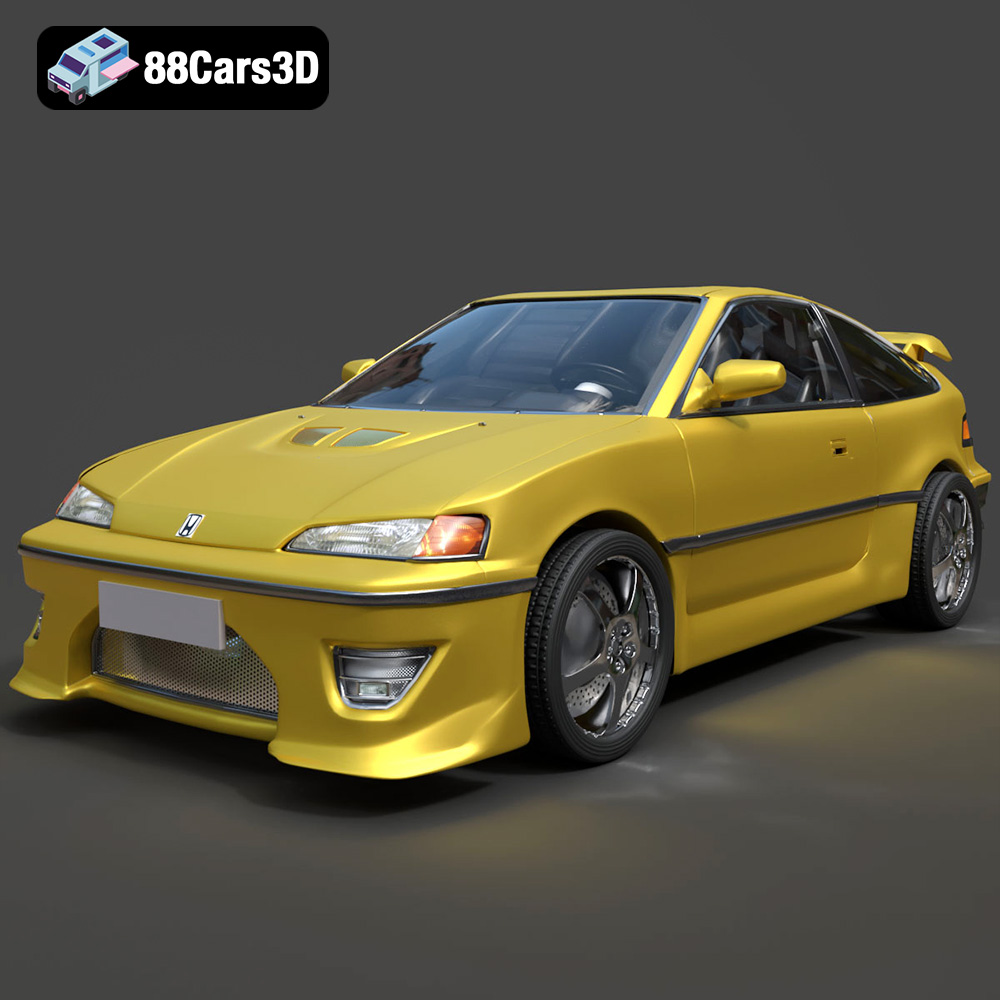
Download the Honda CRX 1980 3D Model featuring clean geometry, realistic detailing, and a fully modeled interior. Includes .blend, .fbx, .obj, .glb, .stl, .ply, .unreal, and .max formats for rendering, simulation, and game development.
Price: $11.99

