

“`html
Mastering Surface Finish: A Deep Dive into Achieving Smooth STL Car Models
The allure of a perfectly rendered 3D printed car model, complete with flawless, mirror-like surfaces, is a goal many enthusiasts and makers strive for. Whether you’re a seasoned hobbyist replicating a classic automobile or a designer prototyping a futuristic vehicle, the surface finish of your STL files can be the difference between a good print and a truly exceptional one. Achieving this level of polish, however, often involves navigating a complex interplay of 3D printing parameters, material science, and post-processing techniques. This guide is designed to equip you with the knowledge and actionable strategies to elevate your printed car models, transforming them from raw prints into polished masterpieces. We’ll explore everything from the fundamental structure of STL files and their impact on print quality, to the intricate dance of slicing parameters, the critical role of supports, and the nuanced differences between FDM and resin printing. Prepare to unlock the secrets to achieving the smooth, professional finish your automotive creations deserve.
Understanding the Foundation: STL File Structure and its Printing Implications
Before your digital car model even touches the 3D printer, its underlying digital structure plays a pivotal role in the quality of the final print. The STL (Stereolithography) file format, while ubiquitous, is fundamentally a tessellated representation of a 3D surface. It describes the geometry of an object using a collection of triangular facets. The density and arrangement of these triangles directly influence the perceived smoothness of the model at a microscopic level. A model with a low triangle count might appear faceted or “stair-stepped” even before printing, especially on curved surfaces. Conversely, an excessively high triangle count can lead to enormous file sizes, potentially causing issues with slicing software and increasing processing times, without necessarily translating to a significant visual improvement if the printer’s resolution is the limiting factor.
Mesh Topology and Surface Normals
The quality of an STL file isn’t just about the number of triangles; it’s also about their organization and orientation. A “manifold” or “watertight” mesh is essential for 3D printing. This means the mesh has no holes, no inverted faces, and no self-intersecting geometry. Inverted surface normals (where a triangle’s outward-facing direction points inward) can confuse the slicer, leading to printing errors like missing sections or internal voids. Software like Meshmixer, Blender, or Netfabb are invaluable tools for inspecting and repairing STL files. Performing a “watertightness check” and correcting any identified issues before slicing is a crucial first step. For car models, paying close attention to subtle curves, sharp edges, and complex aerodynamic surfaces is paramount. Ensuring these areas are accurately represented by well-formed triangles with consistent normal orientation is key to capturing the design intent and achieving a smooth output.
Optimizing STL Resolution for Your Printer
The ideal STL resolution is a balance between detail and performance. For high-resolution resin printers, a denser mesh might be beneficial to capture finer details. However, for FDM printing, there’s a point of diminishing returns. A good rule of thumb is to set your slicing software’s STL import resolution settings (often referred to as “resolution” or “refinement”) to a level that smooths out curves without creating an unmanageable polygon count. For example, setting a facet deviation of 0.01mm to 0.05mm in CAD software or during STL export can yield good results. When downloading print-ready STL files from marketplaces such as 88cars3d.com, the files are typically pre-optimized for 3D printing, meaning this step might be less critical, but understanding the underlying principles is always beneficial.
The Slicer’s Symphony: Orchestrating for Surface Smoothness
The slicer is the digital conductor, translating your 3D model into layer-by-layer instructions for your 3D printer. Every setting within your slicer, from layer height to print speed, has a direct impact on the surface finish. Achieving smoothness is often a trade-off between print time and aesthetic quality, requiring careful calibration and understanding of these parameters.
Layer Height: The Most Direct Influence
The most significant factor influencing surface smoothness, particularly on curved or sloped surfaces, is layer height. A smaller layer height results in finer steps between layers, creating a smoother visual appearance. For FDM printers, layer heights typically range from 0.05mm to 0.3mm. For highly detailed car models where smooth curves and body panels are crucial, opting for lower layer heights like 0.1mm or even 0.08mm is recommended. While this dramatically increases print time, the visual improvement is undeniable. For resin printers, layer heights are much smaller, often ranging from 0.025mm to 0.1mm, inherently providing superior surface detail.
- Typical Layer Heights for FDM:
- 0.3mm: Draft quality, fastest print time, noticeable layer lines.
- 0.2mm: Standard quality, good balance of speed and detail.
- 0.12mm – 0.16mm: High quality, reduced layer lines, longer print time.
- 0.05mm – 0.08mm: Ultra-high quality, minimal layer lines, significantly extended print times.
- Impact: Lower layer height = smoother surfaces, longer print duration.
Print Speed: A Balancing Act
While lower layer heights are key, print speed also plays a critical role. Printing too fast can lead to artifacts such as ringing (ghosting), poor layer adhesion, and under-extrusion, all of which degrade surface quality. For achieving smooth finishes, especially on the outer walls of a car model, reducing the print speed for outer walls is often beneficial. Many slicers allow you to set different speeds for inner walls, outer walls, top/bottom layers, and infill. Slowing down the outer wall print speed (e.g., to 25-40 mm/s) gives the extruded filament more time to settle correctly, resulting in a more uniform and smoother surface.
Retraction Settings and Extrusion Calibration
Proper retraction settings are vital to prevent stringing and oozing, which can leave undesirable wisps and blobs on the model’s surface. Fine-tuning retraction distance and speed based on your filament and printer is essential. Additionally, ensuring your extruder is correctly calibrated (e-steps) and that your flow rate (extrusion multiplier) is accurate prevents over-extrusion (leading to blobs) or under-extrusion (leading to gaps and poor adhesion), both of which mar surface finish. Performing a calibration cube print and flow rate test before printing a critical car model is highly recommended.
The Art of Support: Enabling Smoothness Without Scarring
Car models often feature complex geometries, overhangs, and intricate details that necessitate support structures. The way supports are generated, their density, and the method of removal directly impact the surface quality of the areas they touch. Poorly managed supports can leave behind unsightly marks, scars, and rough patches that detract from the model’s overall appeal.
Support Placement and Type
Modern slicers offer sophisticated support generation options. For smooth surfaces, particularly on the exterior body panels of a car, “tree” or “organic” supports (available in Cura and PrusaSlicer, respectively) are often superior to standard linear supports. These supports branch out and make contact with the model at fewer points, and often at points where contact is less visible or easier to clean up. Additionally, adjusting the “support Z distance” (the vertical gap between the support and the model) and “support X/Y distance” (the horizontal gap) is crucial. Increasing these distances slightly can make supports easier to remove and reduce the likelihood of damaging the model surface, though too large a gap can compromise support effectiveness.
Support Interface Layers
Many slicers provide an option for “support interface layers.” This feature prints a denser, more solid layer (or several layers) just below the actual model surface where it touches the support. This interface layer provides a more stable surface for the model to print onto, resulting in a smoother finish on the underside of overhangs and bridges. Tuning the density and pattern of the support interface can further enhance the surface quality. Experiment with different interface patterns (e.g., lines, concentric) and densities (e.g., 70-90%) to find the best balance between smooth finish and ease of removal.
Manual Support Placement and Removal Techniques
For critical areas or highly detailed models, manual support placement offers the ultimate control. Slicers like PrusaSlicer and Cura allow you to paint or designate specific areas where supports should and should not be generated. This allows you to strategically place supports only where absolutely necessary and avoid sensitive features like delicate spoilers or intricate grilles. When it comes to removal, patience is key. For FDM prints, using a sharp hobby knife, flush cutters, or specialized prying tools can help detach supports cleanly. For resin prints, supports are typically removed after washing and before the final cure, often with small pliers or a scalpel. Careful, incremental removal minimizes the risk of tearing away parts of the model surface.
Material Matters: Choosing the Right Filament or Resin
The material you choose for your 3D printing project significantly influences the achievable surface finish. Different materials have varying properties that affect how they flow, cool, and interact with the printing environment, all of which impact smoothness.
FDM Materials: PLA, PETG, ABS, and Beyond
PLA (Polylactic Acid) is a popular choice for its ease of printing and excellent detail reproduction. It has a relatively low melting point and minimal warping, making it ideal for achieving smooth surfaces with standard FDM printing settings. It’s also receptive to post-processing like sanding and painting. PETG (Polyethylene Terephthalate Glycol) offers improved durability and temperature resistance but can be more prone to stringing, requiring careful retraction tuning. ABS (Acrylonitrile Butadiene Styrene), while strong, requires higher print temperatures and often an enclosure to prevent warping, which can complicate achieving smooth external finishes. Specialized filaments like ASA (Acrylonitrile Styrene Acrylate) offer similar properties to ABS but with better UV resistance. For the smoothest possible FDM finish, consider filaments specifically engineered for smooth surfaces or experiment with soluble supports (e.g., HIPS or PVA) which dissolve away, leaving no support marks.
Resin Printing: SLA, DLP, and MSLA
Resin printing technologies (SLA, DLP, MSLA) inherently produce smoother surfaces than most FDM prints due to their much finer layer resolutions and the way liquid resin cures layer by layer. However, the choice of resin matters. Standard resins offer good detail, while high-detail or engineering resins can provide even sharper features and smoother finishes. Different resin formulations have varying viscosity, cure times, and properties, which can influence surface quality and print success. Pay close attention to the manufacturer’s recommended 3D printer settings for your specific resin, including exposure times and layer heights, as these are critical for achieving optimal results.
Advanced Techniques: Surface Finishing and Post-Processing
Even with perfectly dialed-in slicing and printing settings, some level of post-processing is often required to achieve a truly show-quality finish on your car models. This is where raw prints are transformed into polished replicas.
Sanding and Smoothing
Sanding is a cornerstone of surface finishing for both FDM and resin prints. Start with a coarser grit sandpaper (e.g., 220-400 grit) to remove prominent layer lines or support marks, progressing to finer grits (e.g., 1000, 2000, and even higher). Wet sanding (using water or a lubricant) can help reduce dust and prevent the sandpaper from clogging, leading to a smoother finish. For FDM prints, careful sanding can significantly reduce the appearance of layer lines. For resin prints, sanding is typically used to smooth out any minor imperfections or support contact points.
Filling and Priming
For FDM prints with persistent layer lines or minor imperfections, using fillers like automotive putty, Bondo, or specialized 3D print smoothing fillers can be very effective. Apply a thin layer, let it cure, and then sand it smooth. Multiple applications may be necessary for a perfectly smooth surface. Once the surface is smooth and any filler is applied, applying a primer is crucial. Primer fills in microscopic imperfections, reveals any remaining flaws, and provides an even base for subsequent painting. Automotive primers are excellent for this purpose.
Painting and Finishing
The final painting stage is where your car model truly comes to life. Achieving a smooth, glossy finish requires proper technique. Use thin, even coats of paint, allowing each coat to dry thoroughly before applying the next. Airbrushing can offer a very smooth, professional finish. Consider using automotive paints for authentic results. Clear coats add depth, protection, and can enhance the gloss. Different types of clear coats (e.g., gloss, satin, matte) allow you to replicate various automotive finishes. For advanced users, techniques like applying decals and weathering can add an extra layer of realism.
Printer Calibration and Maintenance: The Unsung Heroes
A well-calibrated and maintained 3D printer is the bedrock of consistent, high-quality prints. Neglecting these fundamentals will invariably lead to surface finish issues, regardless of how meticulously you adjust your slicer settings.
Bed Leveling and First Layer Adhesion
A perfectly level print bed and excellent first-layer adhesion are non-negotiable. An uneven bed will result in distorted prints and inconsistent extrusion, directly impacting the bottom surface finish. Whether using manual leveling, assisted leveling, or an auto-bed leveling system, ensure your first layer is consistently squished onto the build plate. This provides a solid foundation for the entire print.
Nozzle Condition and Extruder Calibration
A worn or partially clogged nozzle can lead to inconsistent extrusion, producing rough surfaces, under-extrusion, and blobs. Regularly inspect your nozzle for wear and tear and clean or replace it as needed. As mentioned earlier, calibrating your extruder’s E-steps ensures that the printer pushes out the correct amount of filament. Over or under-extrusion, even by a small percentage, will visibly degrade the surface finish of your car models.
Environmental Factors
For FDM printing, environmental factors like drafts and temperature fluctuations can cause warping and affect layer adhesion, leading to poor surface quality. Printing inside an enclosure, especially when using materials like ABS or ASA, helps maintain a stable temperature around the print. For resin printing, maintaining stable ambient temperatures and avoiding direct sunlight are important for consistent curing and print quality.
In conclusion, achieving a flawless, smooth surface finish on your 3D printed car models is a multi-faceted endeavor that requires attention to detail from the digital model to the final painted replica. Understanding the structure of your STL files, meticulously tuning your slicer settings—particularly layer height and print speed—and mastering the art of support generation and removal are fundamental steps. Material selection plays a crucial role, as does diligent printer calibration and maintenance. By combining these technical insights with patient post-processing techniques like sanding, filling, and painting, you can transform your prints into works of art. Platforms like 88cars3d.com provide excellent starting points with high-quality, print-ready STL files, but the journey to a perfect finish still relies on your skill and understanding of the 3D printing process. Embrace the iterative nature of 3D printing, experiment with settings, and don’t be afraid to refine your techniques. The satisfaction of holding a perfectly smooth, intricately detailed printed car model is well worth the effort.
“`
Featured 3D Car Models

Cadillac CTS-V Coupe 3D Model
Meta Description:
Texture: Yes
Material: Yes
Download the Cadillac CTS-V Coupe 3D Model featuring detailed exterior styling and realistic interior structure. Includes .blend, .fbx, .obj, .glb, .stl, .ply, .unreal, and .max formats for rendering, simulation, AR VR, and game development.
Price: $13.9
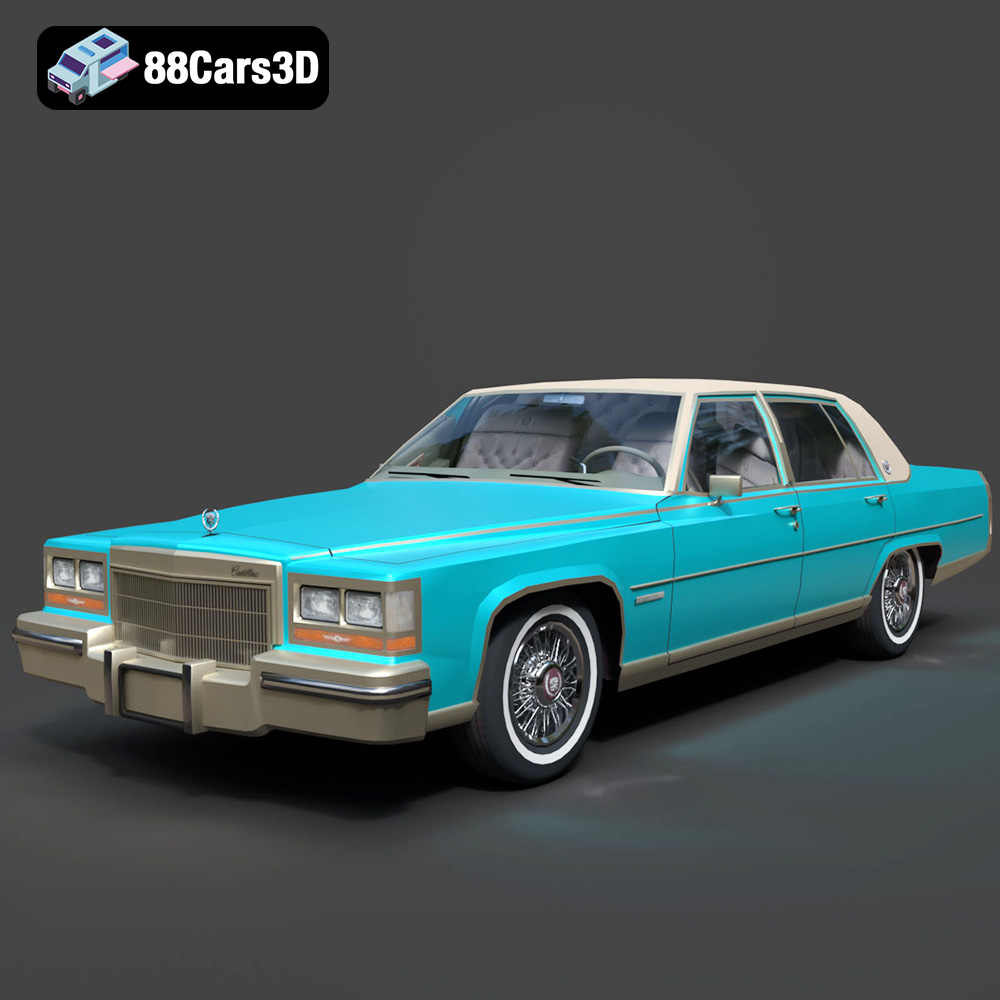
Cadillac Fleetwood Brougham 1985 3D Model
Texture: Yes
Material: Yes
Download the Cadillac Fleetwood Brougham 1985 3D Model featuring its iconic classic luxury design and detailed craftsmanship. Includes .blend, .fbx, .obj, .glb, .stl, .ply, .unreal, and .max formats for rendering, simulation, and game development.
Price: $10.79

Cadillac Eldorado 1978 3D Model
Texture: Yes
Material: Yes
Download the Cadillac Eldorado 1978 3D Model featuring accurately modeled exterior, detailed interior, and period-correct aesthetics. Includes .blend, .fbx, .obj, .glb, .stl, .ply, .unreal, and .max formats for rendering, simulation, and game development.
Price: $10.79
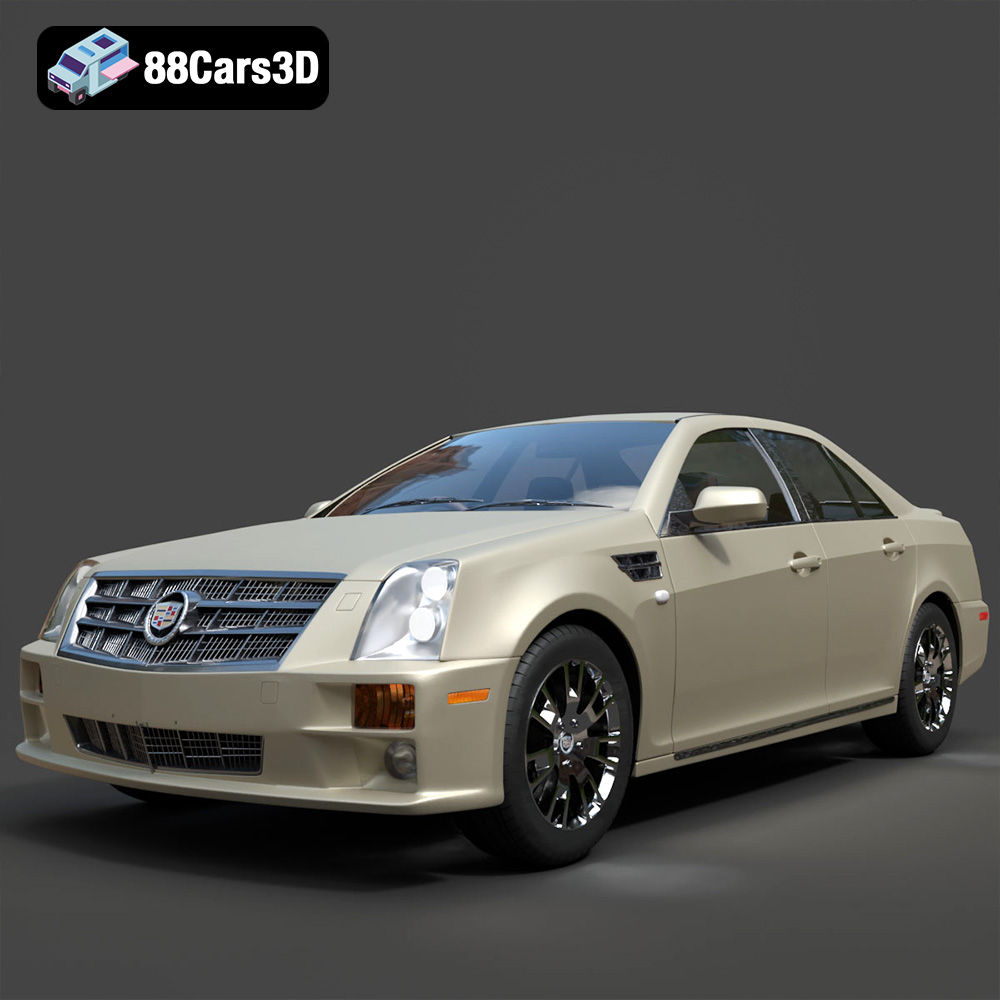
Cadillac STS-005 3D Model
Texture: Yes
Material: Yes
Download the Cadillac STS-005 3D Model featuring a detailed exterior and interior. Includes .blend, .fbx, .obj, .glb, .stl, .ply, .unreal, and .max formats for rendering, simulation, and game development.
Price: $22.79
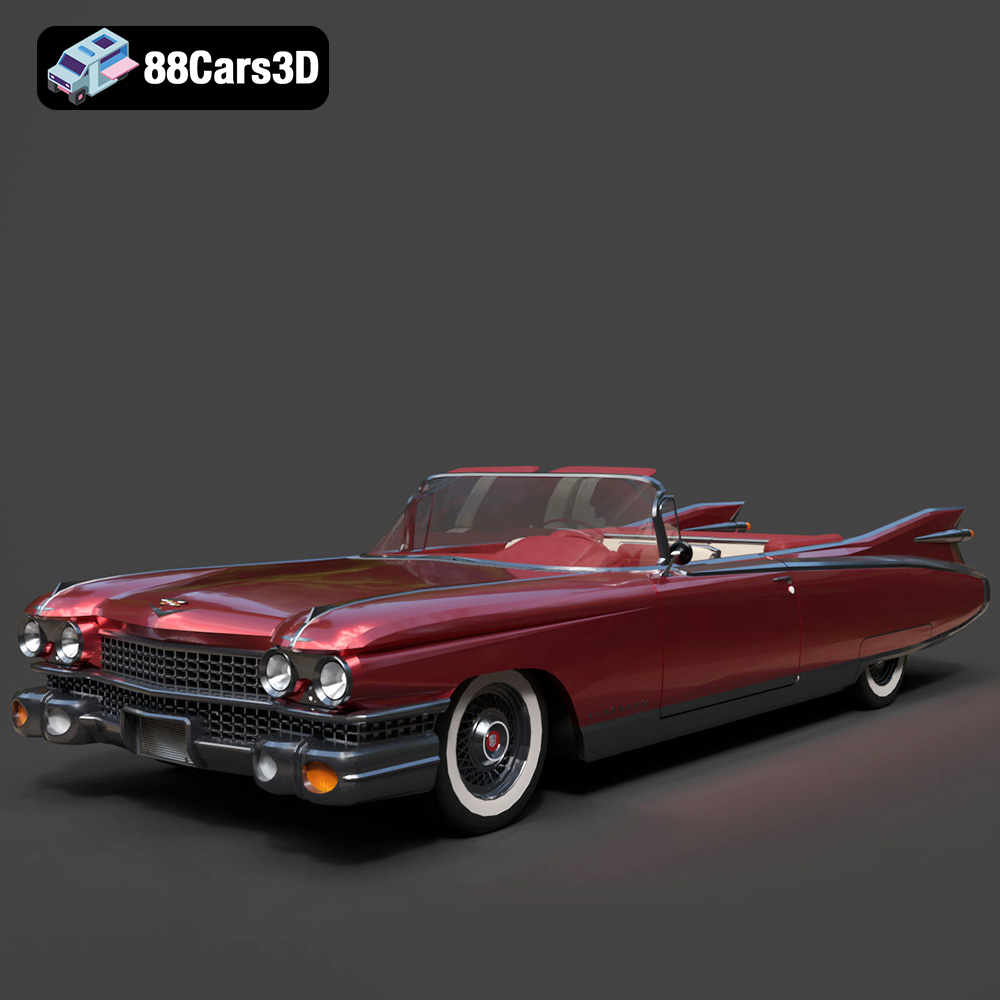
Cadillac Eldorado Convertible (1959) 3D Model
Texture: Yes
Material: Yes
Download the Cadillac Eldorado Convertible (1959) 3D Model featuring iconic fins, luxurious chrome details, and a classic vintage design. Includes .blend, .fbx, .obj, .glb, .stl, .ply, .unreal, and .max formats for rendering, simulation, and game development.
Price: $20.79

Cadillac DTS-005 3D Model
Texture: Yes
Material: Yes
Download the Cadillac DTS-005 3D Model featuring its iconic luxury design, detailed interior, and realistic exterior. Includes .blend, .fbx, .obj, .glb, .stl, .ply, .unreal, and .max formats for rendering, simulation, and game development.
Price: $10.79

Buick LeSabre 1998 3D Model
Texture: Yes
Material: Yes
Download the Buick LeSabre 1998 3D Model featuring a classic American full-size sedan design. Includes .blend, .fbx, .obj, .glb, .stl, .ply, .unreal, and .max formats for rendering, simulation, and game development.
Price: $10.79
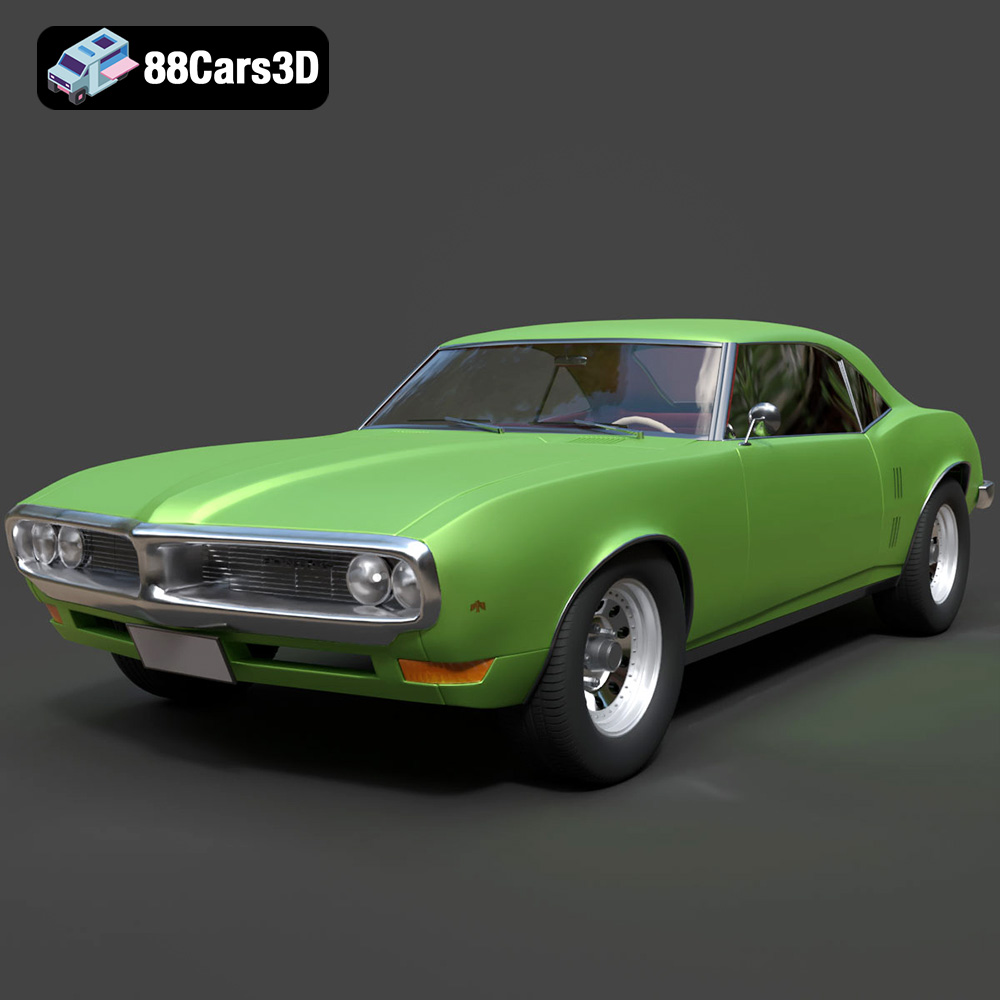
Pontiac Firebird 1998 3D Model
Texture: Yes
Material: Yes
Download the Pontiac Firebird 1998 3D Model featuring clean geometry, realistic detailing, and a fully modeled interior. Includes .blend, .fbx, .obj, .glb, .stl, .ply, .unreal, and .max formats for rendering, simulation, and game development.
Price: $10

Opel Astra 2008 3D Model
Texture: Yes
Material: Yes
Download the Opel Astra 2008 3D Model featuring clean geometry, realistic detailing, and a fully modeled interior. Includes .blend, .fbx, .obj, .glb, .stl, .ply, .unreal, and .max formats for rendering, simulation, and game development.
Price: $10

Mercedes Benz Joaquin-007 3D Model
Texture: Yes
Material: Yes
Download the Mercedes Benz Joaquin-007 3D Model featuring clean geometry, realistic detailing, and a fully modeled interior. Includes .blend, .fbx, .obj, .glb, .stl, .ply, .unreal, and .max formats for rendering, simulation, and game development.
Price: $19.99
