Mastering Low-Poly Car Models for Mobile Games: A Comprehensive Guide for 3D Artists
The mobile gaming landscape is a vibrant, ever-expanding universe, constantly pushing the boundaries of visual fidelity and interactive experiences. At its core, every captivating mobile game relies on meticulously crafted assets that strike a delicate balance between stunning visuals and robust performance. For titles featuring vehicles, the humble 3D car model transforms from a static object into a dynamic character, and mastering its creation for mobile platforms is an art form in itself. This guide delves deep into the technical intricacies of developing optimized, high-quality low-polygon car models, equipping 3D artists and game developers with the knowledge to excel in this demanding field. From foundational topology principles to advanced game engine optimization, we’ll explore every facet necessary to bring your automotive visions to life in the palm of your hand.
Whether you’re an aspiring game artist, an experienced 3D modeler transitioning to mobile development, or a studio looking to refine your asset pipelines, understanding these techniques is paramount. We’ll cover everything from efficient modeling practices and smart UV mapping to physically based rendering (PBR) texturing and critical game engine integration. Prepare to unlock the secrets to creating visually rich yet incredibly performant game assets that will keep players immersed without compromising frame rates. Let’s rev our engines and dive into the world of low-poly automotive excellence!
The Foundation: Understanding Low-Poly Philosophy and Efficient Topology
Creating compelling 3D car models for mobile games begins with a profound understanding of the “low-poly” philosophy. This isn’t just about reducing polygon counts; it’s about intelligent poly distribution, maximizing visual impact with minimal data, and preparing models for optimal performance across a diverse range of mobile hardware. The silhouette and core forms of a vehicle are paramount, and maintaining these with a lean polygon budget is the ultimate challenge. Every edge, every face, must serve a purpose, contributing to the overall shape and shading without introducing unnecessary complexity.
The art of low-poly modeling involves a strategic approach to edge flow and mesh density. For instance, areas that define the car’s primary contours—like the roofline, wheel arches, and prominent body panels—will naturally require more polygons to maintain their curvature. Conversely, flatter surfaces or areas that will be primarily detailed by normal maps can afford a sparser mesh. This judicious allocation of polygons is crucial. A well-constructed low-poly mesh is not just about the numbers; it’s about the quality of those numbers, ensuring clean deformation, optimal UV unwrapping, and efficient rendering within the game engine. It’s a foundational skill for anyone aiming to create high-performance automotive rendering and visualization assets for mobile platforms.
Polygon Budgets and Performance Targets
Before even beginning to model, understanding your target polygon budget is critical. This budget is dictated by the specific mobile platform, the game’s genre, the number of vehicles on screen, and the overall desired frame rate. For instance, a hero car in a racing game might have a budget ranging from 15,000 to 25,000 triangles, while background traffic vehicles could be as low as 2,000 to 5,000 triangles. High-fidelity mobile titles for newer devices might push these limits slightly, but the core principle remains: lower is always better, provided visual quality is maintained.
Beyond the primary model, implementing Level of Detail (LODs) is a non-negotiable strategy. LODs are simplified versions of your mesh that automatically swap in when the car is further away from the camera. A typical setup might include three LODs: LOD0 (full detail), LOD1 (50% poly reduction), and LOD2 (75% or more reduction). This technique drastically reduces the computational load on the GPU by drawing fewer polygons for distant objects, directly contributing to smoother frame rates and a better player experience. Optimizing polygon counts directly impacts draw calls, which are a major performance bottleneck on mobile hardware, making strategic polygon reduction a cornerstone of mobile game optimization.
Efficient Topology and Edge Flow for Automotive Shapes
Efficient topology for low-poly car models primarily focuses on creating clean, quad-based meshes, even though game engines ultimately triangulate everything. Quads (four-sided polygons) are easier to manage, deform predictably, and are essential for clean UV unwrapping and baking normal maps. The goal is to define the car’s distinctive silhouette and major panel breaks using as few edges as possible while avoiding unsightly pinching or faceted surfaces.
Key techniques include:
- Strategic Edge Loops: Use loop cuts to define hard edges, such as around windows, door seams, and wheel arches. These loops provide the necessary geometric support for these features without excessively subdividing the entire mesh. In Blender, for example, the Loop Cut and Slide tool (Blender 4.4 documentation on subdividing and loop cuts) is invaluable for this.
- Optimized Curvature: For curved surfaces like fenders or the hood, distribute polygons unevenly, with higher density in areas of tighter curvature and sparser density in flatter regions. This maintains the visual integrity of the curve with fewer overall polygons.
- Avoiding N-gons and Minimizing Poles: N-gons (polygons with more than four sides) can cause unpredictable shading and triangulation issues in game engines. Aim for quads and triangles only. Poles (vertices where more than five edges meet) can also lead to shading artifacts and should be minimized, especially on prominent surfaces.
- Reference and Blueprint Accuracy: Always work with accurate blueprints and reference images. This ensures your low-poly model accurately captures the vehicle’s proportions and design intent from the outset, preventing costly rework later.
Smart UV Mapping for Mobile Game Assets
After perfecting the mesh, the next critical step for any 3D car model is UV mapping. UVs are the bridge between your 3D geometry and its 2D textures. For mobile game assets, smart UV mapping is paramount, directly influencing texture quality, memory usage, and ultimately, rendering performance. Poor UVs can lead to stretched textures, visible seams, and wasted texture space, all of which are detrimental to a mobile game’s visual appeal and efficiency.
The objective is to create a clean, organized UV layout that maximizes texel density (pixels per unit of surface area), minimizes distortion, and intelligently groups texture islands to facilitate efficient texturing and engine processing. This often involves a blend of automated unwrapping tools and meticulous manual refinement to achieve the best results.
Unwrapping Strategies for Automotive Surfaces
Automotive surfaces are notoriously complex, featuring compound curves, sharp angles, and intricate details. Effective UV unwrapping for these shapes requires a methodical approach:
- Minimize Seams: While seams are inevitable, place them strategically in less visible areas, such as along natural panel lines, under the car, or at the edges of separate components. Fewer, well-placed seams lead to cleaner textures and easier painting.
- Avoid Stretching and Distortion: Use checkerboard patterns during unwrapping to visually identify and correct stretching. Tools like Blender’s UV Editor allow you to adjust and pin vertices to maintain a uniform texel density across the model.
- Uniform Texel Density: Ensure that all parts of your car model have a consistent texel density. This means that a small detail on the door should have roughly the same pixel resolution as a larger area on the hood, preventing blurry or pixelated details. You can calculate and match texel density across different UV islands for optimal results.
- Logical Grouping: Group related parts together on the UV map. For instance, all exterior body panels might be on one side of the UV space, while interior elements or undercarriage components are on another. This organization aids in texturing and can contribute to better caching in game engines.
- Hard Surface Unwrapping: For metallic, hard-surface objects like cars, often a combination of cylindrical, planar, and box mapping can be used, followed by precise cutting and relaxing of UV islands.
Overlapping UVs and Texture Atlasing
Two powerful techniques for optimizing texture usage and reducing draw calls in mobile game development are overlapping UVs and texture atlasing.
- Overlapping UVs: This technique involves placing UV islands for mirrored or identical parts directly on top of each other. For example, if a car has symmetrical doors, you can unwrap one door and then overlap its UVs with the other, effectively using the same texture space for both. This saves significant texture memory. However, use this judiciously, as it means mirrored parts cannot have unique painted details.
- Texture Atlasing: A texture atlas is a single, large texture image that contains all the textures for multiple objects or all parts of a single complex object. Instead of having separate texture maps for the car body, wheels, interior, and lights, all these elements are packed into one large texture. The benefits are substantial:
- Reduced Draw Calls: When a game engine renders an object, it typically makes one draw call per material. If a car has many materials, it means many draw calls. By consolidating all textures into one atlas, you can often use a single material for the entire car (or major components), drastically reducing draw calls and improving performance.
- Optimized Memory Usage: While a large atlas might seem memory-intensive, it’s often more efficient than loading many smaller, fragmented textures.
- Streamlined Workflow: Texturing software like Substance Painter excels at baking and organizing textures into atlases, making the process more manageable.
When sourcing 3D car models from marketplaces such as 88cars3d.com, it’s beneficial to check if they come with optimized UVs and atlased textures, as this can significantly accelerate your development pipeline.
PBR Texturing for Realistic Low-Poly Cars
The quest for realism in mobile games, even with limited polygons, is largely driven by Physically Based Rendering (PBR) materials. PBR is a shading and rendering technique that aims to simulate how light interacts with surfaces in a physically accurate manner. For low-poly 3D car models, PBR textures breathe life into simplistic geometry, conveying intricate surface details, realistic reflections, and convincing material properties without adding a single extra polygon.
Understanding the core principles of PBR and mastering the creation of its associated texture maps is essential for any artist looking to achieve a professional finish on their game assets. It allows for a consistent look across different lighting conditions and environments, which is critical for immersive gaming experiences.
Core PBR Principles and Material Workflow
PBR relies on a set of standardized texture maps, each controlling a specific aspect of how the material reflects or absorbs light. The most common maps in a PBR metallic/roughness workflow (widely used in game engines) include:
- Albedo/Base Color Map: This map defines the fundamental color of the surface without any lighting information. It should be flat and contain no shadows or highlights. For a car, this would be its base paint color, interior fabric color, etc.
- Metallic Map: A grayscale map where white indicates a metallic surface (like car paint or chrome) and black indicates a non-metallic (dielectric) surface (like plastic, rubber, glass).
- Roughness Map: Another grayscale map that dictates how rough or smooth a surface is. White areas are rough (diffuse reflections), while black areas are smooth (sharp, mirror-like reflections). This map is crucial for distinguishing between matte paint, glossy clear coats, and polished chrome.
- Normal Map: This highly critical map simulates high-frequency surface details (scratches, panel lines, bolts, fabric weaves) by storing directional information that fakes surface bumps and dents. It allows a low-poly mesh to appear far more detailed than its polygon count suggests.
- Ambient Occlusion (AO) Map: A grayscale map that darkens crevices and areas where light struggles to reach, adding subtle depth and realism. It’s often multiplied over the base color or used as an input in the shader.
The consistent use of these maps ensures that your low-poly car models will look good under any lighting conditions within the game engine, contributing to believable automotive rendering and visualization.
Baking High-Poly Details to Low-Poly Meshes
The magic of PBR for low-poly assets lies significantly in the process of “baking.” This technique involves creating a highly detailed, high-polygon version of your car model (often a subdivision surface model or a sculpt), and then “baking” its surface details onto the texture maps of your low-polygon game-ready mesh. This allows you to achieve stunning visual fidelity without the performance cost of high poly counts.
The typical baking workflow involves:
- High-Poly Model Creation: Model a detailed version of your car, complete with all desired surface imperfections, panel gaps, bolts, and emblems. This model can have millions of polygons.
- Low-Poly Model Preparation: Ensure your low-poly model has clean UVs and is placed in the exact same spatial location as your high-poly model. This is critical for accurate baking.
- Baking Process: Using dedicated software like Substance Painter, Marmoset Toolbag, or even Blender (refer to the Blender 4.4 documentation on baking), you project the surface information from the high-poly model onto the low-poly’s UV map. This process generates:
- Normal Map: Captures the surface angle differences, faking fine geometric detail.
- Ambient Occlusion Map: Captures indirect shadowing from crevices and overlapping geometry.
- Curvature Map: Identifies convex and concave areas, useful for adding edge wear or dirt accumulation.
- Thickness Map: Indicates the depth of the mesh, useful for subsurface scattering effects (less common for cars, more for organic models).
- Texture Resolution: For mobile, common texture resolutions are 2048×2048 (2K) for main car bodies, 1024×1024 (1K) for wheels, and 512×512 or 256×256 for smaller details. Always aim for the lowest resolution that still provides acceptable visual quality to conserve memory and optimize load times.
This baking workflow allows artists to unleash their creativity on high-resolution meshes, then efficiently transfer that detail to performance-friendly low-poly game assets, achieving impressive visual results even on mobile devices.
Game Engine Optimization and Integration
Creating a beautifully modeled and textured low-poly car is only half the battle; integrating it efficiently into a game engine is where performance truly comes into play. Game engines like Unity and Unreal Engine offer a robust set of tools and workflows for optimizing assets, but leveraging them effectively requires a deep understanding of engine-specific concepts and mobile development best practices. The goal is to minimize rendering costs, reduce CPU overhead, and ensure smooth gameplay across a wide array of mobile devices.
This section will focus on crucial optimization techniques and the practical steps involved in bringing your 3D car models from your DCC (Digital Content Creation) software into the game engine, setting them up for peak performance.
Level of Detail (LODs) and Culling Techniques
As previously mentioned, Level of Detail (LODs) are indispensable for mobile games. Game engines provide dedicated LOD systems that automatically swap out different mesh versions based on distance from the camera. A typical setup for a hero car might involve:
- LOD0: High detail (e.g., 15,000-25,000 triangles) for close-up views.
- LOD1: Medium detail (e.g., 5,000-10,000 triangles) for mid-range views.
- LOD2: Low detail (e.g., 1,000-3,000 triangles) for distant views, often just the main body shell.
Each LOD should have its own optimized mesh, and crucially, its own set of UVs and potentially lower-resolution textures to further save memory. Transition points between LODs should be carefully calibrated to avoid noticeable popping as the models swap.
Beyond LODs, culling techniques are vital:
- Frustum Culling: The engine automatically prevents rendering of any object that falls outside the camera’s view frustum (the visible cone). This is handled automatically by the engine.
- Occlusion Culling: This advanced technique prevents rendering of objects that are hidden behind other, closer objects, even if they are within the camera’s frustum. Implementing occlusion culling requires baking visibility data into the scene, which can be computationally intensive at setup but offers significant performance gains at runtime, especially in environments with many occluding objects like cityscapes.
Reducing Draw Calls and Batching
One of the most significant performance bottlenecks on mobile devices is the number of draw calls. Each time the CPU tells the GPU to draw something, it incurs overhead. The fewer draw calls, the better. Here’s how to minimize them:
- Texture Atlasing: As discussed, consolidating multiple textures into a single atlas allows you to use fewer materials, which directly reduces draw calls. Each unique material typically generates at least one draw call.
- Mesh Combining: Where appropriate, combine multiple small meshes into a single larger mesh. For example, if a car’s wheels, body, and interior are all separate meshes using the same material, combining them can reduce draw calls. Be mindful of potential LOD conflicts when combining.
- Static Batching (Unity) / Instancing (Unreal Engine): Game engines can automatically or manually “batch” (group) multiple static objects that share the same material and mesh data into a single draw call. This is incredibly powerful for repeated elements like multiple parked cars, trees, or streetlights.
- Optimized Shaders: Mobile shaders should be as simple as possible. Avoid complex calculations, excessive texture lookups, or multiple lighting passes. Use mobile-specific PBR shaders provided by the engine.
Exporting and Importing into Game Engines
The choice of file format and export settings is crucial for a smooth engine integration pipeline.
- Recommended File Formats:
- FBX (.fbx): The industry standard for transferring 3D assets between DCC software and game engines. It supports meshes, materials, animations, and skeletal data.
- GLB (.glb): A binary version of glTF, increasingly popular for its efficiency and widespread support, especially in web-based 3D and AR/VR applications.
- USDZ (.usdz): An Apple-developed format optimized for AR/VR experiences on iOS.
- Export Settings (e.g., from Blender): When exporting your 3D car models, ensure you:
- Apply all transformations (scale, rotation, location) to prevent unexpected scaling issues in the engine.
- Export only selected objects.
- Embed media (textures) if desired, or ensure they are properly referenced.
- Export triangulated meshes (game engines do this anyway, so it’s good practice to preview it).
- Ensure proper forward and up axis settings (e.g., +Z Up, +Y Forward for Unity; +X Forward, +Z Up for Unreal). Refer to Blender 4.4 documentation on FBX export options.
- Importing into Unity/Unreal:
- Material Setup: Recreate your PBR materials in the engine using the exported texture maps. Connect Albedo to Base Color, Metallic to Metallic, Roughness to Roughness, and Normal to Normal Map input.
- Collision Meshes: Create simplified collision meshes (often convex hulls or simple primitive shapes) for your car model. These should be very low-poly and separate from the visual mesh to ensure accurate physics calculations without performance overhead.
- Prefabs/Blueprints: Once set up, turn your car model with its materials, LODs, collision, and any scripts into a prefab (Unity) or Blueprint (Unreal Engine). This allows for easy instantiation and modification across your project.
Platforms like 88cars3d.com are excellent resources for acquiring pre-optimized, game-ready 3D car models in various formats, often with LODs and PBR textures already configured, significantly streamlining this integration phase.
Lighting, Environment, and Visual Polish
Even the most meticulously crafted low-poly 3D car model will fall flat without a well-executed lighting and environment setup. For mobile games, this involves a delicate balance: achieving visually appealing results while adhering to strict performance constraints. Every light source, reflection, and post-processing effect adds to the rendering cost, making smart optimization crucial. The goal is to enhance realism and immersion without sacrificing frame rate.
Mobile-Friendly Lighting Techniques
Lighting is paramount for defining the form, material, and mood of your car model. On mobile, realism often comes from clever faking and careful resource management:
- Baked Lighting (Lightmaps): This is the cornerstone of efficient mobile lighting. Static lights (like the sun or ambient environmental lights) are pre-calculated and “baked” into textures (lightmaps) that are then applied to static geometry in the scene. This eliminates costly real-time light calculations at runtime. Use baked lighting for environments and static objects, including parked cars that don’t move.
- Light Probes and Reflection Probes:
- Light Probes: These capture incoming light from the environment at specific points in space. Dynamic objects (like player cars) can then sample these probes to receive realistic, albeit approximated, indirect lighting and color. This makes dynamic objects feel more integrated into the baked scene.
- Reflection Probes: These capture a cubemap of the environment from a specific point. Dynamic objects can use these cubemaps for realistic reflections, simulating car paint and metallic surfaces without needing expensive real-time reflections. Place probes strategically around your scene and for each major car model.
- Optimizing Real-time Lights: If you must use real-time lights (e.g., headlights, brake lights), use them sparingly. Limit their range, disable shadows where not critical, and use forward rendering paths that handle fewer dynamic lights more efficiently. Avoid multiple complex real-time shadows.
- Shadow Maps: Optimize shadow map resolutions (e.g., 512×512 or 1024×1024) and distance cascades to reduce render time. Lower resolution shadows are often acceptable on mobile.
Post-Processing for Mobile Aesthetics
Post-processing effects add a final layer of visual polish, enhancing the overall aesthetic and mood of the game. However, they are computationally expensive, so selective and judicious use is key for mobile performance:
- Color Grading: Adjusting the overall color palette, contrast, and saturation is a relatively cheap way to establish a strong visual style and can drastically improve the look of your 3D car models.
- Bloom: Simulates the natural effect of very bright lights bleeding into surrounding areas. Use a subtle bloom effect rather than an exaggerated one, as heavy bloom can be costly.
- Vignette: A subtle darkening around the edges of the screen can help draw attention to the center and is very cheap to implement.
- Ambient Occlusion (Screen Space): While baked AO maps are preferred for static objects, screen-space ambient occlusion (SSAO) can provide real-time ambient occlusion for dynamic objects. However, SSAO is often too performance-intensive for most mobile games and should be used with extreme caution or avoided.
- Anti-aliasing: Essential for smoothing jagged edges, but MSAA (Multi-sample Anti-aliasing) is often too costly for mobile. Alternatives like FXAA (Fast Approximate Anti-aliasing) or SMAA (Subpixel Morphological Anti-aliasing) offer a better balance of quality and performance.
Always profile your game with post-processing effects enabled to ensure they don’t degrade performance below acceptable levels.
AR/VR and Future Considerations
The principles of creating highly optimized low-poly 3D car models extend directly into the burgeoning fields of Augmented Reality (AR) and Virtual Reality (VR). Performance is even more critical in AR/VR due to the need for high, stable frame rates (often 60fps or 90fps per eye) to prevent motion sickness. Low-polygon models, efficient PBR materials, and careful texture atlasing are fundamental requirements.
- USDZ and GLB: These file formats are becoming standards for AR/VR content. USDZ, in particular, is widely adopted on Apple’s iOS ecosystem for AR experiences, while GLB is popular across various platforms. Both formats are designed for efficient transmission and rendering of 3D assets.
- Real-time Shadows and Reflections: For AR/VR, particularly AR, grounding the virtual car in the real world often requires realistic real-time shadows cast onto the environment and reflections that convincingly integrate the model. This is where creative shader work and optimized cubemap reflections become crucial.
- Performance Budgets: AR/VR often demands even tighter polygon and texture budgets than traditional mobile games, emphasizing the need for extreme optimization.
As these technologies mature, the demand for high-quality, performant 3D car models will only grow, making the skills outlined in this guide even more valuable.
Common Challenges and Professional Tips
Developing low-poly 3D car models for mobile games is a challenging yet rewarding endeavor. Artists frequently encounter hurdles related to visual quality, optimization, and workflow efficiency. Anticipating these challenges and adopting professional best practices can significantly streamline development and lead to superior results. Here, we address some common pain points and offer actionable advice for overcoming them.
Maintaining Visual Quality with Low Poly Counts
The perpetual balancing act between polygon count and visual fidelity is the primary challenge in low-poly modeling. A common pitfall is to over-simplify to the point where the car loses its characteristic shape or appears too blocky.
- Leverage Normal Maps to the Fullest: This is your most powerful tool. A meticulously baked normal map can make a flat surface appear to have intricate panel gaps, vents, or bolts, completely transforming the visual complexity of a low-poly mesh. Invest time in creating a high-poly sculpt that captures all these fine details.
- Focus on Silhouette and Key Contours: Ensure that the most defining features of the car – the overall body shape, headlight and taillight recesses, wheel arches – retain enough polygons to appear smooth and accurate. These are the elements that players will notice most at a distance.
- Smart Material Design: PBR materials, combined with well-crafted roughness and metallic maps, can simulate a wide range of surfaces, from glossy paint to rough tires, even on simple geometry. Emphasize contrast and variation in these maps to create visual interest.
- Use Baked Ambient Occlusion: Baked AO maps add subtle depth and realism to crevices and shadowed areas, giving the illusion of more geometric complexity.
- Reference Real-World Materials: Study how light interacts with actual car paint, glass, and rubber. Replicating these properties in your PBR textures is key to a convincing result.
Workflow Efficiency and Collaboration
An efficient workflow is crucial for hitting deadlines and working effectively within a team, especially when dealing with numerous assets like a car roster.
- Consistent Naming Conventions: Adopt a clear and consistent naming convention for meshes, materials, textures, and scene objects (e.g.,
Car_Sedan_Body_LOD0, T_Car_Sedan_Albedo_2K). This makes assets easy to find, understand, and integrate.
- Scene Organization: Keep your DCC scene tidy. Group related objects, use layers or collections, and hide unnecessary elements. A clean scene prevents errors during export and improves overall productivity.
- Version Control: Implement a robust version control system (like Git LFS, Perforce, or SVN) for all your 3D assets and project files. This allows for easy collaboration, tracking changes, and reverting to previous versions if needed.
- Modular Approach: Consider modeling car components (wheels, interior, body) as separate modules initially. This allows for easier texture optimization, LOD creation, and potential customization or swapping of parts in the game.
- Leverage Asset Marketplaces: For certain projects or to jumpstart development, sourcing high-quality, pre-optimized 3D car models from platforms like 88cars3d.com can be a significant time-saver. These models often come with clean topology, PBR materials, and multiple file formats, ready for immediate integration.
Troubleshooting Performance Issues
Even with careful planning, performance bottlenecks can arise. Knowing how to diagnose and address them is a critical skill for any game developer.
- Utilize Engine Profilers: Both Unity and Unreal Engine provide powerful profiling tools (e.g., Unity Profiler, Unreal Insights). Learn to interpret their data to identify where performance is being lost – whether it’s CPU (scripting, physics, draw calls) or GPU (fill rate, overdraw, shader complexity).
- Monitor Draw Calls: Keep a constant eye on your draw call count. If it’s too high, revisit texture atlasing, mesh combining, and static batching strategies.
- Check Fill Rate/Overdraw: Overdraw occurs when pixels are rendered multiple times by overlapping transparent or opaque geometry. Transparent car windows or multiple layers of geometry can cause this. Optimize by simplifying transparency, sorting transparent objects, and reducing complex shader effects.
- Texture Memory Usage: Large texture resolutions or too many unique textures can quickly consume mobile device memory, leading to crashes or slow loading. Ensure textures are compressed appropriately for the target platform (e.g., ETC2 for Android, PVRTC for iOS) and use the lowest acceptable resolution.
- Shader Complexity View Modes: Game engines offer “shader complexity” view modes that visualize how expensive your materials are to render. Use these to identify and simplify overly complex shaders on your car models.
Conclusion
Crafting compelling low-poly 3D car models for mobile games is a multifaceted discipline that marries artistic vision with rigorous technical expertise. From the initial stages of defining efficient topology and mastering clean UV mapping, through the intricacies of PBR material creation and the precise demands of game engine optimization, every step is crucial for delivering a visually stunning yet highly performant asset. We’ve explored how strategic polygon reduction, smart texture atlasing, and the powerful technique of baking high-poly details onto low-poly meshes can transform simple geometry into realistic vehicles.
The journey from concept to a fully optimized, game-ready car model involves a constant interplay between creativity and technical constraints. Understanding polygon budgets, leveraging LODs, minimizing draw calls, and intelligently applying lighting and post-processing are not merely suggestions but fundamental requirements for success in the competitive mobile gaming space. As mobile hardware continues to evolve and AR/VR experiences become more commonplace, the demand for artists proficient in these advanced optimization techniques will only escalate.
We encourage you to experiment with these techniques, continuously refine your workflows, and embrace the challenges of mobile game development. The skills you acquire in this pursuit will not only enhance your current projects but also equip you for future innovations in automotive rendering and visualization. Remember that platforms like 88cars3d.com are valuable resources for sourcing high-quality, pre-optimized game assets, allowing you to focus your efforts on customization and integration. Keep pushing the boundaries of what’s possible on mobile, and your meticulously crafted 3D car models will undoubtedly drive your games to success.
Featured 3D Car Models

Meta Description:
Texture: Yes
Material: Yes
Download the Cadillac CTS-V Coupe 3D Model featuring detailed exterior styling and realistic interior structure. Includes .blend, .fbx, .obj, .glb, .stl, .ply, .unreal, and .max formats for rendering, simulation, AR VR, and game development.
Price: $13.9
View Product
Texture: Yes
Material: Yes
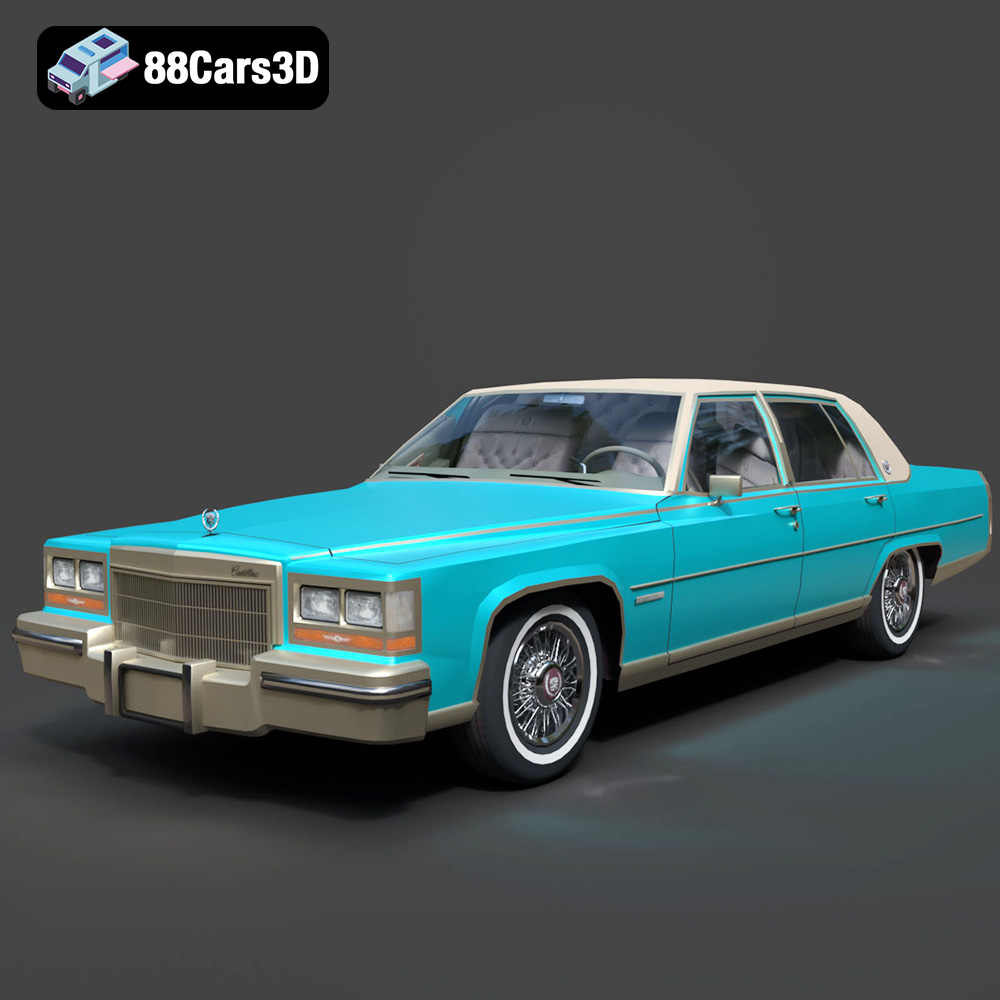
Download the Cadillac Fleetwood Brougham 1985 3D Model featuring its iconic classic luxury design and detailed craftsmanship. Includes .blend, .fbx, .obj, .glb, .stl, .ply, .unreal, and .max formats for rendering, simulation, and game development.
Price: $10.79
View Product
Texture: Yes
Material: Yes
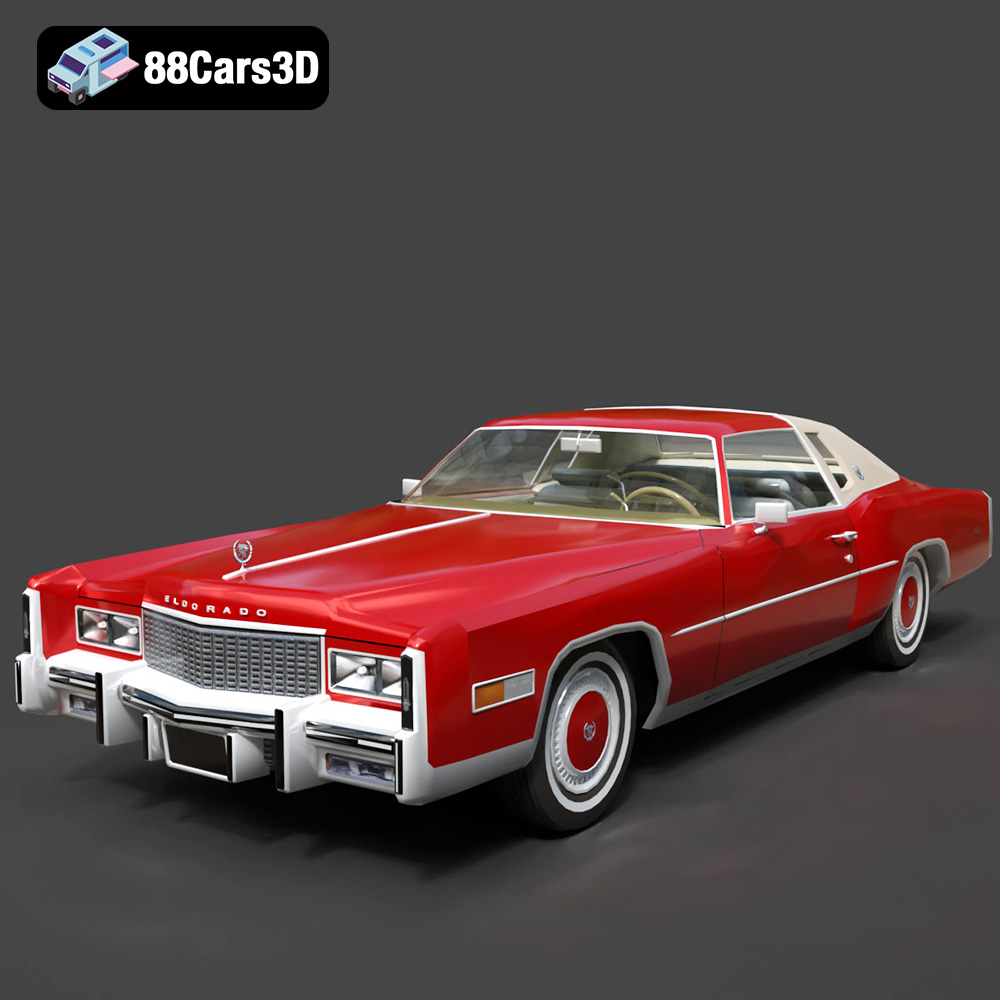
Download the Cadillac Eldorado 1978 3D Model featuring accurately modeled exterior, detailed interior, and period-correct aesthetics. Includes .blend, .fbx, .obj, .glb, .stl, .ply, .unreal, and .max formats for rendering, simulation, and game development.
Price: $10.79
View Product
Texture: Yes
Material: Yes
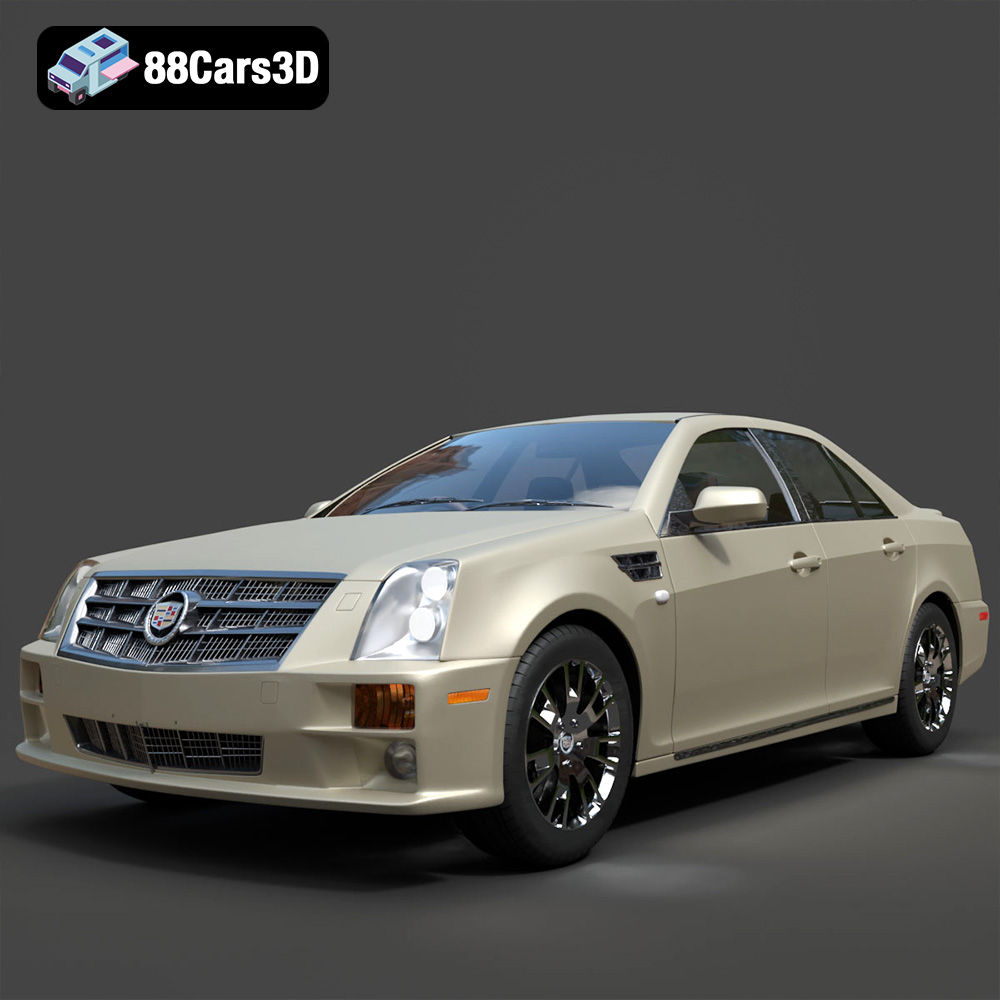
Download the Cadillac STS-005 3D Model featuring a detailed exterior and interior. Includes .blend, .fbx, .obj, .glb, .stl, .ply, .unreal, and .max formats for rendering, simulation, and game development.
Price: $22.79
View Product
Texture: Yes
Material: Yes
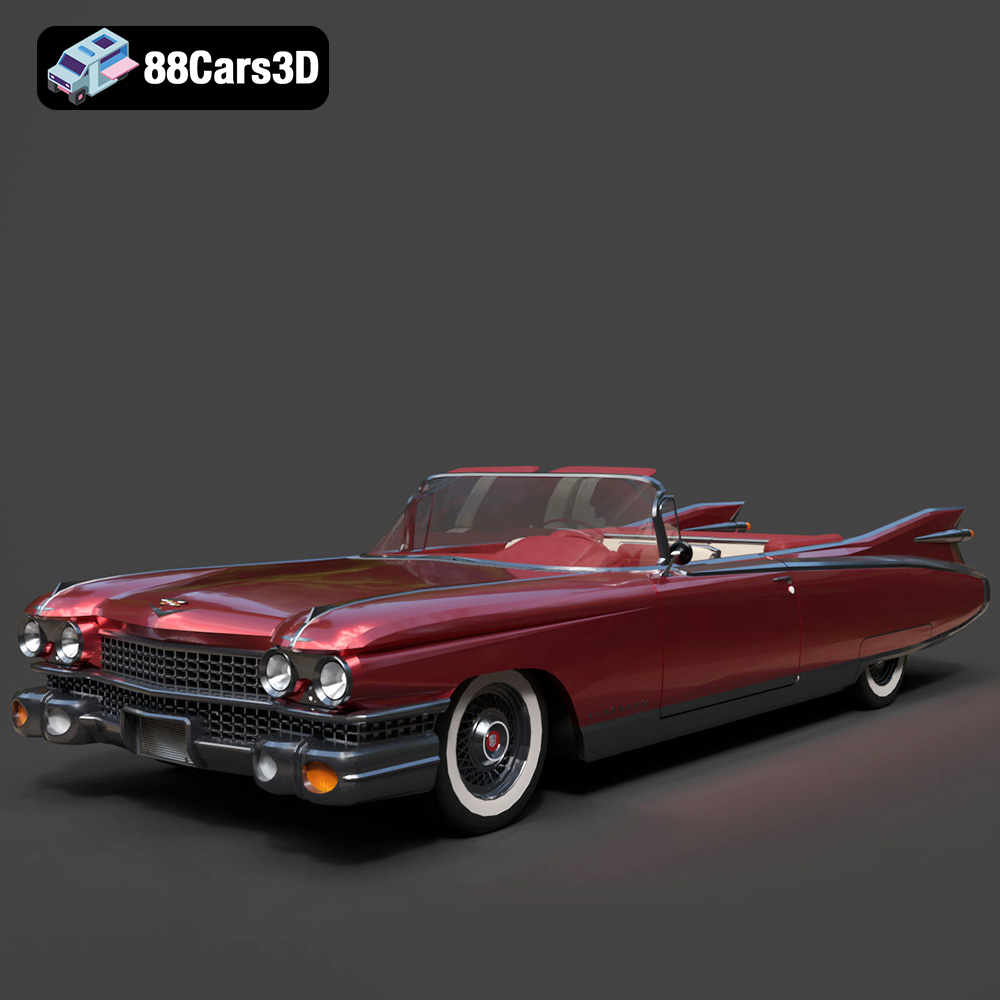
Download the Cadillac Eldorado Convertible (1959) 3D Model featuring iconic fins, luxurious chrome details, and a classic vintage design. Includes .blend, .fbx, .obj, .glb, .stl, .ply, .unreal, and .max formats for rendering, simulation, and game development.
Price: $20.79
View Product

Texture: Yes
Material: Yes
Download the Cadillac DTS-005 3D Model featuring its iconic luxury design, detailed interior, and realistic exterior. Includes .blend, .fbx, .obj, .glb, .stl, .ply, .unreal, and .max formats for rendering, simulation, and game development.
Price: $10.79
View Product

Texture: Yes
Material: Yes
Download the Buick LeSabre 1998 3D Model featuring a classic American full-size sedan design. Includes .blend, .fbx, .obj, .glb, .stl, .ply, .unreal, and .max formats for rendering, simulation, and game development.
Price: $10.79
View Product
Texture: Yes
Material: Yes
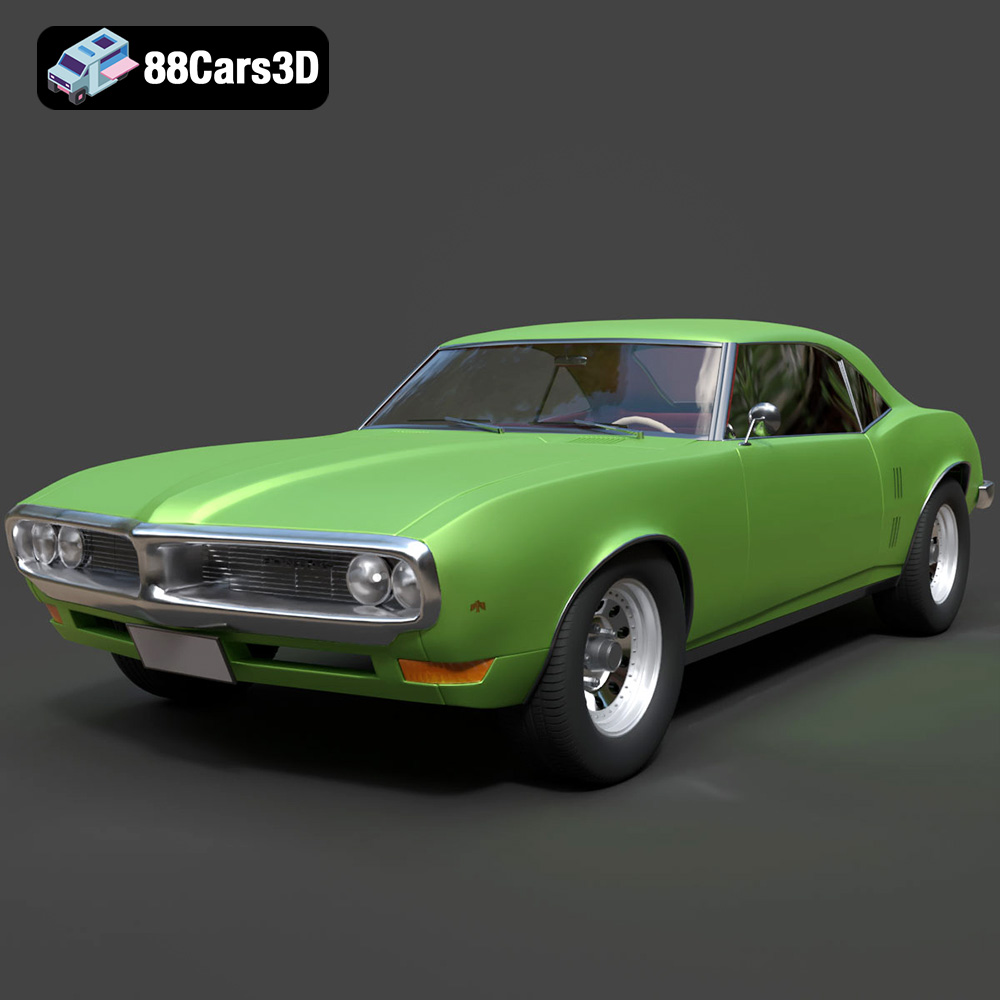
Download the Pontiac Firebird 1998 3D Model featuring clean geometry, realistic detailing, and a fully modeled interior. Includes .blend, .fbx, .obj, .glb, .stl, .ply, .unreal, and .max formats for rendering, simulation, and game development.
Price: $10
View Product

Texture: Yes
Material: Yes
Download the Opel Astra 2008 3D Model featuring clean geometry, realistic detailing, and a fully modeled interior. Includes .blend, .fbx, .obj, .glb, .stl, .ply, .unreal, and .max formats for rendering, simulation, and game development.
Price: $10
View Product

Texture: Yes
Material: Yes
Download the Mercedes Benz Joaquin-007 3D Model featuring clean geometry, realistic detailing, and a fully modeled interior. Includes .blend, .fbx, .obj, .glb, .stl, .ply, .unreal, and .max formats for rendering, simulation, and game development.
Price: $19.99
View Product


