

“`html
Resin vs FDM Printing: Mastering Your 3D Printable Car STL Files
The world of 3D printing has opened up incredible avenues for hobbyists and professionals alike, especially for those passionate about automotive design and scale modeling. At 88cars3d.com, we provide meticulously crafted 3D printable car models in STL files, designed for a variety of applications, from detailed display pieces to functional prototypes. However, the journey from downloading a high-quality STL file to holding a finished model involves a crucial decision: which 3D printing technology will best bring your chosen car to life? This guide dives deep into the nuances of two dominant technologies – Fused Deposition Modeling (FDM) and Stereolithography (SLA)/Digital Light Processing (DLP) (collectively known as resin printing) – to help you select the optimal method for your next automotive project.
We’ll explore the fundamental differences, delve into the critical 3D printer settings for each, dissect the intricacies of slicing for automotive models, understand the vital role of support structures, and discuss how to achieve exceptional results with both FDM and resin printing. By the end of this post, you’ll have a clear understanding of the strengths and weaknesses of each technology, enabling you to make informed decisions for achieving the best possible print quality, detail, and durability for your printable car models.
Understanding the Core Technologies: FDM vs. Resin Printing
The choice between FDM and resin printing is often the first major decision point for anyone looking to bring digital models into the physical realm. While both technologies build objects layer by layer, their underlying mechanisms lead to significantly different outcomes in terms of detail, material properties, and printing process. FDM printers work by extruding melted thermoplastic filament through a heated nozzle, building the object from the ground up. Imagine a very precise, automated hot glue gun drawing out each layer. Resin printers, on the other hand, use a light source (UV laser for SLA, projector for DLP) to selectively cure liquid photopolymer resin in a vat, layer by layer. This light-curing process allows for much finer resolution and smoother surface finishes.
This fundamental difference in material handling and curing dictates the types of details each technology can reproduce. FDM, with its extruded filament, is excellent for producing larger, more robust parts and is widely accessible due to the lower cost of printers and materials. However, the layer lines inherent in the extrusion process can be quite visible, especially on curved surfaces common in automotive designs. Resin printing excels at capturing intricate details, sharp edges, and smooth surfaces. This makes it a top choice for highly detailed scale models or parts where surface finish is paramount. The trade-off often comes in the form of smaller build volumes, potentially more complex post-processing, and the need for careful handling of liquid resins and their associated fumes.
Fused Deposition Modeling (FDM): The Workhorse of 3D Printing
FDM printing is the most common form of 3D printing available today. It utilizes spools of thermoplastic filament, such as PLA, PETG, or ABS, which are fed into a heated extruder. The extruder melts the filament and deposits it onto a build plate, tracing the cross-section of the object for each layer. As each layer cools, it fuses to the layer below it, gradually building the model. The precision of an FDM printer is largely determined by the nozzle diameter (typically 0.4mm, but can range from 0.1mm to 1.0mm) and the chosen layer height. For printable car models where fine details like panel lines or emblems are important, a smaller nozzle and a lower layer height (e.g., 0.1mm or 0.12mm) are crucial, though this significantly increases print time.
The strength and durability of FDM prints can be influenced by the chosen material and infill settings. Materials like ABS offer higher temperature resistance and impact strength than PLA, making them suitable for functional car parts or models intended for more rugged handling. Infill, the internal structure of a print, can be adjusted from 0% (hollow) to 100% (solid). For display models, an infill density of 10-20% is often sufficient to provide structural integrity while saving material and print time. Choosing the right infill pattern (e.g., grid, cubic, gyroid) can also enhance the mechanical properties of the part without adding excessive weight or print time.
Resin Printing (SLA/DLP): The Master of Detail
Resin printing technologies, including SLA and DLP, offer a different approach to additive manufacturing. In SLA, a UV laser traces the cross-section of a layer onto the surface of liquid resin, curing it. In DLP, a digital projector flashes an image of the entire layer at once, curing it. Both methods happen within a vat of liquid photopolymer resin. A build platform is submerged into the resin and then incrementally moved upwards (or downwards, depending on the printer configuration) as each layer is cured. The build plate is typically coated with a non-stick surface (like a flexible FEP film) to allow cured layers to peel away from the screen or vat floor as the platform moves.
The resolution of resin prints is exceptionally high, often measured in microns (e.g., 25-50 microns for XY resolution, 25-100 microns for Z layer height). This allows for the reproduction of incredibly fine details, such as intricate grilles, badges, or even tire treads, making them ideal for high-fidelity printable car models. Resin prints generally have a smoother surface finish directly off the printer compared to FDM prints, reducing the need for extensive post-processing. However, the materials can be more brittle, and post-processing involves washing the uncured resin off the print and then post-curing it under UV light to achieve its final strength and stability.
Slicing Strategies for Automotive Models
The slicing software is your digital workshop, translating your 3D model into the machine instructions your printer understands. For both FDM and resin printing, the slicer plays a pivotal role in determining print quality, success, and efficiency. When downloading detailed STL files from platforms like 88cars3d.com, understanding how to slice them optimally is key. The goal is to balance detail preservation, print time, material usage, and structural integrity.
For FDM slicing, key parameters include layer height, line width, print speed, retraction settings, and cooling fan speed. A common starting point for detailed car models on an FDM printer might be a layer height of 0.1mm, a line width of 0.4mm (matching the nozzle), and print speeds around 40-60 mm/s for outer walls to ensure quality. Retraction settings are crucial for preventing stringing between delicate parts, especially important for features like spoilers or mirrors. For resin slicing, settings revolve around layer height (often 0.025mm to 0.05mm), exposure time per layer, lift speed, and the type and density of support structures. Resin slicers also deal with considerations like anti-aliasing to smooth out layer lines on curved surfaces.
FDM Slicing: Optimizing for Detail and Strength
Achieving excellent results with FDM printing on car models requires careful attention to specific slicing parameters. When preparing models from 88cars3d.com, consider the scale and intended display. For smaller models, a 0.2mm layer height might be acceptable for faster prints, but for any degree of detail, dropping to 0.1mm or even 0.08mm is recommended. Print speed is a significant factor; while faster is tempting, it often compromises surface quality and layer adhesion. Experiment with slower speeds for critical outer walls (e.g., 30-40 mm/s) and faster speeds for infill (e.g., 60-80 mm/s). Temperature is also vital: ensure your nozzle and bed temperatures are appropriate for the filament you’re using (e.g., 200-220°C for PLA, 230-250°C for PETG, 240-260°C for ABS, with corresponding bed temperatures of 60°C, 70-85°C, and 90-110°C, respectively).
Infill patterns can be chosen for more than just density. For models that might be handled, a gyroid infill offers good strength in all directions. For lighter display models, a rectilinear or grid pattern at 10-15% infill is usually sufficient. One of the most critical aspects for car models is managing overhangs and bridging. Slicers offer settings to control “print overhang” angles, which automatically generate supports where needed. Understanding these settings and how they interact with your model’s geometry is key to avoiding print failures like drooping overhangs or sagging bridges, which can ruin the aerodynamic lines of a car model.
Resin Slicing: Precision and Support Management
Resin slicing software, such as ChiTuBox, Lychee Slicer, or PreForm, offers a different set of parameters to master. The layer height is paramount for detail; 0.05mm is a good balance between detail and print time, while 0.025mm will yield exceptionally smooth surfaces. Exposure time is critical: too little, and layers won’t cure properly, leading to print failure; too much, and you risk over-curing, which can lead to loss of detail and internal stresses. Typical exposure times for standard resins range from 1.5 to 3 seconds per layer at 0.05mm layer height, but this varies significantly between resin types and printer models.
Support structures are arguably the most important consideration in resin slicing. Resin prints are typically upside down, and supports are needed to hold the model to the build plate and provide a base for every horizontal surface that isn’t connected to the layer below. For car models, supports need to be carefully placed to avoid damaging delicate areas like spoilers, mirrors, or body panels upon removal. Using a mix of fine and thicker supports, with appropriate contact points, is essential. Many slicers offer auto-support generation, but manual adjustment is often necessary to ensure clean removal. Orientation is also crucial; angling the model at 30-45 degrees often helps distribute stresses and minimize suction forces, reducing the risk of print failure and the “ice cube tray” effect on flat surfaces.
Support Structures: The Unsung Heroes (and Villains) of 3D Printing
No 3D printing discussion is complete without addressing support structures. These temporary scaffolding-like elements are printed to hold up overhanging parts of a model during the printing process, preventing them from collapsing due to gravity or material sagging. For complex geometries like car models, with their intricate curves, spoilers, and undercarriages, effective support generation and removal are critical for a successful print and a clean final product.
The type and placement of supports differ significantly between FDM and resin printing. In FDM, supports are typically printed from the same material as the model, or a dissolvable support material if using a dual-extruder printer. They connect to the model at specific points and are removed manually after the print is complete. In resin printing, supports are essential for nearly every horizontal surface and overhang, and their removal requires careful technique to avoid damaging the finely detailed surfaces. The goal for both technologies is to provide adequate support without leaving excessive marks or requiring extensive cleanup.
FDM Support Strategies: Balancing Strength and Ease of Removal
For FDM printing of car models, supporting overhangs and bridges is essential. Most slicers offer several types of supports: ‘Normal’ (tree-like structures originating from the build plate), ‘Tree’ (branching structures that aim to touch the model at fewer points), and ‘Custom’ (where the user manually places support). For detailed car models, ‘Tree’ supports can be beneficial as they often touch the model at fewer, less visible points, reducing scarring upon removal. However, they can sometimes be less stable than normal supports.
Key settings to consider include support density (percentage of infill within the support structure), support pattern (e.g., grid, zigzag), support interface layers (a denser layer at the top of the support that touches the model, making it easier to peel off), and support Z distance (the gap between the support and the model). A larger Z distance makes removal easier but can lead to rougher surfaces on the supported areas. For car models, you might want a smaller Z distance (e.g., 0.1-0.2mm) with support interface layers enabled to achieve a better surface finish on critical body panels. Sometimes, strategically orienting the model on the build plate can minimize the need for supports altogether. For instance, printing a car body upside down might allow the roof and hood to be printed without supports, relying only on the undercarriage to need them.
Resin Support Techniques: Precision and Cleanup
Resin printing demands a more sophisticated approach to supports due to the high detail and the nature of the printing process. Supports are crucial for preventing print failures and ensuring dimensional accuracy. For car models, you’ll typically need supports for: wheel wells, spoiler edges, mirrors, underside details, and any other overhang exceeding approximately 45 degrees.
The type of supports is also important. Most resin slicers offer “fine” or “light” supports for delicate features and “heavy” or “medium” supports for areas needing more structural integrity. A common strategy is to use fine supports for most areas and transition to medium supports where necessary. The contact diameter (the size of the point where the support touches the model) is critical; smaller contact points (0.2mm – 0.4mm) leave less of a mark. However, very small contact points on delicate FDM prints can fail. For resin, they are often necessary for preserving detail. The tip shape (e.g., cone, sphere) also influences how cleanly the support detaches. Many users recommend printing resin models at a slight angle (10-30 degrees) to reduce the surface area of each layer exposed to suction from the FEP film, minimizing the risk of layer separation and the need for overly robust supports.
Material Selection and Post-Processing
The journey doesn’t end once the print is complete. The choice of material and the post-processing steps significantly influence the final appearance, durability, and usability of your 3D printed car model. Whether you opt for the versatility of FDM or the precision of resin, understanding material properties and effective post-processing techniques will elevate your prints from mere prototypes to impressive display pieces or functional components.
For FDM, common materials like PLA are easy to print but can be brittle. PETG offers better durability and temperature resistance, while ABS provides high strength and heat resistance but can be more challenging to print due to warping. Resin materials are more specialized, with standard resins offering great detail, tough resins providing increased durability, and flexible resins for specific applications. Post-processing for FDM often involves removing supports, sanding, filling layer lines, and painting. Resin post-processing includes washing, curing, and then sanding or painting.
FDM Material Properties and Finishing
When printing car models with FDM, selecting the right filament is crucial. PLA is the most popular choice due to its ease of printing, wide color availability, and low warping tendency. It’s ideal for static display models. For models that might be handled more, or subjected to slightly higher temperatures (e.g., inside a car), PETG is a great option, offering a good balance of strength, flexibility, and temperature resistance. ABS is the strongest and most heat-resistant, but it requires a heated enclosure to prevent warping and emits fumes, necessitating good ventilation. If you’re aiming for a smooth, professional finish on an FDM print, expect to invest time in post-processing. This typically involves carefully removing all support material, followed by sanding. Start with a coarser grit sandpaper (e.g., 120-220 grit) to remove layer lines and support marks, then progressively move to finer grits (e.g., 400, 800, 1000+ grit) for a smooth surface ready for priming and painting.
Filling layer lines is a common technique for achieving a truly smooth finish. Options include using automotive body filler, wood filler, or specialized 3D printing putties. A light sanding after applying the filler, followed by a primer, will reveal any imperfections and prepare the surface for paint. For painting, acrylic model paints work well. Multiple thin coats are always better than one thick coat to avoid obscuring fine details. Clear coats can add a protective layer and desired sheen, from matte to gloss.
Resin Properties and Post-Processing Workflow
Resin printing opens up a world of detail, but the material properties and post-processing workflow are distinct. Standard resins are excellent for capturing intricate details and offer a good balance of properties for display models. Tough or ABS-like resins are designed to mimic the mechanical properties of ABS plastic, offering increased impact resistance and durability, making them suitable for models that might need to withstand some handling or stress. Flexible resins allow for creating parts that can bend or deform, though these are less common for typical car models.
The post-processing workflow for resin prints is critical. After removing the print from the build plate, it must be washed to remove uncured liquid resin. This is typically done using isopropyl alcohol (IPA) or specialized resin cleaners in an ultrasonic cleaner or a wash station. After washing and drying, the print needs to be post-cured under UV light. This process hardens the resin fully and increases its strength and stability. Most resin printers have a curing station, or you can use a UV lamp. Over-curing can make resin prints brittle, so follow the resin manufacturer’s recommendations. Once cured, supports are removed. This is often done with flush cutters or a hobby knife, and due to the smaller contact points used in resin printing, it’s generally cleaner than FDM support removal. Sanding resin prints requires care, as the material can become brittle. Wet sanding with fine-grit sandpaper (e.g., 400-2000 grit) is often recommended to minimize dust and achieve a smooth finish, ready for painting.
Troubleshooting Common Print Failures
Even with the best preparation and settings, 3D printing can present challenges. Understanding common failure modes for both FDM and resin printing is crucial for diagnosing issues and successfully completing your car models. At 88cars3d.com, we strive to provide models that are optimized for printing, but printer calibration, environmental factors, and user settings can all influence the outcome.
For FDM, issues like layer separation, stringing, elephant’s foot, and under-extrusion are frequent. Resin printing challenges often involve print adhesion failures, layer shifting, cure failures, and resin “fogging” on the screen. Addressing these issues requires a systematic approach to troubleshooting, often involving adjustments to 3D printer settings, bed leveling, or even hardware maintenance.
FDM Common Failures and Fixes
Layer separation (delamination) occurs when layers don’t adhere to each other. This is often caused by printing too fast, insufficient nozzle temperature, or poor cooling. Increasing the nozzle temperature by 5-10°C, slowing down the print speed, and ensuring adequate bed adhesion can help. Stringing, thin strands of filament between parts, is usually caused by poor retraction settings or printing too hot. Ensure your retraction distance and speed are appropriately set, and consider slightly lowering the nozzle temperature. Elephant’s foot, where the first few layers bulge outwards, is often due to the nozzle being too close to the build plate or excessive bed adhesion. Adjusting your Z-offset or reducing the first layer extrusion multiplier can fix this.
Under-extrusion, where not enough filament is deposited, results in gaps and weak prints. This can be due to a clogged nozzle, incorrect filament diameter setting in the slicer, or a failing extruder motor. Cleaning the nozzle, verifying filament diameter, and checking the extruder gears are common solutions. Ensuring your printer is well-calibrated, including E-steps calibration for the extruder and PID tuning for the hotend and bed, forms the foundation for reliable FDM printing.
Resin Common Failures and Fixes
Print adhesion failure, where the print detaches from the build plate, is one of the most frustrating resin print issues. This can be due to insufficient exposure time on the first few layers, the build plate not being level, or excessive suction forces. Increasing the bottom layer exposure time (e.g., from 30-60 seconds to 80-120 seconds), ensuring the build plate is clean and level, and angling the model can prevent this. Layer shifting, where layers are misaligned, is often caused by the build plate hitting an obstruction, insufficient tension on the FEP film, or a corrupted file. Check for any obstructions, re-tension the FEP film if necessary, and try re-slicing the model.
Incomplete curing or “fail to print” issues on specific layers can stem from incorrect exposure times, resin contamination, or issues with the LCD screen or light source. Double-check your exposure settings for the specific resin you’re using. Ensure your resin is well-mixed and free of debris. If a specific area of the screen is problematic, it might require maintenance. Finally, resin fogging or cloudiness on the LCD screen can reduce light penetration, leading to print failures. This is often caused by cured resin adhering to the screen’s protective film and might require careful cleaning or replacement of the protective film.
Conclusion: Choosing the Right Path for Your 3D Car Models
The decision between FDM and resin printing for your 3D printable car models hinges on your priorities: detail, speed, cost, and post-processing effort. FDM printing offers a more accessible and cost-effective entry point, with a wide range of materials and a simpler workflow for larger, more robust prints. It’s an excellent choice for functional prototypes, larger scale models, or when budget and material versatility are key considerations. While layer lines are more prominent, they can be managed with careful slicing and post-processing, making even detailed models achievable.
Resin printing, on the other hand, is the undisputed champion for capturing intricate details and achieving exceptionally smooth surfaces straight off the build plate. For highly detailed scale replicas, miniature car parts, or projects where visual fidelity is paramount, resin printing is often the superior choice. The trade-offs include higher material costs, a more involved post-processing routine (washing and curing), and often smaller build volumes compared to FDM. However, for enthusiasts seeking the highest level of detail, the investment in a resin printer and the workflow is often well worth it.
Ultimately, the “better” technology is the one that best suits your specific project needs and capabilities. Platforms like 88cars3d.com offer STL files designed with both technologies in mind, providing clean geometry and optimized structures. Whether you choose the robust versatility of FDM or the fine-tuned precision of resin, understanding the technical nuances of slicing, support structures, material selection, and post-processing will empower you to transform digital blueprints into stunning, tangible car models. Happy printing!
“`
Featured 3D Car Models
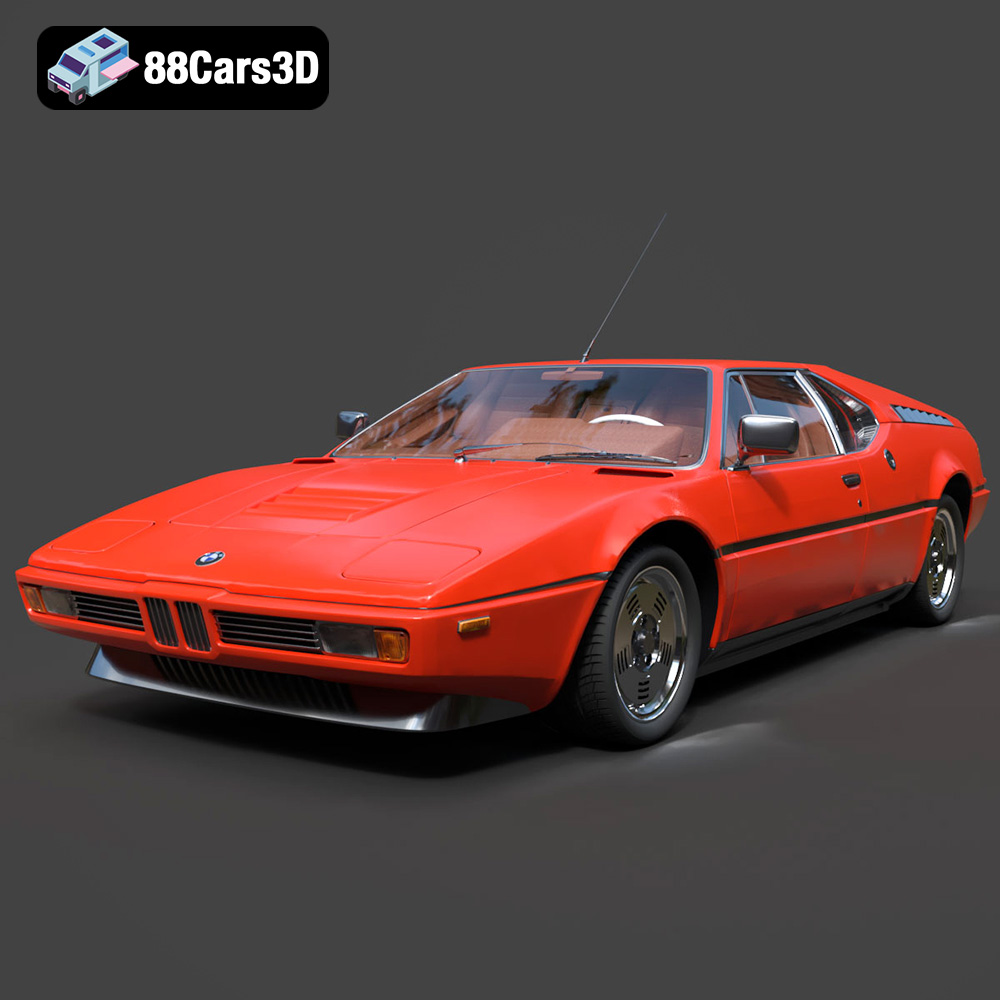
BMW Motorsport M1 E26 1981 3D Model
Texture: Yes
Material: Yes
Download the BMW Motorsport M1 E26 1981 3D Model featuring its iconic design, race-bred aerodynamics, and meticulously crafted details. Includes .blend, .fbx, .obj, .glb, .stl, .ply, .unreal, and .max formats for rendering, simulation, and game development.
Price: $20.79

Cadillac CTS-V Coupe 3D Model
Meta Description:
Texture: Yes
Material: Yes
Download the Cadillac CTS-V Coupe 3D Model featuring detailed exterior styling and realistic interior structure. Includes .blend, .fbx, .obj, .glb, .stl, .ply, .unreal, and .max formats for rendering, simulation, AR VR, and game development.
Price: $13.9
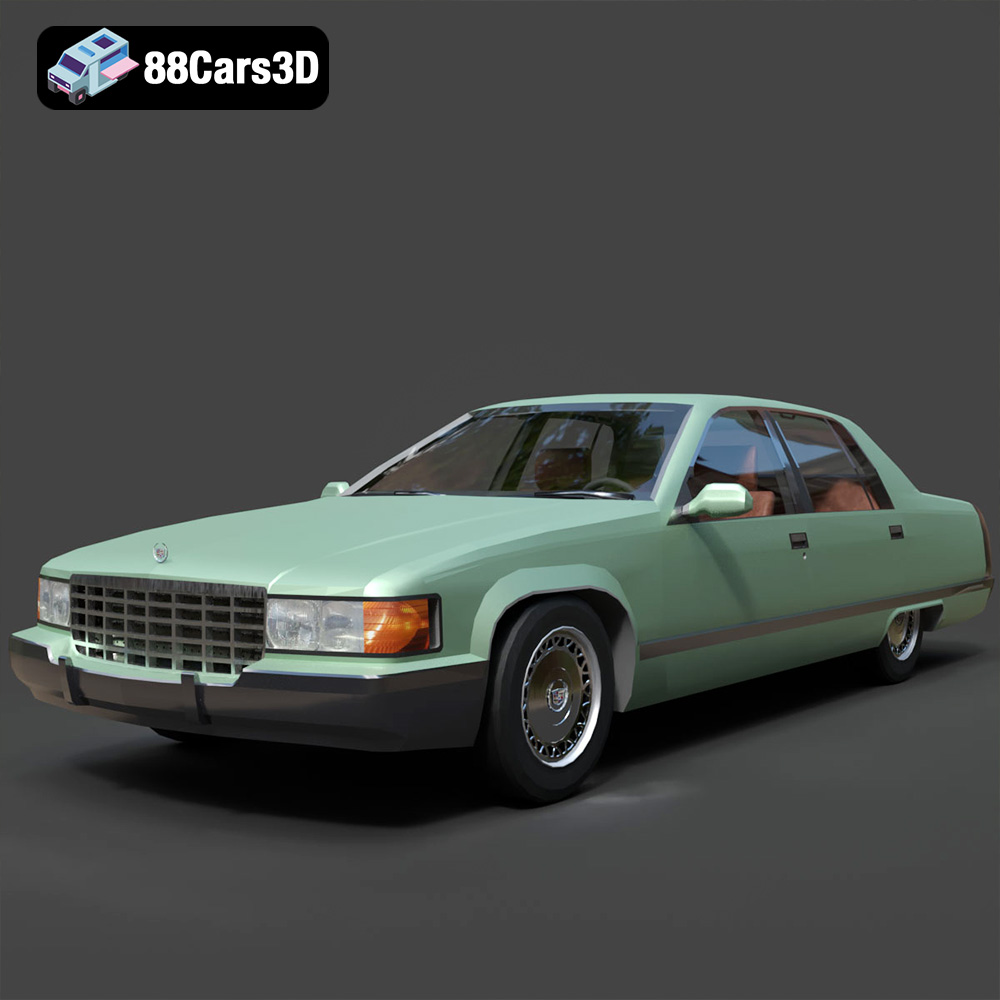
Cadillac Fleetwood Brougham 3D Model
Texture: Yes
Material: Yes
Download the Cadillac Fleetwood Brougham 3D Model featuring its iconic classic luxury design and detailed exterior and interior. Includes .blend, .fbx, .obj, .glb, .stl, .ply, .unreal, and .max formats for rendering, simulation, and game development.
Price: $10.79
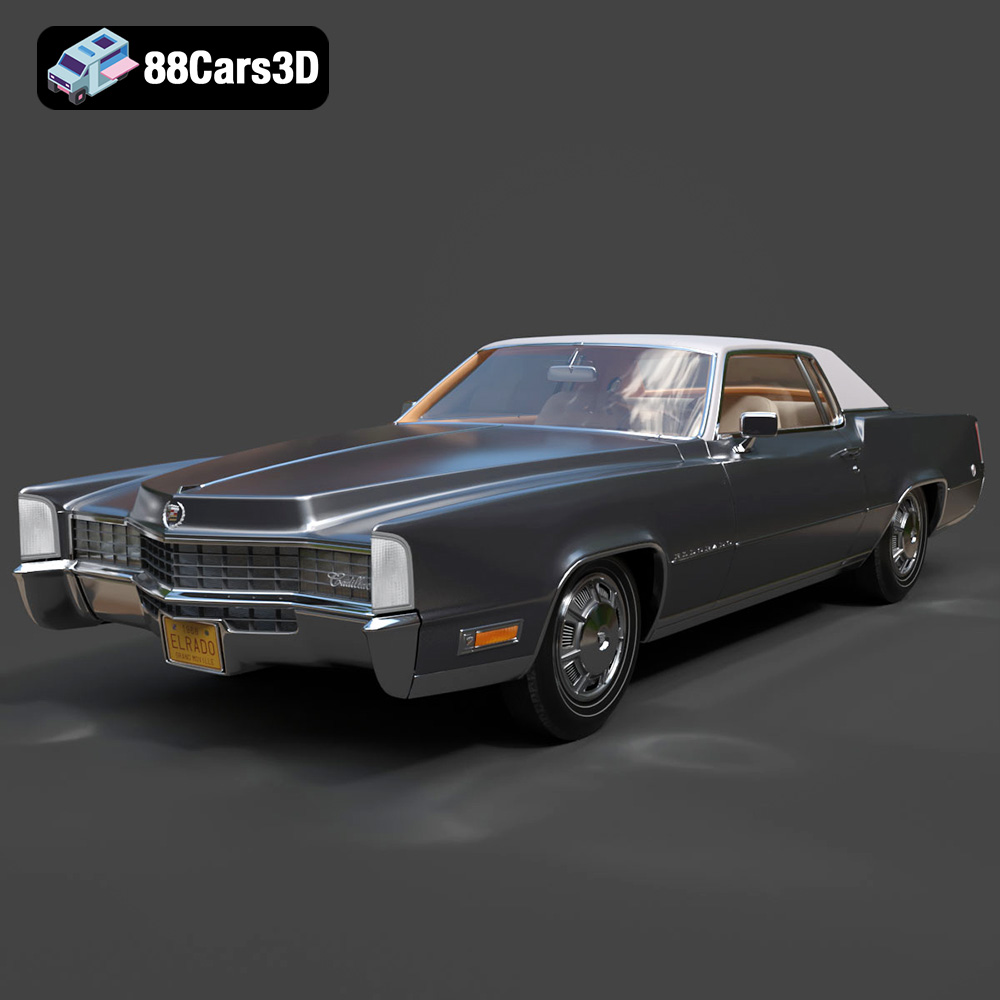
Cadillac Eldorado 1968 3D Model
Texture: Yes
Material: Yes
Download the Cadillac Eldorado 1968 3D Model featuring its iconic elongated body, distinctive chrome accents, and luxurious interior. Includes .blend, .fbx, .obj, .glb, .stl, .ply, .unreal, and .max formats for rendering, simulation, and game development.
Price: $20.79

Cadillac CTS SW 2010 3D Model
Texture: Yes
Material: Yes
Download the Cadillac CTS SW 2010 3D Model featuring a detailed exterior, functional interior elements, and realistic materials. Includes .blend, .fbx, .obj, .glb, .stl, .ply, .unreal, and .max formats for rendering, simulation, and game development.
Price: $10.79
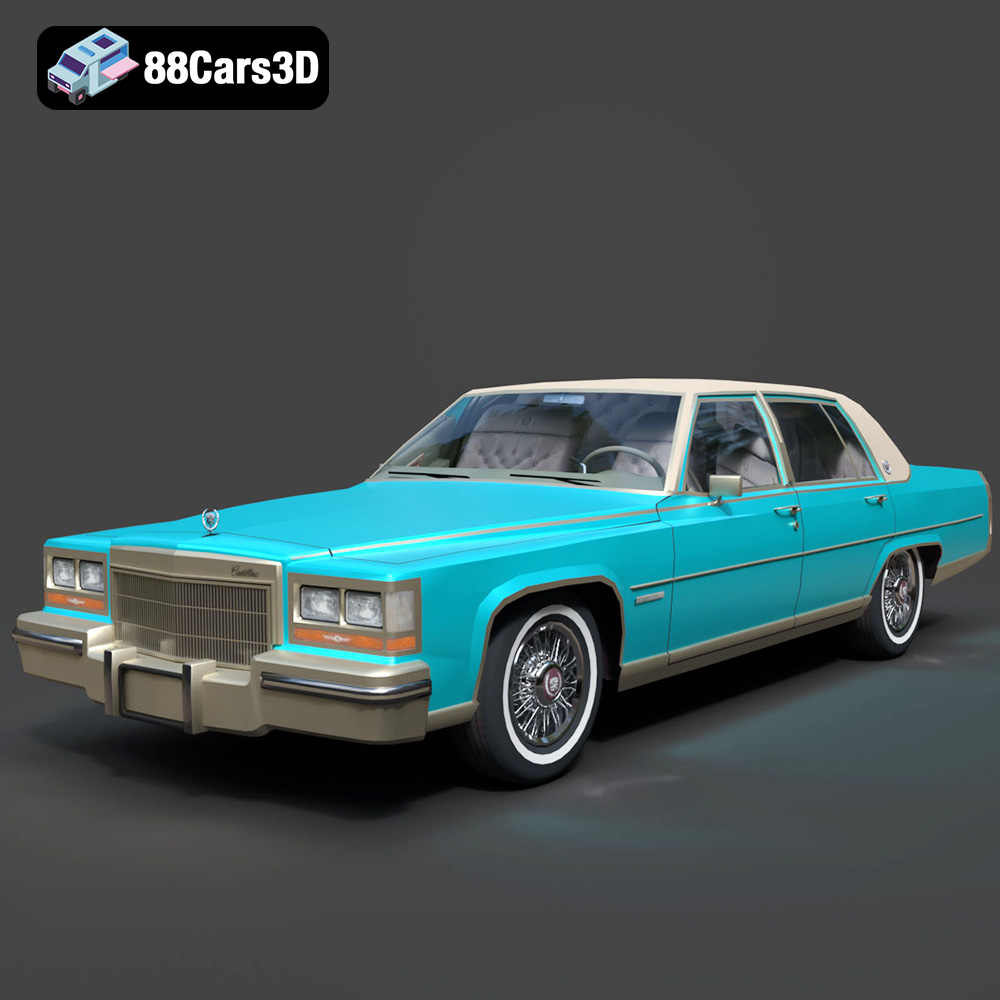
Cadillac Fleetwood Brougham 1985 3D Model
Texture: Yes
Material: Yes
Download the Cadillac Fleetwood Brougham 1985 3D Model featuring its iconic classic luxury design and detailed craftsmanship. Includes .blend, .fbx, .obj, .glb, .stl, .ply, .unreal, and .max formats for rendering, simulation, and game development.
Price: $10.79

Cadillac Eldorado 1978 3D Model
Texture: Yes
Material: Yes
Download the Cadillac Eldorado 1978 3D Model featuring accurately modeled exterior, detailed interior, and period-correct aesthetics. Includes .blend, .fbx, .obj, .glb, .stl, .ply, .unreal, and .max formats for rendering, simulation, and game development.
Price: $10.79
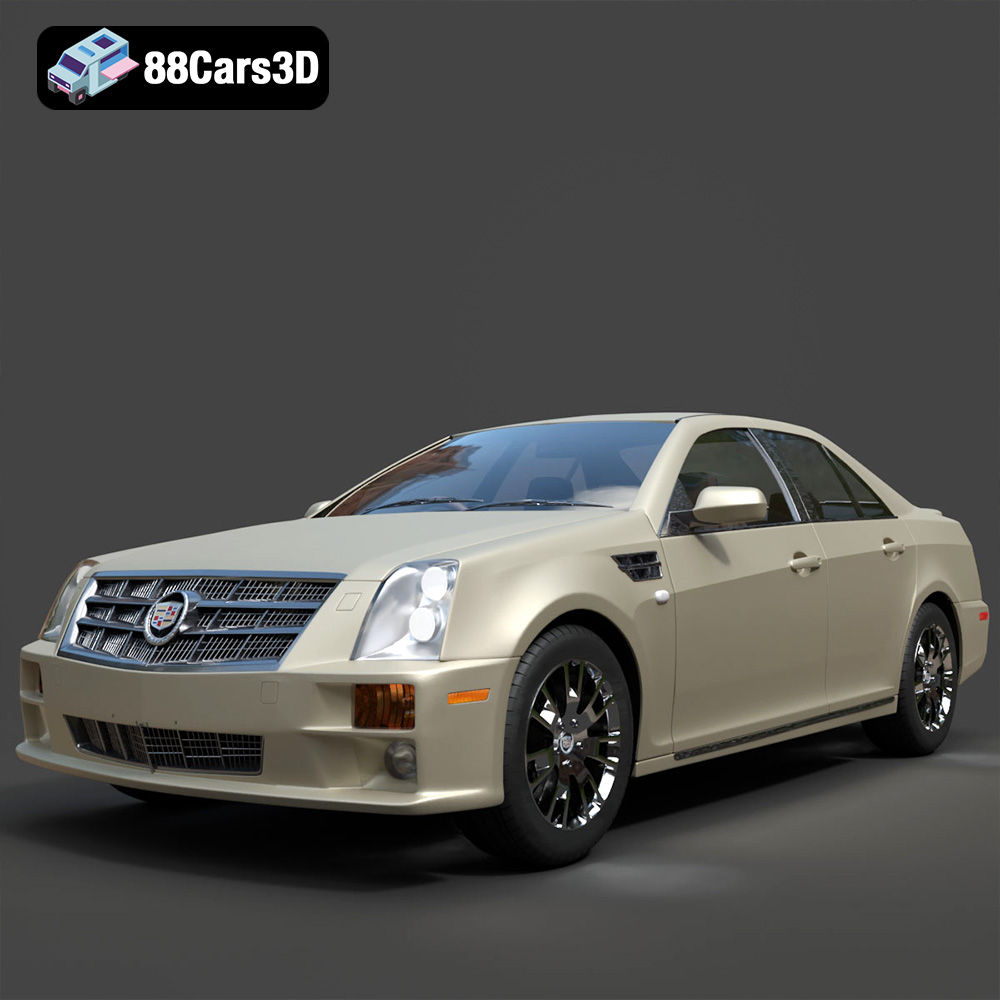
Cadillac STS-005 3D Model
Texture: Yes
Material: Yes
Download the Cadillac STS-005 3D Model featuring a detailed exterior and interior. Includes .blend, .fbx, .obj, .glb, .stl, .ply, .unreal, and .max formats for rendering, simulation, and game development.
Price: $22.79
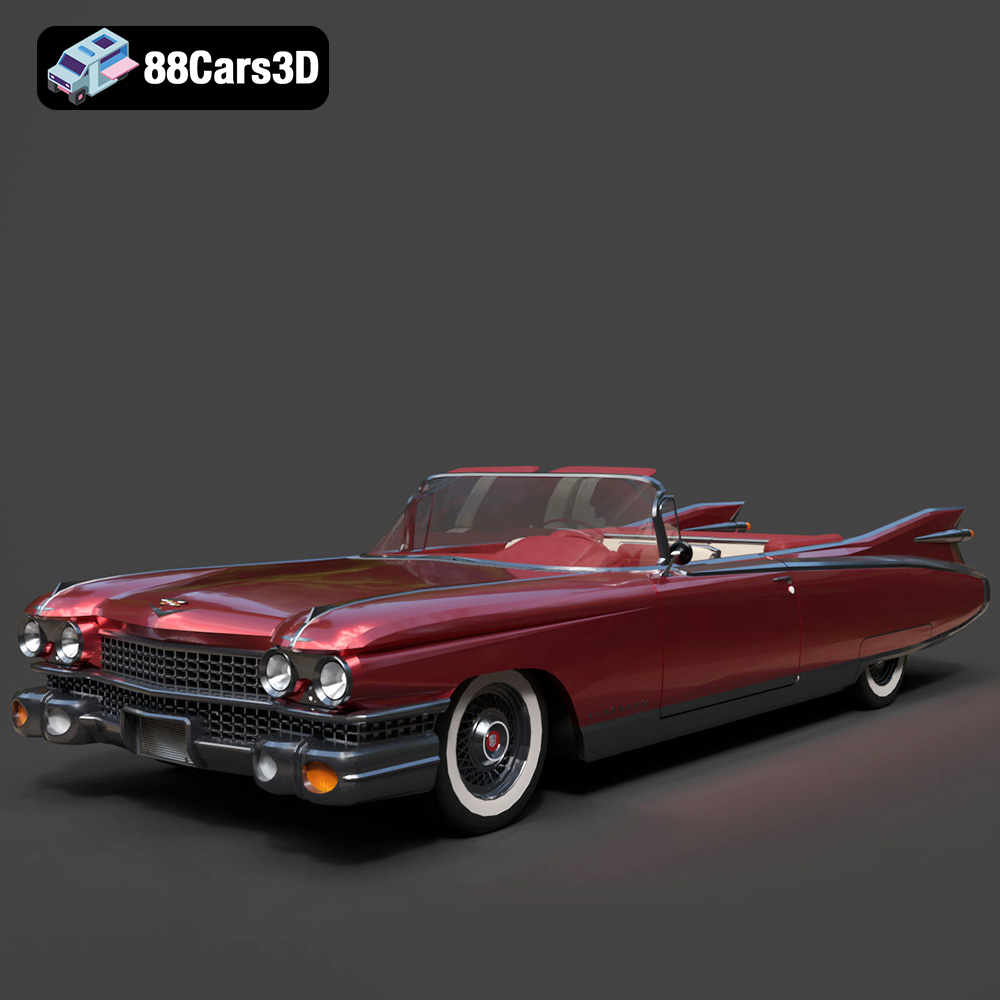
Cadillac Eldorado Convertible (1959) 3D Model
Texture: Yes
Material: Yes
Download the Cadillac Eldorado Convertible (1959) 3D Model featuring iconic fins, luxurious chrome details, and a classic vintage design. Includes .blend, .fbx, .obj, .glb, .stl, .ply, .unreal, and .max formats for rendering, simulation, and game development.
Price: $20.79

Cadillac DTS-005 3D Model
Texture: Yes
Material: Yes
Download the Cadillac DTS-005 3D Model featuring its iconic luxury design, detailed interior, and realistic exterior. Includes .blend, .fbx, .obj, .glb, .stl, .ply, .unreal, and .max formats for rendering, simulation, and game development.
Price: $10.79
