Get 20% OFF All Premium 3D & STL Models!

The allure of photorealistic 3D car models rendered in real time is undeniable, especially when bringing automotive visions to life in interactive experiences. However, translating these high-fidelity assets into fluid, responsive mobile games and applications presents a unique set of challenges. Mobile devices, with their finite processing power, memory, and battery life, demand a meticulous approach to optimization. For developers leveraging the power of Unreal Engine to create stunning automotive visualizations, interactive configurators, or full-fledged racing games for mobile, understanding and implementing effective optimization strategies is paramount.
This comprehensive guide delves into the technical intricacies of optimizing 3D car models and entire Unreal Engine projects for mobile performance. We’ll explore everything from initial project setup and asset management to advanced rendering techniques and profiling tools. Whether you’re an experienced Unreal Engine developer aiming to expand your reach to mobile platforms or a 3D artist new to the world of real-time optimization, you’ll gain actionable insights to ensure your automotive creations run smoothly and look spectacular on any mobile device. Our goal is to empower you to deliver stunning visual fidelity without compromising on performance, making your projects accessible to a wider audience and providing immersive experiences on the go.
The journey to a high-performing mobile game begins long before you import your first 3D car model. Proper project setup and configuration within Unreal Engine are critical for establishing a solid foundation for mobile optimization. Many performance bottlenecks can be prevented by making informed decisions at this initial stage, tailored specifically to the constraints of mobile hardware. Understanding your target devices – their GPU capabilities, RAM, and screen resolutions – is the first step in setting realistic expectations and configuring Unreal Engine accordingly.
Unreal Engine offers a robust set of options to manage scalability and performance. When starting a new project, consider using the ‘Mobile/Tablet’ template or adjusting the default settings to prioritize mobile rendering features. It’s crucial to disable features that are compute-intensive and provide little benefit on mobile, such as certain advanced post-processing effects or complex rendering pipelines designed for high-end PCs. Consistency in your development environment, coupled with regular testing on actual target devices, will save countless hours in later optimization phases. Remember, every feature, every pixel, and every draw call incurs a cost on mobile hardware.
Navigating to Project Settings > Platforms > Android (or iOS) allows you to configure essential mobile-specific options. Key settings include the target SDK version, enabling support for Vulkan (a modern graphics API that often outperforms OpenGL ES on Android) or Metal (for iOS), and specifying the packaging options. For optimal performance, aim for a minimum Android API level that supports Vulkan 1.0 or higher. In the Project Settings > Engine > Rendering section, prioritize mobile rendering paths. Ensure ‘Mobile HDR’ is enabled if you plan to use a full PBR workflow, but be aware of its performance impact. Disabling ‘Custom Depth-Stencil Pass’ if not explicitly needed can also yield minor gains. It’s also vital to select appropriate ‘Target Hardware’ options under Project Settings > Engine > General Settings, usually ‘Mobile / Tablet’ and ‘Scalable 3D or 2D’. This informs Unreal Engine how to compile shaders and optimize assets. For detailed information on project settings for mobile, refer to the official Unreal Engine documentation at https://dev.epicgames.com/community/unreal-engine/learning.
Unreal Engine’s scalability settings are your primary tool for adapting visual quality to diverse mobile hardware. You can access these in the editor via Settings > Engine Scalability Settings or programmatically through Blueprint/C++. Crucially, these settings control parameters like texture resolution, shadow quality, post-processing, and view distance. For mobile, it’s highly recommended to start with the ‘Low’ or ‘Medium’ presets and incrementally enable features as performance allows. Specific mobile renderer features like Mobile Multi-View (for VR) or Forward Shading (can be faster for certain scenes, but has limitations) should be carefully considered based on your project needs. For automotive scenes, ensuring reflections are optimized is key; using planar reflections or even cubemaps instead of full screen space reflections (SSR) is almost always a necessity for mobile. Global Illumination solutions like Lumen, while transformative for high-end rendering, are not currently viable for most mobile deployments and should be disabled in mobile projects.
One of Unreal Engine’s most powerful mobile optimization features is Device Profiles. Accessible via Window > Developer Tools > Device Profiles, these allow you to create specific configurations for different hardware profiles. For instance, you can define a ‘High-End Mobile’ profile for devices like the latest iPhones or flagship Androids, and a ‘Mid-Range Mobile’ profile for older or less powerful devices. Each profile can override engine scalability settings, console variables (CVars), and even specific texture or mesh LOD settings. This means a high-end device might receive 2048×2048 textures and a higher shadow resolution, while a mid-range device automatically scales down to 1024×1024 textures and lower shadow quality. This granular control is indispensable for ensuring a consistent user experience across a wide range of mobile devices, without having to create multiple builds or manually adjust settings for each device type.
The core of any automotive visualization or game built with Unreal Engine will be its 3D car models. While platforms like 88cars3d.com offer high-quality, pre-optimized 3D car models, even these may require further adjustments to meet stringent mobile performance targets. The key is to find a balance between visual fidelity and real-time performance. Every vertex, polygon, and pixel used in your car model and its associated textures directly contributes to the processing load on the mobile GPU and CPU, as well as memory consumption. An unoptimized high-poly model, while stunning on a desktop, can bring a mobile device to a crawl, leading to low frame rates, stuttering, and excessive battery drain. This section focuses on the practical steps and techniques for preparing your automotive assets for the demanding mobile environment.
The optimization process isn’t a one-time task; it’s an iterative cycle of reducing complexity, testing performance, and refining. This includes intelligent use of Level of Detail (LODs), careful management of texture resolutions and compression, and crafting materials that are efficient yet visually appealing. When working with complex models, especially those sourced from external platforms, always inspect their topology and material setup in a 3D modeling software first, if possible, to identify areas for pre-optimization before importing into Unreal Engine. Remember, every optimization applied at the asset level translates to significant performance gains at runtime.
One of the most impactful optimizations for 3D car models is geometry reduction. High-fidelity models, especially those from professional sources like 88cars3d.com, can often have millions of polygons, which is far too dense for most mobile devices. The primary technique here is using Levels of Detail (LODs). LODs are simplified versions of your mesh that are swapped in dynamically based on the camera’s distance to the object. Unreal Engine provides built-in tools for generating LODs (e.g., in the Static Mesh Editor), allowing you to specify a number of LODs and their screen size thresholds. A common strategy for car models might involve 3-5 LODs: LOD0 (full detail, ~100k-200k polys for hero cars, if mobile high-end), LOD1 (~50k-80k polys), LOD2 (~20k-30k polys), and LOD3 (~5k-10k polys) for distant views. The most aggressive LODs might simplify the interior significantly or remove small details like badges or intricate grille meshes entirely. For extreme cases, you might even have a billboard LOD for very distant vehicles.
Beyond automatic LOD generation, manual decimation using external 3D software (like Blender, Maya, or 3ds Max) offers finer control, allowing artists to strategically reduce polygon count while preserving critical silhouette details. Tools like InstaLOD or Simplygon can automate this process with advanced features. While Unreal Engine 5 introduced Nanite Virtualized Geometry, revolutionizing high-poly asset rendering, it’s important to note that Nanite is currently primarily designed for desktop and console platforms and is not typically supported on most mobile devices. Therefore, traditional LODs remain the cornerstone of geometry optimization for mobile automotive experiences. When preparing models, always keep draw call count in mind; merging meshes where possible (e.g., combining small decorative elements) can reduce the number of objects the GPU has to render, improving performance.
Textures are often the largest contributors to memory usage and loading times in mobile games. While high-resolution textures add detail, they consume significant memory and bandwidth, impacting performance. For mobile, it’s generally recommended to use texture resolutions like 2048×2048 or 1024×1024 for primary car body textures, and smaller resolutions (e.g., 512×512 or 256×256) for less prominent details, interiors, or secondary objects. Importing textures into Unreal Engine, you should leverage proper compression settings. For diffuse (base color) maps, BC1 (DXT1) or BC7 (for higher quality) are common choices, while normal maps should use BC5 (DXT5 for older devices). Unreal Engine’s texture editor allows you to override global compression settings per texture. Be mindful of alpha channels; if a texture doesn’t need transparency, avoid using formats that allocate space for it.
Texture atlasing is another powerful technique. Instead of having multiple small textures for different parts of a car (e.g., an emblem, a headlight detail, a small interior button), combine them into a single larger texture atlas. This reduces the number of texture lookups and draw calls, which is beneficial for mobile GPUs. When sourcing automotive assets from marketplaces such as 88cars3d.com, verify that textures are provided in suitable resolutions and consider if atlasing can further optimize their usage within your project. The goal is to minimize texture memory footprint without sacrificing perceptible visual quality for the target screen size and device capabilities.
Unreal Engine’s Material Editor is incredibly powerful, but unchecked complexity can devastate mobile performance. Each instruction in a material graph contributes to shader complexity, directly impacting GPU render time. For mobile, the focus should be on creating efficient PBR (Physically Based Rendering) materials that minimize instruction count. Avoid complex functions, excessive layers, or costly operations like screen-space texture fetches if possible. Many advanced shading models and nodes designed for high-end PCs (e.g., clear coat with multiple normal layers, complex parallax occlusion mapping, elaborate subsurface scattering) are simply too expensive for mobile.
A mobile-optimized car paint material, for example, might use a single clear coat layer, simpler metallic/roughness calculations, and fewer texture samples. Instead of dynamic masking for dirt or wear, consider baking these into static textures. Use Unreal Engine’s ‘Shader Complexity’ view mode (accessible via Show > Visualize > Shader Complexity) to identify and address overly complex materials. Materials with a predominantly green or blue hue are efficient, while those trending towards red or white are problematic. Aim to combine textures into a single packed texture where possible (e.g., packing metallic, roughness, and ambient occlusion into separate channels of a single RGB texture) to reduce texture fetches per material. Utilizing instanced materials is also crucial; once you create an optimized base material for car paint, create instances of it to change colors or parameters, rather than creating entirely new materials, saving compilation time and memory.
Lighting is paramount for bringing 3D car models to life, especially in automotive visualization where reflections and accurate shading are key. However, dynamic, real-time lighting solutions, while beautiful, are often a major performance drain on mobile devices. Striking the right balance between visual realism and mobile efficiency requires a strategic approach to light sources, shadows, and post-processing. Unreal Engine provides several tools and techniques to achieve compelling lighting within the stringent performance envelopes of mobile hardware.
The choice between static and dynamic lighting significantly impacts render budget. For static elements in your scene, such as showrooms or fixed environments, baked lighting can be incredibly efficient. For dynamic elements like the car itself, a hybrid approach or carefully controlled dynamic lights are necessary. Furthermore, mobile rendering pipelines often lack the advanced features available on desktop, meaning you must be creative in simulating complex effects with simpler, more performant methods. Every light source, every shadow map, and every post-process effect adds to the GPU load, so judicious application is key.
For mobile projects, static lighting (baked using Unreal Engine’s Lightmass system) is often the most performant approach for environments. Baked lighting pre-calculates global illumination, ambient occlusion, and static shadows into lightmaps and precomputed visibility volumes, offloading expensive calculations from runtime to development time. This results in very low runtime cost for static scene elements. For an automotive showroom or a fixed racing track environment, baking direct and indirect lighting can provide stunning realism with minimal performance impact. However, static lighting does not interact with dynamic objects like your 3D car models. For the car itself, and any dynamic elements (e.g., moving headlights, brake lights, environment changes), you’ll need dynamic lighting.
When using dynamic lights for mobile, severe restrictions apply. Limit the number of dynamic lights hitting the car, ideally to one directional light (sun) and perhaps one or two movable spot/point lights. Prioritize ‘Stationary’ lights, which can have baked indirect lighting but dynamic direct lighting and shadows, offering a good compromise. ‘Movable’ lights, while fully dynamic, are the most expensive, especially with shadows. Mobile renderer capabilities for dynamic shadows are also limited; often, only a single dynamic shadow-casting directional light is supported with performance. Consider using simple blob shadows or pre-baked shadow masks for non-hero vehicles to save performance, rather than full dynamic shadow maps. For detailed reflections on car bodies, often a high-resolution Reflection Capture actor (or several) will provide better performance than screen-space reflections, especially on mobile.
Post-processing effects can drastically enhance visual appeal but are a common culprit for performance bottlenecks on mobile. Bloom, Depth of Field, Chromatic Aberration, Vignette, and particularly Screen Space Ambient Occlusion (SSAO) and Screen Space Reflections (SSR) are highly compute-intensive. For mobile, the recommendation is to enable only the most critical post-processing effects and to keep their intensity and quality settings conservative. Often, a subtle bloom and color grading are all that mobile devices can handle without significant framerate drops. Advanced effects like Lumen and Nanite, while game-changers for high-end platforms, are generally not supported or practical for current mobile implementations.
When configuring post-process volumes, ensure you set the priority correctly and limit the blend weight of effects. For instance, instead of full SSAO, consider baking ambient occlusion into your textures where appropriate. Volumetric fog and elaborate particle effects (Niagara systems) can also be incredibly expensive. If using Niagara for exhaust fumes or dust, keep emitter counts low, particle lifetimes short, and material complexity minimal. Leverage the mobile-specific options within post-process volumes and project settings to disable unsupported or overly expensive features. Testing extensively on target devices with various post-processing combinations is essential to identify the performance limits.
Unreal Engine supports both deferred and forward shading pipelines. While deferred rendering is powerful for complex scenes with many lights, forward shading often offers better performance on mobile, especially when combined with mobile-specific optimizations. Forward shading, in some scenarios, can lead to fewer draw calls and better performance for transparent materials, which can be relevant for car windows or headlights. You can enable forward shading in Project Settings > Engine > Rendering under the ‘Forward Shading’ section. However, it comes with its own set of limitations, such as reduced light count and fewer advanced rendering features, so evaluate if it fits your project’s visual needs.
Mobile HDR (High Dynamic Range) allows for a wider range of colors and light intensities, essential for PBR workflows and realistic lighting. Enabling it in Project Settings > Platforms > Android (or iOS) under ‘Rendering’ is generally recommended for a high-quality visual experience. However, be aware that it comes with a performance cost. If your project targets extremely low-end devices or prioritizes absolute maximum framerate over visual fidelity, disabling Mobile HDR might be an option, but it will significantly impact the visual quality of your PBR materials and lighting. Most modern mobile games aim to utilize Mobile HDR for a richer visual experience, balancing it with other optimizations.
Beyond visual assets and rendering, the underlying logic and scripting of your mobile game play a crucial role in performance. In Unreal Engine, Blueprint visual scripting is a powerful tool for rapid prototyping and complex game logic. However, inefficient Blueprint graphs can quickly become a bottleneck, especially on mobile devices with limited CPU resources. Understanding how to write optimized Blueprints, manage physics simulations efficiently, and critically, how to profile and identify performance issues, is fundamental to a smooth mobile experience. Even the most stunning 3D car models will fail to impress if the game logic causes stuttering or unresponsiveness.
Optimizing code and logic is about reducing unnecessary calculations, minimizing redundant calls, and structuring your Blueprints in a way that is efficient for the Unreal Engine’s execution model. This involves a shift in mindset from simply making things work to making things work *efficiently*. Regularly profiling your game during development, rather than waiting until the end, is an invaluable practice that allows for early detection and resolution of performance problems. Unreal Engine provides sophisticated tools to help you pinpoint exactly where your CPU and GPU are spending their time.
While Blueprint is user-friendly, it’s interpreted rather than compiled directly to machine code, making it inherently less performant than C++. Therefore, every Blueprint graph must be meticulously optimized for mobile. Avoid placing complex logic or heavy calculations on ‘Event Tick’ nodes, as these execute every frame. Instead, use timers, custom events, or event-driven logic that only fires when necessary. For instance, checking the player’s health or inventory every tick is inefficient; check only when an item is picked up, health changes, or a UI update is needed. Similarly, avoid iterating over large arrays or performing complex math operations on Tick.
Key optimization tips for Blueprints include:
Prioritize doing less, less often. For very performance-critical systems, such as advanced vehicle AI or precise physics interactions, consider implementing them in C++ for maximum efficiency.
Realistic vehicle physics can be highly demanding. Unreal Engine’s chaos physics engine, while powerful, needs careful configuration for mobile. The complexity of collision meshes is a major factor. Instead of using per-poly collision for the entire car (which is extremely expensive), use simplified convex hull collisions or even primitive shapes (boxes, capsules) where possible for less critical parts. For the main chassis, a highly optimized custom collision mesh is often the best approach. Reduce the number of physics sub-steps and iteration counts in Project Settings to balance accuracy with performance. High iteration counts result in more stable physics but higher CPU cost.
Furthermore, minimize the number of dynamically simulated objects in your scene. If only a few cars are actively simulating physics at any given time, prioritize their performance. For cars in the distance or those parked, consider disabling their physics simulation entirely or switching to a kinematic body that is simply animated. Using Object Pooling for frequently spawned vehicles (e.g., in a racing game) can prevent hitches from constant object creation and destruction. Test different physics configurations on your target mobile devices to find the sweet spot between realism and smooth gameplay. Always remember that sophisticated vehicle dynamics that run at 60 FPS on a powerful PC may struggle to maintain 30 FPS on a mid-range phone.
Without profiling, optimization is largely guesswork. Unreal Engine provides a comprehensive suite of profiling tools to identify performance bottlenecks. These include:
stat fps, stat unit, stat rhi, stat game, stat gpu, stat streaming, and stat memory provide real-time performance metrics directly in the viewport. stat unit is particularly useful as it shows the game thread, render thread, and GPU times, helping to determine if your bottleneck is CPU or GPU bound.Regularly profiling your game on a wide range of target mobile devices under various conditions (e.g., busy scenes, empty scenes, UI open, physics active) is the only reliable way to measure the impact of your optimizations and identify new bottlenecks. Start by profiling CPU and GPU usage, then dive deeper into specific areas as needed.
Even with meticulously optimized assets, lighting, and logic, a mobile game can still falter if memory management is neglected. Mobile devices have significantly less RAM compared to PCs and consoles, and exceeding these limits can lead to crashes, sluggish performance due to constant garbage collection, or poor user experience. Effective memory management is not just about reducing asset sizes but also about strategically loading and unloading resources, implementing efficient data structures, and applying advanced techniques that squeeze every last drop of performance from the hardware. For automotive applications, managing the memory footprint of multiple high-detail car models simultaneously can be a particular challenge.
Beyond memory, there are several advanced optimization strategies that, when combined, can yield substantial performance improvements. These techniques often involve a deeper understanding of Unreal Engine’s rendering pipeline and how mobile GPUs operate. From intelligent object pooling to minimizing overdraw and optimizing for AR/VR, these considerations push the boundaries of what’s possible on mobile, ensuring your 3D car models and interactive experiences remain responsive and visually stunning on the go.
Object pooling is a crucial memory and performance optimization technique, especially for mobile games with many ephemeral objects (e.g., bullet effects, spawned vehicles, particle systems). Instead of destroying and recreating objects, which incurs CPU overhead and garbage collection spikes, you “pool” them. When an object is needed, you grab it from the pool, reset its state, and reuse it. When it’s no longer needed, you return it to the pool instead of destroying it. This significantly reduces memory allocations and deallocations, leading to smoother gameplay and fewer performance hitches. For racing games, pooling AI vehicles or visual effects like tire smoke can have a dramatic impact.
Culling refers to the process of preventing objects or geometry that are not visible to the camera from being rendered. Unreal Engine performs several types of culling automatically:
Manually implementing custom culling logic (e.g., disabling expensive components on distant objects, or having a custom visibility system for very complex scenes) can further enhance performance. Ensure your car models and environment props have properly set bounding boxes, as these are used for frustum and occlusion culling calculations.
When extending automotive applications to mobile AR (Augmented Reality) or VR (Virtual Reality), optimization becomes even more critical. AR/VR demands extremely high and stable frame rates (e.g., 60 FPS for AR, 72-90 FPS for VR) to prevent motion sickness and ensure a comfortable user experience. This effectively halves or even thirds your render budget compared to a standard mobile game targeting 30 FPS.
Developing for mobile AR/VR for automotive visualization requires an extremely disciplined approach to asset creation and engine configuration, with an unyielding focus on performance from day one.
The final step in the optimization journey involves how you package and deploy your mobile application. Unreal Engine offers several settings during the packaging process that can significantly impact the final app size and runtime performance.
Always perform final performance testing on the actual packaged build, as editor performance can sometimes be misleading due to editor overhead. Monitoring metrics like app installation size, loading times, and battery consumption are crucial final checks for your mobile automotive application.
Optimizing 3D car models and Unreal Engine projects for mobile is a multi-faceted challenge, but one that yields immense rewards. By meticulously managing geometry, textures, materials, lighting, and game logic, you can transform high-fidelity automotive assets into fluid, visually compelling experiences that run smoothly on a wide range of mobile devices. From the foundational project settings and strategic use of LODs to the granular control offered by Device Profiles and rigorous profiling, every step in this process contributes to a polished, performant product.
The key takeaway is that mobile optimization is not an afterthought; it’s an ongoing, iterative process that must be integrated into every stage of development. By embracing a ‘mobile-first’ mindset and consistently testing on target hardware, you can effectively balance stunning visual fidelity with the demanding performance requirements of smartphones and tablets. Whether you’re building an interactive car configurator, an immersive racing game, or a cutting-edge AR visualization, mastering these techniques will empower you to reach a broader audience and deliver exceptional real-time automotive experiences.
To kickstart your mobile automotive projects with high-quality, pre-optimized assets, explore the extensive collection of 3D car models available on 88cars3d.com. These models are crafted with clean topology, realistic PBR materials, and multiple file formats, making them an ideal starting point for your Unreal Engine mobile endeavors. By combining premium assets with the optimization strategies outlined in this guide, you’ll be well-equipped to drive performance and achieve mobile excellence.
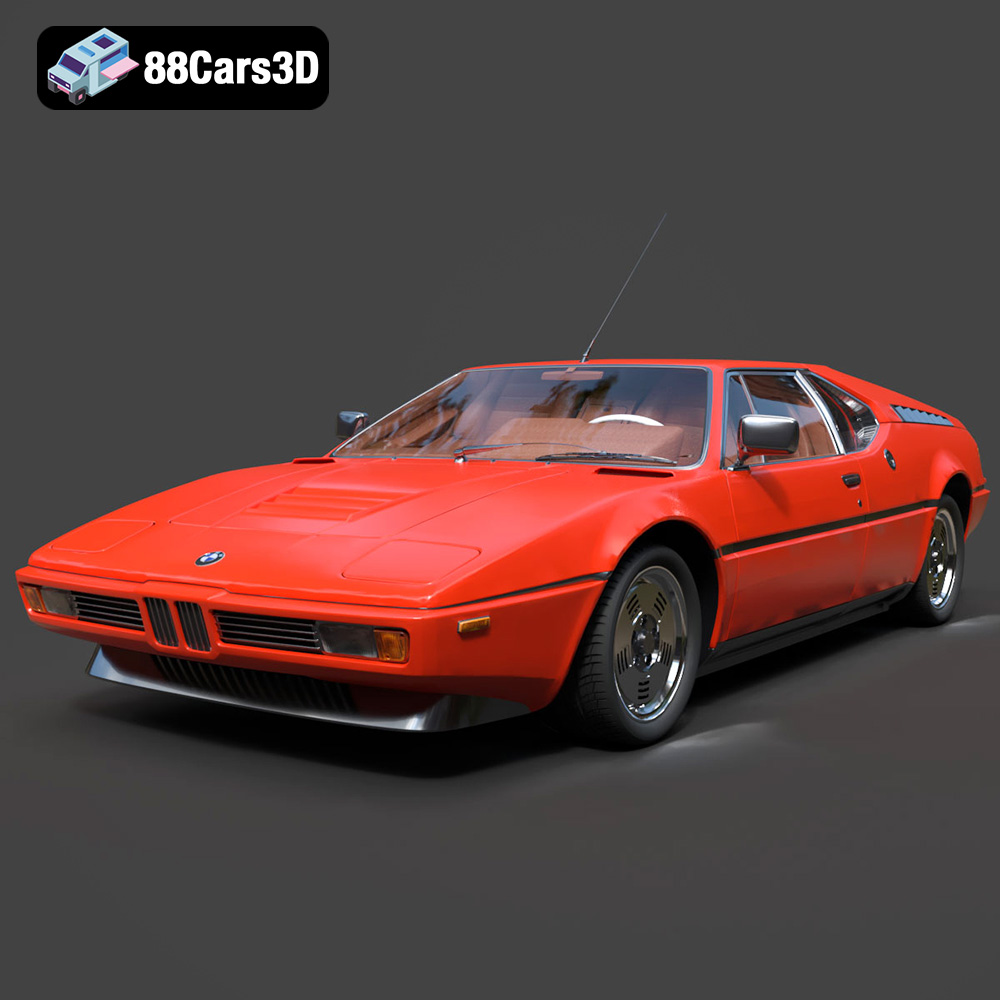
Texture: Yes
Material: Yes
Download the BMW Motorsport M1 E26 1981 3D Model featuring its iconic design, race-bred aerodynamics, and meticulously crafted details. Includes .blend, .fbx, .obj, .glb, .stl, .ply, .unreal, and .max formats for rendering, simulation, and game development.
Price: $20.79

Meta Description:
Texture: Yes
Material: Yes
Download the Cadillac CTS-V Coupe 3D Model featuring detailed exterior styling and realistic interior structure. Includes .blend, .fbx, .obj, .glb, .stl, .ply, .unreal, and .max formats for rendering, simulation, AR VR, and game development.
Price: $13.9
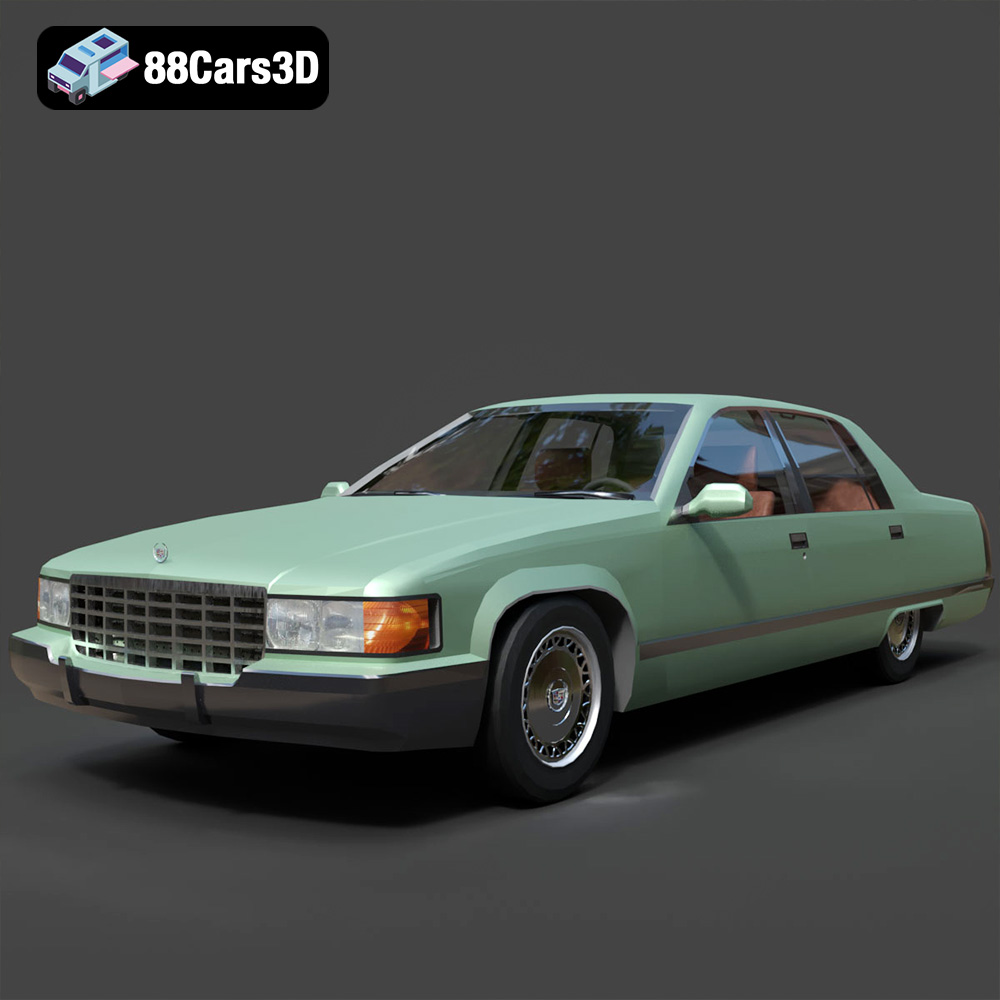
Texture: Yes
Material: Yes
Download the Cadillac Fleetwood Brougham 3D Model featuring its iconic classic luxury design and detailed exterior and interior. Includes .blend, .fbx, .obj, .glb, .stl, .ply, .unreal, and .max formats for rendering, simulation, and game development.
Price: $10.79
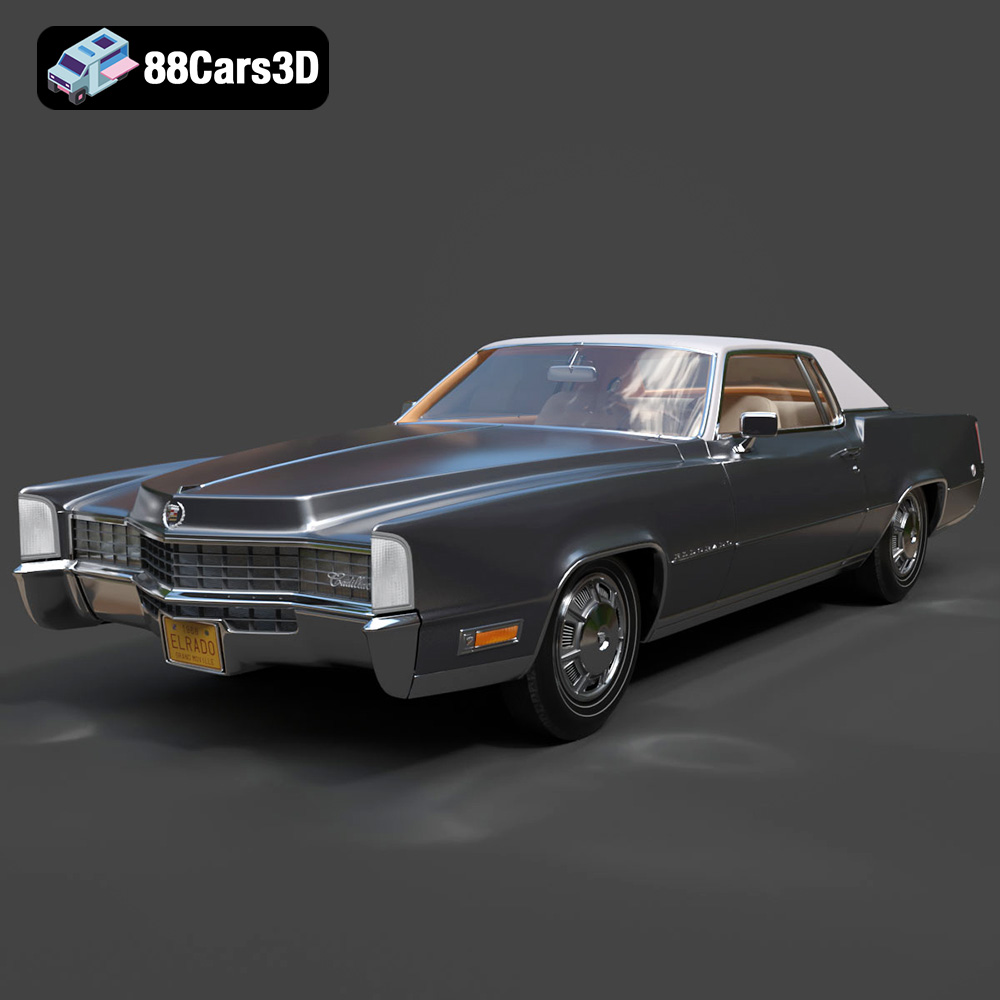
Texture: Yes
Material: Yes
Download the Cadillac Eldorado 1968 3D Model featuring its iconic elongated body, distinctive chrome accents, and luxurious interior. Includes .blend, .fbx, .obj, .glb, .stl, .ply, .unreal, and .max formats for rendering, simulation, and game development.
Price: $20.79

Texture: Yes
Material: Yes
Download the Cadillac CTS SW 2010 3D Model featuring a detailed exterior, functional interior elements, and realistic materials. Includes .blend, .fbx, .obj, .glb, .stl, .ply, .unreal, and .max formats for rendering, simulation, and game development.
Price: $10.79
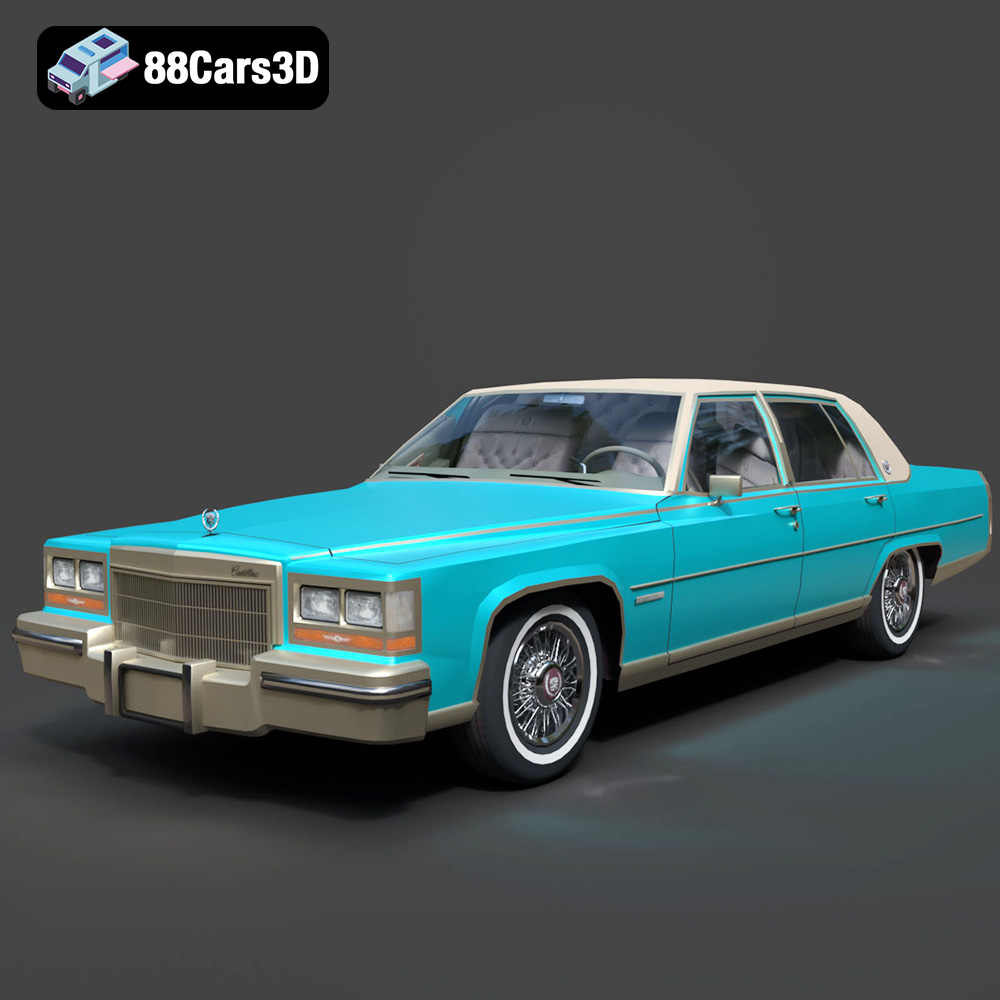
Texture: Yes
Material: Yes
Download the Cadillac Fleetwood Brougham 1985 3D Model featuring its iconic classic luxury design and detailed craftsmanship. Includes .blend, .fbx, .obj, .glb, .stl, .ply, .unreal, and .max formats for rendering, simulation, and game development.
Price: $10.79

Texture: Yes
Material: Yes
Download the Cadillac Eldorado 1978 3D Model featuring accurately modeled exterior, detailed interior, and period-correct aesthetics. Includes .blend, .fbx, .obj, .glb, .stl, .ply, .unreal, and .max formats for rendering, simulation, and game development.
Price: $10.79
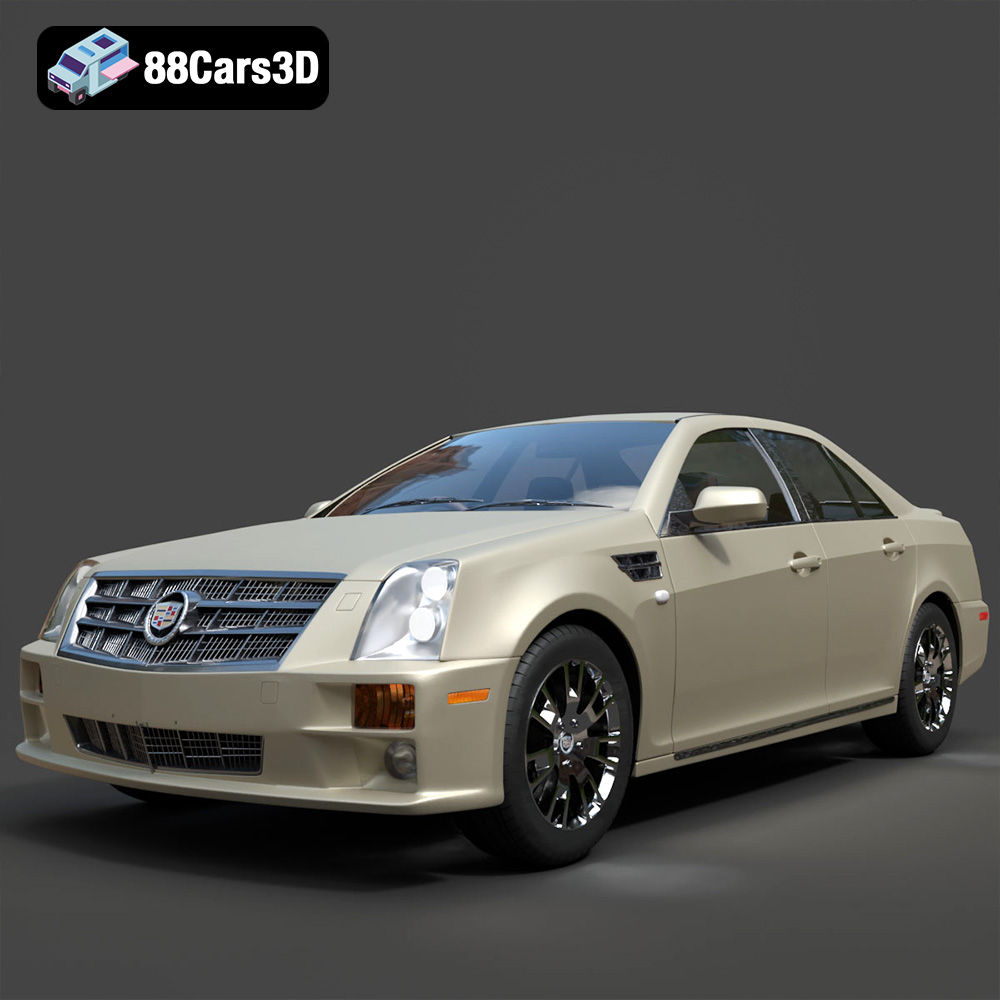
Texture: Yes
Material: Yes
Download the Cadillac STS-005 3D Model featuring a detailed exterior and interior. Includes .blend, .fbx, .obj, .glb, .stl, .ply, .unreal, and .max formats for rendering, simulation, and game development.
Price: $22.79
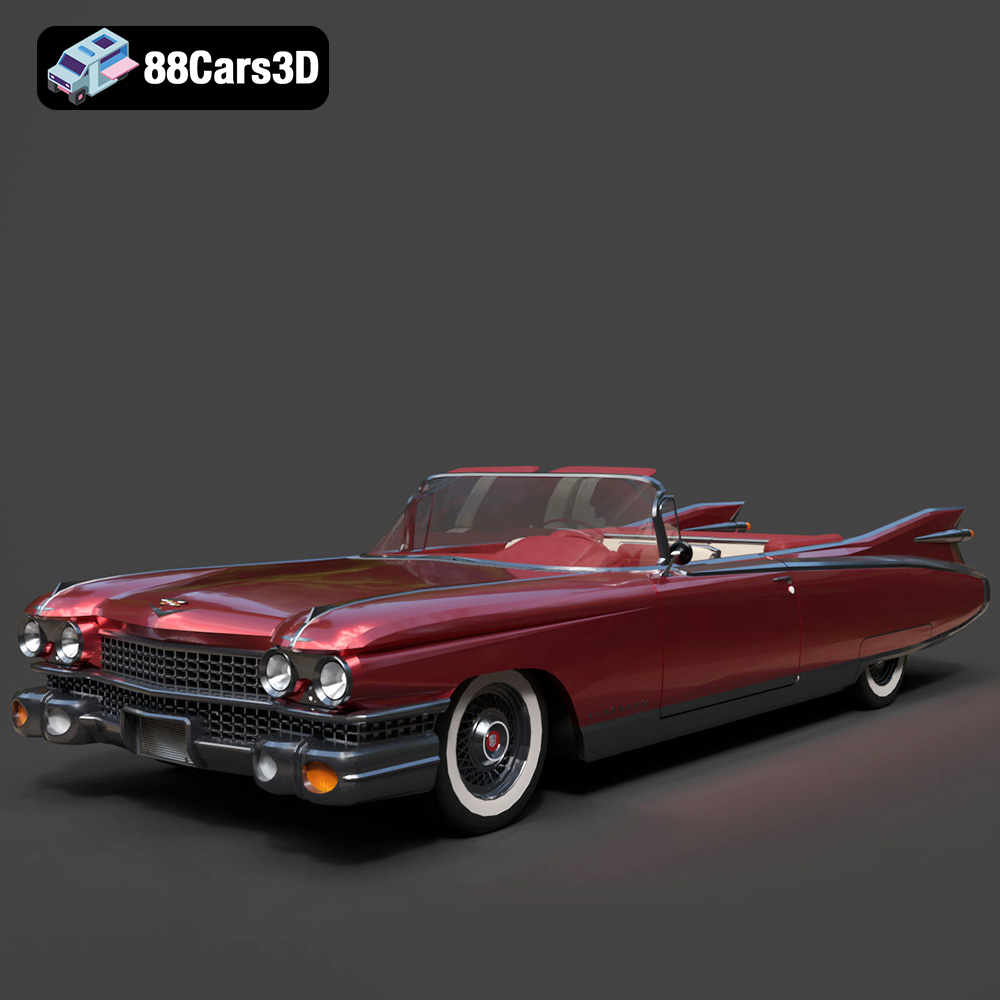
Texture: Yes
Material: Yes
Download the Cadillac Eldorado Convertible (1959) 3D Model featuring iconic fins, luxurious chrome details, and a classic vintage design. Includes .blend, .fbx, .obj, .glb, .stl, .ply, .unreal, and .max formats for rendering, simulation, and game development.
Price: $20.79

Texture: Yes
Material: Yes
Download the Cadillac DTS-005 3D Model featuring its iconic luxury design, detailed interior, and realistic exterior. Includes .blend, .fbx, .obj, .glb, .stl, .ply, .unreal, and .max formats for rendering, simulation, and game development.
Price: $10.79

