

In the exhilarating world of 3D animation, a stunning car model is only as good as its rig. While a beautifully modeled vehicle from platforms like 88cars3d.com can captivate static audiences, it’s the underlying skeletal structure and control system—the rig—that truly brings it to life. Rigging a car for animation is a complex blend of technical precision and artistic foresight, demanding a deep understanding of mechanics, deformation, and animation principles. A well-constructed car rig not only facilitates seamless animation but also significantly enhances production efficiency, allowing animators to focus on performance rather than fighting with technical limitations.
This comprehensive guide delves into the best practices for rigging automotive models, transforming static meshes into dynamically animatable assets. We’ll explore everything from foundational topology requirements to advanced control systems, game engine optimizations, and essential export considerations. Whether you’re a seasoned 3D artist, a game developer, or an automotive designer looking to add motion to your visualizations, mastering car rigging is paramount. Prepare to unlock the full animation potential of your 3D car models and create compelling, lifelike automotive sequences that stand out.
The Foundation of a Great Car Rig: Topology and Planning
Before a single bone is placed, the integrity of your 3D car model’s topology is the most critical factor influencing the success of its rig. A clean, well-optimized mesh acts as the perfect canvas, allowing for smooth deformations and predictable behavior once animated. Starting with high-quality 3D car models, such as those found on 88cars3d.com, is a distinct advantage, as they often come with professionally crafted topology. However, even the best models benefit from a thorough pre-rigging inspection and preparation phase to ensure they are truly animation-ready.
Pristine Geometry: The Unsung Hero of Rigging
Good topology for car models means more than just a low polygon count. It refers to the strategic placement of edges and vertices to define the vehicle’s form, ensure proper light reflection, and facilitate deformation where necessary. For rigging, a consistent quad-based mesh is ideal. Triangles should be minimized, especially in areas that will deform or require precision movement, as they can lead to unpredictable pinching and undesirable visual artifacts. Check for non-manifold geometry, interior faces, and open edges, which can cause issues with skinning and physics simulations later on. Tools like Blender’s “Clean Up” menu (Merge by Distance, Delete Loose) or Maya’s “Mesh Cleanup” can help resolve these common mesh problems. Remember, the cleaner the mesh, the smoother the rig’s performance will be, both in your 3D application and in real-time environments.
Pre-Rigging Checklist: Essential Preparations
A meticulous preparation phase can save countless hours during the rigging and animation process. First, ensure your model is correctly scaled to real-world dimensions. Inconsistent scaling can lead to issues with physics engines and animation solvers. Next, verify that the model’s pivot points and origins are appropriately set. For the entire vehicle, the main pivot should typically be at the center of its base, allowing for easy placement and rotation in a scene. Each component—wheels, doors, hood, trunk—should have its pivot precisely located at its natural rotation axis. For example, a wheel’s pivot should be at its center, and a door’s pivot should align with its hinges. Freezing transformations and resetting X-Forms (3ds Max) or applying all transforms (Blender, Maya) is crucial to ensure all scale and rotation values are zeroed out, preventing unexpected behavior from your rig. Finally, consider whether your car model needs to be broken down into separate, logical components (e.g., chassis, four wheels, four doors, hood, trunk) if it isn’t already, as this modular approach greatly simplifies the rigging process.
Core Components of an Automotive Rig: Bones and Hierarchy
The skeletal structure of your car rig forms the backbone of its animation capabilities. A well-organized and logically parented bone hierarchy is paramount for intuitive control and efficient animation. Unlike character rigging which focuses on organic deformation, car rigging primarily deals with rigid body transformations and rotational movements, though some subtle deformations (like tire bulge) can be incorporated. The goal is to mimic the mechanical movements of a real car with an elegant and streamlined system of bones and controls.
Establishing the Chassis and Primary Bones
The foundation of any car rig begins with a central “root” bone, often placed at the vehicle’s center of gravity or directly beneath the chassis. This root bone will typically control the overall position and orientation of the entire car. All other primary components—the chassis, wheels, and any major sub-assemblies—will be parented to this root bone, directly or indirectly. The main chassis bone itself should encapsulate the car body. Consider a simple hierarchy where the root bone parents a “main_chassis” bone. This main_chassis bone then serves as the parent for other key structural elements, such as the steering mechanism and the overall wheel groups. This hierarchical approach ensures that when the root moves, the entire car moves as a single, cohesive unit. For complex vehicles, you might introduce intermediary bones for front and rear axles, which then parent their respective wheel systems, allowing for independent control of front-wheel steering or rear-wheel drive characteristics if needed.
Wheel and Steering Systems: IK vs. FK Approaches
The wheels and steering system are arguably the most critical parts of a car rig for animation. For wheels, an Inverse Kinematics (IK) setup is almost always preferred for ground contact. An IK chain typically consists of a target (the IK handle or effector) that an animator can move, and the chain of bones (e.g., wheel bone) will automatically orient themselves to reach that target. For car wheels, a simple setup involves a wheel bone that can rotate on its local X-axis for forward/backward motion, and its pivot point being the center of the wheel. The IK target would be a control object placed at the wheel’s base, constrained to the ground plane, allowing animators to push and pull the car while the wheels maintain ground contact and rotate accordingly. This can be achieved in Blender by adding an Empty object as an IK target for a bone chain, which is well-documented in the official Blender 4.4 documentation under the “Inverse Kinematics” section.
For steering, a Forward Kinematics (FK) approach is often more intuitive. A single “steering_control” bone or null object, typically placed where the steering wheel would be, can be rotated to control the front wheels’ turning angle. This control object then drives the rotation of the front wheel’s pivot points or their individual steering bones. This is where drivers and constraints become essential, linking the rotation of the steering control to the yaw (Y-axis rotation) of the front wheels. A steering wheel itself should also be parented to this steering control, ensuring it rotates in unison with the vehicle’s turning input. The precision in setting up these interconnected systems determines the realism and ease of animating turns and drifts.
Advanced Controls and Automation: Constraints and Drivers
The true power of a sophisticated car rig lies in its ability to automate complex mechanical movements through the intelligent use of constraints and drivers. These tools allow animators to manipulate high-level controls, while the rig handles the intricate relationships and transformations of numerous underlying bones and objects. This automation streamlines the animation process, reduces errors, and ensures consistent, physically accurate motion.
Realistic Suspension Systems with Constraints
A car’s suspension system is crucial for conveying weight, impact, and road interaction. Rigging realistic suspension can be achieved effectively using a combination of constraints. For each wheel, consider a “suspension_arm” bone that acts as a pivot point for the wheel’s vertical movement. A “spring” or “shock_absorber” bone can then be constrained to extend and compress. A common technique involves a “limit distance” constraint (in Maya) or a “track to” and “limit location” constraint (in Blender) on an object or bone representing the top of the shock absorber, targeting the wheel’s pivot. This allows the wheel to move vertically while the shock absorber visibly compresses and expands. Additionally, a “copy transform” or “parent” constraint can link the suspension arm to the main chassis, ensuring it moves with the car body while allowing independent vertical travel. For a more advanced setup, you could use a series of ‘look at’ constraints to simulate the complex linkage of a double-wishbone or multi-link suspension, though this adds significant complexity to the rig.
Automated Wheel Rotation and Steering
One of the most satisfying automations in a car rig is linking the vehicle’s forward movement to the rotation of its wheels, and the steering control to the front wheels’ yaw. For wheel rotation, a driver-based approach is highly efficient. In Blender, a driver can be set up on the wheel’s rotation property (e.g., X-axis) that reads the global translation (movement on Y or X axis, depending on your vehicle’s forward direction) of the main car control. The formula for this driver would typically involve dividing the translation value by the wheel’s circumference (2 * pi * radius). This ensures that as the car moves forward, the wheels spin at a corresponding, realistic rate. For steering, the rotation of a “steering_control” object (e.g., on its Z-axis) can drive the Z-axis rotation of the front wheels’ dedicated steering bones. A “Limit Rotation” constraint can be applied to these front wheel steering bones to prevent unrealistic turning angles, mirroring the physical limits of a real car’s steering rack. This level of automation frees the animator from manually keyframing each wheel’s spin and steering angle, allowing for more fluid and believable animations.
Articulating Doors, Hood, and Trunk
Beyond the core driving mechanics, a comprehensive car rig should also include controls for all articulating components. Doors, the hood, and the trunk typically operate on simple pivot-based rotations. For each of these elements, create a dedicated bone or control object (e.g., a Null in Maya, an Empty in Blender) positioned precisely at the object’s hinge point. Parent the respective mesh (door, hood, trunk) to this control object. The animator can then simply rotate this control to open and close the component. For added realism and control, consider adding “Limit Rotation” constraints to these controls to prevent them from opening beyond physically possible angles. For more advanced interactions, like power windows, separate controls could be added that drive the vertical translation of the window mesh within the door. The modularity of a well-rigged car allows for these additional details to be seamlessly integrated, offering animators maximum flexibility for storytelling and showcasing vehicle features.
Optimizing Car Rigs for Real-time Applications (Game Engines & AR/VR)
While cinematic renders can afford highly detailed rigs, real-time applications like game engines (Unity, Unreal Engine) and AR/VR experiences demand rigorous optimization. Performance is paramount, and every bone, constraint, and polygon counts towards the overall frame rate. Crafting a real-time ready car rig involves strategic compromises and intelligent design choices to balance visual fidelity with computational efficiency.
LOD Strategies for Rigged Vehicles
Level of Detail (LOD) is a crucial optimization technique for real-time applications. For rigged vehicles, this means creating multiple versions of your car model and its associated rig, each with varying levels of complexity. A high-detail (LOD0) rig might have full suspension, detailed door controls, and many bones, suitable when the car is close to the camera. As the car moves further away, lower LODs (LOD1, LOD2, etc.) are swapped in. These lower LODs will have fewer polygons, simpler textures, and crucially, a significantly reduced bone count. For instance, LOD1 might remove individual suspension bones and simplify the steering mechanism, while LOD2 might reduce the entire car to a single chassis bone and four wheel bones, without individual door controls. The key is to ensure that the visual transition between LODs is seamless and unnoticeable to the player. Most game engines have built-in LOD systems that can manage this swapping automatically based on screen distance or pixel coverage.
Streamlining Hierarchy and Bone Counts
Every bone in a rig, especially one that is skinned to geometry, contributes to the processing overhead in a game engine. Therefore, minimizing the bone count without sacrificing essential animation functionality is a primary goal. Review your rig hierarchy and identify any redundant or non-essential bones that don’t contribute significantly to animation or deformation. Can a single control object drive multiple static elements instead of individual bones? For example, if interior elements like a dashboard or seats don’t need to animate independently, they can be parented directly to the main chassis bone without their own bone structure. Group static parts together under fewer bones. Prioritize functional bones (chassis, wheels, steering) over purely aesthetic ones (unless absolutely critical for an in-game feature). In Unreal Engine, for instance, you’ll import your rigged mesh as a Skeletal Mesh, and the engine will process each bone’s transformation. A complex hierarchy with many bones can quickly become a performance bottleneck, especially when multiple rigged vehicles are present in a scene.
Physics Assets and Collision Meshes
Beyond the animation rig, real-time car models require robust physics assets and collision meshes for realistic interaction with the game world. Physics assets (like Unreal Engine’s PhAT or Unity’s Wheel Colliders) define how the car responds to forces, collisions, and gravity. Instead of using the high-detail visual mesh for collision detection, create simplified, convex collision meshes (often called “proxies” or “colliders”). These simplified meshes have far fewer polygons and are computationally cheaper for the physics engine to process. Typically, you’ll create a main collision mesh for the car’s body and separate collision primitives (spheres, capsules) for each wheel. These collision shapes are then linked to the corresponding bones in your animation rig. In Unity, for example, you would attach Wheel Collider components to a GameObject for each wheel, setting parameters like suspension distance, spring, and damper to simulate realistic driving physics. Ensuring that your collision meshes accurately represent the car’s physical boundaries is critical for preventing “snagging” on environment geometry and maintaining a stable driving experience.
Exporting and Interoperability: Getting Your Rigged Car Everywhere
Once your car model is meticulously rigged and ready for animation, the next crucial step is to export it in a format that preserves all the hard work and allows for seamless integration into other 3D applications, game engines, or rendering pipelines. File format compatibility and careful export settings are paramount to avoid headaches down the line.
The FBX Standard: Best Practices for Car Rigs
FBX (Filmbox) is the industry-standard file format for exchanging 3D models with animation data, making it the go-to choice for exporting rigged car models. When exporting to FBX, attention to detail in the settings dialog is critical. Ensure that “Embed Media” is checked if you want textures to travel with the file, though for large projects, linking textures externally is often preferred. Crucially, select “Animation” and ensure that “Skins” and “Blend Shapes” (if you’ve used any for deformation, e.g., tire bulge) are included. For game engines, often “Bake Animation” is selected to convert all constraints and drivers into keyframes, creating a linear animation path that engines can easily interpret. This can increase file size but ensures compatibility. It’s often recommended to export with “Units” set to “Automatic” or to match the target application’s units to prevent scale discrepancies. Always perform a test import into your target application (e.g., Unity, Unreal, Maya) to verify that the rig, skinning, and animation data are intact and functioning as expected. If the rig doesn’t appear correctly, double-check your export options, particularly those related to transform hierarchy and animation baking.
Alembic for Complex Deformations and Caching
While FBX excels at skeletal animation, for extremely complex deformations or highly dynamic simulations (such as a car crashing with soft body dynamics), Alembic (.abc) can be a superior choice. Alembic is an open interchange format for computer graphics that distills complex animated scenes into a baked sequence of geometry data. It stores vertex-level animation, meaning it captures every single vertex’s position over time, making it excellent for preserving intricate deformations that might be difficult to transfer via a traditional bone-based rig. For instance, if you’ve simulated realistic tire bulging or body flex using cloth or soft body physics within your 3D application, exporting as Alembic will capture these nuances perfectly. The trade-off is often larger file sizes and a less flexible workflow for animators (as the animation is “baked in” and cannot be easily modified). However, for final-pass animations or specific shots requiring high fidelity deformation, Alembic provides an incredibly robust solution. Keep in mind that Alembic is primarily for geometric data, so it won’t carry bone hierarchies or traditional rig controls; it’s a ‘what you see is what you get’ solution for animation caching.
Troubleshooting Export Issues
Exporting rigged models can sometimes lead to unexpected issues. Common problems include lost skinning, incorrect bone orientations, misplaced pivots, or missing animation data. If skinning is lost, ensure that the meshes are properly bound to the bones before export, and that the “Skins” option is enabled in your FBX settings. Incorrect bone orientations often stem from un-frozen transformations or improper axis alignment in the source application; always apply transforms and reset rotations before rigging and exporting. Pivots can shift if the object’s origin is not correctly baked into the transform; make sure the pivot is part of the object’s transformation data. Missing animation usually means the animation wasn’t baked or included in the export settings; check the “Animation” and “Bake Animation” options. If scale issues persist, ensure consistent unit settings across all applications involved in the pipeline. Many problems can be diagnosed by importing the exported FBX back into the originating software, which can often highlight discrepancies more clearly than importing into an entirely different program. Always consult the documentation for your specific 3D software and target game engine for their recommended FBX export settings.
Troubleshooting and Advanced Rigging Techniques
Even with the best practices, rigging can present unforeseen challenges. Understanding how to troubleshoot common pitfalls and knowing when to employ advanced techniques can elevate your car rigs from functional to truly spectacular, adding layers of realism and control that captivate an audience.
Common Rigging Pitfalls and Solutions
One frequent issue is “gimbal lock,” where two rotation axes align, causing a loss of rotational freedom. This typically occurs with FK rotations and can be mitigated by careful bone orientation or by introducing an extra helper bone to break up the problematic rotation. Another common problem is unexpected mesh deformation, often manifesting as pinching or stretching. This is usually a symptom of poor topology, incorrect skin weights, or an improperly placed pivot. Review your mesh for n-gons or triangles in deformation areas, carefully adjust skin weights (using tools like weight painting in Blender or Maya), and ensure pivot points are precisely on rotation axes. Invisible or non-selectable controls can frustrate animators; make sure your control objects are on visible layers, have proper selection handles, and aren’t accidentally locked. Parenting errors, where objects move independently when they shouldn’t, indicate a broken hierarchy; carefully review your parent-child relationships in the outliner. Regular testing throughout the rigging process—by posing and animating the car—is the best way to catch these issues early before they become deeply embedded problems.
Adding Secondary Motion: Tire Bulge and Body Sway
While car rigging primarily deals with rigid transformations, adding subtle secondary motion can significantly enhance realism. Tire bulging, for example, simulates the slight deformation of a tire under the car’s weight or during cornering. This can be achieved using blend shapes (shape keys in Blender) or simple deformers. Create a blend shape target where the bottom of the tire is slightly flattened and expanded. Then, use a driver to connect this blend shape’s influence to the suspension compression, so the bulge increases as the suspension lowers. Another technique is to use soft body physics or a simple spring constraint for subtle body sway. A “body_sway” bone parented to the main chassis could have a “spring” or “limit rotation” constraint that allows it to lag slightly behind turns or jolts, then gently spring back into place. This adds a believable sense of inertia and weight to the vehicle. For a quick overview of shape keys, consult the Blender 4.4 documentation on Shape Keys. Even small details like a vibrating antenna or exhaust pipes can be achieved with simple physics simulations or procedural animation, breathing more life into your 3D car models.
Conclusion
Rigging a 3D car model for animation is an intricate yet incredibly rewarding process. It’s the essential bridge between a static, beautifully crafted mesh and a dynamic, story-telling asset. By adhering to best practices in topology, meticulously planning your bone hierarchy, and leveraging the power of constraints and drivers, you can construct a robust, animator-friendly rig that brings your automotive visions to life with unparalleled realism.
Remember that a great rig starts with a great model. Sourcing high-quality 3D car models from trusted marketplaces like 88cars3d.com provides an excellent foundation, allowing you to focus on the specialized technicalities of rigging. Whether your goal is cinematic excellence, real-time game integration, or immersive AR/VR experiences, the principles discussed here—from optimizing for performance to ensuring seamless export—are your roadmap to success. Master these techniques, and you’ll not only enhance your technical skills but also unlock a new dimension of creative possibility for your 3D automotive projects. Embrace the challenge, test thoroughly, and watch your car models accelerate into compelling animations.
Featured 3D Car Models
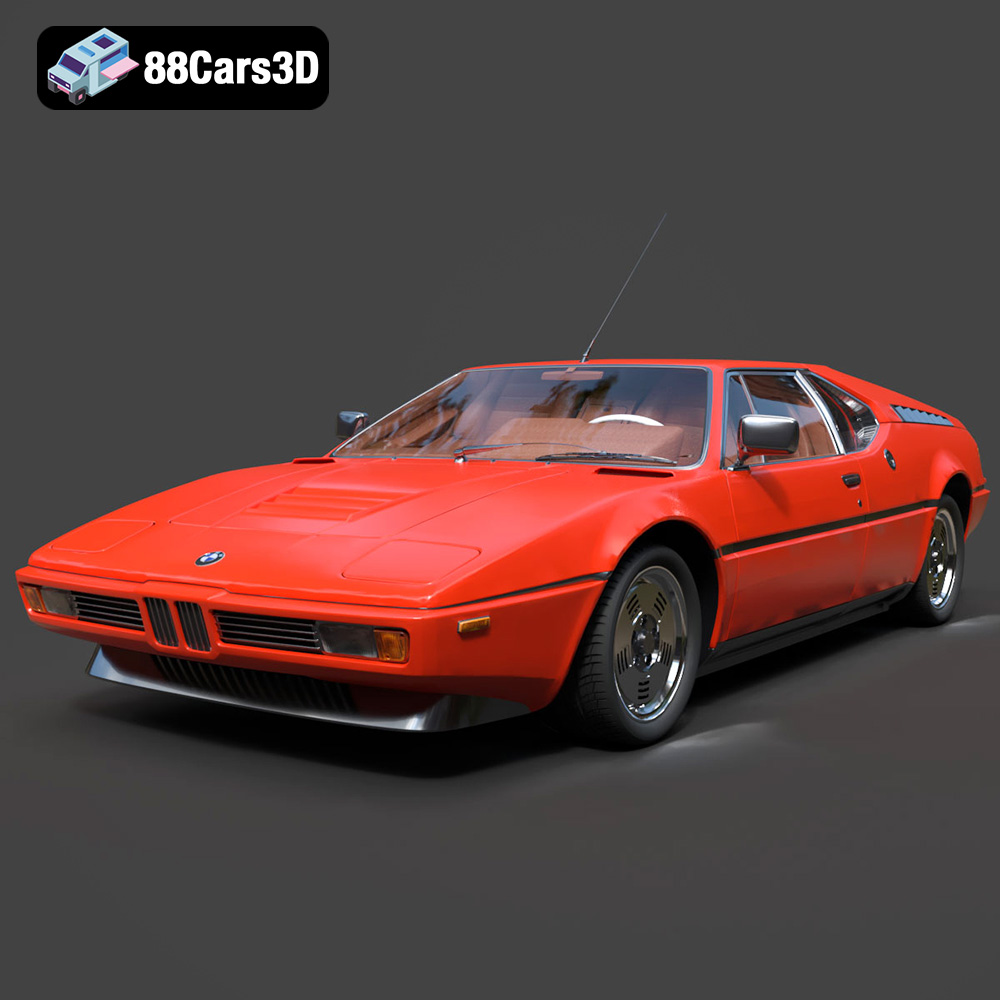
BMW Motorsport M1 E26 1981 3D Model
Texture: Yes
Material: Yes
Download the BMW Motorsport M1 E26 1981 3D Model featuring its iconic design, race-bred aerodynamics, and meticulously crafted details. Includes .blend, .fbx, .obj, .glb, .stl, .ply, .unreal, and .max formats for rendering, simulation, and game development.
Price: $20.79

Cadillac CTS-V Coupe 3D Model
Meta Description:
Texture: Yes
Material: Yes
Download the Cadillac CTS-V Coupe 3D Model featuring detailed exterior styling and realistic interior structure. Includes .blend, .fbx, .obj, .glb, .stl, .ply, .unreal, and .max formats for rendering, simulation, AR VR, and game development.
Price: $13.9
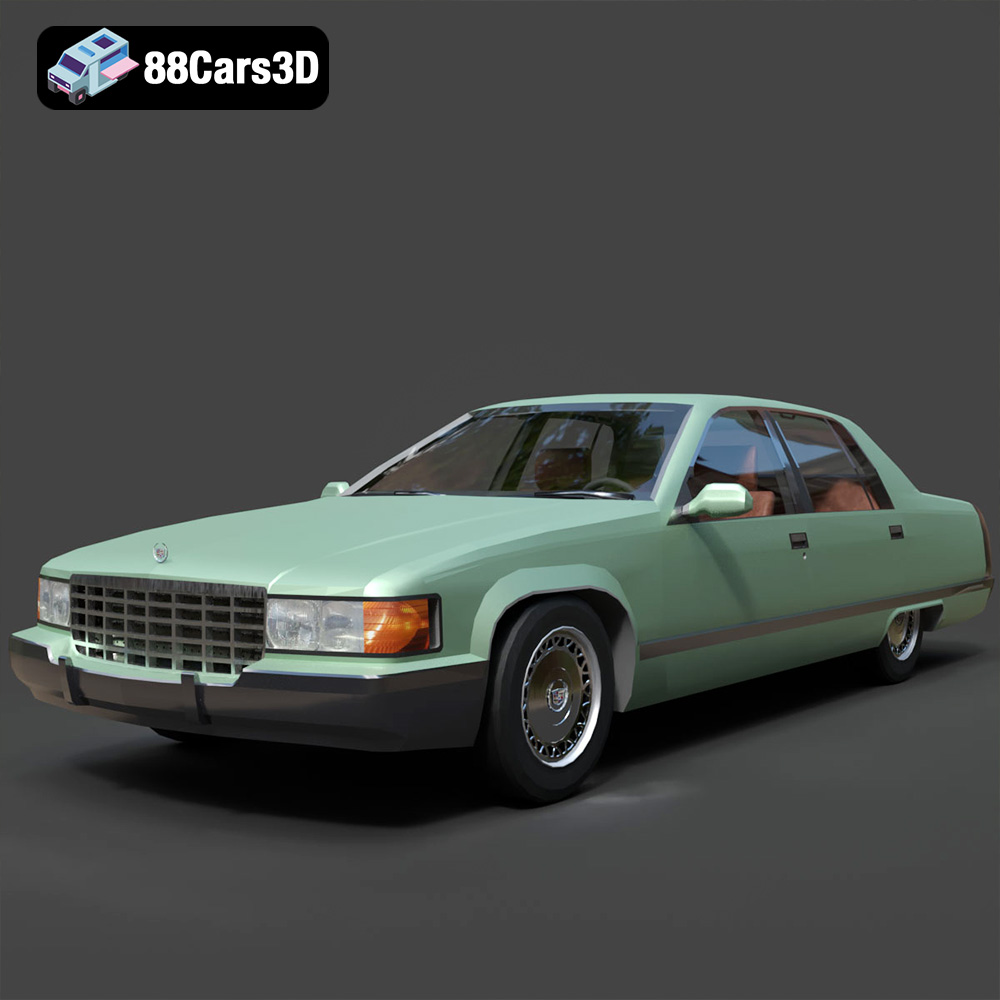
Cadillac Fleetwood Brougham 3D Model
Texture: Yes
Material: Yes
Download the Cadillac Fleetwood Brougham 3D Model featuring its iconic classic luxury design and detailed exterior and interior. Includes .blend, .fbx, .obj, .glb, .stl, .ply, .unreal, and .max formats for rendering, simulation, and game development.
Price: $10.79
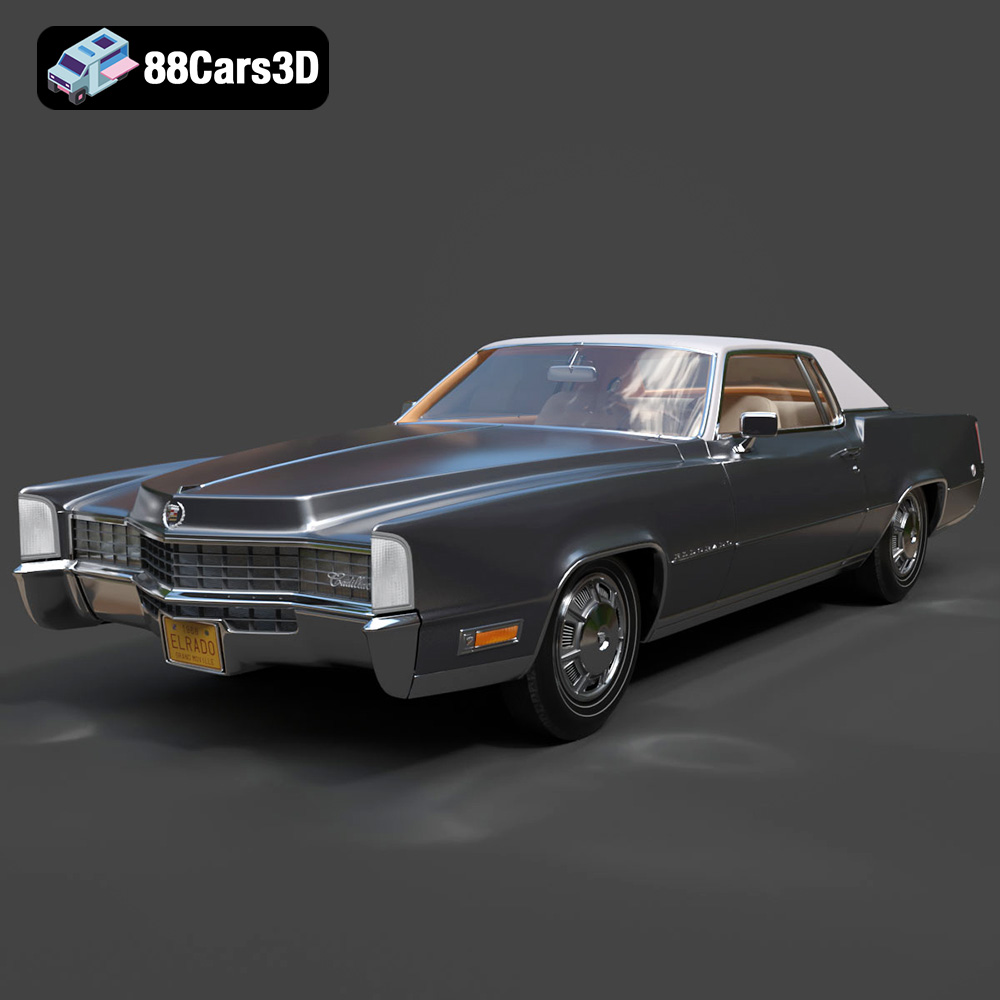
Cadillac Eldorado 1968 3D Model
Texture: Yes
Material: Yes
Download the Cadillac Eldorado 1968 3D Model featuring its iconic elongated body, distinctive chrome accents, and luxurious interior. Includes .blend, .fbx, .obj, .glb, .stl, .ply, .unreal, and .max formats for rendering, simulation, and game development.
Price: $20.79

Cadillac CTS SW 2010 3D Model
Texture: Yes
Material: Yes
Download the Cadillac CTS SW 2010 3D Model featuring a detailed exterior, functional interior elements, and realistic materials. Includes .blend, .fbx, .obj, .glb, .stl, .ply, .unreal, and .max formats for rendering, simulation, and game development.
Price: $10.79
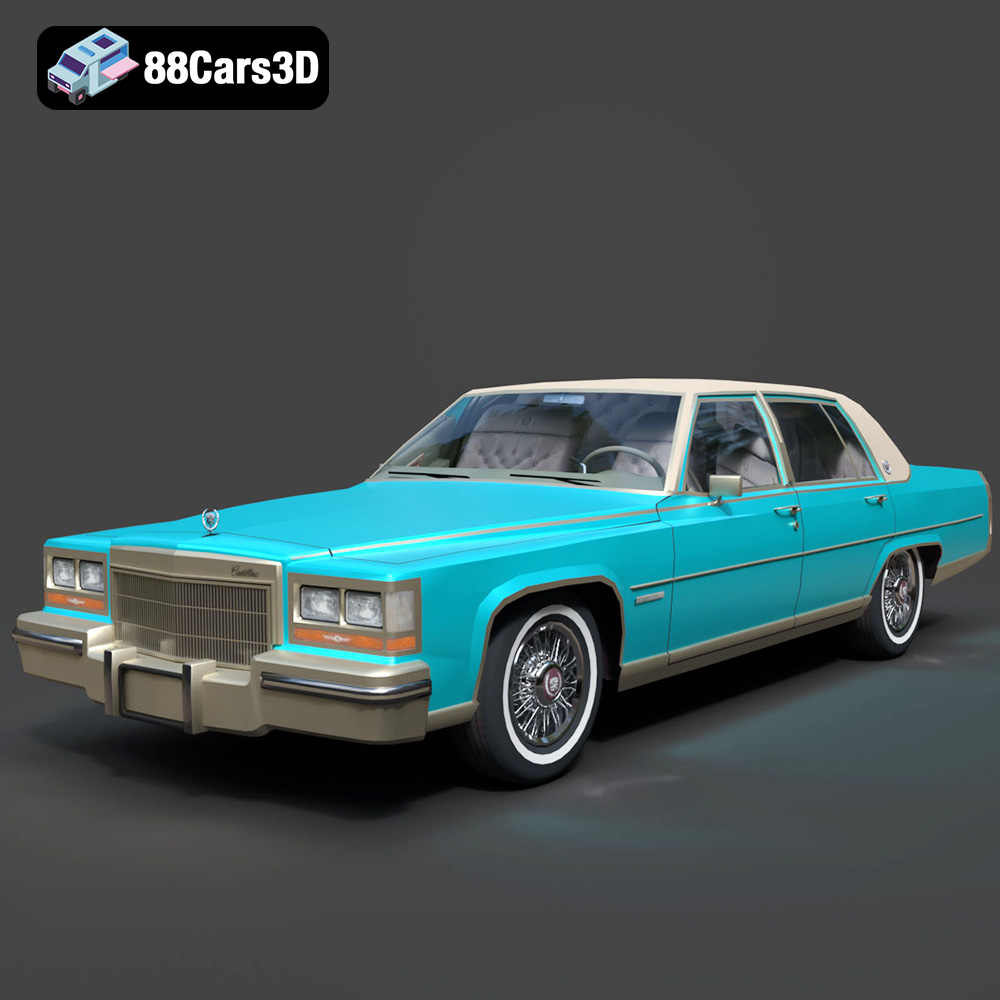
Cadillac Fleetwood Brougham 1985 3D Model
Texture: Yes
Material: Yes
Download the Cadillac Fleetwood Brougham 1985 3D Model featuring its iconic classic luxury design and detailed craftsmanship. Includes .blend, .fbx, .obj, .glb, .stl, .ply, .unreal, and .max formats for rendering, simulation, and game development.
Price: $10.79
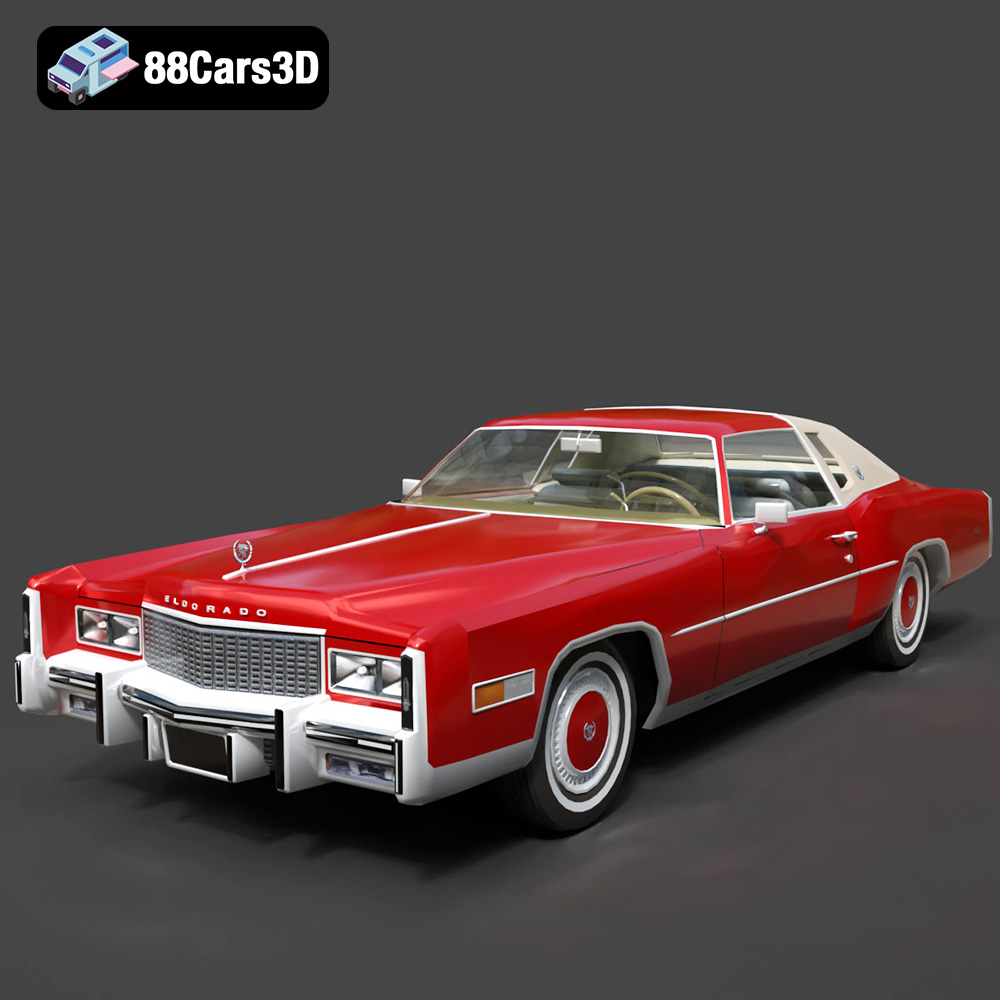
Cadillac Eldorado 1978 3D Model
Texture: Yes
Material: Yes
Download the Cadillac Eldorado 1978 3D Model featuring accurately modeled exterior, detailed interior, and period-correct aesthetics. Includes .blend, .fbx, .obj, .glb, .stl, .ply, .unreal, and .max formats for rendering, simulation, and game development.
Price: $10.79
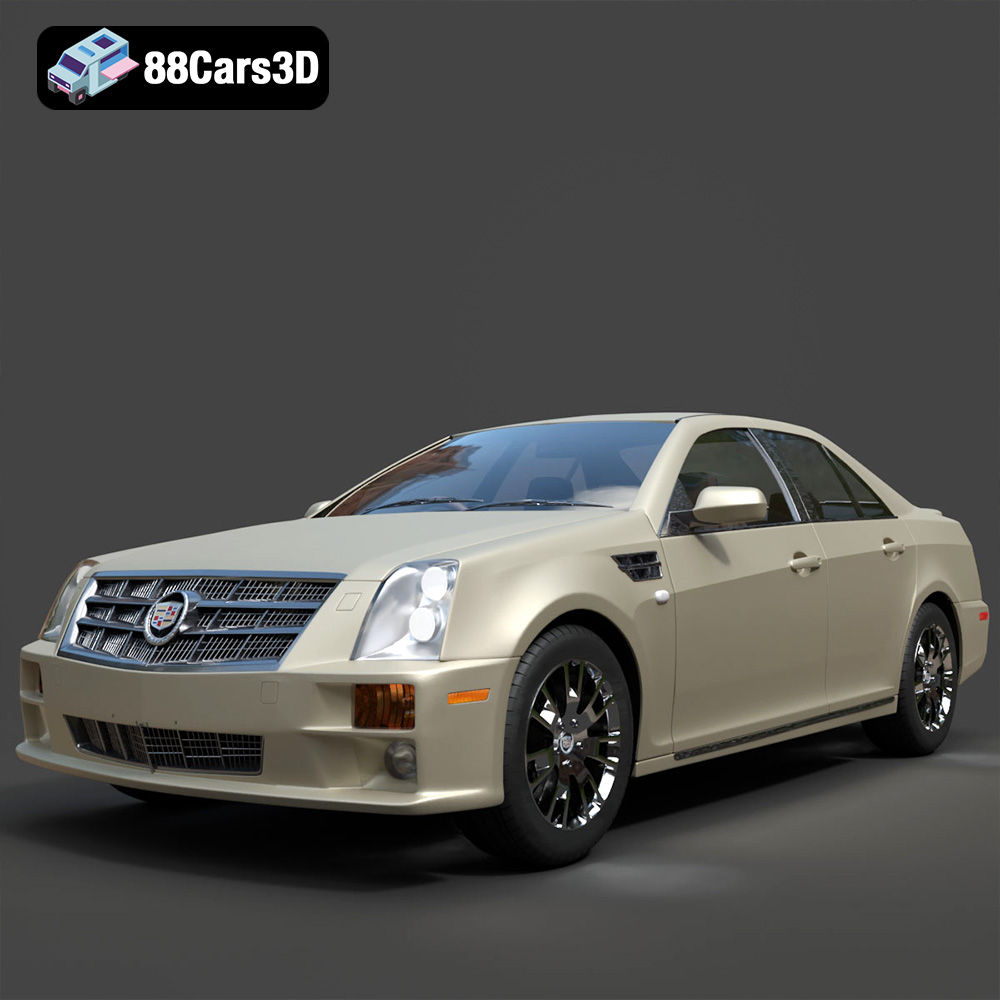
Cadillac STS-005 3D Model
Texture: Yes
Material: Yes
Download the Cadillac STS-005 3D Model featuring a detailed exterior and interior. Includes .blend, .fbx, .obj, .glb, .stl, .ply, .unreal, and .max formats for rendering, simulation, and game development.
Price: $22.79
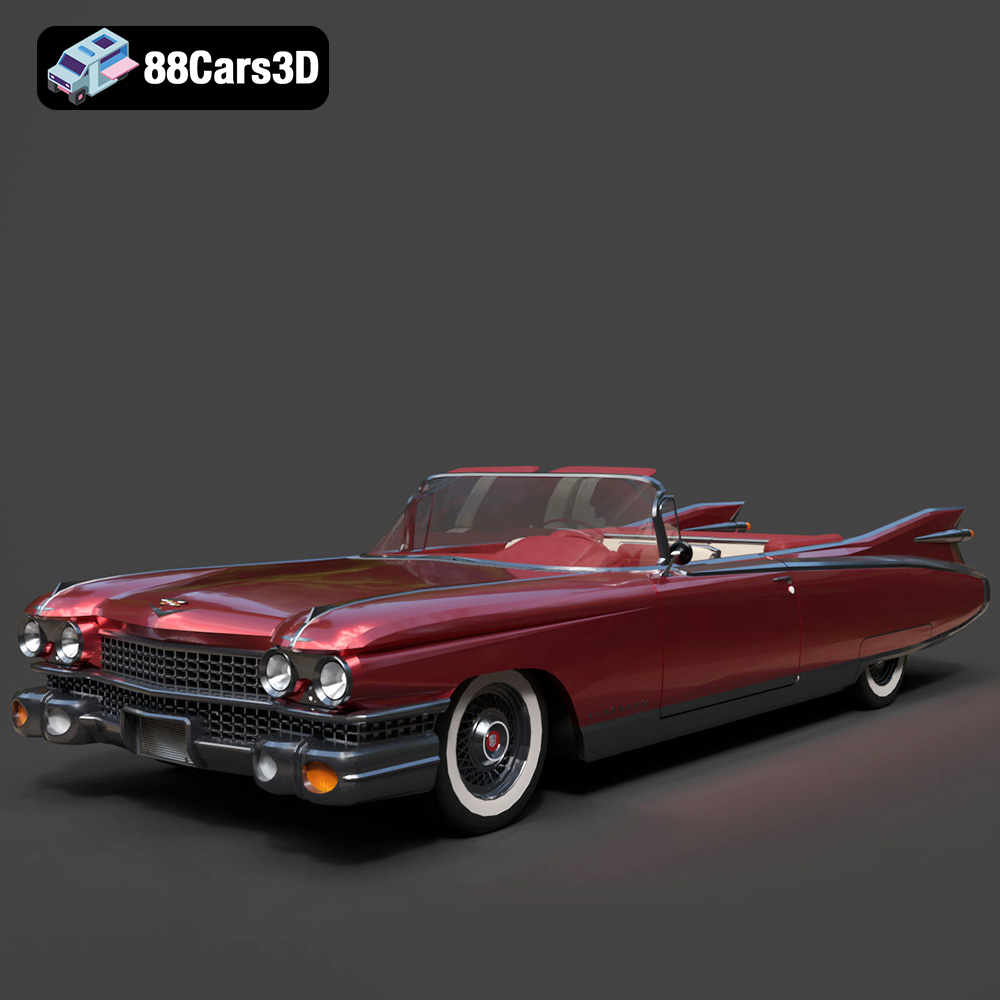
Cadillac Eldorado Convertible (1959) 3D Model
Texture: Yes
Material: Yes
Download the Cadillac Eldorado Convertible (1959) 3D Model featuring iconic fins, luxurious chrome details, and a classic vintage design. Includes .blend, .fbx, .obj, .glb, .stl, .ply, .unreal, and .max formats for rendering, simulation, and game development.
Price: $20.79

Cadillac DTS-005 3D Model
Texture: Yes
Material: Yes
Download the Cadillac DTS-005 3D Model featuring its iconic luxury design, detailed interior, and realistic exterior. Includes .blend, .fbx, .obj, .glb, .stl, .ply, .unreal, and .max formats for rendering, simulation, and game development.
Price: $10.79
