

Mastering the Mesh: Repairing Broken STL Files for Flawless 3D Car Models
The thrill of bringing a meticulously detailed 3D car model to life through 3D printing is an experience cherished by hobbyists and professionals alike. At 88cars3d.com, we’re dedicated to providing you with high-quality, print-ready STL files that capture the essence of iconic vehicles. However, even the most carefully designed 3D models can sometimes encounter issues during export, download, or initial slicing. These issues often manifest as “broken” or “non-manifold” meshes – geometry that your 3D printer or slicer software can’t interpret correctly, leading to printing errors, missing sections, or failed prints. This guide will equip you with the knowledge and practical steps to repair these problematic STL files, ensuring your next 3D printed car model is a stunning success. We’ll delve into the common causes of mesh errors and provide detailed workflows for using industry-standard software like Autodesk Meshmixer and Netfabb to achieve perfectly manifold, printable geometry.
Understanding the Anatomy of a Broken Mesh
Before we dive into the repair process, it’s crucial to understand what constitutes a “broken” or “non-manifold” mesh in the context of 3D printing. STL (Stereolithography) files represent a 3D object as a collection of interconnected triangles. The integrity of this triangle mesh is paramount for successful slicing and printing. A non-manifold mesh contains geometric inaccuracies that violate the fundamental principles of solid modeling, essentially creating “holes” or “impossible” geometry that a 3D printer cannot physically construct layer by layer.
Common Causes of STL Mesh Errors
- Export Artifacts: When models are exported from 3D modeling software (like Blender, CAD programs, or sculpting tools), certain export settings or limitations can lead to the creation of degenerate triangles, holes, or overlapping geometry. Complex boolean operations or rapid prototyping export settings can exacerbate these issues.
- Download Corruption: Although less common, sometimes files can become corrupted during download, leading to incomplete or garbled data within the STL.
- Mesh Operations: Performing complex operations like booleans, subdivisions, or array modifiers without proper cleanup can introduce errors. For instance, when two objects are merged, the intersecting faces might not be properly dissolved, leaving internal geometry or holes.
- Sculpting and Digital Painting: For highly organic or sculpted models, issues like holes from sculpting brushes or intersecting geometry can arise if not carefully managed.
- Low-Polygon Models: While not strictly “broken,” models with insufficient polygon density might lack the detail or surface continuity needed for certain features, leading to visual artifacts that can sometimes be interpreted as errors by slicers.
Identifying Non-Manifold Geometry
The most common types of non-manifold geometry that cause printing failures include:
- Holes: Gaps in the mesh where surfaces should be closed. These can range from tiny pinholes to large openings.
- Internal Faces: Triangles or faces that exist inside the solid volume of the model, which have no external face. These confuse the slicer about the model’s interior.
- Non-Manifold Edges: Edges shared by more than two faces. Imagine an edge where three or more surfaces meet, like the corner of a room. A manifold edge is typically shared by exactly two faces, forming a continuous boundary.
- Degenerate Triangles: Triangles with zero area (all vertices are in the same location) or where two vertices are coincident, effectively reducing the triangle to a line or a point.
- Self-Intersecting Meshes: Parts of the mesh that intersect themselves, creating complex internal geometry.
Identifying these errors is the first step. Slicer software often flags these issues, but dedicated mesh editing tools provide more robust detection and repair capabilities.
Autodesk Meshmixer: A Free and Powerful Repair Tool
Autodesk Meshmixer is a fantastic, free tool that excels at cleaning up and repairing 3D meshes. It’s particularly well-suited for preparing models from various sources for 3D printing. Its intuitive interface, combined with powerful automatic and manual repair functions, makes it an indispensable part of the 3D printing workflow, especially when dealing with models downloaded from marketplaces like 88cars3d.com that may need minor adjustments.
Workflow: Basic Mesh Repair in Meshmixer
Here’s a step-by-step process for repairing a common STL file in Meshmixer:
- Import the STL: Open Meshmixer and go to File > Import. Select your problematic STL file.
- Analyze the Mesh: Before repairing, it’s good practice to get an idea of the errors. Go to Analysis > Inspector. Meshmixer will automatically detect errors and highlight them with red spheres. You can also toggle on Show Triangles to visualize the underlying mesh structure.
- Automatic Repair (The “Inspector” Tool): The Inspector tool is your primary weapon. Once errors are highlighted, click the Auto Repair All button. Meshmixer will attempt to fix all detected issues automatically. This is often sufficient for many common problems.
- Refine and Verify: After auto-repair, re-run the Inspector to ensure all red spheres are gone. If some persistent errors remain, you might need to use manual tools.
- Manual Repair Tools (If Needed):
- Hole Fill: For specific holes, select the boundary edges of the hole (using the Select tool with edge selection mode) and then go to Edit > Fill Holes. You can adjust the fill algorithm for better results.
- Remove Faces: If you find internal faces, you can select them (using the Select tool with face selection mode) and press the Delete key.
- Make Solid: After addressing holes and internal faces, the Edit > Make Solid tool can be invaluable. It attempts to create a new, manifold solid from your existing mesh. Experiment with the settings (e.g., Accuracy and Offset Distance) to achieve the best result without losing fine details.
- Export the Repaired STL: Once you’re satisfied with the repairs, go to File > Export. Choose STL Binary as the format. Ensure your export settings maintain reasonable precision.
Advanced Meshmixer Techniques for Complex Models
For more intricate models, especially those from 88cars3d.com that might feature fine details like grilles, spoilers, or delicate aero parts, these techniques can be crucial:
- Sculpting Tools for Minor Adjustments: If a small part of the mesh is slightly distorted, the Sculpt tools (like Smooth or Inflate) can be used judiciously to correct minor surface imperfections without altering the overall shape significantly. Be cautious not to over-smooth and lose detail.
- Remeshing: For meshes that are overly dense or have very uneven polygon distribution, the Mesh > Reduce/Remesh function can create a cleaner, more uniform mesh. This can sometimes resolve complex topological issues but may require careful control to preserve sharp edges and fine details characteristic of car models.
- Group and Separate: If a model consists of multiple parts that should be separate (e.g., wheels and body), you can use the Edit > Separate Shells function to break them apart, repair each part individually, and then reassemble or export them separately.
Meshmixer’s strength lies in its accessibility and powerful automatic tools. For most common STL issues encountered with downloaded models, a combination of the Inspector and Make Solid tools will resolve the majority of problems effectively.
Autodesk Netfabb: Professional-Grade Mesh Repair and Preparation
For more demanding repair tasks, advanced analysis, and a more comprehensive suite of tools, Autodesk Netfabb is the professional standard. While it has a steeper learning curve and a commercial license (though some versions offer free trials or limited functionality), its capabilities for analyzing, repairing, and preparing models for additive manufacturing are unparalleled. If you’re a professional modeler or dealing with extremely complex or critical prints, Netfabb is worth exploring.
Netfabb’s Integrated Analysis and Repair Workflow
Netfabb is designed from the ground up for 3D print preparation, offering a streamlined workflow:
- Import and Initial Analysis: Import your STL file into Netfabb. The software automatically performs a deep analysis of the mesh upon import, highlighting various potential issues in its “Analysis & Simulation” module. This includes errors like non-manifold edges, holes, inverted triangles, and more, categorized for clarity.
- Automated Repair Strategies: Netfabb offers highly sophisticated automated repair algorithms. You can select specific repair actions (e.g., “Remove duplicate triangles,” “Close holes,” “Correct non-manifold edges”) or use the comprehensive “Automatic Repair” function. This tool analyzes the mesh and applies a sequence of repairs based on its understanding of manifold geometry.
- Manual Repair Tools: While automation is powerful, Netfabb also provides precise manual tools. You can select vertices, edges, or faces to manually delete, split, move, or connect them. The “Cut” tool, for instance, allows you to slice through the mesh to remove internal geometry, and the “Extrude” tool can help patch holes by creating new surfaces.
- Part Cutting and Structuring: Netfabb excels at preparing models for specific printing processes. You can use its “Part Cutting” tools to split large models into smaller, printable sections or to add registration keys for easier assembly. It also offers robust tools for adding internal lattice structures or supports, though this is often handled by the slicer.
- Advanced Analysis: Netfabb’s analysis goes beyond just “broken” meshes. It can detect thin walls, detect potential self-intersections that might not be strictly non-manifold but could cause slicing issues, and calculate surface area and volume accurately. This level of detail is invaluable for high-fidelity car models.
- Exporting Print-Ready Files: After repair, Netfabb allows precise control over export settings, ensuring compatibility with your slicer and printer. You can export as STL, 3MF, or other formats.
Leveraging Netfabb for High-Fidelity Car Models
For the intricate details found on many car models from 88cars3d.com, Netfabb’s precise control is beneficial:
- Thin Wall Detection: Use Netfabb’s “Thin Wall Analysis” to identify areas that might be too thin to print reliably on your chosen printer and material. You can then use manual repair tools or even thicken the relevant sections in your modeling software before re-importing.
- Optimizing for Specific Printing Technologies: While not strictly mesh repair, Netfabb’s modules for analyzing printability for technologies like powder bed fusion or binder jetting can offer insights into how your mesh might behave even for FDM or Resin printing. For example, understanding the minimum feature size for a specific printer is crucial.
- Complex Boolean and Stitching Operations: If you’re combining multiple parts or modifying existing models, Netfabb’s robust boolean and stitching operations can help create clean, manifold geometry from complex intersections that might fail in less capable software.
Netfabb is a powerful suite for serious 3D printing professionals. Its deep analytical capabilities and precise repair tools ensure that even the most challenging STL files can be brought to a state suitable for high-quality printing.
Preparing Your Slicer for Flawless Prints
Once your STL file is repaired and confirmed to be manifold, the next critical step is configuring your slicer software correctly. The slicer translates your 3D model into G-code instructions that your 3D printer understands. Even a perfectly repaired mesh can result in a failed print if the slicing parameters are not optimized.
Choosing the Right Slicer Settings
Consider these key settings within slicers like Cura, PrusaSlicer, or Simplify3D:
- Layer Height: This is a primary factor in print quality and time. For highly detailed car models, smaller layer heights (e.g., 0.1mm or 0.12mm for FDM, 0.025-0.05mm for resin) are crucial for capturing fine curves and details. Larger layer heights (0.2mm or 0.3mm) will be faster but result in more visible layer lines.
- Infill Percentage and Pattern: For display models, a low infill percentage (5-15%) is usually sufficient, saving material and print time. Patterns like Cubic or Gyroid offer good strength for their weight. For functional prototypes, higher infill might be necessary.
- Print Speed: Avoid excessively high print speeds, especially for complex geometries or delicate features. Start with conservative speeds (e.g., 40-60 mm/s for outer walls, 80-100 mm/s for infill) and gradually increase if your printer can handle it reliably.
- Temperatures: Ensure your nozzle and bed temperatures are set correctly for the filament or resin you are using. Refer to the material manufacturer’s recommendations. Consistent temperatures are vital for layer adhesion and preventing warping.
The Art of Support Structures
Support structures are essential for printing overhangs and bridges that would otherwise droop or fail. For detailed car models, support generation and removal require careful consideration:
- Support Type: Most slicers offer different support types (e.g., standard, tree/branching). Tree supports, often available in Cura as “Tree” or in PrusaSlicer as “Organic,” can be more efficient and easier to remove on complex models, minimizing surface scarring.
- Support Placement: Enable “Support Everywhere” or “Touchting Buildplate Only” based on your model’s overhangs. For models like cars, “Support Everywhere” is often necessary to support elements like spoilers, undercarriage details, or wheel arches.
- Support Overhang Angle: This setting determines at what angle overhangs will require support. A common starting point is 45-60 degrees. Adjust based on your material and printer’s capabilities.
- Support Density and Z Distance: Lower support density makes removal easier. Adjusting the Z distance (the gap between the model and the support) is crucial; too small and they’re hard to remove, too large and the overhang quality suffers. Experimentation is key.
- Support Interface: Many slicers allow you to add a support interface layer. This is a denser layer printed just below the model’s overhang, creating a smoother surface finish where supports attach.
Bed Adhesion Strategies
A print failing because it detached from the build plate is frustrating. Ensure good adhesion:
- Build Plate Preparation: A clean build plate is essential. Use isopropyl alcohol to remove dust and oils. For some materials, a bit of glue stick or hairspray can improve adhesion.
- Brim or Skirt: A brim adds a single layer of extruded material around the base of your model, increasing surface contact with the build plate. A skirt simply primes the nozzle. For models with a small footprint or prone to warping, a brim is highly recommended.
- Initial Layer Speed and Height: Printing the first layer slower and slightly thicker than subsequent layers significantly improves adhesion.
By carefully configuring your slicer, you can translate your repaired STL files into successful prints that showcase the detail of your chosen car models.
Post-Processing: Bringing Your 3D Printed Car to Life
The journey doesn’t end when the print is finished. Post-processing is where a raw 3D print transforms into a polished, display-worthy model. The techniques employed will vary depending on the printing technology (FDM vs. Resin) and the desired final finish.
Support Removal and Initial Cleanup
This is often the most delicate stage of post-processing. Patience is key:
- Tools: Have a set of essential tools ready: flush cutters, hobby knives (X-Acto), pliers, needle-nose pliers, and sometimes even small files or dental picks.
- Method: For FDM prints, carefully snip away larger support sections with flush cutters. Use pliers to grip and gently pull away smaller supports. A hobby knife can be used to carefully trim away any remaining nubs or stringing. For resin prints, supports are typically removed after washing and curing, often requiring more finesse with a sharp blade.
- Safety: Always work in a well-ventilated area, especially when using solvents or sanding. Wear safety glasses to protect your eyes from flying debris or support fragments.
Sanding and Surface Finishing
Achieving a smooth, paint-ready surface often involves sanding:
- Sanding Grits: Start with a coarser grit sandpaper (e.g., 120-220 grit) to remove prominent layer lines or support marks. Progress to finer grits (e.g., 400, 600, 800, 1000, and even higher for resin prints) to achieve a smooth finish.
- Wet Sanding: For FDM prints, wet sanding (using sandpaper with water) can help prevent dust buildup and achieve a smoother finish, especially with higher grit papers.
- Filler Primer: Applying a filler primer (automotive primer spray paint designed to fill small imperfections) is a game-changer. It hides fine layer lines and provides a uniform surface for subsequent painting. Sand lightly between coats.
Painting and Detailing
This is where your car model truly comes alive:
- Priming: A good primer coat is essential for paint adhesion and color uniformity.
- Base Coats: Use spray paints or airbrushing for smooth, even base coats. Masking tape is your best friend for achieving clean lines between different colors (e.g., body color, trim, windows).
- Detail Painting: Use fine brushes to paint details like headlights, grilles, badges, and interior elements. Acrylic model paints are a popular choice.
- Washes and Weathering: For a more realistic look, consider using dark washes to accentuate panel lines or weathering effects to simulate dirt, grime, or wear.
- Clear Coats: Apply a final clear coat (gloss, satin, or matte) to protect the paint job and achieve the desired final sheen.
The meticulous post-processing of a 3D printed car model, whether from a meticulously prepared file on 88cars3d.com or one you’ve repaired yourself, elevates it from a mere print to a piece of art.
Mastering the repair of STL files is a fundamental skill for any serious 3D printing enthusiast. By understanding common mesh errors and utilizing powerful tools like Autodesk Meshmixer and Netfabb, you can overcome printing obstacles and ensure that your downloaded models, like the detailed car replicas available on 88cars3d.com, translate perfectly from digital design to physical reality. Coupled with careful slicer configuration and patient post-processing, the ability to fix and prepare your files will unlock a new level of success and satisfaction in your 3D printing endeavors. Don’t let a broken mesh stand between you and your dream car model – equip yourself with these repair techniques and print with confidence!
Featured 3D Car Models
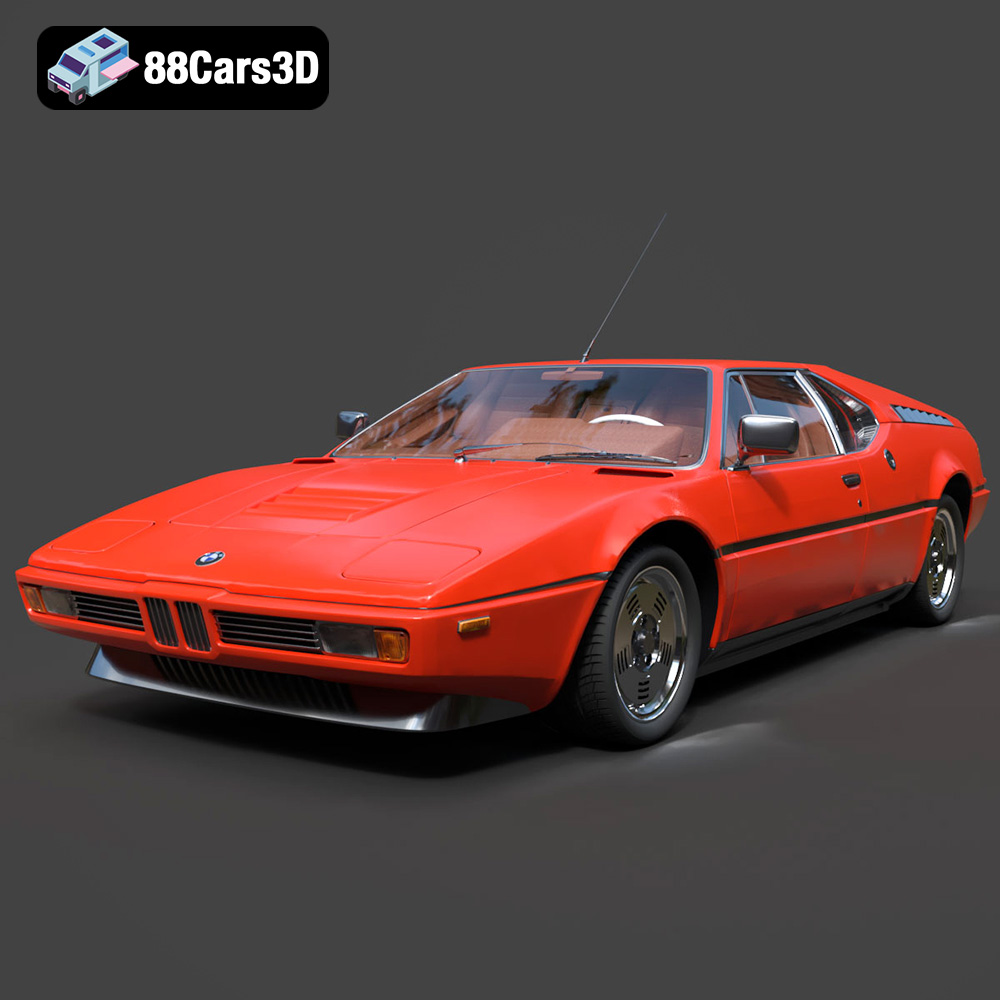
BMW Motorsport M1 E26 1981 3D Model
Texture: Yes
Material: Yes
Download the BMW Motorsport M1 E26 1981 3D Model featuring its iconic design, race-bred aerodynamics, and meticulously crafted details. Includes .blend, .fbx, .obj, .glb, .stl, .ply, .unreal, and .max formats for rendering, simulation, and game development.
Price: $20.79

Cadillac CTS-V Coupe 3D Model
Meta Description:
Texture: Yes
Material: Yes
Download the Cadillac CTS-V Coupe 3D Model featuring detailed exterior styling and realistic interior structure. Includes .blend, .fbx, .obj, .glb, .stl, .ply, .unreal, and .max formats for rendering, simulation, AR VR, and game development.
Price: $13.9
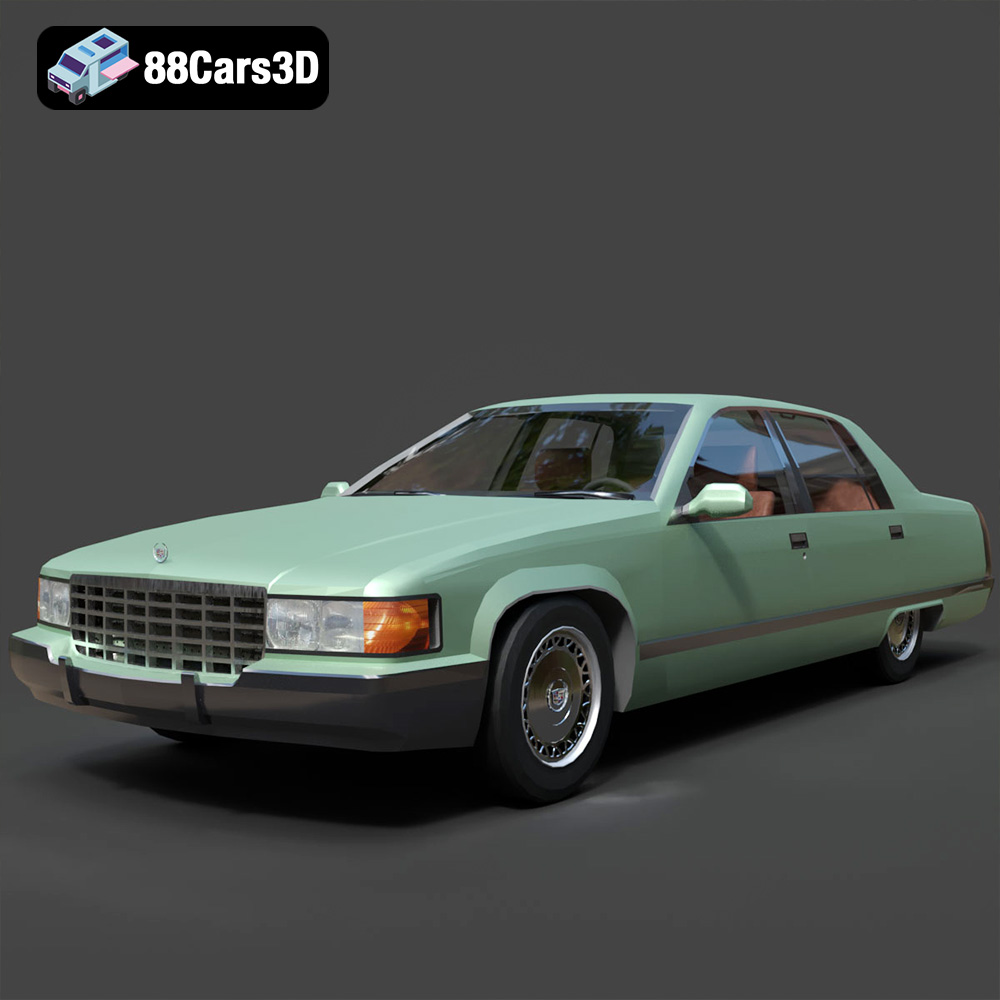
Cadillac Fleetwood Brougham 3D Model
Texture: Yes
Material: Yes
Download the Cadillac Fleetwood Brougham 3D Model featuring its iconic classic luxury design and detailed exterior and interior. Includes .blend, .fbx, .obj, .glb, .stl, .ply, .unreal, and .max formats for rendering, simulation, and game development.
Price: $10.79
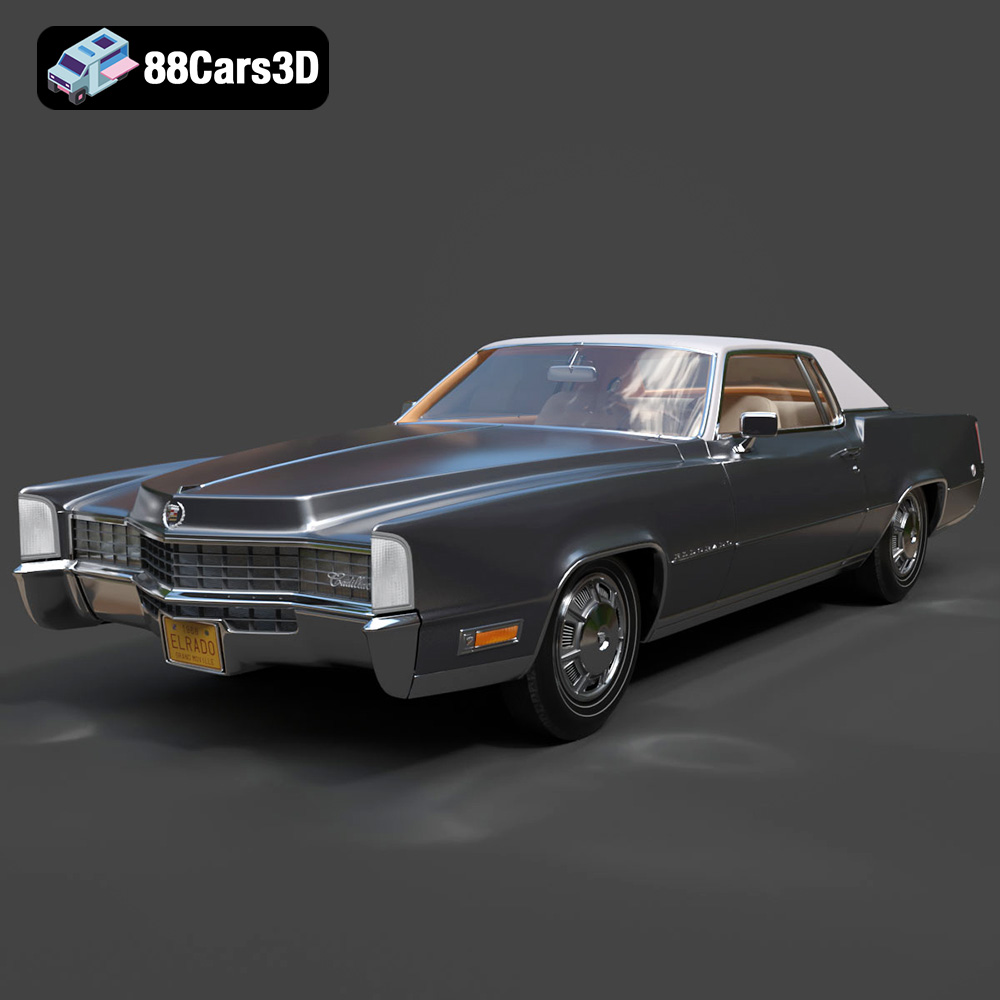
Cadillac Eldorado 1968 3D Model
Texture: Yes
Material: Yes
Download the Cadillac Eldorado 1968 3D Model featuring its iconic elongated body, distinctive chrome accents, and luxurious interior. Includes .blend, .fbx, .obj, .glb, .stl, .ply, .unreal, and .max formats for rendering, simulation, and game development.
Price: $20.79

Cadillac CTS SW 2010 3D Model
Texture: Yes
Material: Yes
Download the Cadillac CTS SW 2010 3D Model featuring a detailed exterior, functional interior elements, and realistic materials. Includes .blend, .fbx, .obj, .glb, .stl, .ply, .unreal, and .max formats for rendering, simulation, and game development.
Price: $10.79
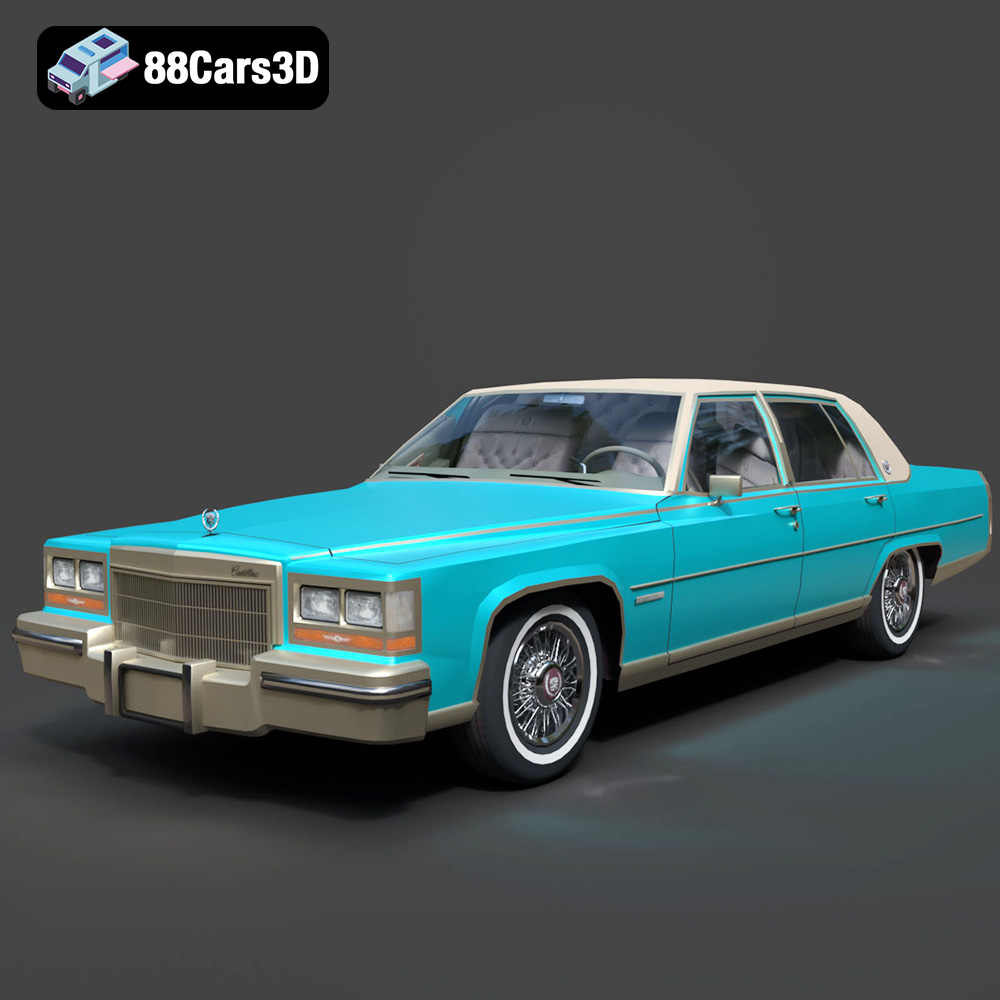
Cadillac Fleetwood Brougham 1985 3D Model
Texture: Yes
Material: Yes
Download the Cadillac Fleetwood Brougham 1985 3D Model featuring its iconic classic luxury design and detailed craftsmanship. Includes .blend, .fbx, .obj, .glb, .stl, .ply, .unreal, and .max formats for rendering, simulation, and game development.
Price: $10.79

Cadillac Eldorado 1978 3D Model
Texture: Yes
Material: Yes
Download the Cadillac Eldorado 1978 3D Model featuring accurately modeled exterior, detailed interior, and period-correct aesthetics. Includes .blend, .fbx, .obj, .glb, .stl, .ply, .unreal, and .max formats for rendering, simulation, and game development.
Price: $10.79
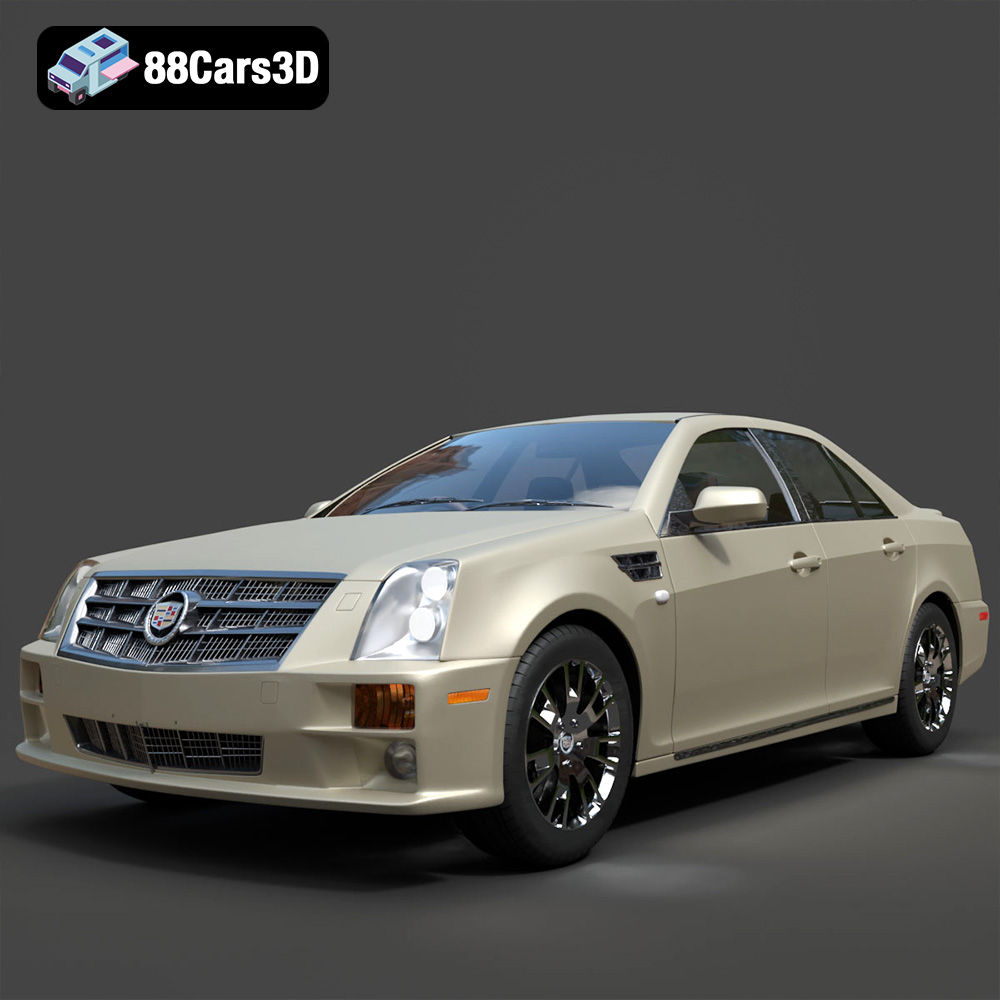
Cadillac STS-005 3D Model
Texture: Yes
Material: Yes
Download the Cadillac STS-005 3D Model featuring a detailed exterior and interior. Includes .blend, .fbx, .obj, .glb, .stl, .ply, .unreal, and .max formats for rendering, simulation, and game development.
Price: $22.79
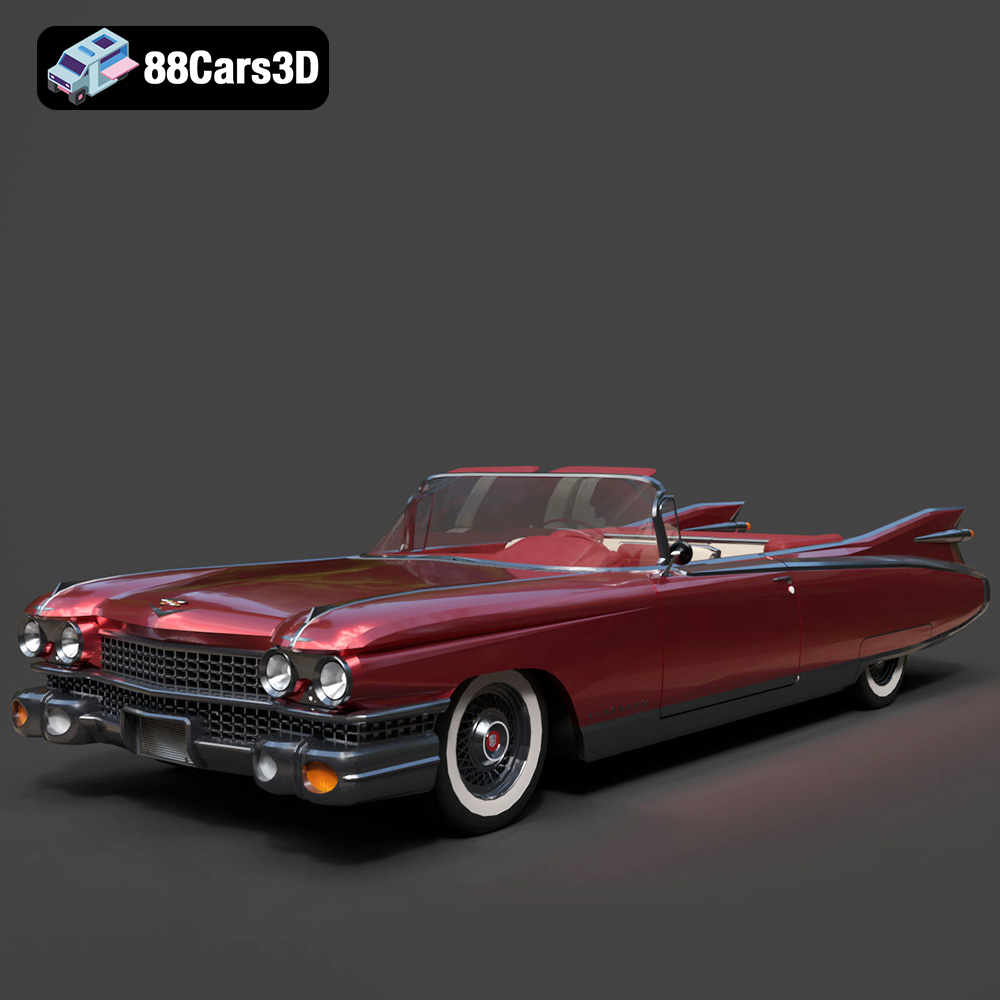
Cadillac Eldorado Convertible (1959) 3D Model
Texture: Yes
Material: Yes
Download the Cadillac Eldorado Convertible (1959) 3D Model featuring iconic fins, luxurious chrome details, and a classic vintage design. Includes .blend, .fbx, .obj, .glb, .stl, .ply, .unreal, and .max formats for rendering, simulation, and game development.
Price: $20.79

Cadillac DTS-005 3D Model
Texture: Yes
Material: Yes
Download the Cadillac DTS-005 3D Model featuring its iconic luxury design, detailed interior, and realistic exterior. Includes .blend, .fbx, .obj, .glb, .stl, .ply, .unreal, and .max formats for rendering, simulation, and game development.
Price: $10.79
