

In the highly competitive world of automotive design, marketing, and entertainment, photorealistic visualization is no longer a luxury—it’s an absolute necessity. From showcasing cutting-edge concepts to creating immersive virtual experiences, the ability to render a vehicle with breathtaking accuracy can make all the difference. Mastering the art and science of rendering settings for automotive visualization requires a deep understanding of 3D modeling fundamentals, material science, lighting principles, and software-specific nuances. This comprehensive guide will take you on a journey through the intricate world of automotive rendering, revealing the best practices and technical configurations that transform a mere 3D model into a captivating, lifelike image. Whether you’re a seasoned 3D artist, an aspiring game developer, or a design engineer, prepare to unlock the secrets to achieving stunning visual fidelity that will leave your audience spellbound.
Foundations of Automotive Rendering: Topology and UV Mapping Perfection
Before even considering rendering settings, the quality of your base 3D model is paramount. A beautifully rendered image cannot mask a poorly constructed mesh. For automotive visualization, two foundational elements stand out: impeccable topology and meticulous UV mapping. These elements dictate how your model interacts with shaders, lighting, and textures, forming the bedrock of realism.
Optimal Topology for Smooth Surfaces
Automotive surfaces are characterized by sweeping curves, sharp creases, and highly reflective panels. Achieving this smoothness in a 3D model demands a clean, quad-based topology. Ideally, every polygon should be a four-sided quad, as these deform predictably and facilitate smooth subdivision. Triangles, while sometimes unavoidable in minor, flat areas, should be kept to an absolute minimum, especially on prominent, curved surfaces, as they can lead to pinching and undesirable artifacts during subdivision or deformation. Edge loops are critical; they should flow naturally along the contours and creases of the car body, defining its form and allowing for precise control when adding detail or adjusting curvature. These loops are essential for maintaining surface tension and preventing distortions when applying subdivision modifiers like TurboSmooth in 3ds Max or Subdivision Surface in Blender.
Consider the polygon count carefully based on your application. For high-end marketing renders or cinematic shots, a highly detailed model with several million polygons (after subdivision) is acceptable, ensuring every curve is perfectly smooth. For real-time applications like games or AR/VR, optimization becomes key. Here, a base mesh might range from 50,000 to 150,000 polygons, with Level of Detail (LOD) models generated to reduce complexity further at a distance. The goal is always to achieve the desired visual fidelity with the most efficient polygon distribution, ensuring that density is highest where curvature is greatest and lowest on flatter surfaces. Clean topology also facilitates easier sculpting, rigging, and animation, making it a crucial investment in the early stages of model development.
Precision UV Mapping for Flawless Textures
UV mapping is the bridge between your 3D model and its 2D textures. For complex automotive surfaces, precision UV mapping is non-negotiable. Poor UVs lead to texture stretching, visible seams, and a breakdown in material fidelity. A common strategy for high-resolution automotive models is the use of UDIMs (U-Dimension), which allow you to spread the UVs of a single mesh across multiple texture tiles (e.g., 0-1, 1-1, 2-1). This is particularly useful for large surfaces like the car body, enabling much higher texture resolutions (e.g., multiple 8K or 4K maps) without individual texture limitations, thereby preventing pixelation when viewed up close. Platforms like 88cars3d.com often provide models with meticulously prepared UDIM UVs, ready for advanced texturing workflows.
When unwrapping, prioritize minimizing visible seams, especially on highly reflective surfaces where they can be glaringly obvious. Strategically place seams in less conspicuous areas, such as under trim pieces, along hard edges, or in occluded regions. Ensuring uniform texel density across all UV shells is equally important. Texel density refers to the number of texture pixels per unit of 3D space. Maintaining a consistent density prevents some areas from appearing pixelated while others are overly detailed. Tools for checking and evening out texel density are available in most 3D software packages. For intricate parts like intricate wheel designs or engine components, a combination of automatic unwrapping followed by manual cleanup and packing often yields the best results. Investing time in proper UV mapping ensures that your PBR materials will perform optimally, delivering consistent detail and realism across the entire vehicle.
Crafting Realistic PBR Materials and Shader Networks
Once your model has a pristine mesh and optimal UVs, the next critical step is to imbue it with lifelike materials. Physically Based Rendering (PBR) has revolutionized this process, providing a robust framework for creating materials that react to light in a predictable and physically accurate manner. Understanding PBR principles and mastering complex shader networks are fundamental to achieving compelling automotive visualizations.
Core PBR Principles for Automotive Surfaces
PBR relies on a set of standardized texture maps that define how light interacts with a surface. For automotive models, these maps are crucial for capturing the distinct properties of car paint, glass, chrome, rubber, and various interior materials. The primary maps include: Albedo/Base Color, which defines the intrinsic color of the surface without any lighting information; Metallic, a grayscale map indicating whether a surface is a metal (white) or a dielectric (black), critical for differentiating reflective metals from non-metallic surfaces; Roughness, which controls the microscopic imperfections on a surface, dictating how sharp or blurry reflections appear (0 = perfectly smooth/mirror-like, 1 = perfectly rough/diffuse); Normal Map, a specialized texture that fakes surface detail by manipulating the direction of surface normals, adding intricate bumps and grooves without increasing polygon count; and Ambient Occlusion (AO), which simulates soft shadows in crevices and corners, enhancing depth. Additionally, Specular maps can sometimes be used in non-metallic workflows to define the intensity of specular reflections, and Opacity/Transparency maps are essential for glass and headlights.
The key to realistic automotive materials lies in referencing real-world physical properties and using physically accurate values. For instance, metallic car paints will have a high metallic value and varying roughness depending on the clear coat. Rubber materials will be entirely non-metallic (black on the metallic map) with high roughness. Glass, while transparent, still has subtle reflections and refractions, requiring careful calibration of roughness and IOR (Index of Refraction) values. Understanding how each map contributes to the final look and ensuring their values are within a physically plausible range is critical for avoiding an artificial or “CG” appearance. Always use high-resolution textures (at least 4K, often 8K for primary surfaces) to capture fine details, even when viewed up close.
Advanced Shader Networks for Car Paint and Glass
While basic PBR setups provide a good foundation, truly exceptional automotive visualization often requires complex, layered shader networks, especially for car paint and glass. Car paint is not a single material but a stack of layers. A typical advanced car paint shader might consist of a base coat (the primary color, often with metallic flakes), a clear coat (a highly reflective, glossy layer on top), and sometimes an additional layer for pearlescent or chameleon effects. In software like 3ds Max with Corona or V-Ray, or Blender’s Cycles, this is achieved by blending multiple material layers. The metallic flakes are often controlled by a noise or cellular texture driving a small roughness variation and a metallic value, creating the characteristic sparkle. The clear coat is a separate, highly reflective, low-roughness dielectric material applied over the base, mimicking the protective lacquer on real vehicles. Subsurface scattering can even be subtly introduced for specific deep, rich colors to give them an extra dimension and depth, though this must be used sparingly to avoid an unnatural, waxy look.
Glass shaders are equally intricate. Simple transparent shaders often fall short. A physically accurate car glass shader will incorporate reflections, refractions, and often a subtle absorption color to simulate tint. The IOR (Index of Refraction) value (around 1.5 for standard glass) is crucial for accurate light bending. Adding a slight roughness value to the glass can prevent it from looking overly perfect and sterile, especially for windshields or windows that aren’t perfectly clean. Additionally, custom masks and procedural textures can be used to simulate dust, fingerprints, or water droplets, adding another layer of realism and storytelling to the render. The power of node-based shader editors in Blender, 3ds Max, Maya, or Cinema 4D allows artists to build these complex, layered materials with precision, controlling every aspect of how light interacts with the car’s surfaces.
Mastering Lighting and Environment Setup
Lighting is arguably the most critical element in automotive visualization. Even the most meticulously modeled and textured car will look flat and unconvincing under poor lighting. Mastering the art of illuminating your scene and creating believable environments is essential for bringing your vehicle to life and conveying its form, materials, and emotional impact.
Illuminating Your Automotive Scene
The cornerstone of realistic lighting for automotive models is the use of HDRIs (High Dynamic Range Images). HDRIs capture the full spectrum of light information from a real-world location, providing both accurate global illumination and believable reflections. When used as an environment map, an HDRI will not only light your scene naturally but also provide authentic reflections on the car’s highly reflective surfaces. For outdoor scenes, choosing an HDRI that matches the desired time of day and weather conditions is crucial. For studio renders, specialized studio HDRIs or custom built-in light domes provide a controlled, flattering illumination.
While HDRIs provide an excellent baseline, they often need to be complemented by targeted area lights, spot lights, and mesh lights to highlight specific features or create dramatic effects. Area lights are ideal for simulating soft, diffused light sources like softboxes in a studio setup, or for boosting ambient light from a specific direction. Spotlights can be used to emphasize key design lines or create sharp specular highlights. Mesh lights (geometry emitting light) are versatile for creating subtle fills or complex light arrays. A classic three-point lighting setup (key light, fill light, back/rim light) can be adapted for automotive studio shots to emphasize volume and separate the car from the background. Experimenting with color temperature (cooler for daylight, warmer for sunset) and light intensity allows you to sculpt the vehicle’s form and evoke specific moods. Remember, reflections are just as important as direct light; how light bounces off the car reveals its shape and material properties.
Environmental Backdrops and Reflection Control
The environment surrounding your car model plays a dual role: it provides a visual backdrop and, more importantly, a source of realistic reflections. For studio shots, a simple backdrop can be effective, but for outdoor or architectural visualizations, integrating the car seamlessly into a high-quality backplate (a photograph of a real environment) is vital. This requires careful matching of camera perspective, focal length, and lighting between the 3D scene and the backplate. For even more realism, consider adding subtle elements like ground reflections or shadows cast by the car onto the backplate, which can be achieved through render passes and compositing.
Controlling reflections is paramount for automotive rendering. A clean car body will act like a mirror, reflecting its surroundings. Ensure your environment, whether an HDRI or a 3D model, has enough interesting detail to create compelling reflections. For example, studio setups often include large softboxes and light strips strategically placed to create elegant highlights along the car’s curves. Volumetric lighting and atmospheric effects, such as subtle fog or haze, can add depth and realism to an outdoor scene, particularly useful for conveying scale or a specific weather condition. These elements also scatter light, softening shadows and adding a sense of atmosphere. Paying attention to these subtle environmental cues elevates a good render to an exceptional one, immersing the viewer fully into the scene.
Software-Specific Rendering Workflows and Optimization
While the principles of rendering are universal, the specific tools and settings vary significantly between software packages and render engines. Understanding these distinctions and optimizing your workflow for your chosen software is crucial for efficiency and quality.
3ds Max/Corona & V-Ray for Arch-Viz Excellence
For many professionals in architectural visualization and automotive rendering, 3ds Max combined with renderers like Corona Renderer or V-Ray forms an industry-standard pipeline. Both are highly capable, physically based renderers known for their quality and ease of use. In Corona, key render settings include the “Pass Limit” or “Time Limit”, which dictates how long the renderer refines the image, and the “Denoising” options (e.g., NVIDIA OptiX or Intel Open Image Denoise) to efficiently remove noise from the final image, significantly reducing render times. Corona’s “LightMix” feature is invaluable for automotive visualization, allowing you to adjust the intensity and color of individual lights after rendering, offering immense flexibility for tweaking the mood and highlights without re-rendering. Global Illumination (GI) in Corona is typically handled by Path Tracing (Brute Force) for both primary and secondary solvers, known for its accuracy. V-Ray offers more granular control, with options like Brute Force, Light Cache, or Irradiance Map for its GI engines. Brute Force is the most accurate but also the most computationally intensive, often used for primary bounces. Light Cache is faster for secondary bounces, providing a good balance of speed and quality. V-Ray’s adaptive sampling also helps focus render power where it’s most needed. Both renderers excel at generating various render passes (e.g., Z-depth, Cryptomatte, Reflection, Refraction, AO) which are indispensable for compositing in post-production, allowing for fine-tuned control over every aspect of the final image. When working with complex scene geometry and detailed automotive models, leveraging GPU rendering (if available and compatible with your scene) in V-Ray GPU or Corona’s upcoming GPU renderer can dramatically accelerate render times, making iterative design and visualization much faster.
Blender Cycles/Eevee and Arnold for Versatility
Blender, an increasingly popular open-source 3D suite, offers two powerful built-in renderers: Cycles and Eevee. Cycles is a physically based path tracer, renowned for its photorealistic output and robust node-based shader editor. For optimal automotive rendering in Cycles, attention to Samples (higher samples reduce noise but increase render time), Light Paths (increasing reflection and transmission bounces for accurate glass and metallic materials), and utilizing denoising (Open Image Denoise or OptiX) are crucial. Cycles supports both CPU and GPU rendering (NVIDIA CUDA/OptiX and AMD HIP), allowing artists to leverage their hardware. For detailed information on specific settings, refer to the official Blender 4.4 documentation on Cycles Render Engine. Eevee, Blender’s real-time renderer, is excellent for rapid visualization, animations, and game asset previews. While not a path tracer, Eevee can achieve impressive results by baking indirect lighting (GI) and leveraging screen-space reflections. Arnold, often integrated into Maya and 3ds Max, is another industry-leading physically based renderer, particularly favored in animation and VFX studios. Arnold’s strength lies in its robust sampling system and ray depth controls, ensuring high-quality results for complex scenes with numerous light bounces and intricate materials like those found on high-end 3D car models. Optimizing Arnold renders involves balancing Camera (AA) Samples, Diffuse/Specular/Transmission Samples, and Ray Depth settings to achieve desired fidelity without excessive render times. Each renderer has its unique strengths, and the choice often comes down to specific project requirements, existing pipeline, and artist preference.
Optimization for Real-Time and Diverse Applications
Beyond static renders, automotive 3D models are increasingly utilized in real-time environments (game engines, AR/VR) and for specialized applications like 3D printing. Each of these demands specific optimization strategies to ensure performance, fidelity, and usability.
Game Engine Readiness (Unity/Unreal Engine)
Preparing 3D car models for real-time game engines like Unity or Unreal Engine requires a systematic approach to optimization. The most critical technique is creating Levels of Detail (LODs). LODs are simplified versions of your mesh that are swapped out dynamically based on the camera’s distance to the object. A high-detail model might be visible up close, while a much simpler, lower-polygon version is used further away, drastically reducing the computational load. Typically, 3-5 LOD levels are created, with polygon counts reducing by 50-75% at each step. For example, a hero car model might have a LOD0 of 100,000 polygons, LOD1 at 40,000, LOD2 at 15,000, and LOD3 at 5,000 polygons. Textures should also be optimized, using smaller resolutions for LODs further away. Texture atlasing is another key strategy, combining multiple smaller textures into one larger texture map. This reduces the number of draw calls, which are instructions sent to the GPU to render an object, a significant bottleneck in real-time performance. Minimizing draw calls is crucial, achieved by combining meshes where possible and using a limited number of materials per object. Baking lighting and ambient occlusion into texture maps (lightmaps) can further reduce real-time calculations. Collision meshes, often simplified versions of the visible mesh, are essential for physics interactions. Finally, utilizing material instancing allows you to create variations of a single material without duplicating the entire shader, improving efficiency and flexibility when customizing car colors or finishes within the engine.
AR/VR and 3D Printing Considerations
Augmented Reality (AR) and Virtual Reality (VR) environments impose strict polygon and texture budget limitations due to the need for high frame rates and the processing power of mobile or standalone devices. For AR/VR, target polygon counts are typically much lower than for high-end rendering, often ranging from 20,000 to 80,000 polygons for a hero car model, depending on the platform. Textures should be optimized for mobile chipsets, often using smaller 2K or 1K resolutions, and prioritizing PBR workflows that are efficiently supported by mobile rendering pipelines. Baking normal maps from high-resolution models onto low-resolution versions is vital for retaining detail without increasing poly count. Many AR/VR platforms also favor specific file formats like GLB (for web-based AR) or USDZ (for Apple ARKit), which consolidate mesh, materials, and animations into a single, optimized file. When sourcing models from marketplaces such as 88cars3d.com, always check for AR/VR optimized versions or inquire about their compatibility.
3D printing presents a unique set of challenges and requirements. Unlike rendering, which deals with virtual light and pixels, 3D printing requires a physically sound, manifold mesh. This means the model must be “watertight” with no holes, inverted normals, or self-intersecting geometry. Every edge must belong to exactly two faces. Common issues like non-manifold edges, open boundaries, or disconnected components must be repaired. Tools for mesh inspection and repair are available in most 3D software. Wall thickness is another critical consideration; thin features in a rendered model might be too fragile or simply impossible to print in the physical world. Designers must ensure all parts meet the minimum wall thickness requirements of their chosen 3D printing technology and material. Scale is also paramount, as the digital model must be accurately scaled to its intended physical size. For complex automotive parts, careful attention to mesh integrity and physical constraints ensures a successful print, transforming the digital design into a tangible object.
Conclusion
Mastering automotive visualization is a multifaceted journey, demanding a blend of artistic vision and technical prowess. From the foundational integrity of your 3D model’s topology and UV mapping to the intricate dance of PBR material creation, precise lighting, and sophisticated rendering settings, every step contributes to the final masterpiece. We’ve explored how immaculate mesh construction, layered car paint shaders, and physically accurate lighting with HDRIs form the pillars of realism. We’ve delved into the specific workflows of industry-standard renderers like Corona, V-Ray, Cycles, and Arnold, understanding their unique strengths and optimization techniques. Furthermore, we’ve outlined the critical considerations for adapting your high-quality 3D car models for real-time applications such as game engines and AR/VR, and even the stringent requirements for 3D printing.
The pursuit of photorealism in automotive visualization is an ongoing learning process, driven by continuous experimentation and a keen eye for detail. The actionable tips and technical insights shared throughout this guide provide a robust framework, but your ultimate success will hinge on practice, observation, and a commitment to pushing the boundaries of what’s possible. As technology evolves, so too will the tools and techniques at our disposal. Keep experimenting with settings, refining your shaders, and exploring new lighting scenarios. For those looking to kickstart their projects with high-quality, production-ready 3D assets, platforms like 88cars3d.com offer an extensive collection of meticulously crafted 3D car models, providing an excellent foundation for your next automotive visualization endeavor. Embrace the challenge, enjoy the process, and watch your automotive creations come to life with stunning realism.
Featured 3D Car Models
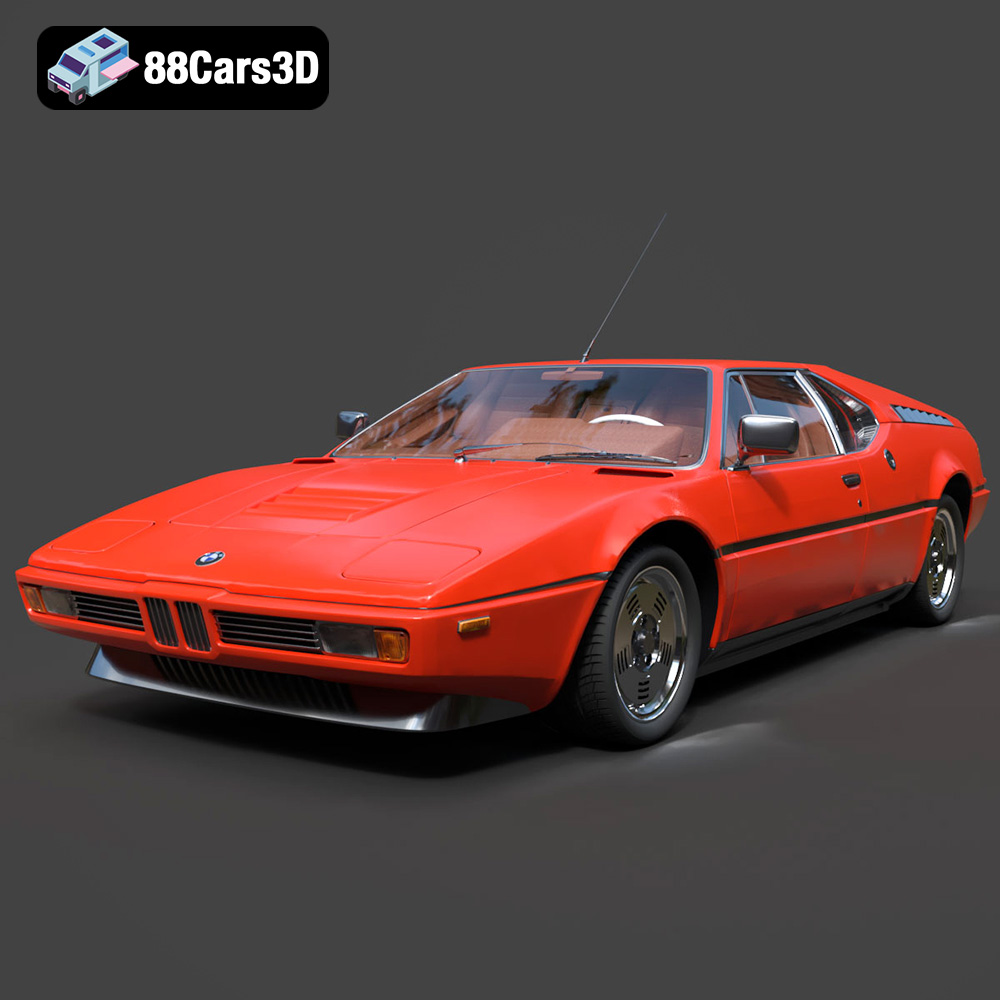
BMW Motorsport M1 E26 1981 3D Model
Texture: Yes
Material: Yes
Download the BMW Motorsport M1 E26 1981 3D Model featuring its iconic design, race-bred aerodynamics, and meticulously crafted details. Includes .blend, .fbx, .obj, .glb, .stl, .ply, .unreal, and .max formats for rendering, simulation, and game development.
Price: $20.79

Cadillac CTS-V Coupe 3D Model
Meta Description:
Texture: Yes
Material: Yes
Download the Cadillac CTS-V Coupe 3D Model featuring detailed exterior styling and realistic interior structure. Includes .blend, .fbx, .obj, .glb, .stl, .ply, .unreal, and .max formats for rendering, simulation, AR VR, and game development.
Price: $13.9
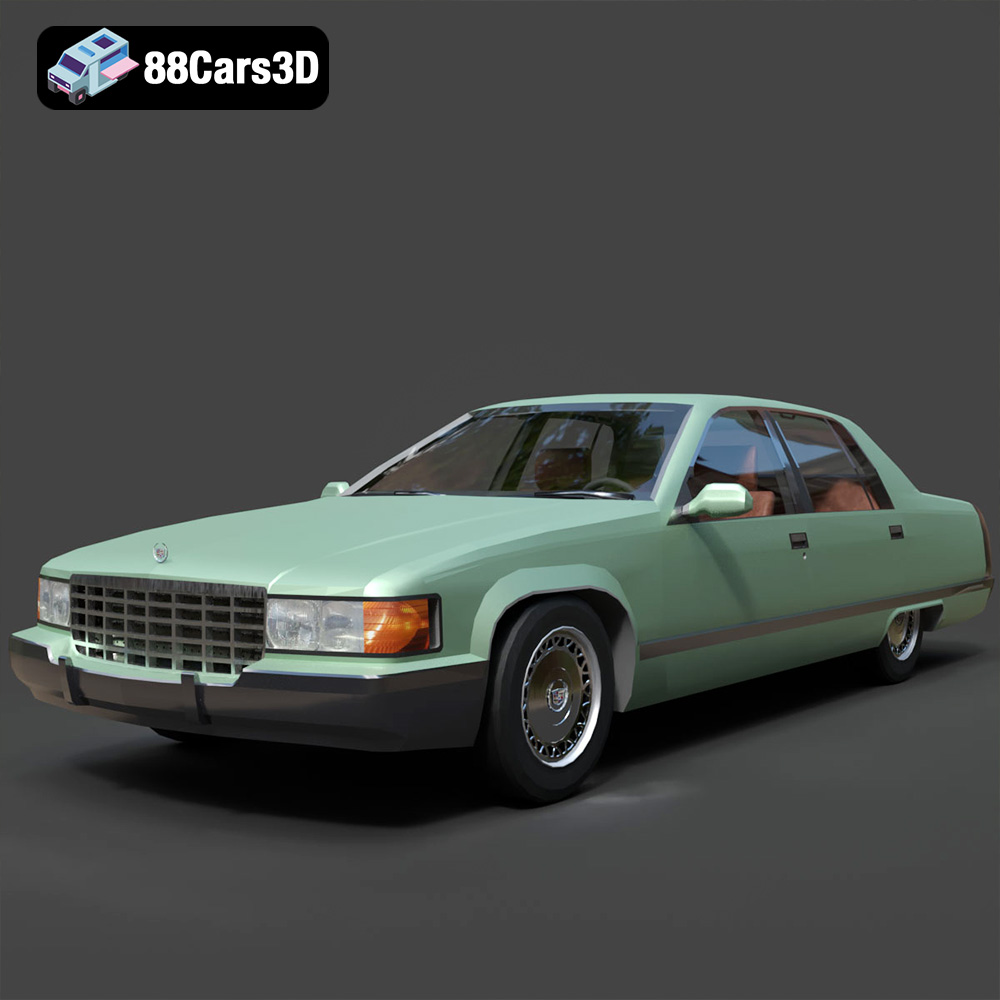
Cadillac Fleetwood Brougham 3D Model
Texture: Yes
Material: Yes
Download the Cadillac Fleetwood Brougham 3D Model featuring its iconic classic luxury design and detailed exterior and interior. Includes .blend, .fbx, .obj, .glb, .stl, .ply, .unreal, and .max formats for rendering, simulation, and game development.
Price: $10.79
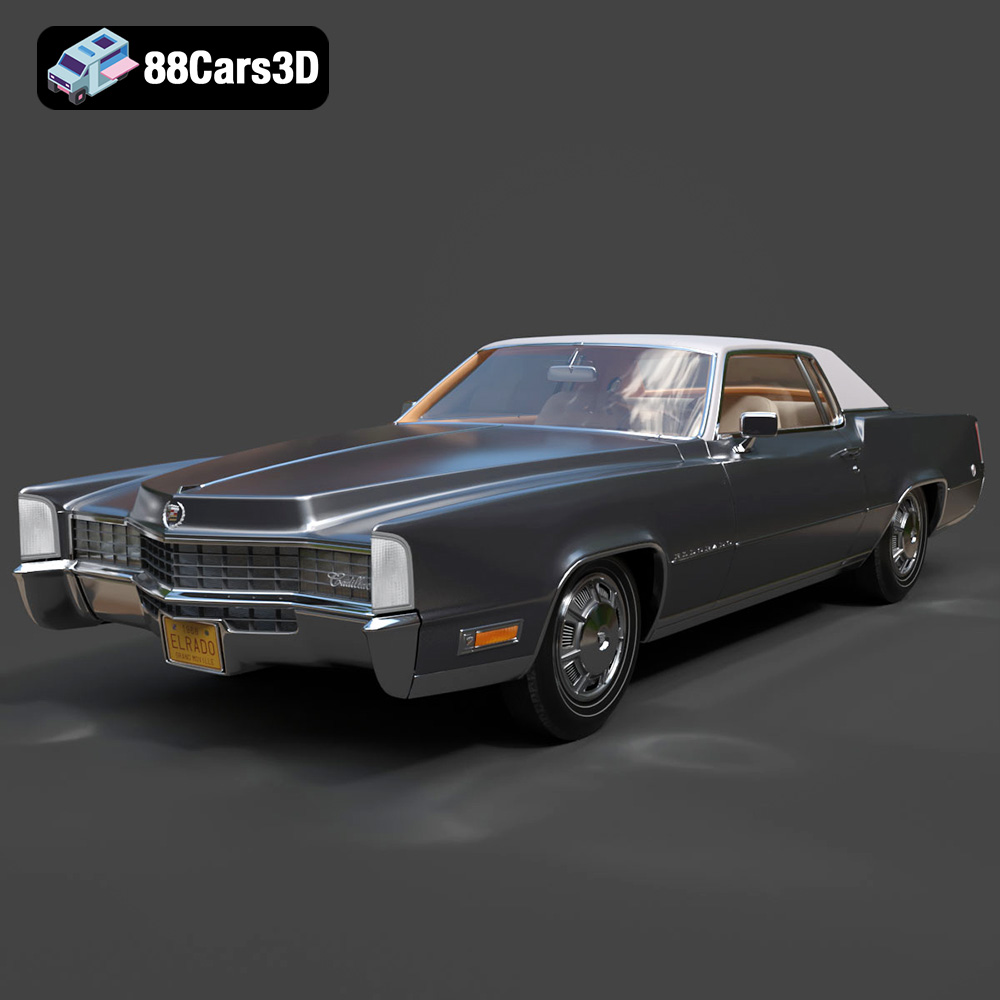
Cadillac Eldorado 1968 3D Model
Texture: Yes
Material: Yes
Download the Cadillac Eldorado 1968 3D Model featuring its iconic elongated body, distinctive chrome accents, and luxurious interior. Includes .blend, .fbx, .obj, .glb, .stl, .ply, .unreal, and .max formats for rendering, simulation, and game development.
Price: $20.79

Cadillac CTS SW 2010 3D Model
Texture: Yes
Material: Yes
Download the Cadillac CTS SW 2010 3D Model featuring a detailed exterior, functional interior elements, and realistic materials. Includes .blend, .fbx, .obj, .glb, .stl, .ply, .unreal, and .max formats for rendering, simulation, and game development.
Price: $10.79
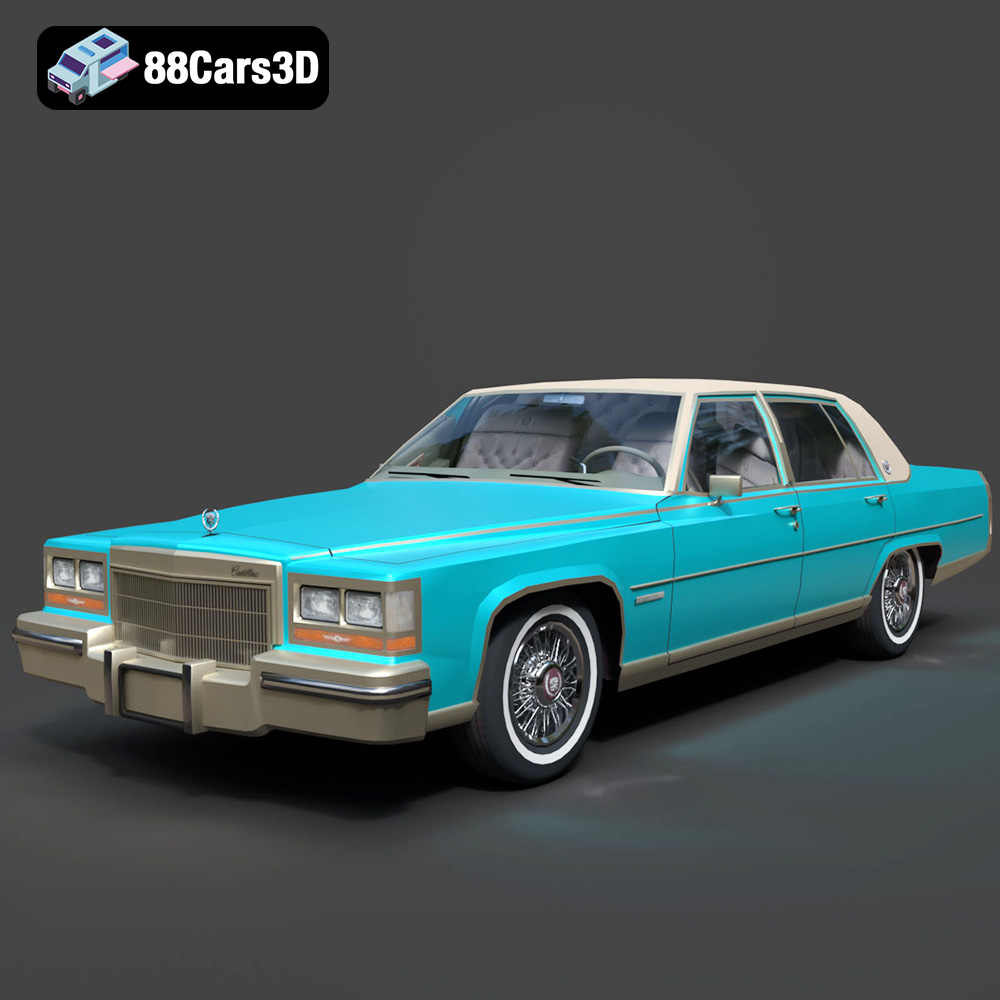
Cadillac Fleetwood Brougham 1985 3D Model
Texture: Yes
Material: Yes
Download the Cadillac Fleetwood Brougham 1985 3D Model featuring its iconic classic luxury design and detailed craftsmanship. Includes .blend, .fbx, .obj, .glb, .stl, .ply, .unreal, and .max formats for rendering, simulation, and game development.
Price: $10.79
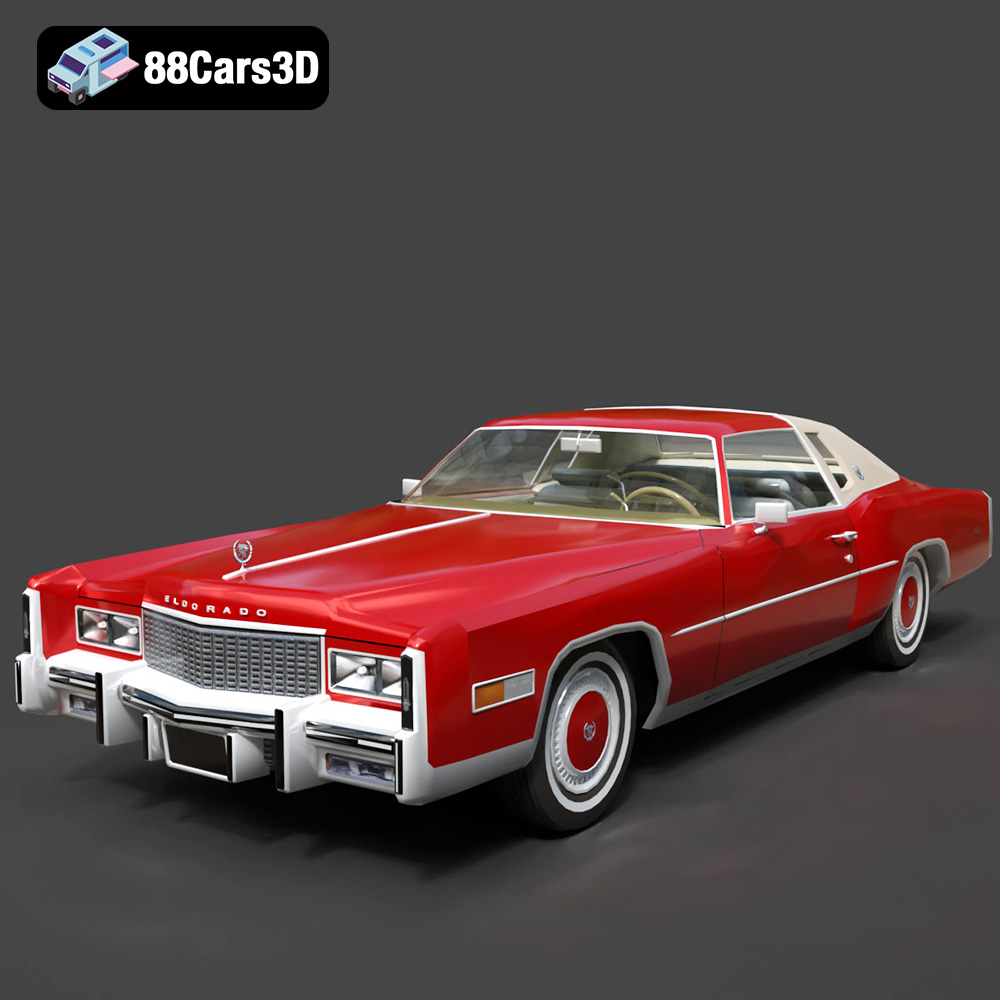
Cadillac Eldorado 1978 3D Model
Texture: Yes
Material: Yes
Download the Cadillac Eldorado 1978 3D Model featuring accurately modeled exterior, detailed interior, and period-correct aesthetics. Includes .blend, .fbx, .obj, .glb, .stl, .ply, .unreal, and .max formats for rendering, simulation, and game development.
Price: $10.79
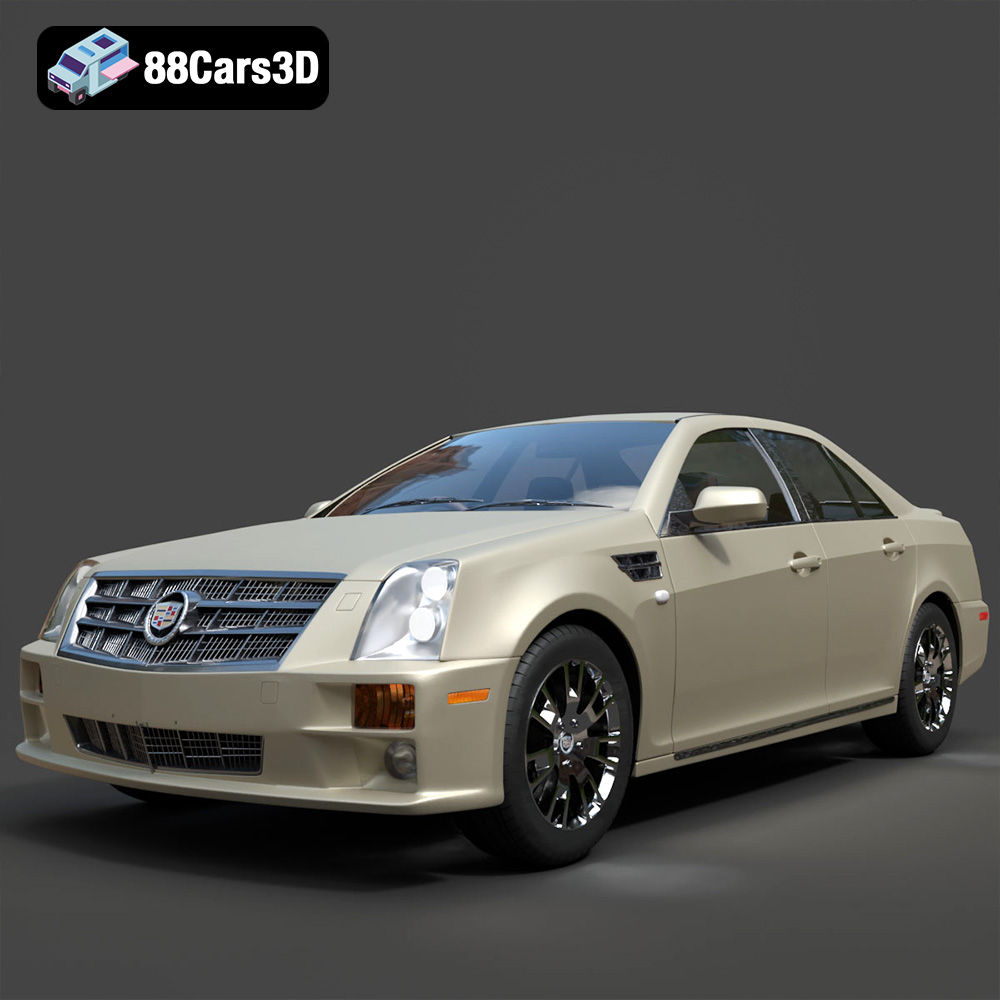
Cadillac STS-005 3D Model
Texture: Yes
Material: Yes
Download the Cadillac STS-005 3D Model featuring a detailed exterior and interior. Includes .blend, .fbx, .obj, .glb, .stl, .ply, .unreal, and .max formats for rendering, simulation, and game development.
Price: $22.79
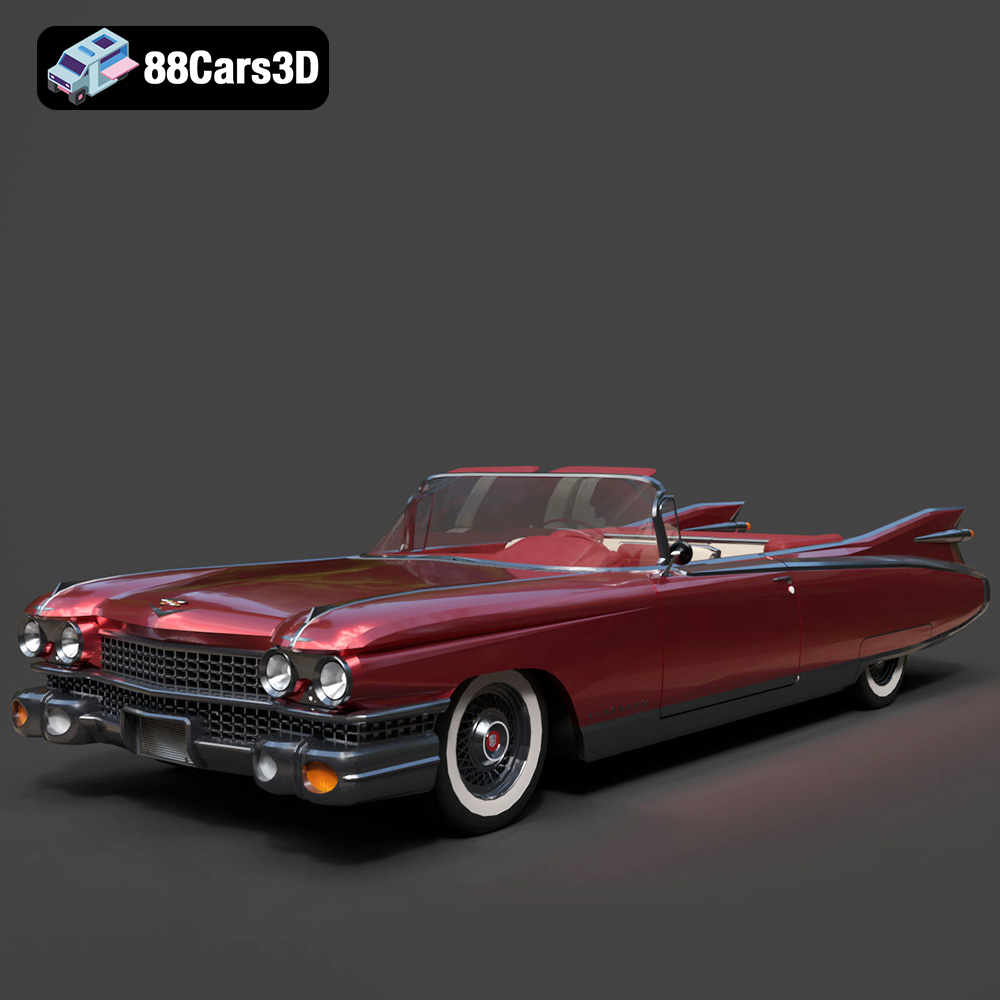
Cadillac Eldorado Convertible (1959) 3D Model
Texture: Yes
Material: Yes
Download the Cadillac Eldorado Convertible (1959) 3D Model featuring iconic fins, luxurious chrome details, and a classic vintage design. Includes .blend, .fbx, .obj, .glb, .stl, .ply, .unreal, and .max formats for rendering, simulation, and game development.
Price: $20.79

Cadillac DTS-005 3D Model
Texture: Yes
Material: Yes
Download the Cadillac DTS-005 3D Model featuring its iconic luxury design, detailed interior, and realistic exterior. Includes .blend, .fbx, .obj, .glb, .stl, .ply, .unreal, and .max formats for rendering, simulation, and game development.
Price: $10.79
