

“`html
Unlock Your Next Masterpiece: A Deep Dive into the World of Printable Car STL Files
The roar of an engine, the sleek lines of a classic coupe, the rugged charm of an off-road beast – for automotive enthusiasts and makers alike, the allure of bringing these iconic machines to life in miniature form is undeniable. 3D printing has revolutionized the hobbyist landscape, offering unprecedented access to detailed, customizable models. At the heart of this revolution lies the STL file, the universal language of 3D printing. This post is your definitive guide to navigating the exciting world of printable car STL files, from understanding their anatomy to mastering the printing process. We’ll delve into crucial aspects like file preparation, optimal slicing parameters for both FDM and resin printers, the art of support structures, and post-processing techniques that elevate your prints from mere models to stunning display pieces. Whether you’re a seasoned 3D printing veteran or just beginning to explore this fascinating technology, prepare to discover how to select, prepare, and print the perfect car model to add to your collection or showcase your skills. Get ready to transform digital designs into tangible automotive art.
Understanding the Foundation: The Anatomy of a Printable Car STL File
Before you send a file to your 3D printer, it’s essential to understand what you’re working with. The STL (STereoLithography) file format, despite its age, remains the de facto standard for 3D printing. It describes the surface geometry of a 3D object using a collection of triangular facets. For car models, this means the intricate curves of body panels, the sharp edges of spoilers, and the detailed features of wheels and interiors are all represented by thousands, or even millions, of interconnected triangles. The quality of a printable car STL file is directly related to the density and arrangement of these triangles, also known as its mesh topology.
High-quality printable car models, like those found on platforms such as 88cars3d.com, are meticulously designed with printability in mind. This means they feature clean geometry, watertight meshes, and carefully considered wall thicknesses. A “watertight” or manifold mesh is crucial; it signifies a solid, enclosed volume with no holes or self-intersecting surfaces, which are common causes of printing failures. Understanding the STL format also involves recognizing its limitations. It’s a surface representation, not a solid model, meaning it doesn’t inherently contain information about color, material, or texture. All that detail comes from your printer settings and post-processing.
Mesh Quality and its Impact on Print Success
The density of the triangles in an STL file directly impacts the level of detail you can achieve. A model with a very low triangle count might appear blocky or faceted, especially on curved surfaces. Conversely, an excessively high triangle count can result in enormous file sizes, slow down slicing software, and sometimes introduce tiny errors that are difficult to resolve. Professional designers often strike a balance, ensuring sufficient detail for fine features without creating unmanageable files. When downloading models, look for descriptions that mention clean geometry or optimized meshes. Some advanced users employ software like Meshmixer or Netfabb to analyze and repair STL files, fixing issues like non-manifold edges, inverted normals, and holes before printing.
File Formats Beyond STL: OBJ and FBX for Advanced Workflows
While STL is king for direct printing, other 3D file formats like OBJ and FBX are often used in the design and preparation stages. OBJ files can store color and texture information, making them useful for rendering or if you plan to use techniques like multi-material printing. FBX files are even more versatile, supporting complex scene data, animations, and various metadata. For hobbyists primarily focused on standard 3D printing, understanding these formats is less critical, but knowing they exist can be beneficial if you plan to modify models in more advanced 3D modeling software like Blender or Maya, or if you’re purchasing models that come with additional asset information.
Mastering the Slicer: Translating STL to Printer Instructions
The slicer is your crucial intermediary, taking your 3D model (the STL file) and converting it into a series of thin, horizontal layers. It then generates the G-code, the specific instructions your 3D printer follows to build the object layer by layer. Choosing the right slicer and configuring its settings is paramount for achieving high-quality prints of complex objects like car models. Popular slicers include Ultimaker Cura, PrusaSlicer, and Simplify3D, each offering a vast array of parameters to fine-tune your print.
For printable car models, especially those with intricate details like grilles, spoilers, and thin pillars, careful slicing is key. Parameters such as layer height, print speed, wall thickness, and infill play significant roles. A lower layer height (e.g., 0.08mm to 0.12mm) will produce smoother curves and finer details, ideal for the smooth body panels of a car, but will significantly increase print time. Conversely, a higher layer height (e.g., 0.2mm to 0.3mm) prints faster but may result in visible layer lines. For display models, prioritizing detail often means accepting longer print durations.
Layer Height vs. Print Time: The Fundamental Tradeoff
This is arguably the most significant setting affecting print quality and speed. For detailed car models, a common starting point for FDM printing is a layer height of 0.1mm or 0.12mm. This balances a good level of detail with a manageable print time. If you’re printing a prototype or a functional part where speed is more important, you might opt for 0.2mm or even 0.3mm. Resin printers, by their nature, generally achieve much finer layer resolutions (often down to 0.025mm to 0.05mm), making them ideal for capturing the extreme detail found in high-quality automotive miniatures. Experimentation is key; try printing a small, detailed section of a car model at different layer heights to see the visual difference and calculate the time savings.
Infill Patterns and Density: Balancing Strength and Material Usage
Infill determines the internal structure of your print. For most display car models, extremely high infill density isn’t necessary. An infill density of 10-20% is often sufficient. The choice of infill pattern can also matter. Patterns like Grid, Triangles, or Cubic offer good all-around strength. For lighter parts or when trying to save material and print time, a lower infill percentage is perfectly acceptable. If you plan to handle the model frequently or need it to be particularly rigid, increasing infill to 25-40% might be considered. Some slicers offer concentric infill patterns which can sometimes leave a smoother surface on the underside of overhangs.
Wall Thickness and Top/Bottom Layers: Ensuring Structural Integrity
The number of walls (or perimeters) and top/bottom layers directly impacts the strength and surface finish of your model. For a typical car model, using 2-3 walls is usually adequate. Increasing this to 4-5 walls can make the model more robust, especially if it has delicate parts like mirrors or spoilers. Similarly, increasing the number of top and bottom layers (e.g., 4-6 layers) can help to ensure solid, smooth top surfaces and prevent infill patterns from showing through, which is particularly important for the hood, roof, and trunk of a car model.
The Art of Support Structures: Enabling Intricate Designs
Printable car models, with their complex shapes, often feature overhangs and bridges that cannot be printed in mid-air. This is where support structures come into play. These temporary scaffolding are generated by your slicer to prop up areas that would otherwise fail. The goal is to generate supports that are effective enough to hold the model but also easy to remove without damaging the delicate details of the car.
Modern slicers offer sophisticated support generation options. You can typically choose between “Normal” supports (generated everywhere that’s needed) or “Tree” supports (which branch out like a tree, often using less material and being easier to remove). For car models, “Tree” supports are often preferred for their minimal contact points with the model’s surface. Key settings include support density, contact distance (the gap between the support and the model), and support interface layers. A smaller contact distance creates a stronger bond, potentially making removal harder, while a larger distance makes removal easier but might result in a rougher surface finish where the supports touch the model.
Support Placement Strategies: Where and How to Support
One of the most critical decisions is where supports are generated. Placing supports directly on critical visual surfaces (like the car’s paint lines or panel gaps) can lead to difficult cleanup. It’s often better to orient the model such that overhangs are minimized or fall on less visible areas. For example, printing a car upside down might require supports for the wheel wells and undercarriage, which are often less critical than supporting the roof or hood directly. Experimenting with support blockers in your slicer can prevent supports from being generated in specific areas you want to keep pristine.
Support Removal Techniques: Preserving Detail During Cleanup
Removing supports requires patience and the right tools. For FDM prints, needle-nose pliers, flush cutters, hobby knives (like an X-Acto blade), and sometimes even a small file are essential. Start by gently wiggling the larger support structures to loosen them. For fine supports attached to delicate parts, carefully snip them close to the model. A small butane torch or heat gun can sometimes be used very carefully to *very lightly* melt away tiny support remnants, but this technique carries a high risk of damaging the print if not done expertly. For resin prints, supports are generally thinner and easier to snap off, but care must be taken not to gouder the detailed surfaces.
Minimizing Support Marks: Advanced Slicing and Post-Processing
Minimizing the visible marks left by supports is a key aspect of professional-looking prints. In the slicer, experiment with support interface settings. An interface layer creates a denser, smoother surface where the support meets the model, which can sometimes be easier to sand off. Increasing the “Z distance” between the support and the model can also make removal cleaner. After removal, sanding is often required. Start with a coarser grit sandpaper (e.g., 220-400 grit) to remove major marks and then progressively move to finer grits (up to 1000-2000 grit) to achieve a smooth surface. For very fine details, techniques like vapor smoothing (for ABS) or careful application of fillers and primers can further hide any imperfections.
Print Orientation and Bed Adhesion: The Crucial First Layers
How you orient your printable car STL file on the print bed and ensuring good adhesion are fundamental to a successful print. The orientation affects the amount of support needed, the strength of the model in certain directions, and the surface quality of visible features. For car models, finding the “sweet spot” often involves balancing these factors.
A common orientation for FDM printing is to place the car model with its wheels on the build plate. This often minimizes the need for supports on the main body and allows for a cleaner finish on the most visible surfaces. However, this orientation might require supports for the wheel arches. Alternatively, printing the car upside down can place the underside and wheel arches on the build plate, potentially reducing visible support artifacts on the body. For resin printers, orientation is critical for managing the peel forces during the print, and often models are oriented at an angle (e.g., 30-45 degrees) to minimize suction and ensure supports attach to less visible areas.
Optimizing Orientation for Minimal Supports and Maximum Detail
Consider the most critical surfaces of your car model. If the roof and hood are the showpieces, you want to orient the model to minimize supports on these areas. Printing with the car upright on its wheels is often the best approach for this. If the underside details or wheel wells are particularly important, you might consider printing the model in sections or upside down. Many complex models from marketplaces like 88cars3d.com are designed with printability in mind, and the provided files might suggest an optimal orientation. Always check the model’s preview in your slicer and rotate it to find the orientation that requires the least amount of support on critical areas.
Bed Adhesion Techniques for Various Materials
A print detaching from the build plate mid-print is a frustratingly common failure. Ensuring good bed adhesion is critical. For FDM printing, common techniques include using a heated build plate, applying adhesives like a glue stick or specialized bed sprays, using textured build surfaces (like PEI sheets), or printing a brim or raft. A brim adds a single layer of material around the base of the model, increasing surface area contact with the bed. A raft prints a thicker base layer beneath the model, providing a stable foundation. The best adhesion method often depends on the filament material (PLA, PETG, ABS all have different adhesion characteristics) and your specific printer setup. For resin printing, ensuring the build plate is clean and level is paramount, and proper exposure settings for the initial base layers are crucial.
Dealing with Warping and First Layer Issues
Warping, where the corners of the print lift off the build plate, is often caused by uneven cooling and material shrinkage, especially with materials like ABS. Using an enclosure for your printer, maintaining a consistent ambient temperature, and employing a brim or raft can significantly mitigate warping. First layer issues, such as poor extrusion or adhesion, can be addressed by ensuring your build plate is perfectly level (“trammed”), calibrating your extruder’s E-steps, and fine-tuning your Z-offset (the initial gap between the nozzle and the build plate). A slightly “squished” first layer, where the filament is flattened onto the bed, generally indicates good adhesion.
Material Selection and Printer Technology: FDM vs. Resin for Car Models
The choice between Fused Deposition Modeling (FDM) and Stereolithography (SLA) or Digital Light Processing (DLP) resin printing significantly impacts the quality and detail achievable for your car models. Both technologies have their strengths and weaknesses, making the choice dependent on your priorities, budget, and desired level of detail.
FDM printing uses a heated nozzle to extrude thermoplastic filament layer by layer. It’s generally more affordable, versatile in terms of materials (PLA, PETG, ABS, TPU, etc.), and suitable for larger prints. FDM prints can achieve good detail, especially with smaller nozzle sizes (e.g., 0.2mm) and lower layer heights, but may struggle with extremely fine features like tiny emblems or intricate interior details without significant post-processing. The visible layer lines are a characteristic of FDM printing that often needs to be addressed.
Resin printing (SLA/DLP) uses UV light to cure liquid photopolymer resin layer by layer. This technology excels at producing incredibly high-resolution prints with smooth surfaces and astonishing detail. Resin printers are ideal for capturing the minute details of car models, such as panel gaps, badges, and intricate wheel designs. However, resin printers are generally more expensive to operate due to the cost of resin and consumables, require more careful handling due to the chemicals involved, and often have a smaller build volume compared to FDM printers. Post-processing for resin prints involves washing in isopropyl alcohol and a final UV cure.
FDM Printing: Versatility and Affordability for Automotive Models
For hobbyists on a budget or those looking to print larger scale models, FDM printing is an excellent choice. Materials like PLA are easy to print with, come in a vast array of colors, and are relatively safe to use. PETG offers greater durability and temperature resistance, while ABS can be smoothed with acetone vapor for a glass-like finish (though it requires more advanced printing conditions like an enclosure and ventilation). When printing car models with FDM, focusing on optimal slicing settings, using a smaller nozzle, and employing post-processing techniques like sanding and priming will be key to achieving a professional look.
Resin Printing: Unparalleled Detail for Miniature Masterpieces
If your primary goal is to create ultra-detailed miniature car models for display or collection, resin printing is often the superior choice. The fine resolution of resin printers allows for details that are simply not possible with standard FDM setups. Look for resins specifically formulated for high detail. When working with resin, proper safety precautions are essential: always wear gloves and eye protection, ensure good ventilation, and handle uncured resin carefully. Post-processing typically involves washing prints in an IPA solution to remove excess uncured resin, followed by a UV curing process to fully harden the part. Many high-quality printable car models available on specialized sites are optimized for resin printing.
Material Properties and Their Relevance to Car Models
Consider the end use of your printed car model. If it’s for display, PLA or standard resins are usually fine. If it needs to be more robust, PETG or impact-resistant resins might be better. For models that will be heavily handled or might be exposed to higher temperatures (e.g., if placed near a window), ABS or engineering-grade resins could be considered. For FDM, explore specialty filaments like carbon fiber-filled PLA for added stiffness and a unique aesthetic, or even wood-filled filaments for a unique vintage look. Understanding the mechanical properties of your chosen material will help you select the best option for your project.
Post-Processing: The Finishing Touches for a Showroom Shine
A 3D print is rarely finished straight off the printer. Post-processing is the essential stage where you transform a raw print into a polished, display-worthy model. This involves cleaning up supports, smoothing surfaces, and applying finishes like paint or decals. The extent of post-processing required depends heavily on the printing technology used and the desired final appearance.
For FDM prints, common post-processing steps include support removal, sanding, filling small gaps or layer lines with putty or filler, priming the model, and then painting. For resin prints, after washing and curing, sanding is often minimal as the layer lines are far less pronounced. However, removing support marks and priming are still common steps before painting. Achieving a smooth, paintable surface is the primary goal before applying any color or detailing.
Sanding and Smoothing Techniques
Sanding is crucial for FDM prints to remove layer lines and support marks. Start with a coarser grit (e.g., 220-400) to remove the bulk of imperfections and then progress through finer grits (600, 1000, 1500, 2000+) to achieve a smooth surface. Wet sanding (using sandpaper with water or a lubricant) can help reduce dust and achieve a finer finish. For resin prints, sanding is typically less intensive, often just focusing on smoothing support contact points and any minor surface blemishes.
Filling and Priming for a Flawless Finish
Even after sanding, small gaps or imperfections might remain. Hobby-grade putties and fillers, such as Bondo spot putty or Tamiya putty, can be used to fill these areas. Apply the filler, let it cure, and then sand it smooth. Once you have a smooth surface, applying a primer is essential. Primer not only provides a uniform base color but also helps to reveal any remaining imperfections that you might have missed, allowing for further touch-ups before final painting. Multiple thin coats of primer are generally better than one thick coat.
Painting and Detailing: Bringing Your Model to Life
Painting is where your printable car model truly comes alive. Acrylic paints are popular for both airbrushing and hand-brushing due to their ease of use and cleanup. Automotive spray paints can also be used for a factory-finish look. For intricate details like trim, lights, or emblems, fine detail brushes and techniques like dry brushing or washes can add depth and realism. Decals can be purchased or printed to add authentic branding and markings. Many collectors choose to paint their models in iconic liveries or custom color schemes, a flexibility only possible with custom 3D printed models.
File Preparation and Printer Calibration: Ensuring Printability
Even the best STL files can encounter issues if not properly prepared or if the 3D printer isn’t adequately calibrated. Investing time in file preparation and ensuring your printer is in optimal condition will save you time, filament, and frustration in the long run. For printable car models, this often involves ensuring the mesh is watertight and free of errors, and that your printer is producing dimensionally accurate and consistent layers.
Software like Meshmixer, Netfabb, or even Blender can be used to check for and repair mesh errors. Common issues include non-manifold geometry (where edges are shared by more than two faces), holes, and inverted normals (where triangle faces are pointing inwards instead of outwards). Many slicers also have basic mesh repair functions, but dedicated tools offer more powerful capabilities. Printer calibration, on the other hand, involves ensuring your printer is mechanically sound and producing accurate results.
Using Software for Mesh Repair and Optimization
When you download an STL file, especially from less curated sources, it’s wise to run it through a mesh analysis tool. In Meshmixer, you can use the “Inspector” tool to find and automatically repair common errors. For more complex issues, you might need to manually address them. For instance, if a model has holes, you can use Meshmixer’s “Hole Fill” feature. If you plan to use a model for 3D printing, ensuring it’s “manifold” (watertight) is the absolute first step. This ensures the slicer can correctly interpret the volume of the object.
Essential Printer Calibration Steps
A well-calibrated printer is the bedrock of successful 3D printing. Key calibration steps include:
- Bed Leveling: Ensuring the build plate is perfectly level relative to the nozzle’s travel path.
- E-Step Calibration: Calibrating the extruder motor to ensure it pushes the correct amount of filament.
- Temperature Tower: Printing a temperature tower to find the optimal printing temperature for a specific filament.
- Retraction Settings: Fine-tuning retraction distance and speed to minimize stringing.
- Flow Rate Calibration: Adjusting the flow multiplier to ensure accurate extrusion width.
For car models, dimensionally accurate calibration is vital so that parts like wheels fit correctly onto axles, or body panels align as intended if printed in multiple pieces.
Preparing Multi-Part Models for Assembly
Many complex car models are designed to be printed in multiple parts (e.g., body, chassis, wheels, interior components) for easier printing and assembly. When downloading such models, ensure you have the correct files for each part. Test-fit critical components before applying glue. You might need to slightly adjust tolerances in your slicer (e.g., adding a small amount to the Z distance for fitting parts) if they are too tight. Consider using alignment pins or slots designed into the model for easier and more accurate assembly. Designing or utilizing models from sources like 88cars3d.com often means these multi-part designs are already optimized for seamless integration.
Conclusion: Your Journey to Printing the Perfect Automotive Model
The world of printable car STL files offers an incredibly rewarding avenue for automotive enthusiasts and 3D printing hobbyists. By understanding the intricacies of the STL format, mastering your slicer’s capabilities, strategically employing support structures, and paying close attention to print orientation and bed adhesion, you are well-equipped to tackle even the most complex automotive designs. Whether you choose the versatile affordability of FDM printing or the unparalleled detail of resin printing, careful material selection and rigorous printer calibration will pave the way for successful prints.
Remember, the journey from a digital file to a physical, detailed model involves more than just hitting “print.” Post-processing – sanding, filling, priming, and painting – is where your creation truly comes to life, transforming raw plastic into a miniature work of art. Platforms like 88cars3d.com provide a curated selection of high-quality, print-ready car models, ensuring you start with excellent source material. Embrace the learning process, experiment with settings, and don’t shy away from troubleshooting common printing issues. With patience and practice, you’ll soon be building a stunning collection of 3D printed automotive masterpieces.
“`
Featured 3D Car Models
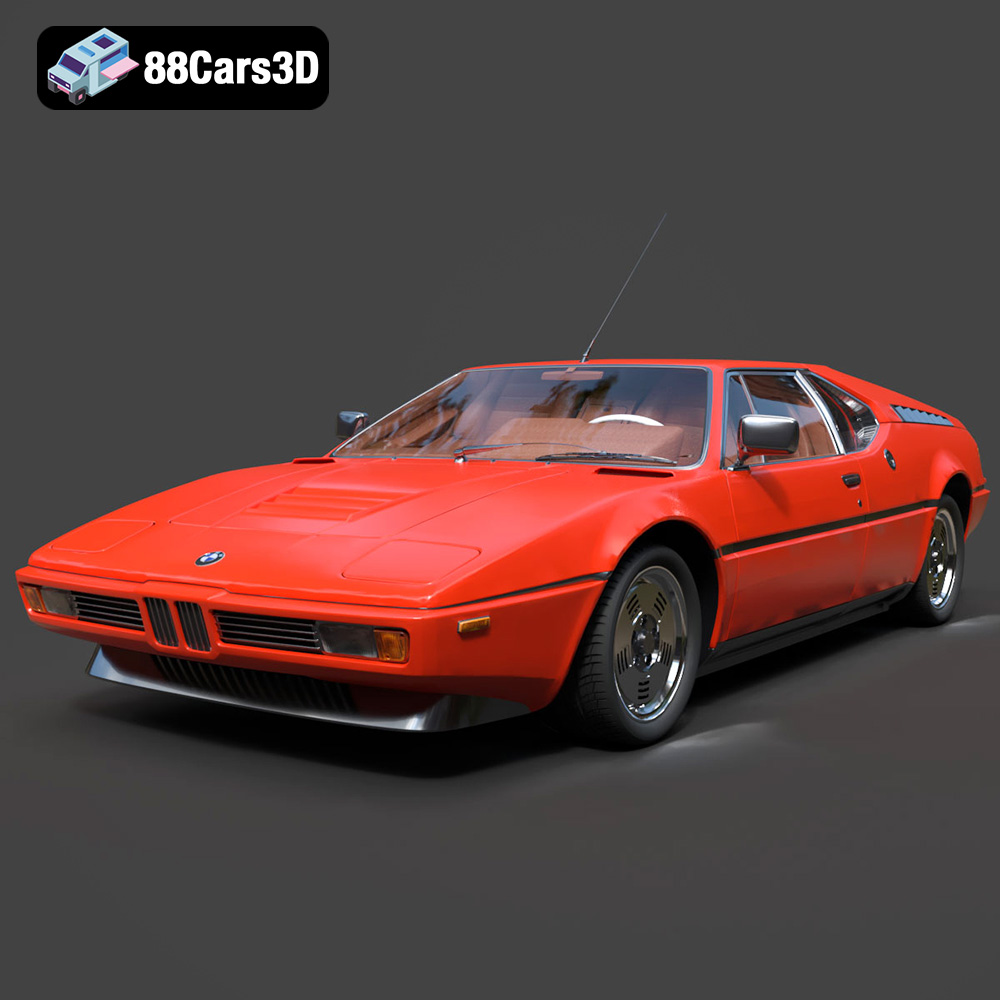
BMW Motorsport M1 E26 1981 3D Model
Texture: Yes
Material: Yes
Download the BMW Motorsport M1 E26 1981 3D Model featuring its iconic design, race-bred aerodynamics, and meticulously crafted details. Includes .blend, .fbx, .obj, .glb, .stl, .ply, .unreal, and .max formats for rendering, simulation, and game development.
Price: $20.79

Cadillac CTS-V Coupe 3D Model
Meta Description:
Texture: Yes
Material: Yes
Download the Cadillac CTS-V Coupe 3D Model featuring detailed exterior styling and realistic interior structure. Includes .blend, .fbx, .obj, .glb, .stl, .ply, .unreal, and .max formats for rendering, simulation, AR VR, and game development.
Price: $13.9
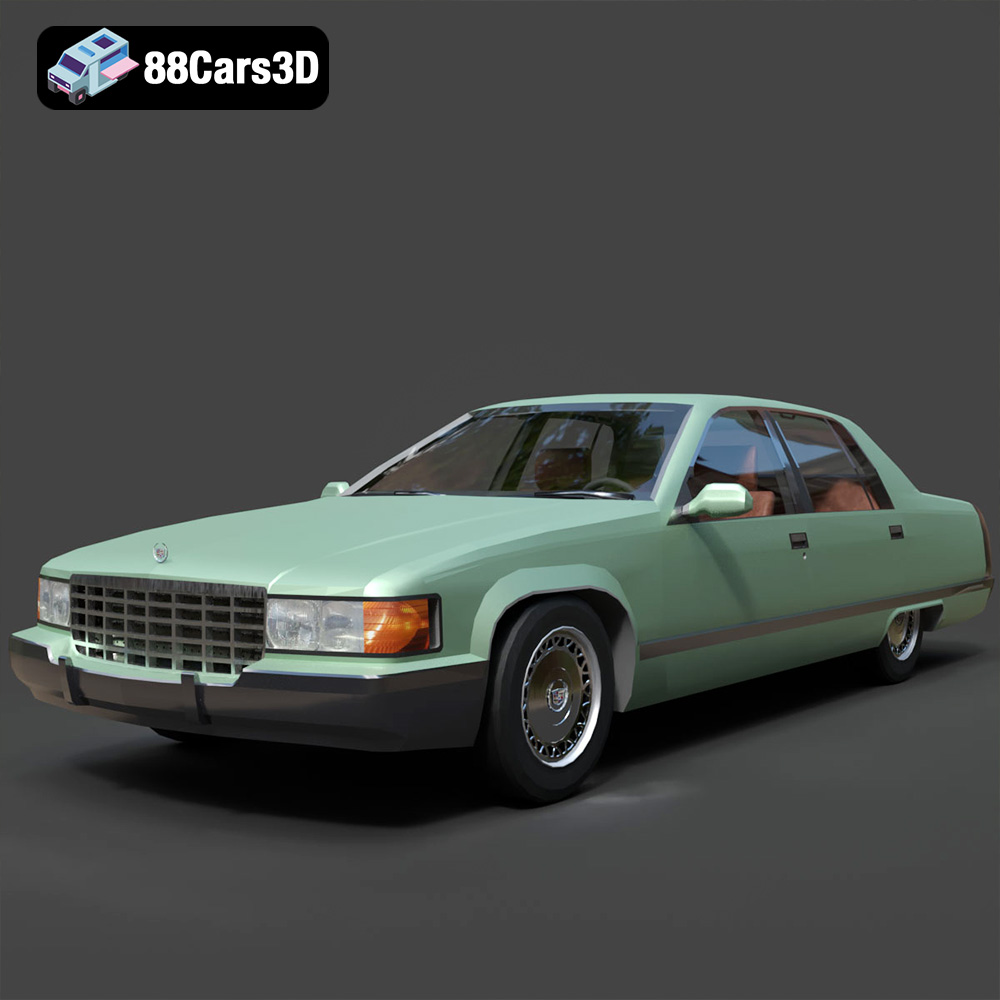
Cadillac Fleetwood Brougham 3D Model
Texture: Yes
Material: Yes
Download the Cadillac Fleetwood Brougham 3D Model featuring its iconic classic luxury design and detailed exterior and interior. Includes .blend, .fbx, .obj, .glb, .stl, .ply, .unreal, and .max formats for rendering, simulation, and game development.
Price: $10.79
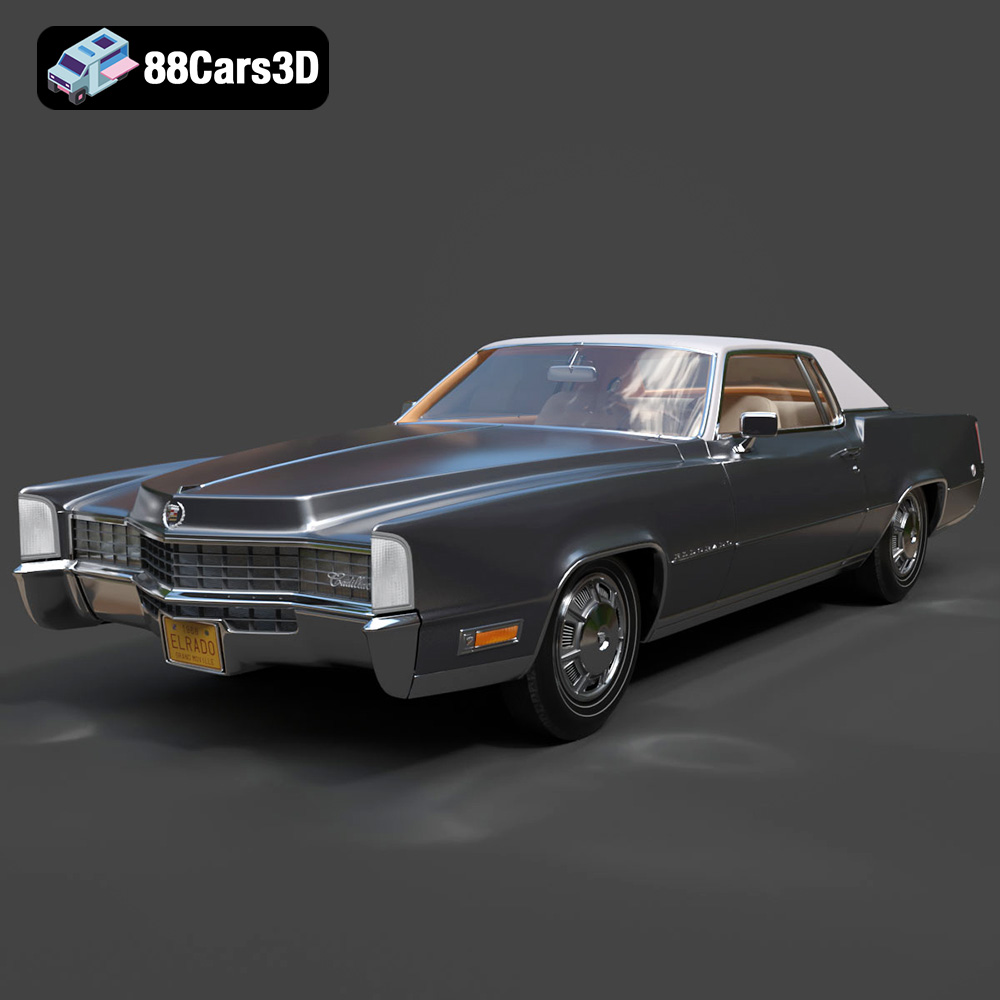
Cadillac Eldorado 1968 3D Model
Texture: Yes
Material: Yes
Download the Cadillac Eldorado 1968 3D Model featuring its iconic elongated body, distinctive chrome accents, and luxurious interior. Includes .blend, .fbx, .obj, .glb, .stl, .ply, .unreal, and .max formats for rendering, simulation, and game development.
Price: $20.79

Cadillac CTS SW 2010 3D Model
Texture: Yes
Material: Yes
Download the Cadillac CTS SW 2010 3D Model featuring a detailed exterior, functional interior elements, and realistic materials. Includes .blend, .fbx, .obj, .glb, .stl, .ply, .unreal, and .max formats for rendering, simulation, and game development.
Price: $10.79
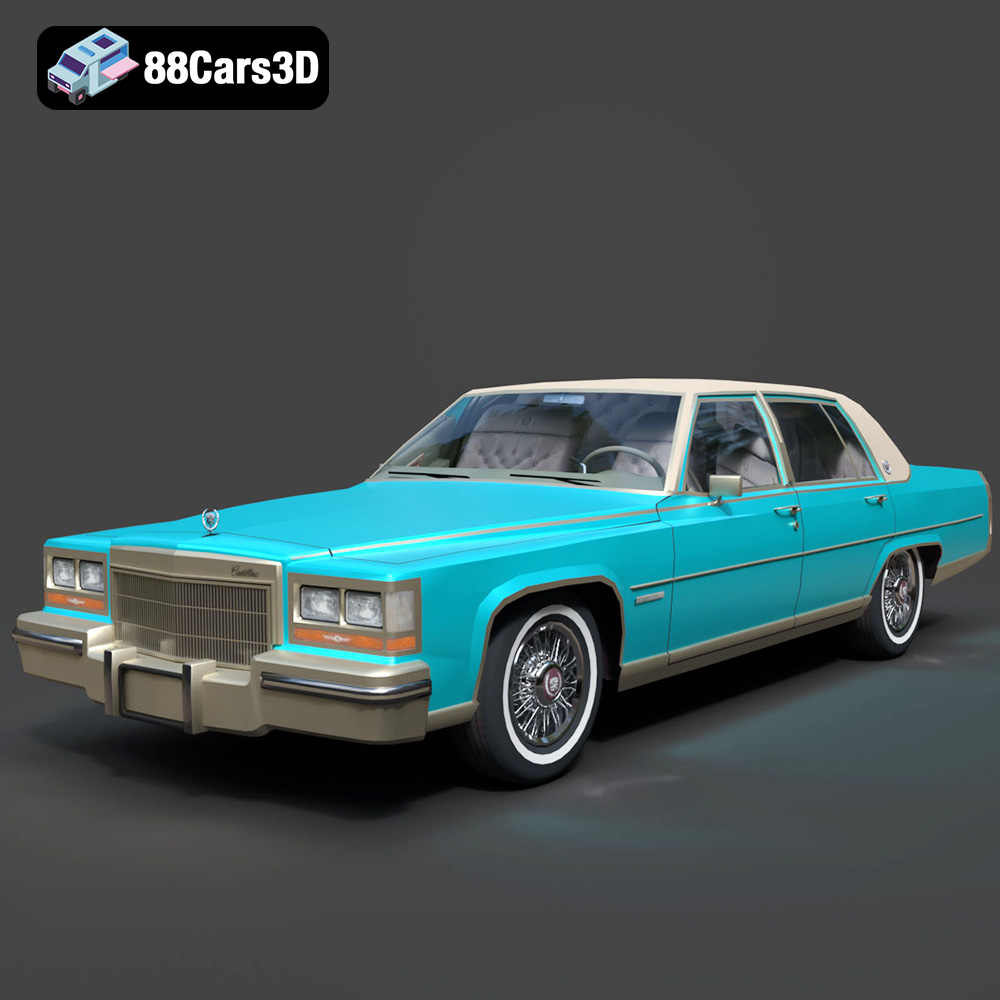
Cadillac Fleetwood Brougham 1985 3D Model
Texture: Yes
Material: Yes
Download the Cadillac Fleetwood Brougham 1985 3D Model featuring its iconic classic luxury design and detailed craftsmanship. Includes .blend, .fbx, .obj, .glb, .stl, .ply, .unreal, and .max formats for rendering, simulation, and game development.
Price: $10.79
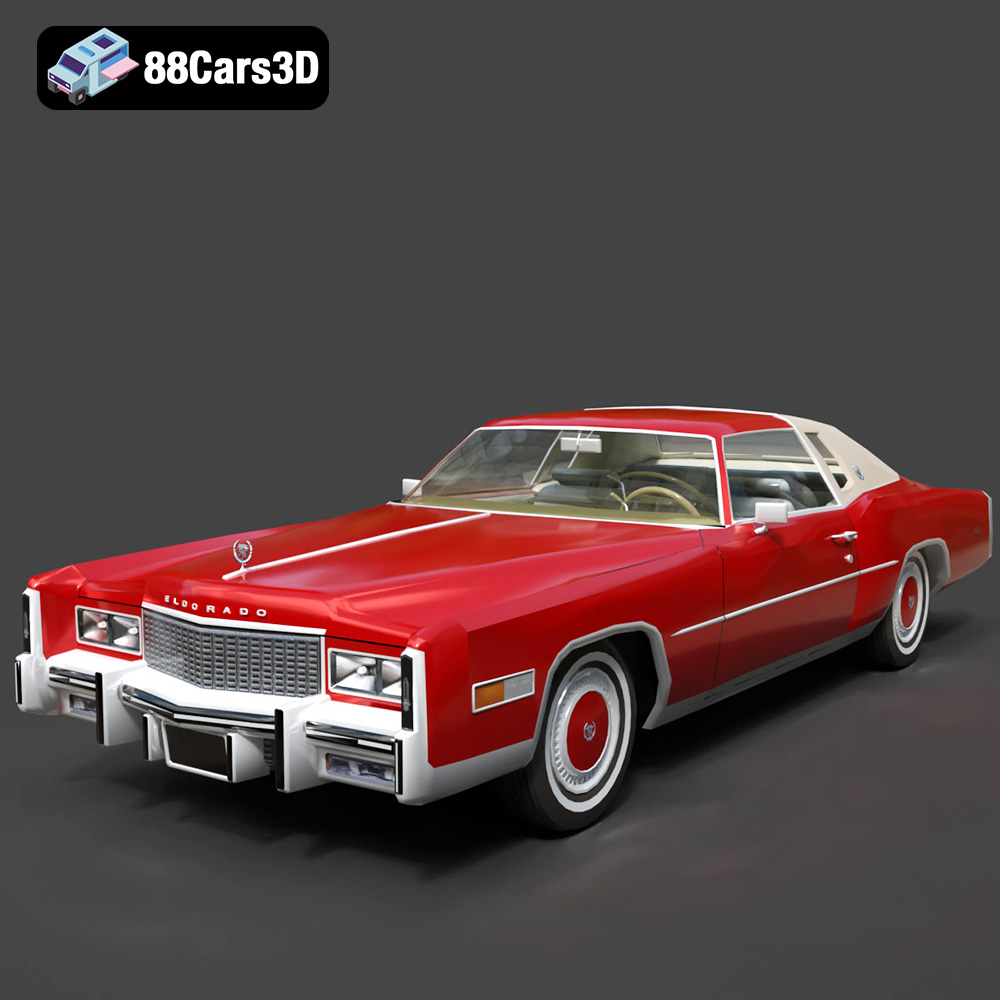
Cadillac Eldorado 1978 3D Model
Texture: Yes
Material: Yes
Download the Cadillac Eldorado 1978 3D Model featuring accurately modeled exterior, detailed interior, and period-correct aesthetics. Includes .blend, .fbx, .obj, .glb, .stl, .ply, .unreal, and .max formats for rendering, simulation, and game development.
Price: $10.79
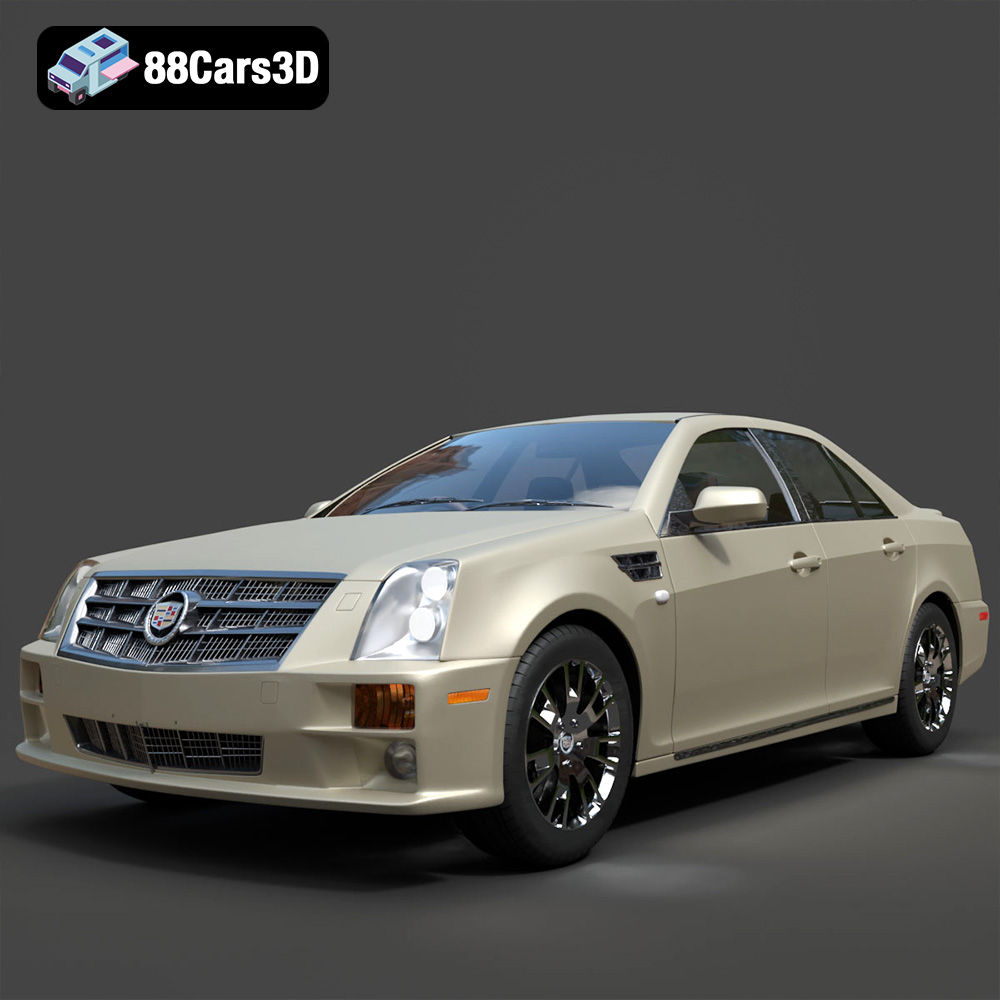
Cadillac STS-005 3D Model
Texture: Yes
Material: Yes
Download the Cadillac STS-005 3D Model featuring a detailed exterior and interior. Includes .blend, .fbx, .obj, .glb, .stl, .ply, .unreal, and .max formats for rendering, simulation, and game development.
Price: $22.79
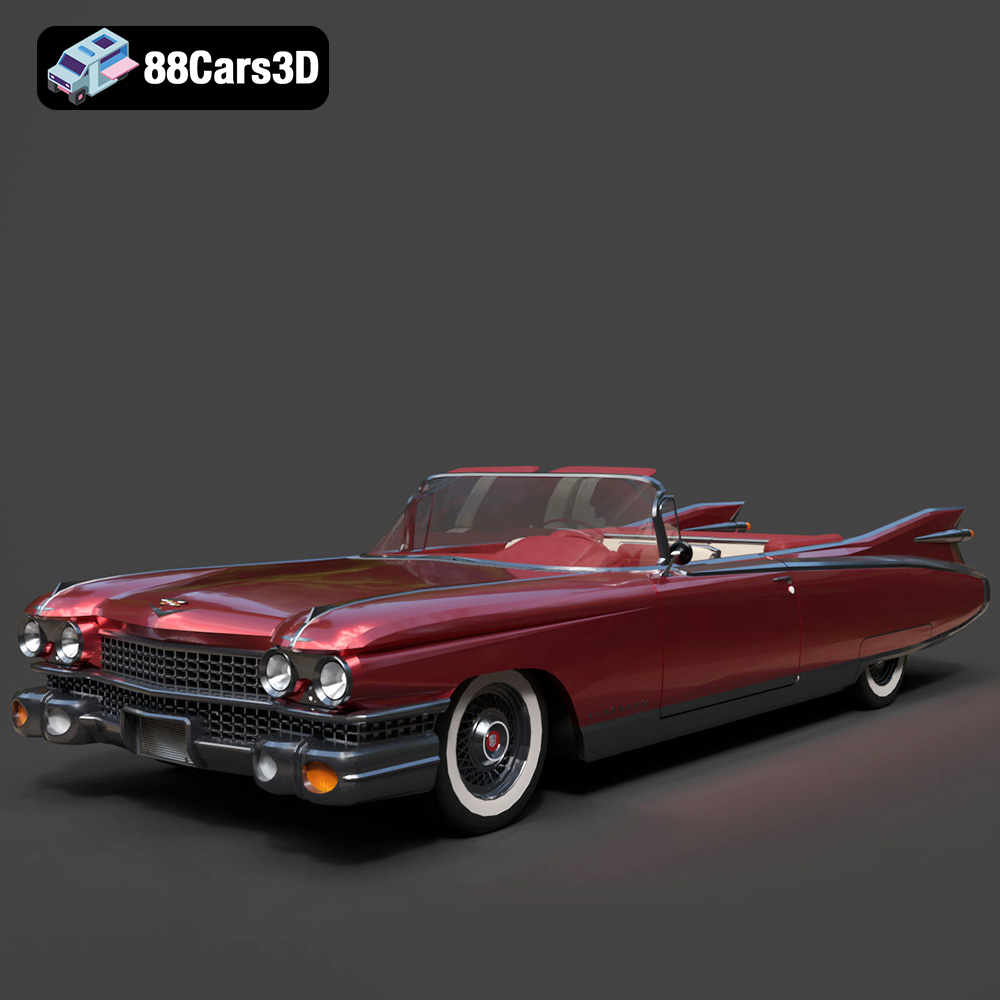
Cadillac Eldorado Convertible (1959) 3D Model
Texture: Yes
Material: Yes
Download the Cadillac Eldorado Convertible (1959) 3D Model featuring iconic fins, luxurious chrome details, and a classic vintage design. Includes .blend, .fbx, .obj, .glb, .stl, .ply, .unreal, and .max formats for rendering, simulation, and game development.
Price: $20.79

Cadillac DTS-005 3D Model
Texture: Yes
Material: Yes
Download the Cadillac DTS-005 3D Model featuring its iconic luxury design, detailed interior, and realistic exterior. Includes .blend, .fbx, .obj, .glb, .stl, .ply, .unreal, and .max formats for rendering, simulation, and game development.
Price: $10.79
