

In the exhilarating world of 3D visualization, few subjects captivate the eye quite like a perfectly rendered automotive model. The sleek curves, the powerful stance, and the intricate details all contribute to its allure. However, the true magic, the element that elevates a good render to an exceptional one, lies in the masterful depiction of reflections and refractions. These subtle yet profound visual phenomena are not just aesthetic enhancements; they are critical components that define the material properties, reveal the environment, and ultimately convince the viewer that they are looking at something real.
For 3D artists, game developers, and automotive designers, understanding and executing realistic reflections and refractions is a cornerstone of achieving photorealism. It’s a complex interplay of geometry, material science, lighting, and rendering algorithms that demands a keen eye and technical prowess. From the deep, mirror-like sheen of a polished car body to the subtle distortion and transparency of windshield glass, every element plays a role. This comprehensive guide will delve deep into the technical workflows, software-specific techniques, and artistic considerations required to master reflections and refractions, ensuring your automotive renders not only look stunning but feel genuinely alive. By the end, you’ll be equipped with the knowledge to transform your 3D car models into breathtaking visualizations that stand out in any portfolio, whether sourced from platforms like 88cars3d.com or meticulously crafted by hand.
The Foundation: Topology and Mesh Preparation for Reflective Surfaces
Before even thinking about materials or lighting, the groundwork for realistic reflections and refractions is laid in the 3D model’s topology. Clean, efficient, and well-structured geometry is paramount, especially for automotive surfaces which are characterized by large, smooth, and highly reflective panels. Imperfections in the mesh—such as stretched polygons, triangles in critical areas, or uneven edge loops—will manifest as unsightly artifacts, ripples, or ‘pinching’ in your reflections, instantly breaking the illusion of realism. A surface that is intended to be perfectly smooth must have its underlying mesh support that intention, primarily through a consistent and flowing edge structure.
For high-quality automotive models, the focus is on maintaining a smooth, continuous surface curvature. This often involves working with subdivision surface modeling, where a low-polygon base mesh is smoothed at render time or during the modeling process. The key is to ensure that edge loops follow the natural contours and design lines of the car. This ‘edge flow’ dictates how light will bounce off the surface, making it crucial for accurate reflections. Avoiding poles with more than five edges, especially on flat or slightly curved surfaces, helps prevent unwanted dimples or bumps. Similarly, ensuring consistent quad-based topology is essential, as triangles and N-gons can introduce unpredictable shading and stretching when subdivided, leading to distorted reflections.
Subdivision Surface Modeling Techniques and Crease Sets
Subdivision surface modifiers, like the Catmull-Clark algorithm found in most 3D software (e.g., Blender’s Subdivision Surface modifier, 3ds Max’s TurboSmooth, Maya’s Smooth Mesh Preview), are indispensable for automotive modeling. These algorithms take a coarse mesh and smooth it out, adding polygons and detail without manual intervention. The magic lies in how you control this smoothing. Strategic placement of supporting edge loops near hard edges allows you to sharpen specific areas, such as the seams between body panels or the crisp lines around headlights, while leaving large panels perfectly smooth. This technique, often referred to as “crease modeling,” is far superior to relying on sharp normals alone, as it provides true geometric definition that holds up under close inspection and maintains perfect reflections. For specific details on Blender’s Subdivision Surface modifier, artists can refer to the official Blender 4.4 documentation at https://docs.blender.org/manual/en/4.4/, which provides comprehensive guides on its usage and options.
Mesh Resolution and Detail for Close-ups
The appropriate mesh resolution is a careful balance between visual fidelity and performance. For primary body panels, a relatively low-poly base mesh (e.g., 5,000-15,000 polygons for a clean, unsubdivided panel) can be subdivided 2-3 times for a final polygon count that ranges from hundreds of thousands to a few million, depending on the shot’s requirements. For extreme close-ups or high-detail renders, even higher subdivision levels might be necessary to eliminate any visible faceting. However, for distant shots or game assets, lower subdivision levels are used, often combined with normal maps to simulate high-poly detail. For components like wheels, tires, and interior details, which are often viewed more closely, a higher base mesh density might be needed from the start. Models from professional sources like 88cars3d.com are often optimized with this hierarchy of detail in mind, offering clean topology ready for various levels of subdivision and use cases, from cinematic renders to real-time applications.
Unveiling Realism: PBR Materials and Advanced Shaders
Once your mesh is pristine, the next critical step in achieving stunning reflections and refractions is the creation of Physically Based Rendering (PBR) materials. PBR materials are designed to simulate how light interacts with real-world surfaces, providing a consistent and physically accurate appearance across different lighting conditions and rendering engines. This approach is fundamental to photorealism, as it grounds your material properties in scientific principles rather than artistic guesswork. The core principles revolve around energy conservation and Fresnel reflections, ensuring that surfaces reflect and absorb light in a believable manner.
At the heart of PBR are several key texture maps: Albedo (or Base Color), Roughness, Metallic, Normal, and optionally, Height or Displacement. The Albedo map defines the base color of the surface without any lighting information. The Roughness map dictates how spread out reflections will be, ranging from perfectly smooth (0.0) to completely diffuse (1.0). The Metallic map distinguishes between metallic (1.0) and non-metallic (0.0) surfaces, fundamentally changing how light interacts with the material. Metallic surfaces reflect light directly, while non-metallic surfaces refract light internally. The Normal map adds fine surface detail without increasing polygon count, crucial for simulating subtle bumps and imperfections that influence how light reflects. Finally, for transparent materials like glass, parameters such as Index of Refraction (IOR) and transmission color become vital, controlling the bending of light and the tint of the material.
Crafting Multi-Layered Car Paint Shaders
Car paint is one of the most complex and visually impactful materials in automotive rendering, often requiring a multi-layered shader to achieve its characteristic depth and luster. A typical car paint shader consists of at least three layers: a base coat, a metallic flake layer, and a clear coat. The base coat defines the primary color and often has a subtle roughness. On top of this, a metallic flake layer simulates the tiny metallic particles embedded in the paint, which sparkle and glint under light. This can be achieved with a procedural noise pattern or a dedicated flake texture, often combined with anisotropic reflections for a more realistic shimmer. The clear coat is the uppermost layer—a highly reflective, very smooth, and often slightly tinted transparent layer that gives car paint its signature gloss. This clear coat layer is essentially a dielectric material with a specific IOR (around 1.4-1.5) and very low roughness. Advanced shaders might include additional layers for orange peel effect (subtle surface imperfections), dirt, or scratches, adding to the realism. Each layer contributes to how light reflects and refracts, creating a sophisticated interplay of gloss, color, and depth.
Optimizing Glass Shaders for Performance and Realism
Glass and other transparent materials, such as those found in car windows, headlights, and taillights, present unique challenges. Achieving realistic refractions requires accurate IOR values (e.g., 1.5-1.52 for typical glass) and careful consideration of light absorption and dispersion. Modern renderers offer various glass shader models, from simple thin-walled approximations (suitable for distant objects or quick renders) to full volumetric absorption for thick glass. For true realism, enabling caustics (the focusing of light through transparent objects) can add dramatic visual appeal, though it significantly increases render times. To optimize performance, especially in real-time applications or for interior glass elements, sometimes a “fake” refraction (using a distorted environment map) or a very thin-walled glass shader without complex light path calculations is employed. For accurate light bending and color separation (dispersion), which is noticeable in prisms or thick lenses, dedicated dispersion parameters must be enabled, further increasing render complexity. When creating high-quality assets for marketplaces like 88cars3d.com, ensuring that glass materials are properly configured with accurate IOR and a clean, manifold mesh is crucial for diverse applications, from high-end visualization to AR/VR experiences.
Illuminating the Scene: Lighting for Dramatic Reflections
Lighting is arguably the most critical factor in showcasing realistic reflections and refractions. Without an intelligently designed lighting setup, even the most perfectly modeled and textured car will appear flat and unconvincing. The environment, the type of light sources, and their intensity and placement all conspire to create the visual symphony that defines your render. Reflections are, after all, visual representations of the environment reflected on the surface, making the lighting environment directly responsible for their quality and interest.
One of the most powerful and widely used techniques for realistic automotive lighting is the use of High Dynamic Range Image (HDRI) maps. An HDRI acts as both a light source and a reflection map, wrapping your scene in a real-world environment. This provides incredibly realistic global illumination, subtle color variations, and, most importantly, complex and believable reflections on your car’s surfaces. Whether it’s a studio setup, an open field, or a bustling city street, the HDRI captures the nuances of light and reflections from that environment. Choosing the right HDRI is crucial; a highly detailed HDRI with varying light intensities and colors will produce much more interesting and dynamic reflections than a flat, uniform one. For interior scenes or controlled studio shots, dome lights or spherical environment lights can be used to load HDRIs, often rotated and adjusted for optimal reflective impact.
Integrating HDRI with Physical Lights for Control
While HDRIs are fantastic for overall environmental lighting and reflections, they often don’t provide enough direct control or punch for specific areas of the car. This is where the integration of physical light sources becomes essential. Area lights, spotlights, and even point lights can be strategically placed to highlight key design elements, create dramatic specular highlights, and add depth to your reflections. For instance, large softboxes (emulated by large area lights) can create elegant, elongated reflections along the car’s body panels, emphasizing its form. Rim lights, placed behind and to the sides of the car, can separate it from the background and create striking highlights along its edges. The trick is to balance these physical lights with the HDRI. The HDRI provides the ambient fill and environmental reflections, while the physical lights add directional intensity and controlled specular hits. Ensure that the color temperature and intensity of your physical lights are consistent with your chosen HDRI to maintain a cohesive and believable lighting scheme.
Controlling Reflections with Light Blockers and Reflectors
Beyond simply placing lights, understanding how to manipulate the light’s path and its interaction with the environment is crucial for advanced reflection control. Light blockers, often simple planes or geometric shapes with black materials, can be used to strategically block light from certain areas or to create interesting negative spaces in reflections. For example, placing a blocker above a car can create a dark stripe in the roof’s reflection, adding contrast and visual interest. Conversely, reflectors (often white or silver planes) can bounce light back onto the car, filling in shadows or creating softer, diffused reflections. In a studio setup, these are commonplace for shaping light and making reflections more appealing. Even invisible light planes or ‘light cards’ can be placed specifically to appear in reflections, adding details or shaping the reflective patterns without directly illuminating the scene. This granular control allows artists to “paint” with light, sculpting the reflections on the car’s surface to emphasize its design and material properties, turning a generic reflection into a deliberate artistic statement.
The Rendering Engine’s Role: Settings and Optimizations
The rendering engine is the powerhouse that translates your 3D scene data into a 2D image, and its settings play a pivotal role in the quality and speed of your reflections and refractions. Each renderer—be it Corona, V-Ray, Cycles, or Arnold—has its unique algorithms and parameters that dictate how light rays are traced, bounced, and sampled. Understanding these settings is crucial for achieving both photorealism and efficient render times, especially when dealing with complex transparent materials and highly reflective surfaces.
The fundamental concept governing reflections and refractions in path-tracing renderers is “ray depth” or “bounces.” This setting determines how many times a light ray can reflect off or refract through surfaces before it’s terminated. For highly reflective metals and multi-layered glass, a higher ray depth (e.g., 8-12 for reflections, 16-24 for refractions) is often necessary to capture the full interplay of light. Insufficient ray depth will result in dark, unrealistic reflections or opaque-looking glass. Alongside ray depth, “sampling” is key. Renderers use various sampling techniques (e.g., adaptive sampling, path tracing) to cast rays into the scene and gather light information. Higher sample counts reduce noise and produce cleaner reflections and refractions, but at the cost of increased render time. Balancing these two parameters is an art in itself: too low, and your image will be noisy and unrealistic; too high, and your render times will skyrocket.
Optimizing Render Times for Complex Materials
Complex materials, especially multi-layered car paint and realistic glass, can significantly increase render times due to the numerous light bounces and calculations required. To optimize, start by identifying bottlenecks. Renderers often provide passes or statistics that highlight where samples are being spent. For reflections, ensure your environment (HDRI) is not overly complex with tiny, bright details that require excessive sampling. For refractions, reducing unnecessary transparent objects or simplifying complex internal geometry can help. Many renderers offer specific settings for “Max Trace Depth” for reflections and refractions separately, allowing fine-tuned control. For instance, in Blender’s Cycles renderer, under the Light Paths settings, you can adjust Total, Diffuse, Glossy, Transmission, and Volume bounces. Reducing the “Glossy” and “Transmission” bounces where not critically needed can yield significant speedups. Additionally, utilizing denoisers (OptiX, OIDN, V-Ray Denoiser, Arnold Denoiser) can dramatically cut down on the required sample count, allowing for faster renders without compromising too much on quality. These AI-powered tools effectively clean up noise in the final image, making it appear as if more samples were used. However, denoisers should be used judiciously, as they can sometimes blur fine details or introduce artifacts in very noisy areas, especially in reflections.
Understanding Caustics and Dispersion
Caustics and dispersion are two advanced optical phenomena that can elevate the realism of glass and liquid renders but come with a substantial computational cost. Caustics refer to the patterns of light formed when light rays are reflected or refracted by a curved surface and converge to create bright focal points or lines. Think of the bright patterns at the bottom of a swimming pool or the light passing through a wine glass. While visually stunning, caustics require a vast number of light rays to be traced and are notoriously difficult to render cleanly without significant noise. Many production renderers offer specialized caustic solvers or approximations, but often, artists choose to disable them or simulate them with clever lighting if render time is a concern. Dispersion, on the other hand, is the phenomenon where different wavelengths of light (colors) are refracted at slightly different angles, causing white light to split into its constituent colors—like a prism. This is what gives diamonds their sparkle or thick glass edges a rainbow fringe. Enabling dispersion adds another layer of computational complexity, as the renderer must trace multiple light rays for each color channel. For most automotive renders, especially for windshields or side windows, dispersion might be too subtle to warrant the increased render time, but for close-ups of headlights or taillight lenses with intricate optics, it can add an invaluable touch of realism. When making decisions about these features, consider the final output and the target audience; for game assets or AR/VR optimization, these features are almost always disabled due to their prohibitive cost, but for cinematic quality renders, they are often explored.
Game Engine Integration and Real-Time Reflections
Transitioning from offline renderers to real-time game engines like Unity and Unreal Engine introduces a different set of challenges and techniques for achieving compelling reflections and refractions. While the underlying principles of PBR materials remain constant, the methods for calculating and displaying these effects are highly optimized for performance, often relying on approximations rather than brute-force ray tracing. The goal is to deliver believable visual fidelity at interactive frame rates, which necessitates clever compromises and specific engine features.
Game engines employ several techniques to simulate reflections. Screen Space Reflections (SSR) are a common approach, reflecting only what is currently visible on the screen. While efficient, SSR has limitations: it cannot reflect objects outside the camera’s view, and reflections can disappear at screen edges. Planar Reflections offer a higher quality reflection for specific flat surfaces (like polished floors or calm water) by rendering the scene a second time from a mirrored perspective, but they are computationally expensive and typically used sparingly. The most versatile solution for general reflections is Reflection Probes (or Reflection Captures in Unreal Engine). These are essentially omnidirectional cameras placed in your scene that capture a 360-degree cubemap of the environment. This cubemap is then used to project reflections onto nearby objects. For automotive models, carefully placed Reflection Probes can provide convincing reflections of the surrounding environment, crucial for metal and glass surfaces. For models intended for real-time applications, such as those found on 88cars3d.com, ensuring they are optimized for these techniques is vital.
Setting up Reflection Probes and Their Limitations
Setting up Reflection Probes involves strategically placing them throughout your scene. For an automotive scene, you might have one main probe covering the general environment, and then smaller, more localized probes for specific areas, such as inside the car’s cabin or under an archway, to capture distinct lighting and reflections. In Unity, for example, you would add a “Reflection Probe” component, define its bounding box (the area it influences), and then bake its cubemap. Unreal Engine uses “Reflection Captures” with similar principles. It’s important to understand their limitations: probes capture a static reflection; dynamic changes in the environment or moving objects will not be accurately reflected unless the probes are updated in real-time (which is very expensive) or blended carefully. For indoor scenes, multiple probes can be used with blending volumes to create smooth transitions between reflection zones. For highly dynamic objects like cars, it’s common to blend screen-space reflections with baked reflection probes to get the best balance of dynamic accuracy and performance.
Performance Considerations for Real-Time Refractions
Real-time refractions are significantly more challenging and computationally expensive than reflections. True ray-traced refractions, complete with accurate light bending and dispersion, are typically reserved for offline renders or high-end cinematic game sequences. For general real-time use, game engines often rely on approximations. One common technique involves rendering the background behind the refractive object and then distorting that rendered image based on the material’s Index of Refraction (IOR). This “grab pass” or “screen-space refraction” is efficient but has the same limitations as SSR: it can only refract what’s visible on screen and doesn’t account for true light bending through thick geometry. For thicker glass, more complex shaders might employ cubemaps or pre-baked light path information, or even a simpler “tinted transparency” approach. The cost of real-time refractions is often measured in additional draw calls and texture fetches. Developers must weigh the visual impact against the performance budget. For AR/VR experiences, where maintaining a high frame rate is paramount to prevent motion sickness, highly optimized or simplified refraction techniques are always preferred. This might involve using a simple transparent shader with a slight color tint and a subtle normal map for surface imperfections, rather than attempting complex light bending, ensuring that the 3D car models maintain performance across a wide range of devices.
Beyond the Render: Post-Processing for Polish
The journey to photorealistic reflections and refractions doesn’t end when the render engine finishes its job. Post-processing is a crucial final stage that can elevate a technically sound render into a visually stunning masterpiece. It’s where you add that last layer of polish, correct subtle imperfections, and infuse artistic flair that makes the image truly sing. Think of it as the digital darkroom, where you fine-tune and enhance the raw output from your 3D software.
One of the most powerful aspects of post-processing is the use of render passes (also known as AOV – Arbitrary Output Variables). Modern renderers can output various channels of information, such as reflection passes, refraction passes, raw lighting, diffuse, specular, Z-depth, normal, and ID masks. These passes provide granular control over individual elements of your render. For reflections and refractions, having dedicated passes allows you to adjust their intensity, color, and even add effects like chromatic aberration or glare specifically to those elements without affecting the rest of the image. For instance, you might want to slightly desaturate your reflections to make them less distracting or boost their contrast to make them pop more. The flexibility offered by render passes means you’re not locked into the renderer’s final output; you can make non-destructive adjustments and experiment freely in compositing software like Adobe Photoshop, After Effects, Nuke, or DaVinci Resolve.
Compositing Workflow in Photoshop/After Effects
A typical compositing workflow for automotive renders starts by importing all relevant render passes into your chosen software. You’ll layer these passes, often using blending modes like ‘Screen’ or ‘Add’ for lighting and specular passes, and ‘Multiply’ for occlusion or shadow passes. The reflection and refraction passes are particularly important. You can use them to isolate and manipulate the reflected and refracted light. For example, by placing the reflection pass on top of your beauty render and adjusting its opacity or blend mode, you can control how pronounced the reflections are. You might also use mask passes (like object IDs or material IDs) to select specific parts of the car, allowing you to make targeted adjustments—perhaps making the clear coat slightly brighter or the chrome trim more reflective. Effects like chromatic aberration, often added subtly to the edges of highly reflective or refractive elements, can mimic real-world lens imperfections and add to the photographic realism. Lens flare and glare effects, derived from bright light sources or specular highlights, can also be introduced to simulate camera optics, adding a cinematic touch. When working with models from 88cars3d.com, ensure they come with appropriate material IDs or UV-based masks to facilitate this precise post-processing control.
Fine-tuning Reflections with Adjustment Layers
Beyond layering passes, adjustment layers are your best friend for fine-tuning reflections and refractions. These non-destructive layers allow you to modify color, contrast, brightness, and other attributes without directly altering the underlying image data. For reflections, you might use a ‘Curves’ or ‘Levels’ adjustment layer to increase their contrast, making them sharper and more defined. A ‘Hue/Saturation’ layer can be used to subtly shift the color of reflections, perhaps to match the overall mood of the scene or to correct any color casts. For refractions, especially in glass, you might employ a ‘Color Balance’ or ‘Photo Filter’ layer to introduce a subtle tint, mimicking the slight color absorption of real-world glass. Adding a very subtle ‘Gaussian Blur’ or ‘Noise’ layer to reflections can help soften overly sharp reflections or introduce a touch of realism by mimicking environmental atmospheric effects or slight surface imperfections. The key is subtlety; extreme adjustments can quickly make the render look artificial. The goal is to enhance the existing realism, making the reflections and refractions appear as if they were captured directly by a high-end camera, imbued with atmosphere and character.
Conclusion
Mastering realistic reflections and refractions in automotive renders is a challenging yet profoundly rewarding pursuit that defines the boundary between a good 3D model and a truly photorealistic masterpiece. We’ve journeyed through the entire pipeline, starting from the foundational importance of clean topology and precise mesh preparation, which ensures your surfaces are perfectly smooth and ready to catch the light. We then delved into the intricacies of PBR materials, exploring how multi-layered car paint and sophisticated glass shaders recreate the complex interplay of light with surfaces, bringing your models to life.
The critical role of lighting, from the all-encompassing power of HDRIs to the surgical precision of physical lights, was highlighted as the key to revealing and shaping those stunning reflections. Our exploration continued into the specific settings and optimizations within rendering engines like Corona, V-Ray, Cycles, and Arnold, understanding how ray depth, sampling, and advanced features like caustics and dispersion contribute to visual fidelity. We also tackled the unique demands of real-time environments, discussing how game engines leverage techniques like Reflection Probes and screen-space effects to achieve believable results at interactive frame rates, crucial for game assets and AR/VR applications. Finally, we emphasized the transformative power of post-processing, where render passes and adjustment layers become tools to add the final polish, enhancing realism and injecting artistic intent.
The path to perfection is iterative, demanding patience, experimentation, and a keen eye for detail. Each element—from a meticulously placed edge loop to a precisely tuned roughness map, from a subtle HDRI rotation to a final color grade—contributes to the overall illusion. By applying the technical insights and best practices outlined in this guide, you are now equipped to elevate your automotive renders to new heights of realism. Continue to experiment with different lighting setups, refine your PBR materials, and leverage the power of post-processing. Remember that platforms like 88cars3d.com provide high-quality 3D car models that already possess the clean topology and detailed geometry required as a solid foundation, allowing you to focus on these advanced rendering techniques to achieve truly breathtaking results. The journey to photorealism is an ongoing one, and with these tools, your renders are poised to captivate and inspire.
Featured 3D Car Models
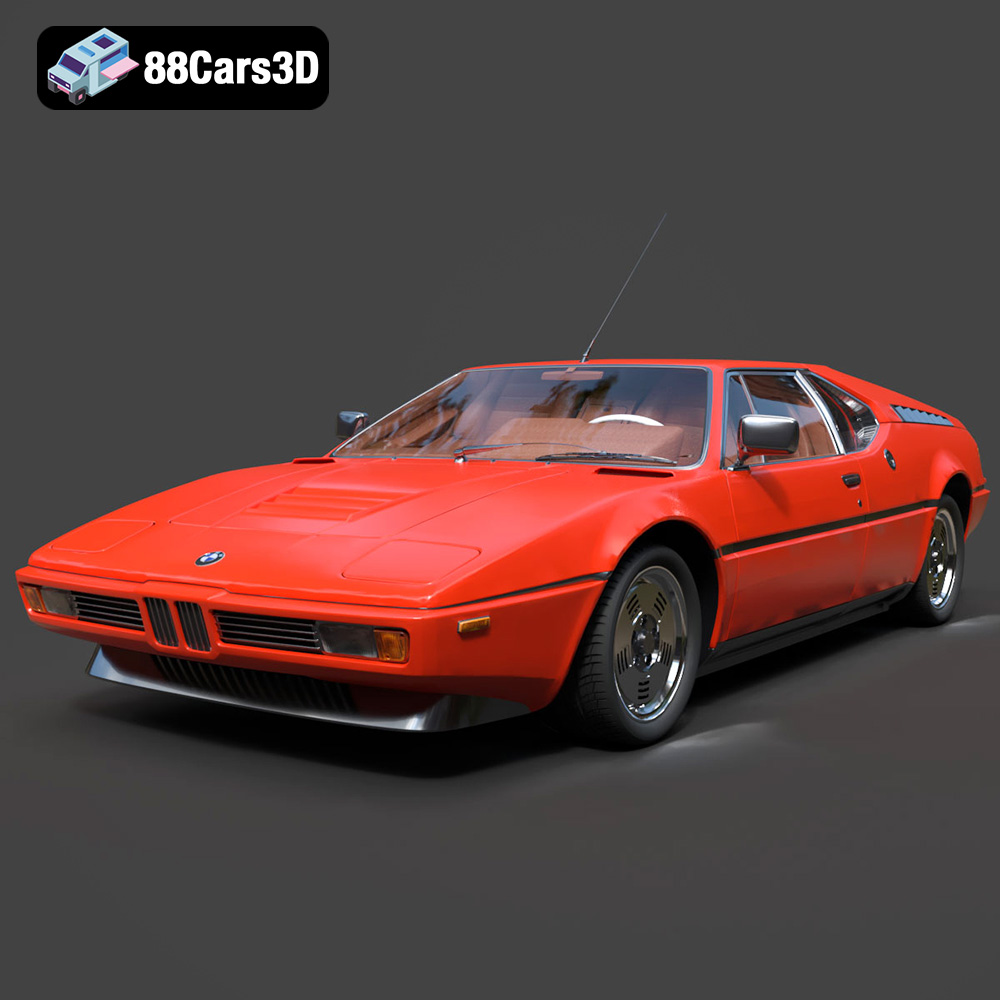
BMW Motorsport M1 E26 1981 3D Model
Texture: Yes
Material: Yes
Download the BMW Motorsport M1 E26 1981 3D Model featuring its iconic design, race-bred aerodynamics, and meticulously crafted details. Includes .blend, .fbx, .obj, .glb, .stl, .ply, .unreal, and .max formats for rendering, simulation, and game development.
Price: $20.79

Cadillac CTS-V Coupe 3D Model
Meta Description:
Texture: Yes
Material: Yes
Download the Cadillac CTS-V Coupe 3D Model featuring detailed exterior styling and realistic interior structure. Includes .blend, .fbx, .obj, .glb, .stl, .ply, .unreal, and .max formats for rendering, simulation, AR VR, and game development.
Price: $13.9
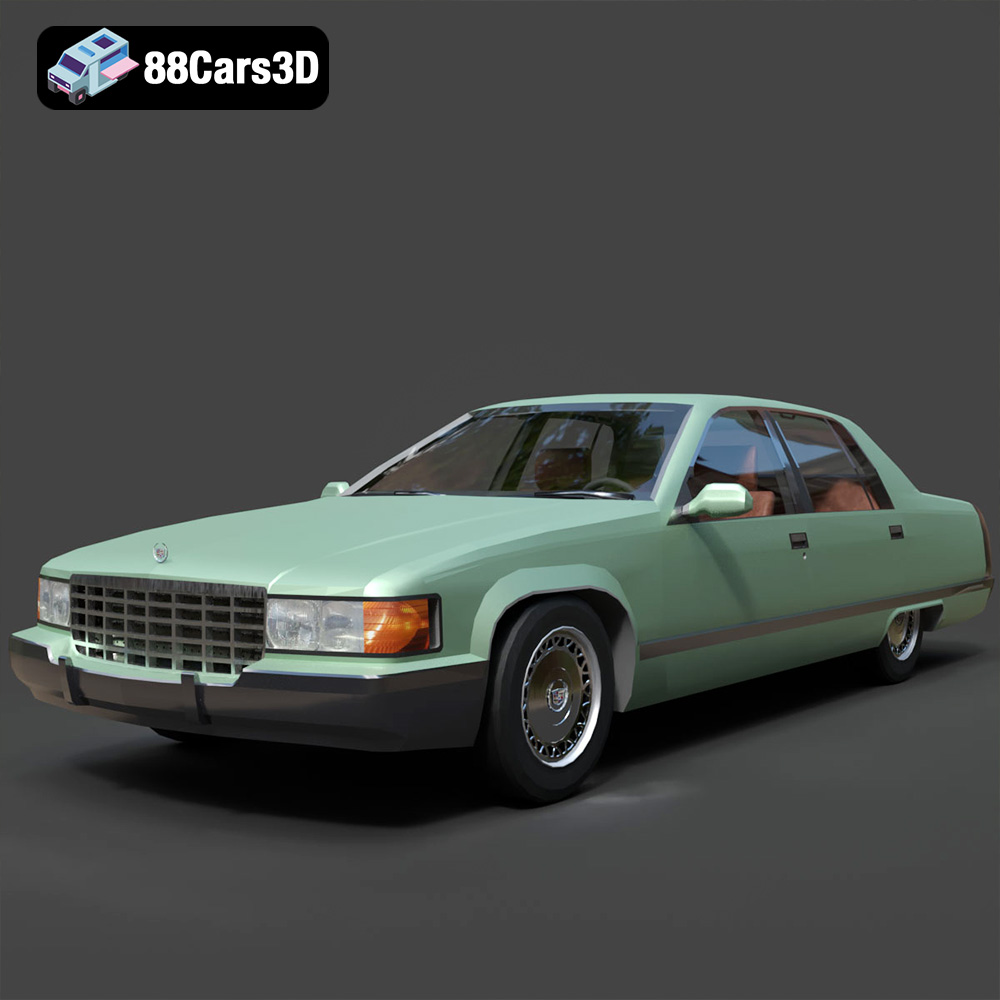
Cadillac Fleetwood Brougham 3D Model
Texture: Yes
Material: Yes
Download the Cadillac Fleetwood Brougham 3D Model featuring its iconic classic luxury design and detailed exterior and interior. Includes .blend, .fbx, .obj, .glb, .stl, .ply, .unreal, and .max formats for rendering, simulation, and game development.
Price: $10.79
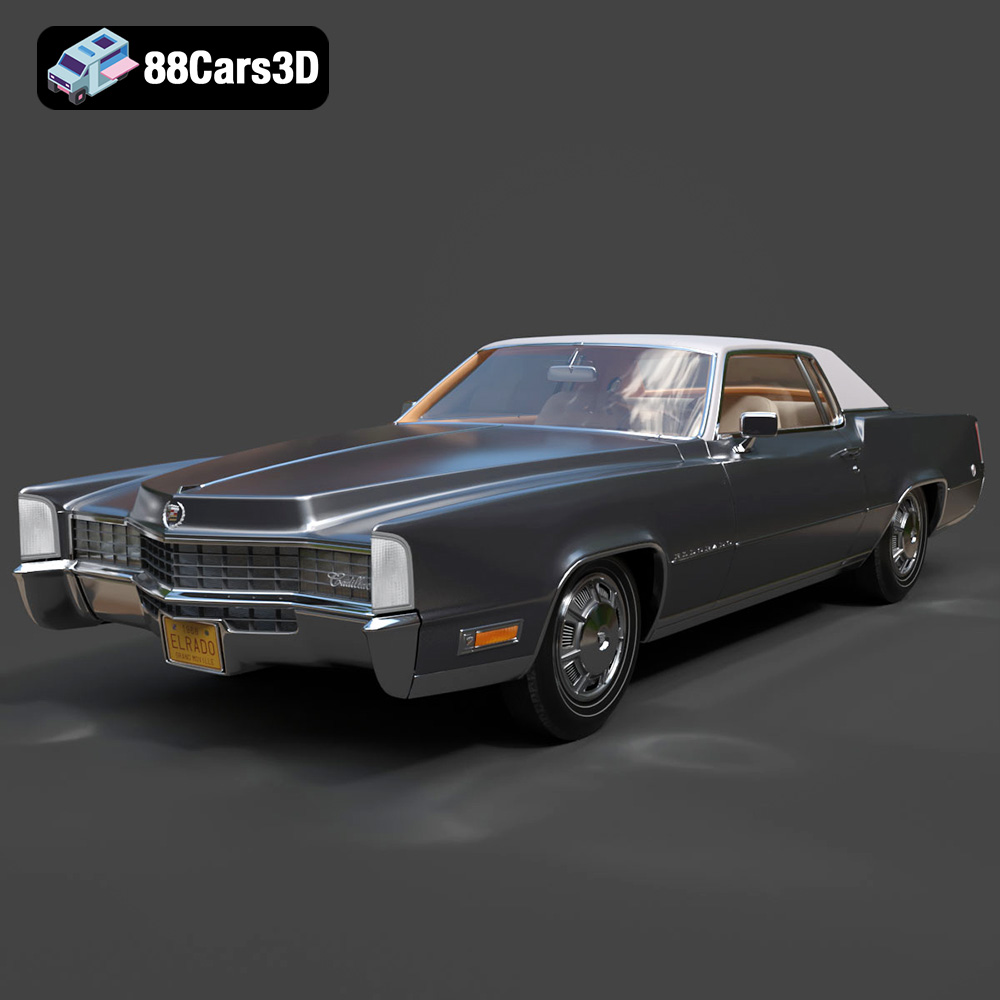
Cadillac Eldorado 1968 3D Model
Texture: Yes
Material: Yes
Download the Cadillac Eldorado 1968 3D Model featuring its iconic elongated body, distinctive chrome accents, and luxurious interior. Includes .blend, .fbx, .obj, .glb, .stl, .ply, .unreal, and .max formats for rendering, simulation, and game development.
Price: $20.79

Cadillac CTS SW 2010 3D Model
Texture: Yes
Material: Yes
Download the Cadillac CTS SW 2010 3D Model featuring a detailed exterior, functional interior elements, and realistic materials. Includes .blend, .fbx, .obj, .glb, .stl, .ply, .unreal, and .max formats for rendering, simulation, and game development.
Price: $10.79
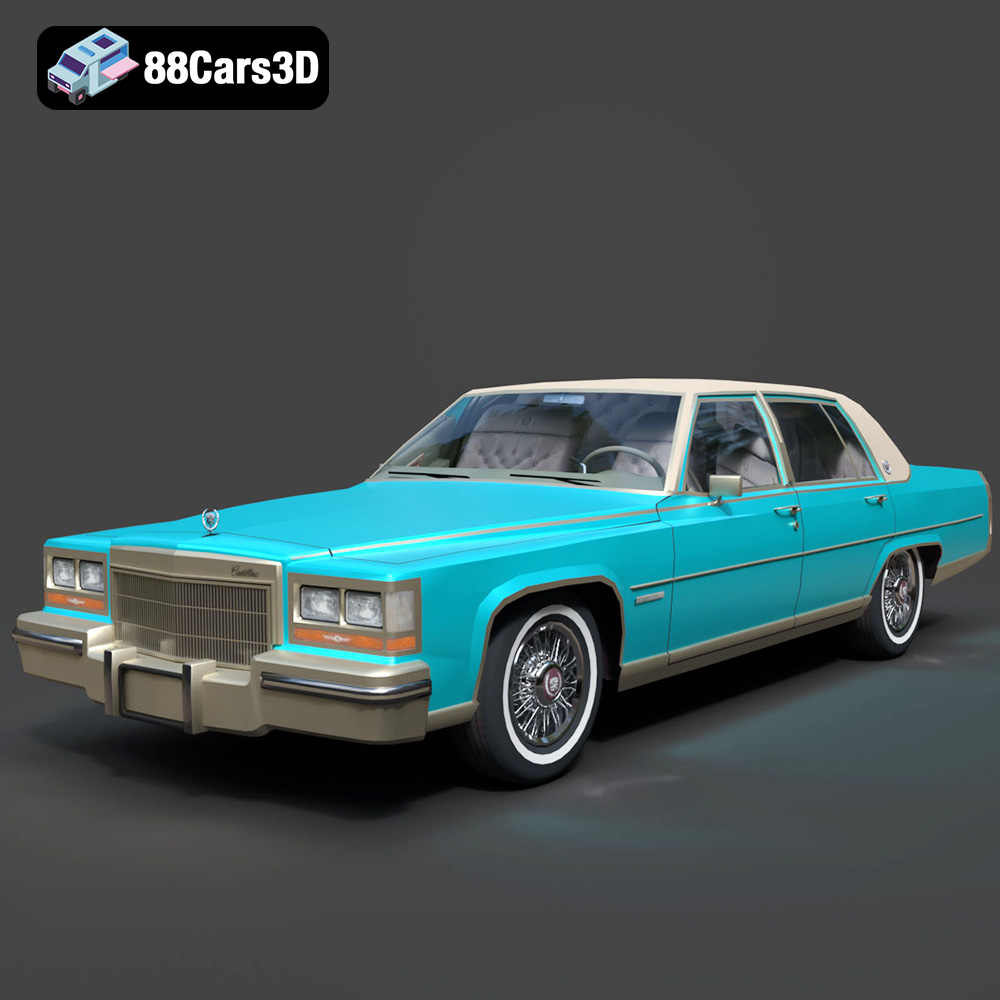
Cadillac Fleetwood Brougham 1985 3D Model
Texture: Yes
Material: Yes
Download the Cadillac Fleetwood Brougham 1985 3D Model featuring its iconic classic luxury design and detailed craftsmanship. Includes .blend, .fbx, .obj, .glb, .stl, .ply, .unreal, and .max formats for rendering, simulation, and game development.
Price: $10.79
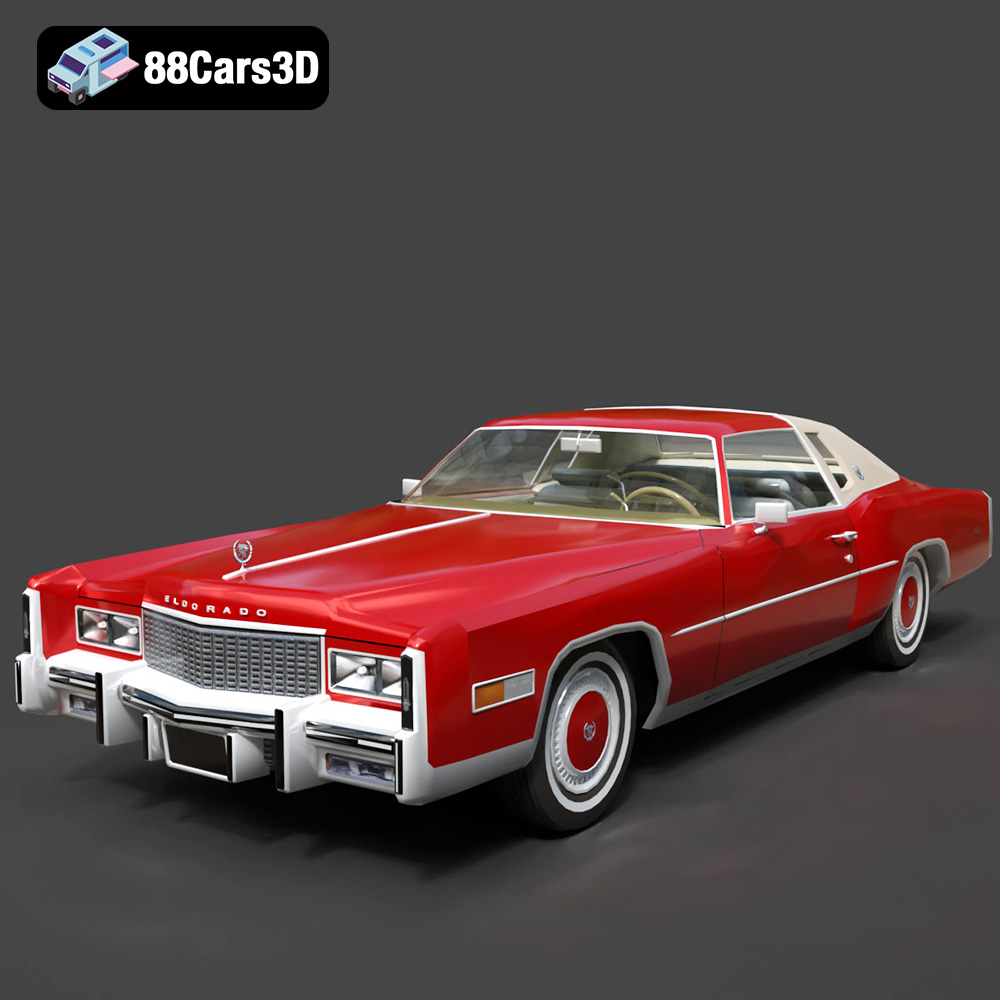
Cadillac Eldorado 1978 3D Model
Texture: Yes
Material: Yes
Download the Cadillac Eldorado 1978 3D Model featuring accurately modeled exterior, detailed interior, and period-correct aesthetics. Includes .blend, .fbx, .obj, .glb, .stl, .ply, .unreal, and .max formats for rendering, simulation, and game development.
Price: $10.79
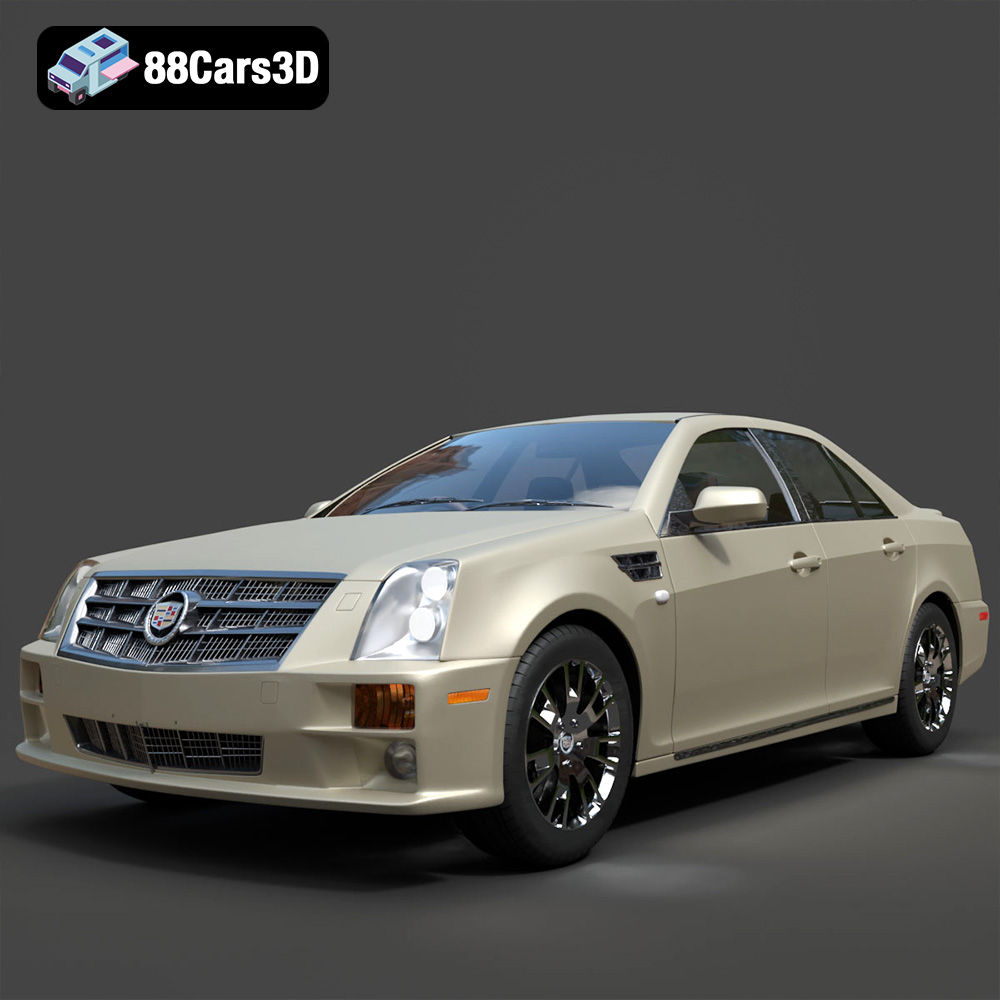
Cadillac STS-005 3D Model
Texture: Yes
Material: Yes
Download the Cadillac STS-005 3D Model featuring a detailed exterior and interior. Includes .blend, .fbx, .obj, .glb, .stl, .ply, .unreal, and .max formats for rendering, simulation, and game development.
Price: $22.79
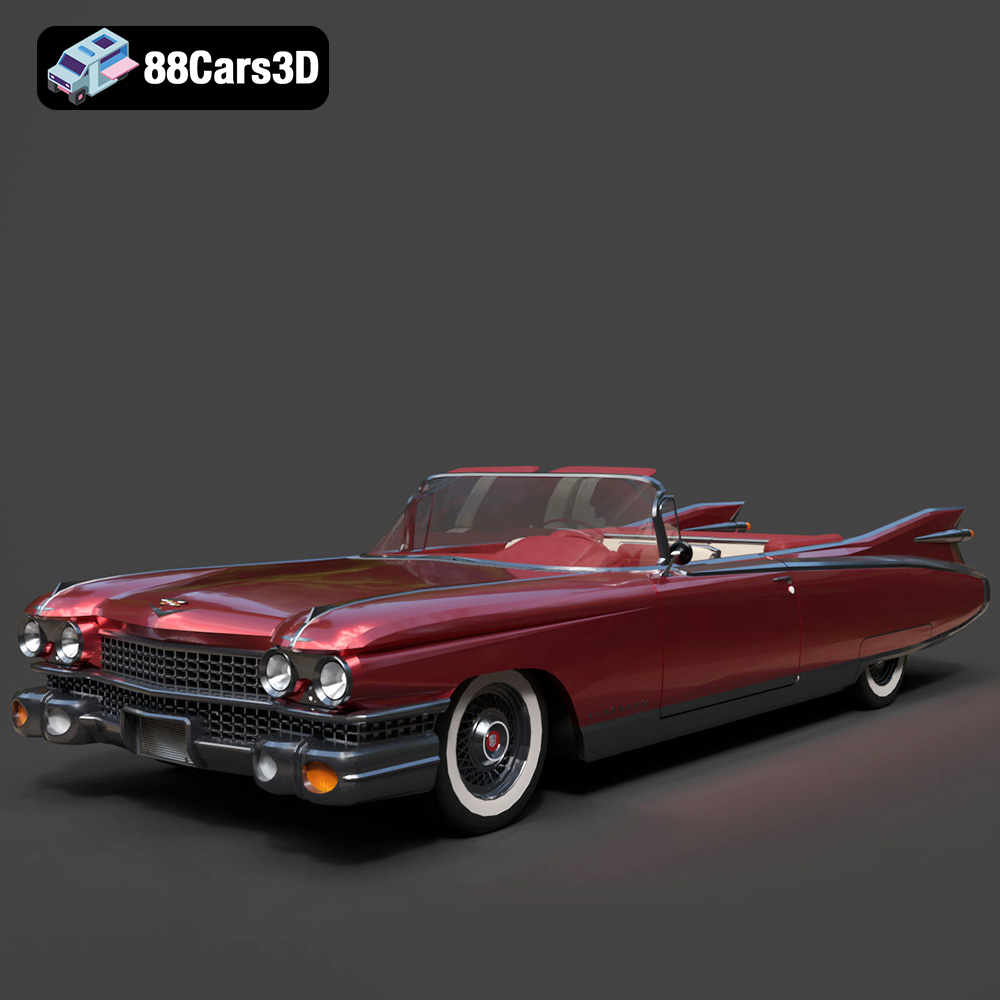
Cadillac Eldorado Convertible (1959) 3D Model
Texture: Yes
Material: Yes
Download the Cadillac Eldorado Convertible (1959) 3D Model featuring iconic fins, luxurious chrome details, and a classic vintage design. Includes .blend, .fbx, .obj, .glb, .stl, .ply, .unreal, and .max formats for rendering, simulation, and game development.
Price: $20.79

Cadillac DTS-005 3D Model
Texture: Yes
Material: Yes
Download the Cadillac DTS-005 3D Model featuring its iconic luxury design, detailed interior, and realistic exterior. Includes .blend, .fbx, .obj, .glb, .stl, .ply, .unreal, and .max formats for rendering, simulation, and game development.
Price: $10.79
