Mastering Studio Lighting for Automotive Renders in 3ds Max
Creating breathtaking automotive renders is an art form where every detail counts. While a meticulously crafted 3D car model is undeniably the foundation, it’s the lighting that truly breathes life into it, transforming a static object into a dynamic, compelling visual masterpiece. Without expert lighting, even the most exquisite vehicle, perhaps one sourced from a premium marketplace like 88cars3d.com, can appear flat, lifeless, or unconvincing. This comprehensive guide will illuminate the intricate world of studio lighting setup for car renders specifically within 3ds Max, empowering you to craft visuals that captivate and impress.
We’ll journey through the fundamental principles of light, explore essential studio lighting configurations like the classic 3-point setup and advanced softbox arrays, and delve into software-specific techniques using industry-standard renderers such as Corona and V-Ray. You’ll learn how to sculpt form with light, enhance material realism, and optimize your scene for both quality and performance. Finally, we’ll cover the crucial post-processing steps that add the final professional polish. Prepare to unlock the secrets to creating automotive renders that not only look real but tell a story, making your 3D car models truly shine.
The Fundamentals of Automotive Studio Lighting
Before diving into complex setups, a solid grasp of lighting fundamentals is paramount. Understanding how light behaves and interacts with surfaces is the cornerstone of any successful render. For automotive models, which are often characterized by sleek curves, reflective surfaces, and intricate details, this understanding becomes even more critical.
Understanding Light Qualities and Their Impact
Light isn’t just about brightness; its quality profoundly influences the mood, detail, and perceived realism of your render.
- Hard vs. Soft Light: Hard light, originating from a small, intense source (like a bare bulb), produces sharp, well-defined shadows and highlights. It emphasizes sharp edges and textures but can sometimes create harsh transitions. Soft light, emanating from a large, diffused source (like a softbox), creates gradual shadow transitions, gentle highlights, and reveals form more subtly. For automotive rendering, soft, diffused lighting is often preferred for overall illumination, as it beautifully highlights the car’s sculpted lines without overly harsh contrasts. However, strategic use of harder lights can add dramatic accents.
- Color Temperature: Light possesses a color temperature, measured in Kelvin (K). Lower Kelvin values (e.g., 2000K-3000K) produce warmer, reddish-yellow light, while higher values (e.g., 5500K-6500K) result in cooler, bluish-white light. Understanding color temperature allows you to evoke specific moods – a warm glow for a luxurious feel, or a cool, crisp light for a modern, sleek aesthetic. Matching the color temperature to real-world studio conditions or desired stylistic choices is crucial for believability.
- Intensity and Falloff: The intensity of a light source dictates its brightness. Proper intensity balance prevents overexposure or underexposure. Light falloff describes how light diminishes in intensity over distance. Most physical lights in 3ds Max renderers simulate realistic inverse square falloff, meaning light strength drops rapidly as distance from the source increases. Manipulating intensity and understanding falloff allows you to control the focus, mood, and dramatic impact of your lighting.
Core Principles: Shape, Form, and Reflection
Automotive design is all about shape and form, and light is your primary tool for revealing these. The interplay of light and shadow defines contours, emphasizes curves, and gives the vehicle a three-dimensional presence. Reflections, especially on the highly polished surfaces of a car (paint, chrome, glass), are not merely incidental; they are integral to defining the surface quality and often become a key visual element themselves. Strategic lighting ensures that reflections highlight the car’s lines and surface imperfections in a desirable way, rather than creating distracting glare. Contrast, achieved through the intelligent placement of light and shadow, is essential for giving the car a sense of depth and separating it from its background.
Setting the Stage: Basic Scene Setup in 3ds Max
A clean and organized scene is crucial. Start by ensuring your 3ds Max unit setup matches your workflow (e.g., Centimeters for architectural scale, Millimeters for product design). A properly scaled model, perhaps a high-quality 3D car model from 88cars3d.com, is essential for realistic light interaction. Place your car model at the scene origin (0,0,0) and set up a basic camera with a typical focal length for automotive photography (e.g., 85mm-135mm) to minimize perspective distortion and achieve a professional look. A seamless curved backdrop, often referred to as a “cove” or “infinity wall,” should also be created to provide a clean, uncluttered studio environment that isolates the car.
Essential Studio Lighting Setups in 3ds Max
Mastering specific lighting setups is key to consistently achieving professional results. These configurations are adapted from real-world photography studios and are tried-and-true methods for highlighting your subject.
The Classic 3-Point Lighting System for Cars
The 3-point lighting system is a fundamental technique applicable to almost any subject, and it’s an excellent starting point for automotive renders. It involves three primary lights:
- Key Light: This is your primary light source, typically the strongest and most directional. For a car, the key light is usually positioned slightly to one side and above the camera. Its purpose is to define the car’s main form, illuminate its key features, and establish the dominant shadows. Experiment with its angle to best highlight the car’s contours – a slightly frontal-side position often works well to emphasize the vehicle’s curves.
- Fill Light: Placed opposite the key light, the fill light is softer and less intense. Its role is to soften the shadows cast by the key light, reduce overall contrast, and reveal details in darker areas without creating new, harsh shadows. The goal is to lift the shadows, not eliminate them entirely, maintaining a sense of depth.
- Back/Rim Light: Positioned behind and to one side of the car, facing the camera, the back or rim light is crucial for separating the car from its background and creating a beautiful, ethereal “rim” of light along its edges. This light adds depth and makes the car “pop” out of the scene. It often highlights the most prominent curves and can be particularly effective on metallic paintwork. For implementation, you can use standard 3ds Max lights like a Photometric Free Light with a large area shape, or for more advanced control, a V-Ray Plane Light or Corona Light.
Softbox Arrays and Large Area Lights
Real-world automotive studios rarely use single, hard lights. Instead, they rely on large softboxes and diffused light sources to create even, flattering illumination that highlights the car’s surfaces without harsh hotspots. In 3ds Max, you emulate this by using large rectangular area lights.
- Emulating Studio Softboxes: Create several large rectangular V-Ray Plane Lights or Corona Lights and position them strategically around the car – typically above, to the sides, and sometimes slightly in front. These large sources diffuse the light, creating smooth reflections and soft, gradual shadows. Adjust their size to control the softness of the light; larger lights produce softer results.
- Creating Even, Diffused Lighting: The goal is often to create a “wrap-around” light that gently illuminates the entire vehicle. A common setup involves a large rectangular light directly above the car, sometimes with two additional, slightly smaller lights on either side. These lights provide broad, even illumination.
- Techniques for Gradient-like Reflections: To achieve those iconic, elongated, gradient reflections seen on high-end automotive photography, you can position very long, thin area lights or even create custom geometry with emissive materials. These “light strips” reflect cleanly on the car’s glossy surfaces, enhancing its form and luxury appeal. The length and position of these lights directly influence the shape and movement of the reflections across the car’s body panels.
Seamless Backgrounds and Studio Environments
A clean, distraction-free background is essential for studio car renders.
- Infinite Planes/Cove Backgrounds: The classic studio setup involves a curved backdrop that creates a seamless transition between the floor and wall. In 3ds Max, this is easily achieved with a simple curved geometry (e.g., a plane with a few segments, bent using a Bend modifier, or a custom spline-based surface). Apply a simple, matte gray or white material to it.
- HDRIs for Environment Reflections and Diffuse Lighting: Even with dedicated area lights, a High Dynamic Range Image (HDRI) in your environment slot (e.g., V-Ray Dome Light with an HDRI, or Corona Environment Map) is invaluable. A studio-style HDRI provides realistic global illumination and, more importantly, nuanced reflections on your car’s highly reflective surfaces. The HDRI acts as an “invisible” environment that the car’s paint, chrome, and glass will reflect, adding incredible realism. Experiment with rotating the HDRI to find the most flattering reflections and highlights.
- Creating Custom Backdrops: For specific artistic visions, you might create custom backdrops using simple planes with photographic textures, gradients, or even subtle patterns, strategically positioned behind the car. Ensure these elements complement the vehicle and don’t compete for attention.
Advanced Lighting Techniques with Render Engines
Modern render engines offer powerful tools to push the boundaries of realism. Understanding their specific features is key to achieving stunning results.
Corona Renderer for Photorealistic Automotive Lighting
Corona Renderer is renowned for its ease of use and ability to produce stunningly photorealistic results with minimal setup.
- Corona Lights: Corona offers versatile light types including Corona Light (sphere, rectangle, disc, cylinder) and Corona Sun & Sky. For studio lighting, Corona Rectangle Lights are your workhorse, simulating softboxes. The ‘Targeted’ option is particularly useful, allowing you to point a light source directly at your car, ensuring precise illumination. You can adjust intensity, color, and even texture the lights themselves.
- HDRI Environment: For studio backdrops and realistic reflections, a Corona Bitmap loaded into the Environment slot (or a Corona Sky map with an HDRI) is critical. Use a high-quality studio HDRI, perhaps one designed for automotive photography. Adjust its rotation (typically in the mapping coordinates) to find the most appealing reflections on your car’s body panels. The ‘Intensity Multiplier’ allows fine-tuning of the overall brightness.
- Light Mix: Corona’s Light Mix is a game-changer for iterative lighting. It allows you to adjust the intensity, color, and even enable/disable individual lights or light groups *after* rendering, directly within the Corona VFB (Virtual Frame Buffer). This non-destructive workflow saves immense time, allowing for rapid experimentation and fine-tuning of your lighting balance. You can literally solo a light or change its color in real-time, refining your render’s mood and impact without re-rendering.
- Volumetric Effects: While primarily used for atmospheric effects, subtle volumetric scattering (Corona Environment > Volumetric Scattering) can add a hint of haze or glow, enhancing the mood and sense of depth around your vehicle, especially if you have light sources that interact with the atmosphere. Use it sparingly to avoid oversaturation.
V-Ray for High-Fidelity Car Visualizations
V-Ray is an industry standard, offering deep control and robust features for complex visualizations.
- V-Ray Lights: V-Ray offers V-Ray Plane Light, V-Ray Sphere Light, V-Ray Mesh Light, and V-Ray Dome Light. For studio softboxes, the V-Ray Plane Light is your go-to. Set its ‘Shape’ to rectangle, adjust its size, and position it like a real-world softbox. You can control its intensity (radiant power or luminance), color, and even exclude/include objects from its illumination.
- V-Ray Dome Light with HDRI: Absolutely essential for realistic environment reflections and general global illumination. Load your studio HDRI into the ‘Texture’ slot of a V-Ray Dome Light. The Dome Light simulates an infinite sphere of light based on the HDRI, providing incredibly realistic ambient light and, crucially, sharp, detailed reflections on your car’s surfaces. Adjust the ‘Texture’ rotation in the HDRI map’s coordinates to control reflection placement.
- Light Lister: V-Ray’s Light Lister (Tools > V-Ray Light Lister) provides a centralized panel to manage all V-Ray lights in your scene, allowing quick adjustments to intensity, color, and on/off status, streamlining complex lighting setups.
- IES Lights: While less common for broad studio illumination, IES (Illuminating Engineering Society) lights can be used to simulate specific light fixtures, like spotlights or recessed lighting, to add subtle details or specific highlight patterns to your car, particularly for interior shots or close-ups on specific features.
- Caustics and Global Illumination (GI): For advanced realism, V-Ray allows fine-tuning of GI. Primary GI engines like Irradiance Map (faster for static scenes) or Brute Force (more accurate, slower) combined with Secondary GI (Light Cache or Brute Force) define how light bounces around the scene. Caustics, while computationally intensive, can simulate the reflection and refraction of light through glass and other transparent surfaces, adding incredible realism to headlights and windows.
Leveraging Global Illumination (GI) and Indirect Lighting
Global Illumination (GI) is the simulation of how light reflects and bounces off surfaces in a scene, illuminating other surfaces. It’s what makes light feel physically accurate and gives renders their soft, natural look, as opposed to direct, flat illumination.
- Contribution to Realism: GI is responsible for soft shadows, subtle color bleed from colored surfaces onto adjacent objects, and the overall ambient light that fills a scene. Without it, renders look artificial and lack depth. Both Corona and V-Ray excel at GI, utilizing advanced algorithms to calculate these light bounces efficiently.
- Primary vs. Secondary GI Engines: Renderers typically use a combination of primary and secondary GI engines. The primary engine handles the first bounce of light from the source, while the secondary engine calculates subsequent bounces. For V-Ray, common combinations are Irradiance Map (primary) + Light Cache (secondary) for speed, or Brute Force (primary) + Brute Force (secondary) for maximum accuracy. Corona generally uses Path Tracing as its primary solver with optional caching for secondary bounces (UHD Cache). Understanding these differences allows you to balance render quality with computational expense. For high-quality automotive renders, aim for higher GI settings to capture all subtle light interactions.
Crafting Realistic Materials and Reflections
The best lighting in the world won’t save a render if the materials are unconvincing. Automotive models demand extremely high-quality materials, especially for paint, chrome, and glass, as these are highly reflective and define much of the vehicle’s visual appeal.
PBR Workflow for Automotive Paint and Metals
Physically Based Rendering (PBR) is the industry standard for creating materials that react realistically to light, making them look authentic in any lighting environment.
- Understanding PBR Maps: Key PBR maps include:
- Albedo/Base Color: The inherent color of the surface, stripped of any lighting or shading.
- Metallic: Defines whether a surface is metallic (1.0) or dielectric (0.0). Car paint, despite its sheen, is generally a dielectric with a clear coat, while chrome and polished metals are metallic.
- Roughness/Glossiness: Controls the microscopic surface irregularities. Low roughness (high glossiness) means sharp, clear reflections (e.g., car clear coat); high roughness (low glossiness) means diffuse, blurry reflections (e.g., matte paint).
- Normal/Bump Maps: Add fine surface detail without increasing polygon count, simulating tiny imperfections or textures.
- Displacement Maps: Actually alter the geometry at render time, adding true physical detail, often used for more pronounced surface variations.
- Multi-layered Car Paint Shaders: Automotive paint is complex, typically consisting of a base color coat, metallic flakes (for metallic paints), and a clear coat. Advanced shader networks in Corona and V-Ray allow you to stack these layers using blend materials or dedicated car paint materials. The clear coat layer is crucial; it’s a highly reflective, glossy layer that defines the car’s sheen and reflects the environment.
- Accurate IOR for Glass and Reflective Surfaces: Index of Refraction (IOR) is vital for accurate glass and transparent materials. Physically correct IOR values (e.g., 1.5-1.6 for glass, much higher for chrome) are necessary for light to refract and reflect realistically, particularly for windshields, windows, and headlights.
Controlling Reflections for Maximum Impact
Reflections are paramount for automotive renders. They are not just a byproduct of light; they are design elements.
- Lighting and Reflections: The shape and intensity of your light sources directly influence the reflections on your car. Large, softbox-like lights create broad, smooth reflections, while smaller lights create sharper, more intense highlights. Position your lights not just for illumination, but also for how they will appear as reflections on the car’s body.
- Avoiding Blown-out Highlights: Overly bright lights can lead to blown-out, featureless highlights on the car’s surface. Adjust light intensity, use softer light sources, or use render element passes to control highlights in post-processing. Conversely, ensuring enough light interaction prevents surfaces from looking dull and flat.
- The Role of Fresnel Reflections: Fresnel is a physical phenomenon where surfaces become more reflective at glancing angles. Accurate Fresnel curves, automatically handled by PBR materials in Corona and V-Ray, ensure that your car’s paint and glass look more reflective when viewed from the side than when viewed straight on, dramatically increasing realism.
Texture Resolutions and UV Mapping
High-quality materials rely on high-resolution textures and pristine UV mapping.
- Clean UVs: Your 3D car model, especially if acquired from a reputable source like 88cars3d.com, should come with clean, unwrapped UVs. This is critical for seamless texture application, preventing stretching or distortion. For custom models, precise UV unwrapping is a time-consuming but essential step.
- Recommended Texture Resolutions: For hero renders, use high-resolution textures. 4K (4096×4096 pixels) is a good minimum for primary surfaces like paint, tires, and significant interior elements. 8K (8192×8192 pixels) textures are often used for extreme close-ups or ultra-high-resolution renders, ensuring every detail holds up. Smaller details can use 2K or 1K textures to optimize memory.
Optimization, Troubleshooting, and Best Practices
Achieving high-quality renders efficiently requires careful optimization and the ability to troubleshoot common issues.
Render Settings for Quality and Speed
Finding the right balance between render quality and speed is crucial for an efficient workflow.
- Sampling and Noise Thresholds: In both Corona and V-Ray, these settings directly control the amount of “grain” or noise in your render. Lower noise thresholds (e.g., 1-2% in Corona, lower values for noise limit in V-Ray) mean more samples and cleaner, less noisy images, but longer render times. For final renders, aim for low noise thresholds.
- Antialiasing: Ensures smooth edges and prevents pixelation. Most modern renderers handle this automatically and efficiently.
- Balancing Quality and Render Times: Start with lower render settings for test renders (e.g., higher noise threshold, fewer GI bounces) to quickly iterate on lighting and composition. Only crank up the settings for the final output. Distributed rendering (using multiple machines) is invaluable for complex, high-resolution automotive scenes, significantly reducing render times.
Common Lighting Challenges and Solutions
Even experienced artists encounter issues. Here’s how to tackle some common ones:
- Flat Lighting: If your car looks dull and lacks depth, your lighting might be too uniform. Introduce more contrast by strengthening your key light, ensuring your fill light isn’t too overpowering, and adding a prominent rim light to define edges. Experiment with different light positions and intensities.
- Grainy Renders: This is almost always due to insufficient sampling. Increase your render samples, reduce the noise threshold, or increase GI quality settings. Ensure your material settings (especially reflections/refractions) aren’t too noisy either. Denoisers (built into Corona and V-Ray, or external) can effectively clean up remaining noise in post-production.
- Blown-out Highlights: Areas that are pure white with no detail are overexposed. Reduce the intensity of the offending light, decrease the camera’s exposure, or use high dynamic range output (EXR, HDR) and control highlights during post-processing to recover detail.
- Unwanted Reflections: Sometimes a light source or an environment element creates an unsightly reflection. In V-Ray and Corona, you can exclude specific objects or lights from reflections. For instance, you might hide a backdrop light from reflections while still allowing it to contribute to global illumination.
Professional Tips for Iteration and Refinement
Good lighting is rarely achieved on the first try.
- Test Renders: Consistently perform quick, low-resolution test renders after each significant lighting adjustment. This saves immense time compared to rendering full-resolution images.
- A/B Testing: Create different lighting setups and render them side-by-side. This allows for direct comparison and helps you objectively determine which setup best achieves your artistic vision.
- Feedback: Share your work with peers or mentors. A fresh pair of eyes can often spot issues or suggest improvements you might have overlooked.
- Light Portals: For interior studio scenes with windows or openings, V-Ray and Corona Light Portals can significantly improve GI accuracy and reduce noise by directing light from the outside into the interior.
Post-Processing for the Final Polish
The rendering process doesn’t end when the image is complete. Post-processing in applications like Photoshop or After Effects is a critical step that can elevate a good render to an exceptional one.
Essential Adjustments in Photoshop/After Effects
These basic adjustments form the backbone of almost all post-processing workflows:
- Exposure, Contrast, Saturation: Fine-tune the overall brightness, dynamic range, and color vibrancy of your render. These adjustments can drastically change the mood and impact. Be subtle; overdoing it can make the image look artificial.
- Levels and Curves: These powerful tools allow granular control over the tonal range of your image, letting you adjust shadows, mid-tones, and highlights independently. Use them to deepen blacks, brighten whites, and refine the overall tonal distribution.
- Color Grading: Apply a consistent color palette or aesthetic to your image. This could involve adding a slight filmic look, enhancing warmth, or creating a cooler, more modern feel. Color grading helps unite all elements of your render and evoke specific emotions.
Leveraging Render Elements/Passes
The true power of post-processing comes from using render elements (or render passes). These are separate image layers output by your renderer that contain specific information about the scene.
- Separate Passes: Commonly used passes include:
- Diffuse: The raw color of surfaces without lighting.
- Reflections: Only the reflective components.
- Refractions: Light passing through transparent objects.
- Shadows: Only the shadows cast in the scene.
- GI (Global Illumination): The indirect bounced light.
- Specular/Highlights: Direct highlights from light sources.
- Z-Depth: Depth information, used for creating depth of field.
- Normals/Position: Useful for re-lighting or masking in post.
- Non-destructive Workflow: By layering these passes in Photoshop, you gain non-destructive control over every aspect of your image. You can adjust the intensity of reflections without affecting diffuse colors, or selectively darken shadows without altering highlights. This level of control is impossible with a single, flattened image.
- Adding Subtle Depth of Field (DoF): Use the Z-Depth pass to create realistic camera blur, focusing attention on the car while gently blurring the foreground and background. This adds a cinematic quality.
Adding Effects: Vignettes, Chromatic Aberration, Glare
These subtle effects, when used judiciously, can further enhance realism and photographic quality.
- Vignettes: A slight darkening around the edges of the image, drawing the eye towards the center (the car). Apply subtly to avoid an overly artificial look.
- Chromatic Aberration: A slight color fringing effect, mimicking real-world lens imperfections. Again, use very sparingly.
- Glare/Bloom: Simulate the way bright lights bleed into surrounding areas, creating a soft glow. This can add a touch of atmosphere and realism to headlights or very bright reflections.
Conclusion
Mastering studio lighting for automotive renders in 3ds Max is an intricate but incredibly rewarding journey. It requires not just technical prowess with your software and renderer, but also an artistic eye for how light interacts with form, material, and composition. We’ve explored the fundamental qualities of light, dissected essential studio setups, delved into the powerful features of renderers like Corona and V-Ray, emphasized the critical role of PBR materials and reflections, and highlighted the transformative power of post-processing.
Remember, the path to stunning renders is iterative. Experiment, analyze, and refine. Don’t be afraid to try unconventional light placements or push boundaries. Leveraging high-quality 3D car models, such as those available on platforms like 88cars3d.com, provides you with an excellent starting point, allowing you to focus your creative energy on perfecting the illumination. By understanding these principles and practicing these techniques, you’ll be well on your way to creating automotive visualizations that are not just technically proficient, but truly captivating. Go forth and illuminate your automotive masterpieces with precision and artistry!
Featured 3D Car Models
Texture: Yes
Material: Yes
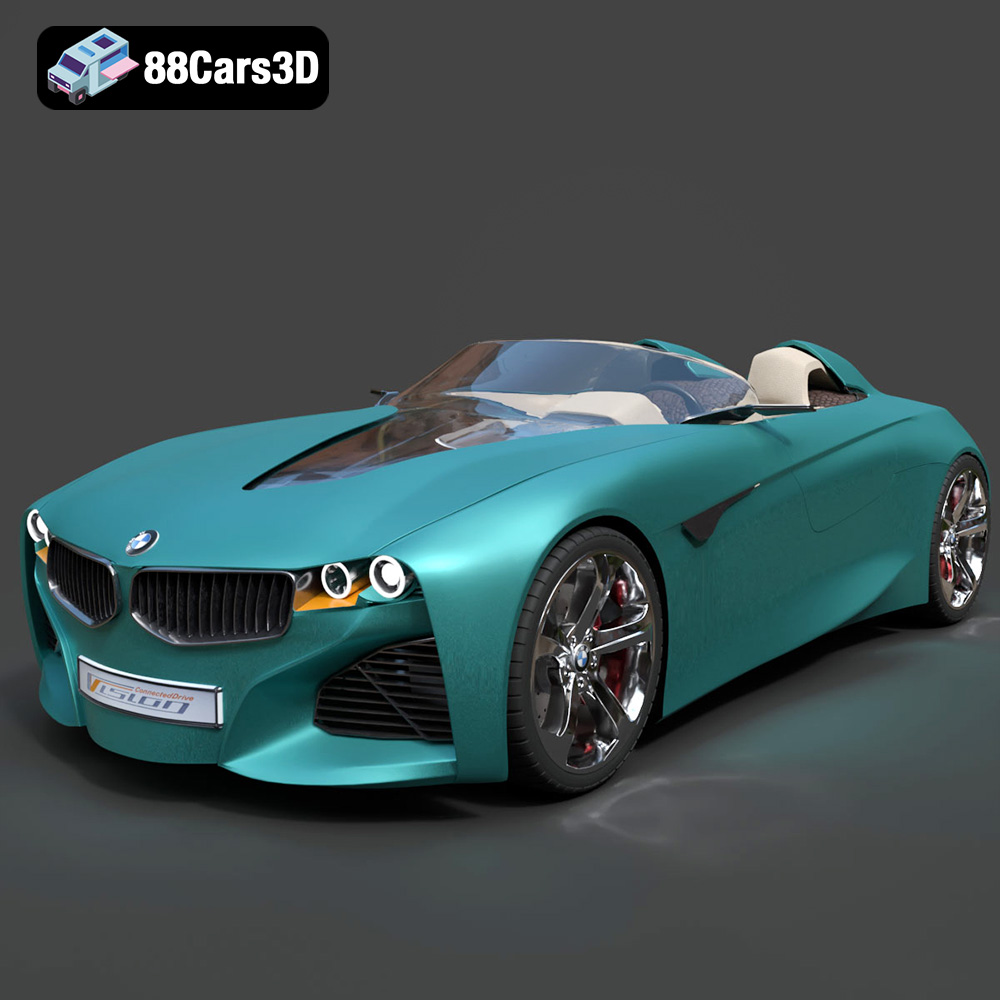
Download the BMW Vision Connected Drive Concept 3D Model featuring its innovative design, advanced connectivity, and sleek aesthetics. Includes .blend, .fbx, .obj, .glb, .stl, .ply, .unreal, and .max formats for rendering, simulation, and game development.
Price: $19.79
View Product
Texture: Yes
Material: Yes
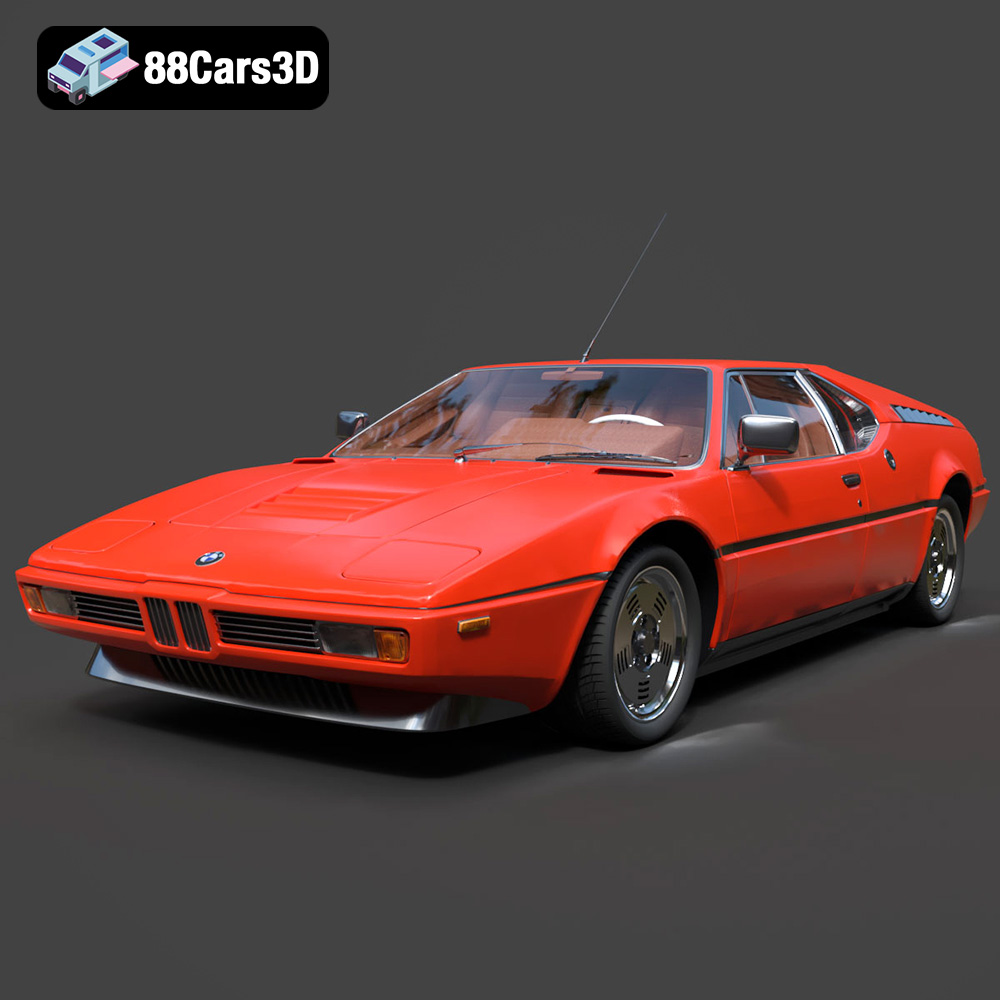
Download the BMW Motorsport M1 E26 1981 3D Model featuring its iconic design, race-bred aerodynamics, and meticulously crafted details. Includes .blend, .fbx, .obj, .glb, .stl, .ply, .unreal, and .max formats for rendering, simulation, and game development.
Price: $20.79
View Product

Meta Description:
Texture: Yes
Material: Yes
Download the Cadillac CTS-V Coupe 3D Model featuring detailed exterior styling and realistic interior structure. Includes .blend, .fbx, .obj, .glb, .stl, .ply, .unreal, and .max formats for rendering, simulation, AR VR, and game development.
Price: $13.9
View Product
Texture: Yes
Material: Yes
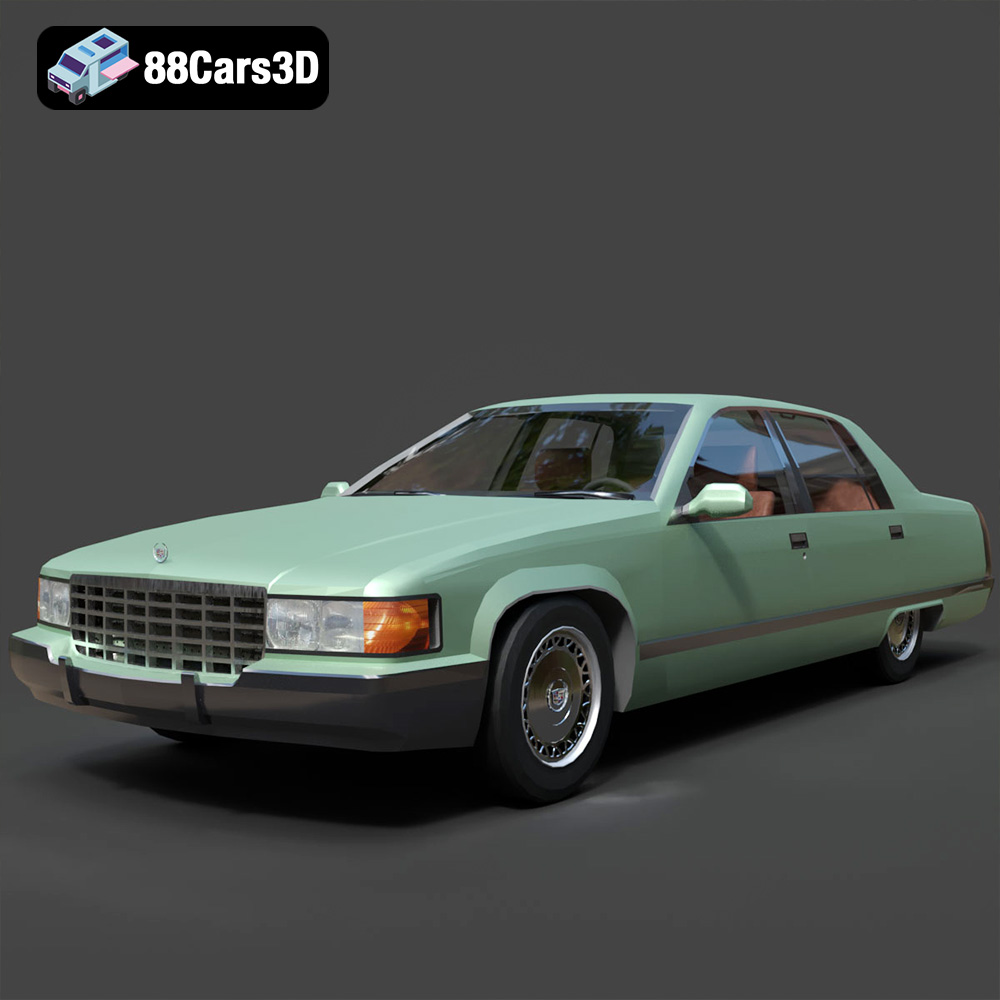
Download the Cadillac Fleetwood Brougham 3D Model featuring its iconic classic luxury design and detailed exterior and interior. Includes .blend, .fbx, .obj, .glb, .stl, .ply, .unreal, and .max formats for rendering, simulation, and game development.
Price: $10.79
View Product
Texture: Yes
Material: Yes
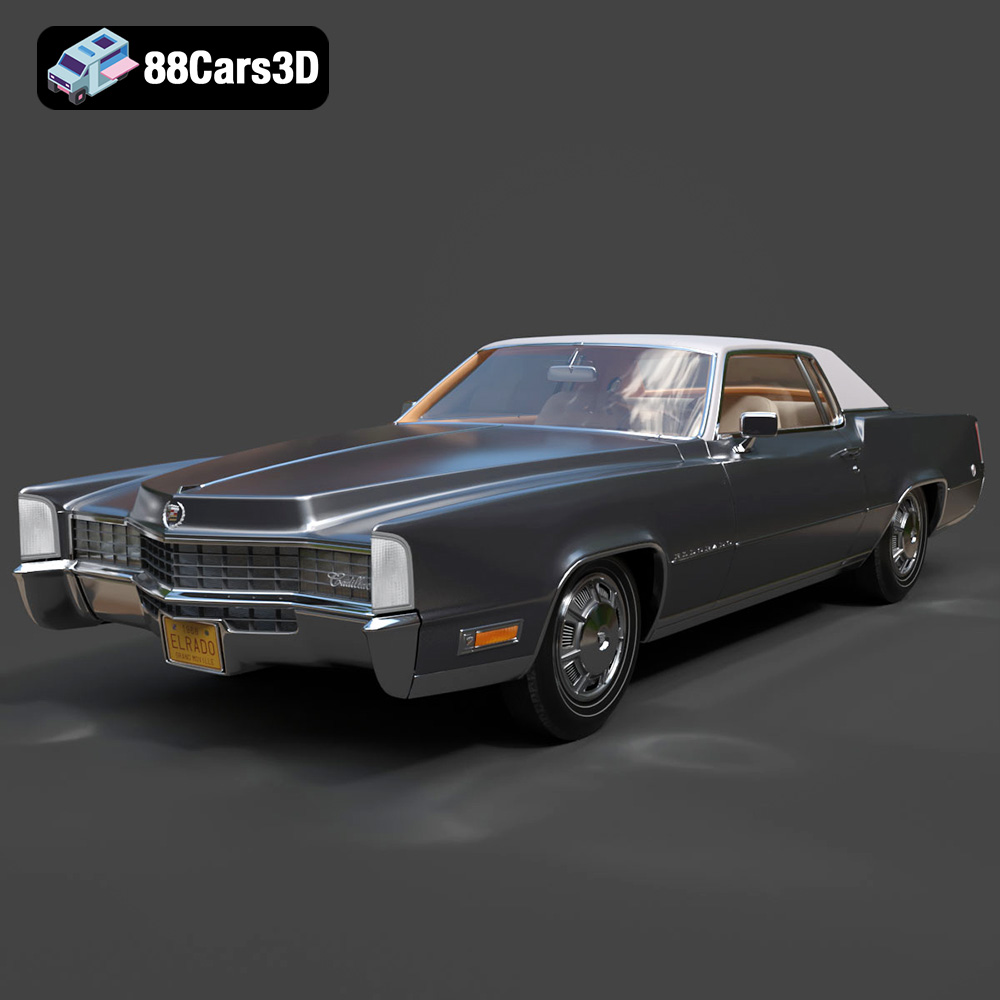
Download the Cadillac Eldorado 1968 3D Model featuring its iconic elongated body, distinctive chrome accents, and luxurious interior. Includes .blend, .fbx, .obj, .glb, .stl, .ply, .unreal, and .max formats for rendering, simulation, and game development.
Price: $20.79
View Product

Texture: Yes
Material: Yes
Download the Cadillac CTS SW 2010 3D Model featuring a detailed exterior, functional interior elements, and realistic materials. Includes .blend, .fbx, .obj, .glb, .stl, .ply, .unreal, and .max formats for rendering, simulation, and game development.
Price: $10.79
View Product
Texture: Yes
Material: Yes
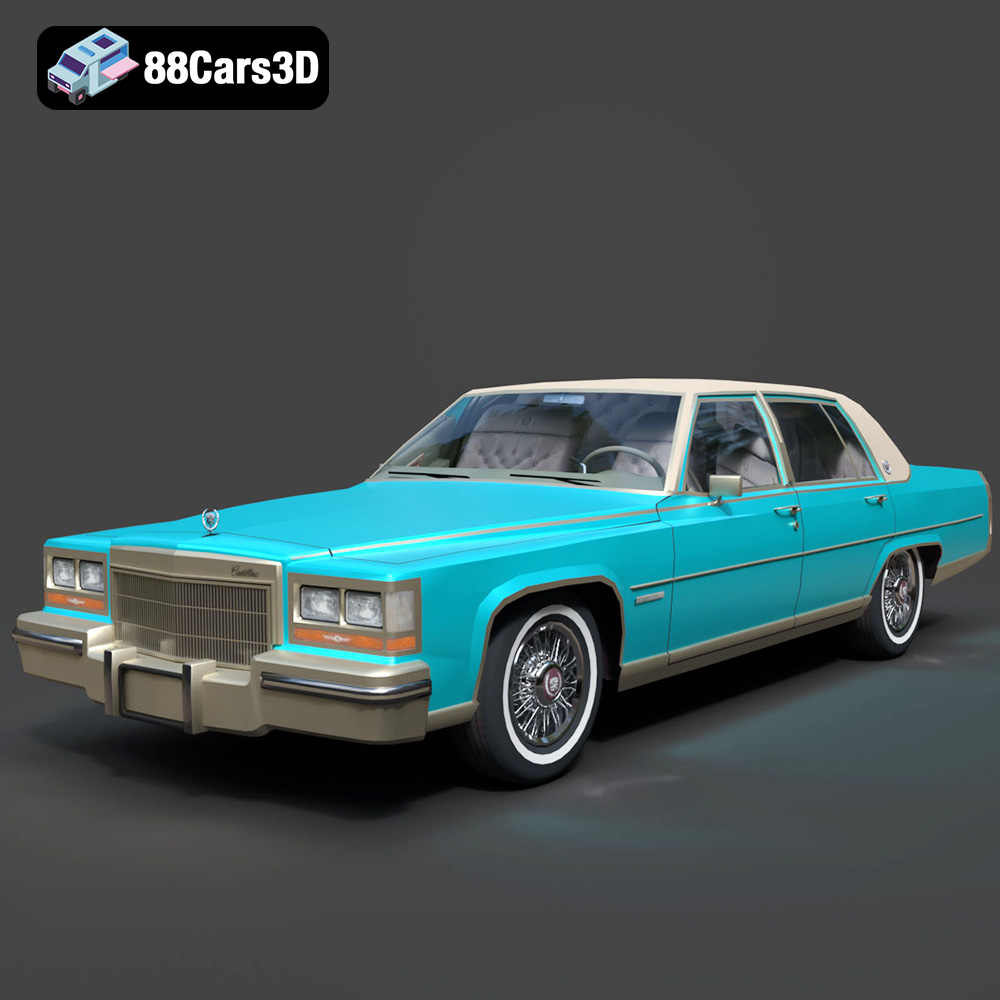
Download the Cadillac Fleetwood Brougham 1985 3D Model featuring its iconic classic luxury design and detailed craftsmanship. Includes .blend, .fbx, .obj, .glb, .stl, .ply, .unreal, and .max formats for rendering, simulation, and game development.
Price: $10.79
View Product
Texture: Yes
Material: Yes
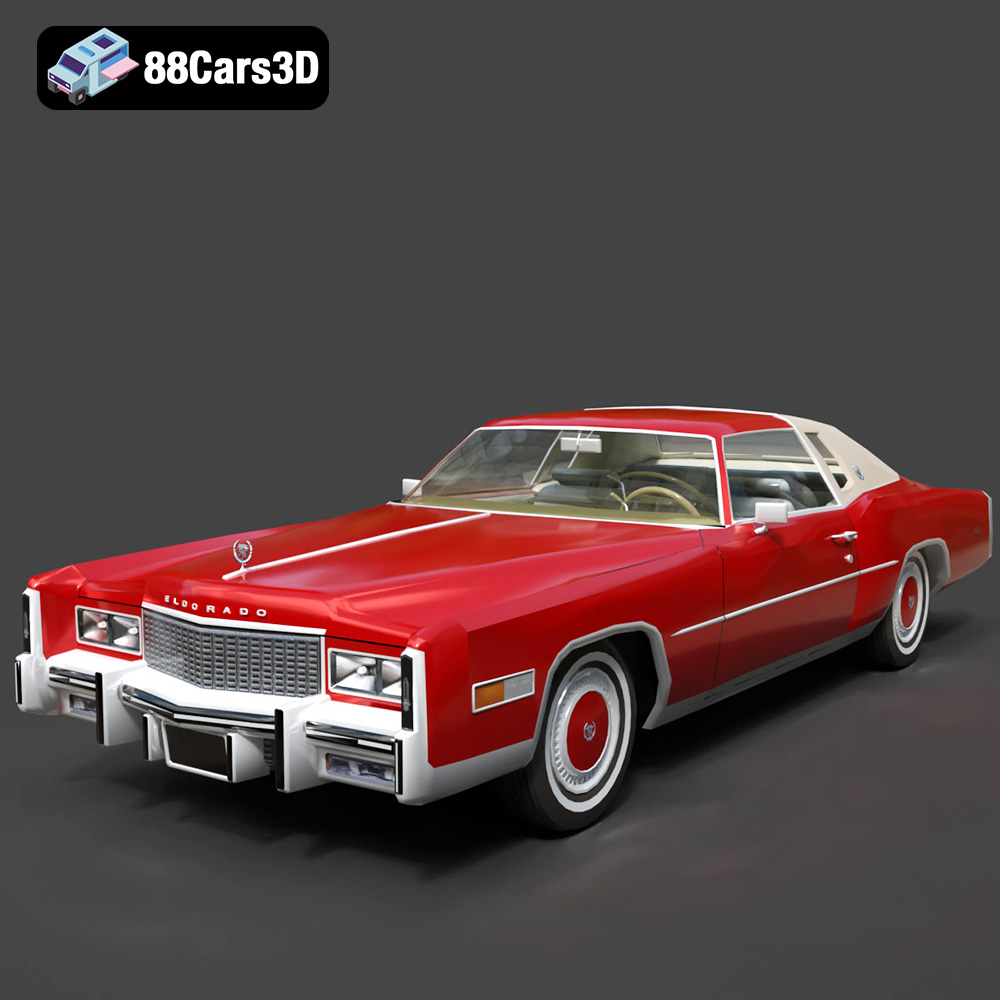
Download the Cadillac Eldorado 1978 3D Model featuring accurately modeled exterior, detailed interior, and period-correct aesthetics. Includes .blend, .fbx, .obj, .glb, .stl, .ply, .unreal, and .max formats for rendering, simulation, and game development.
Price: $10.79
View Product
Texture: Yes
Material: Yes
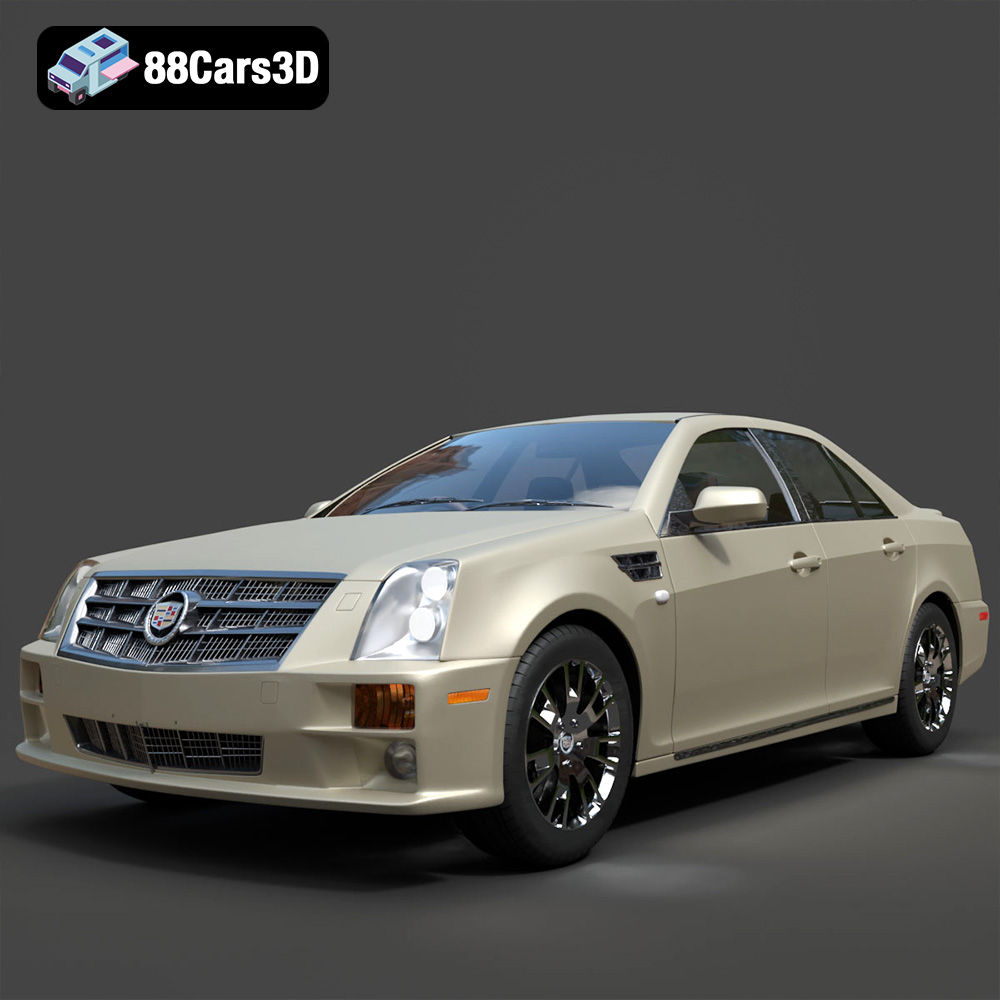
Download the Cadillac STS-005 3D Model featuring a detailed exterior and interior. Includes .blend, .fbx, .obj, .glb, .stl, .ply, .unreal, and .max formats for rendering, simulation, and game development.
Price: $22.79
View Product
Texture: Yes
Material: Yes
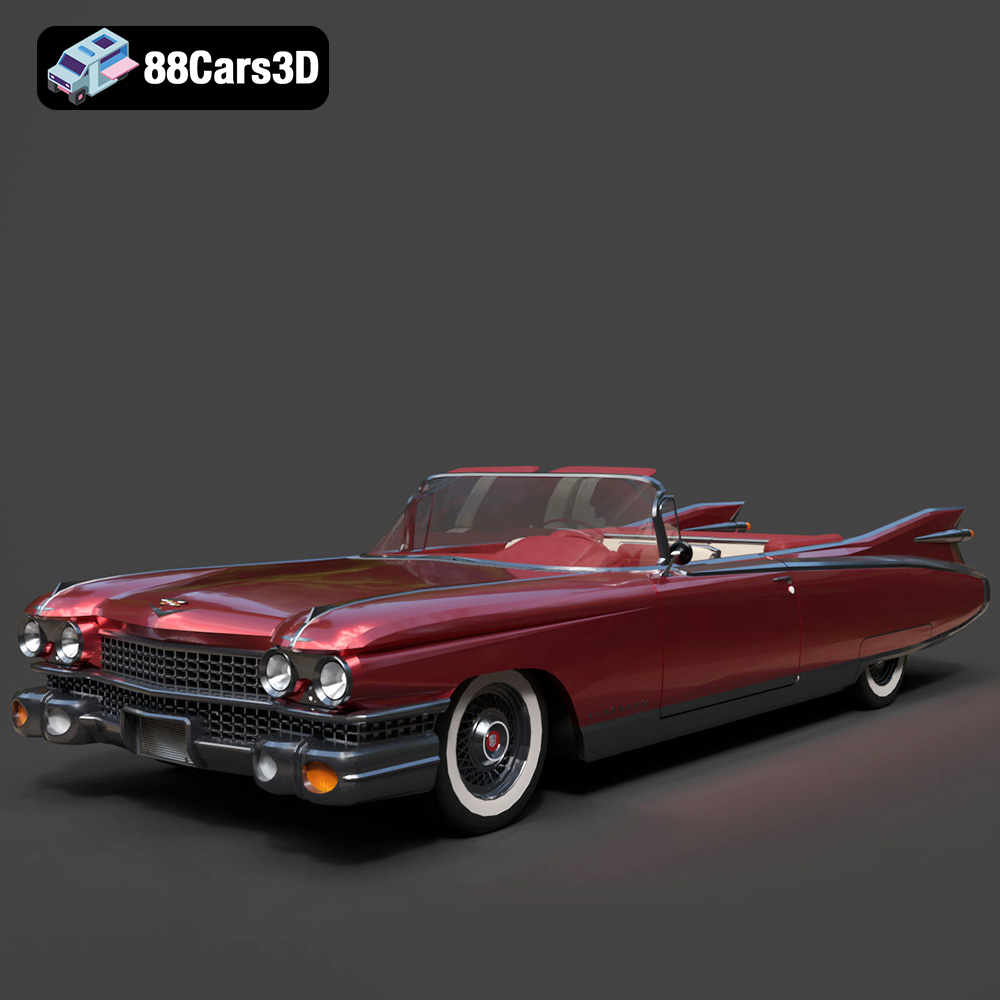
Download the Cadillac Eldorado Convertible (1959) 3D Model featuring iconic fins, luxurious chrome details, and a classic vintage design. Includes .blend, .fbx, .obj, .glb, .stl, .ply, .unreal, and .max formats for rendering, simulation, and game development.
Price: $20.79
View Product


