Mastering the Slice: Achieving Flawless 3D Prints from Your STL Car Models
Welcome, automotive enthusiasts and 3D printing aficionados! The journey from a digital 3D car model to a tangible, high-quality replica is an exhilarating process. While the 3D model itself, particularly a well-crafted STL file, is crucial, the magic truly happens during the slicing stage. Slicing software acts as the interpreter, translating your intricate 3D design into layer-by-layer instructions that your 3D printer can understand and execute. For complex geometries like those found in detailed car models, mastering slicing is the key to unlocking incredible detail, structural integrity, and a print that truly reflects the artistry of the original design. This guide will dive deep into the essential techniques and settings to ensure your STL files, whether sourced from dedicated marketplaces like 88cars3d.com or designed yourself, result in stunning, print-ready creations. We’ll cover everything from understanding STL nuances to fine-tuning printer-specific parameters, ensuring you gain the confidence to tackle any car model with precision.
Understanding the Foundation: STL Files and Mesh Topology
Before we delve into the intricacies of slicing, it’s vital to understand the nature of STL files and the importance of clean mesh topology. The Stereolithography (STL) file format, despite its widespread use, is essentially a tessellated representation of a 3D surface. It describes the geometry of a 3D object using a collection of triangular facets. While simple geometries can be represented cleanly, complex surfaces, especially those with sharp curves, intricate details like grilles, or overlapping surfaces common in automotive models, can pose challenges if not designed with 3D printing in mind.
The Anatomy of an STL: Facets, Normals, and Manifold Meshes
Each triangle in an STL file is defined by three vertices and a normal vector. The normal vector indicates the outward direction of the surface, crucial for determining which side of the triangle is “inside” and which is “outside” the object. A manifold mesh, often referred to as a “watertight” mesh, is essential for successful slicing. This means the mesh has no holes, no non-manifold edges (edges shared by more than two facets), and no internal faces. Imagine trying to pour water into a sieve – that’s what a non-manifold mesh is like for a slicer. Software like Microsoft’s 3D Builder, Autodesk Netfabb, or even Blender’s 3D-Print Toolbox add-on can help diagnose and repair these issues. Common problems include inverted normals, duplicate or coincident facets, and holes where surfaces should connect.
Why Clean Geometry Matters for Car Models
For intricate car models, clean topology is paramount. Poorly constructed meshes can lead to:
- Slicing Errors: The slicer may fail to generate a solid model, leading to gaps or missing sections in the print.
- Support Generation Nightmares: Overhangs and complex internal structures can become impossible to support effectively if the mesh is faulty.
- Surface Imperfections: Facets that are too large, poorly aligned, or non-manifold can translate into visible lines, bumps, or artifacts on the printed surface.
- Increased Print Time and Material Waste: The slicer may try to compensate for errors, leading to unnecessarily complex toolpaths.
When downloading premium STL files from sources like 88cars3d.com, you can often expect a higher degree of mesh integrity, as these models are typically optimized for 3D printing. However, even with the best files, understanding these fundamentals will help you diagnose and resolve any unforeseen issues.
The Slicer’s Role: Translating Geometry into G-Code
The slicer is the bridge between your 3D model and your 3D printer. Its primary function is to convert the STL file’s geometric data into a series of precise instructions, known as G-code, that tell the printer exactly where to move, how fast, and how much material to extrude at any given moment. This translation process involves several critical steps, each impacting the final print quality. Understanding these steps empowers you to make informed decisions about your slicing parameters.
From Layers to Paths: The Slicing Workflow
The slicing process typically involves the following stages:
- Loading the Model: You import your STL file into the slicing software (e.g., Cura, PrusaSlicer, Simplify3D).
- Setting Up the Printer Profile: You select your specific 3D printer model, ensuring accurate dimensions and capabilities are loaded.
- Applying Print Settings: This is where you define layer height, infill, print speed, temperatures, supports, and more.
- Slicing/Previewing: The software calculates the toolpaths for each layer, and you can preview these layer by layer to identify potential issues.
- Exporting G-Code: The finalized instructions are saved as a G-code file, ready to be transferred to your 3D printer.
Key Slicing Parameters and Their Impact
Each setting in your slicer has a direct consequence on the print. For car models, achieving a balance between detail, strength, and print time is crucial:
- Layer Height: This determines the vertical resolution of your print. Lower layer heights (e.g., 0.05mm – 0.1mm) result in smoother surfaces and finer details, ideal for car bodies, but significantly increase print time. Higher layer heights (e.g., 0.2mm – 0.3mm) print faster but will show more visible layer lines. For high-detail car models, a layer height of 0.1mm is often a good compromise.
- Infill Density and Pattern: Infill provides internal support for the outer walls. For display models, low infill (5-15%) is usually sufficient. Patterns like ‘gyroid’ or ‘cubic’ offer good strength-to-weight ratios. For functional parts or prototypes, higher infill densities (20-50%) might be necessary.
- Shells/Wall Thickness: This defines the number of outlines printed for the outer walls. A minimum of 2-3 shells (or a wall thickness of 0.8mm – 1.2mm for a 0.4mm nozzle) is recommended for structural integrity and to prevent infill showing through.
Careful consideration of these parameters ensures that the slicer generates toolpaths that accurately represent the intended geometry and achieve the desired physical properties.
Optimizing Print Settings for Automotive Models
When printing complex and often detailed automotive models, standard print settings might not suffice. Achieving the sharp lines, smooth curves, and intricate details requires a more nuanced approach. This section focuses on how to fine-tune key slicing parameters specifically for car models, balancing aesthetic fidelity with structural integrity and printability.
Layer Height vs. Print Time: The Detail Dilemma
The layer height is arguably the most significant setting affecting detail and print duration. For a car model, where smooth curves and fine elements like grilles, badges, and panel gaps are critical, a lower layer height is generally preferred. For instance:
- 0.05mm – 0.1mm: Excellent for capturing high levels of detail, resulting in very smooth surfaces that minimize visible layer lines. This is ideal for the main body of the car.
- 0.1mm – 0.15mm: A good balance for less critical areas or for slightly faster prints where extreme detail isn’t paramount.
- 0.2mm and above: Generally too coarse for high-quality car models, leading to noticeable stepping on curved surfaces.
The trade-off is significant. A model that takes 10 hours at 0.2mm might take 40 hours or more at 0.1mm. Consider printing different parts of the model at varying layer heights if your slicer supports it, or prioritize detail on visible surfaces and accept slightly faster prints for less important components.
Infill Strategies: Strength Where It Counts
Most car models printed for display or collection do not require extreme structural strength. Therefore, infill density can be kept relatively low. However, certain parts might benefit from specific infill strategies:
- Density: 5% to 15% infill is often sufficient. This provides internal support for the outer walls without adding excessive weight or print time.
- Pattern: Patterns like ‘gyroid’ or ‘cubic’ are excellent choices as they offer good omnidirectional support and are generally more efficient than rectilinear patterns for complex shapes. ‘Lightning’ infill (available in Cura) can be a great option for internal support where it’s needed most, drastically reducing material and print time.
- Specific Areas: For parts like wheel arches, chassis components, or any area intended to hold other parts, consider increasing infill density to 20-30% or using a more robust pattern.
Shells and Wall Thickness: Defining the Outer Form
The number of outer walls (shells) and their thickness are critical for defining the crispness and solidity of the car model’s exterior. For a standard 0.4mm nozzle:
- Minimum Walls: At least 2-3 walls are recommended to ensure the outer surface is fully opaque and to prevent infill patterns from showing through, especially with lighter-colored filaments.
- Wall Thickness: This is often derived from the nozzle size and number of walls. A common setting is 1.2mm (3 walls x 0.4mm nozzle width). For very fine details, you might cautiously reduce this, but always ensure it’s at least twice the nozzle diameter for reliability.
The combination of these settings ensures that the exterior of your car model is precisely rendered, with sharp edges and smooth, unbroken surfaces.
The Art of Support Structures: Enabling Complex Geometries
Car models are often characterized by intricate shapes, including pronounced overhangs (like spoilers, bumpers, and fenders), undercuts, and complex internal cavities. Effectively generating and managing support structures is crucial for successfully printing these features without compromising the final model’s quality or leading to print failures. The goal is to provide temporary scaffolding that supports these elements during printing and can be removed cleanly afterward.
When and Why Supports Are Needed
Overhangs are the primary reason for using supports. Generally, overhangs beyond a 45-degree angle from the horizontal may require support. For car models, elements like:
- Underside of car body panels: Especially those with curves or scoops.
- Bumpers and spoilers: Often feature significant overhangs.
- Wheel wells: The curve can create overhangs.
- Mirrors and small exterior details: If printed attached to the main body.
Without adequate supports, these areas can sag, droop, or fail entirely, resulting in a distorted or incomplete print. Even with excellent file preparation from sources like 88cars3d.com, the physics of FDM printing necessitate supports for many complex automotive shapes.
Support Generation Settings in Your Slicer
Most slicers offer extensive control over support generation:
- Support Type:
- Normal: Standard supports generated from the build plate.
- Tree/Organic: These supports branch out like trees, often using less material and being easier to remove, especially for complex models. They are highly recommended for car models.
- Support Placement:
- Everywhere: Generates supports from the build plate and also from the model itself. Essential for models that aren’t “airtight” from the build plate.
- Touching Buildplate: Only generates supports originating from the print bed. Safer for preventing artifacts on the model surface but may not support internal overhangs.
- Support Density/Pattern: Similar to infill, this affects how dense the support structure is. A lower density (e.g., 10-20%) is usually sufficient and makes removal easier. Patterns like ‘grid’ or ‘lines’ are common.
- Support Interface: This setting adds a denser layer at the top and bottom of the support structure, directly touching the model. This creates a smoother surface finish on the supported area but can be harder to remove.
- Support Overhang Angle: This threshold determines which angles trigger support generation. Adjusting this can prevent unnecessary supports on shallow overhangs.
Support Removal Strategies
Clean support removal is an art form. It requires patience and the right tools:
- Tools: Needle-nose pliers, hobby knives (X-Acto), flush cutters, and sometimes dental picks are invaluable.
- Technique: Gently wiggle the support structure rather than pulling directly. Start with larger support sections and work towards smaller ones. For tree supports, often you can snip the branches near the model and then remove the main trunk.
- Cooling: Ensure the printed part is fully cooled before attempting removal, as warm plastic is more pliable and prone to damage.
- Post-Processing: Minor blemishes left by supports can often be sanded away or hidden with filler primer during the painting stage.
Mastering support settings and removal is key to achieving the pristine finish expected from high-quality 3D printable car models.
Print Orientation and Bed Adhesion: The Critical First Layers
The orientation in which you place your car model on the print bed and ensuring robust bed adhesion are foundational steps that significantly influence the success of your print. Incorrect orientation can lead to excessive supports, weak layers, and a poor surface finish, while poor adhesion is a primary cause of print failure, especially with larger models or those with a small contact area.
Choosing the Optimal Print Orientation
The orientation of your model on the build plate affects several critical aspects:
- Support Minimization: Placing the model strategically can reduce the amount of support material needed. For example, printing a car body upright might require extensive supports for the roof and undercarriage. Orienting it on its side or even upside down (if the underside is less detailed) might require fewer, more manageable supports.
- Surface Quality: Visible layer lines are most apparent on surfaces parallel to the Z-axis. Orienting the model so that critical visual surfaces (like the hood, roof, or doors) are mostly horizontal or at a slight angle can improve their appearance.
- Structural Integrity: For FDM printing, the layer adhesion is strongest along the XY plane and weakest between layers (along the Z-axis). If a part will experience stress in a particular direction, orient it so that the primary load is distributed across multiple layers rather than splitting them.
- Print Time: Orientation can indirectly affect print time by influencing the complexity of support structures and the overall height of the print.
For car models, common orientations include placing the car upright, on its side, or even upside down, depending on the specific model’s design and the desired outcome. Experimentation and previewing the slicer’s layer view are crucial.
Achieving Robust Bed Adhesion
A print that detaches from the build plate midway is a complete loss. Several factors contribute to good adhesion:
- Clean Build Surface: Oils from fingerprints or residue from previous prints can severely hinder adhesion. Clean your build plate thoroughly with isopropyl alcohol (IPA) before every print.
- Build Surface Material: Different surfaces offer varying adhesion properties. Glass, PEI sheets, BuildTak, or painter’s tape are common choices. Experiment to find what works best for your filament and printer.
- Bed Leveling: An uneven build plate is a recipe for disaster. Ensure your bed is perfectly leveled, either manually or through an auto-leveling system.
- First Layer Settings:
- Nozzle Temperature: Slightly higher nozzle temperatures for the first layer can help the filament flow and adhere better.
- Bed Temperature: This is material-dependent. PLA typically requires 50-60°C, while PETG and ABS need higher temperatures (70-110°C).
- First Layer Speed: Printing the first layer significantly slower (e.g., 15-25 mm/s) allows the filament more time to bond with the build surface.
- Initial Layer Height/Line Width: Slightly increasing the first layer height (e.g., 0.2mm – 0.3mm) and line width (e.g., 120-150%) can improve adhesion by creating a wider, flatter contact area.
- Adhesion Aids: For difficult prints or materials, consider using adhesion aids like a glue stick, hairspray (specific types are better than others), or specialized bed adhesives.
- Brim or Raft: A brim adds a single layer of extruded lines around the base of your print, increasing the contact area. A raft prints a dense grid beneath the model, providing a stable base but using more material and potentially leaving artifacts on the bottom surface. For car models with small contact points (like wheels), a brim is often essential.
Investing time in achieving perfect first layers and optimal orientation will save countless hours and frustration down the line.
Material Selection and Post-Processing for a Showroom Finish
The material you choose and the post-processing techniques you employ are the final determinants of your 3D printed car model’s quality and longevity. Different filaments offer unique properties, and careful finishing can transform a good print into a professional-looking piece. Understanding these aspects allows you to select the right tools for the job and achieve the desired aesthetic.
Choosing the Right Filament for Your Car Model
For car models, the most common filaments are PLA, PETG, and sometimes ABS, with various resins available for resin printing:
- PLA (Polylactic Acid): The most popular choice for hobbyists due to its ease of printing, low warping, and wide range of available colors. It’s rigid and holds detail well, making it ideal for display models. However, it has lower heat resistance and can become brittle over time.
- PETG (Polyethylene Terephthalate Glycol): Offers a good balance of strength, flexibility, and temperature resistance compared to PLA. It’s more durable and less prone to shattering but can be stringier and slightly harder to print cleanly, requiring careful tuning of retraction settings.
- ABS (Acrylonitrile Butadiene Styrene): Known for its durability, impact resistance, and higher temperature tolerance. However, it’s prone to warping during printing, requires an enclosed printer and higher bed temperatures, and emits fumes that necessitate good ventilation. Often requires post-processing like acetone smoothing for a professional finish.
- Resins (for SLA/DLP/MSLA printers): Offer incredibly high detail and smooth surfaces unattainable with FDM. Standard, tough, and flexible resins are available. Ideal for intricate models but requires more post-processing (washing, curing) and safety precautions due to the liquid nature of the material.
For most FDM users printing display car models, PLA offers the best combination of ease of use and detail fidelity. If durability is a concern, PETG is a strong contender.
Essential Post-Processing Steps
Once your car model is printed and supports are removed, the real finishing work begins:
- Sanding: Start with coarser grit sandpaper (e.g., 120-220 grit) to remove layer lines and support marks. Progress through finer grits (e.g., 400, 800, 1200, and even higher) to achieve a smooth surface. Wet sanding can be very effective, especially with PLA and PETG.
- Filling: Minor imperfections, gaps, or layer lines can be filled using model putty, automotive filler, or even 3D printing-specific fillers. Apply in thin layers, allowing each to cure fully before sanding.
- Priming: Applying a spray primer (like automotive filler primer) is crucial. It helps to reveal any remaining imperfections, creates a uniform surface for painting, and ensures better paint adhesion. Multiple light coats are better than one heavy coat.
- Painting: Acrylic paints, airbrushing, or spray paints can be used. Masking tape is essential for achieving clean lines between different colored sections (e.g., body, trim, windows).
- Clear Coating: A final clear coat (gloss, satin, or matte) protects the paint job and gives the model a finished look.
- Assembly: If the model was printed in multiple parts, careful assembly using super glue (cyanoacrylate), epoxy, or specialized plastic adhesives is required.
Patience and attention to detail during post-processing are what elevate a 3D printed object from a mere prototype to a high-quality collectible.
Troubleshooting Common Printing Issues for Car Models
Even with the best preparation, 3D printing can present challenges. Understanding common issues and their solutions is crucial for maintaining workflow and achieving successful prints, especially with the complex geometries found in car models. Early detection and correction prevent minor problems from escalating into complete print failures.
Stringing and Oozing: The Pesky Filaments
Symptoms: Fine, hair-like strings of plastic between separate parts of the model, or blobs of plastic on the surface. Common with materials like PETG and ABS, but can occur with PLA too.
Solutions:
- Retraction Settings: Increase retraction distance (e.g., from 5mm to 6-7mm for Bowden setups, 1-2mm for direct drive) and/or retraction speed (e.g., from 40mm/s to 60mm/s).
- Travel Speed: Increase travel speed (non-printing moves) to reduce the time the nozzle spends moving over open space.
- Temperature: Lower the printing temperature slightly (by 5°C increments).
- Wipe/Coasting: Some slicers offer ‘wipe’ or ‘coasting’ features that use up the remaining pressure in the nozzle before retracting.
- Dry Filament: Wet filament is a major cause of stringing and poor print quality. Ensure your filament is properly dried.
Warping and Bed Adhesion Failures
Symptoms: The corners or edges of the print lift off the build plate, often leading to the print detaching completely or developing stress cracks.
Solutions: Refer back to the “Print Orientation and Bed Adhesion” section. Ensure a clean, level bed, optimal temperatures, and consider using brims or rafts. For materials prone to warping like ABS, an enclosure is highly recommended to maintain ambient temperature.
Layer Shifting: The Misaligned Layers
Symptoms: Layers are shifted horizontally, creating jagged lines or completely misaligned sections. This often occurs partway through a print.
Solutions:
- Belt Tension: Check the tension on your X and Y axis belts. Loose belts can slip, causing shifts.
- Motor Current/Overheating: Ensure stepper motor drivers are not overheating or receiving insufficient current.
- Mechanical Obstructions: Check that the print head or bed is not colliding with anything (e.g., loose wires, a previous layer that didn’t adhere well).
- Print Speed: Very high print speeds or rapid movements can sometimes cause motors to skip steps. Try reducing acceleration and jerk settings in your slicer.
Under-Extrusion / Gaps in Walls
Symptoms: Visible gaps in the outer walls, thin or incomplete extrusion, or gaps between infill and walls. The model appears weak and unfinished.
Solutions:
- Nozzle Clog: A partially or fully clogged nozzle is the most common cause. Perform a “cold pull” or use a nozzle cleaning needle.
- Filament Diameter: Ensure your slicer’s filament diameter setting matches your actual filament (usually 1.75mm).
- E-steps Calibration: Calibrate your extruder’s E-steps to ensure it’s pushing the correct amount of filament.
- Flow Rate / Extrusion Multiplier: Fine-tune the flow rate setting in your slicer (often around 90-100% for PLA).
- Temperature: Printing too cool can lead to under-extrusion. Try increasing temperature by 5°C increments.
By systematically diagnosing these issues and applying the appropriate solutions, you can significantly improve your success rate and produce the high-quality 3D printed car models you desire.
In conclusion, transforming an STL file of a classic car or a futuristic concept into a tangible 3D print requires a deep understanding of the slicing process. From ensuring your STL files are watertight and geometrically sound, to meticulously configuring your slicer settings—layer height, infill, supports, and orientation—each step plays a vital role. Mastering bed adhesion and selecting the right material are equally critical for a successful foundation. Furthermore, the journey doesn’t end with the print; careful post-processing is key to achieving that showroom-quality finish. By approaching each stage with technical insight and a willingness to troubleshoot, you can overcome common printing hurdles and unlock the full potential of your 3D printer. Platforms like 88cars3d.com provide excellent, print-ready models, but it’s your expertise in slicing and printing that ultimately brings these digital designs to life with stunning detail and accuracy. Happy printing!
Texture: Yes
Material: Yes
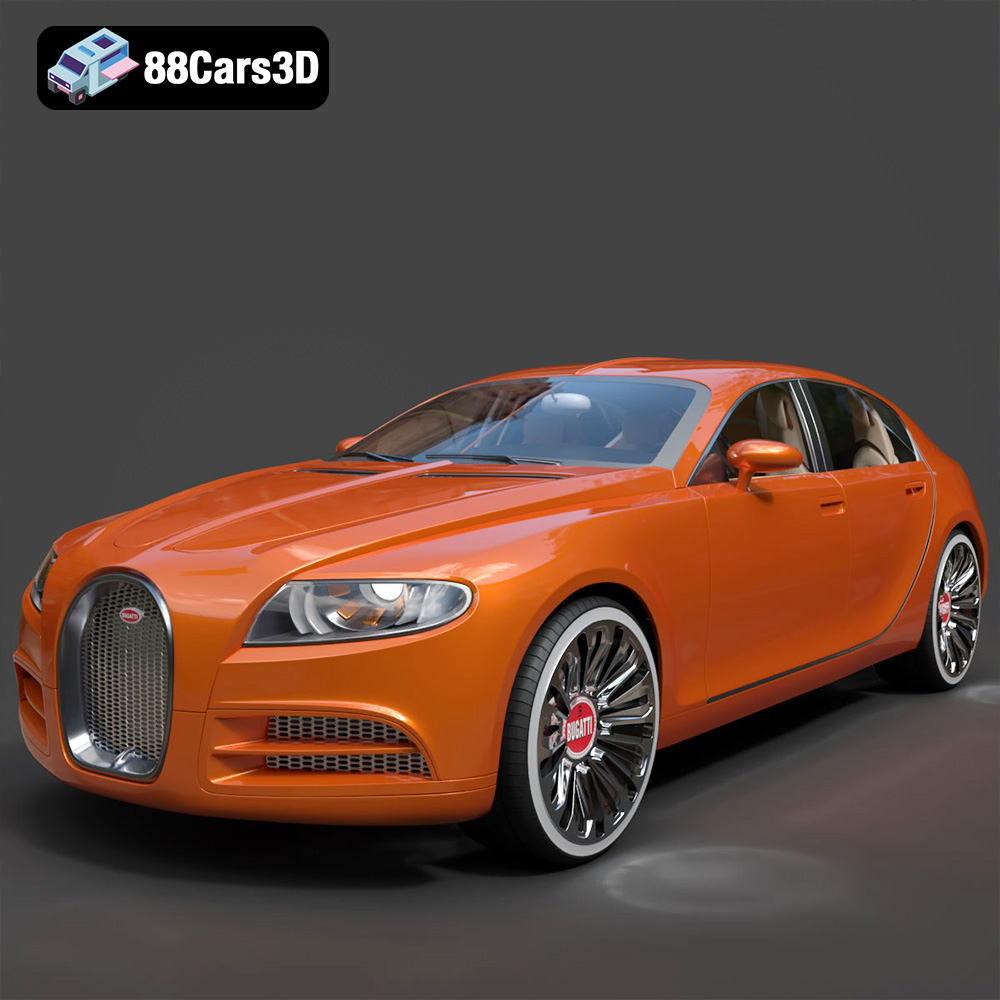
Download the Bugatti 16C Galibier-006 3D Model featuring its luxurious sedan design, detailed interior, and sophisticated exterior. Includes .blend, .fbx, .obj, .glb, .stl, .ply, .unreal, and .max formats for rendering, simulation, and game development.
Price: $10.79
View Product
Texture: Yes
Material: Yes
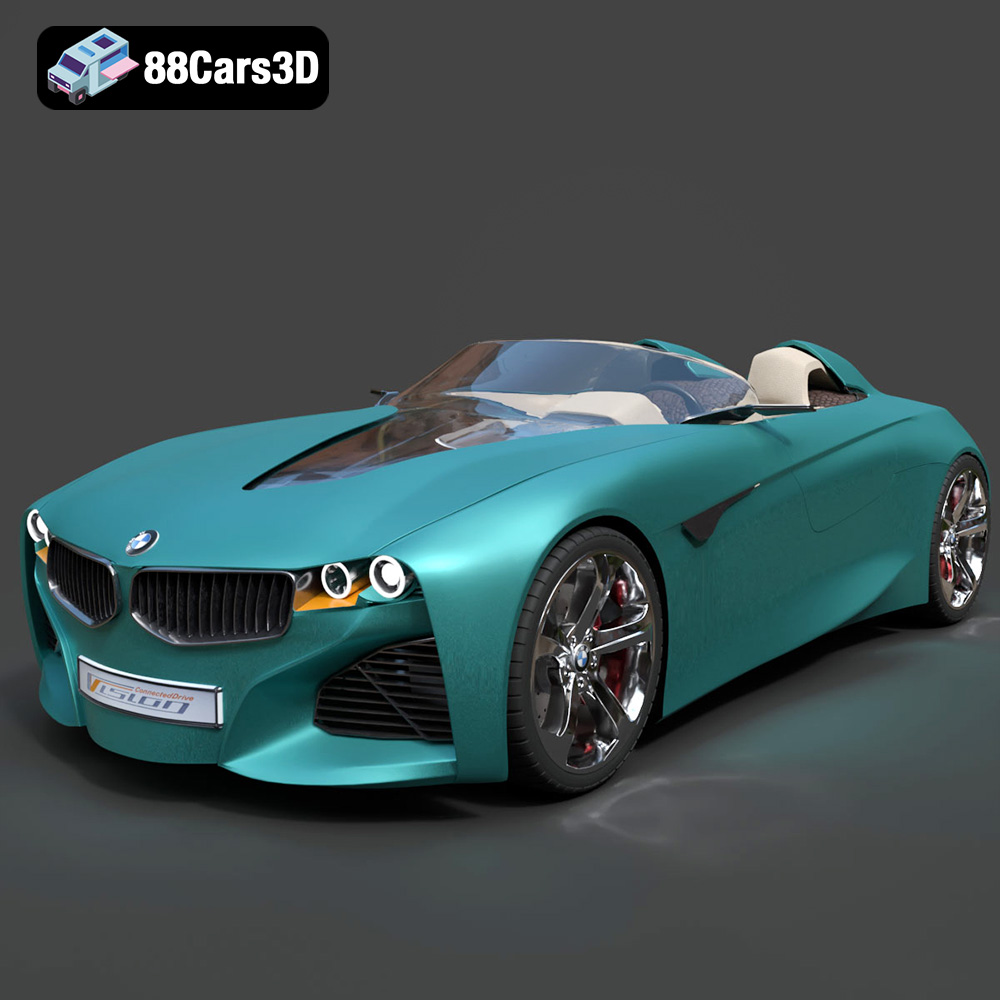
Download the BMW Vision Connected Drive Concept 3D Model featuring its innovative design, advanced connectivity, and sleek aesthetics. Includes .blend, .fbx, .obj, .glb, .stl, .ply, .unreal, and .max formats for rendering, simulation, and game development.
Price: $19.79
View Product
Texture: Yes
Material: Yes
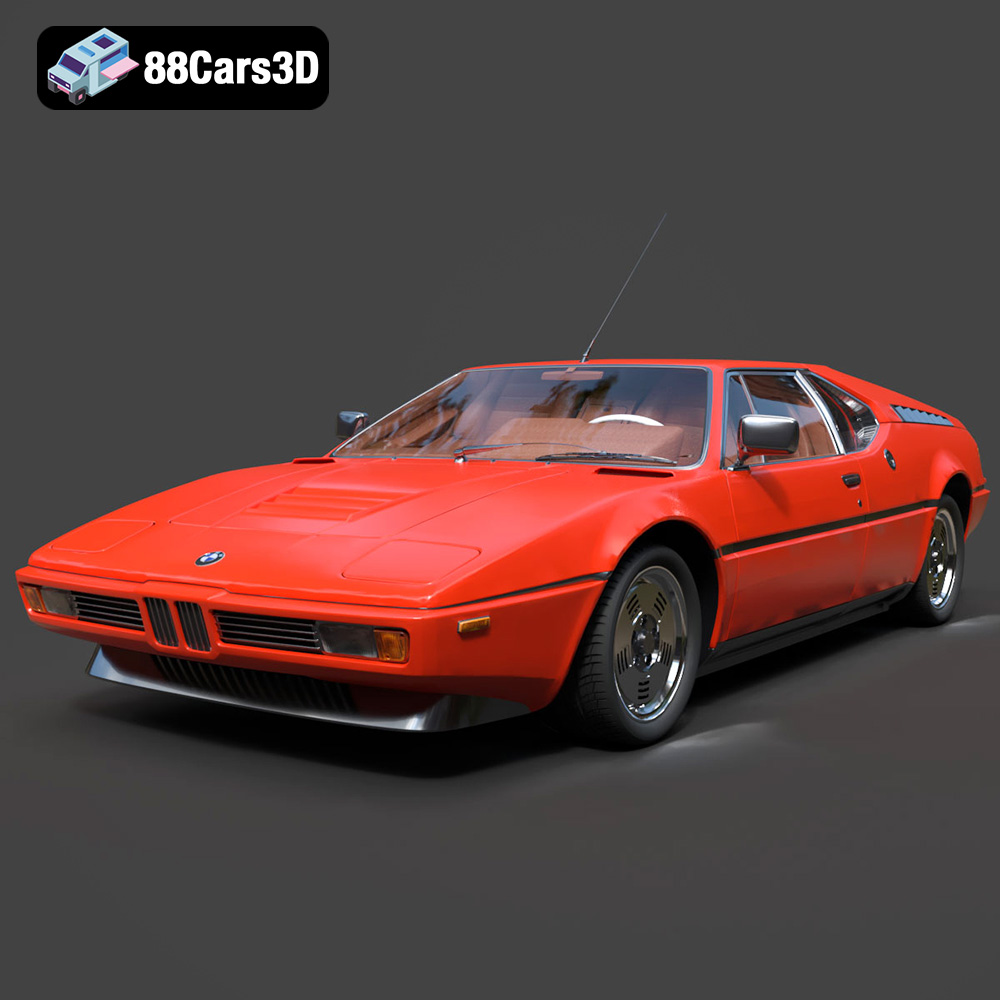
Download the BMW Motorsport M1 E26 1981 3D Model featuring its iconic design, race-bred aerodynamics, and meticulously crafted details. Includes .blend, .fbx, .obj, .glb, .stl, .ply, .unreal, and .max formats for rendering, simulation, and game development.
Price: $20.79
View Product

Meta Description:
Texture: Yes
Material: Yes
Download the Cadillac CTS-V Coupe 3D Model featuring detailed exterior styling and realistic interior structure. Includes .blend, .fbx, .obj, .glb, .stl, .ply, .unreal, and .max formats for rendering, simulation, AR VR, and game development.
Price: $13.9
View Product
Texture: Yes
Material: Yes
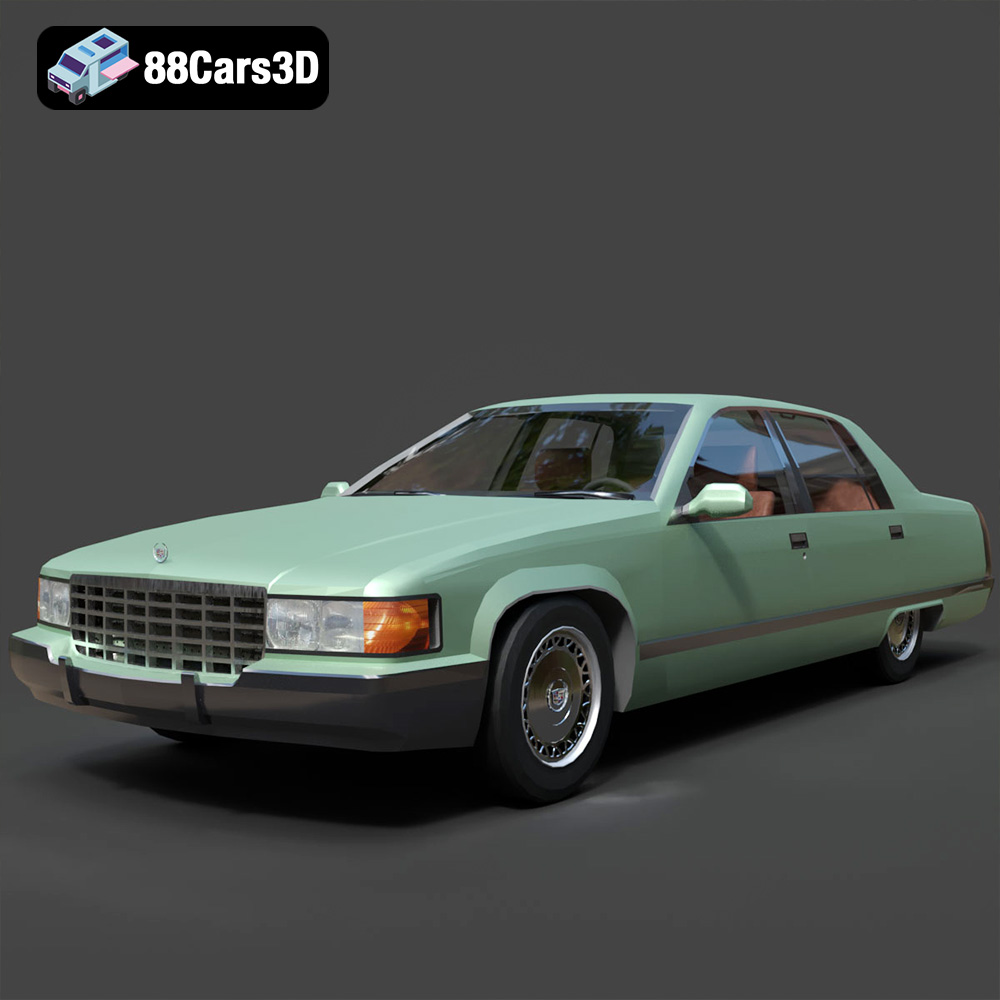
Download the Cadillac Fleetwood Brougham 3D Model featuring its iconic classic luxury design and detailed exterior and interior. Includes .blend, .fbx, .obj, .glb, .stl, .ply, .unreal, and .max formats for rendering, simulation, and game development.
Price: $10.79
View Product
Texture: Yes
Material: Yes
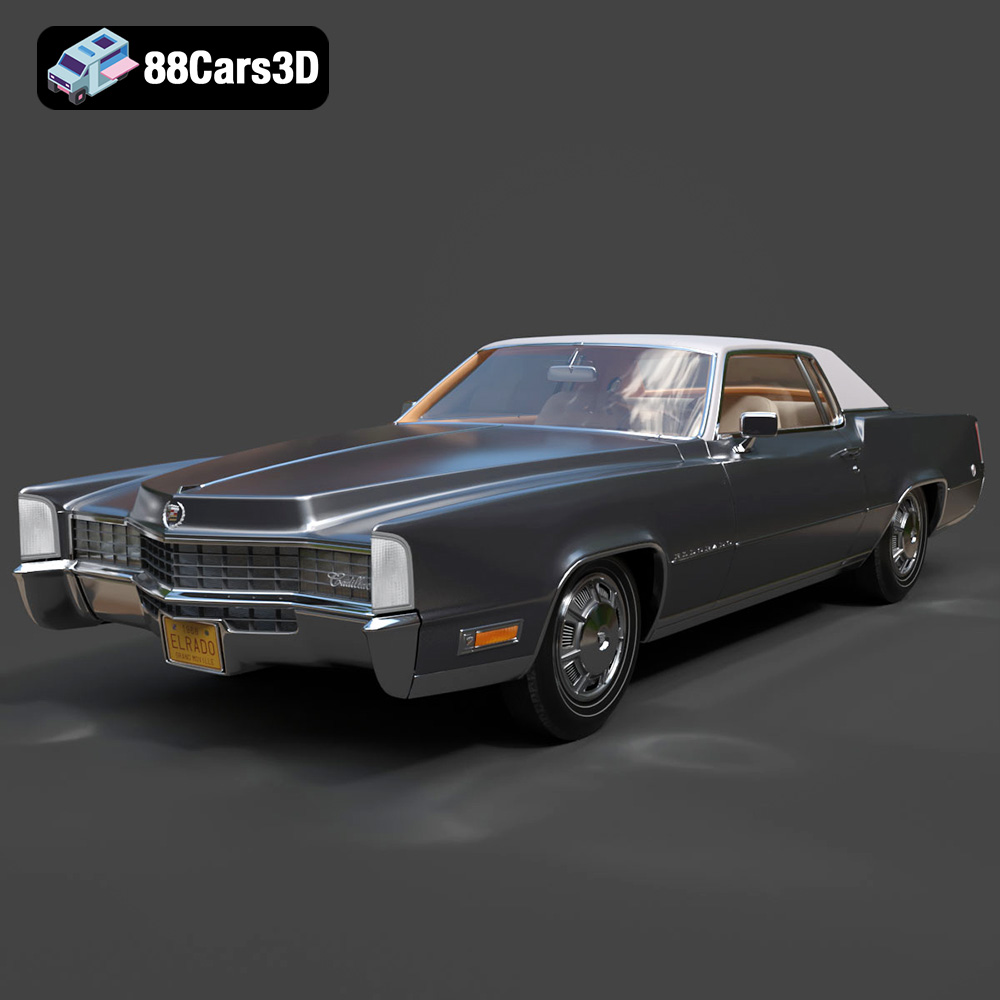
Download the Cadillac Eldorado 1968 3D Model featuring its iconic elongated body, distinctive chrome accents, and luxurious interior. Includes .blend, .fbx, .obj, .glb, .stl, .ply, .unreal, and .max formats for rendering, simulation, and game development.
Price: $20.79
View Product

Texture: Yes
Material: Yes
Download the Cadillac CTS SW 2010 3D Model featuring a detailed exterior, functional interior elements, and realistic materials. Includes .blend, .fbx, .obj, .glb, .stl, .ply, .unreal, and .max formats for rendering, simulation, and game development.
Price: $10.79
View Product
Texture: Yes
Material: Yes
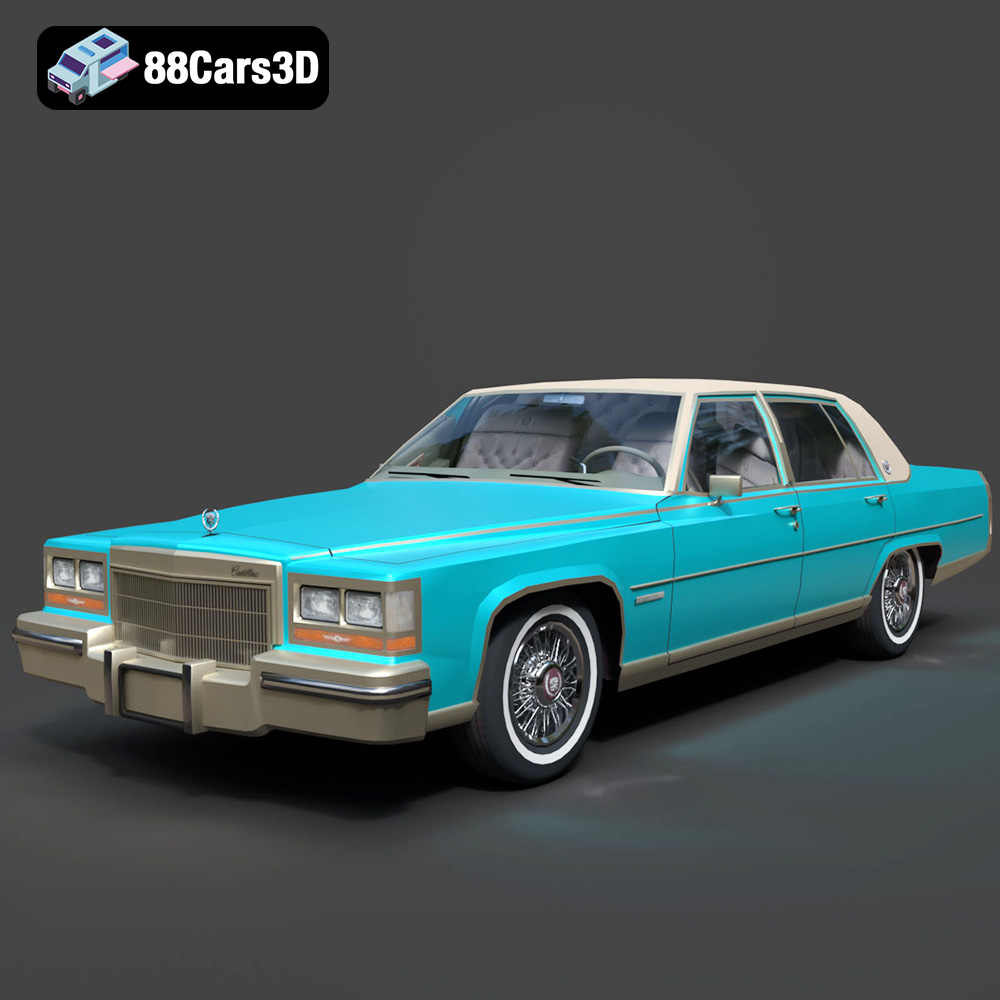
Download the Cadillac Fleetwood Brougham 1985 3D Model featuring its iconic classic luxury design and detailed craftsmanship. Includes .blend, .fbx, .obj, .glb, .stl, .ply, .unreal, and .max formats for rendering, simulation, and game development.
Price: $10.79
View Product
Texture: Yes
Material: Yes
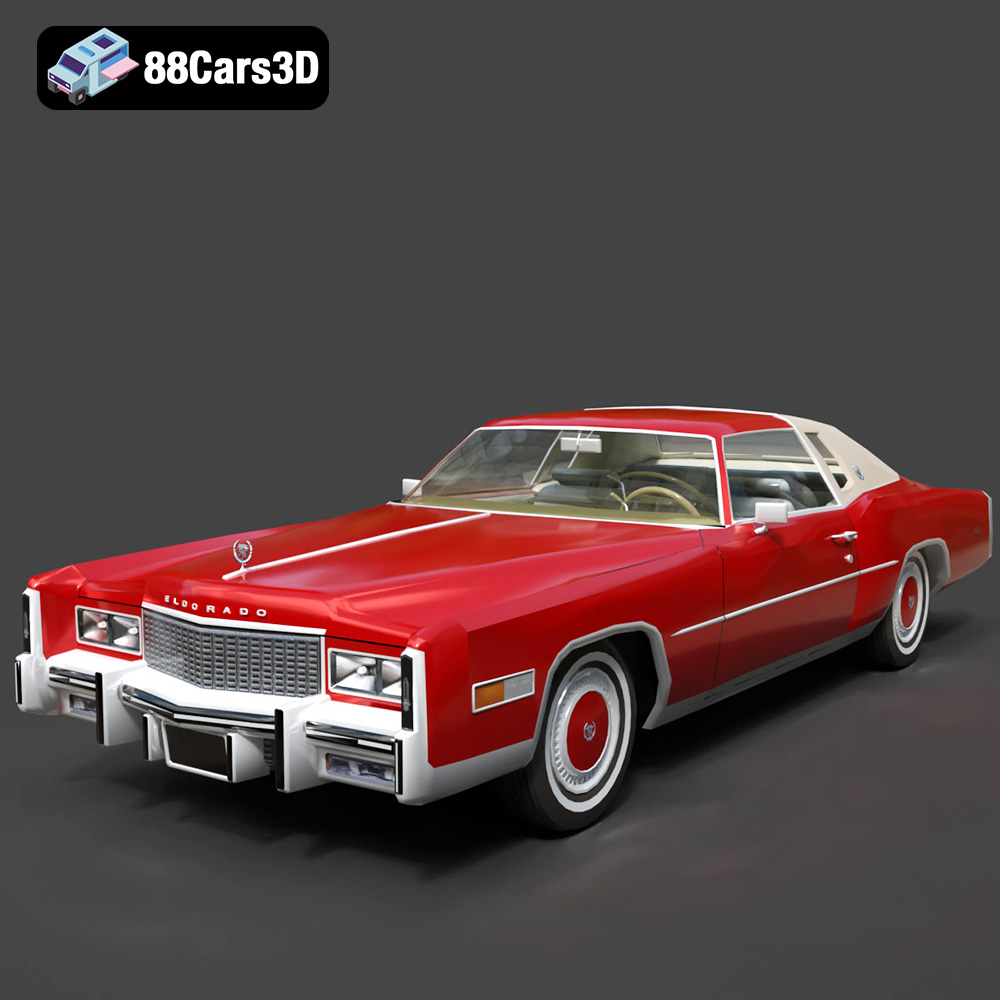
Download the Cadillac Eldorado 1978 3D Model featuring accurately modeled exterior, detailed interior, and period-correct aesthetics. Includes .blend, .fbx, .obj, .glb, .stl, .ply, .unreal, and .max formats for rendering, simulation, and game development.
Price: $10.79
View Product
Texture: Yes
Material: Yes
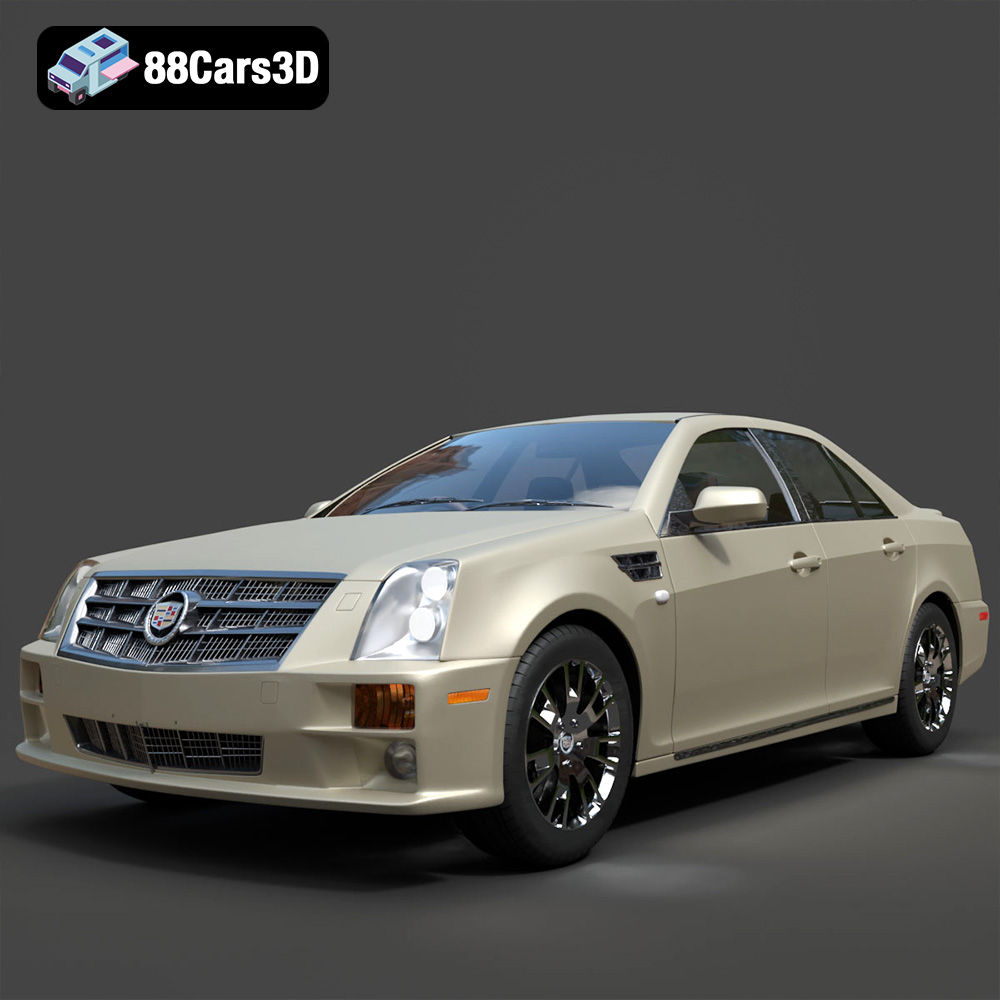
Download the Cadillac STS-005 3D Model featuring a detailed exterior and interior. Includes .blend, .fbx, .obj, .glb, .stl, .ply, .unreal, and .max formats for rendering, simulation, and game development.
Price: $22.79
View Product


