

“`html
What Is an STL File? The Complete Beginner’s Guide to 3D Printing Car Models
Embarking on the journey of 3D printing, especially with intricate subjects like detailed car models, can feel like navigating a new language. At the heart of this digital-to-physical transformation lies the STL file – the universal translator between your 3D design software and your 3D printer. But what exactly is an STL file, and why is it so crucial for bringing those stunning 88cars3d.com printable car models to life? This comprehensive guide will demystify the STL format, breaking down its structure, its role in your 3D printing workflow, and the essential steps you need to take to ensure your models print flawlessly. From understanding mesh topology to mastering slicing parameters and preparing your files for success, we’ll cover everything a beginner needs to know to transform a digital design into a tangible masterpiece. Get ready to unlock the full potential of your 3D printer and your model collection!
Understanding the Anatomy of an STL File: Triangles, Vertices, and Normals
At its core, an STL (STereoLithography or Standard Tessellation Language) file is a simple yet powerful way to represent the surface geometry of a three-dimensional object. Unlike complex CAD formats that store precise mathematical definitions (like NURBS surfaces), STL files describe an object’s shape as a collection of connected triangles. Think of it as building a 3D model out of thousands, or even millions, of tiny flat triangles. This tessellated approach is fundamental because it’s easily interpretable by 3D printers and slicing software.
Each triangle in an STL file is defined by three pieces of information: its three vertices (the corner points of the triangle) and a normal vector. The vertices specify the exact X, Y, and Z coordinates in 3D space that make up the triangle’s corners. The normal vector, on the other hand, is a line perpendicular to the face of the triangle, pointing outwards from the object’s surface. This vector is crucial for the slicing software to determine which side of the triangle is the “outside” of the model and which is the “inside.” This orientation information helps the slicer understand how to build the object layer by layer and is vital for ensuring the model is watertight and printable.
The Significance of Manifold Meshes and Watertight Models
For a 3D model to be successfully printed, its STL representation must form a manifold or watertight mesh. This means the surface must be a closed boundary with no holes, no self-intersections, and no non-manifold edges (edges shared by more than two faces). Imagine trying to fill a leaky bucket with water – the water will escape. Similarly, a non-manifold STL file will have gaps that the slicing software cannot interpret, leading to print errors, missing sections, or complete print failures. When downloading models from marketplaces such as 88cars3d.com, the files are typically pre-checked and repaired, but understanding this concept is key to troubleshooting if you encounter issues with other models.
- Watertight: The surface forms a closed volume with no holes.
- Manifold: Every edge is shared by exactly two faces.
- Non-Manifold Issues: Can include holes, overlapping faces, internal faces, or edges shared by more than two faces.
Binary vs. ASCII STL: Performance and Usability
STL files come in two primary formats: ASCII and Binary. The ASCII STL format is human-readable, meaning you can open it in a text editor and see the coordinates of the vertices and normals. While this can be useful for debugging very simple models, it’s highly inefficient. ASCII files are large and take longer to parse. The Binary STL format, on the other hand, is much more compact and faster to process. It stores the same information but in a more efficient binary code. The vast majority of STL files you’ll encounter, especially those designed for complex models like those found on 88cars3d.com, will be in Binary STL format for optimal performance.
The Role of STL Files in the 3D Printing Workflow
The STL file is the pivotal link between the digital world of 3D design and the physical reality of 3D printing. Once you have a 3D model – whether designed yourself in CAD software, downloaded from an online repository, or purchased from a specialized marketplace like 88cars3d.com – the next step is to convert it into an STL format. This process, often called “exporting” or “saving as STL,” ensures that the model’s geometry is translated into the triangle-based format that slicing software understands.
After obtaining your STL file, it moves into the realm of the 3D printer’s “brain” – the slicing software. Popular slicers like Cura, PrusaSlicer, or Simplify3D take your STL file and computationally slice it into hundreds or thousands of thin, horizontal layers. For each layer, the slicer determines the exact path the printer’s nozzle (for FDM) or laser/UV light (for resin) needs to follow to build that specific layer. It also calculates where to place support structures, infill patterns, and outer shells. The output of the slicing process is typically a G-code file, which contains the specific machine instructions (like movement commands, extrusion rates, and temperatures) that your 3D printer executes to build the physical object.
From Design to Slicer: Exporting and File Preparation
When exporting an STL from your 3D modeling software (e.g., Blender, Fusion 360, SketchUp), you’ll usually have options for resolution or deviation settings. A higher resolution means more triangles, resulting in a smoother surface representation but a larger file size. For intricate car models, striking a balance is key. Too low a resolution can result in visible facets on curved surfaces, while excessively high resolution can create unwieldy files that slow down your slicer and potentially introduce minor errors if not handled carefully. Platforms like 88cars3d.com meticulously prepare their STL files to offer the best balance of detail and printability.
- Resolution/Deviation: Controls the accuracy of the triangle mesh. Higher values mean fewer triangles and less accuracy; lower values mean more triangles and higher accuracy.
- Unit System: Ensure your STL is exported in the correct units (e.g., millimeters) consistent with your slicer settings.
- Preview: Always preview your exported STL in a mesh viewer or your slicer to catch any obvious errors before proceeding.
The Slicer’s Task: Translating Geometry into Instructions
The slicing software acts as an interpreter. It reads the STL’s triangle data and reconstructs the 3D object. Its primary functions include:
- Layer Slicing: Dividing the model into horizontal cross-sections.
- Toolpath Generation: Creating the paths for the print head or laser.
- Support Structure Generation: Adding temporary structures to hold up overhangs.
- Infill Calculation: Determining the internal structure for strength and material savings.
- G-code Output: Generating the machine-readable file.
Understanding how the slicer interprets the STL is crucial for optimizing print settings and achieving high-quality results, especially for complex models with fine details like those found in automotive collections.
Essential Slicing Parameters for Printable Car Models
The slicing software is where you translate the static geometry of an STL file into actionable instructions for your 3D printer. This involves adjusting a multitude of parameters, each impacting the final print quality, strength, and time. For detailed car models, optimizing these settings is paramount to capturing fine details like panel lines, grilles, and aerodynamic elements, while also ensuring structural integrity.
Layer height is one of the most significant settings. A smaller layer height (e.g., 0.1mm or 0.12mm for FDM, 0.025mm or 0.05mm for resin) results in finer vertical resolution, producing smoother curves and capturing more detail. However, it dramatically increases print time. For large, display-quality car models, a finer layer height is often worth the wait. Conversely, for quick prototypes or less detailed parts, a larger layer height (e.g., 0.2mm or 0.3mm) can significantly reduce print time with a slight sacrifice in surface finish.
Optimizing Layer Height, Speed, and Temperature
The interplay between layer height, print speed, and nozzle temperature is critical. Printing too fast at a fine layer height can lead to under-extrusion or poor layer adhesion. Generally, as layer height decreases, print speed can often be maintained or even slightly increased. However, for highly detailed prints, it’s often beneficial to print slower to allow the plastic to cool properly and adhere well between layers. Nozzle temperature should be adjusted based on the filament type and printing speed; higher speeds often require slightly higher temperatures to ensure adequate melting and flow.
- Layer Height: 0.1mm – 0.15mm for high detail (FDM); 0.025mm – 0.05mm (Resin).
- Print Speed: 40-60 mm/s for outer walls (FDM); 80-150 mm/s for inner walls/infill.
- Nozzle Temperature: Typically 190-220°C for PLA, 210-240°C for PETG, 230-260°C for ABS (FDM); refer to resin manufacturer recommendations.
Infill Settings: Strength, Weight, and Print Time
The infill determines the internal structure of the model. For display models, high strength is often not the primary concern. A lower infill density (e.g., 10-20%) can save significant print time and material while still providing adequate support for the outer shells. The infill pattern also matters; gyroid, cubic, or grid patterns offer good strength in multiple directions. For functional parts or structural components of a larger model, higher infill percentages (30-50% or more) and stronger patterns might be necessary. Experimentation is key to finding the right balance for your specific needs.
- Infill Density: 10-20% for display models; 30-50%+ for functional parts.
- Infill Patterns: Gyroid, Cubic, Grid, Triangles.
- Infill Overlap: A small overlap (e.g., 15-25%) helps ensure good adhesion between the infill and outer walls.
Wall Thickness and Top/Bottom Layers: Ensuring Structural Integrity
Wall thickness, also known as shell thickness or perimeter count, is crucial for the structural integrity and surface quality of your prints. For detailed car models, increasing the number of walls (e.g., 3-4 walls for FDM) ensures that fine details are well-defined and that the model is robust enough to handle post-processing. Similarly, the number of top and bottom layers (e.g., 4-6 layers) prevents gaps or infill patterns from showing through on the surfaces, creating a clean, solid finish. These settings are particularly important for the car’s body panels and chassis.
- Wall Thickness/Perimeters: Minimum 1.2mm (3 perimeters at 0.4mm nozzle) for FDM.
- Top/Bottom Layers: Minimum 4-6 layers for a solid finish.
Mastering Support Structures and Print Orientation
One of the most challenging aspects of 3D printing complex objects like detailed car models is managing overhangs and bridges – parts of the model that extend outwards without any underlying support. This is where support structures and careful print orientation come into play. Incorrectly generated supports can mar surfaces, be difficult to remove, and even damage delicate details. Choosing the optimal orientation for your model on the print bed can significantly reduce the need for supports and improve the overall quality of the print.
When you load an STL file into your slicer, the software often suggests an initial orientation. However, for automotive models, this is rarely the best approach. Consider the profile of the car: printing a car body upright might require extensive supports for the wheel arches, undercarriage, and potentially the roof. Laying the model on its side might reduce supports for some areas but introduce them for others, and could lead to visible layer lines on prominent surfaces. The goal is to minimize the amount of material needed for supports, place them on less visible surfaces, and ensure they are easy to remove without damaging the final print.
Strategies for Optimal Print Orientation
The ideal orientation balances the reduction of overhangs, the minimization of support contact points on critical surfaces, and the overall stability of the print on the build plate. For car models:
- Chassis Down: Often the most stable orientation, with the underside of the car flat on the build plate. This minimizes supports for the main body but may require supports for the wheel wells and exhaust systems.
- Side Orientation: Can be effective for certain car shapes, potentially reducing supports for the roof and undercarriage, but might lead to support scarring on the doors or body panels.
- Splitting Models: For extremely complex models or very large prints, consider splitting the car into multiple parts (e.g., body, chassis, wheels) and printing them separately in their optimal orientations, then assembling them later. Many models from 88cars3d.com are designed to be printed in sections for easier assembly and better results.
Generating and Removing Supports Effectively
Most slicers offer various support types: Normal, Tree (or Organic), and Custom. Tree supports are often preferred for complex models as they branch out from a single point, minimizing contact with the model surface and making removal easier. When generating supports, pay attention to settings like:
- Support Overhang Angle: Typically set between 45-60 degrees. Anything steeper may not need support.
- Support Density: Lower density makes supports easier to remove but can be less stable.
- Support Interface Layers: Adding a dense layer just below the model can create a smoother surface finish where supports touch the model.
- Support Z Distance: The gap between the support and the model. A small gap (e.g., 0.1-0.2mm for FDM) allows for easier removal while still supporting the overhang.
Removal often requires tools like pliers, flush cutters, hobby knives, or specialized support removal tools. For resin prints, supports are often removed after washing and before the final cure, using gloves and adequate ventilation.
Bed Adhesion: The Foundation of a Successful Print
Even with perfect orientation and supports, a print will fail if it doesn’t adhere properly to the build plate. Issues like warping or detachment mid-print are common. Ensuring good bed adhesion is fundamental. This involves:
- Clean Build Surface: A degreased surface (e.g., with isopropyl alcohol) is crucial.
- Level Build Plate: A properly calibrated and leveled bed ensures the first layer goes down evenly.
- First Layer Settings: Printing the first layer slower and slightly hotter than the rest of the print, with a larger nozzle-to-bed distance, helps it adhere.
- Adhesion Aids: Using a brim, raft, or specialized adhesives like glue stick, hairspray, or PEI sheets can greatly improve adhesion, especially for materials prone to warping like ABS.
File Repair and Mesh Integrity: Ensuring Printability
While platforms like 88cars3d.com strive to provide flawless STL files, sometimes you might encounter issues with models downloaded from other sources, or perhaps during a complex export process. These issues can manifest as non-manifold geometry, holes, flipped normals, or self-intersecting faces, all of which can lead to printing failures. Fortunately, several tools and techniques can help repair these mesh imperfections before you send the file to the slicer.
The concept of a “watertight” or “manifold” mesh is paramount here. Imagine your 3D model as a solid object. If there are holes in the surface, it’s not a solid object, and the 3D printer doesn’t know how to fill those holes. Similarly, if triangles are facing the wrong way (flipped normals), the slicer can get confused about which side is “inside” and which is “outside,” leading to inverted surfaces or missing sections. Repairing these issues ensures that the slicer can accurately interpret the geometry and generate valid toolpaths.
Using Mesh Repair Software: Meshmixer and Netfabb
Dedicated mesh editing software is invaluable for this task. Autodesk Meshmixer (though no longer actively developed, it remains a powerful free tool) and Autodesk Netfabb (a professional-grade solution with advanced repair capabilities) are industry standards.
- Meshmixer: Offers a range of tools. The “Inspector” tool automatically finds and often fixes common errors like holes, non-manifold edges, and flipped normals. You can also manually fill holes, smooth surfaces, and simplify meshes. For car models, the “Sculpt” tools can be useful for minor touch-ups or smoothing after repairs.
- Netfabb: Provides highly automated repair functions, including analysis reports that pinpoint specific issues. Its automated repair algorithms are very effective for complex meshes and can handle challenging errors that manual editing might miss. It’s particularly useful for professional workflows and ensuring maximum print reliability.
The general workflow involves importing the problematic STL into the repair software, running an automatic repair function, manually reviewing and fixing any remaining issues, and then exporting the repaired file, typically as a Binary STL.
Manual Repairs and Checks in Blender
For users comfortable with more advanced modeling software, Blender also offers robust mesh editing and repair capabilities. While it has a steeper learning curve than Meshmixer for pure repair tasks, its versatility is unmatched.
- “3D-Print Toolbox” Add-on: Blender comes with a built-in add-on specifically designed for 3D printing preparation. It can check for non-manifold geometry, flipped normals, and overhangs, and offers tools to fix many of these issues.
- Manual Editing: Using Blender’s edit mode, you can manually select and manipulate vertices, edges, and faces to close holes, correct normals, and dissolve intersecting geometry. This provides granular control but requires a good understanding of mesh topology.
- Checking Normals: In Blender, you can enable “Face Orientation” overlay in the viewport. Blue faces indicate correct normal orientation (facing outwards), while red faces indicate flipped normals (facing inwards).
Before exporting, it’s always a good practice to check the model’s scale and ensure it’s watertight. Some slicers also have basic mesh repair features, but dedicated software often provides more comprehensive solutions.
The Importance of Pre-Print Checks
Regardless of whether you’re using specialized software or your slicer’s built-in tools, performing pre-print checks is a non-negotiable step. After importing an STL into your slicer:
- Visual Inspection: Rotate the model and zoom in on critical areas, especially overhangs and sharp edges, to look for any obvious artifacts or gaps.
- Layer View: Use the slicer’s layer preview function to examine how the model is sliced. Look for discontinuities, missing layers, or strange toolpaths that might indicate underlying mesh problems.
- Generate Supports: If supports are generated, observe where they are placed. Excessive or strangely placed supports can sometimes be a sign of mesh issues.
Catching these errors before initiating a print saves time, material, and frustration, ensuring that your efforts translate into successful, high-quality prints of your favorite car models.
Material Selection and Post-Processing for Automotive Models
Once you’ve successfully navigated the STL file preparation and slicing process, the next crucial steps involve choosing the right material and performing post-processing to achieve a professional finish for your 3D printed car models. The material you select will significantly impact the model’s durability, appearance, and suitability for painting and further customization. Similarly, post-processing techniques are essential for transforming a raw print into a display-worthy replica.
For FDM printing, PLA is often the go-to material for beginners and hobbyists due to its ease of printing, low warping, and wide range of available colors. It’s great for detailed models and takes paint well. PETG offers improved durability and temperature resistance over PLA, making it a good choice if the model might be exposed to higher temperatures or requires more robustness. ABS is known for its strength and finish but requires a heated enclosure and good ventilation due to warping and fumes. For resin printing (SLA/DLP/MSLA), various resin types exist, each with different properties – standard resins offer high detail, tough resins provide durability, and flexible resins can mimic rubbery components. For intricate car details, standard or high-detail resins are usually preferred.
Choosing the Right Filament or Resin
When selecting a material for your car models, consider the desired outcome:
- Detail Retention: Resins generally offer superior detail resolution compared to FDM. For FDM, finer layer heights and materials that print smoothly are key.
- Surface Finish: Certain filaments and printing techniques yield smoother surfaces out-of-the-box. Post-processing is often required to achieve a glass-like finish.
- Durability: If the model needs to withstand handling or assembly, tougher materials like PETG or specific engineering filaments might be necessary.
- Ease of Post-Processing: Some materials sand, prime, and paint more easily than others. PLA and many resins are excellent in this regard.
For vibrant finishes, consider printing in white or light grey, as these colors provide a good base for subsequent painting. Alternatively, printing in a color that closely matches the final desired color can simplify the painting process.
Sanding, Priming, and Painting Techniques
Post-processing is where raw 3D prints truly come alive. For FDM prints, especially those with visible layer lines:
- Sanding: Start with a coarse grit sandpaper (e.g., 150-220 grit) to remove major imperfections and support marks, then progressively move to finer grits (400, 800, 1000, and even higher) to achieve a smooth surface. Wet sanding can help reduce dust and achieve a smoother finish.
- Filling Gaps: Use modeling putty or fillers like wood filler or automotive spot putty to fill layer lines or small gaps, especially on curved surfaces. Sand smooth after drying.
- Priming: Apply a few thin coats of a good quality primer (e.g., automotive primer spray can). Primer fills microscopic imperfections, reveals any remaining flaws, and provides an even surface for paint adhesion.
- Painting: Use acrylic paints, spray paints, or airbrushing for the main body. For intricate details like trim, lights, and grilles, fine brushes or masking techniques are essential.
Resin prints often require less sanding for layer lines but may need support removal cleanup and potentially a light sanding before priming. Ensure adequate ventilation and personal protective equipment when sanding and painting.
Assembly and Finishing Touches
Many detailed car models, especially those available on platforms like 88cars3d.com, are designed to be printed in multiple parts for easier printing and assembly. This allows for different colors or materials to be used for various components (e.g., clear resin for windows, black filament for tires). Proper assembly requires:
- Adhesives: Use appropriate glues. Cyanoacrylate (super glue) is fast-acting and good for most FDM plastics and resin. For ABS, a solvent cement can create very strong bonds. Epoxy adhesives offer strong, durable bonds but take longer to cure.
- Alignment Features: Many well-designed models include pegs, slots, or registration marks to help align parts correctly during assembly.
- Detailing: Add final touches like decals, weathering effects, or even small electronic components for lighting to enhance realism.
The combination of careful material selection and meticulous post-processing can elevate a 3D printed car model from a simple plastic object to a stunningly realistic miniature replica.
The STL file is more than just a file format; it’s the fundamental building block for bringing digital creations into the physical world through 3D printing. By understanding its structure as a mesh of triangles, its role in the printing workflow, and the crucial steps of slicing, support generation, and file repair, you gain the power to tackle even the most complex models. Whether you’re printing a classic supercar from 88cars3d.com or a functional prototype, mastering these principles will ensure higher quality prints, fewer failures, and a more rewarding 3D printing experience. Remember that practice, experimentation with settings, and attention to detail in file preparation and post-processing are your greatest allies. Happy printing!
“`
Featured 3D Car Models

Buick Skylark Convertible 1953 3D Model
Texture: Yes
Material: Yes
Download the Buick Skylark Convertible 1953 3D Model featuring iconic 1950s styling, a detailed exterior with chrome accents, and an accurately modeled interior. Includes .blend, .fbx, .obj, .glb, .stl, .ply, .unreal, and .max formats for rendering, simulation, and game development.
Price: $10.79

Buick Roadmaster Hardtop Coupe 1957 3D Model
Texture: Yes
Material: Yes
Download the Buick Roadmaster Hardtop Coupe 1957 3D Model featuring a classic American design with detailed exterior and interior. Includes .blend, .fbx, .obj, .glb, .stl, .ply, .unreal, and .max formats for rendering, simulation, and game development.
Price: $10.79
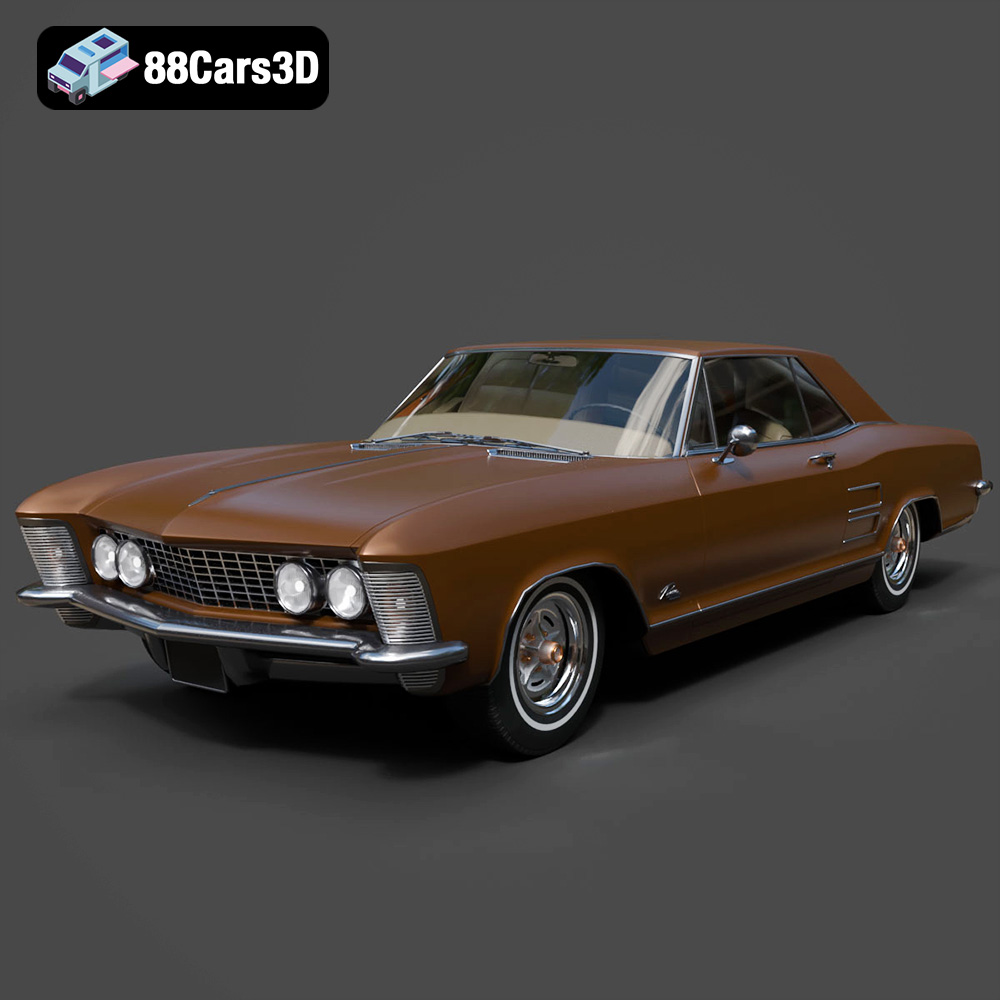
Buick Riviera 1963 3D Model
Texture: Yes
Material: Yes
Download the Buick Riviera 1963 3D Model featuring classic American muscle car design and iconic styling. Includes .blend, .fbx, .obj, .glb, .stl, .ply, .unreal, and .max formats for rendering, simulation, and game development.
Price: $10.79

Buick Regal 3D Model
Texture: Yes
Material: Yes
Download the Buick Regal 3D Model featuring a classic American sedan design, detailed exterior, and optimized interior. Includes .blend, .fbx, .obj, .glb, .stl, .ply, .unreal, and .max formats for rendering, simulation, and game development.
Price: $10.79

Buick LaCrosse 2008 3D Model
Texture: Yes
Material: Yes
Download the Buick LaCrosse 3D Model featuring professional modeling and texture work. Includes .blend, .fbx, .obj, .glb, .stl, .ply, .unreal, and .max formats for rendering, simulation, and game development.
Price: $10.79

Bugatti Type 41 Napoleon 3D Model
Texture: Yes
Material: Yes
Download the Bugatti Type 41 Napoleon 3D Model featuring its iconic luxury design, detailed exterior, and opulent interior. Includes .blend, .fbx, .obj, .glb, .stl, .ply, .unreal, and .max formats for rendering, simulation, and game development.
Price: $10.79

Bugatti Type 57SC Atlantic Coupe 3D Model
Texture: Yes
Material: Yes
Download the Bugatti Type 57SC Atlantic Coupe 3D Model featuring its iconic streamlined body and classic design. Includes .blend, .fbx, .obj, .glb, .stl, .ply, .unreal, and .max formats for rendering, simulation, and game development.
Price: $10.79

Bugatti 16C Galibier-006 3D Model
Texture: Yes
Material: Yes
Download the Bugatti 16C Galibier-006 3D Model featuring its luxurious sedan design, detailed interior, and sophisticated exterior. Includes .blend, .fbx, .obj, .glb, .stl, .ply, .unreal, and .max formats for rendering, simulation, and game development.
Price: $10.79

BMW Vision Connected Drive Concept 3D Model
Texture: Yes
Material: Yes
Download the BMW Vision Connected Drive Concept 3D Model featuring its innovative design, advanced connectivity, and sleek aesthetics. Includes .blend, .fbx, .obj, .glb, .stl, .ply, .unreal, and .max formats for rendering, simulation, and game development.
Price: $19.79
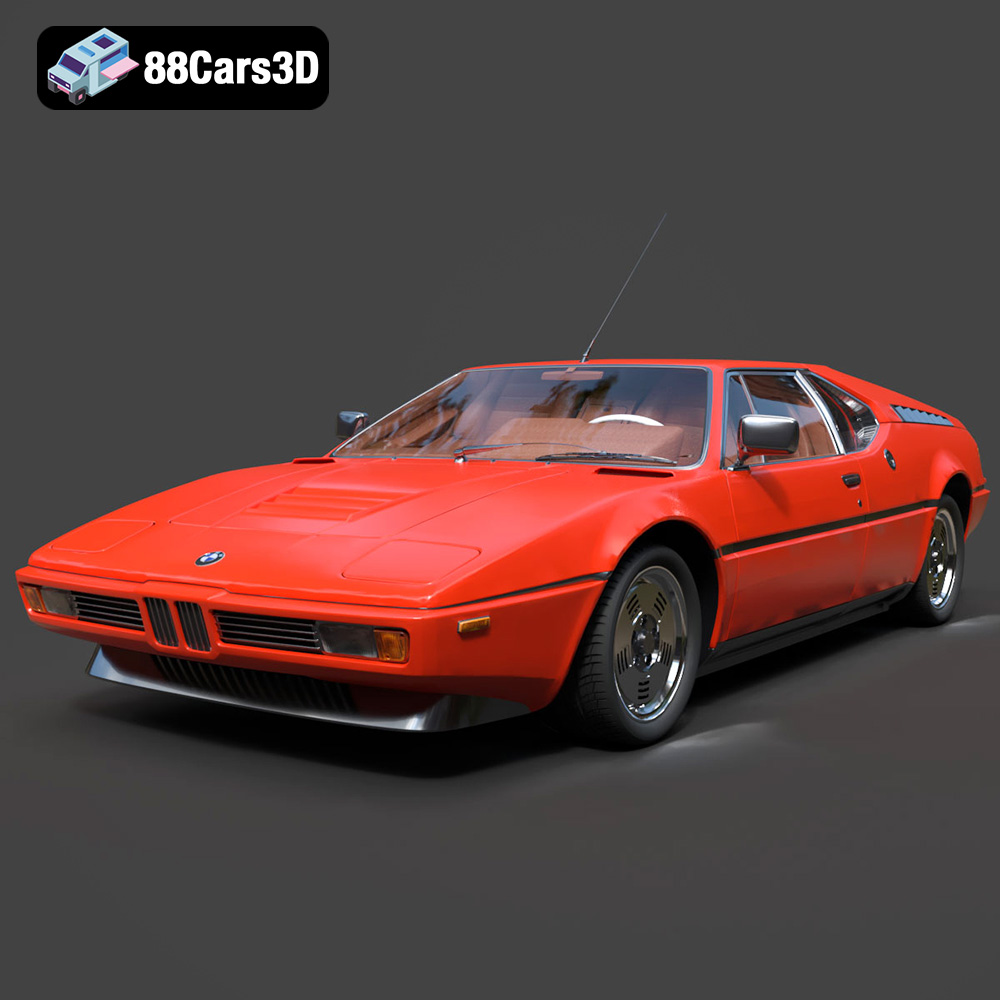
BMW Motorsport M1 E26 1981 3D Model
Texture: Yes
Material: Yes
Download the BMW Motorsport M1 E26 1981 3D Model featuring its iconic design, race-bred aerodynamics, and meticulously crafted details. Includes .blend, .fbx, .obj, .glb, .stl, .ply, .unreal, and .max formats for rendering, simulation, and game development.
Price: $20.79
