

Unreal Engine has revolutionized real-time rendering, pushing the boundaries of visual fidelity for everything from blockbuster games to hyper-realistic automotive configurators. While its powerful Material Editor provides an incredible array of tools for artists, there are moments when the demands of a project necessitate going beyond the visual node-based system. This is where the true power of custom shader development with High-Level Shading Language (HLSL) comes into play.
For automotive visualization professionals, game developers, and 3D artists striving for that ultimate level of realism and performance, understanding HLSL within Unreal Engine is an indispensable skill. It unlocks the ability to craft bespoke rendering effects, optimize performance at a granular level, and implement cutting-edge graphics techniques that are simply not possible with standard material graphs alone. Whether you’re aiming for a never-before-seen car paint effect, highly optimized rendering for AR/VR applications, or unique post-processing filters, diving into HLSL is your path forward.
In this comprehensive guide, we’ll peel back the layers of Unreal Engine’s rendering pipeline to reveal how custom HLSL shaders integrate and elevate your projects. We’ll explore the setup, coding practices, integration strategies with the Material Editor and Blueprints, and critical optimization techniques. Prepare to empower your Unreal Engine projects with unparalleled visual sophistication, ensuring your high-quality 3D car models stand out with custom-tailored rendering.
Understanding Unreal Engine’s Rendering Architecture for Custom Shaders
Before diving into writing HLSL, it’s crucial to grasp how Unreal Engine handles rendering. Unreal primarily employs a deferred rendering pipeline, which offers significant advantages for handling complex scenes with many lights, a common scenario in detailed automotive environments. In a deferred renderer, lighting calculations are decoupled from geometry processing. First, geometry and material properties (like base color, normal, roughness, metallic) are rendered into a set of intermediate textures called the G-Buffer. Then, in a separate pass, lighting is applied to these G-Buffer properties, followed by post-processing effects.
The standard Material Editor in Unreal Engine abstracts much of this complexity. When you create a material, the nodes you connect generate HLSL code behind the scenes. This generated code then becomes part of the various shader permutations compiled by Unreal Engine, determining how surfaces interact with light, reflections, and other effects within the deferred pipeline. While incredibly versatile, the Material Editor’s nodes operate within a predefined framework. For highly specialized effects, or when you need to bypass certain aspects of the standard pipeline for performance or visual reasons, direct HLSL control becomes essential.
Where Custom Shaders Fit In the Pipeline
Custom HLSL shaders can be injected into the Unreal Engine rendering pipeline at several key points. The most common entry points for advanced users include:
- Global Shaders: These are independent shaders that operate on the entire screen or specific render targets. They are commonly used for post-processing effects (like custom anti-aliasing, color grading, or stylized filters), compute shaders for data processing, or custom render passes that don’t directly modify existing materials.
- Custom Material Expressions: The Material Editor features a ‘Custom’ node, allowing you to insert small snippets of HLSL code directly within a material graph. This is useful for minor tweaks, custom blending logic, or specific mathematical operations that aren’t easily achieved with standard nodes. While powerful, it’s limited to the scope of a single material and operates within the existing material pipeline.
- Plugin-Based Render Features: For truly custom rendering solutions, developers often create engine plugins. These plugins can introduce new render passes, integrate custom rendering techniques (e.g., a unique form of global illumination or specialized shadow mapping), or modify existing rendering behavior by leveraging Unreal Engine’s rendering module architecture.
Understanding these injection points allows you to choose the most appropriate method for your desired custom effect. For instance, a unique car paint clear coat effect might require a combination of a custom material expression for the surface properties and potentially a global shader for specific reflection processing.
The Role of Shaders in Automotive Realism
Automotive visualization thrives on realism, and shaders are at its core. Standard PBR materials from marketplaces like 88cars3d.com provide a strong foundation, but custom shaders can elevate this further. For example, recreating the intricate anisotropic reflections of a brushed metallic finish, the multi-layered depth of a complex automotive clear coat, or simulating subtle micro-scratches and dust accumulation that react dynamically to light—these are areas where HLSL excels. It allows you to mathematically define light interaction with surfaces in ways that mimic real-world physics more accurately or achieve stylized looks impossible with generic material templates. The ability to control every pixel’s light response and surface property is what separates good automotive renders from truly exceptional ones.
Setting Up Your Development Environment for HLSL in Unreal Engine
Developing custom HLSL shaders within Unreal Engine is an advanced topic that typically requires a source-built version of the engine. While simple custom material expressions can be done with a pre-compiled launcher version, full-fledged global shaders, compute shaders, and deep integration with Unreal’s rendering pipeline demand access to the engine’s C++ source code. This allows you to register your shaders, define how they receive data, and insert them into the rendering graph.
Engine Source Code and Visual Studio Setup
To begin, you’ll need to download the Unreal Engine source code from GitHub (requires linking your GitHub account to your Epic Games account). Once downloaded, follow the official documentation (available at dev.epicgames.com/community/unreal-engine/learning) to compile the engine. This process involves running Setup.bat, then GenerateProjectFiles.bat, and finally building the solution in Visual Studio. Building from source ensures you have all the necessary headers, libraries, and the debug environment to work with the engine’s rendering modules.
For custom shader development, your project will need to be a C++ project. Create a new C++ project in Unreal Engine. Within this project, you’ll often create a new C++ module specifically for your custom rendering features. This keeps your shader-related C++ code organized and allows for easier integration and maintenance.
Recommended Setup Steps:
- Clone Unreal Engine Source: Use Git to clone the desired Unreal Engine version.
- Run Setup.bat: Downloads dependencies.
- Run GenerateProjectFiles.bat: Creates Visual Studio solution files.
- Build UE5.sln: Open the generated solution in Visual Studio and build the “Development Editor” configuration. This can take a significant amount of time.
- Create a C++ Project: In the source-built editor, create a new C++ project.
- Create a Plugin (Optional but Recommended): For better modularity and reusability, create an Unreal Engine plugin to house your custom shader code and related C++ logic. This isolates your rendering features from the main game module.
Shader Directory Structure and .usf/.ush Files
Unreal Engine has a specific directory structure for custom shaders. Typically, you’ll place your HLSL files within a Shaders directory inside your plugin’s or module’s content folder. For example, MyProject/Plugins/MyCustomRenderingPlugin/Shaders/Private/MyCustomShader.usf.
Unreal’s shader compiler recognizes two main file extensions for HLSL:
.usf(Unreal Shader File): These are the main shader unit files. Each.usffile typically contains the entry points (e.g.,MainVSfor vertex shader,MainPSfor pixel shader) for a specific shader. When you declare a global shader in C++, you’ll reference one of these.usffiles..ush(Unreal Shader Header): These are header files containing common functions, structs, constants, or defines that can be included by multiple.usffiles. This promotes code reusability and maintains consistency across your shaders. Unreal Engine also provides many built-in.ushfiles (e.g.,Common.ush,Material.ush) that expose engine-specific utilities and macros you can leverage.
Integrating Custom Shaders into C++ Modules
Once you have your HLSL files, the next step is to tell Unreal Engine about them. This is done through C++ code, typically within your plugin or game module. The primary class for registering global shaders is FGlobalShader. You’ll create a new C++ class that inherits from FGlobalShader and overrides several methods to define your shader’s parameters and identify its HLSL source file. For instance:
class FMyCustomPixelShader : public FGlobalShader
{
public:
    DECLARE_GLOBAL_SHADER(FMyCustomPixelShader);
    SHADER_USE_PARAMETER_STRUCT(FMyCustomPixelShader, FGlobalShader);

    BEGIN_SHADER_PARAMETER_STRUCT(FParameters, )
        SHADER_PARAMETER_TEXTURE(Texture2D, InputTexture)
        SHADER_PARAMETER_SAMPLER(SamplerState, InputTextureSampler)
        SHADER_PARAMETER_SCALAR(float, CustomValue)
        RENDER_TARGET_BINDING_SLOTS()
    END_SHADER_PARAMETER_STRUCT()

public:
    static bool ShouldCompilePermutation(const FGlobalShaderPermutationParameters& Parameters)
    {
        return Is|| (Parameters.Platform == SP_PCD3D_SM5);
    }
};
The SHADER_USE_PARAMETER_STRUCT macro and BEGIN_SHADER_PARAMETER_STRUCT allow you to define the C++ side of your shader parameters, which directly map to uniform buffers in your HLSL code. These parameters (textures, scalars, vectors, etc.) are then set from the C++ render thread when you dispatch your shader. The ShouldCompilePermutation static method determines for which platforms and configurations your shader should be compiled, offering fine-grained control over shader permutations and optimization.
Writing Your First Custom HLSL Shader in Unreal Engine
With your environment set up and an understanding of the integration points, it’s time to write some actual HLSL code. A basic shader consists of at least two main stages: a Vertex Shader (VS) and a Pixel Shader (PS) (also known as Fragment Shader in other GLSL contexts). The Vertex Shader typically processes per-vertex data, transforming vertex positions from model space to clip space and passing interpolated data to the Pixel Shader. The Pixel Shader then processes individual pixels (or fragments), determining their final color or other properties.
Basic Shader Structure: Vertex and Pixel Shaders
Let’s consider a simple post-process effect where we want to render a texture to the screen. Our .usf file might look something like this:
// MyCustomPostProcess.usf
#include "/Engine/Private/Common.ush" // Includes common UE shader utilities

// Define shader input parameters (from C++ FParameters struct)
BEGIN_SHADER_PARAMETER_STRUCT(FParameters, )
    SHADER_PARAMETER_TEXTURE(Texture2D, InputTexture)
    SHADER_PARAMETER_SAMPLER(SamplerState, InputTextureSampler)
END_SHADER_PARAMETER_STRUCT()

// Vertex shader input structure
struct FVSInput
{
    float4 Position : ATTRIBUTE0; // Vertex position
    float2 UV       : ATTRIBUTE1; // Texture coordinates
};

// Vertex shader output structure (and pixel shader input)
struct FVSOutput
{
    float4 Position : SV_POSITION; // Clip-space position
    float2 UV       : TEXCOORD0;   // Interpolated UVs for pixel shader
};

// Main Vertex Shader function
void MainVS(
    FVSInput Input,
    out FVSOutput Output
)
{
    Output.Position = Input.Position; // Assume Input.Position is already in clip space for full-screen quads
    Output.UV = Input.UV;
}

// Main Pixel Shader function
void MainPS(
    FVSOutput Input,
    out float4 OutColor : SV_Target0 // Output color for the render target
)
{
    // Sample the input texture using the interpolated UVs
    OutColor = InputTexture.Sample(InputTextureSampler, Input.UV);
}
In this example, the vertex shader simply passes through pre-calculated screen-space positions and UVs (common for full-screen post-processing quads), while the pixel shader samples an input texture and outputs its color. The SV_POSITION and SV_Target0 semantics are standard HLSL output semantics for clip-space position and render target color, respectively.
Passing Data to Shaders: Uniform Buffers and Textures
The power of custom shaders comes from their ability to receive arbitrary data from the CPU. As seen in the C++ setup and the HLSL example, this is primarily done through Uniform Buffers (UBs) and explicit texture parameters. The BEGIN_SHADER_PARAMETER_STRUCT / END_SHADER_PARAMETER_STRUCT macros in C++ directly generate the definition for a uniform buffer that the HLSL shader can access.
// HLSL side:
// Define the parameter struct which maps to the C++ FParameters
// This struct name is usually inferred from the C++ DECLARE_GLOBAL_SHADER
// The members inside must match the C++ SHADER_PARAMETER_TEXTURE/SCALAR etc.
// The engine automatically creates a uniform buffer for this struct.
Texture2D InputTexture;
SamplerState InputTextureSampler;
float CustomValue; // Matches SHADER_PARAMETER_SCALAR(float, CustomValue)

// ... then use them in your shader, e.g.,
float4 Color = InputTexture.Sample(InputTextureSampler, Input.UV) * CustomValue;
When you dispatch your shader from C++, you’ll set these parameters on the render command list. For instance, to set InputTexture, you would use Parameters.InputTexture = MyUTexture->Resource->TextureRHI. This robust system allows you to feed complex data – matrices, vectors, arrays, render targets, and more – directly into your HLSL code, enabling highly dynamic and interactive effects.
Real-world Example: A Custom Outline Shader for Automotive Models
Let’s consider a custom outline shader as a common, practical application. Imagine you want to highlight a car part in an automotive configurator. A simple post-process outline can be achieved by sampling the depth or normal buffer of the scene multiple times, slightly offset, and detecting discontinuities.
- Render Scene to G-Buffer: Ensure the scene (including the car model from 88cars3d.com) is rendered, providing depth and normal information.
- Create Global Shader: Implement a global pixel shader (like the `FMyCustomPixelShader` example) that takes the scene’s depth and/or normal buffer as input.
- HLSL Logic: In the pixel shader, for each pixel, sample the depth/normal buffer at its UV coordinate and then at several neighboring offsets (e.g., UV + offset, UV – offset).
- Detect Edges: Compare the sampled depth/normal values. If the difference between the center sample and an offset sample exceeds a certain threshold, it indicates an edge.
- Output Outline Color: If an edge is detected, output a specific outline color; otherwise, output the original scene color.
This simple example demonstrates how to leverage existing render targets and perform custom logic per-pixel, allowing for effects like highlighting specific car components with a distinct, custom-rendered outline.
Integrating Custom HLSL Shaders with the Material Editor and Blueprints
While global shaders operate independently of the Material Editor, there are powerful ways to integrate HLSL snippets or even expose global shader parameters to artists and designers within the Material Editor and through Blueprint scripting. This bridge between low-level HLSL and high-level visual scripting significantly enhances flexibility and usability.
Custom Material Expressions and Shader Code Nodes
For smaller, localized HLSL additions within a material, Unreal Engine offers the “Custom” node in the Material Editor. This node allows you to type HLSL code directly into a text field and define inputs and outputs, which can then be connected to other material nodes. This is incredibly useful for:
- Complex mathematical functions: Implementing non-standard interpolation curves, procedural patterns, or custom UV manipulations.
- Performance optimizations: Sometimes a complex node graph can be simplified and optimized by writing the equivalent logic in a single Custom node, which can be more efficient for the shader compiler.
- Accessing engine-specific variables: You can access a variety of global engine variables and functions that might not have a direct node equivalent.
For example, to implement a custom fresnel effect that gives more control than the standard Fresnel node, you could use a Custom node with the following HLSL:
// Inputs: Normal (float3), ViewDir (float3), Power (float)
// Output: float
float DotProduct = saturate(dot(Normal, ViewDir));
return pow(1.0 - DotProduct, Power);
You would define three inputs named `Normal`, `ViewDir`, and `Power` (float3, float3, float respectively) and connect them to the appropriate material inputs. While powerful, the Custom node operates within the context of the material it belongs to and is primarily for pixel shader calculations (though vertex shader code can be injected via specific flags).
Material Functions Calling Global Shaders
For more advanced scenarios where a Material Function needs to leverage the power of a global shader, you’d typically implement a C++ wrapper. This involves creating a custom Material Expression in C++ that inherits from UMaterialExpressionCustomOutput or UMaterialExpressionCustom. This custom expression can then execute a render command that dispatches your global shader, potentially passing material-specific parameters or textures as inputs. This is a more involved process, requiring C++ and rendering pipeline knowledge, but it allows for highly complex effects where the Material Editor acts as a front-end for a custom render pass.
For example, a custom car paint effect might use a Material Expression that triggers a compute shader to pre-calculate complex anisotropic reflections based on the surface normal and tangent, then passes the result back to the material’s Emissive channel or a custom output for blending.
Exposing Shader Parameters to Blueprints
Making your custom shader parameters accessible through Blueprint is critical for iteration, artist control, and building interactive experiences like automotive configurators. This is typically achieved by setting up Material Instance Dynamic (MID) parameters or by creating custom Blueprint-callable functions that interact with your C++ shader wrapper.
For Custom Material Expressions:
- Define your Custom node inputs as parameters in the Material Editor (e.g., using a Scalar Parameter or Vector Parameter node plugged into the Custom node).
- Create a Material Instance Dynamic (MID) in Blueprint from your base material.
- Use Blueprint nodes like “Set Scalar Parameter Value” or “Set Vector Parameter Value” on the MID to control the inputs of your Custom HLSL node.
This allows artists to dynamically adjust parameters like “OutlineThickness” or “ClearCoatAnisotropy” in real-time within Blueprint, without ever touching the HLSL code itself. This is fundamental for building interactive automotive demos where users can customize visual properties of the vehicle on the fly.
For Global Shaders (via C++ wrappers):
If your custom global shader is integrated via a C++ Material Expression or a dedicated plugin, you would expose Blueprint-callable functions in your C++ code. These functions would then trigger the render command to dispatch your global shader with the specified parameters. This offers the highest level of control and allows for complex interactions, such as changing the rendering quality of a custom effect based on user preferences or performance budgets.
Advanced Topics: Performance, Optimization, and Specific Automotive Applications
Custom HLSL shaders offer unparalleled control but demand a deep understanding of performance optimization, especially for real-time applications like games, AR/VR, and high-fidelity automotive visualization. Inefficient shaders can quickly become a bottleneck, leading to low frame rates and a poor user experience.
Profiling Custom Shaders
The first step in optimization is always accurate profiling. Unreal Engine provides powerful tools for this:
- Unreal Insights: This comprehensive profiling tool can track CPU and GPU performance, render events, and shader timings. It helps identify which render passes and specific shaders are consuming the most time.
- Stat GPU: An in-engine command (
stat gpu) displays real-time GPU frame times broken down by major rendering passes. It’s a quick way to see if your custom shader pass is adding significant overhead. - Platform-Specific GPU Debuggers: Tools like RenderDoc (cross-platform), PIX (for DirectX), and NSight (for NVIDIA GPUs) are invaluable. They allow you to capture a single frame and inspect every draw call, shader invocation, and render target. You can analyze shader instruction counts, register pressure, memory bandwidth usage, and identify bottlenecks directly within your HLSL code. These tools are crucial for detailed shader optimization.
Profiling helps you pinpoint the exact parts of your HLSL or C++ render logic that are causing performance issues, allowing you to focus your optimization efforts where they will have the most impact.
Optimizing HLSL for Real-Time Rendering
Optimizing HLSL involves a combination of techniques:
- Reduce Instruction Count: Every instruction costs GPU cycles. Simplify mathematical operations, avoid redundant calculations, and use built-in functions where optimized.
- Minimize Texture Samples: Texture lookups are expensive. Cache results if possible, use fewer textures, and use texture arrays or atlases efficiently.
- Branchless Code: Conditional statements (
if/else) can cause branching, which can lead to performance penalties on GPUs due to divergent execution. Where possible, use mathematical approximations orlerp(linear interpolation) withsaturateto avoid branches. - Half-Precision Floats: For many calculations (especially color, UVs, or non-critical positions),
halfprecision floats (16-bit) can be significantly faster and consume less memory thanfloat(32-bit), especially on mobile or VR platforms. Use them judiciously where precision loss is acceptable. - Utilize Intrinsics/Optimized Functions: Leverage GPU-specific intrinsics or engine-provided helper functions (often found in
Common.ushor other UE headers) that are optimized for the target hardware. - Understand Data Layout: Pack your uniform buffer data efficiently. Group related parameters and try to align them to common boundaries to minimize memory fetches.
- Compute Shader Efficiency: When using compute shaders for data processing, optimize thread group sizes and shared memory usage to maximize GPU parallelism.
These techniques are critical for maintaining smooth frame rates, particularly in demanding scenarios like AR/VR applications for automotive models, where performance budgets are very tight.
Automotive-Specific Shader Use Cases
Custom shaders unlock a new level of realism and interactivity for automotive visualization:
- Anisotropic Car Paint & Clear Coats: The complex, directional reflections on car paint are notoriously difficult to capture with standard PBR. HLSL allows you to implement advanced anisotropic BRDFs (Bidirectional Reflectance Distribution Functions) that accurately simulate the fine metallic flakes and multi-layered clear coat effects, dynamically reacting to camera angle and light sources. This includes techniques like importance sampling microfacet distributions.
- Advanced Tire Sidewall Details: For hyper-realistic tire rendering, custom shaders can enhance details beyond what normal maps alone can provide. This could involve complex parallax occlusion mapping for tire treads, procedural wear and tear effects based on driving simulation data, or custom blending of dirt/mud layers that accumulate and shed realistically.
- Dynamic Dirt/Scratch Systems: Imagine a car accumulating dirt, dust, or scratches dynamically based on its environment or user interaction. A custom shader could take texture inputs (e.g., a dirt mask, a scratch mask) and blend them based on world-space position, surface normal, or even a custom “age” parameter exposed to Blueprint. This allows for truly interactive and evolving vehicle appearances, greatly enhancing immersive experiences.
- Glass & Headlight Refraction/Dispersion: Simulating realistic glass refraction, especially with chromatic dispersion (splitting light into colors), is a complex task. Custom shaders can implement accurate ray-tracing approximations or screen-space refraction techniques that give headlights and windows a stunning, authentic appearance.
These examples highlight how HLSL directly contributes to pushing the visual boundaries of automotive visualization in Unreal Engine, ensuring the premium 3D car models from 88cars3d.com achieve their full potential.
Troubleshooting and Best Practices for Shader Development
Developing custom shaders is a complex endeavor, and encountering errors is a common part of the process. Having a systematic approach to troubleshooting and adhering to best practices can save significant time and frustration.
Common Shader Compilation Errors and Debugging
Unreal Engine’s shader compiler (often DDC – Derived Data Cache) is verbose but can sometimes be cryptic.
- Syntax Errors: Basic HLSL syntax mistakes are common. Check for missing semicolons, incorrect variable types, undeclared variables, or mismatched parentheses. The compiler output will usually point to the line number and character, though sometimes the actual error is slightly upstream.
- Semantic Errors: Incorrect use of input/output semantics (e.g.,
SV_POSITION,TEXCOORD0) or mismatches between vertex shader outputs and pixel shader inputs can lead to errors. Ensure your structs are correctly defined and match between stages. - Parameter Mismatches: Errors often occur when the C++
FParametersstruct doesn’t perfectly match the HLSL parameter definitions in terms of name, type, or access specifiers (e.g.,Texture2Dvs.TextureCube). - Missing Includes: Forgetting to include necessary
.ushfiles (e.g.,Common.ush) can result in undefined functions or macros. - DDC Corruption: Sometimes, the Derived Data Cache can get corrupted, leading to strange compilation issues. Clearing the DDC (by deleting the `DerivedDataCache` folder in your project or engine directory) and recompiling shaders can resolve these.
- Debugging Techniques:
- Print to Output: A common HLSL debugging trick is to output intermediate values directly to the final color (e.g.,
OutColor = float4(MyIntermediateValue, 0, 0, 1);). This helps visualize calculations. - GPU Debuggers: As mentioned, RenderDoc, PIX, and NSight are indispensable. They allow you to step through shader code, inspect register values, and visualize textures at each stage of the pipeline.
- Unreal Engine’s Shader Debugger: While not a full HLSL debugger, the Material Editor’s shader debugger can help visualize material node outputs, which is useful if your custom HLSL is integrated via a Custom node.
- Print to Output: A common HLSL debugging trick is to output intermediate values directly to the final color (e.g.,
Version Control and Collaboration
Custom shader development often involves C++ and HLSL files, which are text-based and perfectly suited for version control systems like Git or Perforce.
- Commit Regularly: Treat your shader code like any other source code. Commit small, logical changes frequently.
- Clear Commit Messages: Describe what your shader does, why you changed it, and any known issues.
- Branching: Use feature branches for significant shader development to avoid disrupting the main development line.
- Share .ush Files: Create shared header files (
.ush) for common functions, structs, and defines. This promotes reusability and ensures consistency across your team’s shaders.
Effective version control is vital for collaborative development, allowing multiple artists and programmers to work on rendering features concurrently without conflicts.
Maintaining Forward Compatibility
Unreal Engine is constantly evolving, and its rendering pipeline can undergo significant changes between major versions. Writing robust shaders that are less prone to breaking requires foresight:
- Avoid Hardcoding Engine Paths: Use engine-provided macros for paths where possible.
- Use Engine Headers: Rely on Unreal’s own
.ushheaders (e.g.,Common.ush,Material.ush) for accessing engine utilities and global variables. While these can change, they are usually updated with the engine, and their changes are well-documented. - Abstract Core Logic: Isolate your core HLSL algorithms from engine-specific boilerplate as much as possible.
- Consult Documentation: Regularly check the official Unreal Engine documentation at dev.epicgames.com/community/unreal-engine/learning for updates to the rendering pipeline, shader compilation process, and API changes.
- Test with New Versions: When upgrading engine versions, prioritize testing your custom shaders for compatibility and performance regressions.
By following these best practices, you can create a more stable and maintainable custom rendering pipeline for your Unreal Engine projects, ensuring that your cutting-edge automotive visualizations remain robust through engine updates.
Conclusion
Embarking on the journey of Unreal Engine shader development with HLSL is a significant step towards mastering the engine’s rendering capabilities. We’ve explored the intricate layers of Unreal’s rendering architecture, understood where and how custom shaders fit into this complex system, and walked through the practical steps of setting up your development environment and writing your first HLSL code. We’ve also delved into advanced topics like integrating shaders with the Material Editor and Blueprints, crucial for empowering artists and designers, and honed in on critical optimization strategies essential for delivering performant, high-fidelity real-time experiences, especially in the demanding field of automotive visualization.
The ability to craft bespoke rendering effects – from simulating the perfect anisotropic car paint to creating dynamic dirt accumulation – is what truly sets exceptional Unreal Engine projects apart. By venturing beyond the node-based Material Editor, you gain granular control over every pixel and vertex, unlocking a universe of visual possibilities and performance gains. This deep technical understanding not only solves unique rendering challenges but also fosters a profound appreciation for the art and science behind real-time graphics.
Now that you have a comprehensive understanding of HLSL shader development in Unreal Engine, the real work begins. Experiment with the techniques discussed, dive into the engine’s source code for further learning, and apply these advanced rendering methods to elevate your projects. Remember, high-quality assets demand equally high-quality rendering; explore the meticulously crafted 3D car models available on 88cars3d.com and unleash their full visual potential with your newfound HLSL expertise. The future of real-time automotive visualization and interactive experiences is in your hands – or rather, in your shaders.
Featured 3D Car Models

BMW M5 F10 3D Model
Texture: Yes
Material: Yes
Download the BMW M5 F10 3D Model featuring high-performance luxury sedan design, detailed interior, and realistic PBR textures. Includes .blend, .fbx, .obj, .glb, .stl, .ply, .unreal, and .max formats for rendering, simulation, and game development.
Price: $10.79

BMW M3 Coupe E92-002 3D Model
Texture: Yes
Material: Yes
Download the BMW M3 Coupe E92-002 3D Model featuring authentic styling, detailed exterior, and a faithful interior. Includes .blend, .fbx, .obj, .glb, .stl, .ply, .unreal, and .max formats for rendering, simulation, and game development.
Price: $10.79

BMW 6 Series Gran Coupe 2013 3D Model
Texture: Yes
Material: Yes
Download the BMW 6 Series Gran Coupe 2013 3D Model featuring a sophisticated design, detailed exterior, and well-appointed interior. Includes .blend, .fbx, .obj, .glb, .stl, .ply, .unreal, and .max formats for rendering, simulation, and game development.
Price: $20.79

BMW 7 Series 750 F01 3D Model
Texture: Yes
Material: Yes
Download the BMW 7 Series 750 F01 3D Model featuring a detailed exterior and a luxurious interior. Includes .blend, .fbx, .obj, .glb, .stl, .ply, .unreal, and .max formats for rendering, simulation, and game development.
Price: $10.79
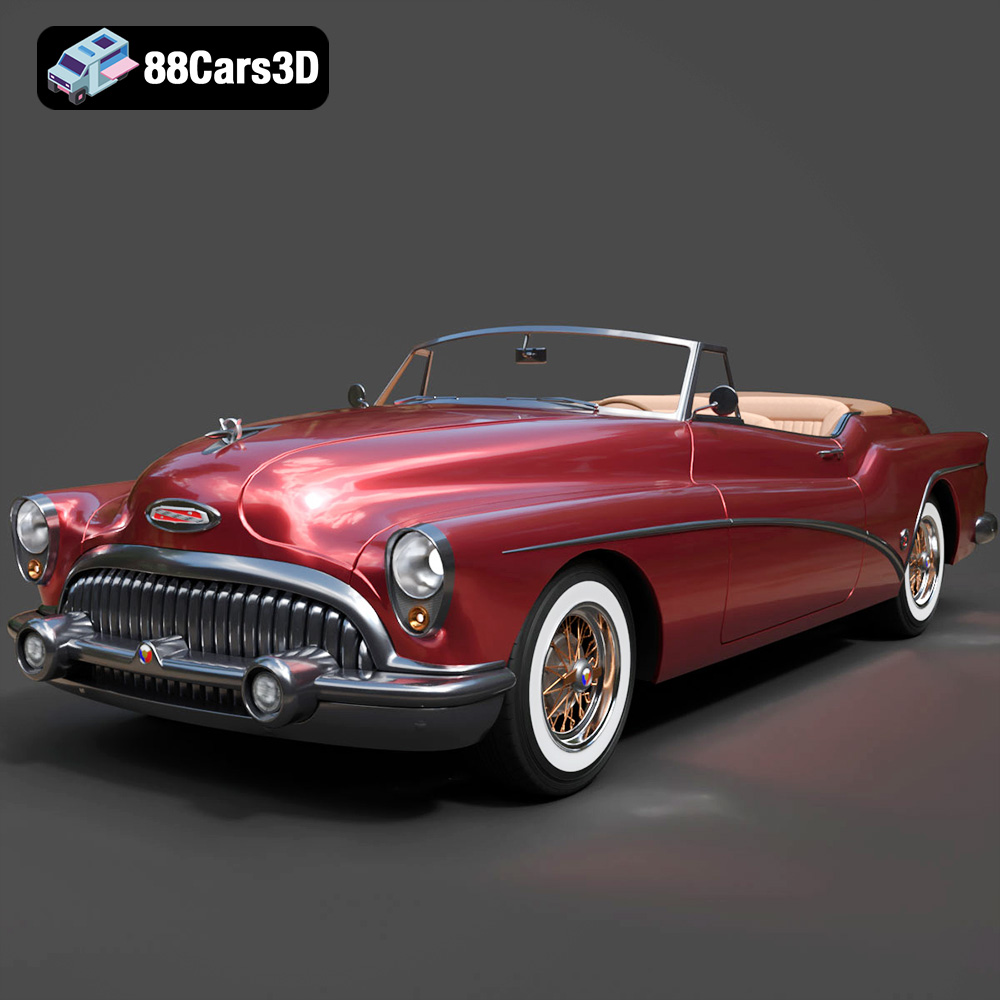
Buick Skylark Convertible 1953 3D Model
Texture: Yes
Material: Yes
Download the Buick Skylark Convertible 1953 3D Model featuring iconic 1950s styling, a detailed exterior with chrome accents, and an accurately modeled interior. Includes .blend, .fbx, .obj, .glb, .stl, .ply, .unreal, and .max formats for rendering, simulation, and game development.
Price: $10.79

Buick Roadmaster Hardtop Coupe 1957 3D Model
Texture: Yes
Material: Yes
Download the Buick Roadmaster Hardtop Coupe 1957 3D Model featuring a classic American design with detailed exterior and interior. Includes .blend, .fbx, .obj, .glb, .stl, .ply, .unreal, and .max formats for rendering, simulation, and game development.
Price: $10.79
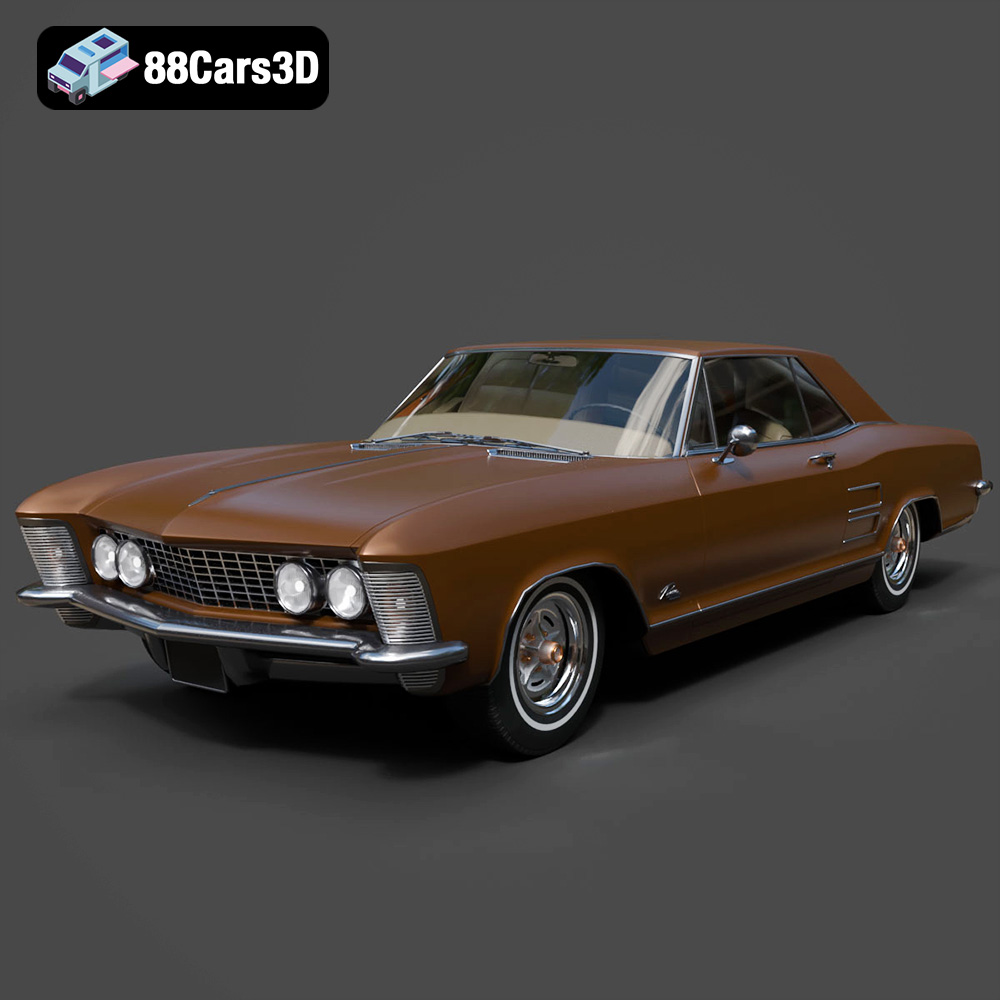
Buick Riviera 1963 3D Model
Texture: Yes
Material: Yes
Download the Buick Riviera 1963 3D Model featuring classic American muscle car design and iconic styling. Includes .blend, .fbx, .obj, .glb, .stl, .ply, .unreal, and .max formats for rendering, simulation, and game development.
Price: $10.79

Buick Regal 3D Model
Texture: Yes
Material: Yes
Download the Buick Regal 3D Model featuring a classic American sedan design, detailed exterior, and optimized interior. Includes .blend, .fbx, .obj, .glb, .stl, .ply, .unreal, and .max formats for rendering, simulation, and game development.
Price: $10.79

Buick LaCrosse 2008 3D Model
Texture: Yes
Material: Yes
Download the Buick LaCrosse 3D Model featuring professional modeling and texture work. Includes .blend, .fbx, .obj, .glb, .stl, .ply, .unreal, and .max formats for rendering, simulation, and game development.
Price: $10.79

Bugatti Type 41 Napoleon 3D Model
Texture: Yes
Material: Yes
Download the Bugatti Type 41 Napoleon 3D Model featuring its iconic luxury design, detailed exterior, and opulent interior. Includes .blend, .fbx, .obj, .glb, .stl, .ply, .unreal, and .max formats for rendering, simulation, and game development.
Price: $10.79
