

Bringing Digital Dreams to Life: A Comprehensive Guide to Preparing 3D Car Models for 3D Printing
The allure of transforming a meticulously crafted 3D car model from a digital file into a tangible object is undeniable. For automotive designers, collectors, hobbyists, and even game developers looking to create physical merchandise, 3D printing offers an incredible bridge between the virtual and the real. However, unlike rendering or game engine integration, 3D printing has its own unique set of requirements and challenges. A model that looks perfect on screen might be riddled with issues that prevent it from being successfully printed.
This comprehensive guide delves deep into the technical intricacies of preparing 3D car models for 3D printing. We’ll explore everything from fundamental topology principles and critical mesh integrity checks to advanced optimization techniques, ensuring your digital automotive masterpieces are print-ready. Whether you’re working with models designed for high-end visualization, game assets, or intricate automotive designs, understanding these steps is crucial. By the end of this post, you’ll have a robust workflow to confidently prepare any 3D car model for physical fabrication, minimizing costly print failures and maximizing the detail and accuracy of your final product. Get ready to turn those pixels into polymers!
1. The Foundation: Optimal Topology and Watertight Geometry for Print Success
The journey to a successful 3D print begins long before you hit the ‘print’ button – it starts with the fundamental structure of your 3D model: its topology. For 3D printing, the concept of a “watertight” or “manifold” mesh is paramount. Imagine your model as a hollow shell that could hold water. If there are any holes, gaps, or internal inconsistencies, the water would leak out. Similarly, a 3D printer needs a perfectly sealed, unambiguous surface to interpret and build the physical object layer by layer. Unlike rendering, where a few flipped normals or open edges might go unnoticed, these issues are critical failures for a 3D printer.
A manifold mesh ensures that every edge is shared by exactly two faces, forming a continuous surface. Non-manifold geometry, on the other hand, occurs when an edge is shared by more than two faces (like an internal wall within an external shell) or by only one face (an open edge or border). These ambiguities confuse the slicer software, leading to errors, skipped layers, or incomplete prints. When sourcing 3D car models from platforms like 88cars3d.com, it’s always wise to inspect their topology, especially if they weren’t originally created with 3D printing in mind. Models optimized for game engines, for instance, might intentionally have open areas to save polygons or simplify collision detection, which would need remediation for printing.
1.1. Manifold Meshes and Watertight Geometry: The Gold Standard
Achieving a manifold, watertight mesh means ensuring that your model is a single, continuous volume with no open edges, intersecting faces, or internal geometry that doesn’t contribute to the outer shell. This includes closing all holes, ensuring surfaces are properly joined, and eliminating any duplicate vertices or faces that might create ambiguities. For intricate car models, this often involves meticulous cleanup. Consider the wheel wells, the underside of the chassis, or complex grille patterns – these areas are common culprits for non-manifold errors. Each component, from the car body to individual wheels and mirrors, should ideally form a solid, enclosed volume. If a model is composed of multiple separate parts, such as a body and interior, each of these parts should individually be watertight or be Boolean-united into a single, cohesive mesh before printing.
1.2. Addressing Non-Manifold Edges and Faces
Identifying and fixing non-manifold geometry is a critical step. Most 3D software packages offer tools to detect these issues. In Blender, for example, you can select all non-manifold geometry in Edit Mode by going to `Select > Select All By Trait > Non Manifold`. Once identified, these areas need careful attention. Open edges often require filling faces (e.g., using `F` to create a face from selected edges). Internal faces or extra geometry can be deleted. Intersecting faces might require Boolean operations or careful retopology to merge them correctly. Overlapping geometry that isn’t cleanly merged can also cause issues; it’s better to have clean, merged surfaces rather than objects simply clipping into each other. Patience and precision are key here, as even a tiny gap can lead to print failure.
2. Scaling and Unit Consistency: Bridging Digital Dimensions to Physical Reality
One of the most overlooked yet fundamentally important aspects of 3D printing preparation is ensuring correct scale and unit consistency. Your digital model exists in a virtual space, but when it enters the physical world through 3D printing, its dimensions become crucial. A model designed in millimeters in one software might be interpreted as meters in another, leading to a print that’s either impossibly small or astronomically large. Understanding how your chosen software handles units and how the slicer interprets them is vital for achieving the desired physical size of your 3D car model.
In most 3D modeling applications, you can set your scene units (e.g., meters, centimeters, millimeters, inches). It’s best practice to model in real-world scale from the outset. If your digital car model is meant to be 4.5 meters long, ensure its digital dimensions reflect that. When exporting for 3D printing, the commonly accepted unit is millimeters (mm) for the vast majority of consumer and professional 3D printers, as it offers the precision needed for fine details. However, many modeling software defaults to generic “units” or meters. A common pitfall is exporting a model that was scaled to represent 1 meter digitally, but when imported into a slicer that expects millimeters, it becomes a minuscule 1mm print!
2.1. Understanding Real-World vs. Digital Units
Before starting any modeling project intended for 3D printing, establish your unit system. If you’re designing a scaled replica of a car, ensure your digital dimensions directly correspond to the real-world dimensions scaled down by your chosen factor. For instance, if you want a 1:24 scale model of a car that’s 4800mm long, your digital model should be 200mm long. Always double-check the unit settings in your modeling software (e.g., in 3ds Max: `Customize > Units Setup`; in Blender: `Scene Properties > Units`). Consistency across your workflow—from modeling to export to slicing—will save immense headaches. Many file formats like STL do not inherently store unit information, leaving it to the slicer software to make an assumption, which can be disastrous.
2.2. The Importance of Scale for Print Resolution
Beyond merely getting the correct size, scale directly impacts print resolution and detail. If you attempt to print a car model with very fine details at too small a scale, those details might simply vanish because the printer’s nozzle or laser cannot reproduce them at that size. Conversely, printing a low-polygon model at a very large scale will reveal its angularity and lack of smooth curves. It’s essential to consider the final desired physical size and the capabilities of your 3D printer. For detailed automotive models, generally, a larger print size allows for more fine details to be preserved. Always confirm the dimensions of your model within your slicer software before committing to a print. A quick measurement check there can prevent hours of wasted print time and material. If your model from 88cars3d.com is highly detailed, printing it at a decent size (e.g., 1:18 or 1:12 scale) will allow the printer to capture more of those intricate designs.
3. Wall Thickness and Detail Integrity: Ensuring Structural Soundness
One of the most critical considerations for 3D printing, especially for models with delicate features like car grilles, spoilers, or intricate emblems, is wall thickness. Unlike a digital render where lines can be infinitely thin, a physical object requires a minimum thickness for its walls, supports, and features to be structurally sound and successfully printed. Failures related to wall thickness are common, resulting in flimsy parts, broken details, or even print failures where walls are simply too thin to form.
The minimum wall thickness required depends heavily on the 3D printing technology, the material being used, and the desired print quality. FDM (Fused Deposition Modeling) printers, for example, are limited by their nozzle diameter, typically ranging from 0.2mm to 0.8mm. SLA/DLP (resin) printers can achieve finer details but still have minimum thickness requirements for features to cure properly and withstand post-processing. Always consult the specifications of your specific printer and chosen material. A general rule of thumb for FDM is to aim for a minimum wall thickness of at least twice your nozzle diameter (e.g., 0.8mm for a 0.4mm nozzle). For smaller, more delicate features like antennae or rearview mirrors on a car, you might need to artificially thicken them in your 3D software to ensure they print reliably.
3.1. Minimum Wall Thickness Guidelines
To ensure your 3D car model is robust enough for printing and handling, thoroughly inspect all its features for adequate wall thickness. This is particularly important for areas that might appear thin from a distance, such as the spokes of wheels, radiator grilles, door handles, or aerodynamic fins. Use your modeling software’s measurement tools to check these dimensions. If a wall is too thin, you have a few options:
- Extrude/Thicken: Select the faces of the thin wall and extrude them outwards to increase thickness.
- Scale Locally: Carefully scale specific features (like a spoiler) to increase their overall bulk.
- Boolean Operations: Use Boolean operations with larger volumes to create thicker sections, ensuring careful cleanup afterward.
- Design Compromises: In some cases, you might need to slightly redesign a feature to make it more robust without losing its aesthetic appeal.
Remember that internal structures also need sufficient thickness if you hollow out your model (discussed in a later section). Ignoring wall thickness will inevitably lead to frustration and failed prints.
3.2. Preserving Fine Details and Overhangs
While increasing wall thickness is crucial, you also want to preserve the intricate details that make your 3D car model unique. This is a delicate balance. Fine details, such as etched lines or very shallow relief, might not be visible at smaller print sizes or with larger nozzle diameters. You might need to exaggerate these details slightly (e.g., increase the depth of an engraved line) to ensure they are captured by the printer.
Overhangs – parts of the model that extend outward without direct support from below – also require special attention. Most 3D printing technologies have limitations on the angle of overhang they can successfully print without support structures. Generally, angles greater than 45-60 degrees will require supports. For complex car bodies with sculpted curves, large wheel arches, or undercarriage details, strategic use of supports is often unavoidable. However, excessive supports can mar the surface finish during removal. When preparing your model, consider its orientation on the print bed to minimize critical overhangs and optimize for surface quality on visible areas. Sometimes, splitting a model into multiple pieces can help manage complex overhangs and be assembled post-print.
4. Mesh Repair and Simplification: Cleaning Up for Print Fidelity
Even with careful modeling, 3D models can accumulate subtle errors over time, especially if they’ve undergone multiple edits, imported from various sources, or converted between formats. These seemingly minor imperfections, such as inverted normals, duplicate vertices, or internal geometry, can wreak havoc on a 3D print. Before exporting your 3D car model, a thorough mesh repair and simplification pass is essential to ensure a clean, unambiguous mesh that the slicer software can accurately interpret.
Mesh repair tools in your 3D software are your best friends here. They can automatically detect and often fix common issues. However, automated fixes should always be reviewed manually, as they can sometimes alter desirable geometry. For models with very high polygon counts, which are common for detailed automotive visualization, simplification is also a key step. While modern printers can handle intricate details, an excessively dense mesh can increase file size, slow down processing in slicers, and in extreme cases, lead to software crashes. The goal is to reduce polygon count without sacrificing critical detail, particularly on curved surfaces that define a car’s aesthetic.
4.1. Identifying and Fixing Common Mesh Errors
Several common mesh errors can derail a 3D print:
- Inverted Normals: Faces pointing inwards instead of outwards. This causes the slicer to see holes where solid surfaces should be. Most 3D software has a ‘Recalculate Normals Outside’ function (e.g., in Blender, `Mesh > Normals > Recalculate Outside` in Edit Mode).
- Duplicate Vertices/Faces: Vertices or faces occupying the exact same space. These create non-manifold conditions. Use a ‘Merge by Distance’ (Blender) or ‘Weld’ (3ds Max) operation to combine them.
- Internal Geometry: Faces or edges that are entirely enclosed within the mesh and are not part of the outer shell. These are often relics of Boolean operations or messy modeling. They confuse slicers and add unnecessary data. Manually delete them after using X-ray or wireframe views to identify them.
- Intersecting Geometry: Two surfaces passing through each other without being properly merged. This creates ambiguity for the slicer. Boolean operations (`Union`) can often fix this, followed by cleanup.
Blender’s built-in 3D Print Toolbox addon (enable it in `Edit > Preferences > Add-ons`) is exceptionally useful for detecting and fixing many of these issues, offering checks for manifold errors, intersections, and thin walls. Referring to the official Blender 4.4 documentation at https://docs.blender.org/manual/en/4.4/ for details on mesh analysis tools and repair workflows can significantly streamline this process.
4.2. Decimation and Remeshing for Print Optimization
High-fidelity 3D car models, especially those from platforms like 88cars3d.com, are often designed with extremely high polygon counts to capture smooth curves and intricate details for rendering. While beneficial for visual quality, this level of detail might be excessive for 3D printing, especially at smaller scales or with FDM technology.
* **Decimation:** This process reduces the polygon count of a mesh while attempting to preserve its overall shape. Tools like Blender’s `Decimate Modifier` (set to `Collapse` or `Planar` mode) or equivalent tools in other software allow you to control the percentage reduction. The key is to reduce the poly count until the visual fidelity starts to degrade, then back off slightly. Focus decimation on flatter, less detailed areas, preserving high-detail zones like grilles and emblems.
* **Remeshing:** For extremely messy or non-manifold meshes, remeshing can be a powerful solution. This technique generates an entirely new mesh surface based on the volume of your existing model, creating a clean, watertight, and often uniform mesh. Tools like Blender’s `Remesh Modifier` or ZBrush’s ZRemesher can convert a chaotic mesh into a pristine, print-ready surface. Be cautious, as remeshing can sometimes obliterate very fine details if not configured correctly. After remeshing, you might need to reproject details back onto the new mesh or sculpt them in.
The goal is to strike a balance: enough polygons to capture essential curves and details, but not so many that it creates processing bottlenecks or doesn’t translate meaningfully to the printer’s resolution.
5. Hollowing, Supports, and Orientation: Strategic Printing Decisions
Once your 3D car model has pristine, watertight geometry and optimized polygon count, you’re ready to make crucial decisions about its physical structure and how it will interact with the 3D printer. Hollowing, the strategic placement of support structures, and the print orientation are interconnected choices that significantly impact material consumption, print time, surface quality, and the overall success of your print.
Hollowing a model is often employed to save material, reduce print time, and prevent issues like warping or cracking, especially with resin prints where large solid volumes can create internal stresses. However, hollowing introduces its own requirements, primarily the need for drainage holes to remove uncured resin or allow air pressure equalization during FDM printing. Support structures are temporary additions that hold up overhangs and bridges during printing, preventing them from deforming or collapsing. Lastly, print orientation dictates how your model sits on the build plate, directly influencing where supports are needed, the visibility of layer lines, and the strength of the final part.
5.1. Strategies for Hollowing Models
Hollowing can be a game-changer for larger prints or when using expensive materials. Most slicer software offers a hollowing feature, but it’s often more effective to hollow your model directly in your 3D software for greater control.
- Offset Shell: Create an inner shell of your model, maintaining a consistent wall thickness throughout. This can be done with a `Solidify` modifier (Blender) or `Shell` modifier (3ds Max).
- Drainage Holes: Absolutely critical for hollow prints. For resin printers, these holes allow uncured resin to drain out, preventing internal pressure buildup and reducing material waste. For FDM, they help with air circulation. Place drainage holes in inconspicuous areas that can be easily plugged or filled later (e.g., on the underside of the chassis, within a wheel well). Ensure these holes are sufficiently large (e.g., 2-3mm diameter) to be effective.
- Internal Supports: For very large hollow models, you might consider adding internal support structures (like a lattice) to prevent the top surfaces from collapsing during printing. Some slicers can generate these automatically.
A hollow model still needs to be watertight on its exterior. Its inner and outer shells must be perfectly connected.
5.2. Understanding Support Structures and Their Impact
Support structures are a necessary evil for 3D printing complex geometries, particularly those with significant overhangs common in realistic 3D car models.
- Types of Supports: Slicer software typically offers different support patterns (e.g., tree, grid, lines). Tree supports are often preferred for their minimal contact points, making them easier to remove and causing less surface scarring, especially on visible areas.
- Placement: While slicers can auto-generate supports, manual placement (or adjustment) in your slicer can lead to better results. Focus supports on critical overhangs and areas that won’t be easily visible after printing.
- Removal: Supports will leave marks on your model. Factor this into your post-processing plans. Strategic orientation can place these marks in less visible areas (e.g., the underside of the car, inside wheel wells).
- Bridging: Short spans between two supported points can sometimes be printed without supports, known as “bridging.” The maximum bridge length depends on your printer and material.
For highly detailed 3D car models from 88cars3d.com, expect to use supports. Experiment with support settings (density, contact points) to find the optimal balance between reliability and ease of removal.
6. Exporting for Print: File Formats and Slicer Integration
With your 3D car model meticulously prepared and optimized, the final stage is to export it into a format that your 3D printer’s slicing software can understand. This seemingly simple step is often where crucial unit and scale errors can manifest, turning a perfectly prepared model into an unusable print file. Choosing the correct file format and understanding its nuances are paramount for a smooth transition from your 3D modeling environment to the physical printer.
Slicing software (e.g., Cura, PrusaSlicer, Simplify3D, Chitubox) acts as the intermediary, translating your 3D model into G-code – the instructions your 3D printer understands, telling it exactly how to move, extrude material, and build the object layer by layer. The integrity of your print relies on this G-code being generated from an accurate and unambiguous representation of your model. Issues at this stage can lead to incorrect scaling, missing features, or even complete print failures, underscoring the importance of meticulous preparation beforehand.
6.1. Preferred File Formats (STL, OBJ, 3MF) and Their Nuances
Several file formats are commonly used for 3D printing, each with its own advantages and considerations:
* STL (STereoLithography): This is the oldest and most widely supported file format for 3D printing. STL describes a model as a series of connected triangles. Its simplicity is its strength, making it universally compatible. However, STL files do not store color, texture, or unit information. This means you must ensure your model is correctly scaled and oriented *before* exporting, and your slicer must interpret the scale correctly.
* OBJ (Object): While primarily known for its use in rendering and game development, OBJ files can also be used for 3D printing. Unlike STL, OBJ can store color, texture (though less relevant for most single-color 3D prints), and material information. Crucially, OBJ files can also store unit information, making them potentially more robust against scaling errors during import into a slicer. However, not all slicers fully support all aspects of the OBJ format for printing purposes, so stick to simple mesh data.
* 3MF (3D Manufacturing Format): This is a newer, more advanced file format designed specifically for 3D printing. 3MF is an XML-based format that can store a wealth of information beyond just geometry, including units, materials, colors, textures, support structures, and even printer settings. It aims to be a more comprehensive and robust solution for 3D printing workflows. If your software and slicer support 3MF, it’s often the preferred choice due to its ability to prevent common errors related to units and missing information.
When exporting your 3D car model, ensure you select the appropriate export options:
- Check Units: If the export dialog offers a unit setting (e.g., “Export Scale: 1 unit = 1mm”), confirm it matches your intended print scale. If not, manually scale the model during export or in your slicer.
- Binary vs. ASCII: For STL, choose Binary for smaller file sizes.
- Smooth Normals/Faces: Ensure surfaces appear smooth by exporting with appropriate normal smoothing, although the physical print resolution will ultimately dictate visible smoothness.
6.2. Bridging to Slicer Software
Once you have your clean, optimized, and correctly scaled 3D car model exported in a suitable format, the next step is to import it into your slicer software. This is where all your preparation culminates.
- Import Model: Load your STL, OBJ, or 3MF file into your slicer. Immediately check the dimensions reported by the slicer to confirm they match your intended physical size. If there’s a discrepancy, adjust the scale within the slicer.
- Orientation: Orient the model on the build plate to minimize overhangs, reduce print time, and place support scars on less visible areas. For car models, often printing at a slight angle can help with smooth curves and reduce layer lines on key surfaces, but it will also increase support needs.
- Hollowing & Infill: If you haven’t hollowed your model in your 3D software, the slicer can do it. Otherwise, set the infill percentage (the internal structure of your print) – 10-20% is often sufficient for strength without excessive material use.
- Supports: Configure support settings (pattern, density, angle threshold, Z-distance). Review the generated supports carefully and manually adjust or add/remove them if necessary to ensure all critical overhangs are supported while minimizing contact with visible surfaces.
- Layer Height: Choose a layer height that balances print speed and detail. Smaller layer heights (e.g., 0.1mm-0.15mm) produce finer detail and smoother surfaces, ideal for detailed car models, but increase print time.
- Review Slices: Before hitting print, always use the slicer’s preview function to scroll through the layers. This allows you to visually identify any potential issues like gaps, unsupported areas, or strange artifacts that might have been missed.
With these meticulous steps, your impressive 3D car models, perhaps sourced and refined from 88cars3d.com, are finally ready to materialize from the digital realm.
Conclusion
The journey from a digital 3D car model to a tangible, physical object is a rewarding one, but it’s also a process that demands precision, technical understanding, and meticulous attention to detail. As we’ve explored, preparing models for 3D printing goes far beyond simply hitting an “export” button. It involves a deep dive into mesh integrity, understanding physical limitations, and making strategic choices that impact every aspect of the final print.
We’ve covered the critical importance of a watertight, manifold mesh, the necessity of correct scaling and unit consistency, and the often-overlooked yet vital considerations of wall thickness and detail preservation. We’ve also delved into the essential steps of mesh repair, polygon optimization through decimation and remeshing, and the strategic planning involved in hollowing, support placement, and print orientation. Finally, selecting the right file format and seamlessly integrating with your slicer software are the last gates to successful fabrication.
By mastering these techniques, you’ll minimize print failures, save valuable time and material, and ultimately achieve higher quality physical representations of your 3D car models. Remember that 3D printing is an iterative process; don’t be afraid to experiment with settings and learn from each print. The more you understand the interplay between your digital model and the physical limitations of your printer, the more successful you’ll become. So, take these insights, explore the vast selection of high-quality 3D car models available on platforms like 88cars3d.com, and start bringing your automotive visions into the real world with confidence. Happy printing!
Featured 3D Car Models

BMW M6 Coupe (F12) 3D Model
Texture: Yes
Material: Yes
Download the BMW M6 Coupe (F12) 3D Model featuring its iconic sporty design and luxurious details. Includes .blend, .fbx, .obj, .glb, .stl, .ply, .unreal, and .max formats for rendering, simulation, and game development.
Price: $10.79
BMW M5 F10 3D Model
Texture: Yes
Material: Yes
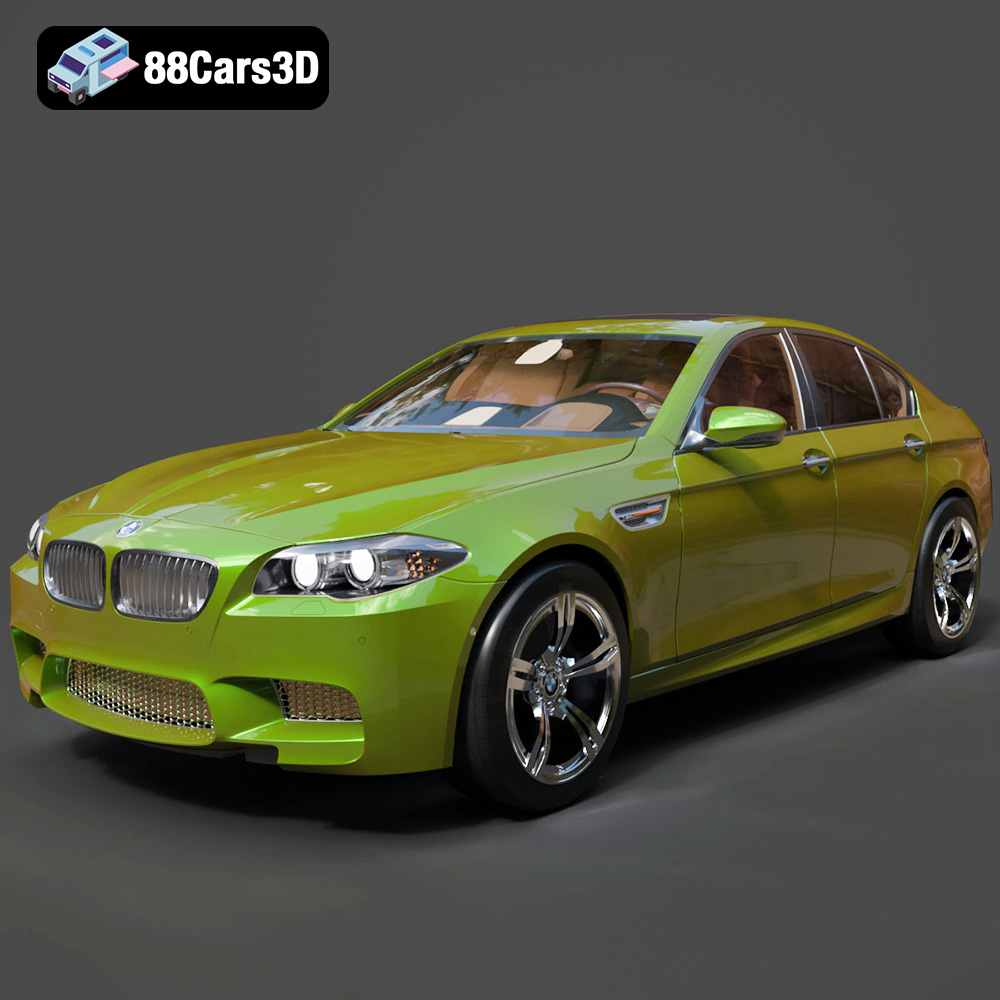
Download the BMW M5 F10 3D Model featuring high-performance luxury sedan design, detailed interior, and realistic PBR textures. Includes .blend, .fbx, .obj, .glb, .stl, .ply, .unreal, and .max formats for rendering, simulation, and game development.
Price: $10.79
BMW M3 Coupe E92-002 3D Model
Texture: Yes
Material: Yes
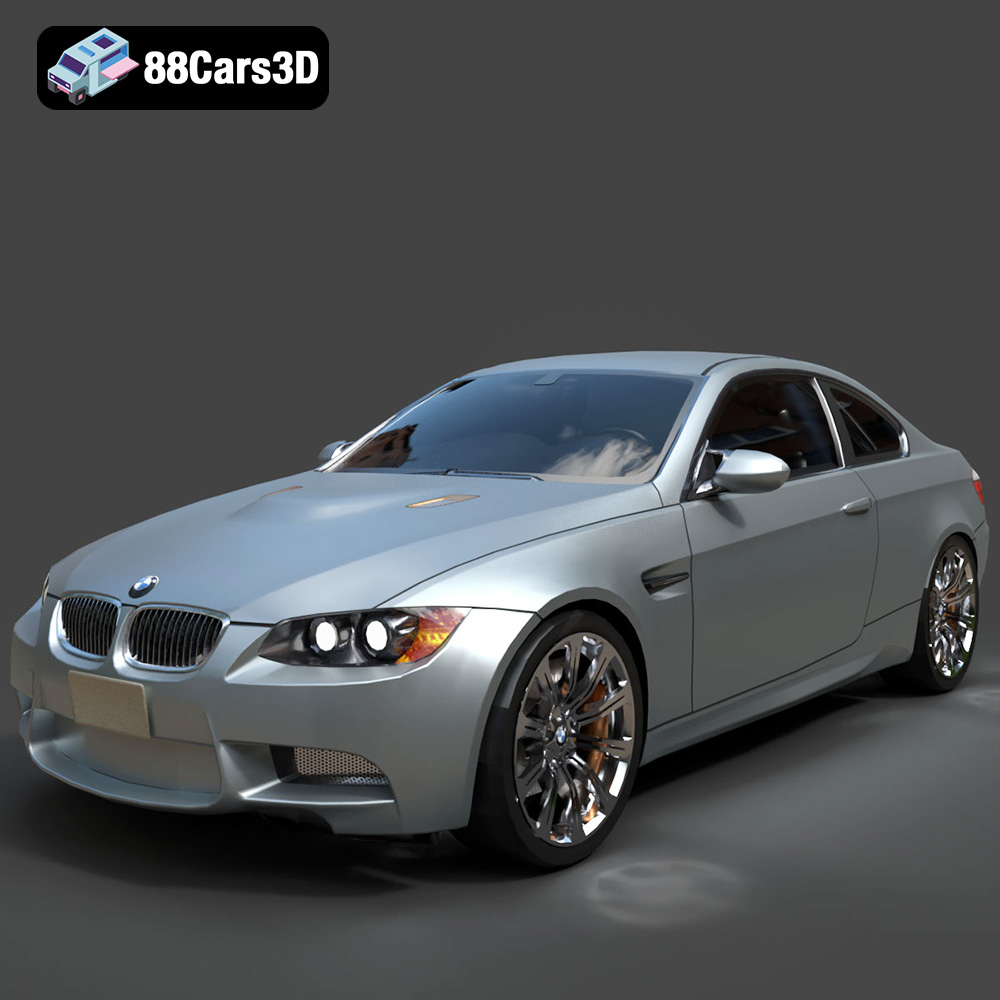
Download the BMW M3 Coupe E92-002 3D Model featuring authentic styling, detailed exterior, and a faithful interior. Includes .blend, .fbx, .obj, .glb, .stl, .ply, .unreal, and .max formats for rendering, simulation, and game development.
Price: $10.79

BMW 6 Series Gran Coupe 2013 3D Model
Texture: Yes
Material: Yes
Download the BMW 6 Series Gran Coupe 2013 3D Model featuring a sophisticated design, detailed exterior, and well-appointed interior. Includes .blend, .fbx, .obj, .glb, .stl, .ply, .unreal, and .max formats for rendering, simulation, and game development.
Price: $20.79
BMW 7 Series 750 F01 3D Model
Texture: Yes
Material: Yes
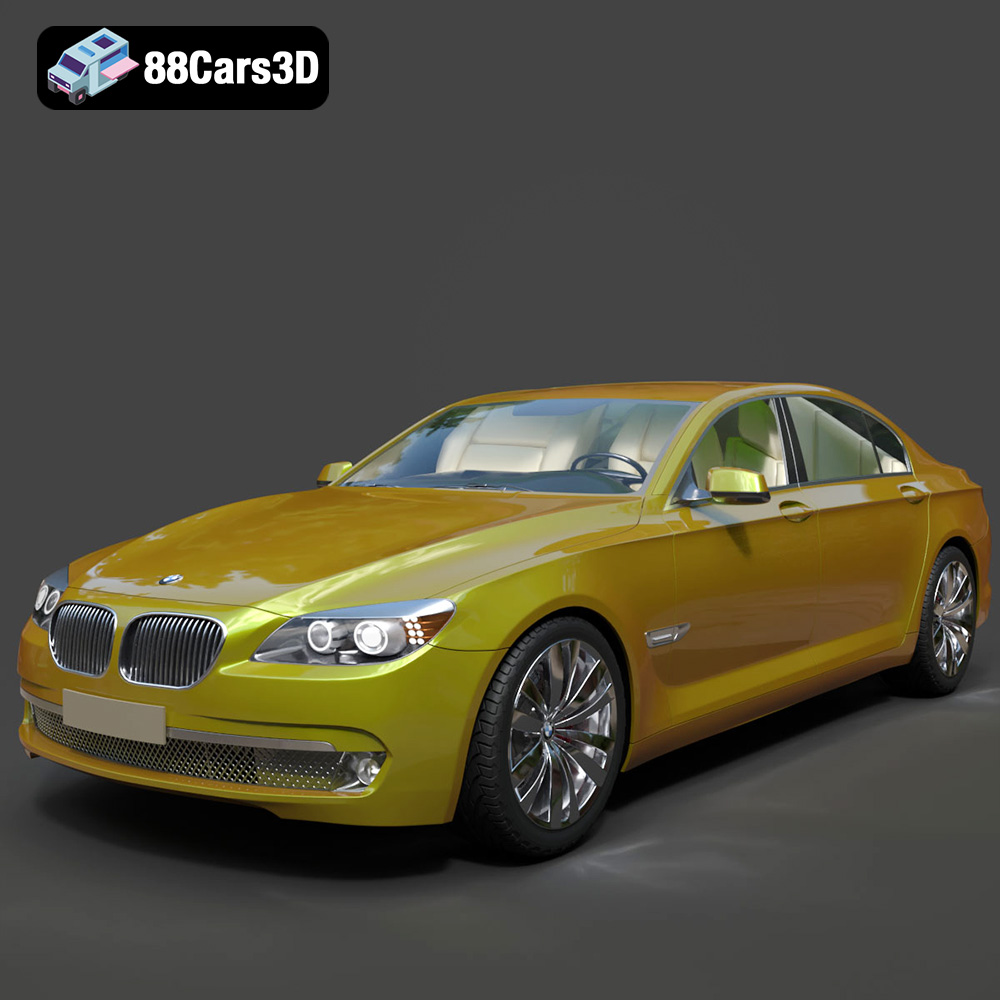
Download the BMW 7 Series 750 F01 3D Model featuring a detailed exterior and a luxurious interior. Includes .blend, .fbx, .obj, .glb, .stl, .ply, .unreal, and .max formats for rendering, simulation, and game development.
Price: $10.79
Buick Skylark Convertible 1953 3D Model
Texture: Yes
Material: Yes
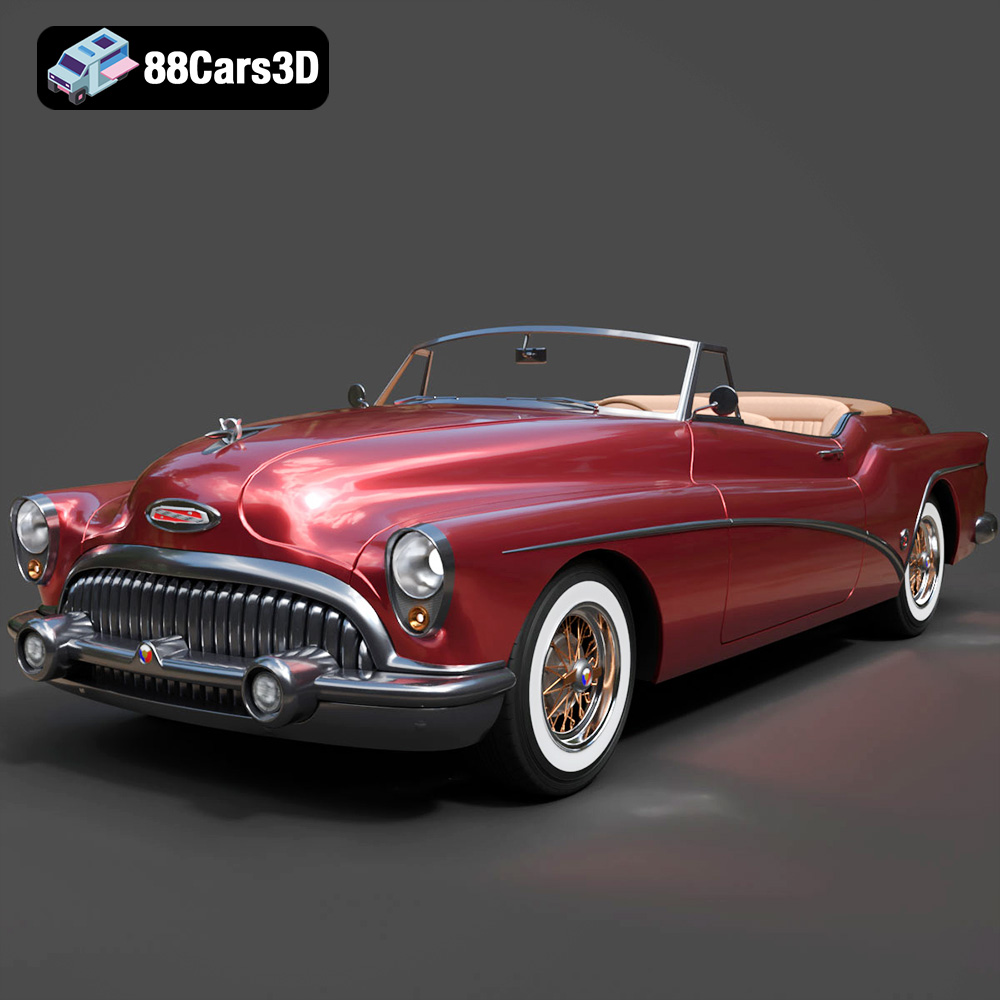
Download the Buick Skylark Convertible 1953 3D Model featuring iconic 1950s styling, a detailed exterior with chrome accents, and an accurately modeled interior. Includes .blend, .fbx, .obj, .glb, .stl, .ply, .unreal, and .max formats for rendering, simulation, and game development.
Price: $10.79

Buick Roadmaster Hardtop Coupe 1957 3D Model
Texture: Yes
Material: Yes
Download the Buick Roadmaster Hardtop Coupe 1957 3D Model featuring a classic American design with detailed exterior and interior. Includes .blend, .fbx, .obj, .glb, .stl, .ply, .unreal, and .max formats for rendering, simulation, and game development.
Price: $10.79
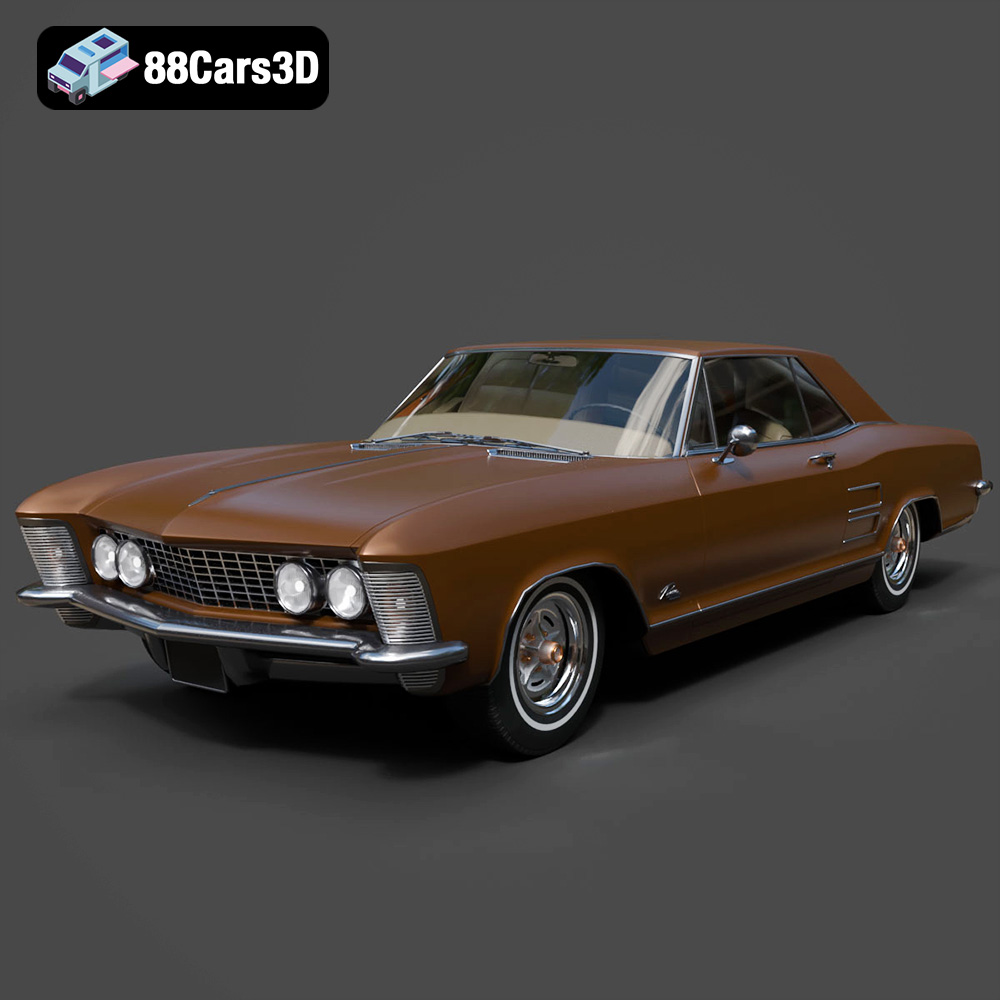
Buick Riviera 1963 3D Model
Texture: Yes
Material: Yes
Download the Buick Riviera 1963 3D Model featuring classic American muscle car design and iconic styling. Includes .blend, .fbx, .obj, .glb, .stl, .ply, .unreal, and .max formats for rendering, simulation, and game development.
Price: $10.79

Buick Regal 3D Model
Texture: Yes
Material: Yes
Download the Buick Regal 3D Model featuring a classic American sedan design, detailed exterior, and optimized interior. Includes .blend, .fbx, .obj, .glb, .stl, .ply, .unreal, and .max formats for rendering, simulation, and game development.
Price: $10.79
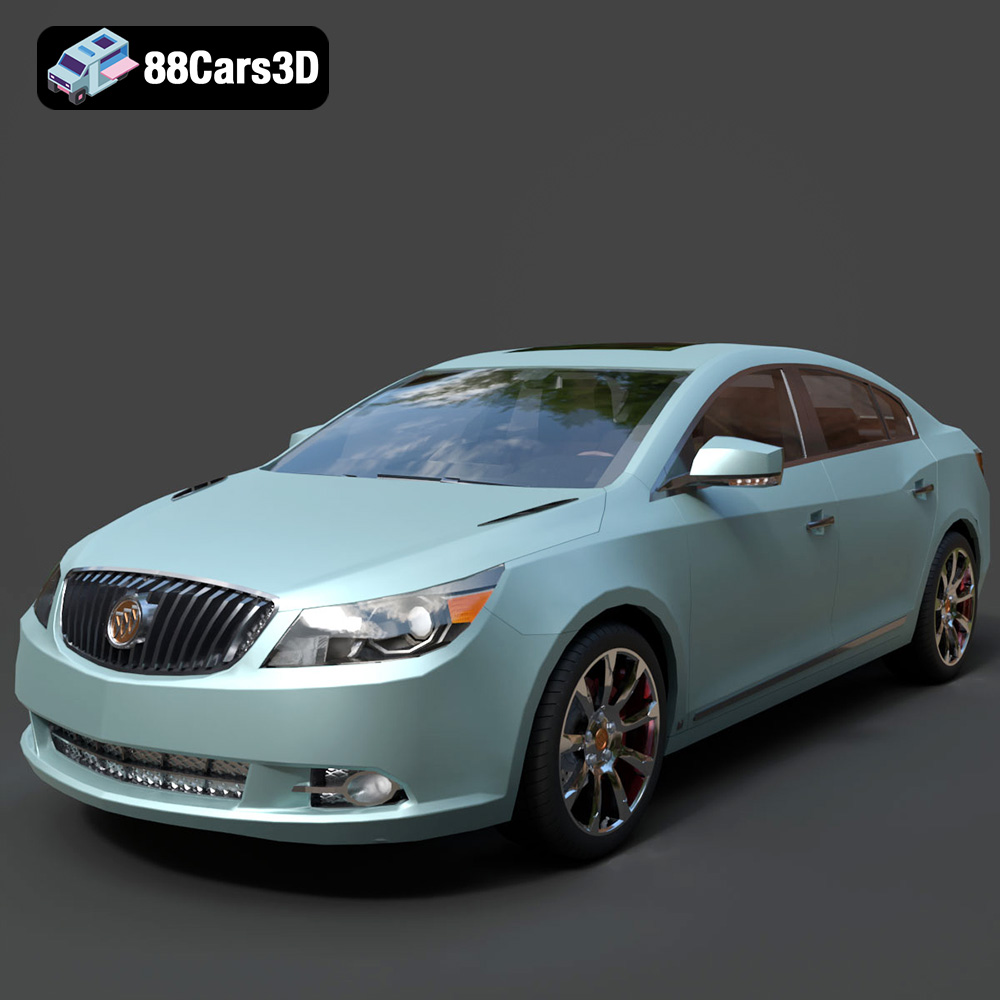
Buick LaCrosse 2008 3D Model
Texture: Yes
Material: Yes
Download the Buick LaCrosse 3D Model featuring professional modeling and texture work. Includes .blend, .fbx, .obj, .glb, .stl, .ply, .unreal, and .max formats for rendering, simulation, and game development.
Price: $10.79
