

“`html
Unlocking Your 3D Printer: A Deep Dive into STL Files and Print Optimization
The world of 3D printing is a fascinating blend of digital design and physical creation, where imagination takes tangible form layer by layer. At the heart of this process lies the humble STL file – the de facto standard for communicating 3D models to your printer. But what exactly is an STL file, and how does understanding its intricacies unlock the full potential of your 3D printer? Whether you’re a hobbyist eager to print your first collectible car model from a marketplace like 88cars3d.com, a maker looking to prototype a new design, or an educator introducing students to additive manufacturing, a solid grasp of STL files and their associated printing workflows is essential. This guide will demystify the STL format, explore the critical steps from file preparation to post-processing, and provide actionable insights to achieve stunning print results. Get ready to elevate your 3D printing game from basic prints to truly exceptional creations.
The Anatomy of an STL File: Beyond Simple Geometry
An STL (STereoLithography) file is the cornerstone of 3D printing, serving as the universal language that bridges your digital 3D model and your physical 3D printer. Unlike complex 3D modeling formats that store intricate data like colors, textures, and material properties, an STL file is remarkably simple in its structure. It represents a 3D object as a collection of interconnected triangles, forming a surface mesh. Each triangle is defined by the coordinates of its three vertices and a normal vector, which indicates the outward-facing direction of the surface. This straightforward representation makes it easily interpretable by slicing software, which translates the geometric data into machine instructions for the 3D printer.
Understanding Facets and Normal Vectors
The core of an STL file is its collection of triangular facets. Imagine dissecting a 3D object into thousands, or even millions, of tiny flat triangles. The more triangles used, the more detailed and accurate the representation of the original model. Each triangle (or facet) is defined by three points (vertices) in 3D space (X, Y, Z coordinates). Crucially, each facet also has a “normal vector.” This vector is perpendicular to the surface of the triangle and points outwards from the object. The normal vector is vital for the slicing software to understand which side of the triangle is “inside” the object and which is “outside,” ensuring that the generated print path is correct and that the model is manifold (watertight).
Binary vs. ASCII STL: Which One Matters?
STL files can exist in two formats: ASCII and Binary. ASCII STLs are human-readable text files, making them easy to inspect and edit with basic text editors. However, they are significantly larger in file size due to the text-based representation of numbers. Binary STLs, on the other hand, are more compact and efficient, storing data in a raw binary format. For most users and slicing software, the distinction is often transparent, as software can read both formats. However, binary STLs are generally preferred for larger, more complex models due to their smaller file sizes, leading to faster loading times in slicing software and reduced storage requirements. When downloading high-quality printable car models from platforms like 88cars3d.com, you’ll typically receive optimized binary STL files.
The Importance of Manifold Meshes
A critical concept for STL files is the “manifold” or “watertight” mesh. A manifold mesh is one that forms a closed volume with no holes, gaps, or self-intersections. Think of it like a sealed container – water can’t leak out. In 3D printing, a non-manifold mesh can cause significant problems. The slicing software might interpret holes as internal voids, leading to failed prints, weak structures, or incorrect geometry. Common issues that create non-manifold meshes include:
- Floating Vertices: Vertices that are not connected to any facet.
- Edge Pairs with More Than Two Facets: An edge shared by three or more triangles.
- Holes or Gaps: Missing facets or areas where the surface doesn’t close.
- Self-Intersecting Facets: Triangles that cross over each other.
Fortunately, software like Meshmixer, Blender, or Netfabb can automatically detect and repair most non-manifold errors, ensuring your STL files are print-ready.
From STL to G-code: The Crucial Role of Slicing Software
An STL file, by itself, is just a description of geometry. It doesn’t tell your 3D printer how to move, how fast to extrude filament, or what temperature to use. This translation is performed by a crucial piece of software known as a “slicer.” Popular slicers like Ultimaker Cura, PrusaSlicer, and Simplify3D take your STL file, your chosen printer profile, and your desired print settings, and then “slice” the model into hundreds or thousands of individual layers. For each layer, the slicer generates a set of instructions in a language called G-code, which is then sent to your 3D printer.
Key Slicing Parameters for Optimal Quality
The settings you choose within your slicer have a profound impact on the final print quality, strength, and print time. Mastering these parameters is key to achieving the best results, especially for intricate models like those found on 88cars3d.com.
- Layer Height: This is arguably the most significant setting. It determines the thickness of each individual layer. Lower layer heights (e.g., 0.1mm or 0.12mm) result in finer detail and smoother surfaces, but significantly increase print time. Higher layer heights (e.g., 0.2mm or 0.3mm) print much faster but produce more visible layer lines. For highly detailed car models, a layer height of 0.1mm to 0.16mm is often recommended.
- Infill Density and Pattern: Infill refers to the internal structure printed within the model’s outer walls. Density (e.g., 10-20%) affects strength and material usage, while patterns (e.g., grid, honeycomb, gyroid) can influence print time and structural integrity. For display models, low infill (5-15%) is usually sufficient. For functional parts, higher infill might be necessary.
- Print Speed: Faster speeds reduce print time but can compromise quality, especially on complex curves or fine details. A general-purpose speed for PLA on FDM printers might be around 50-60 mm/s, but outer walls are often printed slower (e.g., 25-30 mm/s) for better surface finish.
- Wall Line Count/Thickness: This determines the number of outlines printed for the outer shell. More walls generally lead to stronger, more opaque prints. For models, 2-3 walls (approximately 0.8mm – 1.2mm thick for a 0.4mm nozzle) are common.
G-code: The Printer’s Instruction Manual
G-code is a standardized programming language used to control CNC machinery, including 3D printers. When your slicer generates G-code, it creates a sequence of commands. Each command is typically a single line starting with a letter, followed by numbers. Common G-code commands include:
- G0/G1: Linear move (G0 is rapid, G1 is controlled feed rate). These commands instruct the printer’s print head to move to specific X, Y, and Z coordinates.
- G28: Home all axes (moves the print head and bed to their zero positions).
- M104/M109: Set/Wait for hotend temperature.
- M140/M190: Set/Wait for bed temperature.
- M106/M107: Fan speed control.
- E commands: Control the extrusion of filament.
Understanding G-code isn’t strictly necessary for basic printing, but it can be invaluable for advanced troubleshooting or fine-tuning specific printer behaviors.
Choosing the Right Slicer Software
The choice of slicing software can influence your workflow. Cura and PrusaSlicer are excellent, free, open-source options that support a vast array of printers and offer extensive customization. Paid options like Simplify3D offer advanced features and are highly regarded for their control over support structures and print settings. Regardless of your choice, ensure you download or configure the correct printer profile for your specific machine to guarantee compatibility and optimal performance.
Mastering Support Structures: Enabling Complex Prints
Many 3D printable car models, with their intricate aerodynamic shapes, spoilers, and undercarriages, often feature overhangs and bridges that cannot be printed in mid-air. This is where support structures come into play. Supports are temporary scaffolding generated by the slicer that hold up these overhanging sections during the printing process. Once the print is complete, these supports are manually removed. Proper support generation and removal are critical for achieving clean, detailed prints without damaging the model.
Types of Supports and Their Applications
Slicing software typically offers different types of supports:
- Normal/Grid Supports: These are the most common, forming a grid-like structure beneath overhangs. They are generally easy to generate but can sometimes be difficult to remove cleanly from detailed surfaces.
- Tree/Branching Supports: These are more advanced and tend to use less material. They grow from a single point and branch out like a tree, touching the model only where necessary. Tree supports are often easier to remove and leave fewer marks, making them ideal for delicate or highly detailed models. Cura’s experimental “Tree” support option is a prime example.
When printing car models, you might encounter specific areas needing supports: underneath roof overhangs, rear spoilers, side skirts, and wheel arches. The goal is to support these areas sufficiently without making them impossible to remove or leaving excessive scarring on the visible surfaces.
Configuring Supports for Easy Removal
Generating effective supports involves more than just enabling the feature. Several settings can significantly improve the ease of removal and the quality of the supported surfaces:
- Support Density: Similar to infill, this controls how dense the support material is. Lower density makes removal easier but offers less stability.
- Support Overhang Angle: This setting determines the minimum angle of an overhang that requires support. A common starting point is 45-60 degrees. Experimenting with this can reduce the number of unnecessary supports.
- Support Interface Layers: These are horizontal layers printed at the top and bottom of the support structure, creating a denser, smoother surface that interfaces with the model. Enabling these can create a cleaner surface on the model itself, but they can also make supports harder to break away. Adjusting their density and thickness is key.
- Support Z Distance: This is the crucial gap between the top of the support structure and the bottom of the model overhang. A larger gap makes removal easier but can lead to sagging of the overhang. A smaller gap provides better support but makes removal harder. Typical values range from 0.1mm to 0.3mm, depending on the printer and material.
- Support Placement: “Touching Buildplate” vs. “Everywhere”: “Touching Buildplate” only generates supports that start on the print bed, useful for models that don’t have overhangs extending from other parts of the model. “Everywhere” generates supports that can attach to the model itself, necessary for more complex geometries. For detailed car models, “Everywhere” is often required.
The ideal support settings are often found through trial and error, tailored to the specific model and printer. Models designed for 3D printing, such as those from 88cars3d.com, often come with pre-designed support recommendations or are modeled with overhangs minimized where possible.
Manual Support Removal Techniques
Once printing is complete and the model has cooled, carefully remove the supports. Start with larger sections and work your way towards smaller ones. Tools like flush cutters, needle-nose pliers, hobby knives (X-Acto knives), and dental picks are invaluable. Always cut away from yourself and wear safety glasses. For stubborn supports or delicate areas, gently wiggling the support can help break the adhesion. If supports are fused too strongly to the model surface, a small amount of careful sanding might be required in the post-processing stage.
Print Orientation and Bed Adhesion: The Foundation of Success
Where you place your 3D model on the print bed and how you orient it are fundamental decisions that impact print success, structural integrity, and surface finish. Furthermore, ensuring the first layer adheres well to the build plate is paramount – a print that detaches midway through is a complete waste of time and filament.
Strategic Print Orientation
The orientation of your model on the build plate influences several factors:
- Minimizing Supports: Orienting the model so that overhangs are minimized or eliminated can drastically reduce or even negate the need for support structures. This often means tilting the model or placing it at an angle.
- Strength: FDM prints are anisotropic, meaning they are stronger along the XY plane (layers are fused side-by-side) than along the Z-axis (where layers are stacked). If a part needs to withstand stress in a particular direction, orienting it so the load is applied along the XY plane can increase its strength.
- Surface Quality: The surface facing upwards during printing generally has the best finish, as it’s less affected by supports and gravity. The bottom surface, which adheres to the build plate, might have imperfections from the build surface itself. The sides will show visible layer lines. Orienting a model to showcase its best features on the top or side surfaces can be advantageous for display pieces. For car models, orienting them upright on their wheels might seem natural, but often printing them upside down or on their side can lead to better detail on the visible body panels and less need for supports on intricate parts like spoilers.
Achieving Reliable Bed Adhesion
A print failing due to poor bed adhesion is one of the most common and frustrating beginner issues. The first layer is the foundation; if it doesn’t stick, nothing else will. Key factors for good adhesion include:
- Clean Build Surface: Oils from fingerprints, dust, or residual filament can prevent proper adhesion. Regularly clean your build plate with isopropyl alcohol (IPA) or soap and water.
- Leveling the Build Plate: An uneven bed means the nozzle will be too far from the plate in some areas and too close in others. Manual bed leveling or using the printer’s auto-leveling feature is essential.
- Nozzle Height (Z-Offset): Even with a level bed, the initial distance between the nozzle and the build plate is critical. The first layer should be slightly “squished” onto the bed. Too high, and it won’t stick; too low, and it can clog the nozzle or scrape the bed. Many printers allow you to fine-tune the Z-offset live during the first layer.
- Bed Temperature: Different materials require different bed temperatures to adhere properly. For PLA, 50-60°C is common. For PETG, 70-85°C. For ABS, 90-110°C. Always consult the filament manufacturer’s recommendations.
- Adhesion Aids: For challenging prints or materials, adhesion aids can be very helpful. These include glue stick (like Elmer’s purple glue stick), hairspray (Aqua Net is popular), or specialized bed adhesives (like Magigoo). Brim or raft settings in the slicer also increase the surface area contact with the build plate. A brim adds a single layer of flat plastic around the base of your model, while a raft prints a thicker, disposable base underneath your model.
Material Selection and Printer Calibration: The Building Blocks of Quality
The type of filament you choose and the calibration of your 3D printer are foundational elements that significantly influence the quality, durability, and appearance of your prints. Selecting the right material for your project and ensuring your printer is running optimally are not afterthoughts but critical steps in the 3D printing process.
Common Filament Types for Model Making
While numerous filament types exist, a few are particularly popular for hobbyist and model printing:
- PLA (Polylactic Acid): The most common and beginner-friendly filament. It’s easy to print, biodegradable, and available in a vast array of colors and finishes (including wood-fill, metal-fill, and silk). It has low warping and is ideal for detailed display models like those found on 88cars3d.com. Its main drawback is lower heat resistance and brittleness compared to other materials. Typical print temps: 190-220°C nozzle, 50-60°C bed.
- PETG (Polyethylene Terephthalate Glycol-modified): Offers a good balance of strength, flexibility, and ease of printing. It’s more durable and has better temperature resistance than PLA, making it suitable for parts that might experience some stress. It can be stringier than PLA. Typical print temps: 220-250°C nozzle, 70-85°C bed.
- ABS (Acrylonitrile Butadiene Styrene): Known for its high strength, temperature resistance, and durability (the same material as LEGO bricks). However, ABS is prone to warping and requires a heated enclosure to maintain stable temperatures and prevent drafts, as well as higher bed temperatures (often 90-110°C). Fumes can also be an issue, requiring good ventilation.
- Resin (SLA/DLP/MSLA): While not filament, resin printing offers significantly higher detail and smoother surfaces than FDM printing, making it exceptional for miniature and highly detailed models. However, it requires more post-processing (washing and curing) and often involves more hazardous materials. The STL files for resin printing often have specific requirements, such as thicker walls and drain holes.
Printer Calibration: The Key to Repeatable Success
A well-calibrated printer is essential for consistent, high-quality results. Key calibration steps include:
- E-Steps Calibration: Ensures that when the printer is commanded to extrude 100mm of filament, it actually extrudes 100mm. Incorrect E-steps can lead to under-extrusion (weak, gappy prints) or over-extrusion (blobs and poor detail).
- PID Tuning: Calibrates the heater control loops for both the hotend and the heated bed. This ensures stable temperatures without significant fluctuations, which is crucial for consistent layer adhesion and material properties.
- Flow Rate/Extrusion Multiplier: Fine-tunes the amount of filament extruded, compensating for variations in filament diameter or extruder behavior. Often adjusted in the slicer after E-steps are calibrated.
- Bed Leveling and Z-Offset: As discussed previously, this is fundamental for the first layer.
- Temperature Towers and Retraction Tests: Printing calibration models like temperature towers (to find the optimal printing temperature for a specific filament) and retraction tests (to minimize stringing) are crucial for dialing in settings for new filaments or materials.
Regular maintenance, such as cleaning nozzle and bed, lubricating Z-axis rods, and checking belt tension, also contributes to overall print quality and reliability.
Post-Processing: Bringing Your Printed Models to Life
The 3D print is rarely the final product, especially for detailed models. Post-processing is the stage where you refine the printed object, enhance its appearance, and bring it closer to the intended finished product. This can range from simple support removal to complex assembly and painting.
Cleaning and Finishing Surfaces
After removing supports, you’ll likely be left with small marks or imperfections where the supports were attached. The primary technique for smoothing these out is sanding.
- Sanding: Start with a coarser grit sandpaper (e.g., 120-220 grit) to remove major imperfections and support nubs. Progress to finer grits (e.g., 400, 800, 1000, and even higher) to achieve a smooth finish. Wet sanding (using water or soapy water) can help prevent dust buildup and clogging of the sandpaper.
- Filling Gaps and Seams: For models printed in multiple parts, or if there are minor gaps, use modeling putty or a specialized 3D print filler (like XTC-3D) to fill these imperfections before sanding.
- Priming: Applying a primer coat is essential before painting. Primer helps to reveal any remaining imperfections that were missed during sanding and provides a uniform surface for paint to adhere to. Aerosol primers designed for plastic models work well.
Painting and Assembly Techniques
Painting is where a 3D printed model truly comes alive. Whether you use acrylic model paints, airbrushing, or spray cans, careful application can bring out incredible detail.
- Detail Painting: For intricate models like cars, masking tape (low-tack painter’s tape) is invaluable for achieving clean lines between different colored panels. Small detail brushes are used for emblems, trim, and other fine features.
- Washes and Dry Brushing: These techniques can add depth and realism. A dark wash (thinned dark paint) settled into recesses can highlight panel lines and details. Dry brushing (applying a small amount of lighter paint with a stiff brush to raised edges) can simulate weathering or metallic highlights.
- Assembly: Many complex models, especially high-detail car replicas, are designed to be printed in multiple parts and then assembled. Cyanoacrylate glue (super glue) is excellent for bonding most 3D printed plastics. For larger parts or if some flexibility is needed, a two-part epoxy or plastic cement can be used. Ensure you have a good fit between parts before applying glue.
The process of post-processing requires patience and practice, but the ability to transform a raw 3D print into a polished, display-worthy model is incredibly rewarding.
Conclusion: Your 3D Printing Journey Starts with the STL
Understanding the STL file format and the entire workflow from digital model to finished print is a continuous learning process. We’ve explored the fundamental structure of STL files, the critical role of slicing software in translating geometry into machine instructions, the importance of expertly generated support structures, and the foundational principles of print orientation and bed adhesion. Furthermore, we’ve touched upon material selection, essential printer calibration, and the transformative power of post-processing.
By paying attention to details like mesh integrity, choosing appropriate slicing parameters (layer height, speed, infill), strategically orienting your models, ensuring perfect first-layer adhesion, and dialing in your printer’s calibration, you significantly increase your chances of successful prints. For anyone looking to create detailed replicas or functional parts, mastering these concepts is paramount. Whether you’re printing intricate collectible cars from marketplaces like 88cars3d.com or your own unique designs, this comprehensive understanding will serve as your guide. So, dive in, experiment with settings, learn from your prints, and enjoy the incredibly rewarding journey of bringing your digital creations to life through 3D printing.
“`
Featured 3D Car Models

BMW M6 Coupe (F12) 3D Model
Texture: Yes
Material: Yes
Download the BMW M6 Coupe (F12) 3D Model featuring its iconic sporty design and luxurious details. Includes .blend, .fbx, .obj, .glb, .stl, .ply, .unreal, and .max formats for rendering, simulation, and game development.
Price: $10.79

BMW M5 F10 3D Model
Texture: Yes
Material: Yes
Download the BMW M5 F10 3D Model featuring high-performance luxury sedan design, detailed interior, and realistic PBR textures. Includes .blend, .fbx, .obj, .glb, .stl, .ply, .unreal, and .max formats for rendering, simulation, and game development.
Price: $10.79

BMW M3 Coupe E92-002 3D Model
Texture: Yes
Material: Yes
Download the BMW M3 Coupe E92-002 3D Model featuring authentic styling, detailed exterior, and a faithful interior. Includes .blend, .fbx, .obj, .glb, .stl, .ply, .unreal, and .max formats for rendering, simulation, and game development.
Price: $10.79

BMW 6 Series Gran Coupe 2013 3D Model
Texture: Yes
Material: Yes
Download the BMW 6 Series Gran Coupe 2013 3D Model featuring a sophisticated design, detailed exterior, and well-appointed interior. Includes .blend, .fbx, .obj, .glb, .stl, .ply, .unreal, and .max formats for rendering, simulation, and game development.
Price: $20.79

BMW 7 Series 750 F01 3D Model
Texture: Yes
Material: Yes
Download the BMW 7 Series 750 F01 3D Model featuring a detailed exterior and a luxurious interior. Includes .blend, .fbx, .obj, .glb, .stl, .ply, .unreal, and .max formats for rendering, simulation, and game development.
Price: $10.79

Buick Skylark Convertible 1953 3D Model
Texture: Yes
Material: Yes
Download the Buick Skylark Convertible 1953 3D Model featuring iconic 1950s styling, a detailed exterior with chrome accents, and an accurately modeled interior. Includes .blend, .fbx, .obj, .glb, .stl, .ply, .unreal, and .max formats for rendering, simulation, and game development.
Price: $10.79

Buick Roadmaster Hardtop Coupe 1957 3D Model
Texture: Yes
Material: Yes
Download the Buick Roadmaster Hardtop Coupe 1957 3D Model featuring a classic American design with detailed exterior and interior. Includes .blend, .fbx, .obj, .glb, .stl, .ply, .unreal, and .max formats for rendering, simulation, and game development.
Price: $10.79
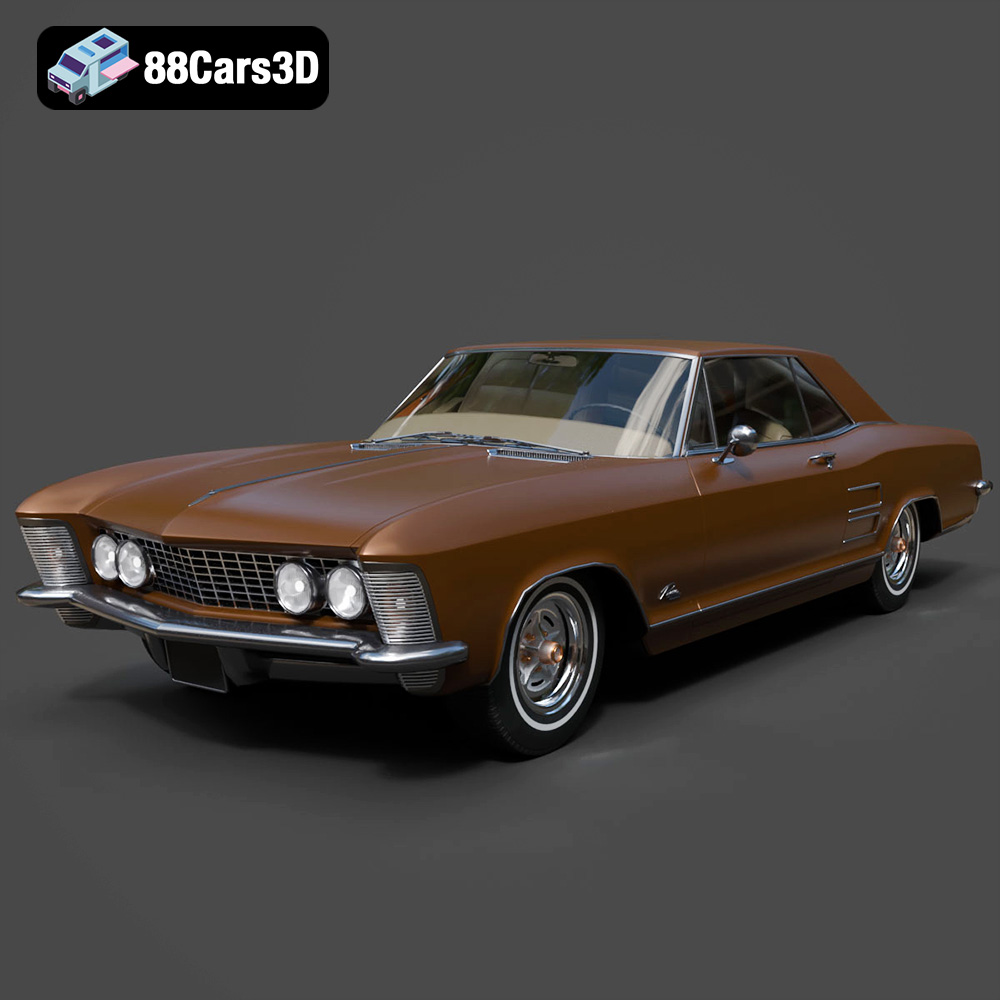
Buick Riviera 1963 3D Model
Texture: Yes
Material: Yes
Download the Buick Riviera 1963 3D Model featuring classic American muscle car design and iconic styling. Includes .blend, .fbx, .obj, .glb, .stl, .ply, .unreal, and .max formats for rendering, simulation, and game development.
Price: $10.79

Buick Regal 3D Model
Texture: Yes
Material: Yes
Download the Buick Regal 3D Model featuring a classic American sedan design, detailed exterior, and optimized interior. Includes .blend, .fbx, .obj, .glb, .stl, .ply, .unreal, and .max formats for rendering, simulation, and game development.
Price: $10.79

Buick LaCrosse 2008 3D Model
Texture: Yes
Material: Yes
Download the Buick LaCrosse 3D Model featuring professional modeling and texture work. Includes .blend, .fbx, .obj, .glb, .stl, .ply, .unreal, and .max formats for rendering, simulation, and game development.
Price: $10.79
