

“`html
Mastering Wall Thickness and Support Structures for Flawless 3D Printed Car Models
The allure of 3D printing is in its ability to transform digital designs into tangible objects. For automotive enthusiasts and model makers, this means bringing iconic cars to life on their printers. However, achieving that perfect, detailed replica often hinges on two critical, yet sometimes overlooked, aspects of 3D printing: proper wall thickness and effective support structures. These elements are the bedrock upon which a successful print is built, dictating everything from structural integrity to the final aesthetic quality. Without a solid understanding of how to optimize them, even the most beautifully designed STL files can result in fragile, incomplete, or messy prints. This comprehensive guide will delve deep into the technical intricacies of wall thickness and support generation, specifically tailored for 3D printable car models. We’ll explore why they matter, how to set them correctly in your slicer, troubleshoot common issues, and ultimately, help you produce professional-grade car models with confidence. Whether you’re using FDM or resin technology, preparing your files from marketplaces like 88cars3d.com or your own creations, mastering these settings is your ticket to unlocking the full potential of additive manufacturing for your automotive projects.
The Criticality of Wall Thickness in 3D Printed Automotive Models
Wall thickness, often referred to as shell thickness or perimeter count in slicer software, is a fundamental setting that directly impacts the strength, detail, and printability of any 3D model. For intricate automotive replicas, where delicate spoilers, mirrors, and body panels are common, getting this right is paramount. A wall that is too thin can lead to print failures, where the nozzle simply doesn’t extrude enough material to create a solid line, resulting in gaps, under-extrusion, or even entire sections failing to form. Conversely, walls that are excessively thick can obscure fine details, add unnecessary print time and material cost, and may even lead to internal stress points during cooling, potentially causing warping. The goal is to find a balance that ensures structural integrity while preserving the exquisite details that make car models so appealing.
Understanding Minimum Wall Thickness and Layer Height
The minimum wall thickness setting in your slicer is the smallest dimension your printer can reliably create. This is directly related to your nozzle diameter. For standard 0.4mm nozzles, a common minimum effective wall thickness is often considered to be two extrusion widths, or approximately 0.8mm. However, this can vary. For FDM printing, setting the wall thickness to a multiple of your nozzle diameter (e.g., 0.4mm, 0.8mm, 1.2mm) usually yields the best results, ensuring that each perimeter line is fully connected and reinforced. If you are printing a model with particularly thin features, such as antennas or side mirrors, you might need to increase the wall thickness beyond the minimum to ensure these parts are robust enough to survive printing and handling. Alternatively, for highly detailed resin prints, wall thickness is often measured in millimeters and can be significantly thinner, sometimes down to 0.1mm or 0.2mm, depending on the resin’s properties and the desired level of detail.
Optimizing Wall Settings for FDM vs. Resin Printing
For FDM printers, the strategy revolves around extrusion width and perimeter count. Instead of directly setting a wall thickness in millimeters, you’ll often set the number of perimeters (walls). A single wall (0.4mm with a 0.4mm nozzle) is rarely sufficient for structural integrity or detail. Two to three walls (0.8mm to 1.2mm) are typically a good starting point for most car model parts. For areas requiring extra strength, like wheel arches or chassis components, increasing this to four or five walls can be beneficial. The key is that the slicer intelligently adds these perimeters based on your nozzle size and extrusion multiplier settings. For resin printing (SLA/DLP/MSLA), the concept of “wall thickness” is more direct, often set in millimeters. When hollowing a model (which is common in resin printing to save material and reduce curing time), you specify the thickness of the remaining solid material. This thickness needs to be sufficient to prevent the print from collapsing under its own weight during the printing process and to capture fine surface details. For very small or delicate parts, a thicker wall might be necessary to prevent breakage during removal from the build plate or during post-processing.
Detecting and Repairing Thin Walls in STL Files
Before even slicing, it’s crucial to inspect your STL files for inadequate wall thickness. Software like Meshmixer, Blender, or even Netfabb (in its various forms) offer tools to analyze mesh integrity. Look for non-manifold edges, which often indicate gaps or intersecting faces that can lead to thin or non-existent walls. Many slicers also have built-in preview modes that can highlight areas where the model might be too thin for the selected nozzle size. If you encounter persistent issues with thin walls in models downloaded from platforms like 88cars3d.com, consider using mesh repair tools. In Meshmixer, the “Inspector” tool can identify and often automatically fix errors. In Blender, you can use the “3D-Print Toolbox” add-on, which includes checks for wall thickness and manifold errors. Sometimes, minor adjustments within the slicer’s “Scale” or “Edit” (if available) functions can help thicken problematic areas, but more significant issues are best addressed in dedicated 3D modeling or mesh repair software.
The Art and Science of Generating Effective Support Structures
Support structures are the unsung heroes of 3D printing, providing a temporary scaffolding for overhanging parts of your model that would otherwise print in mid-air. For complex automotive models, which often feature dramatic curves, spoilers, undercarriages, and intricate grilles, effective support generation is not just beneficial—it’s essential. Poorly designed or placed supports can damage the surface finish of your model, leave unsightly remnants that are difficult to remove, or even cause the print to fail by not adequately supporting critical overhangs. Conversely, well-optimized supports ensure a clean print with minimal post-processing, preserving the sharp lines and detailed textures of your chosen vehicle.
Understanding Support Types and Placement Strategies
Slicer software typically offers several types of supports: ‘Normal’ or ‘Grid’ supports, which create a dense lattice, and ‘Tree’ or ‘Organic’ supports, which branch out from the build plate to touch the model at specific points. For car models, Tree supports (available in Cura and PrusaSlicer) are often preferred. They use significantly less material, are faster to print, and crucially, are much easier to remove with less risk of surface damage. They also tend to contact the model at fewer points, leaving smaller marks. When placing supports, the general rule is to support any overhang angle greater than 45-60 degrees from vertical. For car models, pay special attention to areas like the roofline, bumpers, wheel wells, spoilers, and any intricate underbody details. You’ll want to place supports strategically so they are accessible for removal and don’t obscure details you want to showcase. Sometimes, rotating the model on the build plate can dramatically reduce the need for supports.
Configuring Support Settings for Optimal Quality and Removability
The key to successful support generation lies in fine-tuning the settings. Critical parameters include:
- Support Overhang Angle: This determines which overhangs trigger support. Start around 50 degrees and adjust based on your printer and material.
- Support Pattern: As mentioned, Tree/Organic supports are excellent for car models. Grid supports offer more stability for very large or complex overhangs but are harder to remove.
- Support Density: Lower density means less material and easier removal, but potentially less stable supports. Higher density provides more stability but is harder to remove. For tree supports, density relates to how often branches form.
- Support Interface: This is a denser layer printed just below the model’s surface where supports attach. Enabling a support interface can significantly improve the surface quality of the underside of overhangs, making them smoother and cleaner. You can often adjust the interface pattern, density, and height.
- Support Z Distance: This is the crucial gap between the top of the support structure and the model. A larger Z distance makes supports easier to remove but can lead to poorer surface quality on the overhang. A smaller distance improves surface quality but makes removal harder. A value between 0.1mm and 0.3mm for FDM, or 0.02mm to 0.08mm for resin, is typical.
- Support XY Distance: This controls the horizontal gap between the model and the support structure. A small XY distance helps prevent supports from fusing to the model, improving removability.
- Support Placement: ‘Touching Buildplate’ only supports areas that overhang directly above the build plate. ‘Everywhere’ supports all overhangs, even those suspended above other parts of the model. For car models, ‘Touching Buildplate’ is often sufficient, but ‘Everywhere’ might be needed for complex undercarriages or wing structures.
Experimentation is key. Start with a preset designed for overhangs and then iteratively adjust these settings, printing small test sections if necessary, until you find what works best for your specific printer, material, and the complexity of the car model.
Advanced Support Techniques and Troubleshooting
Sometimes, standard slicer settings aren’t enough. You might need to manually add or remove supports in your slicer or even in mesh editing software. For instance, if a specific small detail like a door handle is failing, you might manually add a small, precise support directly beneath it. Conversely, if supports are marring a visible surface like a hood scoop, you might try to reposition them or reduce the contact point size.
Common support-related issues include:
- Supports Fusing to the Model: Increase the Support XY Distance or ensure the Support Interface is not too dense or too close.
- Supports Not Sticking to the Model: Decrease the Support Z Distance slightly or increase the Support Density. Ensure your model’s overhangs are within the printer’s capabilities.
- Difficulty Removing Supports: Increase the Support Z Distance and XY Distance. Consider enabling a Support Interface with a pattern that is easier to break away. Tree supports are inherently easier to remove.
- Surface Quality Issues on Overhangs: This often indicates insufficient cooling (FDM) or incorrect exposure time (resin). For FDM, ensure cooling fans are at 100% for overhangs. For resin, slightly increasing exposure time for the outer layers can help solidify overhangs, but be cautious not to over-cure.
- Supports Breaking During Print: This can be due to insufficient density, poor adhesion to the build plate, or inadequate support for the base of the support structure itself. Ensure your build plate is level and clean.
For highly detailed car models downloaded from professional sources such as 88cars3d.com, the designers often pre-optimize models for printing, sometimes even including pre-generated support structures or designing them with minimal support needs in mind. Always check the product descriptions for printing recommendations.
Integrating Wall Thickness and Supports for Print Success
The real magic happens when you understand how wall thickness and support structures interact and complement each other. They are not independent settings but rather two sides of the same coin – ensuring a successful, high-quality print. A model designed with adequate wall thickness is inherently more capable of supporting itself during the printing process, reducing the reliance on aggressive support structures. This symbiotic relationship is crucial for achieving the fine details and structural integrity required for automotive models, from the sharp edges of a spoiler to the delicate spokes of a wheel.
Layer Height vs. Wall Thickness Trade-offs
The choice of layer height significantly impacts both print time and the ability to resolve fine details, which directly relates to wall thickness. For FDM printing, standard layer heights range from 0.1mm to 0.3mm. Using a lower layer height (e.g., 0.12mm) allows for finer detail resolution and smoother curves, which is beneficial for capturing the nuances of a car’s bodywork. However, it also means more layers are needed to build the object, dramatically increasing print time. Crucially, lower layer heights can also make it easier to achieve very thin walls, provided your printer is well-calibrated. If you are printing a model with a 0.4mm nozzle and aiming for a 0.8mm wall thickness (two perimeters), a 0.12mm layer height means each wall is composed of approximately 6-7 extrusion lines (0.8mm / 0.12mm ≈ 6.67). If you increase the layer height to 0.2mm, each wall is only 4 extrusion lines thick (0.8mm / 0.2mm = 4). While faster, this can sometimes result in less robust walls or visible layer lines within the wall itself. For resin printing, layer heights are typically much smaller (0.025mm to 0.1mm), offering incredible detail. Here, the wall thickness is a direct millimeter value, and a thinner layer height allows for finer increments in that wall, capturing even the smallest surface imperfections or design elements.
Infill Patterns and Their Impact on Wall Support
While walls form the outer shell of your print, infill provides internal support and strength. For many display models, especially those not intended for structural use, a low infill density (5-15%) is often sufficient. However, the *type* of infill pattern can play a subtle role in how well the outer walls are supported during printing. Patterns like ‘Gyroid’ or ‘Cubic’ create internal structures that offer support in multiple directions, which can help prevent the outer walls from collapsing inwards, especially on large, unsupported spans within the model’s interior. For car models, you might consider using a slightly denser infill or a more supportive pattern for chassis components or areas prone to stress, even if the overall density remains low. This ensures that as the outer walls cool and contract, the internal infill provides a stable base. When printing very thin-walled objects without infill (solid shells), the walls must be robust enough on their own; otherwise, they risk collapsing.
Material Selection: Balancing Strength, Detail, and Printability
The choice of filament or resin is a critical factor influencing both wall thickness requirements and support needs.
- PLA: Easy to print, good detail, but can be brittle. Requires careful support removal to avoid chipping. Wall thickness can be reasonably thin (0.8mm+) for structural integrity.
- PETG: More durable and slightly more flexible than PLA, making it better for parts that might experience minor stress. It can be stringier, potentially making support removal trickier and requiring more careful calibration of retraction and travel speeds. Minimum wall thickness of 1.0mm-1.2mm is often recommended for robustness.
- ABS: Strong and temperature resistant but prone to warping, requiring an enclosed printer and careful temperature control. Its warping tendency can exacerbate issues with thin walls and complex overhangs, often necessitating more robust support structures.
- Resin (Standard, ABS-like, Tough): Offers unparalleled detail. Standard resins are brittle, while ABS-like and Tough resins provide more durability. For resin, ensuring adequate wall thickness (e.g., 0.5mm-1.5mm depending on the model size and part function) is crucial for preventing print failures and ensuring parts are not too flimsy after curing. Support settings (exposure time, density, contact points) are paramount for surface finish.
When selecting a model from a platform like 88cars3d.com, pay attention to any recommended materials or specific printing advice provided by the creator, as they often tailor their designs to specific printing technologies and materials.
Achieving Print-Ready Perfection: Beyond Basic Settings
Successfully printing detailed car models involves more than just setting wall thickness and supports; it requires a holistic approach to file preparation, printer calibration, and post-processing. Understanding how these elements intertwine will elevate your prints from good to exceptional. It’s about preparing your digital model meticulously, optimizing your printer’s performance, and executing a clean finishing process that brings out the best in your chosen vehicle replica.
The Importance of Printer Calibration and Maintenance
A poorly calibrated printer is the root cause of many printing woes, including issues with wall thickness and support adhesion.
- Bed Leveling: Essential for the first layer, which dictates the foundation for the entire print. An uneven bed can lead to parts detaching or warping, especially critical for larger models.
- E-step Calibration: Ensures your extruder is pushing the correct amount of filament. Inaccurate E-steps lead directly to under- or over-extrusion, affecting wall thickness and detail.
- Flow Rate/Extrusion Multiplier: Fine-tunes extrusion beyond E-steps. Calibrating this setting precisely can ensure your walls are exactly the thickness you intend them to be, preventing gaps or blobs.
- Temperature Tuning (Temp Tower): Finding the optimal printing temperature for your filament ensures good layer adhesion and surface quality, minimizing stringing and improving the finish where supports meet the model.
- Retraction Settings: Crucial for minimizing stringing, especially with stringy materials like PETG. Excessive stringing can create delicate, filament-like supports that are a nightmare to remove and can mar surfaces.
Regular maintenance, such as cleaning the nozzle, checking belt tension, and lubricating moving parts, ensures your printer consistently performs at its best, reducing the likelihood of unpredictable failures.
STL File Optimization and Pre-Processing Workflows
Before you even load an STL file into your slicer, a few preparatory steps can save you a lot of trouble. For complex car models, especially those with many separate parts or intricate details, consider the following:
- Decimation/Remeshing: Extremely high-polygon count models can slow down slicers and sometimes cause issues. Tools like Meshmixer or Blender can simplify meshes (decimation) or rebuild them with a more uniform topology (remeshing) while preserving detail.
- Hollowing (for Resin): As mentioned, hollowing models for resin printing is standard practice. Ensure you add drainage holes to allow uncured resin to escape during printing and cured resin to be washed out during post-processing. Place these holes strategically on non-visible surfaces.
- Splitting Large Models: For very large car models that exceed your printer’s build volume or would take an impractically long time to print, consider splitting the model into smaller, manageable parts. This allows for easier printing, less waste if a part fails, and simplifies support generation for individual components. Use modeling software to cut the model cleanly and consider adding registration keys or pins to aid in assembly later.
- Combining Meshes: If a model is provided as multiple separate files (e.g., body, wheels, interior), you may need to combine them into a single STL for certain slicers or workflows, or position them appropriately on the build plate.
Many models found on sites like 88cars3d.com are already optimized, but understanding these techniques empowers you to tackle any file.
Post-Processing: Sanding, Painting, and Assembly Best Practices
The journey doesn’t end when the print is finished. Post-processing is where a 3D printed model truly transforms.
- Support Removal: Use flush cutters, hobby knives, and pliers for careful removal. For resin prints, remove supports *before* the final UV cure for easier removal and less risk of damaging the part.
- Sanding: Start with coarser grit sandpaper (e.g., 150-220 grit) to remove support marks and layer lines, progressing to finer grits (e.g., 400, 800, 1000+) for a smooth finish. Wet sanding can be effective for FDM prints. For resin, fine-grit sanding is usually sufficient.
- Filling and Priming: Use modeling putty or fillers to smooth out any remaining imperfections. Apply a primer coat (spray primer is excellent) to reveal any missed flaws and provide a uniform base for painting.
- Painting: Acrylic paints are popular for hobby models. Airbrushing can provide a very smooth, factory-like finish. Masking tape is essential for achieving clean lines between different colors (e.g., body paint vs. trim).
- Assembly: Use appropriate adhesives (super glue/cyanoacrylate, epoxy, or plastic cement depending on the material) to assemble multi-part models. Ensure parts align correctly using any designed-in registration features.
Patience during post-processing is key. Rushing these steps can undo all the hard work put into achieving a clean print.
In conclusion, mastering the interplay between wall thickness and support structures is fundamental to achieving high-quality, detailed 3D printed car models. By understanding the technical nuances of slicer settings, employing strategic placement and configuration of supports, and considering the material and printer capabilities, you can overcome common printing challenges. Adequate wall thickness ensures structural integrity and detail fidelity, while well-optimized supports facilitate clean prints with minimal post-processing effort. Remember that practice, iteration, and a keen eye for detail are your best allies. Whether you’re downloading a meticulously crafted STL from 88cars3d.com or working with your own designs, investing time in optimizing these settings will undoubtedly lead to more successful, impressive, and satisfying results. Happy printing!
“`
Featured 3D Car Models

BMW Z4 Roadster E89 2012 3D Model
Texture: Yes
Material: Yes
Download the BMW Z4 Roadster E89 3D Model featuring clean geometry, realistic detailing, and a fully modeled interior. Includes .blend, .fbx, .obj, .glb, .stl, .ply, .unreal, and .max formats for rendering, simulation, and game development.
Price: $13.99

BMW Z4 E85 2005 3D Model
Texture: Yes
Material: Yes
Download the BMW Z4 E85 3D Model featuring clean geometry, realistic detailing, and a fully modeled interior. Includes .blend, .fbx, .obj, .glb, .stl, .ply, .unreal, and .max formats for rendering, simulation, and game development.
Price: $13.99

BMW M3 2024 3D Model
Texture: Yes
Material: Yes
Download the BMW M3 2024 3D Model featuring clean geometry, realistic detailing, and a fully modeled interior. Includes .blend, .fbx, .obj, .glb, .stl, .ply, .unreal, and .max formats for rendering, simulation, and game development.
Price: $13.99
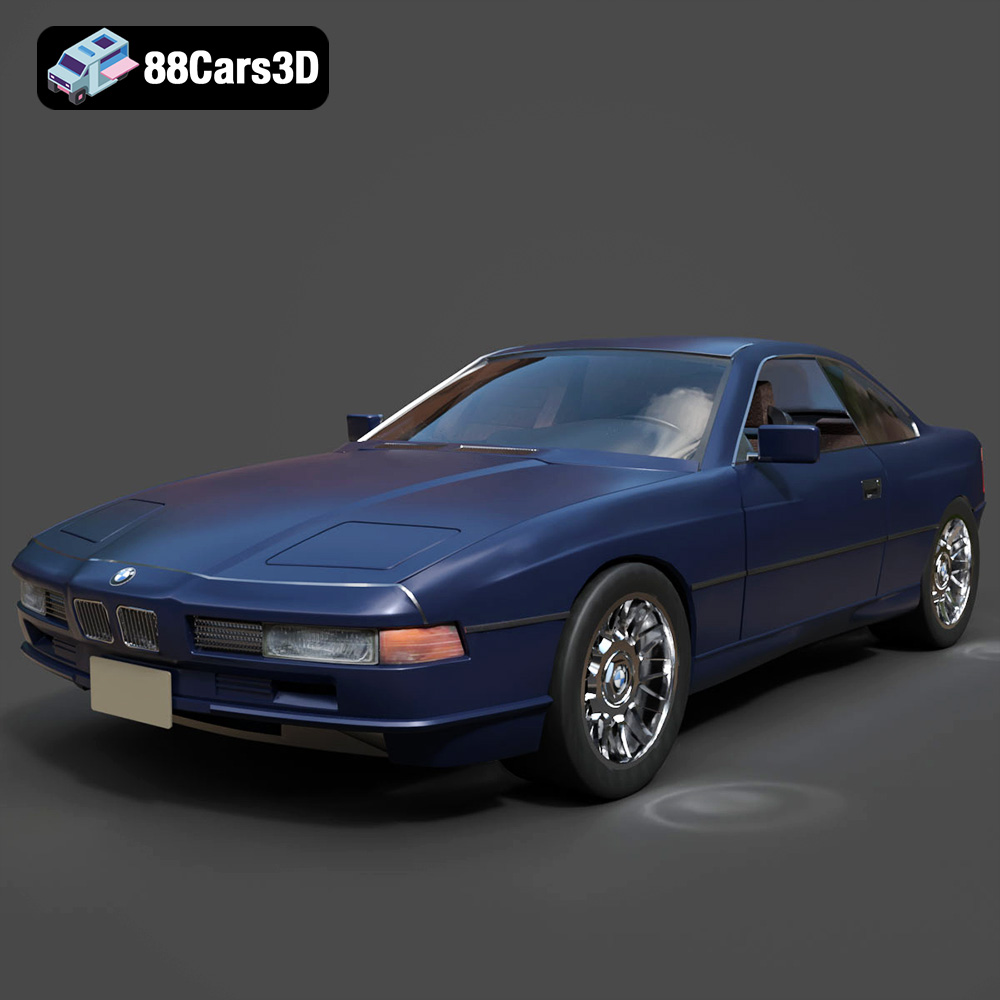
BMW 850i Coupe 1990 3D Model
Texture: Yes
Material: Yes
Download the BMW 850i Coupe 1990 3D Model featuring clean geometry, realistic detailing, and a fully modeled interior. Includes .blend, .fbx, .obj, .glb, .stl, .ply, .unreal, and .max formats for rendering, simulation, and game development.
Price: $13.99
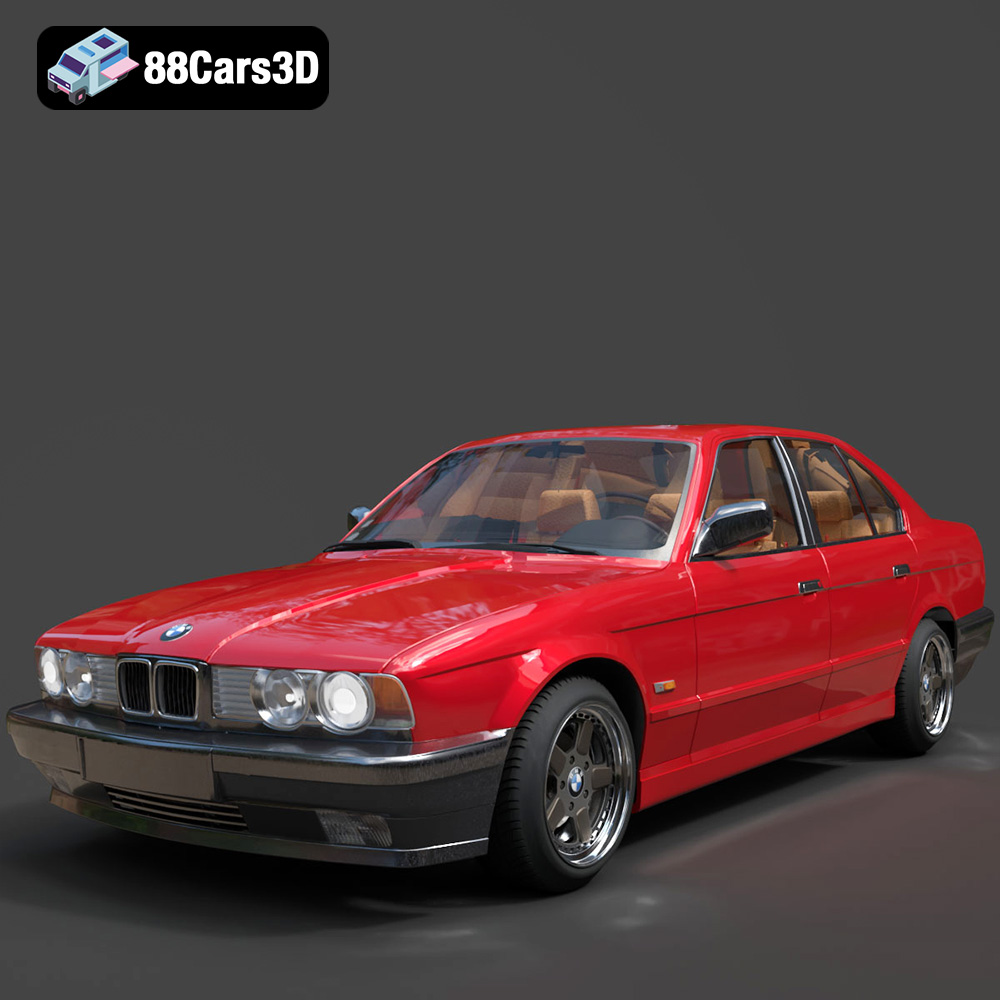
BMW 525i E34 1993 3D Model
Texture: Yes
Material: Yes
Download the BMW 525i E34 1993 3D Model featuring clean geometry, realistic detailing, and a fully modeled interior. Includes .blend, .fbx, .obj, .glb, .stl, .ply, .unreal, and .max formats for rendering, simulation, and game development.
Price: $12.99

BMW 7 Series 2016 3D Model
Texture: Yes
Material: Yes
Download the BMW 7 Series 2016 3D Model featuring luxurious design, detailed interior, and accurate exterior. Includes .blend, .fbx, .obj, .glb, .stl, .ply, .unreal, and .max formats for rendering, simulation, and game development.
Price: $10.79
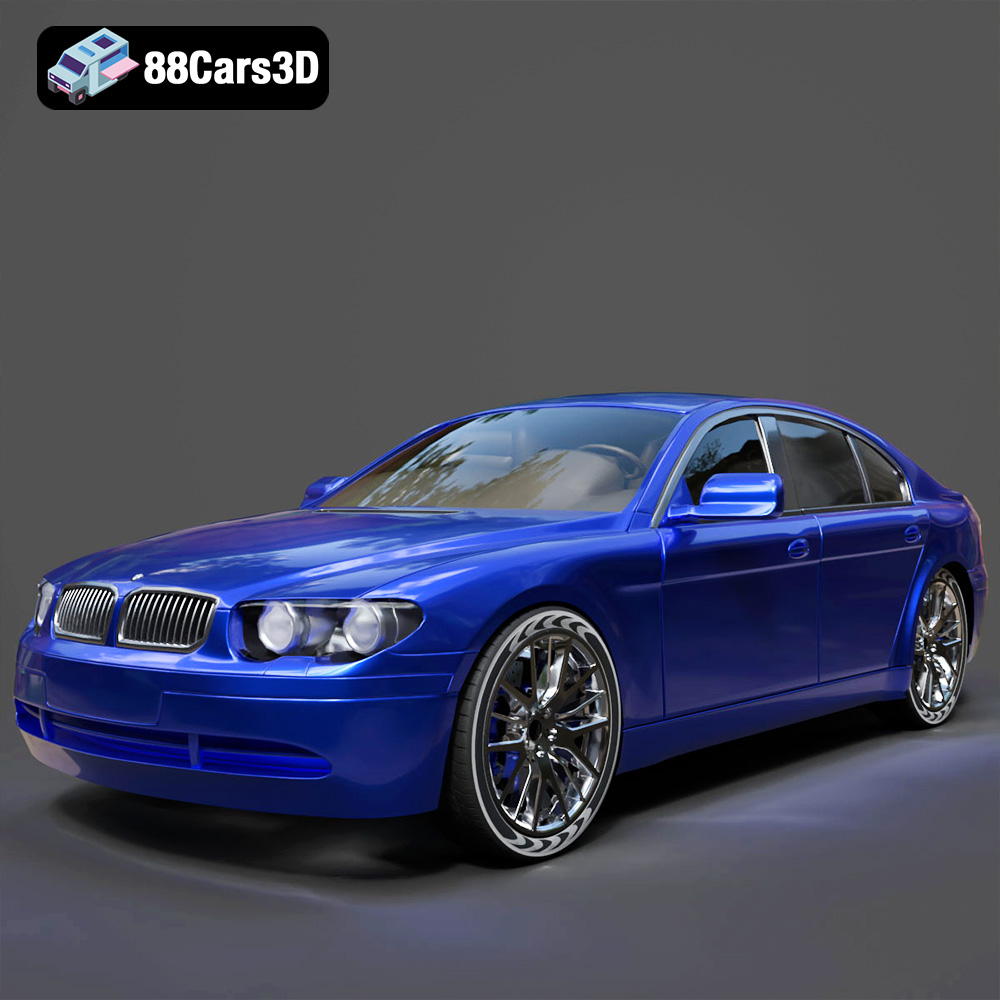
BMW 7 Series 30th Anniversary 3D Model
Texture: Yes
Material: Yes
Download the BMW 7 Series 30th Anniversary 3D Model featuring a meticulously crafted exterior, detailed interior, and realistic wheels. Includes .blend, .fbx, .obj, .glb, .stl, .ply, .unreal, and .max formats for rendering, simulation, and game development.
Price: $35.79

BMW 7-Series F02 3D Model
Texture: Yes
Material: Yes
Download the BMW 7-Series F02 3D Model featuring a detailed exterior and interior, optimized for rendering and animation. Includes .blend, .fbx, .obj, .glb, .stl, .ply, .unreal, and .max formats for rendering, simulation, and game development.
Price: $10.79

BMW 760Li E66 2005 3D Model
Texture: Yes
Material: Yes
Download the BMW 760Li E66 2005 3D Model featuring a detailed exterior, refined interior, and robust chassis. Includes .blend, .fbx, .obj, .glb, .stl, .ply, .unreal, and .max formats for rendering, simulation, and game development.
Price: $10.79

BMW 6 Series 3D Model
Texture: Yes
Material: Yes
Download the BMW 6 Series 3D Model featuring precisely modeled body panels, detailed interior, and authentic wheels. Includes .blend, .fbx, .obj, .glb, .stl, .ply, .unreal, and .max formats for rendering, simulation, and game development.
Price: $10.79
