

In the demanding world of real-time rendering and automotive visualization, performance is paramount. Whether you’re developing an immersive game, an interactive configurator, a cutting-effect virtual production scene, or a high-fidelity AR/VR experience, the visual quality of your 3D car models must be balanced with the need for smooth frame rates. This is where Level of Detail (LOD) management and shrewd optimization strategies within Unreal Engine become not just beneficial, but absolutely critical.
Automotive assets, particularly the highly detailed 3D car models sought after by professionals, are inherently complex. They feature intricate geometries, sophisticated PBR materials, and numerous textures, all of which can quickly strain even the most powerful hardware. Understanding how to efficiently manage these assets, especially when sourcing premium models from platforms like 88cars3d.com, is key to unlocking the full potential of Unreal Engine. In this comprehensive guide, we’ll dive deep into Unreal Engine’s powerful optimization toolset, from the fundamentals of LODs to advanced techniques like Nanite, Lumen tuning, and Blueprint scripting, ensuring your automotive projects run flawlessly while looking stunning.
The Imperative of Optimization in Automotive Visualization
The pursuit of photorealism in real-time automotive visualization has pushed the boundaries of hardware and software alike. Modern 3D car models are masterpieces of digital artistry, often featuring millions of polygons, dozens of intricate material layers, and high-resolution textures. While this fidelity is crucial for conveying the precise design and craftsmanship of a vehicle, it presents significant challenges when rendered interactively. Without proper optimization, even a single high-fidelity car model can cripple a project’s performance, leading to low frame rates, stuttering, and an overall poor user experience.
The goal is to achieve visual excellence without compromise, ensuring that your automotive scenes remain fluid and responsive across various target platforms, from high-end PCs for virtual production to mobile devices for AR applications. This requires a systematic approach to asset management and rendering efficiency, where every component of your 3D car model and its surrounding environment is carefully considered for its performance impact. From ensuring clean topology in your source models to strategically implementing Unreal Engine’s cutting-edge features, optimization is a continuous process that underpins the success of any real-time automotive project.
The Challenge of High-Fidelity Car Models
A typical high-quality 3D car model designed for cinematics or high-end rendering might consist of anywhere from 500,000 to 5 million polygons or more, especially when including intricate details like engine components, interior elements, and small badges. Each of these polygons contributes to the scene’s computational load during rendering. Beyond geometry, realistic PBR materials require multiple texture maps (albedo, normal, roughness, metallic, ambient occlusion) often at resolutions of 4K or 8K, consuming significant GPU memory. Furthermore, the numerous draw calls needed to render complex mesh parts and material variations add to the CPU’s burden. Without effective strategies like LODs, the engine would attempt to render every detail of every polygon, regardless of its distance from the camera, leading to an immediate performance bottleneck. This challenge is magnified in environments where multiple vehicles are present or when showcasing intricate interiors.
Performance Bottlenecks in Real-Time Rendering
Understanding the common bottlenecks is the first step toward effective optimization. In Unreal Engine, performance issues often stem from one of three areas: CPU, GPU, or Memory. CPU bottlenecks typically occur due to excessive draw calls (the number of times the CPU tells the GPU to draw something), complex physics simulations, or heavy Blueprint scripting. For automotive scenes, a large number of individual mesh components for a car, each requiring its own draw call, can quickly exhaust the CPU. GPU bottlenecks arise from overdraw (rendering pixels that are subsequently overwritten), complex shaders, high polygon counts without proper LODs, or expensive lighting calculations like Lumen. Memory bottlenecks are usually related to high-resolution textures, large static meshes, or excessive data loaded into VRAM. Identifying the specific bottleneck using Unreal Engine’s profiling tools (like `Stat GPU` and `Stat RHI` in the console) is crucial for targeting your optimization efforts effectively. You can learn more about performance and profiling in Unreal Engine through the official documentation at dev.epicgames.com/community/unreal-engine/learning.
Understanding Level of Detail (LOD) in Unreal Engine
Level of Detail (LOD) is a fundamental optimization technique that allows you to reduce the complexity of 3D models as they move further away from the camera. Instead of rendering a highly detailed model with millions of polygons at a great distance, where those details would be imperceptible, LODs swap in a simpler version of the model. This significantly reduces the computational load on both the CPU (fewer draw calls) and GPU (fewer vertices and pixels to process). Unreal Engine provides robust tools for managing LODs, making it an essential practice for any project, especially those featuring high-fidelity assets like 3D car models. When sourcing automotive assets from marketplaces such as 88cars3d.com, many models already come with optimized topology suitable for LOD generation, simplifying your workflow.
Proper LOD implementation is a balancing act between visual fidelity and performance. Too aggressive with LODs, and your models might visibly pop as they switch between levels, or appear too blocky. Too conservative, and you lose the performance benefits. Unreal Engine’s LOD settings allow granular control over screen size thresholds, reduction percentages, and the number of LOD levels. For complex assets like cars, it’s common to have 3-5 LOD levels, with the lowest LOD potentially having only a few thousand polygons for far-distance representation. This methodical approach ensures that resources are allocated where they are most needed—to models close to the camera—while maintaining a perception of high detail across the entire scene.
Automatic LOD Generation with Simplygon
Unreal Engine integrates seamlessly with Simplygon, a powerful external LOD generation tool that can automate the process of creating simplified mesh versions. For complex assets like cars, Simplygon can be invaluable. Once enabled as a plugin, you can access Simplygon’s features directly within the Static Mesh Editor. You can specify the number of LOD levels, target polygon count percentages (e.g., LOD1 at 50% of base mesh, LOD2 at 25%, LOD3 at 10%), and control various aspects of reduction like material merging, bone handling, and texture remapping. While highly efficient, automatic generation may sometimes require manual tweaks to ensure critical features (like headlights or grilles) retain their shape correctly at lower LODs. Always review automatically generated LODs to ensure visual quality is maintained, especially for prominent components that might otherwise look distorted.
Manual LOD Creation and Management
For artists who require absolute control or who encounter specific issues with automated solutions, manual LOD creation remains a powerful option. This involves creating simplified versions of your mesh in a 3D modeling application (like Blender, Maya, or 3ds Max), ensuring that UVs and materials remain consistent. Once you have your separate LOD meshes (e.g., Car_Mesh_LOD0, Car_Mesh_LOD1, Car_Mesh_LOD2), you can import them into Unreal Engine. In the Static Mesh Editor, under the “LOD Settings” section, you can manually assign these imported meshes to their respective LOD slots. This method guarantees precision, allowing artists to make deliberate decisions about which details to retain and which to simplify. It’s particularly useful for the first few LOD levels, where visual integrity is most critical. For instance, ensuring that the silhouette of the car remains consistent across LOD0 and LOD1 is often a manual effort. After assigning, configure the “Screen Size” thresholds to dictate at what distance each LOD will switch. For instance, LOD0 might switch to LOD1 when the model occupies less than 0.5 (50%) of the screen height, and LOD1 to LOD2 at 0.2 (20%).
Mastering Nanite for High-Poly Car Assets
Nanite, Unreal Engine 5’s virtualized geometry system, has revolutionized how artists handle extremely high-polygon meshes. For 3D car models, which can easily feature millions of polygons, Nanite is a game-changer. It allows you to import and render cinematic-quality assets directly into your real-time scenes without the traditional need for complex LOD hierarchies or baking normal maps. Nanite intelligently processes geometry, rendering only the pixels truly needed, dynamically streaming detail as the camera moves. This means you can have a car model with tens of millions of triangles, and Nanite will handle the complexity, often outperforming traditional LOD setups for distant objects while maintaining incredible detail up close.
The beauty of Nanite lies in its ability to manage polygon complexity at an unprecedented scale, making previously unworkable asset densities a reality in real-time. For automotive visualization, this translates to incredibly detailed vehicle exteriors, intricate engine bays, and rich interiors, all rendered efficiently without manual optimization headaches. It shifts the focus from polygon budgets to artistic intent, freeing up artists to create without fear of performance penalties. However, it’s important to understand Nanite’s capabilities and limitations to leverage it most effectively within your Unreal Engine projects.
Preparing Assets for Nanite Virtualized Geometry
Enabling Nanite for a static mesh is straightforward: simply open the Static Mesh Editor, navigate to the “Nanite Settings” section, and check the “Enable Nanite” box. For your 3D car models, ensure they are imported as static meshes (skeletal meshes are not yet supported by Nanite). While Nanite largely removes the need for traditional LODs, it’s still good practice to import models with clean topology, as this aids in Nanite’s internal clustering process and can lead to more efficient rendering. Models from 88cars3d.com, known for their clean topology and production-ready quality, are ideal candidates for Nanite. Also, ensure your meshes do not have complex non-manifold geometry, as this can sometimes cause issues with Nanite’s virtualization. While Nanite can handle meshes with many separate elements, merging parts of the car that share the same material can be beneficial for reducing draw calls even within a Nanite workflow.
Nanite Performance Considerations and Limitations
While Nanite is incredibly powerful, it’s not a silver bullet for all performance issues. Firstly, Nanite primarily optimizes geometry. While it indirectly reduces CPU load by minimizing draw calls, it doesn’t directly optimize complex PBR materials, expensive shader calculations, or overdraw from transparent surfaces. Transparent materials (like car windows) are currently rendered traditionally on top of Nanite geometry, so optimizing their shaders and ensuring proper culling is still vital. Secondly, Nanite meshes are not suitable for all use cases; for instance, meshes that need to be deformed by skeletal animation or have specific physics interactions might still benefit from traditional static meshes with LODs. Also, Nanite streaming can consume more disk space and VRAM for its internal cluster data, especially for very large numbers of unique Nanite meshes. Always profile your scene (using `Stat Nanite` in the console) to understand the performance impact and ensure you’re using Nanite where it provides the most significant benefit.
Advanced Material and Texture Optimization
Beyond geometry, materials and textures are major contributors to visual fidelity and, consequently, performance overhead in Unreal Engine. A realistic PBR material for a car can involve multiple texture samples, complex shader logic for clear coats, metallic flakes, and subsurface scattering for interiors. Optimizing these elements is crucial for achieving smooth frame rates, especially when dealing with numerous unique materials or high-resolution texture sets. The goal is to reduce the computational cost of each pixel rendered while maintaining the desired visual quality. Efficient material setup not only improves runtime performance but also streamlines the content creation pipeline, making assets easier to manage and modify.
Unreal Engine’s Material Editor provides extensive capabilities for creating stunning PBR materials, but it also offers powerful features for optimizing them. Leveraging material instances, employing texture streaming, and carefully managing texture resolutions are key strategies. For automotive visualization, where the car itself is often the hero asset, every reflection, every metallic sparkle, and every paint detail must look perfect. Optimizing these aspects ensures that your vehicle models shine without bogging down the GPU, allowing for interactive experiences that truly immerse the user.
PBR Material Workflow and Instancing
The PBR (Physically Based Rendering) workflow is essential for achieving photorealistic materials. However, complex PBR materials can be expensive. The first step in optimization is to design your master materials efficiently in the Material Editor. Avoid redundant calculations, use common functions where possible, and leverage material attributes. For the multiple variations of car paint, interior fabrics, or tire rubber, instead of creating entirely new materials, use Material Instances. A master material defines the core logic, and material instances expose parameters (colors, texture inputs, roughness values) that can be changed without recompiling the shader, saving both CPU time and memory. For example, a single master car paint material can have instances for metallic blue, matte black, or pearlescent white, each with unique parameters. This drastically reduces draw calls and material complexity.
Texture Streaming and Resolution Management
Textures consume significant VRAM. A single 4K (4096×4096) texture can take up to 21MB (RGBA8) of memory, and car models often use dozens of them. Unreal Engine’s Texture Streaming system is designed to manage this by only loading the necessary mipmap levels based on camera distance and screen size. To optimize, ensure your textures have proper mipmaps generated (default for most imported textures). In the texture editor, you can adjust the “Streaming Mip Bias” to force lower mip levels earlier, or “Never Stream” for critical textures that must always be full resolution. Also, be judicious with texture resolutions. Does that small interior button truly need a 2K texture, or would 512×512 suffice? Use the “Texture Stats” window (`Window > Developer Tools > Audit Textures`) to identify high-resolution textures consuming the most memory. Consolidate textures into atlases where logical (e.g., all small interior decals on one atlas) to reduce draw calls and improve cache coherency.
Dynamic Lighting and Reflection Optimization with Lumen
Unreal Engine’s Lumen global illumination system delivers breathtaking real-time indirect lighting, reflections, and emissive lighting, crucial for creating photorealistic automotive scenes. For car models, Lumen provides incredibly accurate bounces of light off body panels, realistic interior illumination, and stunning reflections on metallic surfaces. However, achieving this level of visual fidelity comes with a computational cost. Optimizing Lumen’s performance is a delicate balance, requiring an understanding of its various settings and how they interact with your scene’s geometry and materials. It’s about finding the sweet spot where visual quality remains high while maintaining acceptable frame rates for your target platform.
Effective Lumen optimization involves tweaking settings within the Project Settings, Post Process Volume, and even individual material properties. It often means prioritizing certain visual aspects over others, especially for interactive experiences or specific hardware constraints. While Lumen greatly enhances realism, combining it with judicious use of traditional lighting techniques and carefully managed reflections ensures your automotive scenes look their best without sacrificing performance. The official Unreal Engine documentation provides excellent resources on Lumen’s inner workings and optimization best practices, which can be found at dev.epicgames.com/community/unreal-engine/learning.
Lumen Performance Tuning for Automotive Scenes
Lumen operates by tracing rays through the scene to calculate indirect lighting and reflections. The cost of this process scales with scene complexity and the quality of the tracing. In your Post Process Volume, key Lumen settings to adjust include:
- Lumen Global Illumination Quality: Start with a lower value (e.g., 0.5 or 0.7) and increase only if necessary. Higher values lead to more accurate but more expensive GI.
- Lumen Reflection Quality: Similar to GI quality, reduce this for less critical reflections.
- Lumen Max Trace Distance: For smaller, contained automotive scenes, reducing this can save performance by not tracing rays infinitely into the distance.
- Lumen Diffuse Bounces/Max Bounces: Limit the number of light bounces to 2-3 for a good balance of realism and performance.
Additionally, consider Hardware Ray Tracing vs. Software Ray Tracing. Hardware Ray Tracing (if your GPU supports it) offers superior quality but can be more demanding. Software Ray Tracing is more compatible but might have artifacts. For car materials, ensure your material’s roughness value is accurate, as this heavily influences Lumen’s reflection calculations. Materials with low roughness (highly reflective) are more expensive to render in Lumen. If a part of the car is rarely seen or doesn’t need highly accurate GI, you can disable “Affect Dynamic Indirect Lighting” in its mesh settings to exclude it from Lumen calculations.
Optimizing Reflections: Ray Tracing vs. Screen Space
Reflections are paramount for showcasing realistic car paint and chrome. Unreal Engine offers several options, each with performance implications:
- Lumen Reflections: Provides accurate, real-time global reflections for dynamic objects and indirect lighting. It’s generally high quality but can be expensive.
- Hardware Ray Tracing Reflections: The highest quality reflections, offering pixel-perfect accuracy and handling off-screen objects, but require a DXR-compatible GPU and are the most performance-intensive.
- Screen Space Reflections (SSR): Fast and efficient, but limited to what’s visible on screen. Objects off-screen will not be reflected, leading to visual discontinuities. Often used as a fallback or for less critical reflections.
- Planar Reflections: Highly accurate for flat surfaces (e.g., water, polished floors) but expensive as they render the scene twice. Use sparingly for specific, high-impact surfaces beneath your car.
- Reflection Captures: Pre-calculated reflections (static cubemaps) that are very cheap but only represent static environments. Combine with other methods for dynamic reflections.
For automotive visualization, a common strategy is to use Lumen Reflections or Hardware Ray Tracing for the main car body and critical highly reflective elements, potentially blending with SSR for less prominent parts or using Reflection Captures for static background elements. Always test different combinations to find the best balance for your project’s performance budget.
Blueprint Scripting for Dynamic Performance and Interactivity
Unreal Engine’s Blueprint visual scripting system is incredibly powerful, enabling developers and artists to create complex interactivity and dynamic logic without writing a single line of code. For automotive visualization, Blueprint can be used not only for creating interactive configurators and virtual showrooms but also for implementing intelligent, context-aware performance optimizations. By leveraging Blueprint, you can dynamically adjust various engine settings or asset properties based on runtime conditions, camera distance, or user interaction, ensuring that your 3D car models maintain optimal performance at all times.
The ability to control aspects of your scene programmatically opens up a vast array of possibilities for optimization. Imagine a scenario where interior details of a car are only fully rendered when the user looks inside, or where a specific high-resolution texture is only loaded when a close-up inspection is triggered. Blueprint allows you to orchestrate these intricate performance decisions, making your automotive applications not just visually stunning but also incredibly efficient and responsive. This level of dynamic control is a hallmark of professional-grade Unreal Engine projects.
LOD Switching through Blueprint
While Unreal Engine typically handles LOD switching automatically based on screen size, Blueprint provides a way to override this behavior for specific scenarios. For instance, you might want to force a higher LOD for a car model during a cinematic sequence, regardless of its distance, to ensure maximum detail. Or, conversely, force a lower LOD if the car is far away and not the focus, even if its screen size might technically warrant a higher LOD due to an unusual camera angle. To achieve this, you can use the “Set Forced LOD Model” node on a Static Mesh Component. This allows you to specify a particular LOD index that the mesh should use. You can trigger this based on events like:
- Player approaching the vehicle (using a trigger volume).
- Activating a “cinematic mode” via a UI button.
- Switching between interior and exterior views, enabling higher LODs for the currently visible parts.
This granular control ensures that performance-critical assets are rendered at the appropriate level of detail, prioritizing user experience and visual fidelity where it matters most.
Data-Driven Optimization with Blueprint
Blueprint can also facilitate more advanced data-driven optimization. Consider an automotive configurator where the user can swap car parts (wheels, body kits, interior trims). Each part might have different performance characteristics. Using Blueprint, you can:
- Load/Unload Assets Dynamically: Instead of having all possible parts loaded into memory, Blueprint can stream in (load) and stream out (unload) meshes, textures, and materials as the user selects them, saving VRAM and CPU cycles.
- Adjust Render Settings: Based on the complexity of the selected configuration (e.g., adding many complex accessories), Blueprint could dynamically adjust Post Process Volume settings (like reducing Lumen quality slightly, or disabling less critical effects) to maintain a target frame rate.
- Visibility Culling: Implement custom culling logic for parts of the car that are not visible (e.g., engine block when the hood is closed). While Unreal has built-in culling, Blueprint offers more specific control.
By implementing these kinds of intelligent optimizations through Blueprint, you create a more responsive and performant application, regardless of the complexity introduced by user choices or environmental factors. This allows you to offer rich, interactive experiences without constantly battling performance issues.
Project-Wide Performance Strategies and Best Practices
Optimizing 3D car models in Unreal Engine isn’t just about individual assets; it’s about a holistic approach to your entire project. While LODs, Nanite, and material optimizations address specific aspects, a comprehensive strategy involves looking at the bigger picture: how assets interact within the scene, how lighting is calculated, and how the engine itself is configured. By adopting project-wide best practices, you can establish a solid foundation for performance, ensuring that every element, from the smallest bolt to the expansive showroom environment, contributes to a smooth and visually stunning experience.
This includes careful consideration of culling techniques, managing draw calls, and leveraging Unreal Engine’s profiling tools to identify and address bottlenecks. A well-optimized project is often the result of consistent attention to detail and a proactive mindset throughout the development cycle. These strategies are particularly vital for large-scale automotive visualizations, virtual production setups with LED walls, or complex AR/VR experiences where every millisecond counts towards achieving the desired realism and interactivity.
Culling Techniques and Draw Call Reduction
Culling is the process of preventing objects or polygons that are not visible to the camera from being rendered. Unreal Engine automatically handles several types:
- Frustum Culling: Objects outside the camera’s view frustum are not rendered.
- Occlusion Culling: Objects hidden behind other objects are not rendered. While automatic, ensure your level geometry is reasonably optimized to aid this process.
Draw Call Reduction is another critical area. Each time the CPU tells the GPU to draw something, it’s a draw call. Too many draw calls can bottleneck the CPU. To reduce them:
- Merge Meshes: Combine static meshes that share the same material and are physically close into a single mesh. For instance, a car’s multiple small interior trim pieces could be merged.
- Instancing: Use Instanced Static Meshes or Hierarchical Instanced Static Meshes for identical objects (e.g., multiple screws, identical interior buttons). This allows the GPU to render many instances with a single draw call.
- Material IDs: When importing models, ensure materials are grouped efficiently. A model with 50 distinct material IDs will generate more draw calls than one with 10. For car models, try to consolidate materials where possible, while still allowing for PBR variations.
Consider using Unreal Engine’s Static Mesh Editor to automatically merge selected meshes, or tools in your 3D modeling software before import.
Profiling and Debugging Performance
You can’t optimize what you don’t measure. Unreal Engine provides a robust set of profiling tools to identify performance bottlenecks:
- Stat Commands: Use console commands like `Stat FPS` (for basic frame rate), `Stat GPU` (for GPU render times), `Stat RHI` (for render hardware interface stats, including draw calls), `Stat Engine` (general engine performance), `Stat Mesh` (mesh geometry rendering stats), and `Stat Nanite` (for Nanite-specific information).
- Session Frontend: A more advanced tool (`Window > Developer Tools > Session Frontend`) that provides a detailed overview of CPU and GPU usage over time, allowing you to pinpoint exactly which functions, materials, or assets are causing slowdowns. It’s invaluable for deep analysis.
- ProfileGPU: Type `ProfileGPU` in the console to capture a frame and get a hierarchical breakdown of GPU tasks, showing exactly where GPU time is being spent. This is incredibly useful for optimizing shaders and complex rendering features.
Always profile on your target hardware to get accurate results. Debugging performance issues is an iterative process: identify a bottleneck, implement an optimization, then profile again to measure the impact. Keep an eye on memory usage (`Stat Memory`, `Stat TexturePool`) to prevent VRAM overloads, especially for high-resolution 3D car models and environments.
Conclusion
Mastering LOD management and optimization strategies within Unreal Engine is an indispensable skill for anyone working with high-fidelity 3D car models in automotive visualization, game development, virtual production, or AR/VR applications. We’ve explored the critical role of optimization, from the foundational principles of Level of Detail to the revolutionary capabilities of Nanite, advanced material and texture techniques, intelligent Lumen tuning, and the dynamic control offered by Blueprint scripting.
By implementing these strategies, you can transform complex, performance-intensive automotive assets into highly optimized, real-time ready models that maintain stunning visual quality across diverse platforms. Remember, tools like those found on 88cars3d.com provide a strong starting point with their high-quality, often pre-optimized 3D car models. However, the true power lies in your ability to leverage Unreal Engine’s comprehensive toolset to fine-tune these assets for your specific project requirements. Continual profiling and an iterative approach to optimization will ensure your projects not only look incredible but also deliver a smooth, responsive, and truly immersive experience. Embrace these techniques, and unlock the full potential of your automotive visualization endeavors within Unreal Engine.
Featured 3D Car Models

BMW 3 F30 3D Model
Texture: Yes
Material: Yes
Download the BMW 3 F30 3D Model featuring a detailed exterior, realistic interior, and optimized mesh. Includes .blend, .fbx, .obj, .glb, .stl, .ply, .unreal, and .max formats for rendering, simulation, and game development.
Price: $10.79
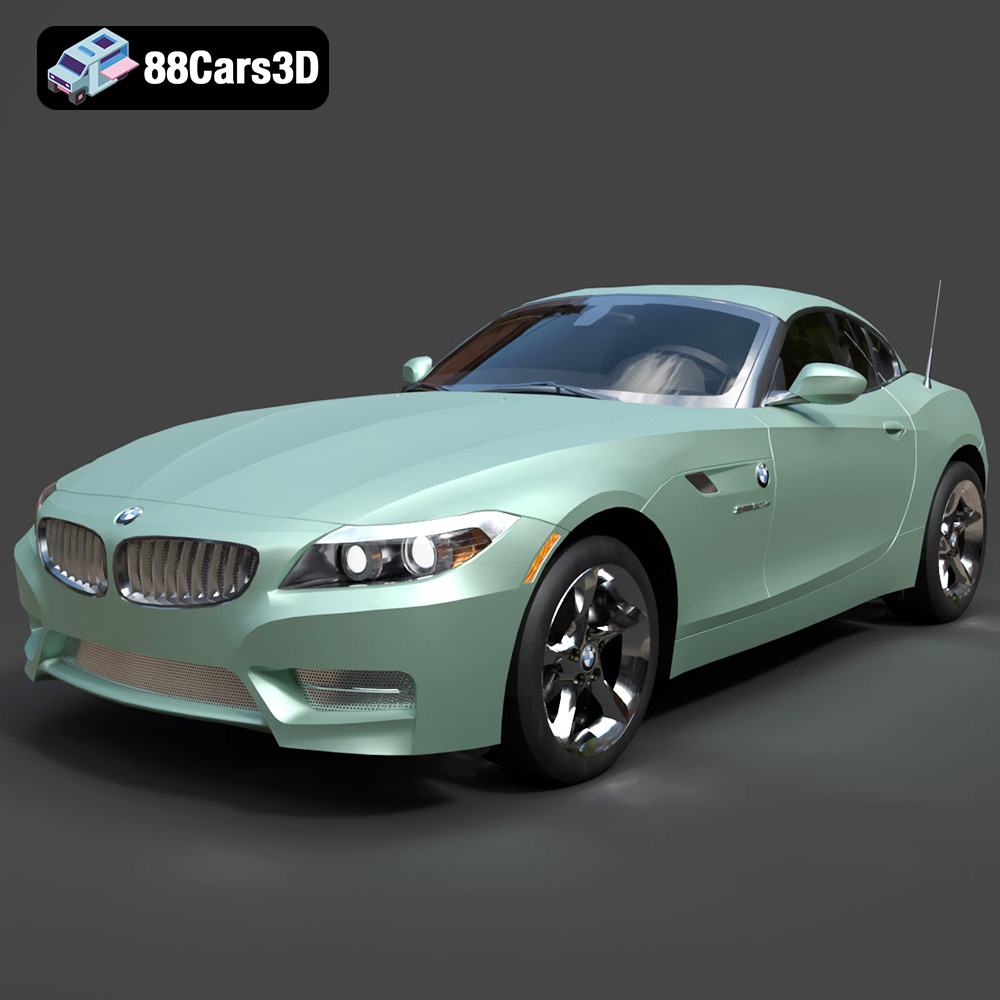
BMW Z4 Roadster E89 2012 3D Model
Texture: Yes
Material: Yes
Download the BMW Z4 Roadster E89 3D Model featuring clean geometry, realistic detailing, and a fully modeled interior. Includes .blend, .fbx, .obj, .glb, .stl, .ply, .unreal, and .max formats for rendering, simulation, and game development.
Price: $13.99

BMW Z4 E85 2005 3D Model
Texture: Yes
Material: Yes
Download the BMW Z4 E85 3D Model featuring clean geometry, realistic detailing, and a fully modeled interior. Includes .blend, .fbx, .obj, .glb, .stl, .ply, .unreal, and .max formats for rendering, simulation, and game development.
Price: $13.99

BMW M3 2024 3D Model
Texture: Yes
Material: Yes
Download the BMW M3 2024 3D Model featuring clean geometry, realistic detailing, and a fully modeled interior. Includes .blend, .fbx, .obj, .glb, .stl, .ply, .unreal, and .max formats for rendering, simulation, and game development.
Price: $13.99
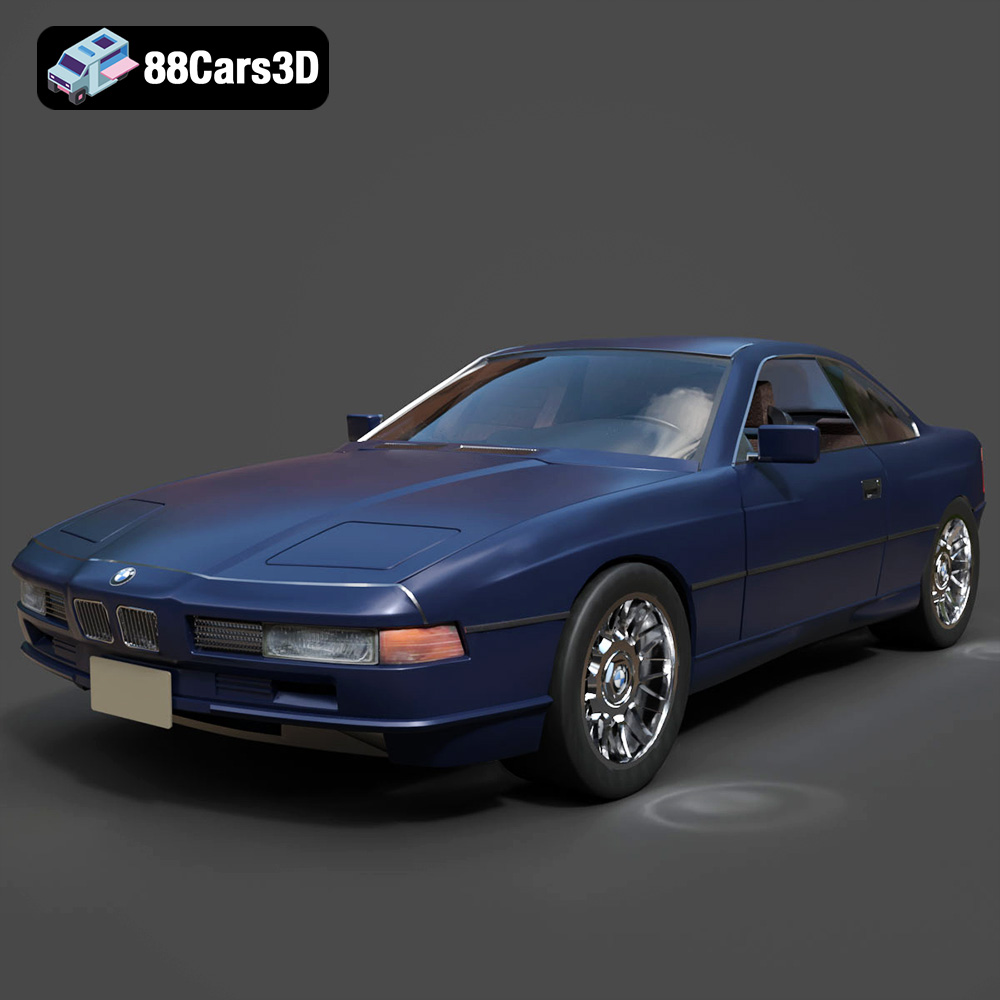
BMW 850i Coupe 1990 3D Model
Texture: Yes
Material: Yes
Download the BMW 850i Coupe 1990 3D Model featuring clean geometry, realistic detailing, and a fully modeled interior. Includes .blend, .fbx, .obj, .glb, .stl, .ply, .unreal, and .max formats for rendering, simulation, and game development.
Price: $13.99
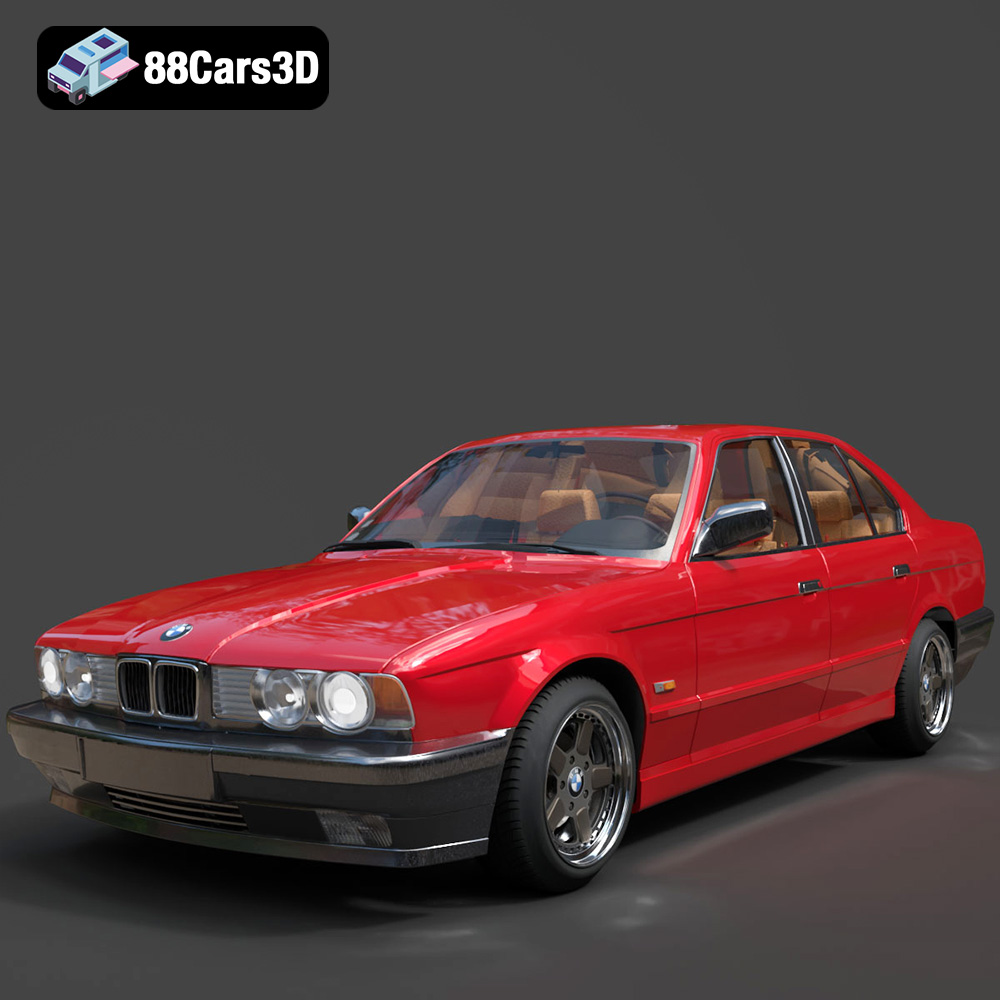
BMW 525i E34 1993 3D Model
Texture: Yes
Material: Yes
Download the BMW 525i E34 1993 3D Model featuring clean geometry, realistic detailing, and a fully modeled interior. Includes .blend, .fbx, .obj, .glb, .stl, .ply, .unreal, and .max formats for rendering, simulation, and game development.
Price: $12.99

BMW 7 Series 2016 3D Model
Texture: Yes
Material: Yes
Download the BMW 7 Series 2016 3D Model featuring luxurious design, detailed interior, and accurate exterior. Includes .blend, .fbx, .obj, .glb, .stl, .ply, .unreal, and .max formats for rendering, simulation, and game development.
Price: $10.79
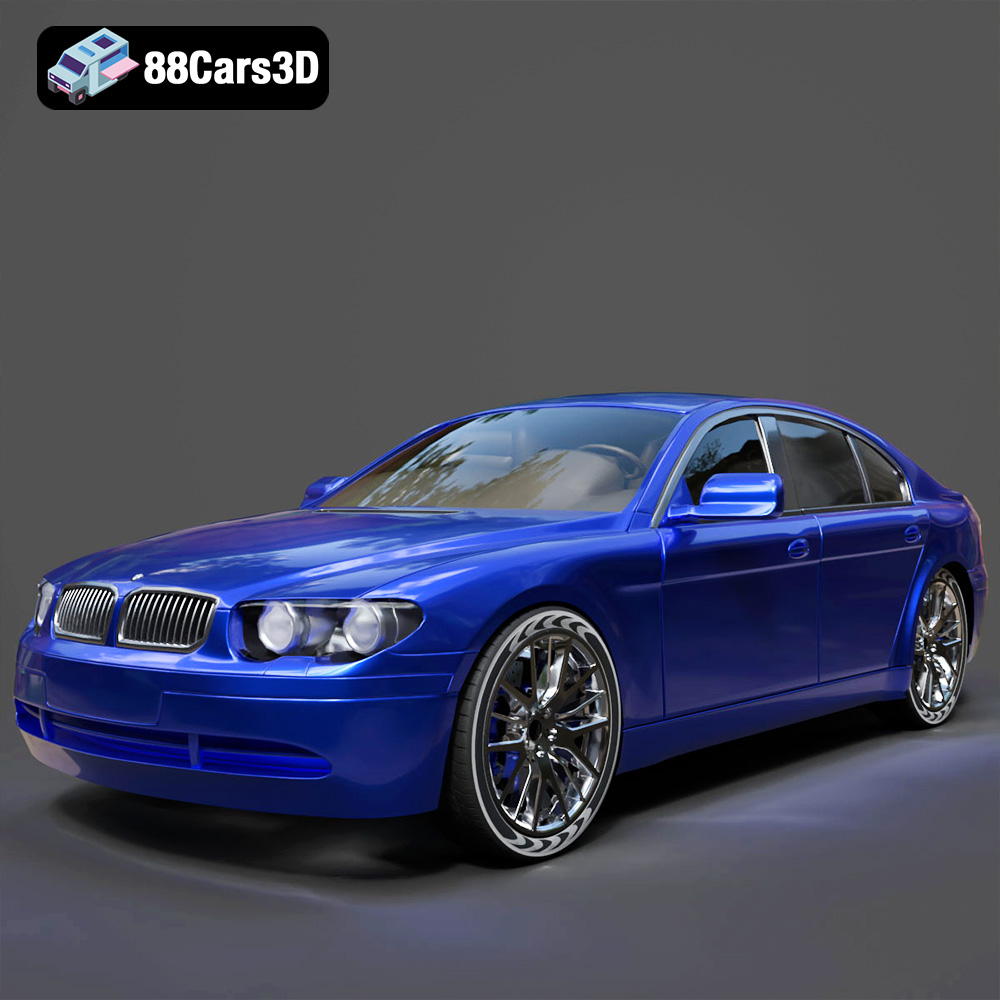
BMW 7 Series 30th Anniversary 3D Model
Texture: Yes
Material: Yes
Download the BMW 7 Series 30th Anniversary 3D Model featuring a meticulously crafted exterior, detailed interior, and realistic wheels. Includes .blend, .fbx, .obj, .glb, .stl, .ply, .unreal, and .max formats for rendering, simulation, and game development.
Price: $35.79

BMW 7-Series F02 3D Model
Texture: Yes
Material: Yes
Download the BMW 7-Series F02 3D Model featuring a detailed exterior and interior, optimized for rendering and animation. Includes .blend, .fbx, .obj, .glb, .stl, .ply, .unreal, and .max formats for rendering, simulation, and game development.
Price: $10.79

BMW 760Li E66 2005 3D Model
Texture: Yes
Material: Yes
Download the BMW 760Li E66 2005 3D Model featuring a detailed exterior, refined interior, and robust chassis. Includes .blend, .fbx, .obj, .glb, .stl, .ply, .unreal, and .max formats for rendering, simulation, and game development.
Price: $10.79
