

“`html
Mastering Your 3D Printer: Avoiding the Top 10 Beginner Mistakes with STL Car Models
The world of 3D printing opens up a universe of possibilities, allowing hobbyists and enthusiasts to bring intricate designs to life. For automotive aficionados, downloading high-quality printable car models from sources like 88cars3d.com and transforming them into tangible objects is an incredibly rewarding experience. However, embarking on this journey without a solid understanding of 3D printing principles can lead to frustration, wasted filament, and disappointing results. Many beginners fall into common traps that hinder print quality and success. This comprehensive guide will delve into the top 10 mistakes novice 3D printers often make when working with STL files, offering practical solutions and expert advice to help you achieve flawless prints every time. From understanding your slicer software to mastering support structures and selecting the right materials, we’ll cover the essential steps to elevate your 3D printing game.
1. Underestimating the Importance of STL File Quality and Preparation
The foundation of any successful 3D print lies in the quality of the digital file. While marketplaces like 88cars3d.com strive to provide optimized models, not all STL files are created equal. Beginners often overlook the critical steps of inspecting and, if necessary, repairing the mesh before sending it to the slicer. An STL file represents a 3D object as a collection of triangles. If these triangles don’t form a closed, watertight “manifold” surface, or if there are intersecting faces, holes, or non-manifold edges, your slicer will struggle to interpret the geometry correctly, leading to print errors, gaps, or incomplete models.
Mesh Integrity Checks
Before you even open your slicer, it’s crucial to perform a mesh integrity check. Tools like Meshmixer (free), Netfabb (paid), or even Blender (free) offer powerful capabilities for analyzing and repairing STL files. Look for common issues such as:
- Non-Manifold Edges: Edges shared by more than two faces.
- Holes: Gaps in the surface mesh.
- Intersecting Faces: Triangles that overlap each other.
- Flipped Normals: Faces oriented incorrectly, confusing the slicer about inside/outside surfaces.
Most repair software has an “Auto Repair” function, which can fix many common issues automatically. However, it’s always a good practice to manually inspect the model afterwards to ensure the repairs haven’t introduced new problems or altered the intended design, especially for detailed car models where delicate features are common.
Scaling and Orientation Considerations
Another common oversight is not considering the initial scale and orientation of the model. Beginners might try to print a car model at its default scale without realizing it might be too small to capture fine details or too large for their print bed. Always check the dimensions and scale the model appropriately within your slicer or modeling software. Furthermore, the default orientation might not be optimal for printing. Rotating the model to minimize overhangs, maximize bed adhesion, or reduce the need for supports can significantly improve print quality and reduce print time. Experimenting with different orientations early in the process can save a lot of headaches later.
2. Incorrect Slicer Settings for Optimal Print Quality
The slicer software is your bridge between a digital 3D model and your physical 3D printer. It translates the STL file into layer-by-layer instructions (G-code) that the printer understands. Beginners often use default slicer profiles or hastily adjust settings without understanding their impact, leading to subpar prints. Mastering key slicing parameters is essential for achieving the desired level of detail, strength, and surface finish for your car models.
Layer Height and Detail
Layer height directly influences the vertical resolution of your print. A lower layer height (e.g., 0.1mm) results in finer detail and smoother curves, ideal for intricate car bodies, but significantly increases print time. A higher layer height (e.g., 0.2mm or 0.3mm) prints faster but produces more visible layer lines. For collectible car models, a compromise between detail and print speed is often desired. A layer height of 0.12mm to 0.16mm is a good starting point for detailed FDM prints. Resin printers typically offer much lower layer heights (down to 0.025mm), producing incredibly smooth finishes.
Print Speed and Cooling
Printing too fast is a primary cause of poor print quality. High speeds can lead to ringing artifacts, poor layer adhesion, and failed extrusions. For detailed models, especially those with thin walls or complex geometry, it’s crucial to slow down. A general rule of thumb for PLA is around 40-60 mm/s for outer walls and slightly faster for inner walls. Always ensure your part cooling fan is set appropriately; adequate cooling is vital for FDM printing, especially for overhangs and small features, preventing them from deforming as they cool.
Infill Patterns and Density
Infill provides internal support for the outer walls and top surfaces of your print. For display models, high infill density isn’t always necessary. A density of 10-20% is often sufficient to provide adequate support without adding excessive print time or material. The infill pattern also matters; a simple grid or cubic pattern is usually fine for display pieces, while more complex patterns like gyroid can offer better strength-to-weight ratios if the model needs to be more robust. For car models, consider the structural needs – chassis components might benefit from slightly higher infill than body panels.
3. Inadequate or Over-Aggressive Support Structures
Overhangs and bridges are critical challenges in 3D printing. When a layer has no underlying material to print on, supports are necessary. Improperly generated or managed supports are a frequent source of frustration for beginners, leading to models that are difficult to clean or have damaged surfaces.
Generating the Right Supports
Most slicers offer various support types: normal, tree, or custom supports. Tree supports (available in Cura and PrusaSlicer) are often excellent for complex models like cars, as they use less material and are generally easier to remove than traditional supports. When enabling supports, pay attention to the support generation settings: overhang threshold (the angle at which supports are needed), support density, and support pattern. For detailed car models, a denser support structure might be required to hold delicate elements like spoilers or mirrors, but this makes removal more challenging.
Support Interface and Removal Techniques
The “support interface” is a denser layer printed just below the model’s overhangs, which can make supports easier to remove while providing a cleaner surface finish on the model itself. Experiment with support interface density and Z-distance (the gap between the support and the model). A slightly larger Z-distance makes removal easier but can result in a rougher surface finish on the supported area. Conversely, a smaller Z-distance yields a smoother finish but makes removal more difficult. When removing supports, take your time. Use flush cutters, pliers, and hobby knives carefully. For stubborn supports, a quick blast from a hairdryer can sometimes soften the plastic, making removal easier. Always consider the print orientation to minimize the amount of support needed on visible surfaces.
4. Poor Bed Adhesion and First Layer Issues
The first layer is arguably the most important layer of your 3D print. If it doesn’t adhere properly to the build plate, the entire print is at risk of failing. This is a common problem, especially for beginners who may not have their printer calibrated correctly or are using the wrong settings for their build surface and filament.
Leveling and Z-Offset Calibration
A perfectly level bed is paramount. Even a slight unevenness can cause the nozzle to be too close to the bed in some areas (leading to scraping or filament jams) and too far in others (preventing adhesion). Most printers have manual or automatic bed leveling features. Manual leveling requires adjusting knobs under the bed until a piece of paper can slide with slight resistance between the nozzle and the bed at multiple points. The Z-offset setting fine-tunes the nozzle’s starting height. A proper Z-offset ensures the extruded filament is slightly squished onto the build plate, creating a strong bond. Too high, and it won’t stick; too low, and it can clog the nozzle or create a “sailing” effect where filament is pushed in front of the nozzle.
Build Surface Preparation and Adhesives
The type of build surface (e.g., glass, PEI, BuildTak) and its cleanliness play a significant role. Oils from fingerprints, dust, or residual print material can impede adhesion. Always clean your build surface with isopropyl alcohol (IPA) before printing. For materials prone to warping, like ABS, or for difficult-to-adhere-to materials, using adhesives can be very helpful. Options include glue stick, hairspray, or specialized 3D printing adhesion solutions. For PETG and PLA, a clean surface is often sufficient. Consider using a brim or raft in your slicer settings for models with small footprints or sharp corners that are prone to lifting.
5. Neglecting Printer Calibration and Maintenance
A 3D printer is a mechanical device with moving parts, and like any machine, it requires regular calibration and maintenance to perform optimally. Beginners often print with a stock, uncalibrated machine, assuming it’s ready to go out of the box. This oversight can lead to a host of printing problems, from dimensional inaccuracies to layer shifts and jams.
Extruder Calibration (E-Steps)
The extruder is responsible for feeding filament into the hotend. If it’s not calibrated correctly, you’ll either under-extrude (weak prints, gaps) or over-extrude (blobs, poor surface quality). The E-steps calibration ensures that when your printer is instructed to extrude 100mm of filament, it actually extrudes precisely 100mm. This process typically involves marking the filament, commanding a specific extrusion length through your printer’s firmware or interface, measuring the actual extruded length, and adjusting the E-steps value in the firmware accordingly. This is a fundamental calibration for consistent results.
PID Tuning and Belt Tension
PID (Proportional-Integral-Derivative) tuning helps regulate the hotend and bed temperatures. If not properly tuned, temperatures can fluctuate significantly, affecting layer adhesion and print consistency. Most slicers and printer firmwares have a PID auto-tune function. Furthermore, ensure that the belts driving your X and Y axes are properly tensioned – not too loose (causing backlash and ringing) and not too tight (causing increased friction and potential motor strain). Regular checks of the printer’s frame, nozzle cleanliness, and lubrication of moving parts will prevent many common mechanical failures.
6. Inappropriate Material Selection and Settings
The vast array of 3D printing filaments and resins can be overwhelming. Choosing the wrong material for your project or using incorrect print settings for a chosen material is a common pitfall for beginners.
Understanding Filament Properties
For FDM printing, PLA is the most beginner-friendly material due to its ease of printing and low warping. It’s excellent for detailed display models like cars. PETG offers more strength and temperature resistance than PLA but can be stringier and requires slightly higher temperatures. ABS is strong and temperature-resistant but prone to warping and requires an enclosed printer and good ventilation. Resin printing, using SLA or DLP printers, offers extremely high detail but requires more post-processing and careful handling due to the photopolymer nature of the resins. For intricate car models, resin printing often yields superior surface finish and detail, but FDM with PLA or PETG can produce excellent results for larger or less detailed models, or for functional parts.
Material-Specific Settings
Each material has its own optimal printing temperature (nozzle and bed), print speed, retraction settings, and cooling requirements. Always consult the manufacturer’s recommendations for your specific filament or resin. For example, printing PETG too hot or too fast can lead to excessive stringing. Printing ABS without proper bed adhesion or enclosure can result in severe warping. If you’re downloading a model from 88cars3d.com and want to print it in a specific material, research the recommended 3D printer settings for that material to ensure success.
7. Ignoring Layer Line Artifacts and Surface Imperfections
Even with seemingly successful prints, beginners often overlook subtle surface imperfections that detract from the overall quality, especially for aesthetic models like cars. These can include ringing, ghosting, blobs, z-seams, and rough overhangs.
Tackling Ringing and Ghosting
Ringing and ghosting are wavy lines or artifacts that appear on the surface, often caused by vibrations during printing. These are exacerbated by printing too fast or jerky movements of the print head. Solutions include slowing down print speeds, reducing acceleration and jerk settings in your printer’s firmware (this can be done via your slicer or directly on the printer’s control panel), ensuring your printer is on a stable surface, and checking belt tension. Using smoother acceleration profiles in your slicer can also help.
Managing the Z-Seam
The z-seam is the visible point where each layer starts and ends. In slicers, you can often control its placement. Options include “Random” (distributes seams randomly, which can look messy), “Sharpest Corner” (attempts to hide it in corners), or “Aligned” (places it in a straight line, which is often the least visible for car models if placed along a less prominent edge). You can also use coasting and retraction settings to minimize the appearance of the z-seam bulge.
8. Inadequate Post-Processing Techniques
Many beginners expect a perfect, smooth finish directly off the printer. While some processes and materials yield excellent results, most FDM prints benefit significantly from post-processing. Skipping this step often leaves models looking unfinished or amateurish.
Sanding and Filling
Layer lines are inherent to FDM printing. To achieve a smooth, paint-ready surface on your car models, sanding is essential. Start with a coarser grit sandpaper (e.g., 120-220 grit) to remove major imperfections and layer lines, then progressively move to finer grits (e.g., 400, 800, 1000, and even higher). For deeper layer lines or gaps, wood filler, Bondo, or specialized 3D print filler can be used to fill imperfections before sanding. Wet sanding (using sandpaper with water) can help create a smoother finish and reduce dust.
Painting and Assembly
Painting can dramatically transform a 3D print. A good primer is crucial for adhesion and revealing any remaining surface imperfections. Use automotive-grade primers and paints for the best results on car models. For multi-part models (like a car body and chassis), careful assembly is required. Use appropriate adhesives like super glue (cyanoacrylate) or epoxy. Test fitting parts before applying glue is always recommended. Masking techniques are vital for achieving clean paint lines between different colored sections of the car.
9. Attempting Overly Complex Prints Too Soon
The allure of printing large, intricate, or multi-material objects can be strong for newcomers. However, tackling highly complex prints without mastering the basics often leads to disappointment and discouragement.
Start Small and Simple
Begin by printing simpler, smaller models to gain experience with your printer and slicer. Practice printing calibration cubes, Benchy boats, or basic geometric shapes. Master achieving a good first layer, clean overhangs, and strong layer adhesion with these simpler prints. Once you’re consistently getting good results, gradually move on to more complex designs, like the detailed car models available on platforms like 88cars3d.com. Break down complex models into smaller, manageable parts if necessary.
Understand Material Limitations
Don’t try to print materials known for their difficulty (like Nylon or certain flexibles) until you’re comfortable with PLA and PETG. Understand the temperature, enclosure, and drying requirements for each material. For example, trying to print flexible TPU without the correct extruder setup (direct drive is usually better) and slow print speeds will likely result in jams and failed prints.
10. Ignoring Online Communities and Resources
The 3D printing community is vast and incredibly helpful. Many beginners try to solve every problem in isolation, missing out on a wealth of knowledge and support available online.
Leveraging Forums and Social Media
Join online forums (like Reddit’s r/3Dprinting, r/FixMyPrint), Facebook groups dedicated to your specific printer model, or manufacturer-specific communities. When you encounter a problem, chances are someone else has faced it before and documented a solution. Posting clear photos of your print failures, along with details about your printer, material, and settings, will often yield prompt and accurate advice from experienced users.
Troubleshooting Guides and Videos abound for common 3D printing issues. Websites and YouTube channels offer in-depth explanations of slicer settings, printer maintenance, and post-processing techniques. For example, searching for “cura support settings for overhangs” or “how to calibrate extruder e-steps” will bring up numerous resources. Don’t hesitate to consult these guides and videos regularly to deepen your understanding and learn new techniques for optimizing your prints, especially when working with detailed STL files of vehicles.
By understanding and actively avoiding these common beginner mistakes, you can significantly improve the quality and success rate of your 3D prints, especially when bringing intricate automotive models to life. Mastering your 3D printer is a journey of continuous learning and experimentation. Embrace the process, learn from your failures, and enjoy the incredible satisfaction of creating physical objects from digital designs. Happy printing!
“`
Featured 3D Car Models

BMW 3 F30 3D Model
Texture: Yes
Material: Yes
Download the BMW 3 F30 3D Model featuring a detailed exterior, realistic interior, and optimized mesh. Includes .blend, .fbx, .obj, .glb, .stl, .ply, .unreal, and .max formats for rendering, simulation, and game development.
Price: $10.79

BMW Z4 Roadster E89 2012 3D Model
Texture: Yes
Material: Yes
Download the BMW Z4 Roadster E89 3D Model featuring clean geometry, realistic detailing, and a fully modeled interior. Includes .blend, .fbx, .obj, .glb, .stl, .ply, .unreal, and .max formats for rendering, simulation, and game development.
Price: $13.99

BMW Z4 E85 2005 3D Model
Texture: Yes
Material: Yes
Download the BMW Z4 E85 3D Model featuring clean geometry, realistic detailing, and a fully modeled interior. Includes .blend, .fbx, .obj, .glb, .stl, .ply, .unreal, and .max formats for rendering, simulation, and game development.
Price: $13.99

BMW M3 2024 3D Model
Texture: Yes
Material: Yes
Download the BMW M3 2024 3D Model featuring clean geometry, realistic detailing, and a fully modeled interior. Includes .blend, .fbx, .obj, .glb, .stl, .ply, .unreal, and .max formats for rendering, simulation, and game development.
Price: $13.99
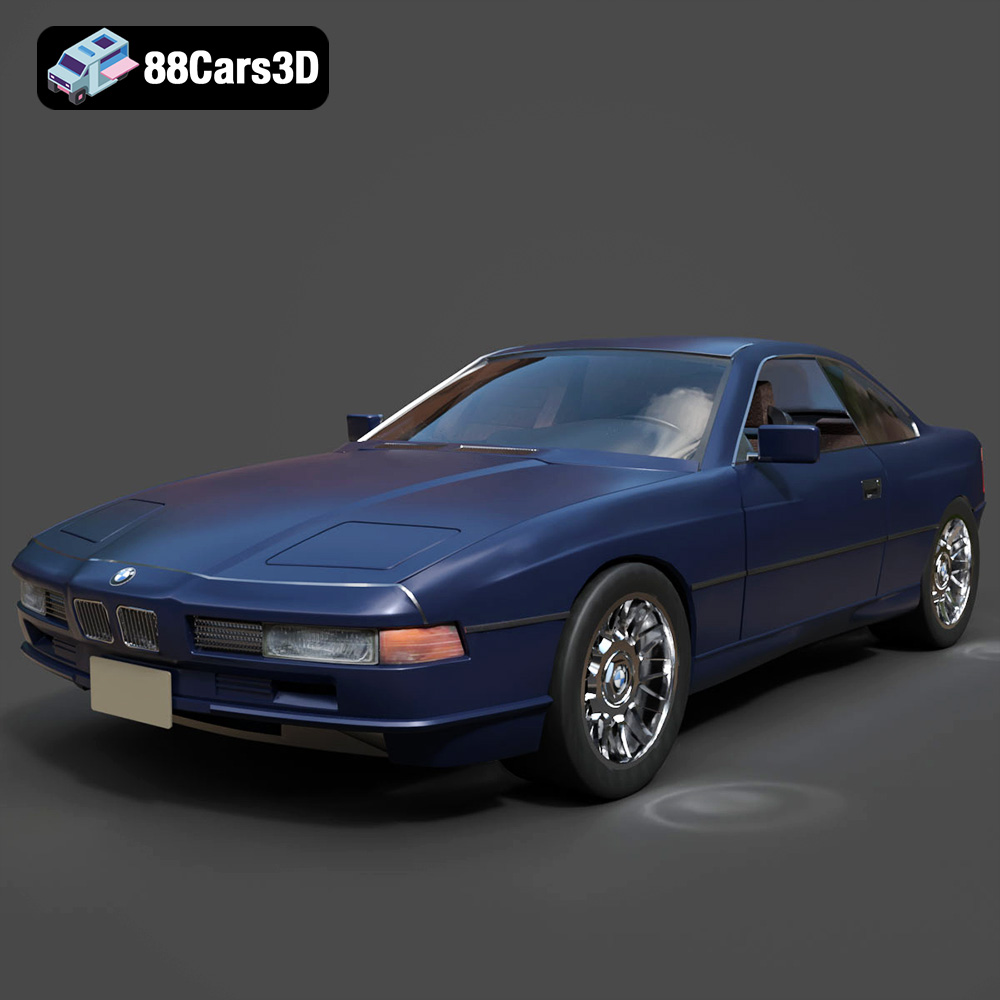
BMW 850i Coupe 1990 3D Model
Texture: Yes
Material: Yes
Download the BMW 850i Coupe 1990 3D Model featuring clean geometry, realistic detailing, and a fully modeled interior. Includes .blend, .fbx, .obj, .glb, .stl, .ply, .unreal, and .max formats for rendering, simulation, and game development.
Price: $13.99
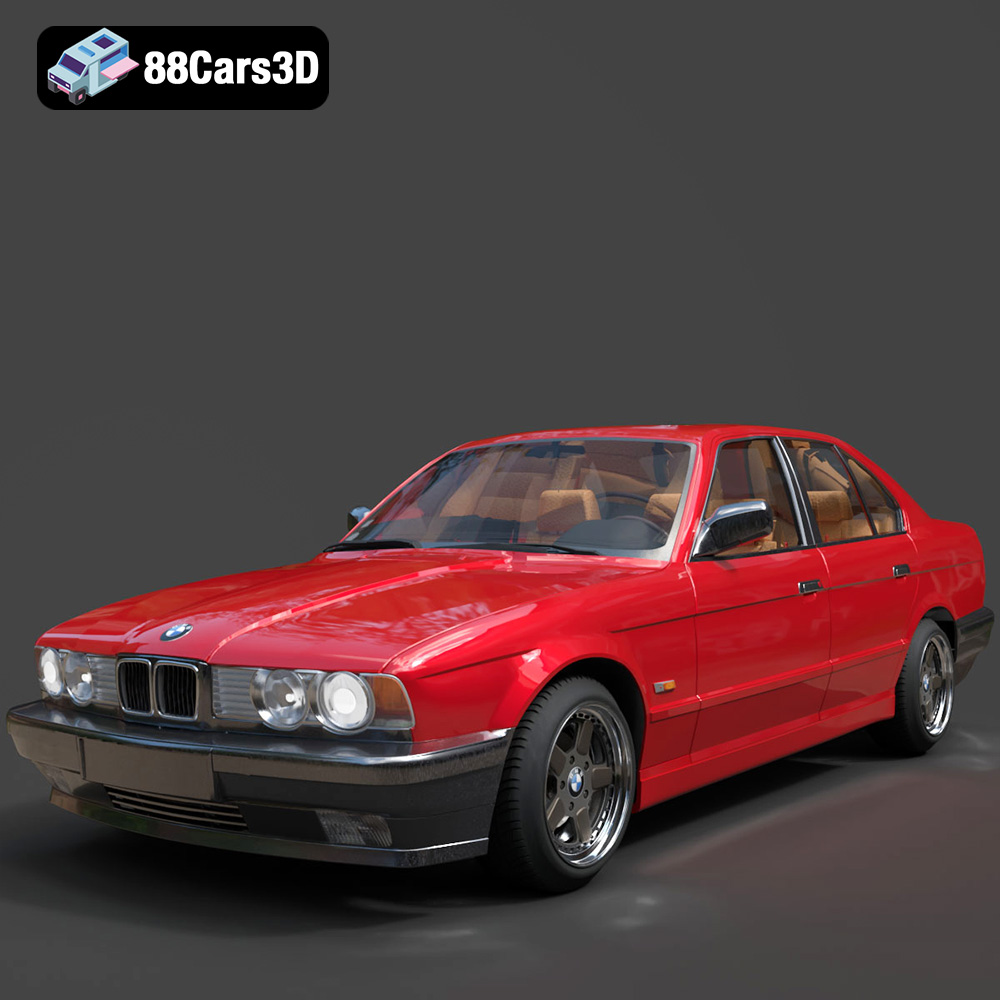
BMW 525i E34 1993 3D Model
Texture: Yes
Material: Yes
Download the BMW 525i E34 1993 3D Model featuring clean geometry, realistic detailing, and a fully modeled interior. Includes .blend, .fbx, .obj, .glb, .stl, .ply, .unreal, and .max formats for rendering, simulation, and game development.
Price: $12.99

BMW 7 Series 2016 3D Model
Texture: Yes
Material: Yes
Download the BMW 7 Series 2016 3D Model featuring luxurious design, detailed interior, and accurate exterior. Includes .blend, .fbx, .obj, .glb, .stl, .ply, .unreal, and .max formats for rendering, simulation, and game development.
Price: $10.79
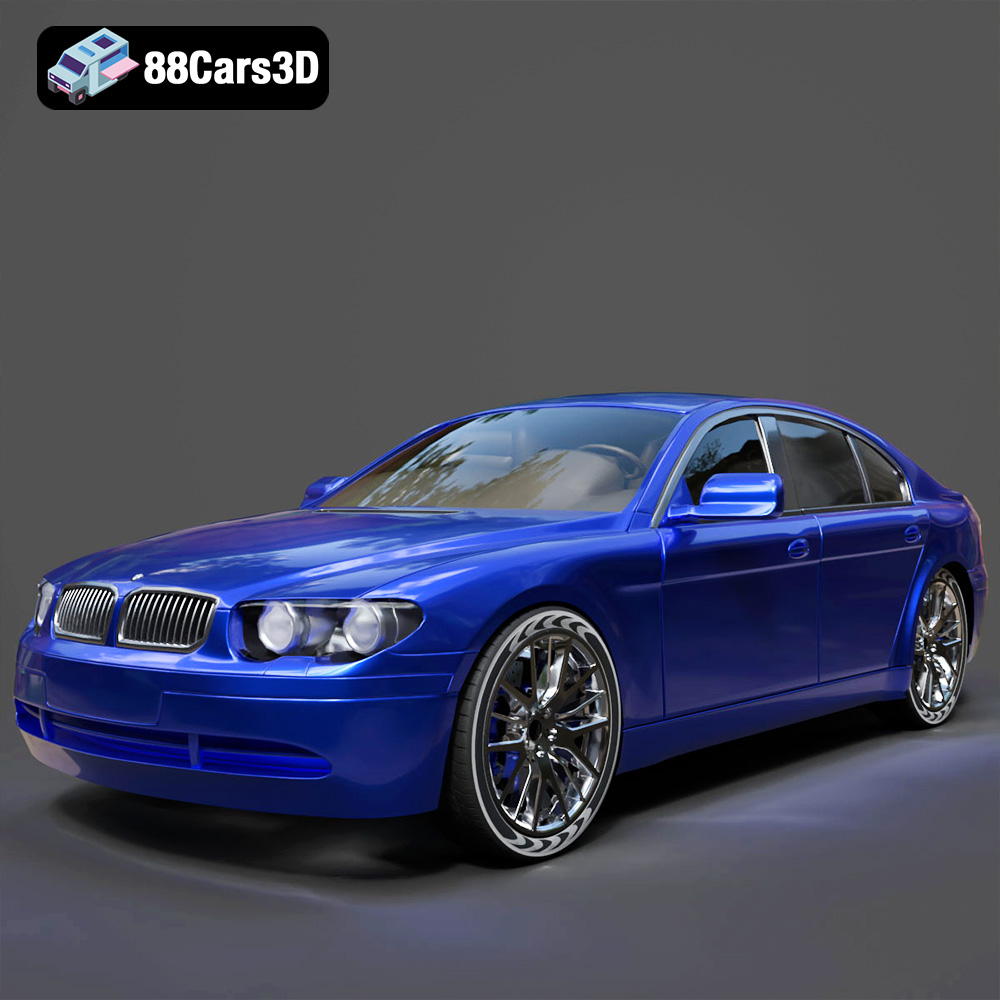
BMW 7 Series 30th Anniversary 3D Model
Texture: Yes
Material: Yes
Download the BMW 7 Series 30th Anniversary 3D Model featuring a meticulously crafted exterior, detailed interior, and realistic wheels. Includes .blend, .fbx, .obj, .glb, .stl, .ply, .unreal, and .max formats for rendering, simulation, and game development.
Price: $35.79

BMW 7-Series F02 3D Model
Texture: Yes
Material: Yes
Download the BMW 7-Series F02 3D Model featuring a detailed exterior and interior, optimized for rendering and animation. Includes .blend, .fbx, .obj, .glb, .stl, .ply, .unreal, and .max formats for rendering, simulation, and game development.
Price: $10.79
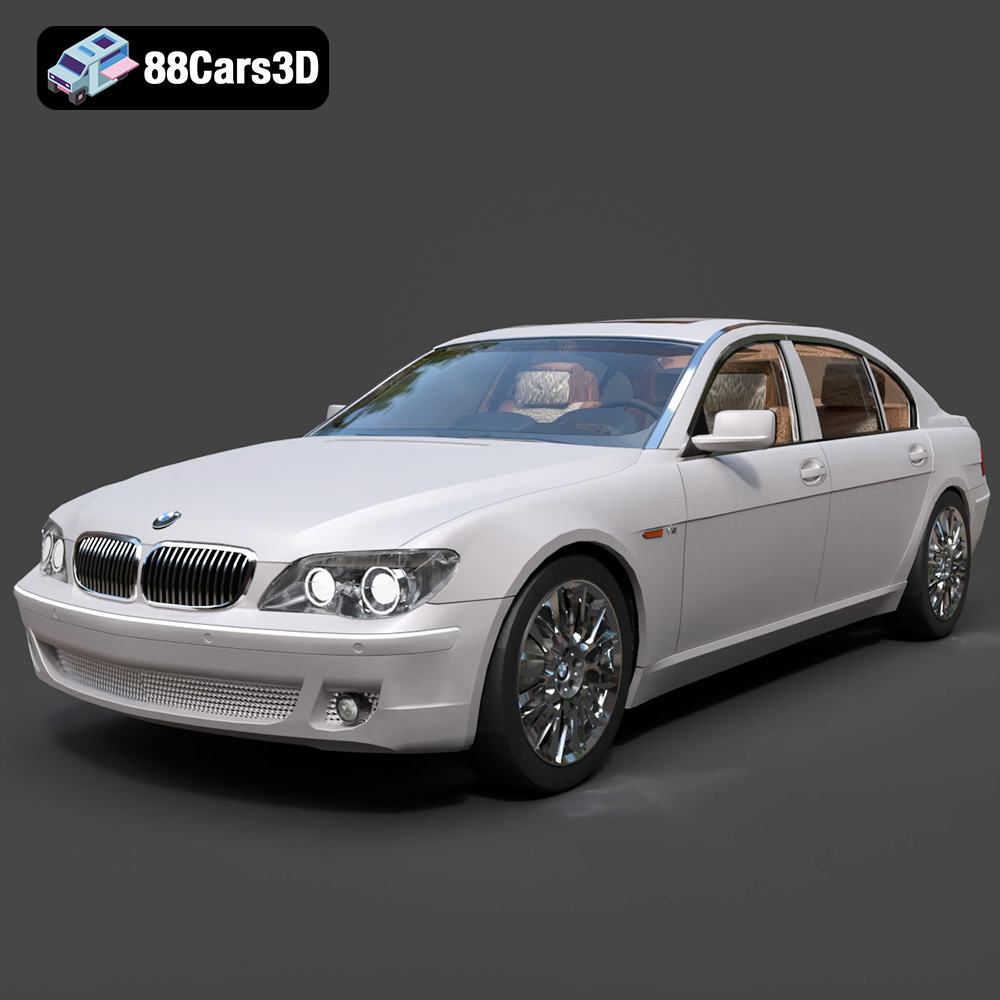
BMW 760Li E66 2005 3D Model
Texture: Yes
Material: Yes
Download the BMW 760Li E66 2005 3D Model featuring a detailed exterior, refined interior, and robust chassis. Includes .blend, .fbx, .obj, .glb, .stl, .ply, .unreal, and .max formats for rendering, simulation, and game development.
Price: $10.79
