

The automotive industry is in a constant state of evolution, and with it, the methods of showcasing its marvels. Gone are the days when static images and pre-rendered videos were sufficient to capture the imagination of potential buyers and enthusiasts. Today, the demand for immersive, interactive experiences is paramount. This is where Unreal Engine steps in, transforming the landscape of automotive visualization. With its cutting-edge real-time rendering capabilities, Unreal Engine empowers artists and developers to create breathtakingly realistic and fully interactive 3D car models that can be explored, customized, and experienced in ways never before possible.
For professionals ranging from automotive designers and marketing teams to game developers and architectural visualization artists, understanding how to leverage Unreal Engine is a critical skill. This comprehensive guide will walk you through the essential steps and advanced techniques required to build stunning, interactive product demos. We’ll delve into project setup, material creation, sophisticated lighting, dynamic interactivity using Blueprint, performance optimization with Nanite and LODs, and even cinematic sequences. By the end, you’ll have a robust framework for crafting immersive experiences that truly bring vehicles to life, setting a new standard for product presentation.
Laying the Foundation: Unreal Engine Project Setup for Automotive Demos
Beginning any Unreal Engine project requires a thoughtful setup to ensure a smooth development process and optimal performance. For automotive visualization, particularly when working with high-quality 3D car models, establishing the correct foundation is crucial. This involves selecting the appropriate project template, configuring essential engine settings, and efficiently importing your valuable assets. A well-configured project not only streamlines your workflow but also significantly impacts the visual fidelity and real-time performance of your interactive demo.
Choosing the Right Template and Project Settings
When starting a new project in Unreal Engine, you’ll be presented with several templates. For automotive visualization, it’s often best to start with an Empty Project. This gives you maximum control over what features are enabled, allowing you to build up your scene efficiently without unnecessary bloat from game-specific templates. However, the Automotive Product Design template can also be a good starting point, as it pre-configures some relevant settings and includes useful assets like a studio lighting setup. Regardless of your choice, certain project settings are paramount:
- Ray Tracing: Navigate to
Project Settings > Engine > Rendering. EnableHardware Ray Tracingand related features likeSupport Ray Traced Global Illumination,Reflections, andShadows. This is vital for achieving photorealistic reflections and accurate global illumination on glossy car surfaces. - Lumen: Also under
Project Settings > Engine > Rendering, ensureGlobal IlluminationandReflectionsmethods are set toLumen. Lumen provides dynamic, real-time global illumination and reflections without requiring baked lightmaps, which is incredibly powerful for interactive environments where lighting might change. - Nanite: Essential for handling high-polygon 3D car models. In
Project Settings > Engine > Rendering, enableSupport Nanite For Virtualized Geometry. This allows Unreal Engine to efficiently render millions of triangles, maintaining incredible detail without crippling performance. - Frame Rate and VSync: For smooth interactive demos, especially on high-refresh-rate monitors, consider setting a target frame rate (e.g., 60 FPS) and potentially enabling VSync in
Project Settings > Engine > General Settings > Framerate.
For more detailed information on setting up your Unreal Engine project, including an in-depth look at rendering features, consult the official Unreal Engine documentation at https://dev.epicgames.com/community/unreal-engine/learning.
Importing High-Quality 3D Car Models and Initial Optimization
The quality of your source assets directly impacts the final realism of your interactive demo. When sourcing 3D car models, platforms like 88cars3d.com offer highly optimized models specifically designed for Unreal Engine, ensuring clean topology, proper UV mapping, and realistic materials. For importing, FBX is a widely supported format, though USD (Universal Scene Description) is gaining traction for its robust scene interchange capabilities.
Here’s a general workflow for importing and initial optimization:
- Import Settings: When importing an FBX file, pay close attention to the import options.
- Scale: Ensure the import scale is correct (often 1 unit = 1cm in Unreal Engine). Incorrect scaling can lead to lighting issues and physics inaccuracies.
- Geometry: Enable
Combine Meshesif your car model is comprised of many small parts, and you want to treat it as a single static mesh (though for configurators, individual parts are often preferred). EnsureGenerate Missing Collisionis checked if you need basic collision. - Materials: Select
Create New Materialsto have Unreal Engine automatically set up basic PBR materials. You’ll refine these later. - Normals and Tangents: Ensure
Import NormalsandImport Tangentsare enabled to preserve the model’s smoothing groups and detail.
- Asset Structure and Naming: Once imported, organize your assets within the Content Browser. Use logical folder structures (e.g.,
Cars/MyCarModel/Meshes,Cars/MyCarModel/Materials,Cars/MyCarModel/Textures). Consistent naming conventions are crucial for manageability. - Initial Poly Count Check: Even with Nanite, it’s good practice to understand your mesh density. A detailed car model can easily exceed several million triangles. While Nanite handles this efficiently at render time, be mindful of geometry complexity for non-Nanite components (like character models or smaller props) or when packaging for less powerful platforms like AR/VR.
- Pivot Point Adjustment: Verify the pivot point of your car model and its individual parts. For a full car, the pivot should ideally be at the center of its base. For doors or wheels, the pivot needs to be at the hinge or axle center for correct rotation. You can adjust pivots directly in Unreal Engine by right-clicking on the static mesh asset and selecting
Edit, then using the modeling tools or a 3D modeling software prior to import.
Starting with well-structured, high-quality 3D car models from marketplaces like 88cars3d.com significantly reduces the workload in these initial stages, allowing you to focus on the creative aspects of your demo.
Mastering Materials and Lighting for Photorealism
Achieving a photorealistic look in Unreal Engine for automotive visualization hinges on two critical elements: physically-based rendering (PBR) materials and dynamic, realistic lighting. The interplay between these two components defines how light interacts with surfaces, creating the convincing reflections, refractions, and diffuse shading that make a virtual car indistinguishable from its real-world counterpart. Without meticulous attention to both, even the most detailed 3D car models will fall short of professional quality.
Crafting Realistic PBR Materials in the Material Editor
Unreal Engine’s Material Editor is an incredibly powerful node-based system for creating complex materials. For automotive assets, the Metallic-Roughness workflow is standard and highly effective. Each material property plays a crucial role:
- Base Color (Albedo): This map defines the pure color of the surface, devoid of any lighting or shading information. For car paint, this will be a solid color or a subtle gradient. For tires, a dark grey.
- Metallic: A binary value (0 or 1, or values in between for mixed materials like rusted metal). Car body panels are metallic (1), while tires, plastic trim, and glass are non-metallic (0). This channel tells the engine whether light should reflect like metal or not.
- Roughness: This map controls the microscopic surface irregularities, determining how sharp or blurry reflections appear. A value of 0 is perfectly smooth (mirror-like), while 1 is completely rough (matte). Car paint typically has very low roughness (e.g., 0.05-0.2) to achieve its glossy finish, while tire rubber will have higher roughness (e.g., 0.6-0.8).
- Normal Map: Provides per-pixel surface details, simulating fine bumps and grooves without adding extra geometry. Essential for tire treads, intricate dashboard textures, or subtle imperfections on car body panels.
- Ambient Occlusion (AO): A grayscale map that simulates soft, diffuse shadows in crevices and corners, enhancing depth. It helps ground the model within the scene.
- Clear Coat (Unreal Engine Specific): Car paint often has a clear coat layer. Unreal Engine provides specific inputs for this in the Material Editor:
Clear Coat(boolean, 0 or 1),Clear Coat Roughness, andClear Coat Normal. This allows you to simulate the reflective, glossy top layer independently from the base metallic paint. Creating a convincing car paint material often involves complex nodal setups, blending a metallic base with a separate clear coat layer to simulate depth and flake effects. - Glass Material: For windows and headlights, glass requires specific properties. Use a Translucent material blend mode. Key parameters include
Refraction(controlled by an index of refraction, e.g., 1.52 for glass),Opacity, and a highMetallicvalue to allow reflections, alongside lowRoughness. For performance, simpler opaque materials with masked transparency and cubemap reflections might be used for distant objects.
When working with assets from 88cars3d.com, you’ll often find pre-calibrated PBR textures and material setups, which serve as excellent starting points and adhere to industry best practices. Always use sRGB for color textures (Base Color) and Linear for non-color data (Normal, Roughness, Metallic, AO).
Dynamic Real-Time Lighting with Lumen and Ray Tracing
Unreal Engine’s real-time lighting capabilities, particularly with Lumen and Hardware Ray Tracing, are game-changers for automotive visualization. They enable dynamic, physically accurate light interactions that respond instantly to changes in the environment or user interaction.
- Lumen Global Illumination: Lumen is Unreal Engine’s fully dynamic global illumination and reflection system. It calculates indirect lighting and reflections in real time, making light bounce realistically off surfaces. For an automotive demo, this means a car parked in a garage will naturally pick up color bounces from the walls and floor, and reflections will propagate correctly. To enable Lumen, ensure it’s set in your Project Settings (as discussed previously) and that your lights are set to
Movable. - Ray Traced Reflections and Shadows: While Lumen handles general global illumination and reflections, Hardware Ray Tracing provides pixel-perfect reflections and accurate, physically correct shadows, especially vital for glossy car surfaces. Ray-traced reflections are superior for mirrors and highly reflective materials, preventing screen-space artifacts. Ray-traced shadows offer soft, contact-hardening shadows that add immense realism.
- Environmental Lighting (HDRI Sky): The simplest and most effective way to light an automotive scene is with an HDRI (High Dynamic Range Image) captured from a real-world environment. Import an HDRI texture (e.g., an EXR file) and apply it to a
Sky Light. Ensure the Sky Light’sSource Typeis set toSLS Captured SceneorSLS Specified Cubemapif you want to use the HDRI directly as the cubemap. Additionally, create aSky SphereorSky Atmosphereto visualize the sky, connecting it to the Sky Light. - Directional Light: Represents the sun. Use it in conjunction with the HDRI. Match its rotation to the sun’s position in your HDRI for consistent lighting and shadows. Set it to
Movablefor dynamic changes (e.g., time-of-day simulation). - Rect Lights and Spot Lights: For studio setups or specific accent lighting, Rect Lights are excellent for simulating softbox lighting, producing beautiful, elongated reflections on car surfaces. Spot Lights can be used to highlight specific features or add volumetric effects. Always consider the
Source RadiusandBarn Door Anglefor Rect Lights to control the softness and shape of the light.
When placing lights, think like a photographer. Observe how light falls on the car, focusing on highlights and reflections that reveal the contours and design lines. Experiment with light temperatures and intensities to achieve different moods. The synergy between your PBR materials and dynamic lighting is what ultimately sells the realism of your 3D car models.
Empowering Interactivity with Blueprint Visual Scripting
A static showcase, no matter how beautiful, limits engagement. The true power of Unreal Engine for automotive visualization lies in its ability to create interactive experiences. This is primarily achieved through Blueprint Visual Scripting – a powerful, node-based interface that allows designers and artists to create complex gameplay and interactive functionalities without writing a single line of code. Blueprint bridges the gap between purely visual content and dynamic, responsive demos, enabling users to customize vehicles, navigate environments, and trigger events with ease.
Building an Interactive Car Configurator System
One of the most compelling applications for interactive automotive demos is the car configurator. This allows users to customize a vehicle’s appearance in real-time, providing a personal and engaging experience. Blueprint is the backbone of such systems.
- Material Swapping (Paint Colors, Finishes):
- Setup Materials: Create master materials for different paint types (e.g., glossy metallic, matte, pearlescent). Use material instances for each color variation (e.g.,
MI_CarPaint_Red,MI_CarPaint_Blue), which allows easy parameter changes. - Blueprint Logic: In your car Blueprint (an Actor Blueprint that holds all car components), create an array of your paint material instances.
- User Interface (UMG): Design a simple UI widget with buttons or a color palette. On button click, get the static mesh component (e.g.,
CarBody) and use theSet Materialnode to apply the corresponding material instance from your array. - Component Swapping (Wheels, Body Kits):
- Setup Meshes: Import all alternative wheel sets or body kit components as separate static meshes.
- Blueprint Logic: Create variables within your car Blueprint to hold references to these alternative meshes. When a UI button is pressed, use nodes like
Set Static Meshon the target component (e.g.,FrontLeftWheel_Mesh) to swap it with the chosen alternative. Ensure correct scaling and positioning.
- Event Dispatchers: For more complex scenarios or when multiple Blueprints need to react to a change (e.g., changing paint color on the main car also updates a small preview thumbnail), use Event Dispatchers. This allows one Blueprint to “broadcast” an event that other Blueprints can “listen” for and respond to.
- Setup Materials: Create master materials for different paint types (e.g., glossy metallic, matte, pearlescent). Use material instances for each color variation (e.g.,
The beauty of Blueprint is its visual nature. You can see the flow of logic, making it easier to debug and iterate. For an in-depth dive into Blueprint scripting for interactive elements, refer to the extensive tutorials and documentation available on Epic Games’ learning platform at https://dev.epicgames.com/community/unreal-engine/learning.
Implementing Camera Controls and Environmental Interactions
Beyond customization, users expect to freely explore the vehicle and its surroundings. Blueprint facilitates dynamic camera controls and environmental interactions.
- Camera Systems:
- Free-Look Camera: Implement a standard first-person camera controller that allows movement (WASD) and rotation (mouse look). This is ideal for exploring a showroom or environment around the car.
- Orbit Camera: For close-up inspection, an orbit camera that rotates around a focal point (the car) is essential. This typically involves calculating a desired camera position on a sphere around the target, based on mouse input. Use
Spring Arm Componentsto handle camera collisions and smoothing. - Predefined Camera Paths: For guided tours or cinematic presentations of features, use
Sequencer(discussed later) to define camera paths. Then, in Blueprint, you can create buttons in your UI to trigger these pre-recorded sequences.
- Environmental Interactions:
- Opening Doors/Hood/Trunk: Attach relevant car parts (doors, hood) to separate Static Mesh Components within your car Blueprint. Use
Set Relative RotationorSet Relative Locationnodes over time (with aTimelinenode for smooth animation) to simulate opening and closing. Trigger these animations via UI buttons or proximity interactions. - Turning on Lights: Create Spot Lights and Rect Lights for headlights, tail lights, and interior lights. In Blueprint, simply use
Set VisibilityorSet Intensitynodes on these light components, controlled by UI toggles. - Changing Time of Day: If you have a dynamic sky (e.g.,
Sky Atmosphere,Directional Lightfor sun), you can use Blueprint to rotate theDirectional Lightand update theSky Lightto simulate day-night cycles. This can be controlled via a slider or buttons in your UI. - Visual Effects (VFX): While Niagara is typically used for complex particle systems, simpler visual effects like exhaust smoke can be triggered and controlled via Blueprint, providing an extra layer of realism.
- Opening Doors/Hood/Trunk: Attach relevant car parts (doors, hood) to separate Static Mesh Components within your car Blueprint. Use
The key to effective interactivity is intuitive design. Keep your UI clean and responsive, and ensure interactions feel natural and provide immediate visual feedback. By mastering Blueprint, you empower your audience to truly engage with your 3D car models.
Optimizing Performance and Visual Fidelity with Advanced Features
Creating stunning automotive visualization in Unreal Engine often involves pushing graphical limits. However, maintaining smooth real-time performance, especially for interactive demos or when deploying to various platforms like AR/VR, requires strategic optimization. Unreal Engine provides a suite of advanced features designed to achieve high visual fidelity without crippling frame rates. Understanding and implementing these techniques is crucial for professional-grade results.
Leveraging Nanite for High-Fidelity Geometry and LODs
Nanite is Unreal Engine 5’s groundbreaking virtualized geometry system, and it is a game-changer for handling incredibly dense meshes, such as those found in high-quality 3D car models. Traditionally, poly count was a major bottleneck, requiring extensive manual optimization and creation of Levels of Detail (LODs). Nanite fundamentally changes this:
- Benefits of Nanite:
- Millions of Triangles: Nanite allows you to import and render meshes with millions or even billions of triangles without a significant performance hit. This means you can use highly detailed CAD data or scanned models directly.
- Automatic LOD Management: Nanite automatically streams and scales geometric detail based on screen space, effectively eliminating the need for manual LODs for Nanite-enabled meshes. You always see the appropriate level of detail, whether close up or far away.
- Draw Call Reduction: Nanite significantly reduces draw calls, which is another major performance bottleneck, especially for complex scenes.
- How to Use Nanite:
- Ensure Nanite is enabled in your Project Settings (as mentioned in the setup section).
- When importing your static mesh, check the
Build Naniteoption. - You can also enable Nanite on an existing static mesh by opening the asset editor, checking
Enable Nanite, and applying changes.
- Limitations and Considerations:
- Dynamic Objects: Nanite is primarily for static meshes. Deformable meshes (skeletal meshes like characters) or objects that require physics simulation (Chaos Vehicles) do not currently support Nanite directly. For these, traditional LODs and optimization techniques are still necessary.
- Transparency/Masked Materials: Meshes with complex transparent or masked materials may not fully benefit from Nanite or might require specific material setups to avoid rendering artifacts.
- Performance Impact: While Nanite is highly optimized, using excessively dense meshes everywhere can still have a GPU impact, especially on fill rate. It’s about smart usage.
- Manual LODs for Non-Nanite Assets: For parts of the car that aren’t Nanite-enabled (e.g., components of a Chaos Vehicle, or small animated props), or for ensuring backward compatibility/wider platform reach, you will still need traditional LODs.
- Unreal Engine offers automatic LOD generation within the static mesh editor. You can specify the number of LODs and their triangle percentage reduction.
- Manually crafted LODs from your 3D modeling software offer the best quality control, ensuring critical details are preserved while simplifying geometry.
Streamlining Performance for Diverse Platforms (Desktop, AR/VR)
Optimization is an ongoing process, not a one-time task. Achieving optimal performance means targeting bottlenecks and applying a range of techniques suitable for your deployment platform.
- Unreal Engine Scalability Settings: Unreal Engine provides built-in scalability settings (e.g., Epic, High, Medium, Low) that adjust rendering quality. You can expose these to your users or set them programmatically. This controls parameters like texture resolution, shadow quality, post-processing effects, and view distance.
- Texture Streaming: Enable texture streaming for large textures. This ensures that only the necessary mip levels of a texture are loaded into memory based on the camera’s distance, saving VRAM.
- Occlusion Culling: This feature prevents objects that are entirely hidden behind other objects from being rendered. It’s automatically handled by Unreal Engine but ensure your scene has solid occluders (like walls and floors).
- Culling Distances: For less critical objects (e.g., small props in the environment), set their
Cull Distance VolumeorMin/Max Draw Distanceto prevent them from rendering when far away from the camera. - Draw Calls and Tri Counts: Even with Nanite, keeping a general eye on your scene’s draw calls and overall triangle count (using tools like
Stat SceneRenderingorStat RHIin the console) is vital for understanding performance limits, especially for non-Nanite geometry. - AR/VR Specific Optimizations:
- Forward Renderer: Often preferred over the Deferred Renderer for VR due to better performance with MSAA and fewer memory bandwidth requirements.
- Single Pass Stereo: Render both eyes in a single pass to save significant GPU time.
- Foveated Rendering: (If supported by hardware) Renders the center of the viewport at higher resolution than the periphery, taking advantage of how human vision works.
- Reduced Post-Processing: Many post-process effects can be expensive in VR. Use them sparingly.
- Lower Resolution/Mip Maps: Consider reducing texture resolutions and using aggressive mip-mapping for AR/VR assets.
- Baked Lighting: For static environments in AR/VR where dynamic lighting isn’t critical, baked lighting can be significantly more performant than Lumen.
- Reduced Material Complexity: Simplify complex materials where possible.
Optimization is an iterative process. Profile your application regularly (using Unreal Insights or GPU profiler) to identify bottlenecks and address them systematically. A well-optimized demo provides a smooth, immersive experience that truly showcases the beauty of your 3D car models.
Elevating the Experience: Cinematics, Physics, and Advanced Integrations
Beyond interactive exploration and customization, Unreal Engine enables creators to push the boundaries of automotive visualization with compelling cinematic sequences and realistic physics simulations. These advanced features transform a simple product demo into a rich, immersive storytelling platform, whether for marketing, virtual production, or engineering analysis. Leveraging these tools provides a polished, professional edge that sets your interactive content apart.
Crafting Cinematic Sequences with Sequencer
Sequencer is Unreal Engine’s powerful, non-linear cinematic editor, allowing you to create high-quality, pre-rendered or real-time sequences for marketing, presentations, or in-engine cutscenes. It’s perfect for crafting beauty shots of your 3D car models, highlighting specific features, or guiding the viewer through a virtual showroom.
- Key Features of Sequencer:
- Camera Animation: Create sophisticated camera movements with ease. Keyframe camera positions, rotations, and focal lengths to achieve dynamic shots. You can use
Cine Camera Actorsfor filmic controls like aperture, focal length, and depth of field. - Actor Animation: Animate any actor in your scene. This could involve opening and closing car doors, rotating wheels, or even animating complex transformations like a car transforming from concept to production model. Use
Transform Tracksfor position, rotation, and scale. - Material Parameter Animation: Animate material parameters over time, such as changing the car’s paint color, adjusting metallic sheen, or fading elements in and out. This is powerful for showcasing optional features.
- Lighting Animation: Animate light intensities, colors, and positions to create dramatic lighting shifts, day-night cycles, or studio light sweeps.
- Audio Tracks: Add background music, sound effects (e.g., engine sounds, door clicks) to enhance the immersion.
- Virtual Production and LED Walls: Sequencer is integral to virtual production workflows. By linking camera movements in Sequencer to a physical camera rig via
Live Linkand synchronizing with anLED wall, you can create real-time in-camera VFX backgrounds, immersing talent in a dynamic, virtual automotive environment. This also enables the use of DMX for controlling physical lights in sync with virtual scene lighting. - Camera Rigs: Utilize
Crane RigsandRail Rigswithin Sequencer for more realistic and complex camera motion paths, simulating professional camera equipment.
- Camera Animation: Create sophisticated camera movements with ease. Keyframe camera positions, rotations, and focal lengths to achieve dynamic shots. You can use
- Workflow for Creating a Cinematic:
- Create a New Level Sequence: Right-click in the Content Browser >
Cinematics > Level Sequence. - Add Actors: Drag your car model, cameras (Cine Camera Actors), and lights from the scene into the Sequencer track list.
- Keyframe Properties: Select an actor or property, move the playhead to a point in time, change the property (e.g., camera position), and click the ‘+’ icon next to the property to add a keyframe.
- Adjust Curves: Use the curve editor to smooth out animations and create natural motion.
- Preview and Refine: Play through the sequence, adjust timings, and fine-tune details until it meets your vision.
- Create a New Level Sequence: Right-click in the Content Browser >
Integrating Sequencer sequences into your Blueprint configurator allows users to trigger these pre-authored cinematics with a button click, offering a curated experience within an interactive environment.
Integrating Physics Simulation and Vehicle Dynamics
For some automotive demos, especially those focused on driving simulators or engineering validation, realistic vehicle physics are indispensable. Unreal Engine’s Chaos Vehicles system provides a robust framework for simulating car physics.
- Chaos Vehicles Overview:
- Chaos Vehicles is a component-based system that allows you to define a car’s physical properties: wheels, suspension, engine torque curves, gear ratios, differential types, and brake forces.
- It integrates directly with the Chaos physics engine, providing stable and realistic driving behavior.
- Setting Up a Chaos Vehicle:
- Skeletal Mesh Requirement: Your car model needs to be set up as a Skeletal Mesh with a proper hierarchy for the body and individual wheels. This allows the physics engine to calculate wheel rotation and suspension compression independently.
- Vehicle Movement Component: Create a new Blueprint based on the
VehiclePawnclass. Add aChaos Vehicle Movement Componentto this Blueprint. - Wheel Setup: In the Chaos Vehicle Movement Component, define each wheel (front left, front right, rear left, rear right). Assign corresponding skeletal mesh bones to each wheel, specify wheel radius, width, suspension parameters (spring rate, damping, max raise/drop), and tire friction properties.
- Engine and Transmission: Configure the engine’s torque curve (RPM vs. Torque), maximum RPM, idle RPM, and brake torque. Set up gear ratios, differential type (e.g., rear-wheel drive, front-wheel drive, all-wheel drive), and clutch parameters.
- Input Mapping: Set up input actions for acceleration, braking, and steering (e.g., using keyboard or gamepad inputs) within your project settings and link them to the Chaos Vehicle Movement Component’s input functions in Blueprint.
- Simplified Physics for Configurators: For interactive configurators where full driving is not required, you might use simpler physics or animation. For instance, you could animate wheel rotations based on user input for a static “spin” animation, or use simplified collision meshes for interactions without requiring a full Chaos Vehicle setup. However, for a fully immersive driving experience, Chaos Vehicles provides unparalleled realism.
- AR/VR Optimization: When integrating physics for AR/VR applications, be mindful of the computational cost. Complex physics calculations can quickly consume CPU cycles. Optimize collision meshes, simplify wheel setups where possible, and ensure the simulation runs at a consistent frame rate to prevent motion sickness in VR.
By combining the cinematic storytelling capabilities of Sequencer with the realistic dynamics of Chaos Vehicles, you can create truly engaging and informative automotive visualization experiences that go far beyond traditional product showcases.
Conclusion
The journey through creating interactive product demos with Unreal Engine for automotive visualization reveals a powerful paradigm shift. We’ve explored how a meticulous project setup, leveraging high-quality 3D car models from platforms like 88cars3d.com, forms the bedrock of a successful demo. From mastering PBR materials and dynamic real-time rendering with Lumen and Ray Tracing to empowering user interaction through Blueprint Visual Scripting, each step is crucial in crafting an immersive experience.
The integration of advanced features like Nanite for unparalleled geometric detail, strategic performance optimization for diverse platforms, and the creative storytelling potential of Sequencer, alongside realistic Chaos Vehicle physics, collectively define the cutting edge of automotive visualization. These techniques enable developers and artists to not only showcase vehicles with breathtaking realism but also allow prospective clients and enthusiasts to engage, customize, and truly experience them.
The ability to create real-time, interactive experiences is no longer a luxury but a necessity in a rapidly evolving market. By embracing these Unreal Engine workflows, you gain a competitive edge, delivering captivating content that resonates deeply with your audience. Start experimenting, refine your skills, and leverage the powerful tools at your disposal to build the next generation of automotive visualization experiences. Your next stunning interactive demo awaits.
Featured 3D Car Models
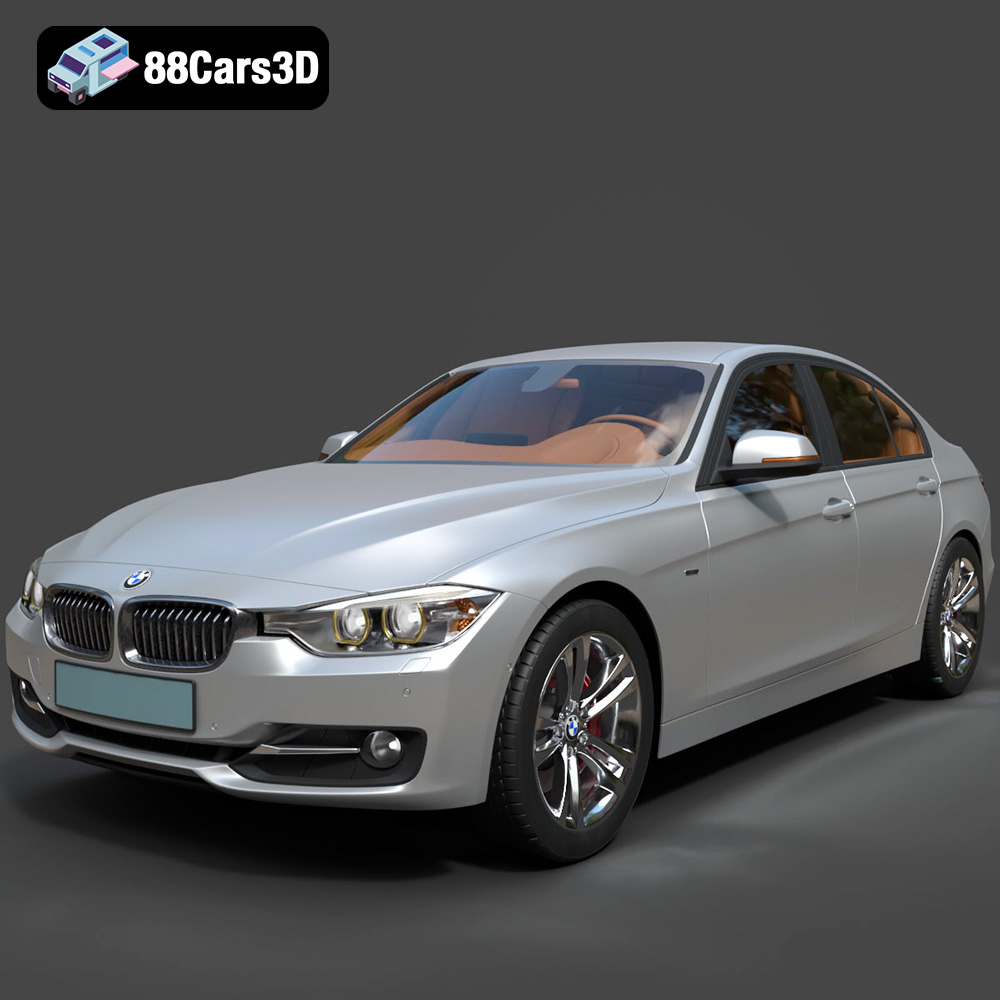
BMW 3 F30 3D Model
Texture: Yes
Material: Yes
Download the BMW 3 F30 3D Model featuring a detailed exterior, realistic interior, and optimized mesh. Includes .blend, .fbx, .obj, .glb, .stl, .ply, .unreal, and .max formats for rendering, simulation, and game development.
Price: $10.79
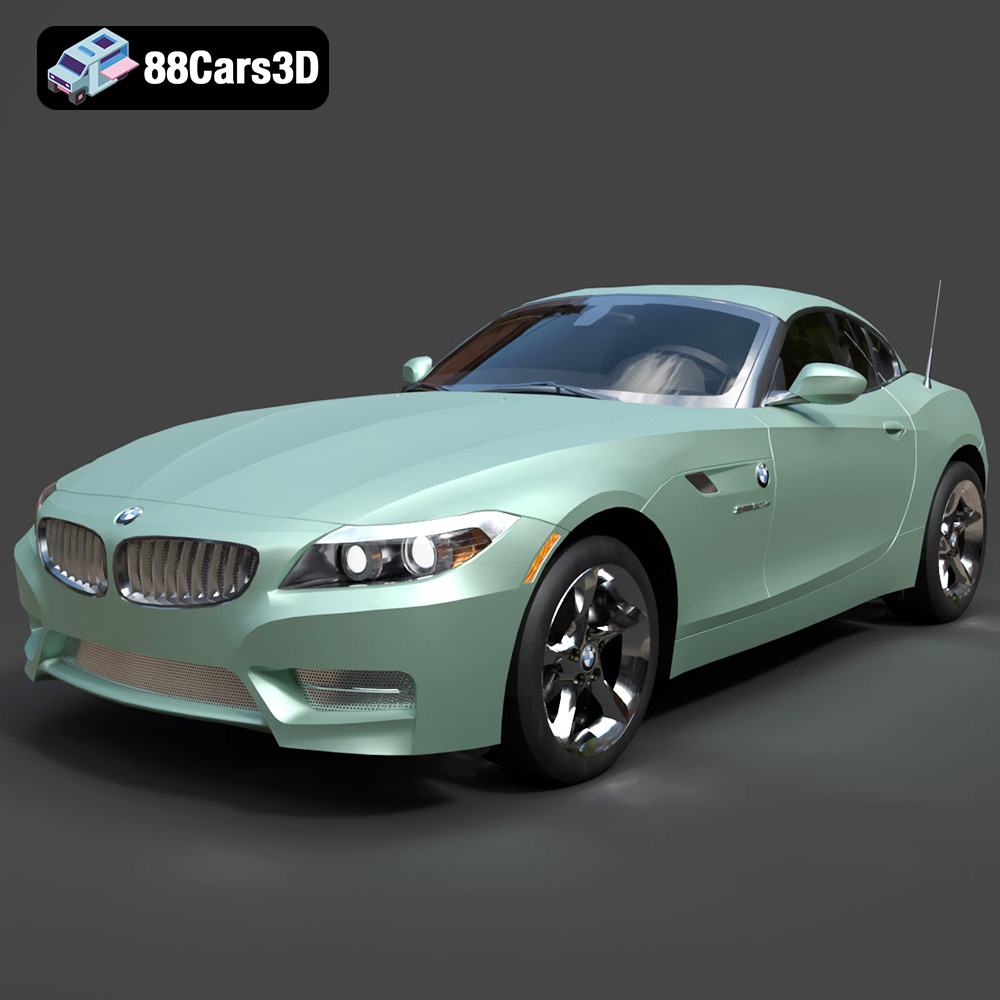
BMW Z4 Roadster E89 2012 3D Model
Texture: Yes
Material: Yes
Download the BMW Z4 Roadster E89 3D Model featuring clean geometry, realistic detailing, and a fully modeled interior. Includes .blend, .fbx, .obj, .glb, .stl, .ply, .unreal, and .max formats for rendering, simulation, and game development.
Price: $13.99

BMW Z4 E85 2005 3D Model
Texture: Yes
Material: Yes
Download the BMW Z4 E85 3D Model featuring clean geometry, realistic detailing, and a fully modeled interior. Includes .blend, .fbx, .obj, .glb, .stl, .ply, .unreal, and .max formats for rendering, simulation, and game development.
Price: $13.99

BMW M3 2024 3D Model
Texture: Yes
Material: Yes
Download the BMW M3 2024 3D Model featuring clean geometry, realistic detailing, and a fully modeled interior. Includes .blend, .fbx, .obj, .glb, .stl, .ply, .unreal, and .max formats for rendering, simulation, and game development.
Price: $13.99
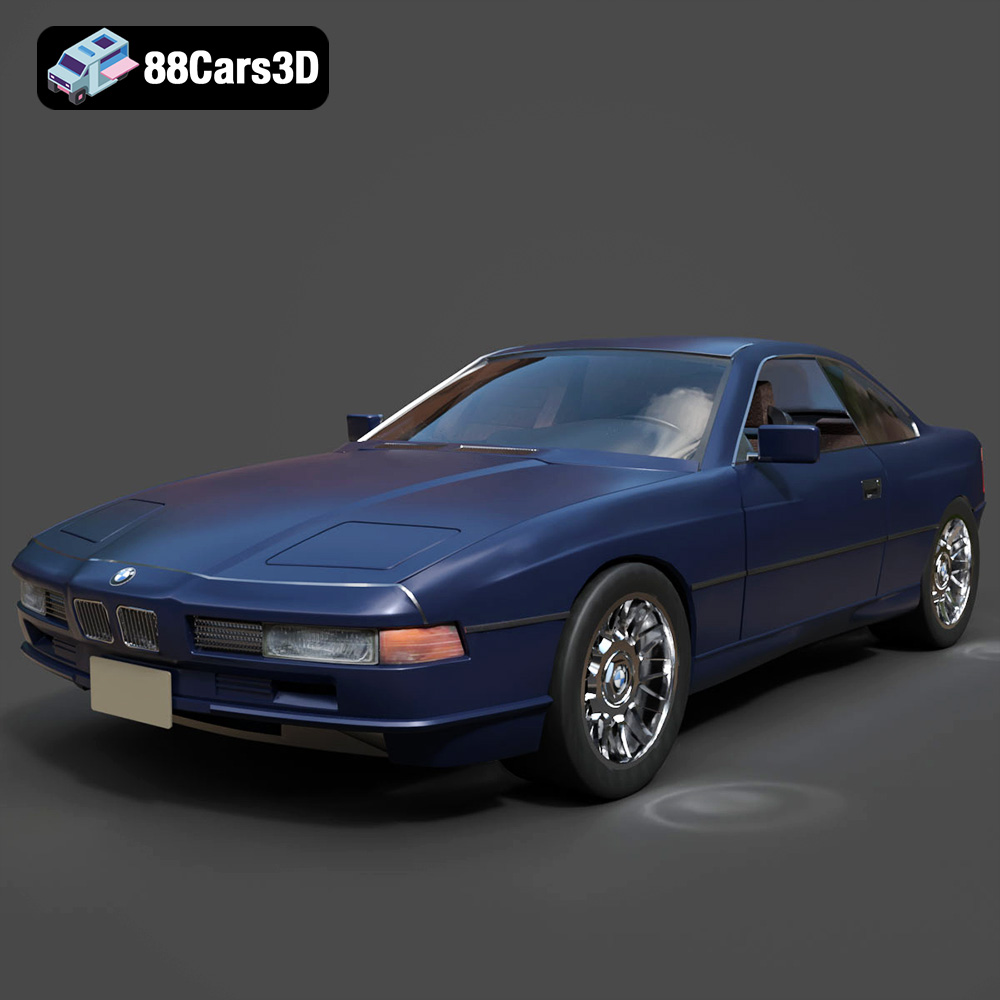
BMW 850i Coupe 1990 3D Model
Texture: Yes
Material: Yes
Download the BMW 850i Coupe 1990 3D Model featuring clean geometry, realistic detailing, and a fully modeled interior. Includes .blend, .fbx, .obj, .glb, .stl, .ply, .unreal, and .max formats for rendering, simulation, and game development.
Price: $13.99
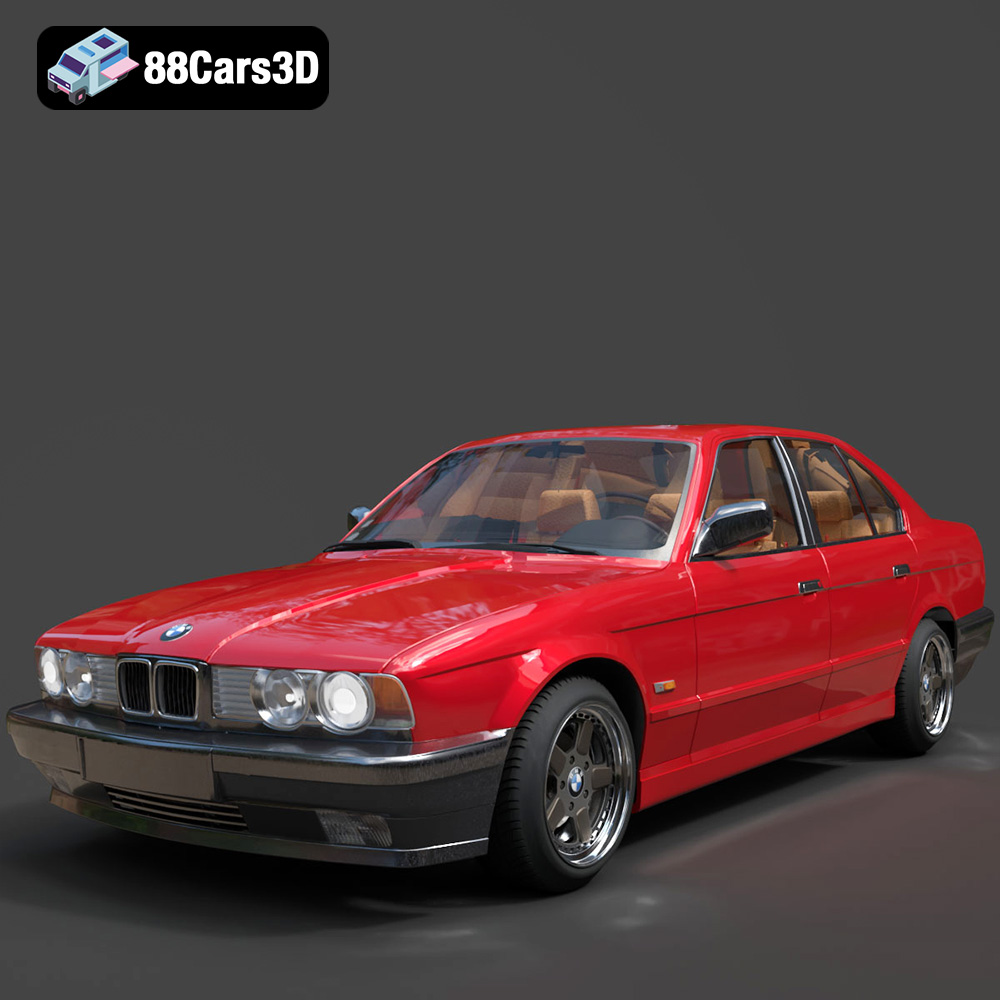
BMW 525i E34 1993 3D Model
Texture: Yes
Material: Yes
Download the BMW 525i E34 1993 3D Model featuring clean geometry, realistic detailing, and a fully modeled interior. Includes .blend, .fbx, .obj, .glb, .stl, .ply, .unreal, and .max formats for rendering, simulation, and game development.
Price: $12.99

BMW 7 Series 2016 3D Model
Texture: Yes
Material: Yes
Download the BMW 7 Series 2016 3D Model featuring luxurious design, detailed interior, and accurate exterior. Includes .blend, .fbx, .obj, .glb, .stl, .ply, .unreal, and .max formats for rendering, simulation, and game development.
Price: $10.79
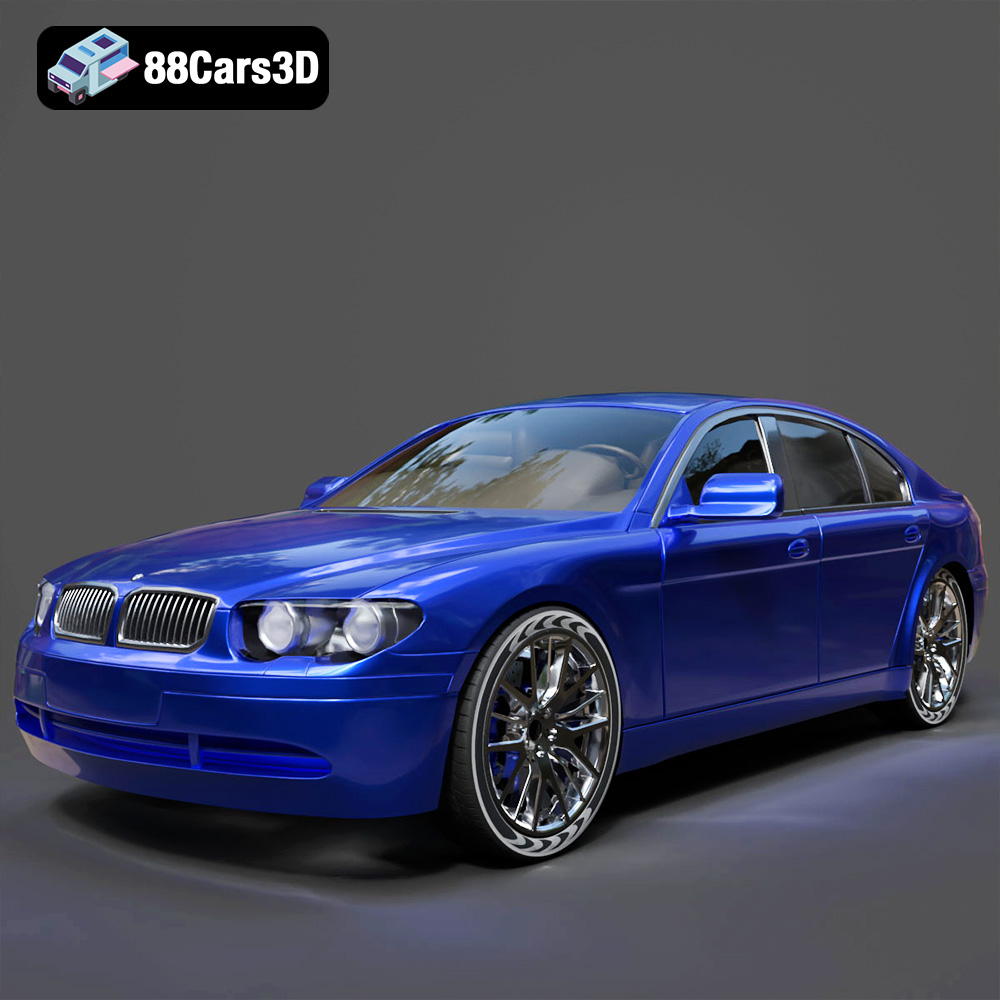
BMW 7 Series 30th Anniversary 3D Model
Texture: Yes
Material: Yes
Download the BMW 7 Series 30th Anniversary 3D Model featuring a meticulously crafted exterior, detailed interior, and realistic wheels. Includes .blend, .fbx, .obj, .glb, .stl, .ply, .unreal, and .max formats for rendering, simulation, and game development.
Price: $35.79

BMW 7-Series F02 3D Model
Texture: Yes
Material: Yes
Download the BMW 7-Series F02 3D Model featuring a detailed exterior and interior, optimized for rendering and animation. Includes .blend, .fbx, .obj, .glb, .stl, .ply, .unreal, and .max formats for rendering, simulation, and game development.
Price: $10.79
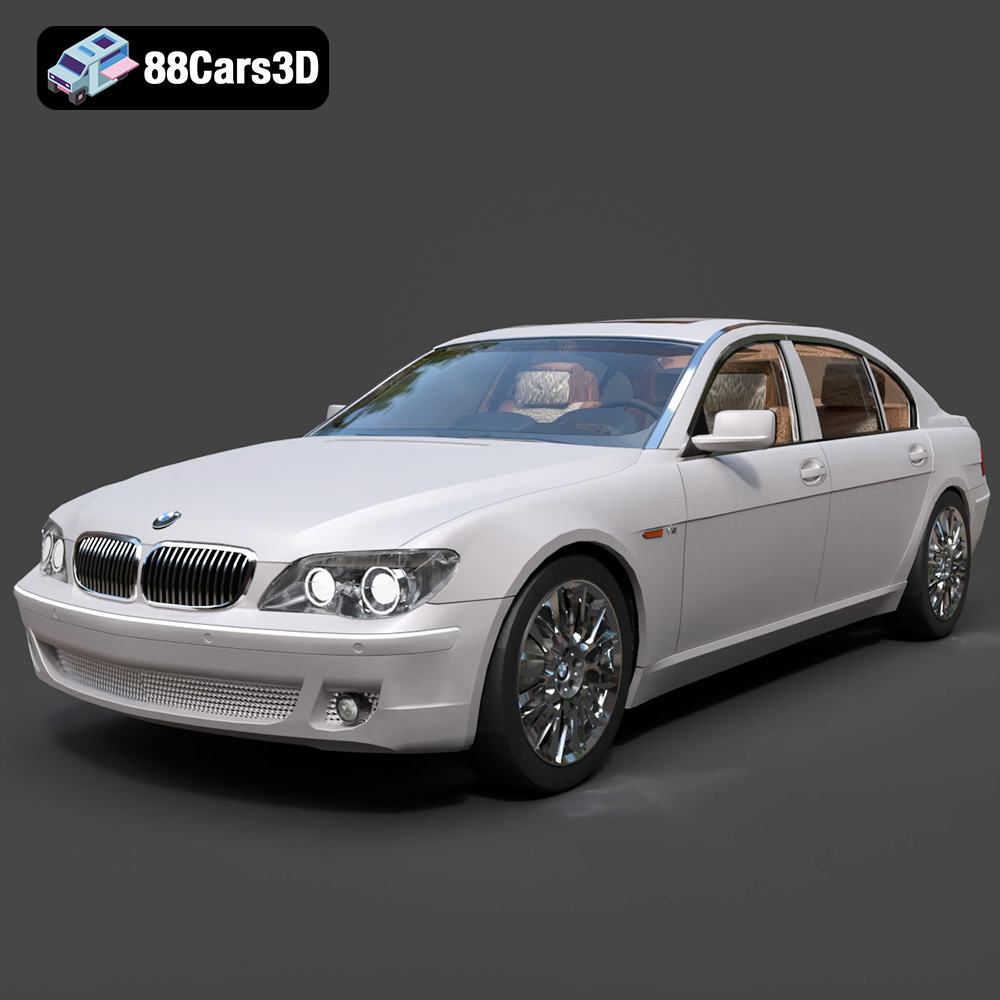
BMW 760Li E66 2005 3D Model
Texture: Yes
Material: Yes
Download the BMW 760Li E66 2005 3D Model featuring a detailed exterior, refined interior, and robust chassis. Includes .blend, .fbx, .obj, .glb, .stl, .ply, .unreal, and .max formats for rendering, simulation, and game development.
Price: $10.79
