

“`html
Mastering the Slice: How to Prepare STL Files for Flawless 3D Car Model Prints
The dream of holding a perfectly replicated 3D printable car model in your hands, whether it’s for a display shelf, a scale model project, or even educational purposes, hinges on one crucial step: slicing. Transforming a raw STL file into a series of machine instructions is an art and a science. At 88cars3d.com, we pride ourselves on delivering high-quality, print-ready STL files for automotive enthusiasts. However, even the most meticulously crafted 3D model requires careful preparation in your slicing software to achieve breathtaking results. This comprehensive guide will demystify the slicing process, taking you from basic settings to advanced optimization techniques. We’ll cover everything from understanding STL file nuances to selecting the right printer settings, generating effective supports, and troubleshooting common issues. Prepare to elevate your 3D printing game and bring your favorite car models to life with unparalleled precision and detail.
Understanding Your STL File: The Foundation of a Great Print
Before diving into slicing software, it’s vital to understand what an STL file truly is and what makes a “good” one. STL (STereoLithography) is a mesh file format that describes the surface geometry of a 3D object using a collection of triangular facets. Essentially, it’s a digital sculpture made of thousands of tiny triangles stitched together. The quality of these triangles—their orientation, size, and how they form a watertight surface—directly impacts how well the file can be sliced and printed.
Mesh Topology and Manifold Integrity
A fundamental concept for printable models is **manifold integrity**. A manifold mesh is a continuous, watertight surface without holes, internal faces, or overlapping triangles. Think of it like a balloon; you can’t have any leaks. Slicing software interprets the mesh as a solid object. If your STL file isn’t manifold, the slicer might get confused, leading to gaps in your print, incorrect solid volumes, or even complete slicing failures. Common issues include:
- Non-manifold edges: Edges shared by more than two triangles.
- Holes: Gaps in the surface where triangles are missing.
- Internal faces: Triangles that exist inside the object’s volume.
- Flipped normals: Triangles facing the wrong direction, confusing the software about which side is “inside” and “outside.”
For models from platforms like 88cars3d.com, we ensure our STL files are meticulously checked for manifold integrity. However, if you’re working with other sources or modifying models, using mesh repair tools is essential. Software like Meshmixer, Blender, or Netfabb can automatically detect and often fix these issues. A simple workflow involves importing the STL, running an automated repair function, and then exporting the corrected file.
Resolution and Triangle Count
The number of triangles in an STL file (its resolution) affects the level of detail the model can represent. A higher triangle count means a smoother, more curved surface, but also a larger file size. Conversely, a low triangle count can result in visible facets and “blocky” curves, especially on rounded car body panels. For detailed automotive models, a good balance is key. Too few triangles will obscure fine details like panel gaps or badges, while too many can slow down your slicer and increase the risk of minor geometric errors becoming problematic. We optimize our models to offer a high level of detail without creating excessively large files, ensuring a smooth slicing experience.
Choosing Your Slicer and Essential Settings
Slicing software is the bridge between your 3D model (STL) and your 3D printer. It translates the 3D geometry into layer-by-layer instructions (G-code) that the printer can execute. Popular choices include Ultimaker Cura, PrusaSlicer, and Simplify3D, each with its strengths. Regardless of your software, understanding the core settings is paramount for quality prints, especially for intricate car models.
Layer Height: The Trade-off Between Detail and Time
Layer height determines the thickness of each individual layer deposited by the printer. This is one of the most significant settings impacting print quality and time.
- Lower Layer Heights (e.g., 0.1mm or 0.08mm): Provide incredibly fine detail, making layer lines less visible and allowing for smoother curves and sharper edges. This is ideal for high-detail car models where smooth body panels and crisp accents are crucial. The downside is significantly increased print times.
- Standard Layer Heights (e.g., 0.2mm): Offer a good balance between detail and speed. Most FDM printers can achieve good results at this setting. For less critical areas or faster prints, this is a viable option.
- Higher Layer Heights (e.g., 0.3mm+): Lead to much faster prints but result in very visible layer lines and less detail. Generally not recommended for detailed car models unless speed is the absolute priority and post-processing will be extensive.
For premium car models from 88cars3d.com, we recommend starting with a layer height of 0.1mm to 0.15mm for optimal detail capture. Always ensure your printer is calibrated to reliably achieve your chosen layer height.
Infill: Strength, Weight, and Print Time
Infill refers to the internal structure printed within the outer walls of your model. It affects the model’s strength, weight, and the time it takes to print.
- Infill Density: Typically ranges from 0% (hollow) to 100% (solid). For display models, a low density (5-15%) is usually sufficient. It provides internal support for the top layers and adds a bit of rigidity without making the print unnecessarily heavy or long. For functional parts or models that will be handled frequently, you might increase this to 20-40%.
- Infill Pattern: Various patterns (grid, gyroid, cubic, honeycomb) offer different balances of strength, print speed, and material usage. Gyroid and cubic patterns are often favored for their strength and suitability for both FDM and resin printing. For car models, the primary goal of infill is to support the outer shell, so complex patterns aren’t usually necessary. A simple grid or gyroid pattern at low density is often ideal.
A 10% gyroid infill is a good starting point for most display car models.
Wall Thickness (Shells/Perimeters): Ensuring Structural Integrity
Wall thickness, often controlled by the number of “walls” or “perimeters” in your slicer, defines the thickness of the outer shell of your model. This is crucial for ensuring that thin details are printable and that the model is structurally sound.
- Minimum Wall Thickness: Most 3D printers have a nozzle diameter of 0.4mm. To ensure a solid wall that isn’t just a single extrusion line (which can be fragile and prone to delamination), you generally need at least two walls. This results in a wall thickness of 0.8mm (2 walls x 0.4mm nozzle width). For more robust prints or models with finer details, three or even four walls (1.2mm – 1.6mm) can be beneficial.
- Detail Preservation: Thicker walls can sometimes obscure very fine details etched onto the surface. Conversely, walls that are too thin (less than the nozzle diameter) may not print reliably.
For detailed car models, aim for a minimum wall thickness of 0.8mm (2 perimeters) for FDM printing. Some very delicate features might require careful consideration of wall thickness versus nozzle size.
Advanced Slicing Techniques for Automotive Models
Beyond the basic settings, several advanced techniques can significantly improve the quality and appearance of your 3D printed car models. These often involve thoughtful manipulation of the slicing parameters and a good understanding of how your printer behaves.
Support Structures: The Unsung Heroes
Support structures are temporary scaffolding printed to hold up overhanging parts of your model that would otherwise print in mid-air and collapse. Generating effective supports is critical for complex geometries like car bodies, spoilers, and undercarriage details.
- Support Types: Slicers offer various support types, including ‘Normal’ (tree-like structures), ‘Tree’ (branching structures originating from a single point), and ‘Draft Shield’. For car models, ‘Tree’ supports (if available in your slicer) are often preferred as they can be more efficient, use less material, and are easier to remove from complex curves without damaging the print surface.
- Support Placement: You can often choose to generate supports everywhere, or only on the build plate. For car models, ‘Touching Buildplate’ might be sufficient for the main body if the underside is relatively flat. However, for models with significant overhangs under the chassis, wings, or suspension components, ‘Everywhere’ might be necessary. You can also manually paint areas where supports are needed or blocked.
- Support Settings: Key parameters include support density (how closely packed the support material is), support overhang angle (the threshold angle at which supports are generated), and support interface layers (a denser layer at the top of the support structure to provide a smoother surface for the model). Experimenting with a lower density and a slightly denser interface layer can make removal easier while still providing adequate support.
- Removal Strategy: The goal is to remove supports cleanly. For FDM printing, supports can sometimes fuse with the model. Using a support interface and slightly increasing the ‘Z Distance’ between the support and the model can help. For resin prints, supports are often more delicate and can be removed with flush cutters or a hobby knife. Always wait for the print to cool (for FDM) or be properly cleaned (for resin) before attempting removal.
Models from 88cars3d.com are designed with support placement in mind, often minimizing the need for excessive or difficult-to-remove structures. However, your slicer settings will still play a role.
Print Orientation: Maximizing Detail and Minimizing Supports
The way you orient your model on the print bed can dramatically affect the outcome. This choice impacts layer line visibility, the need for supports, and potential print failures.
- Layer Lines: On curved surfaces like car hoods or roofs, horizontal layer lines can be quite noticeable. Orienting the model so that these curves are as vertical as possible can help disguise layer lines. For instance, printing a car body tilted slightly on its side might hide the layer lines on the main panels better than printing it perfectly upright.
- Overhangs and Supports: A crucial consideration is minimizing the amount of support material needed. Placing the model so that critical overhangs are minimized or aligned with the Z-axis (vertical) can reduce the support burden. For example, if a spoiler has a significant overhang, orienting the car body so the spoiler is more upright might require less support than if it were oriented flat.
- Bed Adhesion: The initial layer is critical for a successful print. Ensure a significant portion of the model has good contact with the build plate. For tall, thin models, consider adding a brim or raft in your slicer settings to prevent warping or detachment.
Experimentation is key. Try previewing your sliced model with different orientations to see where supports will be generated and how layer lines will appear.
Speed and Temperature: Fine-Tuning for Your Material
Print speed and temperature are highly dependent on your chosen filament or resin and your specific printer. However, some general principles apply to achieving high-quality car models.
- Print Speed: For detailed models, slower is often better. A print speed of 40-60 mm/s for outer walls is a good starting point for FDM printing with PLA or PETG. Reducing speed allows the filament to cool properly and adhere to the layer below, leading to sharper details and fewer defects. Internal components like infill can often be printed faster.
- Nozzle Temperature: This is material-specific. Always check the filament manufacturer’s recommended temperature range. For PLA, this is often between 190-220°C. For PETG, it might be 230-250°C. Printing a temperature tower calibration print is highly recommended to find the optimal temperature for your specific filament brand and printer. Too hot can lead to stringing and oozing; too cold can result in poor layer adhesion and under-extrusion.
- Bed Temperature: For FDM, this helps with adhesion and prevents warping. PLA typically needs 50-60°C, while PETG might require 70-85°C.
- Resin Settings: For resin printing (SLA/DLP/MSLA), exposure times are critical. These vary wildly based on resin type, layer height, and printer model. Always follow the resin manufacturer’s recommendations and calibrate your printer with exposure tests.
Accurate calibration of these settings is fundamental. If your prints consistently show issues like stringing, warping, or poor detail, revisiting your speed and temperature settings is a priority.
Post-Processing: Bringing Your Printed Model to Life
The slicing and printing are only part of the journey. Post-processing is where a raw 3D print truly transforms into a showpiece, especially for detailed automotive models.
Support Removal and Initial Cleanup
Carefully removing support structures is the first step. For FDM prints, tools like pliers, flush cutters, scalpels, and dental picks are invaluable. For resin prints, often a gentle twist or the use of cutters is sufficient after washing and curing.
- Patience is Key: Rush the process, and you risk damaging the model.
- Scraping and Filing: Small nubs or remnants of supports left on the surface can be carefully scraped away with a hobby knife or filed down.
- Sanding: This is crucial for FDM prints to smooth out layer lines and any imperfections left by supports. Start with a coarser grit sandpaper (e.g., 150-220 grit) and progressively move to finer grits (e.g., 400, 800, 1000, and even higher for a mirror finish). Wet sanding can help achieve smoother results and reduce dust.
Filling and Smoothing
Even with careful slicing and printing, minor imperfections may remain. Filling these gaps or smoothing rough surfaces can elevate the final look.
- Putty and Filler: Automotive putty, wood filler, or specialized 3D print fillers can be used to fill gaps, layer lines, or imperfections. Apply sparingly, let it dry completely, and then sand it smooth.
- Priming: Applying a primer spray coat is essential before painting. Primer helps to reveal any remaining imperfections that need more attention, provides a uniform surface for paint to adhere to, and can help fill very fine layer lines.
Painting and Finishing
Painting is where the model truly gains its character. Whether you’re aiming for a factory finish, a custom paint job, or a weathered look, careful painting techniques are vital.
- Airbrushing vs. Hand Brushing: For smooth, uniform finishes on car bodies, an airbrush is often the preferred tool. Hand brushing can be effective for smaller details or weathering effects.
- Masking: Use painter’s tape to achieve crisp lines between different paint colors (e.g., body color, trim, windows).
- Clear Coat: A final clear coat (gloss, satin, or matte) protects the paint job and gives the model a professional finish.
- Decals and Details: Consider adding waterslide decals for emblems, racing stripes, or license plates to enhance realism. Tiny details like mirrors, lights, and interior components can be painted or even printed separately and attached.
Conclusion: Your Path to Perfect Prints
Mastering the art of slicing STL files for 3D printable car models is a journey of understanding, experimentation, and attention to detail. By grasping the fundamentals of STL file structure, carefully configuring your slicer settings—from layer height and infill to support generation and print orientation—and employing effective post-processing techniques, you can transform digital designs into stunning physical replicas. Remember that every printer and material combination is unique, so don’t be afraid to run calibration prints and adjust settings based on your specific hardware. Platforms like 88cars3d.com provide expertly prepared STL files, setting a strong foundation for your printing success. With patience and practice, you’ll be well on your way to creating flawless, high-quality 3D printed car models that are sure to impress.
“`
Featured 3D Car Models

BMW 3 F30 3D Model
Texture: Yes
Material: Yes
Download the BMW 3 F30 3D Model featuring a detailed exterior, realistic interior, and optimized mesh. Includes .blend, .fbx, .obj, .glb, .stl, .ply, .unreal, and .max formats for rendering, simulation, and game development.
Price: $10.79
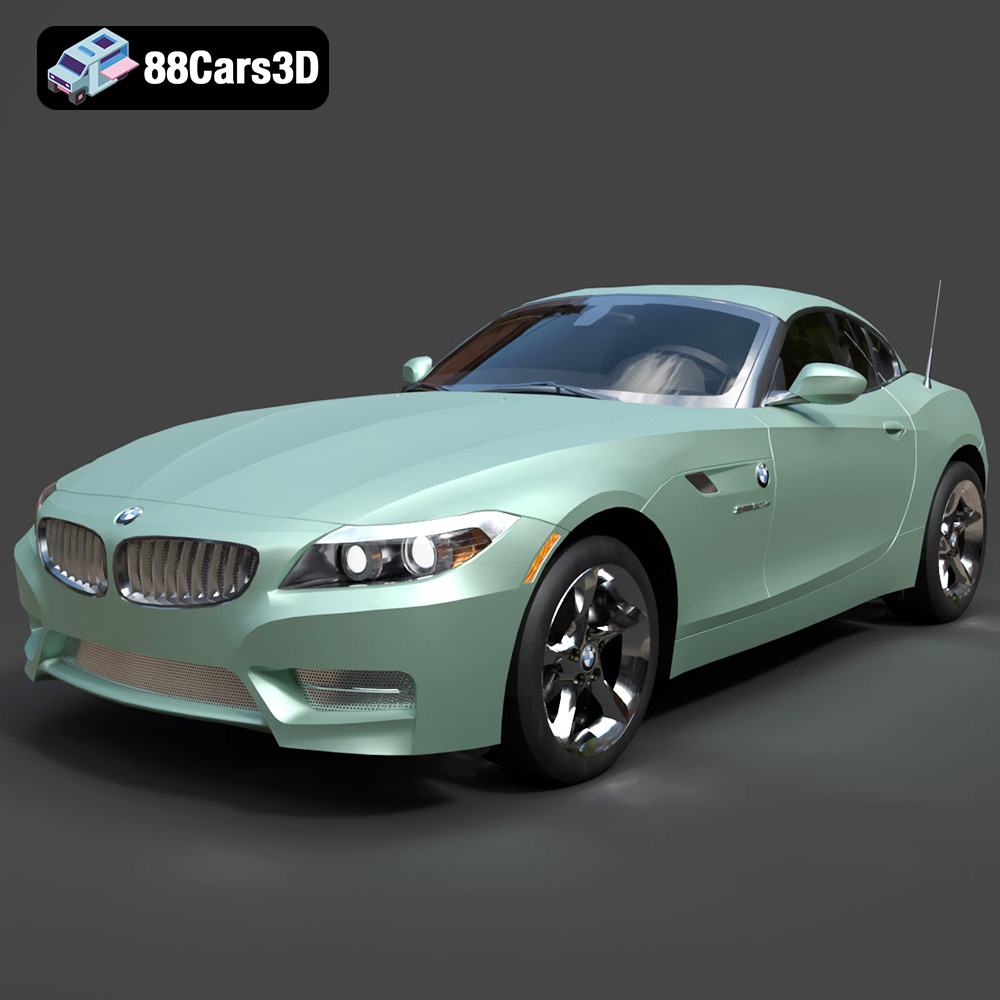
BMW Z4 Roadster E89 2012 3D Model
Texture: Yes
Material: Yes
Download the BMW Z4 Roadster E89 3D Model featuring clean geometry, realistic detailing, and a fully modeled interior. Includes .blend, .fbx, .obj, .glb, .stl, .ply, .unreal, and .max formats for rendering, simulation, and game development.
Price: $13.99

BMW Z4 E85 2005 3D Model
Texture: Yes
Material: Yes
Download the BMW Z4 E85 3D Model featuring clean geometry, realistic detailing, and a fully modeled interior. Includes .blend, .fbx, .obj, .glb, .stl, .ply, .unreal, and .max formats for rendering, simulation, and game development.
Price: $13.99

BMW M3 2024 3D Model
Texture: Yes
Material: Yes
Download the BMW M3 2024 3D Model featuring clean geometry, realistic detailing, and a fully modeled interior. Includes .blend, .fbx, .obj, .glb, .stl, .ply, .unreal, and .max formats for rendering, simulation, and game development.
Price: $13.99
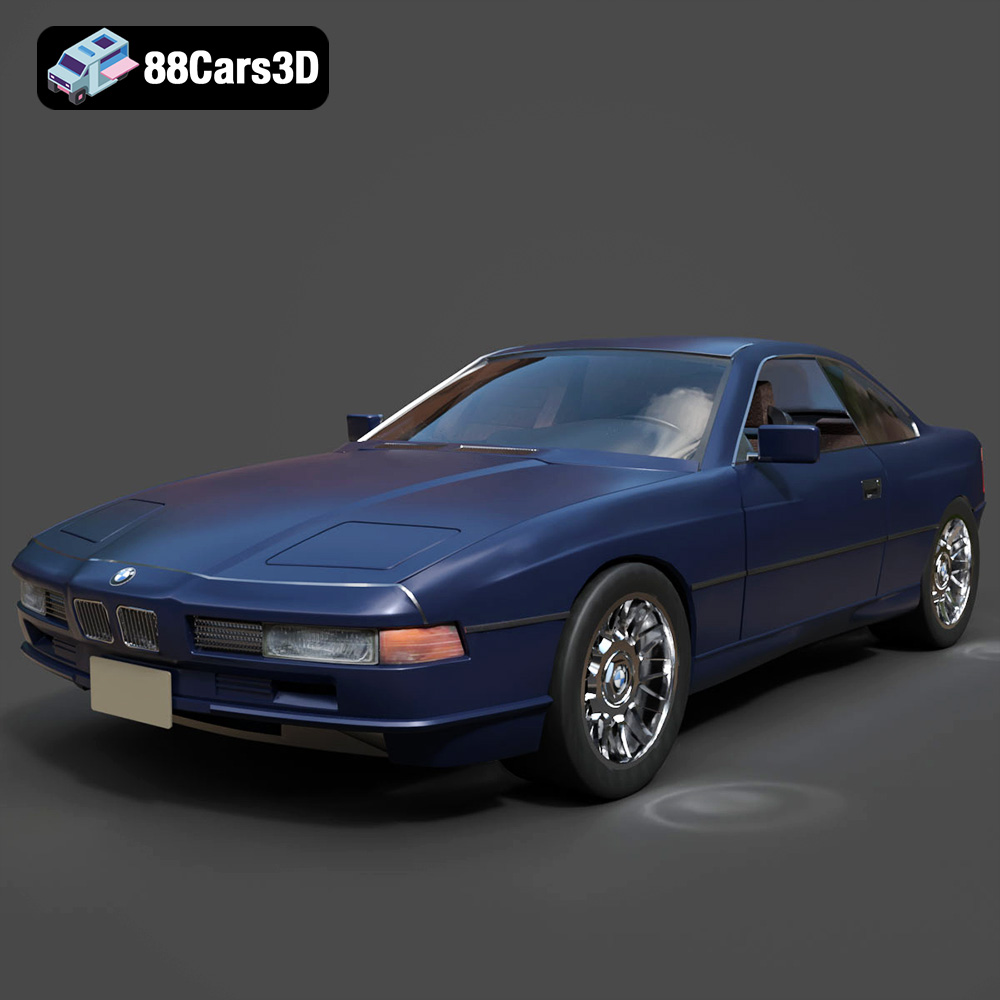
BMW 850i Coupe 1990 3D Model
Texture: Yes
Material: Yes
Download the BMW 850i Coupe 1990 3D Model featuring clean geometry, realistic detailing, and a fully modeled interior. Includes .blend, .fbx, .obj, .glb, .stl, .ply, .unreal, and .max formats for rendering, simulation, and game development.
Price: $13.99
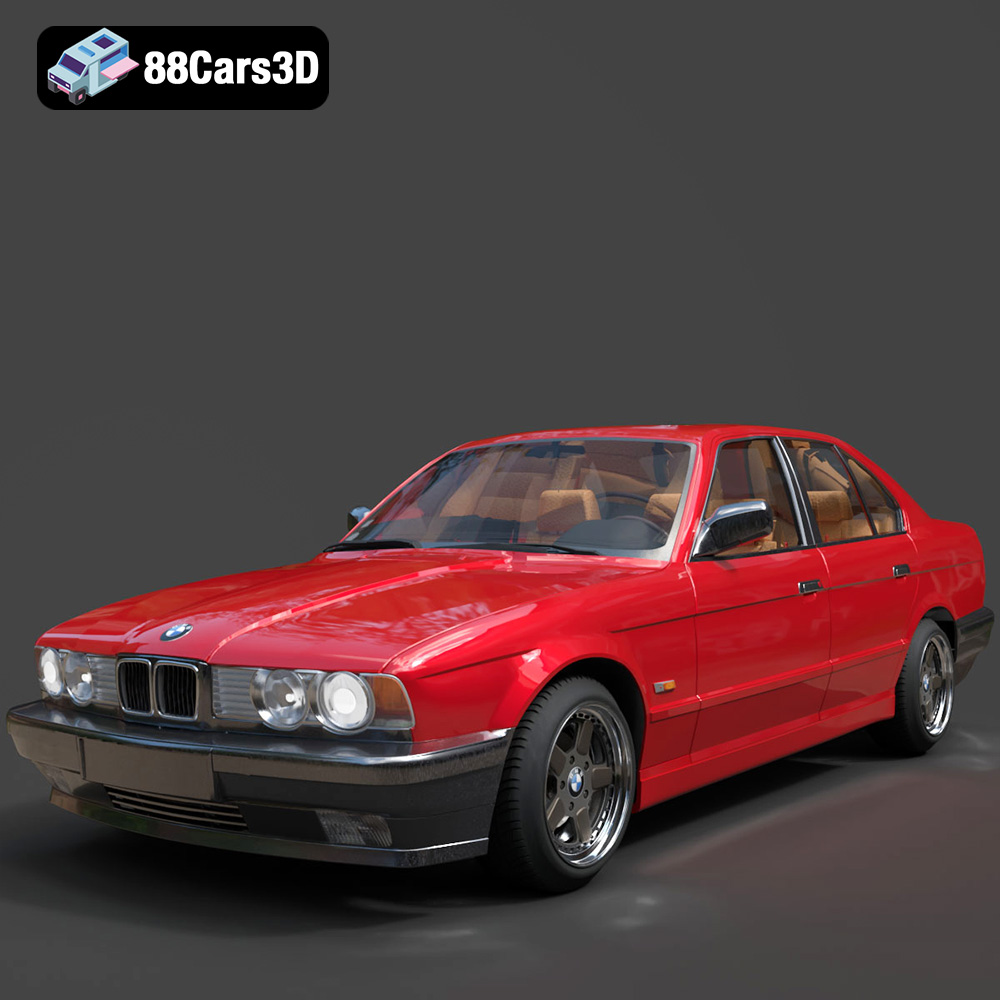
BMW 525i E34 1993 3D Model
Texture: Yes
Material: Yes
Download the BMW 525i E34 1993 3D Model featuring clean geometry, realistic detailing, and a fully modeled interior. Includes .blend, .fbx, .obj, .glb, .stl, .ply, .unreal, and .max formats for rendering, simulation, and game development.
Price: $12.99

BMW 7 Series 2016 3D Model
Texture: Yes
Material: Yes
Download the BMW 7 Series 2016 3D Model featuring luxurious design, detailed interior, and accurate exterior. Includes .blend, .fbx, .obj, .glb, .stl, .ply, .unreal, and .max formats for rendering, simulation, and game development.
Price: $10.79
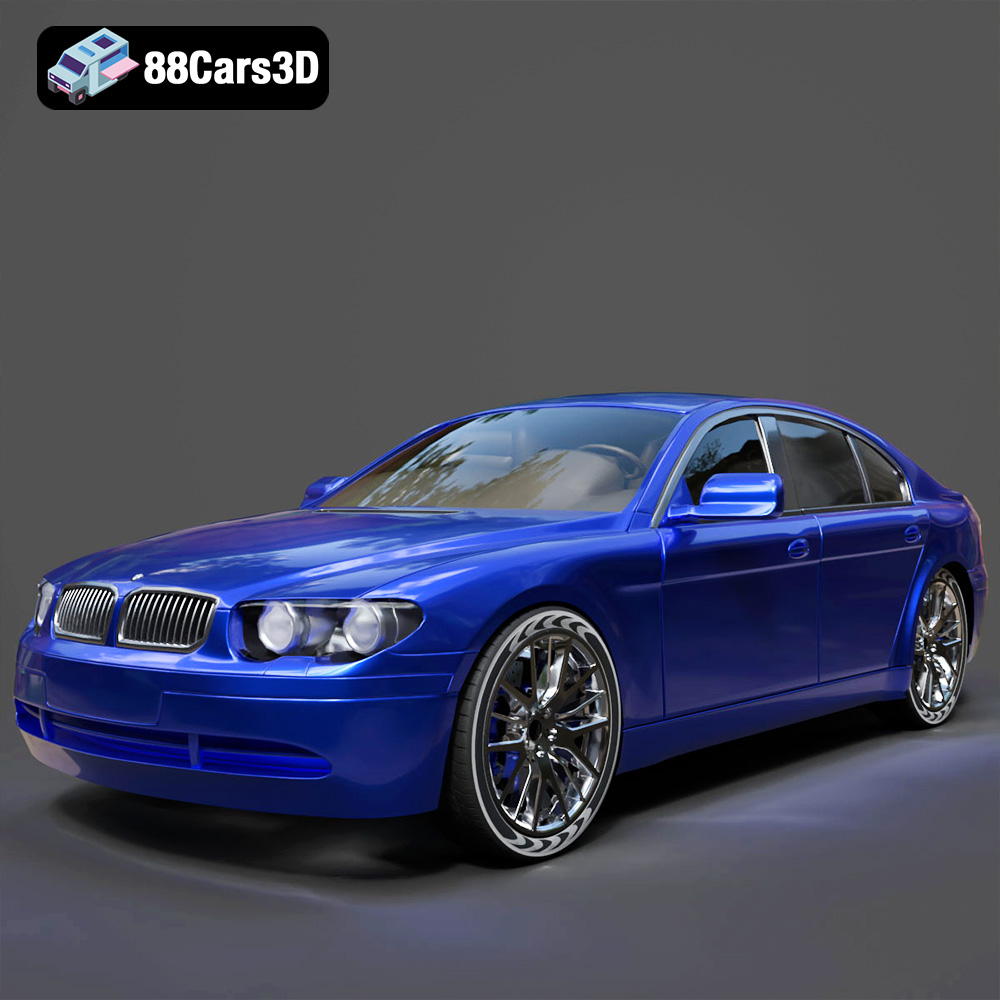
BMW 7 Series 30th Anniversary 3D Model
Texture: Yes
Material: Yes
Download the BMW 7 Series 30th Anniversary 3D Model featuring a meticulously crafted exterior, detailed interior, and realistic wheels. Includes .blend, .fbx, .obj, .glb, .stl, .ply, .unreal, and .max formats for rendering, simulation, and game development.
Price: $35.79

BMW 7-Series F02 3D Model
Texture: Yes
Material: Yes
Download the BMW 7-Series F02 3D Model featuring a detailed exterior and interior, optimized for rendering and animation. Includes .blend, .fbx, .obj, .glb, .stl, .ply, .unreal, and .max formats for rendering, simulation, and game development.
Price: $10.79
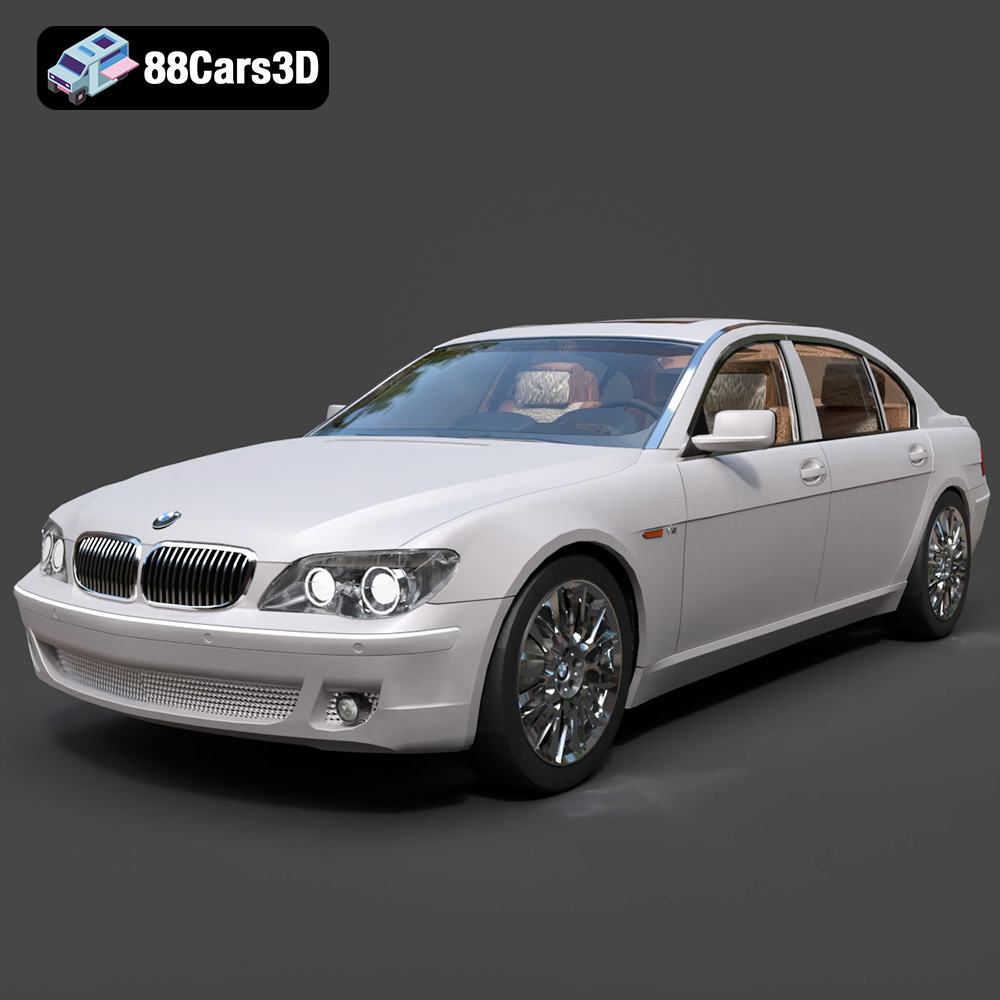
BMW 760Li E66 2005 3D Model
Texture: Yes
Material: Yes
Download the BMW 760Li E66 2005 3D Model featuring a detailed exterior, refined interior, and robust chassis. Includes .blend, .fbx, .obj, .glb, .stl, .ply, .unreal, and .max formats for rendering, simulation, and game development.
Price: $10.79
