

Mastering Automotive Visualization: A Deep Dive into High-Quality 3D Car Models and the Iconic Audi R8 2006
In the dynamic world of 3D design, the demand for realistic and technically sound automotive assets has never been higher. From cinematic renderings to immersive game environments and cutting-edge AR/VR experiences, a meticulously crafted 3D car model serves as the cornerstone of visual excellence. Professionals across industries continually seek models that not only capture aesthetic fidelity but also boast optimized geometry and versatile compatibility. This pursuit often leads them to specialized marketplaces like 88cars3d.com, where quality meets practical application.
Among the countless digital vehicles available, certain automobiles hold a special place in the hearts of enthusiasts and designers alike. The Audi R8 2006, representing the inaugural generation of this iconic supercar, is one such legend. Its distinctive mid-engine silhouette, aggressive stance, and luxurious appeal have solidified its status as a design marvel. Creating a faithful digital reproduction of such a vehicle requires an acute understanding of form, engineering, and digital artistry. This article will explore the intricate process of developing, utilizing, and integrating premium 3D car models into various professional workflows, spotlighting how an asset like the Audi R8 2006 3D Model exemplifies the pinnacle of digital automotive design.
The Art and Science of Premium 3D Car Models
Crafting a high-quality 3D car model is a sophisticated blend of artistic vision and technical precision. It goes far beyond simply replicating a vehicle’s shape; it involves understanding the underlying engineering, material properties, and intended applications. A truly premium model is built from the ground up to ensure versatility and performance across diverse platforms.
Precision Modeling and Topology for Flawless Surfaces
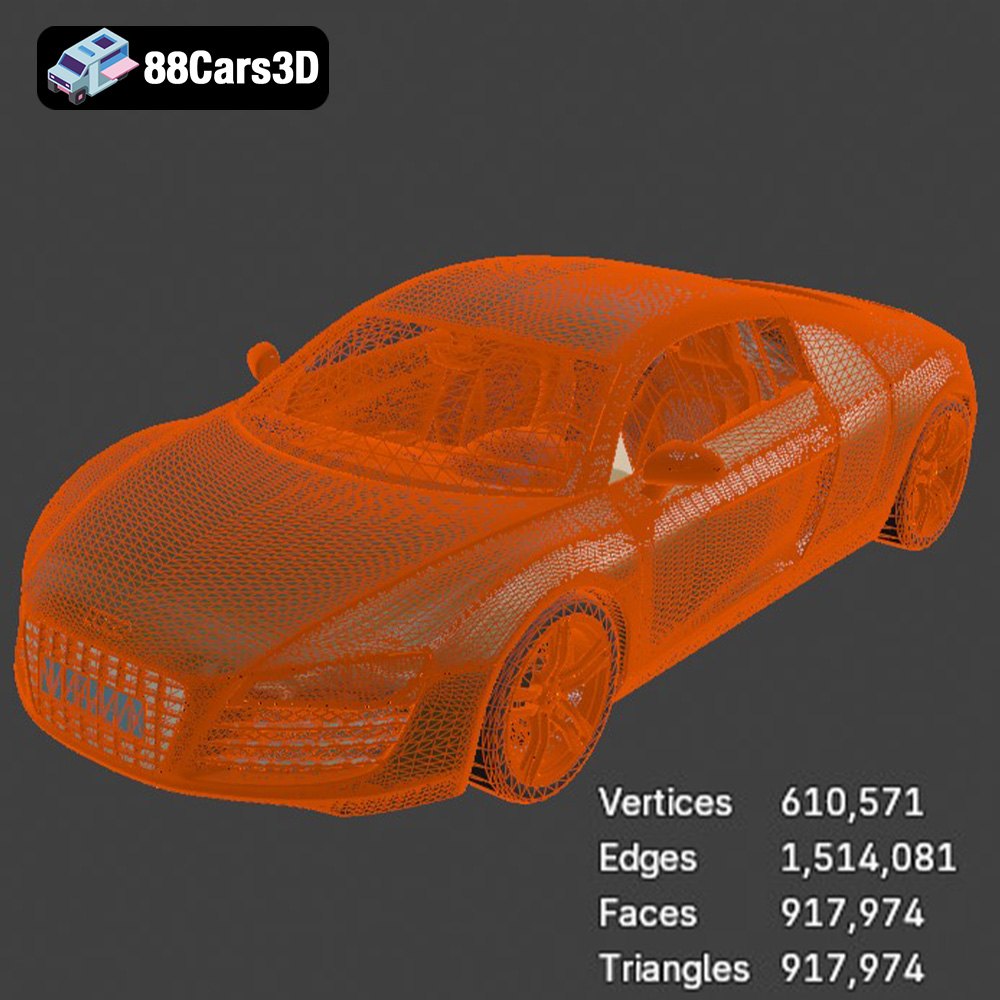
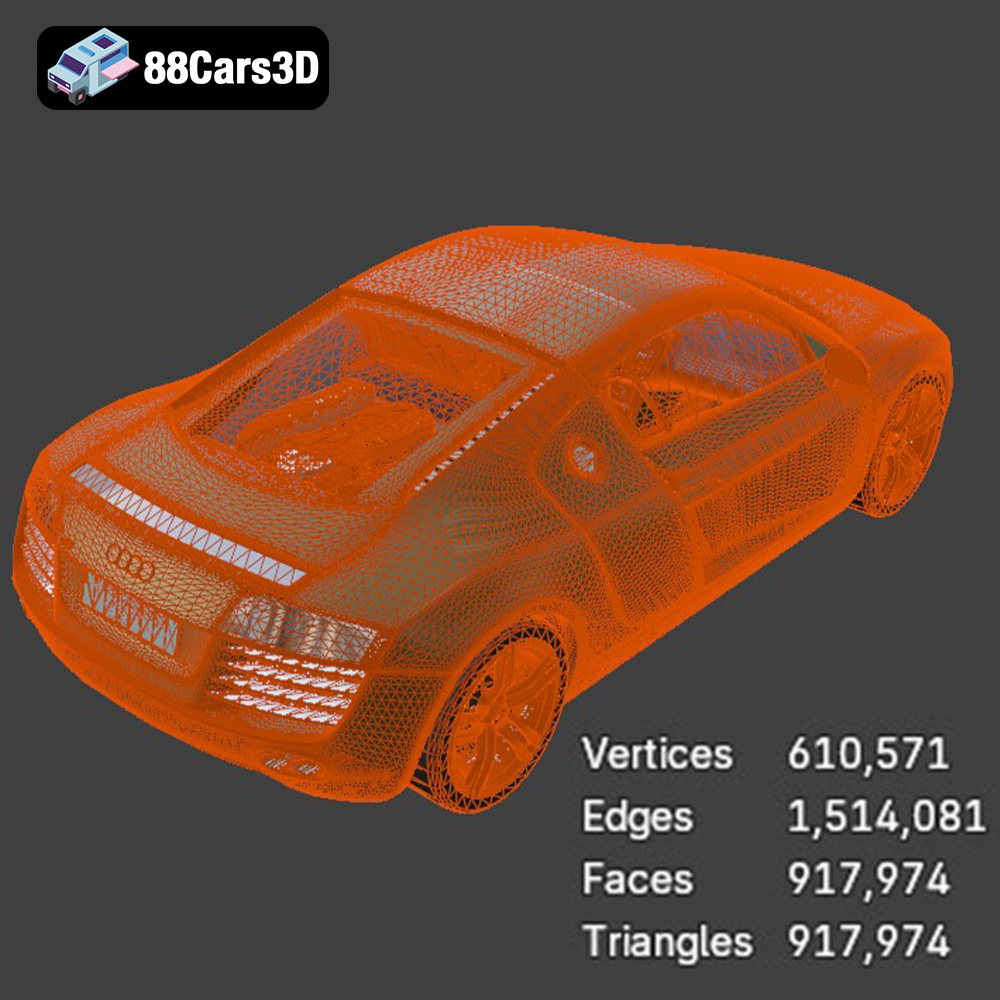
At the core of any exceptional 3D car model is its geometry and topology. For models destined for professional rendering or demanding real-time applications, clean, quad-dominant topology is paramount. This means the mesh is primarily composed of four-sided polygons, which allows for smooth subdivision, predictable deformation during animation, and reduces rendering artifacts. Subtleties like the curvature of a fender, the sharp crease of a body line, or the intricate details of a grille must be accurately represented without introducing unwanted pinching or stretching. Models like the Audi R8 2006 3D Model available at 88cars3d.com are built with this principle in mind, ensuring that whether viewed up close in a high-resolution render or from a distance in a game, the surfaces remain flawless.
Material Fidelity and UV Mapping for Realistic Textures
Beyond the mesh, realistic material definition is crucial for bringing a 3D car model to life. Modern rendering pipelines heavily rely on Physically Based Rendering (PBR) workflows, which demand accurate representation of how light interacts with surfaces. This involves creating textures for base color (albedo), roughness, metallicness, normal maps for surface detail, and often ambient occlusion. Each material – paint, glass, chrome, rubber, carbon fiber – requires unique properties and carefully crafted textures. UV mapping, the process of unwrapping the 3D model’s surfaces into a 2D space, must be clean and organized to allow for seamless texture application without distortion. The detailed headlights, taillights, authentic wheel designs, and intricate interior elements of a model like the Audi R8 2006 rely on superior UV mapping and material setup to achieve their stunning realism.
Scalability and Optimization for Diverse Applications
A truly professional 3D car model is designed with scalability in mind. While a high-polygon model is ideal for close-up renders and cinematics, it might be too heavy for real-time applications like games or AR/VR. This necessitates careful optimization, potentially through the creation of multiple Levels of Detail (LODs), where progressively simpler versions of the model are used at greater distances from the camera. Furthermore, clean organization within the 3D scene, with logically grouped components and properly set pivot points for animation, drastically improves a model’s utility. This foresight ensures that the same base asset, like the Audi R8 2006 3D Model, can be adapted for a variety of projects without extensive rework.
Understanding 3D Model File Formats
The choice of file format is a critical decision in any 3D workflow, directly impacting compatibility, functionality, and performance across different software and platforms. Each format serves specific purposes, offering unique advantages depending on the project’s requirements. High-quality 3D car models, such as the Audi R8 2006 3D Model, are often provided in multiple formats to ensure maximum flexibility for artists and developers.
Blender’s .blend Ecosystem
The .blend format is native to Blender, the powerful open-source 3D creation suite. When you acquire a .blend file, you’re not just getting the mesh; you’re receiving a complete Blender scene, including materials, textures, lighting, cameras, and even animation rigs if present. This makes .blend files ideal for users deeply integrated into the Blender ecosystem, allowing for full editability and direct access to all setup components. It’s a fantastic starting point for customization, further detailing, or integrating into larger Blender projects, offering a non-destructive workflow with modifiers and procedural setups often intact.
The Versatility of .fbx and .obj
.fbx (Filmbox) is arguably the most widely used proprietary exchange format in the 3D industry, particularly favored for game development and real-time pipelines. Developed by Autodesk, it supports not only geometry but also materials, textures, animations, skinning, and even camera and light data. Its robust support for animation makes it the go-to format for exporting animated character rigs, vehicle dynamics, or architectural walkthroughs into game engines like Unreal Engine and Unity. The .fbx format ensures that complex scene data can be transferred with high fidelity, making it ideal for integration where animated parts, like the separated doors and wheels of the Audi R8 2006, need to function correctly.
.obj (Wavefront OBJ) is a universal, open-standard format renowned for its simplicity and wide cross-software compatibility. It primarily stores geometric data – vertices, normals, UVs, and faces – along with references to external material (.mtl) and texture files. While it doesn’t typically support animation or rigging, its widespread acceptance means almost every 3D application can import and export .obj files reliably. This makes it an excellent choice for static mesh transfer between different software packages, acting as a reliable fallback when other formats encounter issues. For artists needing a clean mesh to start their work in an unfamiliar application, .obj is a solid choice.
Modern Formats for AR/VR and 3D Printing
.glb (GL Transmission Format Binary) is an increasingly popular format, especially optimized for AR, VR, and web-based applications. It’s a compact, self-contained binary version of GLTF, embedding textures and other assets directly within a single file. This efficiency makes it perfect for quick loading and display in browsers, mobile AR apps, and lightweight real-time viewers. For showcasing the Audi R8 2006 in an interactive web viewer or a mobile augmented reality experience, .glb offers superior performance and ease of deployment.
.stl (Stereolithography) is the standard file format for 3D printing. It represents a 3D model as a series of connected triangles, defining only the surface geometry without color or texture information. While a raw 3D model needs preparation (e.g., ensuring watertight geometry, checking for manifold errors) before being truly “ready” for 3D printing, providing an .stl option makes the digital asset adaptable for physical creation. This allows enthusiasts to bring the Audi R8 2006 into the physical world as a miniature replica.
.ply (Polygon File Format or Stanford Triangle Format) is another format that stores geometric information, often including color per vertex, normal information, and sometimes texture coordinates. It’s a precise mesh format frequently used in scientific applications, 3D scanning, CAD workflows, and for storing point cloud data. While less common for general 3D asset exchange than .obj or .fbx, it offers a robust alternative for specific technical analysis or precision modeling tasks.
Engine-Specific and Native Formats
The .unreal format, often referring to a package of assets directly configured for Unreal Engine, provides an engine-ready asset setup. This means the model, its materials, and textures are already organized within an Unreal project structure, potentially including Blueprints for interactivity or LOD setups. This significantly accelerates workflow for game developers or virtual production studios, as the Audi R8 2006 3D Model can be dropped directly into an Unreal scene and be ready to render or animate with minimal setup time. It optimizes the process by pre-configuring assets to leverage Unreal Engine’s powerful rendering capabilities.
Finally, .max is the native file format for Autodesk 3ds Max, a leading software for 3D modeling, animation, and rendering in architectural visualization, product design, and cinematic production. A .max file contains the complete scene data, including all geometry, materials, lighting, cameras, animations, and modifier stacks. Like .blend, it offers full editability and direct access to the original project setup. For professionals whose pipelines are centered around 3ds Max, having the Audi R8 2006 3D Model in its native .max format means seamless integration and the ability to leverage all of Max’s powerful tools for rendering and animation.
Unleashing the Power of Automotive Rendering and Visualization
High-quality 3D car models are the bedrock of stunning automotive rendering and visualization. They enable artists to create photorealistic images and captivating animations that are often indistinguishable from real-world photography or film. This capability is invaluable for marketing, product design, and cinematic storytelling.
Crafting Cinematic Sequences in 3ds Max and Blender
In applications like 3ds Max and Blender, designers can leverage the precise geometry and material fidelity of models like the Audi R8 2006 to produce breathtaking cinematic sequences. This involves setting up virtual studios with elaborate lighting rigs, reflective floor planes, and dynamic camera movements. Advanced rendering engines such as V-Ray, Corona Renderer, Octane, or Blender’s Cycles and Eevee can simulate complex light physics, reflections, refractions, and global illumination. The clean topology and well-defined material zones of the Audi R8 model allow for flawless subdivisions, making every curve and panel look incredibly smooth and realistic, especially under dramatic studio lighting. Artists can animate doors opening, wheels turning, or the car driving through a virtual landscape, bringing the vehicle to life in a way that traditional photography often cannot achieve.
Real-Time Visualization with Unreal Engine
Beyond offline rendering, real-time visualization has emerged as a powerhouse, particularly with engines like Unreal Engine. These platforms allow for interactive exploration of 3D models in virtual environments, offering unparalleled flexibility for presentations, configurators, and virtual showrooms. The .unreal and .fbx formats of the Audi R8 2006 3D Model are perfectly suited for this. Developers can import the model, set up real-time PBR materials, and utilize Unreal’s advanced lighting systems (Ray Tracing, Lumen) to create environments where the car reacts to light dynamically. This enables clients or customers to explore the vehicle from any angle, customize paint finishes, or even virtually “drive” it in an interactive simulation, offering an immersive experience that traditional static renders cannot match.
The Critical Role of Lighting and Environments
No matter the software, lighting is perhaps the single most important factor in achieving realism. For automotive rendering, this often involves High Dynamic Range Image (HDRI) environments that provide realistic global illumination and reflections, simulating natural light conditions or professional studio setups. Paired with localized light sources – area lights for soft shadows, spot lights for highlights – designers can sculpt the car’s form and emphasize its key design features. The authentic materials of the Audi R8 2006, from its reflective paint to the nuanced transparency of its headlights, respond accurately to these lighting setups, making the difference between a good render and a spectacular one. Properly integrated into an environment, the car looks like it truly belongs, rather than appearing as a digital overlay.
Driving Game Development with High-Quality Game Assets
The gaming industry constantly pushes the boundaries of visual fidelity, and high-quality 3D car models are central to creating immersive and believable racing simulations and open-world environments. Integrating a premium asset like the Audi R8 2006 3D Model into a game engine requires careful planning and optimization.
Integrating the Audi R8 2006 into Game Engines (Unreal/Unity)
For game developers, the availability of formats like .fbx and .unreal for the Audi R8 2006 3D Model streamlines the integration process into engines such as Unreal Engine and Unity. These formats ensure that the geometry, UVs, and PBR materials transfer efficiently. Once imported, the model can be set up with collision meshes, physics assets, and vehicle blueprints to define its driving characteristics. The logically organized hierarchy and proper pivot points (as described in the product’s technical advantages) are crucial here, allowing for easy animation of wheels, suspension, and steering components directly within the engine. This makes the Audi R8 2006 not just a visual asset, but a fully functional vehicle within the game world.
Optimization Strategies for Performance
While visual quality is paramount, game development also demands strict adherence to performance budgets. Even a well-optimized model like the Audi R8 2006 may require further adjustments depending on the game’s target platform and genre. This often involves implementing multiple Levels of Detail (LODs), where simpler versions of the model (with fewer polygons) are dynamically swapped in as the car moves further from the camera. Techniques like texture atlasing, draw call reduction, and efficient material instances further optimize the asset for real-time rendering. The clean base topology of the Audi R8 2006 simplifies the creation of these LODs, ensuring visual consistency across different detail levels.
Animation and Rigging for Interactive Experiences
Beyond static representation, interactive experiences require animations. The Audi R8 2006 3D Model, with its separated components for doors, wheels, and other moving parts, is inherently designed for animation and rigging. In game engines, this involves setting up inverse kinematics (IK) for suspension, wheel rotations linked to speed, and animated steering wheels synchronized with player input. The organized hierarchy simplifies the rigging process, allowing developers to quickly establish relationships between different parts of the car. This level of detail and preparation ensures that the Audi R8 2006 can be fully animated, enhancing realism in racing games, driving simulators, or interactive virtual showrooms.
Beyond the Screen: AR/VR, Simulation, and 3D Printing
The utility of high-quality 3D car models extends far beyond traditional rendering and gaming, finding significant applications in emerging technologies and niche industrial sectors. The versatility of an asset like the Audi R8 2006 3D Model makes it suitable for these diverse uses.
Immersive Experiences with the Audi R8 in AR/VR
Augmented Reality (AR) and Virtual Reality (VR) platforms offer unparalleled opportunities for immersive experiences. Imagine placing the iconic Audi R8 2006 directly into your living room via an AR app, or exploring its meticulously detailed interior in a full VR environment. The .glb format, included with the Audi R8 2006 3D Model, is specifically optimized for these applications due to its compact nature and efficient delivery of PBR materials. Developers can integrate the model into mobile AR frameworks (like ARKit or ARCore) or high-fidelity VR experiences (like Oculus Rift or HTC Vive), allowing users to interact with the car, change its color, or even walk around and inspect its design from a truly lifelike perspective. This provides a powerful tool for automotive marketing, education, and entertainment.
Engineering Simulation and Training Applications
In the professional realm, 3D car models are vital for advanced simulations and training modules. Automotive engineers use highly accurate models for aerodynamic analysis, crash simulations, and virtual prototyping. While these often require CAD-level models, a well-structured and accurate mesh like the Audi R8 2006, especially with its real-world scale accuracy and potentially available .ply format, can serve as a strong visual foundation for visualizing simulation results or integrating into driving simulators for driver training. Companies can create custom training modules where mechanics learn about engine components or vehicle assembly in a virtual environment, reducing costs and risks associated with physical prototypes. The detailed engine elements (where visible) in the Audi R8 2006 model contribute to this educational value.
Physical Models from Digital Assets
The digital realm can also bridge into the physical through 3D printing. While a raw 3D model often requires specific preparation for additive manufacturing, the availability of an .stl format for the Audi R8 2006 3D Model provides a direct path to creating physical prototypes or collectible miniatures. Designers might need to ensure the mesh is watertight, adjust wall thickness, or add supports, but the foundational geometry is there. This allows enthusiasts, model makers, or design studios to create tangible representations of this legendary supercar, bringing a piece of digital art into the real world. From small-scale desk models to larger, more intricate collector’s items, the potential is vast.
The Audi R8 2006 3D Model: A Foundation for Innovation
The Audi R8 2006 3D Model stands as a testament to what a professional-grade automotive asset should be. It perfectly encapsulates the blend of artistic accuracy and technical robustness required by today’s demanding 3D pipelines, making it an invaluable addition to any creative’s toolkit. Available on 88cars3d.com, this model is designed to empower a wide range of projects, from the highly photorealistic to the dynamically interactive.
Capturing an Automotive Icon with Uncompromising Detail
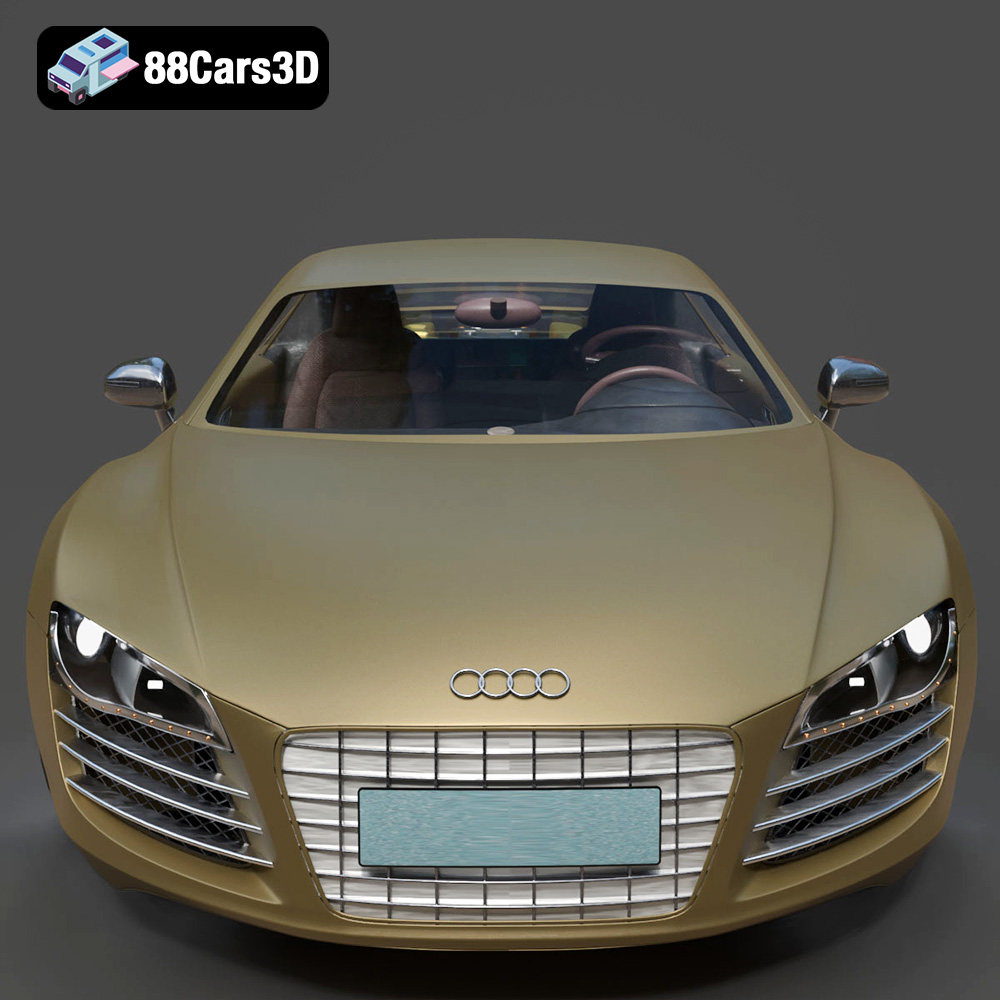
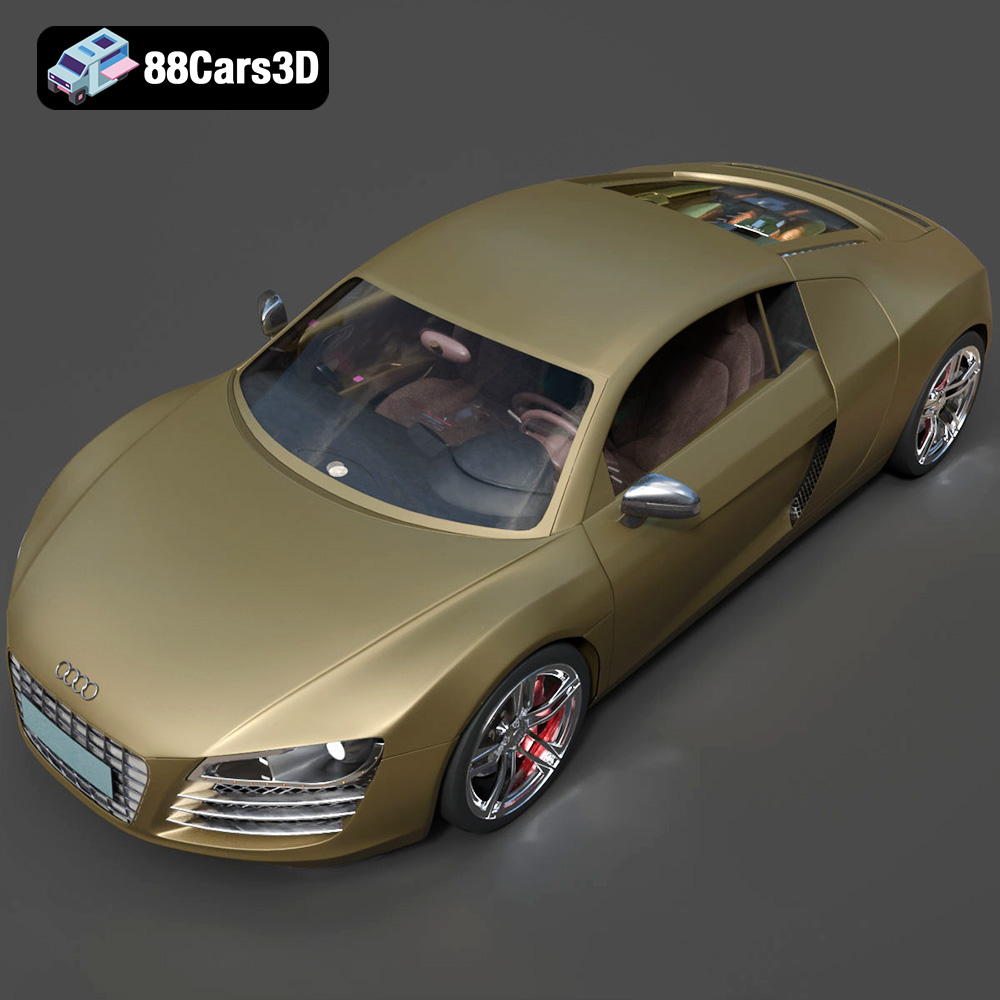
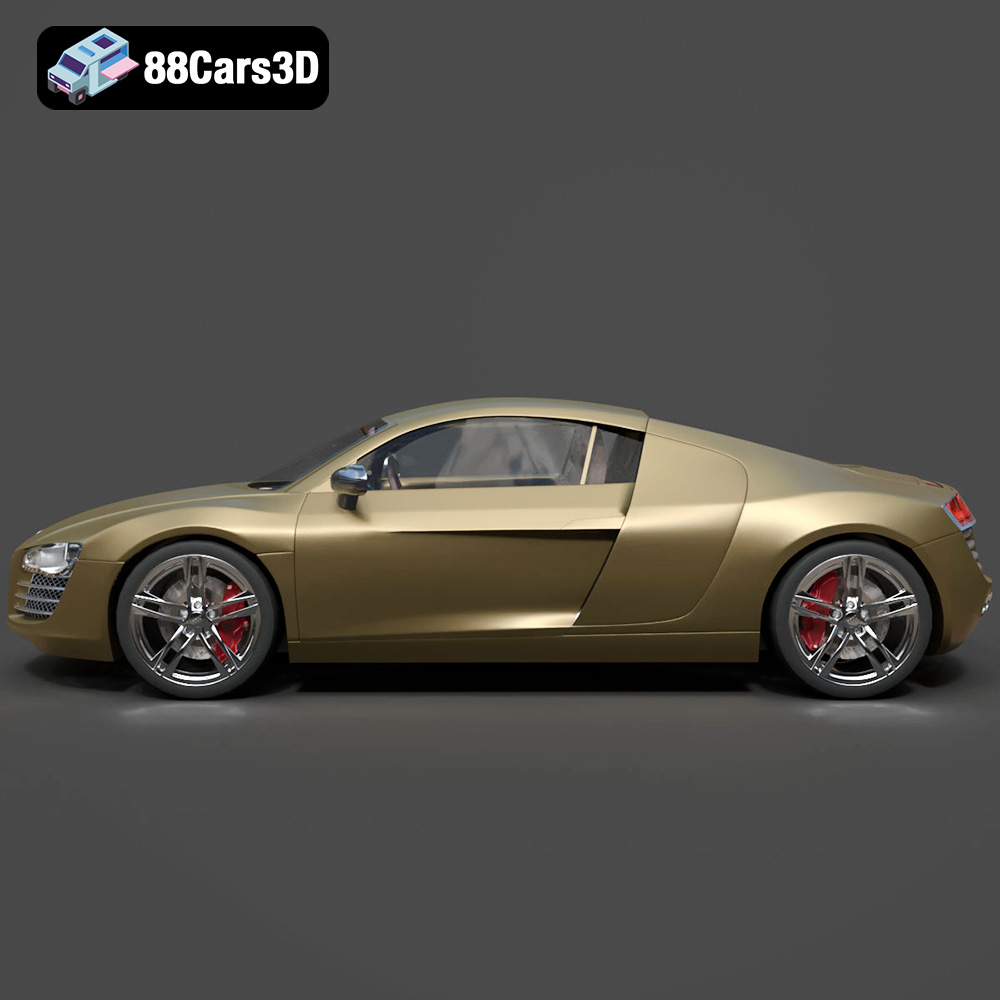
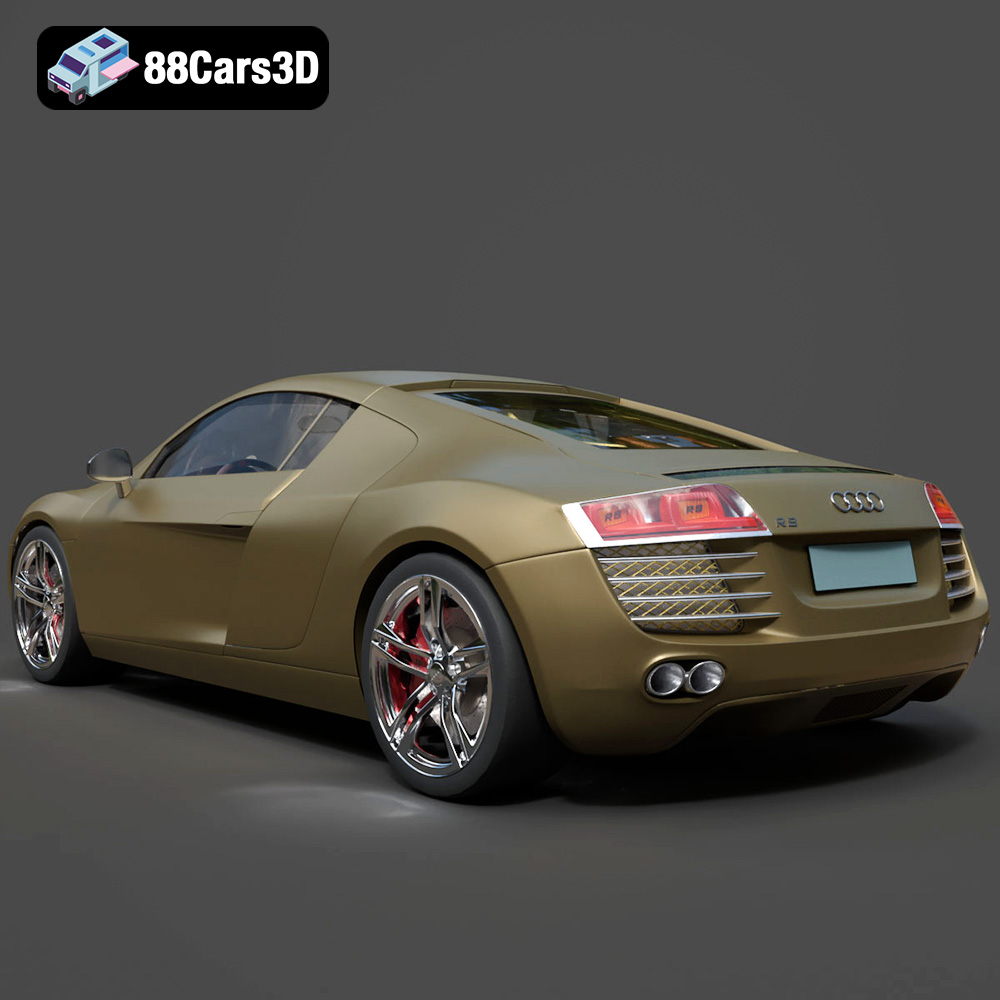
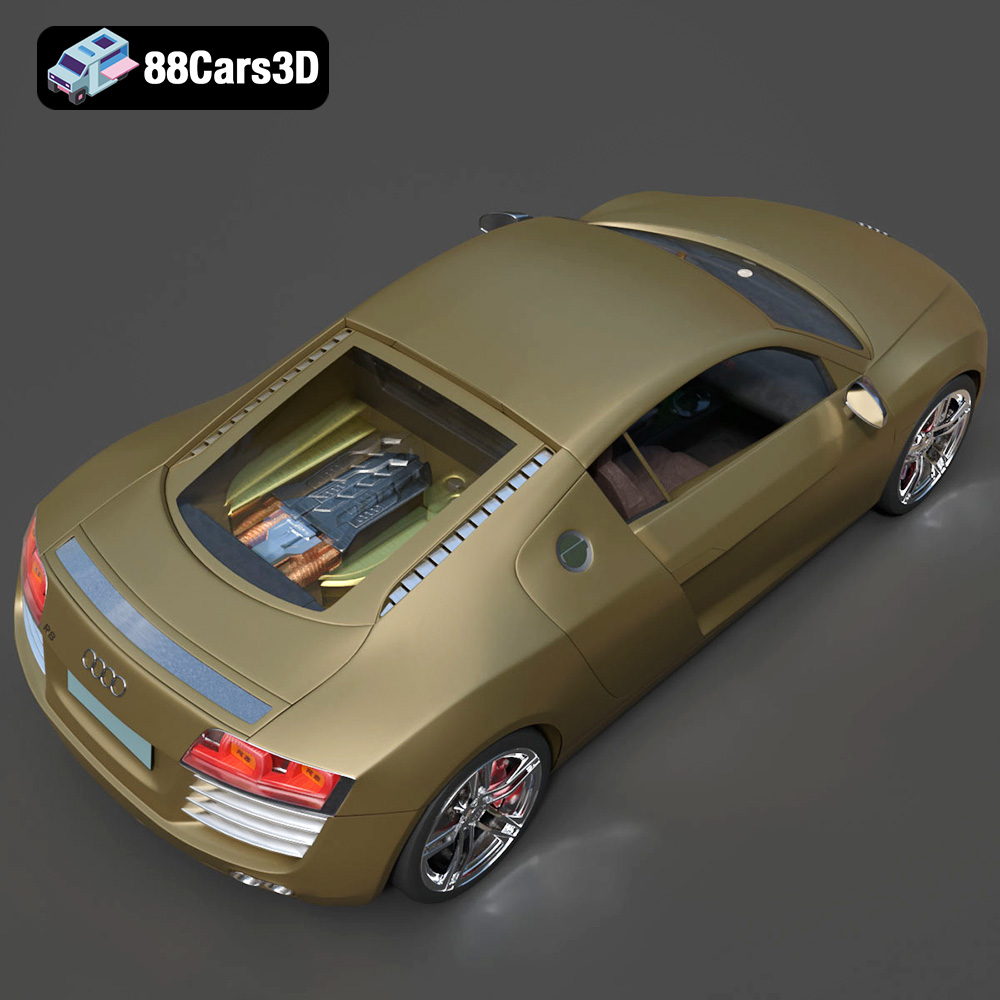
This model meticulously recreates the iconic first-generation Audi R8, capturing its distinctive design cues with uncompromising detail. From the aggressive lines of its aerodynamic body panels to the signature side blades and intricate air intakes, every exterior feature is faithfully represented. The inclusion of detailed headlights and taillights with realistic transparent materials, along with authentic wheel designs and tire profiles, ensures visual authenticity from every angle. Inside, the attention to detail continues with a well-crafted dashboard, instrumentation, sport seats, and center console elements. Even visible components of the powerful V8/V10 engine are included where applicable, adding another layer of realism and depth.
Technical Excellence and Seamless Workflow Integration
Beyond its visual appeal, the Audi R8 2006 3D Model excels in its technical foundation. It boasts clean, quad-dominant topology, guaranteeing smooth subdivisions and deformations – a critical factor for high-end rendering and animation. Its real-world scale accuracy ensures seamless integration into existing scenes and environments without the need for manual scaling adjustments. Furthermore, a logically organized hierarchy with proper pivot points for animation and rigging is a significant advantage, drastically reducing setup time for animators and game developers. This level of technical excellence ensures that the model is not just beautiful, but also highly functional across diverse professional workflows.
Customization and Adaptability for Creative Freedom
One of the most powerful aspects of a premium 3D model is its adaptability. The Audi R8 2006 3D Model provides extensive customization options. Artists can easily modify paint finishes, material colors, and apply custom liveries or graphics to suit specific project needs or artistic visions. Adjusting material properties for metals, chrome, rubber, and glass allows for fine-tuning realism to match various lighting conditions and stylistic preferences. This flexibility ensures that while the model provides an incredibly accurate starting point, it also empowers designers with the creative freedom to adapt and personalize the vehicle for any given scenario, from a showroom render to a unique in-game car.
Conclusion
The world of 3D modeling for automotive design is a fascinating intersection of art and engineering, constantly evolving to meet the demands of advanced visualization, interactive experiences, and emerging technologies. High-quality 3D car models are no longer a luxury but a necessity for professionals seeking to push the boundaries of realism and immersion.
The Audi R8 2006 3D Model stands out as an exemplary asset, offering an unparalleled combination of aesthetic fidelity, technical versatility, and comprehensive file format support. Whether you are an architectural visualizer crafting stunning marketing renders, a game developer building an immersive racing title, an AR/VR designer creating interactive experiences, or an enthusiast bringing iconic cars to life through 3D printing, this model provides a robust and reliable foundation. By choosing a meticulously crafted asset like this, available on 88cars3d.com, you invest in a powerful tool that saves time, enhances quality, and opens up new possibilities for creative expression in the digital automotive landscape.
Featured 3D Model
Audi R8 2006 3D Model
Immerse yourself in the world of high-performance automotive design with this meticulously crafted 3D model of the Audi R8 2006. Representing the iconic first-generation supercar, this model captures the R8’s distinctive mid-engine silhouette, aggressive stance, and luxurious appeal. Built with clean, optimized geometry and a balanced level of detail, it is perfect for professional rendering, dynamic animations, realistic simulations, and integration into game development projects.
Exterior Features:
- Accurate body panels reflecting the R8’s aerodynamic design
- Detailed headlights and taillights with realistic transparent materials
- Authentic wheel designs and tire profiles
- Signature side blades and air intakes
- Separated components for easy animation of doors, wheels, and other moving parts
- High-quality materials representing paint, glass, chrome, and rubber
Interior / Mechanical Features:
- Detailed dashboard with instrumentation and controls
- Sport seats with accurate upholstery textures
- Steering wheel and center console elements
- Visible elements of the powerful V8/V10 engine (where applicable and visible)
- Optimized mesh quality for efficient rendering and real-time applications
Technical Advantages:
- Clean, quad-dominant topology ensuring smooth subdivisions and deformations
- Real-world scale accuracy for seamless integration into existing scenes
- Logically organized hierarchy with proper pivot points for animation and rigging
Applications:
- Rendering & Visualization: Create stunning studio renders, cinematic sequences, and product showcases
- Game Development: Utilize as a high-quality asset for racing games, open-world environments, and interactive experiences
- AR/VR: Develop immersive augmented and virtual reality experiences with a realistic vehicle model
- Simulation & Training: Integrate into automotive simulators or technical training modules
- 3D Printing: Adaptable for physical model creation (requires .stl conversion and potential mesh preparation)
Customization Options:
- Easily modify paint finishes, material colors, and add custom liveries or graphics
- Adjust material properties for metals, chrome, rubber, and glass to achieve desired realism
- Adapt lighting setups to suit various environments and artistic visions
The Audi R8 2006 3D Model offers an unparalleled combination of aesthetic fidelity and technical versatility. Whether for professional production or personal projects, this model provides a robust foundation for bringing your automotive visualizations to life with exceptional quality and performance.
Included File Formats:
- .blend – Blender project with materials
- .fbx – Compatible with Unreal, Unity, and major 3D engines
- .obj – Universal format for nearly all 3D software
- .glb – Optimized for AR, VR, and web-based visualization
- .stl – Ready for 3D printing
- .ply – Mesh format for analysis and CAD workflows
- .unreal – Unreal Engine project setup
- .max – Editable 3ds Max scene for rendering and animation
Tags:
.audi, .r8, .sportscar, .coupe, .rendering, .simulation, .gameasset, .arvr, .blend, .fbx, .obj, .glb, .stl, .ply, .unreal, .maxMercedes Benz CLS 500 3D Model
$20.79
Product Image Gallery

Related Tags
.arvr
.audi
.blend
.coupe
.fbx
.gameasset
.glb
.max
.obj
.ply
.r8
.rendering
.simulation
.sportsCar
.stl
.unreal
