

Beyond the Lens: Mastering Photogrammetry for High-Fidelity Automotive 3D Models
The automotive industry has always been at the forefront of design and technological innovation. In the realm of 3D visualization, this translates to an insatiable demand for hyper-realistic car models – assets that not only look stunning but also perform flawlessly across various applications. While traditional modeling techniques remain vital, a powerful tool has emerged to capture the intricate beauty and complex curvature of vehicles with unprecedented accuracy: photogrammetry. This revolutionary approach transforms a series of 2D photographs into a detailed 3D representation, offering an unparalleled method for creating digital twins of real-world cars.
For 3D artists, game developers, automotive designers, and visualization professionals, mastering photogrammetry opens up a world of possibilities. It allows for the capture of subtle nuances, unique finishes, and precise dimensions that are challenging to replicate through manual modeling alone. This comprehensive guide will take you on a journey from understanding the core principles of photogrammetry to optimizing your final 3D car model for rendering, game development, AR/VR, and even 3D printing. You’ll learn essential workflows, technical specifications, software-specific techniques, and industry best practices to elevate your automotive 3D modeling skills.
The Foundation of Reality – Understanding Automotive Photogrammetry
Photogrammetry, at its heart, is the science of making measurements from photographs, and in 3D modeling, it refers to the process of reconstructing a three-dimensional object or scene from a series of overlapping two-dimensional images. For automotive subjects, this means capturing every curve, panel gap, and intricate detail with photographic precision. The success of any photogrammetry project hinges on meticulous data acquisition, as the quality of your input images directly dictates the quality of your final 3D model. Understanding the underlying principles is the first critical step towards achieving professional results.
Principles of Data Acquisition and Image Overlap
The fundamental principle behind photogrammetry software is identifying common features across multiple images and using triangulation to calculate their 3D positions in space. This process requires significant overlap between successive photographs. For reliable results in automotive scanning, a minimum of 80% overlap is recommended, both laterally and longitudinally. Imagine dividing your vehicle into a grid and ensuring that each section appears in numerous photos from different angles. This redundancy allows the software to accurately pinpoint features and minimize reconstruction errors. Consistency in lighting is also paramount; varying light conditions can confuse the software, leading to misalignments and noisy point clouds. Diffused, even lighting is ideal to avoid harsh shadows and blown-out highlights that obscure details.
Essential Gear for Automotive Scans
While advanced setups exist, a robust consumer-grade camera can yield excellent results. A full-frame or APS-C DSLR or mirrorless camera with a high-resolution sensor (24 megapixels or more) is preferred. Paired with a prime lens (e.g., 50mm or 85mm equivalent), you minimize lens distortion, which can introduce inaccuracies into the reconstruction. Avoid wide-angle lenses unless specifically designed for photogrammetry with minimal distortion. A sturdy tripod is essential for maintaining consistent camera height and angle, reducing motion blur, and ensuring repetitive shots are precisely aligned. For lighting, a studio environment with softboxes or large diffused light sources helps create the even illumination necessary to capture details without harsh shadows or specular blowouts on reflective car surfaces.
The Automotive Scanning Environment
Controlling your scanning environment is crucial for automotive photogrammetry due to the highly reflective and intricate nature of vehicles. A dedicated studio with controlled lighting is ideal. For smaller components or even entire cars, a large turntable can significantly streamline the capture process, allowing for consistent rotation and easier tracking of camera positions relative to the object. The biggest challenge for car scanning is reflections. Highly reflective car paint, chrome accents, and glass can scatter light unpredictably, confusing the photogrammetry software. Strategies to mitigate this include using polarizing filters on your lens, employing cross-polarization techniques (a polarizing filter on your lens combined with polarized light sources), or, in some cases, temporarily applying a removable matte spray or powder to extremely reflective areas – though this requires careful consideration regarding the original surface finish.
From Photos to Point Clouds – Processing the Raw Data
Once you’ve meticulously captured your image set, the next phase involves feeding this raw data into specialized photogrammetry software. This is where the magic truly happens, as the software performs complex calculations to transform your 2D images into a usable 3D representation, starting with a dense point cloud and culminating in an initial mesh. The parameters you choose during this stage significantly impact the quality and density of your reconstructed model.
Software Selection and Workflow Overview
Several powerful photogrammetry software packages are available, each with its strengths. Industry leaders like Agisoft Metashape (formerly PhotoScan) and RealityCapture are renowned for their speed and accuracy. Open-source alternatives like Meshroom (based on AliceVision) also offer robust capabilities for those seeking cost-effective solutions. The typical workflow across these platforms generally follows these steps:
1. **Image Alignment/Sparse Point Cloud Generation:** The software identifies common features (key points) across your images and reconstructs the camera positions and orientations, creating a sparse point cloud.
2. **Dense Point Cloud Generation:** Based on the aligned cameras, the software generates a much denser cloud of points, representing the surface of your object with high fidelity.
3. **Mesh Reconstruction:** A polygonal mesh is then created from this dense point cloud, forming the initial 3D model.
4. **Texturing:** Finally, the original images are projected onto the mesh to create a realistic texture map.
Aligning Images and Generating Dense Point Clouds
The image alignment phase is critical. The software analyzes your photos, searching for unique feature points and matching them across multiple views. Parameters such as “Key Point Limit” and “Tie Point Limit” control how many features the software tries to find and match. Higher limits generally lead to more accurate alignments but also increase processing time. After successful alignment, the dense point cloud generation is initiated. This step extrapolates millions of points based on the camera positions and the sparse point cloud, effectively “filling in” the details. You often have options for reconstruction quality (e.g., “High,” “Medium,” “Low”). For high-fidelity automotive models, aiming for “High” or “Ultra High” is often necessary, despite the increased processing time and computational resources required. This ensures that fine details like panel gaps, emblem edges, and subtle surface variations are captured accurately.
Initial Mesh Generation and Decimation Strategies
Once the dense point cloud is generated, the software constructs a polygonal mesh from it. This initial mesh is often incredibly dense, composed of millions, or even tens of millions, of triangles. While this high polygon count captures extreme detail, it’s generally unsuitable for most applications like real-time rendering in game engines, animation, or even efficient rendering in offline renderers. Such meshes are typically non-manifold, contain holes, and have poor topology. Therefore, decimation is a crucial step to reduce the polygon count while preserving as much visual detail as possible. Most photogrammetry software includes decimation tools, allowing you to reduce the polygon count to a more manageable level (e.g., a few hundred thousand to a few million polygons), creating a high-poly sculpt that serves as an excellent base for retopology.
Crafting the Perfect Automotive Mesh – Retopology and Cleanup
Raw photogrammetry meshes, while visually rich, are rarely production-ready. They often suffer from irregular topology, non-manifold geometry, and excessive polygon counts, making them unsuitable for animation, deformation, or efficient rendering. This is where the art and science of retopology come into play – the process of creating a clean, quad-based mesh that accurately represents the scanned object, ready for professional applications.
Why Retopology is Non-Negotiable for Automotive Models
For automotive models, retopology is not merely an optimization; it’s a fundamental requirement for creating professional-grade assets. The initial photogrammetry mesh, often a chaotic collection of triangles, lacks the structured edge flow necessary for smooth deformation (e.g., opening doors or turning wheels), subdivision surfacing (for rendering silky-smooth car paint), or proper UV unwrapping. A clean, quad-based mesh with well-defined edge loops is crucial for maintaining the precise curvature and sharp creases inherent in car designs. Without it, artifacts like pinching, uneven reflections, and difficult material assignments become persistent issues, severely impacting the model’s quality and usability.
Manual vs. Automatic Retopology Tools
While automatic retopology tools (like ZRemesher in ZBrush, or the Instant Meshes add-on for Blender) can provide a decent starting point, the intricate and precise surfaces of automotive designs often necessitate a significant amount of manual retopology. Tools such as Blender’s built-in snapping features, the Shrinkwrap modifier, and dedicated add-ons like Retopoflow are invaluable for this process. In Blender, you can enable snapping to “Face” and project your new retopology mesh onto the high-poly scan. The Shrinkwrap modifier, as detailed in the official Blender 4.4 documentation (available at https://docs.blender.org/manual/en/4.4/), is particularly useful for ensuring your new mesh precisely conforms to the shape of the high-resolution scan. Maya’s Quad Draw tool and 3ds Max’s Freeform tools offer similar interactive retopology capabilities, allowing artists to build a new, clean mesh polygon by polygon, guided by the high-poly scan. For complex automotive surfaces, manually defining critical edge loops around panel gaps, headlights, and wheel arches is essential to preserve their crispness.
Refining Surface Details and Hard Edges
After creating the basic retopology, significant refinement is required. This involves adjusting the position of vertices to ensure a smooth, uniform surface that accurately captures the car’s subtle curves. Support loops (additional edge loops placed close to hard edges) are vital for maintaining sharp creases and preventing them from becoming rounded when subdivision surfaces are applied in a renderer or game engine. Addressing common issues like noisy surfaces (minor imperfections from the scan) can be done through gentle sculpting or by slightly relaxing vertices. Holes and non-manifold geometry must be meticulously repaired to ensure a watertight mesh, which is crucial for 3D printing and preventing rendering errors. This meticulous cleanup process transforms a raw scan into a perfectly optimized, professional-grade automotive 3D model.
Bringing the Surface to Life – UV Mapping and PBR Texturing
With a clean, retopologized mesh, the next critical step is to bring the surface to life with realistic materials and textures. This involves meticulously unwrapping the 3D model into a 2D space (UV mapping) and then creating physically-based rendering (PBR) textures that capture the intricate visual properties of car paint, glass, rubber, and metallic components. This stage significantly impacts the final realism and visual fidelity of your automotive asset.
Automotive UV Unwrapping Strategies
Efficient and clean UV mapping is paramount for automotive models. The goal is to minimize stretching and distortion while maximizing the use of UV space. For relatively flat panels like the hood, roof, or side doors, simple planar or box projection mapping can work well. For more complex, curved surfaces, “pelting” or “unfold” methods (available in most 3D software) help flatten the geometry while maintaining relative proportions. Strategically placing UV seams along natural breaks in the geometry – such as panel lines, under trim pieces, or in less visible areas – is key to hiding them and preventing noticeable texture seams. For game assets, consolidating multiple smaller texture maps into a single, larger texture atlas can significantly reduce draw calls and improve performance, which is a common practice when optimizing game assets.
Baking High-Resolution Details to the Low-Poly Mesh
The high-resolution photogrammetry scan, even after decimation, contains a wealth of micro-surface details. To leverage these details on your clean, retopologized low-poly mesh without incurring a massive polygon count, you “bake” them into texture maps. The most crucial of these is the **Normal Map**, which fakes surface depressions and protrusions by encoding direction information into the texture, making flat surfaces appear highly detailed. Other essential maps include **Ambient Occlusion (AO)**, which simulates soft shadows in crevices; **Curvature Maps**, useful for procedural texturing; and sometimes **Displacement Maps** for genuine geometric displacement on very specific, close-up details. The baking process typically involves projecting details from the high-poly mesh onto the low-poly mesh, capturing all the fine information like panel gaps, bolt heads, and subtle imperfections from the scan.
PBR Material Creation for Realistic Automotive Surfaces
Physically-Based Rendering (PBR) is the industry standard for creating realistic materials, ensuring that your automotive models look consistent under various lighting conditions. PBR materials rely on a set of texture maps that define how light interacts with the surface. Key maps include:
* **Albedo/Base Color:** The pure color of the surface, free from lighting information.
* **Metallic:** A grayscale map indicating whether a surface is metallic (white) or dielectric (black).
* **Roughness:** A grayscale map defining the micro-surface imperfections that scatter light (rougher surfaces scatter more, appearing duller; smoother surfaces reflect light sharply, appearing shinier).
* **Normal Map:** As discussed, fakes geometric detail.
* **Ambient Occlusion:** Provides pre-baked soft shadows.
Creating realistic car paint involves combining these maps – often with complex shader networks that simulate multiple clear coat layers, metallic flakes, and iridescent effects. Glass materials require accurate transmission, refraction, and reflection values. Rubber and plastic components need specific roughness and metallic values (typically low metallic, varying roughness). Software like Substance Painter is invaluable for creating and refining these PBR texture sets, allowing artists to layer materials, add wear and tear, and paint directly onto the 3D model, ensuring consistent and believable material definitions. When sourcing models, platforms like 88cars3d.com prioritize models with expertly crafted PBR materials for maximum versatility and realism.
Beyond the Model – Optimization and Application
A beautifully retopologized and textured automotive 3D model is a significant achievement, but its true value is realized when it’s effectively optimized and deployed across various applications. Whether for interactive real-time experiences or stunning cinematic renders, tailored optimization strategies ensure your asset performs flawlessly and looks its best.
Game Engine Optimization for Automotive Assets
Integrating a high-fidelity car model into game engines like Unity or Unreal Engine requires careful optimization to ensure smooth performance without compromising visual quality. One of the primary techniques is creating **Level of Detail (LODs)**. This involves generating multiple versions of the model, each with a progressively lower polygon count. The engine automatically swaps these models based on the camera’s distance, displaying the full-detail model up close and simplified versions further away, drastically reducing the computational load. **Draw call reduction** is another key focus; consolidating materials and using texture atlases (combining multiple smaller textures into one larger texture) minimizes the number of times the engine has to “call” for new information. **Mesh instancing** is also vital for scenes with multiple identical cars, where the engine renders only one geometry but with different transformation data, saving resources. Balancing polygon budgets (e.g., 50,000-150,000 triangles for a hero car model in a modern game) and efficient shader complexity is crucial for a smooth gaming experience.
Rendering Realistic Automotive Scenes
For breathtaking static renders or animations, the focus shifts to photorealistic lighting, materials, and post-processing. Render engines like Corona Renderer, V-Ray, Cycles (Blender), and Arnold are industry standards for their physically accurate light simulation. Using **High Dynamic Range Imaging (HDRI) environments** is a common and effective technique for lighting automotive scenes, providing realistic reflections and global illumination from real-world lighting conditions. Complementing HDRIs with strategic **studio lighting setups** (e.g., large softboxes, area lights) allows for precise control over highlights and reflections, mimicking professional photography studios. Careful selection of camera angles, depth of field, and motion blur settings further enhances realism. Post-processing in software like Photoshop or After Effects is the final touch, adding color grading, bloom, lens flares, and subtle atmospherics to elevate the render to cinematic quality. For those looking for ready-to-render solutions, platforms like 88cars3d.com often provide models with pre-configured materials and optimized meshes for popular rendering software.
Preparing Automotive Models for AR/VR and 3D Printing
AR/VR applications demand even stricter optimization than traditional game engines due to the high frame rate requirements and immersive nature. **Aggressive polygon budget adherence** (often below 50,000 triangles for an entire car) and highly efficient, simple PBR shaders are critical. Backface culling (not rendering polygons facing away from the camera) and occlusion culling (not rendering objects hidden behind others) are also important. For **3D printing**, the requirements are entirely different. The mesh must be **watertight** (no holes or gaps) and **manifold** (every edge is shared by exactly two faces) to ensure a solid, printable object. Wall thickness needs to be consistent and sufficient for the chosen printing technology. Scaling the model accurately to real-world dimensions is also crucial, along with checking for inverted normals which can cause printing errors. Mesh repair tools in software like Meshmixer or Blender (using the 3D Print Toolbox add-on) are invaluable for preparing models for physical fabrication.
Overcoming Challenges and Advanced Techniques
While photogrammetry offers incredible fidelity, working with real-world objects, especially highly reflective and intricate ones like cars, presents unique challenges. Overcoming these obstacles often requires a blend of clever scanning techniques, traditional modeling expertise, and advanced software workflows. Mastering these can significantly elevate the quality and versatility of your automotive 3D assets.
Addressing Reflective Surfaces and Transparency
The bane of any photogrammetry artist scanning vehicles is reflections and transparency. Glossy car paint, chrome trim, and glass can cause light to bounce unpredictably, creating inconsistent texture data and confusing the software’s ability to identify consistent feature points. As mentioned earlier, polarizing filters are your first line of defense, especially a **cross-polarization setup** where both your light sources and camera lens are polarized, dramatically reducing glare. For extremely problematic areas, a temporary, removable **matte spray** can eliminate reflections, allowing for a clean capture, though this must be done with extreme care to avoid damaging the vehicle’s finish. For transparent elements like windows, it’s often more effective to model these traditionally or capture them separately with a matte spray and then replace the transparent material in the 3D software. For vehicle interiors, which contain many highly reflective and shadowed areas, meticulous lighting and potentially more image captures are required.
Interior Scanning and Multi-Camera Rigs
Scanning a car’s interior presents its own set of challenges due to confined spaces, deep shadows, and an abundance of small, intricate details. Techniques often involve smaller cameras, strategically placed light sources, and a greater number of overlapping images captured from various angles within the cabin. For professional studios and high-volume projects, **multi-camera rigs** can be a game-changer. These setups utilize an array of cameras (sometimes 100+) triggered simultaneously, capturing an entire object or significant portions in a single, instantaneous shot. This drastically reduces capture time, minimizes motion blur, and ensures perfectly consistent lighting and overlap, leading to superior data quality, especially for dynamic objects or real-time events. While expensive, they offer unparalleled efficiency and precision for large-scale automotive digitization projects.
Integrating CAD Data and Hybrid Workflows
For the ultimate in precision and accuracy, particularly in professional automotive design and visualization, a **hybrid workflow** often proves most effective. This involves combining the photogrammetry data (excellent for capturing complex, organic exterior surfaces and unique imperfections) with precise **Computer-Aided Design (CAD) data**. CAD models, typically used in engineering and manufacturing, provide mathematically perfect geometry for components like the chassis, internal structures, precise panel gaps, and perfectly symmetrical parts that are difficult to capture perfectly via photogrammetry alone. The photogrammetry scan can be used to drive the retopology of the exterior skin, while CAD data provides the underlying structural integrity and mechanical accuracy. This synergistic approach allows artists to leverage the best of both worlds, creating automotive 3D models that are not only visually stunning but also technically precise and suitable for a wide range of applications, from engineering analysis to hyper-realistic marketing renders. Platforms like 88cars3d.com often feature models that benefit from such meticulous hybrid production techniques, offering unparalleled quality to their users.
Conclusion
The journey from raw photographs to a hyper-realistic, production-ready automotive 3D model is a testament to the power and precision of photogrammetry. We’ve explored the foundational principles of data acquisition, delving into the critical role of image overlap and environmental control. We then moved through the digital alchemy of turning those images into dense point clouds and initial meshes, understanding the importance of software choice and processing parameters.
Crucially, we emphasized the non-negotiable step of retopology – crafting a clean, quad-based mesh with perfect edge flow that forms the backbone of any professional automotive asset, ready for smooth subdivision and animation. The creation of physically-based rendering (PBR) materials, driven by meticulously baked texture maps, was detailed as the key to breathing lifelike realism into your model’s surface. Finally, we covered the vital aspects of optimization, tailoring your car model for diverse applications, from the demanding environments of game engines and immersive AR/VR experiences to the precise requirements of 3D printing and stunning cinematic renders.
Mastering photogrammetry for automotive 3D modeling empowers you to capture the world’s most intricate designs with unparalleled accuracy and transform them into versatile digital assets. By integrating these technical workflows, best practices, and problem-solving strategies, you can create automotive 3D models that truly stand out. We encourage you to experiment with these techniques, explore the vast resources available, and continue pushing the boundaries of what’s possible in 3D visualization. For high-quality, pre-optimized automotive 3D models, remember to check out platforms like 88cars3d.com, a valuable resource for artists and designers alike.
Featured 3D Car Models
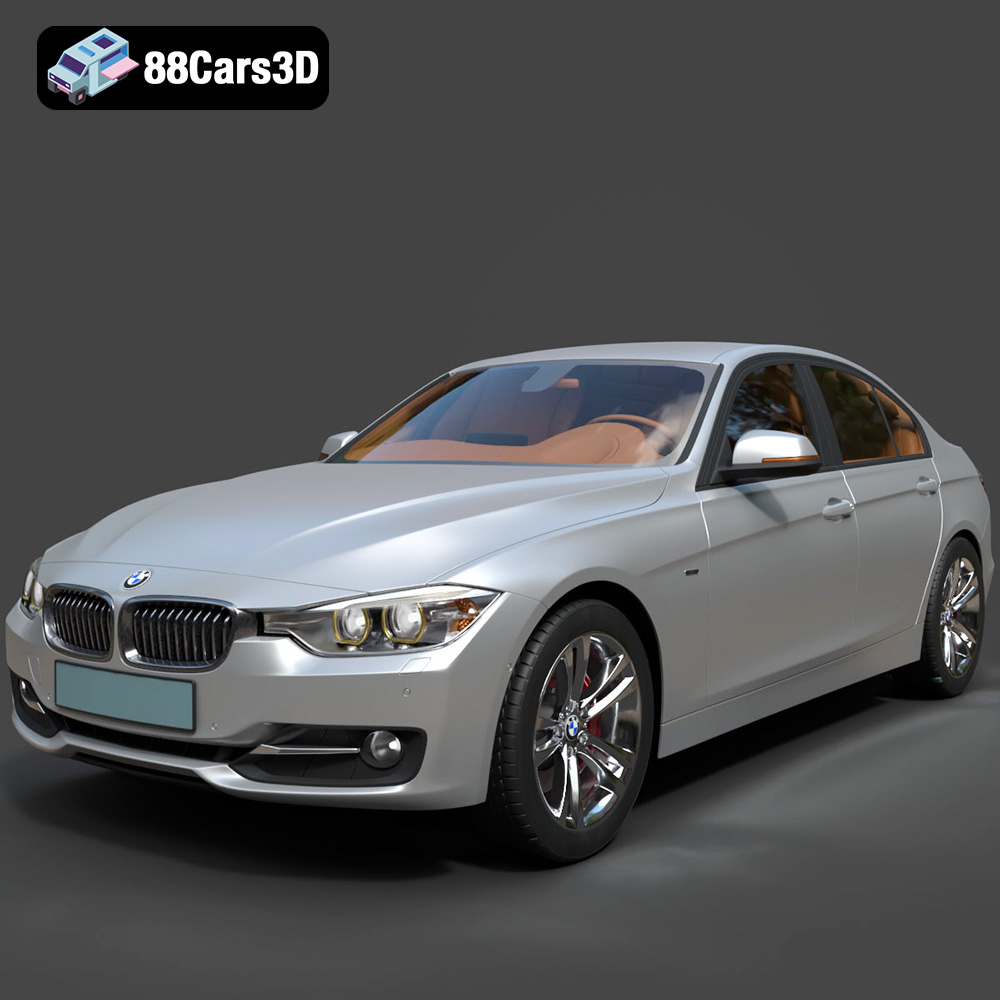
BMW 3 F30 3D Model
Texture: Yes
Material: Yes
Download the BMW 3 F30 3D Model featuring a detailed exterior, realistic interior, and optimized mesh. Includes .blend, .fbx, .obj, .glb, .stl, .ply, .unreal, and .max formats for rendering, simulation, and game development.
Price: $10.79
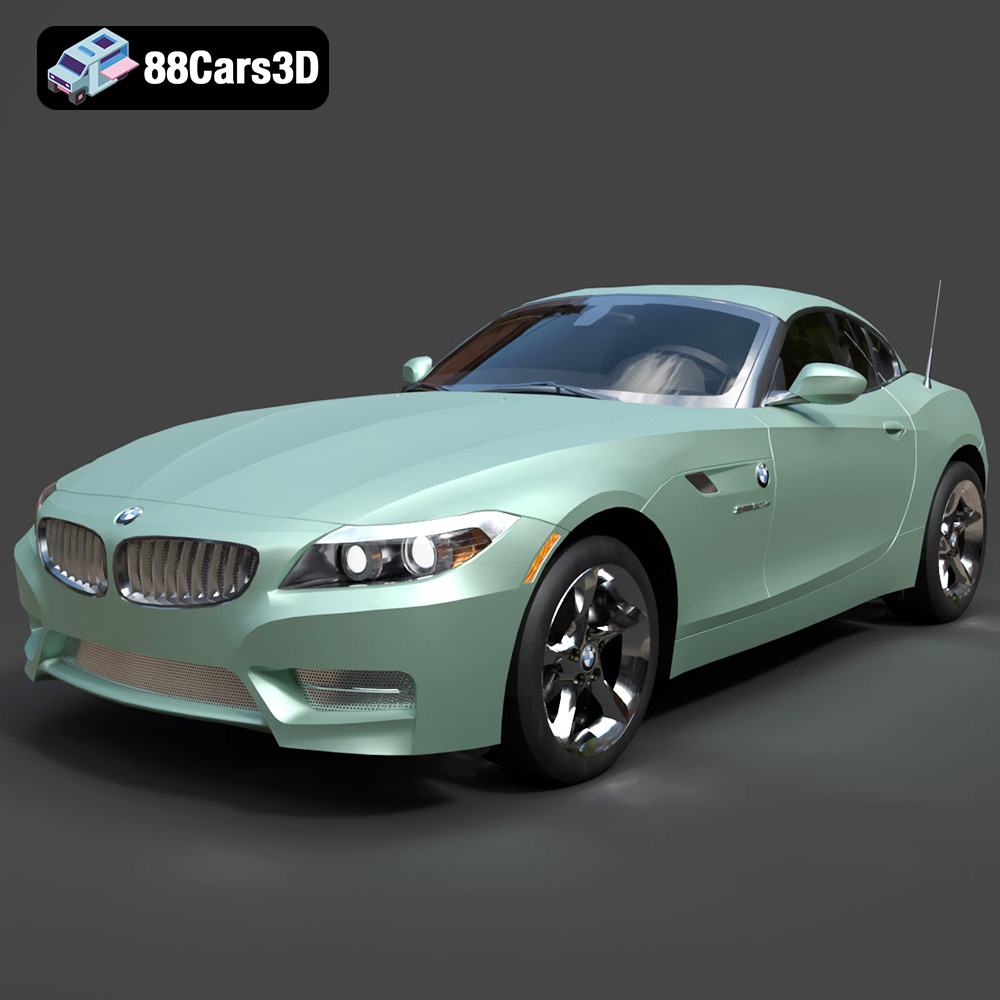
BMW Z4 Roadster E89 2012 3D Model
Texture: Yes
Material: Yes
Download the BMW Z4 Roadster E89 3D Model featuring clean geometry, realistic detailing, and a fully modeled interior. Includes .blend, .fbx, .obj, .glb, .stl, .ply, .unreal, and .max formats for rendering, simulation, and game development.
Price: $13.99

BMW Z4 E85 2005 3D Model
Texture: Yes
Material: Yes
Download the BMW Z4 E85 3D Model featuring clean geometry, realistic detailing, and a fully modeled interior. Includes .blend, .fbx, .obj, .glb, .stl, .ply, .unreal, and .max formats for rendering, simulation, and game development.
Price: $13.99

BMW M3 2024 3D Model
Texture: Yes
Material: Yes
Download the BMW M3 2024 3D Model featuring clean geometry, realistic detailing, and a fully modeled interior. Includes .blend, .fbx, .obj, .glb, .stl, .ply, .unreal, and .max formats for rendering, simulation, and game development.
Price: $13.99
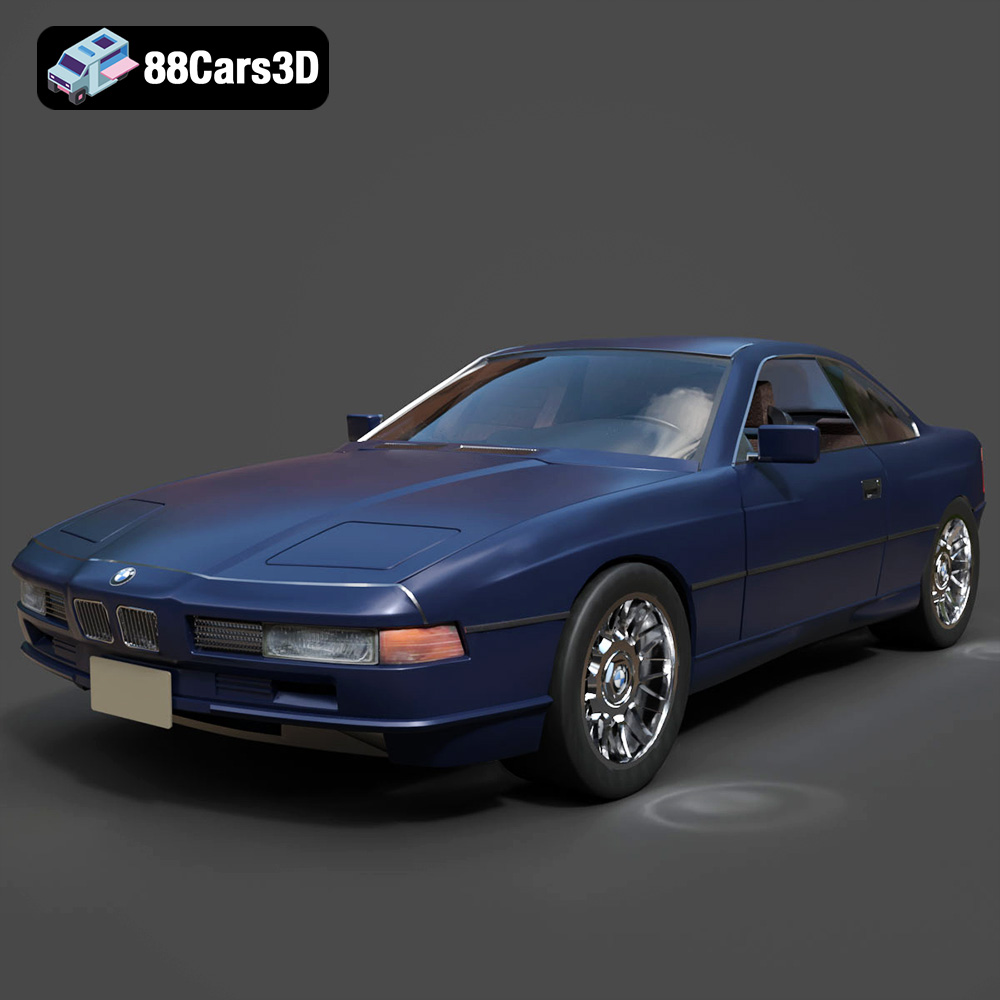
BMW 850i Coupe 1990 3D Model
Texture: Yes
Material: Yes
Download the BMW 850i Coupe 1990 3D Model featuring clean geometry, realistic detailing, and a fully modeled interior. Includes .blend, .fbx, .obj, .glb, .stl, .ply, .unreal, and .max formats for rendering, simulation, and game development.
Price: $13.99
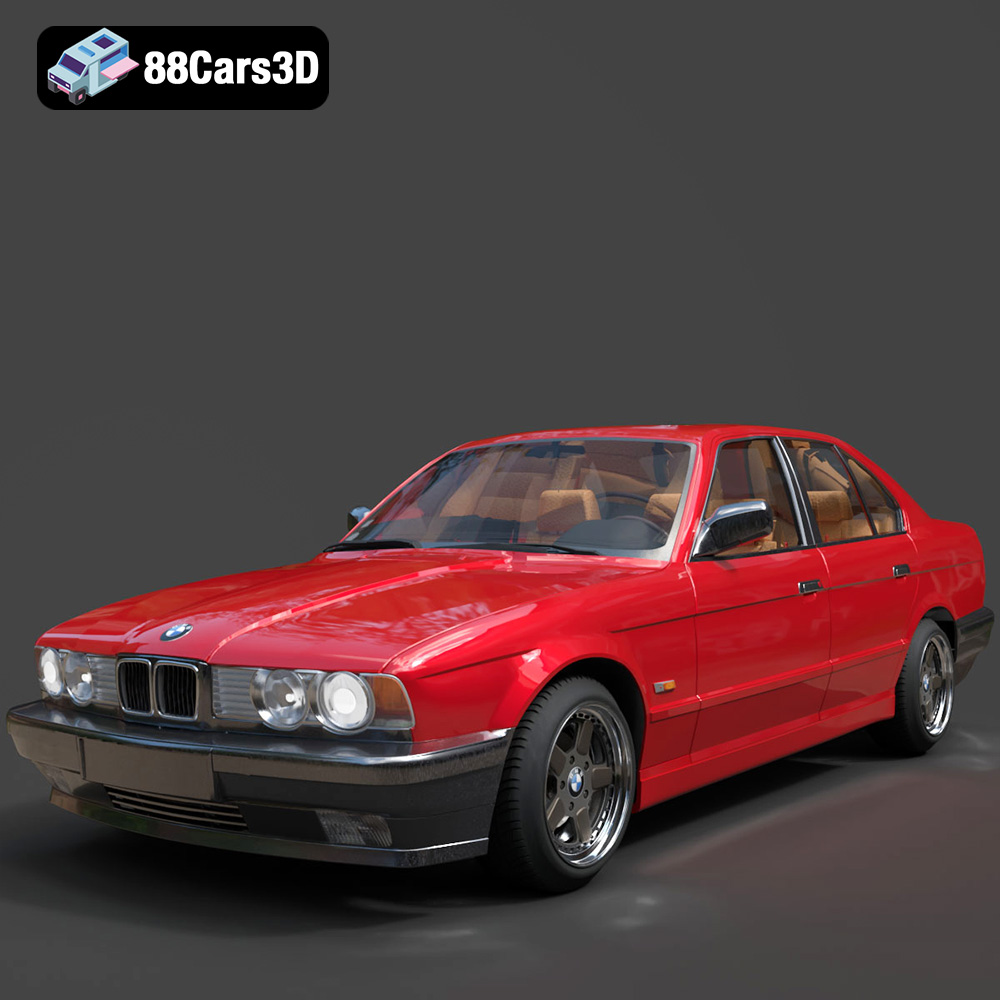
BMW 525i E34 1993 3D Model
Texture: Yes
Material: Yes
Download the BMW 525i E34 1993 3D Model featuring clean geometry, realistic detailing, and a fully modeled interior. Includes .blend, .fbx, .obj, .glb, .stl, .ply, .unreal, and .max formats for rendering, simulation, and game development.
Price: $12.99

BMW 7 Series 2016 3D Model
Texture: Yes
Material: Yes
Download the BMW 7 Series 2016 3D Model featuring luxurious design, detailed interior, and accurate exterior. Includes .blend, .fbx, .obj, .glb, .stl, .ply, .unreal, and .max formats for rendering, simulation, and game development.
Price: $10.79
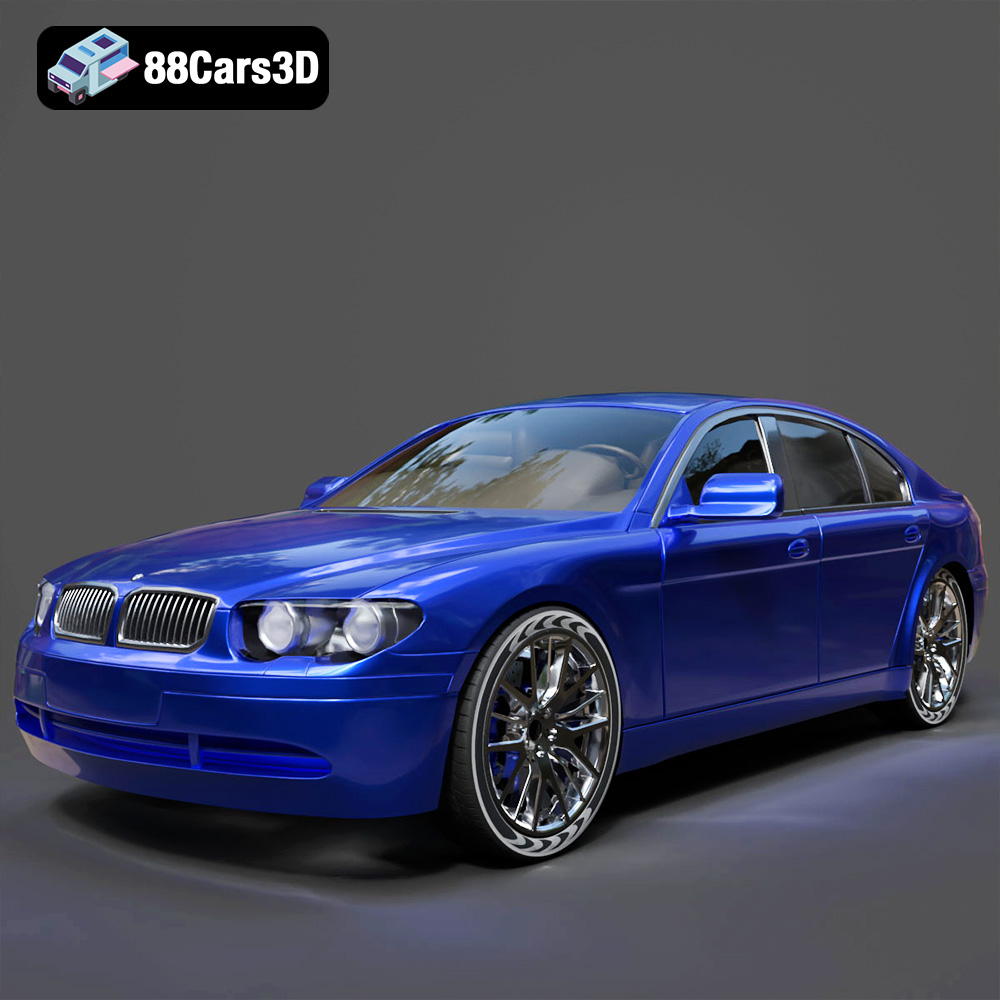
BMW 7 Series 30th Anniversary 3D Model
Texture: Yes
Material: Yes
Download the BMW 7 Series 30th Anniversary 3D Model featuring a meticulously crafted exterior, detailed interior, and realistic wheels. Includes .blend, .fbx, .obj, .glb, .stl, .ply, .unreal, and .max formats for rendering, simulation, and game development.
Price: $35.79

BMW 7-Series F02 3D Model
Texture: Yes
Material: Yes
Download the BMW 7-Series F02 3D Model featuring a detailed exterior and interior, optimized for rendering and animation. Includes .blend, .fbx, .obj, .glb, .stl, .ply, .unreal, and .max formats for rendering, simulation, and game development.
Price: $10.79
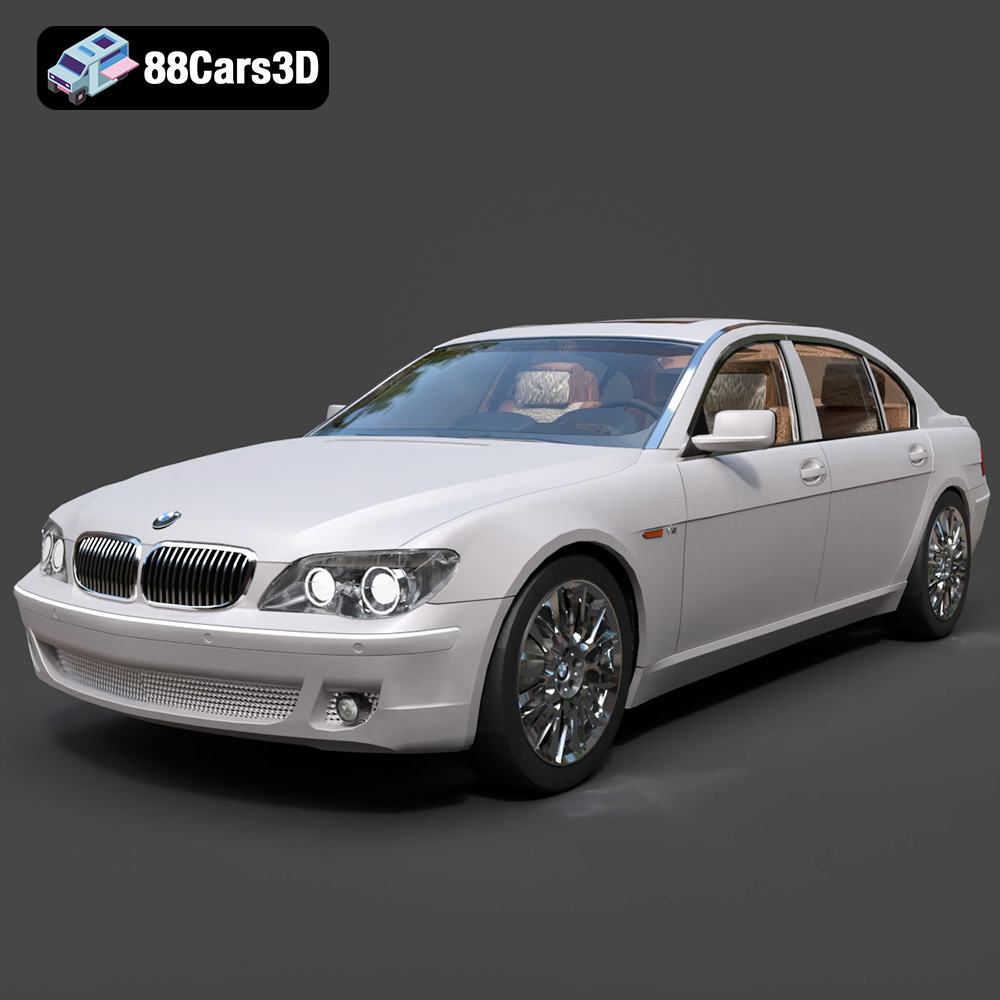
BMW 760Li E66 2005 3D Model
Texture: Yes
Material: Yes
Download the BMW 760Li E66 2005 3D Model featuring a detailed exterior, refined interior, and robust chassis. Includes .blend, .fbx, .obj, .glb, .stl, .ply, .unreal, and .max formats for rendering, simulation, and game development.
Price: $10.79
