

The Ultimate Guide to 3D Car Models for Immersive Virtual Showrooms
In the rapidly evolving landscape of automotive sales and marketing, the traditional brick-and-mortar showroom is undergoing a profound transformation. Consumers today demand more engaging, accessible, and personalized experiences, pushing car manufacturers and dealerships to innovate. Enter the virtual showroom – a powerful digital platform that allows potential buyers to explore vehicles in stunning detail, customize options, and even take virtual test drives from the comfort of their homes. At the heart of this immersive revolution are high-quality 3D car models. These digital assets are far more than just pretty pictures; they are the meticulously crafted foundations that enable photorealistic renders, real-time interactive experiences, and even physical prototypes through 3D printing. Without technically robust and visually compelling 3D models, a virtual showroom would lack the fidelity and interactivity needed to capture a customer’s imagination and drive purchasing decisions. This comprehensive guide will delve into the intricate world of 3D car models, exploring the technical workflows, optimization strategies, and artistic considerations that bring automotive visualization to life in the digital realm.
The Foundation: Precision 3D Modeling and Topology for Automotive Excellence
Creating a photorealistic 3D car model is a meticulous process that begins with foundational modeling techniques and a deep understanding of topology. For automotive design, where every curve and reflection matters, the quality of the mesh is paramount. Professional models often originate from Computer-Aided Design (CAD) software, utilizing NURBS (Non-Uniform Rational B-Splines) surfaces for their mathematical precision and smoothness. These NURBS models are then converted into polygon meshes, typically quads (four-sided polygons), which are ideal for rendering and animation. This conversion requires careful retopology to ensure clean geometry.
Crafting Realistic Surfaces: NURBS Conversion and Subdivision Modeling
Once a basic polygonal mesh is established, often from a CAD conversion, subdivision modeling becomes a critical technique. Software like 3ds Max, Blender, or Maya utilize subdivision surface modifiers (e.g., Catmull-Clark algorithm) to generate incredibly smooth, high-resolution surfaces from a relatively low-polygon base mesh. This non-destructive workflow allows artists to iterate quickly while maintaining control over the final shape. The base mesh’s polygons “subdivide,” creating new faces that interpolate the surface, resulting in smooth transitions and perfect reflections – crucial for capturing the sophisticated curves and pristine paintwork of a modern vehicle. However, the initial conversion from NURBS to polygons, or direct polygon modeling, must be executed with extreme precision, ensuring that the silhouette and key design lines of the vehicle are perfectly preserved before subdivision.
Mastering Edge Flow and Polygon Density
The essence of a high-quality 3D car model lies in its edge flow. This refers to how the polygon edges are directed across the model’s surface. Proper edge flow ensures that reflections propagate realistically along the body panels, without pinching or distortion. It also facilitates clean deformation if the model is ever animated (e.g., opening doors, suspension compression). Every curve, crease, and panel gap requires specific edge loops to define its sharpness and form. For instance, subtle creases around headlights or door lines demand tight support loops to hold their shape under subdivision. Furthermore, maintaining a consistent polygon density across the model is vital. While a high polygon count (e.g., 200,000 to 500,000 triangles for a detailed hero model) provides exquisite detail, excessive density in flat areas is inefficient. The goal is to allocate polygons strategically, with more density in areas of high curvature or intricate details, and less in simpler, flatter regions. This balance not only optimizes performance but also ensures visual fidelity, which is particularly important when sourcing models from platforms like 88cars3d.com, where attention to such detail guarantees superior results.
Bringing Cars to Life: Advanced UV Mapping and PBR Materials
Beyond the geometric structure, the visual realism of a 3D car model hinges on its surface properties, meticulously defined through UV mapping and PBR materials. These elements dictate how light interacts with the car’s paint, glass, chrome, and interior components, transforming a wireframe into a convincing digital representation. A poorly UV-mapped model will suffer from distorted textures, while an incorrectly configured material will break the illusion of realism, regardless of how perfect the geometry is.
Strategic UV Layout for Flawless Textures
UV mapping is the process of flattening the 3D surface of a model into a 2D space, creating a coordinate system (UVs) that tells the rendering engine how to apply textures. For complex automotive surfaces, strategic UV unwrapping is critical to avoid texture distortion, maximize texel density (pixels per unit area of the model), and prevent seams from being overly visible. Common techniques include planar mapping for flat surfaces, cylindrical or spherical mapping for wheels and curved parts, and ‘pelting’ or ‘unfold’ methods to naturally lay out complex curved panels. The goal is to minimize stretching and overlapping UVs while ensuring that texture resolution is consistent across the entire model. For instance, a vehicle’s body panels might occupy a large portion of a 4K or 8K texture map, while smaller details like badges or grilles could be packed into separate, smaller texture sets. Efficient UV packing also reduces the number of texture maps required, which is crucial for optimizing game engine performance later on.
Crafting Hyper-Realistic PBR Shader Networks
Physically Based Rendering (PBR) has become the industry standard for achieving photorealistic materials due to its ability to accurately simulate how light behaves in the real world. A PBR material system relies on a set of standardized texture maps that define surface properties rather than just color. Key maps include:
- Albedo/Base Color: The inherent color of the surface, excluding lighting information.
- Metallic: Determines if a surface is a dielectric (non-metal) or a conductor (metal).
- Roughness: Controls the microscopic surface imperfections that scatter light, influencing how ‘shiny’ or ‘dull’ a material appears.
- Normal: Adds fine surface detail without increasing polygon count, simulating bumps and grooves using light direction.
- Ambient Occlusion (AO): Simulates soft shadows where surfaces are close together, adding depth.
For car paint, a complex layered shader network is often employed. This typically involves a base metallic material (for the car’s body color) with a clear coat layer on top, simulating the glossy protective finish. The clear coat itself will have its own roughness and normal map to simulate micro-scratches or wax effects. Carbon fiber requires intricate normal and albedo maps to mimic its woven pattern, combined with metallic and roughness values to convey its characteristic sheen. Creating these maps often involves specialized software like Substance Painter or Designer, allowing artists to procedurally generate or hand-paint intricate details that bring the 3D car model to life with stunning realism.
Cinematic Visualization: Rendering Car Models in Virtual Showrooms
The pinnacle of a 3D car model’s journey is its transformation into a photorealistic image or animation through the rendering process. In a virtual showroom, the quality of these renders directly impacts the perceived value and luxury of the vehicle. This stage involves sophisticated lighting, environment setup, and the strategic use of powerful render engines to achieve cinematic results that are virtually indistinguishable from real photography.
Illuminating the Scene: Lighting and Environment Setup
Effective lighting is perhaps the single most important factor in achieving a compelling render. For automotive visualization, lighting setups are designed to highlight the car’s form, accentuate its reflections, and create a sense of atmosphere. High Dynamic Range Images (HDRIs) are a cornerstone of modern rendering, providing physically accurate environment lighting and reflections from a single texture map. An HDRI-based Image-Based Lighting (IBL) setup can quickly create believable global illumination, mimicking real-world locations or studio environments. Beyond HDRIs, supplementary lighting – such as area lights to simulate softbox studio lighting, or directional lights for harsh sunlight – is often used to emphasize specific details, create dramatic shadows, or add artistic flair. The environment itself, whether a detailed 3D scene of a cityscape or a minimalist studio, must complement the vehicle without distracting from it. Reflections in the car’s paintwork must accurately mirror the environment, further enhancing realism and giving the impression that the car exists within a tangible space.
Mastering Render Engines: Corona, V-Ray, Cycles, and Arnold
The choice of render engine significantly influences both the workflow and the final output quality. Each engine has its strengths and preferred use cases:
- Corona Renderer: Known for its ease of use and physically plausible results, Corona excels at producing high-quality photorealistic renders with minimal setup, making it a favorite for architectural and product visualization.
- V-Ray: A long-standing industry standard, V-Ray offers immense flexibility and advanced features, catering to complex production pipelines in film, television, and automotive design. It provides a vast array of controls for fine-tuning every aspect of rendering.
- Blender Cycles: Blender’s integrated path-tracing renderer, Cycles, has evolved significantly, offering GPU and CPU rendering capabilities, advanced shader nodes, and impressive photorealism. For detailed documentation on Cycles and its features, refer to the official Blender 4.4 documentation: https://docs.blender.org/manual/en/4.4/.
- Arnold: Widely used in film and animation, Arnold is a robust, unbiased Monte Carlo path tracer, celebrated for its ability to handle complex scenes with realistic light scattering and subsurface scattering, ideal for achieving cinematic quality.
Regardless of the engine, the workflow involves setting render samples (to reduce noise), configuring light bounces (for global illumination accuracy), and often utilizing render passes. These passes (e.g., diffuse, specular, reflection, depth, normal) allow artists to have granular control over different elements of the image in post-processing software like Adobe Photoshop or Nuke, enabling precise color grading, depth of field adjustments, and the addition of atmospheric effects. Advanced techniques like volumetric fog or motion blur can be integrated directly into the render or added as a post-processing step to further enhance the realism and cinematic feel of the automotive visualization.
Real-time Immersion: Optimizing 3D Car Models for Game Engines and Interactive Experiences
While cinematic renders aim for absolute photorealism in a static or pre-rendered context, virtual showrooms increasingly demand real-time interactivity. This shifts the focus from purely visual fidelity to a delicate balance between visual quality and performance. Optimizing 3D car models for game engines like Unreal Engine and Unity is a specialized skill, crucial for delivering smooth, responsive experiences in interactive virtual showrooms.
Performance-Driven Optimization: LODs and Draw Calls
One of the most critical optimization strategies for real-time environments is the implementation of Level of Detail (LOD) systems. A single high-polygon model, while stunning up close, would cripple performance if every car in a virtual showroom rendered at full detail. LODs involve creating multiple versions of the same model, each with progressively fewer polygons. For instance, LOD0 (hero model) might have 200,000 triangles, LOD1 might drop to 50,000, and LOD2 could be as low as 10,000. The game engine automatically swaps between these versions based on the camera’s distance from the object, ensuring that only the necessary detail is rendered. This dramatically reduces the overall polygon count of the scene. Another major performance consideration is minimizing draw calls – instructions sent from the CPU to the GPU to draw objects. Each unique material or mesh component typically incurs a draw call. Strategies to reduce draw calls include texture atlasing (combining multiple smaller textures into one larger texture) and combining meshes where possible. For instance, all the separate parts of a car’s interior that share the same material could be merged into a single mesh, effectively reducing draw calls and boosting frame rates.
Seamless Integration: File Formats for Interactive Platforms
The choice of file format is paramount for seamless integration into real-time engines. The most commonly used formats for game assets are:
- FBX (Filmbox): A proprietary format from Autodesk, FBX is an industry workhorse for transferring 3D data between various applications. It supports geometry, materials, animations, and skeletal data, making it highly versatile for importing complex car models into Unity and Unreal Engine. When exporting to FBX, careful consideration of scale, axis orientation, and embedded media is necessary.
- GLB (Binary glTF): GltF (Graphics Language Transmission Format) is an open-standard, royalty-free format designed for efficient transmission and loading of 3D scenes and models by applications. GLB is the binary version, embedding all assets (models, textures, animations) into a single file. Its efficiency and widespread support make it ideal for web-based virtual showrooms and emerging AR/VR applications.
When preparing models from a source like 88cars3d.com, it’s crucial to ensure they are available in these compatible formats and are already optimized. This often means models come with baked normal maps (transferring high-poly detail to low-poly models), properly packed PBR textures (e.g., combining Metallic, Roughness, and Ambient Occlusion into a single texture’s RGB channels for efficiency), and pre-configured LODs. Importing these optimized assets into engines like Unity or Unreal typically involves setting up materials using the engine’s PBR shader systems, adjusting light probes for reflections, and configuring LOD groups to ensure optimal performance without sacrificing visual quality.
Beyond the Screen: AR/VR and 3D Printing Applications
The utility of high-quality 3D car models extends far beyond traditional screens, venturing into groundbreaking applications like Augmented Reality (AR), Virtual Reality (VR), and even physical prototyping via 3D printing. These technologies offer unprecedented ways to interact with automotive designs, creating deeply immersive experiences for consumers and powerful tools for designers.
Augmented Reality and Virtual Reality: The Next Frontier
For AR/VR applications, the optimization demands for 3D car models are even more stringent than for traditional game engines. In VR, maintaining a consistent, high frame rate (e.g., 90 FPS or higher) is critical to prevent motion sickness. This often means drastically reduced polygon budgets (e.g., 50,000-100,000 triangles for a full car model in mobile AR), aggressive texture compression, and careful use of draw calls. Techniques like single-pass stereo rendering (rendering both eyes in one pass) and foveated rendering (rendering the center of the user’s gaze at higher resolution than the periphery) are crucial for squeezing performance out of VR hardware. For AR, where models are superimposed onto the real world via smartphone cameras or AR glasses, file formats like Apple’s USDZ (Universal Scene Description Zip) and Google’s GLB are paramount. USDZ, in particular, is optimized for ARKit on iOS devices, enabling users to place a realistic 3D car model in their driveway and walk around it, scaling it to life-size. These immersive experiences allow customers to virtually ‘try out’ a car in their own environment, driving engagement and providing a tangible sense of ownership before purchase.
Physical Manifestations: Preparing Car Models for 3D Printing
The journey of a 3D car model can also culminate in a physical object through 3D printing. This process transforms digital data into a tangible prototype, scale model, or even functional part. However, preparing a model for 3D printing requires a different set of technical considerations than for rendering or real-time display. Key requirements include:
- Watertight Meshes: The model must be a completely enclosed, solid volume without any holes or open edges.
- Manifold Geometry: Every edge must be shared by exactly two faces, ensuring the mesh has a clear inside and outside. Non-manifold geometry (e.g., edges shared by more than two faces) will cause errors in slicing software.
- Consistent Wall Thickness: For structural integrity, especially with FDM (Fused Deposition Modeling) or SLA (Stereolithography) printers, all surfaces must have a minimum, consistent thickness. Thin walls can break easily.
- Scale Accuracy: The model must be scaled correctly to its real-world dimensions to ensure accurate printing.
Software tools like Meshmixer, Netfabb, or even Blender’s 3D Print Toolbox (check the official Blender 4.4 documentation for details on its utilities: https://docs.blender.org/manual/en/4.4/) are invaluable for inspecting and repairing meshes, identifying non-manifold edges, and closing holes. File formats like STL (Standard Tessellation Language) and OBJ are commonly used for 3D printing. The ability to transform a digital 3D car model into a physical object opens up new avenues for rapid prototyping in automotive design, creating bespoke collectibles, or providing unique physical representations in marketing campaigns. This versatility underscores the incredible power and value of a well-crafted 3D asset.
Conclusion
The journey of a 3D car model from concept to a fully immersive virtual showroom experience is a complex, technically demanding, yet incredibly rewarding process. We’ve explored the critical importance of meticulous topology and precise 3D modeling, ensuring every curve and reflection is flawlessly captured. We then delved into the artistry of UV mapping and the scientific accuracy of PBR materials, which together breathe photorealistic life into digital surfaces. The power of cinematic automotive rendering through engines like Corona, V-Ray, Cycles, and Arnold allows for stunning visualizations, while rigorous optimization strategies, including LODs and managing draw calls, enable smooth, interactive real-time experiences in game engines. Finally, we saw how these versatile assets transcend traditional screens, finding new applications in immersive AR/VR environments and even physical manifestations through 3D printing. For anyone looking to create compelling virtual showrooms or requiring high-fidelity game assets, the technical quality of the underlying 3D models is non-negotiable. Platforms like 88cars3d.com provide a valuable resource for artists and developers seeking professionally crafted 3D car models, ready to be integrated into diverse visualization projects. As technology continues to advance, the demand for sophisticated, optimized 3D car models will only grow, solidifying their role as the indispensable foundation for the future of automotive marketing and design.
Featured 3D Car Models
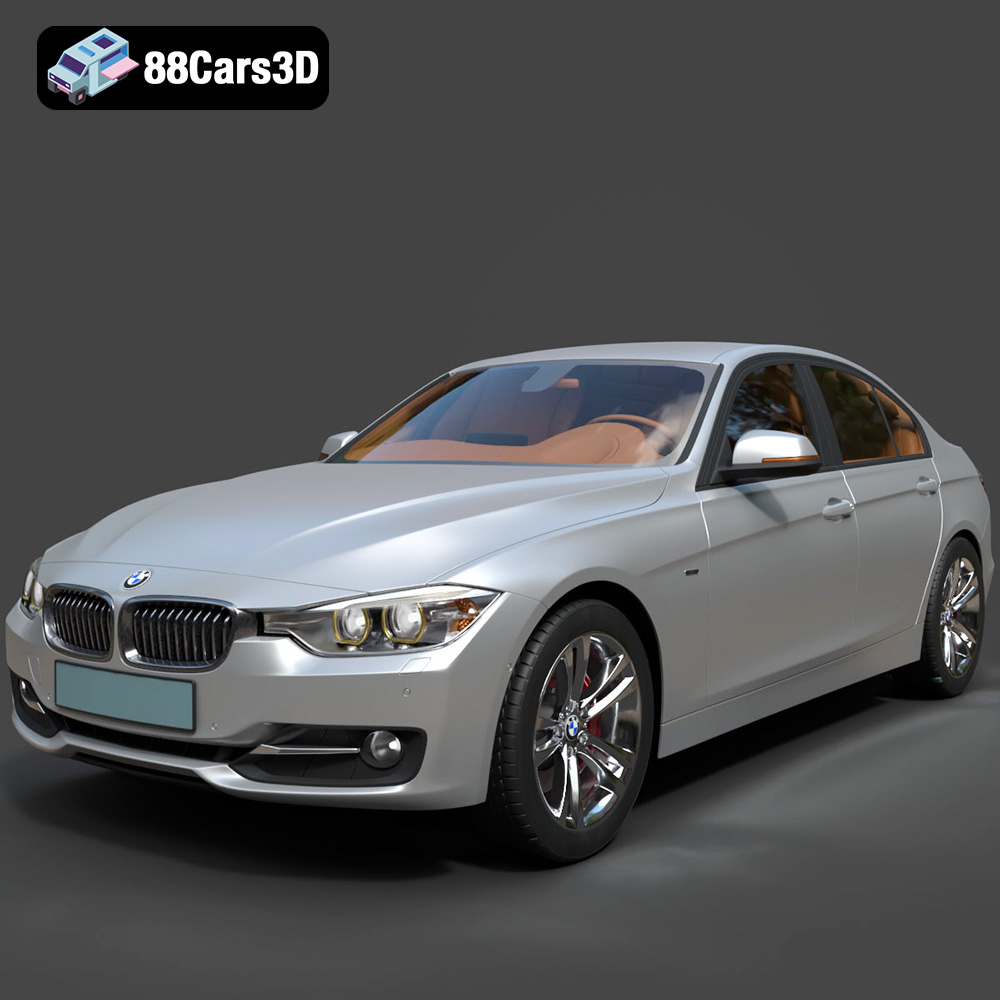
BMW 3 F30 3D Model
Texture: Yes
Material: Yes
Download the BMW 3 F30 3D Model featuring a detailed exterior, realistic interior, and optimized mesh. Includes .blend, .fbx, .obj, .glb, .stl, .ply, .unreal, and .max formats for rendering, simulation, and game development.
Price: $10.79
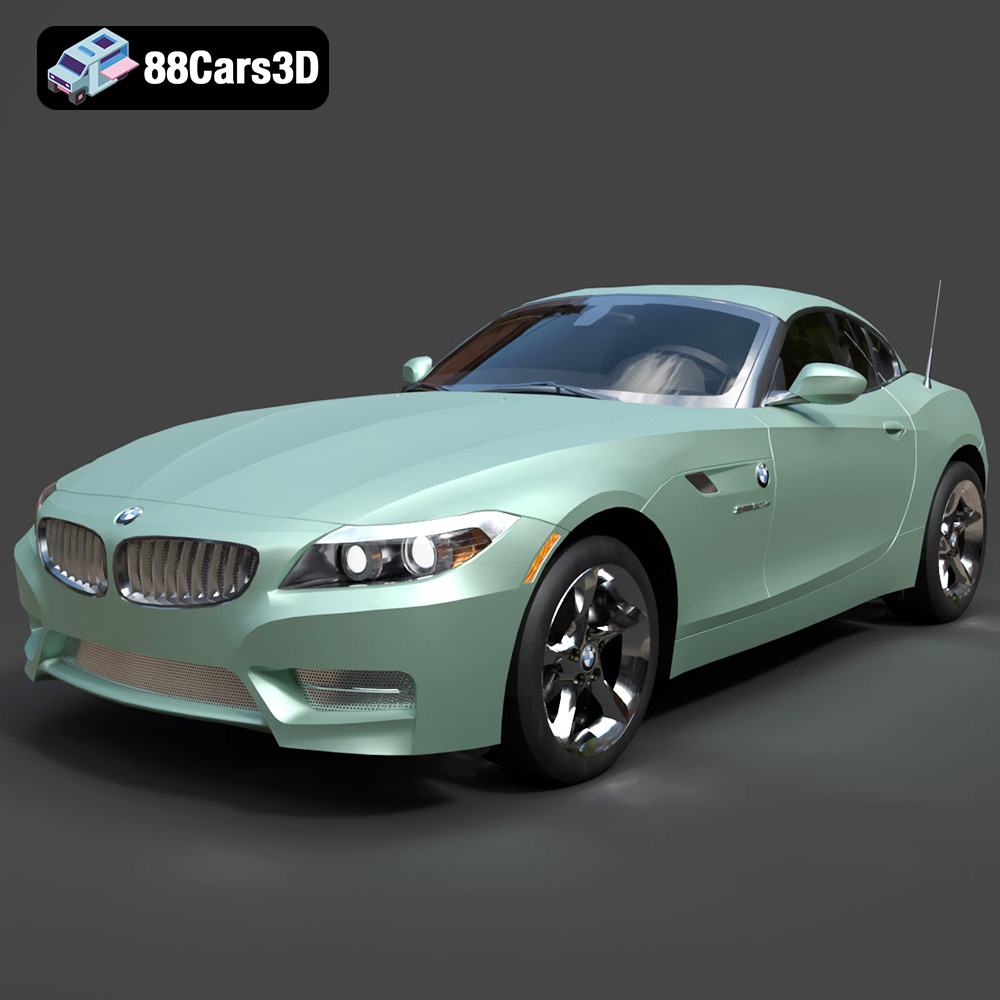
BMW Z4 Roadster E89 2012 3D Model
Texture: Yes
Material: Yes
Download the BMW Z4 Roadster E89 3D Model featuring clean geometry, realistic detailing, and a fully modeled interior. Includes .blend, .fbx, .obj, .glb, .stl, .ply, .unreal, and .max formats for rendering, simulation, and game development.
Price: $13.99

BMW Z4 E85 2005 3D Model
Texture: Yes
Material: Yes
Download the BMW Z4 E85 3D Model featuring clean geometry, realistic detailing, and a fully modeled interior. Includes .blend, .fbx, .obj, .glb, .stl, .ply, .unreal, and .max formats for rendering, simulation, and game development.
Price: $13.99

BMW M3 2024 3D Model
Texture: Yes
Material: Yes
Download the BMW M3 2024 3D Model featuring clean geometry, realistic detailing, and a fully modeled interior. Includes .blend, .fbx, .obj, .glb, .stl, .ply, .unreal, and .max formats for rendering, simulation, and game development.
Price: $13.99
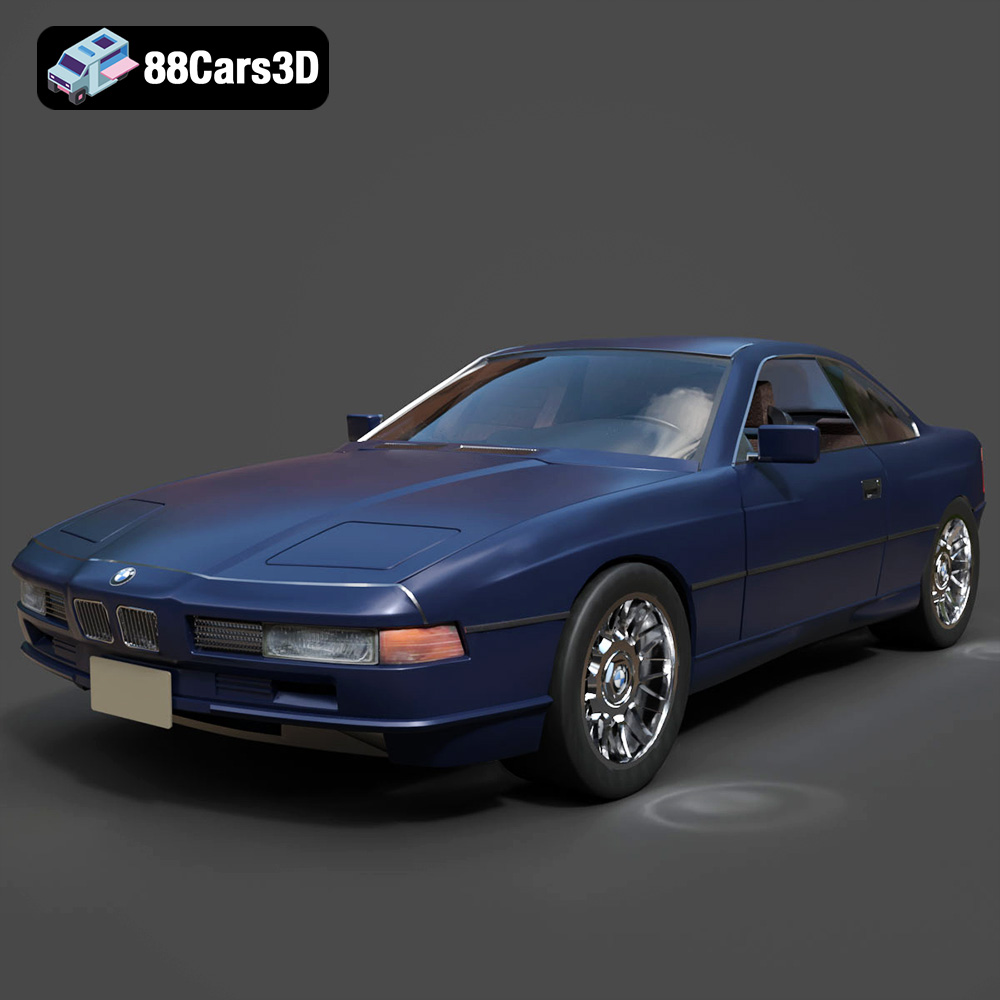
BMW 850i Coupe 1990 3D Model
Texture: Yes
Material: Yes
Download the BMW 850i Coupe 1990 3D Model featuring clean geometry, realistic detailing, and a fully modeled interior. Includes .blend, .fbx, .obj, .glb, .stl, .ply, .unreal, and .max formats for rendering, simulation, and game development.
Price: $13.99
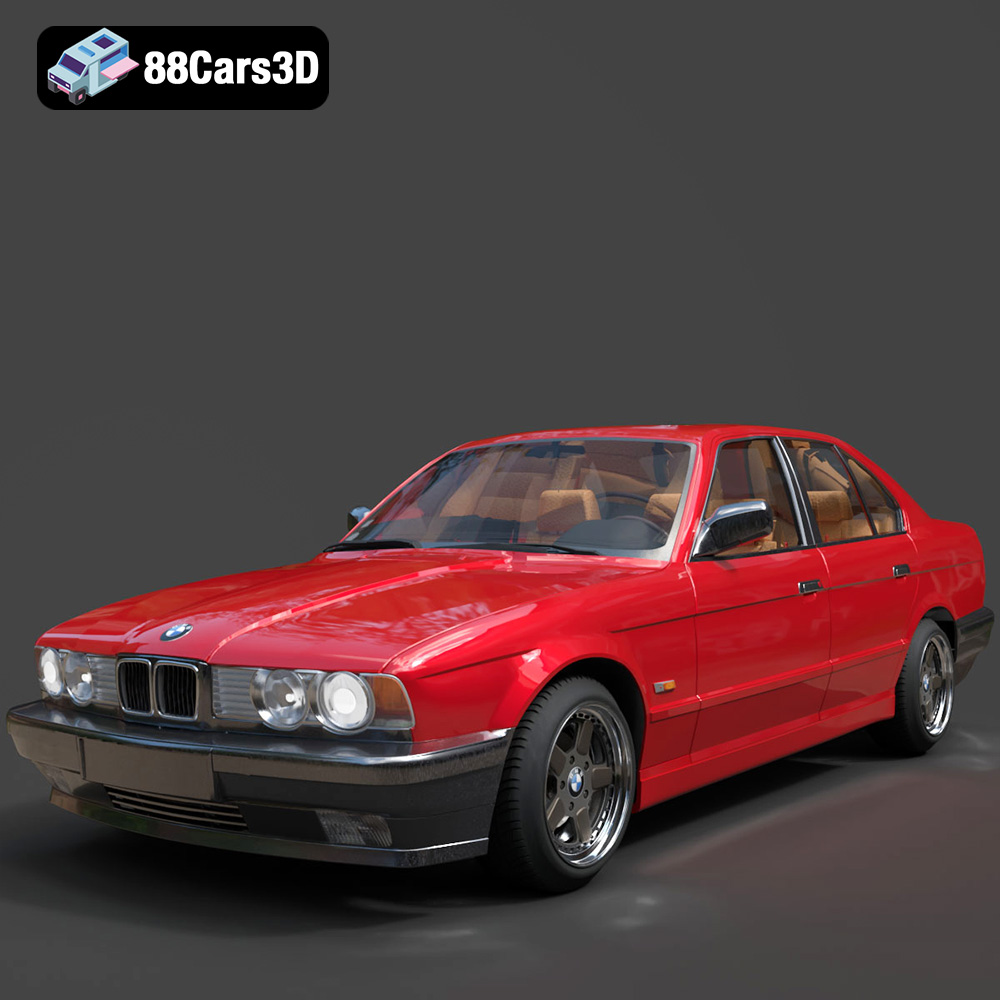
BMW 525i E34 1993 3D Model
Texture: Yes
Material: Yes
Download the BMW 525i E34 1993 3D Model featuring clean geometry, realistic detailing, and a fully modeled interior. Includes .blend, .fbx, .obj, .glb, .stl, .ply, .unreal, and .max formats for rendering, simulation, and game development.
Price: $12.99

BMW 7 Series 2016 3D Model
Texture: Yes
Material: Yes
Download the BMW 7 Series 2016 3D Model featuring luxurious design, detailed interior, and accurate exterior. Includes .blend, .fbx, .obj, .glb, .stl, .ply, .unreal, and .max formats for rendering, simulation, and game development.
Price: $10.79
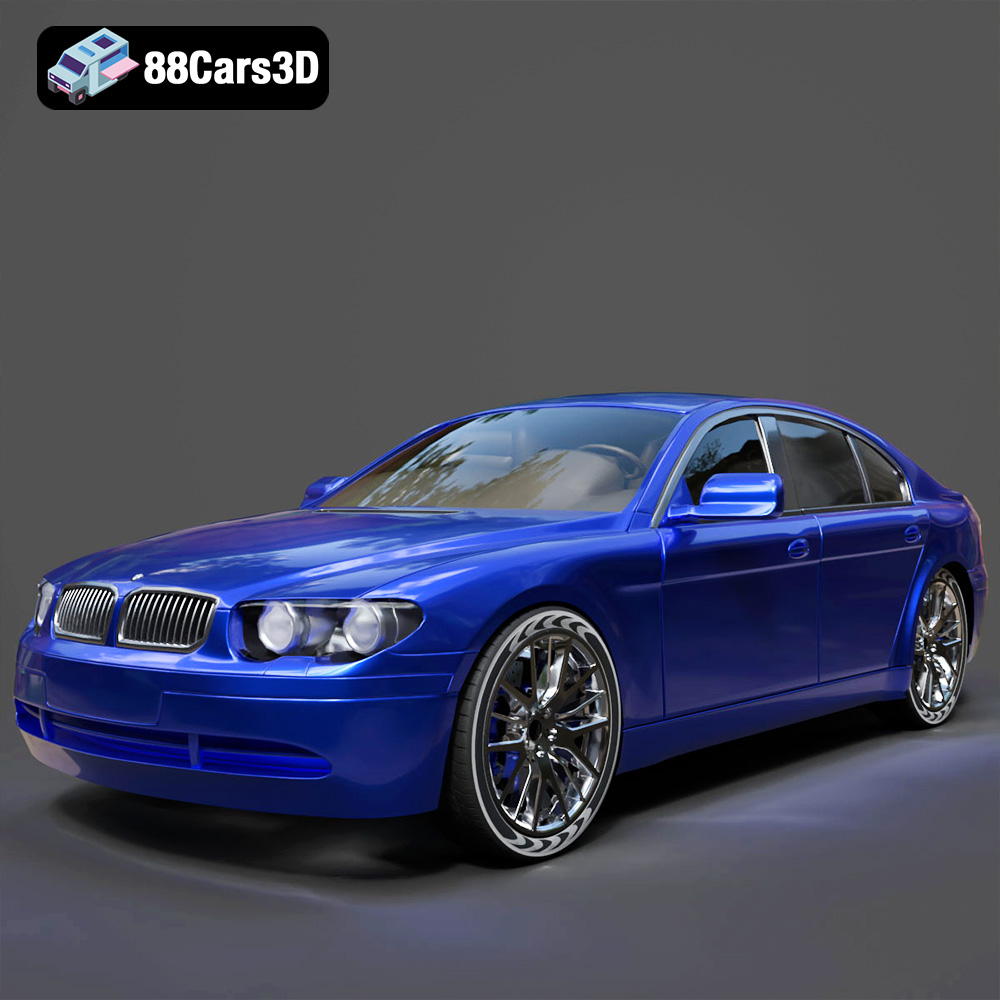
BMW 7 Series 30th Anniversary 3D Model
Texture: Yes
Material: Yes
Download the BMW 7 Series 30th Anniversary 3D Model featuring a meticulously crafted exterior, detailed interior, and realistic wheels. Includes .blend, .fbx, .obj, .glb, .stl, .ply, .unreal, and .max formats for rendering, simulation, and game development.
Price: $35.79

BMW 7-Series F02 3D Model
Texture: Yes
Material: Yes
Download the BMW 7-Series F02 3D Model featuring a detailed exterior and interior, optimized for rendering and animation. Includes .blend, .fbx, .obj, .glb, .stl, .ply, .unreal, and .max formats for rendering, simulation, and game development.
Price: $10.79
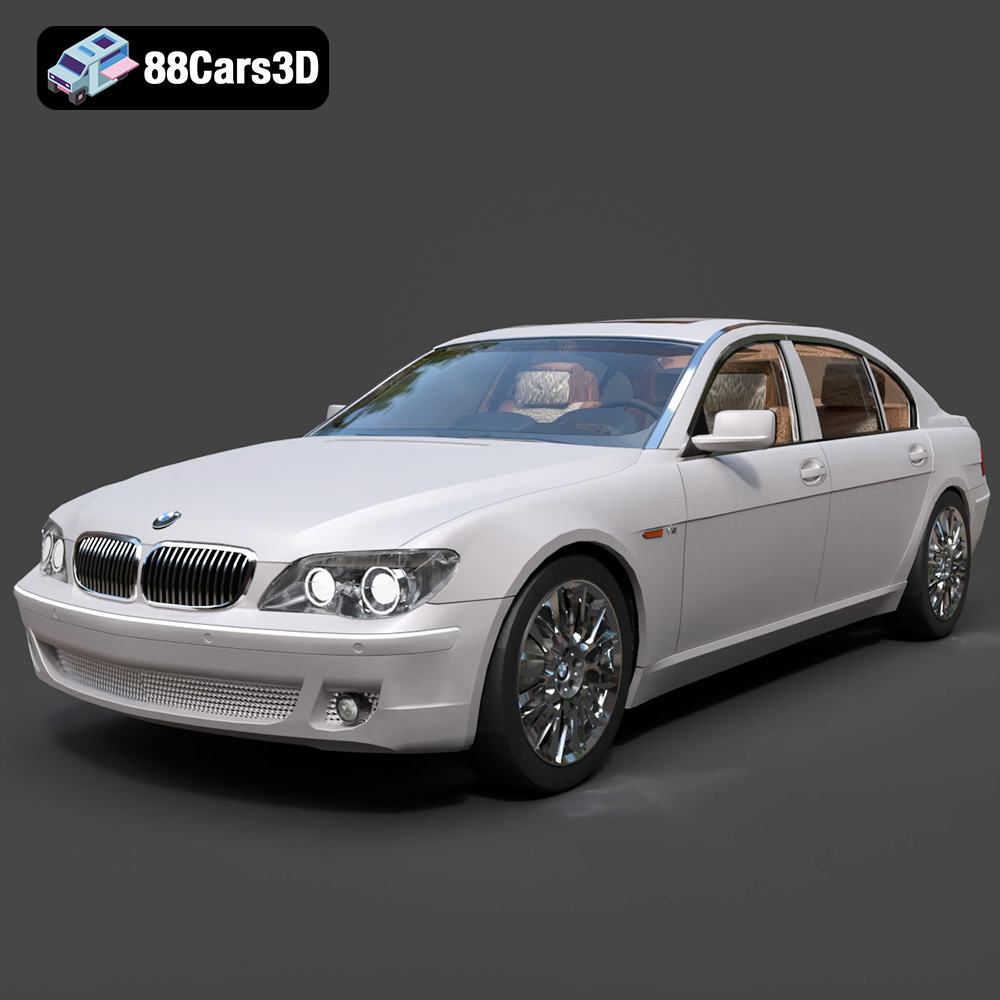
BMW 760Li E66 2005 3D Model
Texture: Yes
Material: Yes
Download the BMW 760Li E66 2005 3D Model featuring a detailed exterior, refined interior, and robust chassis. Includes .blend, .fbx, .obj, .glb, .stl, .ply, .unreal, and .max formats for rendering, simulation, and game development.
Price: $10.79
