

“`html
Unlocking the Power of STL: Why It Dominates the 3D Printing Landscape
The world of 3D printing is a vibrant ecosystem of innovation, creativity, and technical precision. At its core lies the digital blueprint that dictates how a physical object will be built layer by layer. While several file formats exist for 3D models, one consistently stands out as the industry standard: STL (Stereolithography). Whether you’re a seasoned maker downloading highly detailed printable car models from marketplaces like 88cars3d.com or a beginner experimenting with your first print, understanding why STL is so ubiquitous is crucial for a smooth and successful additive manufacturing journey. This comprehensive guide will delve deep into the technical intricacies of the STL format, explore its historical significance, and highlight why it remains the go-to choice for 3D printing enthusiasts worldwide. We’ll cover everything from its fundamental structure to practical tips for optimizing STL files for your specific 3D printer settings and slicing software.
The Fundamental Structure of STL Files
At its most basic, an STL file describes the surface geometry of a three-dimensional object using a collection of connected triangles. This simple yet powerful approach is the primary reason for its widespread adoption. Unlike more complex formats that can store color, texture, or material properties, STL focuses solely on defining the shape. This reductionist philosophy is a key strength in the context of 3D printing, where the primary goal is to translate a digital design into physical layers.
Facets and Vertices: The Building Blocks
An STL file represents a 3D model as a mesh of triangular facets. Each facet is defined by three vertices (points in 3D space) and a normal vector. The normal vector is a crucial piece of information, indicating which side of the triangle is “outward-facing” relative to the object’s volume. This normal vector information is essential for slicer software to determine the solid surfaces of the model and distinguish them from empty space. A well-formed STL file requires that all facets are consistently oriented, ensuring a manifold (watertight) mesh. A manifold mesh is one that has no holes, no intersecting faces, and no edges shared by more than two faces, which is a fundamental requirement for successful slicing and printing.
ASCII vs. Binary: Understanding the Differences
STL files can be saved in two main formats: ASCII and Binary. The ASCII format is human-readable, meaning you can open the file in a text editor and see the coordinates of the vertices and the normal vectors. This makes it useful for debugging and understanding the file structure. However, ASCII STL files are significantly larger in file size due to the text-based representation of numerical data. The Binary format, on the other hand, is much more compact and efficient. It stores the same geometric information using a more condensed, machine-readable binary code. For most 3D printing applications, especially when dealing with complex models like those found on 88cars3d.com, the Binary STL format is preferred due to its smaller file size, which leads to faster loading times in slicer software and reduced storage requirements. Most 3D printing software can read both formats, but efficiency often dictates the use of binary.
Why STL Became the de Facto Standard
The dominance of the STL format isn’t accidental; it’s rooted in the early days of 3D printing and its inherent design for compatibility. When stereolithography (the technology that gave STL its name) was first developed, the need for a simple, universal format for representing 3D shapes was paramount. STL filled this void perfectly, and its widespread adoption by early 3D printing hardware and software manufacturers cemented its position.
Simplicity and Universality
The core strength of STL lies in its simplicity. By representing complex surfaces as a collection of simple triangles, it provides a universal language that almost any 3D modeling software can export and virtually all 3D printer slicers can import. This low barrier to entry and high degree of compatibility meant that users didn’t need specialized software to convert their designs. A designer could create a model in any CAD or 3D modeling program, export it as an STL, and be confident that it could be processed by their chosen slicing software for their specific printer, whether it be an FDM printer or a resin printer.
Historical Context and Industry Support
Developed by 3D Systems in the mid-1980s, STL was integral to the commercialization of their stereolithography apparatus (SLA) machines. As other companies entered the additive manufacturing market, they found it pragmatic to support the existing standard rather than develop and promote a proprietary format. This early industry consensus, driven by the need for interoperability, created a network effect that made STL the default choice for decades. Even with the advent of newer, more feature-rich formats like 3MF (3D Manufacturing Format), STL’s established ecosystem and widespread legacy support continue to ensure its relevance for countless applications, from hobbyist projects to professional prototyping.
Preparing and Optimizing STL Files for Printing
While STL is a universal format, the quality of the underlying mesh significantly impacts the success of a 3D print. Raw CAD exports can sometimes be problematic, leading to printing errors. Understanding how to inspect, repair, and optimize STL files is a critical skill for any 3D printing enthusiast aiming for high-quality results, especially when working with intricate models like detailed car replicas.
Mesh Repair and Watertight Models
One of the most common issues encountered with STL files is the presence of non-manifold geometry. This can manifest as holes in the mesh, inverted normals, coincident faces, or edges that are not properly connected. Slicer software often struggles with these imperfections, leading to gaps in the print, incorrect slicing paths, or outright failure to slice the model. Software tools like Meshmixer, Blender, and Netfabb are invaluable for diagnosing and repairing these issues. Their automated repair functions can often fix minor problems, while manual editing tools allow for precise correction of more complex errors. Ensuring your STL file is “watertight” is the first and most crucial step before proceeding to slicing. This guarantees that the slicer can correctly interpret the model’s volume and generate valid toolpaths.
Resolution and STL Quality
The resolution of an STL file is determined by the density of its triangular mesh. A higher mesh density (more triangles) results in a smoother, more accurate representation of the original model’s curves and details. However, a very high resolution can lead to excessively large file sizes, making them cumbersome to work with and increasing slicing times. Conversely, a low-resolution STL will exhibit visible facets or “stair-stepping” artifacts on the printed object, especially on curved surfaces. The sweet spot often depends on the scale of the print and the capabilities of your 3D printer. For detailed models, such as the intricate bodywork of collectible cars, using an STL with a moderate to high resolution is recommended. Many 3D modeling programs allow you to control the export resolution; aim for a balance between detail and file size. For instance, when downloading models from 88cars3d.com, you can often expect well-optimized STL files with appropriate resolution for high-quality prints.
Slicing Strategies for Optimal Print Quality
Once you have a clean, well-formed STL file, the next critical step is slicing. Slicer software takes your 3D model and converts it into a series of thin layers, generating the G-code instructions that your 3D printer follows. The settings you choose within your slicer have a profound impact on the final print’s quality, strength, and print time.
Layer Height, Infill, and Print Speed
Layer Height: This is arguably the most significant setting affecting print quality and time. A smaller layer height (e.g., 0.1mm) results in finer detail and smoother surfaces, reducing the visibility of layer lines. However, it also significantly increases print time as the printer must lay down many more layers. A larger layer height (e.g., 0.2mm or 0.3mm) prints much faster but sacrifices surface finish. For highly detailed models like automotive miniatures, a layer height between 0.1mm and 0.15mm is often ideal for FDM printing. Resin printers typically achieve much finer layer heights, often starting at 0.025mm or 0.05mm.
Infill: This setting determines the internal structure of the printed object. For aesthetic models where strength is not a primary concern, a low infill percentage (5-15%) is often sufficient, saving material and print time. For functional parts or models that require durability, higher infill densities (20-50% or more) are necessary. The choice of infill pattern (e.g., grid, cubic, gyroid) also affects strength and print time. For display models, a simple grid pattern at a low density is usually adequate.
Print Speed: Faster print speeds reduce overall print time but can compromise quality, especially on complex geometries or overhangs. It’s crucial to find a balance. Start with recommended speeds for your filament and printer, and then experiment. Printing outer walls at a slower speed can significantly improve surface finish, while infill can sometimes be printed faster. For highly detailed automotive models, slowing down print speeds, especially for the outer layers, is often beneficial.
Support Structures and Bed Adhesion
Support Structures: Many 3D models, particularly complex ones like car bodies with intricate overhangs (e.g., spoilers, undercarriage details), require support structures. These temporary structures are printed beneath overhanging parts to prevent them from collapsing during the printing process. Slicer software offers various options for support generation, including tree supports, normal supports, and custom supports. The key is to generate supports that are effective in holding up the overhangs but are also relatively easy to remove without damaging the printed model. For detailed parts, supports touching the model should ideally be set to “touching buildplate” only, or if “everywhere,” then with a minimal contact point setting. Careful placement and density tuning are essential for clean removal. Some advanced users even manually add supports in modeling software for precise control.
Bed Adhesion: Ensuring your print adheres well to the build plate is fundamental to success. Poor bed adhesion is a common cause of print failures, leading to prints detaching mid-print, warping, or the nozzle dragging across the print. Common bed adhesion techniques include using a brim, a skirt, or a raft. A skirt is a few outlines around the model, used to prime the nozzle. A brim is a wider, flat area around the base of the model, providing a larger surface area for adhesion. A raft is a thicker base layer printed beneath the model, offering the most robust adhesion but consuming more material and potentially leaving marks on the bottom surface. For detailed models, a brim is often the preferred method to prevent warping without significantly impacting the bottom surface finish.
Material Selection and Post-Processing
The choice of material and the subsequent post-processing steps are as vital as the slicing and printing process itself in achieving professional-quality results. Different materials offer distinct properties, and post-processing techniques can transform a raw print into a display-ready piece.
Filament Types for FDM Printing
For FDM printing, several materials are commonly used, each with its own advantages:
- PLA (Polylactic Acid): The most popular choice for beginners and hobbyists. PLA is easy to print, offers good detail, and is available in a wide range of colors. It’s ideal for display models but can be brittle and has a lower heat resistance.
- PETG (Polyethylene Terephthalate Glycol): More durable and slightly more flexible than PLA, with better heat resistance and chemical resistance. It can be slightly trickier to print than PLA but is a good option for models that might experience some handling.
- ABS (Acrylonitrile Butadiene Styrene): Known for its strength, toughness, and high-temperature resistance. However, ABS requires higher print temperatures, an enclosed printer to manage warping, and produces fumes, making it less ideal for home environments without proper ventilation.
For intricate printable car models, PLA is often the preferred material due to its ease of use and excellent surface detail reproduction. However, if the model needs to withstand more stress or higher temperatures, PETG can be a viable alternative.
Resin Printing (SLA/DLP/MSLA)
Resin printers offer significantly higher detail and smoother surface finishes compared to FDM printers, making them exceptionally well-suited for highly detailed models like collectible cars. Various resin types are available:
- Standard Resins: Offer excellent detail and are cost-effective. Available in many colors.
- Tough Resins: Mimic the properties of ABS, offering increased durability and impact resistance.
- Flexible Resins: Provide rubber-like properties, useful for specific applications.
For detailed car models, standard or high-detail resins are generally the best choice. The layer heights on resin printers can be as low as 0.025mm, resulting in incredibly smooth surfaces straight off the printer.
Post-Processing Techniques
After printing, most models benefit from some form of post-processing. This can include:
- Support Removal: Carefully removing support structures using pliers, cutters, or a craft knife. Sanding or filing the contact points smooth is often necessary.
- Sanding: Progressively finer grits of sandpaper (starting from 100-220 grit and moving up to 1000-2000 grit or higher) can remove layer lines and imperfections, especially on FDM prints. Wet sanding can provide a smoother finish.
- Filling and Priming: Using filler primers or putty to fill small gaps or smooth out surfaces before painting. A light sanding after priming helps achieve a flawless surface.
- Painting: Applying primer, base coats, and detail paints using airbrushes or traditional brushes. Decals can be added for authentic livery.
- Assembly: For models designed in multiple parts, a strong adhesive (like super glue or specialized plastic cement) is used for assembly.
Mastering these post-processing techniques is key to elevating a 3D print from a raw model to a professional-looking collectible.
Troubleshooting Common STL Printing Issues
Even with the best preparation, 3D printing can present challenges. Understanding common problems and their solutions related to STL files and the printing process itself is essential for a frustration-free experience.
Layer Shifting and Warping
Layer Shifting: This occurs when one or more layers are misaligned relative to the layers below, often resulting in a “zig-zag” effect. It’s typically caused by the print head or bed experiencing a sudden jolt, often due to loose belts, a worn pulley, or the nozzle snagging on a poorly supported section of the print. Ensure all belts are properly tensioned, check for any obstructions on the printer’s axes, and verify that your supports are adequate for overhangs. For complex, tall prints, reducing print speed can also help mitigate vibrations that lead to layer shifts.
Warping: This is the phenomenon where the edges or corners of a print lift off the build plate during printing, causing distortion. It’s most common with materials like ABS that have a high thermal contraction rate. As the plastic cools, it shrinks, pulling the edges upwards. Solutions include ensuring good bed adhesion (using a brim or raft), using an enclosure to maintain a stable ambient temperature, and correctly calibrating your printer’s bed temperature and cooling fan settings. For FDM printers, a heated bed is almost always essential, especially for materials other than PLA.
Stringing and Blobs
Stringing: Fine, wispy threads of plastic that stretch between different parts of a print, resembling spiderwebs. It occurs when molten plastic oozes from the nozzle as the print head travels between printing points. This is primarily a retraction setting issue. In your slicer, increase the retraction distance and/or retraction speed. Also, ensure your filament is dry, as moisture can contribute to oozing. Experimenting with printing temperature, often slightly lowering it, can also reduce stringing. Ensure “Combing” is enabled in your slicer to keep travel moves within the model’s boundaries where possible.
Blobs: Small lumps or zits on the surface of a print, often found at layer changes or direction changes. These are usually caused by too much plastic being extruded or the nozzle dwelling too long in one spot. Check your E-step calibration for accurate filament extrusion. Adjusting the Z-seam alignment setting in your slicer (e.g., to “sharpest corner” or “aligned”) can help consolidate these imperfections into a less visible line. Lowering the print temperature slightly can also sometimes resolve persistent blobs.
Hollow Prints and Incomplete Layers
Hollow Prints: If your slicer indicates the model is solid but prints appear hollow or have internal voids, it’s often a sign of an issue with the STL file itself. Non-manifold geometry or self-intersecting faces can confuse the slicer. Re-running mesh repair tools like Meshmixer or Netfabb is the primary solution. Ensure you select “make manifold” or similar repair options. Sometimes, re-exporting the model from the original CAD software with different tessellation settings can also resolve persistent issues.
Incomplete Layers: A print stopping mid-way or having missing sections can be due to several factors, including filament run-out, a jammed nozzle, a corrupted G-code file, or thermal runaway errors in the printer’s firmware. Verify that the G-code file was transferred correctly, check that your filament spool can unwind freely, and monitor the printer for any unusual noises or temperature fluctuations. If using OctoPrint or similar monitoring software, check the logs for any errors.
By understanding the fundamental nature of the STL format and diligently applying best practices in file preparation, slicing, and printer calibration, you can overcome most common printing challenges. This allows you to fully leverage the incredible detail and quality offered by high-quality 3D models, such as those available on platforms like 88cars3d.com, and bring your passion for automobiles into the physical realm.
Conclusion: The Enduring Legacy of STL
The STL format, with its straightforward triangle-based representation of 3D geometry, has undeniably shaped the landscape of additive manufacturing. Its simplicity, universality, and early industry backing created an accessible entry point into 3D printing that continues to benefit makers, hobbyists, and professionals alike. While newer formats offer enhanced capabilities, the robust ecosystem and widespread compatibility of STL ensure its continued relevance. For anyone diving into the world of 3D printing, especially those interested in highly detailed objects like automotive models, mastering the nuances of STL file preparation, slicing, and troubleshooting is paramount.
From ensuring your downloaded printable car models from sources like 88cars3d.com are watertight and optimized, to carefully selecting your 3D printer settings for layer height, infill, and supports, each step plays a critical role. The ability to diagnose and resolve common issues like stringing, warping, and layer shifts further empowers you to achieve consistent, high-quality results. By understanding the technical foundations of STL and embracing best practices in the 3D printing workflow—from file formats to post-processing—you can unlock the full potential of additive manufacturing and bring your most ambitious digital designs to life with precision and fidelity.
“`
Featured 3D Car Models

BMW 3 F30 3D Model
Texture: Yes
Material: Yes
Download the BMW 3 F30 3D Model featuring a detailed exterior, realistic interior, and optimized mesh. Includes .blend, .fbx, .obj, .glb, .stl, .ply, .unreal, and .max formats for rendering, simulation, and game development.
Price: $10.79

BMW Z4 Roadster E89 2012 3D Model
Texture: Yes
Material: Yes
Download the BMW Z4 Roadster E89 3D Model featuring clean geometry, realistic detailing, and a fully modeled interior. Includes .blend, .fbx, .obj, .glb, .stl, .ply, .unreal, and .max formats for rendering, simulation, and game development.
Price: $13.99

BMW Z4 E85 2005 3D Model
Texture: Yes
Material: Yes
Download the BMW Z4 E85 3D Model featuring clean geometry, realistic detailing, and a fully modeled interior. Includes .blend, .fbx, .obj, .glb, .stl, .ply, .unreal, and .max formats for rendering, simulation, and game development.
Price: $13.99

BMW M3 2024 3D Model
Texture: Yes
Material: Yes
Download the BMW M3 2024 3D Model featuring clean geometry, realistic detailing, and a fully modeled interior. Includes .blend, .fbx, .obj, .glb, .stl, .ply, .unreal, and .max formats for rendering, simulation, and game development.
Price: $13.99
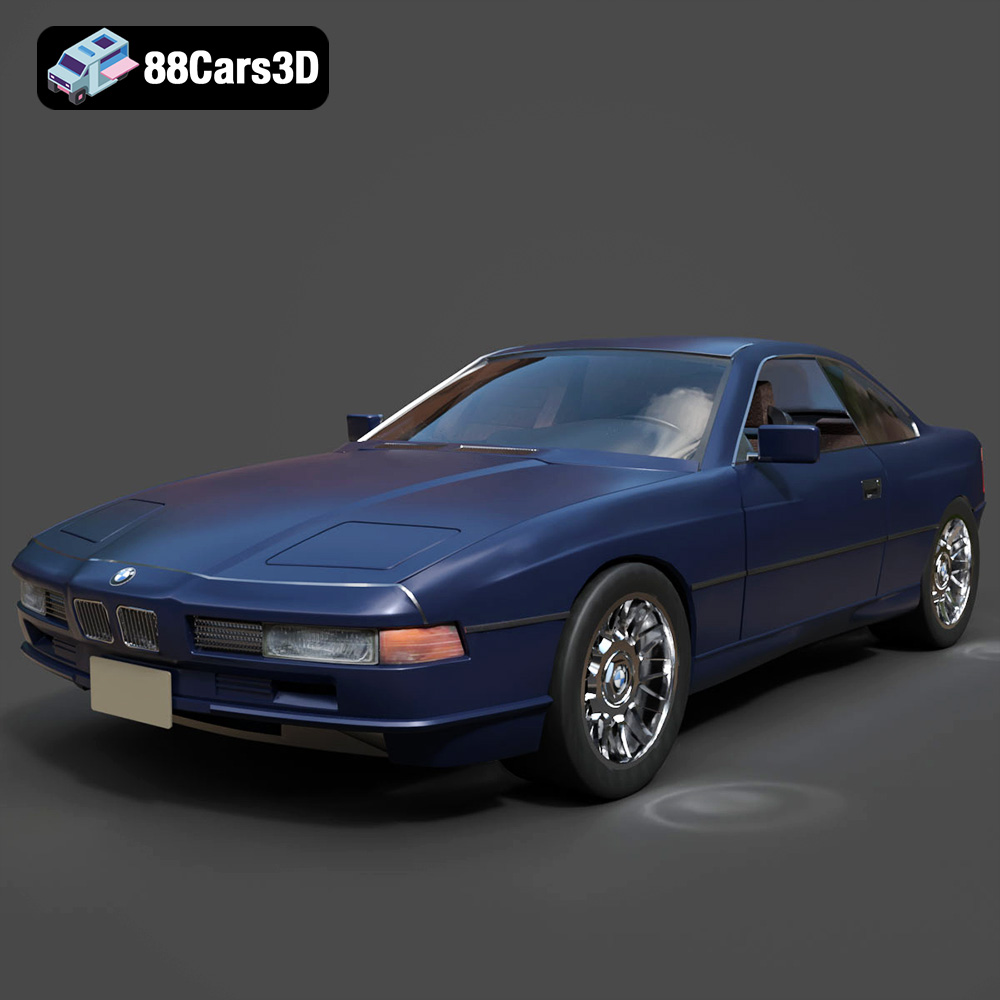
BMW 850i Coupe 1990 3D Model
Texture: Yes
Material: Yes
Download the BMW 850i Coupe 1990 3D Model featuring clean geometry, realistic detailing, and a fully modeled interior. Includes .blend, .fbx, .obj, .glb, .stl, .ply, .unreal, and .max formats for rendering, simulation, and game development.
Price: $13.99
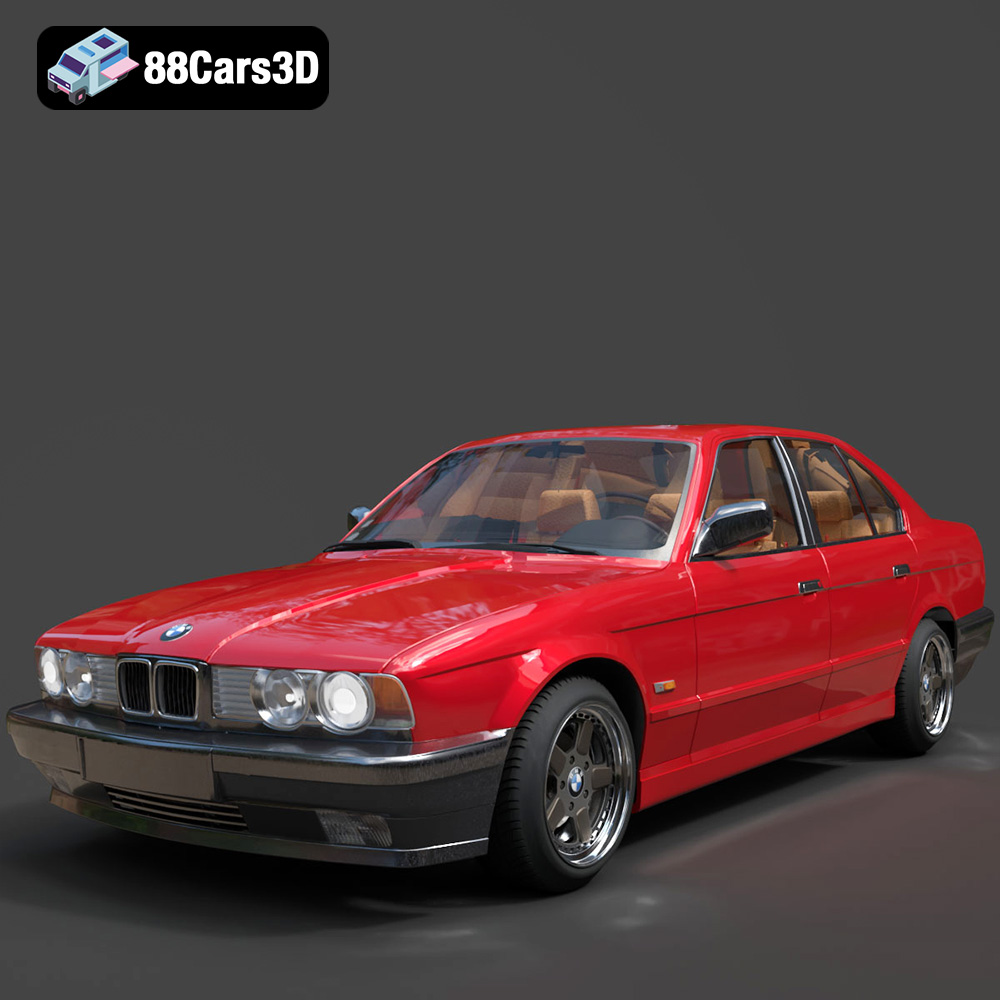
BMW 525i E34 1993 3D Model
Texture: Yes
Material: Yes
Download the BMW 525i E34 1993 3D Model featuring clean geometry, realistic detailing, and a fully modeled interior. Includes .blend, .fbx, .obj, .glb, .stl, .ply, .unreal, and .max formats for rendering, simulation, and game development.
Price: $12.99

BMW 7 Series 2016 3D Model
Texture: Yes
Material: Yes
Download the BMW 7 Series 2016 3D Model featuring luxurious design, detailed interior, and accurate exterior. Includes .blend, .fbx, .obj, .glb, .stl, .ply, .unreal, and .max formats for rendering, simulation, and game development.
Price: $10.79
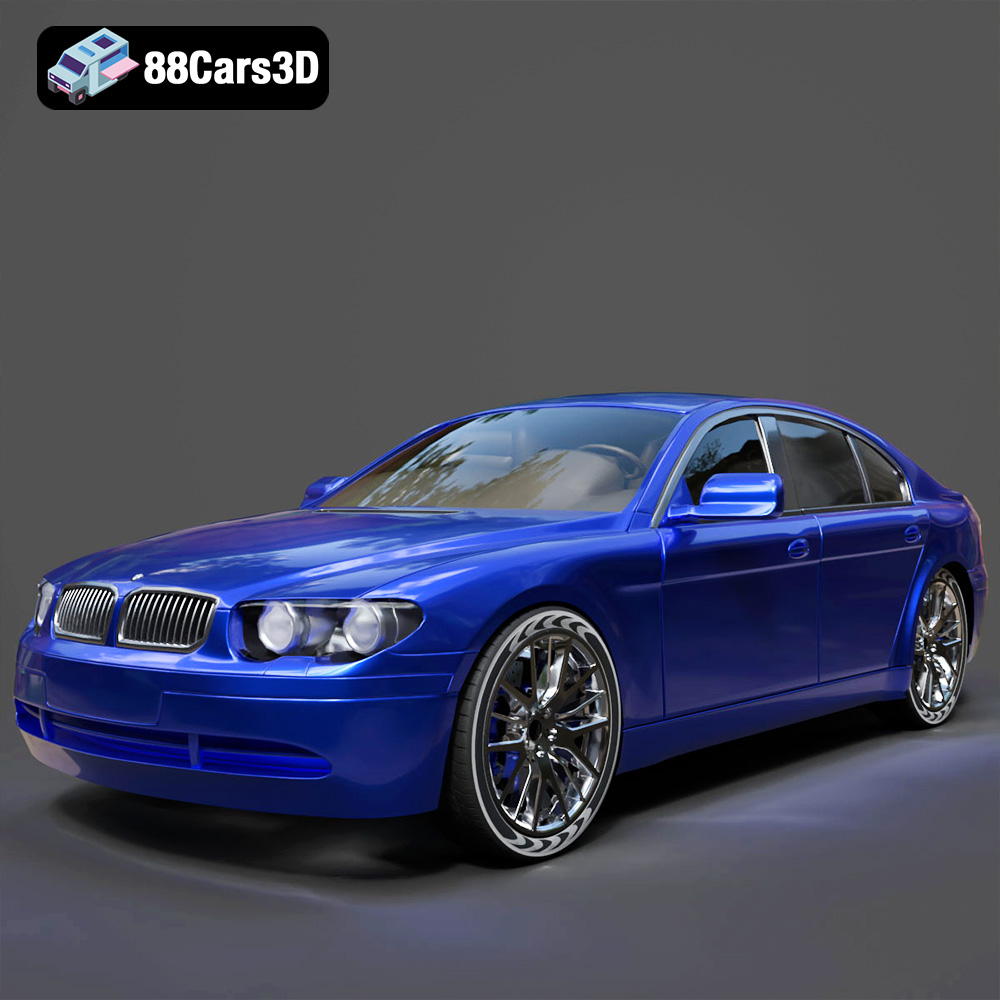
BMW 7 Series 30th Anniversary 3D Model
Texture: Yes
Material: Yes
Download the BMW 7 Series 30th Anniversary 3D Model featuring a meticulously crafted exterior, detailed interior, and realistic wheels. Includes .blend, .fbx, .obj, .glb, .stl, .ply, .unreal, and .max formats for rendering, simulation, and game development.
Price: $35.79

BMW 7-Series F02 3D Model
Texture: Yes
Material: Yes
Download the BMW 7-Series F02 3D Model featuring a detailed exterior and interior, optimized for rendering and animation. Includes .blend, .fbx, .obj, .glb, .stl, .ply, .unreal, and .max formats for rendering, simulation, and game development.
Price: $10.79

BMW 760Li E66 2005 3D Model
Texture: Yes
Material: Yes
Download the BMW 760Li E66 2005 3D Model featuring a detailed exterior, refined interior, and robust chassis. Includes .blend, .fbx, .obj, .glb, .stl, .ply, .unreal, and .max formats for rendering, simulation, and game development.
Price: $10.79
