

The Art of Automotive Fidelity: Mastering 3D Car Models for Professional Applications
In the dynamic world of digital content creation, the demand for incredibly detailed and accurate 3D assets continues to surge. From blockbuster game titles and cinematic sequences to cutting-edge architectural visualizations and immersive AR/VR experiences, high-quality 3D car models are indispensable. They form the backbone of projects that require visual authenticity and technical precision, pushing the boundaries of what’s possible in virtual environments.
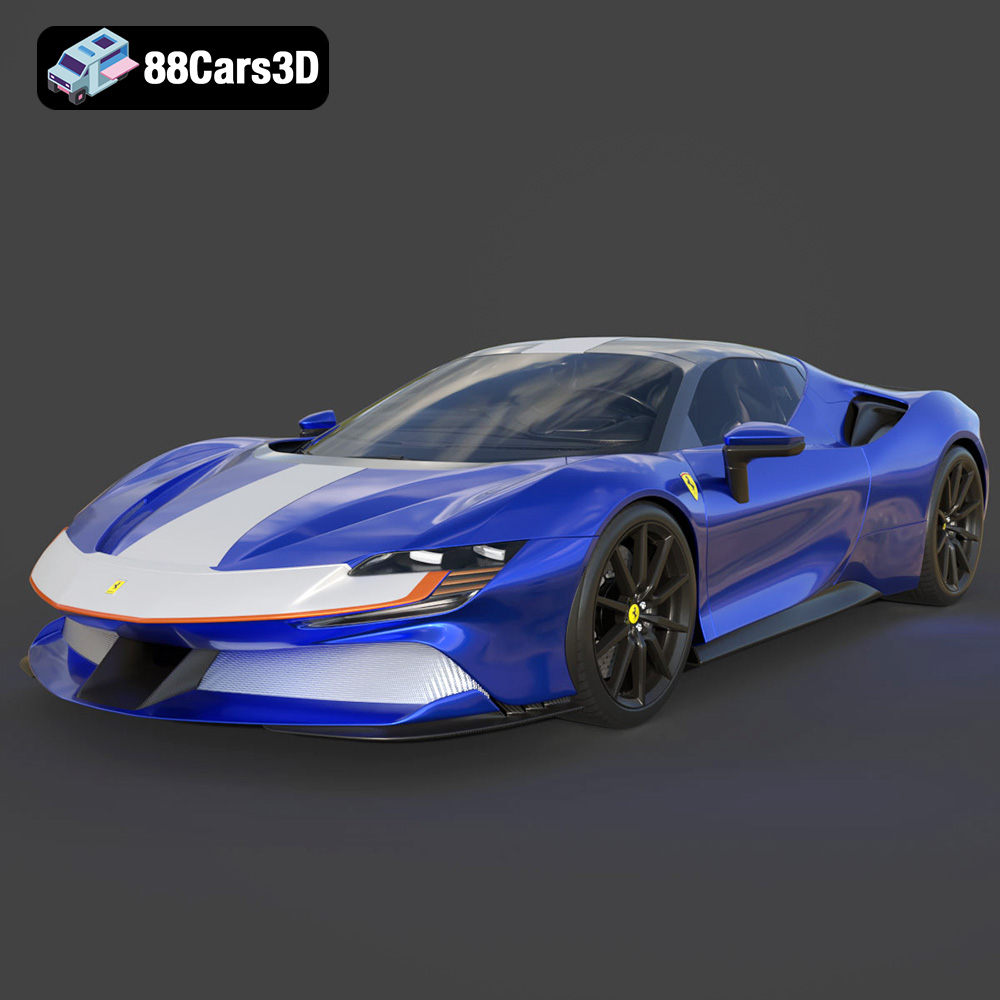
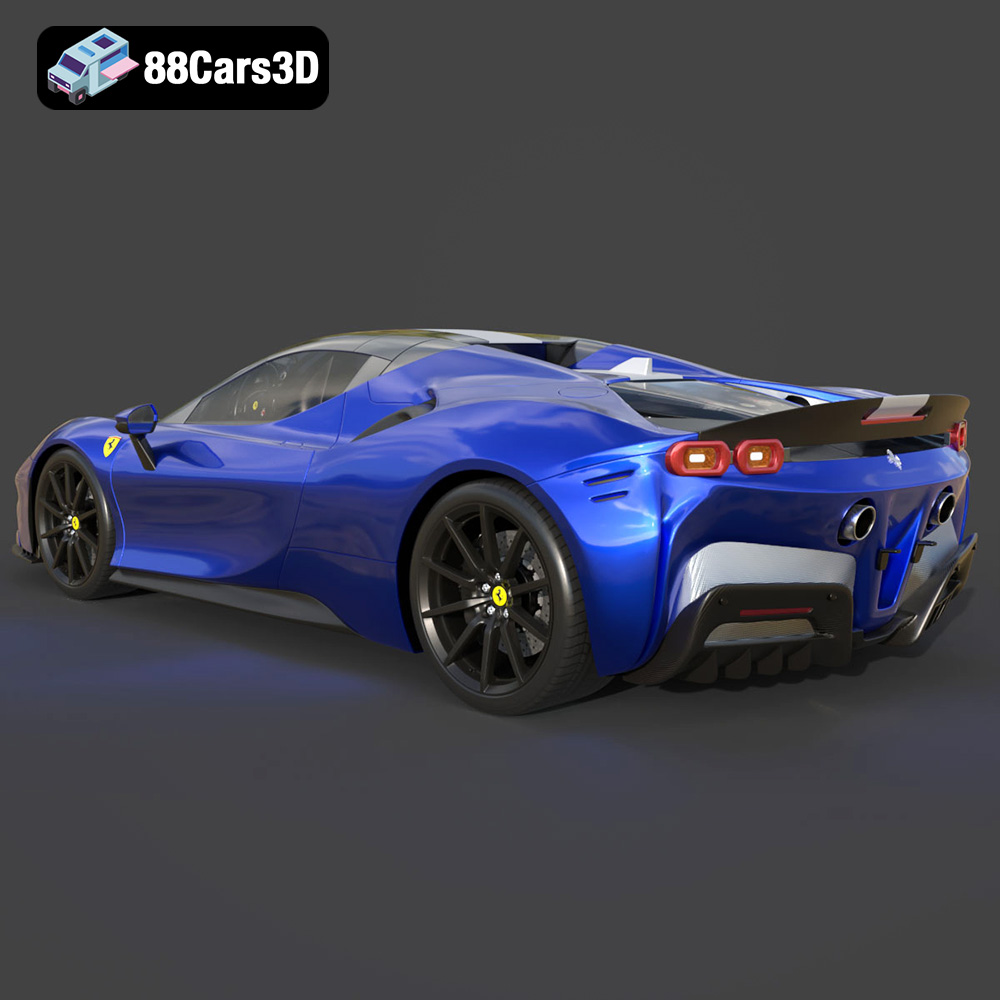
Among the pantheon of iconic vehicles, the Ferrari SF90 Spider 2021 stands out as a marvel of engineering and design. Capturing its essence in the digital realm requires an equally meticulous approach, and that’s precisely what a professional-grade asset like the Ferrari SF90 Spider 2021 3D Model delivers. This model is not merely a visual representation; it’s a technical masterpiece, designed to offer unparalleled detail and versatility for professionals across various industries. Whether you’re an automotive designer, a game developer, a visualization artist, or a simulation engineer, understanding the intricacies of such an asset is crucial for maximizing its potential in your workflows.
Understanding 3D Model File Formats
Navigating the landscape of 3D modeling often involves working with a multitude of file formats, each tailored for specific purposes and software environments. A truly versatile 3D car model, such as the Ferrari SF90 Spider 2021 from 88cars3d.com, provides a comprehensive suite of these formats to ensure seamless integration into any professional pipeline. Choosing the correct format is paramount for maintaining model integrity, optimizing performance, and ensuring compatibility across different stages of your project.
.blend – Blender’s Native Powerhouse
The .blend format is the native file type for Blender, an increasingly popular open-source 3D creation suite. When you receive a .blend file, you’re getting a fully editable Blender scene, complete with materials, textures, lighting setups, and even animation data. This format is ideal for users who primarily work within Blender, allowing for direct modification, rigging, and rendering without any loss of information. For the Ferrari SF90 Spider 2021 3D Model, the .blend file ensures that all the meticulously crafted details, from the material shaders to the object hierarchy, are preserved and ready for immediate use in your Blender projects.
.fbx – The Industry Standard for Interoperability
.fbx (Filmbox) is arguably the most widely used interchange format in the 3D industry. Developed by Autodesk, it’s designed to facilitate data exchange between different 3D software applications and real-time engines like Unreal Engine and Unity. An .fbx file can encapsulate a vast array of 3D data, including mesh geometry, materials (with basic properties), textures, animations, skinning, and camera information. It’s the go-to format for exporting animated 3D car models for game development or transferring complex scenes between 3ds Max, Maya, Blender, and other DCC tools. Its robust nature makes it an excellent choice for the Ferrari SF90 Spider when moving the asset into game development or other animation pipelines.
.obj – The Universal Translator
The .obj (Wavefront OBJ) format is a universal standard, renowned for its simplicity and wide compatibility. Almost every 3D software application can import and export .obj files. While it primarily stores geometry (vertices, normals, texture coordinates, and faces), it can also reference external .mtl (material template library) files for basic material properties. The .obj format is excellent for cross-software compatibility, especially when you need a clean mesh for sculpting, retopology, or when moving between applications that might not fully support more complex formats. It’s a reliable choice for the Ferrari SF90 Spider when a basic, highly compatible mesh is required.
.glb – Gateway to AR/VR and Web Experiences
.glb (GLB format for glTF) is a relatively newer format specifically optimized for efficient transmission and loading of 3D scenes and models by engines and applications. It’s the binary version of glTF (GL Transmission Format) and is rapidly becoming the standard for AR, VR, and web-based 3D applications. A .glb file contains all necessary data—geometry, materials, textures, animations—in a single, compact file, making it incredibly easy to share and display models directly in browsers or mobile AR/VR environments. For interactive car configurators or virtual showrooms of the Ferrari SF90 Spider, .glb is the ideal choice, offering a streamlined and high-performance solution.
.stl – The Foundation for 3D Printing
.stl (STereoLithography) is the most common file format for 3D printing. It represents a 3D model as a series of connected triangles, describing only the surface geometry of an object without color, texture, or other CAD attributes. While simple, its ubiquity in the 3D printing world is unmatched. If your goal is to physically manifest a scale model of the Ferrari SF90 Spider, the .stl format is what you’ll use. Professional 3D models like this one are built with clean, manifold geometry, making them perfectly convertible to .stl for high-quality additive manufacturing.
.ply – Precision Mesh Format for CAD or Analysis
The .ply (Polygon File Format) is often used in scientific and engineering applications, particularly for storing 3D data from 3D scanners. It can store a variety of properties beyond just geometry, including color, transparency, and even properties per face or vertex (like confidence values from a scan). While less common for artistic exchange, it’s valuable for precision mesh analysis, CAD integration, or when a model’s integrity needs to be scrutinized from a data-driven perspective. For advanced simulation or reverse engineering workflows involving the Ferrari SF90 Spider, the .ply format offers robust data representation.
.unreal – Engine-Ready Asset for Real-Time Environments
The .unreal format, or more accurately, a pre-setup Unreal Engine project containing the asset, signifies that the 3D car model has been specifically prepared for Epic Games’ Unreal Engine. This typically means optimized meshes, correctly set up materials, LOD (Level of Detail) groups, collision meshes, and potentially even blueprint configurations. This format dramatically accelerates integration into game development or real-time visualization projects, saving countless hours of setup time. For developers looking to quickly drop the Ferrari SF90 Spider into a high-fidelity racing simulator or an architectural visualization walkthrough, this pre-configured asset is a tremendous advantage.
.max – Editable 3ds Max Project for Animation and Rendering
Finally, the .max format is the native file type for Autodesk 3ds Max, a powerful 3D modeling, animation, and rendering software. Similar to .blend for Blender, a .max file provides the complete project scene, including all models, materials, textures, lighting, cameras, and animation data. This format is ideal for professionals who rely on 3ds Max for their rendering and animation pipelines. The Ferrari SF90 Spider 2021 3D Model provided in .max format ensures full editability and control over every aspect of the model within a familiar and robust environment, enabling sophisticated animation sequences and stunning photorealistic renders.
The Craft of High-Fidelity Automotive Rendering
Automotive rendering is an art form that merges technical proficiency with an eye for aesthetic detail. Achieving photorealistic results requires not only a high-quality 3D car model but also a deep understanding of materials, lighting, and post-production techniques. The Ferrari SF90 Spider 2021 3D Model provides the perfect foundation for these demanding workflows.
Capturing Realism: Materials and Textures
The authenticity of any render hinges on its materials. The Ferrari SF90 Spider 2021 3D Model features meticulously crafted materials for its exterior and interior. This includes advanced metallic flake car paint shaders, realistic carbon fiber weaves, supple leather upholstery, and reflective chrome accents. Each material is designed to interact accurately with light, ensuring that reflections, refractions, and specular highlights contribute to a visually convincing portrayal. Understanding how to fine-tune attributes like metallic flake density, clear coat depth, or leather micro-surface details is key to extracting the maximum realism from these assets in rendering engines like V-Ray, Corona, or Arnold.
Lighting and Environment Setup for Studio Shots
Effective lighting is paramount to making a 3D car model truly shine. For studio renders, a common approach involves using High Dynamic Range Images (HDRIs) for realistic global illumination, combined with strategically placed area lights to highlight specific curves and details of the vehicle. For the Ferrari SF90 Spider, emphasizing its aerodynamic lines and luxurious finish demands a balanced lighting setup that showcases its contours without over-saturating reflections. Backplate integration, matching the virtual car to a real-world photographic background, is another critical technique to ground the render in reality, providing a believable context for the vehicle.
Post-Production Techniques for Stunning Visualizations
The rendering process doesn’t end when the image is computed. Post-production in software like Adobe Photoshop or DaVinci Resolve is where renders truly come alive. Techniques such as color grading, chromatic aberration, depth of field adjustments, lens flare effects, and subtle atmospheric hazing can dramatically enhance the impact of an automotive render. For cinematic sequences featuring the Ferrari SF90 Spider, adding motion blur and camera shake effects can imbue the scene with dynamism and excitement, transforming a static render into a captivating visual narrative.
Elevating Game Development with Optimized 3D Car Assets
In game development, the challenge lies in balancing visual fidelity with real-time performance. High-quality 3D car models are essential for immersive gaming experiences, but they must be optimized to run smoothly on various hardware. The Ferrari SF90 Spider 2021 3D Model is built with game development in mind, offering a robust foundation for racing simulators and open-world titles.
Balancing Detail and Performance for Real-time Engines
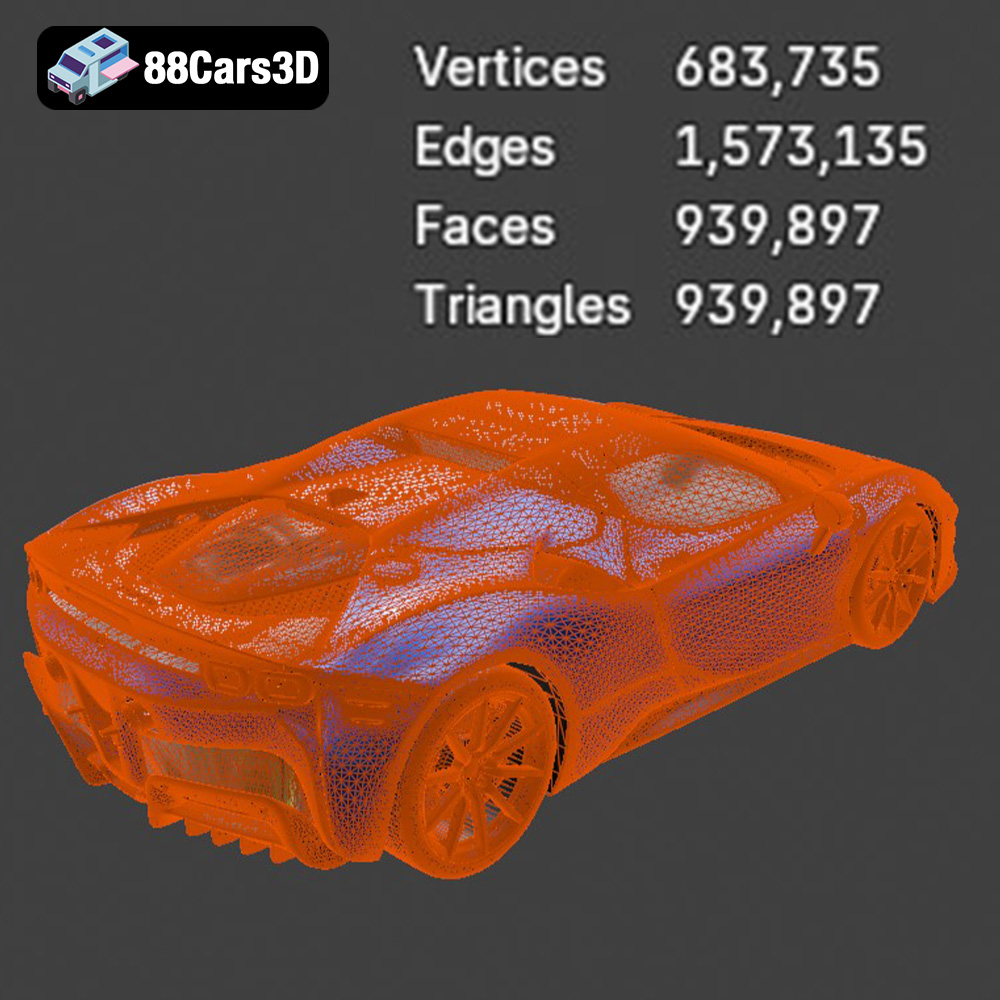
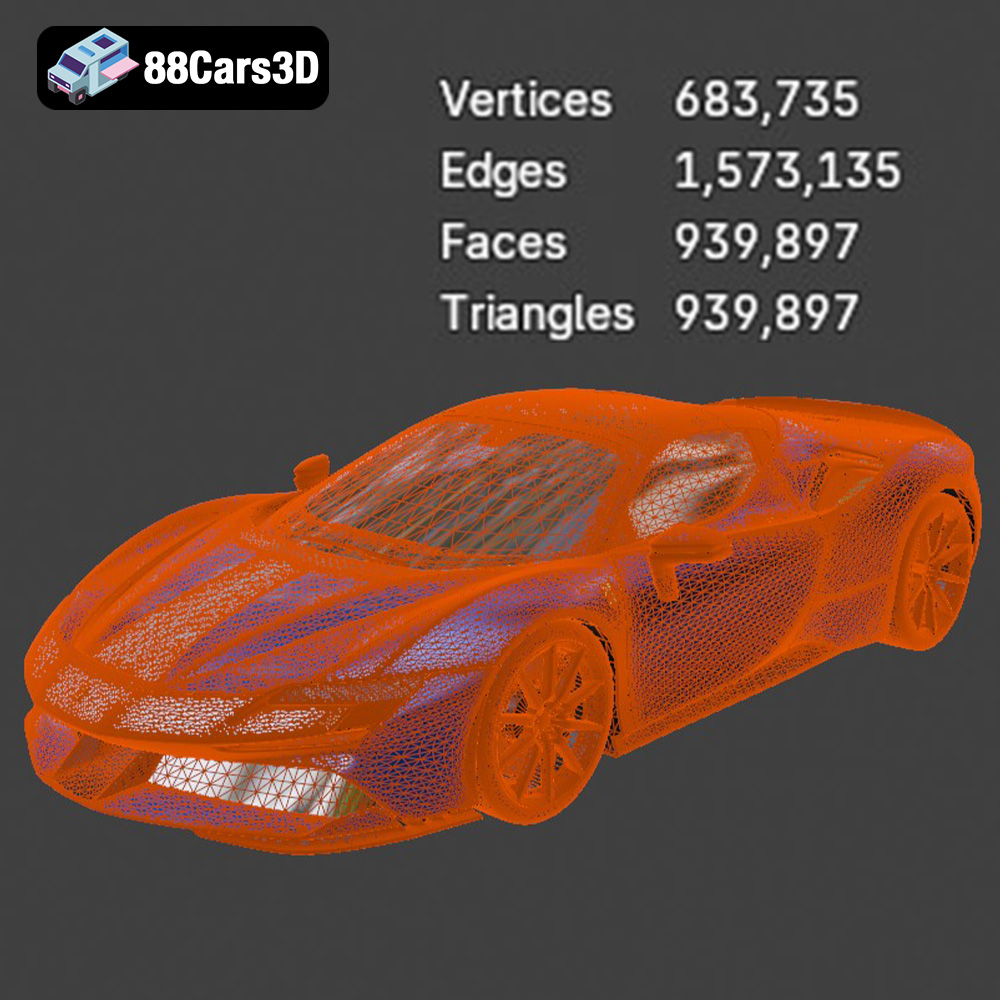
Optimized mesh quality is a cornerstone of game asset development. While the Ferrari SF90 Spider 2021 3D Model boasts high fidelity, its clean, quad-dominant topology is designed to be efficient. This means the poly count is carefully managed to provide visual detail without excessive computational load. Game developers often employ Level of Detail (LOD) systems, where lower-polygon versions of the model are swapped in as the vehicle moves further from the camera, further enhancing performance. This model’s clean base allows for easy generation of these LODs, ensuring smooth frame rates even in graphically intense environments.
Integrating the Ferrari SF90 Spider into Unreal Engine
The inclusion of an .unreal project setup for the Ferrari SF90 Spider significantly streamlines integration into Unreal Engine. This means materials are often pre-configured, textures are correctly applied, and collision meshes might already be present. Developers can leverage Unreal’s powerful Blueprint system to add interactive elements, such as engine sounds, suspension physics, and damage models. Utilizing the provided .fbx or .unreal formats, developers can quickly set up advanced vehicle physics, integrate the model into a car configurator, or populate virtual environments with this premium game asset.
Animation and Interactive Features
A key aspect of a superior 3D car model for games is its animatability. The Ferrari SF90 Spider 2021 3D Model features separated components like doors, hood, trunk, and its distinctive retractable hardtop. Crucially, these parts have properly set pivot points, simplifying the animation process within game engines. This allows for dynamic sequences like opening doors, deploying the convertible roof, or even realistic damage deformation, enhancing player interaction and immersion in the game world.
Beyond Visualization: AR/VR, Simulation, and 3D Printing
The utility of a professional 3D car model extends far beyond traditional rendering and game development. Its precise construction makes it invaluable for immersive augmented and virtual reality, advanced simulations, and even physical reproduction through 3D printing.
Immersive Experiences with AR/VR
Augmented Reality (AR) and Virtual Reality (VR) applications thrive on high-quality, optimized 3D assets. The Ferrari SF90 Spider 2021 3D Model, particularly in its .glb format, is perfectly suited for creating immersive experiences. Imagine a virtual showroom where prospective buyers can walk around the SF90 Spider, customize its paint, open its doors, and even experience its interior in a fully interactive 3D space. AR applications could allow users to place a life-sized virtual Ferrari SF90 Spider in their driveway, leveraging the model’s real-world scale and accurate proportions for stunning realism.
Precision for Automotive Simulation and Engineering
For automotive designers and engineers, 3D models are critical for design evaluation, aerodynamic analysis, and virtual driving simulations. The real-world scale and accurate geometry of the Ferrari SF90 Spider 2021 3D Model make it ideal for these demanding applications. Engineers can integrate the model into advanced simulation software to test aerodynamic flows, analyze structural integrity, or visualize component interactions. The .ply format, with its ability to store detailed mesh data, can be particularly useful for precise analysis and integration into CAD workflows.
Bringing Digital to Life: 3D Printing a Masterpiece
The meticulous detail and clean topology of the Ferrari SF90 Spider 2021 3D Model also lend themselves perfectly to 3D printing. By converting the model to the .stl format, enthusiasts and professionals alike can create physical scale models with exceptional fidelity. This process requires a robust, manifold mesh without holes or self-intersecting geometry, characteristics inherent in well-built professional 3D car models. From detailed desk models to larger scale reproductions, 3D printing offers a tangible connection to the digital asset.
The Technical Edge: Why Quality Matters for Professionals
At the core of any successful 3D project lies the quality of its assets. For professionals, investing in premium 3D car models like the Ferrari SF90 Spider 2021 is not just about aesthetics; it’s about technical superiority that streamlines workflows and ensures predictable, high-quality results. 88cars3d.com is committed to providing assets that meet these rigorous standards.
Clean Topology and UV Mapping
The foundation of a good 3D model is its topology. The Ferrari SF90 Spider 2021 3D Model features clean, quad-dominant topology throughout. This means the mesh is primarily composed of four-sided polygons, which are easier to subdivide, deform, and animate without introducing artifacts. Good topology also ensures predictable behavior during rendering and allows for seamless UV mapping. UV maps, which dictate how textures are applied to the model’s surface, are crucial for realistic material representation. A well-laid-out UV set simplifies texturing and reduces texture distortion, ensuring the intricate details of the Ferrari SF90 Spider’s carbon fiber, leather, and paint appear flawless.
Real-World Scale and Accurate Proportions
Accuracy is non-negotiable in professional 3D work. The Ferrari SF90 Spider 2021 3D Model is built to real-world scale, ensuring its proportions are true to life. This is vital for seamless integration into existing scenes, architectural visualizations, or simulation environments where scale consistency is critical. Designers can confidently place the model next to buildings, other vehicles, or human figures, knowing that its size and dimensions are correct, eliminating tedious scaling adjustments and potential visual discrepancies.
Logical Hierarchy and Animatable Components
A well-organized 3D model is a pleasure to work with. The Ferrari SF90 Spider 2021 3D Model features a logically organized hierarchy, meaning all its components are grouped and named intuitively. More importantly, movable parts such as doors, the hood, trunk, and the retractable hardtop have properly set pivot points. This technical detail is often overlooked but is fundamental for smooth, realistic animation. Without correctly placed pivots, animating these parts becomes a cumbersome and imprecise task. This forethought in the model’s construction saves animators countless hours and allows for dynamic, believable interactions.
Conclusion: Driving Innovation with Premium 3D Models
The world of 3D visualization and real-time experiences is constantly evolving, and the demand for high-quality, versatile 3D car models has never been greater. From cinematic rendering to immersive game development, from AR/VR configurators to precise engineering simulations, a meticulously crafted asset forms the bedrock of professional success. The Ferrari SF90 Spider 2021 3D Model stands as a testament to this principle, offering unparalleled detail, technical precision, and format versatility to meet the rigorous demands of any creative project.
Whether you’re creating a stunning automotive visualization in 3ds Max, integrating a high-performance vehicle into an Unreal Engine game, or bringing a digital design to life through 3D printing, the depth of technical advantage offered by this model is clear. Its clean topology, real-world scale, intelligent hierarchy, and comprehensive file format support ensure that professionals have the tools they need to achieve their creative vision. Elevate your projects and experience the difference that a truly professional-grade 3D car model can make by exploring the premium selection available at 88cars3d.com.
Featured 3D Model
Ferrari SF90 Spider 2021 3D Model
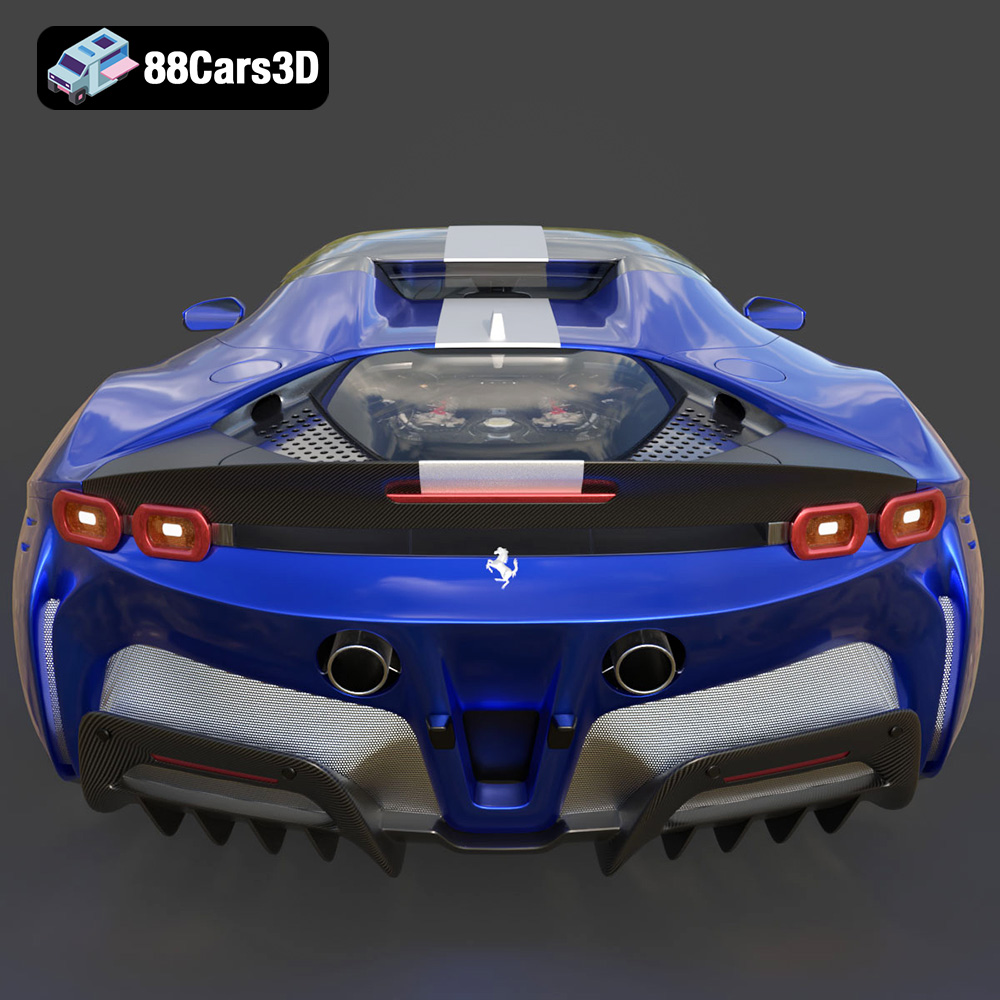
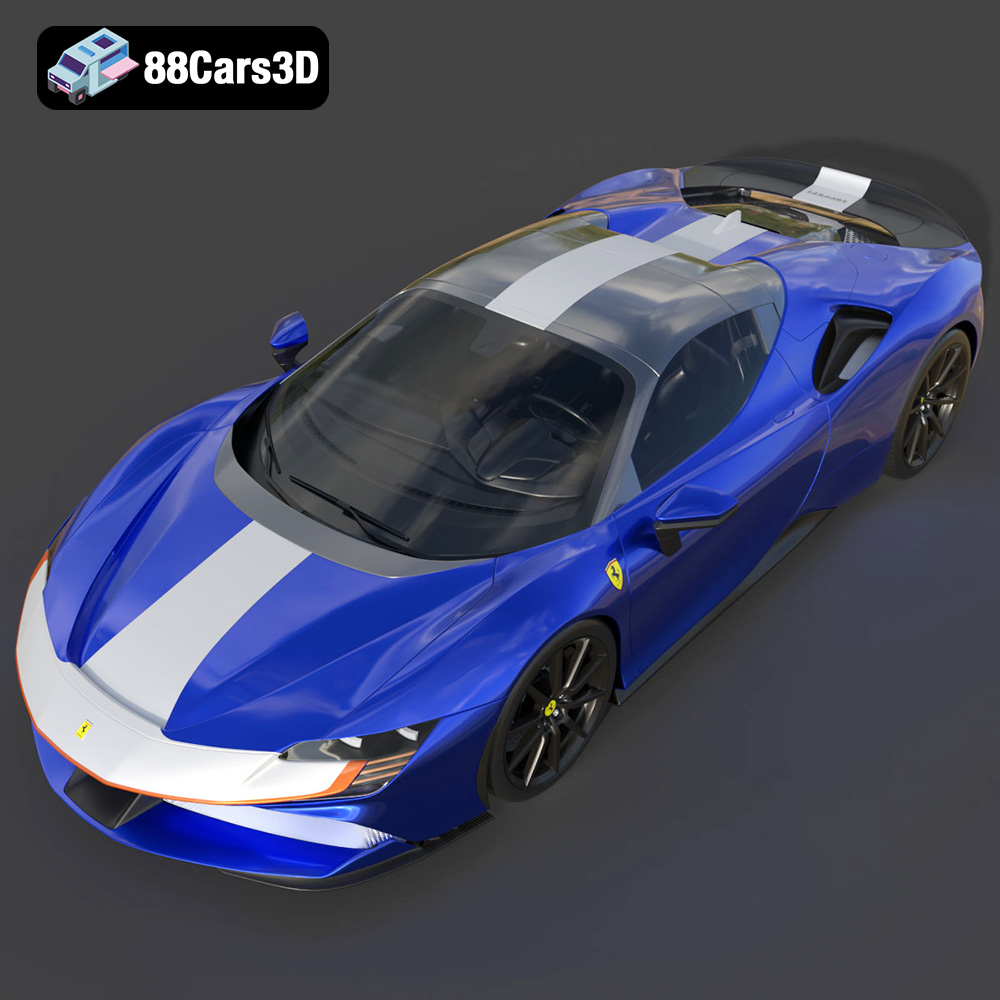
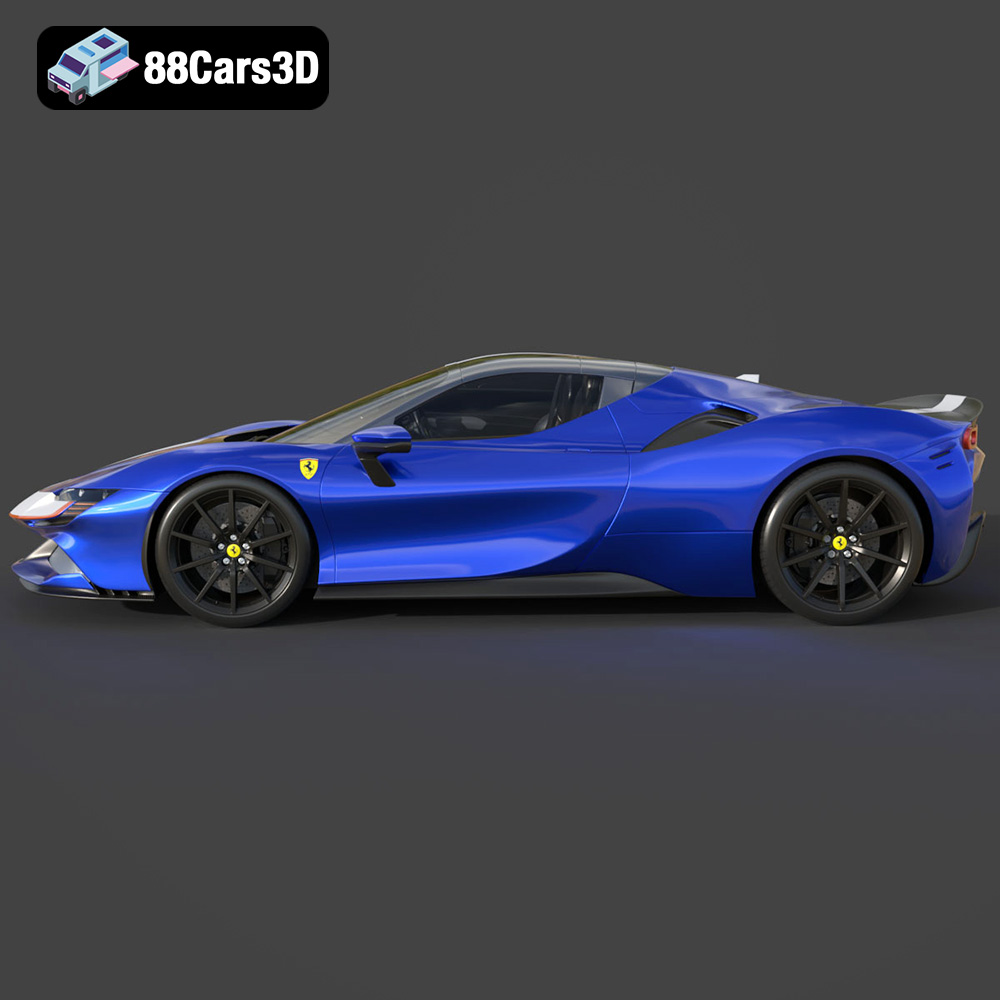
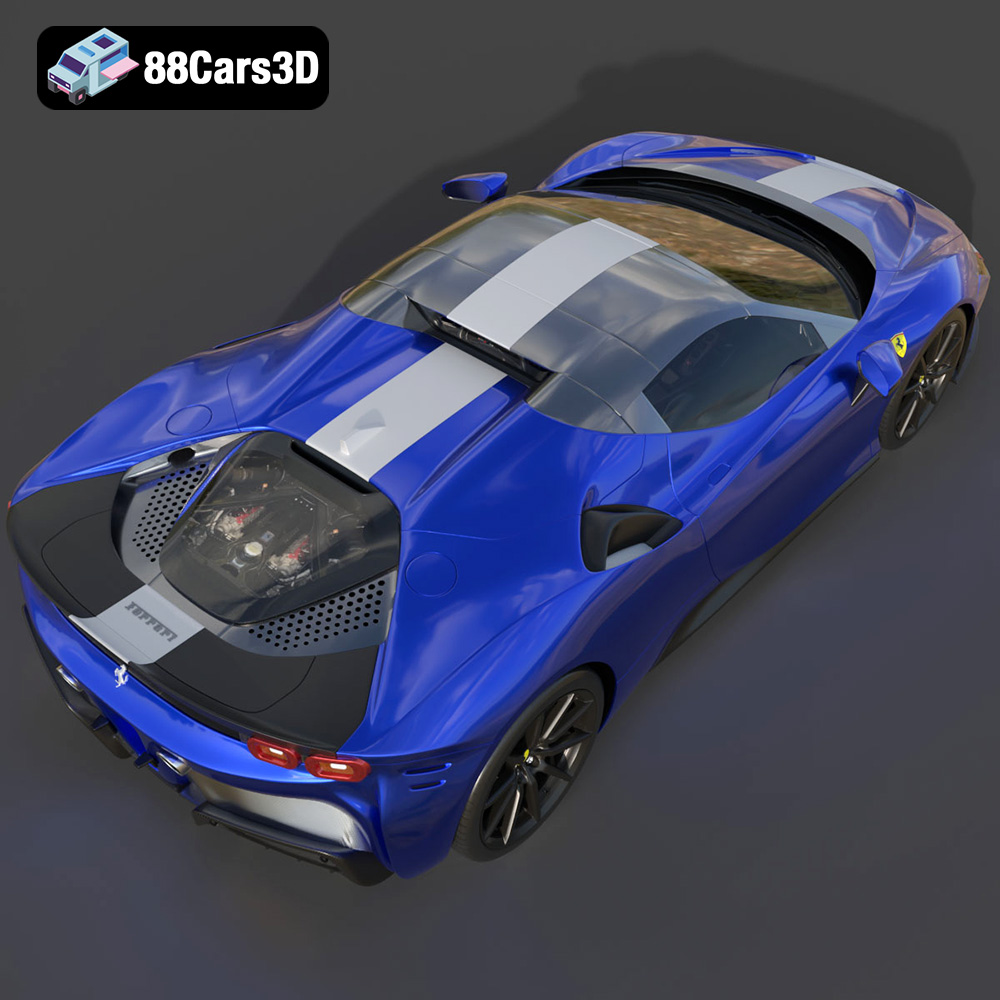
Experience the thrill of Italian engineering with our meticulously crafted Ferrari SF90 Spider 2021 3D Model. This high-fidelity model captures the essence of Ferrari’s groundbreaking plug-in hybrid supercar, featuring its iconic aerodynamic design and luxurious convertible silhouette. Built with clean, optimized geometry and balanced detailing, it is perfectly suited for professional rendering, immersive animation sequences, advanced simulation projects, and integration into cutting-edge game development.
$110.79
Product Image Gallery
Related Tags
.arvr
.blend
.convertible
.fbx
.ferrari
.gameasset
.glb
.ma
.obj
.ply
.rendering
.sf90
.sf90spider
.simulation
.spider
.sportsCar
.stl
.supercar
.unreal
