

The Art of Efficiency: Optimizing 3D Car Models for Seamless Web Configurators
The automotive industry, alongside numerous others, is undergoing a profound digital transformation. Central to this evolution is the rising demand for interactive 3D experiences online, particularly web-based configurators. Imagine a customer effortlessly customizing their dream car in real-time, rotating it, changing colors, selecting rims, and peering into the exquisitely detailed interior – all within their browser. This immersive experience is no longer a futuristic vision but a present-day expectation. However, achieving such fluidity presents a significant technical challenge: the inherently massive data size of high-fidelity 3D car models. Unoptimized models can cripple web performance, leading to frustrating load times, stuttering visuals, and a poor user experience that ultimately drives potential customers away. This comprehensive guide will equip 3D artists, game developers, automotive designers, and visualization professionals with the essential techniques and best practices to optimize 3D car models, ensuring they deliver stunning visual quality while maintaining blazing-fast performance in a web configurator environment. We’ll delve into the intricate workflows, technical specifications, and software-specific strategies that transform heavy assets into nimble, web-ready masterpieces.
The Foundation: Lean Topology and Clean Geometry for Web Performance
The performance of any 3D model in a real-time web environment begins with its core geometry and topology. A “lean” model – one with an optimized polygon count and clean mesh structure – is paramount for rapid loading and smooth rendering. Every polygon contributes to the file size and the computational load on the user’s device, making strategic reduction a critical first step. This isn’t about sacrificing detail entirely but about intelligently managing it. A car model, with its intricate curves, sharp edges, and detailed components, demands meticulous attention to poly-count distribution. The goal is to retain visual fidelity where it matters most, like the car’s exterior body panels and prominent interior elements, while aggressively optimizing less visible or simpler areas. Starting with high-quality base models, such as those found on platforms like 88cars3d.com, provides an excellent foundation, but further optimization is almost always necessary for web deployment.
Strategic Polygon Reduction and LODs (Levels of Detail)
Polygon reduction is the art of simplifying a mesh while preserving its perceived shape and detail. For web configurators, a single high-resolution model is rarely sufficient. Instead, a multi-LOD (Level of Detail) strategy is essential. This involves creating several versions of the same asset, each with a progressively lower polygon count. The web application then dynamically loads the appropriate LOD based on the camera’s distance from the object or the user’s device capabilities.
For a complex car model, target polygon counts can vary significantly:
* **LOD0 (High Detail):** Visible up close, often for hero shots or detailed inspection. The main body might have 50,000 to 100,000 polygons, individual wheels 10,000-20,000 each, and interior components varying widely. Total scene polygons could be in the hundreds of thousands to a few million, depending on requirements.
* **LOD1 (Medium Detail):** For standard viewing distances. The main body might drop to 15,000-30,000 polygons, wheels 3,000-6,000.
* **LOD2 (Low Detail):** For distant views or less powerful devices. The main body could be 5,000-10,000 polygons, wheels 1,000-2,000.
Manual reduction offers the most control, allowing artists to strategically remove edge loops and collapse vertices while preserving crucial silhouette details. Automated decimation tools like Blender’s Decimate modifier (found under the Modifiers tab in Blender, offering Collapse, Un-Subdivide, and Planar options for intelligent polygon reduction, as detailed in the official Blender 4.4 documentation: https://docs.blender.org/manual/en/4.4/modeling/modifiers/generate/decimate.html) or 3ds Max’s ProOptimizer can quickly reduce polygons but require careful parameter tuning to avoid undesired mesh distortion. When using automated tools, it’s crucial to inspect the results closely, especially around hard edges and curves. Software environments like Unity (using the LOD Group component) and Unreal Engine (with its built-in Auto LOD Generation) provide robust systems for managing and applying these LODs at runtime, ensuring optimal performance without sacrificing visual quality when the user is zoomed in.
Edge Flow and Non-Destructive Modeling Principles
Beyond polygon count, the quality of a mesh’s topology—its edge flow—directly impacts how well it deforms, shades, and is UV-unwrapped. For automotive models, maintaining clean, logical edge loops is critical for representing smooth, reflective surfaces without pinching or artifacts. This means avoiding N-gons (faces with more than four vertices) and non-manifold geometry (edges or vertices shared by more than two faces), which can cause rendering issues and complicate UV unwrapping. Triangulation is generally acceptable for web-based real-time rendering, as GPUs render everything as triangles internally anyway, but starting with quads often provides a better foundation for cleaner UVs and easier editing.
Employing non-destructive modeling techniques, such as using modifiers in Blender or 3ds Max that can be adjusted or removed, allows for greater flexibility during the optimization process. For repetitive parts like wheels, brake calipers, or small interior buttons, instancing is a powerful optimization. Instead of duplicating the geometry multiple times, instancing references a single geometry object, significantly reducing memory usage and draw calls. Furthermore, ensuring consistent object origin points and scale across all assets is vital for seamless integration into web engines and configurators. A consistent scale (e.g., 1 unit = 1 meter) prevents scaling issues and makes lighting and physics calculations more predictable.
Mastering UV Mapping for Efficient Texturing
UV mapping is the unsung hero of 3D optimization, directly impacting texture memory usage, draw calls, and overall rendering efficiency in web-based configurators. In essence, UV mapping “unfolds” the 3D surface into a 2D space, allowing textures to be applied. For web applications, where every millisecond and megabyte counts, inefficient UVs can become a major bottleneck, leading to increased rendering times and larger file sizes. The goal is to maximize texture space utilization, minimize texture calls, and ensure clean, distortion-free texture application across complex car surfaces.
Atlas Mapping and UDIM Alternatives
For web configurators, one of the most effective UV strategies is texture atlasing. This technique involves consolidating multiple smaller textures into a single, larger texture map, often referred to as a texture atlas. For a car model, this could mean packing the UVs for the car body, interior trim, wheel spokes, and even small decals all onto one or a few large texture sheets. The primary benefit of atlasing is a drastic reduction in draw calls. Instead of the GPU needing to switch between numerous individual texture files for different parts of the car, it can render many surfaces using a single texture. This significantly improves performance, especially on less powerful client devices.
While UDIMs (Unique Digital Identity Maps) are widely used in high-end film and VFX pipelines for their ability to manage extremely high-resolution textures across multiple UV tiles, they are generally less suitable for real-time web configurators due to their potentially higher memory footprint and increased complexity in web rendering engines. For web, the focus shifts to consolidating. A common setup might involve a 4K or 8K texture atlas (e.g., 4096×4096 or 8192×8192 pixels) for the entire exterior, another for the interior, and perhaps a smaller one for specific engine bay details if they are exposed. When creating texture atlases in software like Blender, artists manually arrange UV islands to fill the 0-1 UV space as efficiently as possible, ensuring adequate spacing between islands to prevent bleeding.
Resolution, Padding, and Overlapping UVs
The resolution of your texture maps directly correlates with file size and memory consumption. For web configurators, striking a balance between visual quality and performance is key. While 8K textures might be desirable for marketing renders, they are often overkill and detrimental to performance for web use. Aim for 2K (2048×2048) or 4K (4096×4096) as the maximum for a comprehensive texture atlas covering the entire car, and even smaller resolutions for less prominent elements.
Proper padding between UV islands is crucial to prevent texture bleeding, where colors from adjacent islands “bleed” onto another when mipmaps are generated (lower-resolution versions of textures used for objects further away). A padding of at least 8-16 pixels is generally recommended. Overlapping UVs should be approached with caution. While it can save texture space for perfectly symmetrical or mirrored parts (e.g., the left and right sides of a car body using the same UV space), it means these areas cannot have unique texture details. If specific unique damage or decals are required, overlapping should be avoided. For hard-surface models like cars, specialized UV unwrapping techniques like “seam placement” and “straightening” are used to minimize distortion and create easily paintable UV layouts. Tools like Blender’s UV Editor provide advanced unwrapping algorithms (e.g., ‘Smart UV Project’, ‘Lightmap Pack’) and manual editing capabilities to achieve optimal results.
PBR Materials and Shader Optimization for Real-Time Web Rendering
Physically Based Rendering (PBR) has become the gold standard for achieving photorealistic materials across various 3D applications, including web configurators. PBR materials accurately simulate how light interacts with surfaces, resulting in predictable and consistent visual results regardless of the lighting environment. However, the complexity of PBR shader networks and the number of texture maps involved can impact real-time web performance. Optimizing PBR materials for web means streamlining these networks and leveraging efficient texturing techniques.
Texture Baking for Performance
One of the most powerful optimization techniques for PBR materials in a real-time web context is texture baking. This process involves transferring details and lighting information from a high-resolution, complex source onto a lower-resolution, simpler target.
Key types of texture maps commonly baked for web PBR workflows include:
* **Normal Maps:** These are indispensable. They store surface normal information, allowing a low-polygon model to display the intricate surface details (like bolts, panel gaps, or fine scratches) of a high-polygon model without the computational cost of true geometry. The illusion of detail is achieved by modifying how light reflects off the surface.
* **Ambient Occlusion (AO) Maps:** AO maps approximate soft global illumination, indicating how much ambient light a point on a surface receives. Baking AO maps into a dedicated texture can provide realistic self-shadowing in crevices and corners, enhancing depth and realism without requiring expensive real-time global illumination calculations.
* **Curvature Maps:** These maps highlight concave and convex areas, useful for adding edge wear or dirt effects in shaders.
* **Combined Textures:** For web, it’s common practice to combine different grayscale maps into the RGB channels of a single texture to save memory. For example, roughness, metallic, and ambient occlusion could be packed into the R, G, and B channels of one texture map, reducing the number of texture lookups and memory bandwidth.
This baking process is typically performed in 3D software like Blender, 3ds Max, or Substance Painter, mapping details from a high-poly sculpt onto the optimized low-poly mesh. For parts of the car that are static and not dynamically lit (e.g., intricate grille details that always appear the same), baking subtle lighting information directly into the diffuse texture can sometimes further reduce real-time lighting calculations, though this sacrifices dynamic lighting response.
Shader Graph Optimization and Material Instancing
Complex shader graphs, while powerful, can become a performance bottleneck in web environments due to the number of mathematical operations and texture lookups required per pixel. Optimizing involves simplifying these networks wherever possible. For instance, instead of multiple complex procedural nodes, rely more on baked textures. Using a single, universal PBR shader structure that is then adapted for various materials (e.g., car paint, glass, rubber) through different texture inputs is highly efficient.
Material instancing is another cornerstone of shader optimization. Instead of creating a completely new material for every slight variation (e.g., different car paint colors), a single base material is created. Then, instances of this material are generated, each referencing the base but allowing for modifications to parameters like color, roughness, or metallic values. This significantly reduces the number of unique materials that the GPU needs to process, thereby decreasing draw calls and improving rendering speed. For example, a car configurator might have one ‘Car Paint’ base material, and then instances for ‘Red Paint’, ‘Blue Paint’, ‘Matte Black Paint’, each only changing a few parameters without duplicating the entire shader. WebGL and WebGPU-based engines typically support this efficiently.
File Formats and Data Transfer for Web Deployment
The choice of 3D file format is critical for web configurators, as it dictates how efficiently models are transferred, parsed, and rendered by the browser. A format optimized for web deployment can drastically reduce load times and improve overall responsiveness. While various formats exist, one has emerged as the clear leader for interactive 3D on the web.
GLTF/GLB: The Web’s Native 3D Format
GLTF (GL Transmission Format) and its binary counterpart, GLB, are rapidly becoming the industry standard for transmitting 3D models and scenes on the web. Developed by the Khronos Group, GLTF is often dubbed the “JPEG of 3D” due to its efficiency and widespread support.
Key advantages of GLTF/GLB for web configurators:
* **JSON-based Structure:** GLTF files are human-readable JSON files that describe the scene, including nodes, meshes, materials, textures, animations, and cameras. This makes them easy to parse and manipulate programmatically.
* **Binary GLB Efficiency:** GLB packages all assets (geometry, textures, animations) into a single binary file. This eliminates multiple HTTP requests, significantly speeding up loading times compared to formats that require separate texture files.
* **PBR Support:** GLTF inherently supports Physically Based Rendering (PBR) materials, allowing for accurate visual representation across different rendering engines.
* **Compactness:** GLTF is designed to be a “runtime asset delivery format,” meaning it focuses on delivering optimized content directly to the GPU with minimal preprocessing.
* **Widespread Adoption:** Supported by major 3D tools and web rendering libraries like Three.js, Babylon.js, and PlayCanvas.
Most modern 3D software offers robust GLTF/GLB export capabilities. In Blender, for example, under ‘File > Export > glTF 2.0 (.glb/.gltf)’, you’ll find options for embedding textures, applying Draco mesh compression, and baking animations. When exporting, it’s vital to ensure that textures are embedded (for GLB) and that options like Draco compression are utilized. Draco, specifically, can reduce geometry file sizes by up to 10x, making a significant impact on initial load times. After export, using online GLTF validators and optimizers can further refine the file, ensure spec compliance, and identify any issues.
Other Formats and Conversion Workflows
While GLTF/GLB is preferred for final web deployment, other formats play a role in the asset creation pipeline. FBX (Filmbox) and OBJ (Wavefront Object) are still widely used for initial model creation and interchange between 3D software packages (e.g., from Maya to 3ds Max).
* **FBX:** Supports geometry, materials, animations, and rigging. It’s excellent for complex scene transfers but often results in larger files and may require proprietary SDKs for parsing, making it less ideal for direct web consumption.
* **OBJ:** A simpler format, primarily for geometry and basic material information. It’s universally supported but lacks animation, PBR materials, and scene hierarchy.
The typical workflow involves creating the high-quality model in a native format (e.g., .blend, .max, .ma), performing all optimizations (topology, UVs, PBR setup), and then converting the final, optimized asset to GLTF/GLB for web. Robust asset pipelines are crucial here, often involving scripting (e.g., Python scripts for Blender) or specialized tools to automate the conversion, compression, and validation processes, ensuring consistency and efficiency across numerous car models. For a web configurator, the goal is to aim for a total initial model load size often under 20MB for a smooth user experience, with larger data potentially streamed progressively if required for optional, high-detail components.
Lighting, Environments, and Real-Time Rendering for Web Configurators
Effective lighting and a well-optimized environment are critical for showcasing 3D car models in a web configurator, enhancing realism and aesthetic appeal without compromising performance. For real-time web rendering, the challenge lies in creating visually stunning results using techniques that are computationally light enough for browser-based execution. This involves smart choices in lighting types, environmental setups, and judicious use of rendering features.
Image-Based Lighting (IBL) and Environment Maps
Image-Based Lighting (IBL) is an incredibly powerful and efficient technique for lighting 3D scenes in real-time web configurators. Instead of relying on numerous individual light sources, IBL uses a high dynamic range image (HDRI) of an environment to illuminate the scene. This single HDRI captures both the direct and indirect light from the environment, creating incredibly realistic and nuanced lighting and reflections.
The benefits of IBL for web configurators are significant:
* **Realism:** HDRIs provide natural light distribution, color, and reflections, making the car model appear convincingly integrated into its virtual surroundings.
* **Performance:** A single HDRI texture can replace a multitude of traditional light sources, drastically reducing the computational load for lighting calculations.
* **Consistency:** IBL ensures consistent lighting across all angles and configurations, which is crucial for a product configurator.
In a typical workflow, an artist selects a suitable HDRI (e.g., studio lighting, outdoor environment) and applies it as a skybox or environment map in the web rendering engine (e.g., Three.js, Babylon.js). These engines then use the HDRI to calculate diffuse and specular light contributions. For static environments or parts of the scene that don’t change, baking ambient occlusion (AO) and even simple lightmaps directly into textures can further reduce real-time calculations. This pre-computed lighting information provides subtle self-shadowing and contact shadows, adding depth without the expense of real-time ray tracing or complex shadow maps. Techniques for achieving subtle, performant reflections often involve using spherical or cubemap reflection probes at key points in the scene rather than relying on full-scene reflections, which can be computationally intensive.
Post-Processing Effects and Dynamic Interactions
While performance is paramount, a tasteful application of post-processing effects can significantly elevate the visual quality of a car configurator. However, each effect adds computational overhead, so they must be used sparingly and efficiently.
* **Color Grading:** Essential for establishing a consistent visual tone and mood. It’s generally very performant as it’s a full-screen effect.
* **Bloom:** Simulates the effect of light bleeding over from bright areas. Use with a low intensity and threshold to avoid over-exaggeration and performance hits.
* **Anti-Aliasing:** Critical for reducing jagged edges, especially on shiny car surfaces. Fast Approximate Anti-Aliasing (FXAA) or Temporal Anti-Aliasing (TAA) are common performant choices for web.
* **Depth of Field (DoF):** Can add a cinematic quality, but is very expensive. Often reserved for static hero shots or disabled for general interaction.
* **Screen Space Ambient Occlusion (SSAO):** A real-time approximation of ambient occlusion, which can add subtle contact shadows. Use with a small radius and low intensity.
For dynamic interactions within the configurator—such as changing car colors, swapping wheel designs, or opening doors—efficiency is key. Color changes should ideally be handled by modifying material parameters (e.g., the base color of a PBR material instance) rather than swapping entire textured models, which would incur higher download and memory costs. Part swaps (e.g., different wheel designs) should utilize instanced geometries and efficient loading mechanisms, only loading the geometry for the selected part. Camera movement and user interface interactions must be smooth and responsive, requiring careful optimization of the underlying 3D scene and configuration logic to ensure a delightful, stutter-free experience.
Advanced Optimization Techniques and Future Trends
As web technologies continue to evolve, so do the possibilities for delivering high-fidelity 3D experiences. Pushing the boundaries of web configurator performance involves leveraging advanced compression techniques and exploring next-generation graphics APIs, alongside strategic data streaming. These methods are critical for managing the ever-increasing complexity of modern 3D automotive models while maintaining the stringent performance requirements of browser-based applications.
Draco Compression and Mesh Instancing
**Draco Compression:** Developed by Google, Draco is an open-source library specifically designed for compressing 3D meshes and point clouds. It can significantly reduce the file size of geometry data (vertices, normals, texture coordinates, colors) by up to 10 times, without perceptible loss of visual quality. For web configurators, where every kilobyte counts towards faster load times, Draco compression is an absolute game-changer. When exporting to GLTF/GLB, enabling Draco compression is a straightforward option in most 3D software or via command-line tools. The reduction in geometry data directly translates to faster download speeds and reduced memory consumption on the client-side, making it possible to deliver more detailed models within acceptable loading windows. The compression and decompression process is highly optimized, ensuring that the performance gains from smaller file sizes are not offset by excessive processing time.
**Mesh Instancing (GPU Instancing):** For scenarios where multiple identical objects are present in a scene—a common occurrence in car models (e.g., tire treads, small badges, bolts, even individual leaves on a tree in the background environment)—GPU instancing is an extremely powerful optimization. Instead of sending the geometry data for each instance to the GPU individually (which incurs a separate draw call for each), GPU instancing allows the graphics card to render hundreds or thousands of copies of the same mesh with a single draw call. The only unique data sent per instance are its transform (position, rotation, scale) and potentially a few material overrides (e.g., a slightly different color tint). This drastically reduces the CPU overhead and memory bandwidth, enabling complex scenes with many identical elements to render at high frame rates. Modern web rendering engines (like those leveraging WebGL 2.0 or WebGPU) efficiently support GPU instancing, making it an indispensable technique for highly detailed components in a car configurator.
Streamed Assets and Progressive Loading
Even with aggressive compression and LODs, a fully-featured car configurator with numerous customization options can still represent a substantial amount of data. To combat initial load times, strategies like streamed assets and progressive loading are crucial.
* **Progressive Loading:** The concept here is to load essential data first (e.g., the base car model with default settings and low-resolution textures) to get the configurator up and running quickly. Higher-resolution textures, optional accessories (like specific rims or interior trim packages), and additional LODs are then loaded asynchronously in the background as the user interacts with the configurator or as network bandwidth allows. This approach greatly improves the perceived performance and user experience by providing immediate feedback.
* **Asset Streaming:** For very large configurators, assets can be organized into modular chunks. For example, the engine bay details might only be loaded when the user opens the hood, or a specific interior trim pattern is loaded only when selected. This on-demand loading prevents the browser from having to download and parse the entire dataset upfront. Implementing this requires careful asset management and robust loading logic within the web application, often leveraging features of the underlying 3D framework (e.g., Three.js’s GLTFLoader with its built-in loading progress capabilities).
The future of web-based 3D is also looking towards **WebGPU**, the successor to WebGL. WebGPU offers closer-to-metal access to GPU hardware, providing developers with more control and enabling even more sophisticated graphics and compute capabilities directly in the browser. This will unlock new levels of visual fidelity and performance for web configurators, potentially allowing for more advanced rendering techniques that are currently confined to desktop applications. As WebGPU adoption grows, further optimization strategies tailored to its architecture will emerge, promising even more immersive and responsive interactive 3D experiences online.
Conclusion
Optimizing 3D car models for web-based configurators is a multifaceted endeavor that demands a holistic approach, balancing stunning visual fidelity with uncompromising real-time performance. From the initial stages of modeling with lean topology and strategic LODs, through the meticulous process of UV mapping for efficient texturing, to the intricate world of PBR materials and shader optimization, every step contributes to the final web experience. The judicious choice of file formats like GLTF/GLB, combined with powerful compression techniques such as Draco, ensures rapid data transfer and parsing. Finally, intelligent lighting setups, minimal yet impactful post-processing, and advanced streaming strategies guarantee that even the most complex automotive models load quickly and interact smoothly within any browser.
The key takeaway is that optimization isn’t a single step but an iterative process integrated throughout the 3D asset pipeline. By embracing these best practices, artists and developers can transform heavy, desktop-centric models into nimble, web-ready assets that captivate and engage users. Platforms like 88cars3d.com provide a fantastic starting point with their high-quality, base 3D car models, offering a solid foundation upon which to apply these optimization techniques. The future of online product showcasing is undeniably interactive and 3D; mastering these optimization principles is not just an advantage, but a necessity to remain at the forefront of digital visualization. Start implementing these strategies today, and unlock the full potential of your 3D car models in the dynamic world of web configurators.
Featured 3D Car Models

BMW 3 F30 3D Model
Texture: Yes
Material: Yes
Download the BMW 3 F30 3D Model featuring a detailed exterior, realistic interior, and optimized mesh. Includes .blend, .fbx, .obj, .glb, .stl, .ply, .unreal, and .max formats for rendering, simulation, and game development.
Price: $10.79
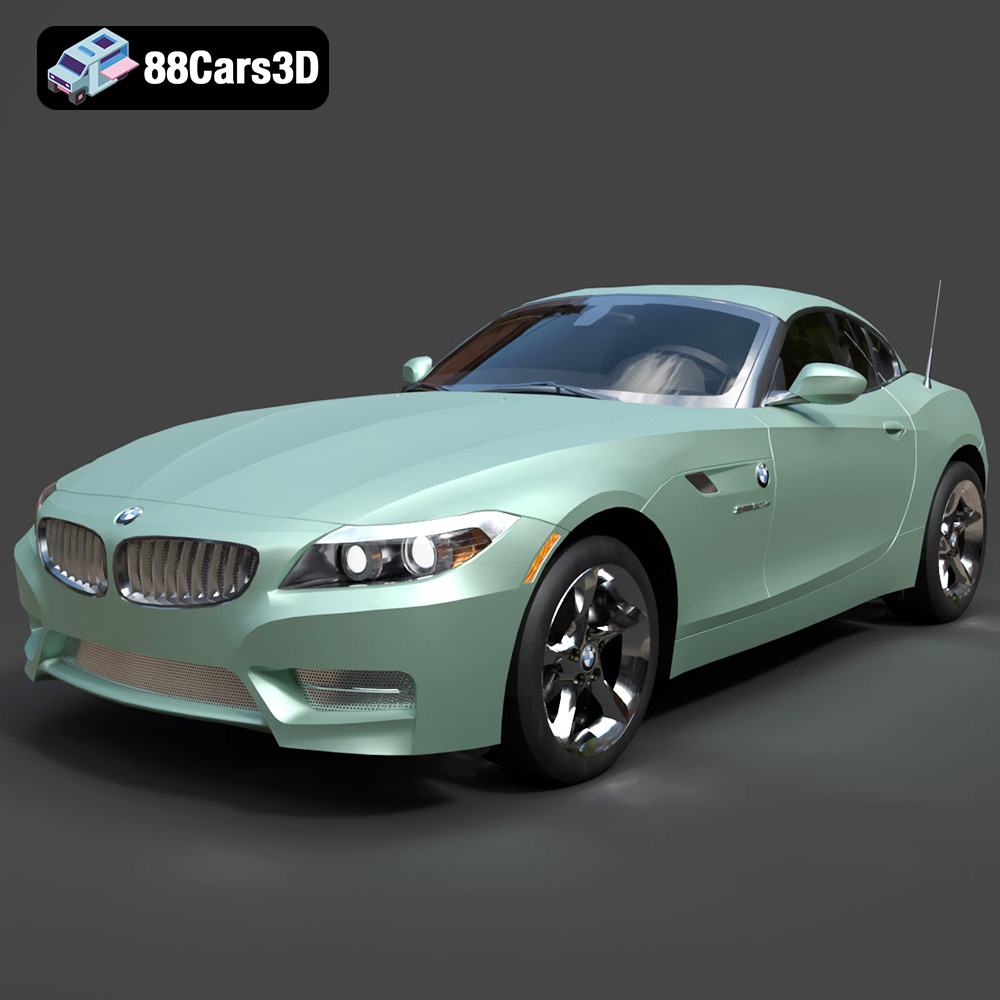
BMW Z4 Roadster E89 2012 3D Model
Texture: Yes
Material: Yes
Download the BMW Z4 Roadster E89 3D Model featuring clean geometry, realistic detailing, and a fully modeled interior. Includes .blend, .fbx, .obj, .glb, .stl, .ply, .unreal, and .max formats for rendering, simulation, and game development.
Price: $13.99

BMW Z4 E85 2005 3D Model
Texture: Yes
Material: Yes
Download the BMW Z4 E85 3D Model featuring clean geometry, realistic detailing, and a fully modeled interior. Includes .blend, .fbx, .obj, .glb, .stl, .ply, .unreal, and .max formats for rendering, simulation, and game development.
Price: $13.99

BMW M3 2024 3D Model
Texture: Yes
Material: Yes
Download the BMW M3 2024 3D Model featuring clean geometry, realistic detailing, and a fully modeled interior. Includes .blend, .fbx, .obj, .glb, .stl, .ply, .unreal, and .max formats for rendering, simulation, and game development.
Price: $13.99
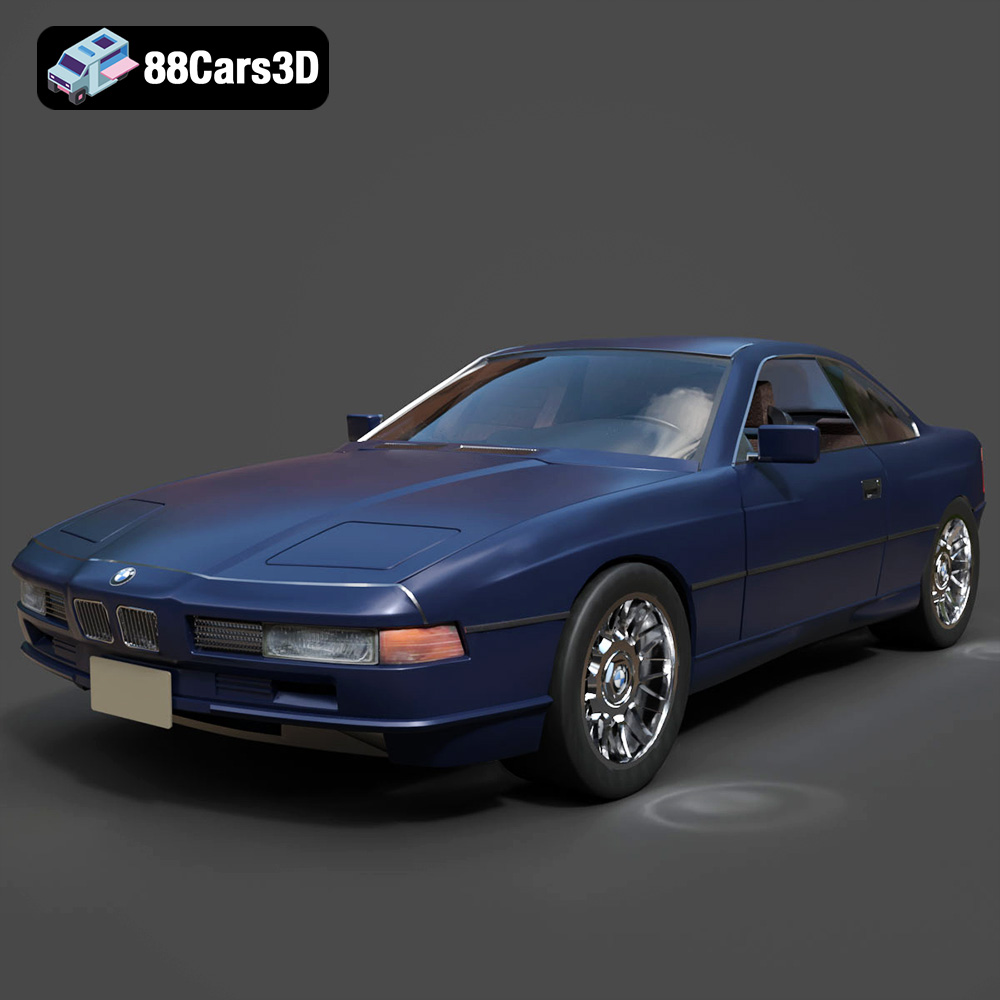
BMW 850i Coupe 1990 3D Model
Texture: Yes
Material: Yes
Download the BMW 850i Coupe 1990 3D Model featuring clean geometry, realistic detailing, and a fully modeled interior. Includes .blend, .fbx, .obj, .glb, .stl, .ply, .unreal, and .max formats for rendering, simulation, and game development.
Price: $13.99
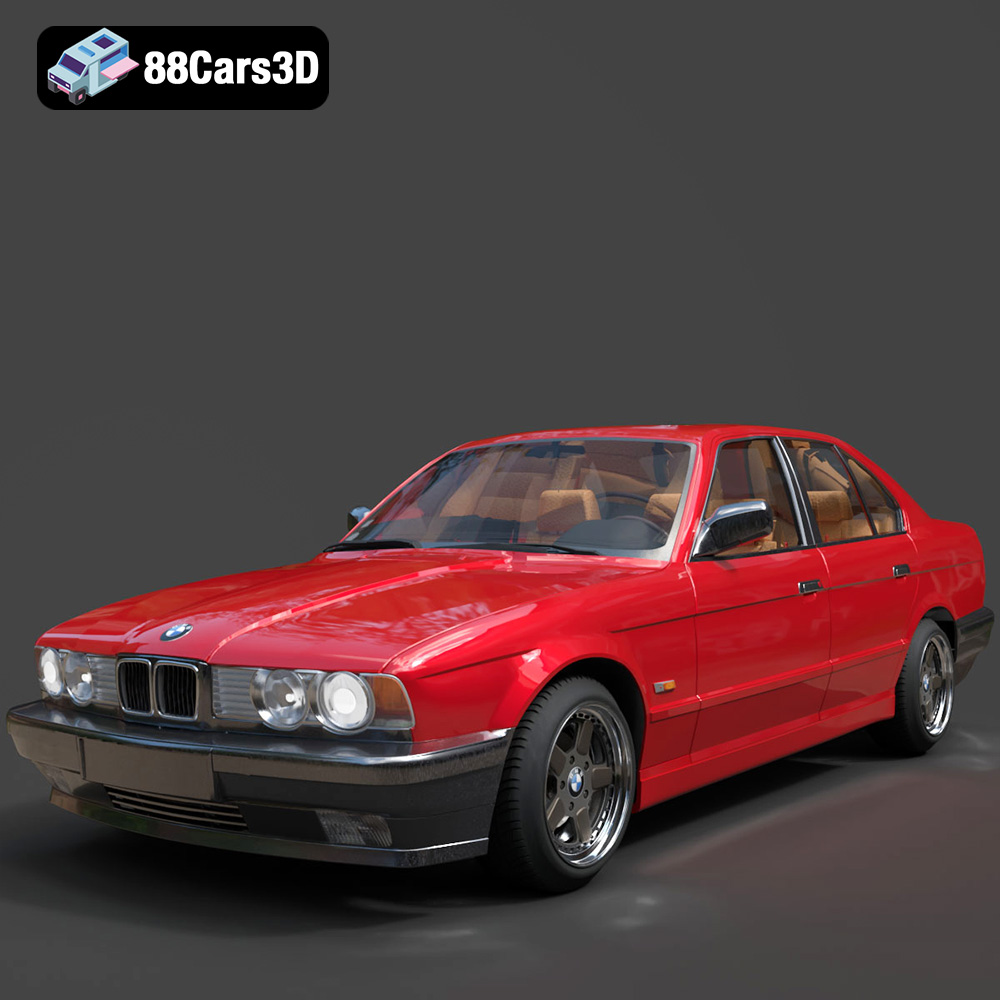
BMW 525i E34 1993 3D Model
Texture: Yes
Material: Yes
Download the BMW 525i E34 1993 3D Model featuring clean geometry, realistic detailing, and a fully modeled interior. Includes .blend, .fbx, .obj, .glb, .stl, .ply, .unreal, and .max formats for rendering, simulation, and game development.
Price: $12.99

BMW 7 Series 2016 3D Model
Texture: Yes
Material: Yes
Download the BMW 7 Series 2016 3D Model featuring luxurious design, detailed interior, and accurate exterior. Includes .blend, .fbx, .obj, .glb, .stl, .ply, .unreal, and .max formats for rendering, simulation, and game development.
Price: $10.79
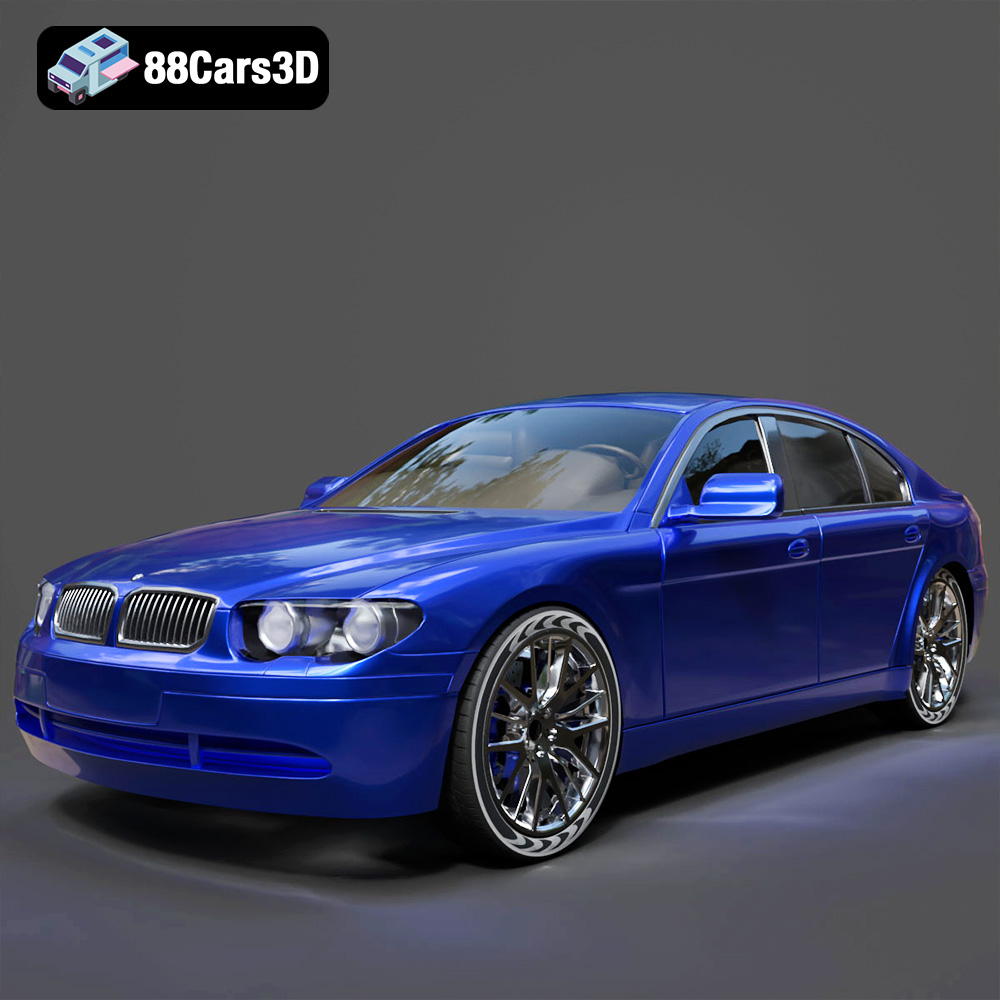
BMW 7 Series 30th Anniversary 3D Model
Texture: Yes
Material: Yes
Download the BMW 7 Series 30th Anniversary 3D Model featuring a meticulously crafted exterior, detailed interior, and realistic wheels. Includes .blend, .fbx, .obj, .glb, .stl, .ply, .unreal, and .max formats for rendering, simulation, and game development.
Price: $35.79

BMW 7-Series F02 3D Model
Texture: Yes
Material: Yes
Download the BMW 7-Series F02 3D Model featuring a detailed exterior and interior, optimized for rendering and animation. Includes .blend, .fbx, .obj, .glb, .stl, .ply, .unreal, and .max formats for rendering, simulation, and game development.
Price: $10.79
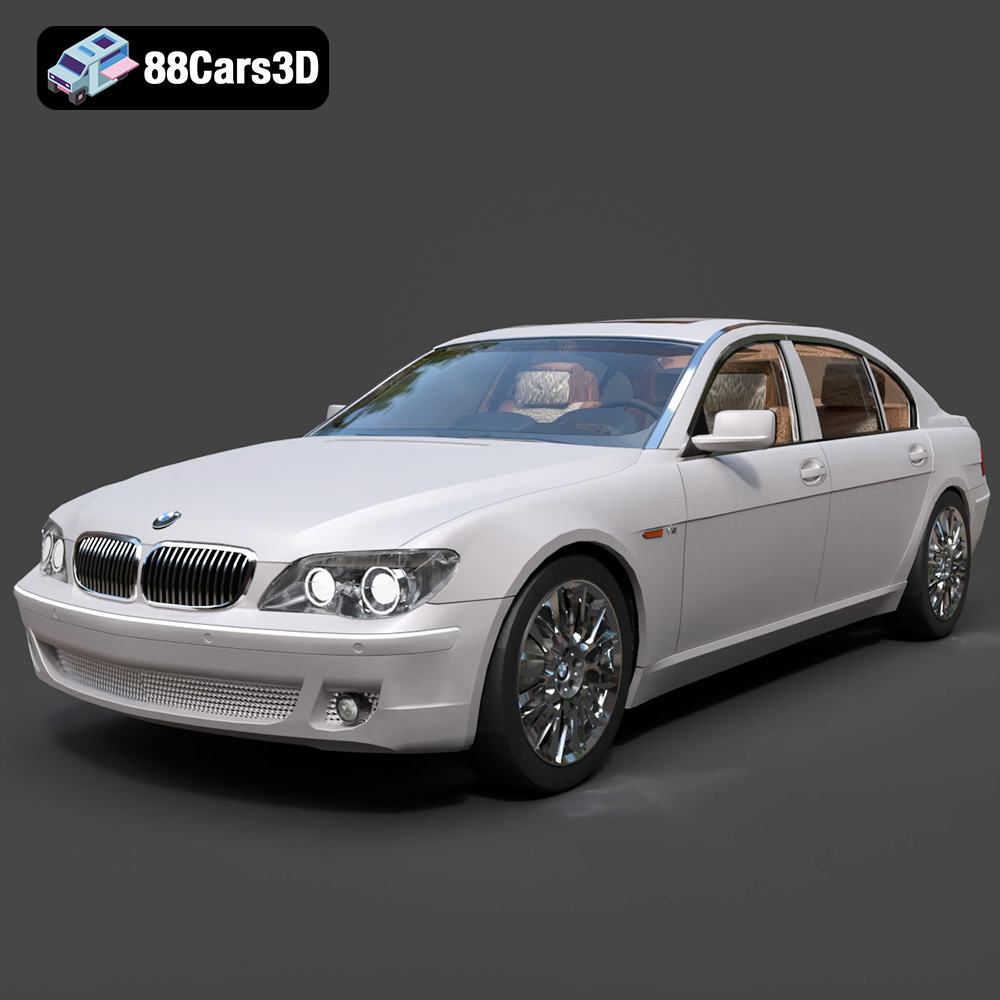
BMW 760Li E66 2005 3D Model
Texture: Yes
Material: Yes
Download the BMW 760Li E66 2005 3D Model featuring a detailed exterior, refined interior, and robust chassis. Includes .blend, .fbx, .obj, .glb, .stl, .ply, .unreal, and .max formats for rendering, simulation, and game development.
Price: $10.79
