

The sleek lines, intricate details, and powerful presence of an automobile have always captivated designers and enthusiasts alike. Translating this real-world artistry into the digital realm, especially for hyper-realistic renders, immersive game environments, or precise visualizations, presents a significant challenge. Traditional 3D modeling workflows, while powerful, can be incredibly time-consuming when striving for millimeter-perfect accuracy on complex, organic surfaces. This is where photogrammetry emerges as a game-changer, offering a revolutionary approach to capturing the true essence of a vehicle directly from reality.
Photogrammetry allows artists and designers to create incredibly detailed 3D models from a series of photographs, turning real-world objects into digital assets with unparalleled fidelity. For automotive design, game asset development, AR/VR experiences, and high-end visualization, this technique provides an efficient pathway to achieve photorealistic results that would be arduous, if not impossible, through manual modeling alone. This comprehensive guide will take you through every stage of leveraging photogrammetry for automotive 3D modeling, from meticulous data acquisition to final optimization for various platforms, ensuring you can transform raw photographic data into stunning, ready-to-use 3D car models. You’ll learn the workflows, best practices, and technical insights to master this transformative process.
Understanding Photogrammetry: Principles and Automotive Applications
At its core, photogrammetry is the science of making measurements from photographs, and for 3D modeling, it’s the art of reconstructing a three-dimensional object or scene from multiple two-dimensional images. Imagine taking hundreds of photos of a car from every conceivable angle. Photogrammetry software then analyzes these images, identifying common points, and triangulates their positions in 3D space. This forms a dense point cloud, which is then used to generate a polygon mesh and project the original photo textures onto it, resulting in a detailed 3D replica of the real object.
The allure of photogrammetry for automotive applications is immense. Vehicles are complex subjects, characterized by smooth, reflective surfaces, intricate panel gaps, and subtle curves that define their aerodynamic form. Capturing these nuances with traditional modeling methods often requires an extraordinary amount of skill and time. Photogrammetry, however, excels at reproducing these organic shapes and fine details with remarkable precision. It’s particularly effective for creating accurate digital twins of existing vehicles, preserving historical models, or rapidly generating game assets that demand a high degree of realism. Furthermore, the ability to directly capture surface imperfections like scratches, dust, or unique paint textures significantly enhances the authenticity of the final 3D car models.
Key Principles: Overlap, Consistency, and Camera Calibration
The success of any photogrammetry project hinges on adherence to a few fundamental principles. Firstly, overlap is paramount. Each point on the car’s surface needs to be visible in multiple photographs—ideally 70-80% overlap between adjacent images. This redundancy allows the software to accurately triangulate points and build a robust 3D reconstruction. Secondly, consistency across all photographs is critical. This includes consistent lighting, consistent focus, and consistent camera settings (aperture, ISO, white balance). Any variations can introduce noise or errors into the reconstruction. Finally, camera calibration, often performed automatically by the software, is essential. This process understands the unique optical properties of your camera lens (e.g., focal length, distortion) to ensure precise geometric reconstruction.
Why Photogrammetry for Automotive?
Automotive design and visualization demand a high degree of accuracy and realism. Photogrammetry directly addresses this need by providing:
- Unrivaled Detail Capture: From the smallest emblem to the subtle curvature of a fender, photogrammetry captures details that are arduous to model manually.
- Speed and Efficiency: For existing vehicles, scanning can be significantly faster than building a model from blueprints or reference images, especially for complex components.
- Authentic Textures: The software projects the actual photographic data onto the 3D model, resulting in incredibly realistic textures that include real-world dirt, scratches, and paint variations. This forms an excellent base for PBR material creation.
- Geometric Accuracy: The generated models are geometrically accurate representations of the real object, making them ideal for precise visualizations, simulations, or as a starting point for reverse engineering.
The Automotive Capture Process: Best Practices for Data Acquisition
The quality of your final 3D car model is directly proportional to the quality of your input photographs. A meticulous capture process is the bedrock of successful automotive photogrammetry. Rushing this stage almost invariably leads to errors, holes in the mesh, or poor texture quality, necessitating extensive post-processing.
Pre-Shoot Planning and Environment Setup
Before you even pick up your camera, careful planning is essential. The environment in which you photograph the vehicle plays a critical role.
Lighting: Consistent, diffused lighting is paramount. Overcast days are often ideal as they provide soft, even illumination with minimal harsh shadows or specular highlights. If shooting indoors, use studio lighting with large softboxes to mimic this effect. Avoid direct sunlight, which creates strong shadows and highly reflective hotspots that confuse the photogrammetry software.
Minimizing Reflections: Automotive surfaces are notoriously reflective. This is arguably the biggest challenge in car photogrammetry. Strategies to combat reflections include:
- Matte Spray: For critical parts or if absolute accuracy is needed without reflections, a temporary, removable matte spray can be applied. However, this alters the real-world finish and might not be suitable for all projects.
- Polarization Filters: A circular polarizer filter on your lens can significantly reduce reflections on glass and painted surfaces. Experiment with its rotation to find the optimal effect.
- Environment Control: Ensure your background is as neutral and uncluttered as possible. Large, white or black backdrops can help. Avoid reflective surfaces in the background that might show up as reflections on the car itself.
- Careful Positioning: Position the car to minimize direct reflections of windows, lights, or other distracting objects.
Background Considerations: A clean, uncluttered background with good contrast against the vehicle helps the software isolate the car. Avoid busy backgrounds with too many repeating patterns or similar colors to the car.
Setting up Markers/Targets: For very large or complex vehicles, placing identifiable, contrasting markers (e.g., checkerboard patterns, colored dots) at strategic points on and around the car can significantly aid in photo alignment and scaling. These markers act as reference points for the software.
Photography Techniques for Car Models
Executing the actual photoshoot requires precision and systematic coverage.
Full Coverage: The goal is to capture every square inch of the vehicle from multiple angles. This typically involves several concentric orbits around the car, at varying heights. Start with a wide orbit, then move closer for medium shots, and finally capture detailed shots of specific components (headlights, grilles, wheels, emblems, interior details). Don’t forget the roof, underside (if accessible), and interiors.
Camera Settings:
- Fixed Aperture: Use a relatively narrow aperture (f/8 to f/11) to ensure a deep depth of field, keeping the entire car in sharp focus.
- Low ISO: Keep ISO as low as possible (e.g., 100-200) to minimize image noise, which can interfere with feature detection.
- Consistent White Balance: Set a manual white balance or use a gray card to ensure consistent color across all images.
- Manual Focus: Manually focus on the car’s surface and keep it fixed for all shots. Autofocus can sometimes shift and introduce inconsistencies.
- Shutter Speed: Adjust shutter speed to achieve proper exposure, ensuring no motion blur. Use a tripod whenever possible.
Overlap: Maintain a substantial overlap of 70-80% between consecutive photos in your sequence. This means each feature on the car should appear in at least 3-5 adjacent images.
Example: For a standard-sized sedan, a comprehensive capture might involve 300-600 high-resolution photos. This includes 2-3 full orbits at different heights (eye-level, low, high), separate passes for wheels, interior (if needed), and close-ups of all unique details.
Processing the Raw Data: From Photos to Point Cloud
Once you have your meticulously captured photographs, the next step is to feed them into photogrammetry software. This is where the magic happens, transforming your 2D images into a foundational 3D structure. Several robust software packages are available, each with its strengths and price point. Popular choices include Agisoft Metashape, RealityCapture, and the open-source alternative, Meshroom.
Photo Alignment and Sparse Point Cloud Generation
The first stage in any photogrammetry software is photo alignment. Here, the software analyzes all your input images, identifies unique feature points (keypoints) in each photo, and matches these points across multiple images. Based on these matches, it performs a process called Structure from Motion (SfM) to determine the camera’s position and orientation for each photograph in 3D space. This also generates a sparse point cloud – a relatively low-density collection of 3D points that represent the detected features. This sparse cloud gives you an initial visual representation of your object’s geometry and helps verify if your photo capture was successful. If there are gaps or misalignments in the sparse cloud, it’s an early indicator of issues like insufficient overlap, blurry photos, or problematic reflections in the source images.
Dense Point Cloud and Mesh Generation
Once the camera positions are accurately determined and the sparse point cloud is generated, the software proceeds to build a dense point cloud. Using more sophisticated algorithms (often based on Multi-View Stereo – MVS), it calculates millions of additional 3D points for every visible pixel, resulting in an incredibly detailed and high-density representation of the car’s surface. This dense point cloud forms the basis for the next crucial step: mesh generation. The software uses algorithms (such as Poisson reconstruction or Delaunay triangulation) to connect these dense points, forming a continuous polygon mesh that defines the surface geometry of the vehicle. This initial mesh will often be extremely high-poly, easily reaching several million polygons, and may contain noise, small holes, or non-manifold geometry, especially in areas with difficult reflections or insufficient photo coverage. It’s vital to inspect this initial mesh for quality, identifying areas that might need manual cleanup or more data.
Refining the Automotive 3D Model: Topology, UVs, and PBR Materials
While photogrammetry excels at capturing initial geometry and textures, the raw output is rarely production-ready. It often features an overly dense and irregular mesh (triangulated, with uneven polygon distribution) that is unsuitable for animation, real-time rendering, or clean surface subdivision. This is where the art of 3D modeling comes in, transforming the raw scan data into a usable, optimized, and visually stunning asset.
Retopology for Clean Automotive Meshes
Retopology is the process of creating a new, clean, and optimized mesh over the top of the high-polygon photogrammetry scan. This new mesh typically consists of quad (four-sided) polygons, which are much easier to work with than the scan’s irregular triangles. Clean topology is crucial for automotive models because it:
- Allows for Smooth Deformation and Animation: Essential for opening doors, rotating wheels, or animating suspensions.
- Enables Subdivision: Quad-based meshes can be easily subdivided (e.g., using a Turbosmooth modifier in 3ds Max or a Subdivision Surface modifier in Blender) to create perfectly smooth surfaces without increasing the base mesh density excessively.
- Optimizes for Game Engines: Reduces polygon counts significantly, improving real-time performance.
- Improves Shading: Evenly distributed quads result in much cleaner lighting and reflections, which are critical for smooth automotive surfaces.
The goal is to follow the natural forms and panel lines of the car with your edge loops, creating an efficient and logical flow. For instance, edge loops should trace around window frames, along door seams, and define the sharp creases of body panels. Target polygon counts vary wildly depending on the application: a high-fidelity render might aim for a retopologized mesh of 300,000 to 1 million triangles before subdivision, while a game-ready asset for a current-gen console might target 50,000 to 150,000 triangles, including an interior.
Software tools like Blender offer robust retopology capabilities. You can enable snapping to the high-poly surface and manually draw new quad topology using tools like the Knife Project (detailed in the Blender 4.4 documentation on Retopology) or the F2 addon. Other specialized tools like Quad Remesher or ZRemesher can provide automatic retopology as a starting point, though manual cleanup is almost always required for automotive-level precision.
UV Mapping Strategies for Automotive Surfaces
Once you have a clean, retopologized mesh, the next step is to create proper UV maps. UV mapping unwraps the 3D surface of your model into a 2D space, allowing you to apply textures. For complex car surfaces, careful UV mapping is essential to prevent stretching, seams, and to ensure consistent texel density (the resolution of the texture per unit of surface area). Strategies include:
- Breaking Up Complex Parts: Unwrapping a car usually involves separating different components (body panels, wheels, lights, interior elements) into distinct UV islands.
- Minimizing Seams: Strategically place seams in less visible areas, such as along panel gaps or underneath the vehicle.
- Even Texel Density: Ensure that all UV islands are scaled appropriately in the UV space so that textures appear with consistent resolution across the entire model.
- Multiple UV Sets: For highly detailed models, you might use multiple UV sets – one for general body textures, another for specific decals or interior elements.
Blender’s UV Editor (further information available in the Blender 4.4 documentation on UV Editing), along with dedicated tools like RizomUV or UVLayout, provides powerful functionalities for unwrapping and packing UVs efficiently.
PBR Material Creation and Texture Baking
With a clean retopologized mesh and well-organized UVs, you’re ready for PBR (Physically Based Rendering) material creation. This involves baking high-resolution details from your original photogrammetry scan (or an even higher-res sculpt) onto your lower-resolution retopologized mesh. Key maps to bake include:
- Normal Maps: Captures fine surface details (panel gaps, subtle bumps, scratches) as tangent-space information, making a low-poly surface appear high-poly.
- Ambient Occlusion (AO) Maps: Simulates soft shadowing in crevices and corners, enhancing realism.
- Curvature Maps: Useful for edge wear and surface weathering effects.
- Albedo (Base Color) Maps: Derived directly from the photographic textures captured during photogrammetry, providing the base color without lighting information.
- Roughness and Metallic Maps: These define how light interacts with the surface. For car paint, this is crucial. You’ll often need to create these manually or by painting over the baked albedo, considering areas of wear, gloss, and different material types (e.g., chrome, rubber, plastic).
Software like Substance Painter and Mari are industry standards for creating and painting PBR textures. You can leverage the raw photographic textures from your photogrammetry process as an excellent starting point for your Albedo map, then build up the other PBR channels to create a truly realistic automotive finish. The careful construction of these shader networks is what ultimately brings the 3D car models to life.
Optimization for Diverse Applications: Game Engines, AR/VR, and 3D Printing
A beautifully retopologized and textured automotive model is a fantastic asset, but its utility extends only as far as its optimization allows for its intended application. Different platforms and purposes demand vastly different levels of polygon count, texture resolution, and file structure. Ensuring your model performs well across various scenarios is key to its versatility and value, particularly for platforms like 88cars3d.com which cater to a broad range of professional needs.
Game Engine Optimization (Unity/Unreal Engine)
Game engines like Unity and Unreal Engine require highly optimized assets to maintain smooth frame rates and deliver an immersive experience. A raw photogrammetry model, even after retopology, is often too heavy.
LODs (Level of Detail): This is paramount. You create multiple versions of your 3D car model, each with progressively lower polygon counts and sometimes lower texture resolutions. The game engine then automatically switches between these LODs based on the camera’s distance from the object. A high-detail car might have 4-5 LODs:
- LOD0 (High Detail): ~100,000-150,000 triangles (visible up close).
- LOD1 (Medium Detail): ~30,000-50,000 triangles (for mid-range views).
- LOD2 (Low Detail): ~5,000-10,000 triangles (for distant views).
- LOD3 (Very Low Detail): ~500-2,000 triangles (for extremely distant views or reflections).
- LOD4 (Billboard/Imposter): A simple 2D image for very far distances.
Draw Calls Reduction: Every distinct material or mesh object can incur a “draw call” overhead, impacting performance. Strategies to reduce draw calls include:
- Texture Atlasing: Combining multiple smaller textures (e.g., for different car parts like tires, lights, body) into one larger texture atlas and adjusting UVs accordingly.
- Combining Meshes: Merging static meshes together where appropriate (e.g., all body panels into one mesh, or all interior elements).
Collision Meshes: Instead of using the high-detail visual mesh for physics calculations, create a much simpler, low-polygon collision mesh. This is invisible but defines the car’s physical boundaries in the game world.
Simplified Interiors: For cars where the interior is rarely seen up close, model a simplified version or use optimized textures to represent the interior details.
AR/VR Readiness and Visualization
Augmented Reality (AR) and Virtual Reality (VR) applications, especially those targeting mobile devices, demand even more stringent optimization. Performance is critical to avoid motion sickness and maintain immersion.
Extremely Optimized Models: AR/VR car models often need to be under 50,000 triangles, sometimes even under 20,000, depending on the complexity of the scene and target device. This might involve baking more details into normal maps and simplifying geometry aggressively.
File Formats: GLB (GL Transmission Format Binary) and USDZ are standard file formats for web and mobile AR/VR. They package geometry, materials, and textures into a single, efficient file.
Real-time Rendering Considerations: Light baking (pre-calculating lighting information into textures) can significantly reduce real-time rendering overhead. Simplified PBR shaders optimized for mobile are also crucial.
High-Quality Visualization: For automotive configurators or marketing visualizations, the focus shifts to maintaining visual fidelity. Here, detailed PBR materials, accurate lighting, and potentially higher polygon counts are acceptable, as rendering is often done on more powerful hardware.
Preparing Models for 3D Printing
Transforming a photogrammetry-derived 3D car model into a physical object via 3D printing introduces a unique set of requirements.
Ensuring Watertight Meshes: A 3D printer needs a ‘watertight’ mesh, meaning there are no holes, gaps, or non-manifold edges. The mesh must completely enclose a volume. Raw photogrammetry scans often have small holes or open edges that need to be repaired.
No Self-Intersections: The mesh should not have any overlapping or intersecting polygons. These can cause printing errors.
Wall Thickness Considerations: Ensure that all parts of the model have a minimum wall thickness suitable for your chosen printing material and process. Thin details can break easily.
Mesh Repair Tools: Software like Meshmixer, Netfabb, or Blender’s built-in 3D Print Toolbox addon are invaluable for analyzing and repairing meshes for 3D printing. They can fill holes, simplify geometry, and check for common printing issues.
File Formats: STL (Stereolithography), OBJ, and AMF are standard file formats for 3D printing. STL is the most common for simple geometry, while OBJ can include color information, and AMF offers more advanced capabilities.
Advanced Techniques and Future Trends
As photogrammetry technology continues to evolve, so do the techniques and applications for automotive 3D modeling. Overcoming the inherent challenges of scanning highly reflective and transparent surfaces, and expanding its use beyond static objects, opens up new frontiers for designers and artists. Leveraging high-quality base models from platforms like 88cars3d.com provides an excellent foundation, which can then be further detailed or customized using advanced photogrammetry techniques.
Addressing Challenging Surfaces: Glass, Chrome, and Reflections
The nemesis of photogrammetry for automotive subjects is undoubtedly highly reflective surfaces like chrome, polished metal, and glass. These materials scatter light and produce inconsistent features across multiple images, confusing the photogrammetry software.
Matte Spray: As mentioned earlier, applying a temporary, removable matte spray is the most reliable way to make these surfaces scannable. However, this alters the true appearance and requires post-processing to restore the original material properties.
Cross-Polarization: This technique involves placing a polarizing filter on your lens and another polarizing film over your light source (or around the object). By rotating the filters, you can cancel out specular reflections, leaving only the diffuse color information. This is highly effective but requires controlled lighting.
HDR Environment Maps: For generating PBR metallic and roughness maps, an accurately captured HDR (High Dynamic Range) environment map of the scene can be invaluable. This allows for realistic reflections to be simulated on the reconstructed model, even if the actual reflections weren’t perfectly captured in the photos.
Combining Photogrammetry with Traditional Modeling: For components like headlights or complex glass windshields, it’s often more efficient to model them traditionally and then integrate them with the photogrammetry-derived body. This hybrid approach leverages the strengths of both methods, ensuring both accuracy and realism. You might use the photogrammetry model as a precise reference for the proportions and mounting points.
Beyond Static Objects: Photogrammetry for Interiors and Components
While often used for external bodywork, photogrammetry can also be effectively applied to capture intricate interiors or individual automotive components.
Capturing Complex Dashboards and Engine Bays: These areas are dense with small details, varying materials, and complex geometries. A modular approach, where individual sections are scanned separately and then stitched together, can be highly effective. This allows for more focused photo capture and easier management of data. Using a smaller, more maneuverable camera or even a smartphone for these tighter spaces can be beneficial.
Individual Components: Scanning individual parts like wheels, engine components, or suspension elements in a controlled environment can yield incredibly detailed assets. These can then be assembled into a complete vehicle or used as standalone assets in configurators or repair manuals. This modular approach also streamlines optimization, as each component can be optimized independently.
Leveraging Scanned Data for Design Iteration and Digital Twins
The accuracy of photogrammetry extends its utility beyond just creating static visualizations.
Using Accurate Scans as a Base for Design Modifications: Designers can use a photogrammetry scan of an existing vehicle or prototype as a precise starting point for digital modifications. This ensures new design elements integrate seamlessly with the existing geometry. It’s a powerful tool for reverse engineering and iterative design processes.
Creating Precise Digital Twins for Simulations or Historical Preservation: A digital twin is a virtual replica of a physical object. Photogrammetry allows for the creation of highly accurate digital twins of vehicles, which can then be used for simulations (e.g., aerodynamic analysis, crash testing), maintenance planning, or for historical archives of classic cars. This offers significant advantages in industries where precision and real-world data are critical. Even when starting with professionally modeled base assets, such as those found on 88cars3d.com, integrating photogrammetry can add bespoke real-world details or capture specific vehicle modifications for truly unique and accurate digital twins.
Conclusion
Photogrammetry stands as a powerful and indispensable technique in the modern automotive 3D modeling workflow. It bridges the gap between the physical and digital worlds, allowing artists, game developers, and visualization professionals to capture the nuanced beauty and complex geometry of vehicles with unprecedented speed and accuracy. From meticulous data acquisition in challenging environments to the intricate processes of retopology, UV mapping, and PBR material creation, mastering photogrammetry unlocks a new level of realism and efficiency in creating stunning 3D car models.
The journey from a series of photographs to a fully optimized 3D asset is multifaceted, demanding attention to detail at every stage. However, the reward is a hyper-realistic model that can be deployed across a spectrum of applications—from breathtaking renders and immersive AR/VR experiences to highly optimized game assets and precise 3D prints. By diligently adhering to best practices in capture, processing, and refinement, you can leverage photogrammetry to elevate your automotive projects. Remember that sourcing high-quality base models from marketplaces like 88cars3d.com can provide an excellent starting point for any project, which you can then augment and customize with your photogrammetry data for truly unique and professional results. Embrace this technology, experiment with its capabilities, and watch as your digital automotive creations come to life with unparalleled authenticity.
Featured 3D Car Models
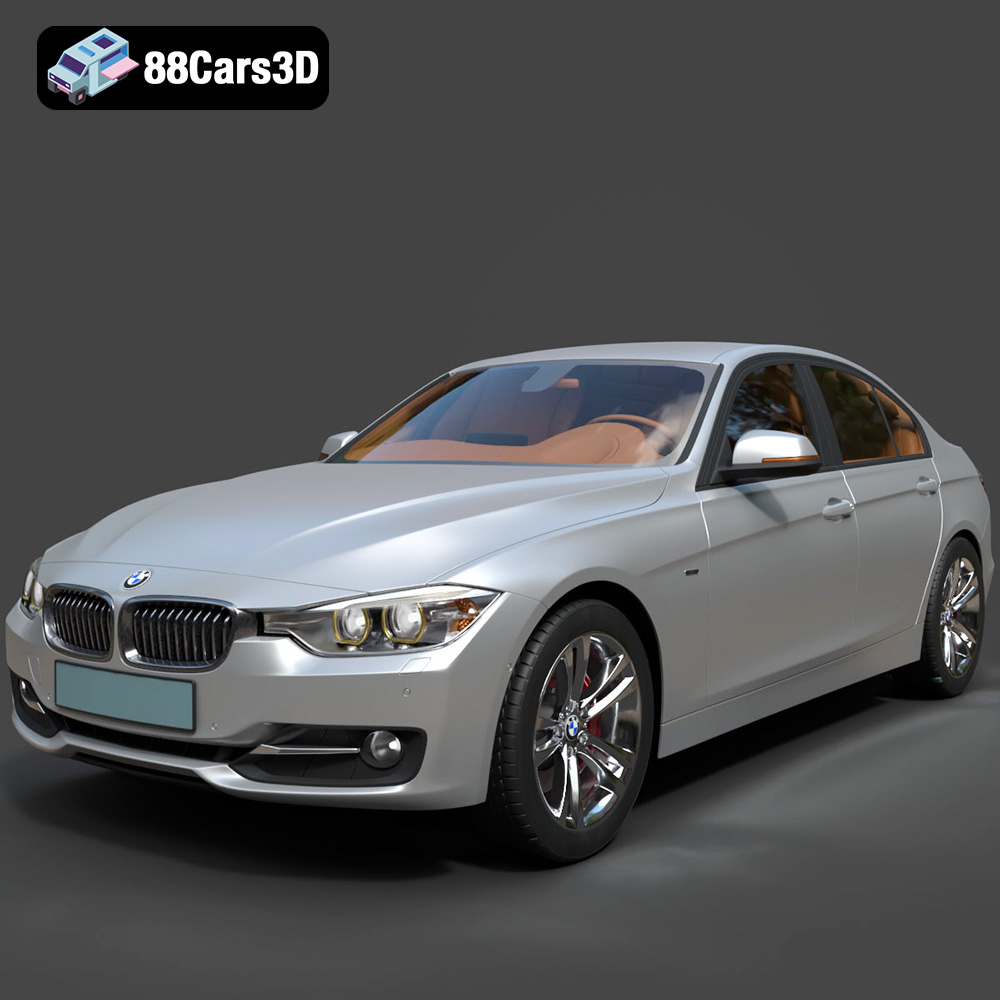
BMW 3 F30 3D Model
Texture: Yes
Material: Yes
Download the BMW 3 F30 3D Model featuring a detailed exterior, realistic interior, and optimized mesh. Includes .blend, .fbx, .obj, .glb, .stl, .ply, .unreal, and .max formats for rendering, simulation, and game development.
Price: $10.79
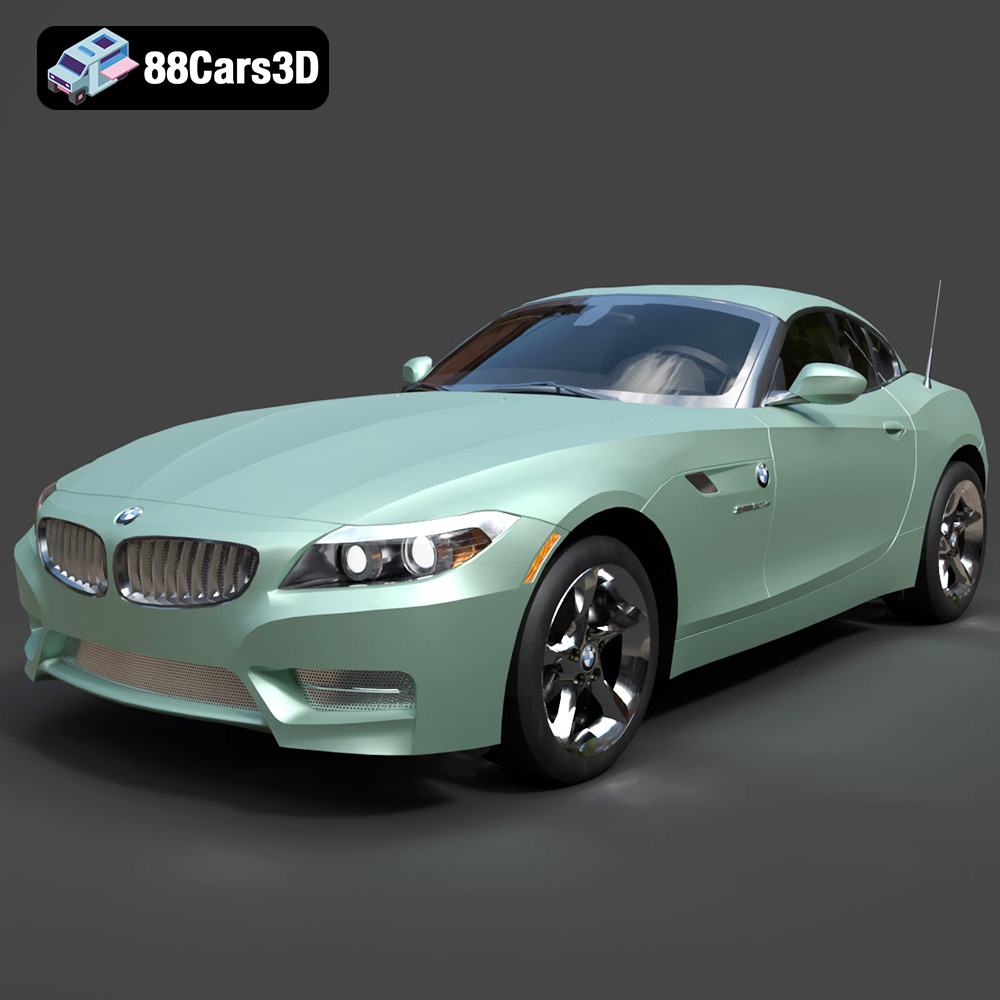
BMW Z4 Roadster E89 2012 3D Model
Texture: Yes
Material: Yes
Download the BMW Z4 Roadster E89 3D Model featuring clean geometry, realistic detailing, and a fully modeled interior. Includes .blend, .fbx, .obj, .glb, .stl, .ply, .unreal, and .max formats for rendering, simulation, and game development.
Price: $13.99

BMW Z4 E85 2005 3D Model
Texture: Yes
Material: Yes
Download the BMW Z4 E85 3D Model featuring clean geometry, realistic detailing, and a fully modeled interior. Includes .blend, .fbx, .obj, .glb, .stl, .ply, .unreal, and .max formats for rendering, simulation, and game development.
Price: $13.99

BMW M3 2024 3D Model
Texture: Yes
Material: Yes
Download the BMW M3 2024 3D Model featuring clean geometry, realistic detailing, and a fully modeled interior. Includes .blend, .fbx, .obj, .glb, .stl, .ply, .unreal, and .max formats for rendering, simulation, and game development.
Price: $13.99
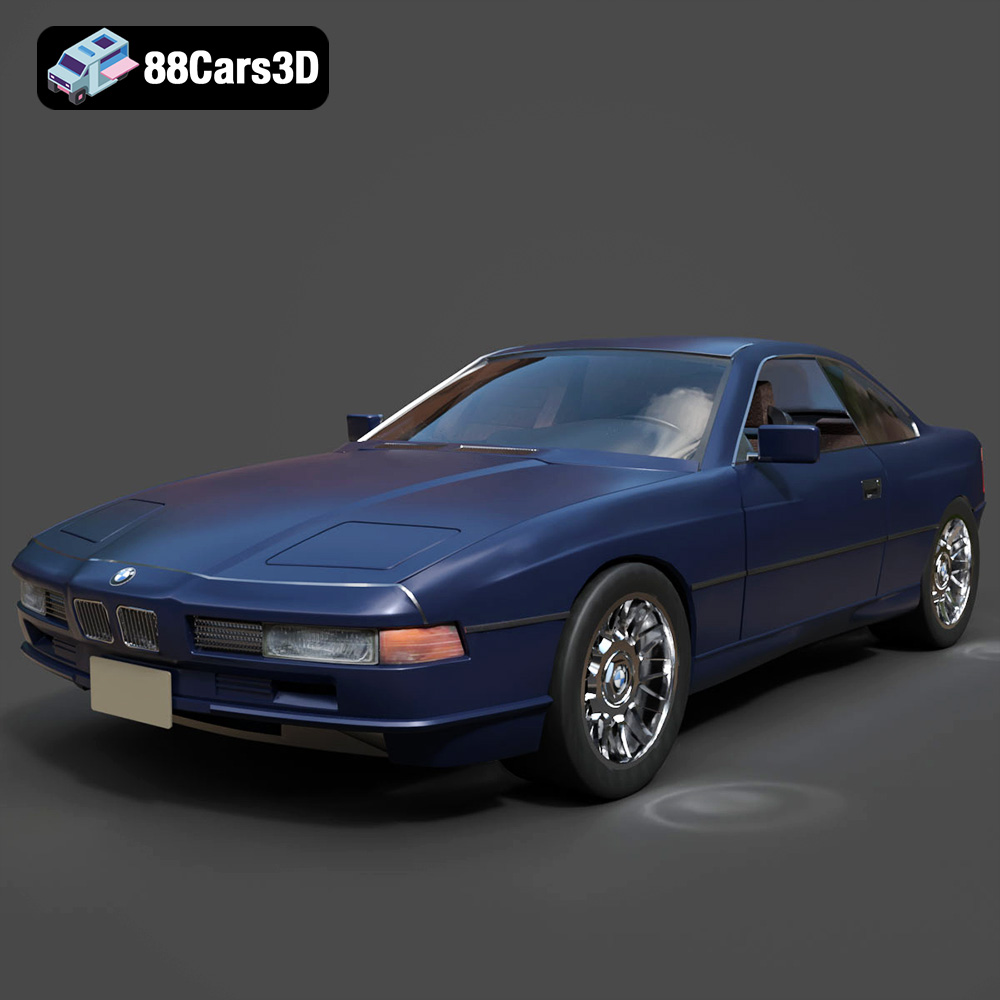
BMW 850i Coupe 1990 3D Model
Texture: Yes
Material: Yes
Download the BMW 850i Coupe 1990 3D Model featuring clean geometry, realistic detailing, and a fully modeled interior. Includes .blend, .fbx, .obj, .glb, .stl, .ply, .unreal, and .max formats for rendering, simulation, and game development.
Price: $13.99
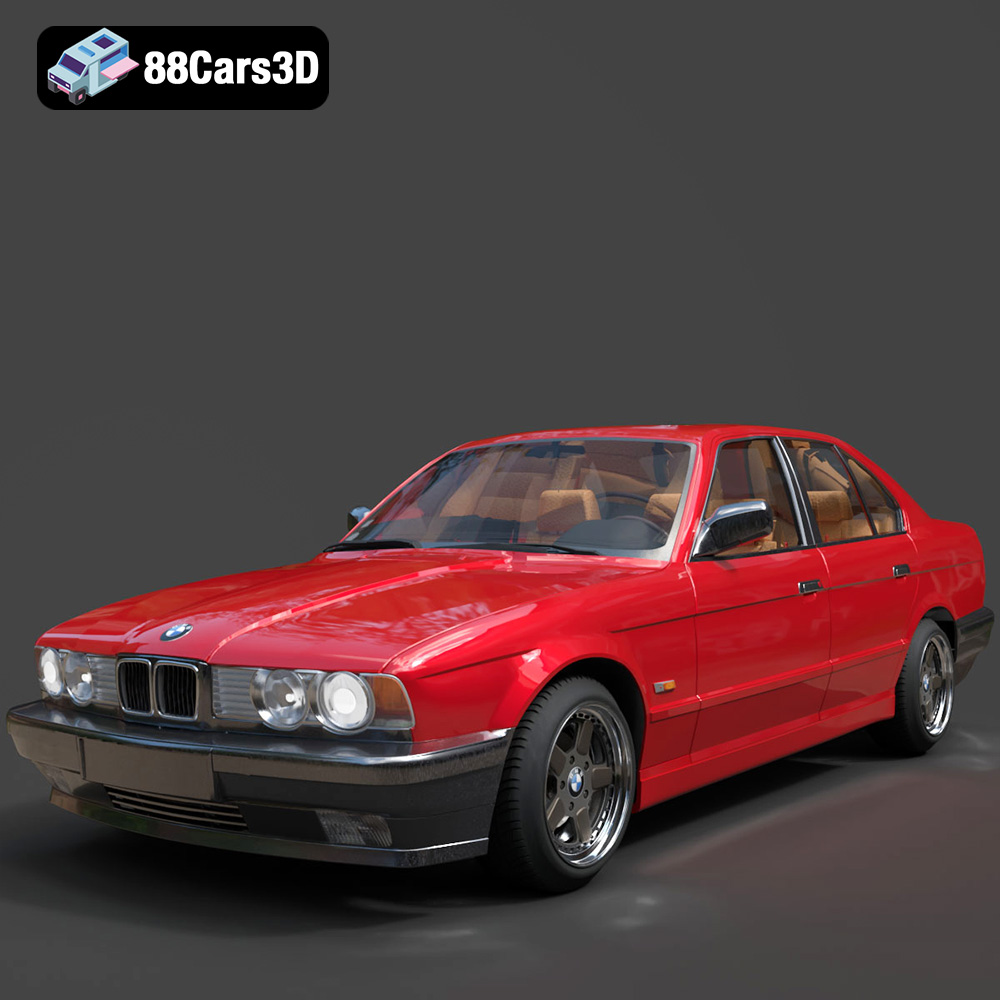
BMW 525i E34 1993 3D Model
Texture: Yes
Material: Yes
Download the BMW 525i E34 1993 3D Model featuring clean geometry, realistic detailing, and a fully modeled interior. Includes .blend, .fbx, .obj, .glb, .stl, .ply, .unreal, and .max formats for rendering, simulation, and game development.
Price: $12.99

BMW 7 Series 2016 3D Model
Texture: Yes
Material: Yes
Download the BMW 7 Series 2016 3D Model featuring luxurious design, detailed interior, and accurate exterior. Includes .blend, .fbx, .obj, .glb, .stl, .ply, .unreal, and .max formats for rendering, simulation, and game development.
Price: $10.79
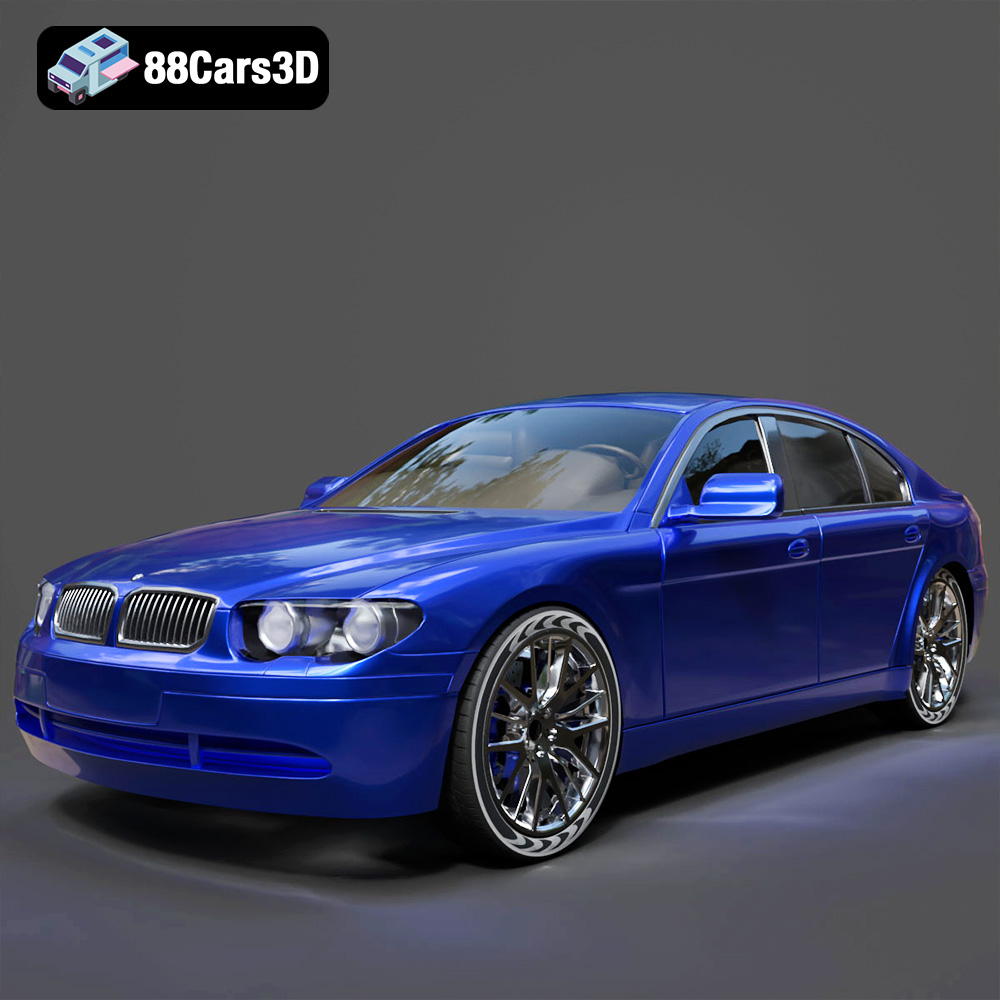
BMW 7 Series 30th Anniversary 3D Model
Texture: Yes
Material: Yes
Download the BMW 7 Series 30th Anniversary 3D Model featuring a meticulously crafted exterior, detailed interior, and realistic wheels. Includes .blend, .fbx, .obj, .glb, .stl, .ply, .unreal, and .max formats for rendering, simulation, and game development.
Price: $35.79

BMW 7-Series F02 3D Model
Texture: Yes
Material: Yes
Download the BMW 7-Series F02 3D Model featuring a detailed exterior and interior, optimized for rendering and animation. Includes .blend, .fbx, .obj, .glb, .stl, .ply, .unreal, and .max formats for rendering, simulation, and game development.
Price: $10.79
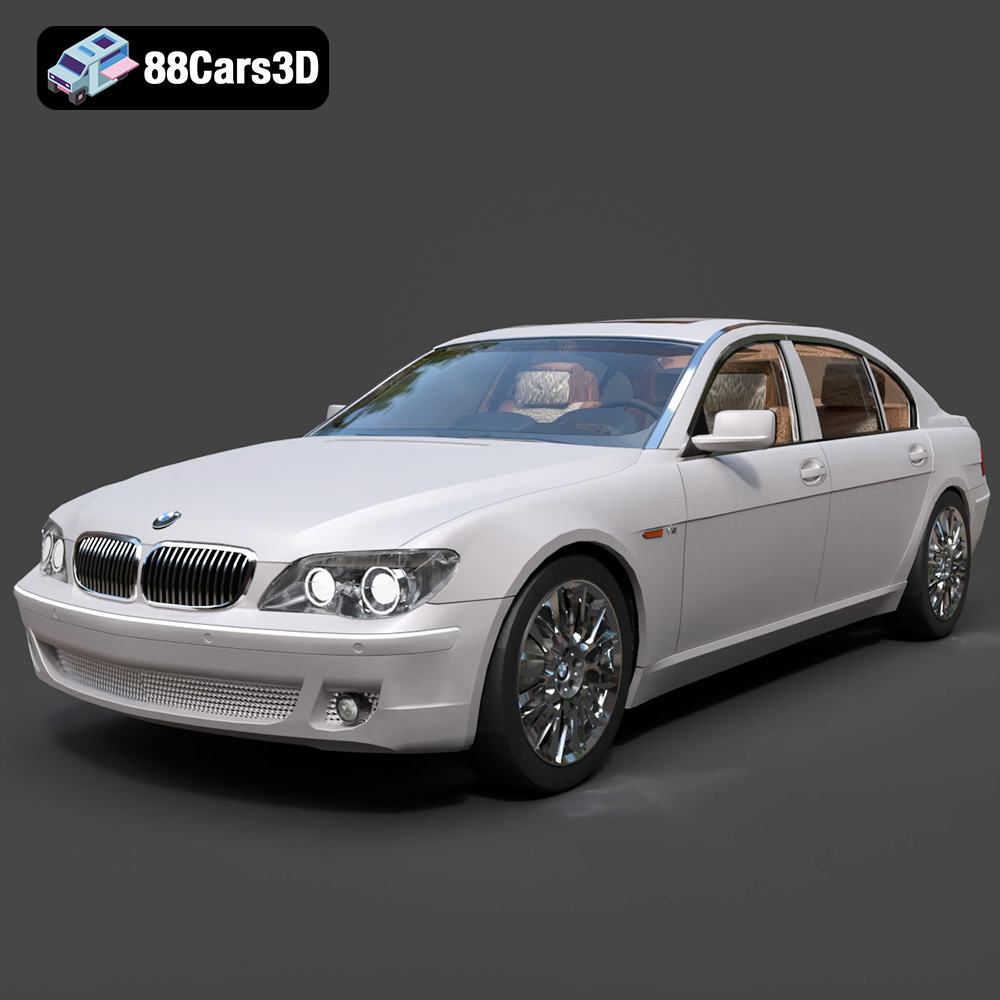
BMW 760Li E66 2005 3D Model
Texture: Yes
Material: Yes
Download the BMW 760Li E66 2005 3D Model featuring a detailed exterior, refined interior, and robust chassis. Includes .blend, .fbx, .obj, .glb, .stl, .ply, .unreal, and .max formats for rendering, simulation, and game development.
Price: $10.79
