

Mastering 3D Printing Preparation: A Comprehensive Guide for Automotive Models
In the vibrant world of 3D design, the journey from a digital concept to a tangible object is nothing short of magical. For automotive enthusiasts, designers, and collectors, this often means transforming stunning 3D car models into physical replicas through 3D printing. Whether you’re creating intricate scale models, custom parts, or rapid prototypes, the quality of your final print hinges almost entirely on the meticulous preparation of your 3D model. A beautifully rendered model designed for screen visualization might be a nightmare for a 3D printer if not properly optimized. This guide will walk you through the essential technical steps and best practices to ensure your automotive 3D models are print-ready, saving you time, material, and frustration. We’ll delve into topology, mesh integrity, scaling, and advanced repair techniques, providing you with the expertise to confidently bring your digital automotive masterpieces from platforms like 88cars3d.com into the physical realm.
The Foundation – Understanding 3D Printing Requirements & Model Suitability
Before diving into mesh manipulation, it’s crucial to understand the fundamental requirements imposed by 3D printing technology itself. Different printing processes have unique demands, and familiarizing yourself with these will inform every decision you make during model preparation. Ignoring these foundational principles is a common pitfall that leads to failed prints and wasted resources. By understanding the printer’s language, you equip yourself to translate your digital model effectively.
FDM vs. SLA/DLP – Material Properties and Print Resolution
The two most prevalent desktop 3D printing technologies are Fused Deposition Modeling (FDM) and Stereolithography (SLA) or Digital Light Processing (DLP). FDM printers build objects layer by layer by extruding melted thermoplastic filaments (like PLA, ABS, PETG). They are known for their robustness and affordability but often produce prints with visible layer lines and are best suited for functional prototypes or larger, less detailed models. Minimum wall thickness for FDM is typically around 0.8mm to 1.5mm, depending on nozzle size, to ensure structural integrity and prevent breakage during printing or post-processing. Very small details, less than 0.5mm, might be lost or become brittle.
SLA and DLP printers, on the other hand, use UV light to cure liquid resin layer by layer. They offer significantly higher resolution, smoother surfaces, and can capture much finer details, making them ideal for intricate automotive models, miniatures, and artistic pieces. However, resins are often more brittle than FDM plastics, and prints may require careful post-curing. Minimum wall thickness for SLA/DLP can be as low as 0.2mm to 0.5mm, allowing for extremely fine features like grilles, door handles, and intricate badging on a car model. Understanding which technology you’ll be using for your automotive model will dictate the level of detail you can preserve and the minimum structural requirements you need to meet.
Wall Thickness and Detail Minimums
Regardless of the printing technology, every part of your 3D model must have a sufficient wall thickness. If any section of your model is too thin, it may not print correctly, or it could be extremely fragile and break during printing, support removal, or even casual handling. For automotive models, this is particularly critical for areas like thin spoilers, mirror stalks, antenna, or the edges of body panels. As a general rule of thumb, for FDM printing, aim for a minimum wall thickness of 1.5-2mm for robust parts, and for SLA/DLP, try to maintain at least 0.8-1mm for general features, though intricate details can go down to 0.4mm with careful planning and resin choice. Always err on the side of caution; a slightly thicker wall is better than a broken print. Intricate internal structures, like engine details or chassis elements, also need to adhere to these minimums, especially if they are designed to be visible or functional.
Overhangs, Supports, and Bridging Considerations
3D printers cannot print in thin air. Any part of your model that extends horizontally without support beneath it is an “overhang.” Overhangs exceeding certain angles (typically 45-60 degrees for FDM) will require support structures, which the slicing software generates. These supports are then manually removed after printing. Excessive supports can lead to rough surface finishes, extended print times, and increased material usage. For automotive models, consider the underside of a car, wheel arches, or internal engine components, which often feature significant overhangs. Designing your model to minimize steep overhangs or strategically splitting complex models into smaller, flatter components can significantly improve print quality and reduce post-processing. Bridging, where the printer spans a gap between two supported points, is also limited by distance. For FDM, bridges typically work well for distances up to 15-20mm, but longer spans will likely sag without supports.
Topology and Mesh Integrity – The Heart of a Printable Model
The internal structure of your 3D model, its topology, is paramount for successful 3D printing. Unlike models destined for rendering, which can sometimes tolerate minor mesh imperfections (as long as they look good on screen), 3D printers are unforgiving. They require a perfectly “watertight” mesh, meaning there are no gaps, holes, or internal inconsistencies. Think of it like a solid, unbroken object – if you were to pour water into it, none should leak out.
Manifold Meshes and Watertight Geometry
A “manifold” mesh is one where every edge is connected to exactly two faces. If an edge is connected to only one face, it’s a boundary edge (a hole). If it’s connected to more than two faces, it’s a non-manifold edge, indicating overlapping or intersecting geometry, which confuse 3D printers. A “watertight” mesh is a manifold mesh without any holes. For an automotive model, every single surface, from the car body to the wheels and interior elements, must form a continuous, sealed shell. Common culprits for non-manifold geometry include deleted faces, accidentally duplicated faces, intersecting geometry that isn’t properly joined, or flipped normals.
To check for manifold issues in Blender, you can use the built-in “3D-Print Toolbox” addon. Enable it under Edit > Preferences > Add-ons. Once enabled, in Edit Mode, you’ll find a panel in the N-menu (sidebar) under the “3D-Print” tab. Here, you can click “Check All” to identify non-manifold edges, open boundaries, intersecting faces, and other issues. For detailed instructions on using Blender’s mesh analysis and cleanup tools, including “Merge by Distance” or selecting non-manifold geometry, refer to the official Blender 4.4 documentation under the “Modeling” section, particularly “Mesh Editing” and “Cleaning Up Geometry.”
Detecting and Fixing Non-Manifold Edges, Inverted Normals, and Intersecting Geometry
Identifying and rectifying these issues is a critical step.
- Non-Manifold Edges: As mentioned, Blender’s 3D-Print Toolbox is excellent. You can also select all faces in Edit Mode and use Mesh > Clean Up > Merge by Distance to fuse vertices that are too close, often fixing non-manifold issues caused by accidental duplication.
- Inverted Normals: Normals dictate which way a face is pointing (inside or outside). Flipped normals mean some faces are pointing inwards when they should be outwards, confusing the printer. In Blender, in Edit Mode, go to Mesh > Normals > Recalculate Outside (Shift+N) to automatically orient all normals correctly. You can visualize normals by enabling “Face Orientation” in the Viewport Overlays (top right corner, two overlapping circles icon); blue indicates correctly oriented faces, red indicates flipped.
- Intersecting Geometry: This is common when combining multiple parts of a car model without proper Boolean operations or merging. For example, a wheel intersecting the fender. While some minor intersections can be tolerated by slicers, large or numerous intersections can cause printing errors. In Blender, select the objects and use Object > Boolean (Union) to merge them properly. Ensure the resulting mesh is clean; Booleans can sometimes introduce artifacts that need manual cleanup. Meshmixer is also excellent for analyzing and repairing intersecting geometry.
These issues, if left unaddressed, will lead to errors during slicing, resulting in gaps, holes, or unsupported sections in your final print.
Polygon Count and Mesh Decimation for 3D Printing
While high polygon counts create smooth curves and intricate details for rendering, they can be problematic for 3D printing, especially for smaller desktop printers or older slicing software. An excessively dense mesh can lead to very large file sizes, slow down or crash slicing software, and potentially even slow down the printer itself. For most desktop FDM/SLA prints, millions of polygons are often unnecessary and can be optimized. The goal is to retain sufficient detail without overburdening the system.
For example, if you’ve sourced a high-detail automotive model from a marketplace like 88cars3d.com that was primarily designed for high-end rendering, it likely has a very high polygon count. You’ll need to judiciously reduce this without sacrificing critical details like body lines, grilles, or emblems. This process is called mesh decimation. In Blender, the “Decimate Modifier” (in the Modifiers tab) allows you to reduce polygon count by ratio or by planar angle, preserving geometric features while reducing overall density. It’s crucial to apply this carefully, checking the preview to ensure you don’t lose vital details. Aim for a balance: enough polygons to capture the desired curves and details, but not so many that it creates processing issues. A target range might be hundreds of thousands to a few million polygons for a complex car model, depending on its size and the printer’s capabilities. Always make a backup of your original high-poly model before applying destructive decimation.
Scaling, Orientation, and Placement for Optimal Prints
Once your model’s mesh integrity is confirmed, the next crucial steps involve preparing it for the physical print environment. Correct scaling, optimal orientation on the print bed, and thoughtful placement are key to achieving successful, high-quality, and robust prints.
Unit Consistency and Real-World Scaling
One of the most common mistakes is unit inconsistency. Your 3D software (e.g., Blender, 3ds Max, Maya) operates in certain units (meters, millimeters, inches), and your slicing software and 3D printer expect the model to be provided in a specific scale. For instance, if you model a car as 1 unit = 1 meter, but your slicing software interprets 1 unit as 1 millimeter, your car will print out 1000 times too small! Always ensure your 3D software’s scene units match your intended print units (e.g., millimeters are common for smaller prints). Before exporting, apply all transforms (scale, rotation) to your model to ensure that its internal scale factor is 1.0. In Blender, this is done by selecting the object and pressing Ctrl+A > Apply All Transforms. This ensures the model’s actual dimensions are correctly communicated to the slicing software. For car models, often you will be printing at a specific scale (e.g., 1:24, 1:64); calculate your desired dimensions and scale your model accurately to these real-world measurements before exporting.
Optimizing Print Orientation for Strength and Detail
The orientation of your model on the build plate significantly impacts its structural strength, surface quality, and the need for supports.
- Strength: FDM prints are weakest between layers. Orienting a part so that critical stresses are aligned with the layers can lead to breakage. For example, printing a car’s axle upright (vertically) would make it prone to snapping along layer lines. Printing it horizontally would align the layers with the length of the axle, making it much stronger.
- Surface Quality: Surfaces facing upwards (away from the build plate) or that require minimal supports generally have the best finish. Overhangs facing downwards often require supports, and the supported surfaces will be rougher. For an automotive body, orienting it to minimize supports on visible surfaces is crucial. Sometimes, splitting a car body into top and bottom halves allows each half to be printed with minimal supports on its visible side, improving overall quality.
- Supports: The less support material needed, the better. Fewer supports mean less material waste, shorter print times, and less post-processing work to remove them and sand down rough areas. Rotate your model to find the orientation that minimizes the total surface area of overhangs and the steepness of those overhangs.
Modern slicing software often provides tools to analyze overhangs and suggest optimal orientations. Experiment with different rotations within your slicer to see how the support generation changes.
The Role of Slicing Software (e.g., Cura, PrusaSlicer, Chitubox)
Slicing software is the bridge between your 3D model and the 3D printer. Programs like Ultimaker Cura, PrusaSlicer, and Chitubox take your 3D model (typically in STL or 3MF format) and convert it into a series of thin layers, generating the G-code instructions that the printer understands. This is where you set print parameters like layer height, infill density, print speed, temperatures, and, critically, support generation and bed adhesion settings. Before exporting, always open your model in your chosen slicer to perform a final check. The slicer will often highlight potential issues like non-manifold geometry, wall thickness problems, or islands that need support. Learn to interpret the slicer’s warnings; they are invaluable indicators of potential print failures. Adjusting layer height directly impacts print resolution – finer layers (e.g., 0.1mm) offer smoother surfaces ideal for detailed car bodies, while thicker layers (e.g., 0.2mm or 0.3mm) print faster and are suitable for less critical parts or larger scales.
Advanced Mesh Repair and Refinement Techniques
Even with careful modeling, complex automotive designs can present unique challenges. Advanced mesh repair and refinement techniques are essential tools in your arsenal to ensure the highest print success rate, especially when dealing with intricate details or problematic geometry.
Using Boolean Operations Wisely
Boolean operations (Union, Difference, Intersect) are powerful tools for combining or subtracting meshes. They are invaluable for creating complex shapes, such as merging separate components of a car’s chassis into a single, cohesive shell, or cutting out vents and grilles. However, Booleans can be notoriously finicky, often leaving behind messy topology with non-manifold edges, n-gons (faces with more than four vertices), or internal geometry that can confuse slicers. When using Boolean operations in Blender or other 3D software:
- Prepare your meshes: Ensure both objects involved in the Boolean operation have clean, manifold topology to begin with. Remove any internal faces that won’t be visible.
- Overlap is key: Ensure sufficient overlap between the meshes. If two objects only touch at a single edge or vertex, the Boolean operation is more likely to fail or create artifacts.
- Clean up afterwards: Always inspect the resulting mesh meticulously. Use the “3D-Print Toolbox” in Blender to check for non-manifold geometry and manually clean up any rogue vertices or edges. Sometimes, applying a “Remesh” modifier or using Blender’s “Quadriflow” (an external addon or similar tools in other software) can help create cleaner, all-quad topology after a complex Boolean, though this might slightly alter the surface detail.
For automotive models, creating precise cutouts for headlights, grilles, or windows often necessitates Boolean operations. Mastering their careful application and subsequent cleanup is vital.
Shelling and Hollowing for Material Savings
Printing solid objects, especially large automotive models, can be incredibly expensive and time-consuming due to the sheer volume of material required. “Shelling” or “hollowing” creates an internal void within your model, leaving only a defined wall thickness. This significantly reduces material consumption, print time, and, for resin prints, can prevent internal stresses that lead to warping or cracking during curing.
Most slicing software allows you to set infill density, but hollowing at the model level gives you more control over the internal structure and allows for drain holes, which are crucial for resin printing to allow uncured resin to escape. In Blender, you can use the “Solidify” modifier (often with an “Offset” value) to create an inward or outward shell. After applying, you’ll need to manually create drain holes at strategic, inconspicuous locations (e.g., on the underside of the chassis) to allow material to flow out during printing and post-processing (for resin). Remember to maintain your minimum wall thickness requirements even for the shelled model. For large FDM prints, combining shelling with a low infill percentage (e.g., 5-15%) can provide a strong yet lightweight print.
Advanced Repair Tools in Blender, Meshmixer, and Netfabb
Sometimes, despite your best efforts, models can still have complex errors that are difficult to fix manually. This is where dedicated mesh repair software and advanced tools come into play.
- Blender’s 3D-Print Toolbox: Already mentioned, it’s your first line of defense for basic checks and some automatic fixes like “Make Manifold” or “Clean Up.”
- Autodesk Meshmixer: A free and powerful tool specifically designed for 3D print preparation. Its “Inspector” tool automatically detects and often repairs holes, non-manifold edges, and other issues with a single click. It also offers excellent tools for hollowing, generating supports, and even performing basic sculpts or mesh mixing. For complex car models with intricate grilles or vents, Meshmixer’s ability to analyze and repair small disconnected geometry can be a lifesaver.
- Netfabb (Autodesk Netfabb): A professional-grade software for advanced mesh analysis and repair. While not free, it offers robust capabilities for fixing even the most stubborn mesh errors, optimizing models for various print technologies, and preparing files for batch production. If you’re consistently preparing highly complex models for demanding print jobs, Netfabb’s advanced repair algorithms are invaluable.
Learning to leverage these specialized tools can turn a seemingly unprintable model into a perfect print, especially when dealing with legacy models or complex CAD conversions.
Beyond the Basics – Special Considerations for Automotive Models
Automotive models, with their intricate details, often present unique challenges that go beyond general 3D printing preparation. Addressing these specific considerations ensures your miniature vehicles capture the essence and realism of their full-sized counterparts.
Separating Parts vs. Unified Shells
A crucial decision when preparing a complex automotive model for 3D printing is whether to print it as a single, unified shell or as multiple, separate components for assembly.
- Unified Shell: Printing a car as a single piece (e.g., body, chassis, and wheels all merged) simplifies the printing process by eliminating assembly. However, it significantly increases the complexity of support removal, especially for interior details, wheel wells, and undercarriage components. It also limits the level of detail achievable if all parts are scaled down uniformly, as thin parts might become unprintable. This approach is best for simpler, less detailed models or when the model will be printed at a very large scale.
- Separate Components: Printing parts like the body, chassis, wheels, tires, interior, and small details (mirrors, spoilers) separately offers numerous advantages. Each component can be optimized for its specific geometry and printing requirements (e.g., fine details on the body with SLA, stronger chassis with FDM). It allows for better surface finish on visible areas by minimizing support contact, enables multi-color printing through different filaments/resins, and simplifies painting and post-processing. The trade-off is the need for careful design of joinery and the extra effort of assembly. This is often the preferred method for highly detailed, high-quality automotive models. When designing separated parts, ensure each piece is a watertight, manifold mesh, optimized independently for its printing parameters.
The choice depends on the desired level of detail, print technology, and post-processing effort you’re willing to invest.
Integrating Joinery and Assembly Features
If you opt for printing separate components, the design of the “joinery” (how parts connect) becomes critical. Simply relying on glue can be insufficient for structural integrity or precise alignment. Integrating features like pegs, slots, interlocking mechanisms, or magnetic ports directly into your 3D model ensures a robust and accurate assembly.
- Pegs and Slots: Design small cylindrical pegs on one part that fit snugly into corresponding holes/slots on another. Ensure a slight tolerance (e.g., 0.1-0.2mm clearance) for a smooth fit, accounting for printer tolerances. For example, a car door might have pegs that slot into the body.
- Snap-Fit Joints: These allow parts to click together without glue, using small hooks or clips. They require precise design and are best suited for flexible materials or parts with some elasticity.
- Keying Features: Irregular shapes or grooves can ensure parts only fit together in the correct orientation, preventing misalignment.
Consider the direction of forces the assembled model will experience. The joinery should be designed to withstand these forces. Always test print small sections of your joinery before committing to printing the entire model, to verify fit and tolerances. This iterative approach saves significant time and material in the long run.
Surface Quality and Post-Processing Implications
The surface quality of your 3D printed automotive model significantly impacts its visual appeal. While SLA/DLP prints naturally offer smoother surfaces, FDM prints often exhibit visible layer lines. Your model preparation can greatly influence the ease and effectiveness of post-processing.
- Layer Line Reduction: For FDM, orienting your model to minimize the visibility of layer lines on critical surfaces is key. Printing with finer layer heights (e.g., 0.1mm) also helps. Post-processing can involve sanding, filling (e.g., with body filler or epoxy), and priming.
- Support Contact Points: The areas where supports touch your model will inevitably have a rougher finish. Strategically placing supports in less visible areas (e.g., the underside of the chassis, inside a wheel well) minimizes impact on aesthetic surfaces. When designing supports in your slicer, optimize for minimal contact area or use tree supports for easier removal and less scarring.
- Detail Preservation: Very fine details, like thin emblems or vents, might require careful sanding to prevent accidental removal or damage. For SLA prints, a thorough washing and curing process is vital to ensure surface hardness and prevent sticky residue.
Ultimately, thinking ahead about how your model will be finished and what kind of surface quality you desire will guide your preparation steps. A beautifully printed and post-processed automotive model can be a stunning display piece, reflecting both your modeling and printing expertise.
For those looking for high-quality, pre-optimized 3D car models for a range of applications, including potential 3D printing projects, exploring resources like 88cars3d.com can provide an excellent starting point, saving you significant modeling time and allowing you to focus on the specialized printing preparation and post-processing.
Conclusion
Preparing 3D models for 3D printing, especially intricate automotive designs, is a detailed and technical process that requires patience, precision, and an understanding of the underlying technology. It’s not merely about having a visually appealing model; it’s about transforming that digital asset into a robust, printable, and ultimately tangible object. By meticulously addressing mesh integrity, optimizing topology, carefully considering scale and orientation, and employing advanced repair techniques, you lay the groundwork for a successful print.
We’ve explored the differences between FDM and SLA/DLP, emphasized the critical importance of manifold and watertight meshes, and guided you through detecting and fixing common issues like inverted normals and intersecting geometry. Understanding how to manage polygon counts and effectively use slicing software like Cura or PrusaSlicer are indispensable skills. Furthermore, techniques like wise Boolean usage, hollowing for material savings, and leveraging powerful tools like Meshmixer equip you to tackle even the most challenging models. Remember the unique considerations for automotive models – whether to unify or separate parts, and how to integrate robust joinery for assembly.
The journey from screen to print is an exciting one. By applying the technical insights and best practices outlined in this comprehensive guide, you’re now better equipped to avoid common pitfalls and achieve stunning physical replicas of your favorite cars. Take these actionable steps, experiment with your workflow, and continuously refine your approach. With dedication, your digital automotive designs will not only look incredible on screen but also impress as high-quality 3D prints. For your next project, remember that sourcing high-quality base models from specialized platforms like 88cars3d.com can give you a significant head start, allowing you to focus your expertise on the intricate world of print preparation and bringing those models to life.
Featured 3D Car Models

BMW 3 F30 3D Model
Texture: Yes
Material: Yes
Download the BMW 3 F30 3D Model featuring a detailed exterior, realistic interior, and optimized mesh. Includes .blend, .fbx, .obj, .glb, .stl, .ply, .unreal, and .max formats for rendering, simulation, and game development.
Price: $10.79
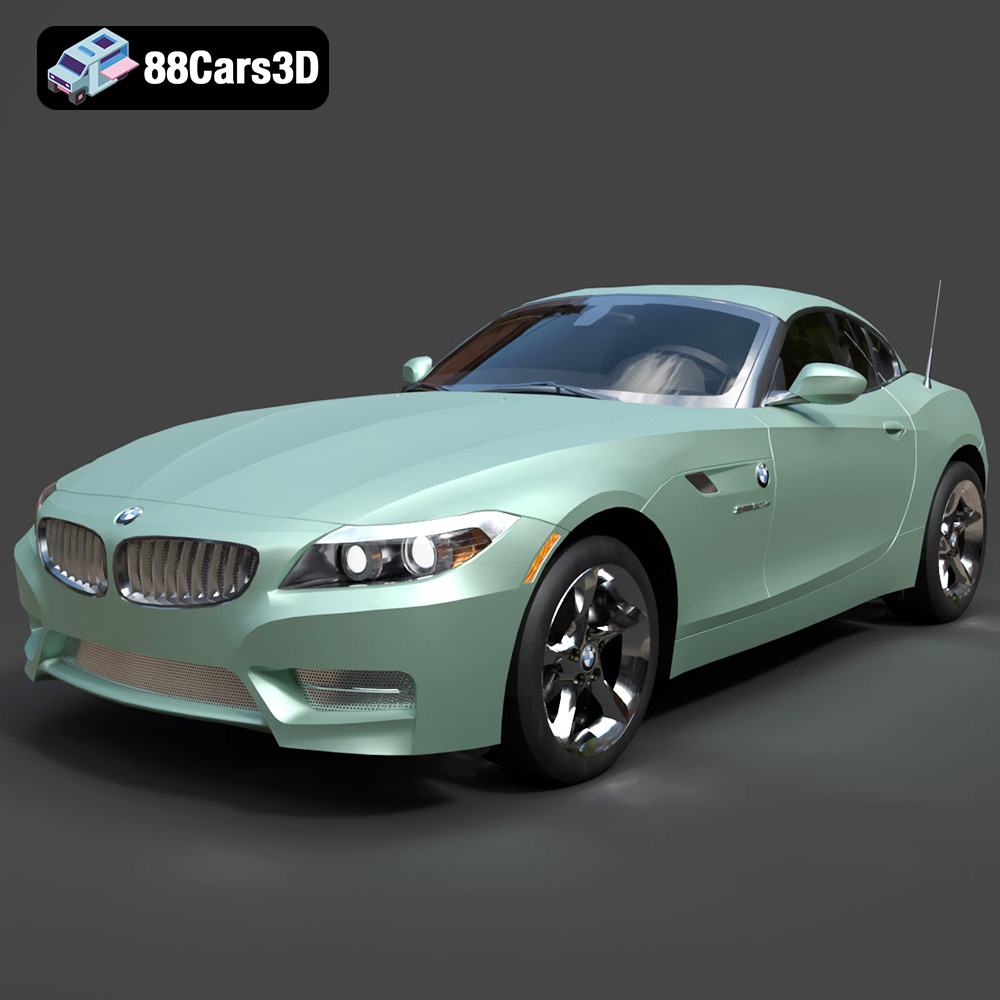
BMW Z4 Roadster E89 2012 3D Model
Texture: Yes
Material: Yes
Download the BMW Z4 Roadster E89 3D Model featuring clean geometry, realistic detailing, and a fully modeled interior. Includes .blend, .fbx, .obj, .glb, .stl, .ply, .unreal, and .max formats for rendering, simulation, and game development.
Price: $13.99

BMW Z4 E85 2005 3D Model
Texture: Yes
Material: Yes
Download the BMW Z4 E85 3D Model featuring clean geometry, realistic detailing, and a fully modeled interior. Includes .blend, .fbx, .obj, .glb, .stl, .ply, .unreal, and .max formats for rendering, simulation, and game development.
Price: $13.99

BMW M3 2024 3D Model
Texture: Yes
Material: Yes
Download the BMW M3 2024 3D Model featuring clean geometry, realistic detailing, and a fully modeled interior. Includes .blend, .fbx, .obj, .glb, .stl, .ply, .unreal, and .max formats for rendering, simulation, and game development.
Price: $13.99
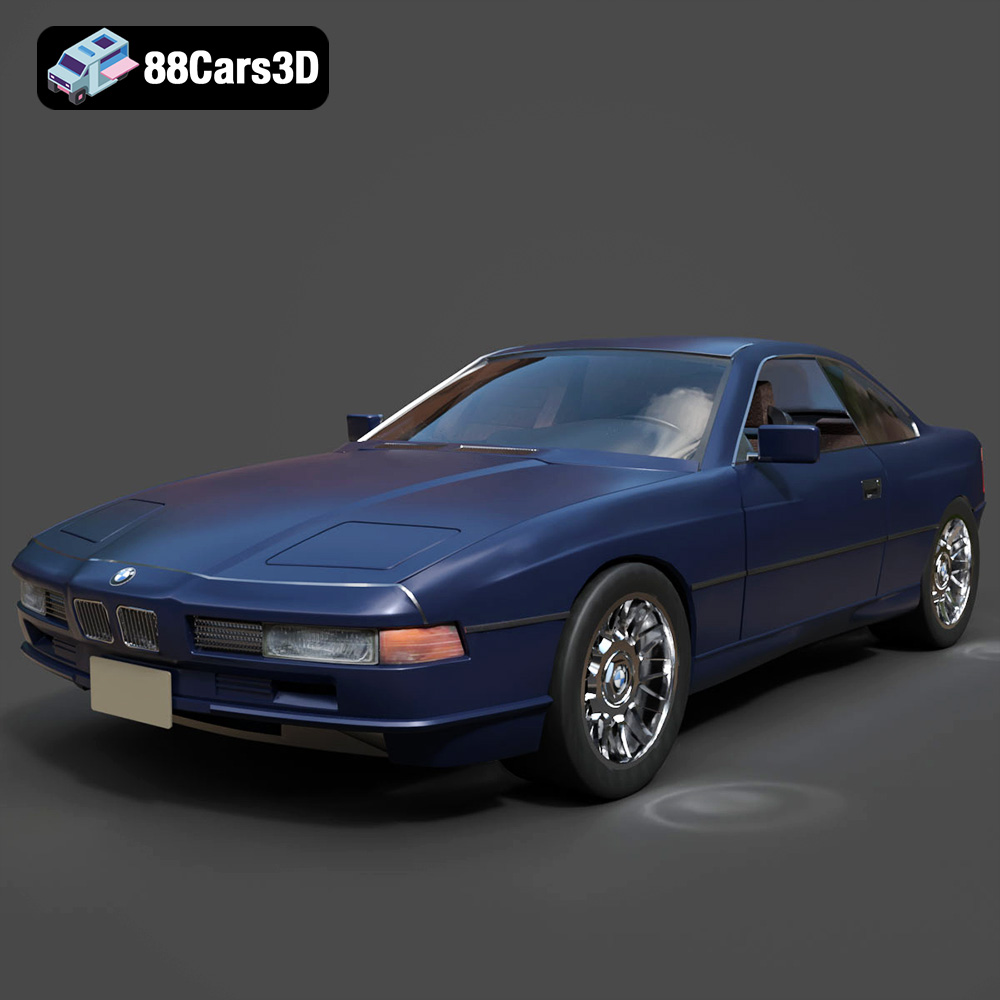
BMW 850i Coupe 1990 3D Model
Texture: Yes
Material: Yes
Download the BMW 850i Coupe 1990 3D Model featuring clean geometry, realistic detailing, and a fully modeled interior. Includes .blend, .fbx, .obj, .glb, .stl, .ply, .unreal, and .max formats for rendering, simulation, and game development.
Price: $13.99
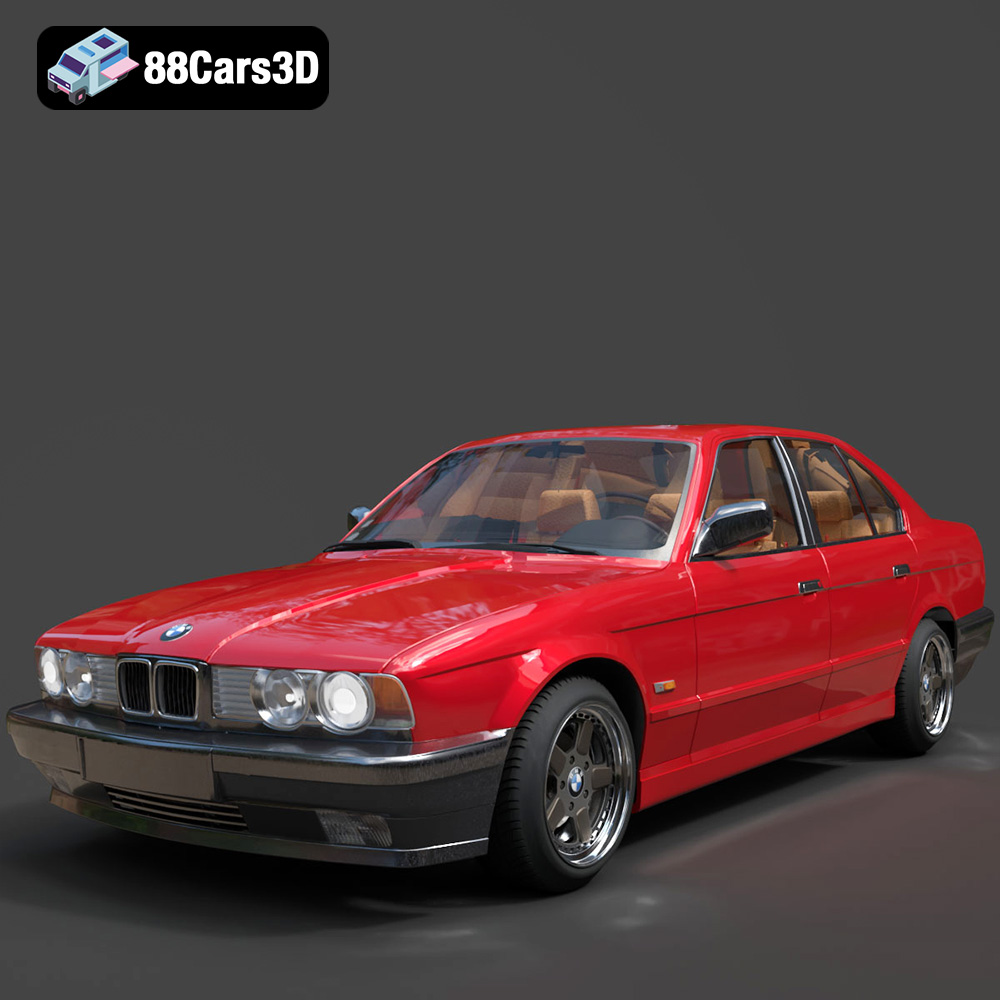
BMW 525i E34 1993 3D Model
Texture: Yes
Material: Yes
Download the BMW 525i E34 1993 3D Model featuring clean geometry, realistic detailing, and a fully modeled interior. Includes .blend, .fbx, .obj, .glb, .stl, .ply, .unreal, and .max formats for rendering, simulation, and game development.
Price: $12.99

BMW 7 Series 2016 3D Model
Texture: Yes
Material: Yes
Download the BMW 7 Series 2016 3D Model featuring luxurious design, detailed interior, and accurate exterior. Includes .blend, .fbx, .obj, .glb, .stl, .ply, .unreal, and .max formats for rendering, simulation, and game development.
Price: $10.79
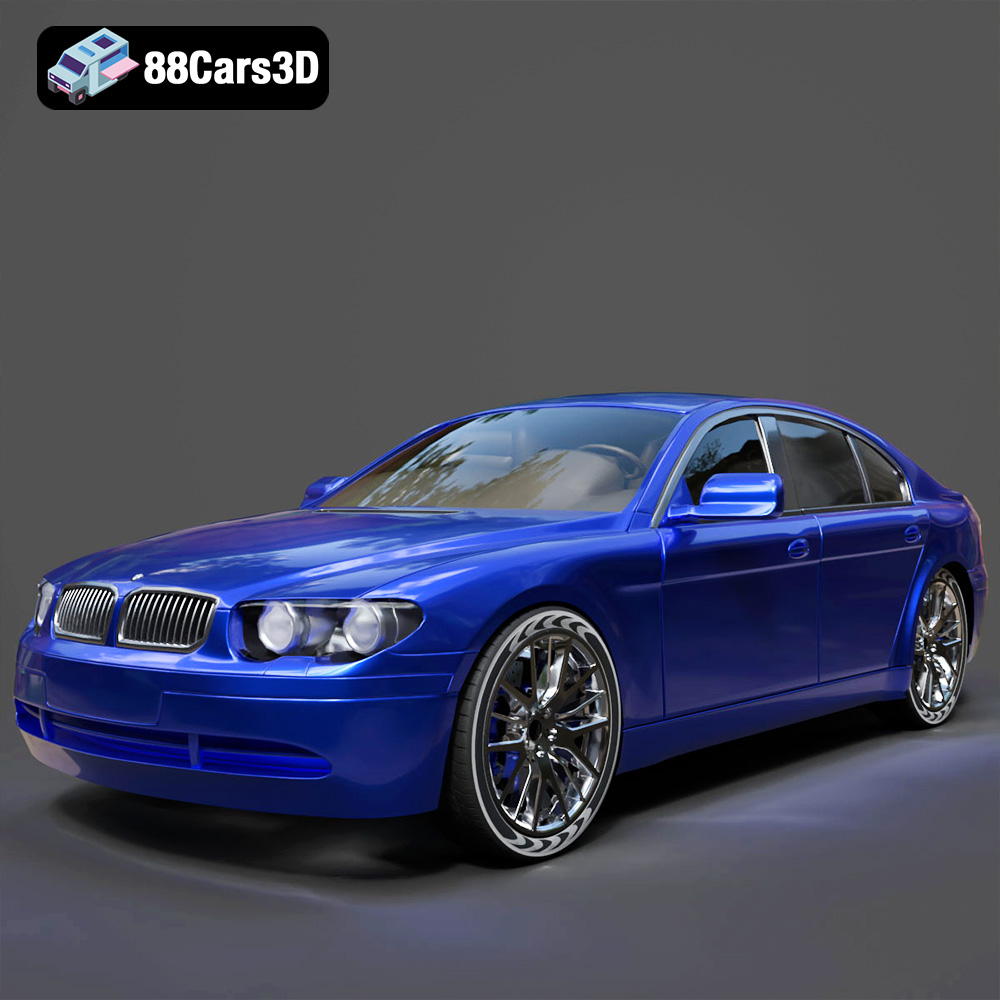
BMW 7 Series 30th Anniversary 3D Model
Texture: Yes
Material: Yes
Download the BMW 7 Series 30th Anniversary 3D Model featuring a meticulously crafted exterior, detailed interior, and realistic wheels. Includes .blend, .fbx, .obj, .glb, .stl, .ply, .unreal, and .max formats for rendering, simulation, and game development.
Price: $35.79

BMW 7-Series F02 3D Model
Texture: Yes
Material: Yes
Download the BMW 7-Series F02 3D Model featuring a detailed exterior and interior, optimized for rendering and animation. Includes .blend, .fbx, .obj, .glb, .stl, .ply, .unreal, and .max formats for rendering, simulation, and game development.
Price: $10.79
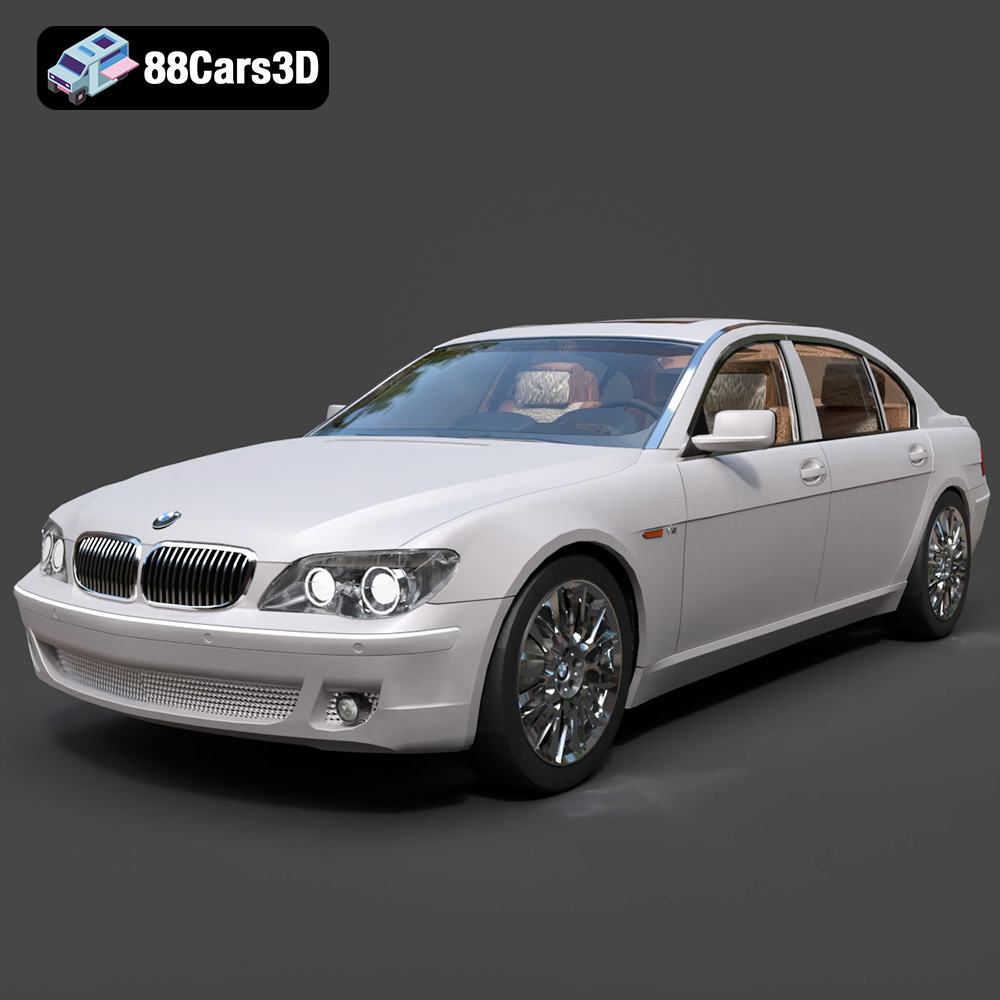
BMW 760Li E66 2005 3D Model
Texture: Yes
Material: Yes
Download the BMW 760Li E66 2005 3D Model featuring a detailed exterior, refined interior, and robust chassis. Includes .blend, .fbx, .obj, .glb, .stl, .ply, .unreal, and .max formats for rendering, simulation, and game development.
Price: $10.79
